SC MYP2T2Q4 LIGHT/SHADOW
 Call Kai
 Learn
Learn Practice Test
 Spaced Repetition
 Match
Match Flashcards
 Knowt Play
1/21

There's no tags or description
Looks like no tags are added yet.
Name | Mastery | Learn | Test | Matching | Spaced | Call with Kai |
|---|
No analytics yet
Send a link to your students to track their progress
22 Terms
Thermal energy
AKA heat energy: Through the motion of the object’s particles, the energy of the object becomes hot.
Radiation
is the way that heat energy is transferred by hot objects emitting infrared waves.
Infrared waves
are part of the electromagnetic spectrum. They are emitted by hot objects.
Electromagnetic spectrum
is a spectrum of waves that includes visible light and infrared radiation as well as radio waves, microwaves, ultraviolet, X-rays and gamma rays.
Visible light
is a type of electromagnetic wave that our eyes are able to detect.
Microwaves
are a type of electromagnetic wave with wavelengths between 1 mm and 1 m. They are used for some communications and for heating food in microwave ovens.
Radio waves
are a type of electromagnetic wave with a long wavelength. They are used for communication.
X-rays
are a type of electromagnetic wave with a very short wavelength. X-rays are able to pass through matter. This property means that they are useful for medical imaging.
Reflection
occurs when a wave bounces off a surface.
Angle of reflection
is the angle between the normal and the reflected ray.
Angle of incidence
is the angle at which a ray hits a surface. The angle is measured to the normal.
Law of reflection
states that the angle of incidence is equal to the angle of reflection.
the normal
is a line that is at a right angle to the surface.
A specular reflection
is a reflection off a shiny surface in which a reflected image can be seen.
A diffuse reflection
is a reflection of light off a surface that is not shiny enough for a reflected image to be seen.
A rainbow
is a naturally occurring effect where sunlight is spilt into a spectrum of colors
The visible light spectrum
is a spread of colours.
What is the order of the visible light spectrum?
The order of these colours in the spectrum is red, orange, yellow, green, blue, indigo and violet.
What are the colours of the visible light spectrum also known as?
Spectral colours
Why do shadows form?
Shadows form due to an opaque/translucent object blocking the path of light from a source.
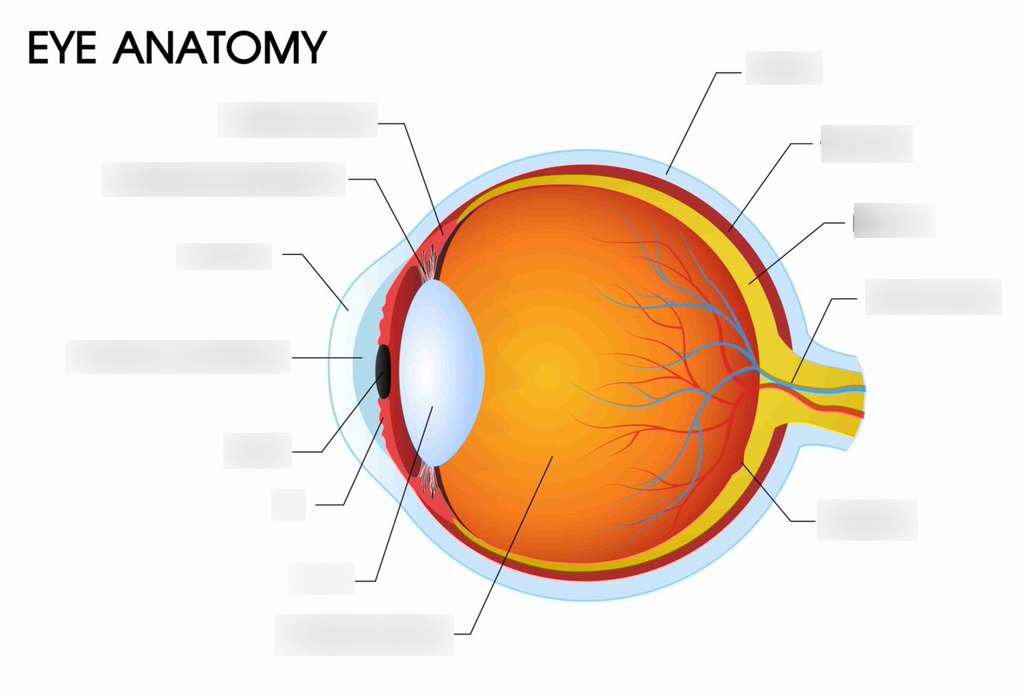
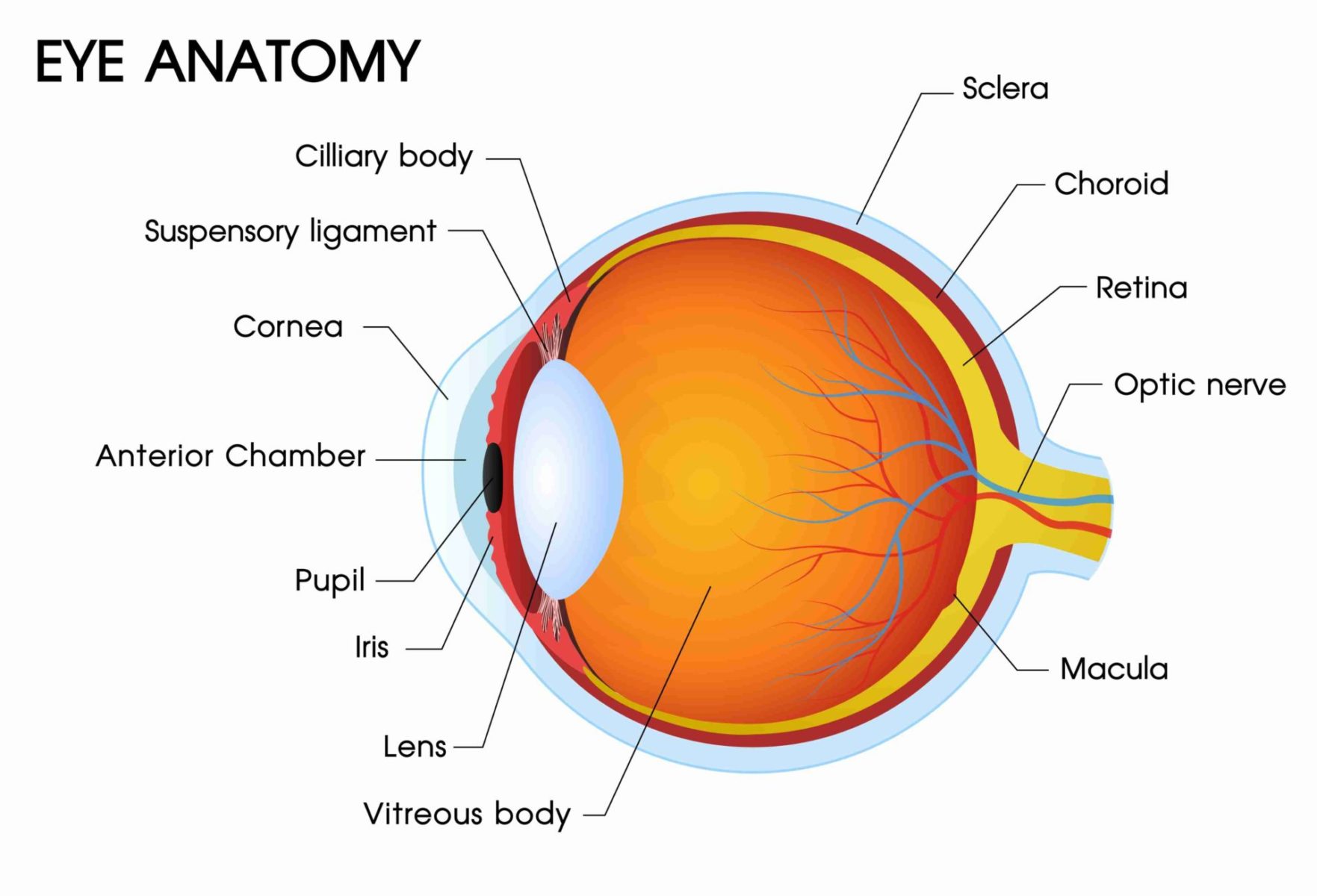
Name 7 parts of the eye
Cornea, iris, pupil, eyelid, lens, retina and optical nerve.
What is the difference between reflection and refraction?
Reflection: light bounces off a surface of an object. Refraction: light passes through an object.