Human Evolution Bone Quiz
 Call Kai
 Learn
Learn Practice Test
 Spaced Repetition
 Match
Match Flashcards
 Knowt Play
1/38

There's no tags or description
Looks like no tags are added yet.
Name | Mastery | Learn | Test | Matching | Spaced | Call with Kai |
|---|
No analytics yet
Send a link to your students to track their progress
39 Terms
Arboreal adaptations
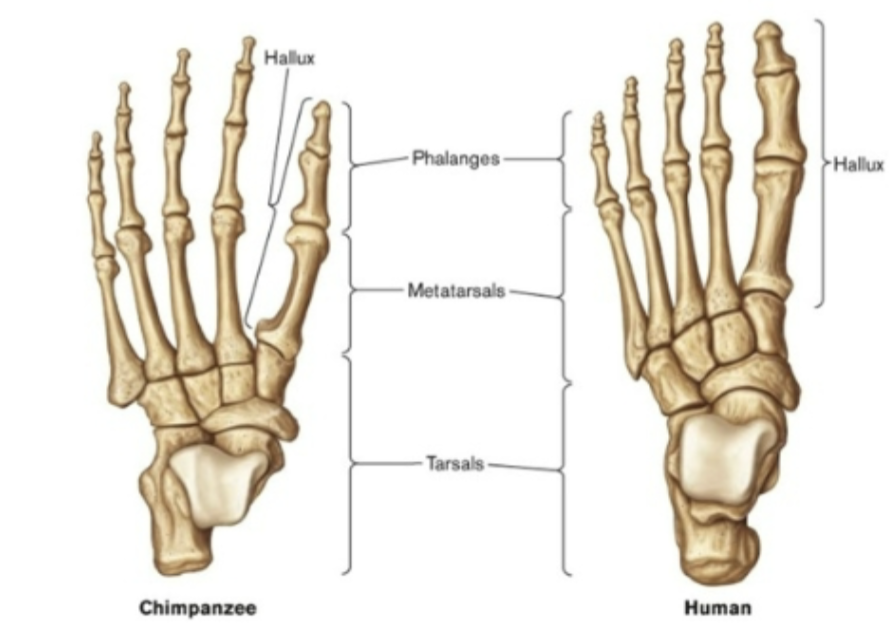
Opposable thumbs and big toes, nails instead of claws
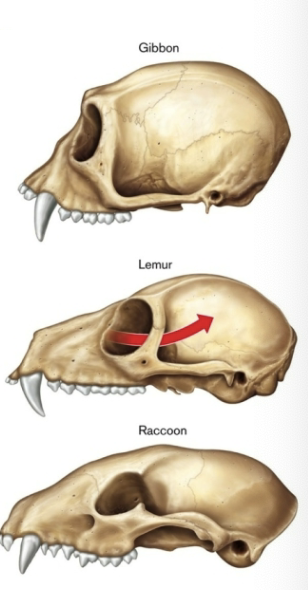
Aboreal adaptations - enhanced vision
forward facing eyes (increased depth perception)
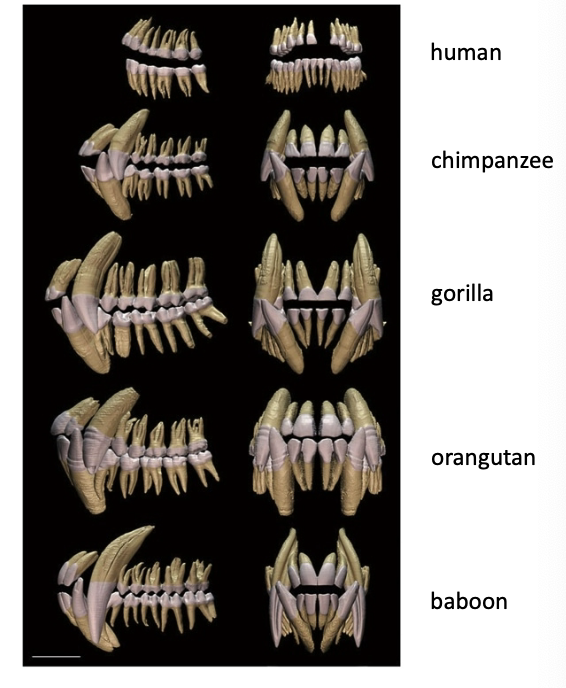
Primate Teeth
primitive mouth with 4 distinct kinds of teeth:
incisors
canines
premolars
molars
Tarsier dental formula
Upper: 2/1/3/3
Lower: 1/1/3/3
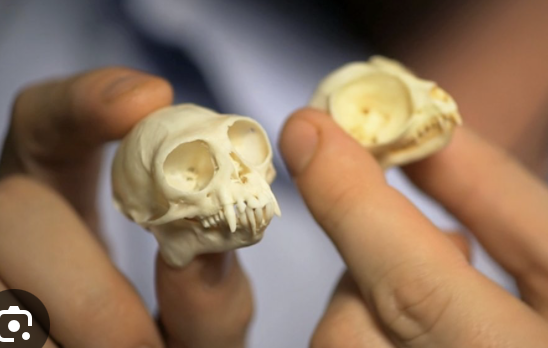
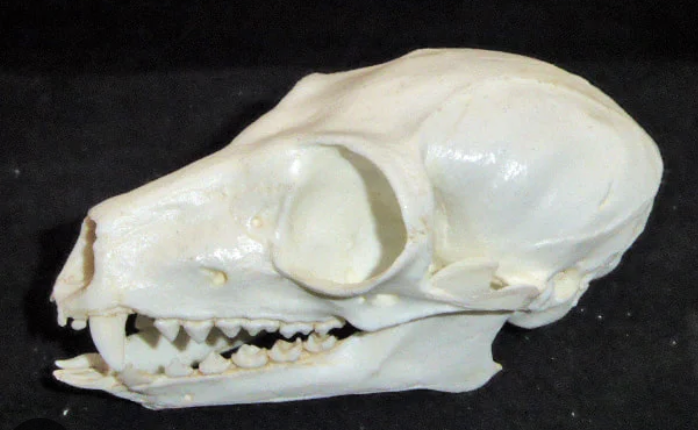
Lemur dental formula
Upper: 2/1/3/3/
Lower: 2/1/3/3 (sometimes this varies in lemurs)
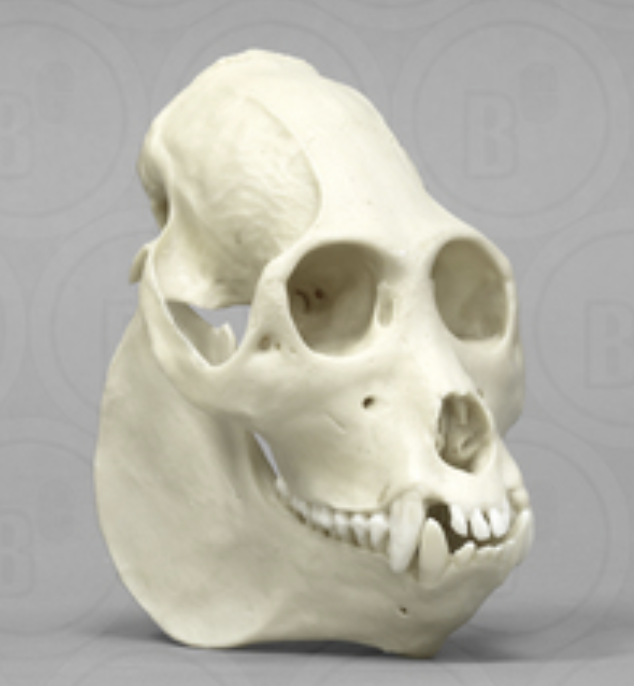
New World Monkey dental formula
Upper: 2/1/3/2 or 2/1/3/3
Lower: 2/1/3/2 or 2/1/3/3
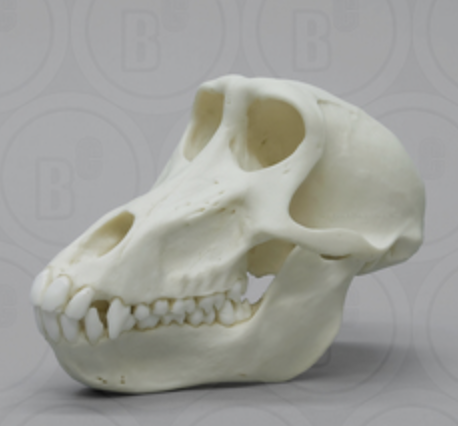
Old World Monkey dental formula
Upper: 2/1/2/3
Lower: 2/1/2/3
Apes and Human dental formula
Upper: 2/1/2/3
Lower: 2/1/2/3
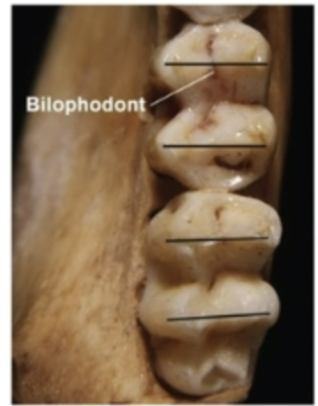
Monkey tooth variation
bilophodont (two-ridge tooth) molar
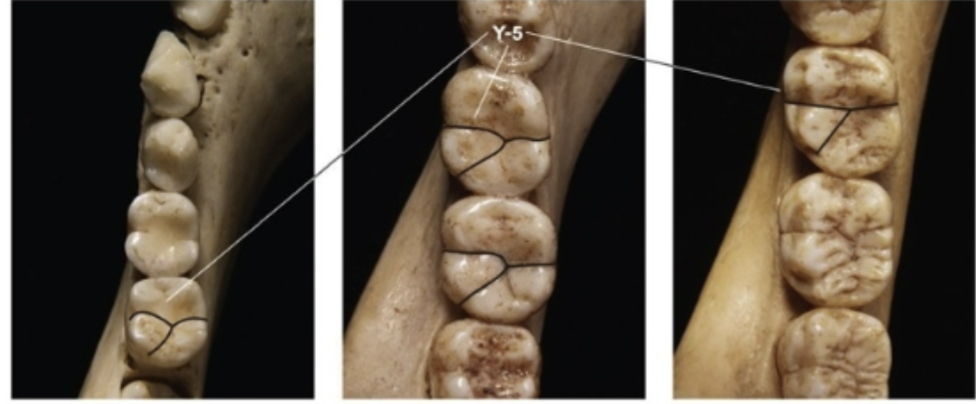
Ape and Human tooth variation
Y-5 lower molars
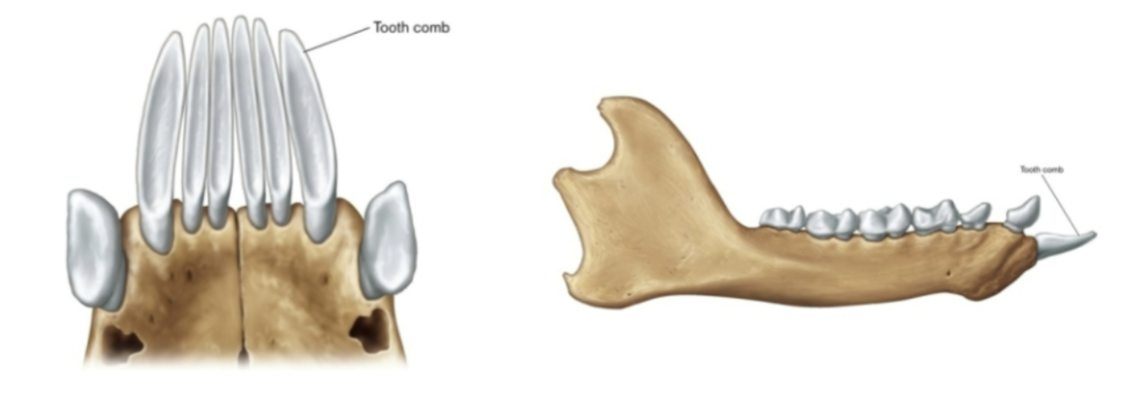
Lemur, Lorise, and Galago tooth variation
dental comb (lower incisors and canines are elongated, crowded together, and projected forward)
Prosimians
Smaller brain than monkeys, mostly nocturnal (large eye sockets), tooth combs, grooming claw. Includes:
Lemurs
Lorises
Galagos
Tarsiers
Anthropoids
Larger brains than prosimians. Includes:
New world monkeys
Old world monkeys
Apes
Humans
Hominoids
Apes
Humans
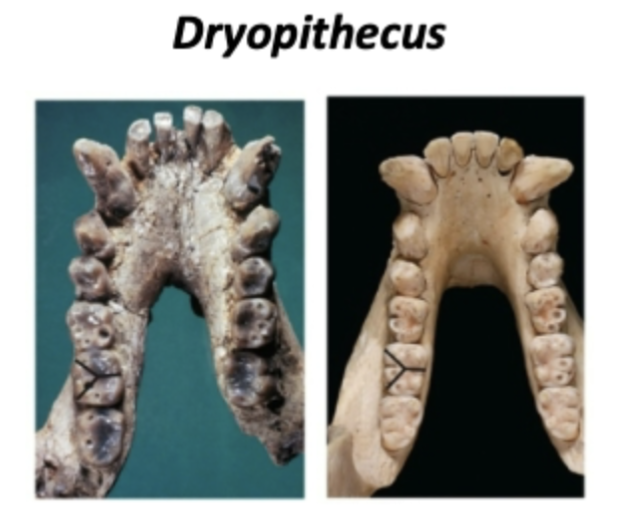
Dryopithecus
Extinct genus of great ape during Miocene epoch, 14-9 mya, France and Spain
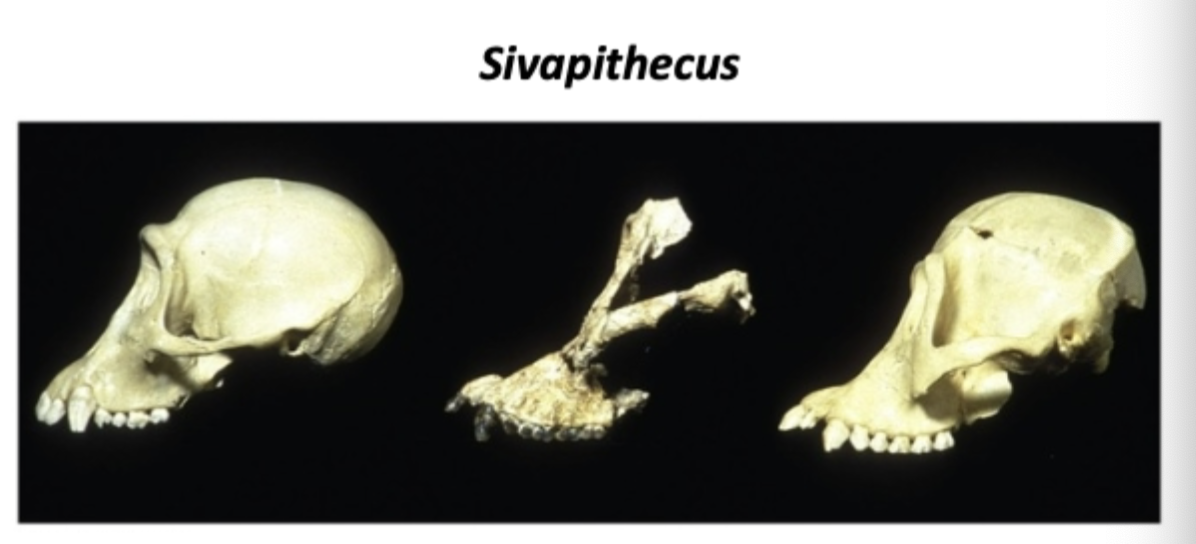
Sivapithecus
extinct genus of great ape during miocene epoch, 14-8 mya, Asia
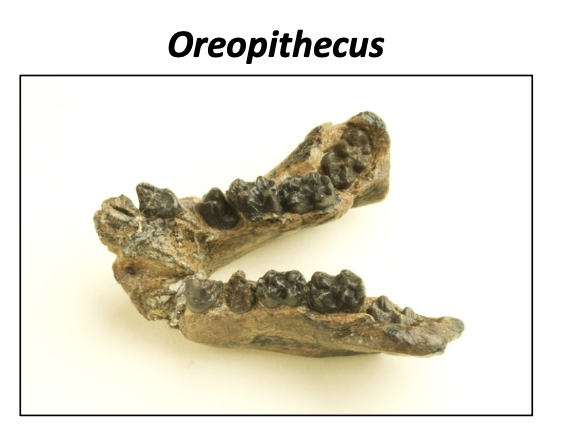
Oreopithecus
extinct great ape during miocene epoch, 9-7 mya, Italy
Trends in Hominin evolutions
bipedal walking
non honing chewing
increased brain size
decreases tooth size (especially molars)
Anatomy of Bipedalism
Foot:
arch
big toe aligns with other
Pelvis:
basin shaped with short illium
legs to side
Legs:
femurs angled inwards
offset facets at knew
knees lock in extended position
long in relation to arms
Spine:
S-shaped, lumar curve
Skull:
foramen magnum faces downward
Foramen magnum
opening for the spinal cord and other vital parts; humans exhibit a straight downward orientation
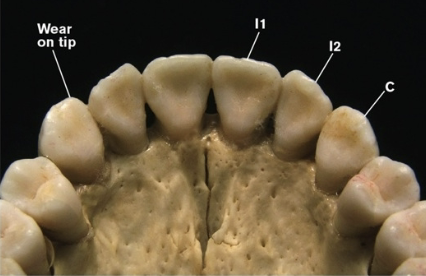
Nonhoning chewing
grinding or food, rather than shearing (honing); wear on the tip for canine
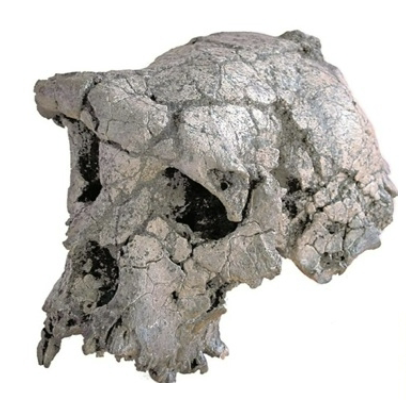
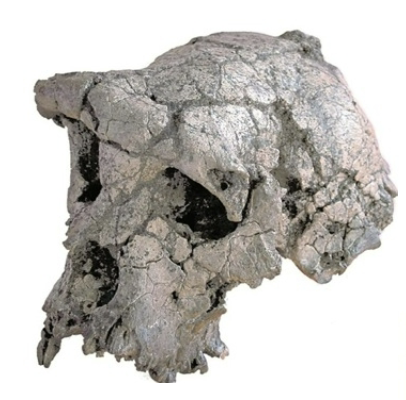
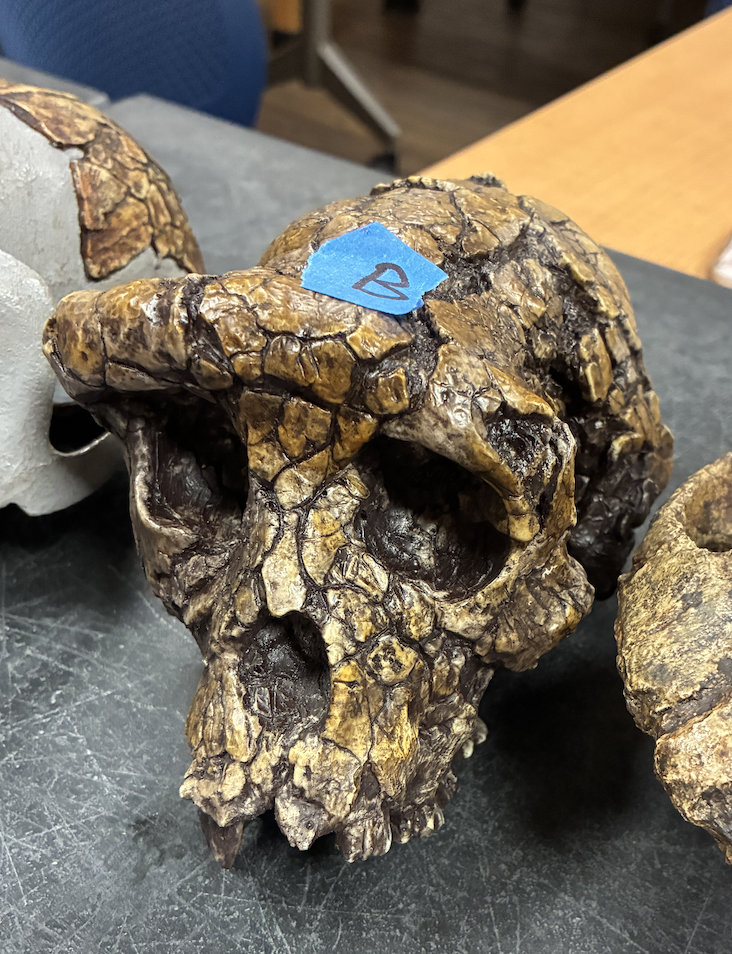
Sahelanthropus tchadensis
small brain (350cc), bipedal (foramen magnum), non honing chewing and small canines, massive browridge
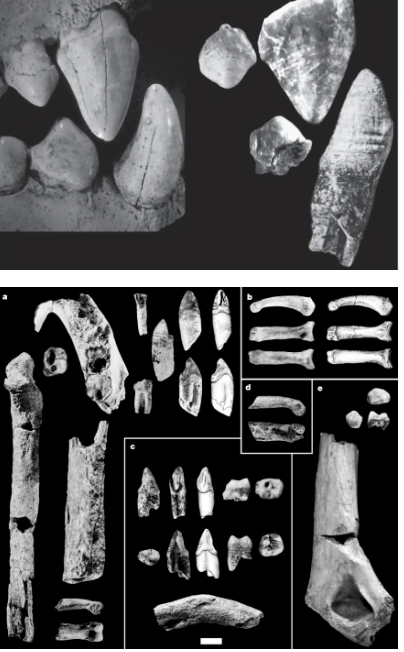
Ardipithecus kadabba (Ardi)
bipedal based on toe bones
perihoning complex
hand and arm bones indicate partial arboreal adaptation
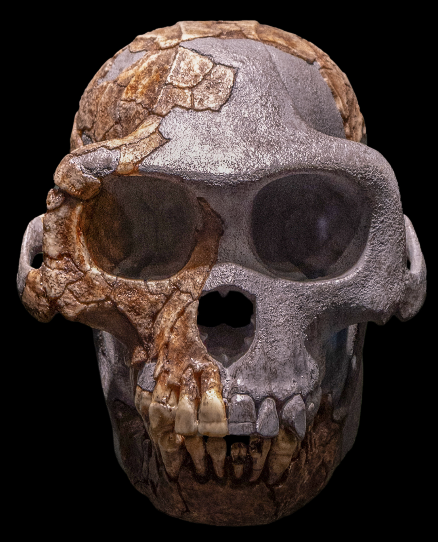
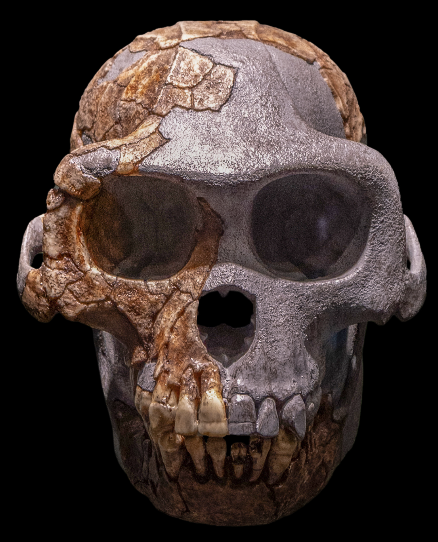
Ardipithecus ramidus
small brain (350cc)
bipedal based on foramen magnum, pelvis, femur, and foot
non honing canines
mix of climbing and walking adaptations
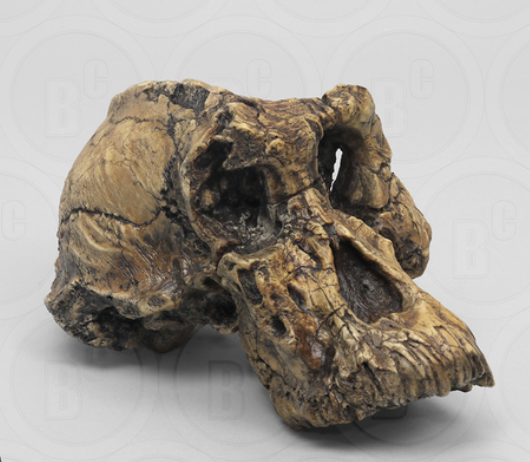
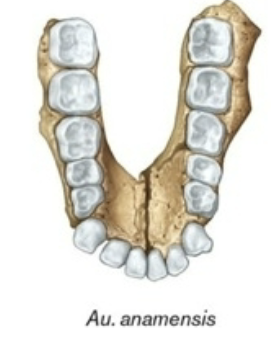
Australopithecus anamensis
bipedal based on shin bone
arms and hands adapted to tree climbing
non honing canines (larger than humans, smaller than apes)
parallel rows of teeth
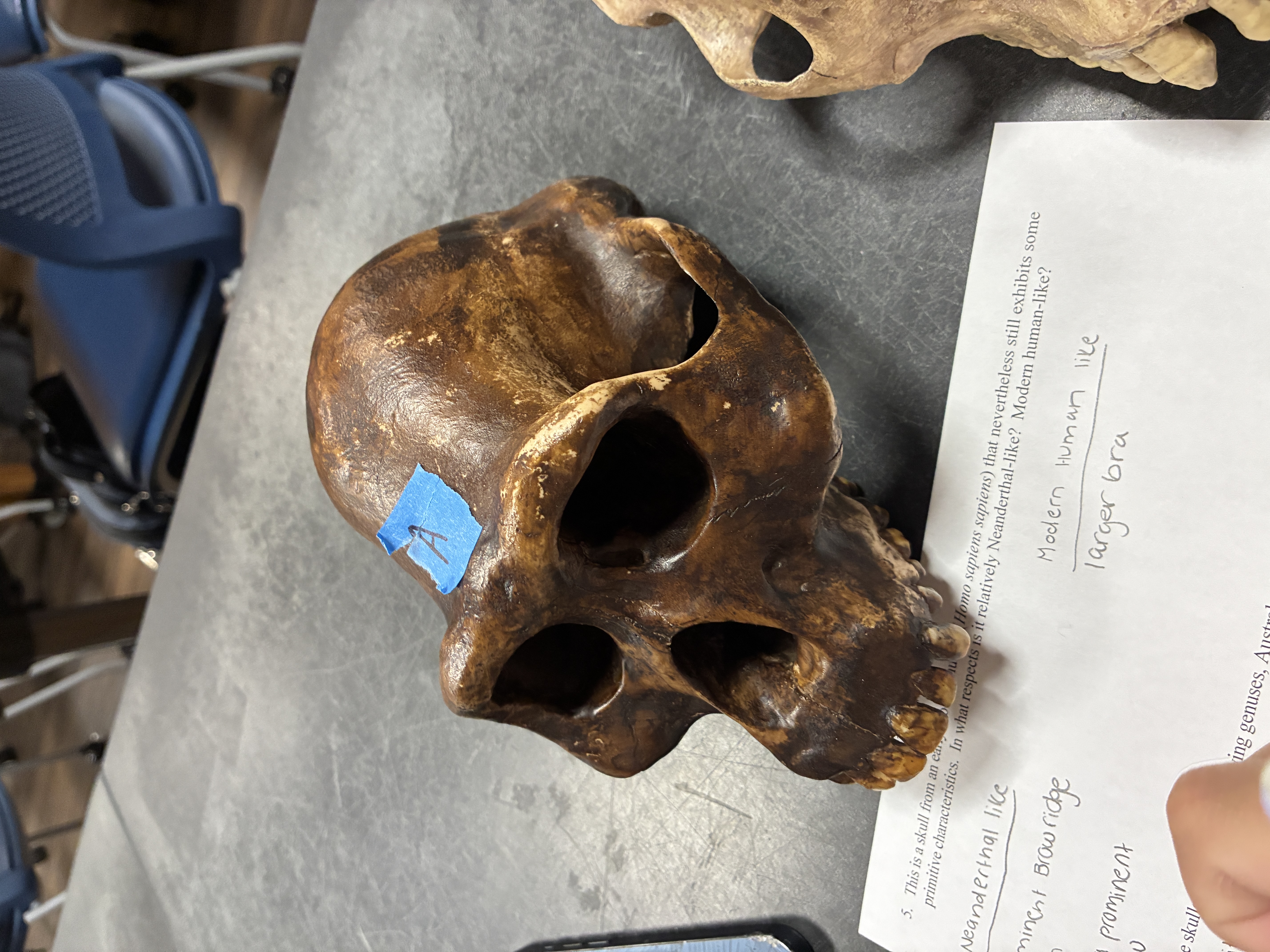
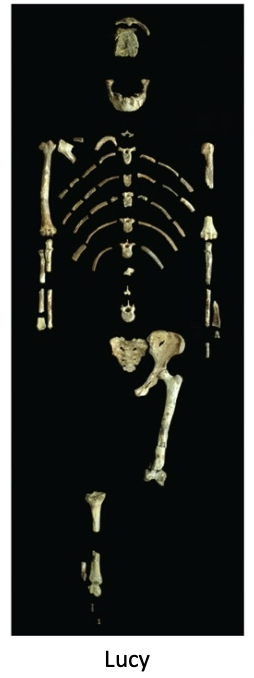
Australopithecus afarensis (Lucy)
cranial capacity 430cc
large premolars and molars (adaptation to tough fibrous plants, seeds, and nuts)
small, fragile hyoid bone (no language)
bipedal based on skull, pelvis, tibia, and ankle
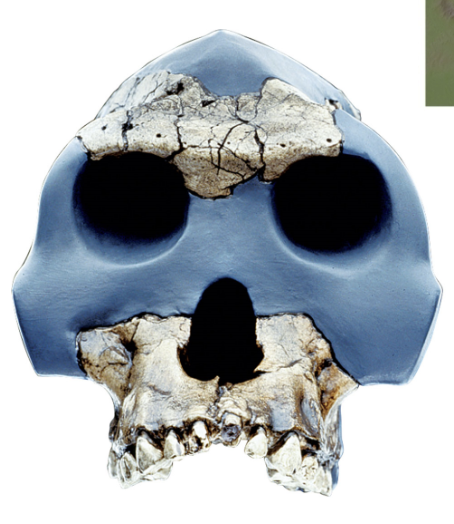
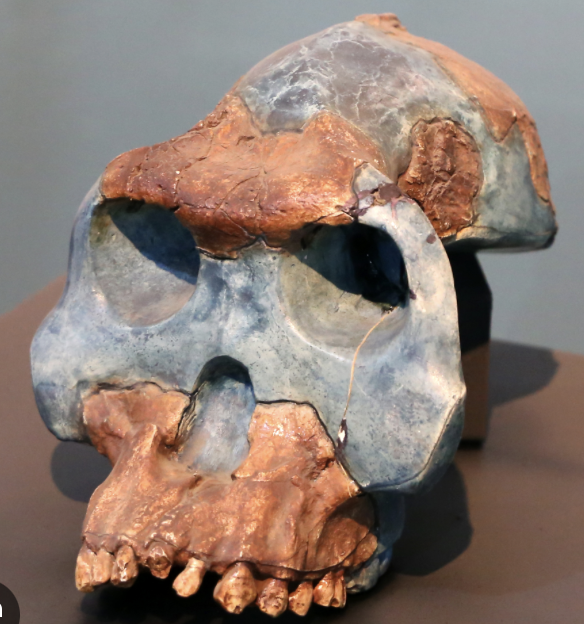
Australopithecus gahri (Gracile)
small brain (450cc)
large teeth (premolars and molars)
forward-projecting face
curved phalanges (toes)
long legs (human like)
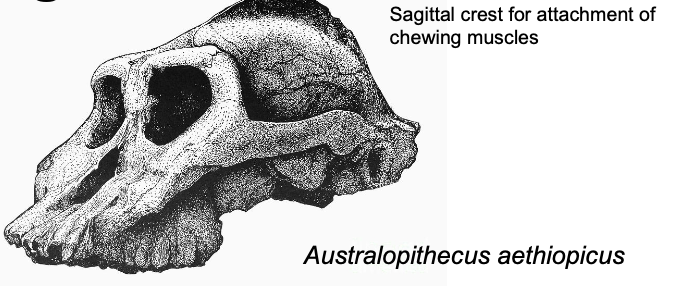
Robust Australopithecines - Hypervegetarians
Variety of derived features that suggest a diet of hard, tough plant foods
sagittal crest (a prominent ridge of bone running lengthwise along the top of the skull)
massive cheekbones
large palate
massive molars
thick enamel
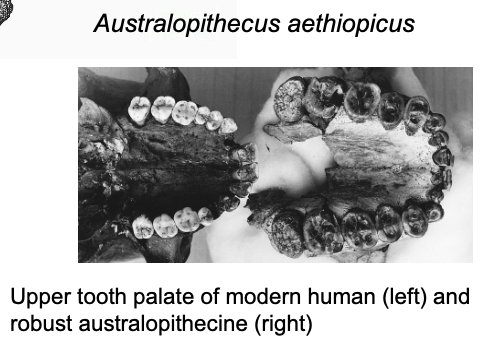
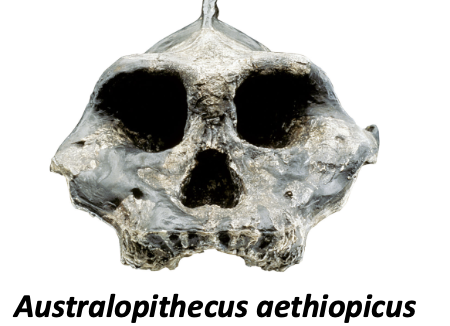
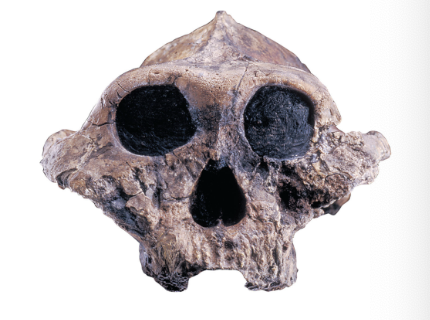
Australopithecus aethiopicus
small brain (410cc)
massive posterior teeth
robust skull with sagittal crest (a prominent ridge of bone running lengthwise along the top of the skull)
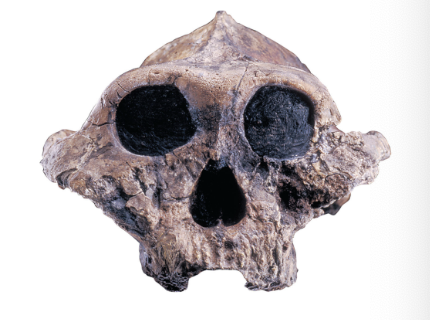
Australopithecus boisei
small brain (510cc)
massive posterior teeth
robust skull with sagittal crest
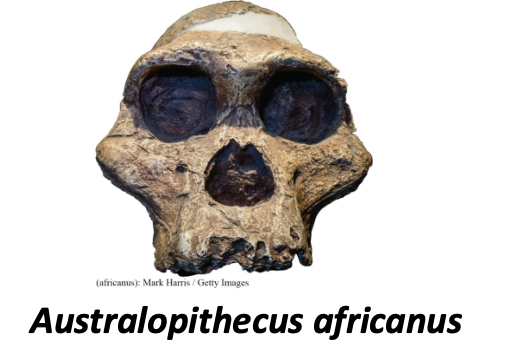
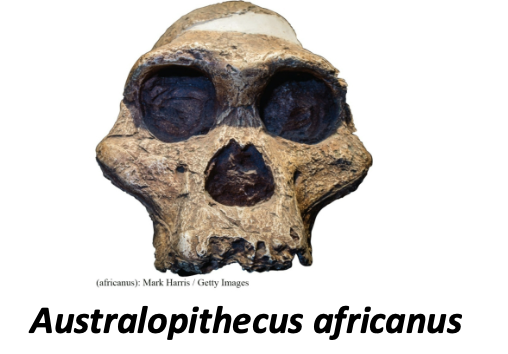
Australopithecus africanus
small brain (450cc)
small, non honing canines; large premolars and molars; parabolic jaw (the curved, V-shaped arrangement of teeth in modern humans)
straight phalanges (fingers)
bipedal
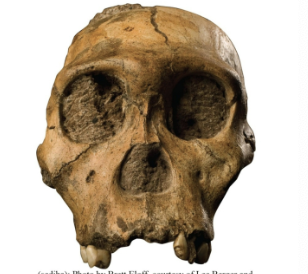
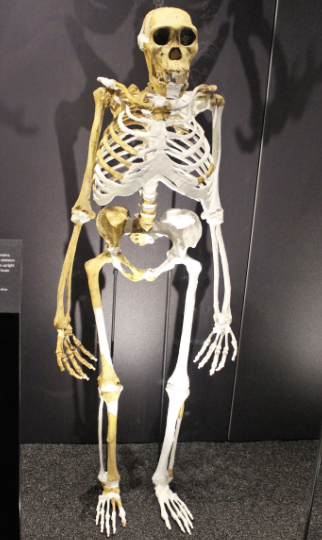
Australopithecus sediba
small brain (420cc)
small teeth
human-like face, hands, and pelvis
primitive ape-like foot
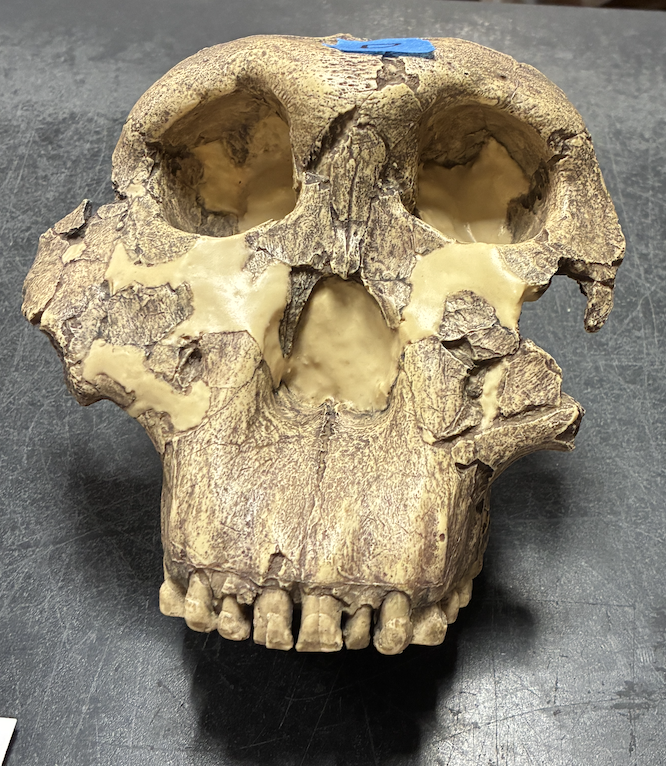
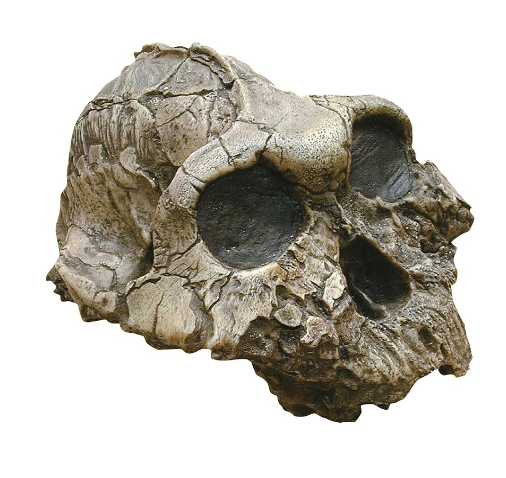
Australopithecus robustus
small brain (530cc)
small, non honing canines; very large premolars and molars
robust skull with sagittal crest
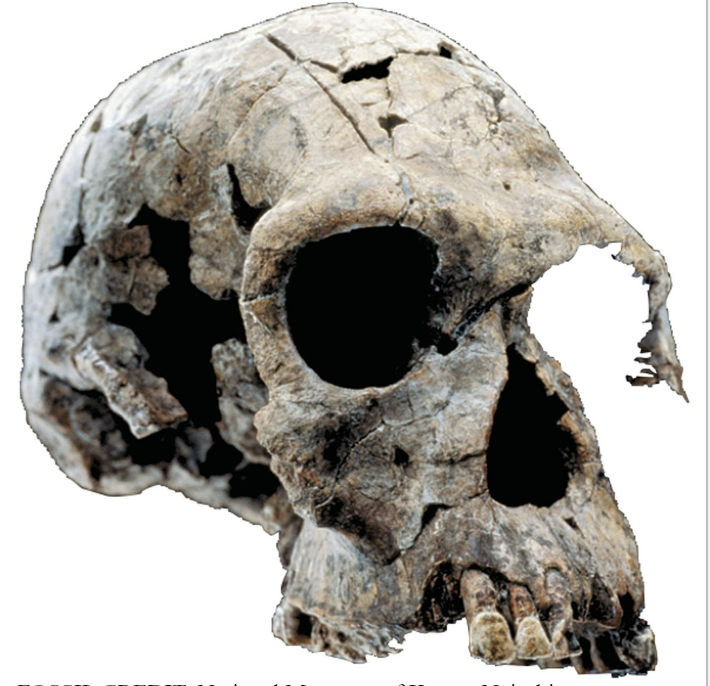
Homo habilis
large brain (600cc)
smaller teeth (indicative of dietary shift - more generalized)
Australopithecus-like body
< 4 ft tall
long arms and short legs
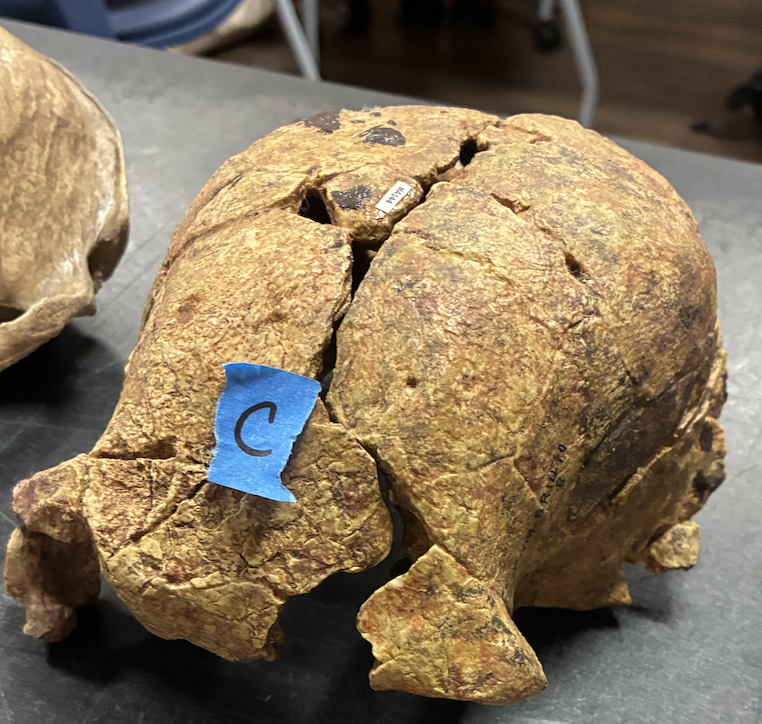
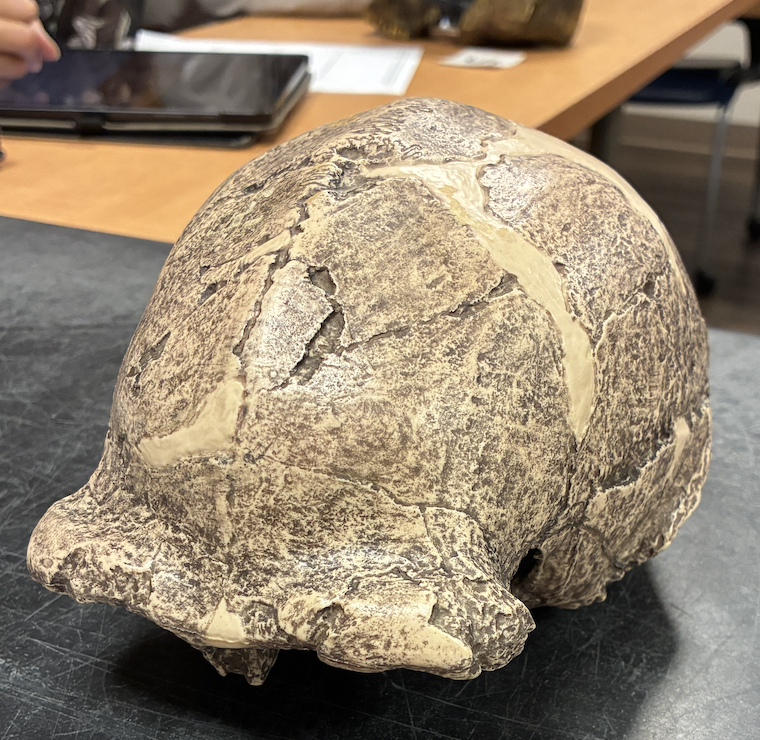
Homo erectus
larger and more robust than Homo habilis
longer legs - body proportions similar similar to modern humans
larger brain (950cc)
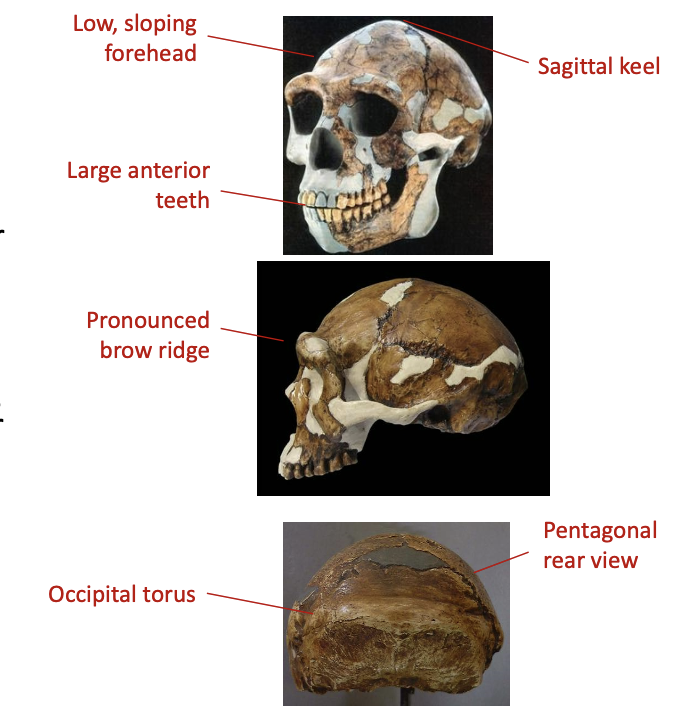
classic cranial features:
low forehead
pronounced browridge
large anterior teeth
small back teeth
sagittal keel
occipital torus (a thickened, horizontal band of bone on the occipital bone at the back of the skull, often appearing as a prominent ridge or bump)
pentagonal rear view
shovel shaped incisors
classic features more pronounced in Asian examples
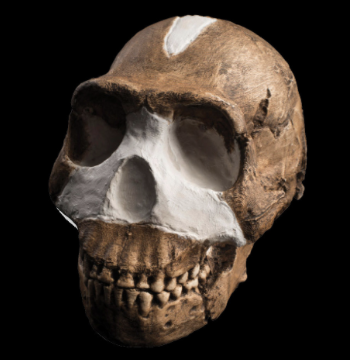
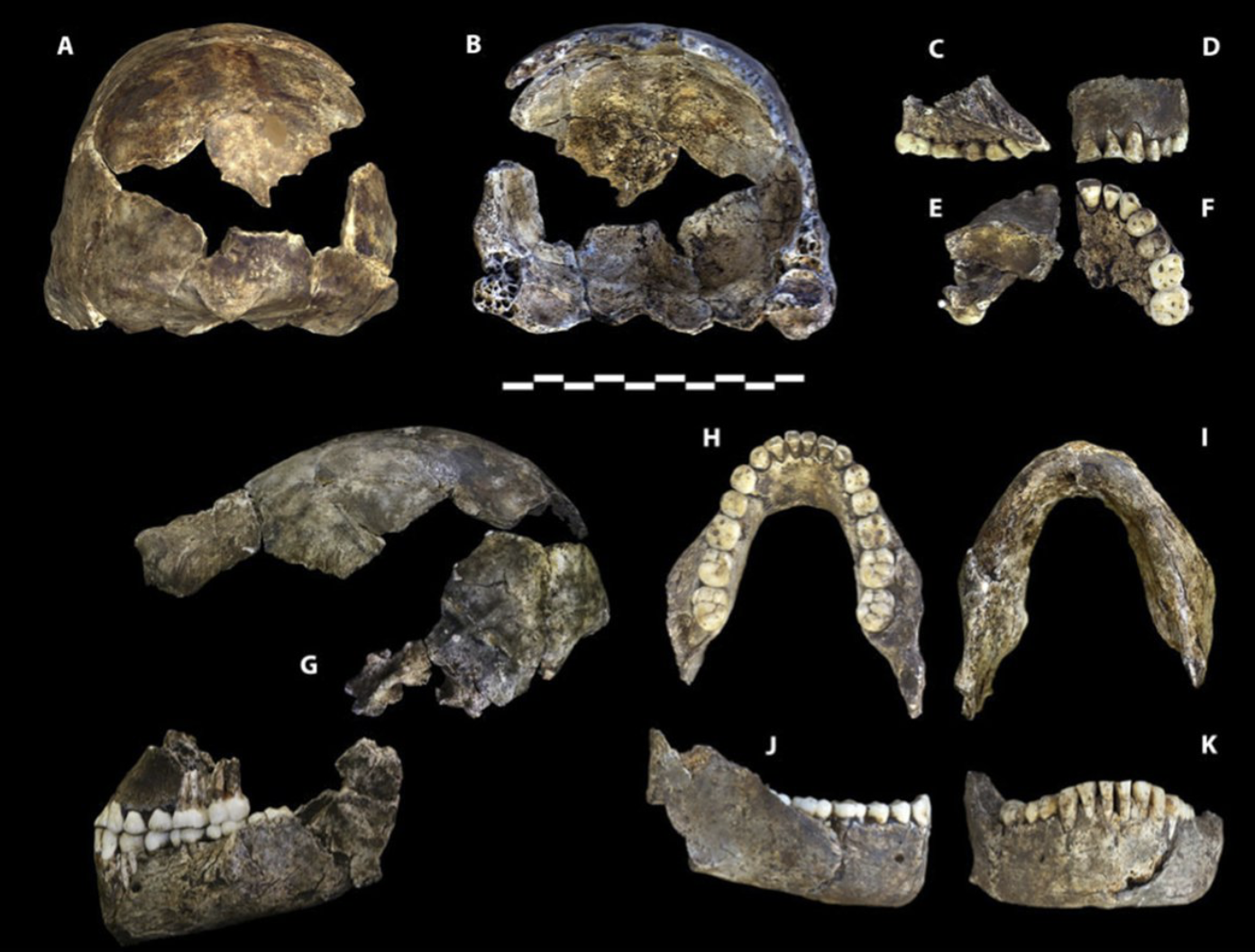
Homo naledi
small brain (464-610cc)
body smaller than modern humans
human-like features include hands, feet, and legs
shoulders positioned for climbing
curved fingers
small teeth
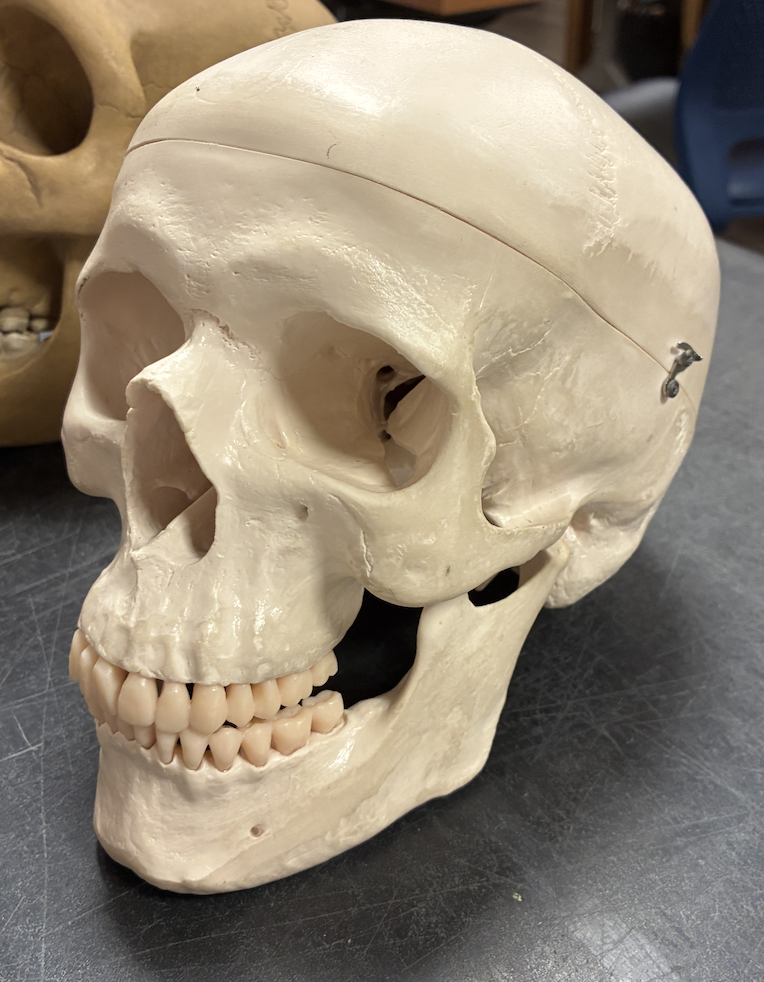
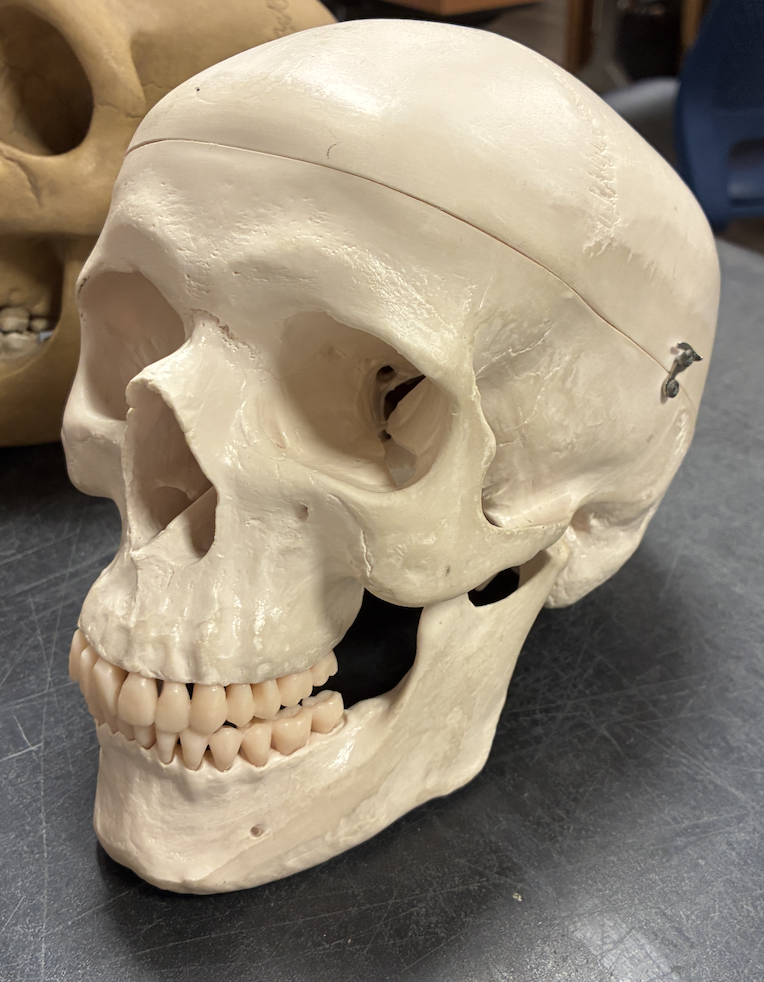
Homo sapien (modern humans)
large brain size (1300-1500cc)
rounded skull with high forehead
small face and jaw
reduced brow ridge
flat face with less projection
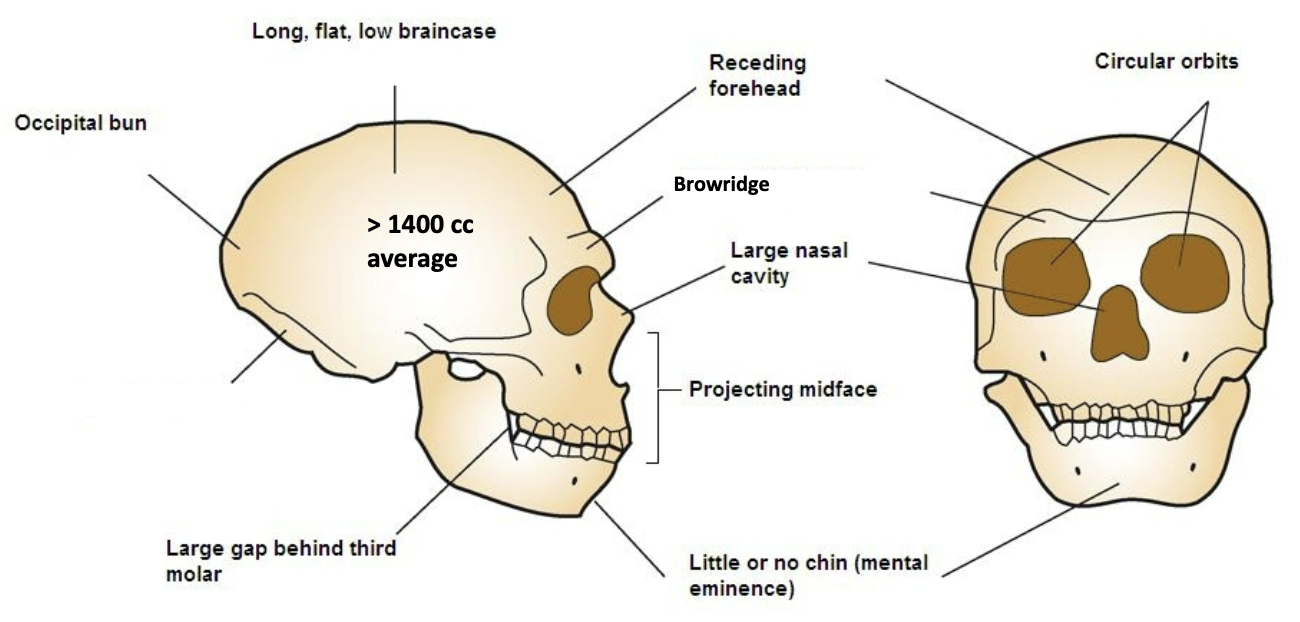
Classic Neanderthal cranial features
occipital bun
long, flat, low brain case (>1400cc)
reduced forehead
brow ridge
large nasal cavity
projecting midface
circular orbitals
little or no chin (mental eminence
large gap behind third molar
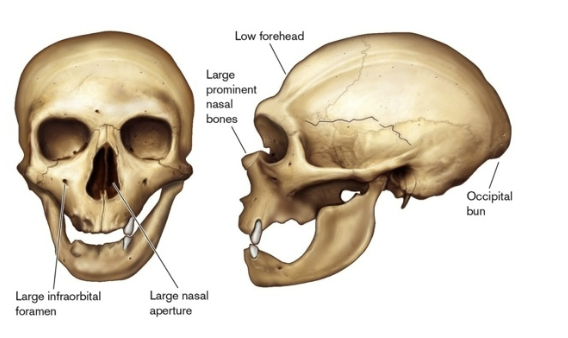
Neanderthal cold adaptations
large nasal aperture (heat the air)
large infraorbital foramina (hold in check that allows blood flow to face)
stocky body (this reduced surface area relative to body size reduces heat loss)
short limbs (reduces surface area to reduce heat loss)