Anatomy GI part 2
 Call Kai
 Learn
Learn Practice Test
 Spaced Repetition
 Match
Match Flashcards
 Knowt Play
1/127

There's no tags or description
Looks like no tags are added yet.
Name | Mastery | Learn | Test | Matching | Spaced | Call with Kai |
|---|
No analytics yet
Send a link to your students to track their progress
128 Terms
Peritoneum
Serous membrane covering abdominal organs.
Parietal Peritoneum
Outer layer of the peritoneum.
Visceral Peritoneum
Inner layer in contact with organs.
Somatic Innervation
Specific pain sensation from parietal peritoneum.
Visceral Innervation
Unspecific pain sensation from visceral peritoneum.
Peritoneal Cavity
Potential space between peritoneum layers.
Ascites
Fluid accumulation in peritoneal cavity.
Lesser Sac
Space behind stomach and liver.
Greater Sac
Main peritoneal cavity section.
Epiploic Foramen
Connection between lesser and greater sacs.
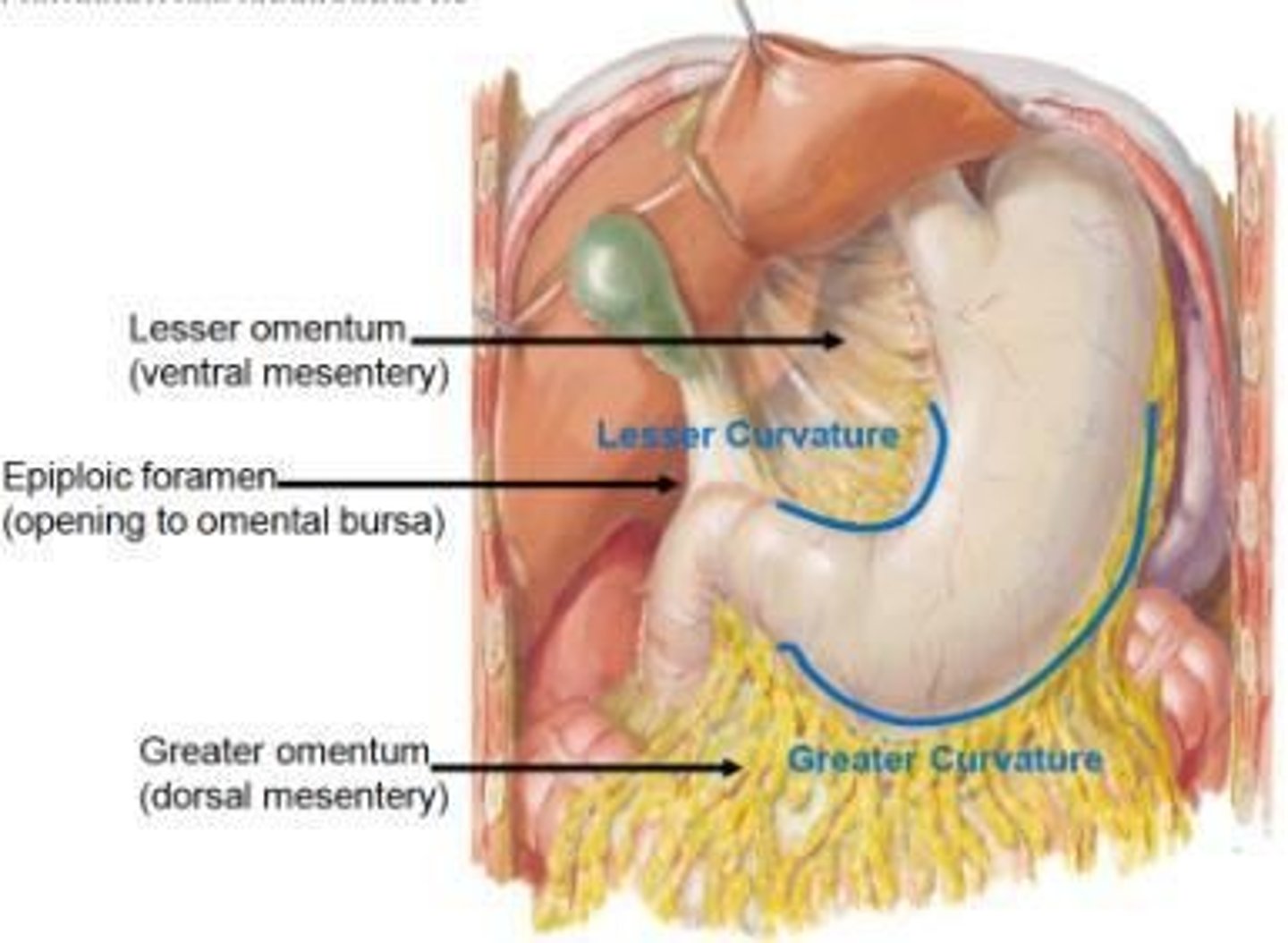
Hepatoduodenal Ligament
Anterior boundary of the lesser sac.
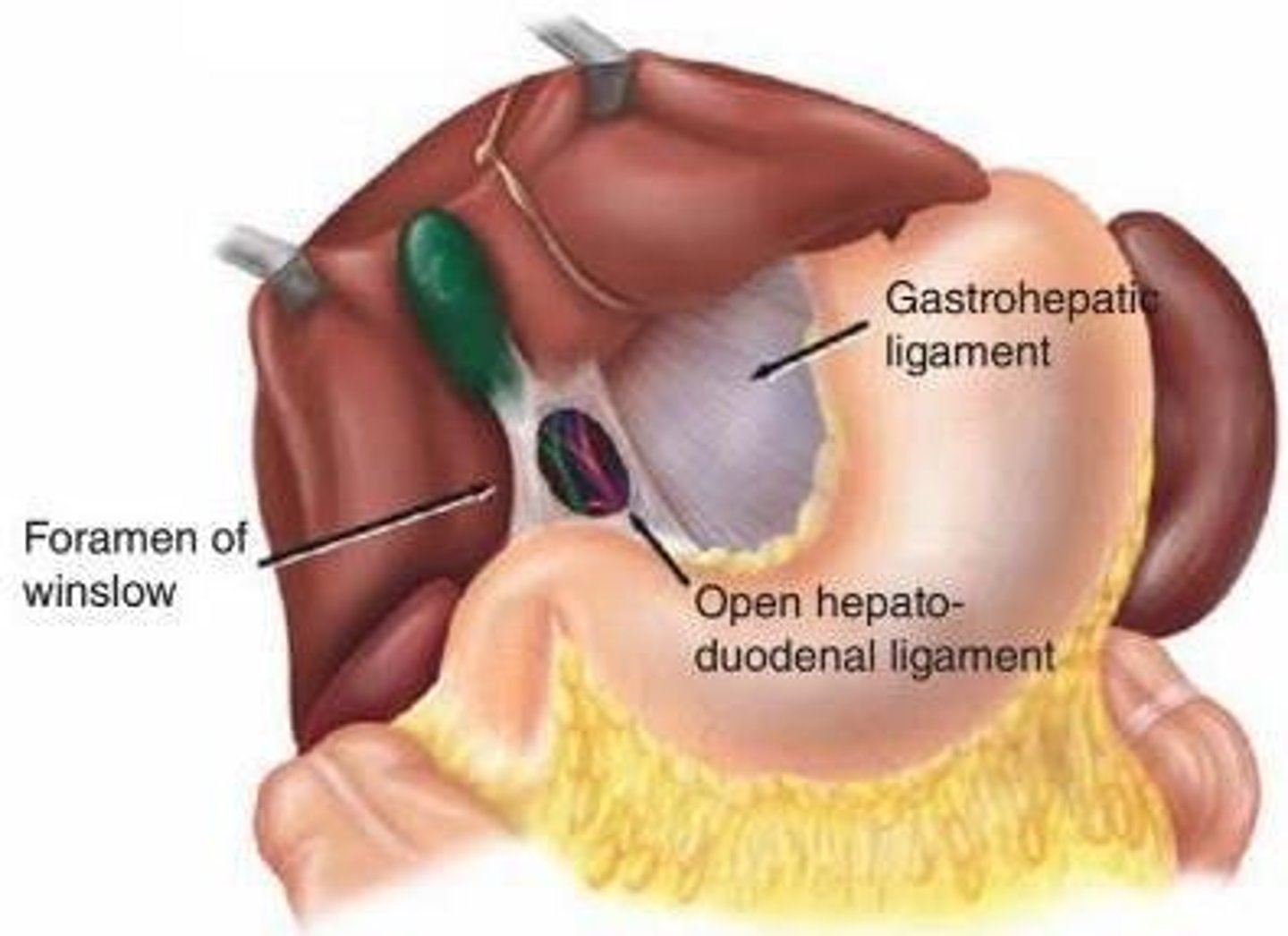
Portal Triad
Contains hepatic artery, bile duct, portal vein.
Supracolic Compartment
Above the transverse colon.
Infracolic Compartment
Below the transverse colon.
Rectovesical Pouch
Space between rectum and bladder in males.
Rectouterine Pouch
Space between rectum and uterus in females.
Vesicouterine Pouch
Space between bladder and uterus in females.
Retroperitoneal Structures
Organs located behind the peritoneum.
Pancreatic Acini
Exocrine cells producing pancreatic juice.
Pancreatic Islets
Endocrine cells secreting insulin and glucagon.
Pancreatic Juice
Digestive fluid secreted into the duodenum.
CCK (Cholecystokinin)
Hormone stimulating gallbladder and pancreatic secretion.
Secretin
Hormone stimulating bicarbonate secretion from pancreas.
Ampulla of Vater
Site where pancreatic secretions enter duodenum.
Somatostatin
Hormone inhibiting gastric and pancreatic secretions.
Pancreatic peptide
Inhibits pancreatic enzyme and bicarbonate secretion.
VIP
Stimulates secretion of water and electrolytes.
Bicarbonate (HCO3-)
Neutralizes stomach acid in duodenum.
Pancreatic alpha-amylase
Enzyme breaking down starches into sugars.
Pancreatic lipase
Enzyme digesting complex lipids into fatty acids.
Nucleases
Enzymes that break down nucleic acids.
Proteolytic enzymes
Break proteins into smaller peptides or amino acids.
Trypsinogen
Inactive form of trypsin, activated in duodenum.
Liver
Largest visceral organ, performs metabolic functions.
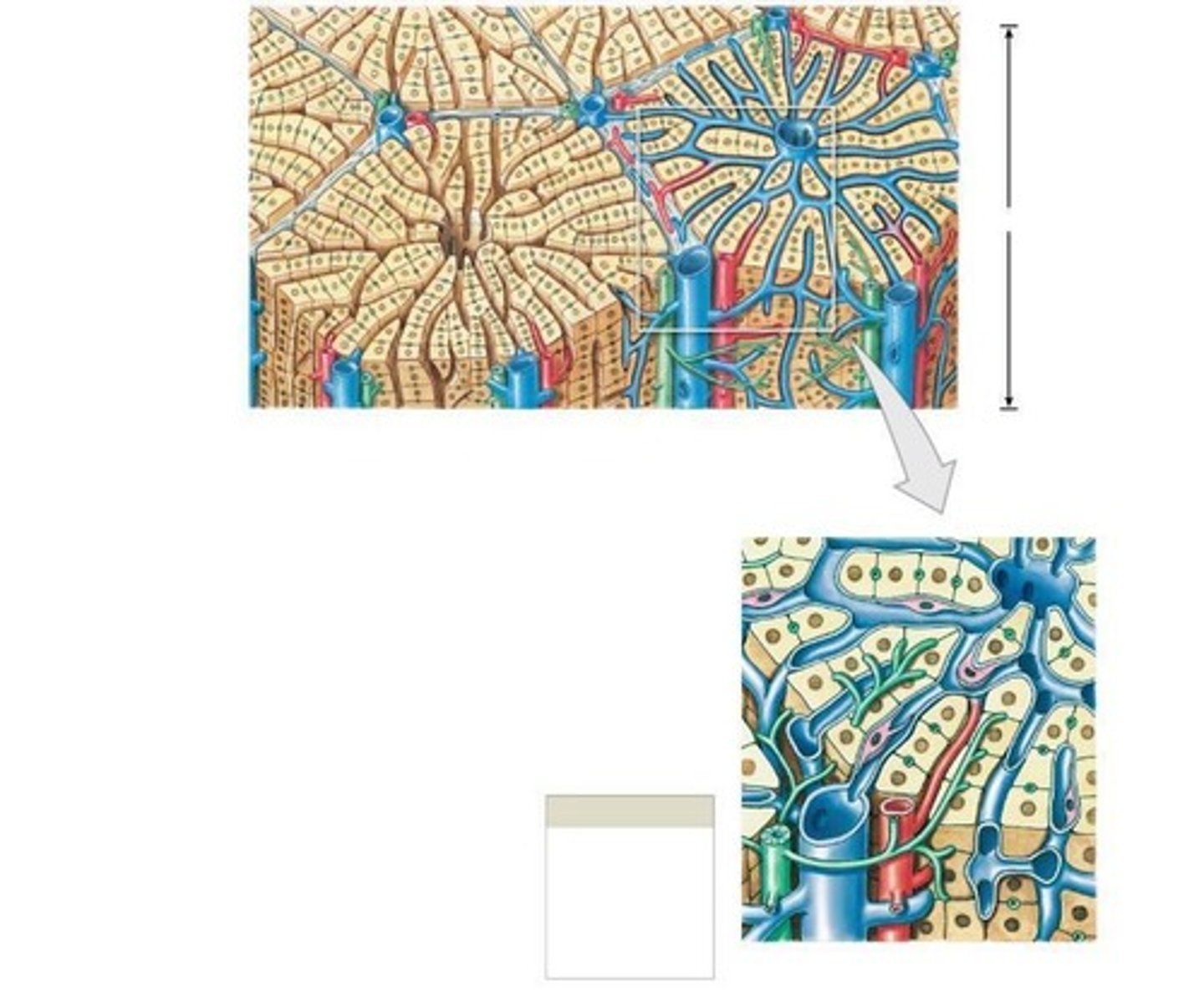
Liver lobules
Basic functional units of the liver, hexagonal.
Hepatocytes
Liver cells producing bile and proteins.
Kupffer cells
Macrophages in liver, involved in immune response.
Falciform ligament
Divides right and left lobes of liver.
Serum proteins
Proteins in blood, including albumin.
Chylomicrons
Fat transport particles absorbed from intestines.
Liver sinusoids
Capillaries between hepatocyte plates for blood flow.
Bile pigments
Waste products from breakdown of hemoglobin.
Metabolism
Chemical processes for maintaining life functions.
Fibrous capsule
Protective layer surrounding the liver.
Monocytes
A type of white blood cell, agranulocyte.
Macrophages
Monocytes that differentiate in tissues.
Microglial cells
Macrophages found in the central nervous system.
Histiocytes
Macrophages present in connective tissue.
Osteoclasts
Macrophages involved in bone resorption.
Portal Area
Contains hepatic portal vein, artery, bile duct.
Hepatic Blood Supply
Liver receives blood from both arteries and veins.
Hepatic artery proper
Supplies 1/3 of liver's arterial blood.
Hepatic portal vein
Supplies 2/3 of liver's venous blood.
Zone I
Periportal zone, first to receive blood.
Zone II
Intermediate zone between periportal and pericentral.
Zone III
Pericentral zone, farthest from hepatic artery.
P450 oxidase system
Enzyme system for chemical modification in liver.
Bile canaliculi
Narrow channels for bile secretion in liver.
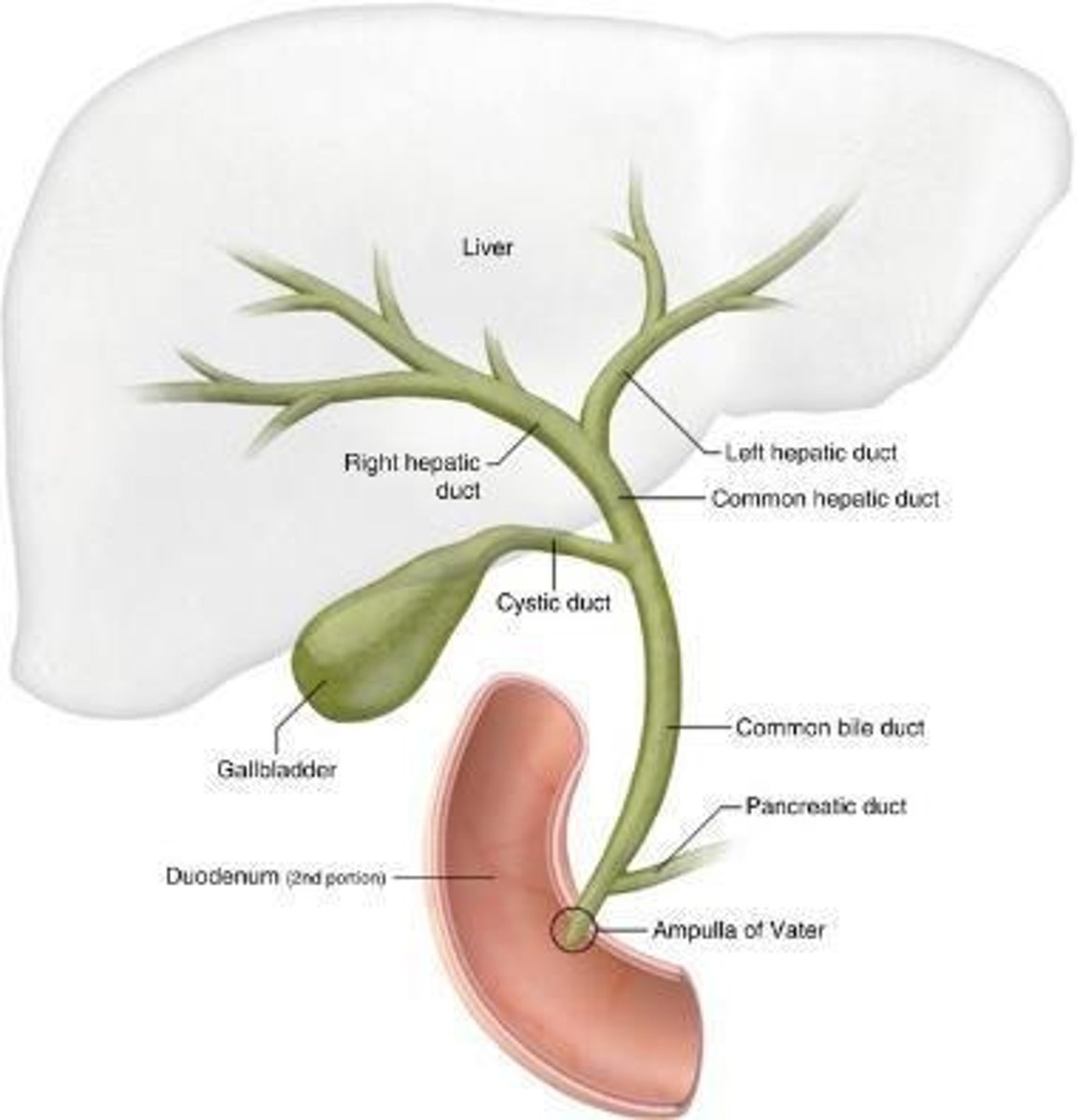
Common hepatic duct
Collects bile from all liver lobes.
Common bile duct
Formed by cystic and common hepatic ducts.
Gallbladder
Stores and concentrates bile from liver.
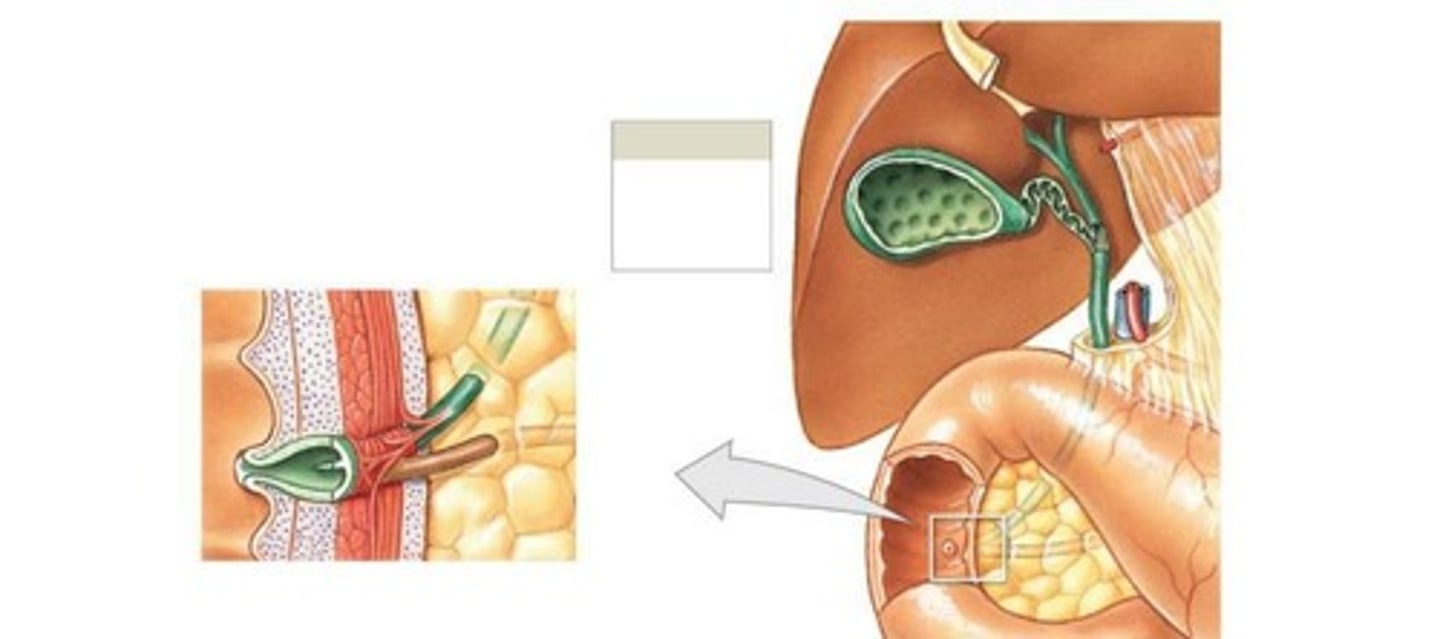
Cholecystokinin (CCK)
Hormone triggering gallbladder contraction and bile release.
Bile secretion rate
Liver secretes about 1 liter of bile daily.
Emulsification
Process of breaking lipid droplets by bile salts.
Hepatopancreatic sphincter
Regulates bile flow into the duodenum.
Vagal nerve stimulation
Triggers gallbladder contraction post-meal.
Cholelithiasis
Condition of gallstones in the gallbladder.
Gallstones
Solid particles formed from bile components.
Excess cholesterol
Primary cause of gallstone formation.
Bilirubin
Waste product from hemoglobin breakdown.
Pancreatic cancer
Tumors compressing the common bile duct.
Painless jaundice
Symptom of obstructed bile flow.
Liver functions
Includes protein synthesis and toxin metabolism.
Coagulation factors
Proteins essential for blood clotting.
Complement proteins
Part of the immune response.
Albumin
Maintains serum osmolality and oncotic pressure.
Apolipoproteins
Proteins aiding lipid transport in blood.
C-Reactive Protein
Marker for acute inflammation.
Angiotensinogen
Precursor in the renin-angiotensin system.
Transferrin
Protein that transports iron in blood.
Cytochrome P450 enzymes
Involved in drug metabolism in liver.
UDP-glucuronyl transferase
Conjugates bilirubin for excretion.
Bile
Substance that emulsifies fats for digestion.
Urobilins
Products of bilirubin metabolism excreted in urine.
Stercobilins
Bilirubin derivatives giving feces their color.
Physiological jaundice
Temporary condition in newborns due to bilirubin.
Phototherapy
Treatment to convert bilirubin for easier excretion.
Cystic Duct
Connects gallbladder to common hepatic duct.
Gallbladder Capacity
Stores 40-70 mL of bile.
Gallbladder Physiology
Absorbs water, concentrates bile salts.
Fundus
Upper part of the gallbladder.
Body
Main section of the gallbladder.
Neck
Narrow part of the gallbladder.
Salivary Amylase
Enzyme that begins carbohydrate digestion.
Gastrin
Hormone stimulating gastric acid secretion.
Pepsinogen
Inactive form of pepsin released by stomach.
Chyme
Partially digested food in the duodenum.
Pancreatic Enzymes
Digestive enzymes released into the small intestine.
Monosaccharides
Simple sugars absorbed into the bloodstream.
Facilitated Diffusion
Passive transport of substances across cell membranes.