Cell Biology and Genetics, Test 4 Study Flashcards - Yui Hisanaga
 Call Kai
 Learn
Learn Practice Test
 Spaced Repetition
 Match
Match Flashcards
 Knowt Play
1/46

There's no tags or description
Looks like no tags are added yet.
Name | Mastery | Learn | Test | Matching | Spaced | Call with Kai |
|---|
No analytics yet
Send a link to your students to track their progress
47 Terms
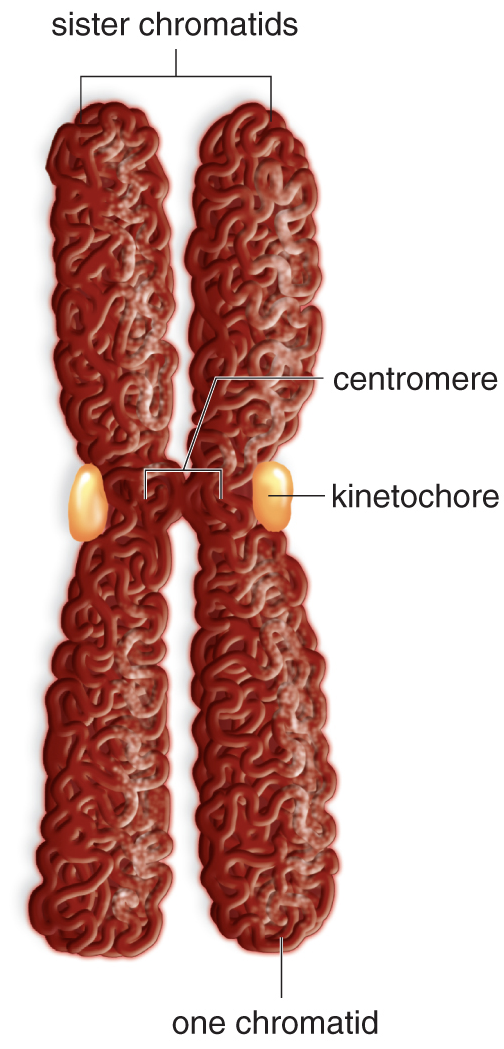
What are sister chromatids and what is on it?
•Results from DNA replication
•Identical genetic information to each other and from parents
Centromere: Specialized region in the middle where sister chromatids are joined
Kinetochore: Protein complexes on either side of the centromere, the site where spindle fibers attach
What are homologous chromosomes?
Same gene, pair of chromosomes with one from each parent. Similar to size, shape, gene.
Describe G1 in the Cell Cycle
Overall: Getting ready for DNA replication, step 1 of interphase, chromosomes are unreplicated
•Interval of growth
•Number of organelles doubles
•Materials (such as proteins) needed for DNA synthesis are produced
Describe S in the Cell Cycle
Overall: DNA replication (DNA synthesis), step 2 of interphase
•Chromosomes are duplicated
•Sister chromatids are formed, connected in the middle through the centromere and kinetochore
Describe G2 in the Cell Cycle
Overall: Preparing for division, step 3 of interphase
Proteins needed for cell division (such as microtubules) are synthesized
Describe Mitosis in the Cell Cycle
Prophase
•Chromosomes condense
•Nuclear envelope disappears
•Spindle apparatus begins to form
Metaphase
•Chromosomes line up in the middle
•Mitotic spindles (microtubules) attach
Anaphase:
•Sister chromatids separate from each other
•Microtubules shrink and pull from each other
•Unduplicated chromosomes now
Telophase:
•Chromosomes decondense
•Nuclear envelope reforms
Cytokinesis:
•Cell division begins, causes membrane to start pinching in
•Nuclear envelope reforms
•Cell division is complete, two daughter cells are formed
•Cytoplasm is divided
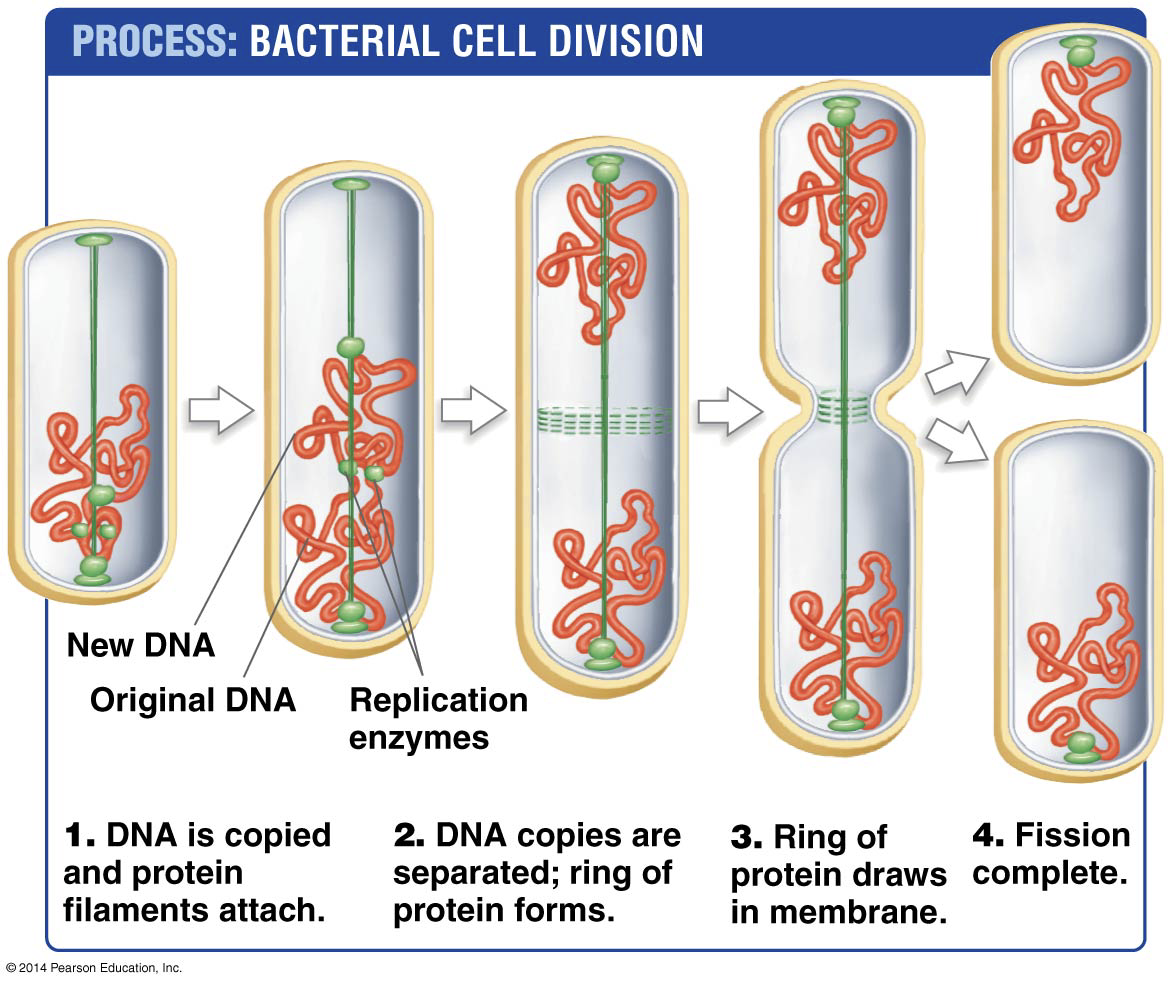
How do Prokaryote Cells divide?
Binary Fission
DNA is copied and protein filaments attach
DNA copies are separated, ring of protein forms
Ring of protein draws in membrane
Fission complete
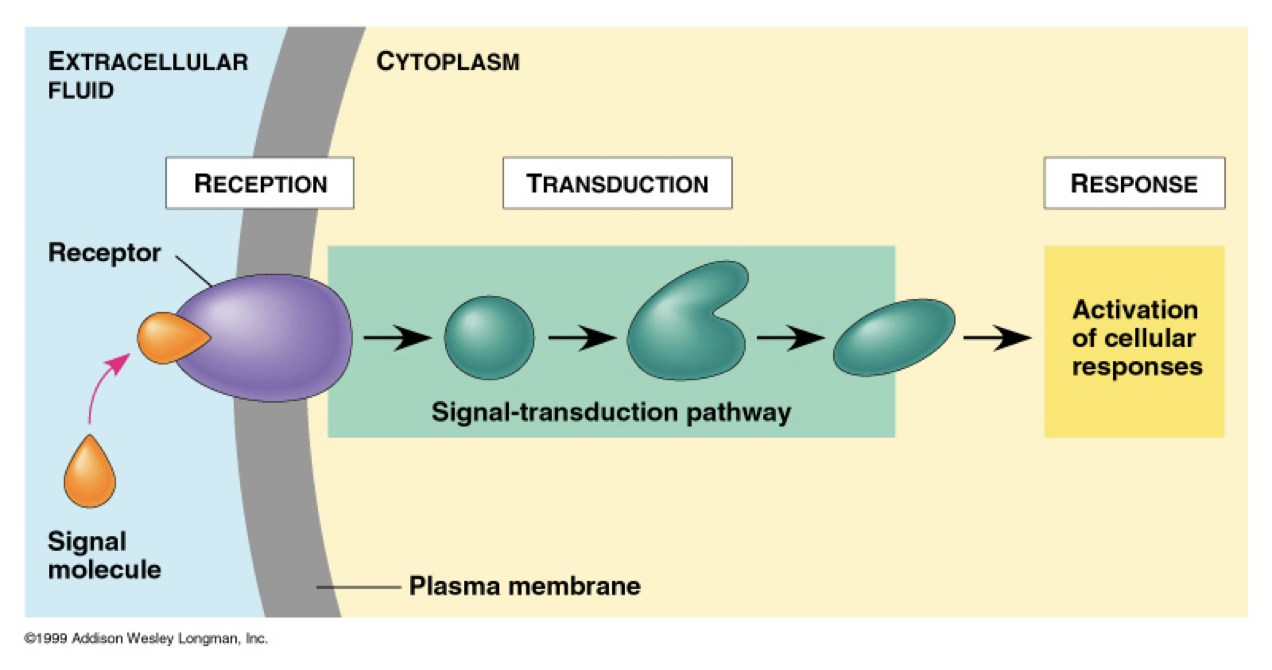
Describe the overall control of cell division.
A signal molecule, often from a hormone (growth factor)
Will bind to growth factor receptor
Goes through signal transduction with signaling molecules (like kinase, CAMP, second messengers)
Response: cell division control genes will be expressed, production of cyclins
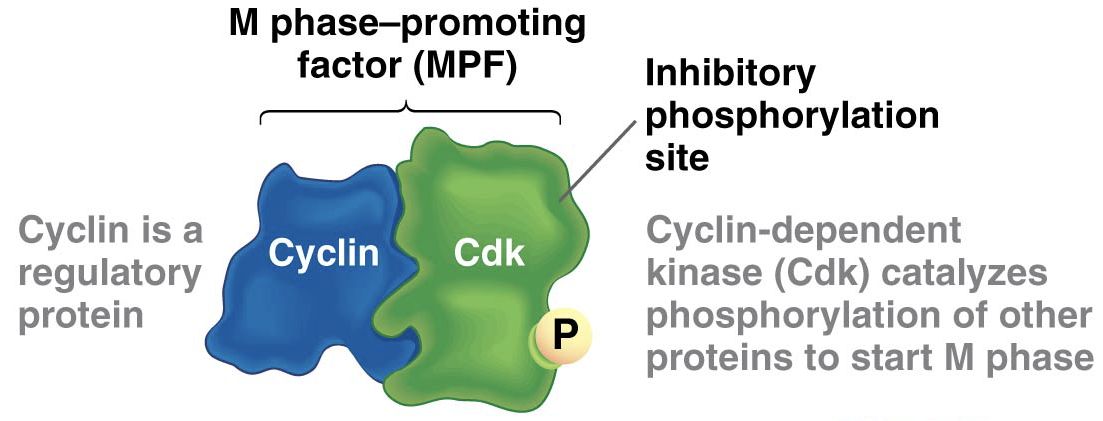
What is MPF? What is its role in regulating mitosis?
•MPF: Mitosis Regulating Factor, “start mitosis” signal, so it plays a role in controlling when mitosis starts. If it is mutated, then mitosis would always start.
•Consists of 2 parts: 1. cyclin 2. cyclin dependent kinase
•Cyclin is most active at the start of mitosis “peak”, then falls right after at G1.
•CDK level does not change.
Cyclin: Regulatory protein, concentration fluctuates
CDK: Only active when bound to cyclin. Catalyzes phosphorylates of other proteins to start M phase
What happens in the G1 checkpoint?
•If DNA is damaged, apoptosis will occur, checking if DNA is undamaged
•Otherwise, the cell is committed to divide once it enters the cell cycle if nutrients are sufficient
•growth factors (go signals) are present
What happens in the G2 checkpoint?
•Mitosis checkpoint, mitosis will occur if DNA has replicated properly (chromosome replication is completed)
•If DNA is damages then apoptosis will occur, no DNA damage
•Enough MPF is present
What happens in the M checkpoint? Why is this checkpoint important?
•Spindle assembly checkpoint- checking that all chromosomes are attached to the mitotic spindle
•Mitosis will not continue if chromosomes are not properly aligned, cell will wait.
This is important because is the spindles are not properly attached the cells will have uneven chromosomes, one will have none and the other will have too much.
Describe the importance of check points. What is apoptosis, and how is it applied in real life? What are roles of tumor suppressor genes in this?
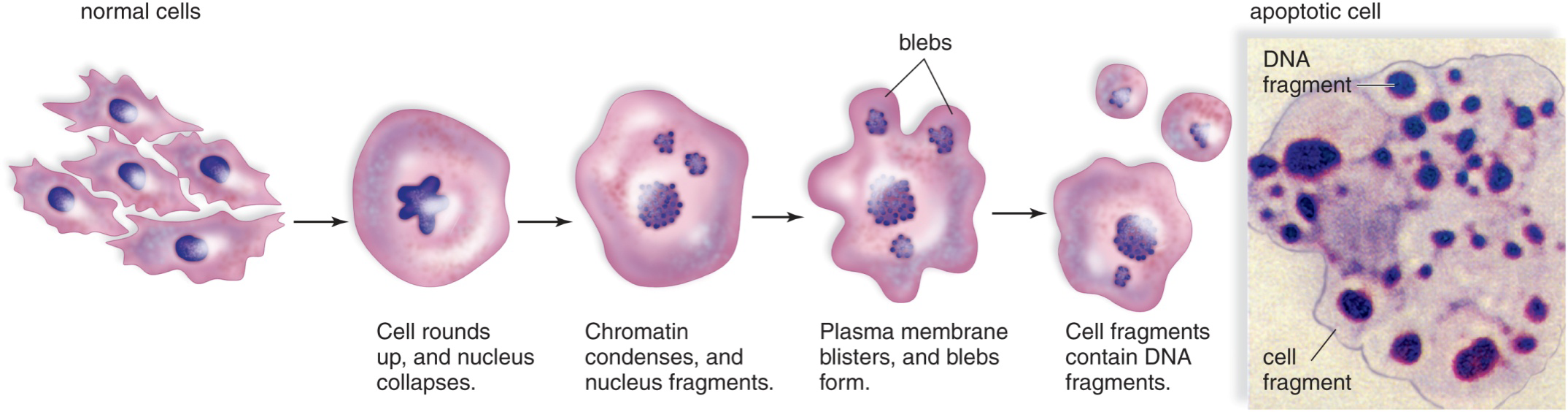
Checkpoints are important because it will catch DNA damage, and the cell will try to repair them. If it is beyond repair, the cell will commit apoptosis.
Apoptosis: suicide of the cell, programmed cell death.
Cell rounds up, chromatin condenses, nucleus fragments
Blebs form, and each cell fragment will contain some DNA fragments.
Application: (triggered by a external signal)
•shaping organisms during development. eg. digits in hands, formation in womb
•limit spread of virus eg. immune cells death after eliminating pathogens
•prevent tumor development eg. cells with DNA damage
Tumor Suppressor Genes: produce proteins that enforce checkpoints. Genes whose proteins inhibit cell division.
What are proto-oncogenes? What kinds of genes are they?
•Growth factors (too much release)
•Growth factor receptors
•Intracellular signaling molecules (kinase, etc.)
•Transcription factors (initiate protein production)
Encodes and synthesizes proteins that control the cell cycle
What is oncogenesis? How does a proto-oncogene become an oncogene and how does it lead to cancer? What is an example of a gain of function mutation?
Oncogenesis it the process where proto-oncogenes become mutated and turn into oncogenes.
•Leads to a gain of function
•Always on now so the cell cycle will always be running, cause cells to be constantly multiply, leading to tumor.
eg. Chronic Myeloid Leukemia (gain of function)
•Translocation of Ch9 and CH 22
•Results in mutation of receptor
•Overgrowth of white blood cells who don’t have the proper function.
What are the stages of cancer cells?
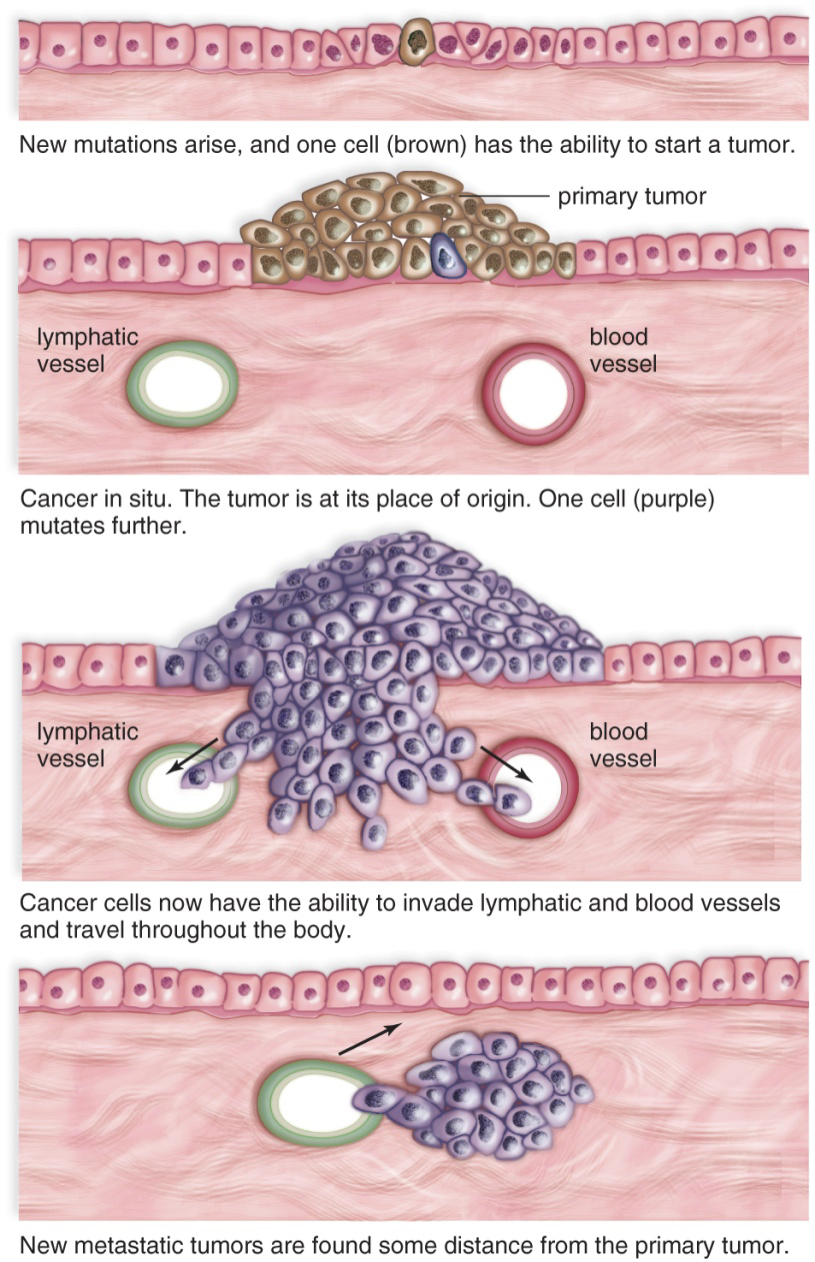
Benign Tumors: (not cancer) tumor cells grow locally and cannot spread by invasion or metastasis. Won’t grow indefinitely, neighboring cells will send signal to stop.
Malignant Tumors: (cancer) 1. Local invasion and 2. Metastasis. Cells will invade neighboring tissues, enter blood vessels, and metastasize to different sites.
Surgical removal is not possible, chemotherapy is required to kill all rapidly diving cells.
How do mutations in Tumor Suppressor genes affect the cell cycle? What kinds of genes are potential tumor suppressors?
•Mutations affect the cell cycle because they would inhibit cell division, but if that gets mutated then cell division would not be controlled
•Loss of function
•DNA repair genes, apoptosis regulators, anything that controls the cell cycle to keep it from working properly.
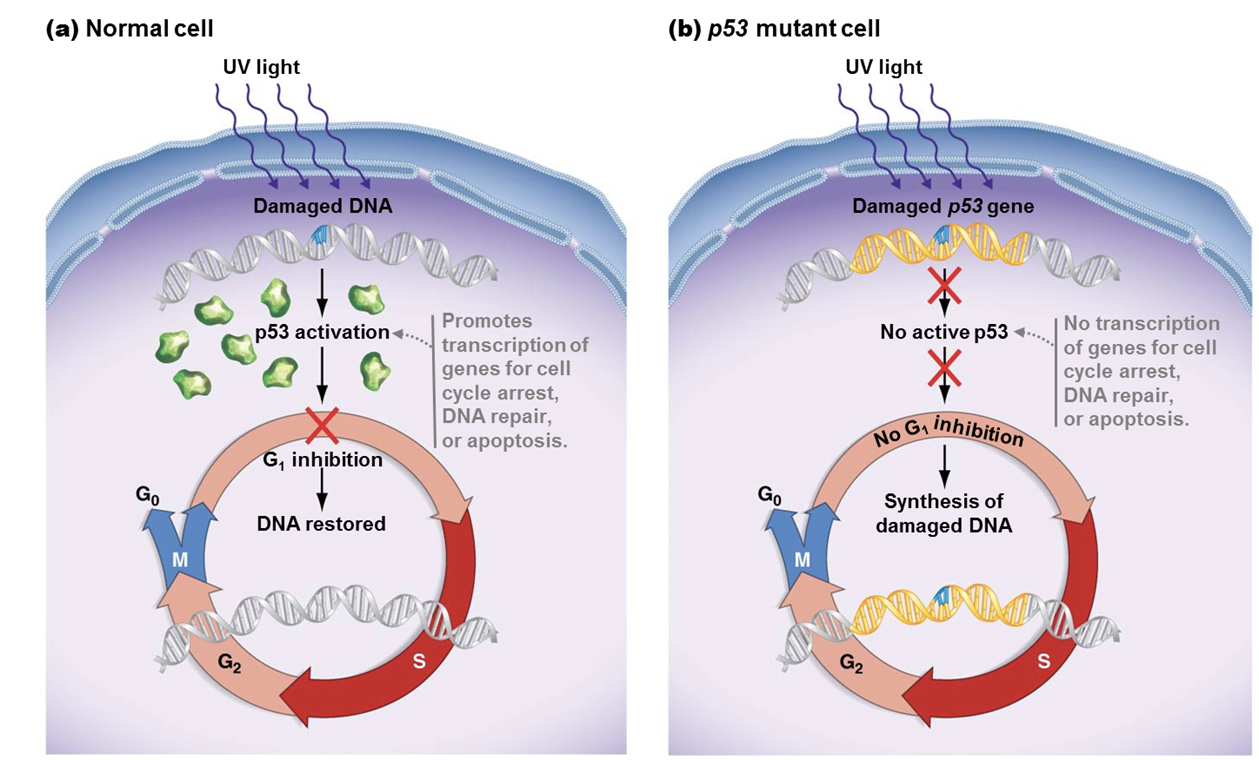
eg. p53 tumor suppressor, major checkpoint protein
•Mutated in more than 55% of human cancers, involved in checkpoint control
•There is no more inhibition in checkpoints, so no DNA repair or restoration.
What is the multiple hit theory?
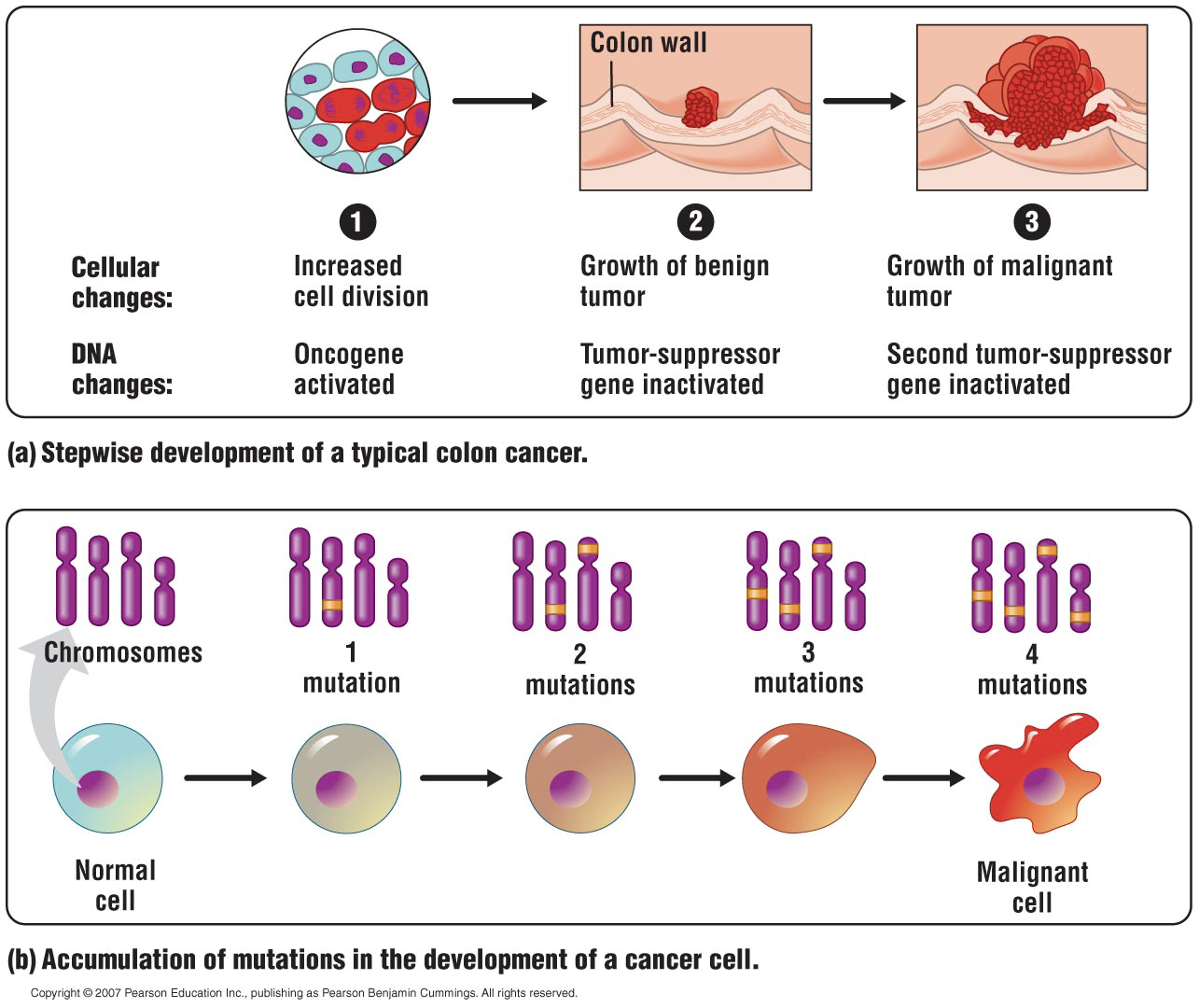
•Multiple mutations (4+) are required to develop cancer
•Takes years to accumulate these mutations
What do these terms mean: haploid, diploid, polyploid, aneuploid, trisomy, monosomy?
Halpoid: n, gametes
Diploid: 2n, homologous, somatic cells
Polyploid: 3n, 4n, eg. seedless fruits. 4n is “okay” but 3n is harmful. Extra complete set of chromosomes.
Aneuploid: 2n -1 or 2n +1. Incorrect number of individual chromosomes
Trisomy: 3 of one chromosome
Monosomy: only 1 of one chromosome
What is the difference between sister chromatids and homologous pairs?
Sister Chromatids: identical to each other and parent, joined by centromere.
Homologous Pairs: pair of the same “kind” of chromosomes. one chromosome is from mother, one chromosome is from father. not identical to each other or parent.
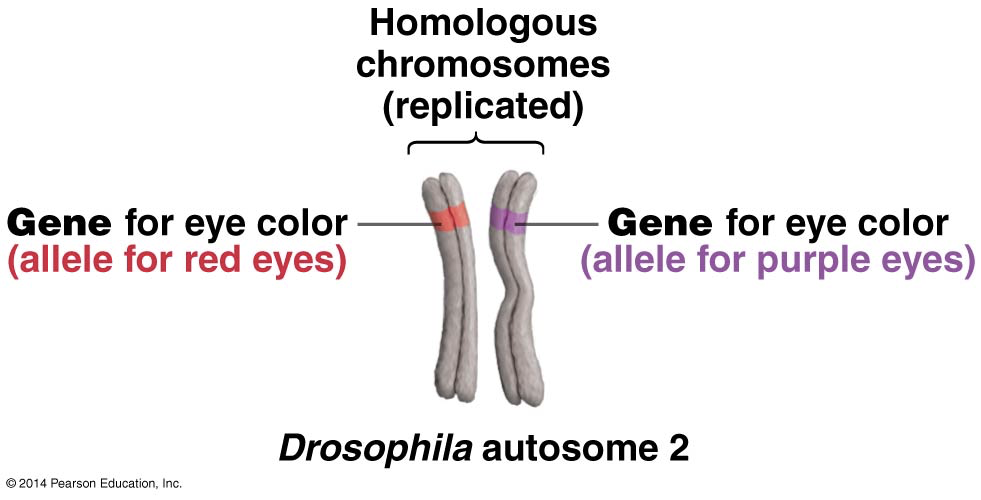
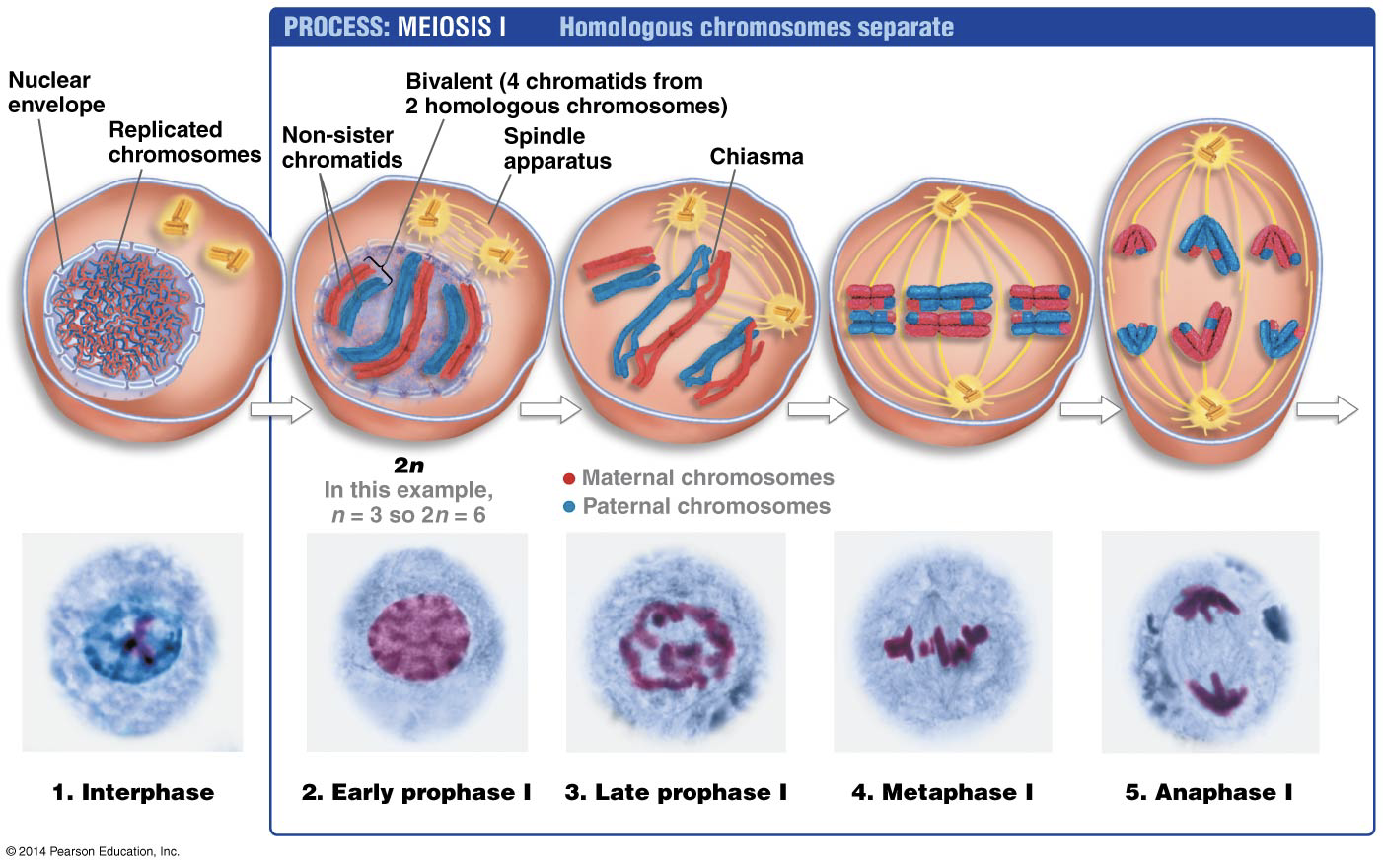
Describe the events in Meiosis 1
Separation of homologous chromosomes
Prophase 1:
•Crossing over: increases genetic diversity. mixture of chromosomes, parts of the chromosome swap with each other.
•Synapses (tetrads): the result of crossing over, 4 chromatids that are together.
Metaphase 1:
•Independent Assortment: Homologous chromosomes line up at the metaphase plate randomly and will be distributed randomly, so there will be more possibility in genetic recombination. eg. humans have 8 million possibilities for genetic variety.
•Tetrads are together and are homologous.
Anaphase 1:
•Homologous chromosomes are being separated by mitotic spindles
Telophase 1 and Cytokinesis:
•Nuclear envelope reforms
•Chromosomes dencondense
Interkinesis
•Very short, brief resting phase between Meiosis 1 and 2.
•Similar to interphase except DNA replication doesn’t occur.
•Prepares for division by synthesizing more proteins/materials
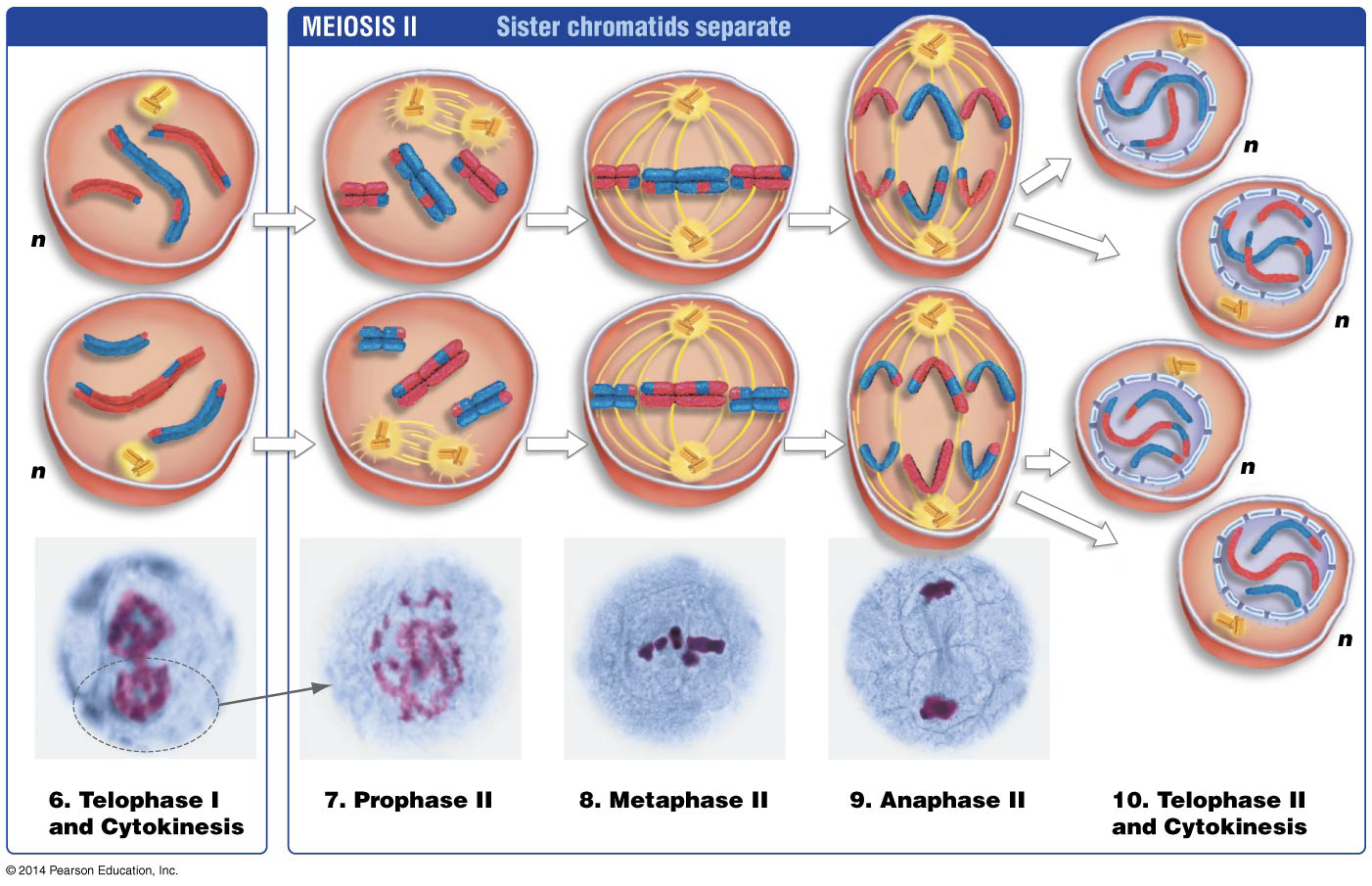
Describe the events in Meiosis 2
Separation of sister chromatids
Prophase 2
Chromosomes condense, no crossing over or synapses.
Metaphase 2
Sister chromatids align line up along the plate
Anaphase 2
Sister chromatids pulled by spindles
Telophase 2 and Cytokinesis
4 unique daughter cells
How are human spermatogenesis and oogenesis different?
Spermatogenesis: Occurs in testes. Happens constantly, follows more traditional meiosis method.
Diploid germ cell (spermatogonium) becomes 4 haploid sperm.
Oogenesis: Occurs in ovaries. Once every week, does not follow traditional meiosis method.
Diploid germ cell (oogonium) becomes 1 ovum (egg) and 2 or 3 polar bodies. Meiosis 2 will wait (halt) to start until the sperm penetrates the egg.
Unequal division of cytoplasm: important so that the egg has as many nutrients and organelles as possible. It gets rid of the excessive chromosomes through polar bodies.
What are 3 processes that contribute to genetic diversity?
Crossing Over (Prophase 1)
Independent Assortment (Metaphase 1)
Fertilization: Haploid Sperm + Haploid Egg = Diploid Zygote
Diploid offspring contains homologous pair of chromosomes.
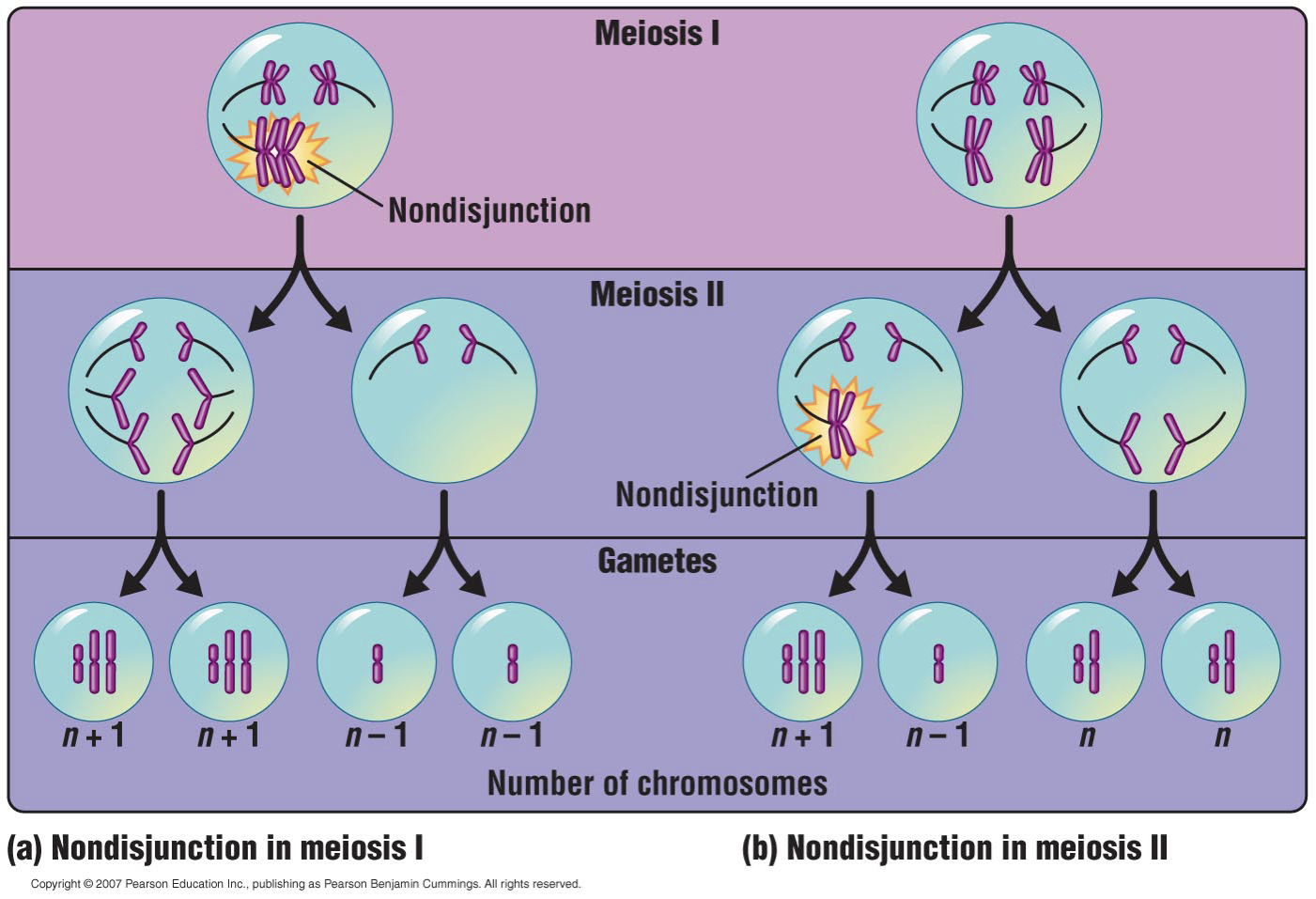
What is Aneuploidy? What causes it?
When individuals have 2n+1 or 2n-1 chromosome
Caused by nondisjunction: failure of chromosomes to separate properly during meiosis. The mitotic spindles don’t properly attach properly, and the M checkpoint didn’t check.
eg. Trisomy 21
Primary Nondisjunction
•Occurs during Meiosis 1
•Homologous chromosomes do not separate (much more common)
Secondary Nondisjunction
•Occurs during Meiosis 2
•Sister chromatids do not separate
What is n? and 2n?
n= haploid
2n= diploid
Humans: n=23
n (haploid): 23 chromosomes found in sperm and egg cells
2n (diploid): 46 chromosomes found in body cells
Before Meiosis 1: 2n
After Meiosis 1: n
What is an allele, gene, homozygous, heterozygous, dominant, recessive, genotype, phenotype?
Allele: A particular form of a gene. eg. 2 alleles in a diploid may be the same or different
Gene: A part of a chromosome
Homozygous: Having 2 of the same alleles
Heterozygous: Having 2 different alleles
Dominant: An allele that produces its phenotype in heterozygous and homozygous form.
Recessive: An allele that only produces its phenotype in homozygous form.
Genotoype: A listing of the alleles in an individual
Phenotype: An individual’s observable traits
What are the genotypic ratios and phenotypic ratios in monohybrid crosses?
AA x aa = (G) 1 (P) 100% dominant
Aa x Aa = (G) 1:3:1 (P) 3 dominant, 1 recessive
Aa x AA = (G) 1:1 (P) 100% dominant
Aa x aa = (G) 1:1 (P) 50% dominant, 50% recessive
How is a 3:1 ratio possible? Why makes dominant alleles mask recessive alleles, and how is that shown in diploid organisms?
A 3:1 ratio is possible if:
Each parents has two hereditary “factors” for each trait
The factors separate (segregate) during the formation of gametes
Each gamete contains only one factor for a particular trait
Fertilization (random) gives each new individual 2 factors for each trait
Alleles are on separate homologous chromosomes, and in diploid organisms, they have 2 alleles at each gene locus, one inherited from each parents. These alleles can be the same (homozygous) or different (heterozygous)
A and a are different due to gene expression, and protein structure.
Dominant alleles mask recessive alleles because of a loss of function mutation that result in recessive alleles.
What are the genotypic ratios and phenotypic ratios in dihybrid crosses?
AABB x aabb = (G) 1 (P) 100% dom
AaBb x AaBb = (G) 1,2,1,2,4,2,1,2,1, (P) 9:3:3:1
AaBB x aabb = (G) 1 AaBb, 1 Aabb, 1 aaBb, 1aabb (P) 1:1:1:1
What are testcrosses and reciprocal crosses? What are they, what do you use them for, and how do you use them?
Test Cross: determine the genotype of an organism that is phenotypically dominant. Seeing if the dominant organism is homozygous or heterozygous.
done by crossing the dominant organism with a homozygous recessive organism.
eg. crossing Yy with yy, crossing YY with yy.
Reciprocal Crosses: determining if a trait is located on the sex chromosome or not. 2 crosses where the male and female parents trade phenotypes.
Result: Yields different phenotypes in male and female offspring, then it’s sex linked. If it yields the same phenotypes in male and female offspring, then it’s not.
What determines sex in humans, birds, reptiles, clownfish, and grass hoppers?
Humans: Males have XY chromosomes, Females have XY chromosomes.
Birds: Opposite from humans, Males have ZZ and Females have ZW
Reptiles: Gender is decided based upon the temperature of the nest when the eggs hatch. The higher temp: male. Lower temp: female.
Clownfish: They don’t really have a gender and have the ability to change gender but the biggest fish in the kingdom becomes the female and the 2nd biggest becomes the male.
Grass Hoppers: Males: X. possess no Y and females are XX
What in incomplete dominance and co dominance?
Incomplete dominance: Heterozygotes have an intermediate phenotype somewhere between two homozygous phenotypes. Neither parent is dominant so the traits will blend with each other. eg. pink flowers in the F1 generation from red and white parent generation.
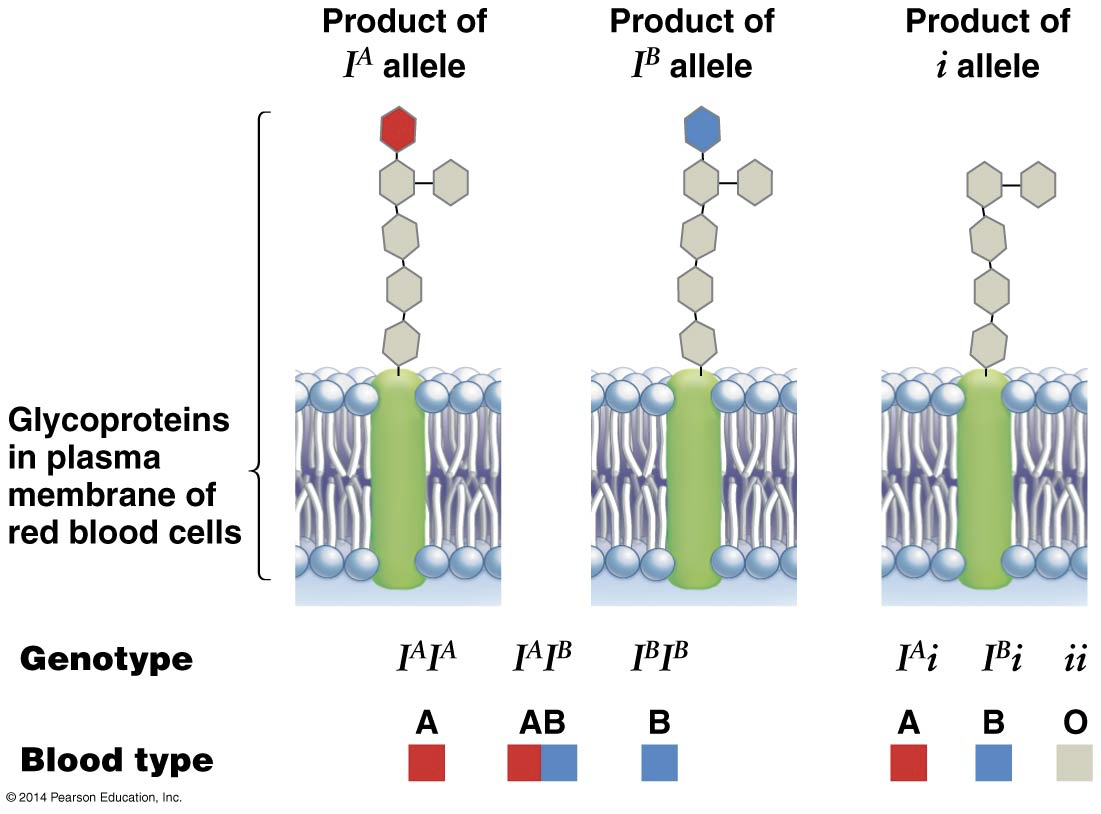
Co dominance: When both alleles are expressed fully at the same time. eg. blood types. A, B, O. A and B are dominant over O. so if someone is AB, their blood type is just AB and A or B doesn’t cover each other.
What is multiple allelism?
Multiple alleles of a given gene often exist in a population of organisms. A single gene can have multiple alleles within a population.
eg. AO and AA = A
BO and BB = B
What is pleiotropy, what are some pleiotropic traits?
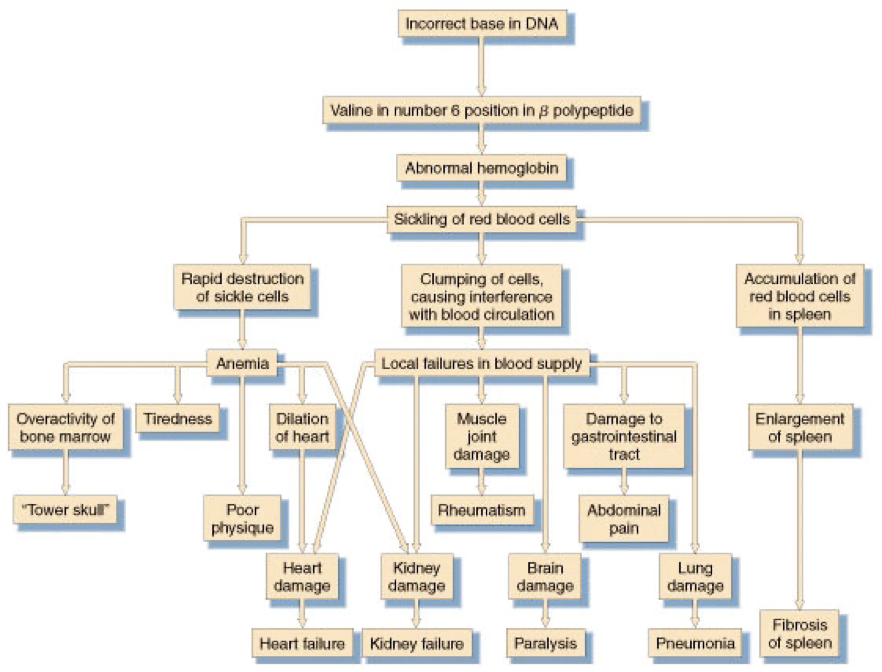
When one gene has more than one outcome (phenotypic effect)
eg. The mutation that causes sickle cell disease can also lead people to be resistant to malaria. (heterozygous)
What is epistasis?
The phenotype expressed by one allele depends on the action of alleles of other genes. In labs, the E gene is epistatic to the B gene which means that the E gene dictates whether the B gene is expressed at all.
eg. Labrador retriever coat color
What is polygenic?
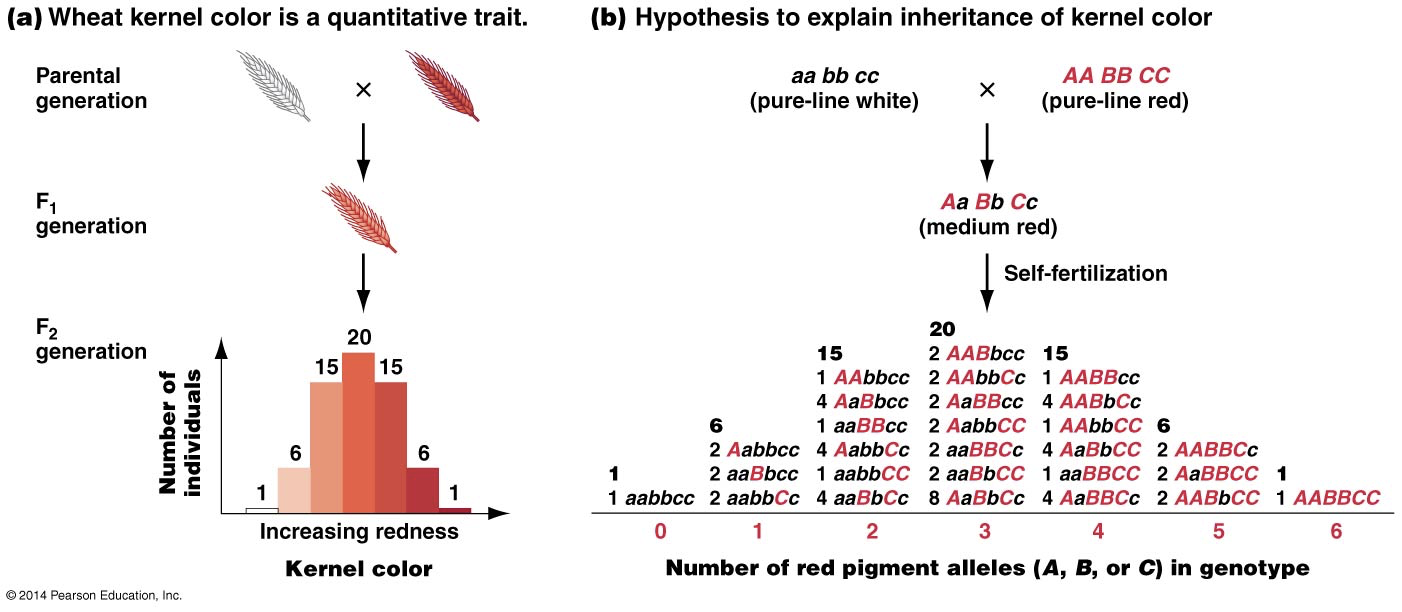
More than one gene contributes to a particular trait. These genes act together to produce a wide spectrum. Also called quantitative traits. Creates a unimodal distribution.
Eg. height, skin color, eye color, those traits are controlled by multiple genes, so it leads to a variety in a population.
Eg. kernel color
What are mitochondrial linked genes?
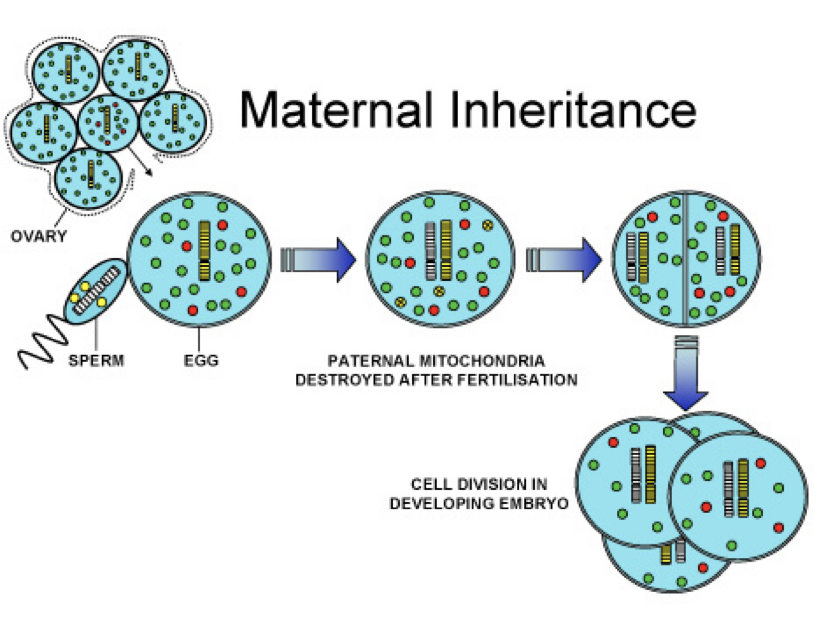
-Mitochondria and chloroplasts have their own DNA that affect phenotypes
-These traits are maternally inherited, only from mother which means you and your siblings all have the same mitochondrial DNA
-Reason for mitochondrial disease, mitochondria fail to produce enough energy
What are gene x environment? How is gene expression affected by environmental factors?
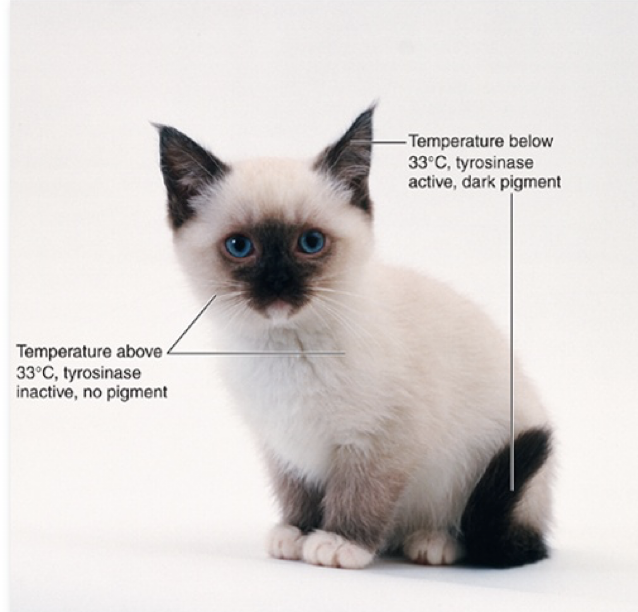
Environmental affects like nutrition, light intensity, temperature, and symbiotic relationships affect gene expression.
Adapt to environment by turning genes “on” and “off.”
What are different inheritance patterns, and examples of disease in each one?
Autosomal Dominant:
Mutant allele is dominant (A) presence of one mutant allele results in the disorder.
Trait typically appears in each generation.
Males and females are equally likely to be affected. Affected offspring are heterozygous if only one parents is affected, unaffected as homozygous recessive.
If one parents is heterozygous, ½ offspring will be affected.
eg. Huntington’s disease: neurological disease that creates a protein that jams up the brain.
Achondroplasia (dwarfism), Osteogenesis Imperfecta (brittle-bone disease)
Autosomal Recessive:
Mutant allele is recessive (a), must have 2 of those mutant alleles to have the disorder.
Individuals who have that one mutant allele (Aa) are called carriers, they don’t actually carry that disease but they have that gene.
Males and females likely to be affected
Affected offspring are homozygous recessive
If both parents are heterozygous, ¼ of offspring will be affected
Traits skip generations
Traits usually skip generations (affected children have unaffected parents)
eg. Tay Sachs, Cystic Fibrosis, PKU
X Linked Recessive:
Recessive mutant allele is carried on the X chromosome. Relatively common.
More males than female have the disorder because females will need 2 “bad” alleles (XX) but males only need one “bad” allele (XY) because they only have one X chromosome so the trait will be expressed.
Trait is never passed down from father to son. (son needs the Y from his dad)
Affected sons are usually born from carrier mothers
All daughters of affected males and unaffected females are carriers
Traits often skip generations
eg. Red green colorblindness, Hemophilia A (blood clotting factors are mutated)
X Linked Dominant:
Dominant mutant allele is carried on the X chromosome. These are relatively rare.
Males and females equally affected.
Females and males only need one “bad” allele, males need to get it from thier mother
All daughters from an affected dad are affected
Traits do not skip generations
If an mother is affected then ½ of the offspring will be affected.
What are the steps in finding a gene associated with a disease? What’s a linkage study and the steps involved?
Finding a gene associated with a disease:
Find Family
Construct Pedigree
Sequence Genetic Markers
Find SNP
Sequence genes around SNP’s
Find the genes
Linkage study: constructing a pedigree to find out individuals who have and who don’t have the disease. Finding the genetic markers associated with the disease, and find differences between affected and unaffected.
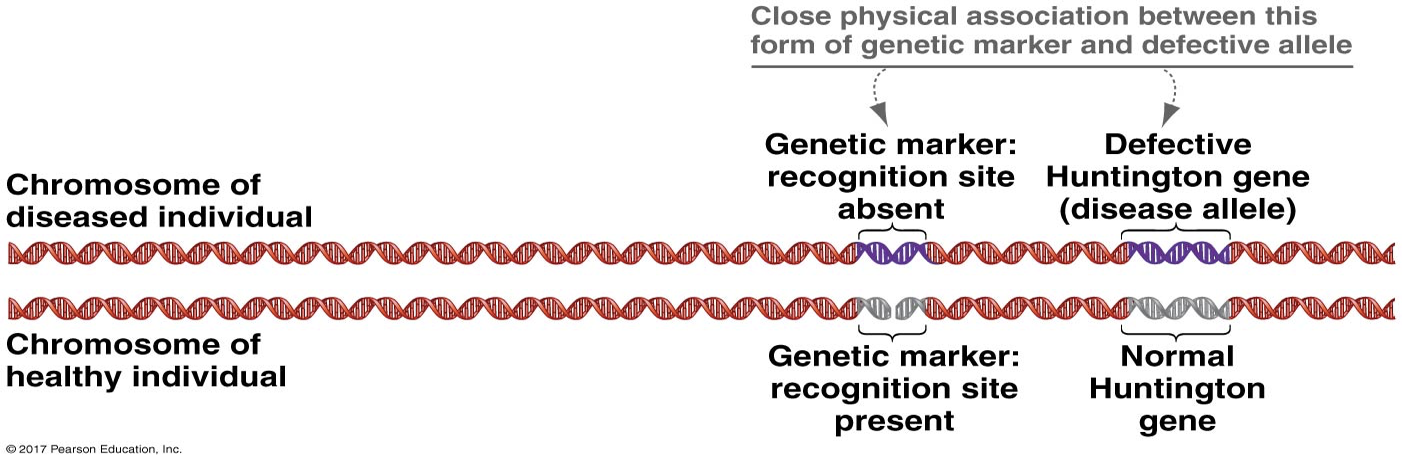
What are genetic markers (SNP)? How do SNP’s help with linkage studies?
SNP: single nucleotide polymorphism
They act as “flags” so that we can find the nucleotide base that is affecting the diseased v.s. the healthy patient.
How do we know whether a DNA sequence is a gene?
It has to contain the components of the gene, like the promotor, regulatory sequences/enhancers, the transcribed region, and the terminator.
What are the 2 types of ways to sequence DNA?
Dideoxynucleotide (Sanger) sequencing
•Uses primers and DNA polymerase and ddNPT to stop polymerization
•Developed in 1975, older way of sequencing
Slow, good for small jobs
Next generation sequencing methods
•Sequence on a larger scale (the whole genome) and much faster
•Split template into smaller pieces and sequence them simultaneously
What are some components of the human genome?
•1.5% are protein coding exons (translated)
•75% are transcribed
•Many transposable elements (“jumping genes” that function like viruses. their functions are still being investigated.)
What are the 2 ways that can be used to treat genetic diseases? How do they work? What are some of their complications and accomplishments?
Gene Therapy by first finding the gene that’s responsible for the disease, introducing functional genes (exons) through a host delivery system (virus) and replace viral genes with genes of interest, under the right promotor/enhancer.
eg. 2011, 14 of 16 children have been treated with gene therapy for SCID, however the complication is that these patients are getting leukemia as a side effect.
eg. 2017 gene therapy to treat retinal dystrophy, successful because eye cells don’t divide as much.
eg. 2019 treat spinal muscular atrophy
CRIPSR/Cas System editing specific DNA sites in living cells
A nuclease protein cuts DNA at a site that is complementary to a guide RNA. The donor DNA can be inserted as the cell repairs that cut.
Complications: legal status, it is banned in many countries around the world. Due to it not being safe, and ethical concerns.
2018: Chinese scientist genetically engineered 2 babies who knocked out the CCR5 gene (HIV). However, we don’t know if he potentially introduced or mixed up other genes in their genome
2019: CRISPR gene editing treatment showed success in sickle cell anemia and beta thalassemia (low hemoglobin levels)
2023: CRISPR is approved, just a matter of if people can afford it or not.
How do we achieve more personalized medicine?
Through more genetic testing and tailoring treatment to the individual specific needs of the patient.
eg. in cancer therapy, looking at the gene of the tumor or patient and pick the therapy that is most suited for their genome.
Through technology like 23 and Me, and whole genome sequences it is now cheaper for the population to look at their genome.