Reproductive Physiology Practical
 Call Kai
 Learn
Learn Practice Test
 Spaced Repetition
 Match
Match Flashcards
 Knowt Play
1/41

There's no tags or description
Looks like no tags are added yet.
Name | Mastery | Learn | Test | Matching | Spaced | Call with Kai |
|---|
No analytics yet
Send a link to your students to track their progress
42 Terms
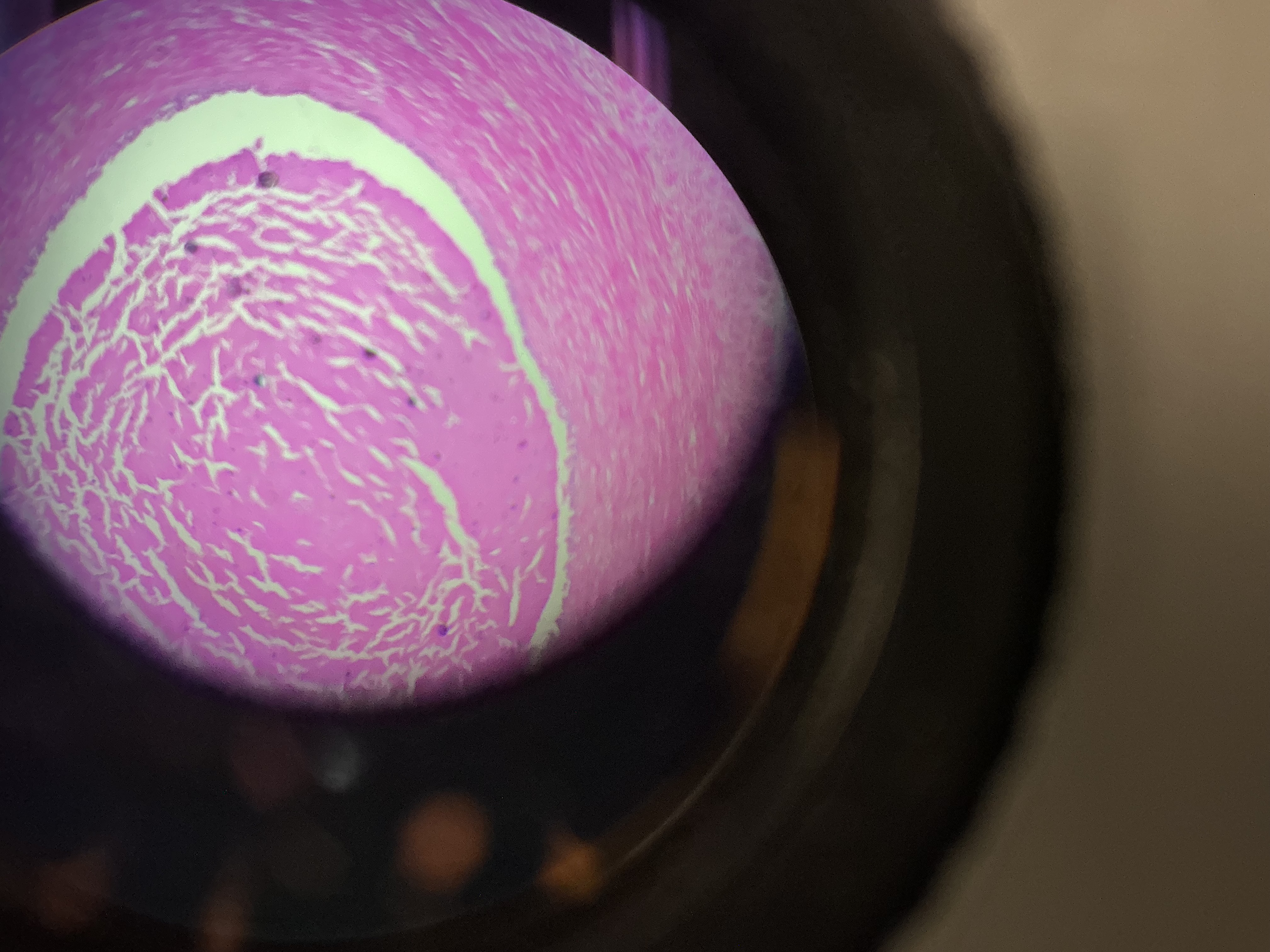
Ductus Deferens
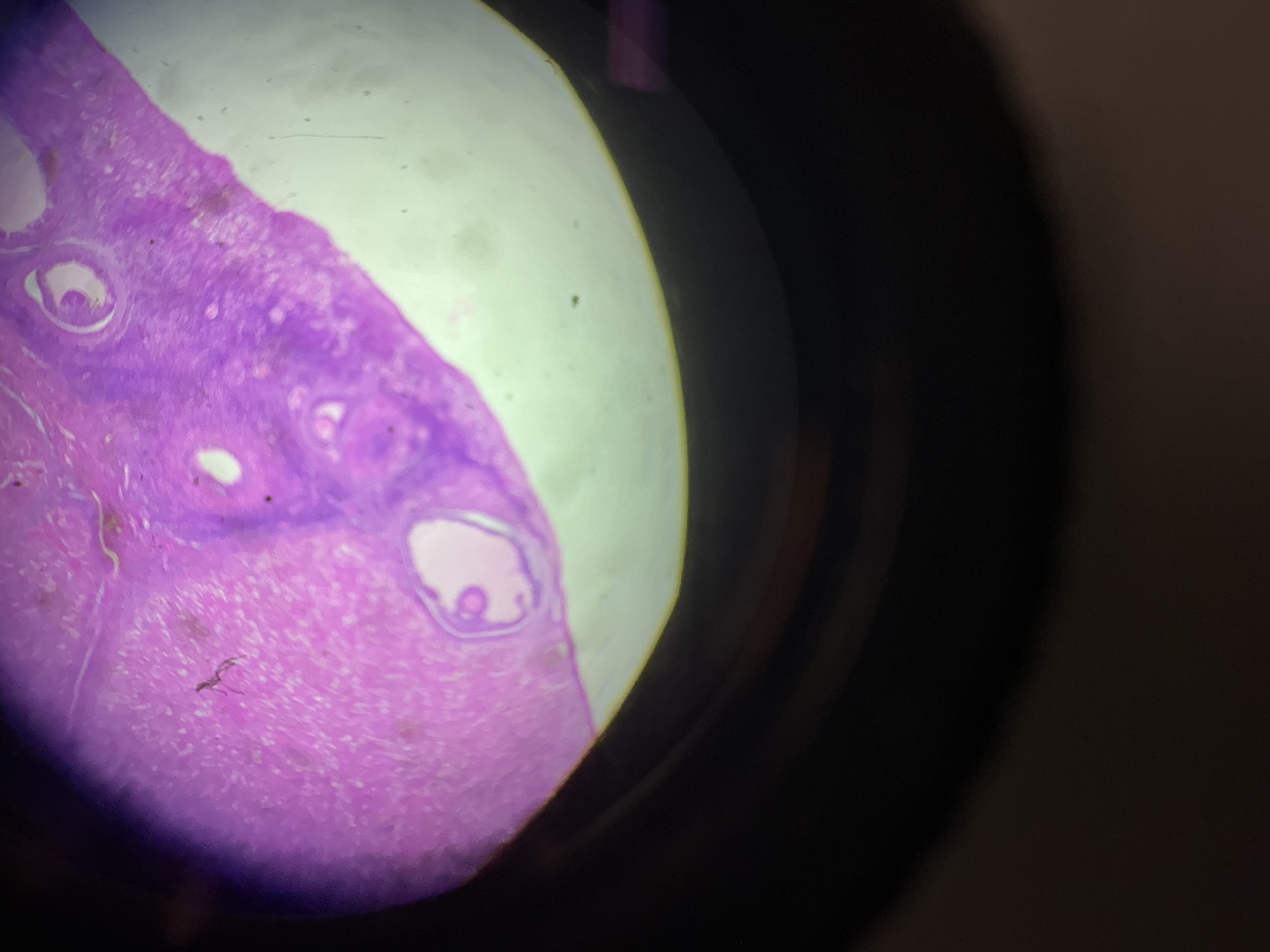
Mammal Graafian Follicles
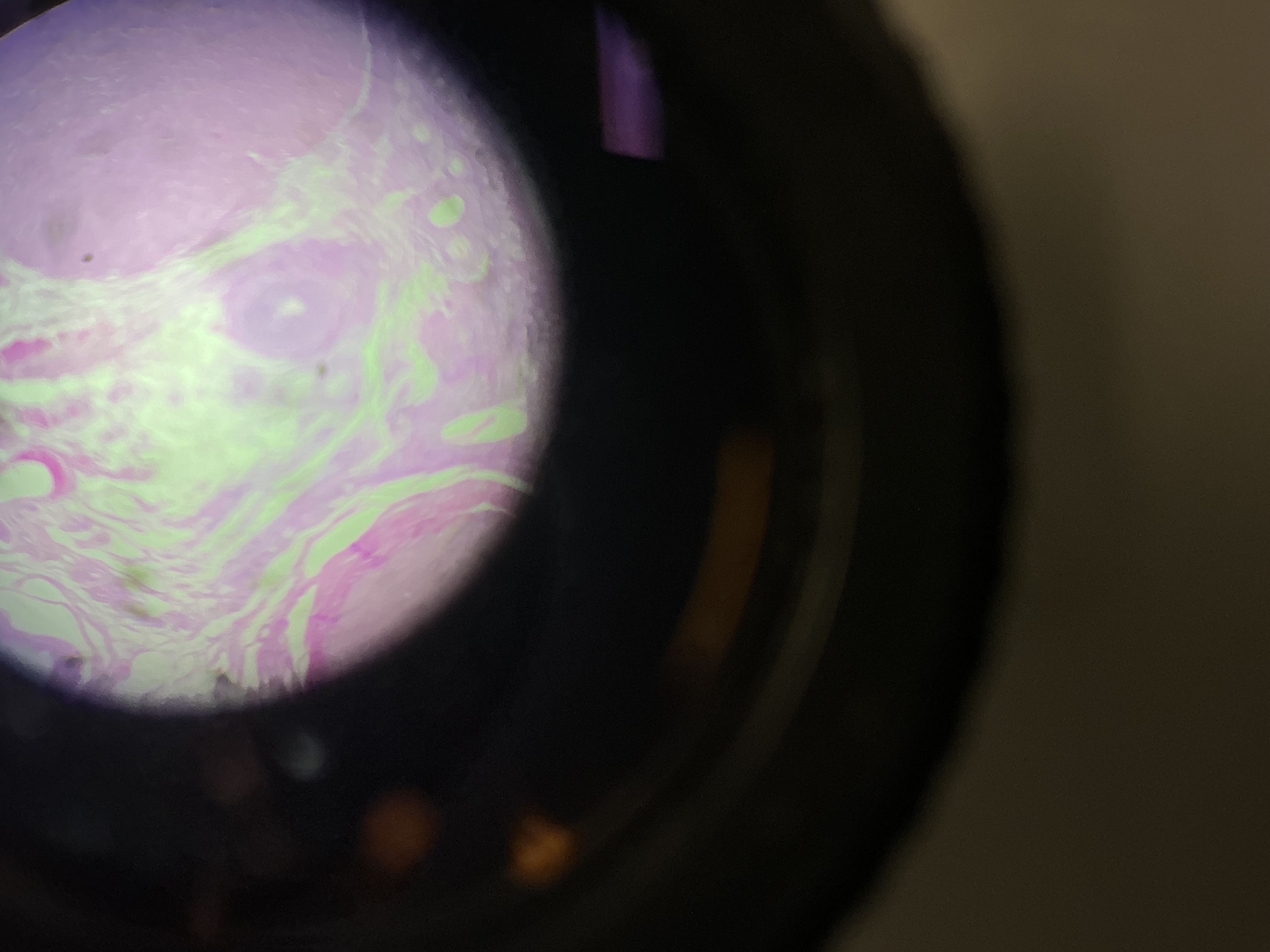
Mammal ovary follicles
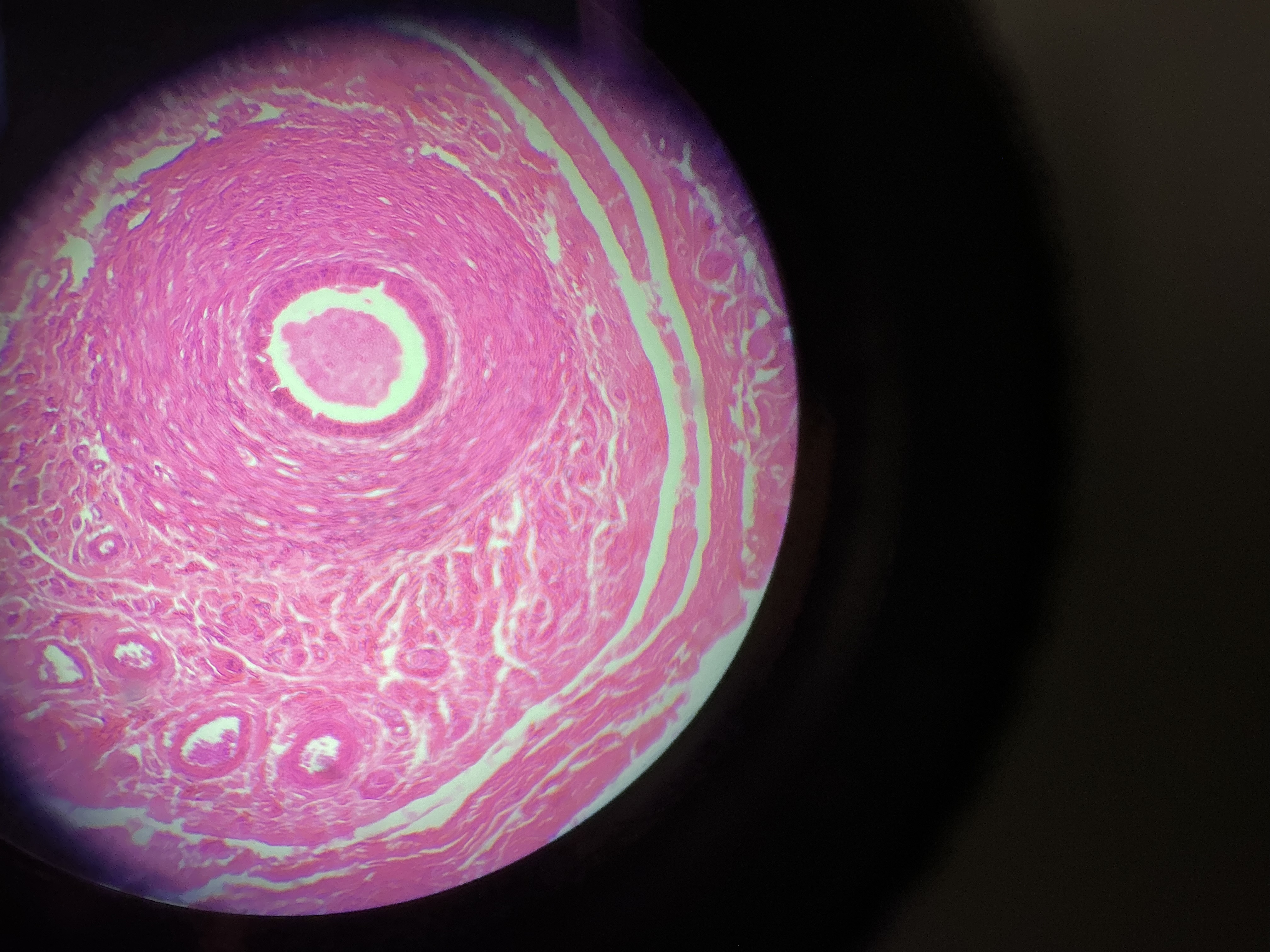
Spermatic cord
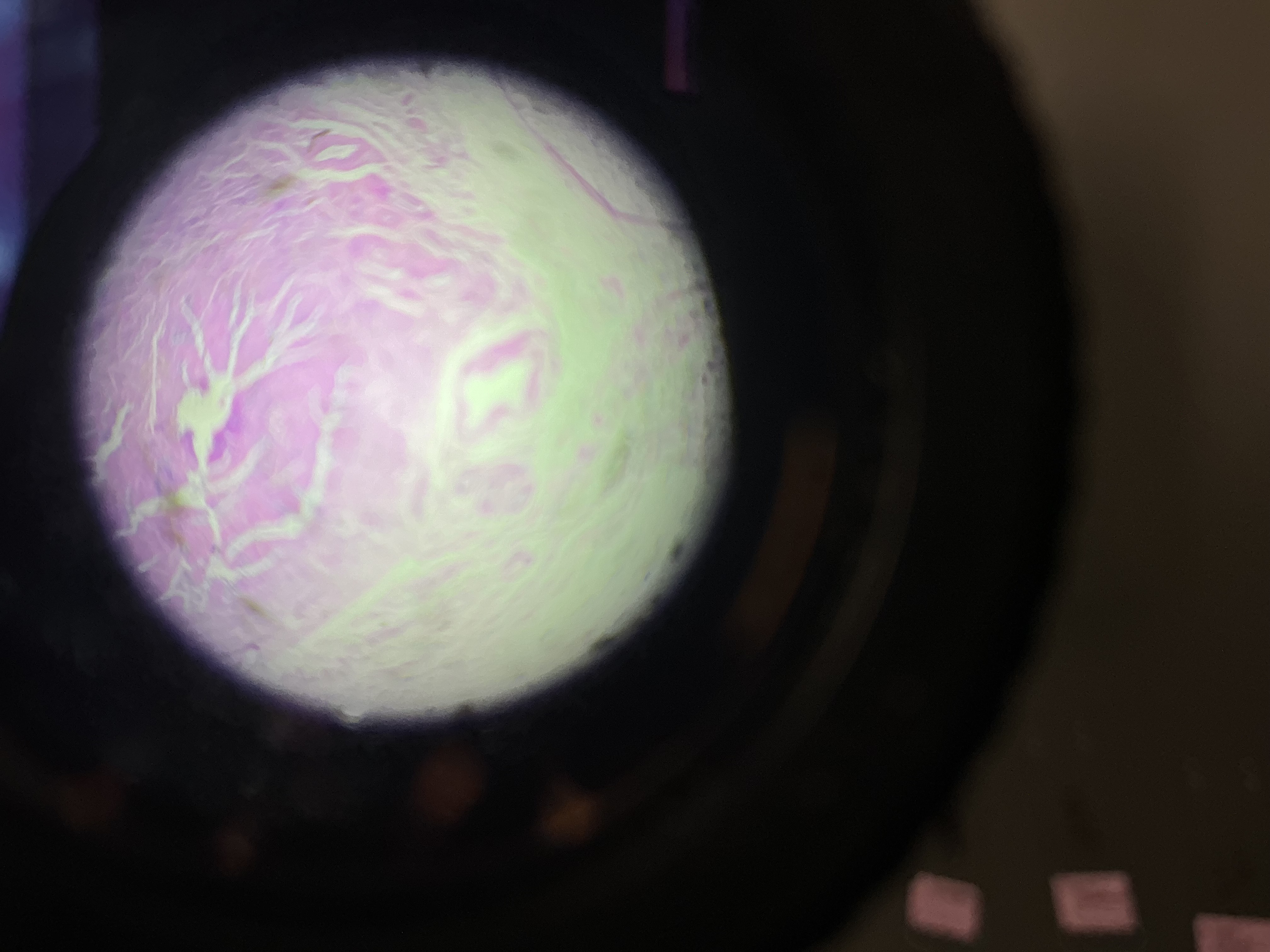
Human fallopian tube
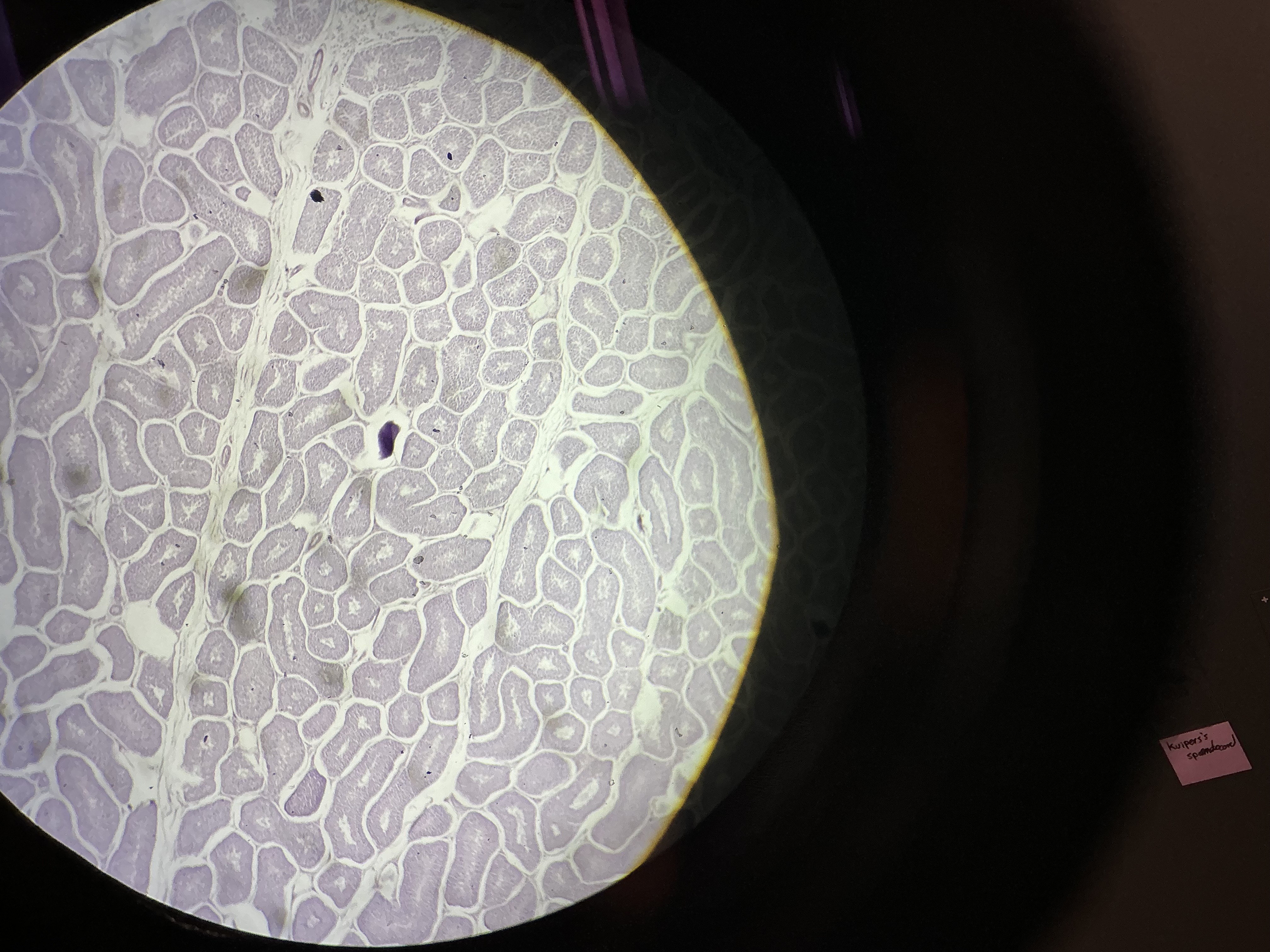
Dog Testis
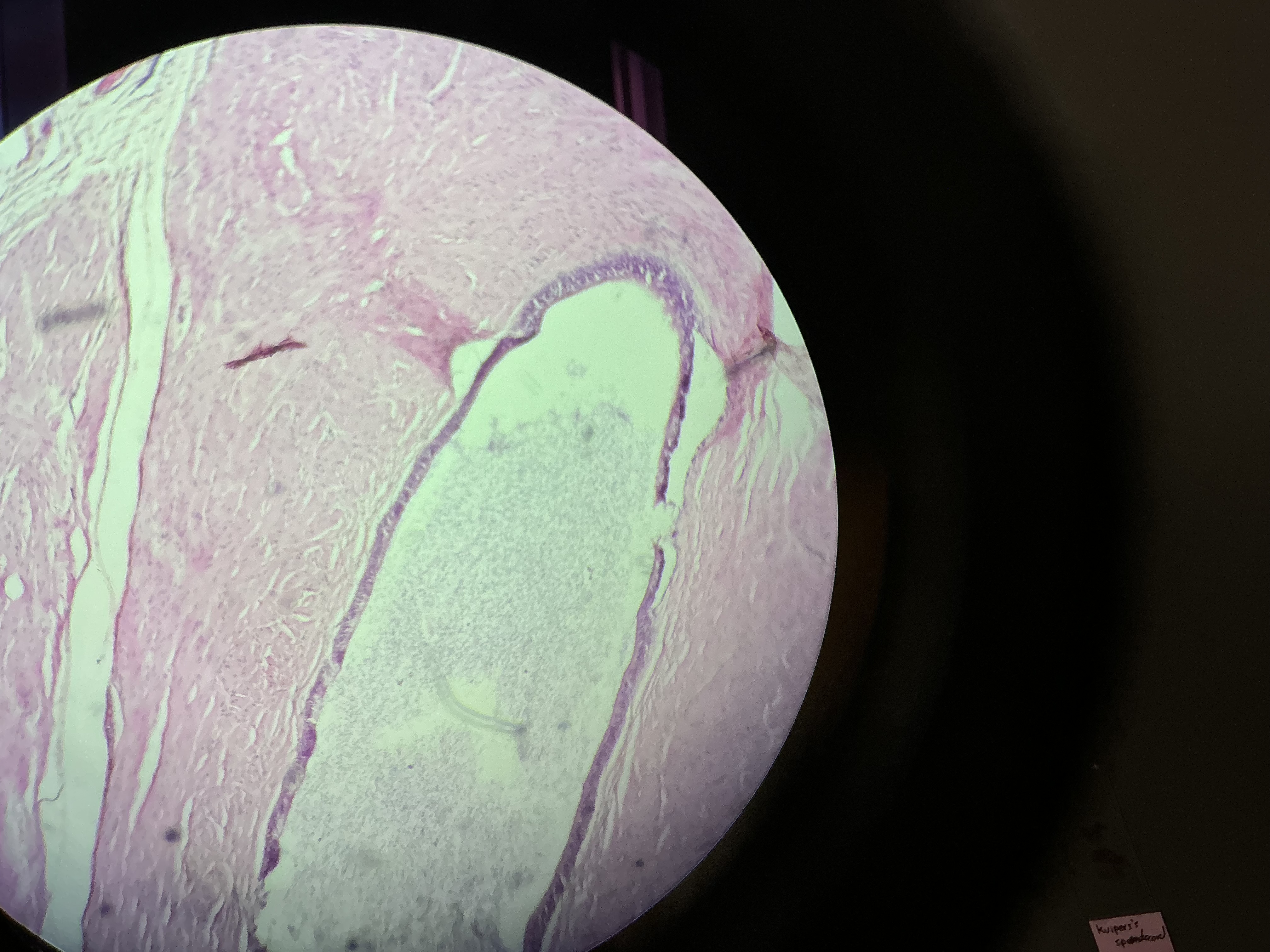
Dog Epididymus Tail
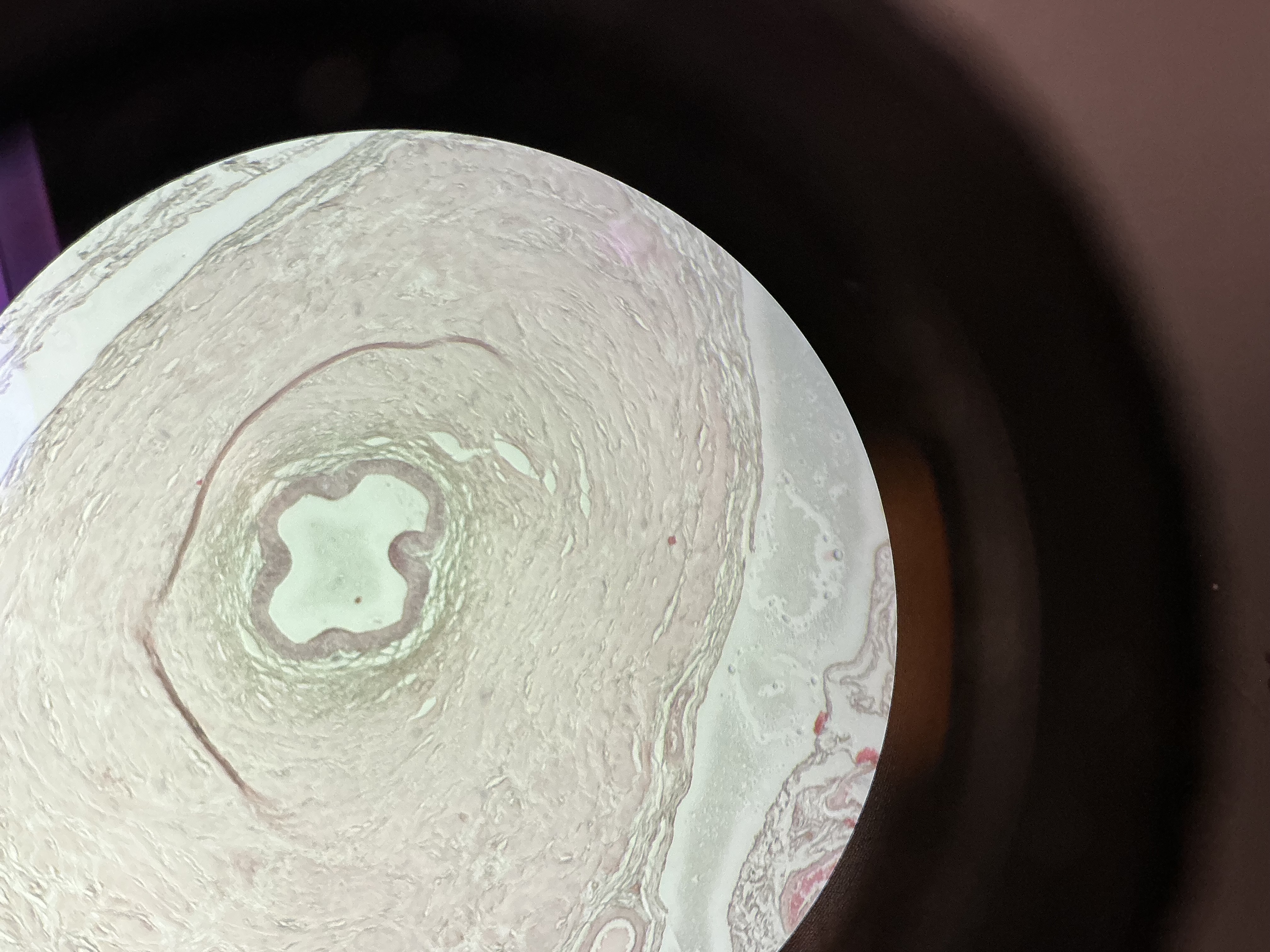
Dog Spermatacord
Parenchyma
The functional cellular mass of the testis
Seminiferous Tubules
The coiled tubes where sperm production occurs
Mediastinum
The central connective tissue that supports the rete network
Tunica Albuginea
The white connective tissue layer below the visceral vaginal tunic
Settling Cells
Specialized cells anchored to the basal lamina that supports germ cells
Myoid Peritubular Cells
Cells forming the outer wall of the seminiferous tubule
Leydig Cells
Found in the interstitium (the space between tubules), these produce testosterone
Pampiniform Plexus
Network of veins in the spermatic cord used for countercurrent heat exchange
Cremaster Muscle
Striated muscle that helps pump blood through the pampiniform plexus
Epididymus head
Caput
Epididymus body
Corpus
Epididymus tail
Cauda
Accessory glands of the penis
Produce seminal plasma
Ex: ampulla, vesicular glands, prostate gland, bulbourethral glands
Erectile tissues
The corpus cavernous (dorsal) and corpus spongiosum (surrounding the urethra)
Fibroelastic penis features
In species like cattle
Ex: sigmoid flexture and retractor penis muscle
Outermost surface of testis
Visceral vaginal tunica
Inner layer of scrotum
Parietal vaginal tunicar
White layer below visceral vaginal tunica
Tunica albuginea
Connective tissue that provides support of the cellular mass of the testis (parenchyma)
Extends towards the center of the testis where it joins the mediastinum
Mediastinum
Connective tissue that supports the rete testes
Tubular part of parachyma
Where spermatic is produced
What is the outer wall of the seminiferous tubules composed of?
Myoid peritubular cells and a basement membrane
Sertoli cells anchored here too
Sertoli cells
Specialized cells in the seminiferous tubules that support developing germ cells during spermatogenesis
Interstitialcompartment of parenchyma
The space adjacent to the wall of the seminiferous tubules
Blood vessels, lymphatics, extracellular matrix and the leydig cells (cells that produce testosterone) are in the interstitial compartment
Leydig cells
Produce testosterone
Vaginal cavity
Between the visceral vaginal tunica and the parietal vaginal tunica that allow the testis to move in the scrotum
Tunica dartos (dartos muscle)
Below the parietal vaginal tunica layer
Layer of smooth muscle
Capable of prolonged contraction to elevate the testis for thermoregulation
Epididymus length in domestic species
60 m
Caput function
Absorbs extra fluid to concentrate sperm
Corpus function
Sperm mature and acquire mobility
75% of sperm are held in the epididymal body in a quiescent state
Stereocilla
Cells in Epididymus that increase surface area for fluid absorption
Ductus deferens
Transport sperm from the Epididymus through the inguinal canal and into the pelvic urethra
Pampiniform plexus
Network of veins that carry deoxygenated blood from the testis the th vena cava
Countercurrent heat exchange system to cool testicular artery blood
Ampulla
Where the ductus deferens meets the urethra
Short term sperm storage
Vesicular glands (seminal vesicles)
Paired glands that contribute to the bulk of seminal plasma