AP PSYCH ALLLL
 Call Kai
 Learn
Learn Practice Test
 Spaced Repetition
 Match
Match Flashcards
 Knowt Play
1/403

There's no tags or description
Looks like no tags are added yet.
Name | Mastery | Learn | Test | Matching | Spaced | Call with Kai |
|---|
No analytics yet
Send a link to your students to track their progress
404 Terms
Free association
Therapeutic technique for exploring unconscious thoughts.
Psychoanalysis
Freud's method for treating mental disorders.
Unconscious
Part of mind containing repressed thoughts and memories.
Id
Primitive part of personality focused on pleasure.--> runs on pleasure principal, unconscious drives/thoughts
Ego
Rational part of personality mediating between id and reality. Balances between ID and Superego--> balances morals
Superego
Moral component of personality enforcing societal standards.
Psychosexual stages
Freud's stages of childhood development influencing personality.
Oedipus complex
Child's feelings of desire for opposite-sex parent.
Repression
Defense mechanism preventing unwanted thoughts from awareness.
Projective test
Psychoanalytical images to reveal unconscious desires and thoughts--> done thru interpetation
Thematic Apperception test
Projective test assessing personality through storytelling.
Rorschach inkblot test
Projective test using inkblots to analyze personality.
False consensus effect
Tendency to overestimate others' agreement with oneself.
Self-actualization
Realization of one's potential and personal growth.
Unconditional positive regard
Acceptance and support regardless of circumstances or actions.
Self-concept
Individual's perception of their own identity and worth.
Social-cognitive perspective
View emphasizing interaction of behavior, environment, and cognition.
Behavioral approach
Focus on observable behaviors and their environmental influences.
Reciprocal determinism
Theory that behavior is influenced by personal and environmental factors.
Spotlight effect
Belief that others notice our behavior more than they do.
Self-esteem
Individual's overall subjective evaluation of their worth.
Self-efficacy
Belief in one's ability to succeed in specific situations.
Self-serving bias
Tendency to attribute successes to oneself and failures to others.
Narcissism
Excessive self-love and self-centeredness.
Individualism
Emphasis on personal goals and independence.
Collectivism
Focus on group goals and interdependence.
Alfred Adler
Psychologist known for individual psychology and inferiority complex.
Karen Horney
Psychoanalyst emphasizing social and cultural factors in personality.
Carl Jung
Analytical psychologist known for concepts of archetypes and collective unconscious.
Abraham Maslow
Psychologist known for hierarchy of needs and self-actualization.
Carl Rogers
Humanistic psychologist advocating for unconditional positive regard.
Albert Bandura
Psychologist known for social learning theory and self-efficacy.
Drive-reduction theory
Theory suggesting motivation arises from biological needs.
Homeostasis
Body's tendency to maintain stable internal conditions.
Yerkes-Dodson law
Principle stating optimal performance occurs at moderate arousal.
Hierarchy of needs
Maslow's pyramid of human needs from basic to self-actualization.
Set point
Weight range body tries to maintain through homeostasis.
James-Lange theory
Theory stating emotions result from physiological responses.
Two-factor theory
Emotion arises from physiological arousal and cognitive labeling.
Cannon-Bard
Theory proposing simultaneous emotion and physiological response.
Facial feedback effect
Our facial expressions can influence our emotions.
General adaptation syndrome (GAS)
Body's response to stress in three stages.
Teratogens
Substances causing developmental abnormalities in embryos.
Habituation
Decreased response to repeated stimuli over time.
Schema
Mental framework that help us organize and interpret information
Assimilation
Integrating new information into existing schemas.
Accommodation
Modifying schemas to incorporate new information.
Sensorimotor stage
Piaget's first stage; infants learn through senses.
Object permanence
Understanding objects continue to exist when unseen.
Preoperational stage
Piaget's stage; children use symbols but lack logic.
Conservation
Understanding quantity remains unchanged despite shape changes.
Egocentrism
Inability to see perspectives other than one's own.
Theory of mind
Understanding others have different thoughts and feelings.
Concrete operational stage
Piaget's stage; logical thinking about concrete events.
Formal operations stage
Piaget's stage; abstract reasoning and hypothetical thinking.
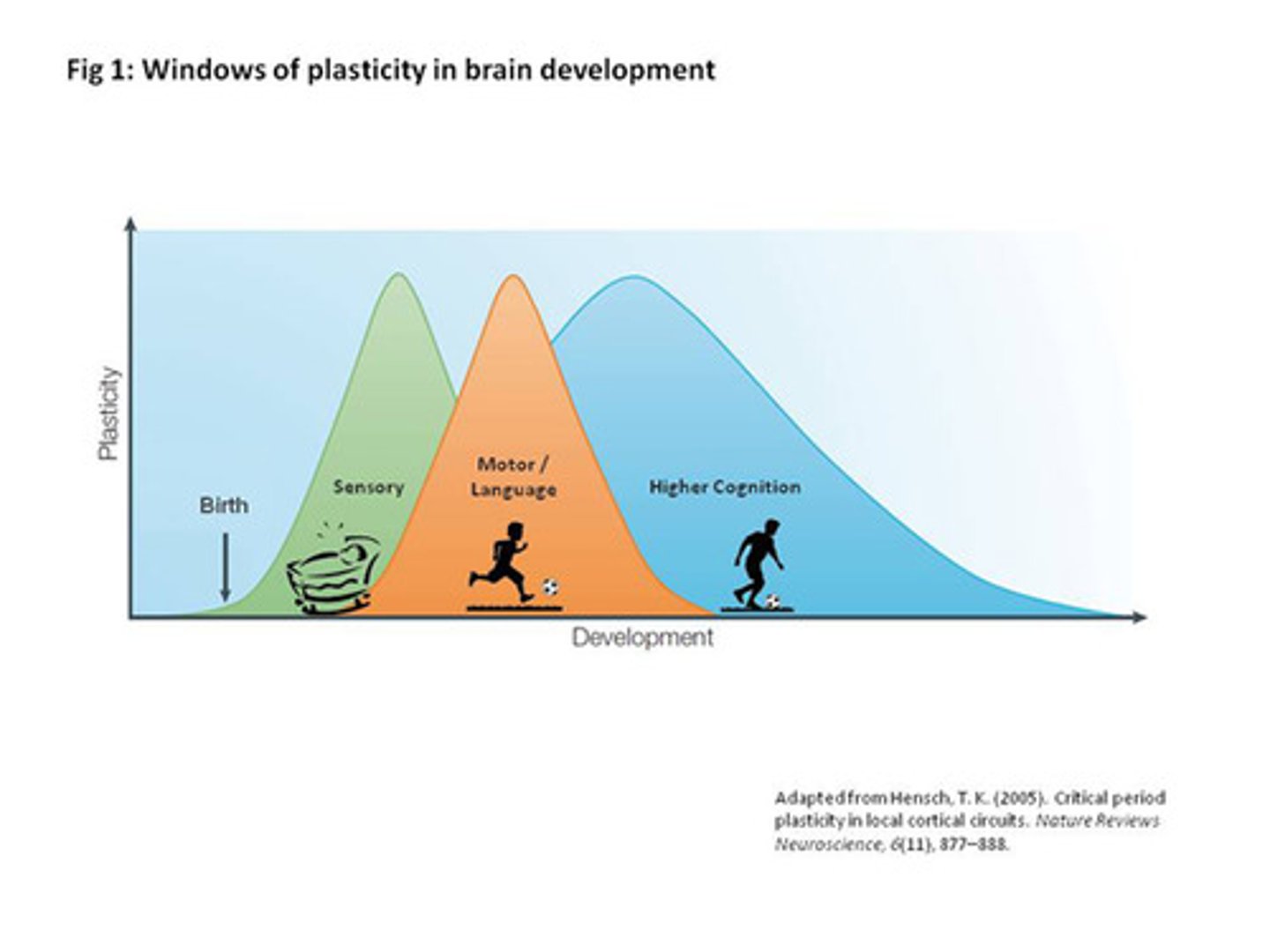
Critical period
Specific time for optimal development of certain skills.
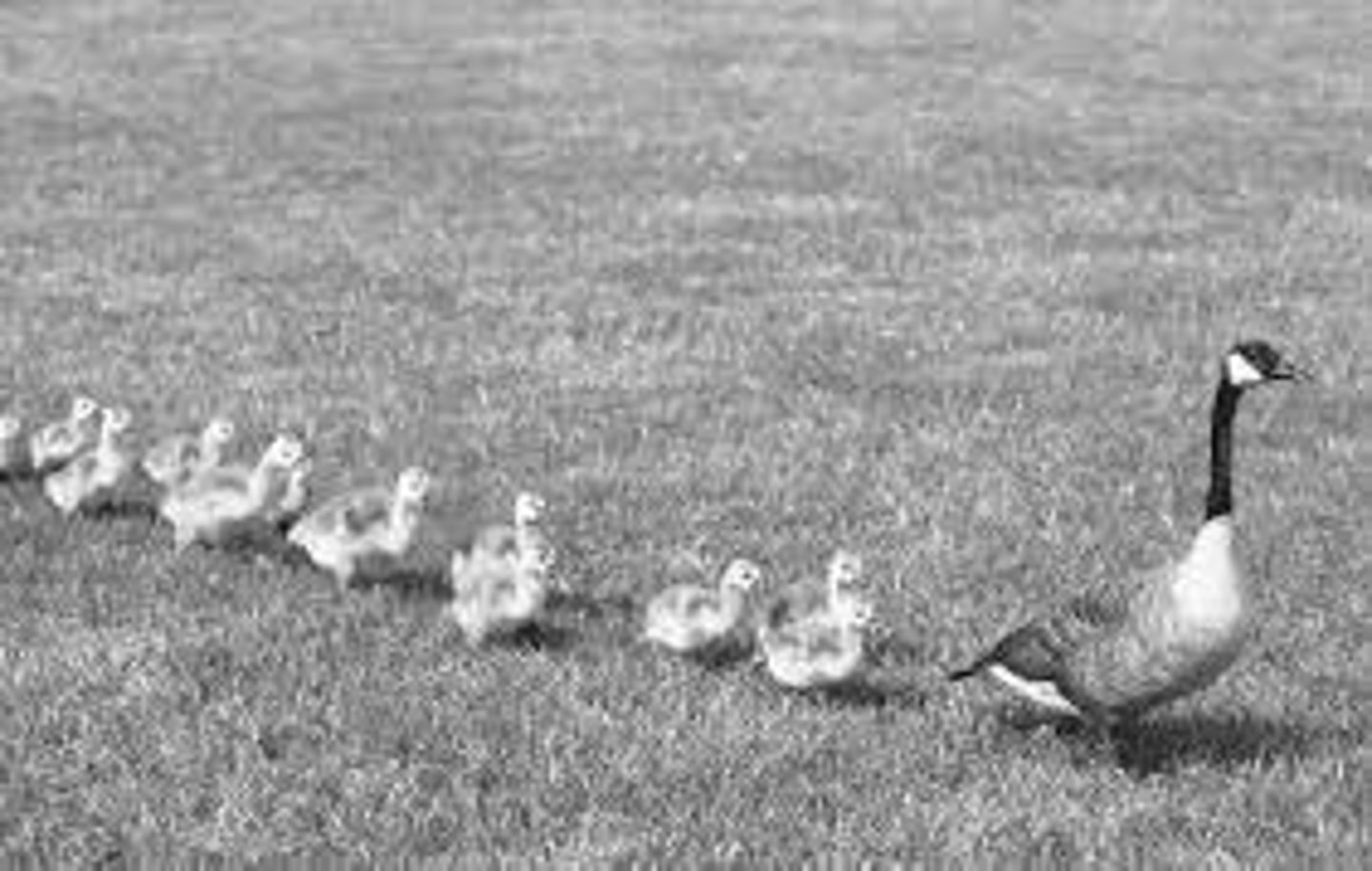
Imprinting
Rapid learning occurring during a specific developmental phase.
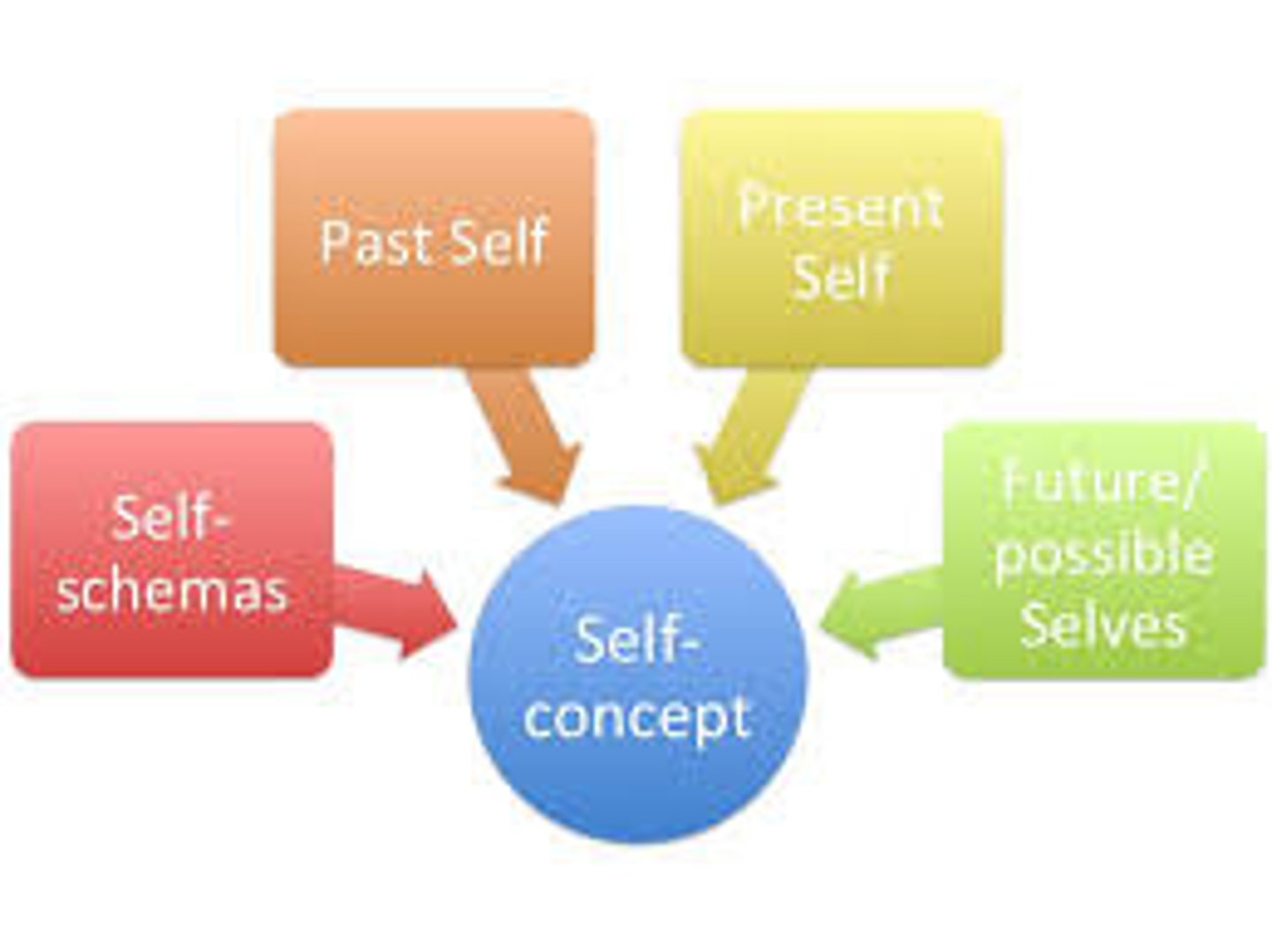
Self-concept
Individual's perception of their own identity and abilities.
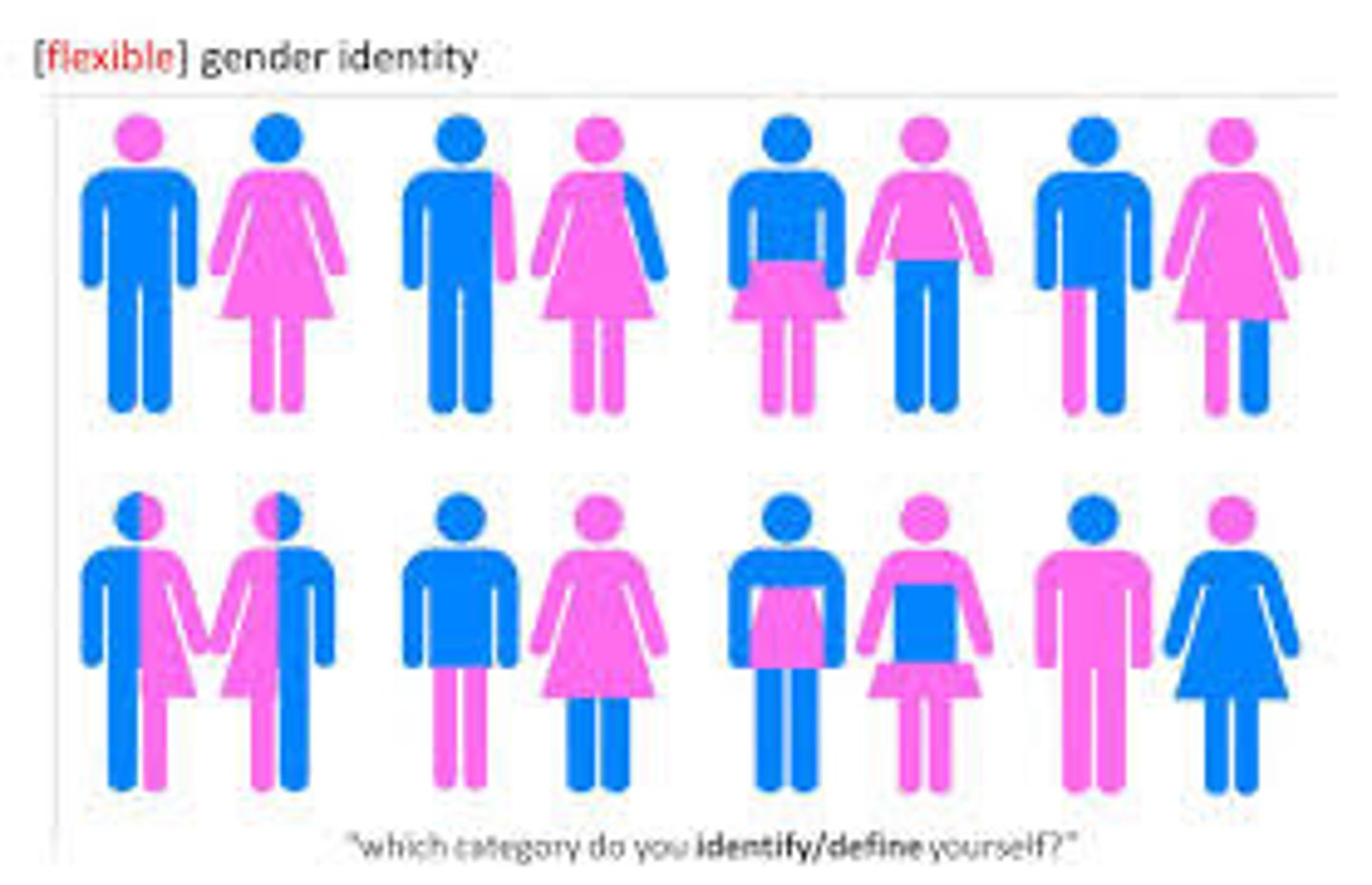
Gender identity
Personal sense of one's own gender.
Social learning theory
A theory that people learn behaviors by observing and imitating others.
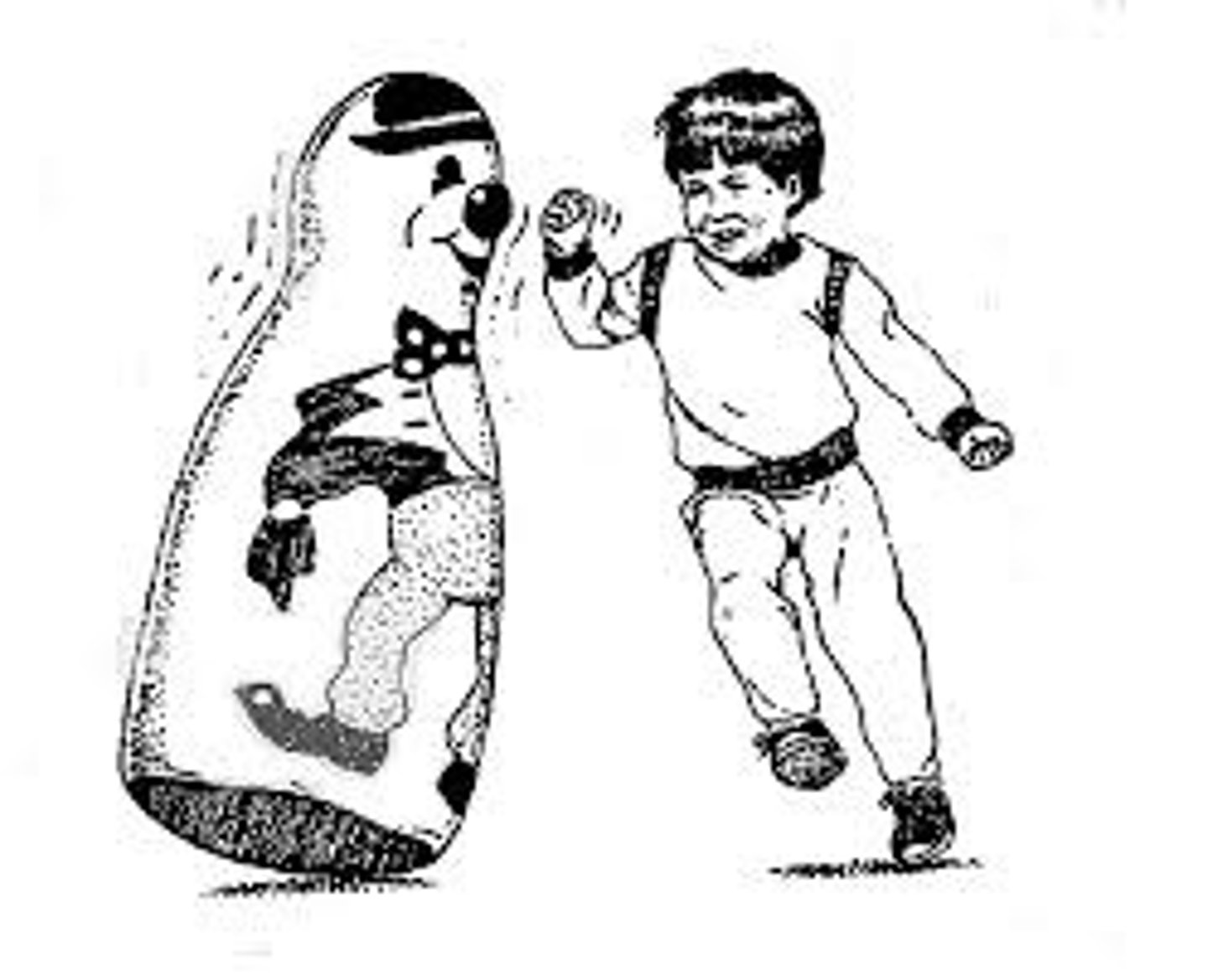
Secondary sex characteristics
Physical traits developing at puberty, not directly related to reproduction.
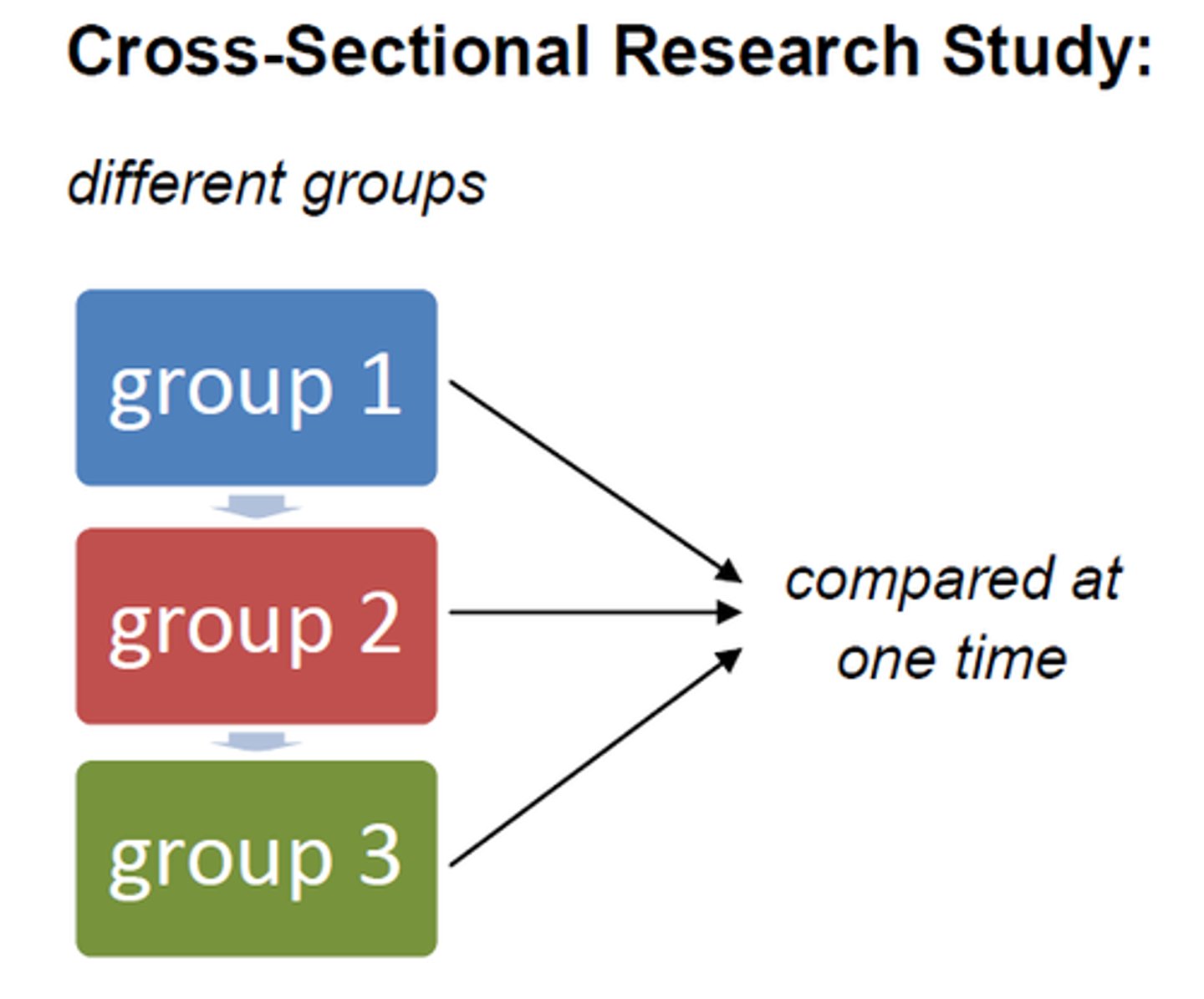
Cross-sectional study
Research comparing different age groups at one time.
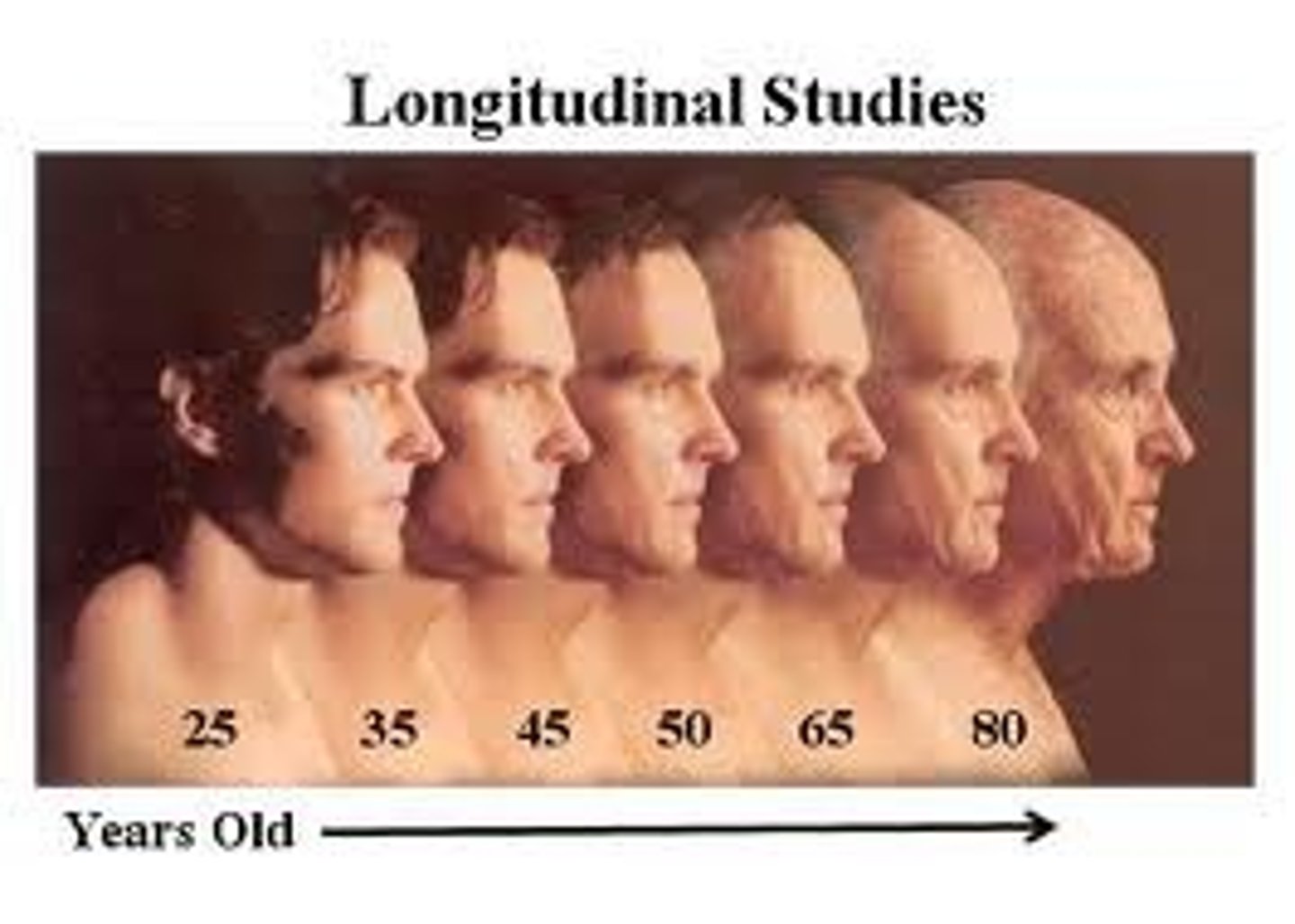
Longitudinal study
Research following the same subjects over time.
- make comparisons over time
Intelligence
the ability to learn from experience, solve problems, and use knowledge to adapt to new situations
Fluid intelligence
ability to pick up new information
---> decrease over time
Crystalized intelligence (gc)
knowledge that one has acquired over time
--> increase over time
Psychometrics
study of the measurement of human abilities, attitudes, and traits
Charles Spearman
Believed that humans have a General Intelligence and that if we are good in one thing we are probably good in the other thing
General Intelligence
Idea that there is only one intelligence (good in one thing prob good at the next thing) so there is only one score that measures intelligence
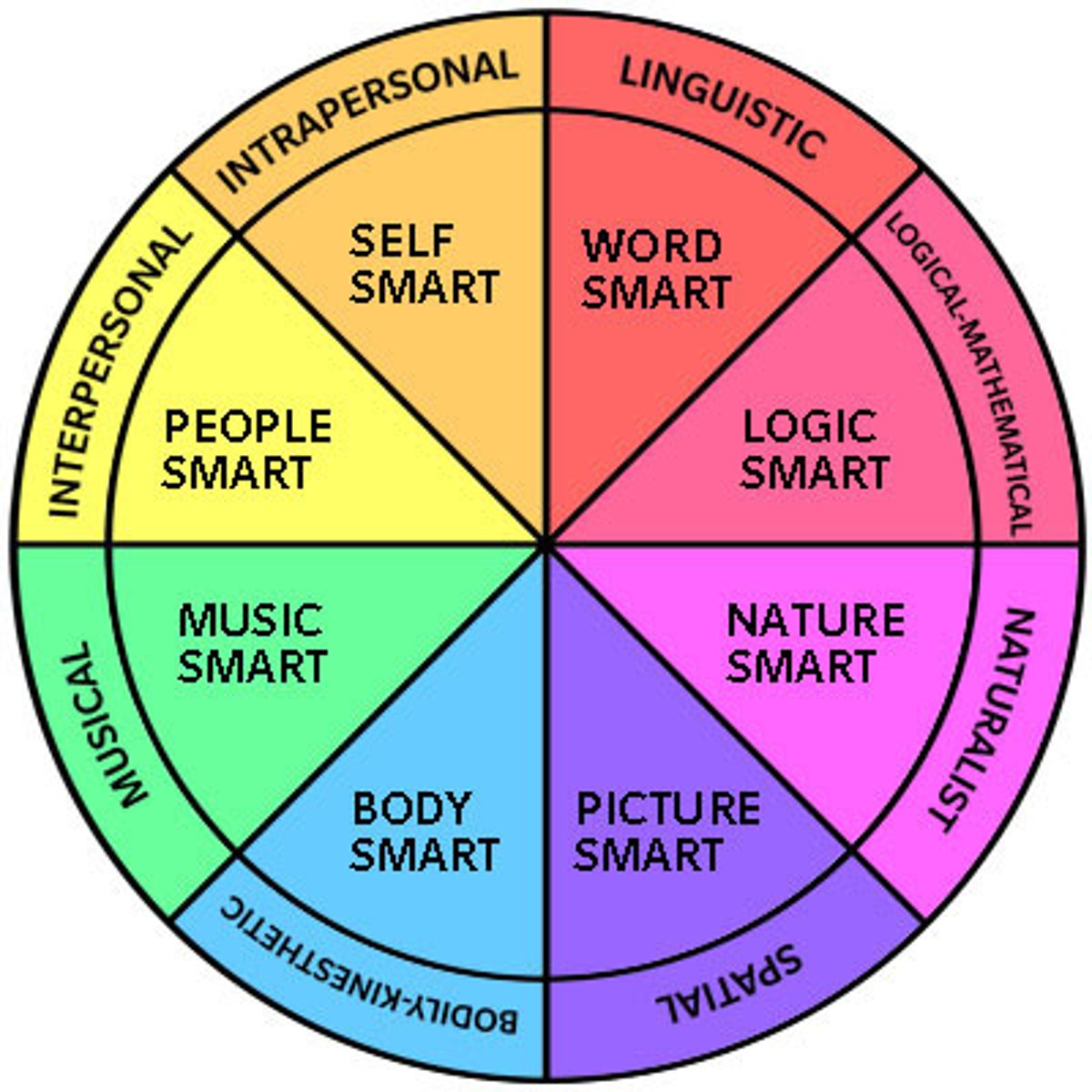
Howard Gardner 's Theory of Multiple Intelligence
Believed that there are multiple different intelligences (8 Intelligences)
1) Linguistic: using language to present ideas
2) Logical: reasoning logical thinking
3) Spatial/Visual: interpreting visual images
4) Kinetic/Body: feeling expressing physically (hands on work)
5) Musical:
6) Intrapersonal: understanding yourself
7) Interpersonal: understanding others
8) Naturalist: understanding nature
Robert Sternberg's Triarchic Theory
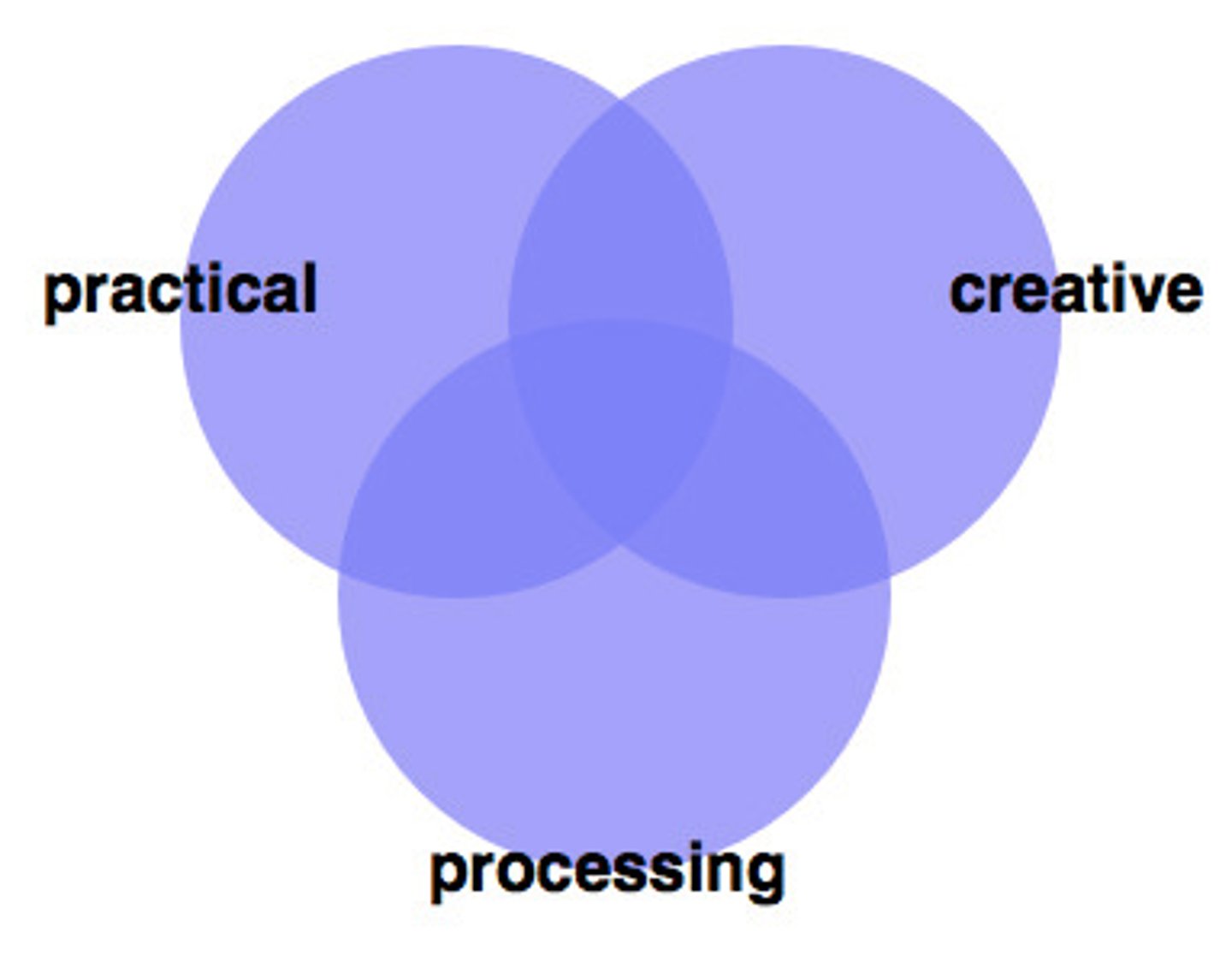
suggests that there are 3 aspects to intelligence: analytical (performance on tests), creativity, and practical (street smarts/ business smarts)
Goleman's Emotional Intelligence
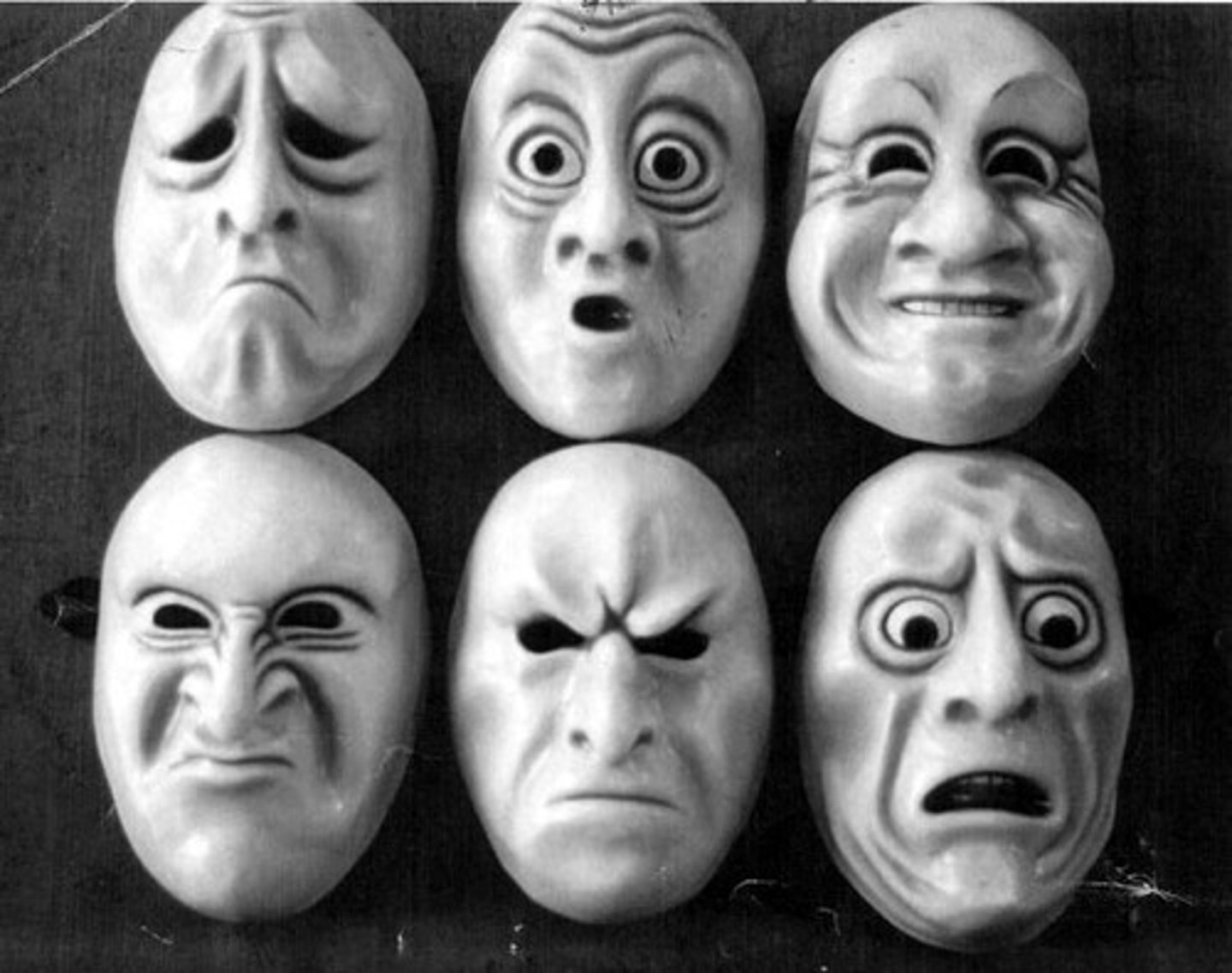
The ability to perceive, express, and regulate emotions accurately and appropriately
-> interpersonal and intrapersonal
Wechsler Intelligence Scale for Children (WISC)
widely used test designed to measure the intelligence of children 6 years and older
Achievement Intelligence Tests
Measures what you have learned (AP)
Aptitude Intelligence Test
Measures your ability and what you could learn (SAT)

Validity
the extent to which a test measured what it was supposed to
Content Validity
the extent to which a test samples the behavior that is of interest
Predictive Validity
the extent to which the test predicts the behavior it is designed to predict
Reliability
the extent to which a test has consistent results
How do we know?
--> Split Halves Method (comparing two sections of the same test)
Alfred Binet
Creator of intelligence (IQ) tests & mental age (used aptitude tests)
Mental Age
Intelligence that one should know based on their age
Stanford Binet Test
intelligence test based on the measure developed by Binet and Simon later adapted to Intelligence Quotient
--> mental age/ physical age (100)
-----> worked well for children but not adults
Factor Analysis
Factor analysis is a statistical method used to identify patterns or groups in a large set of variables. It helps to simplify complex data by finding underlying factors that explain the correlations between different variables.
a statistical procedure that identifies correlations of related statements and identifies the underlying factors (or groups) that explain the patterns
ex:
You conduct a test where students rate themselves on 6 activities. The ratings are from 1 to 5:
I enjoy reading books.
I like solving puzzles.
I enjoy painting.
Step 1: Look for Patterns
Students who rate painting highly also rate visiting art galleries highly.
Students who rate meeting new people highly also rate hosting parties highly.
Step 2: Group Related Activities
These patterns suggest that some activities are related to each other:
Books and puzzles could be part of an underlying skill, like logical thinking.
Painting and art galleries could be part of another skill, like creativity.
Standardization
Identifying meaningful scores by comparison with the performance of a pretested group
Bell Curve/Normal Curve
Heritability
The extent to which genetic factors influence differences in a particular trait or characteristic within a population. (get a portion of intelligence)
Stereotype threat
Idea that one will be evaluated based on a negative stereotype, something that confirming/proving a sterotype
Flynn Effect
rise of IQ test
Over the course of years, average IQ scores seem to rise and bc of this what we considered to be a good score before isn't a good score anymore
Brain Size and Intelligence
Small correlation (+0.15) between head size and intelligence scores
Brain Function and Intelligence
-Higher performing brains are less active than lower performing brains (use less glucose)
-neurological speed is also a bit quicker
Savant Syndrome
a condition in which a person otherwise limited in mental ability has an exceptional specific skill
bottom-up processing
analysis that begins with the sense receptors and works up to the brain's integration of sensory information
top-down processing
information processing guided by higher-level mental processes, as when we construct perceptions drawing on our experience and expectations
selective attention
the focusing of conscious awareness on a particular stimulus
inattentional blindness
failing to see visible objects when our attention is directed elsewhere
change blindness
failing to notice changes in the environment; a form of inattentional blindness
Transduction
conversion of one form of energy into another. In sensation, the transforming of stimulus energies, such as sights, sounds, and smells, into neural impulses our brains can interpret.
absolute threshold
the minimum stimulation needed to detect a particular stimulus 50 percent of the time
signal detection theory
a theory predicting how and when we detect the presence of a faint stimulus (signal) amid background stimulation (noise).
Subliminal
below one's absolute threshold for conscious awareness