defenitions
 Call Kai
 Learn
Learn Practice Test
 Spaced Repetition
 Match
Match Flashcards
 Knowt Play
1/20

There's no tags or description
Looks like no tags are added yet.
Name | Mastery | Learn | Test | Matching | Spaced | Call with Kai |
|---|
No analytics yet
Send a link to your students to track their progress
21 Terms
Wave |
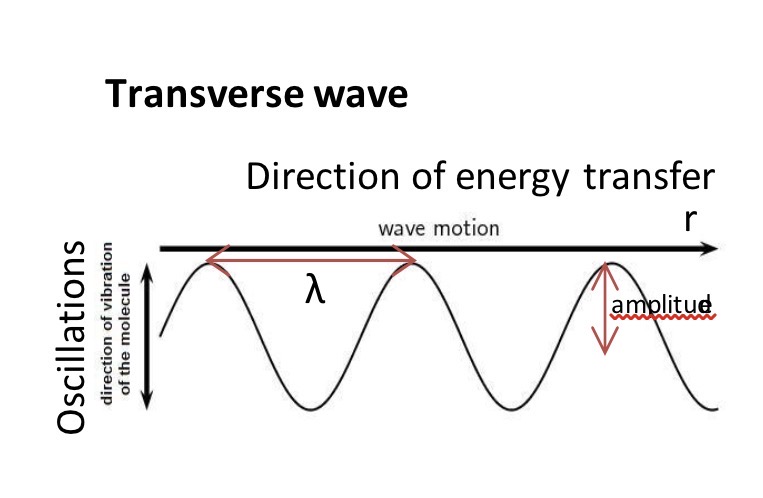
A wave transfers energy from one place to another, and can also carry information. All waves involve movements or oscillations, allowing energy to be transferred without particles having to flow or travel from one place to another. |
Oscillations |
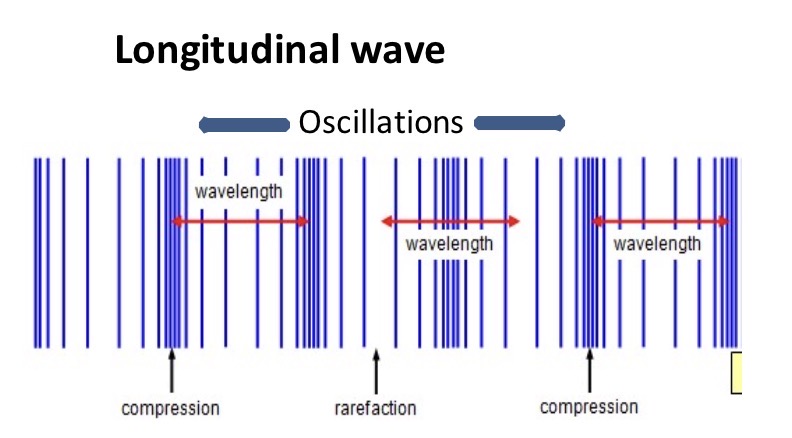
Vibrations or movements. These movements are of particles in mechanical waves, or of the electromagnetic field when it comes to electromagnetic waves. |
Perpendicular |
At right angles to |
Amplitude |
the distance from a peak or trough to the 'midline' of the wave: |
Wavelength |
The distance from a point on one wave to the equivalent point on the next wave along. This is easiest to measure at the distance from the centre of one area of compression to the next (longitudinal waves) or the distance from peak to peak (transverse waves): Symbol: hanger looking |
Frequency |
The frequency of a wave is the number of complete waves that pass a point per second. Symbol: f |
Period |
The period, or time period, of a wave is the time it takes to complete a full wave. Symbol: T |
Transverse wave diagram
Longitudinal wave Diagram
т=1/f |
T= time period (seconds, s) f = frequency (hertz, Hz) |
V=f/wavelength
v = wave speed (m/s) f = frequency (Hz) wavelength=(metres,m) |
Applications using EM waves
Infrared:
Radio waves:
Microwaves:
Visible light:
Ultraviolet:
X-rays:
Gamma rays:
Gamma rays:
used in medical treatments such as radiotherapy
X-rays:
both medical imaging for diagnosis (like broken bones) and medical treatments. X-rays can pass through soft tissue (like muscle), but not bone. That's why an X-ray image works to show up bones, and any breaks....
Ultraviolet:
sun tanning beds... however, look at the dangers of UV in
the other box.
Visible light:
fibre optic communication (like the best broadband).
Optical fibres reflect pulses of light all the way along their length. The pulses of light transmit the information..
Infrared:
electrical heaters, cooking food, infrared cameras. All objects
emit infrared, but hotter objects emit more. An infrared camera detects infrared instead of visible light, so it can see hotter objects in the dark - night vision.
Microwaves:
obviously, cooking food, but also communication with satellites and mobile phones; Wi-Fi internet. Unlike radio waves, microwaves can pass through the atmosphere (see diagram bottom left). In microwave ovens, the microwaves cause the water particles in the food to vibrate, heating it up.
Radio waves:
used for television, radio and Bluetooth. A signal carried
by radio waves can get from a transmitting mast to a receiver by being_ reflected off a layer in the atmosphere
Dangers of EM waves
Ultraviolet waves, X-rays and gamma rays are potentially dangerous types of EM waves, since they can have hazardous effects on human tissues. How severe the effects are depends on the type of radiation and the size of the dose received
A specific risk due to exposure to ultraviolet waves: they cause skin to prematurely age and increase the risk of skin cancer.
ays and gamma rays are ionising types of radiation. This means they can damage DNA, using mutations and therefore increasing the risk of cancer.
Electromagnetic waves (EM waves)
EM waves are always transverse waves. They transfer energy from the source of the waves to an absorber - object that absorbs the wave. EM waves occur all over the universe naturally, and we can produce them ourselves for all sorts of use...
EM waves all travel at the same velocity through empty space (a vacuum) - at what we call the speed of light. However, the wavelength of EM waves varies from a few kilometres to wavelengths even smaller than an atom. The EM waves form a continuous spectrum, but for convenience we've grouped the infinite types of waves into seven groups of wavelengths, based on their properties. Learn the order of EM waves in the EM spectrum. Notice that a longer wavelength equates to a lower frequency and vice versa - this is clear from the wave equation.