Analytical Notes
 Call Kai
 Learn
Learn Practice Test
 Spaced Repetition
 Match
Match Flashcards
 Knowt Play
1/70

There's no tags or description
Looks like no tags are added yet.
Name | Mastery | Learn | Test | Matching | Spaced | Call with Kai |
|---|
No analytics yet
Send a link to your students to track their progress
71 Terms
Precision
closeness of agreement btw independent test results and stipulation conclusion
Accuracy
Closeness btw results with true value
Repeatability
method completed in single session with same solutions, equipment, and instruments
Reproducibility
precisions under any other set of conditions
determinate error
affects the accuracy
indeterminate error
does not affect the accuracy
Molarity
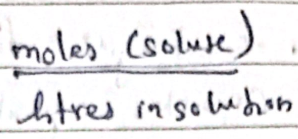
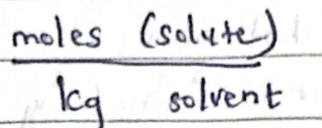
Molality
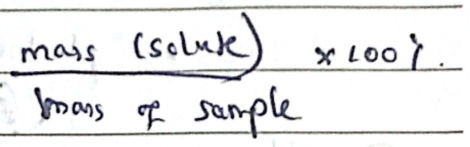
Weight % composition
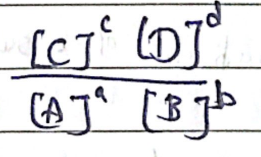
k_eq
for aA + bB → cC + dD
Johnson noise (thermal noise)
random fluctuations of electrons in an electronic device
How do you reduce Johnson noise
lower operating temperature
Shot noise
random variation is small number of photons reaching a detector or small number of electrons and holes in a semiconductor
how can you reduce affects of shot noise
increase signal and integration time, use beam splitter
Flicker noise
random fluctuations in current, power is inversely proportional to frequency
how to reduce flicker noise
signal modulation
What is the UV wavelength range
10-200 nm
what is the near-UV wavelength range
200-400 nm
what is the visible light wavelength range
400-750 nm
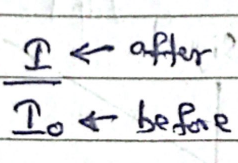
Transmittance
where I = intensity of the beam
Absorbance is proportional to
the amount of analyte
what is the IR wavelength range
30-3000 cm-1
In IR, the higher the frequency, the higher the BLANK, and greater BLANK
bond order, mass difference of atoms
In Raman spec, what can be used as a solvent
water
what happens to a sample in Mass spec
first ionized, then bombarded with a beam of electrons/charged particles
what happens in the magnetic sector of a mass spectrometer
a magnetic field separates ions based on momentum and m/z ratio
What does a quadrupole do in mass spec
only allows ions of a particular m/z show stable trajectory via parallel metal rods
what does an ion trap do in mass spec
isolates charged particales (ions) via m/z so they are detected by their m/z
inductively coupled plasma requires what Ar
high temp
ICP (inductively coupled plasma) is
generated via electromagnetic induction
Direct current plasma requires what Ar
high temp
DCP (direct current plasma)
an electrical arc is struck between two anodes and a cathode to vaporize and ionize samples
microwave induced plasma requires what Ar (or nitrogen)
high temp
MIP (microwave induced plasma)
microwaves are coupled in a discharge tube and ionizes the sample
spark source mass spec
high voltage pulsed spark applied between two electrodes in vacuum
glow discharge
high voltage discharge applied to solid sample under vacuum
electronic transitions are associated with
large dipole changes
steps of atomic spectroscopy
atomization, excitation/absorption, isolation, detection
What does a flame atomizer do
nebulizes sample (creates aersol mist), mist is atomized in high-temp flame
electrothermal atomization (graphite furnace)
sample is evaporated, second heating ashes to solid, third heating atomizes samples
Hollow cathode lamp
puts out wavelength for individual elements
electric discharge lamp
generates light passing electric current through gas/metal vapor
deuterium arc lamp
controlled electric discharge causes D2 to dissociate and emit UV radiation
fluorescence
process in which a molecule emits a photon 10-8 to 10-4 s after absorbing a photon (transition between states of the same spin multiplicity)
phosphorescence
emission of a photon during a transition between states with different spin quantum numbers
UHPLC
smaller particle, higher pressure, faster separation
Monochromatic light
single uniform wavelength
directional light
parallel rays in a specific direction
coherent light (laser)
beam of EM waves where photons maintain a constant, predictable phase relationship with one another over time and space
high spectral purity
extreme stability, narrow linewidth (essentially one frequency), and minimal noise
what are components of a michelson interferrometer
beam splitter, fixed mirror, moving mirror, recombination point, detector (interferrogram)
In HPLC, the longer the column, the better the
seperation
surface plasmon resonance
monitors real-time molecular interactions by detecting changes in refractive index
Electrospray ionization is compatible with
LC
resolving power/mass resolution
m/Δm
time of flight
a low m/z ratio will be fastest to detector
selectivity factor alpha =
k2/k1
if the selectivity factor is = 1,
poor seperation as k’s are the same
partition coefficient
k= cs/cm
lowest parition coefficient k will elute
first
electron capture detector in gas chrom
responds to higher electron affinity (responds to halogenated organics like dicarbondiphenyl)
Flame ionization detector in gas chrom
measures concentration of organics, relies of combustion of carbon atoms
thermal conductivity detector
measures ability of gas to conduct heat (not as sensitive)
Refractive index detector in LC
detects compounds lacking UV absorption (sugars, alcohols, lipids, polymers)
as column temperature increases, retention time
decreases
as column length increases, retention time
increases
as stationary phase film thickness increases, retention time
increases
as intermolecular interactions increase, retention time
increases
what is axial diffusion
solute molecules diffuse from highly concentrated center of sample bands to more dilute regions along and against direction of flow
intersystem crossing
radiationless, excited electron transitions between two states with different spin mulitplicity
internal conversion
molecule enters highly excited vibrational level in an electronic state with the same energy as original vibrational level in the previous electronic state