Concept 34.3: Gnathostomes are vertebrates that have jaws
 Call Kai
 Learn
Learn Practice Test
 Spaced Repetition
 Match
Match Flashcards
 Knowt Play
1/18

Name | Mastery | Learn | Test | Matching | Spaced | Call with Kai |
|---|
No analytics yet
Send a link to your students to track their progress
19 Terms
Gnathostomes
Jawed vertebrates with teeth to grip and slice food; these outnumber jawless vertebrates and include:
Sharks and their relatives
Ray-finned fishes
Lobe-finned fishes
Amphibians
Reptiles (including birds)
Mammals
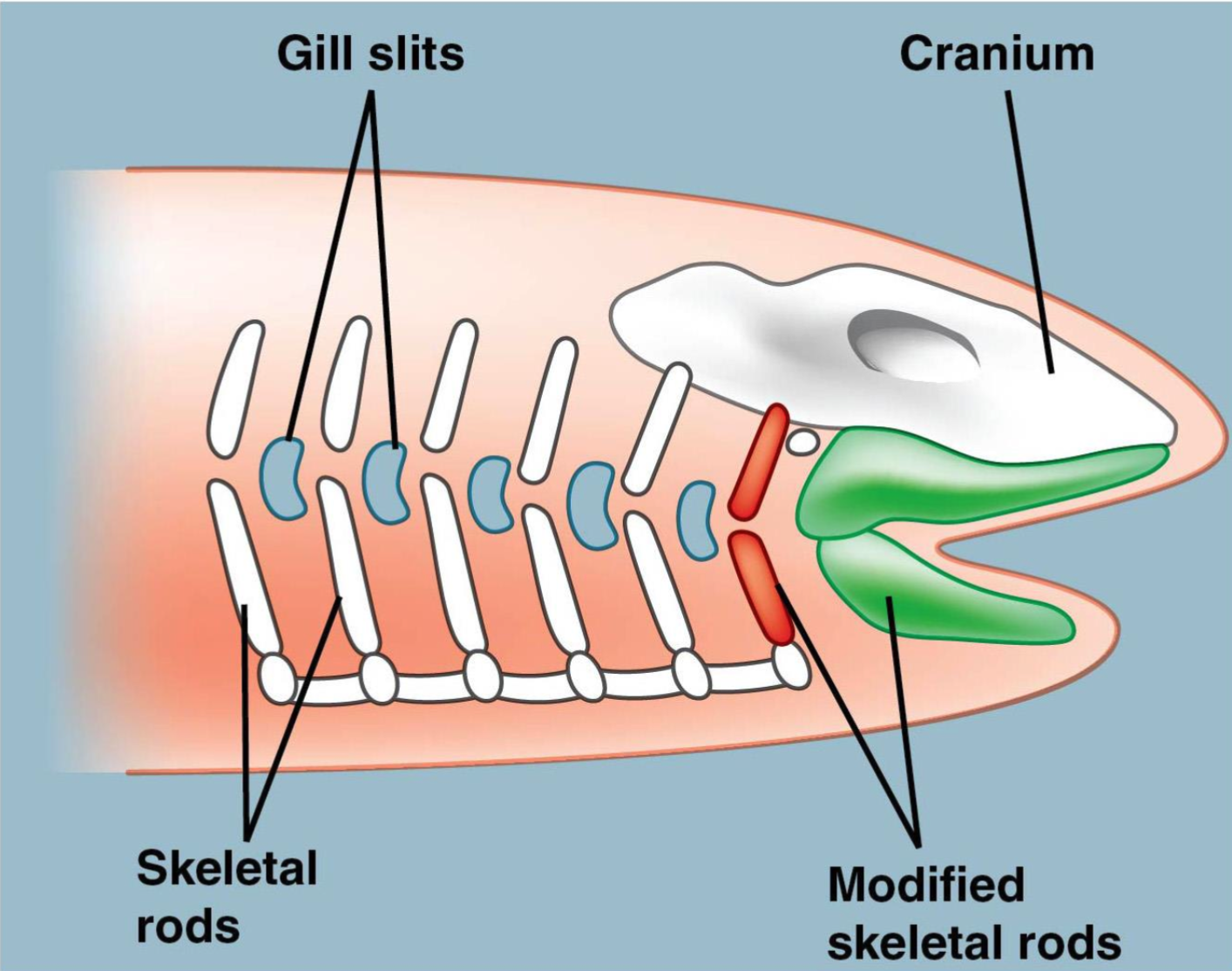
Jaws
Hinged structures in gnathostomes with teeth used to grip and slice food
May have evolved by modification of the skeletal rods supporting the pharyngeal (gill) slits
Gnathostome characteristics
Includes:
Jaws
Genome duplication, including four sets of Hox genes
Enlarged forebrain
Enhanced senses of smell and vision
Lateral line system, or rows of organs sensitive to vibrations along body sides
Lateral line system
Rows of organs in aquatic gnathostomes sensitive to vibrations located along body sides
440 mya
Time where gnathostomes first appeared in the fossil records, exhibiting adaptations like paired fins, a tail, and a more efficient gas exchange system in the gills for efficiency and control
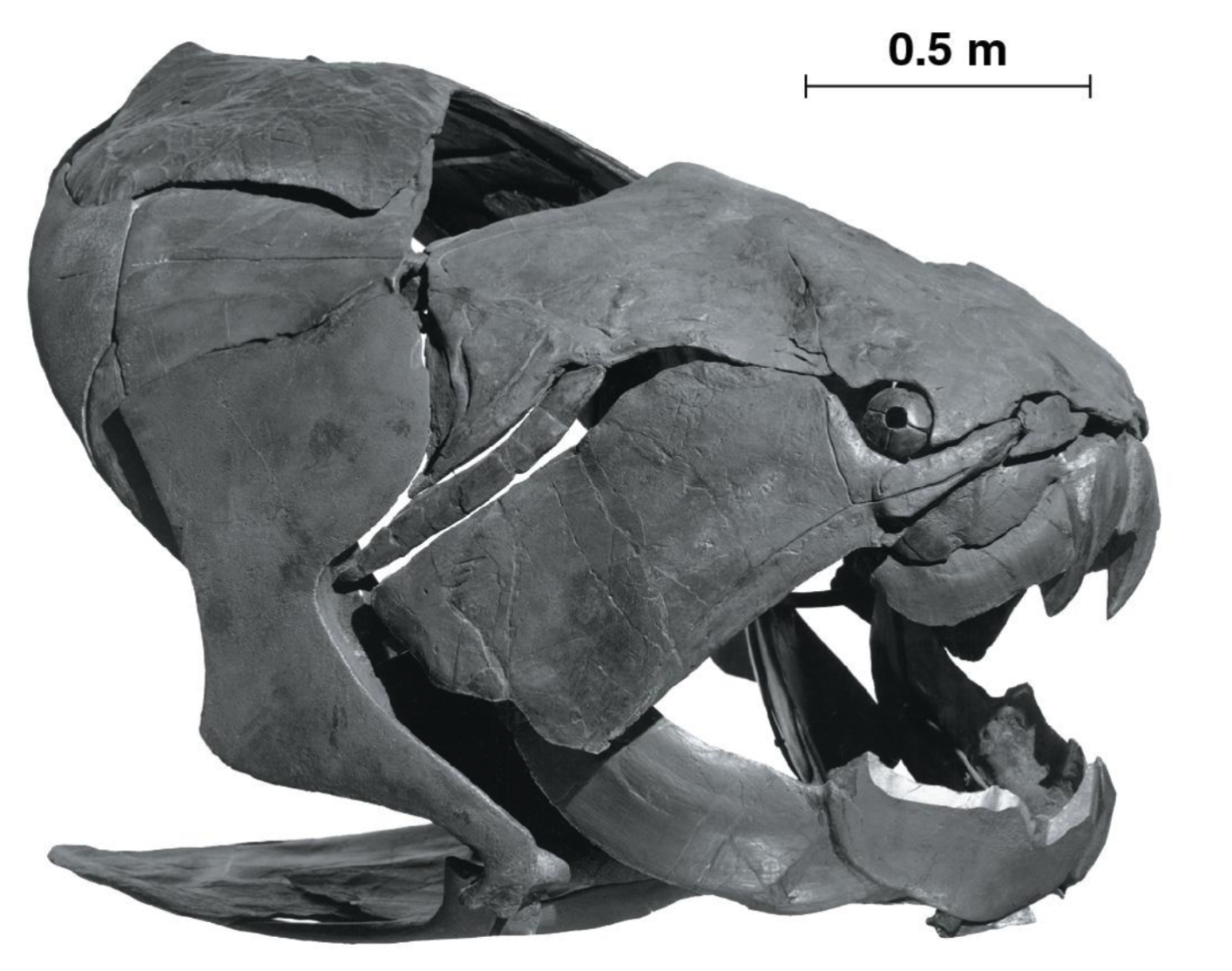
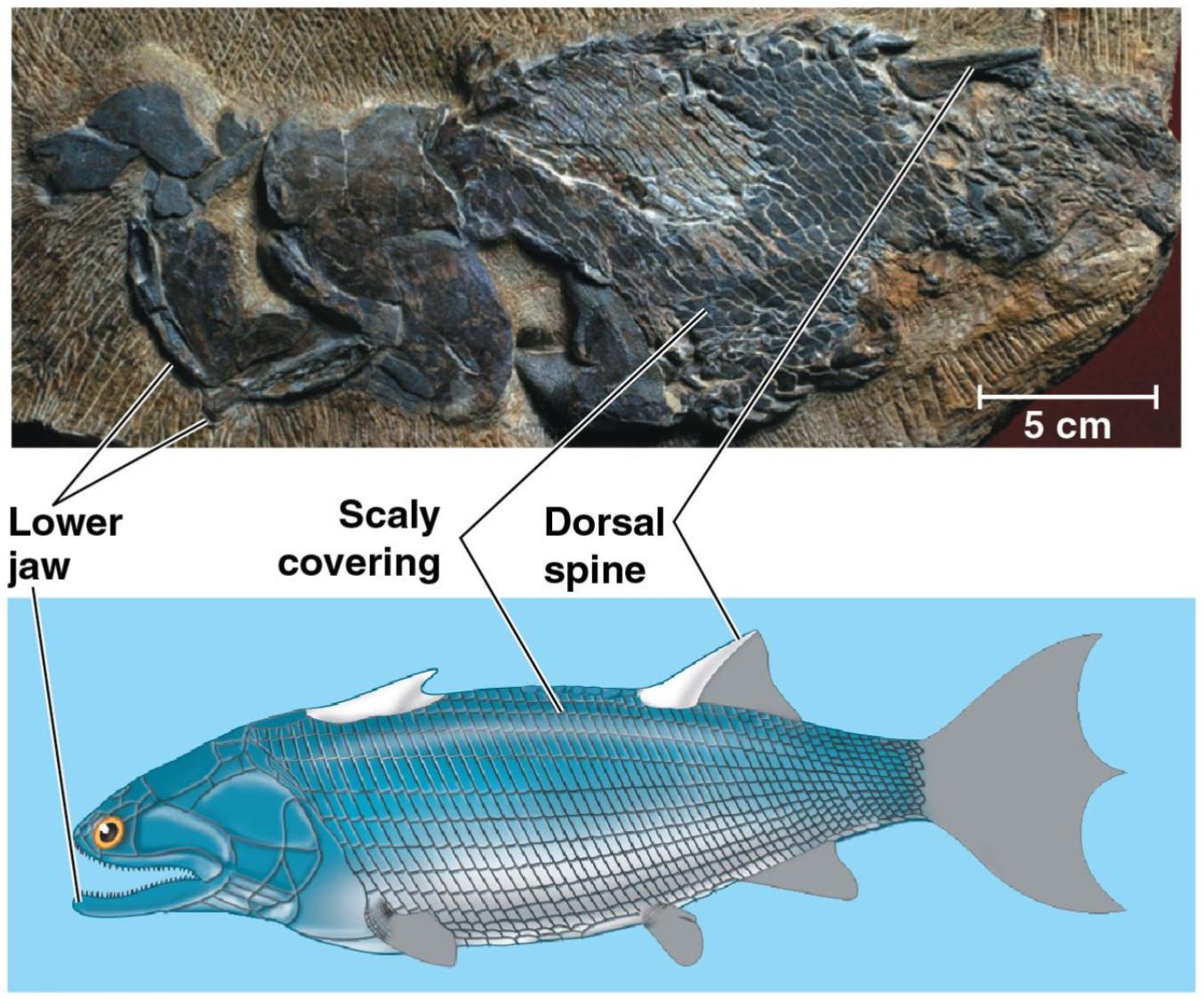
Placoderms
Early gnathostomes; these are extinct armored vertebrates ranging in size from less than a meter to more than 10 m
Gnathostome lineages
Includes:
Chondrichthyans (sharks, rays, and their relatives)
Ray-finned fishes
Lobe-fins
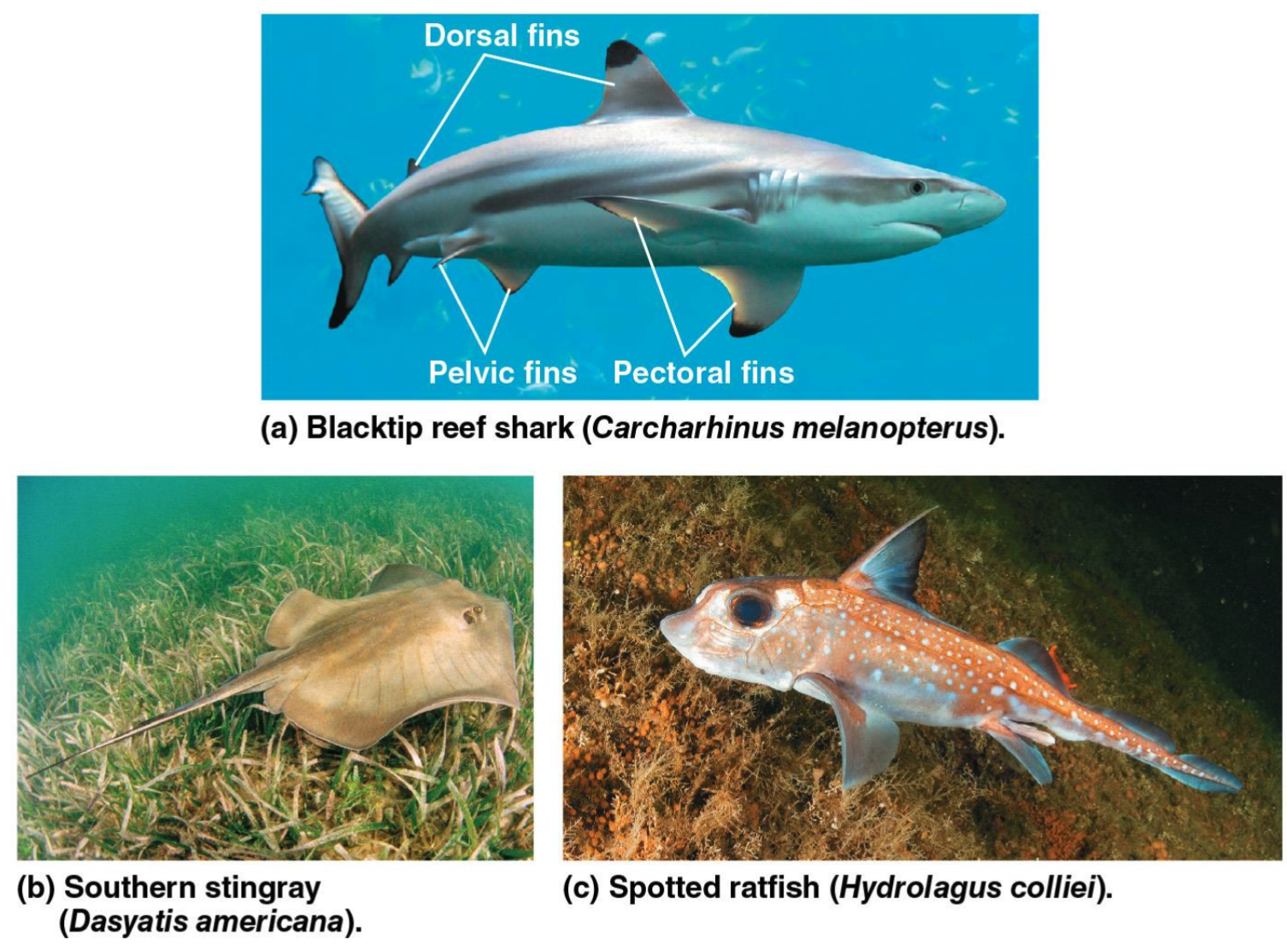
Chondrichthyans
One of the three lineages of gnathostomes including the 1,000 species of sharks, rays, and their relatives; these have skeletons composed primarily of cartilage and some calcium
Traces of bone are found in scales, at the base of teeth, and coating vertebrae in some sharks
Bone likely evolved in these before diverging
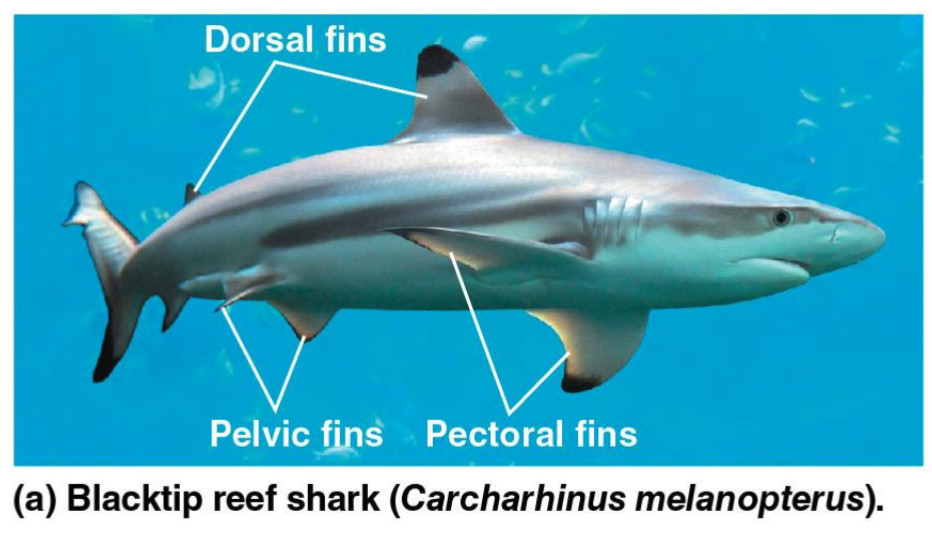
Shark
One example of a chondrichthyan, with a streamlined body for swift but less maneuverable swimming
Dorsal fins function as stabilizers, and paired pectoral and pelvic fins are used for maneuvering
Oil is stored in the liver for buoyancy
Continual swimming is necessary to avoid sinking, also keeping water flowing for gas exchange
During rests, muscles of the jaw and pharynx are used to pump water over gills
Eggs are fertilized internally, but can undergo oviparous, ovoviviparous, or viviparous development
Oviparous development
Development of the embryo where eggs hatch outside the shark mother’s body after internal fertilization
Ovoviviparous development
Development of the embryo where eggs are retained within the oviduct and young are born after hatching within the uterus
Viviparous development
Development of the embryo within the uterus, nourished by:
A yolk sac placenta,
Absorption of nutrient-rich fluid, or
Eating other eggs
Cloaca
A common chamber with a single opening to the outside of the body, with the reproductive tract, excretory system, and digestive tract all emptying into this
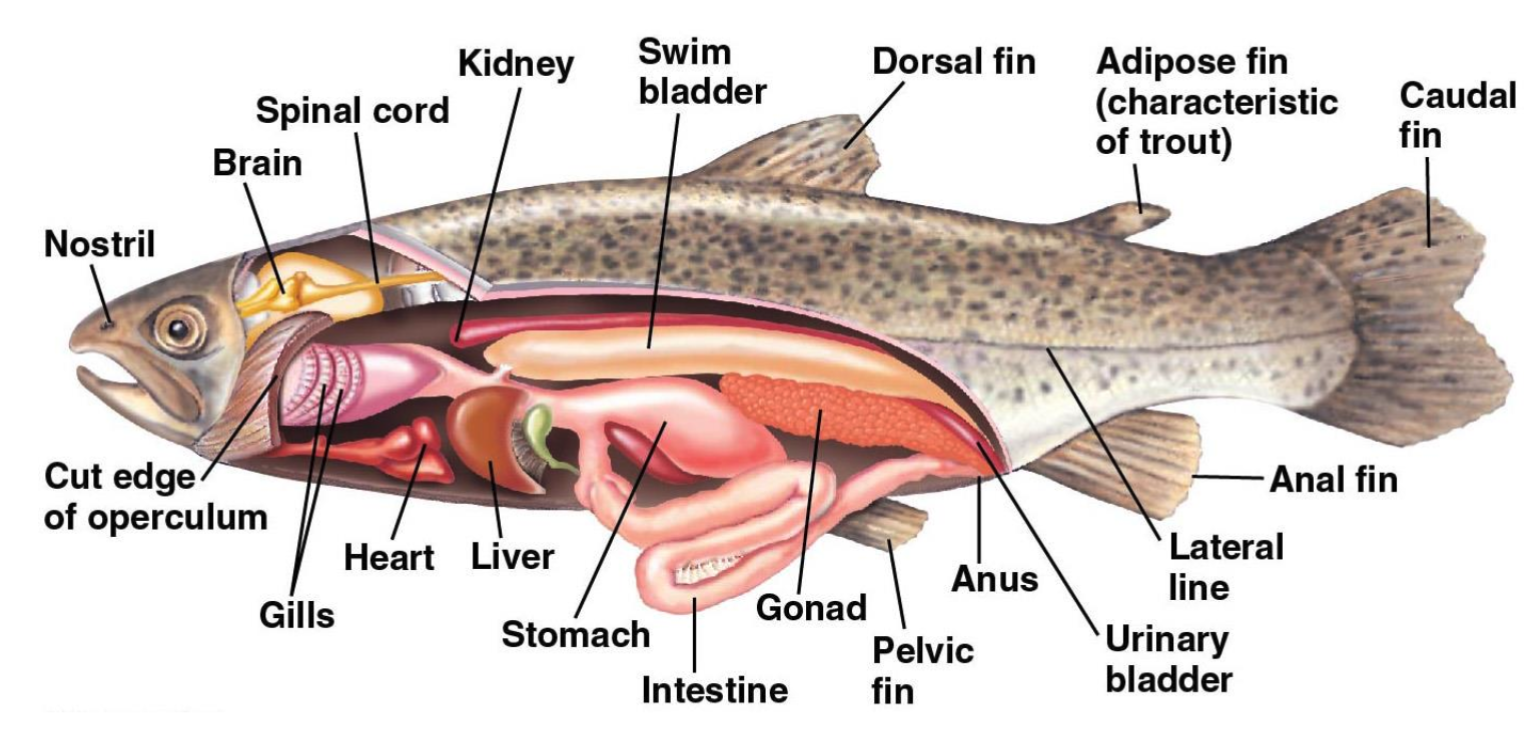
Osteichthyans
The vast majority of vertebrates, with a majority having bony endoskeletons
Includes bony fishes and tetrapods; aquatic species of these are informally called fishes
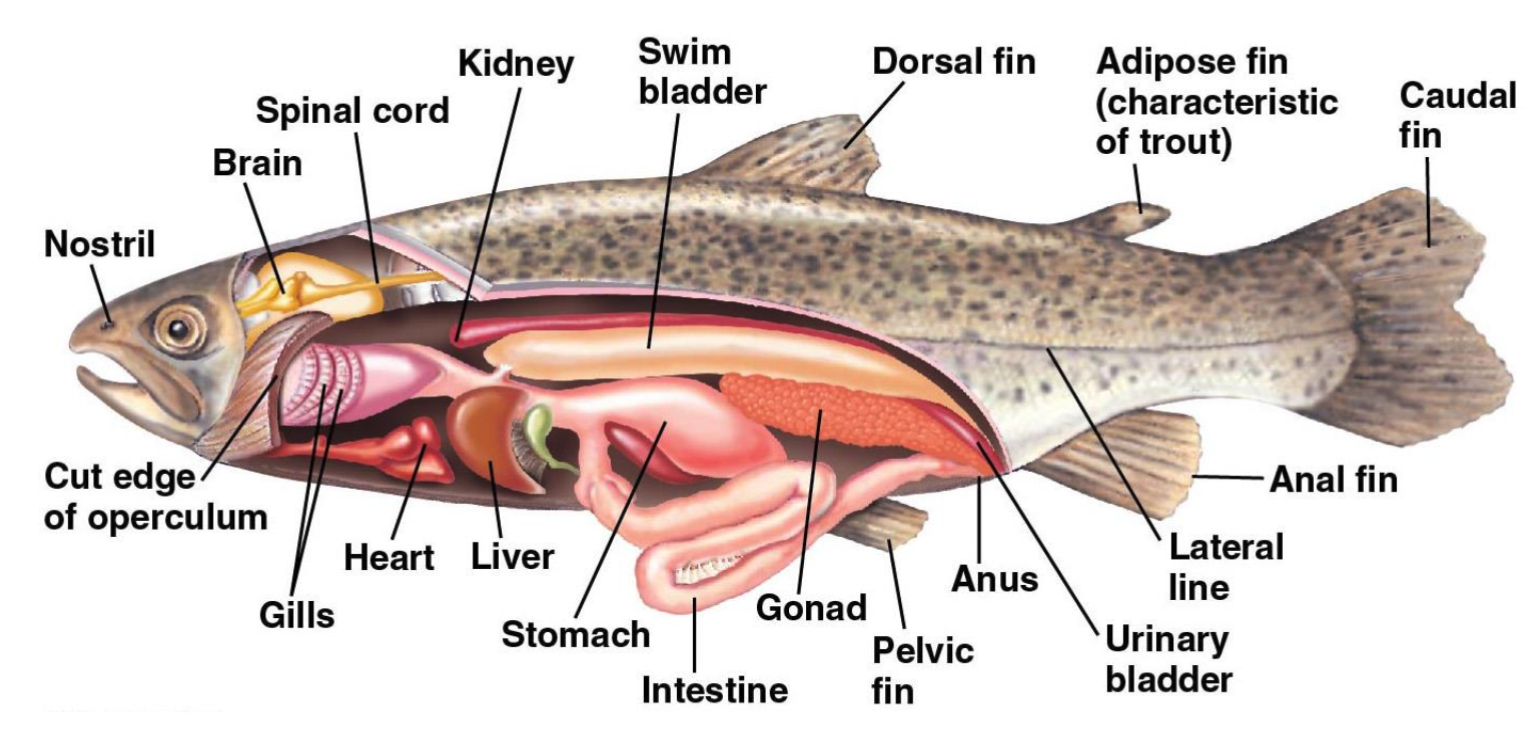
Operculum
A bony flap protecting the gills of fishes, helping draw water into the mouth and over the gills via muscle contractions
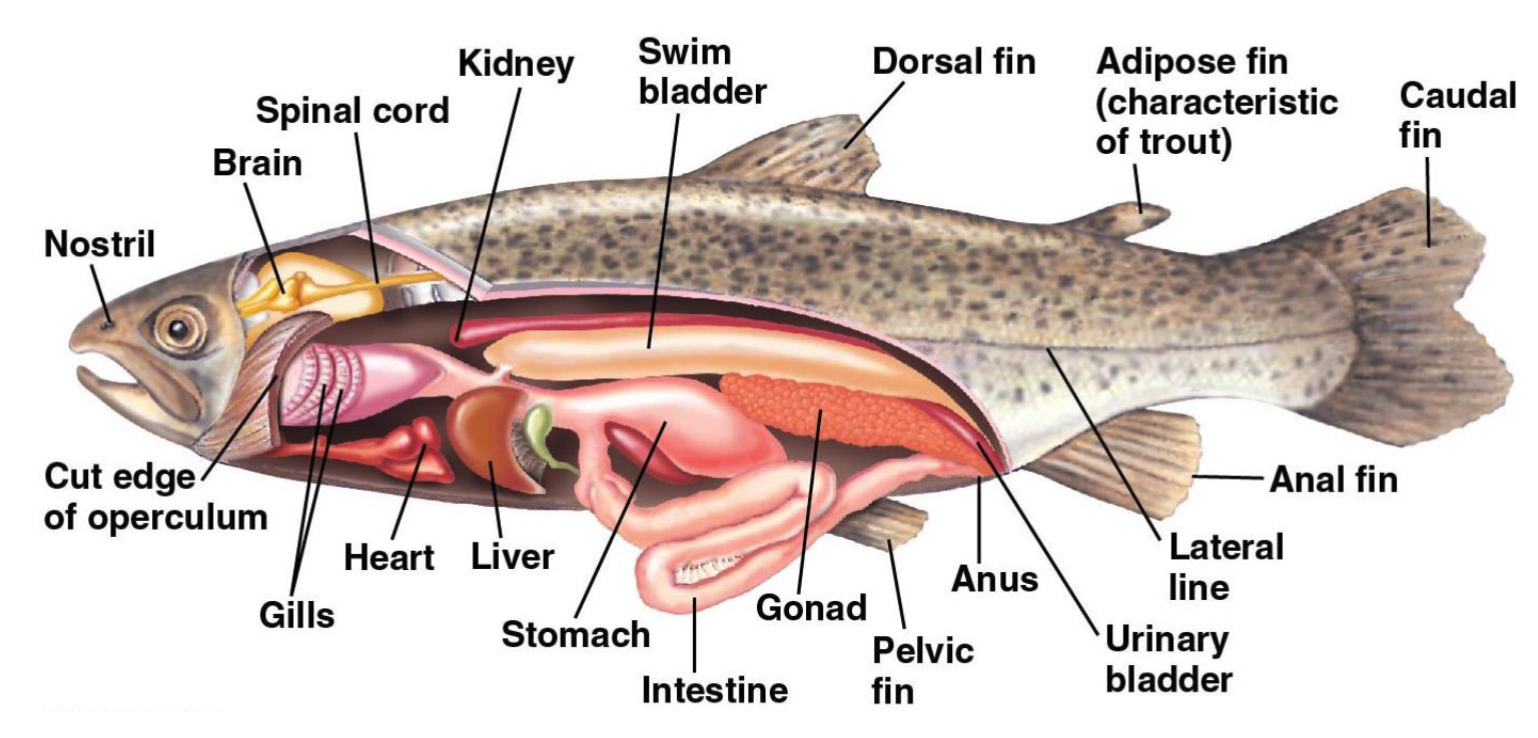
Swim bladder
An air sac in fishes filled to maintain buoyancy
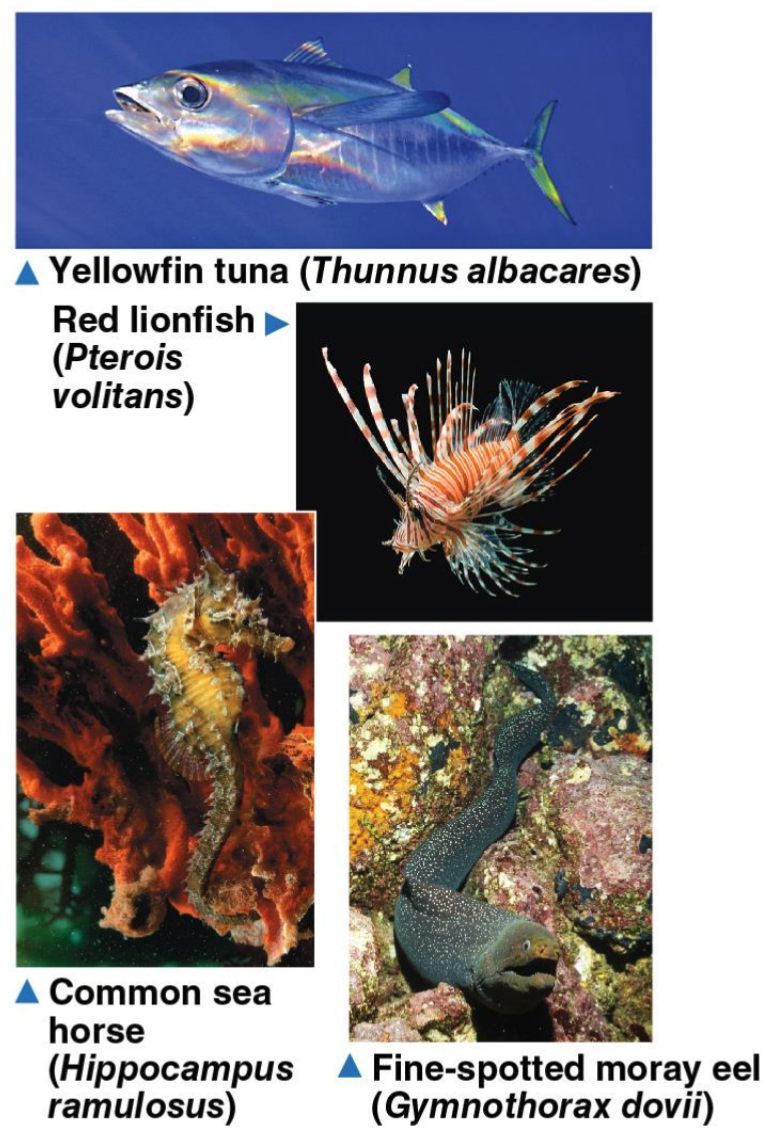
Ray-finned fishes
A group of gnathostomes including over 27,000 species, including most familiar osteichthyans
Have modifications in body form and fin structure affecting maneuvering, defense, and other functions
Lobe-fins
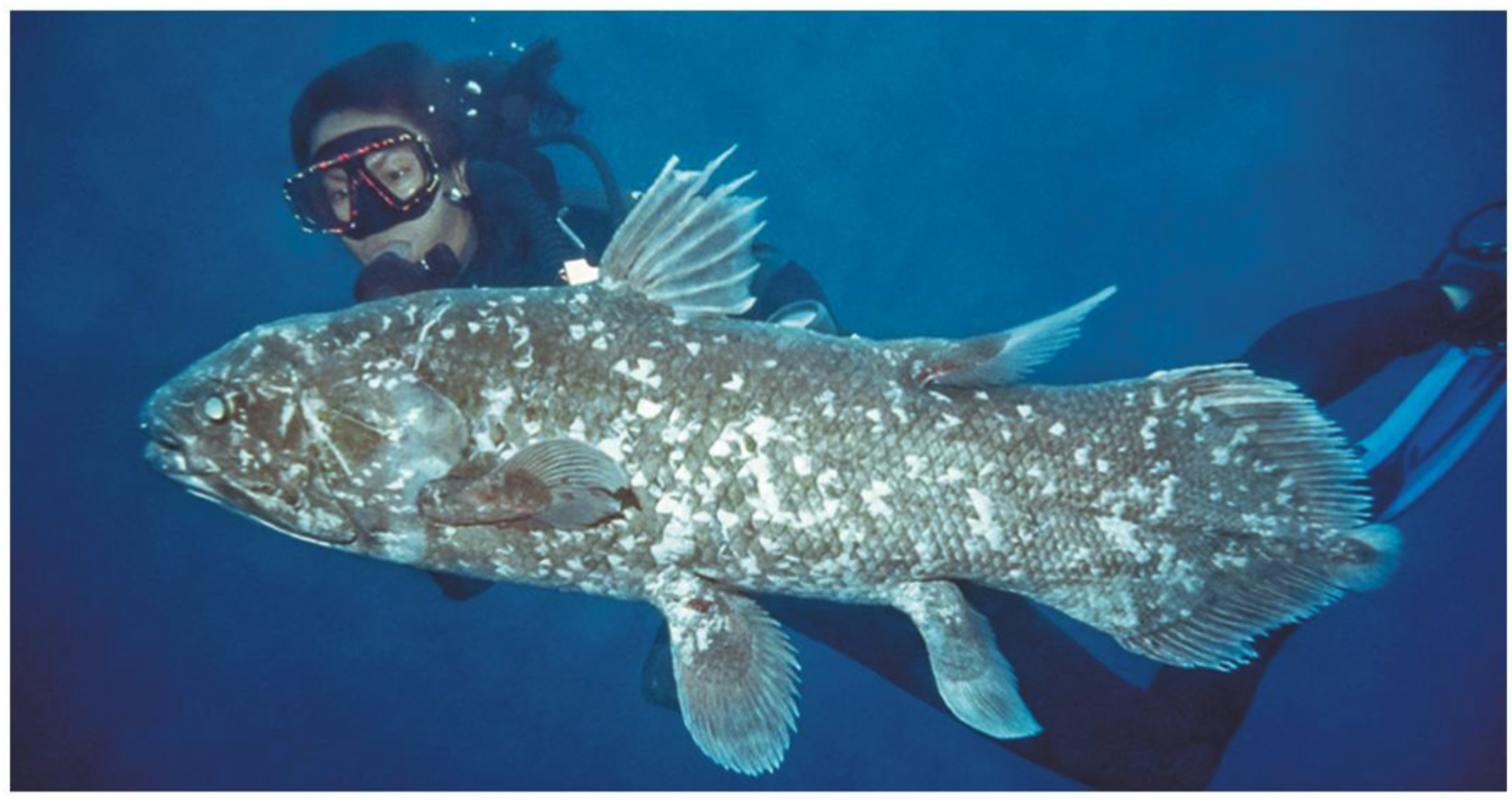
A group of gnathostomes with rod-shaped bones surrounded by a thick layer of muscle
Used to maneuver across the substrate of aquatic habitats
Lungfishes
Types of lobe fins initially arising in the ocean, but today living in stagnant ponds and swamps with gas exchange in water using gills or gulping air into lungs attached to the pharynx