Lesson 5: Knowledge & Truth
 Note
Note Call Kai
 Learn
Learn Practice Test
 Spaced Repetition
 Match
Match Flashcards
 Knowt Play
1/37

There's no tags or description
Looks like no tags are added yet.
Name | Mastery | Learn | Test | Matching | Spaced | Call with Kai | Chat |
|---|
No analytics yet
Send a link to your students to track their progress
38 Terms
EPISTEMOLOGY
“Epistemology is a science devoted to the discovery of the proper method of acquiring and validating knowledge” (Rand 1990)
The purpose of epistemology therefore is two-fold:
To show how we can acquire knowledge.
To give us a method of demonstrating whether the knowledge we acquired is really knowledge (i.e., true).
Knowledge
the clear awareness and understanding of something.
it is provided by facts
it is based on reality
it is observable and evident in the real world
Empiricism
We can acquire knowledge using our senses

John Locke
Empiricists

George Berkley
Empiricists

David Hume
Empiricists
Rationalism
We can acquire knowledge by thinking with the use of our minds

Rene Descartes
Rationalists

Baruch Spinoza
Rationalists
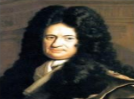
Gottfried Wilhelm Leibniz
Rationalists
Process of Acquiring Knowledge
Reality
Perception
Concept
Proposition
Argument
Reality
To know is to know something. This “something” is what philosophers call reality, existence, and being.
Perception
Our first and only contact with reality is through our senses.
Concept
an abstract or generic idea generalized from particular instances
Proposition
Statements about the world or reality
Proposition
may or may not carry the truth
Facts
propositions or statements observed to be real and truthful
Claim
proposition that requires further examination; can be contested
Argument
Series of statements that provide reasons to convince the reader/ listener that a claim/ opinion is truthful. Group of statements that serve to support a conclusion.
DOMAINS OF TRUTH
Objective domain
Social Domain
Personal Domain
Objective domain (definition)
related to scientific truths; pertains to the natural world that maintains relative independence from the perspective and attitude of human beings that perceive them.
Social Domain (definition)
Truth is related to a general agreement or consensus on what is right as opposed to what is wrong. Based on norms
Personal Domain (definition)
Truth is related to “SINCERITY”; consistent with inner thoughts and intentions needed to establish “trust”
TRUTH (according to Richard Rorty)
has passed the “procedures of justification”
JUSTIFICATION
the process of proving the truth or validity of a statement. This process is made up of ways of critically testing a claim against certain criteria.
SCIENTIFIC/ OBJECTIVE DOMAIN (corresponding justification)
Truths are tested against empirical evidence
Reptiles are cold-blooded.
SOCIAL DOMAIN (corresponding justification)
Truths are tested against their acceptability to a particular group in a particular time in history
“Don’t talk when your mouth is full!”
PERSONAL DOMAIN (corresponding justification)
Truths are tested against the consistency and authenticity of the person who claims it
“In sickness and in health, “till death do us part.”
How do we know if something is true?
A belief is true if it can be justified or proven through the use of one’s senses.
A belief or statement is true if it is based on facts
Getting a consensus or having a people agree on a common belief
Truth requires to prove an action
Subject to test to determine the truth
TRUTH
knowledge validated based on the facts of reality are independent of your thoughts, feelings or preferences
Characteristics of Truth
Can be confirmed with other sources
Independent of one’s interpretation, preferences, and biases
Based on the facts of reality
OPINION
A statement of judgment of a person about something in the world. Bases for making arguments and convincing people that a certain claim is a fact.
Characteristics of Opinion
Cannot be confirmed
Open to interpretation
Based on emotions
Inherently biased
CONCLUSION
Judgment based on certain facts; could still be contested or questioned.
BELIEFS
Statements that express convictions that are not easily and clearly explained by facts.
EXPLANATIONS
Statements that assume the claim to be true and provide reasons why the statement is true.
OPINIONS
Statements of judgment that are in need of further justification.