Ch.4 Bio20
 Call Kai
 Learn
Learn Practice Test
 Spaced Repetition
 Match
Match Flashcards
1/76

There's no tags or description
Looks like no tags are added yet.
Name | Mastery | Learn | Test | Matching | Spaced | Call with Kai |
|---|

77 Terms
Epithelial Tissue — Description
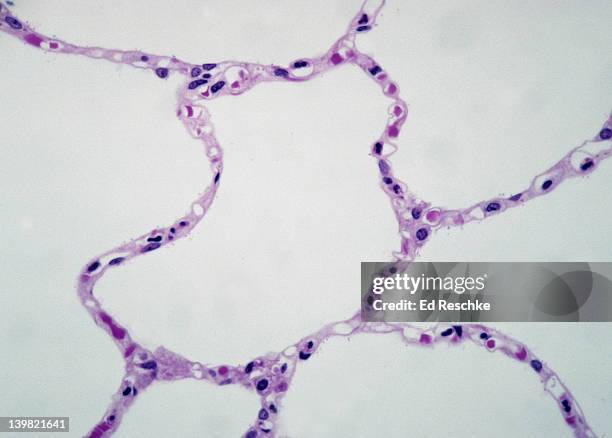
Sheets of tightly packed cells with minimal extracellular matrix; main cell type: epithelial cells.
Epithelial Tissue — Special Characteristics
Highly cellular, specialized junctions, polarity, supported by connective tissue, avascular but innervated, and regenerative.
Simple Squamous Epithelium — Description
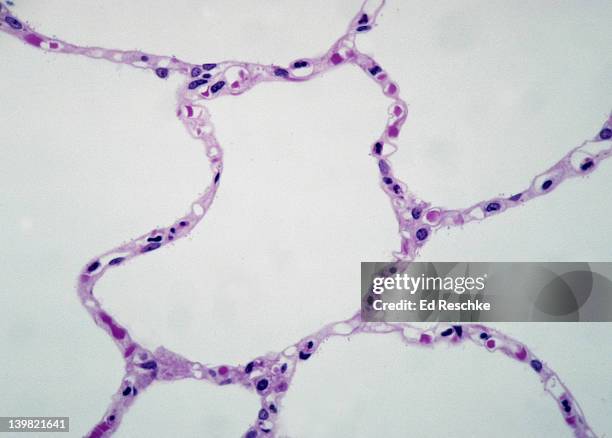
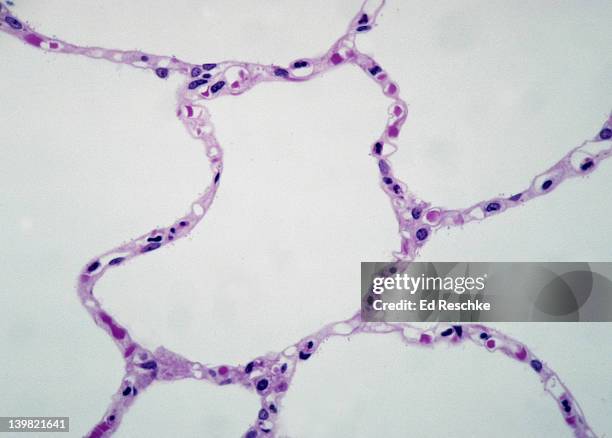
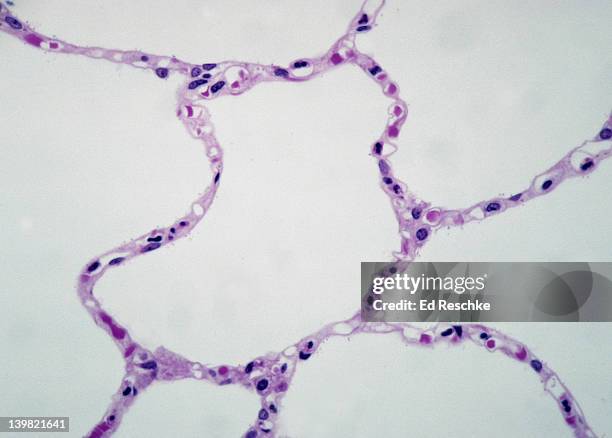
Single layer of flat epithelial cells with disc-shaped nuclei; main cell type: squamous epithelial cells.
Simple Squamous Epithelium — Function
Allows passive diffusion and filtration; secretes lubricating substances in serosae.
Simple Squamous Epithelium — Location
Kidney glomeruli, air sacs of lungs, lining of heart, blood and lymphatic vessels, and ventral body cavity.
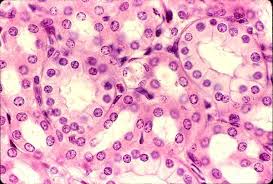
Simple Cuboidal Epithelium — Description
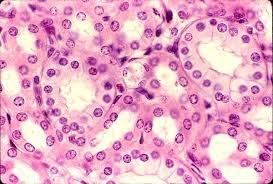
Single layer of cube-shaped epithelial cells with large spherical nuclei; main cell type: cuboidal epithelial cells.
Simple Cuboidal Epithelium — Function
Secretion and absorption.
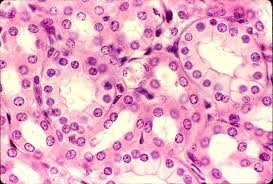
Simple Cuboidal Epithelium — Location
Kidney tubules, secretory portions of small glands, and ovary surface.
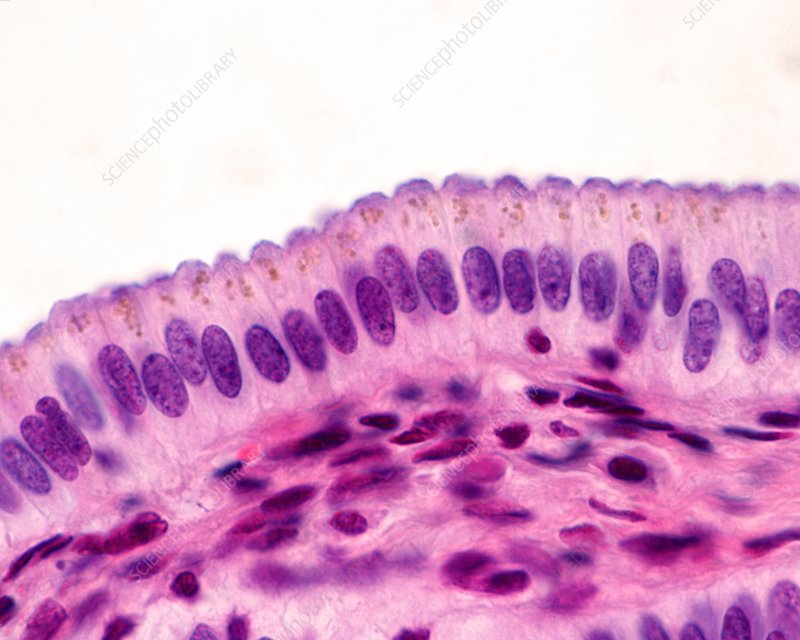
Simple Columnar Epithelium — Description
Single layer of tall epithelial cells; may include goblet cells and cilia; main cell type: columnar epithelial cells.
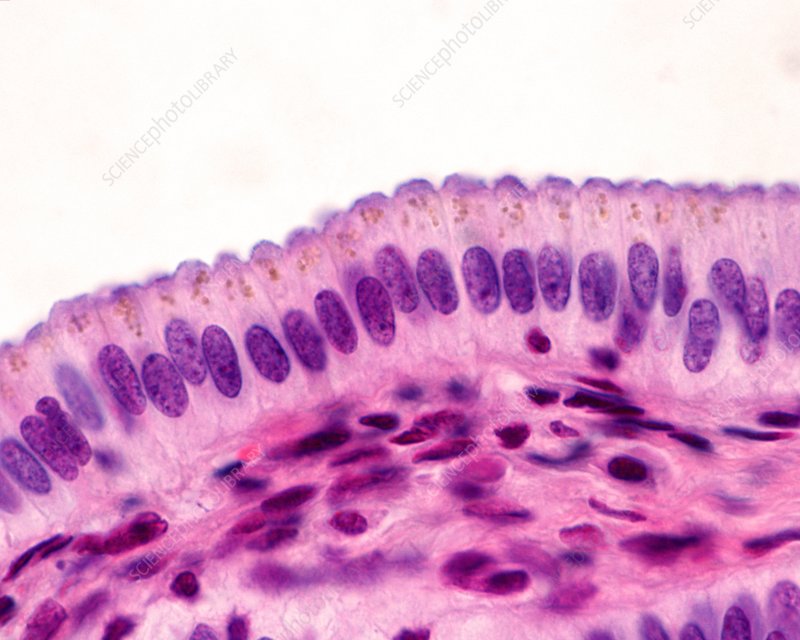
Simple Columnar Epithelium — Function
Absorption and secretion of mucus, enzymes, and other substances; ciliated type propels mucus or reproductive cells.
Simple Columnar Epithelium — Location (Nonciliated)
Digestive tract, gallbladder, and ducts of some glands.
Simple Columnar Epithelium — Location (Ciliated)
Small bronchi, uterine tubes, and uterus.
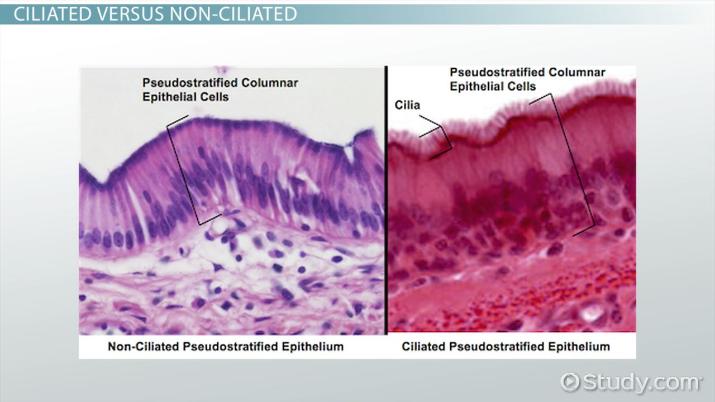
Pseudostratified Columnar Epithelium — Description
Single layer of epithelial cells of varying heights; all contact basement membrane; main cell type: columnar epithelial cells.
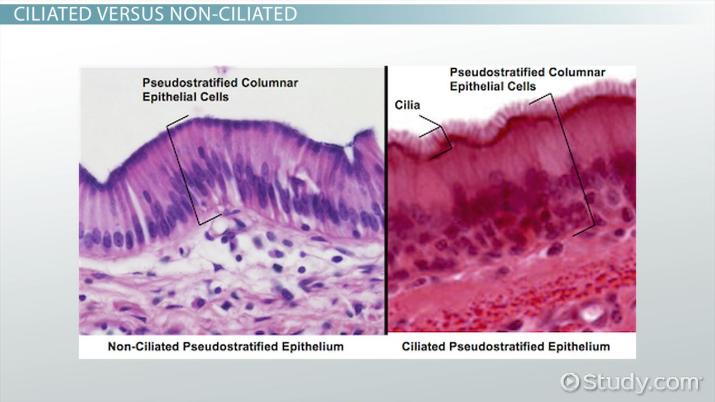
Pseudostratified Columnar Epithelium — Function
Secretion of mucus and propulsion of mucus by cilia.
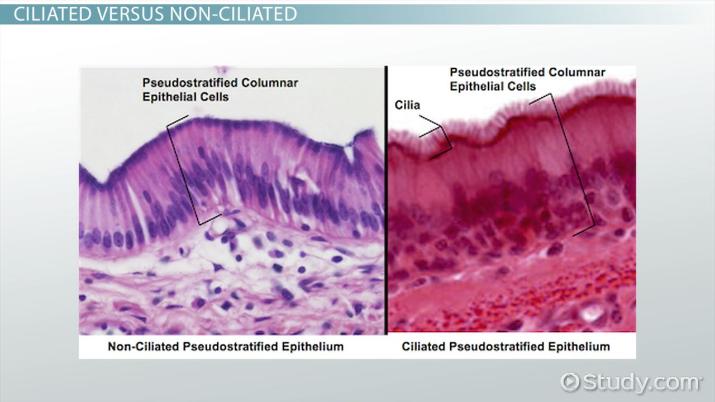
Pseudostratified Columnar Epithelium — Location (Nonciliated)
Ducts of male reproductive organs and large glands.
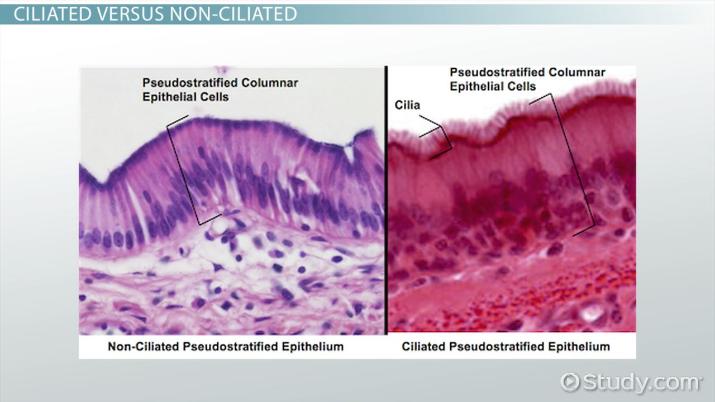
Pseudostratified Columnar Epithelium — Location (Ciliated)
Trachea and most of the upper respiratory tract.
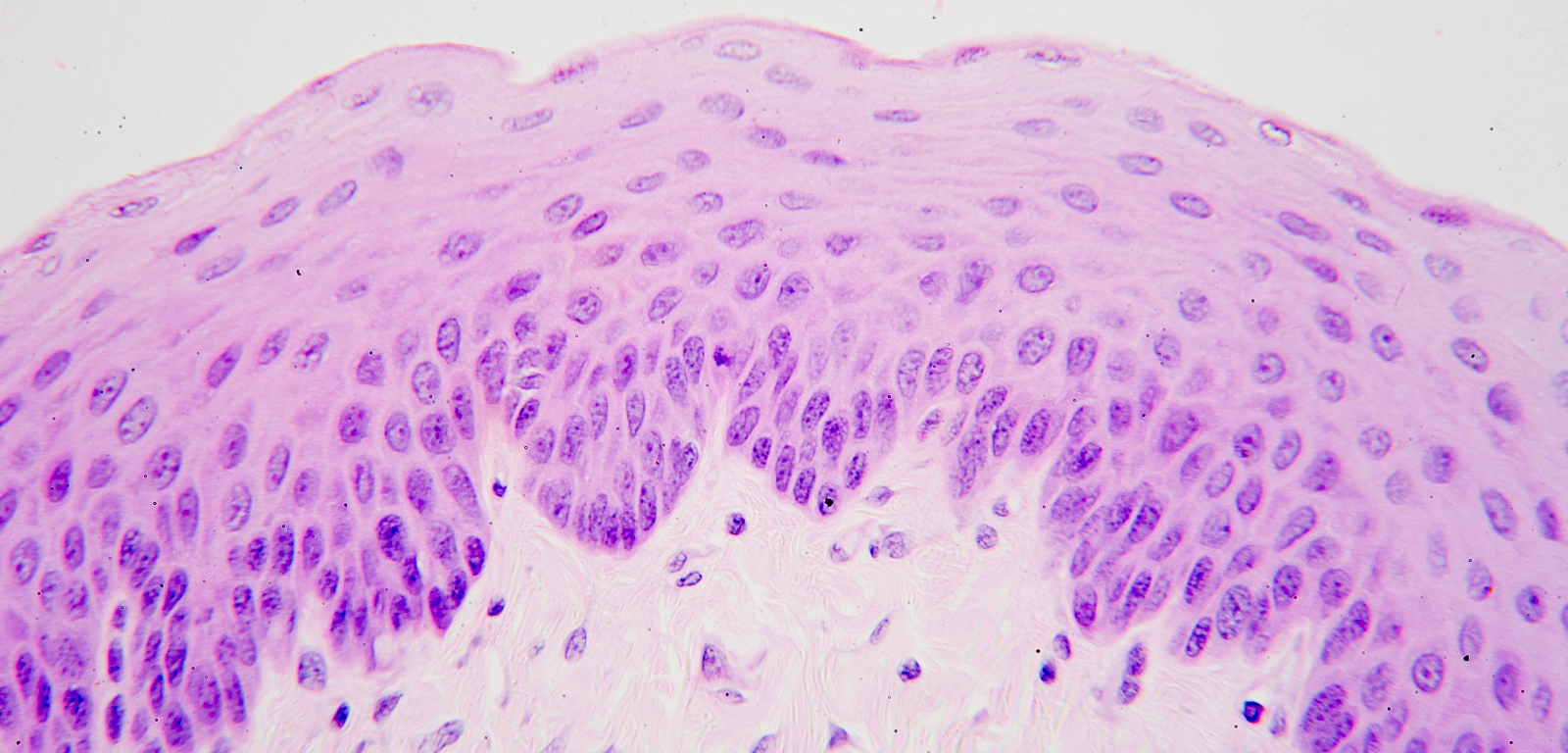
Stratified Squamous Epithelium — Description
Multiple layers of epithelial cells with squamous surface cells and cuboidal or columnar basal cells; main cell type: squamous epithelial cells.
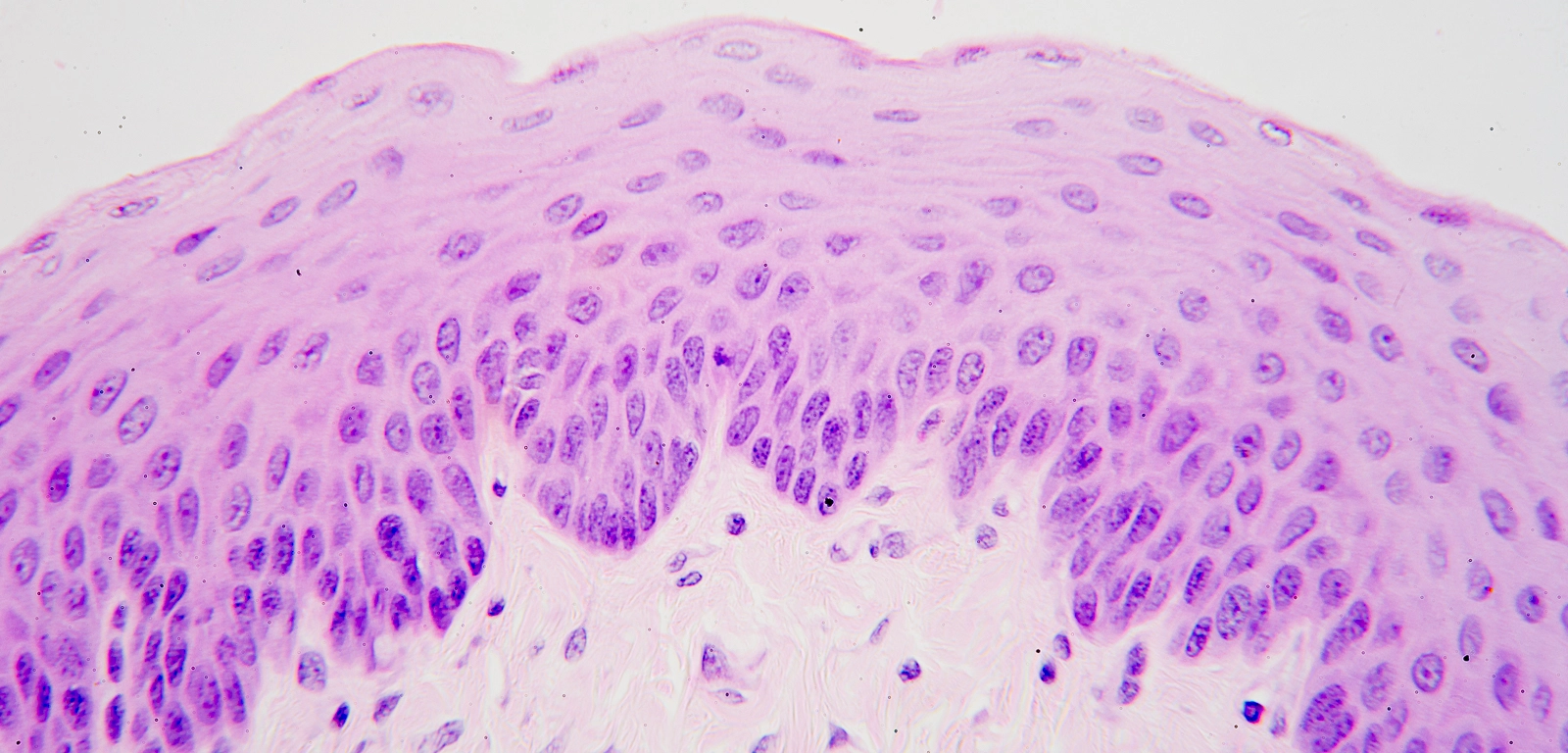
Stratified Squamous Epithelium — Function
Protects underlying tissues from abrasion.
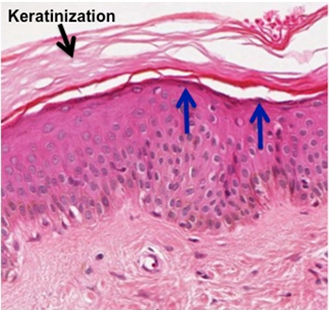
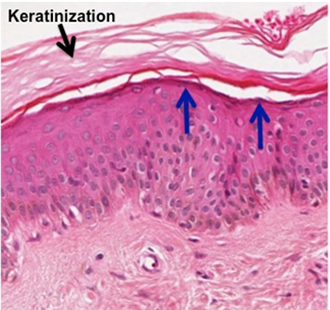
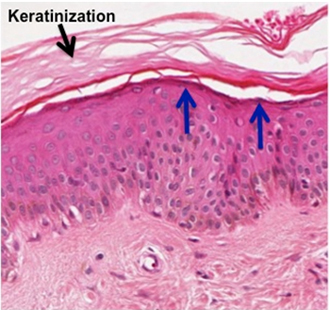
Keratinized Stratified Squamous Epithelium — Description
Surface epithelial cells are dead and filled with keratin; main cell type: keratinized squamous epithelial cells.
Keratinized Stratified Squamous Epithelium — Special Qualities
Waterproof and contains the protective protein keratin.
Keratinized Stratified Squamous Epithelium — Location
Epidermis of the skin.
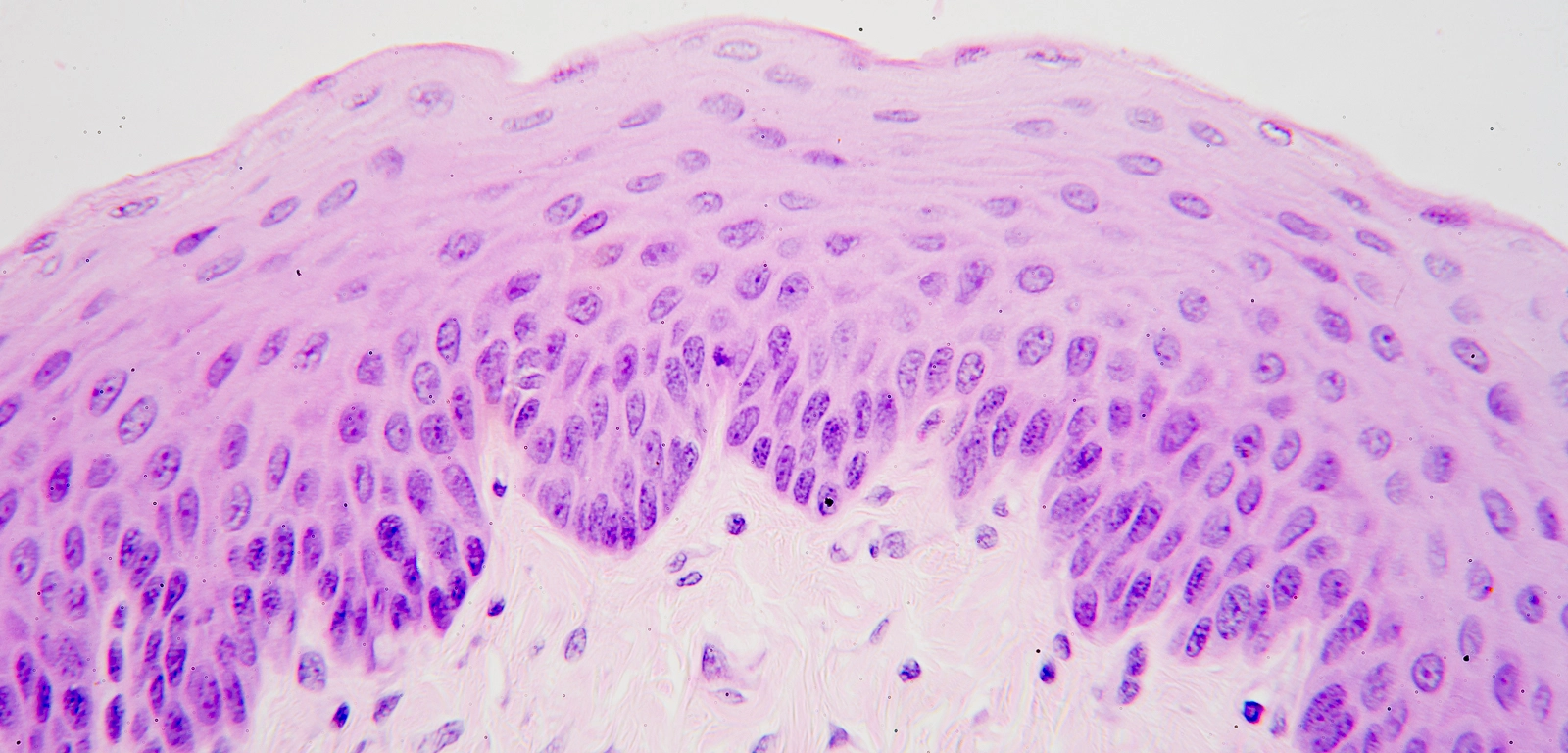
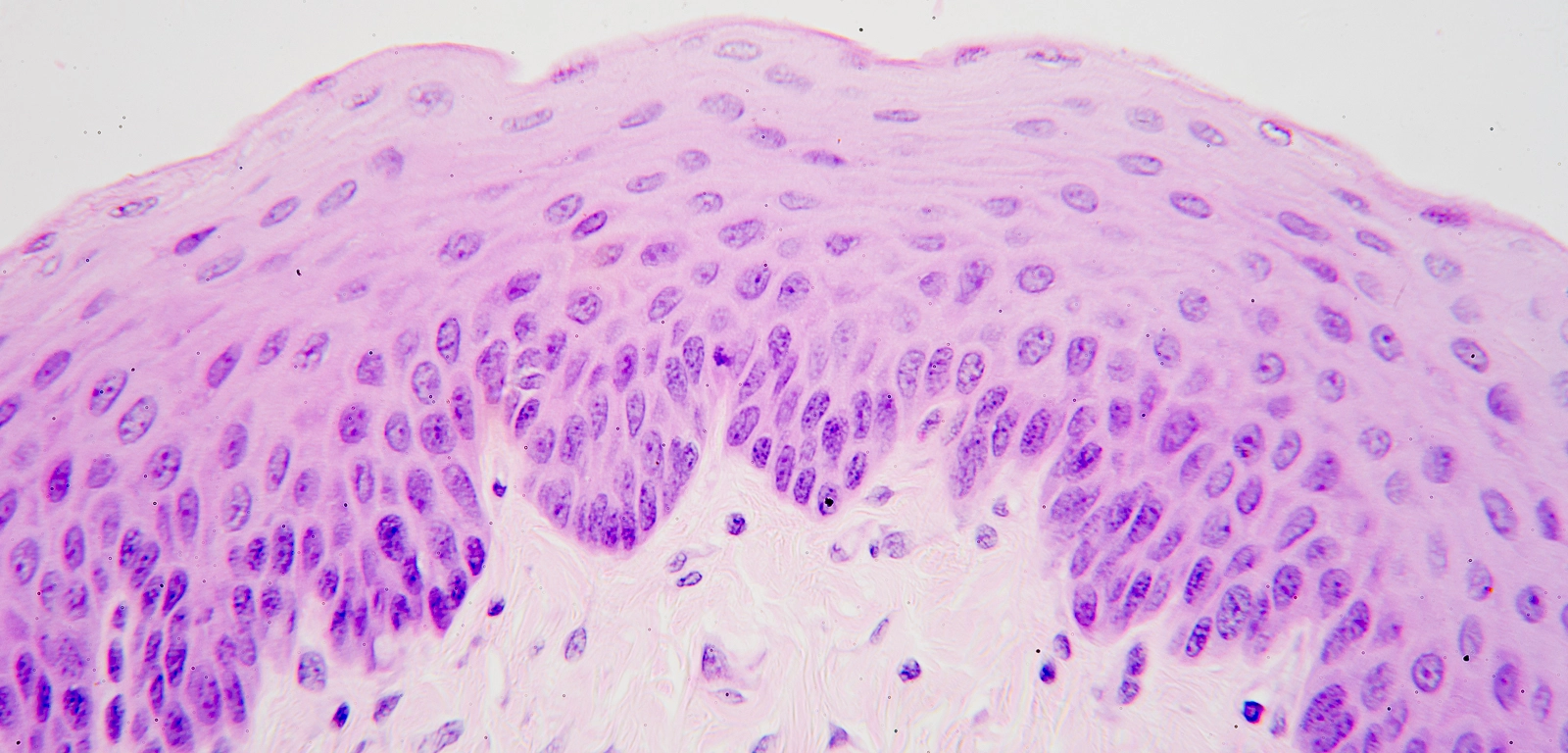
Nonkeratinized Stratified Squamous Epithelium — Description
Surface epithelial cells remain alive and moist; main cell type: squamous epithelial cells.
Nonkeratinized Stratified Squamous Epithelium — Location
Esophagus, mouth, anus, vagina, and urethra.
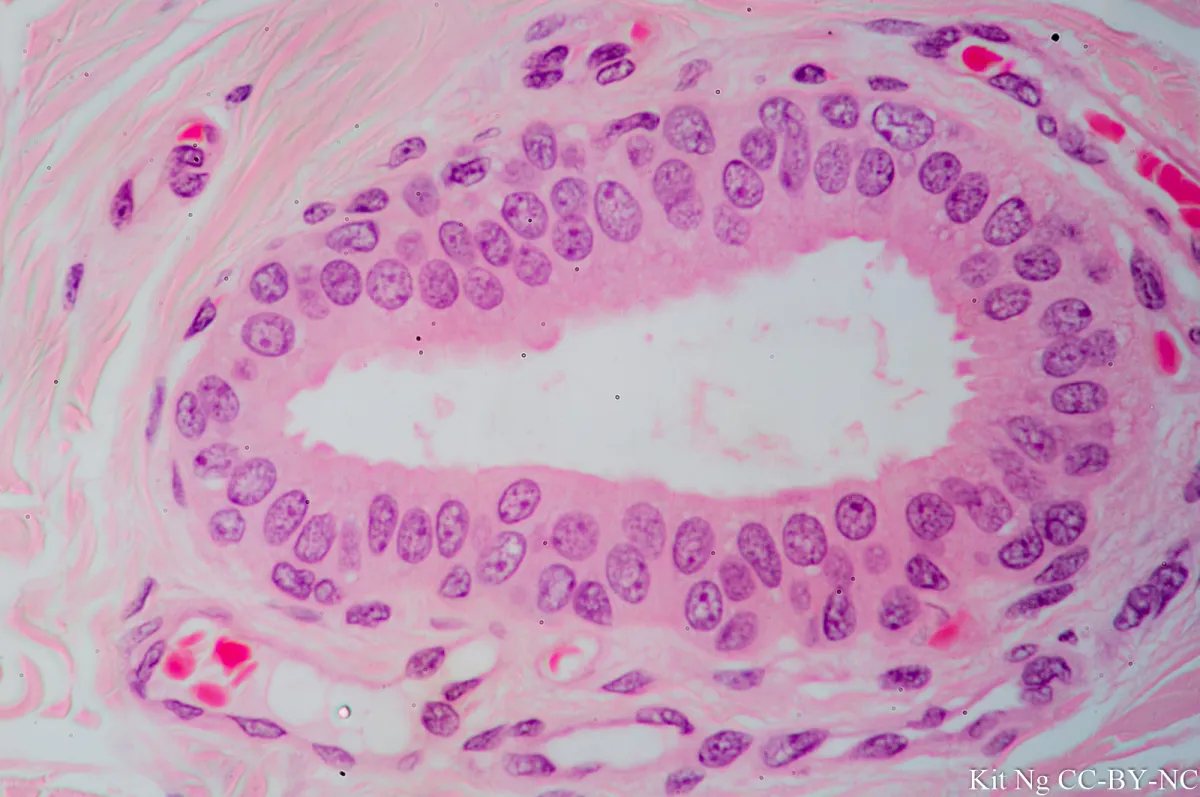
Stratified Cuboidal Epithelium — Description
Two or more layers of cube-shaped epithelial cells; main cell type: cuboidal epithelial cells.
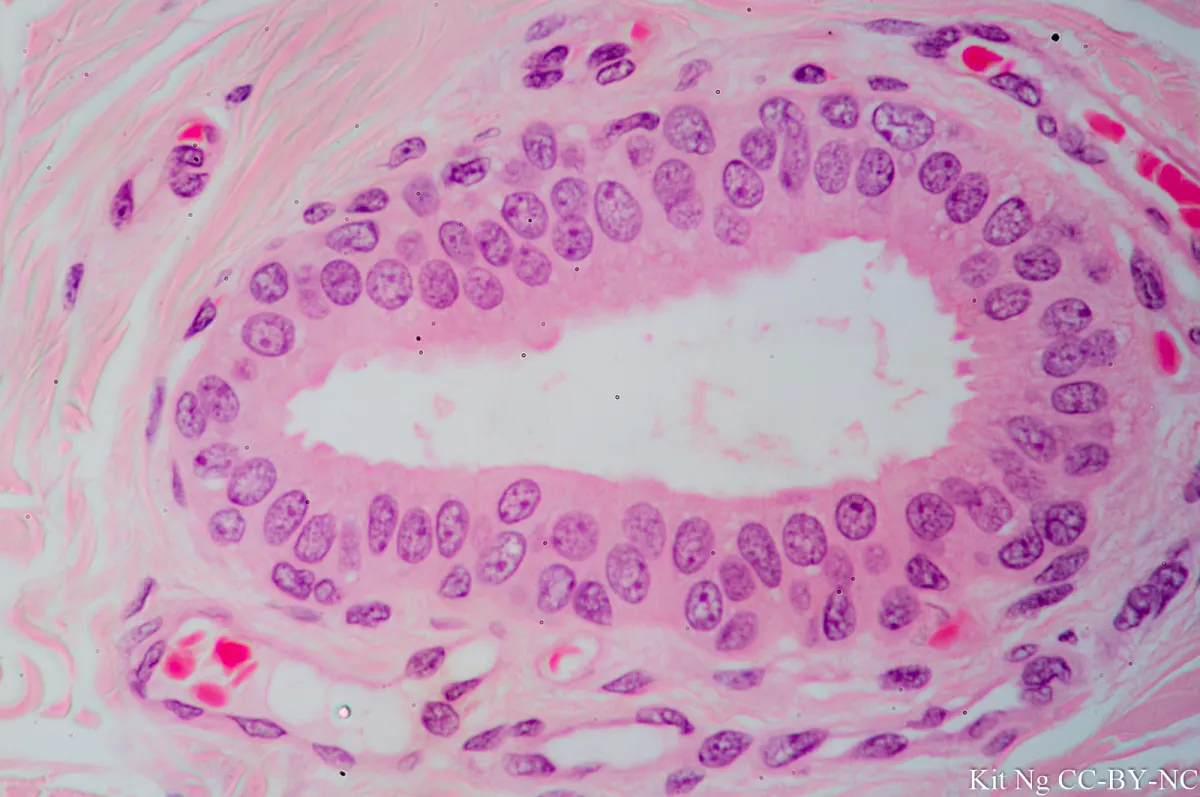
Stratified Cuboidal Epithelium — Function
Protection.
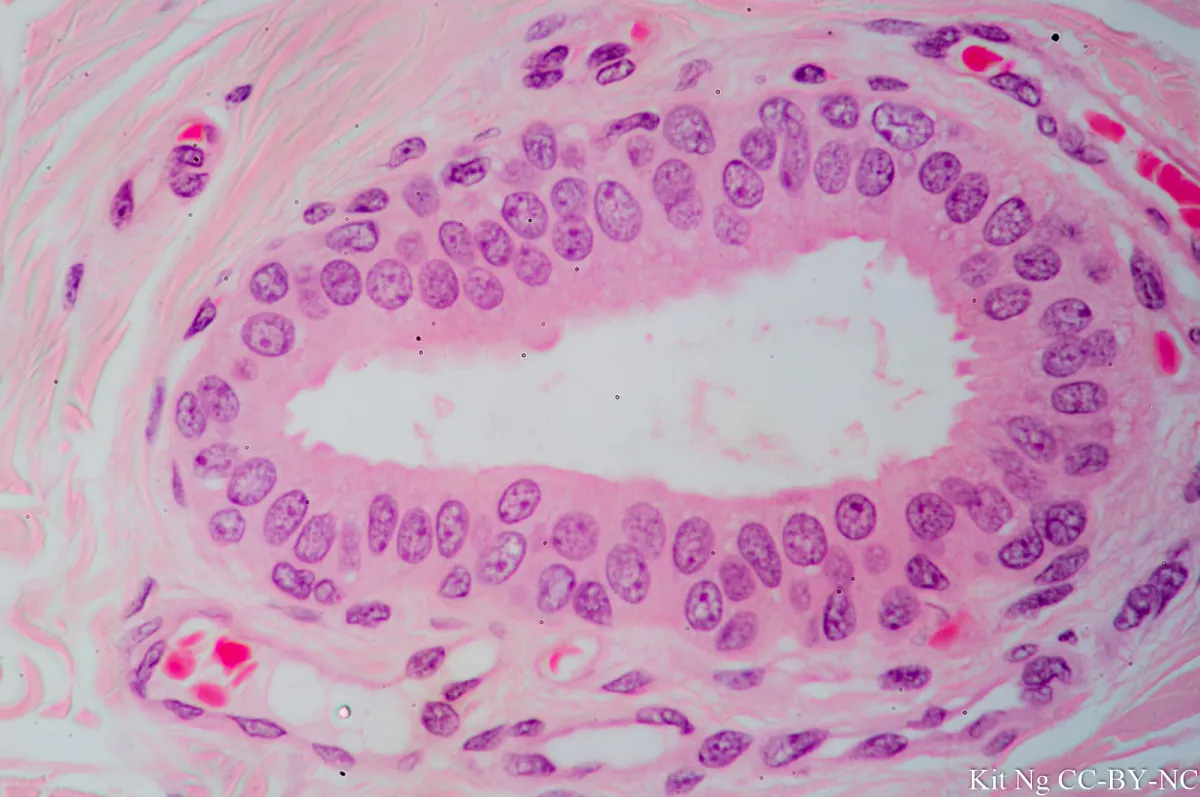
Stratified Cuboidal Epithelium — Location
Ducts of mammary glands, salivary glands, and largest sweat glands.
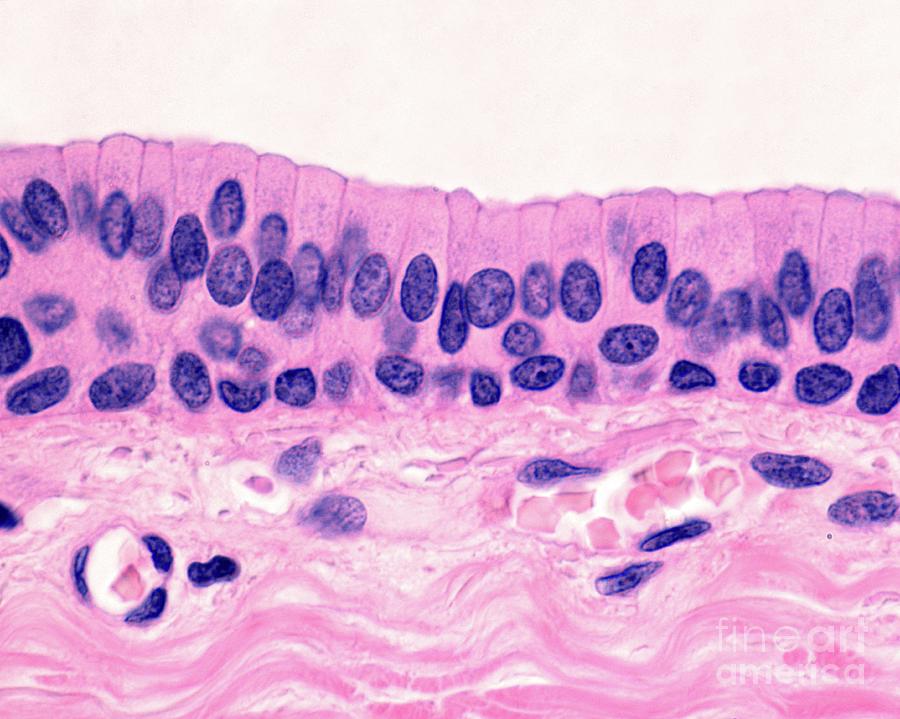
Stratified Columnar Epithelium — Description
Multiple layers with cuboidal basal cells and elongated surface cells; main cell type: columnar epithelial cells.
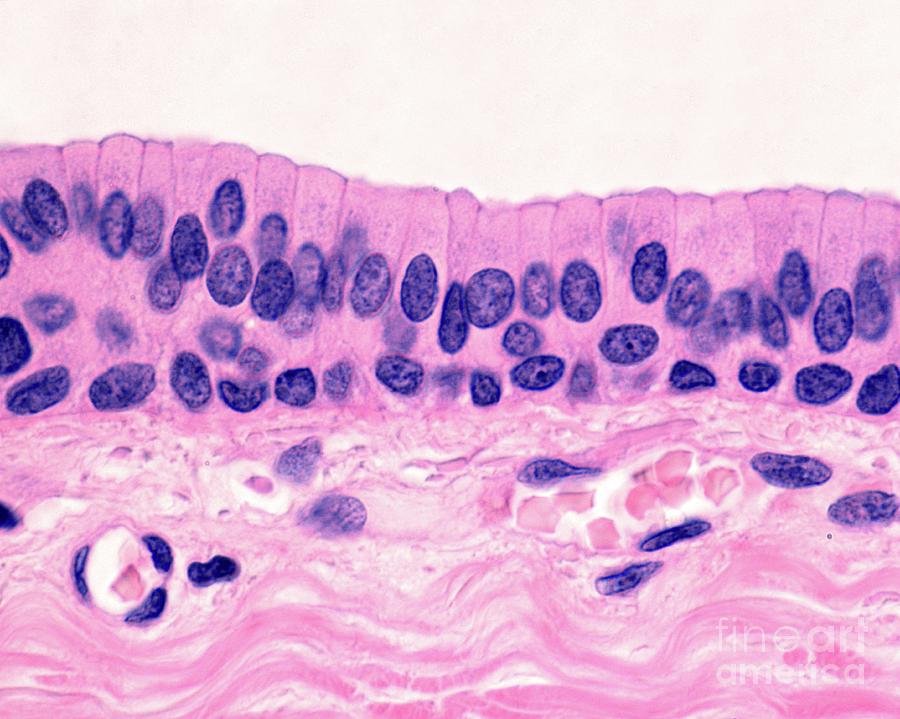
Stratified Columnar Epithelium — Function
Protection and secretion.
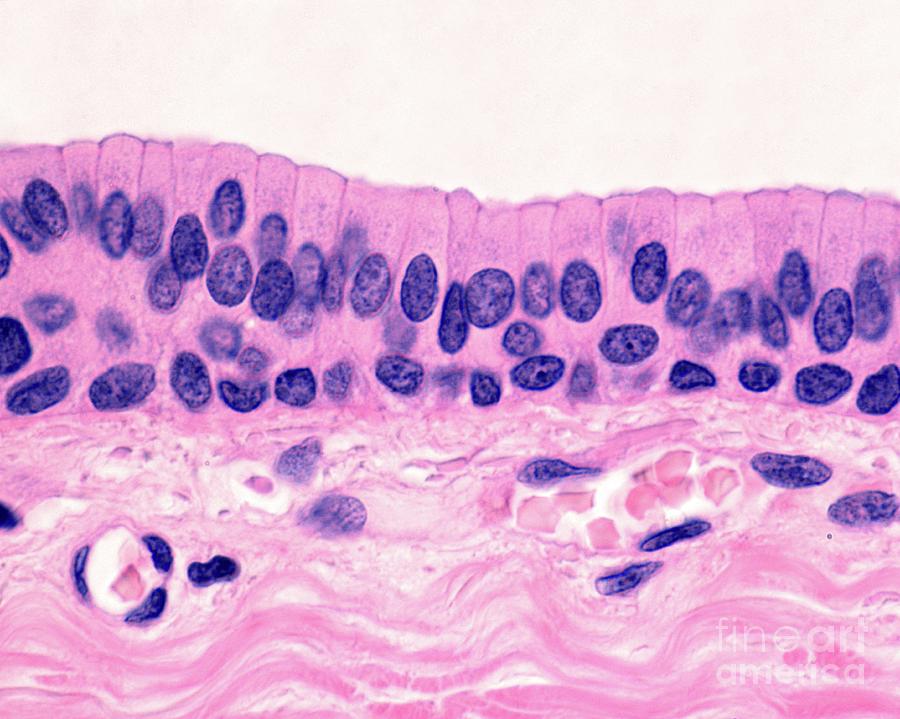
Stratified Columnar Epithelium — Location
Male urethra and large ducts of some glands.
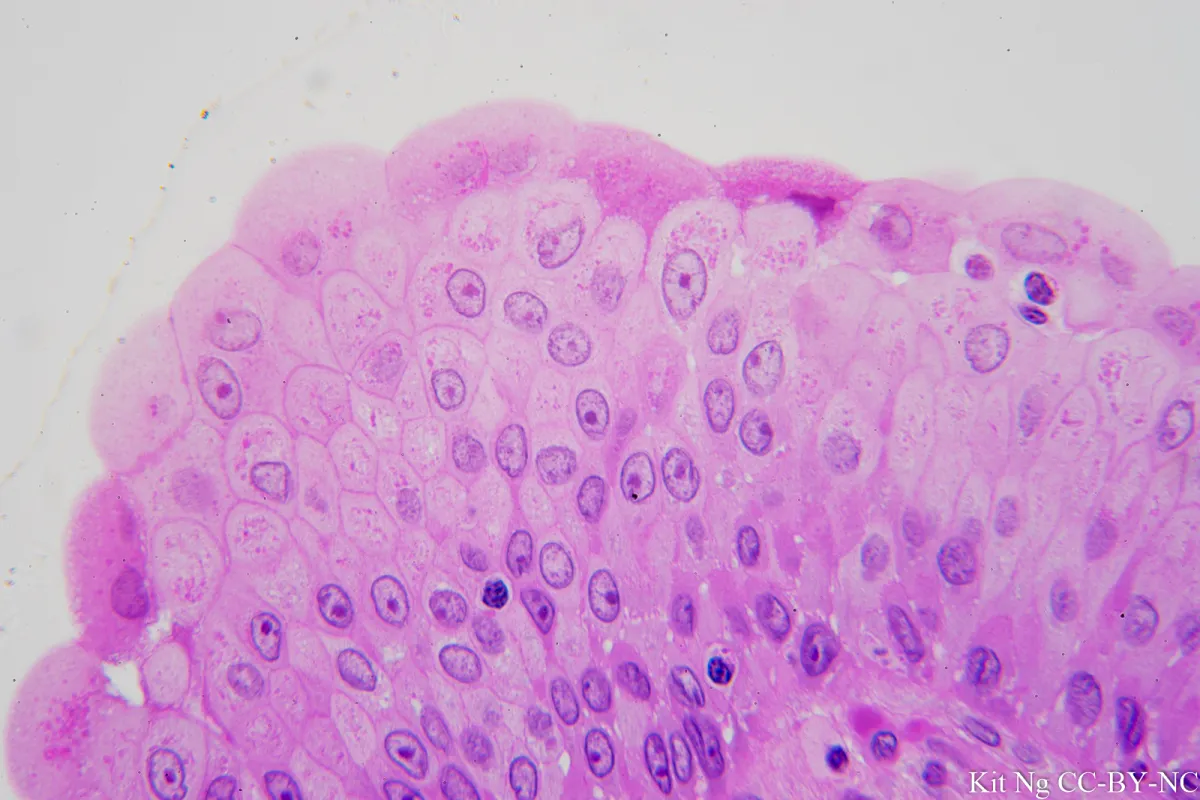
Transitional Epithelium — Description
Stratified epithelium with dome-shaped epithelial cells that flatten when stretched; main cell type: transitional epithelial cells.
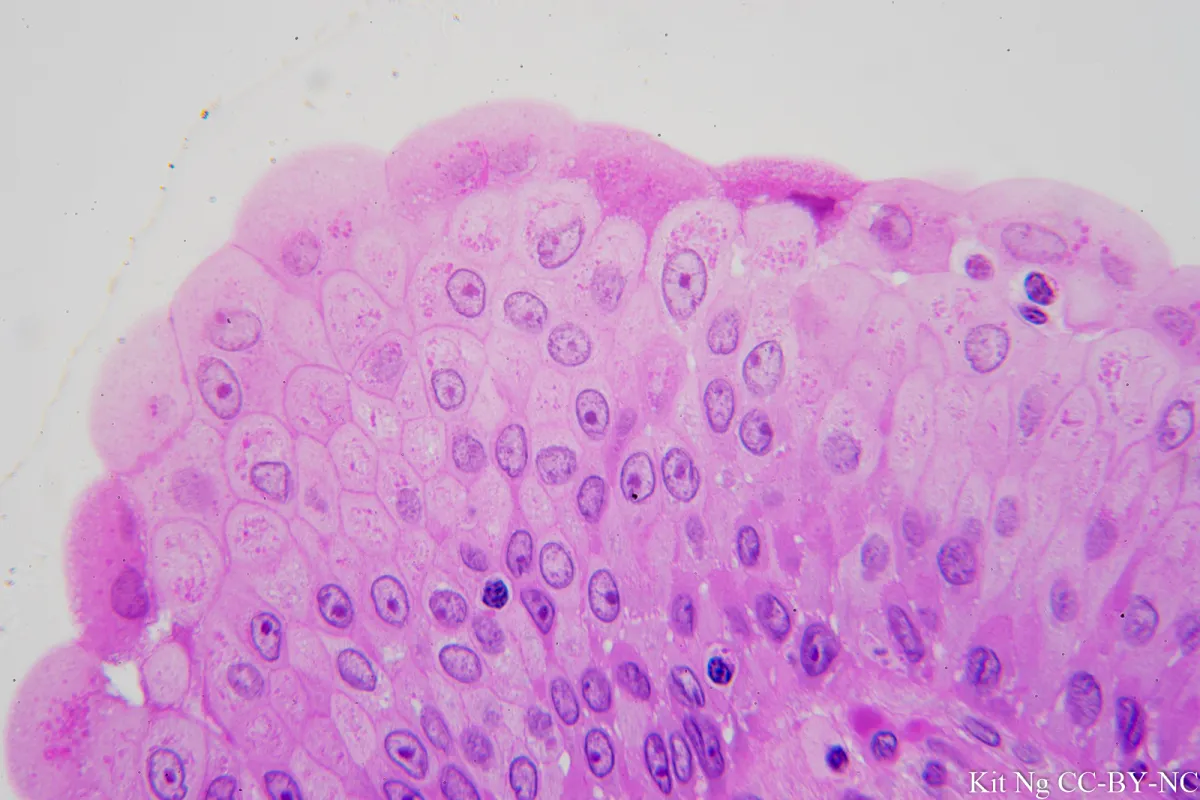
Transitional Epithelium — Function
Allows distension of urinary organs.
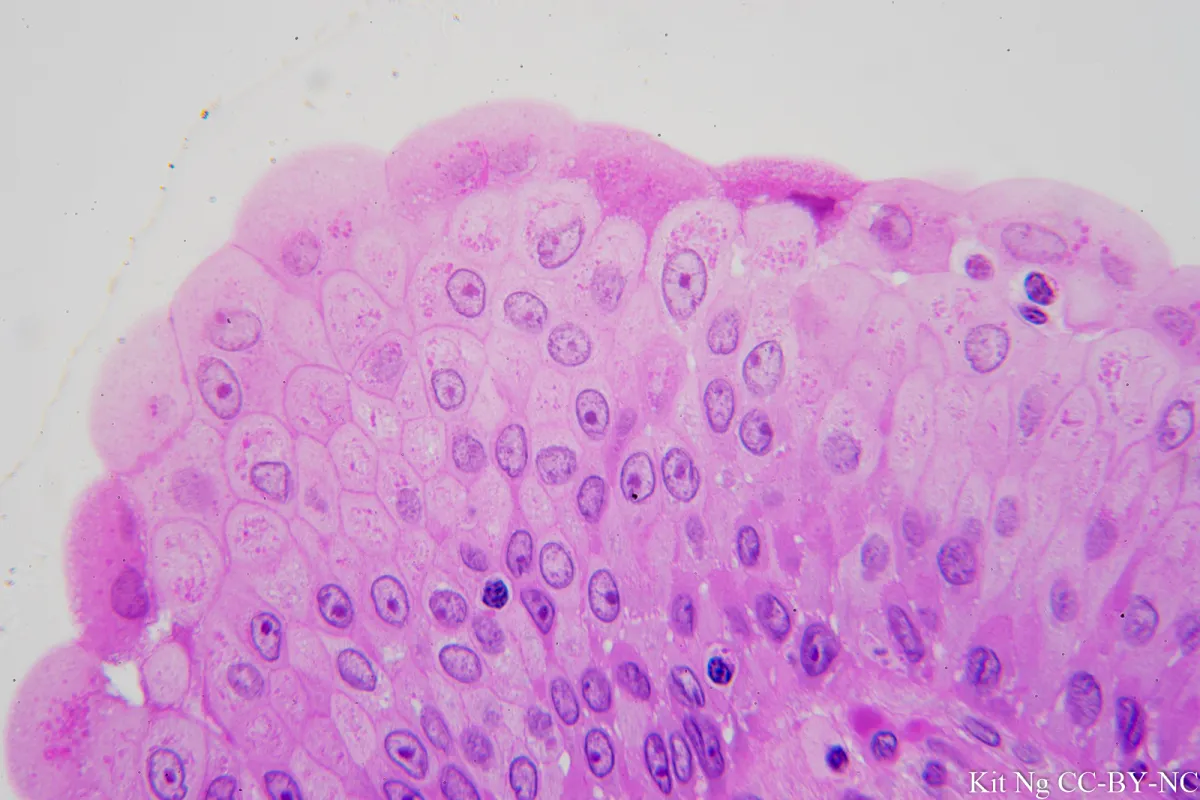
Transitional Epithelium — Location
Urinary bladder, ureters, and proximal urethra.
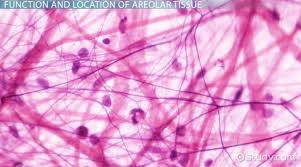
Areolar Connective Tissue — Description
Loose connective tissue with gel-like matrix containing collagen, elastic, and reticular fibers; main cell type: fibroblasts.
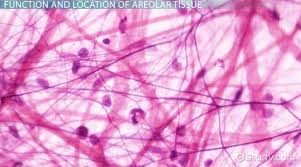
Areolar Connective Tissue — Function
Wraps and cushions organs, holds tissue fluid, and plays a role in inflammation.
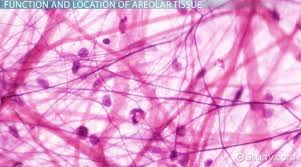
Areolar Connective Tissue — Location
Underlies epithelia, surrounds blood vessels and nerves, and borders all tissues.
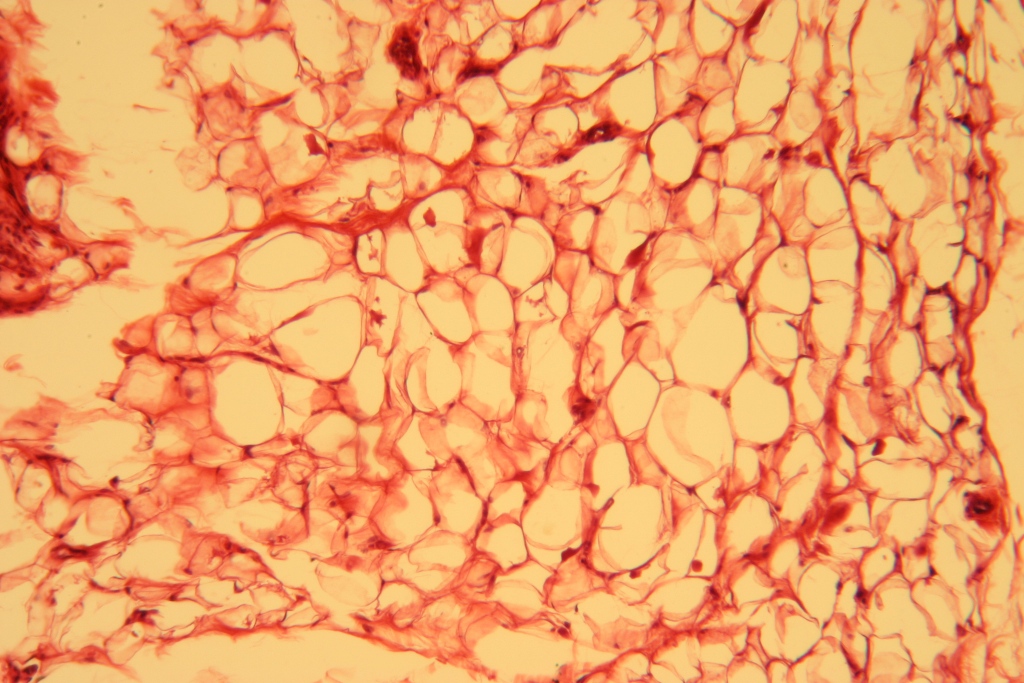
Adipose Tissue — Description
Loose connective tissue composed of closely packed adipocytes; main cell type: adipocytes.
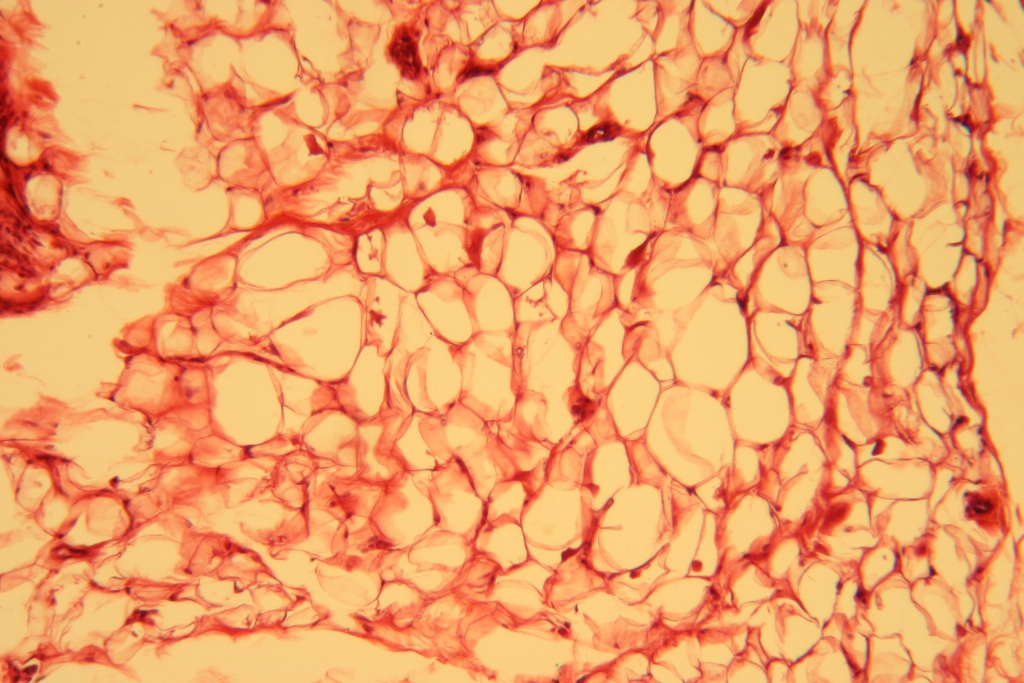
Adipose Tissue — Function
Stores energy, insulates against heat loss, and protects organs.
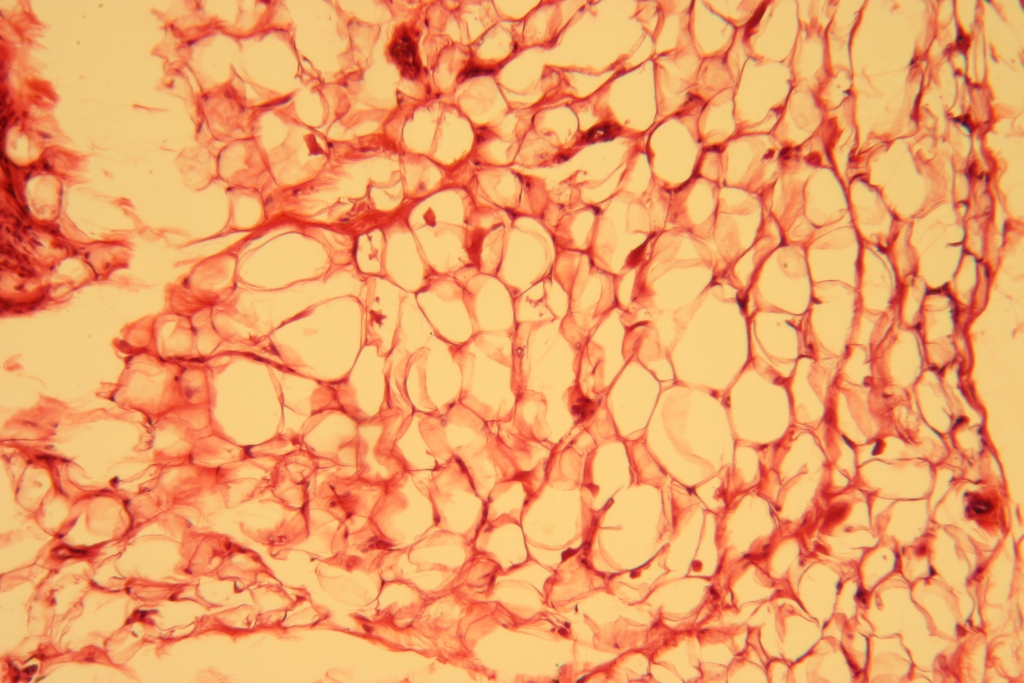
Adipose Tissue — Location
Under skin, around kidneys, behind eyeballs, abdomen, breasts, and hypodermis.
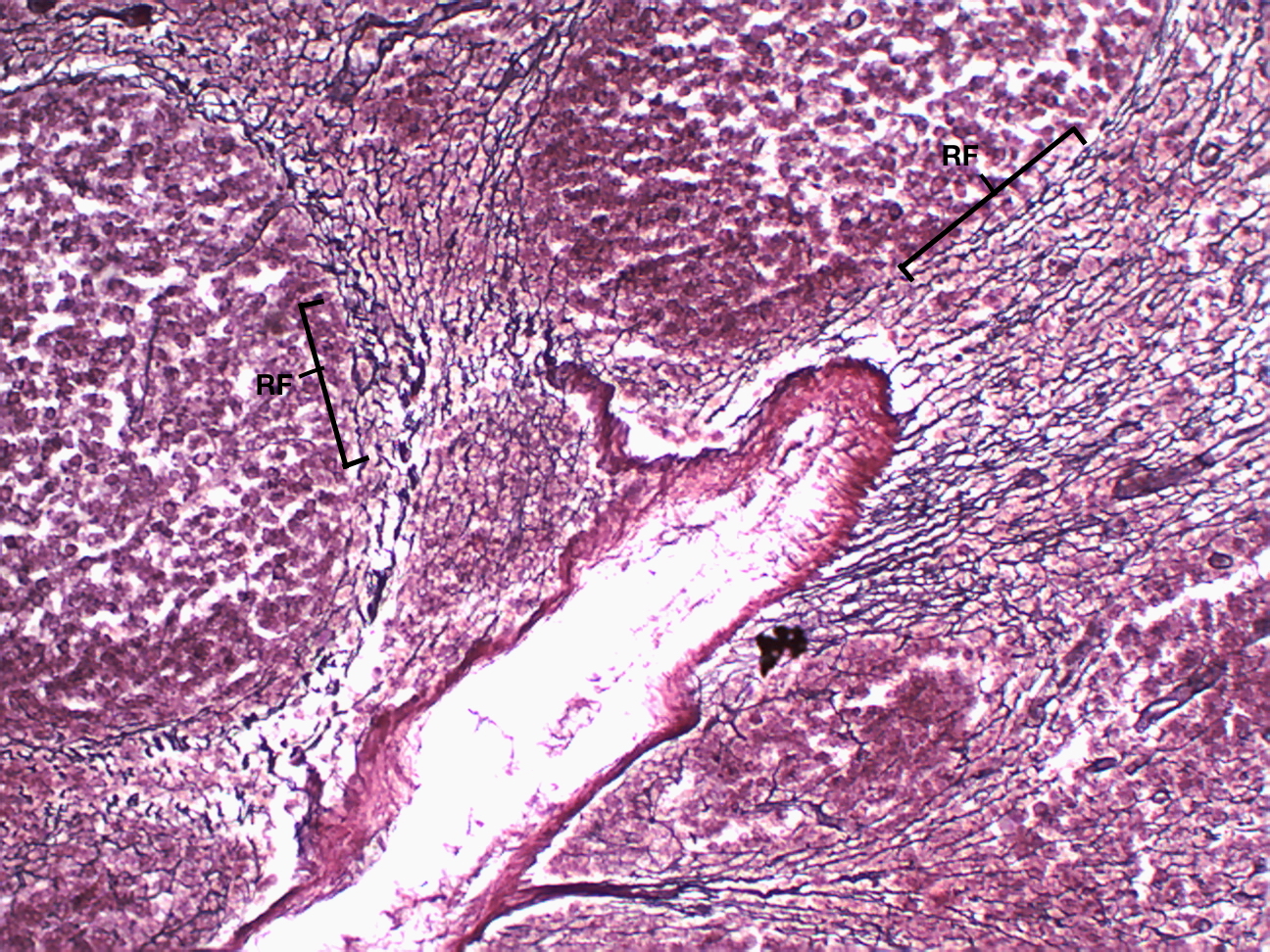
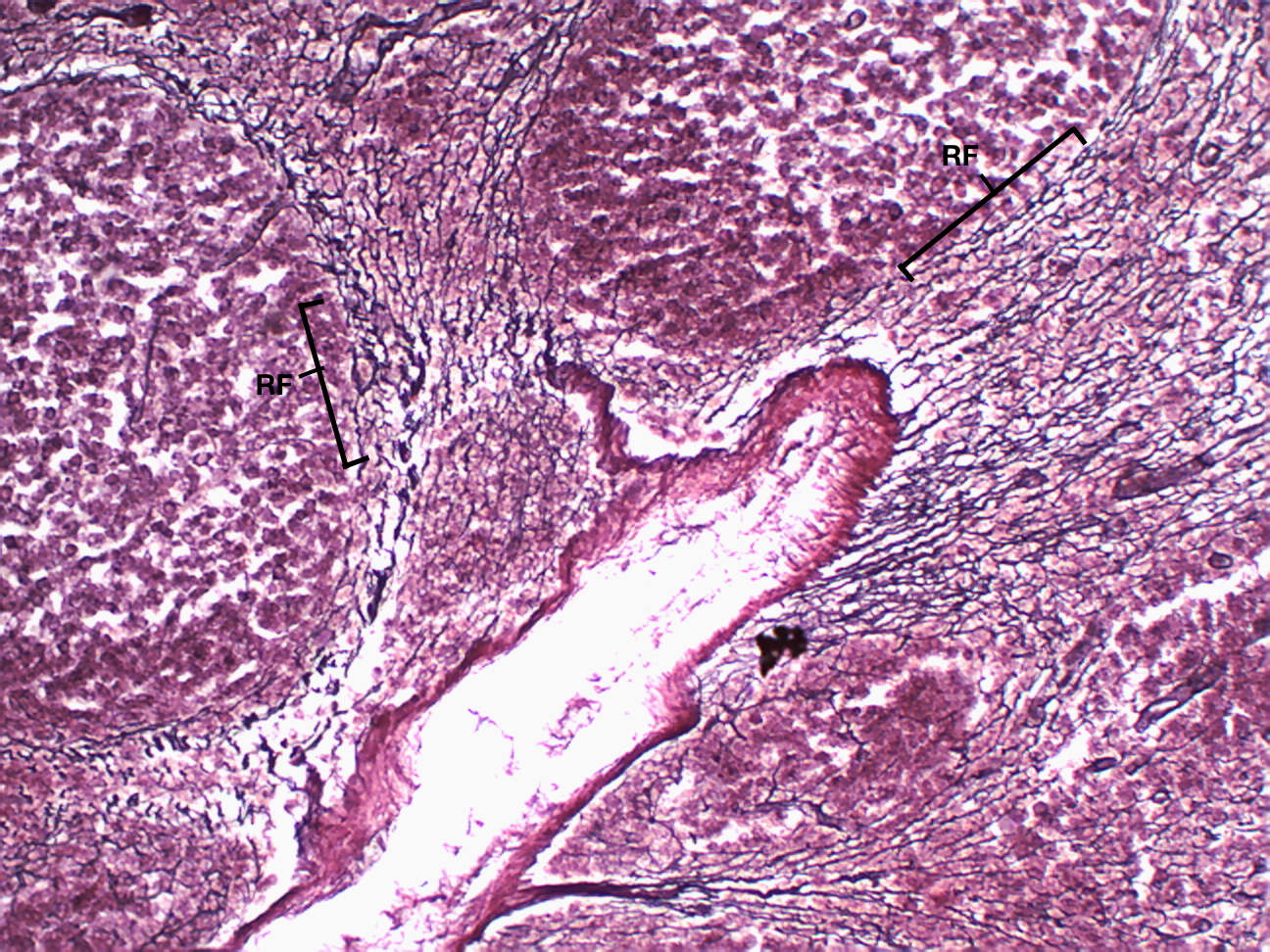
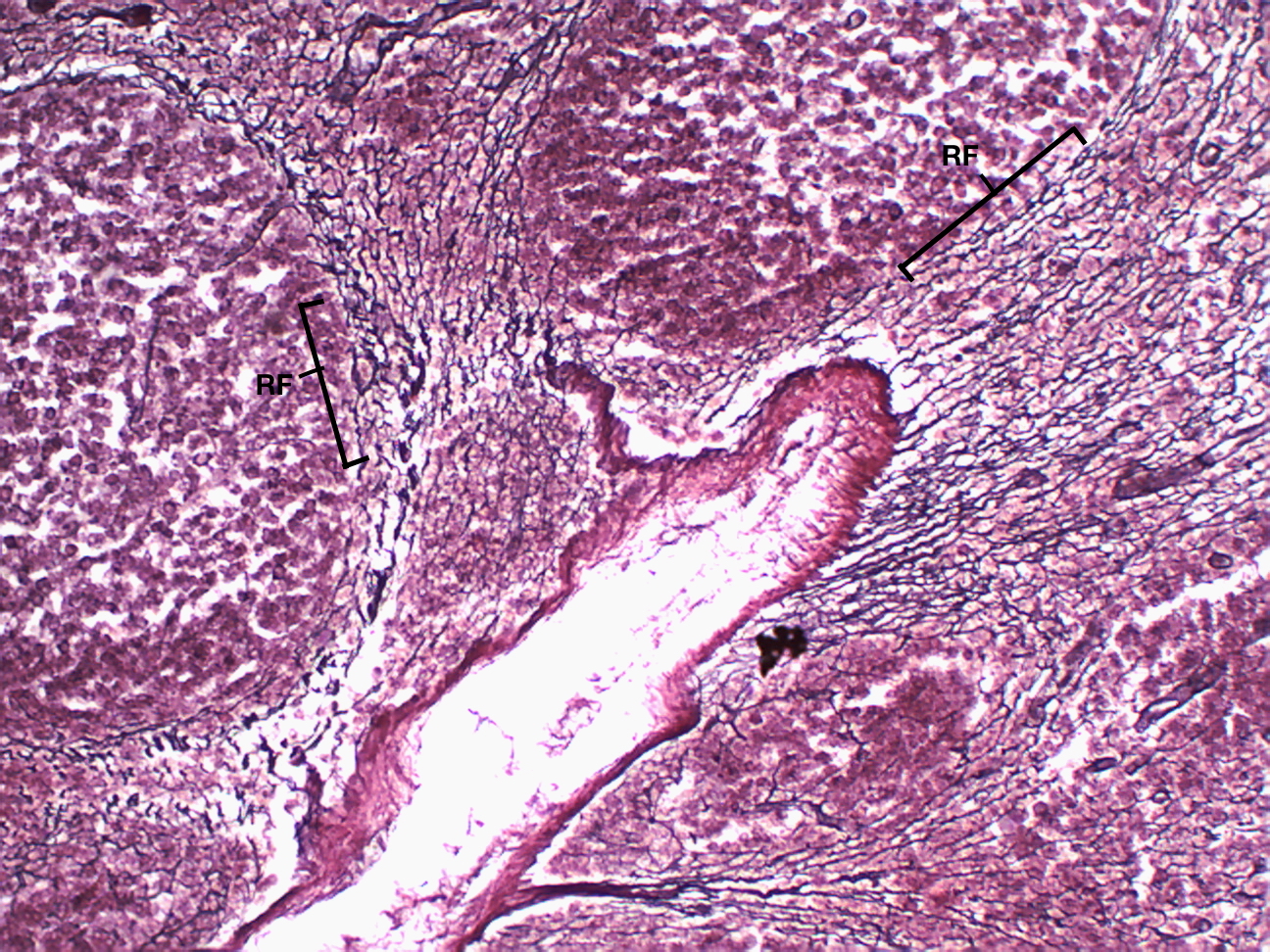
Reticular Connective Tissue — Description
Loose connective tissue with a network of reticular fibers; main cell type: fibroblasts (reticular cells).
Reticular Connective Tissue — Function
Forms supportive framework (stroma) for other cells.
Reticular Connective Tissue — Location
Lymph nodes, spleen, and bone marrow.
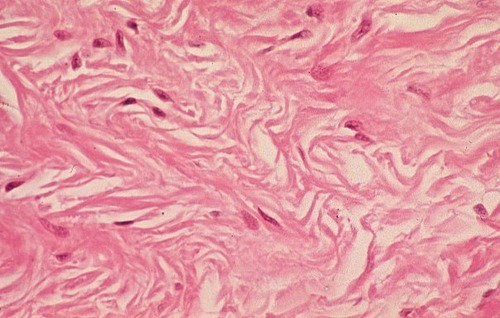
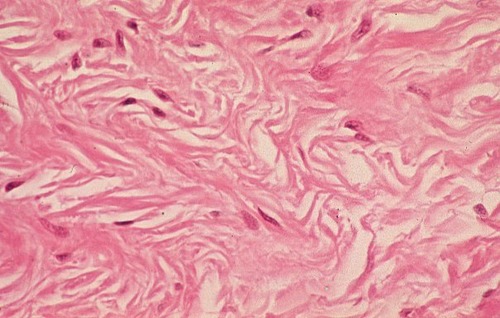
Dense Irregular Connective Tissue — Description
Dense connective tissue with irregularly arranged collagen fibers; main cell type: fibroblasts.
Dense Irregular Connective Tissue — Function
Withstands tension in many directions.
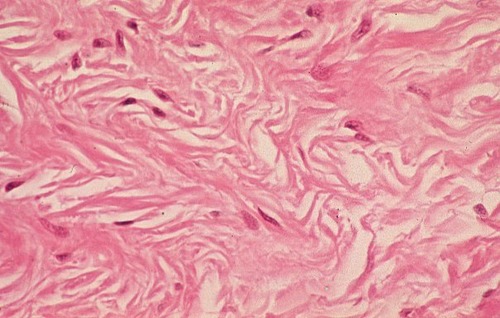
Dense Irregular Connective Tissue — Location
Dermis of skin, submucosa of digestive tract, fibrous capsules of joints and organs.
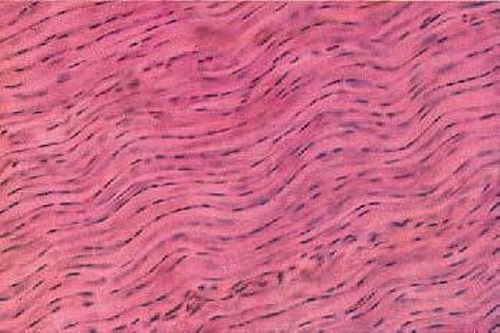
Dense Regular Connective Tissue — Description
Dense connective tissue with parallel collagen fibers; main cell type: fibroblasts.
Dense Regular Connective Tissue — Function
Attaches muscle to bone and bone to bone; resists stress in one direction.
Dense Regular Connective Tissue — Location
Tendons, ligaments, aponeuroses, and fascia.
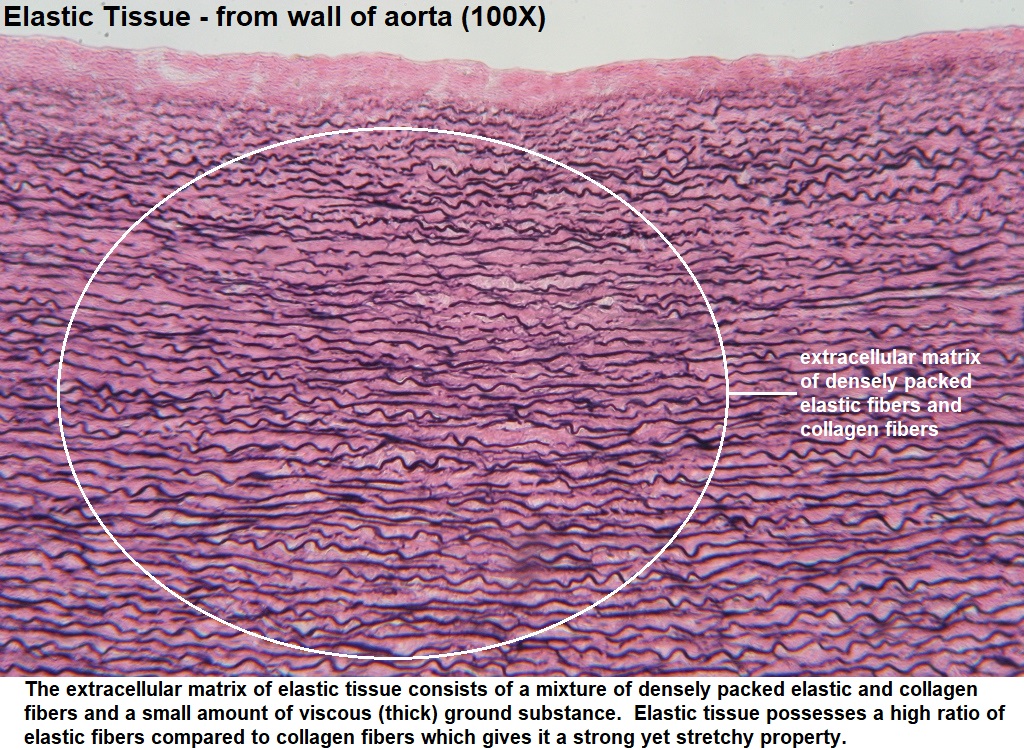
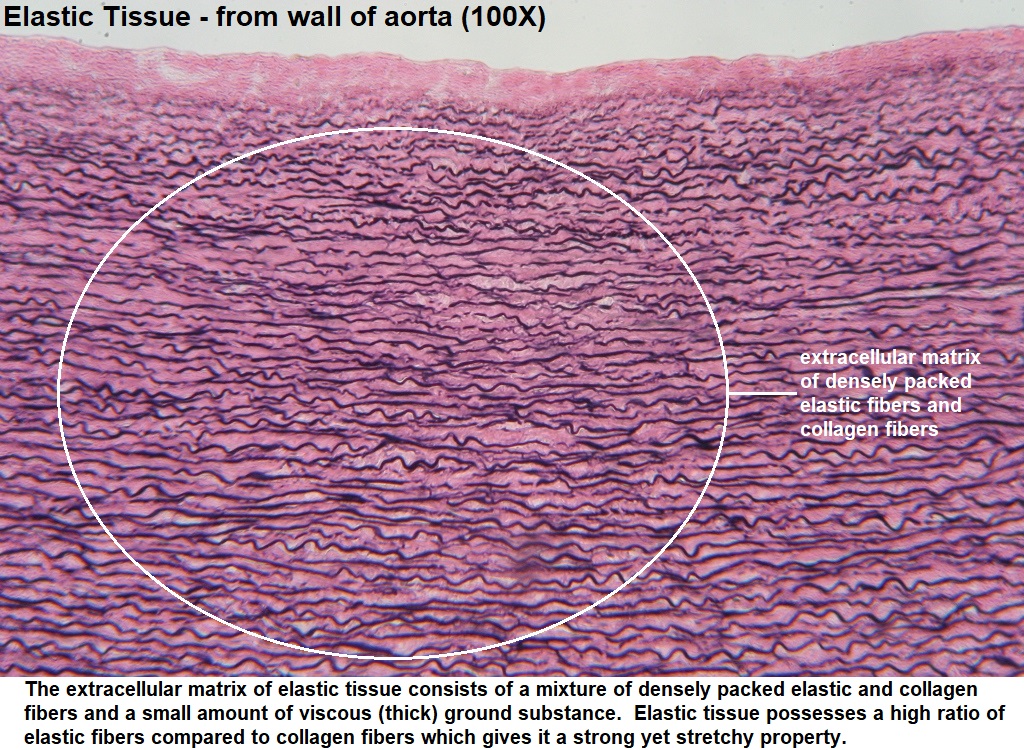
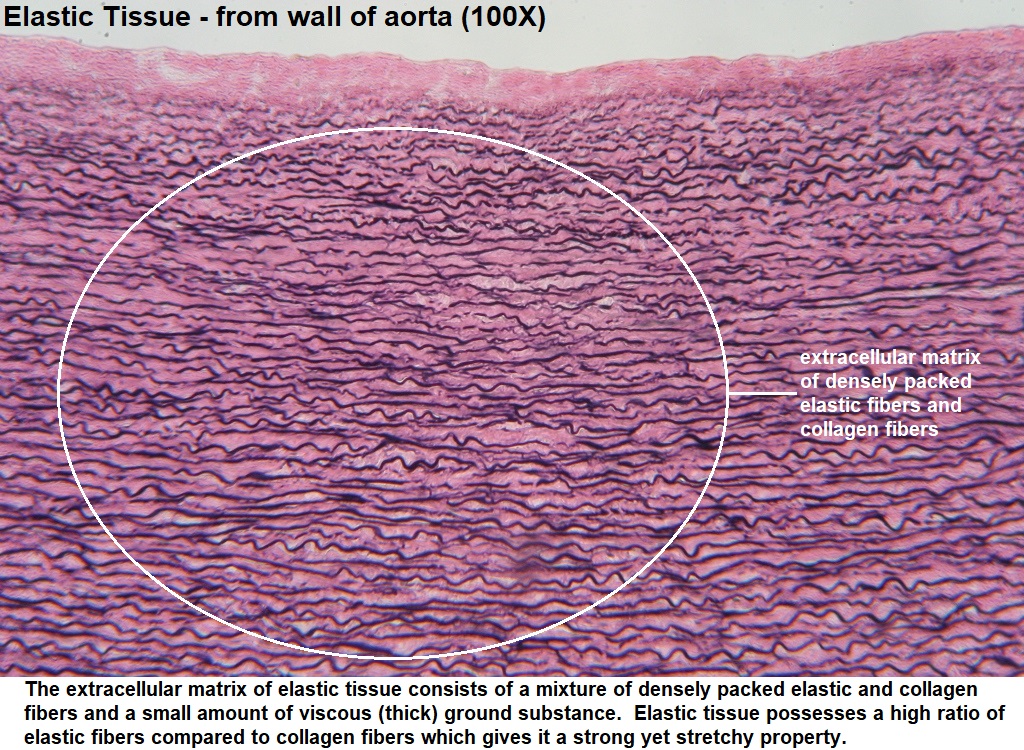
Elastic Connective Tissue — Description
Dense connective tissue rich in elastic fibers; main cell type: fibroblasts.
Elastic Connective Tissue — Function
Allows recoil after stretching.
Elastic Connective Tissue — Location
Walls of arteries, certain ligaments, and bronchial tubes.
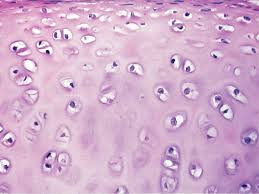
Hyaline Cartilage — Description
Specialized connective tissue with glassy matrix and fine collagen fibers; main cell type: chondrocytes.
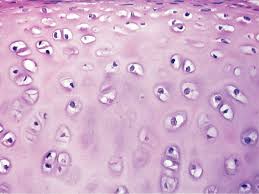
Hyaline Cartilage — Function
Supports, cushions, and resists compressive stress.
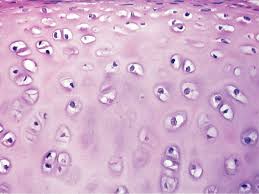
Hyaline Cartilage — Location
Fetal skeleton, ends of long bones, ribs, nose, trachea, and larynx.
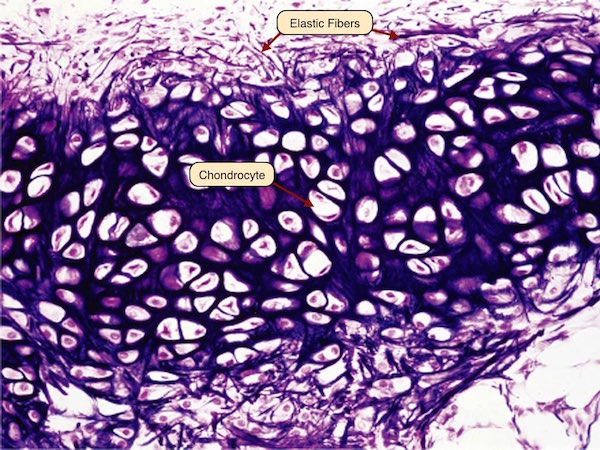
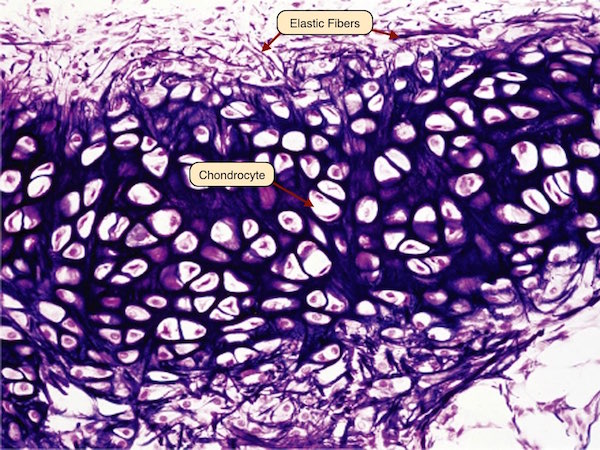
Elastic Cartilage — Description
Specialized connective tissue similar to hyaline but with elastic fibers; main cell type: chondrocytes.
Elastic Cartilage — Function
Maintains shape while allowing flexibility.
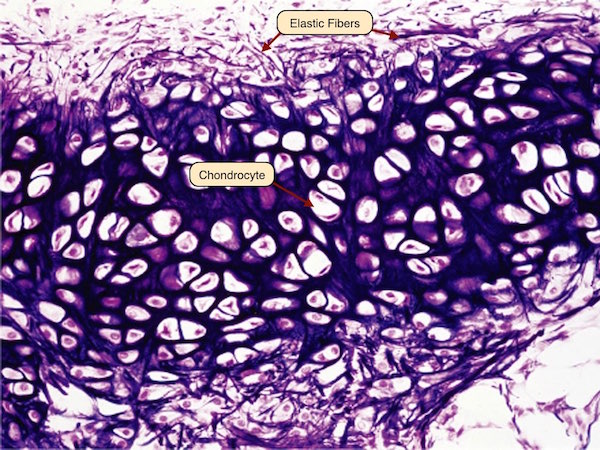
Elastic Cartilage — Location
External ear and epiglottis.
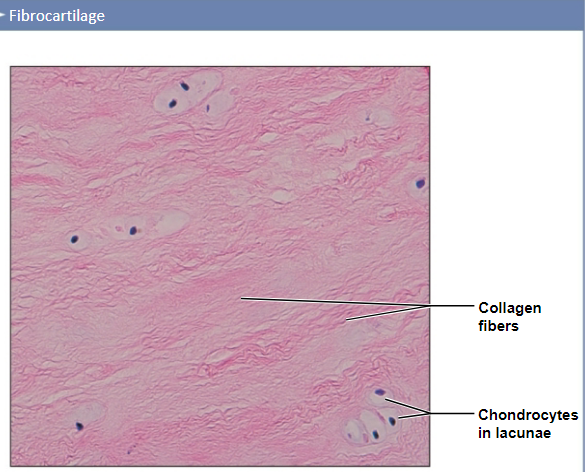
Fibrocartilage — Description
Specialized connective tissue with thick collagen fibers; main cell type: chondrocytes.
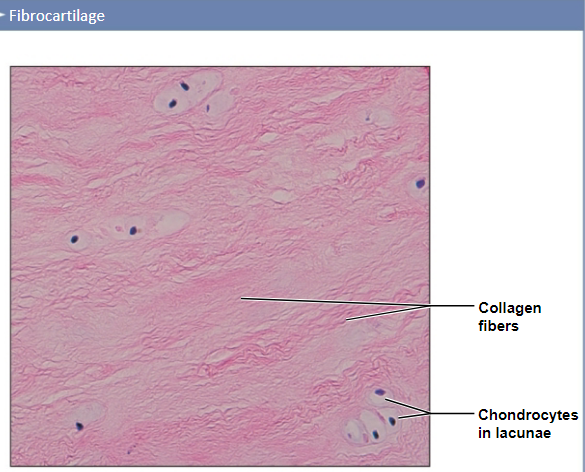
Fibrocartilage — Function
Absorbs compressive shock and provides tensile strength.
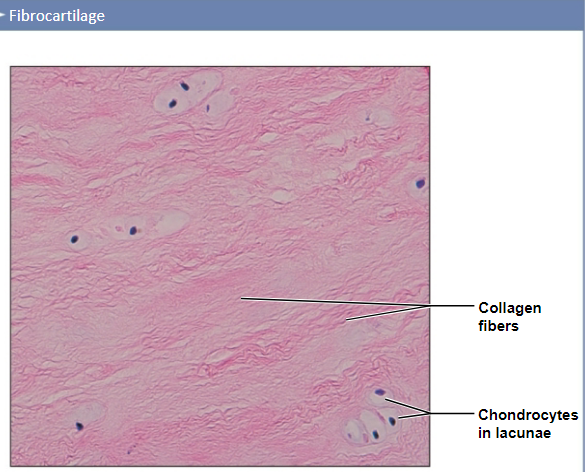
Fibrocartilage — Location
Intervertebral discs, pubic symphysis, and knee joint discs.
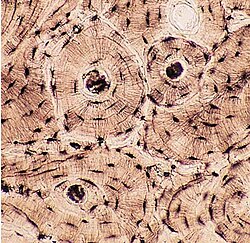
Bone Tissue — Description
Hard connective tissue with mineralized matrix of collagen and calcium salts; main cell types: osteocytes and osteoblasts.
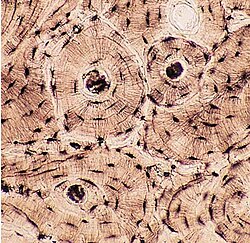
Bone Tissue — Function
Supports and protects organs, stores minerals and fat, and produces blood cells.
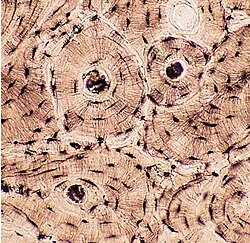
Bone Tissue — Location
Bones of the skeleton.
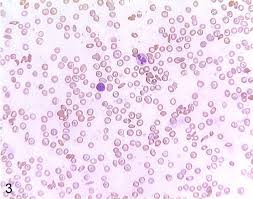
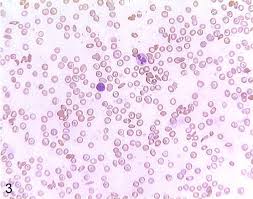
Blood Tissue — Description
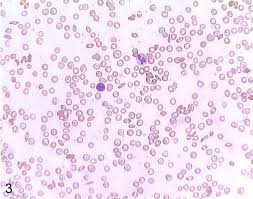
Fluid connective tissue with cells suspended in plasma; main cell types: red blood cells, white blood cells, and platelets.
Blood Tissue — Function
Transports gases, nutrients, and wastes.
Blood Tissue — Location
Within blood vessels.
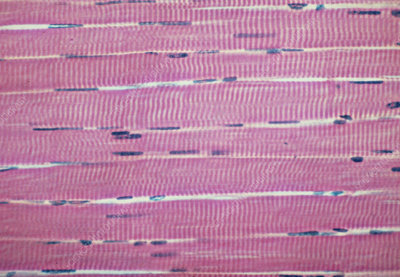
Skeletal Muscle Tissue — Description
Long, striated, multinucleate cells; main cell type: skeletal muscle fibers.
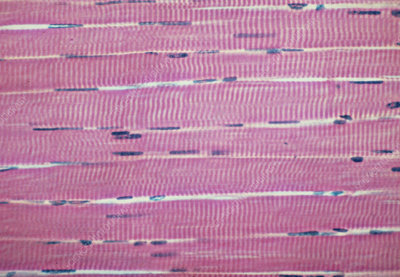
Skeletal Muscle Tissue — Function
Voluntary movement, manipulation of environment, and facial expression.
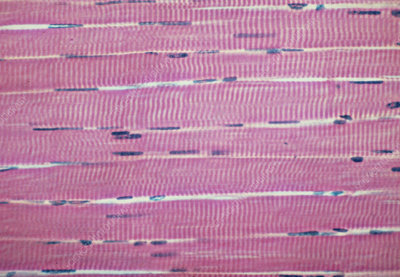
Skeletal Muscle Tissue — Location
Attached to bones (occasionally skin).
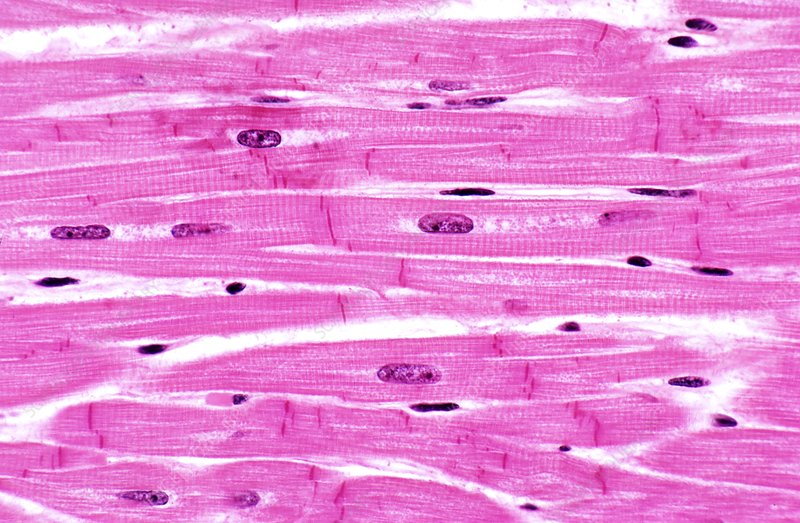
Cardiac Muscle Tissue — Description
Branching, striated cells with intercalated discs; main cell type: cardiac muscle cells.
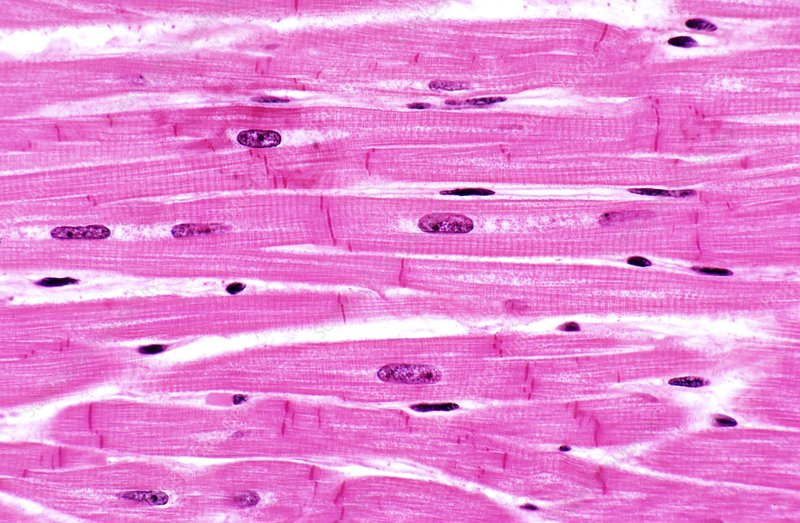
Cardiac Muscle Tissue — Function
Pumps blood through the circulatory system.
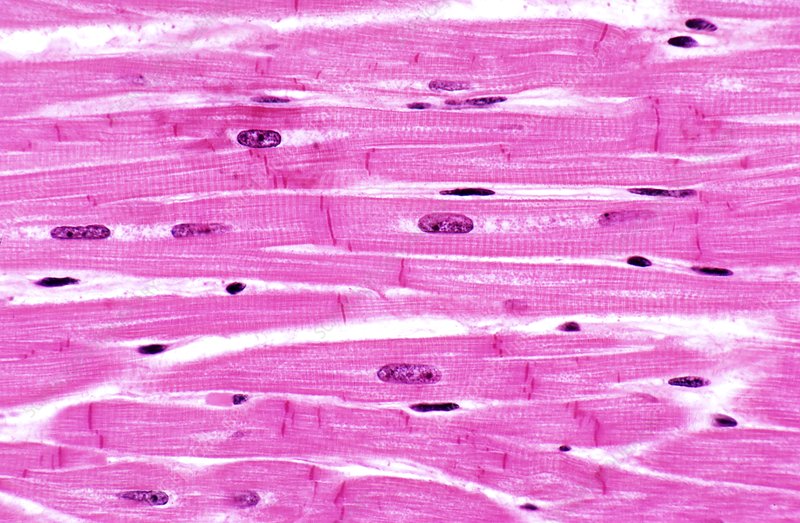
Cardiac Muscle Tissue — Location
Walls of the heart.
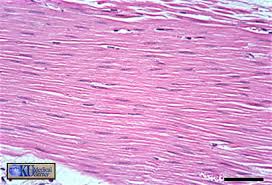
Smooth Muscle Tissue — Description
Spindle-shaped, nonstriated cells arranged in sheets; main cell type: smooth muscle cells.
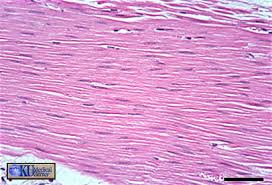
Smooth Muscle Tissue — Function
Moves substances through internal passageways involuntarily.
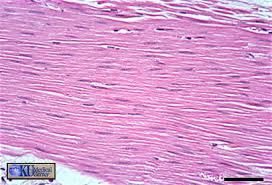
Smooth Muscle Tissue — Location
Walls of hollow organs.
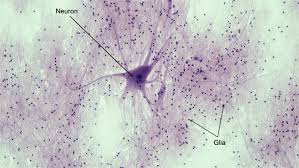
Nervous Tissue — Description
Tissue composed of neurons and neuroglia; main cell types: neurons and neuroglial cells.
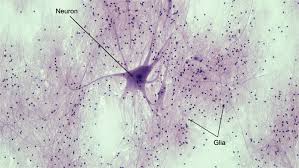
Nervous Tissue — Function
Transmits electrical signals for communication and control.
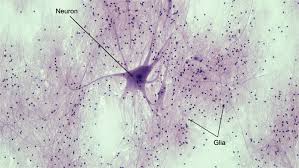
Nervous Tissue — Location
Brain, spinal cord, and nerves.