DAT orgo - Alcohols, Ethers, and Epoxides
 Call Kai
 Learn
Learn Practice Test
 Spaced Repetition
 Match
Match Flashcards
 Knowt Play
1/30

There's no tags or description
Looks like no tags are added yet.
Name | Mastery | Learn | Test | Matching | Spaced | Call with Kai |
|---|
No analytics yet
Send a link to your students to track their progress
31 Terms
Add HX to alcohols (primary carbon)
SN2
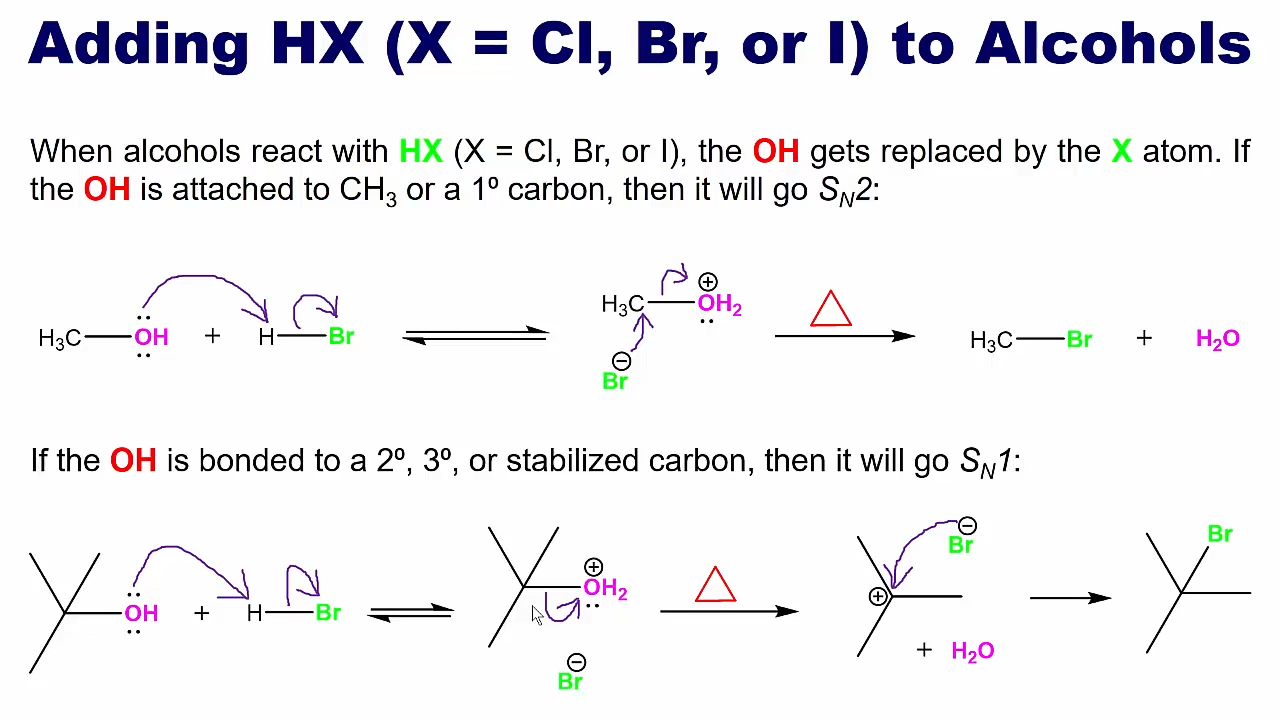
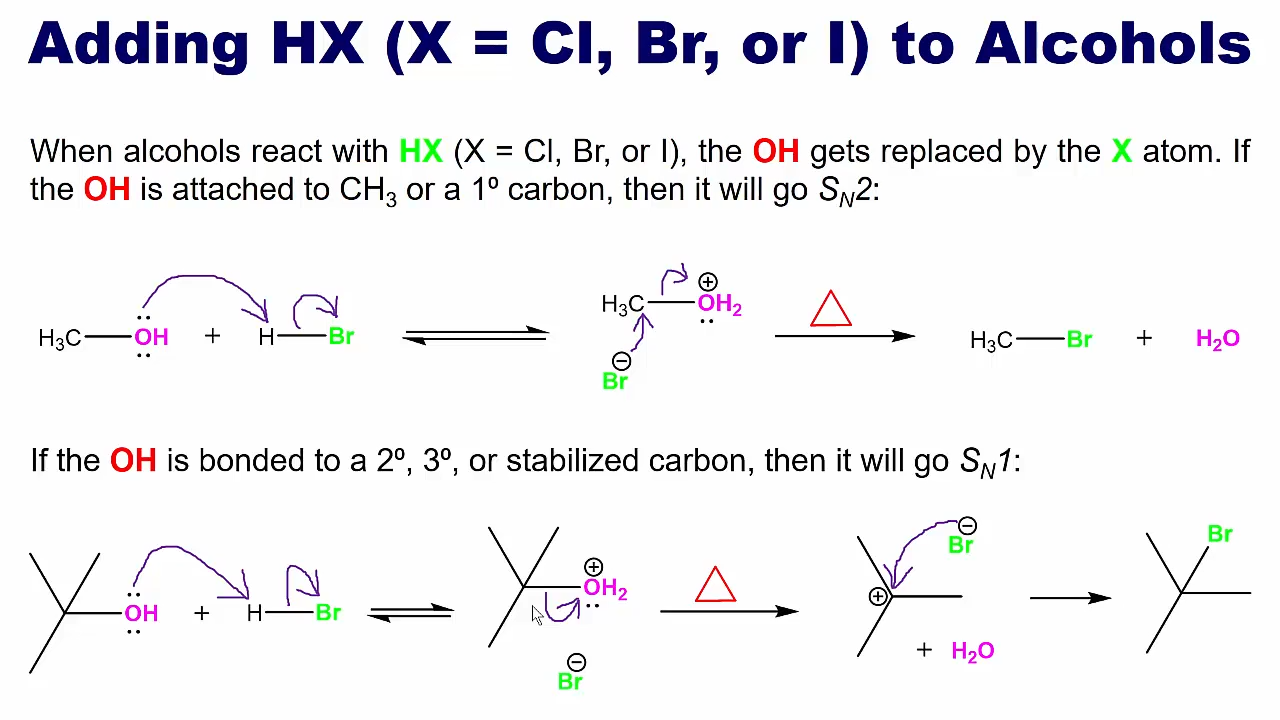
Add HX to alcohols (secondary and tertiary carbon)
SN1
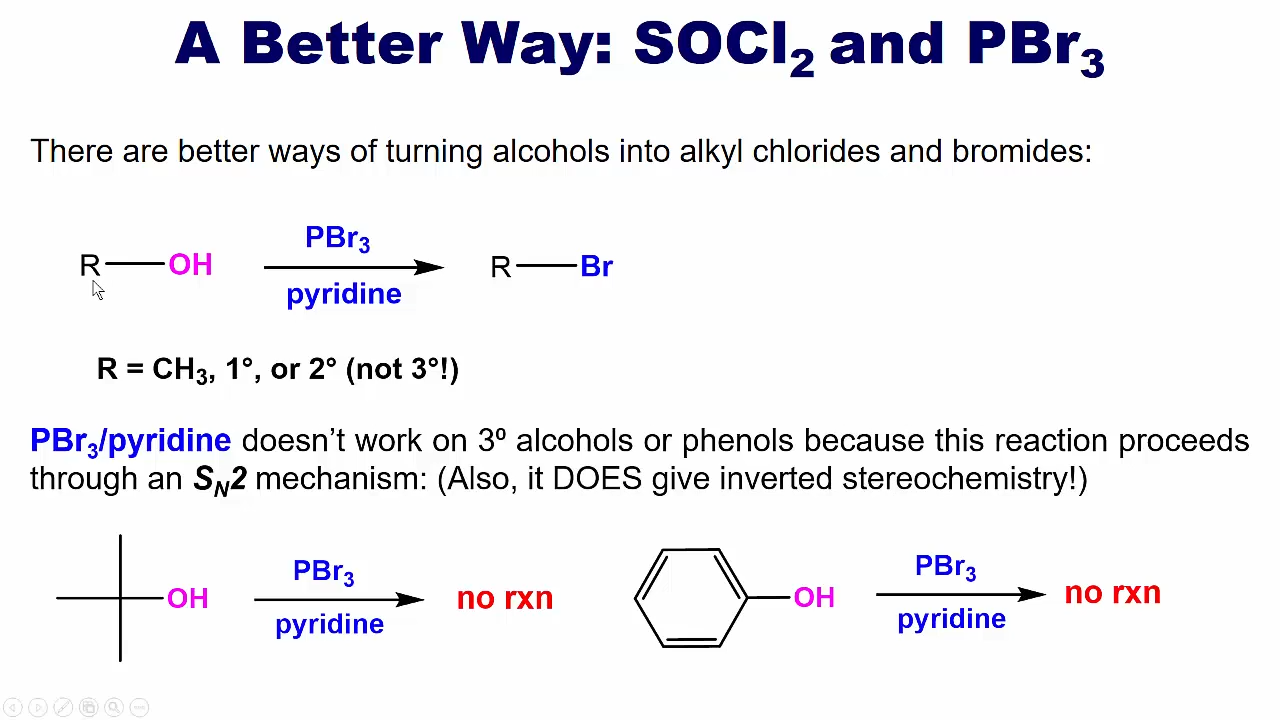
Pbr3 and pyridine
turn alcohols into alkyl bromides via AN SN2 REACTION, IT WILL BE OPPOSITE STEROCHEMISTRY
Socl2 and pyridine
turn alcohols into alkyl chlorides via AN SN2 REACTION, IT WILL BE OPPOSITE STEROCHEMISTRY
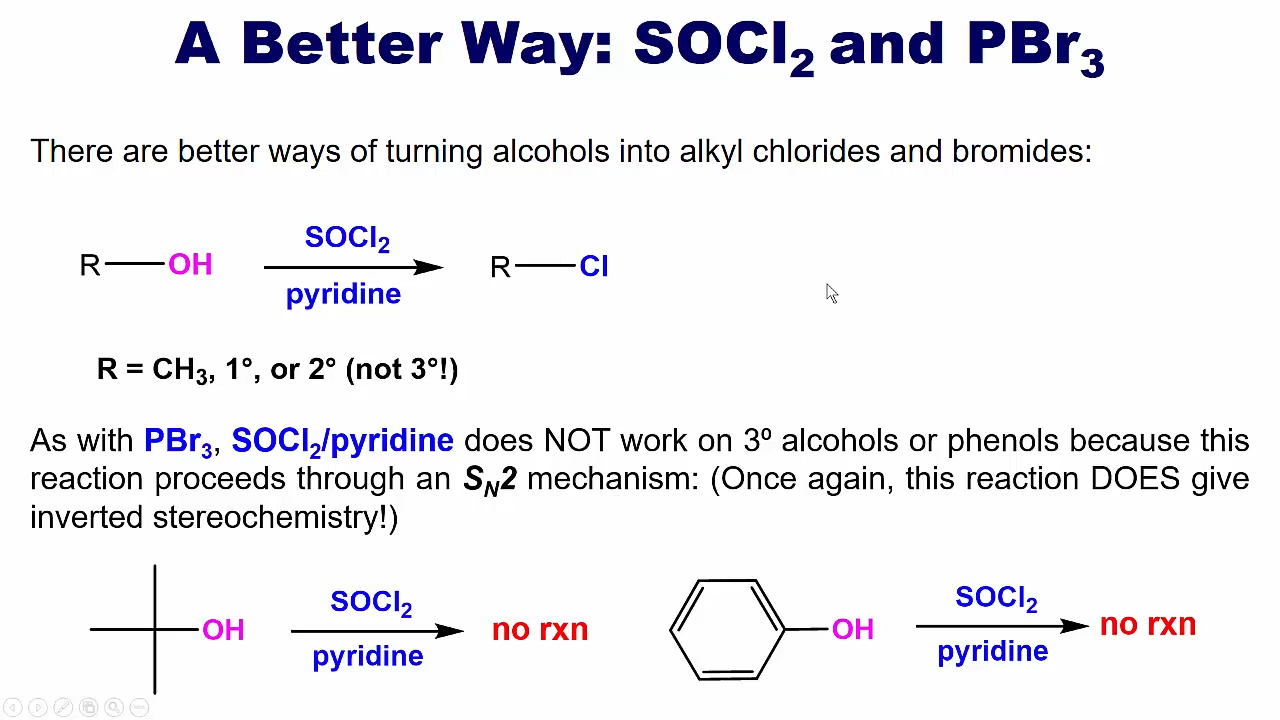
Mscl and pyridine
Makes alcohol into a stronger leaving group
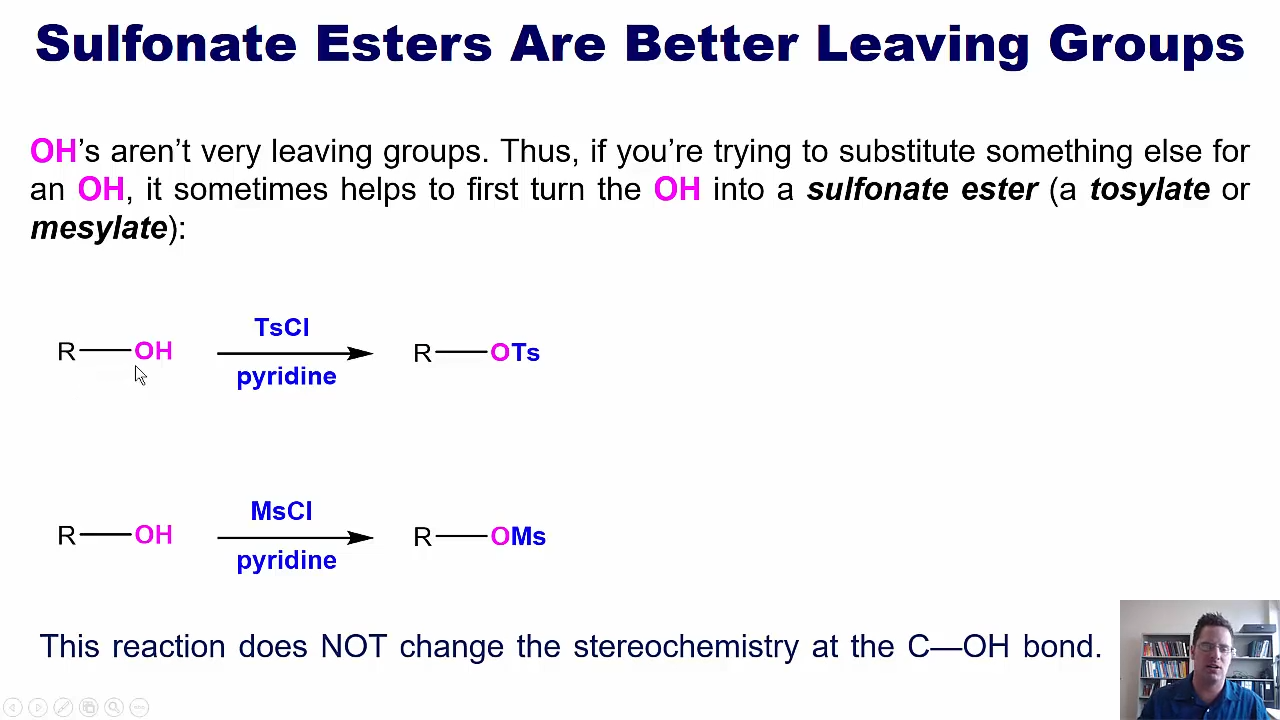
Tscl and pyridine
Makes alcohol into a stronger leaving group
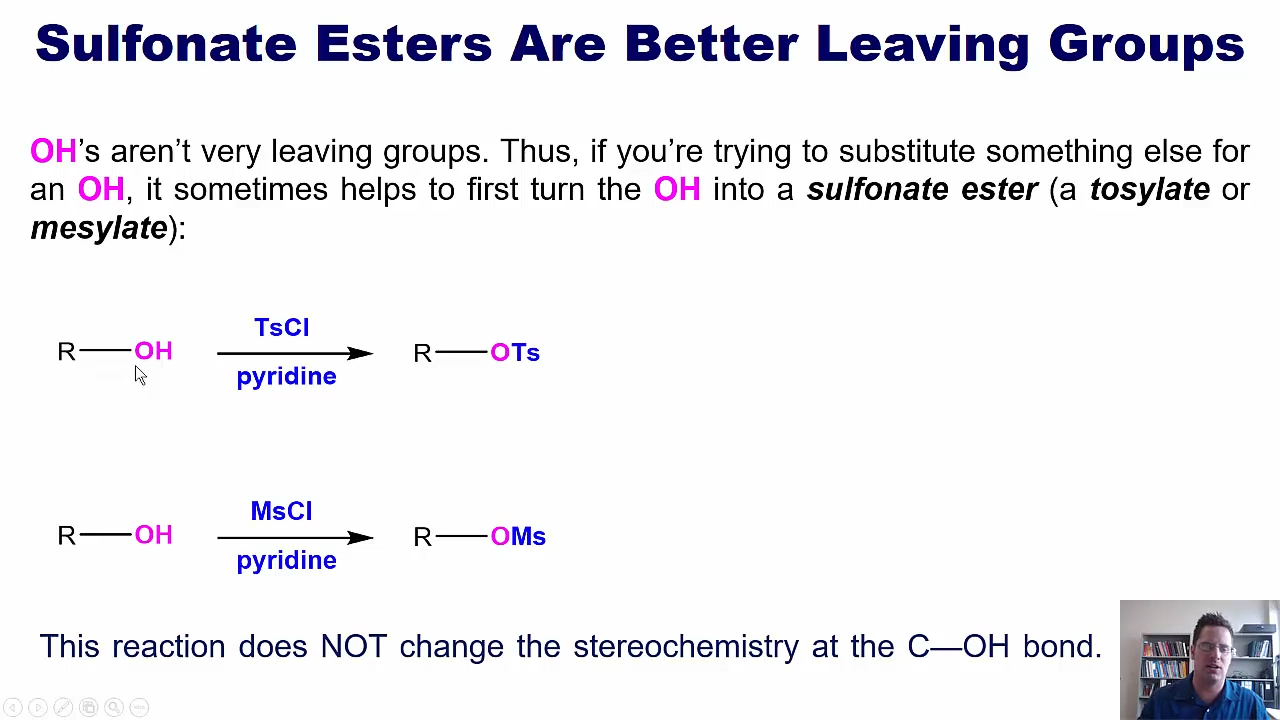
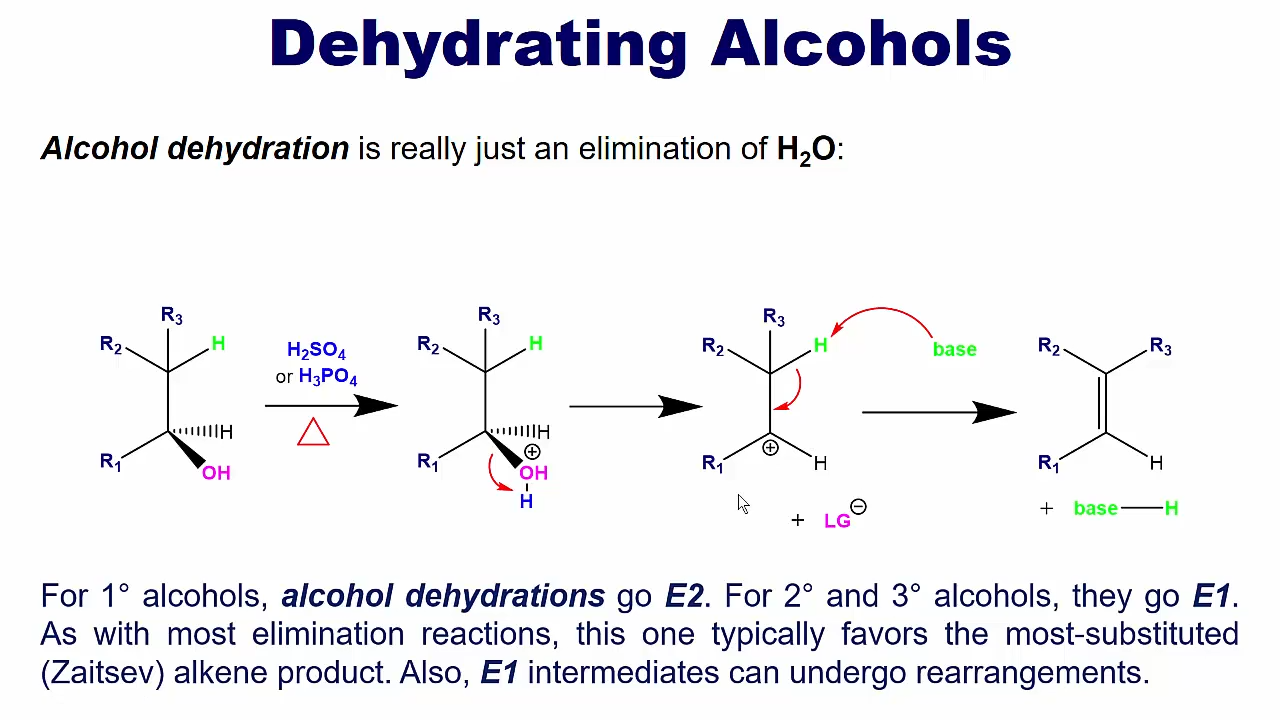
Dehydrating alcohols
uses H2So4 and H3PO4
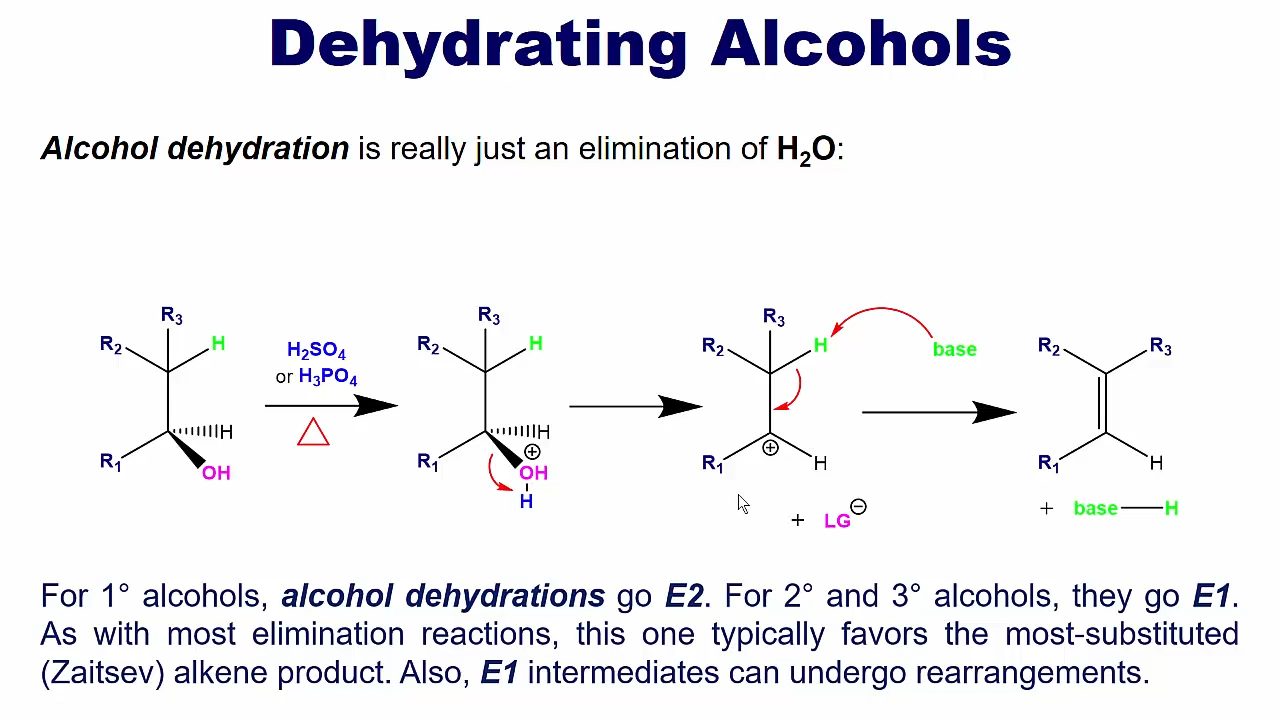
What do Primary alcohol dehydration undergo
E2
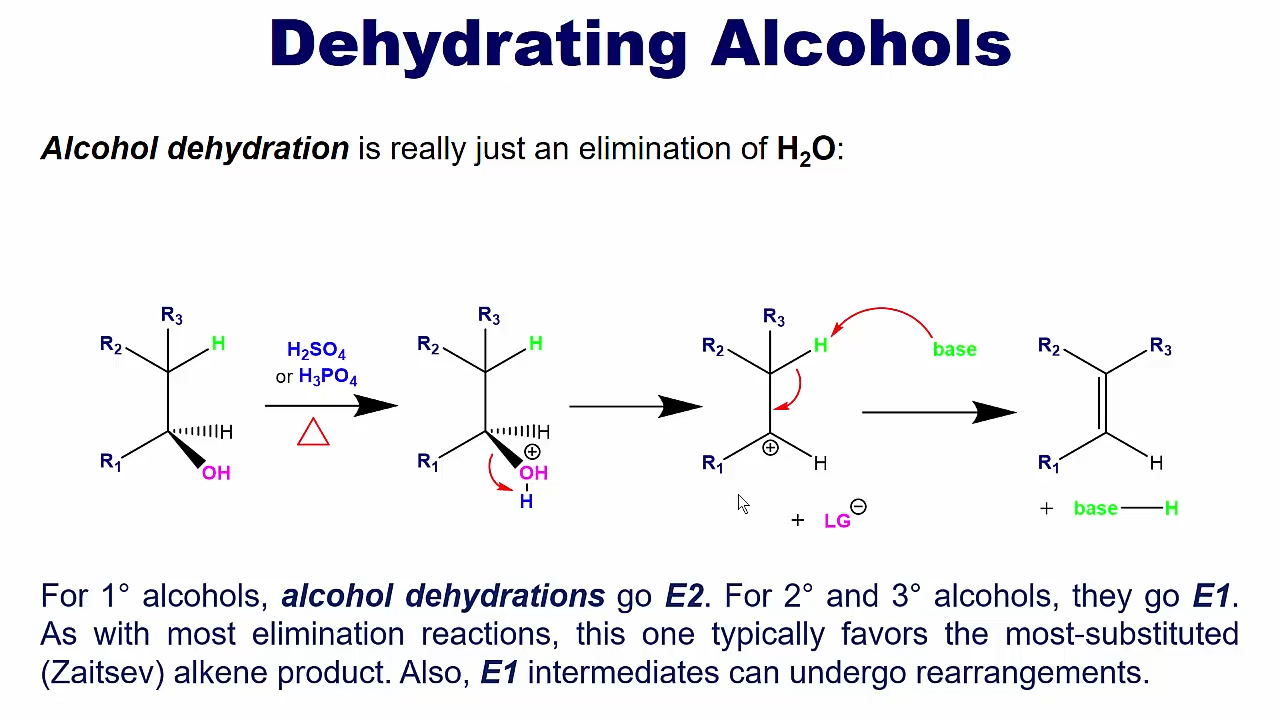
What do Secondary and tertiary alcohol dehydration undergo
E1
Reductions in orgo
Gaining electrons
Gaining bonds to hydrogen
Losing bonds to oxygen
Losing double or triple bonds
oxidations in orgo
Losing electrons
Gaining bonds to oxygen
Losing bonds to hydrogen
Gaining double or triple bonds
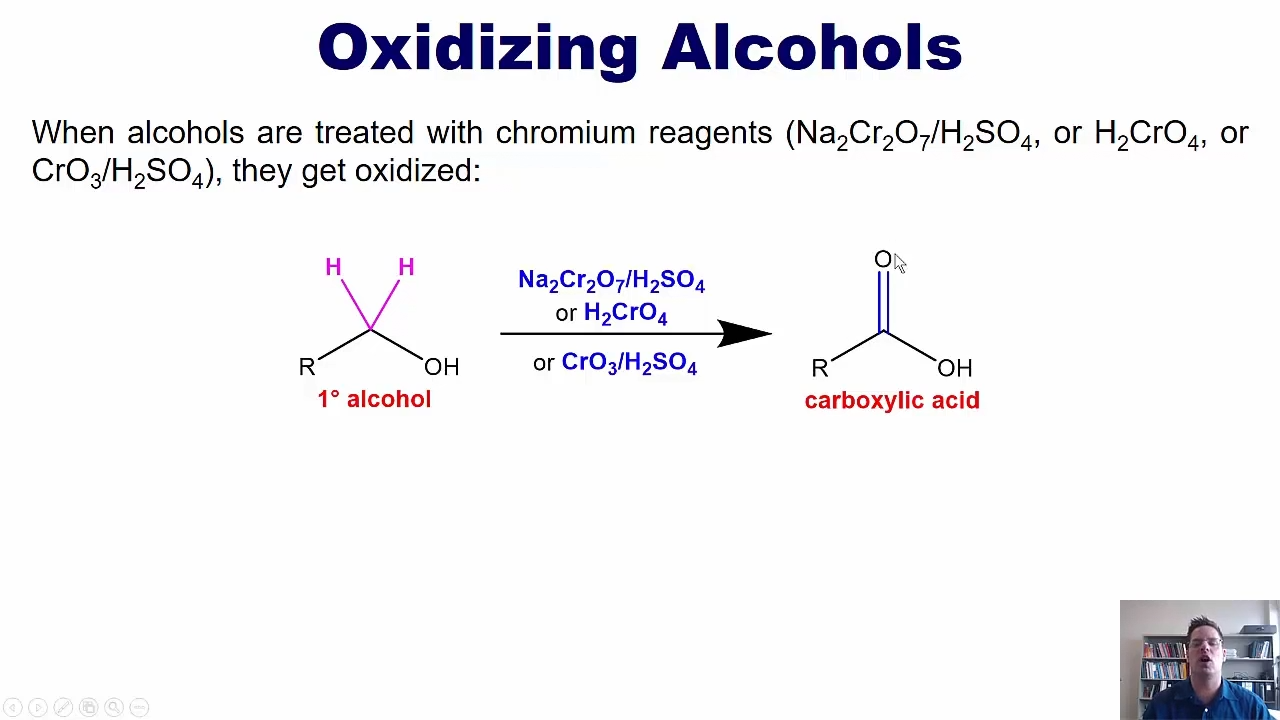
oxidizing alcohols - primary
they get turned into carboxylic acids
UPON BEING EXPOSED TO CROMIUM REAGENTS
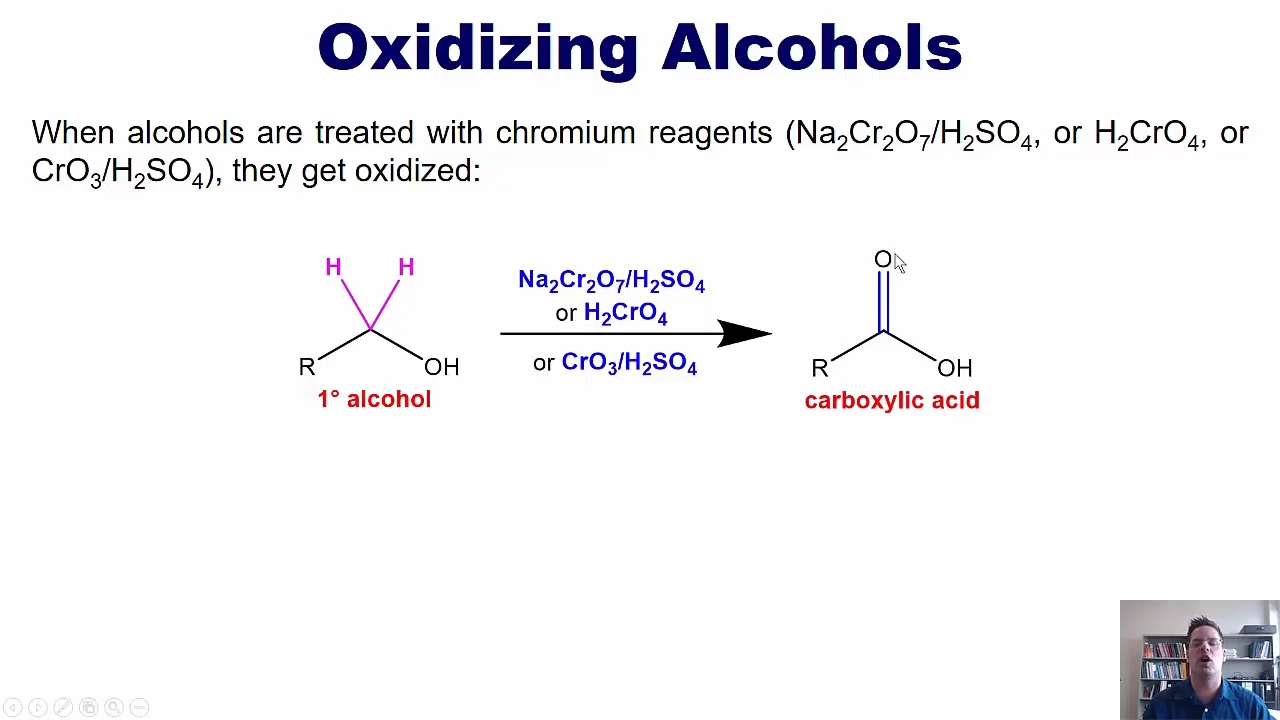
oxidizing alcohols - secondary
They get turned into ketones
UPON BEING EXPOSED TO CROMIUM REAGENTS
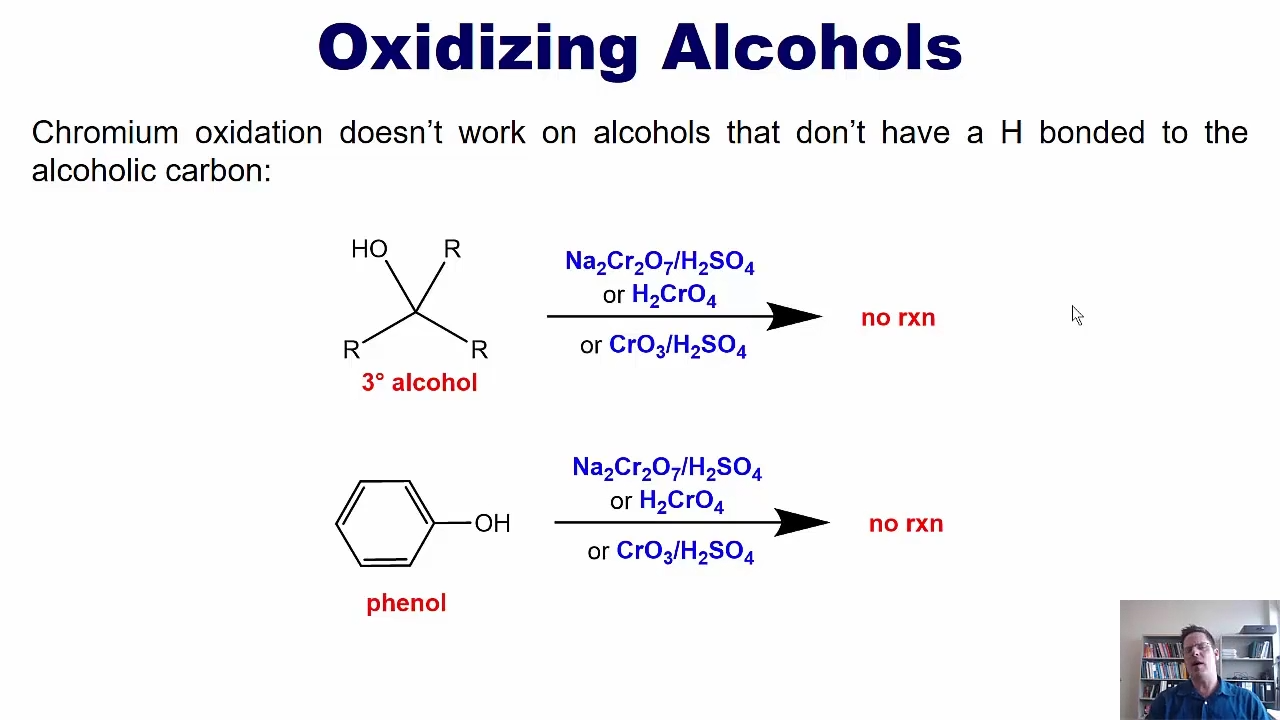
What do chromium alcohol oxidations need
Primary carbons or secondary alcohol, they need an H attached to the carbon that the OH is attached to
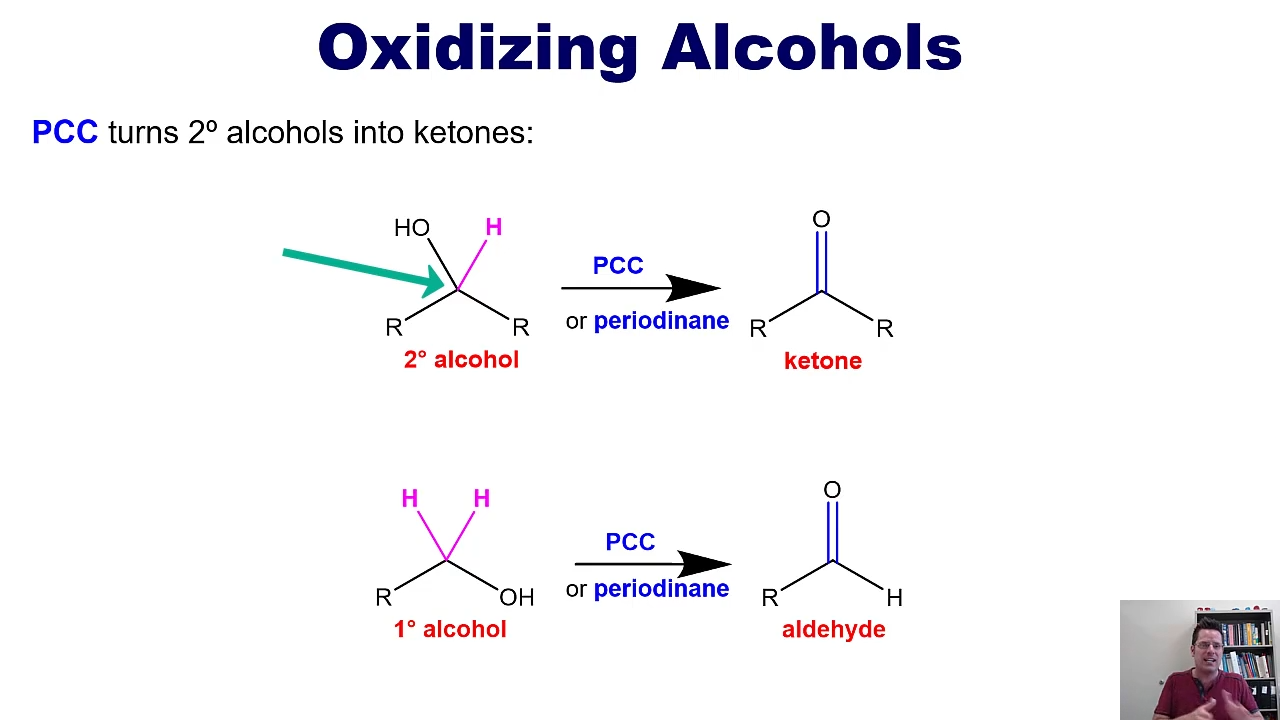
PCC oxidation
Turns secondary alcohols into ketones
turns primary alcohols into aldehydes
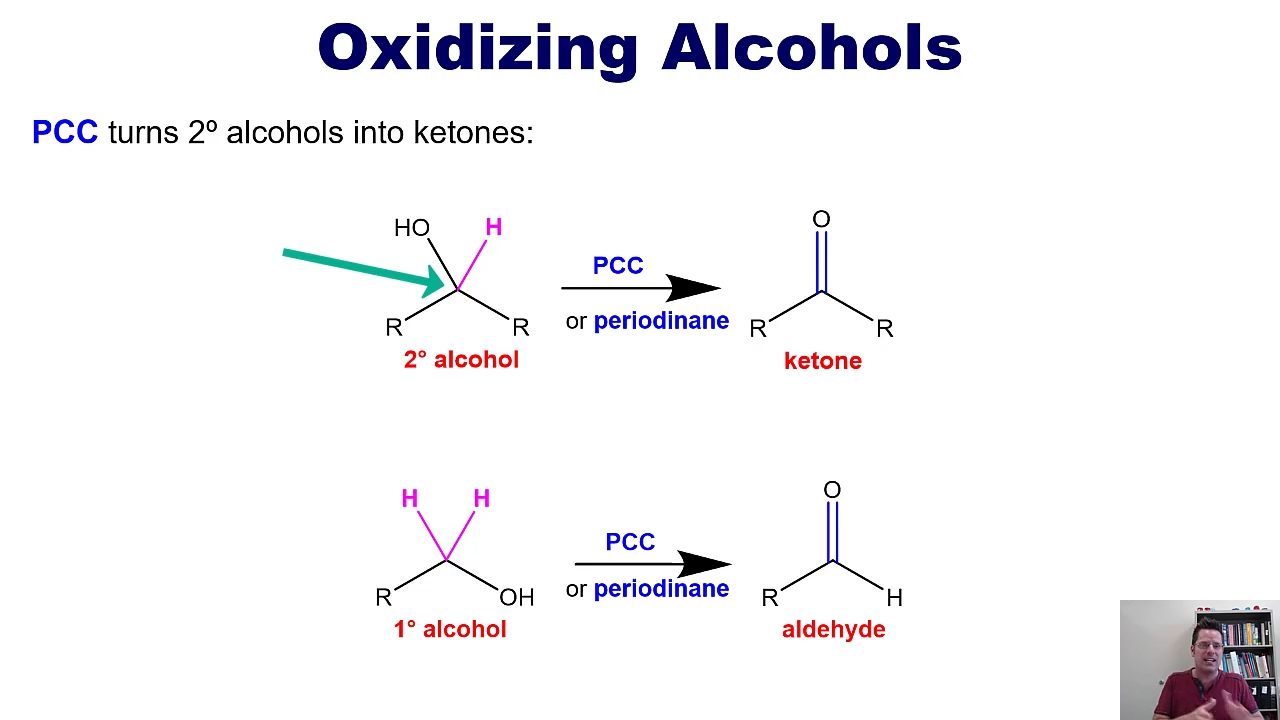
periodinane oxidation
Turns secondary alcohols into ketones
turns primary alcohols into aldehydes
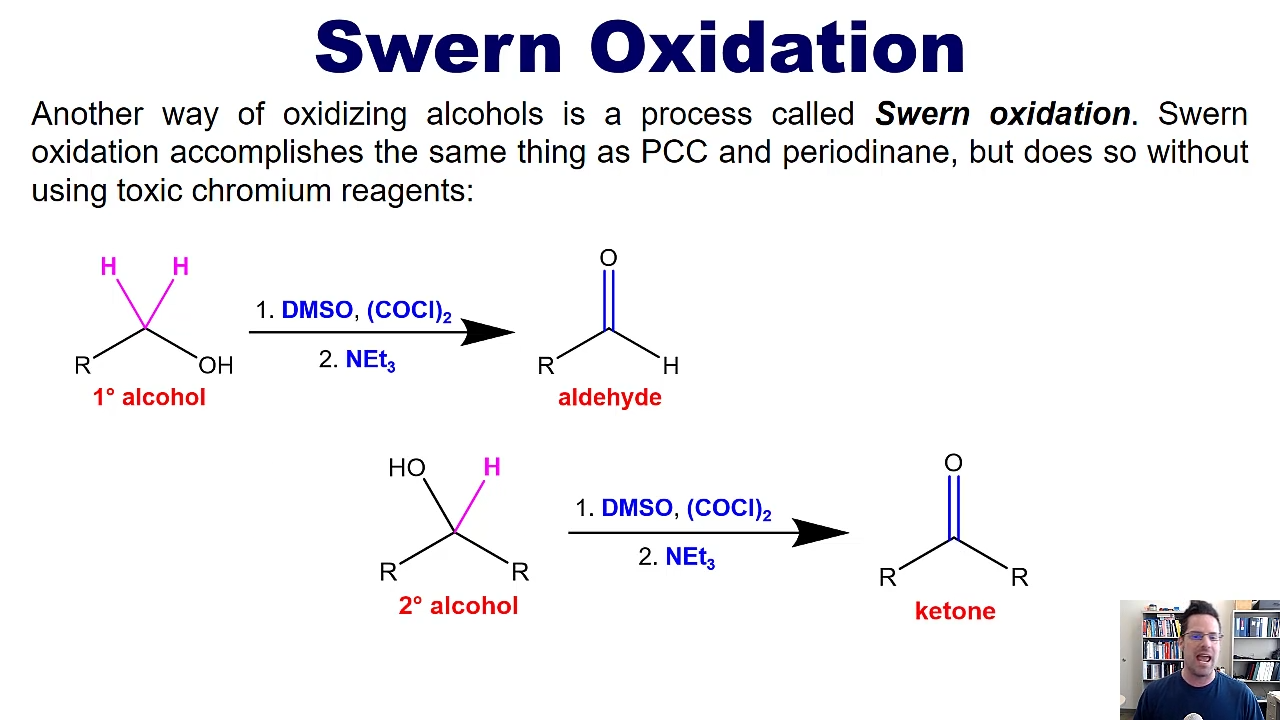
Swern oxidation
accomplishes the same thing as PCC and peroxidane, but does so without using toxic chromium reagents
using DMSO, COCl2
and NEt3
William ether synthesis
SN2 mechanisms with Na k and NaH (base)
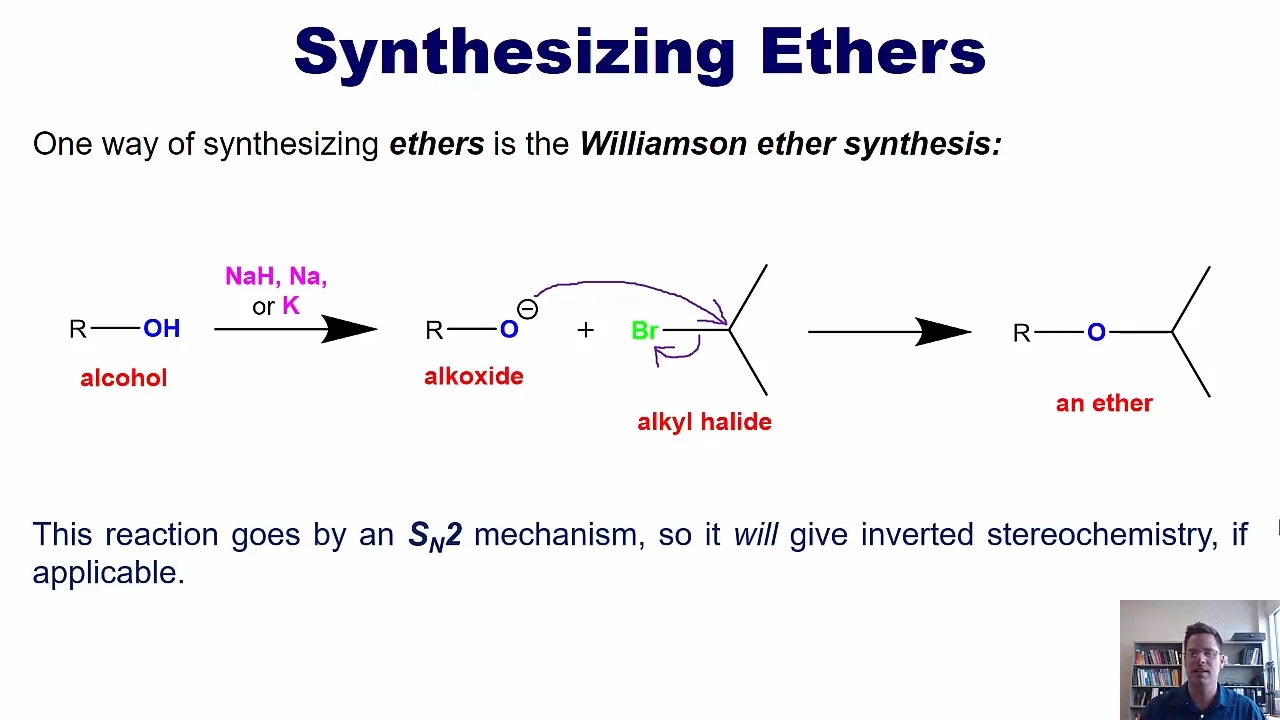
when doing williamson ether synthesis, what is important to do?
try to make the halide as close to 1’ as possible to promote SN2
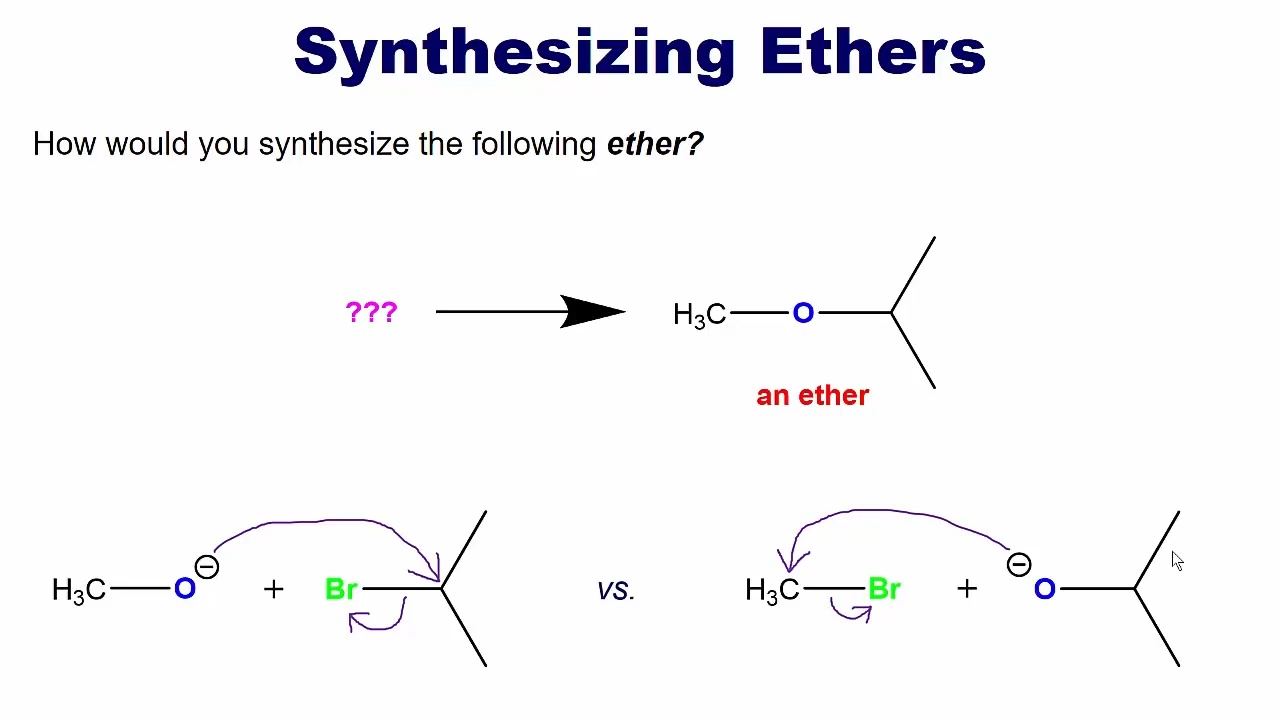
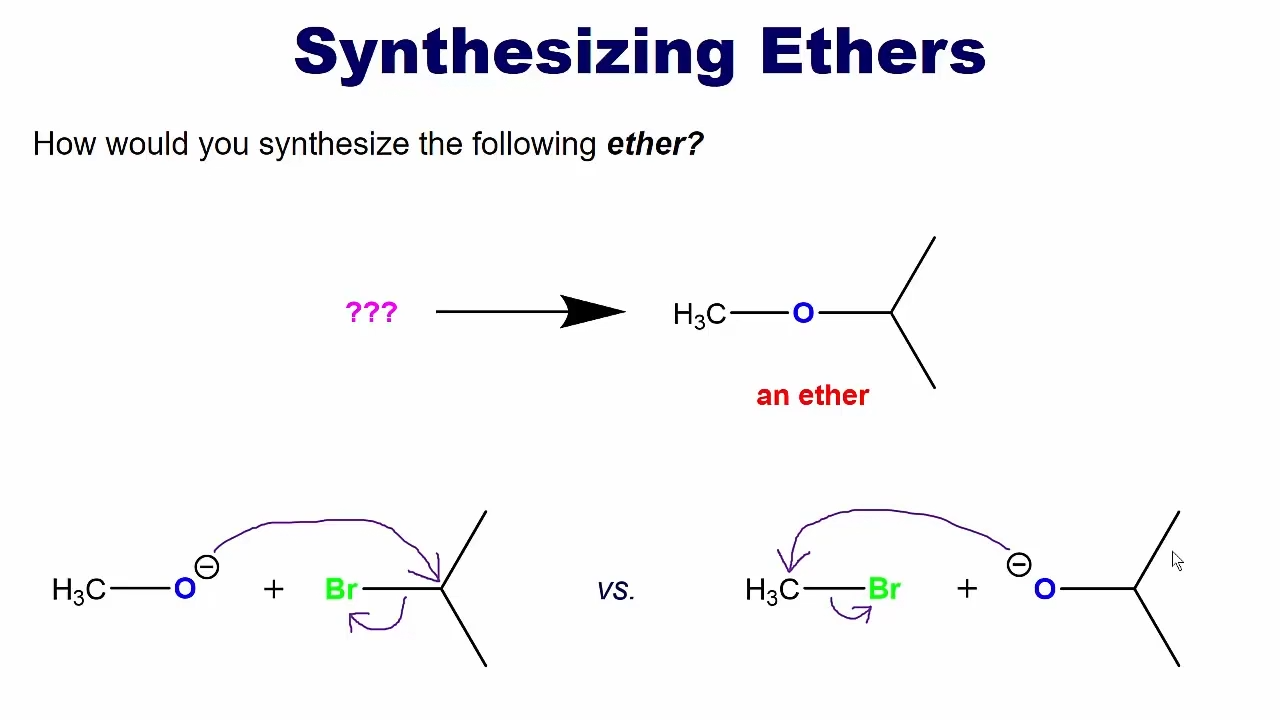
If an alohol is larger than ethanol, why does it undergo william synthesis
due to the base
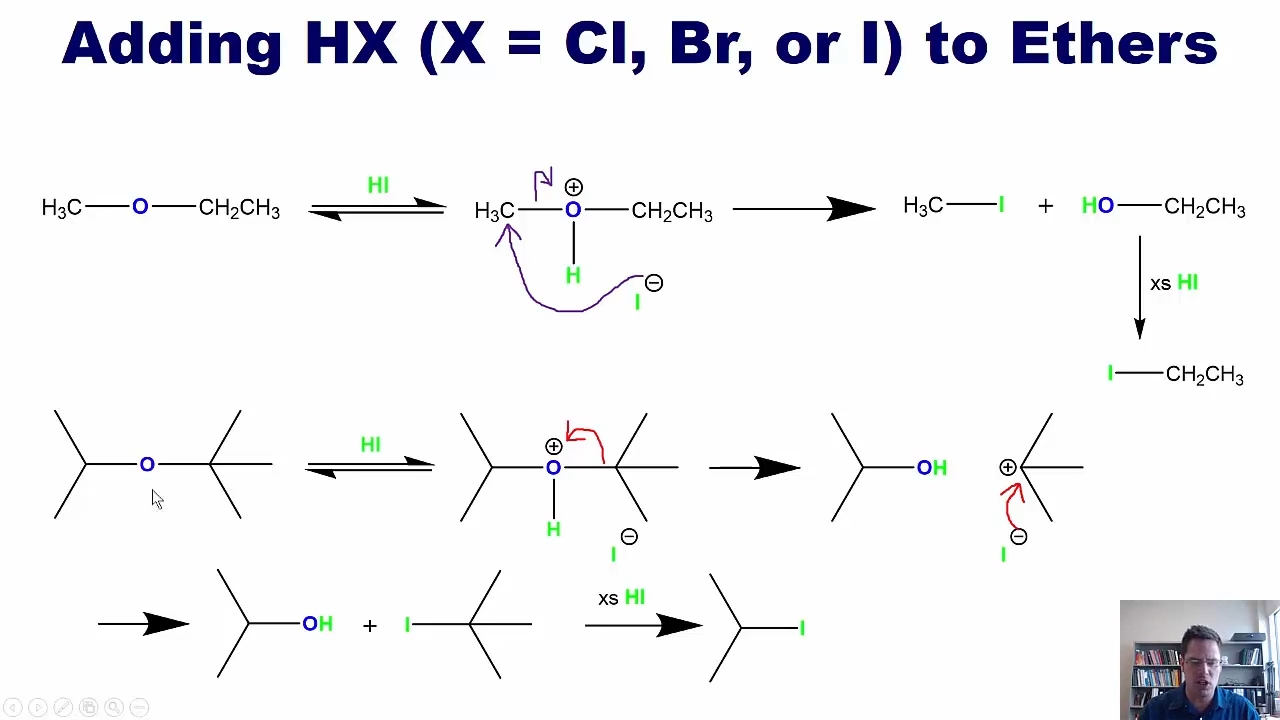
adding HX to ethers
Add HX, Cl Br or I and form an alkyl halide and an alcohol
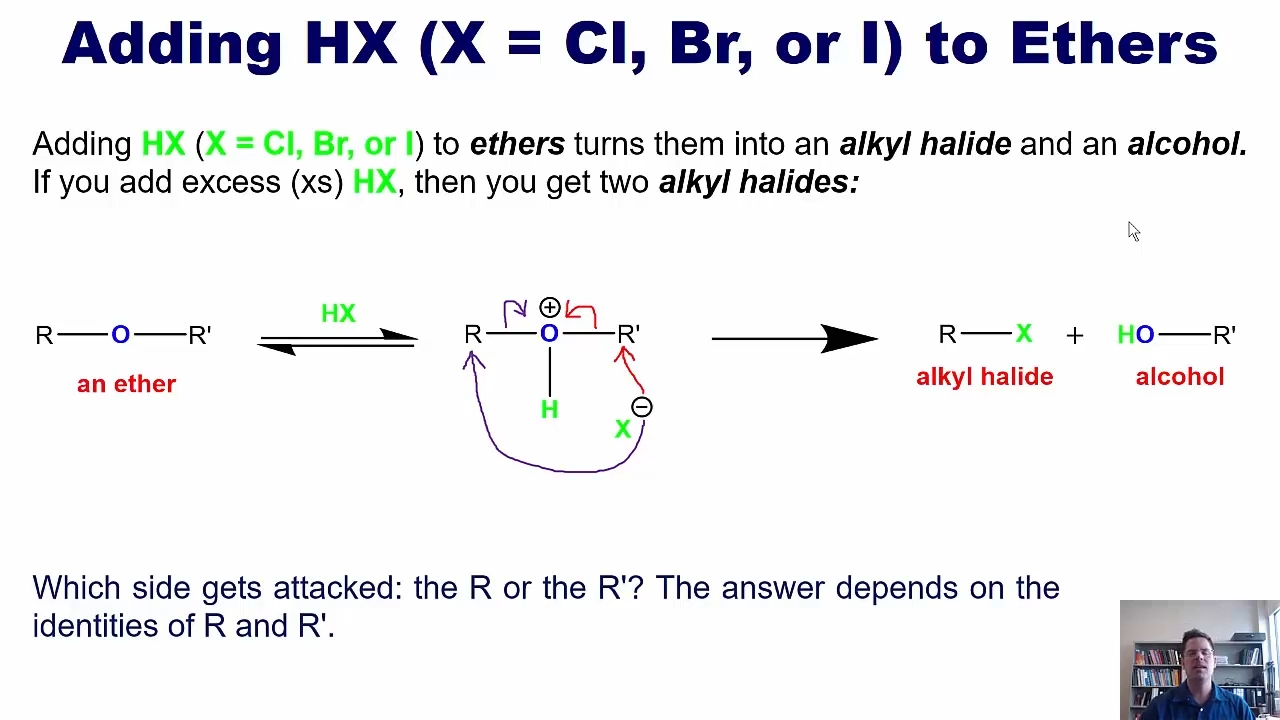
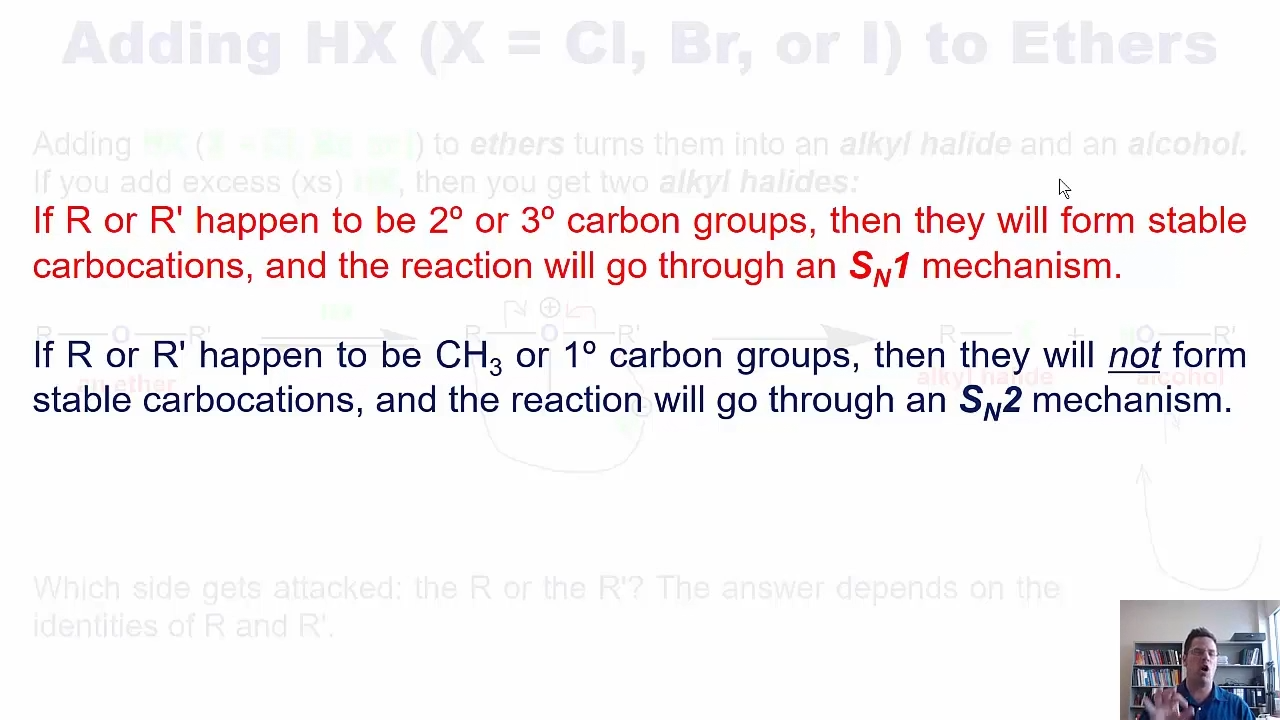
What if R and R’ are 2' or 3’ in ether reactions
they proceed through SN1
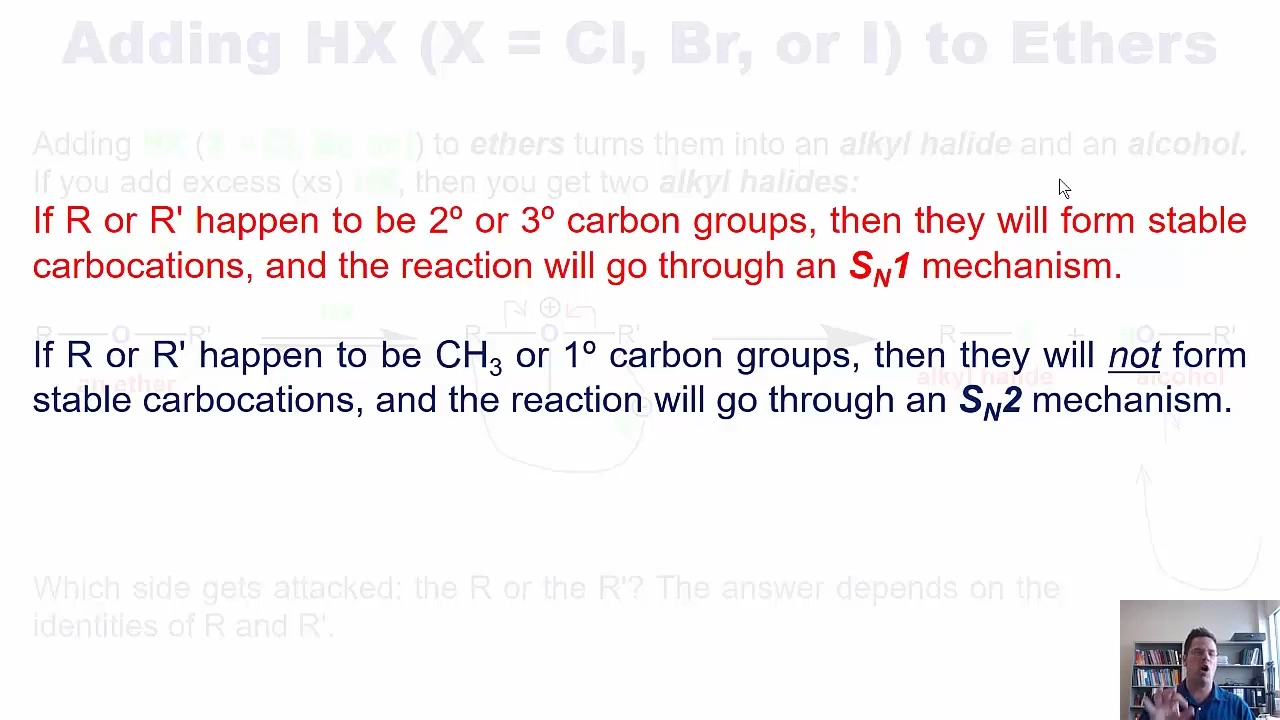
What if R and R’ are 1' in ether reactions
the reaction will go through SN2
Adding HX to ethers
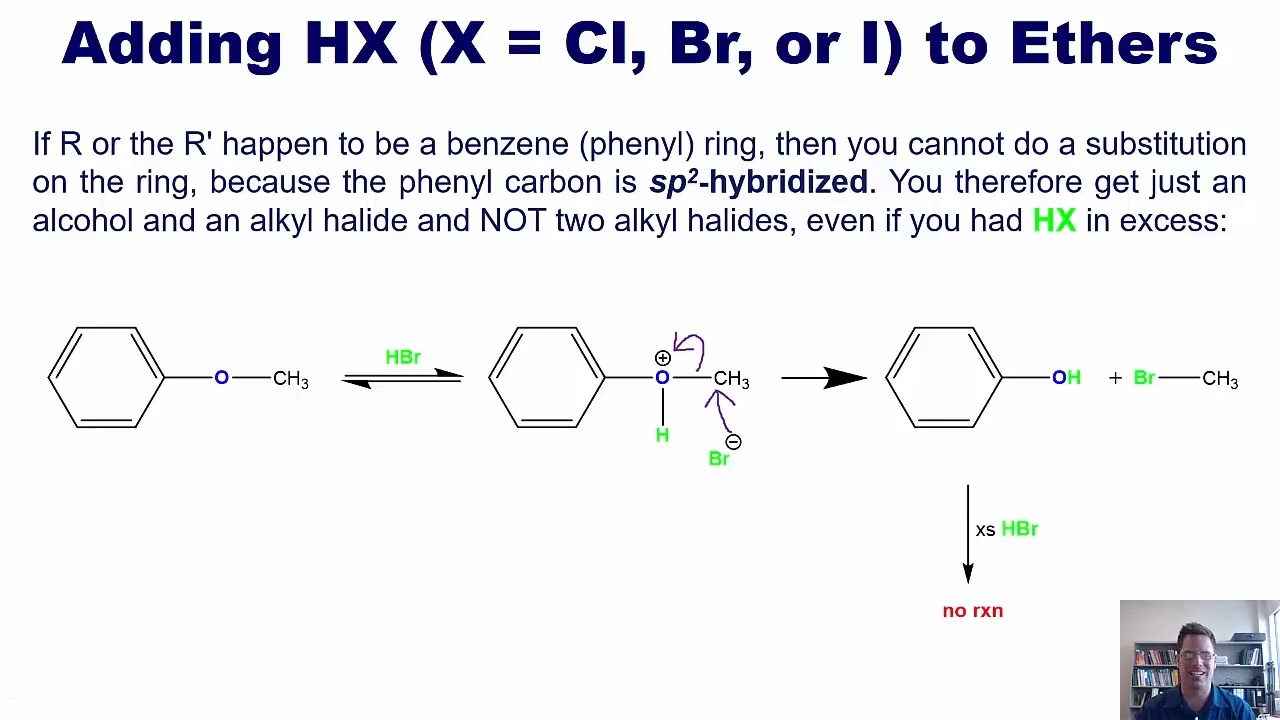
what if R on an ether was a phenyl
The HX would not add onto the phenyl, as SN2 reactions cannot occur on rings
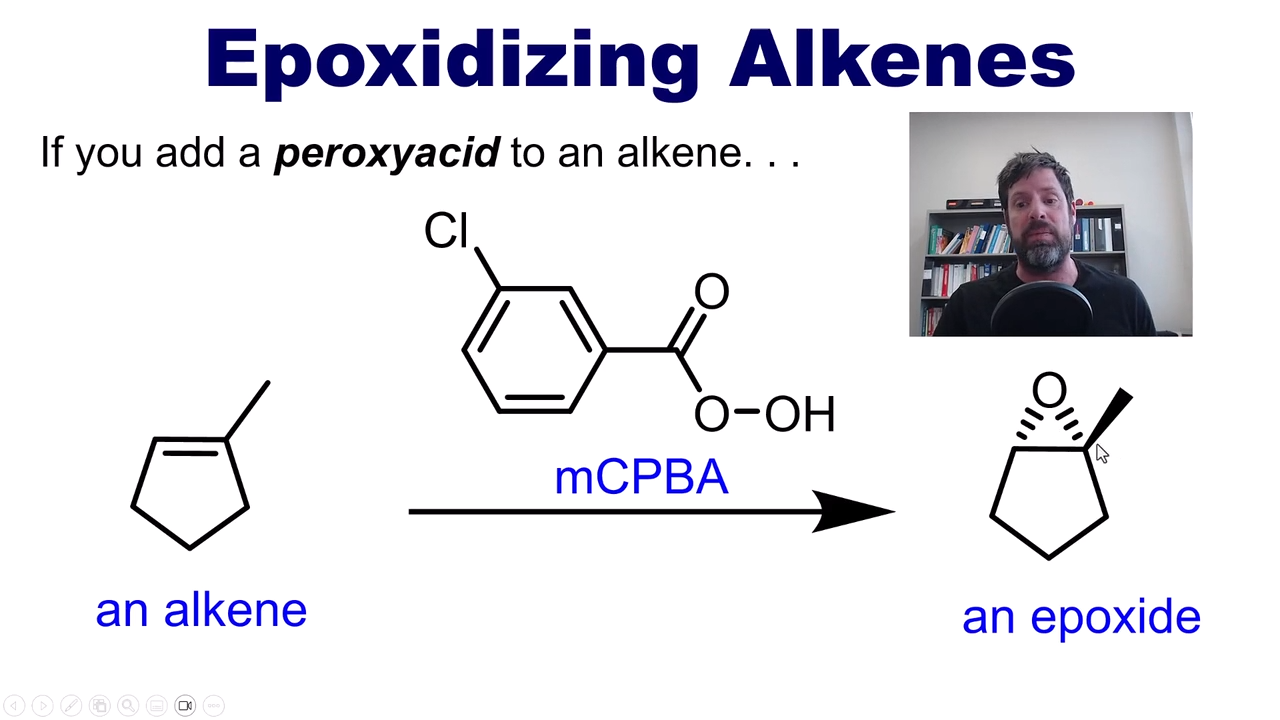
Epoxidation of alkenes with peroxyacids
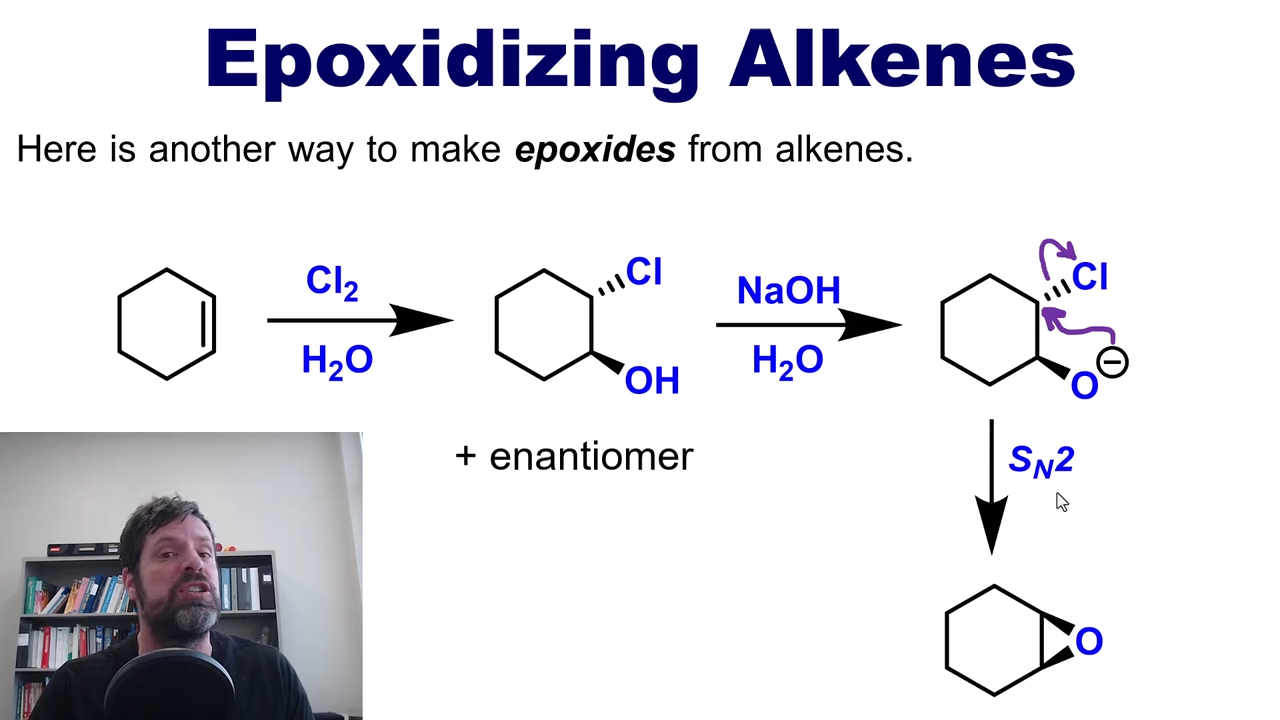
Epoxidizing alkenes using Sn2
alkenes are first exposed to Cl2 and H2O, and then put under basic conditions (H2O and NaOH) This deprotinates the H, causing an SN2 reaction
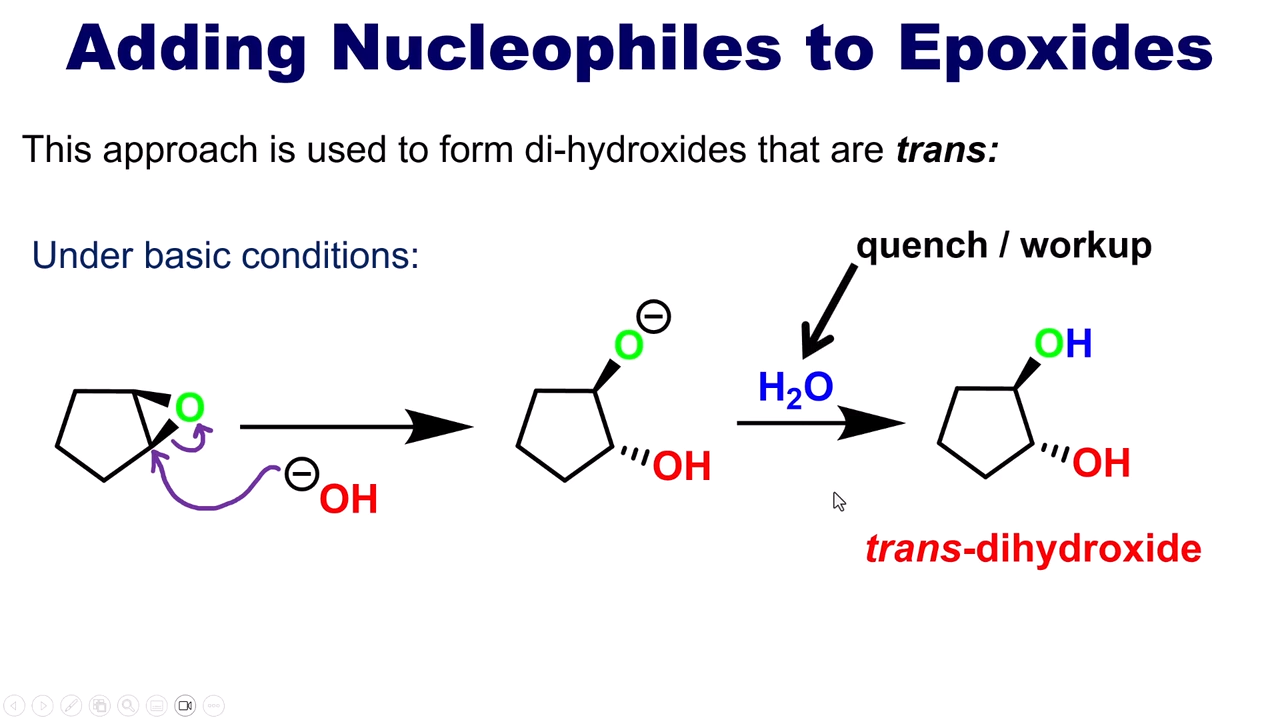
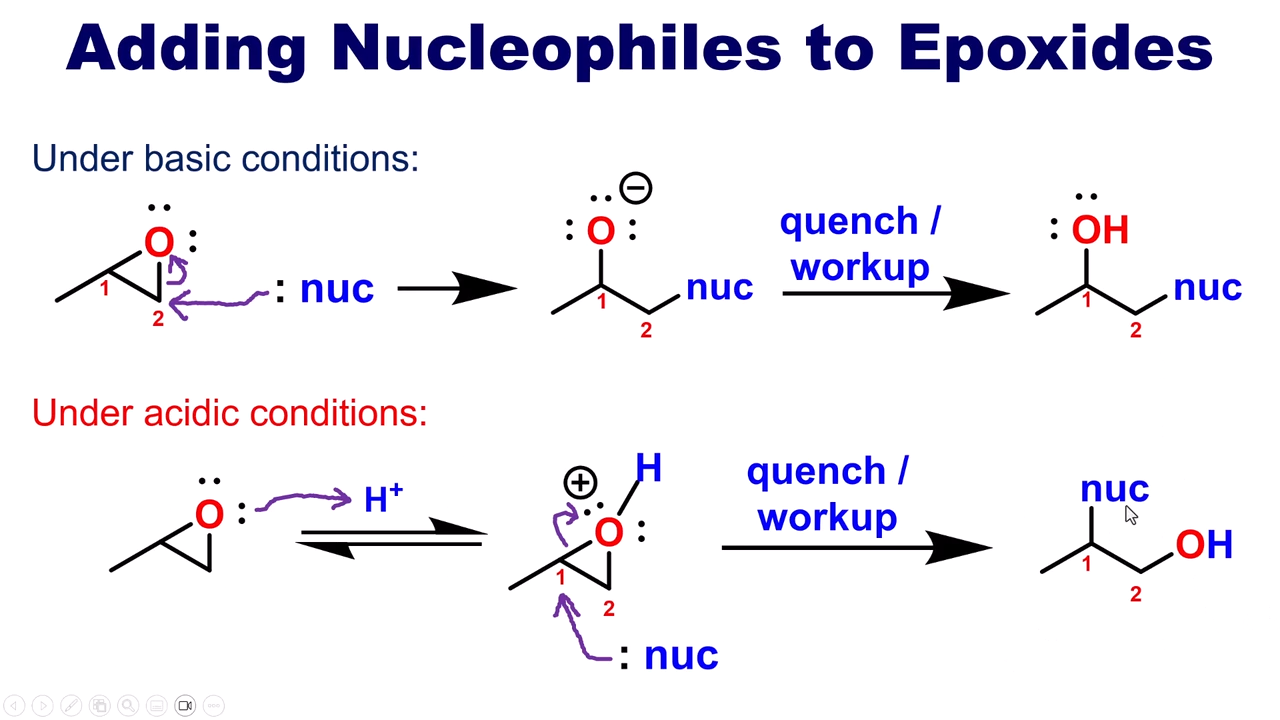
adding nucleophiles to epoxides under basic conditions
the nucleophile attacks the less substitued peroxide carbon
TRANS
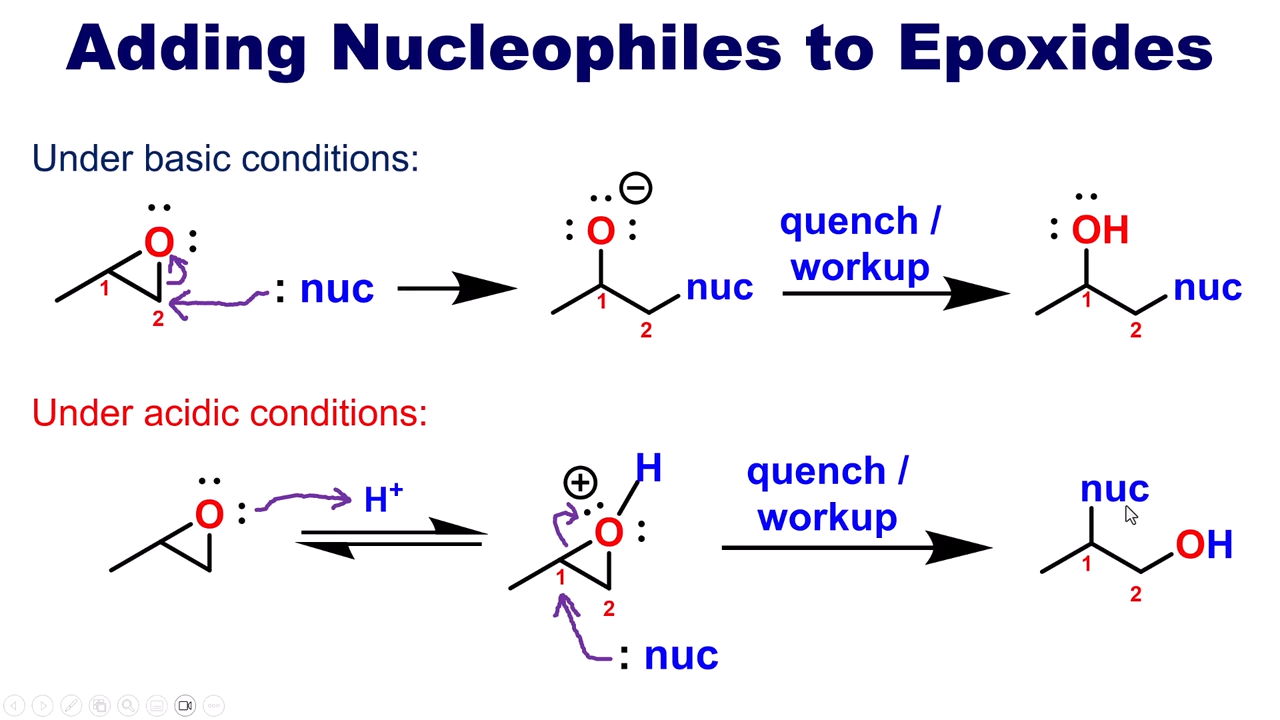
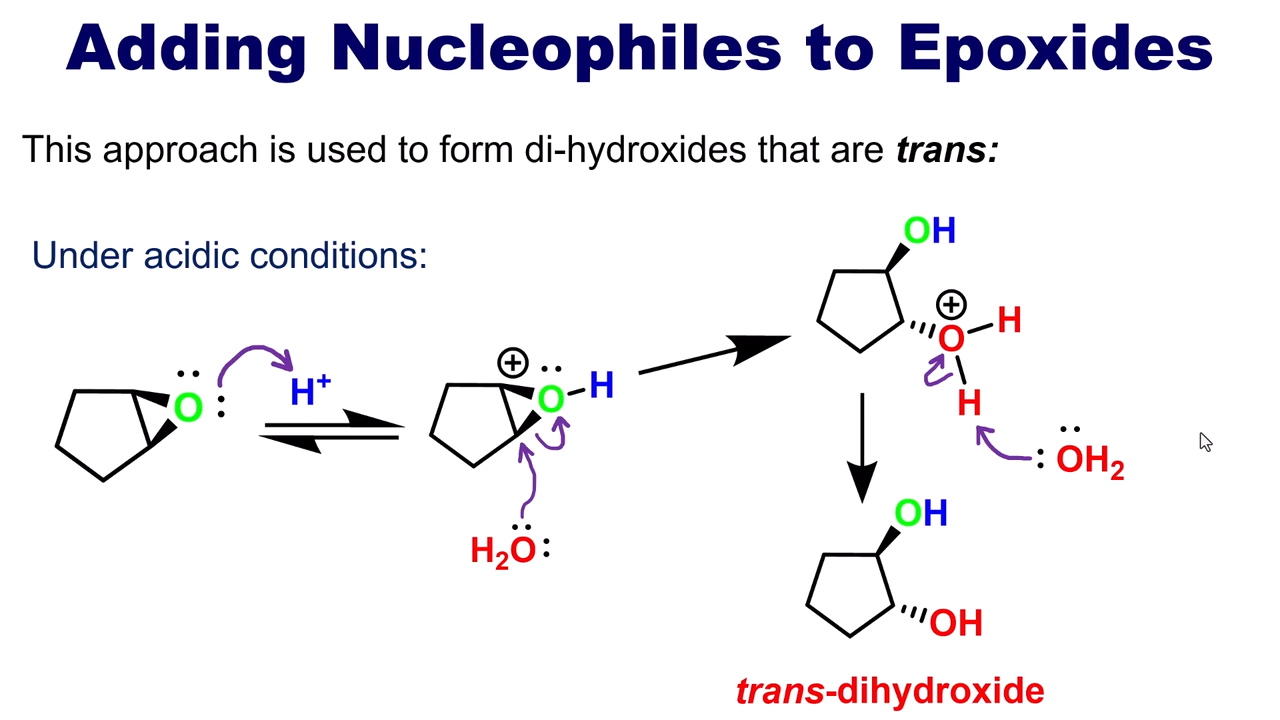
adding nucleophiles to epoxides under acidic conditions
a Hydrogen attacks the peroxide oxygen, making the
the nucleophile attacks the more substitued peroxide carbon due to the positive charge on the nucleophile TRANS
forming trans dihydroxides under acidic conditions
forming trans dihydroxides under basic conditions