Final Lab Practical Study Guide BSC 1011C
 Call Kai
 Learn
Learn Practice Test
 Spaced Repetition
 Match
Match Flashcards
 Knowt Play
1/446

There's no tags or description
Looks like no tags are added yet.
Name | Mastery | Learn | Test | Matching | Spaced | Call with Kai |
|---|
No analytics yet
Send a link to your students to track their progress
447 Terms
What are mycelia composed of?
Hyphae
What is the clade of Allomyces?
Chytridiomycota
What common characteristic do Chytridiomycota share?
Flagellated spores (Zoospores)
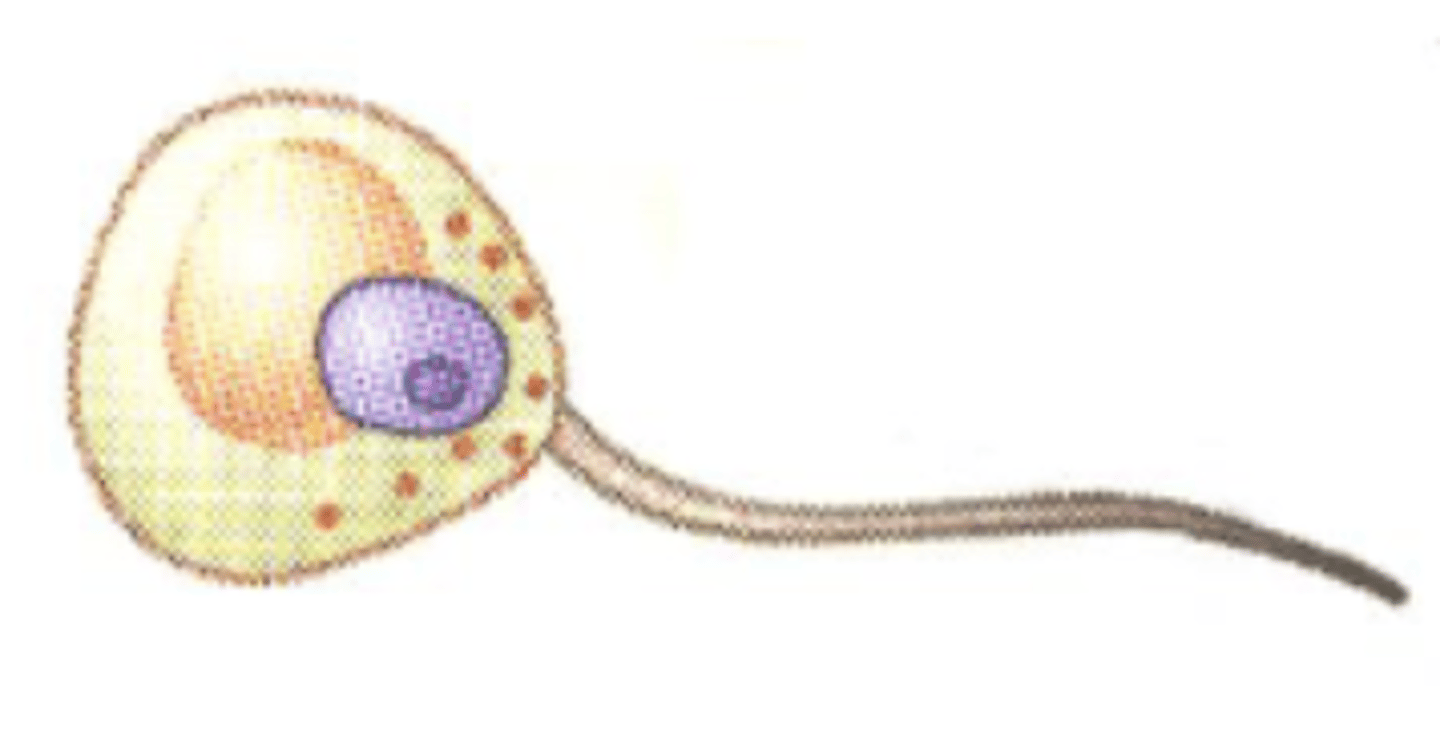
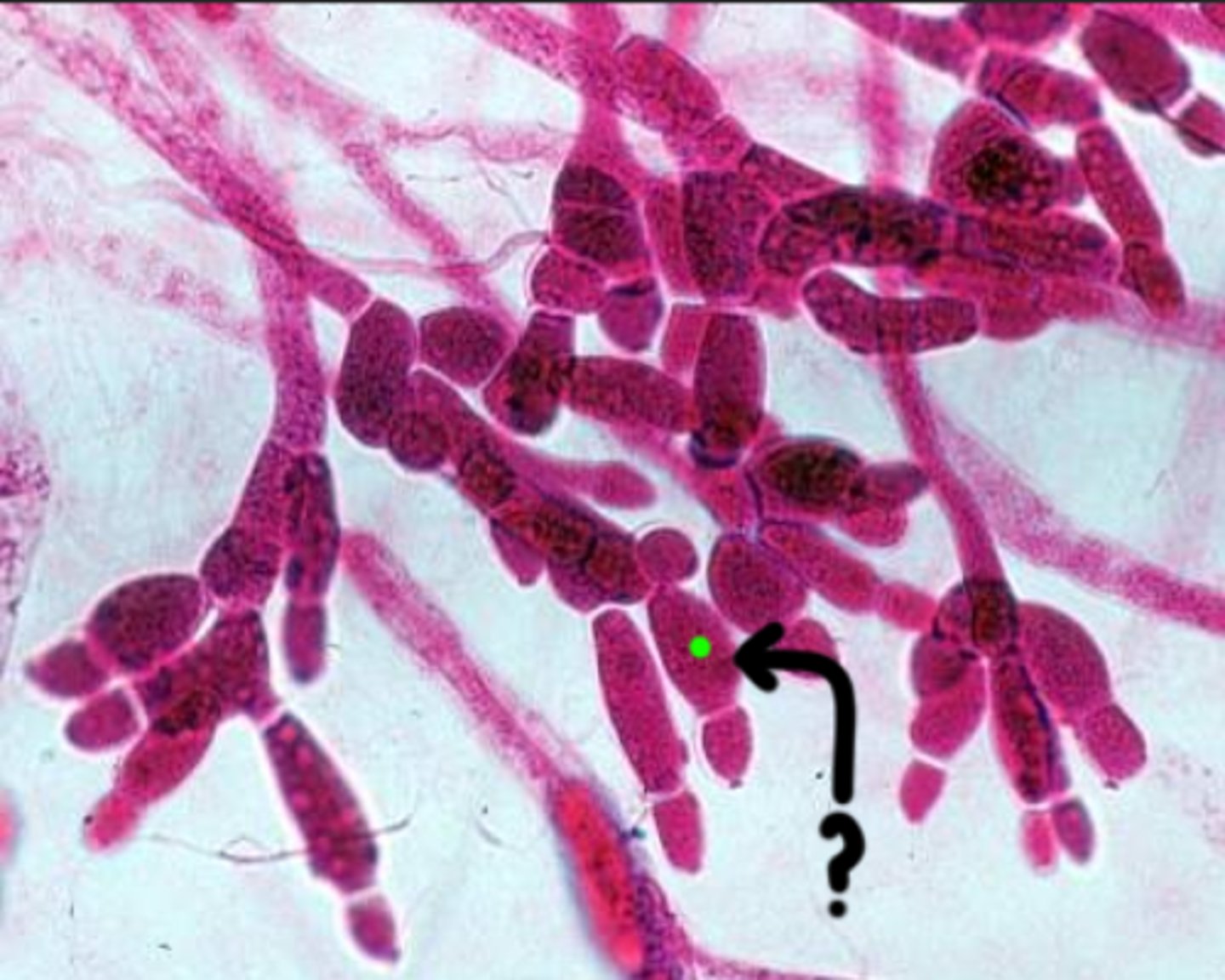
Allomyces gametophyte
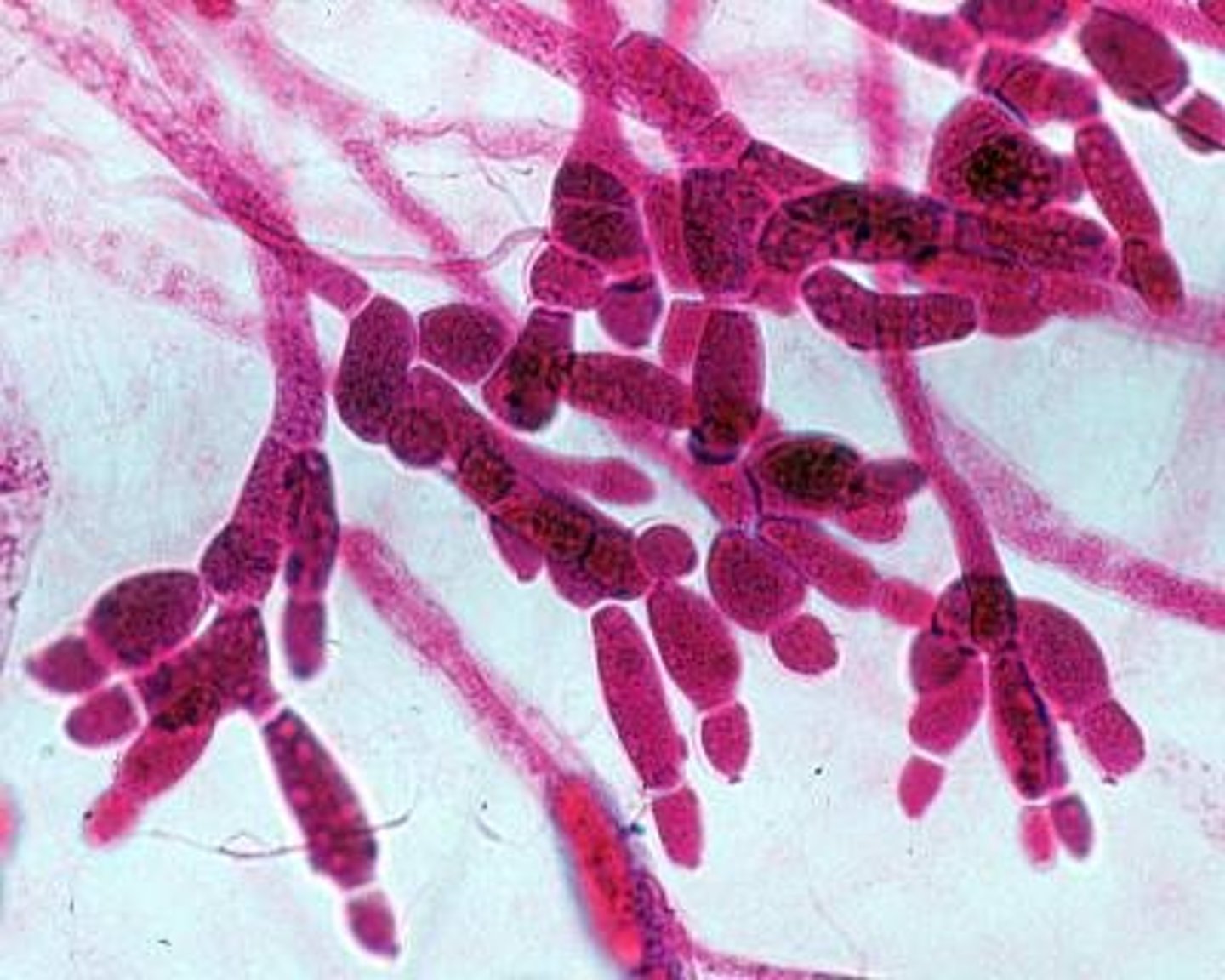
Male gametangium
Produces male gametes (sperm cells) and typically smaller in size compared to female gametangia.
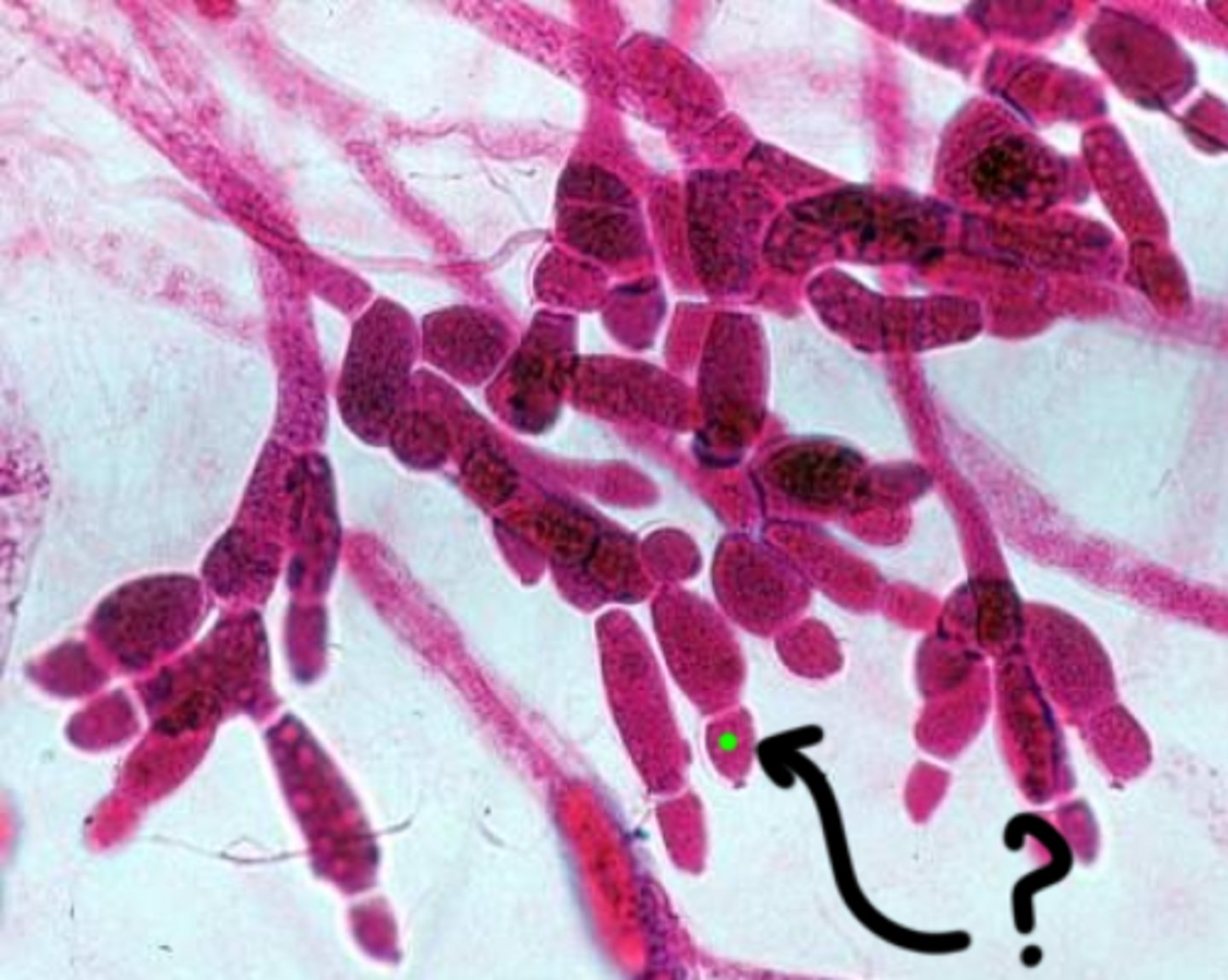
Female gametangium
Produces female gametes (egg cells) and typically larger and more prominent than male gametangia.
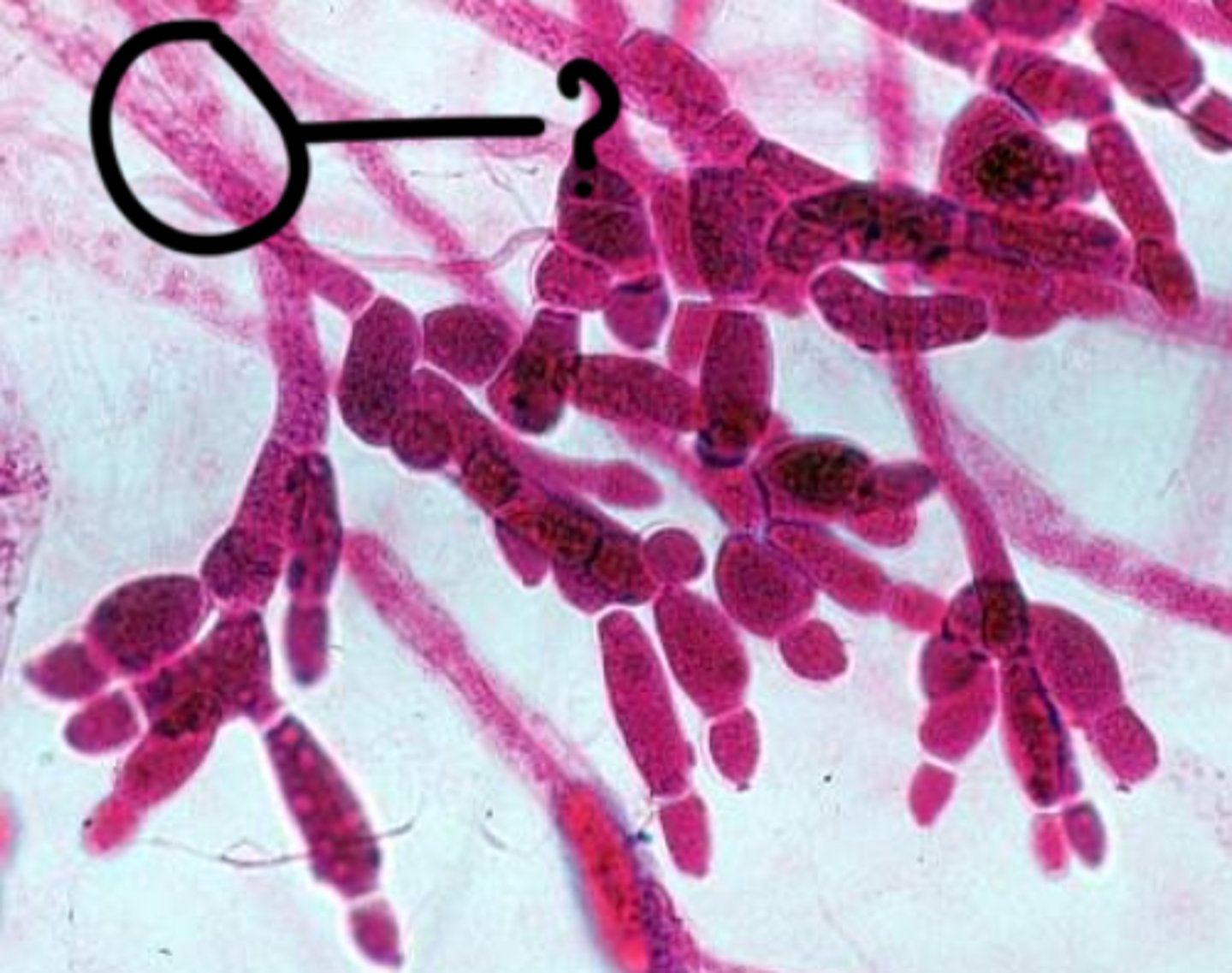
Mycelia
Interconnected network of hyphae
Allomyces sporophyte
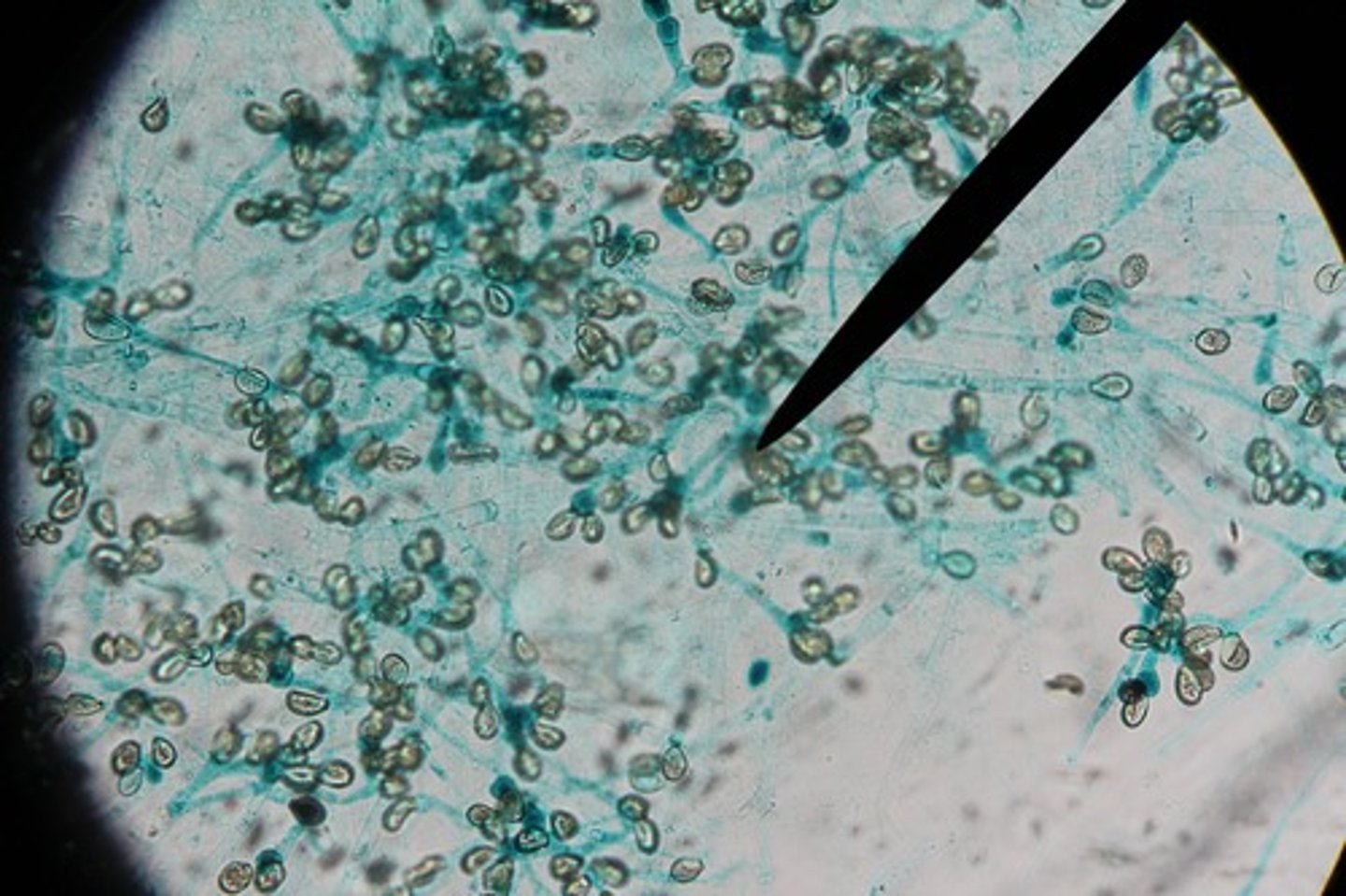
How do you differentiate Allomyces gametophyte from Allomyces sporophyte?
The gametophyte's male gametangium looks like a little cap
Allomyces sporophyte
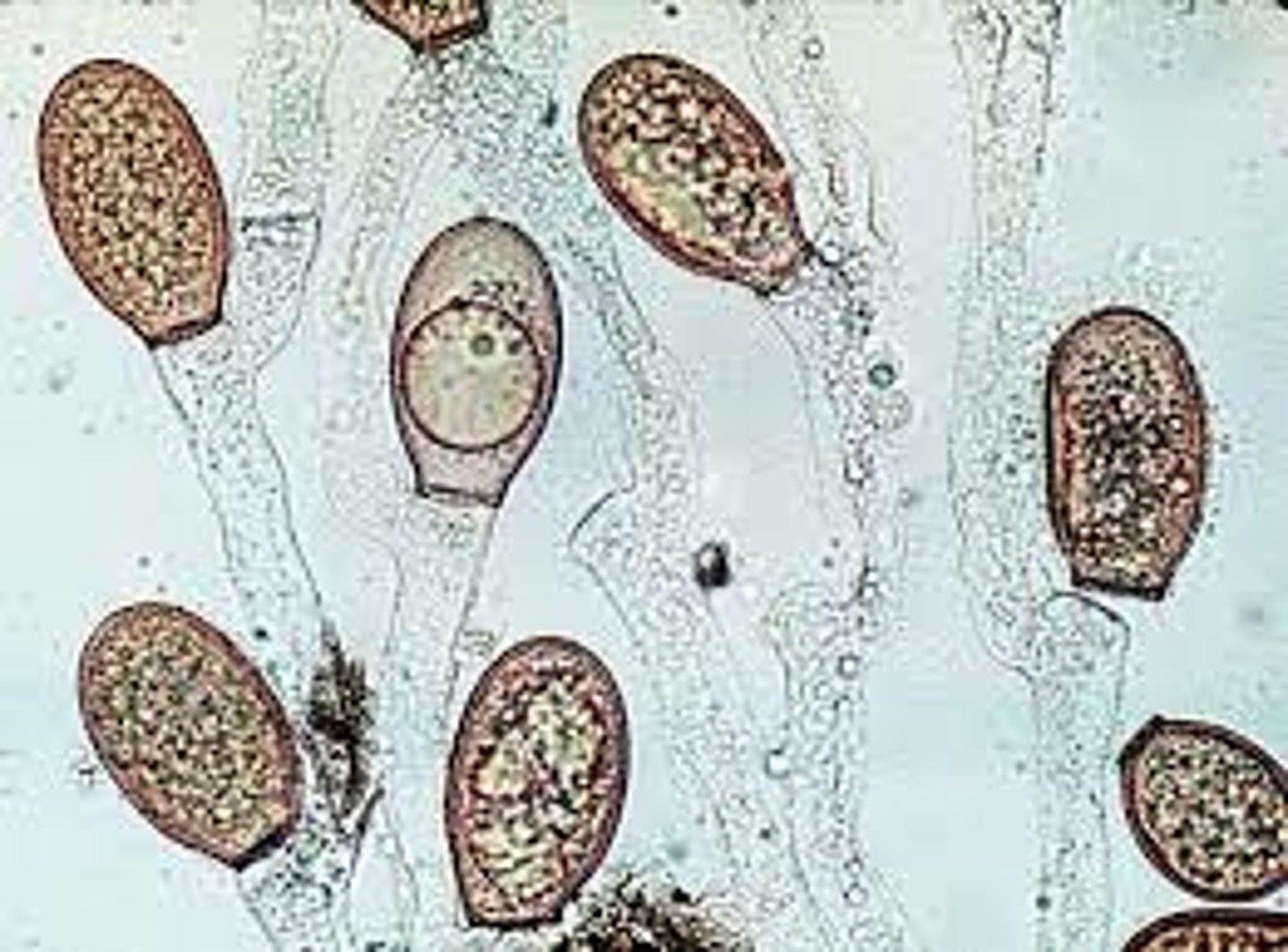
Sporangia
A capsule in fungi in which haploid spores develop.
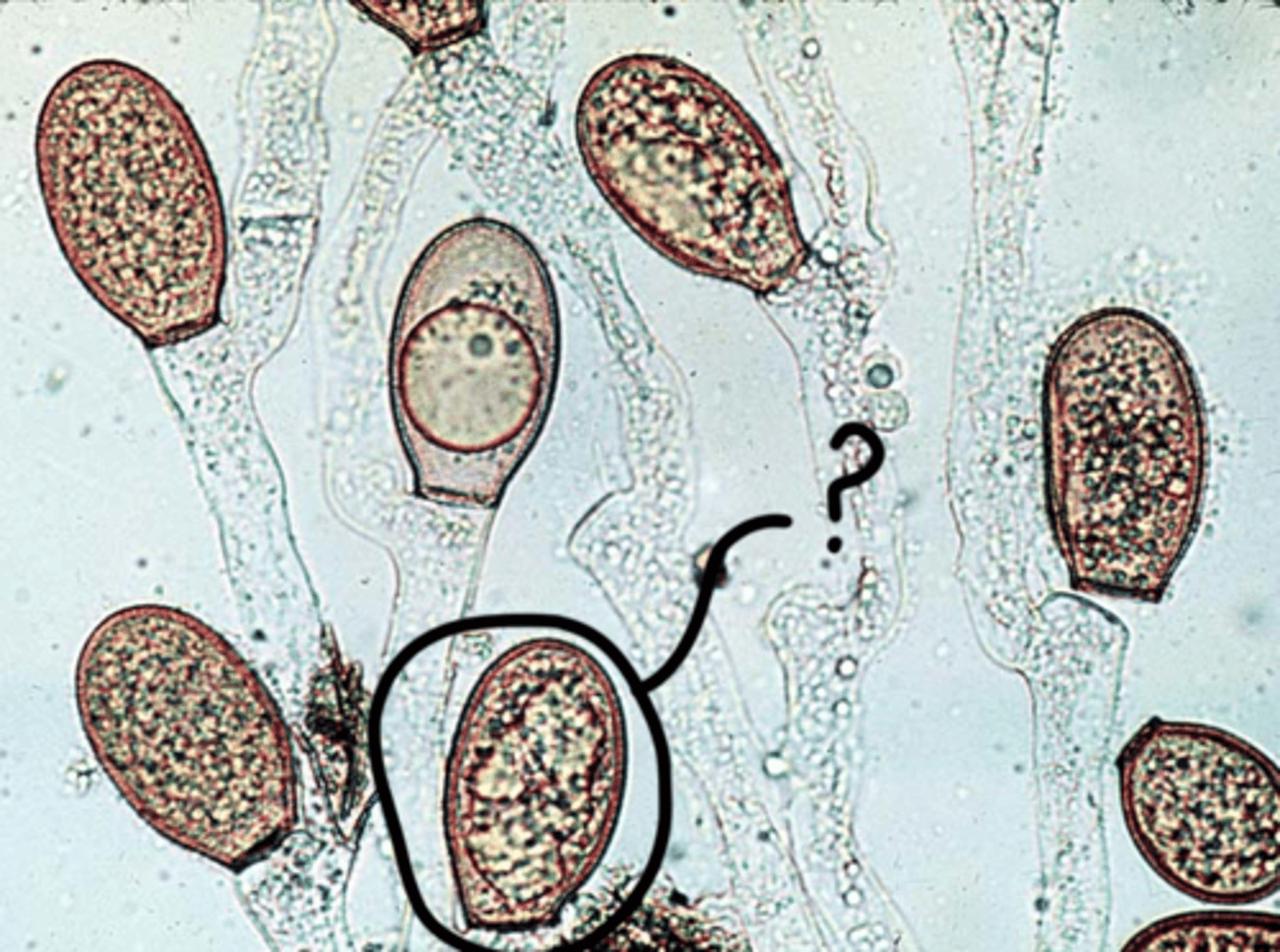
Mycelia
Interconnected network of hyphae
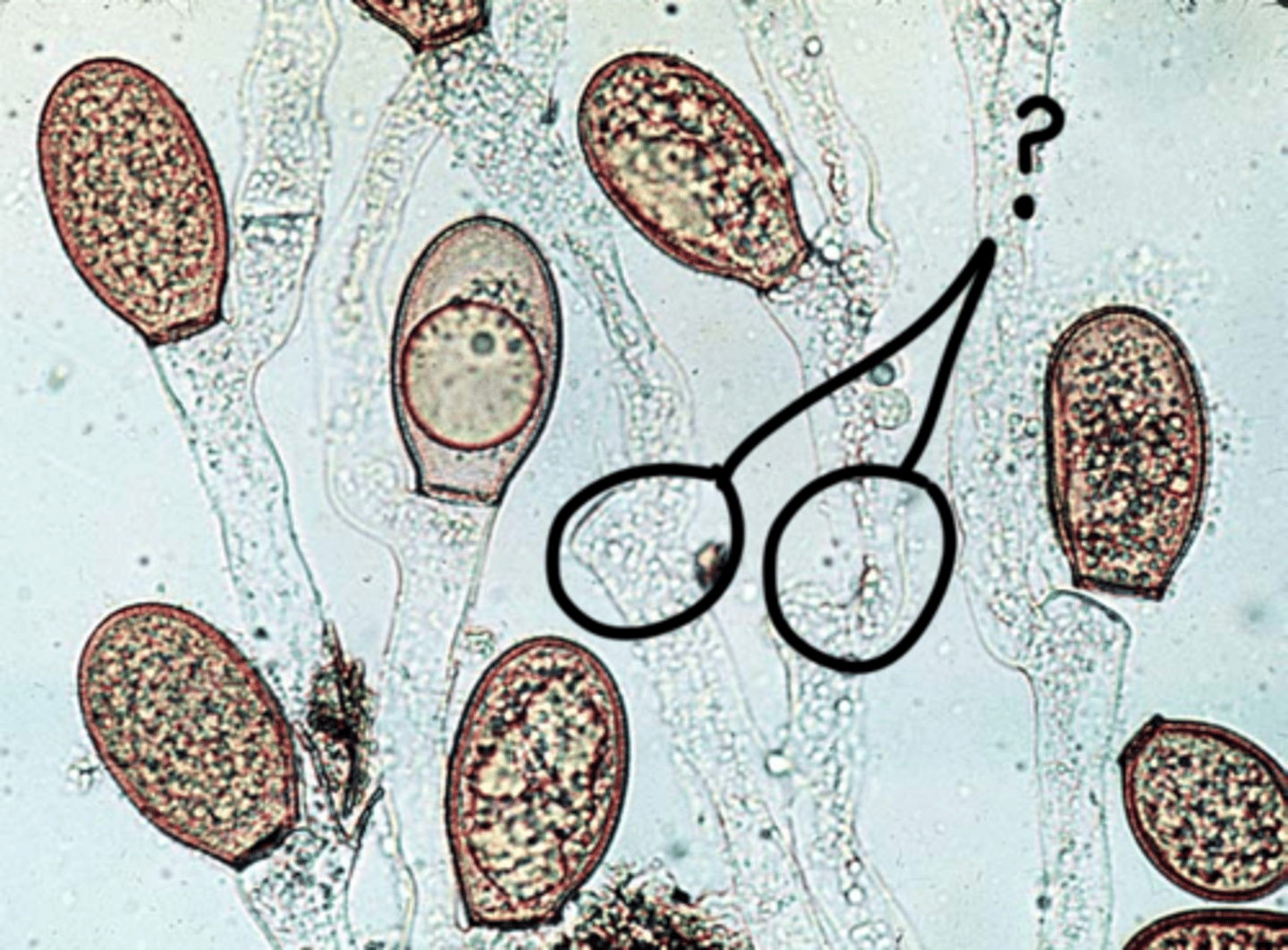
What is the clade of Rhizopus stolonifer and Pilobolus
Zygomycetes
What common characteristic do Zygomycetes share?
Resistant zygosporangiumas sexual stage
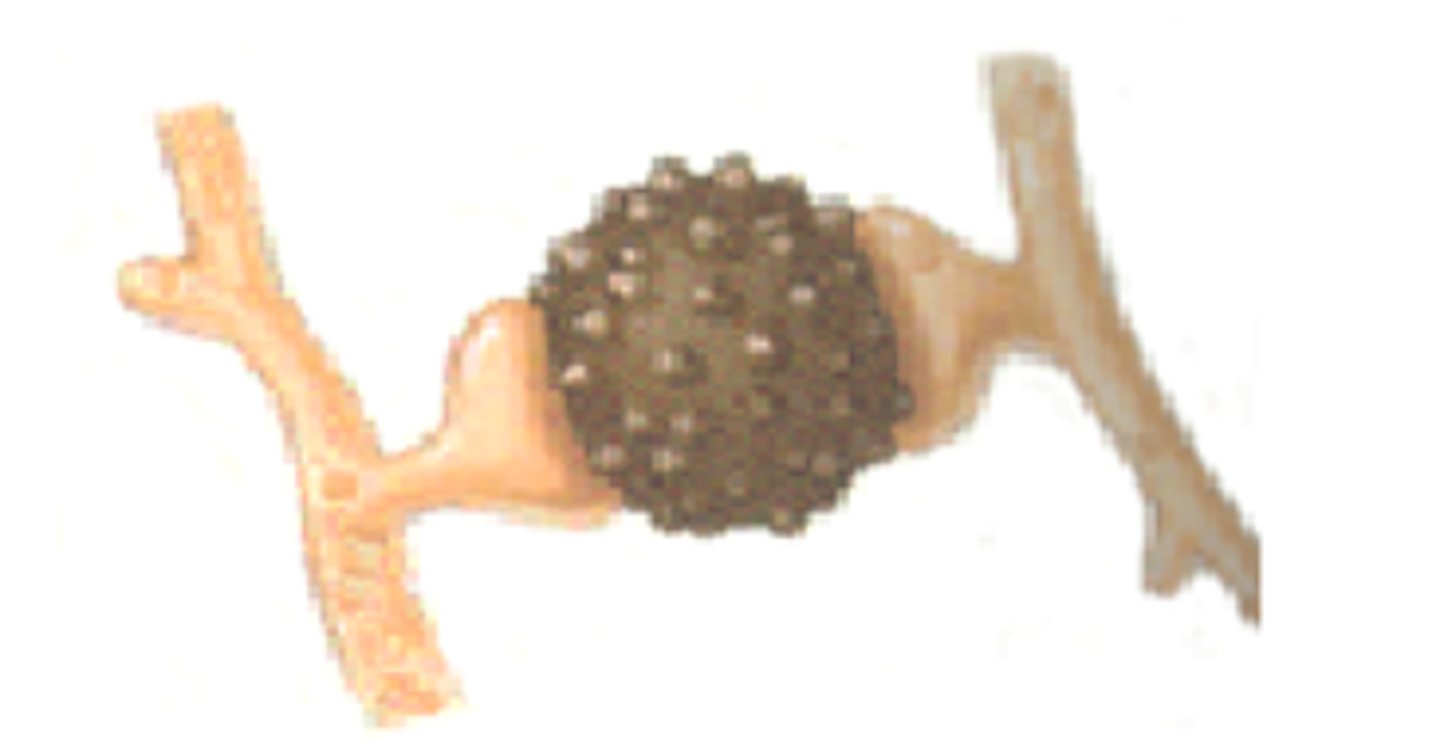
Common name for Rhizopus stolonifer
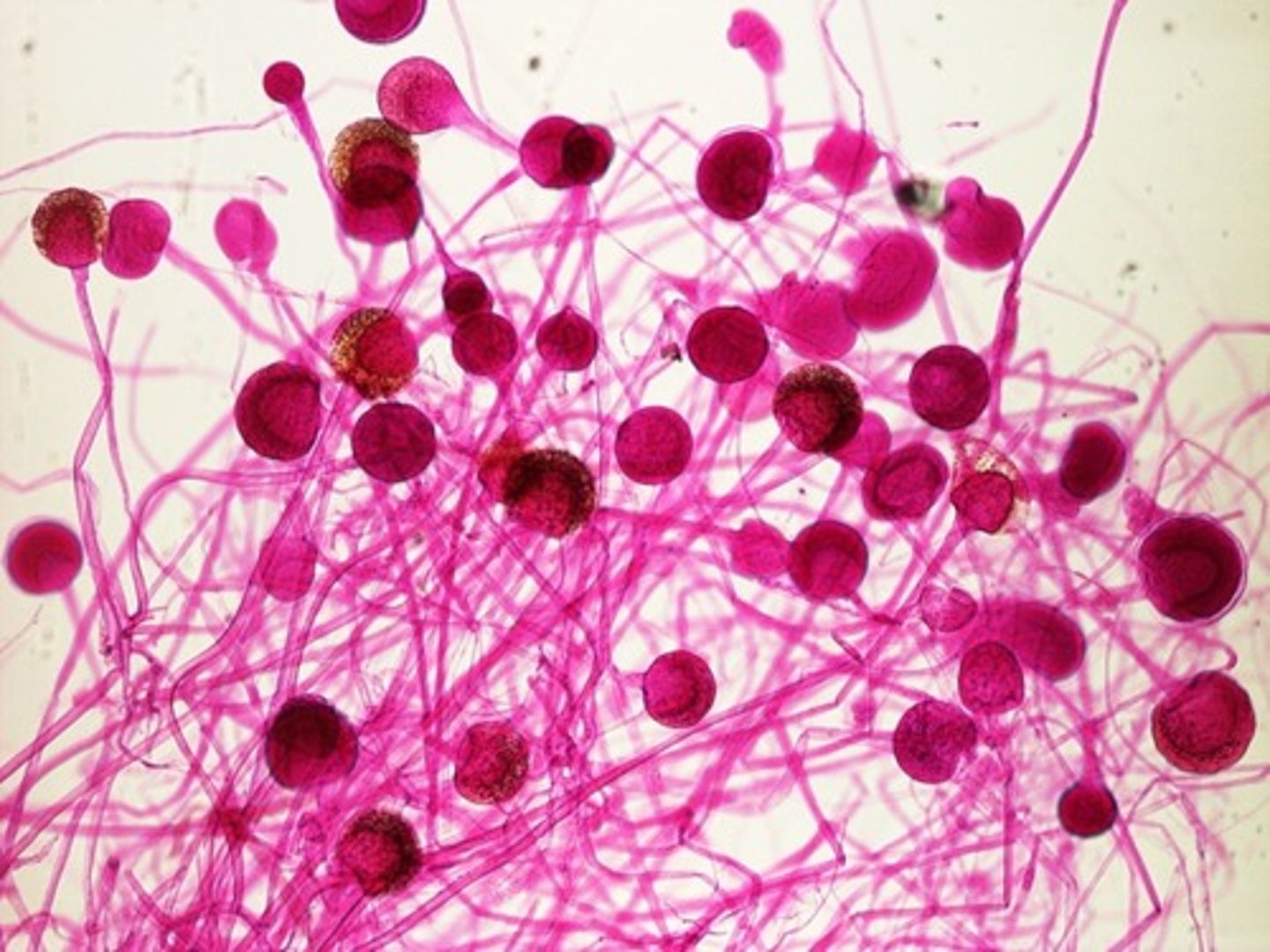
black bread mold
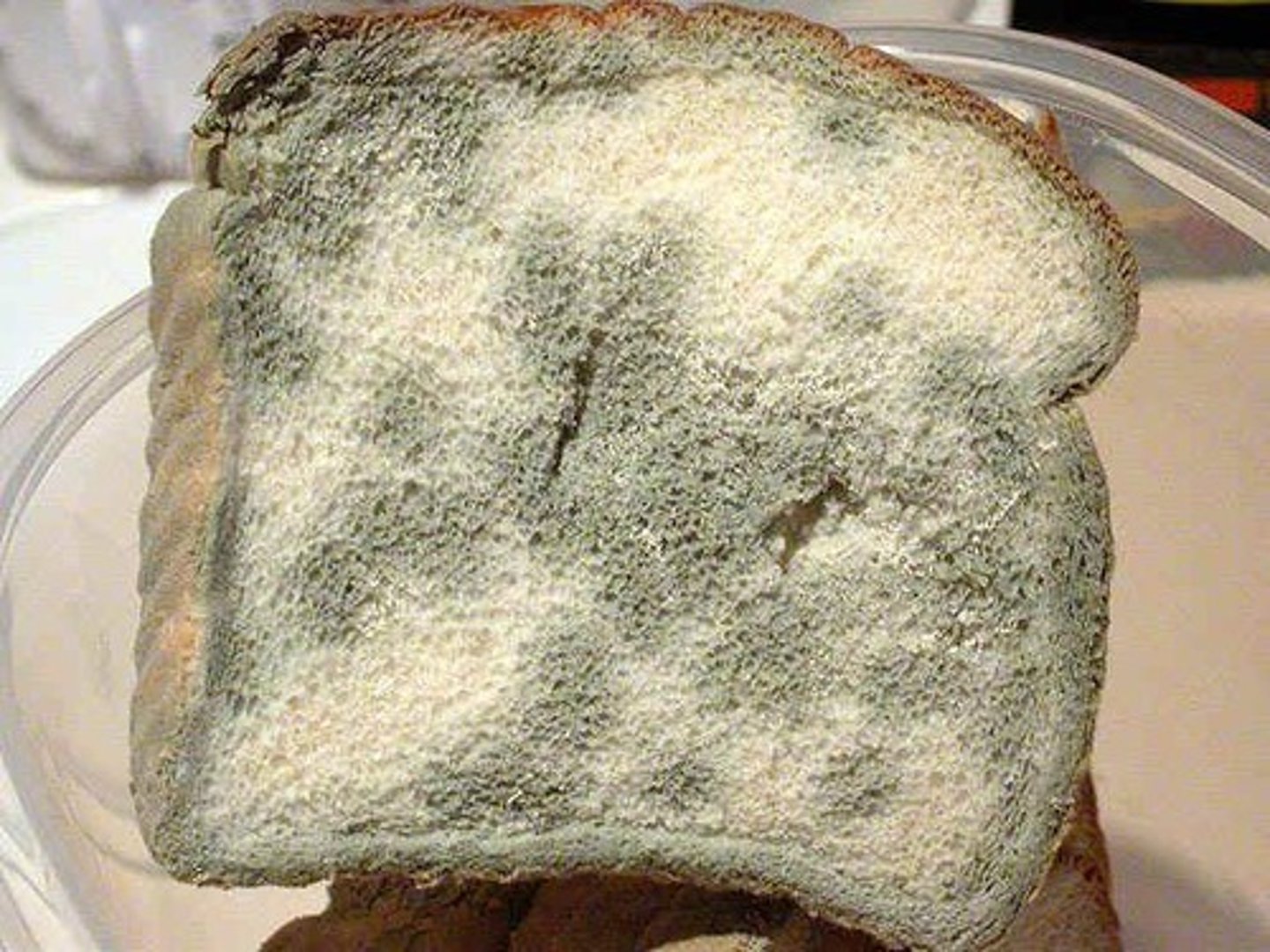
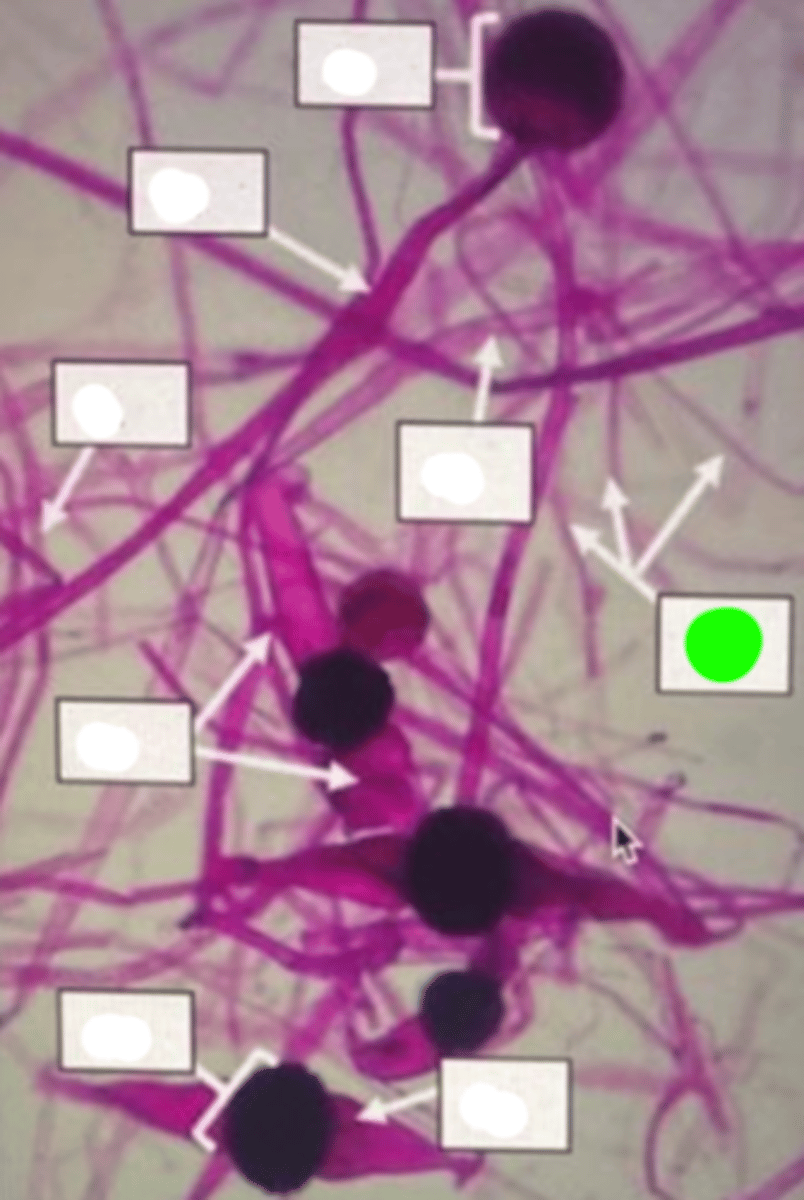
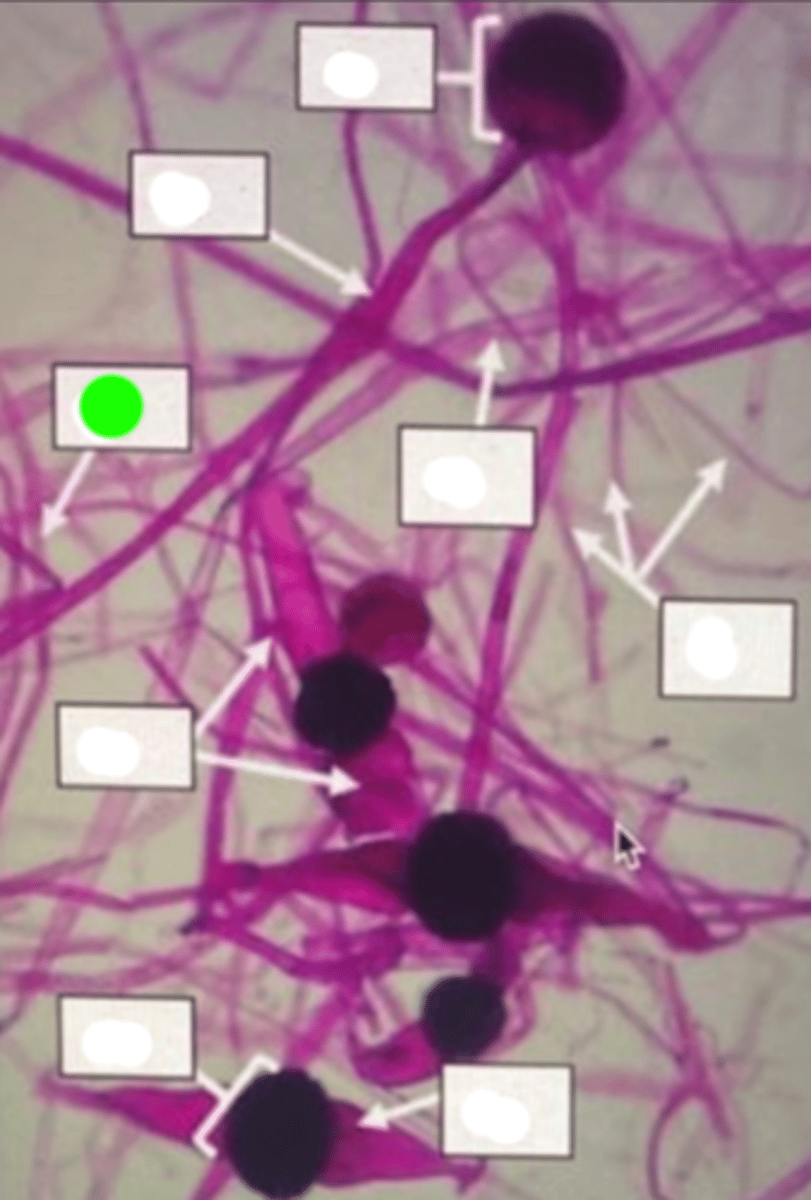
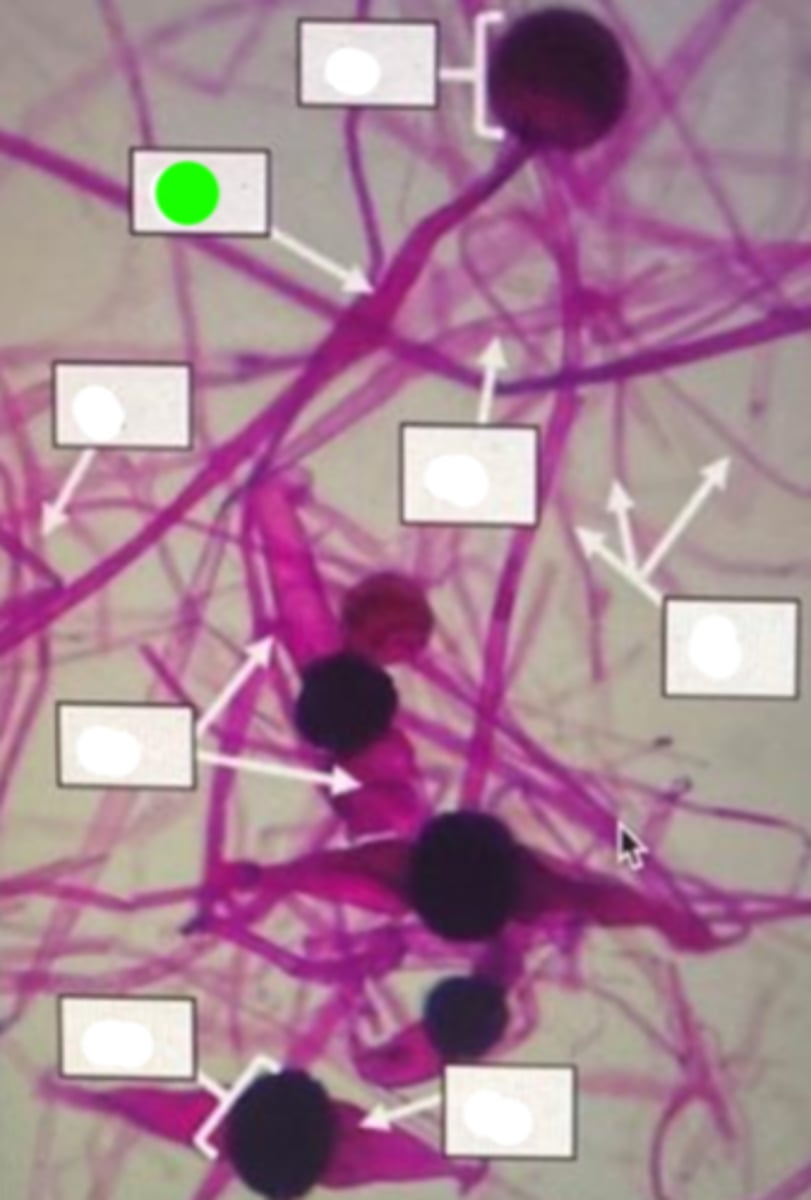
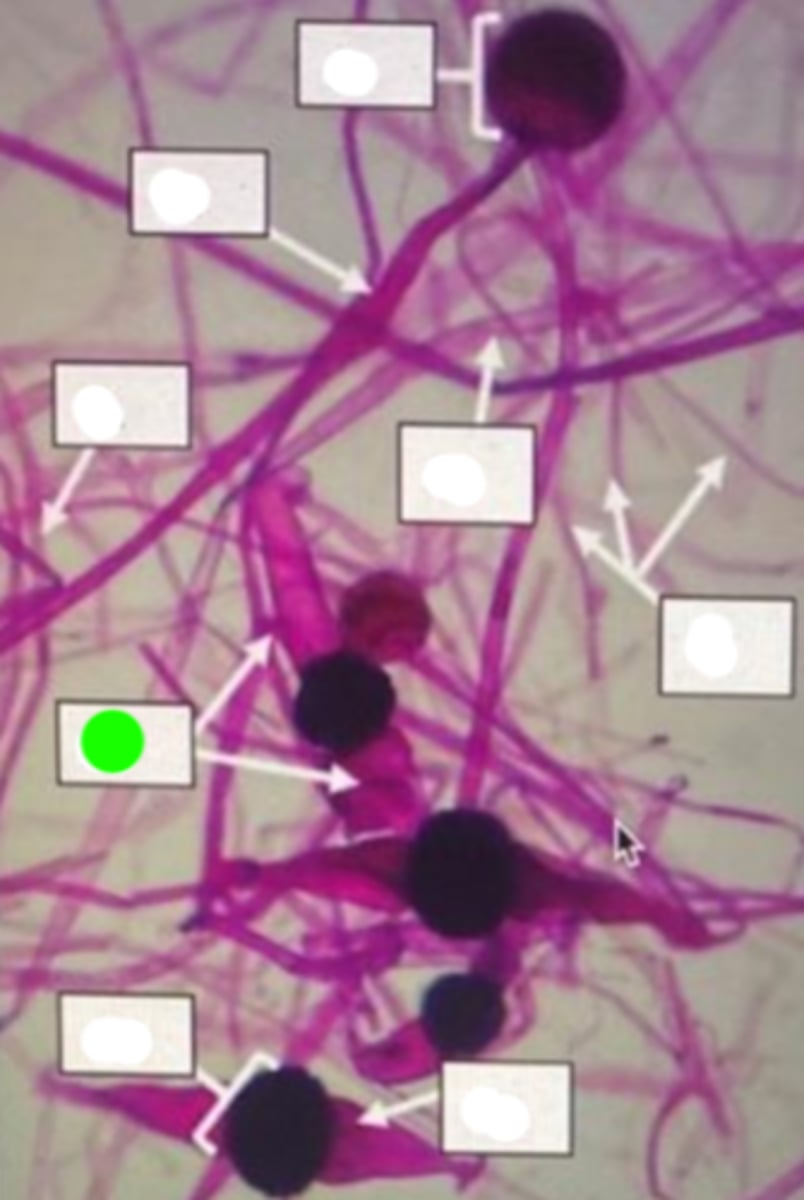
Rhizopus stolonifer
Rhizoids
Thread-like structures anchoring the fungus to substrates for support and absorption of water and nutrients. Stem-like
Stolon
Horizontal hyphal strands connecting different colonies of the fungus, facilitating the spread and colonization of new areas.
Sporangiophore
Specialized hyphal structure that holds the sporangium, elevating it for better spore dispersal.
Sporangium
Structure within which spores are produced and stored before release.
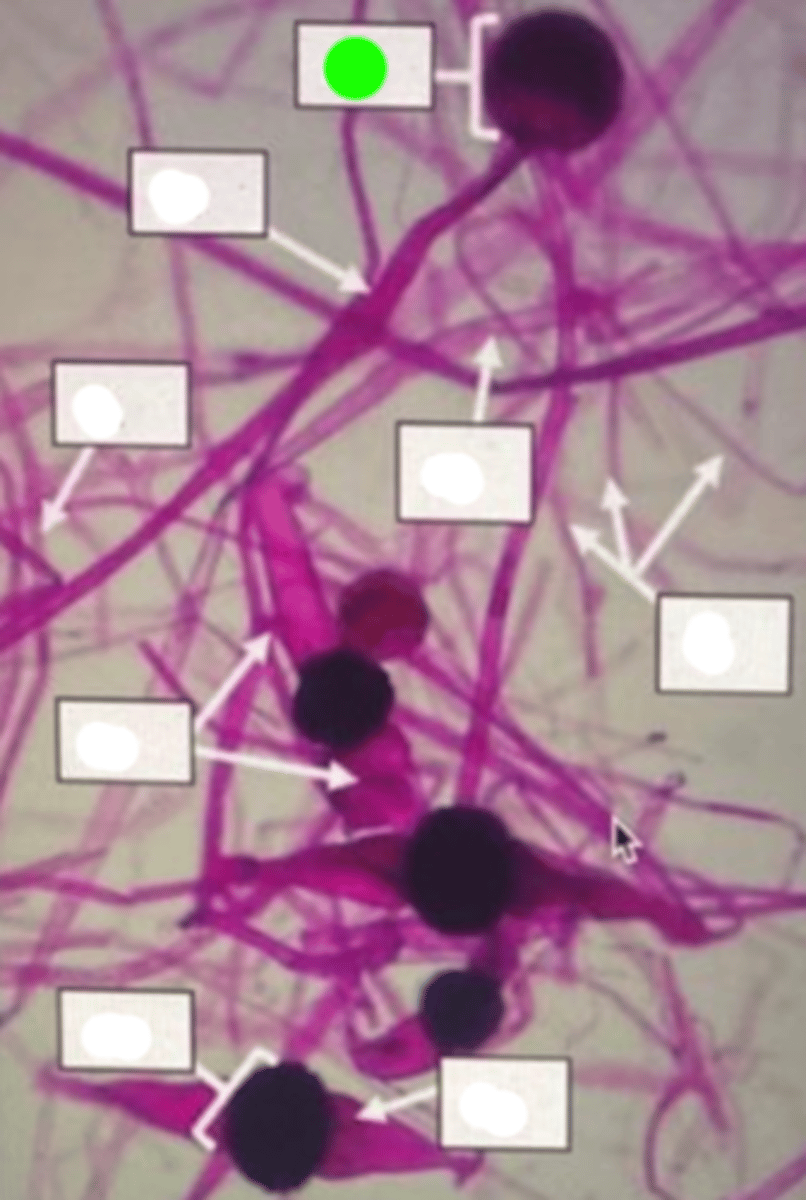
Zygosporangium
A thick-walled structure formed from the fusion of specialized hyphae during sexual reproduction, providing protection for the dormant zygospores.
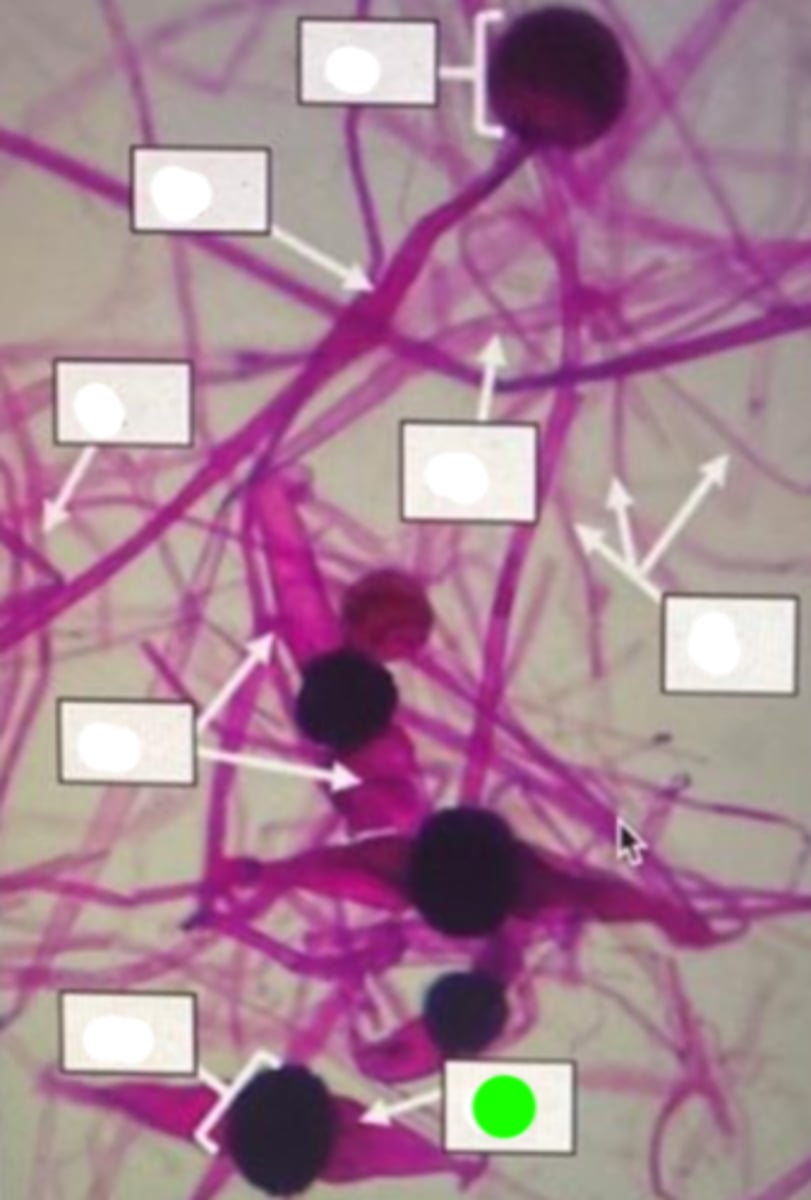
Spores
Reproductive cells capable of developing into new fungi under suitable conditions.
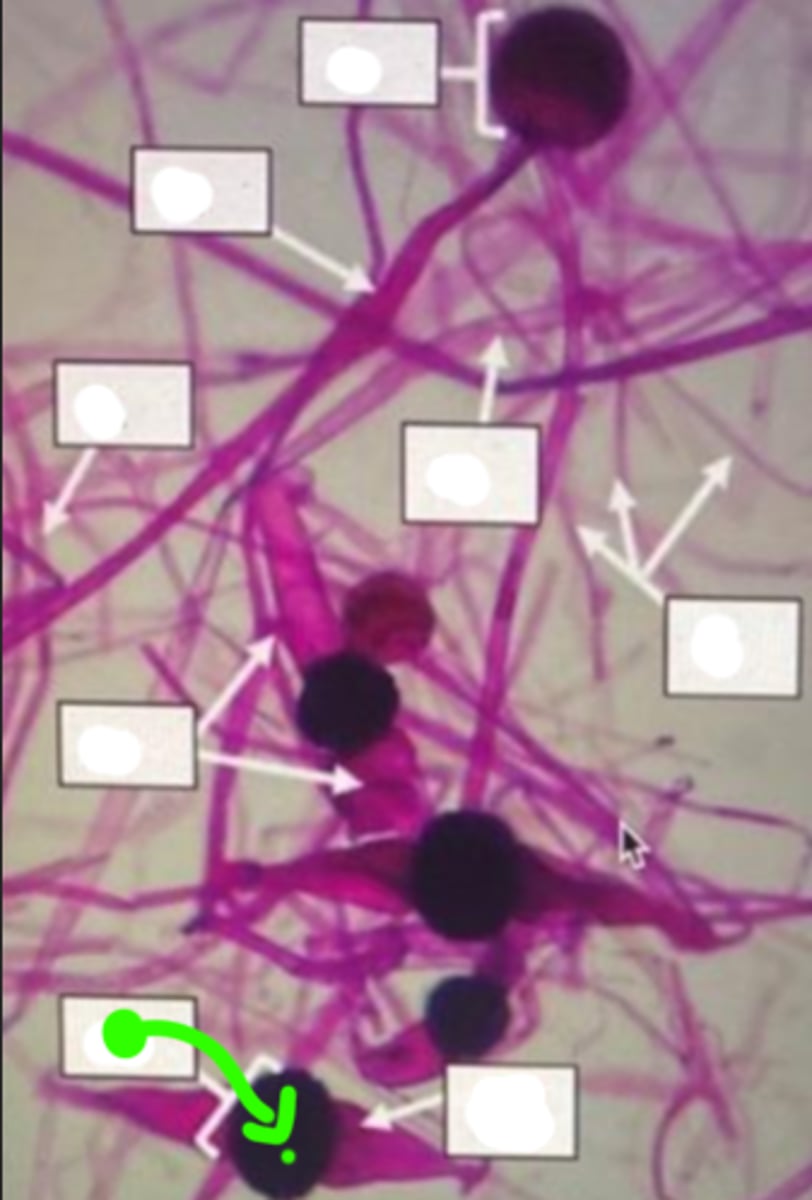
Hyphea
Thread-like filaments constituting the vegetative body of the fungus, responsible for nutrient absorption, growth, and expansion.
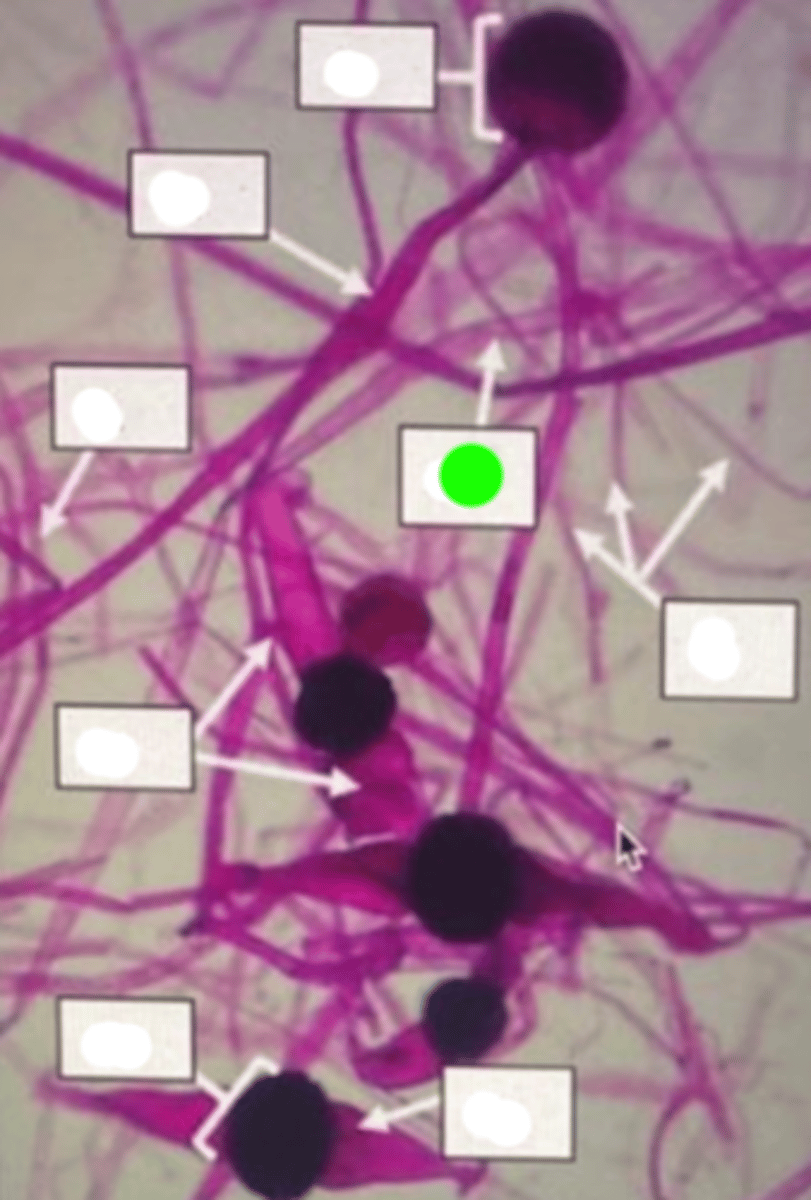
Suspensor Cell
A specialized cell attached to the spore, aiding in its dispersal.
Pilobolus
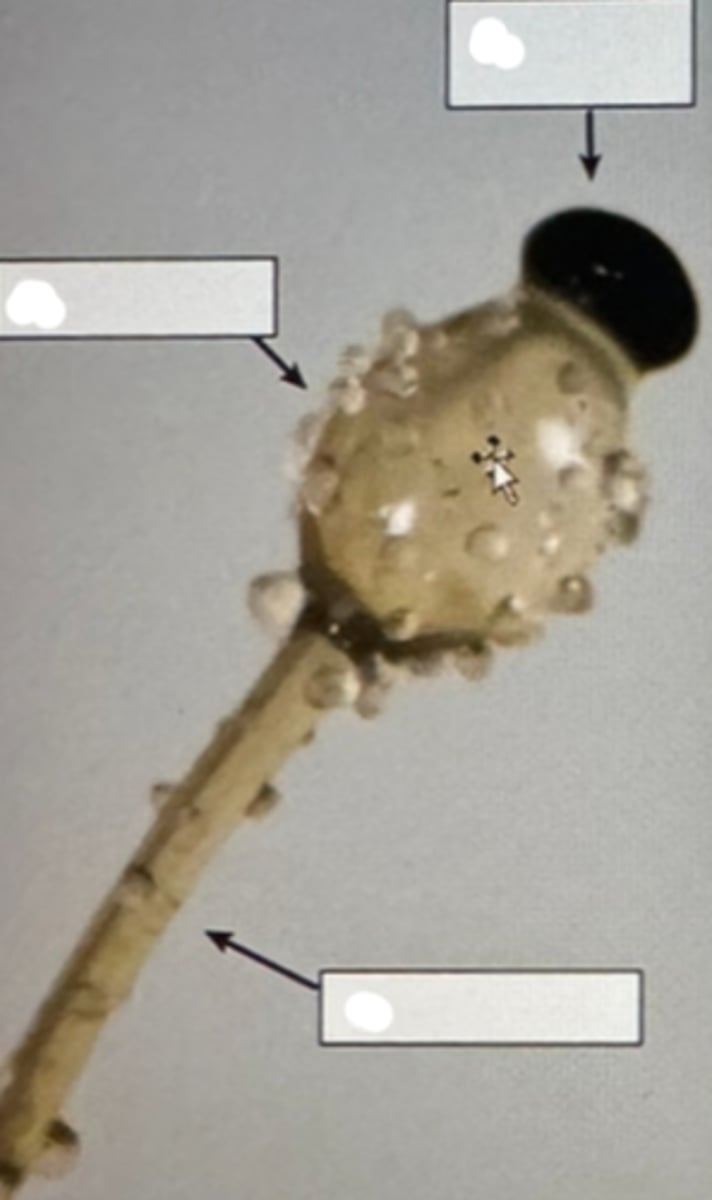
Sporangium:
Structure within which spores are produced and stored before release.
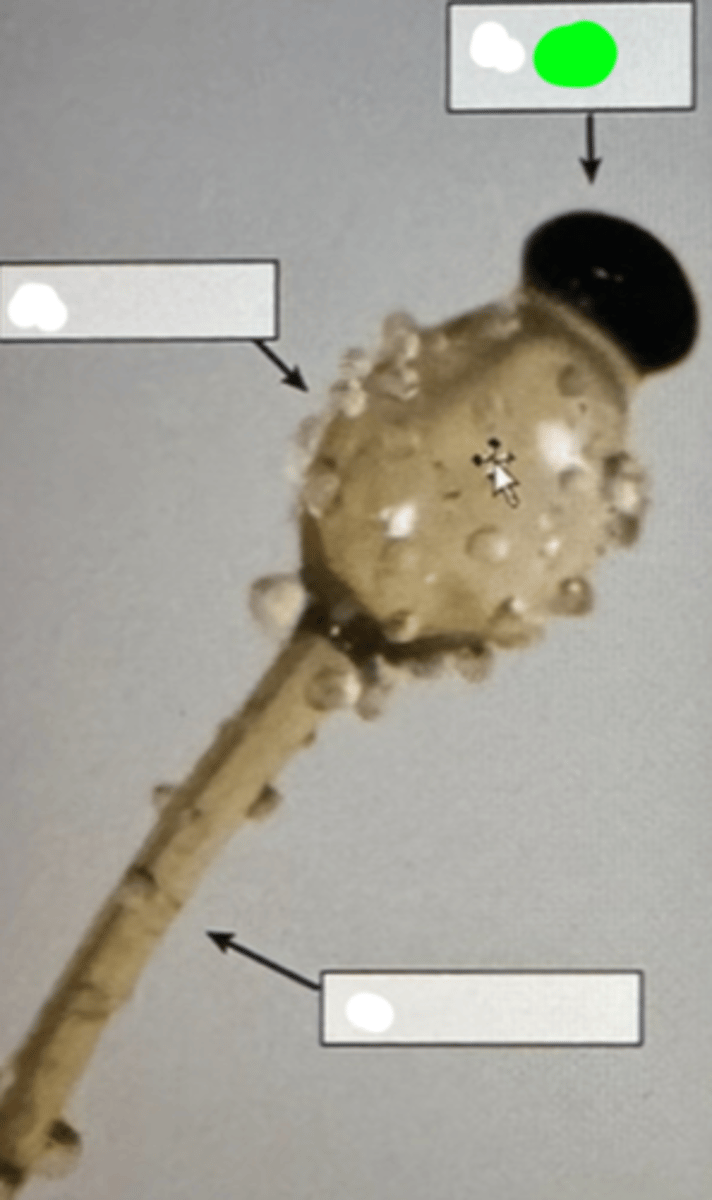
Sporangiophore
Specialized hyphal structure that holds the sporangium, elevating it for better spore dispersal.
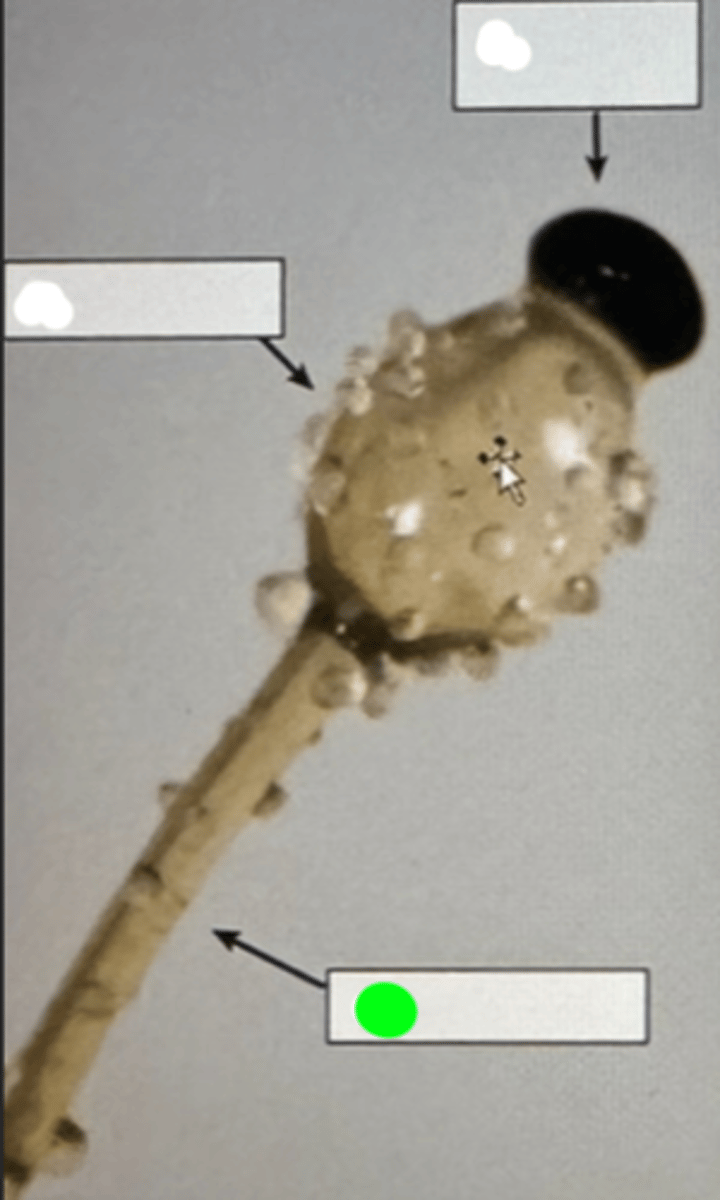
Vesicle
A swollen, often rounded structure at the tip of certain fungal hyphae, involved in the production and storage of spores or reproductive cells.
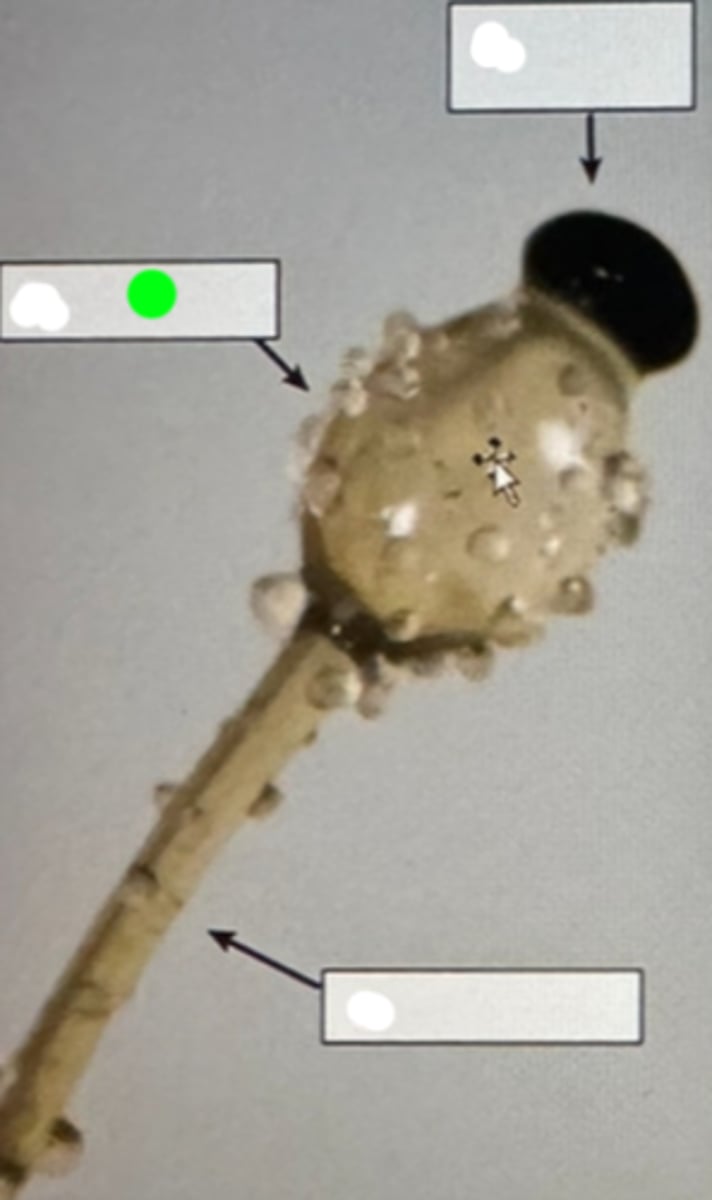
What clade does Saccharomyces cerevisiae, Peziza, Morchella and Pennicilium belong to
Ascomycetes
What common characteristic do Ascomytes share?
Sexual spores (ascospores) borne internally in sacs called asci; ascomycetes also produce vast numbers of asexual spores (conidia)
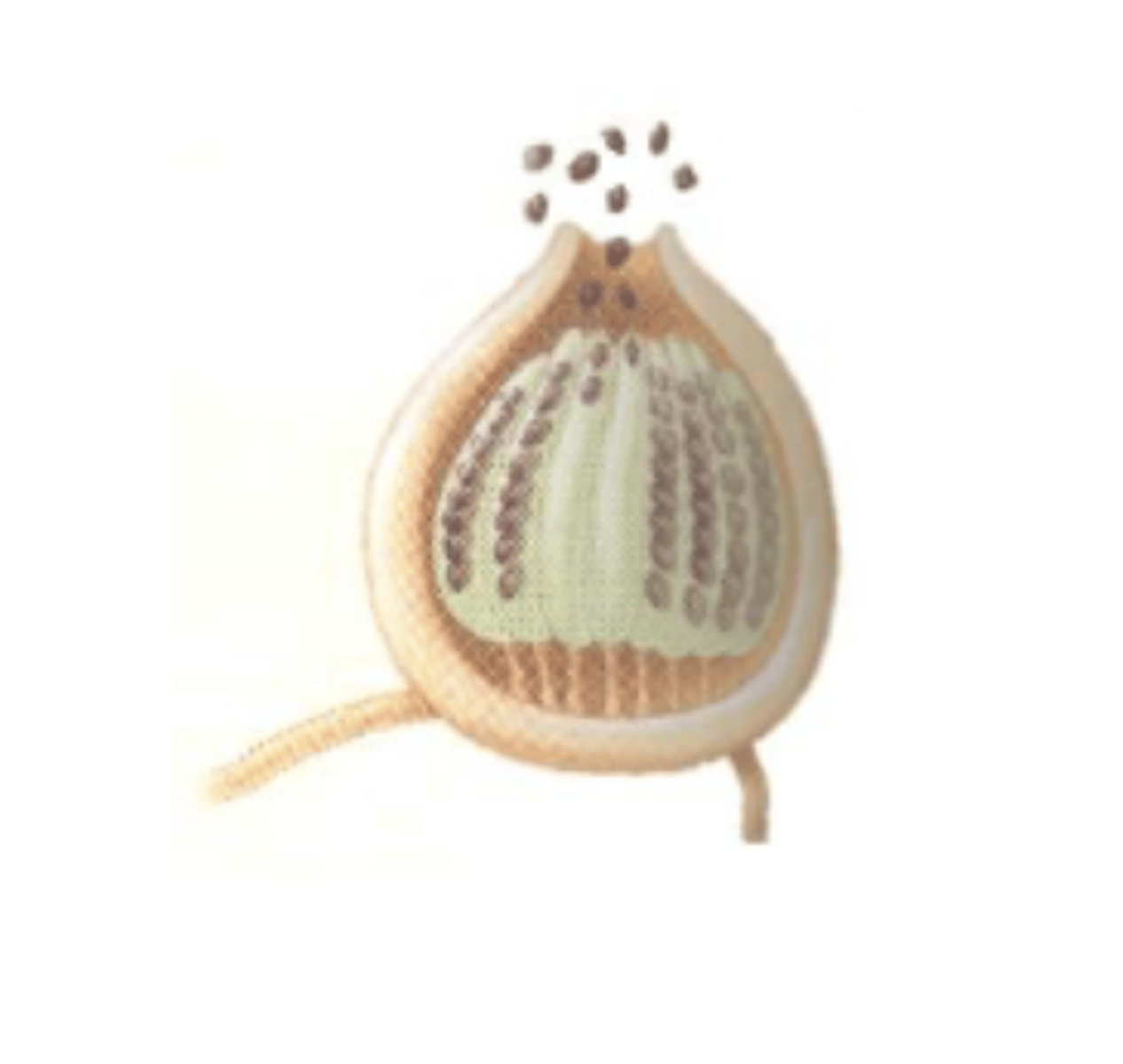
Common name for Saccharomyces cerevisiae
Baker's Yeast
Saccharomyces cerevisiae
The little red balls are Asci, and the little brown balls in the lower right corner are the ascospores
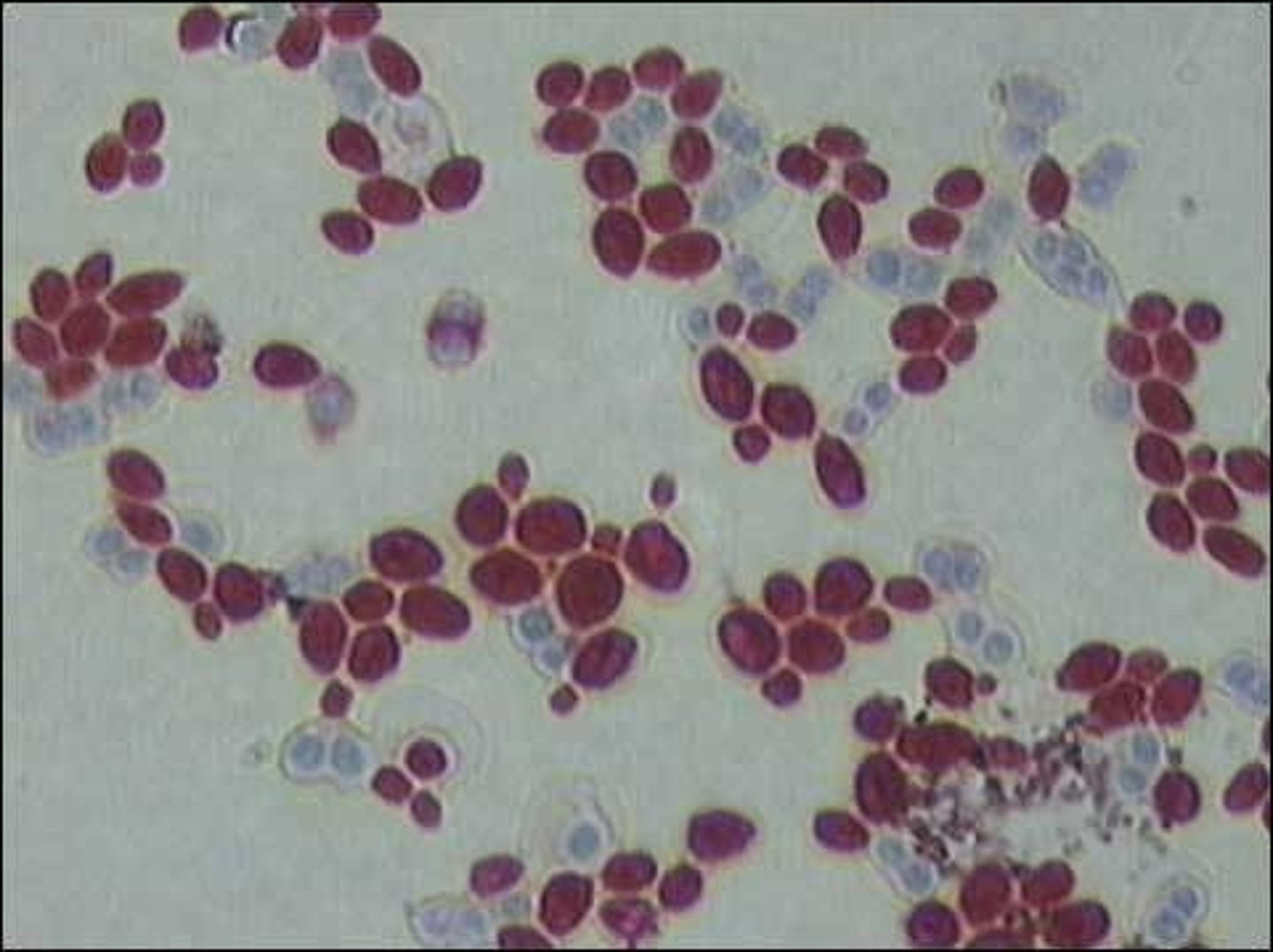
Peziza apothecium
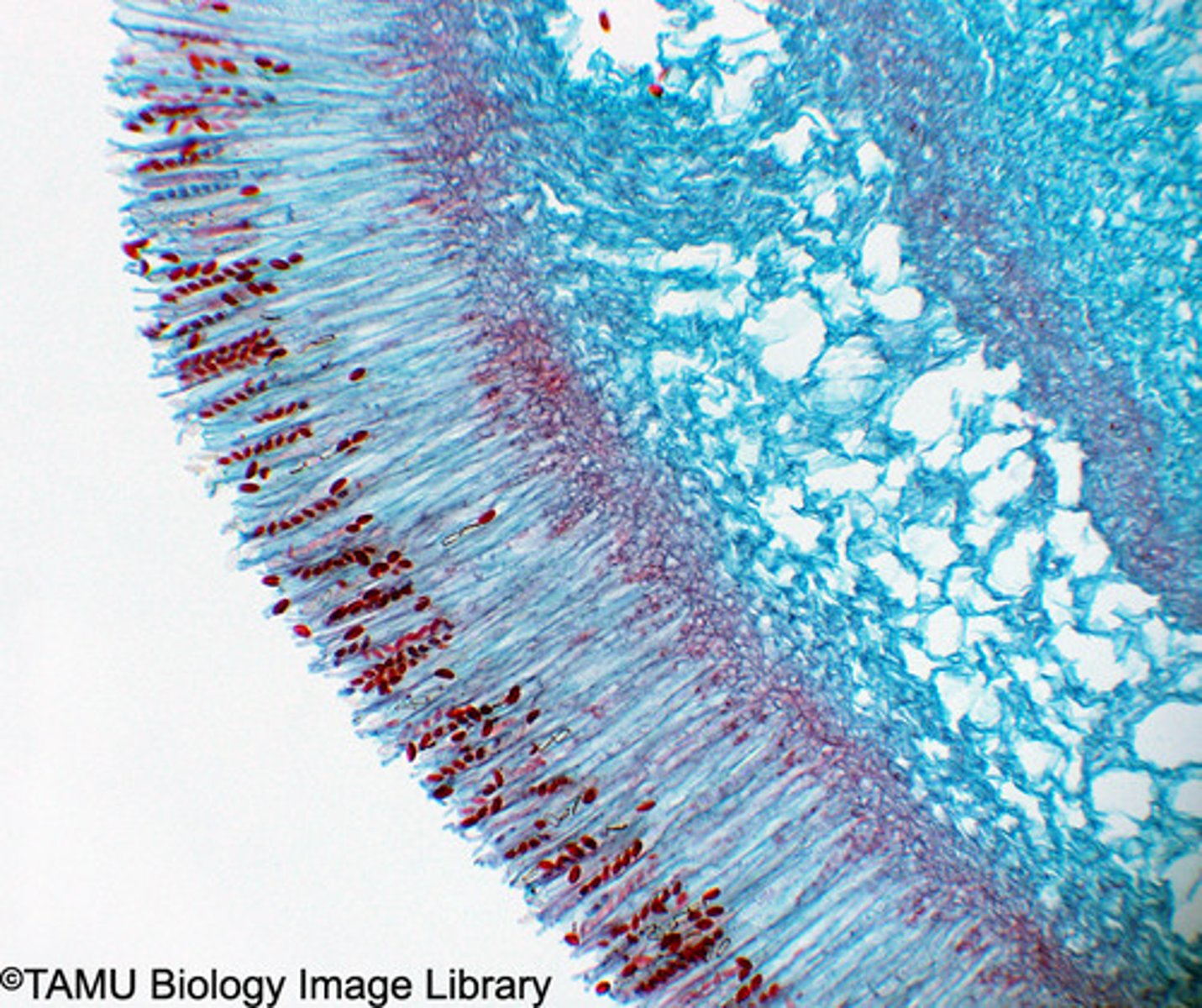
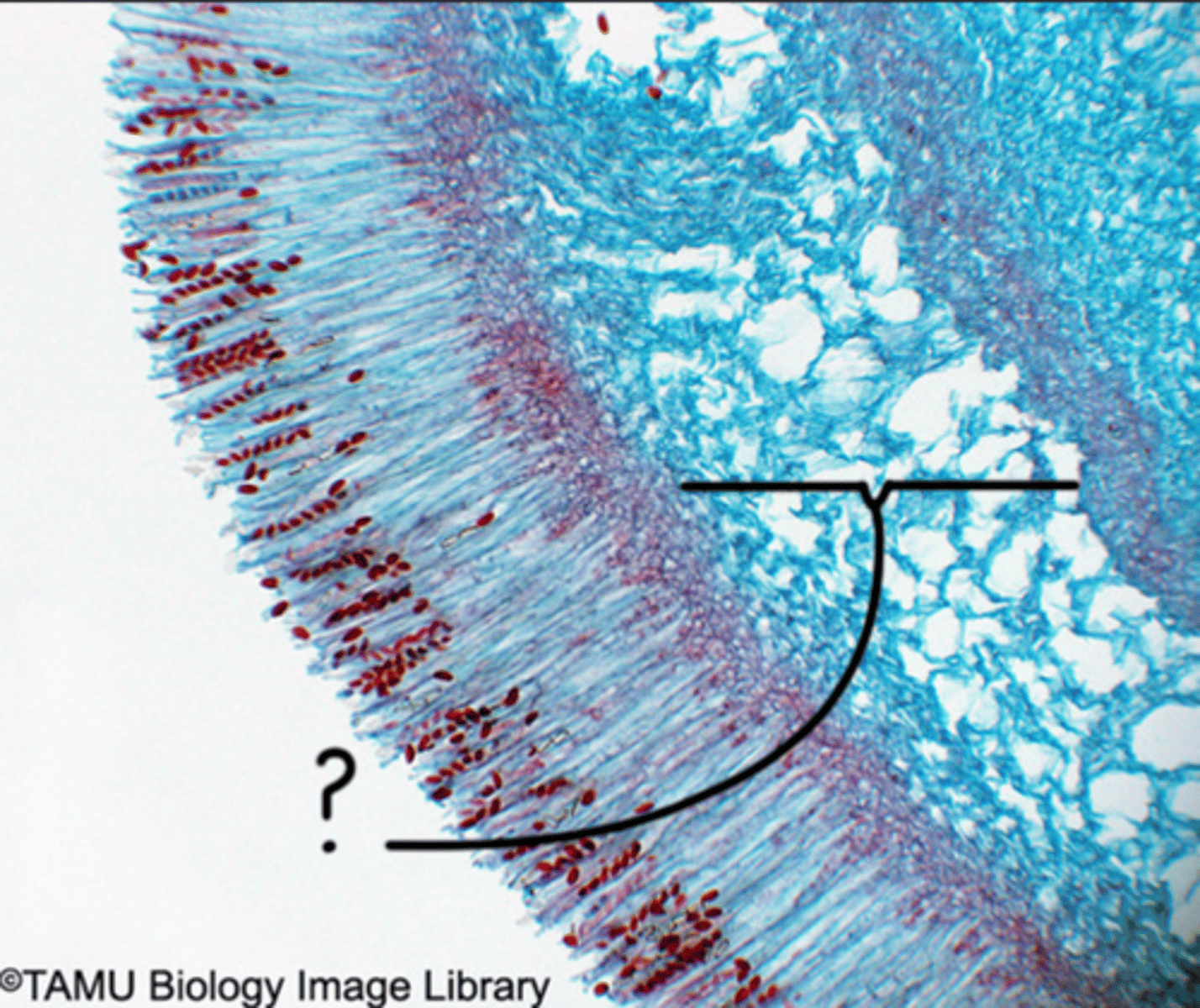
Hymenial layer
The layer within the fruiting body of a fungus where the reproductive structures, such as asci or basidia, are found.
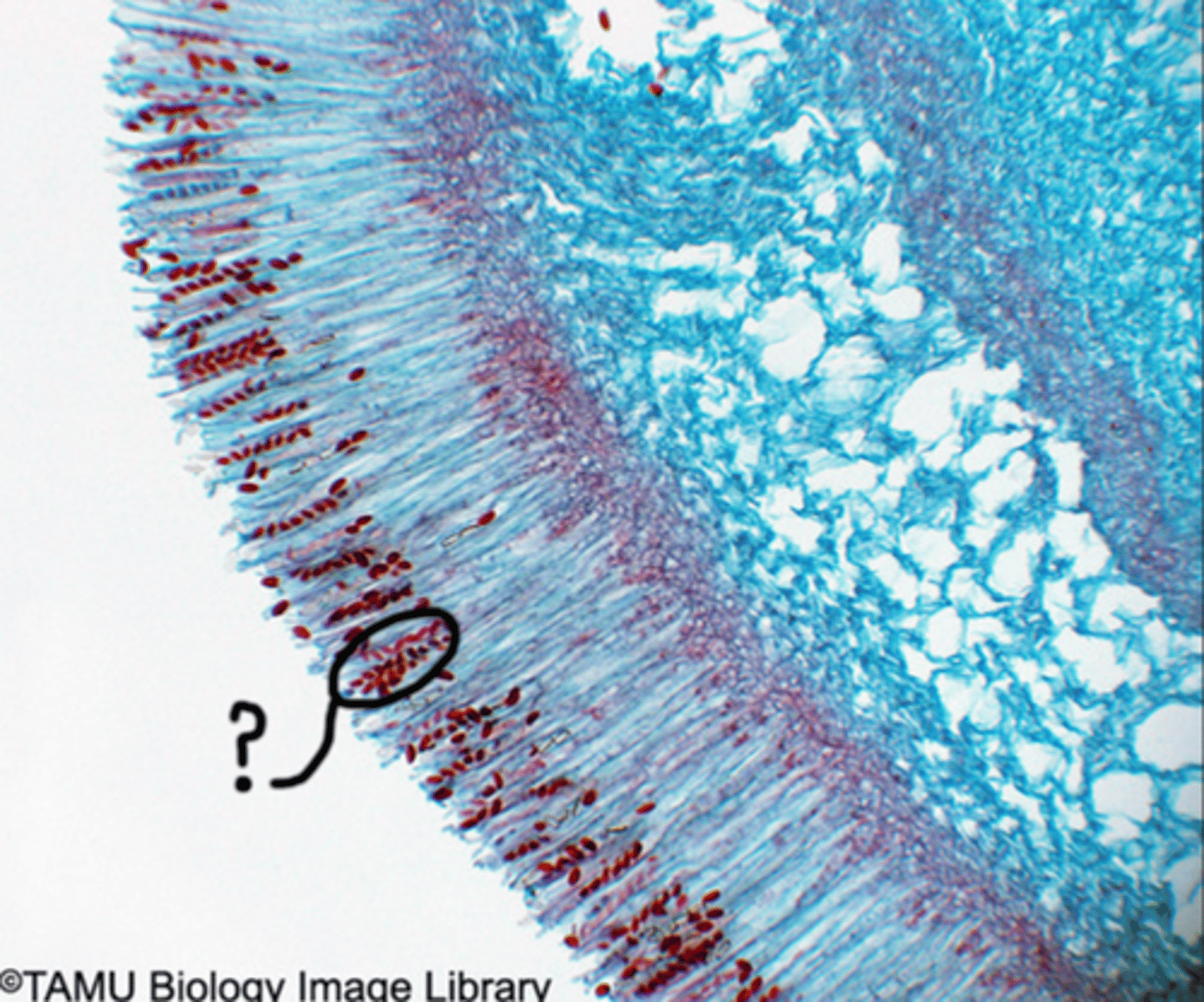
Ascus with ascospores
A sac-like structure found in the ascomycete fungi that contains and releases ascospores, the sexual spores produced during sexual reproduction.
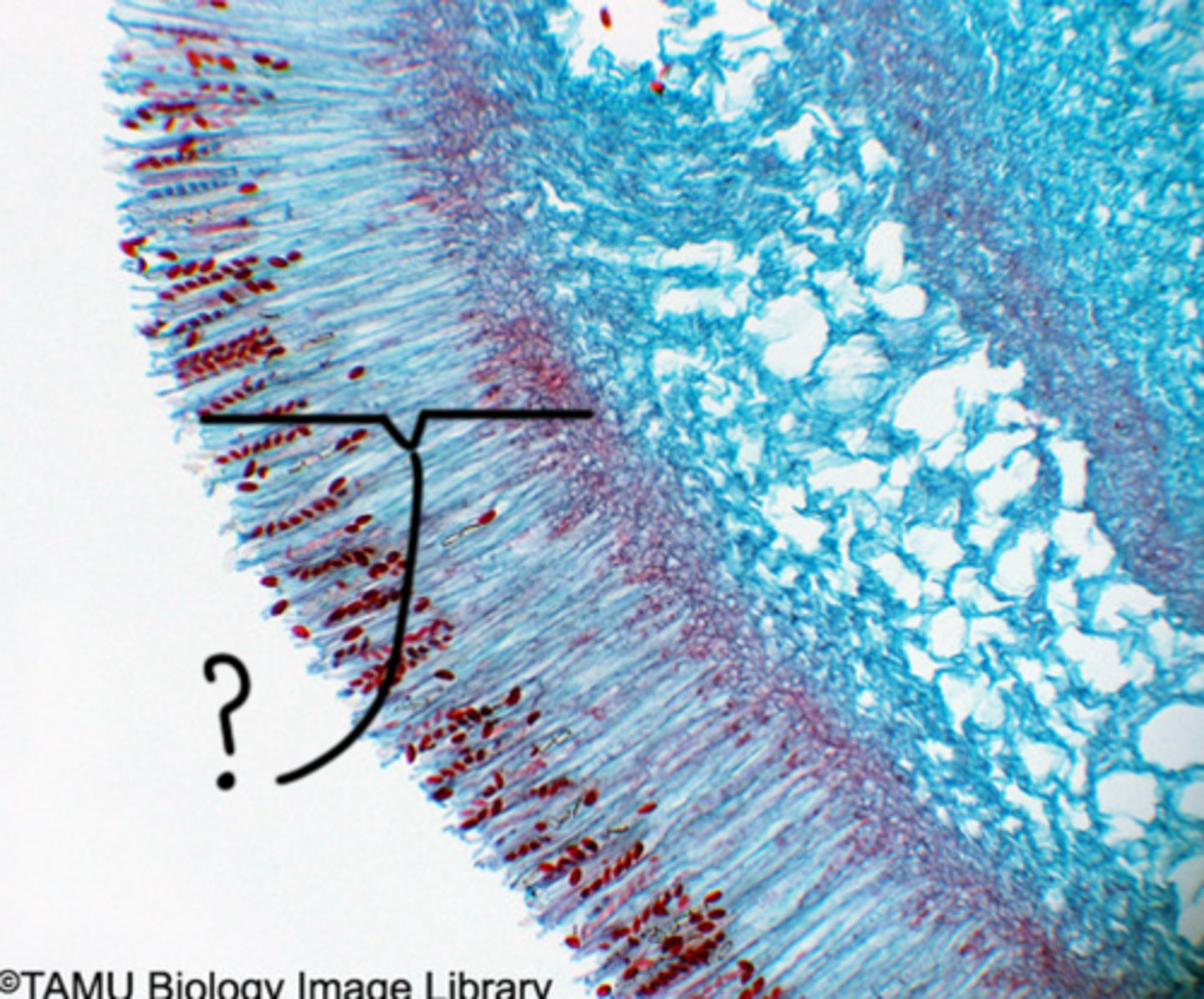
Ascocarp
The fruiting body of an ascomycete fungus, often containing the hymenial layer and developing from the mycelium, serving as a reproductive structure.
Morchella
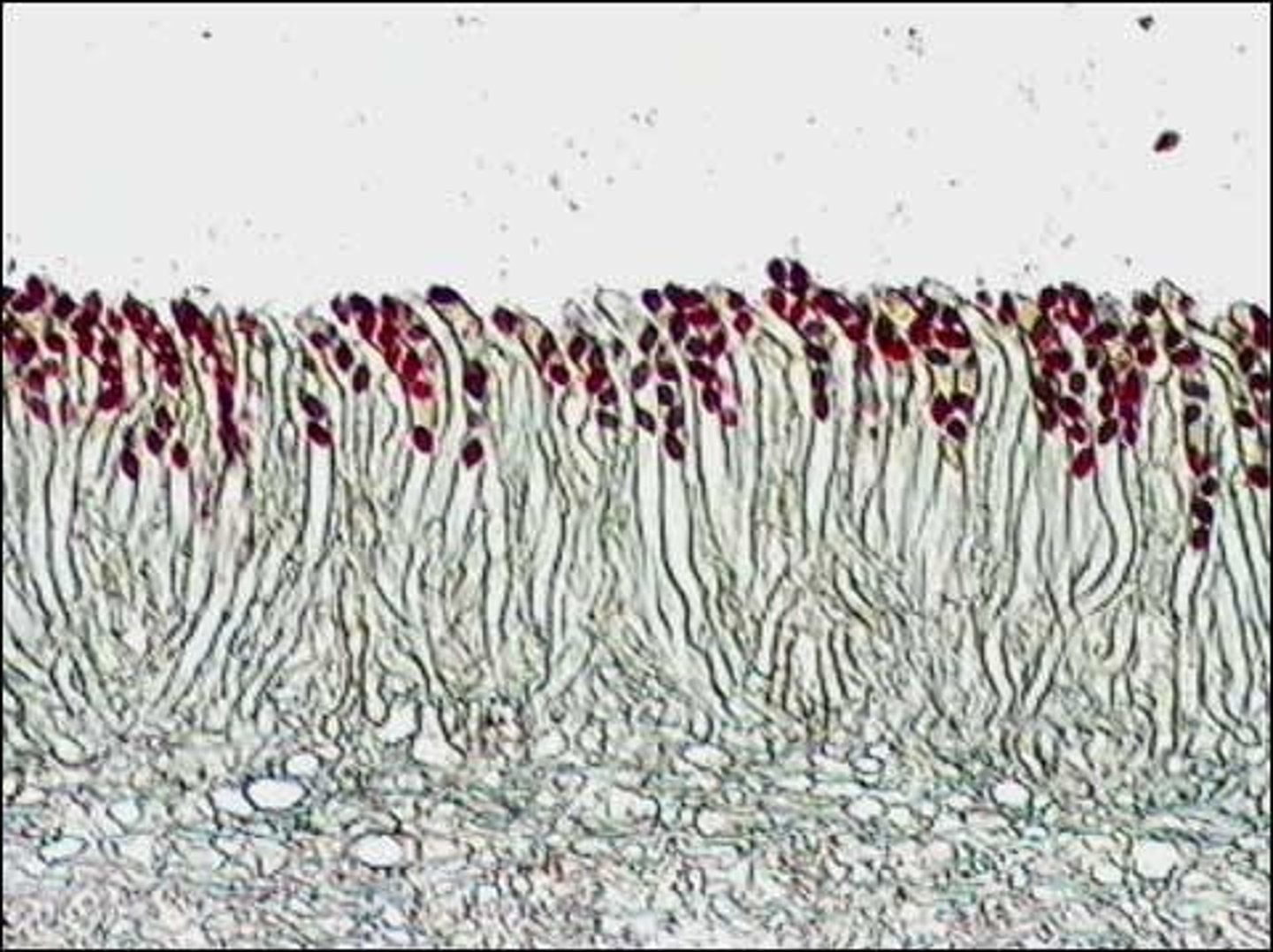
Ascocarp
The fruiting body of an ascomycete fungus, often containing the hymenial layer and developing from the mycelium, serving as a reproductive structure.
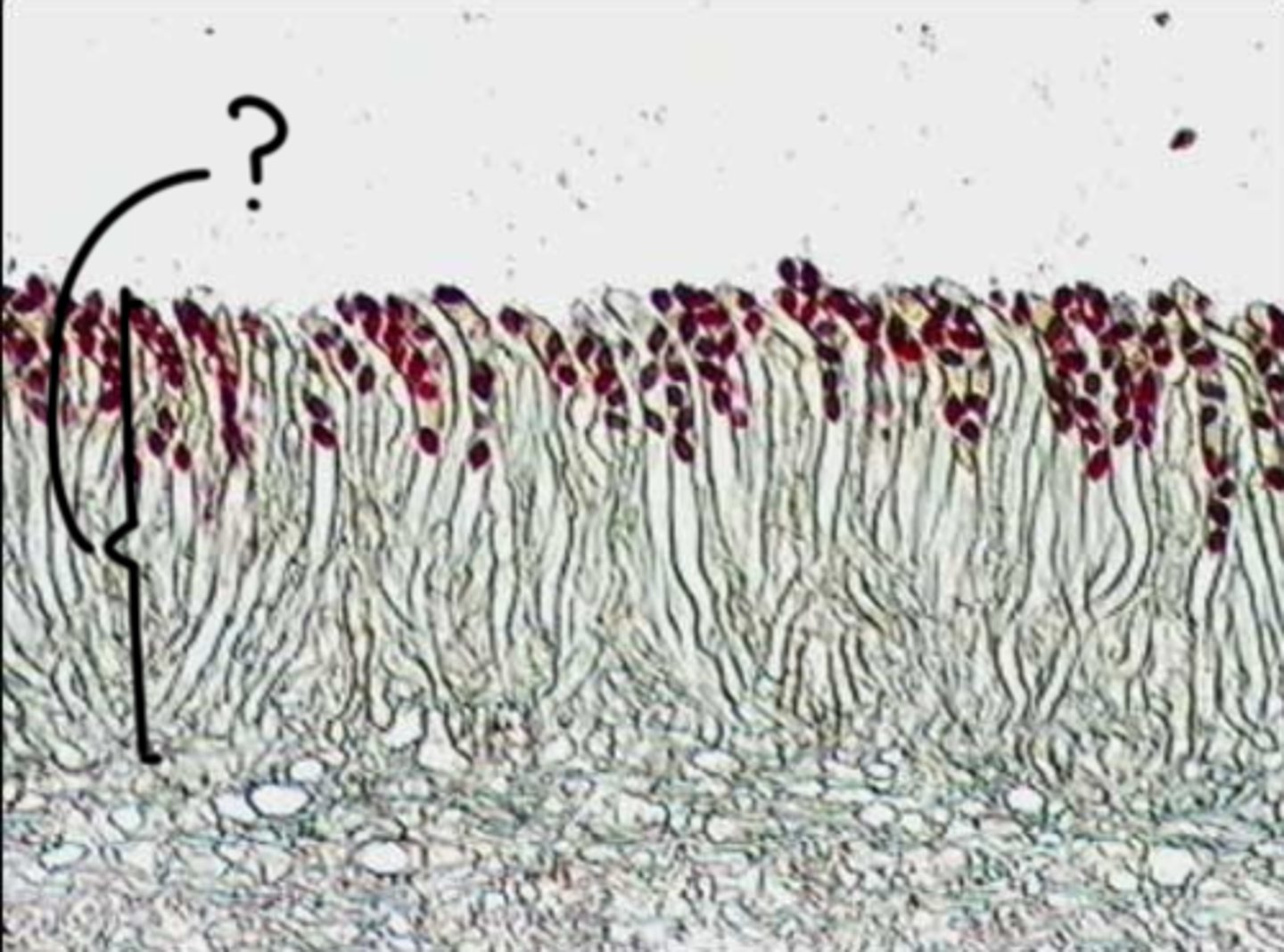
Apothecia
Cup-shaped ascocarps with exposed hymenium found in some ascomycetes, allowing for the dispersal of ascospores.
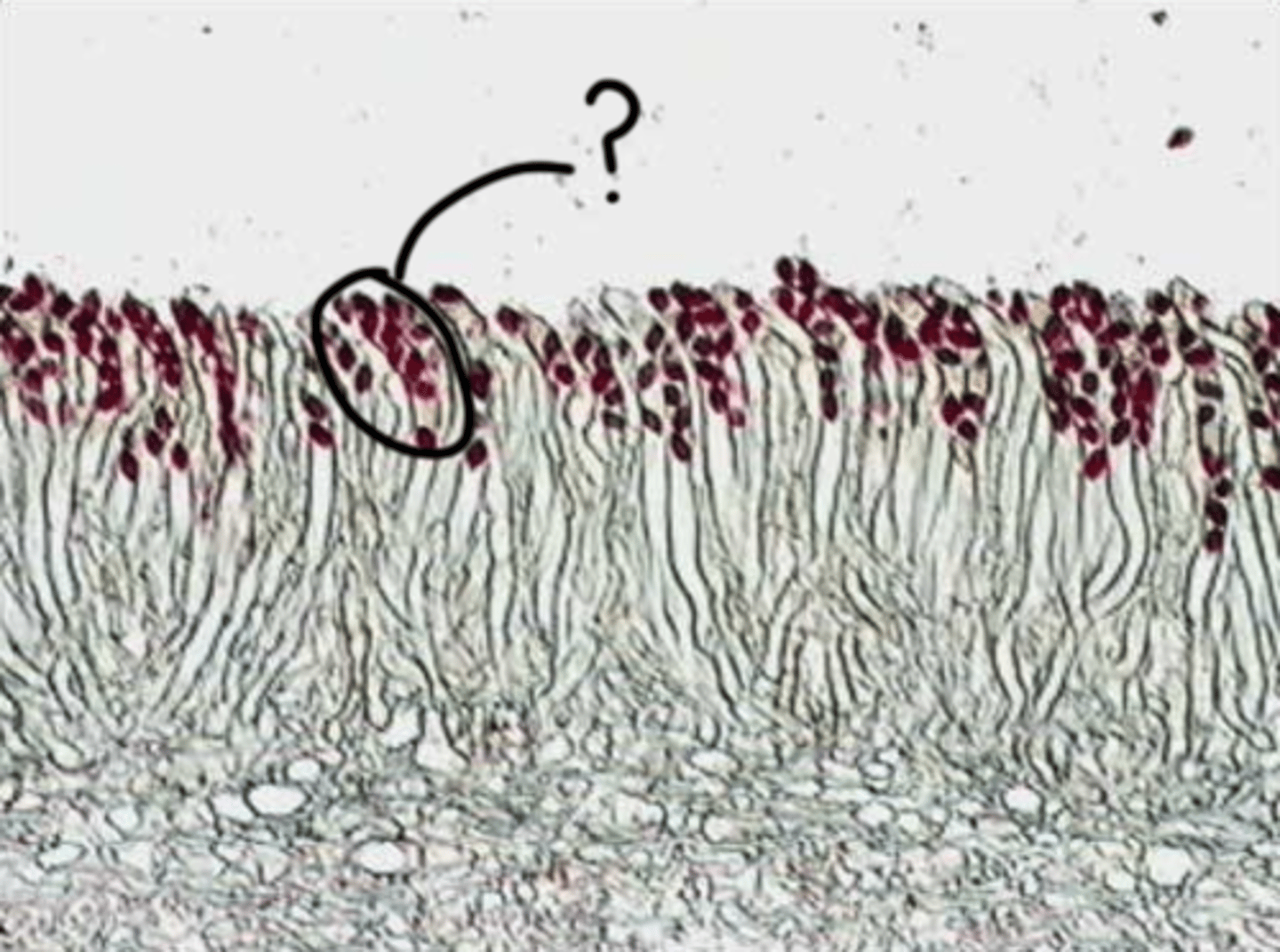
Stipe
A stalk-like structure that supports the cap or fruiting body of some fungi, such as mushrooms, often extending from the substrate or the center of the ascocarp.
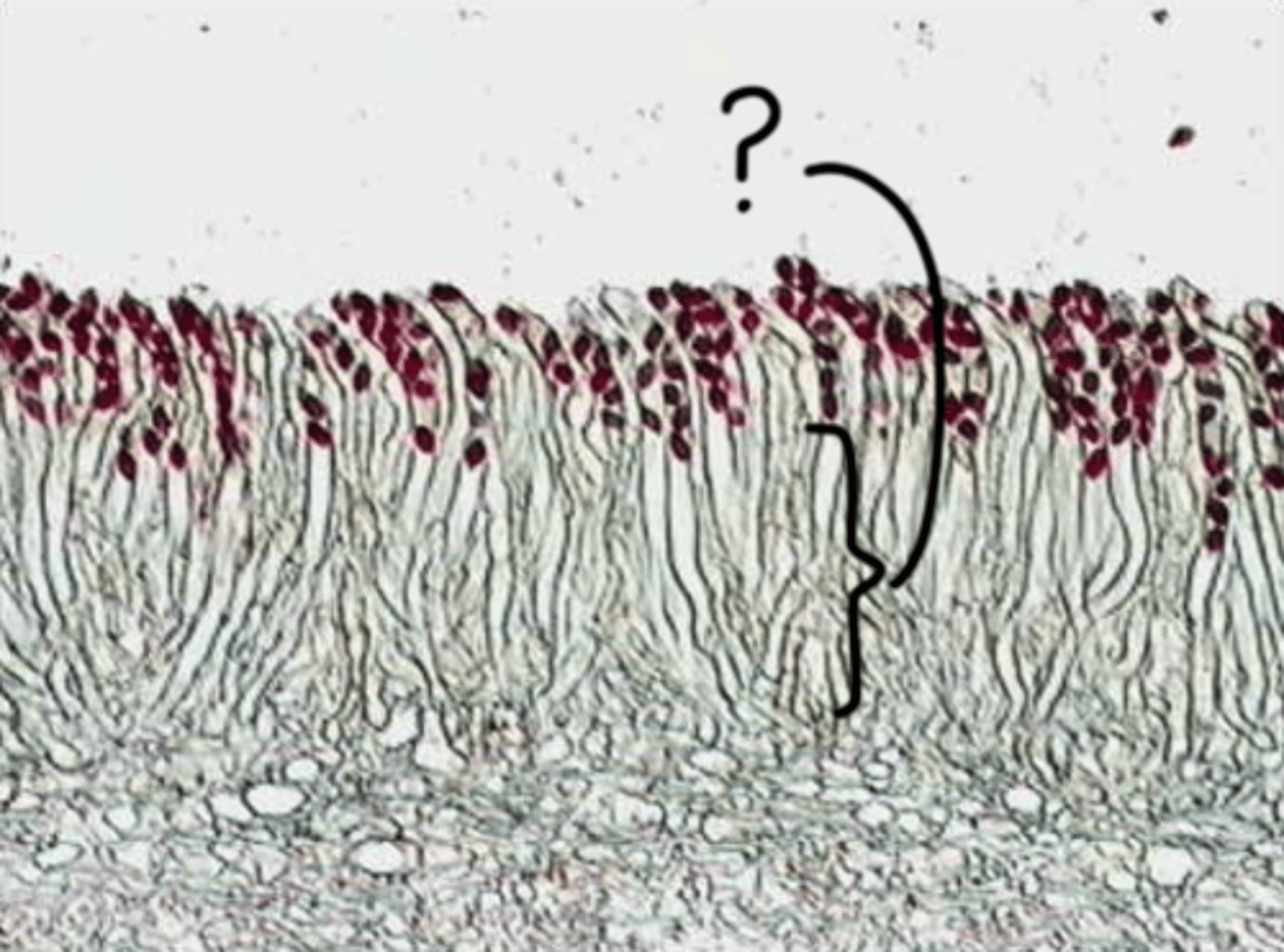
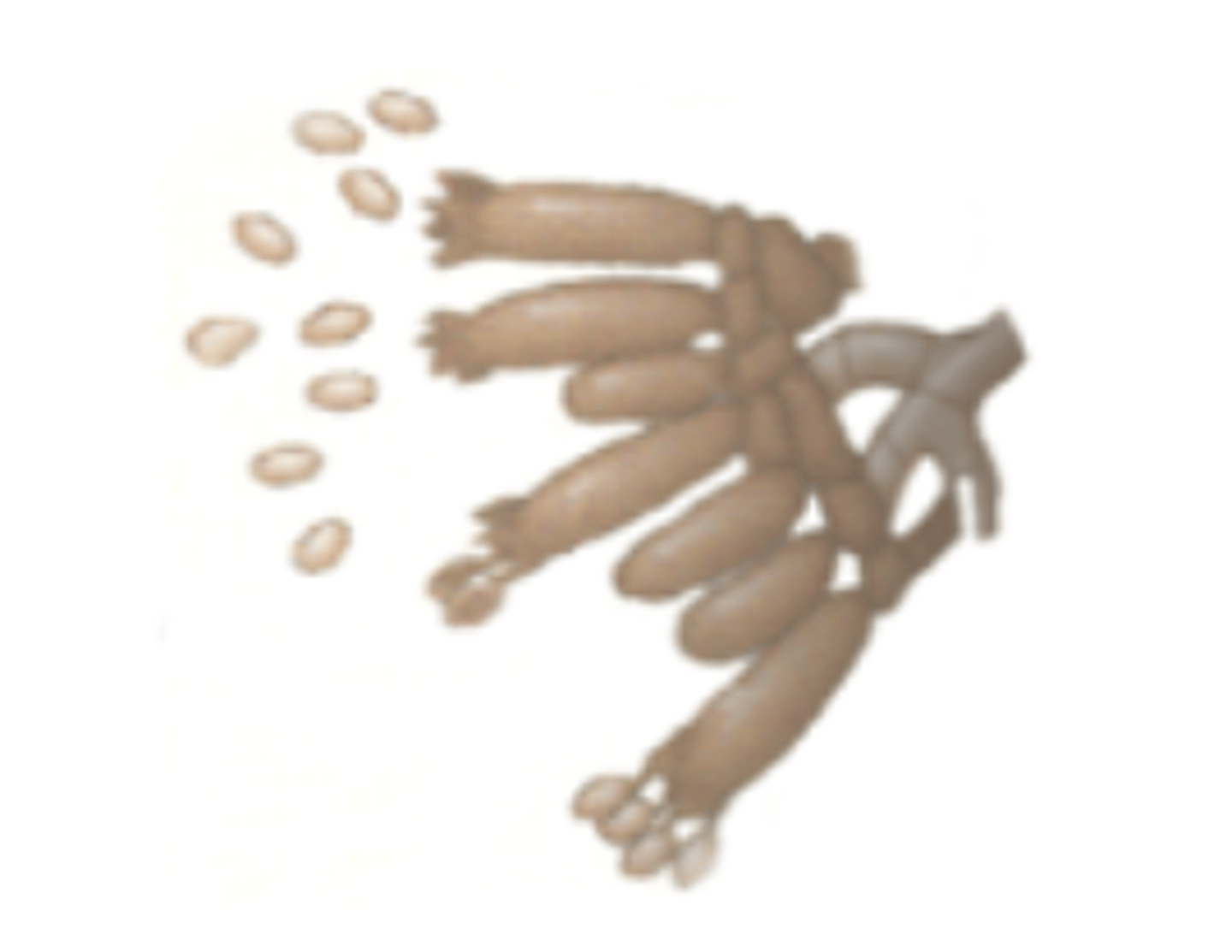
Penicilium (Visual Specimen)
P. chrysogenum (P. notatum)
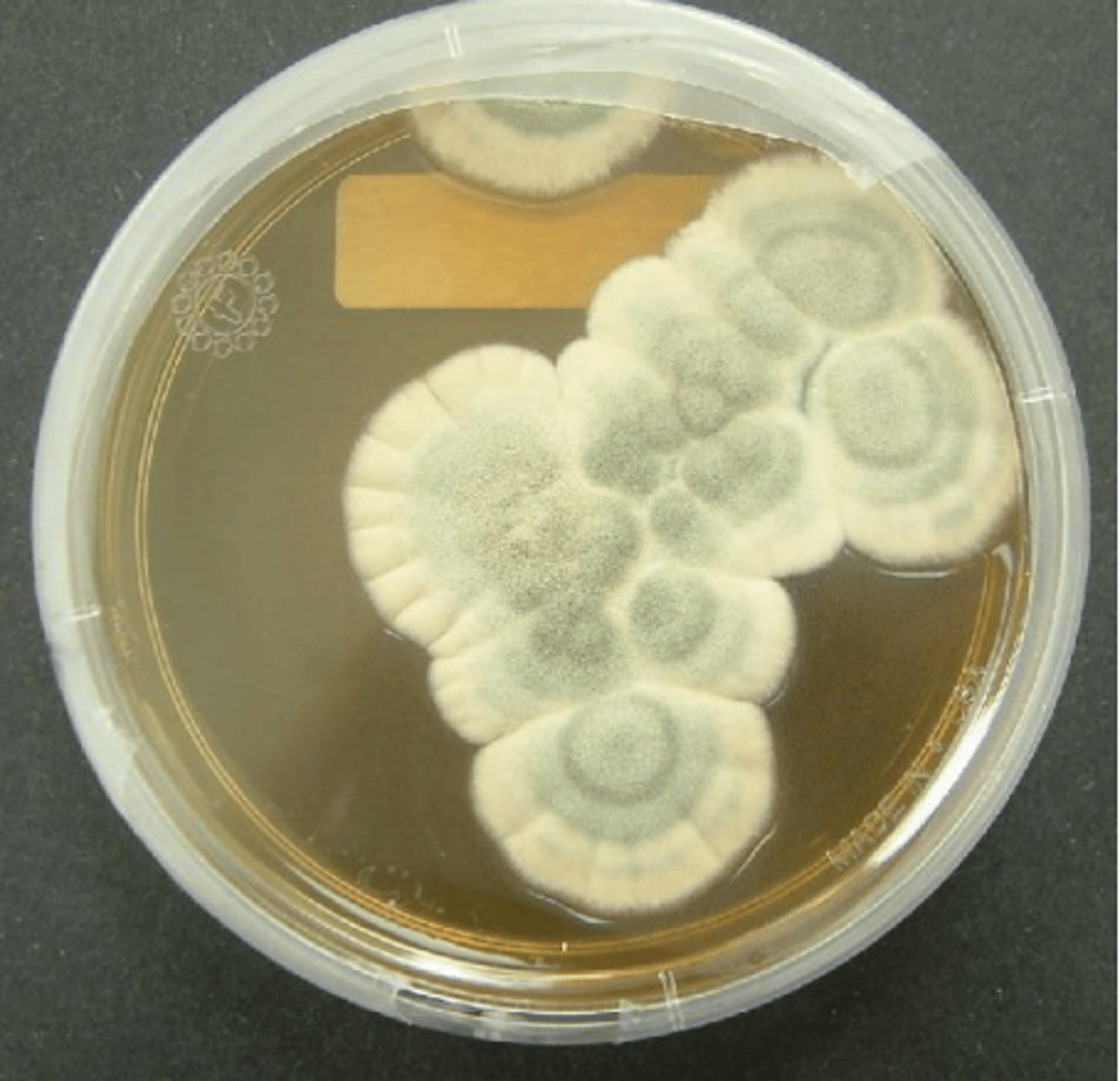
Penicilium
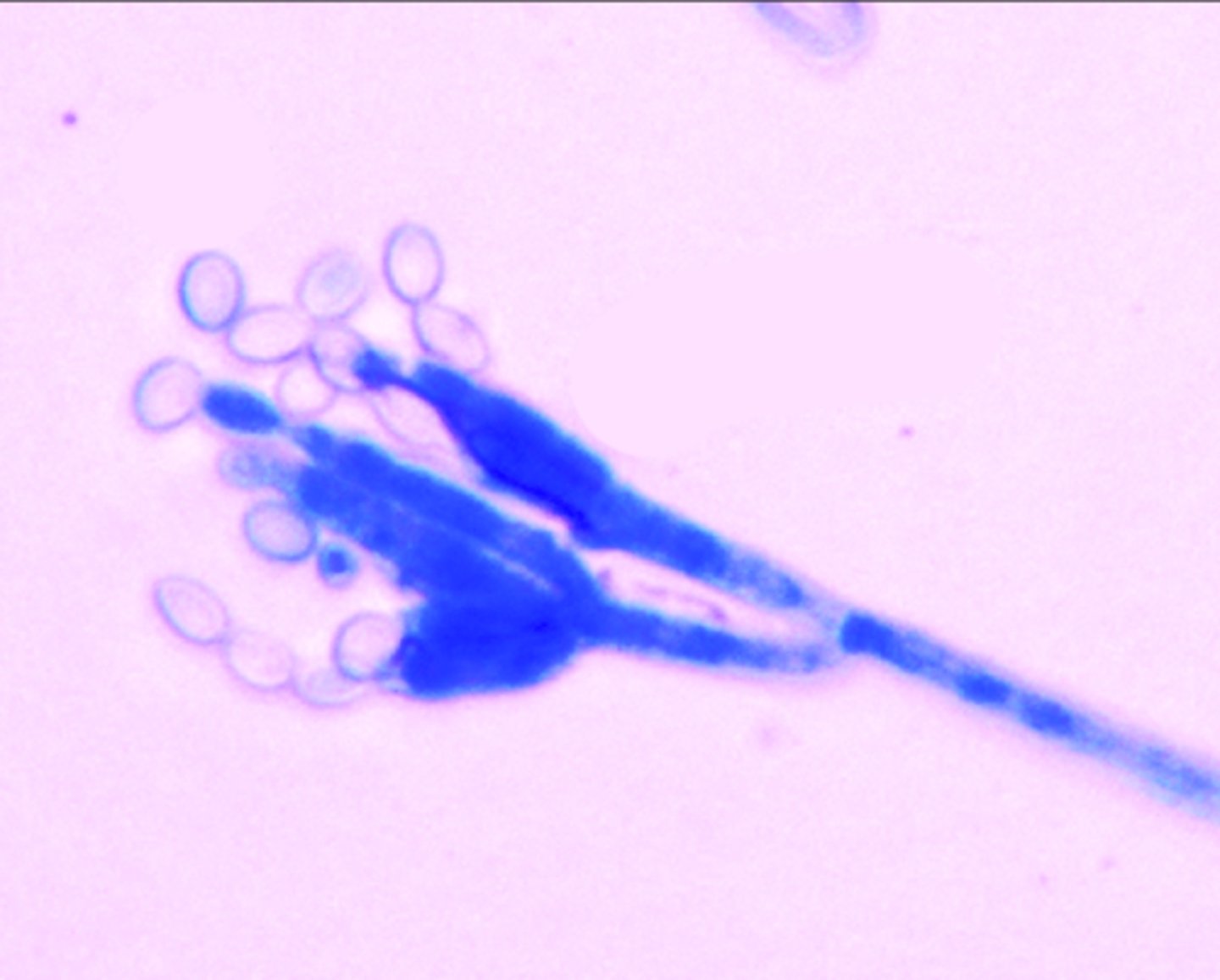
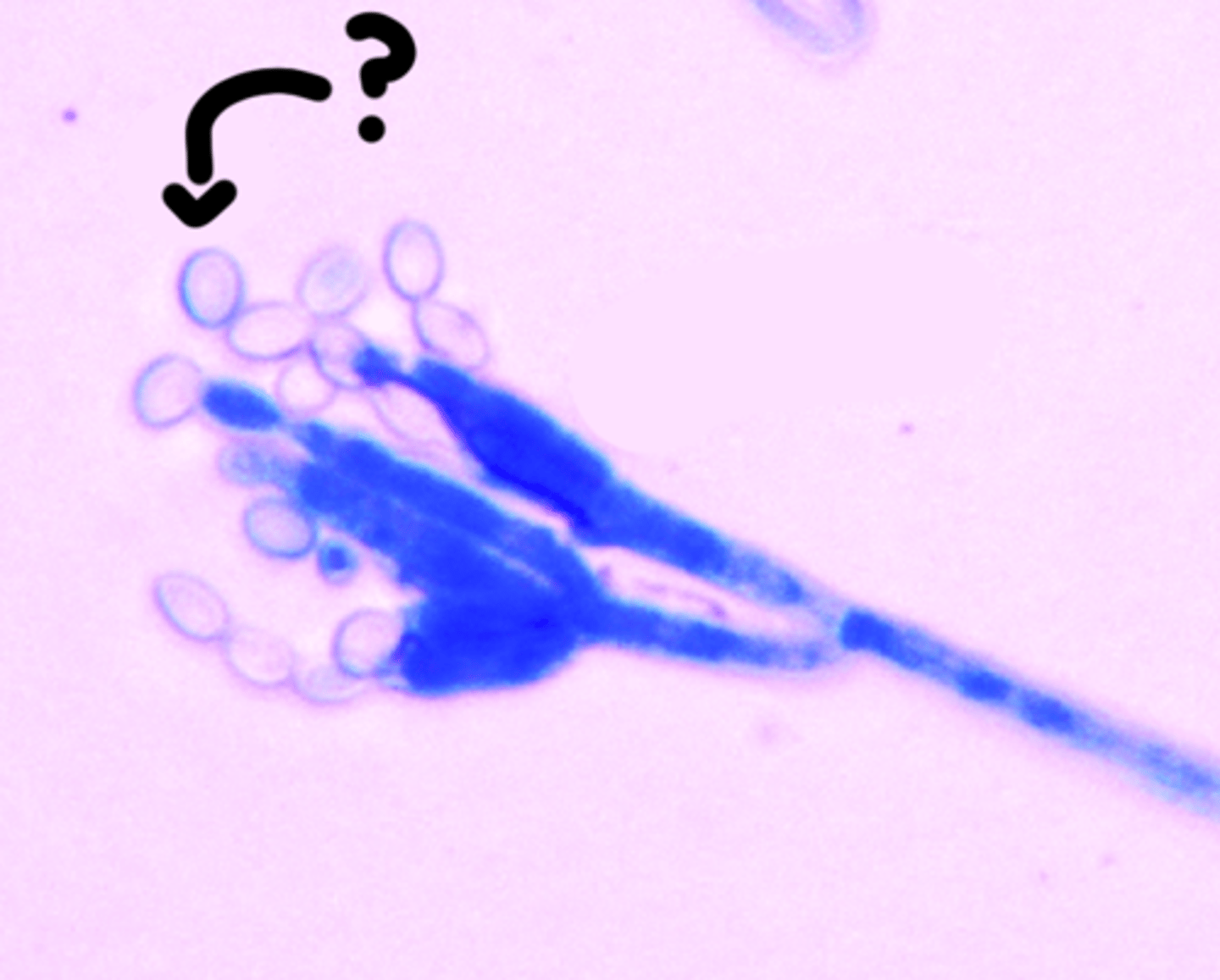
Conidia
Asexual spores produced by fungi through a process called conidiation, typically serving as a means of dispersal and reproduction.
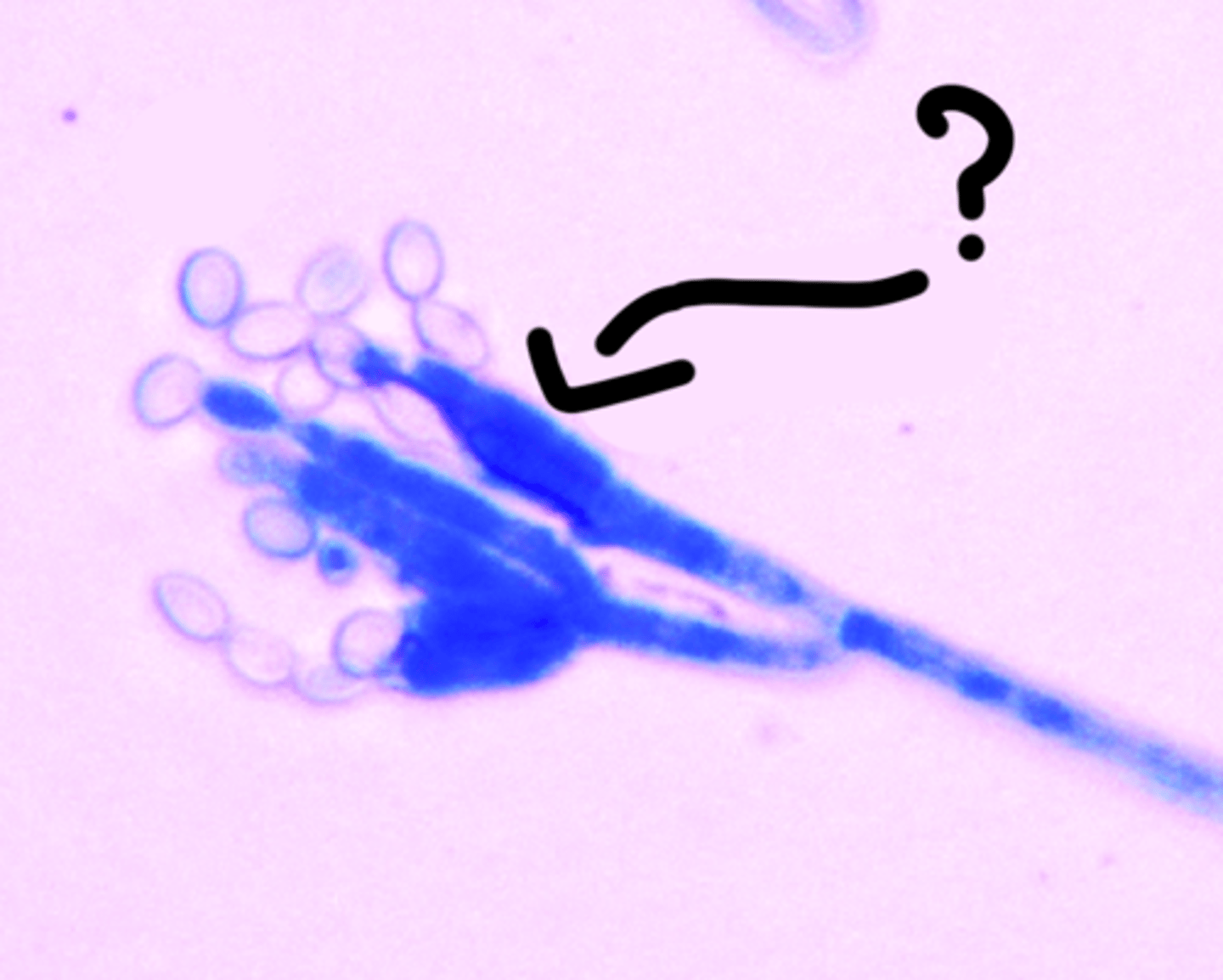
Conidiophore
Specialized hyphal structure found in fungi that produces and bears conidia, often arising from the mycelium or aerial hyphae.
What clade is Coprinus a part of?
Basidiomycetes
What common characteristic do Basidiomycetes share?
Elaborate fruiting body (basidiocarp)containing many basidia that producesexual spores (basidiospores)
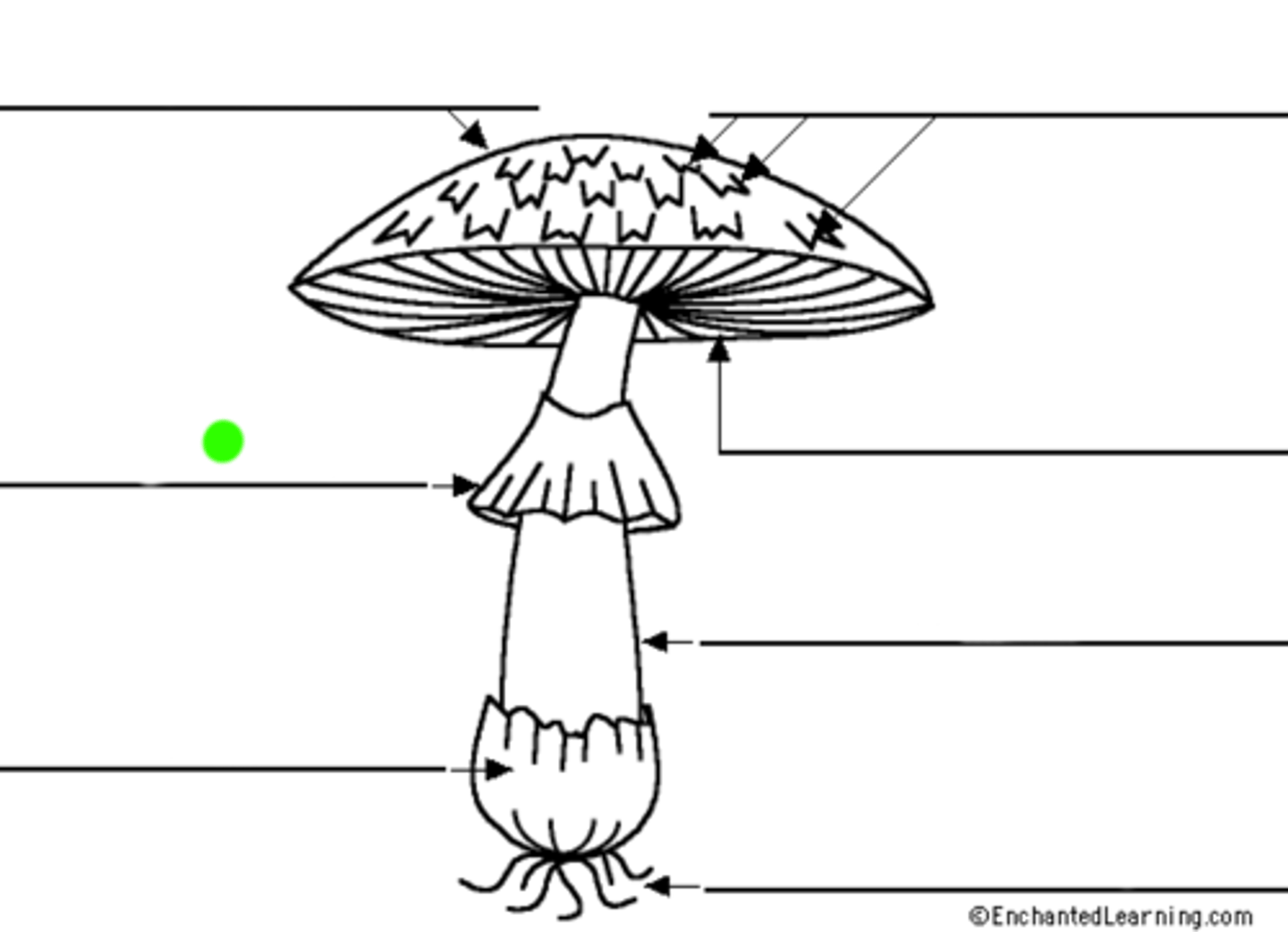
Mushroom
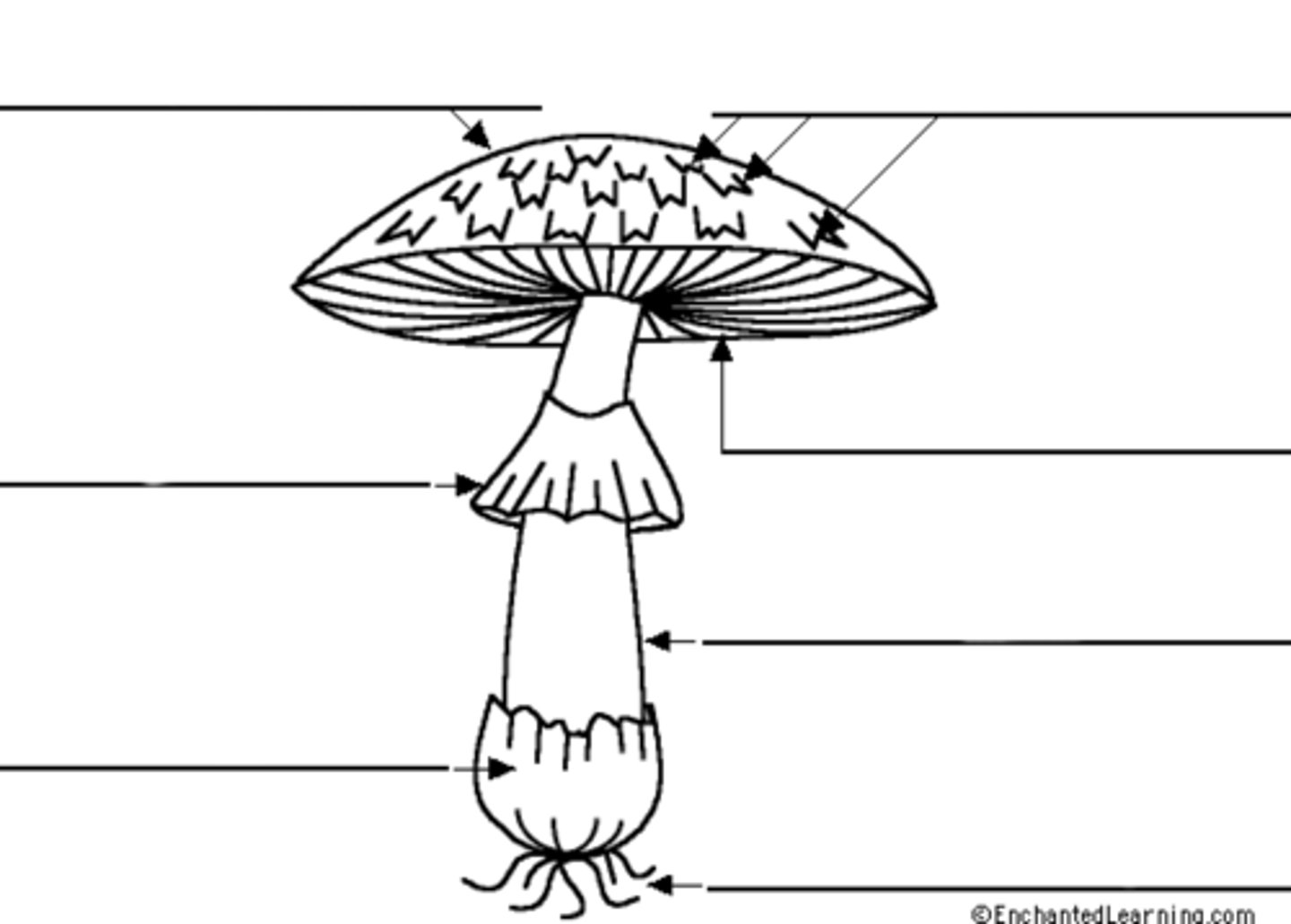
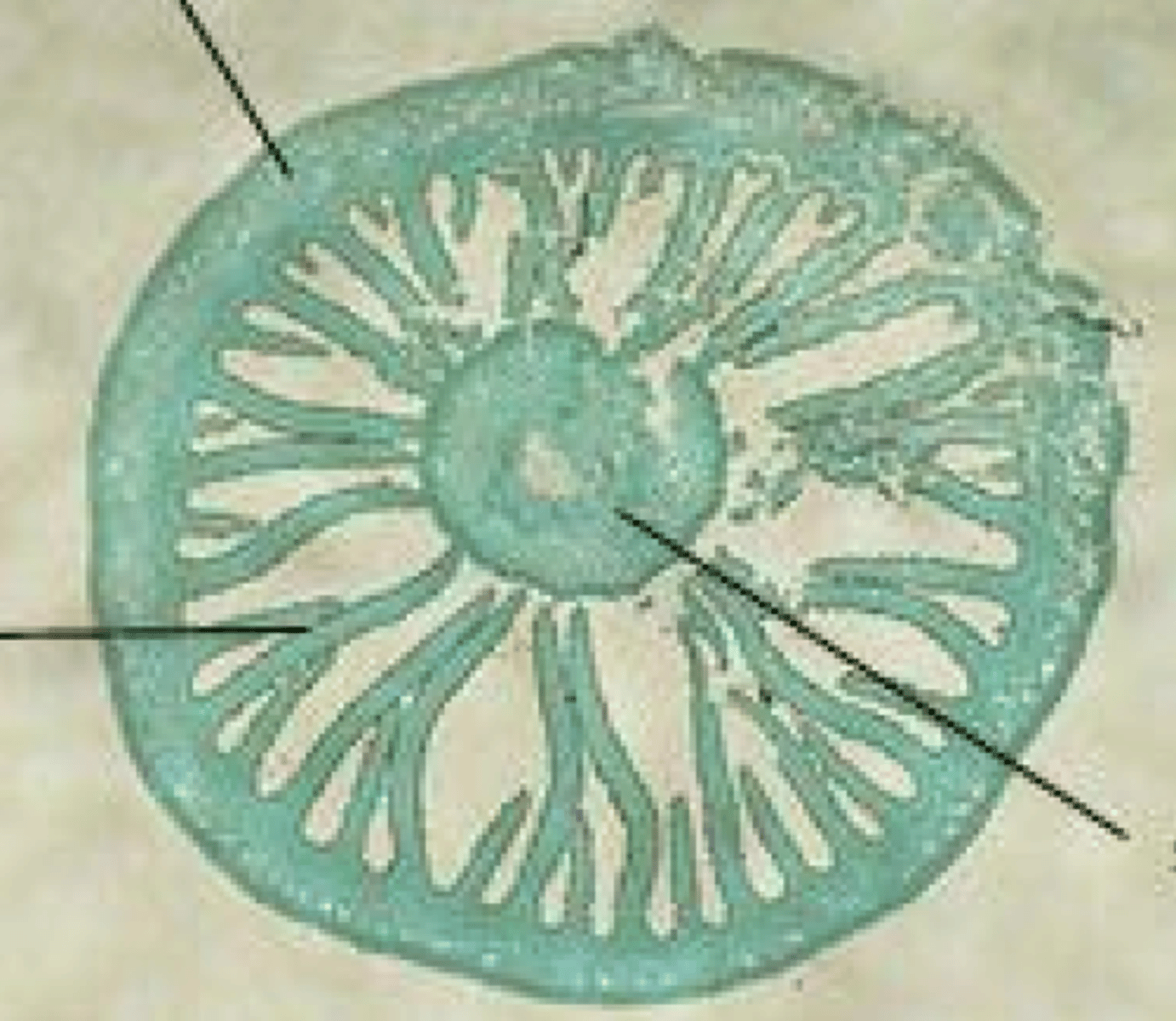
Gills
Thin, parallel, blade-like structures found on the underside of the cap (pileus) of some mushrooms, bearing the reproductive structures (basidia) that produce and release spores.
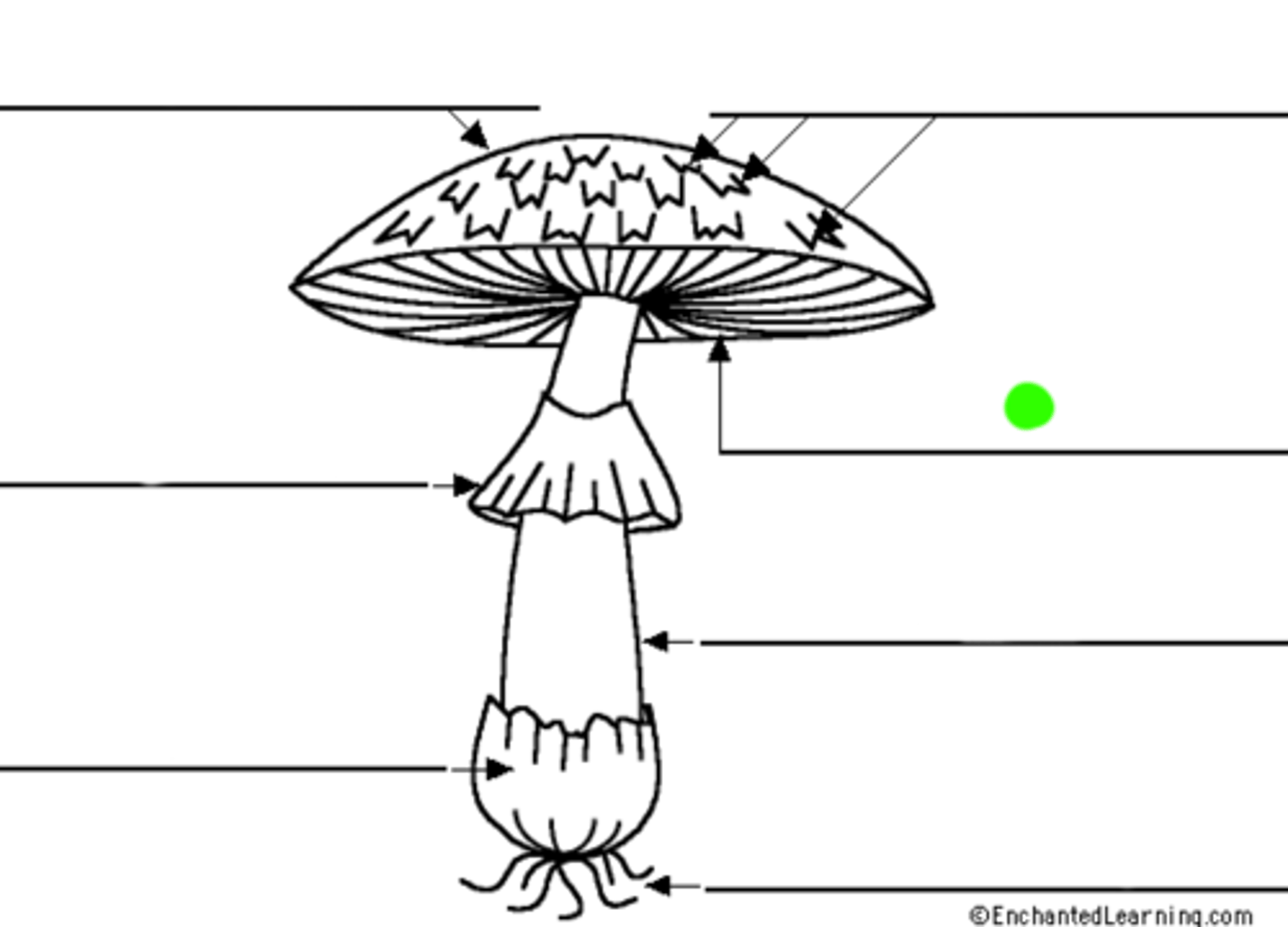
PIleus
The cap-like structure of a mushroom, which typically covers and protects the gills or other reproductive structures, often expanding as the mushroom matures.
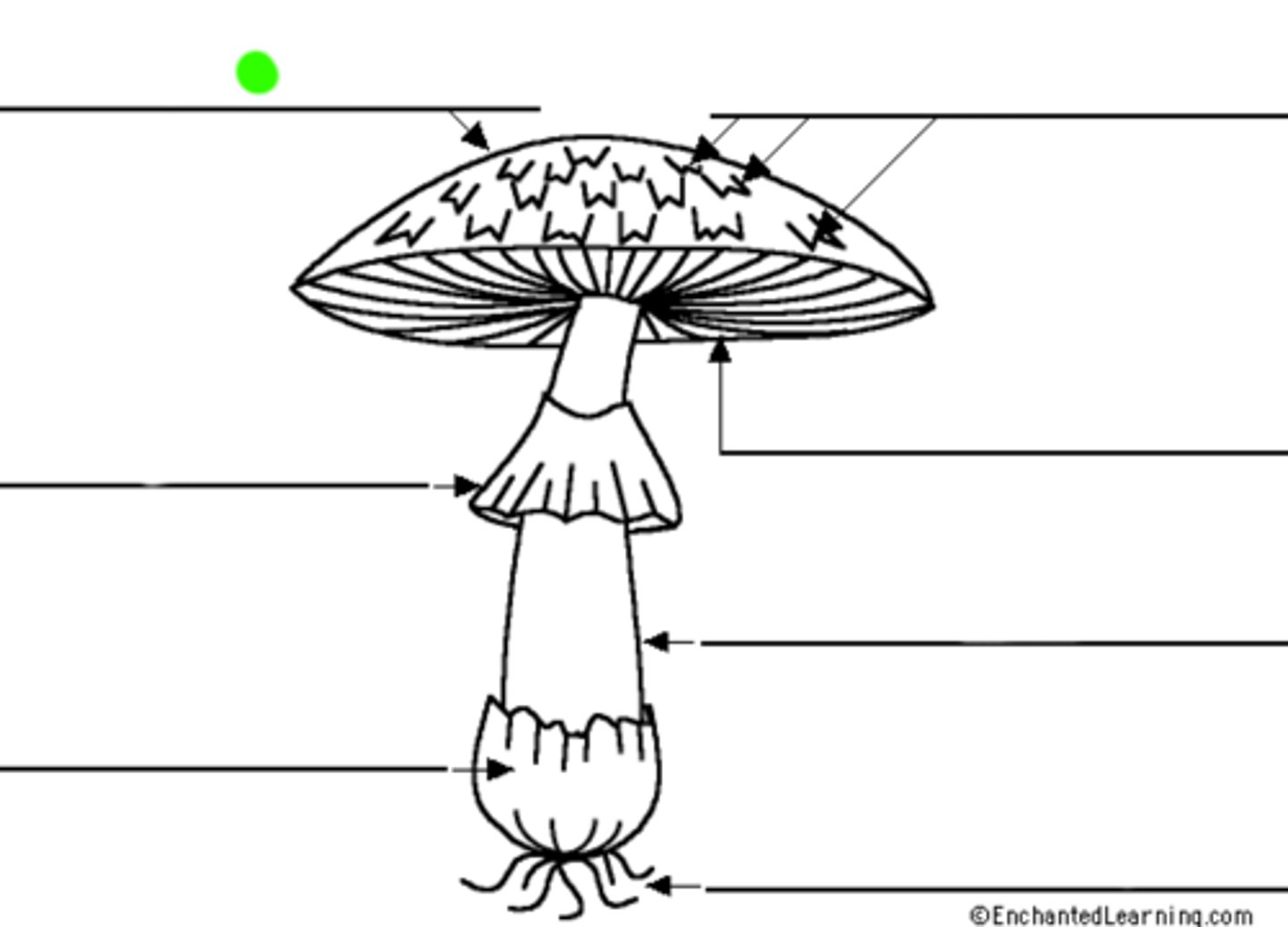
Stipe
A stalk-like structure that supports the cap or fruiting body of some fungi, such as mushrooms, often extending from the substrate or the center of the ascocarp.
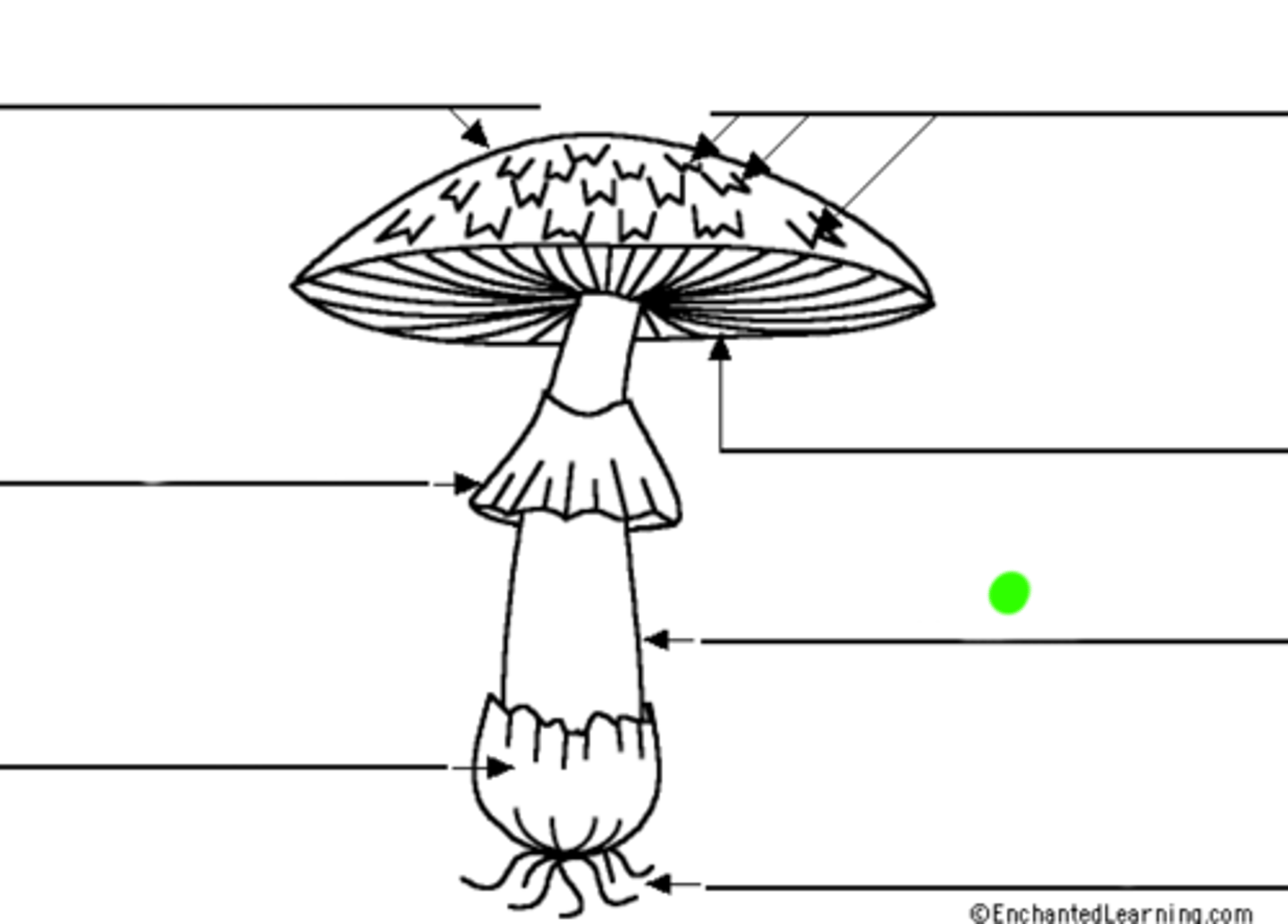
Veil
A membrane-like structure that initially covers and protects the developing gills or other reproductive structures beneath the pileus of certain mushrooms.
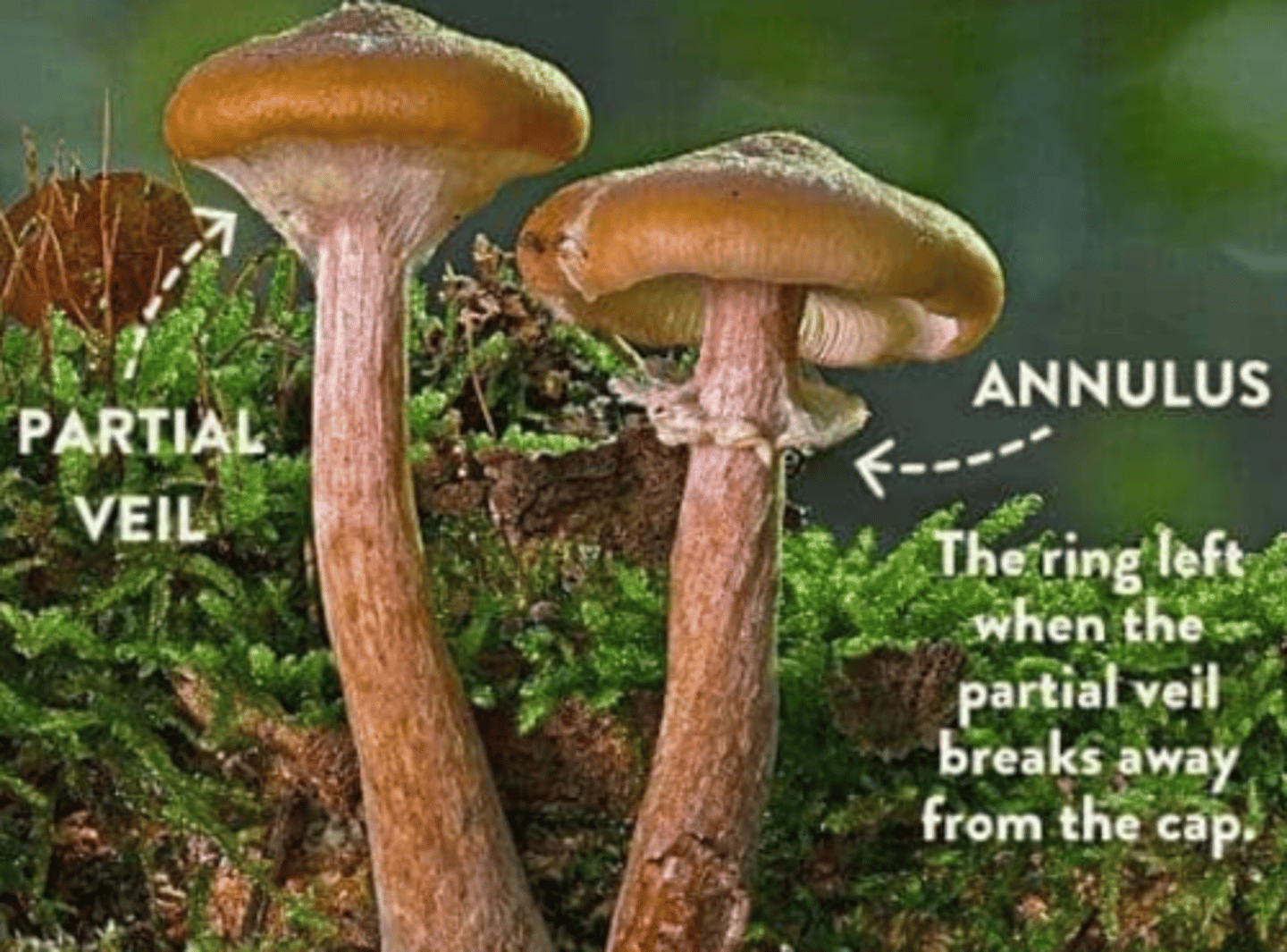
Annulus
A ring-like structure that forms on the stipe of some mushrooms, often as a remnant of the veil, serving various functions such as protecting the gills or aiding in spore dispersal.
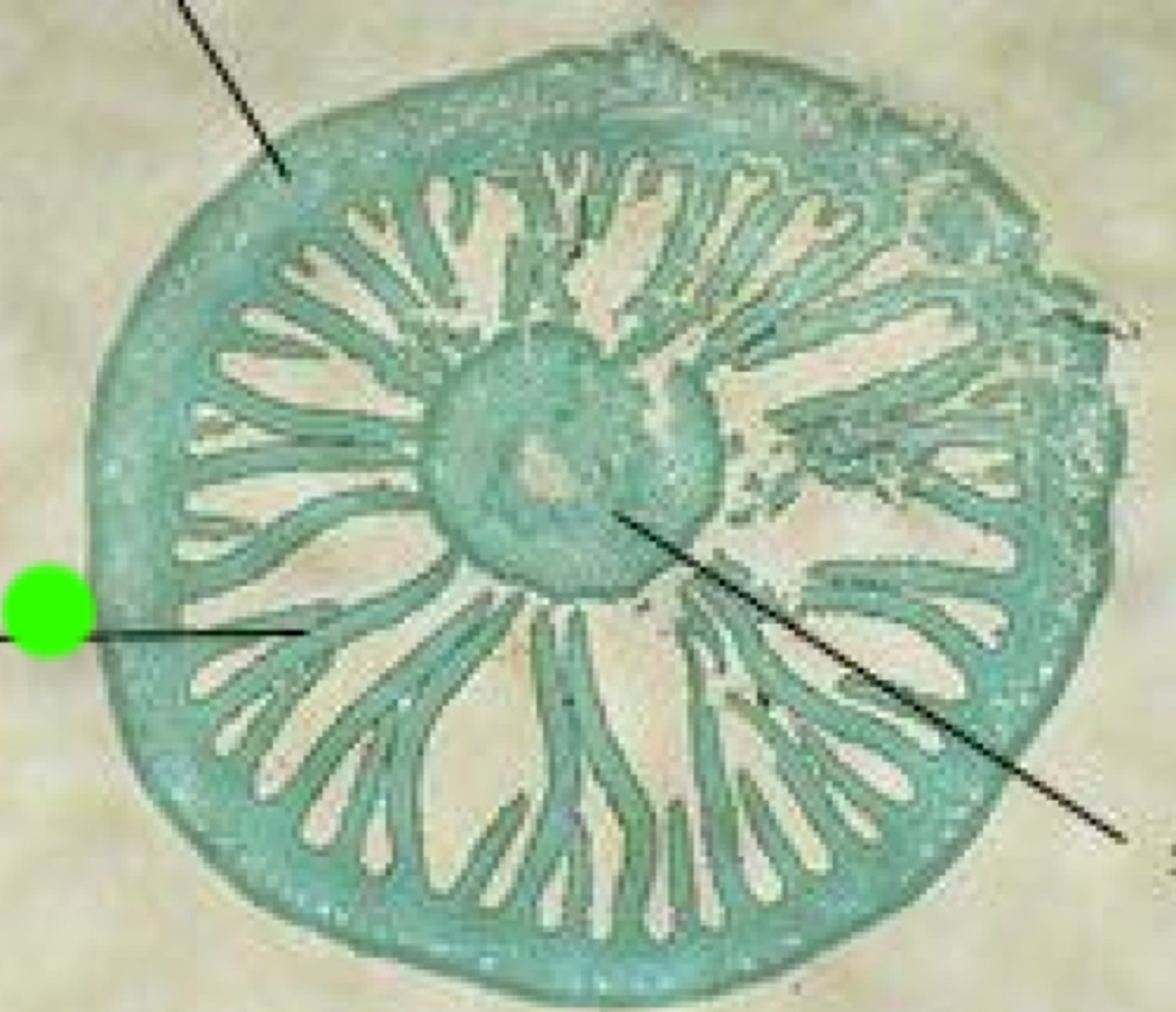
Mushroom Gill
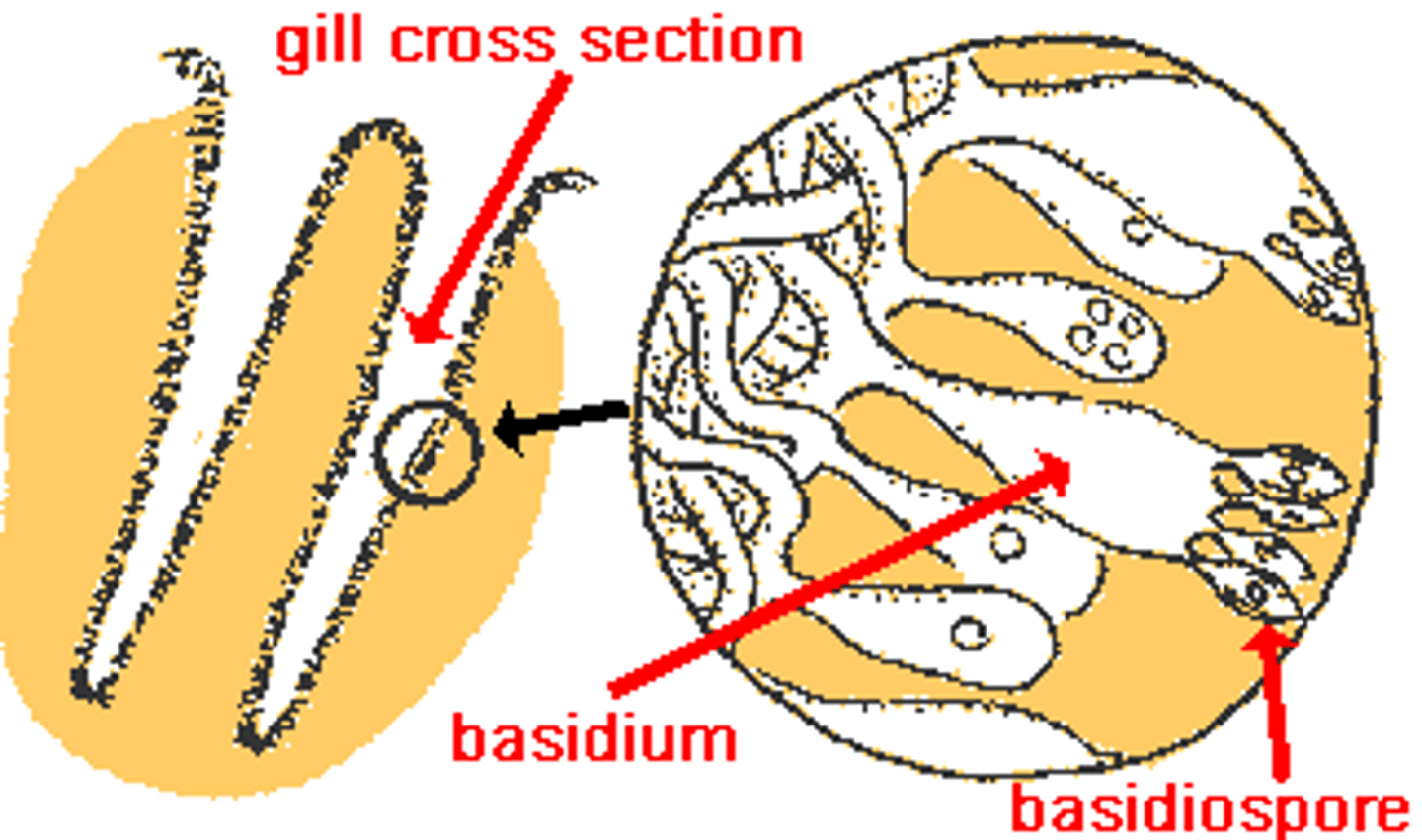
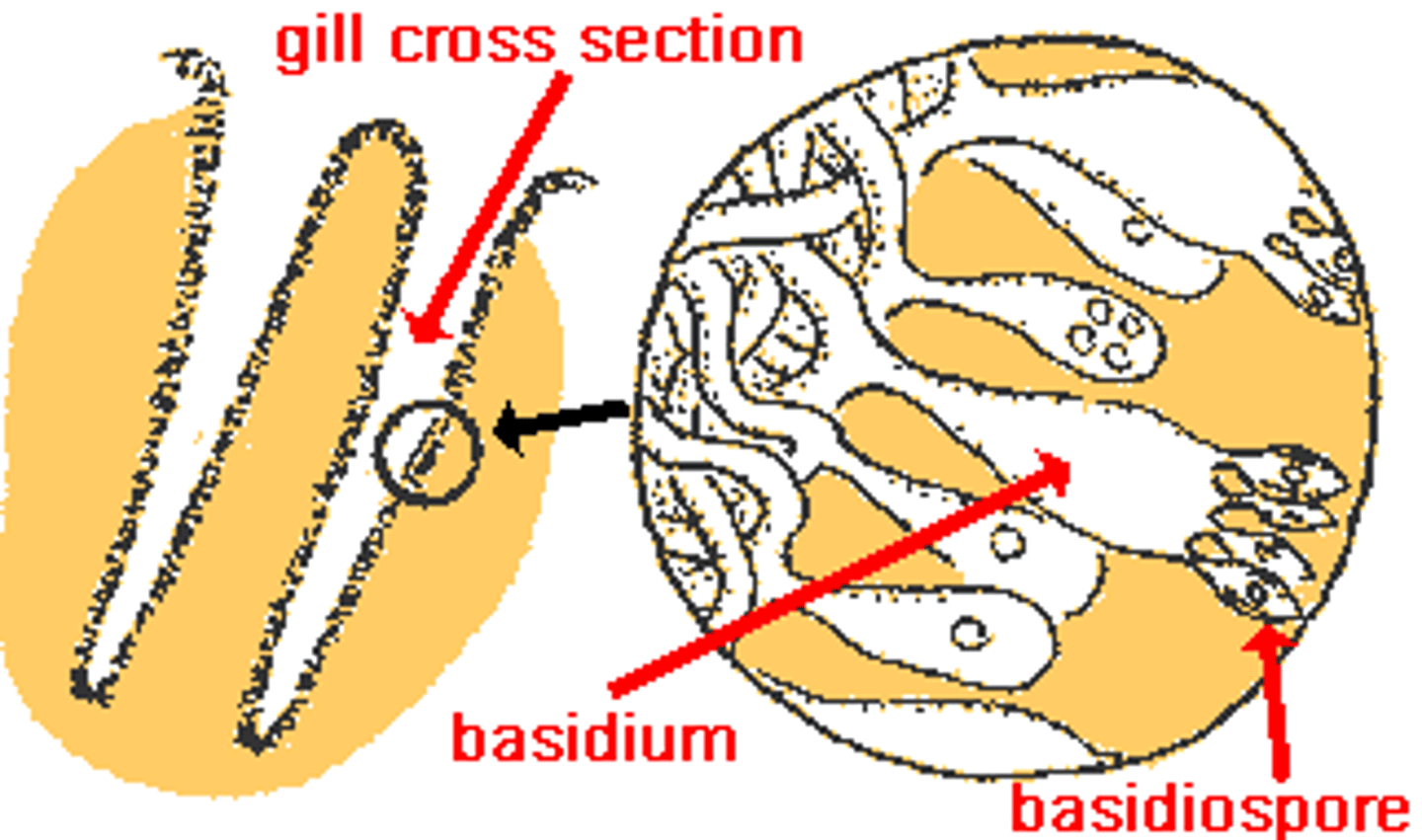
Basidia
Club-shaped reproductive structures found on the gills (or other spore-bearing surfaces) of basidiomycete fungi. Basidia produce and bear basidiospores through meiosis, contributing to the dispersal and reproduction of the fungus.
Gills
Thin, parallel, blade-like structures found on the underside of the cap (pileus) of some mushrooms, bearing the reproductive structures (basidia) that produce and release spores.
Basidiospore
Spores produced by basidia through the process of meiosis. Basidiospores are typically forcibly discharged from the basidia and are responsible for the dispersal and reproduction of basidiomycete fungi.
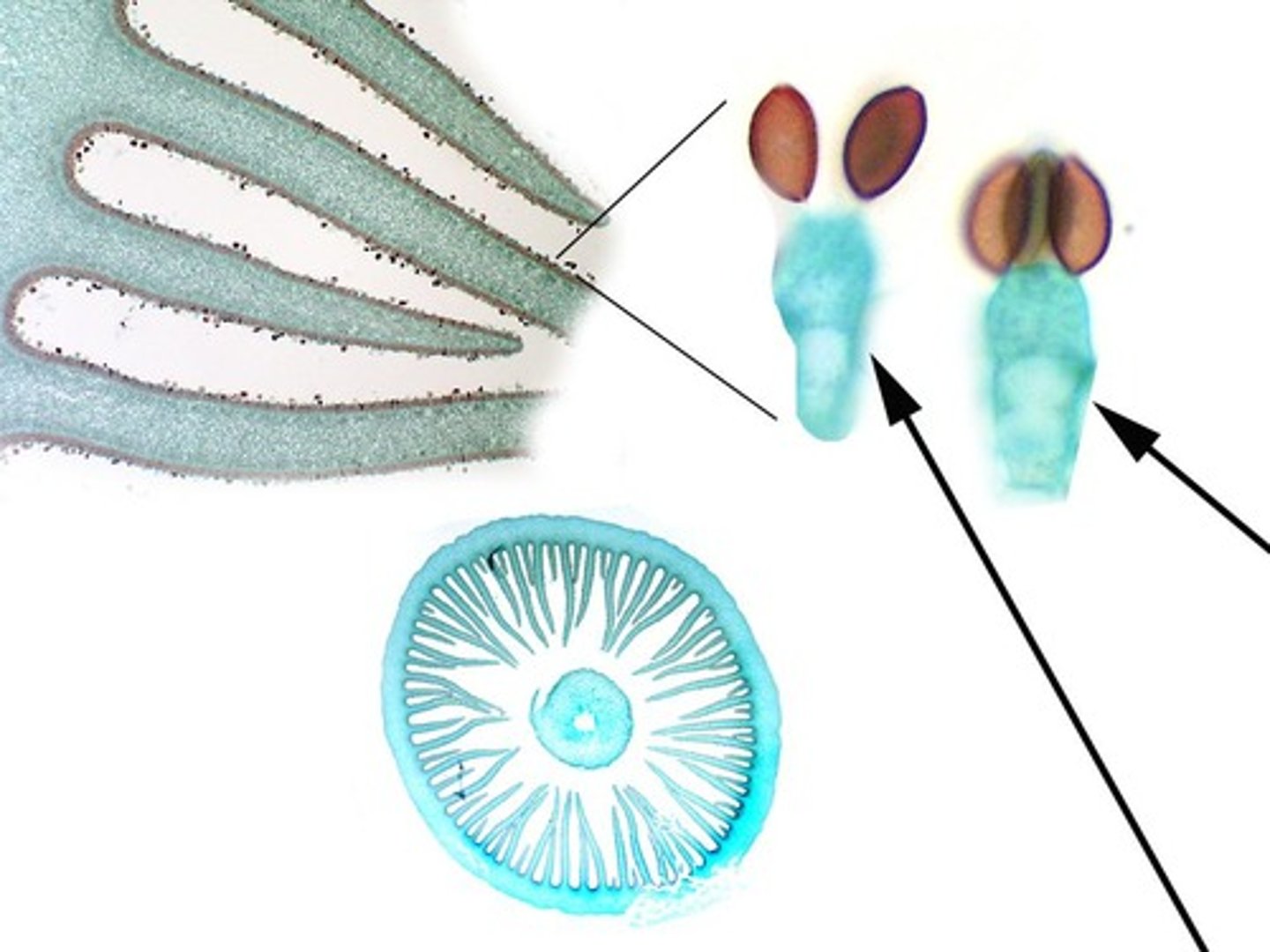
Coprinus
Same terminology from mushroom transfers over (Coprinus is a genus of a mushroom species)
What is a Fungal Symbionts
Fungal symbionts are fungi that form mutually beneficial relationships with other organisms, such as plants or algae, exchanging nutrients and services for resources or protection.
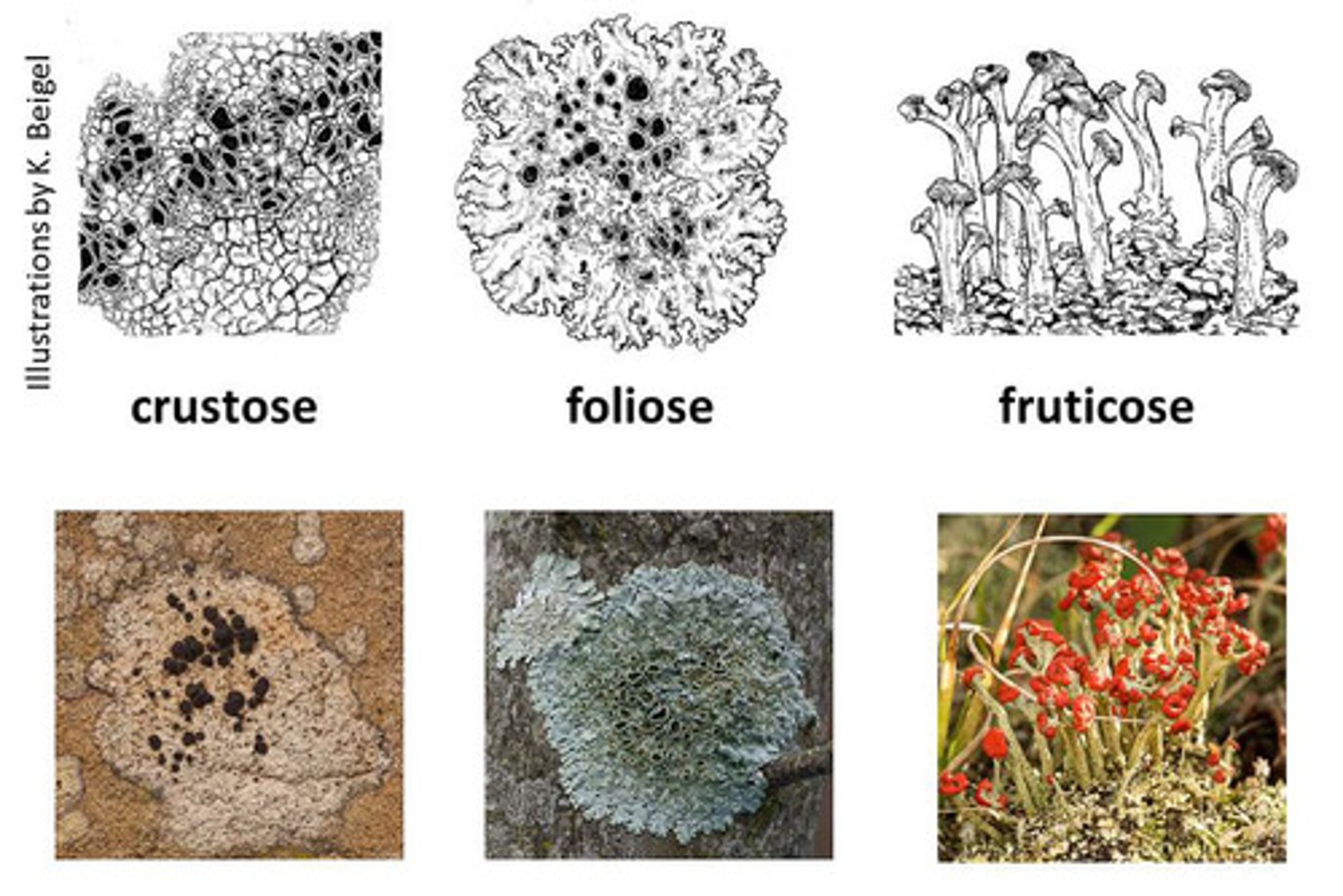
Lichen
Crustose: Lichens with a crust-like growth form that adhere tightly to the substrate, often appearing flat or slightly raised. (Flat crusty)
Foliose: Lichens with a leaf-like growth form, typically consisting of lobes or leaf-like structures that are loosely attached to the substrate. (Leafy)
Fruticose: Lichens with a branching or upright growth form, resembling small shrubs or bushes.(3-D)
Pendant fruticose: Fruticose lichens that hang downward like small branches, often found in pendant or hanging formations.(3-D, hanging)
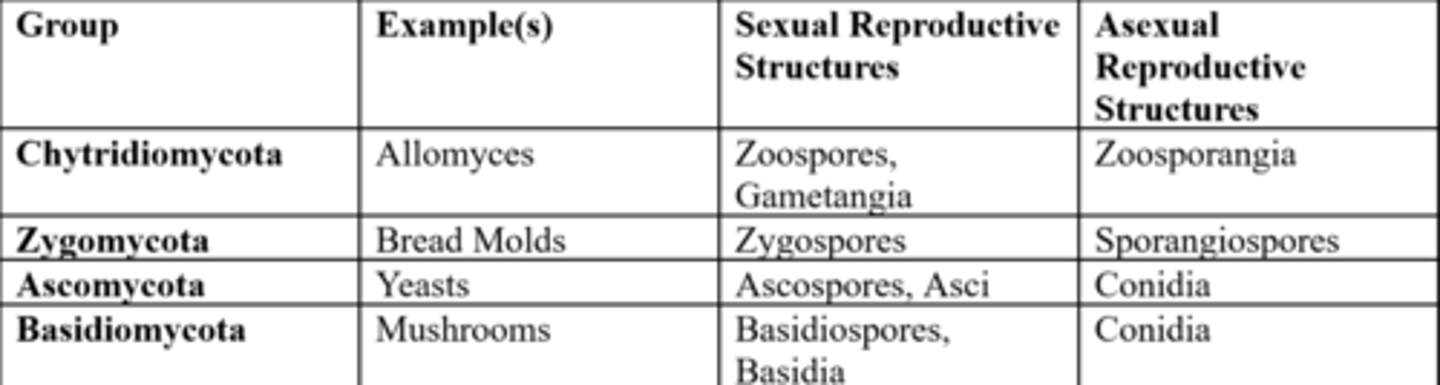
Fungi Table
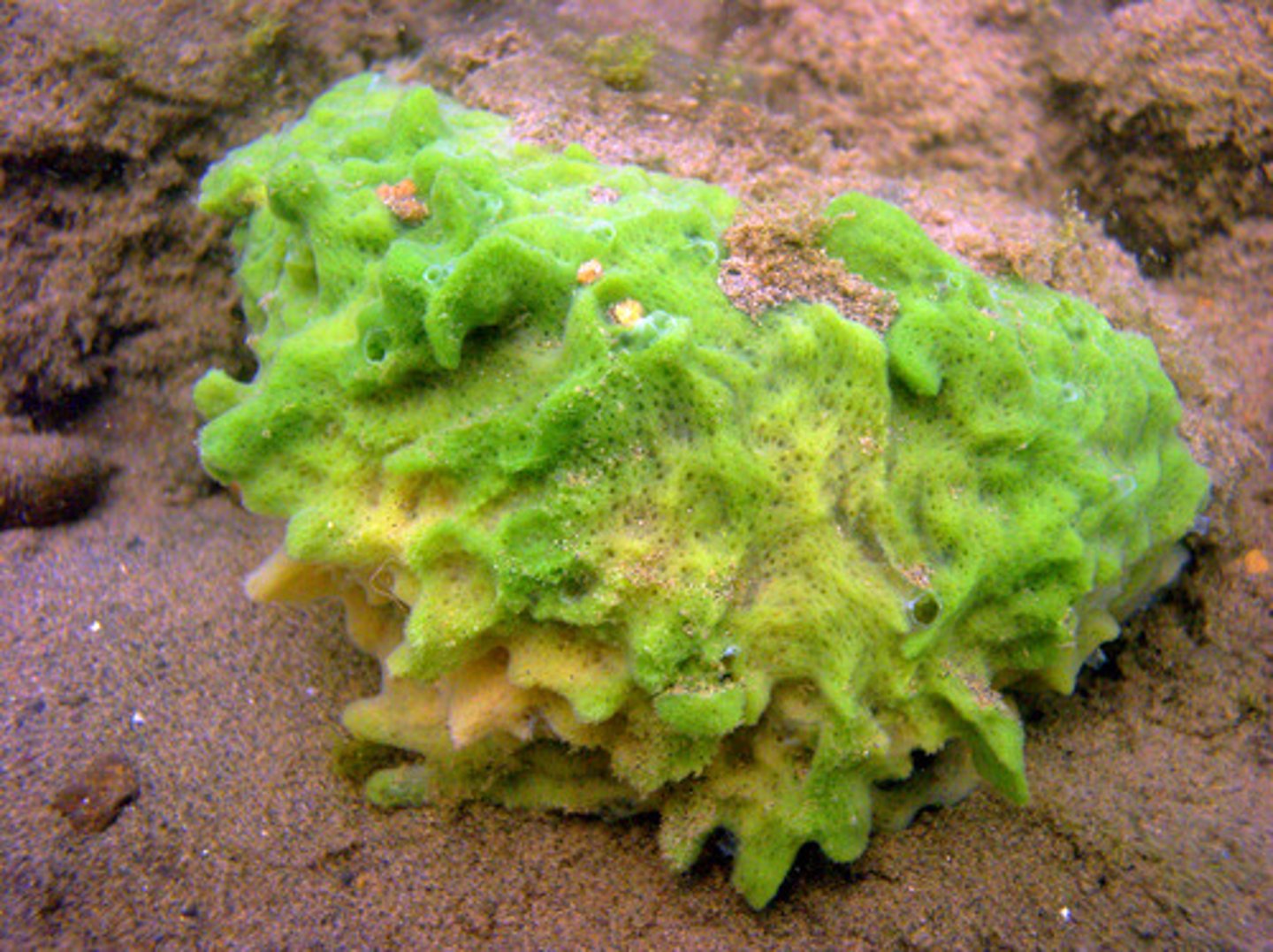
What clade are Spongilla, Grantia, commercial bath sponge, Leucosolenia and Euplectella a part of?
Porifera
What are Porifera known for?
Sponges are sessile with porous bodies and choanocytes
Spongilla
Freshwater Sponge
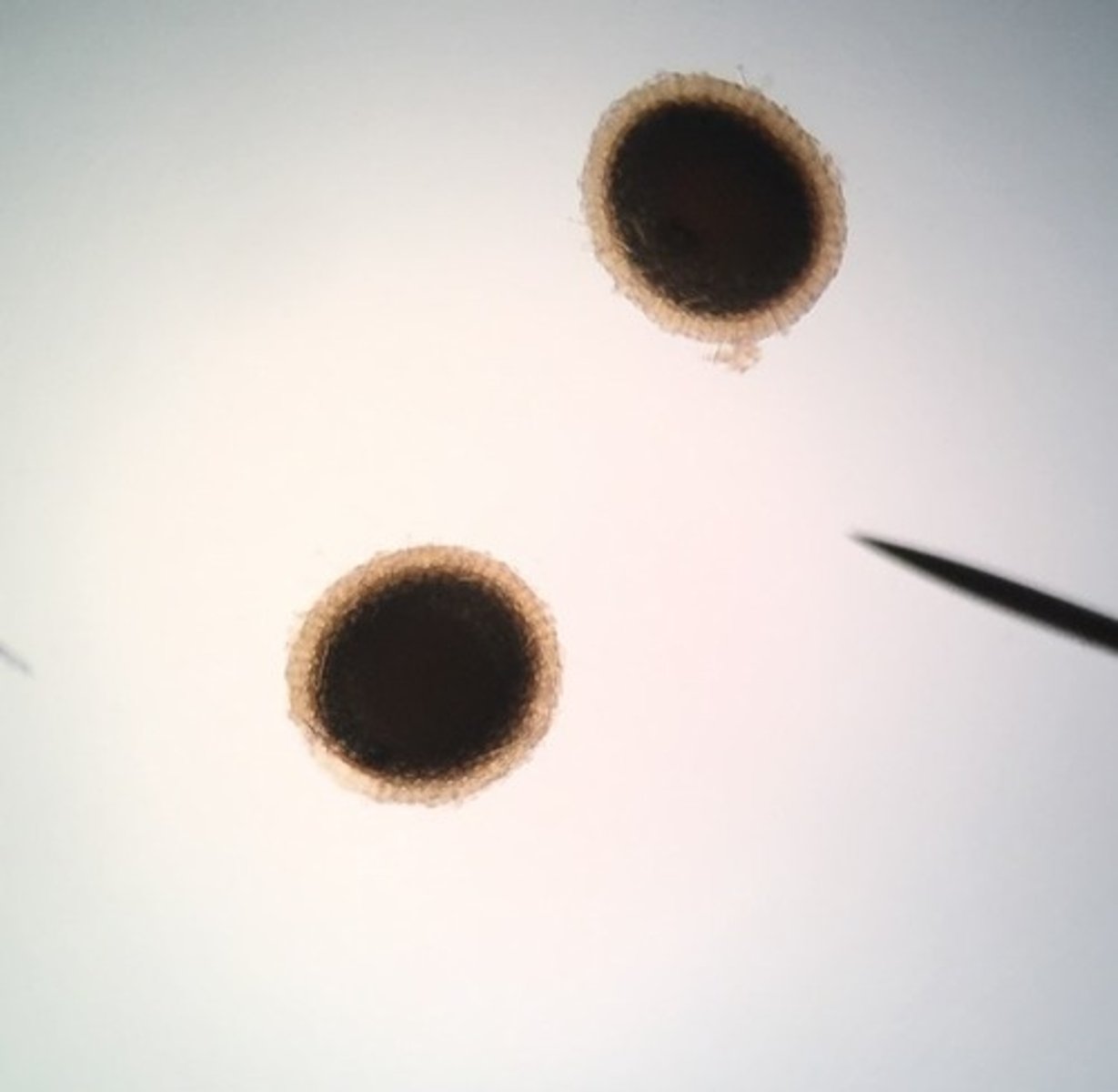
Gemmules
Specialized reproductive structures containing a cluster of cells surrounded by a protective layer of spicules. They serve as a means of asexual reproduction, allowing sponges to survive harsh environmental conditions by forming dormant stages that can later develop into new individuals.
Grantia
Marine Sponge
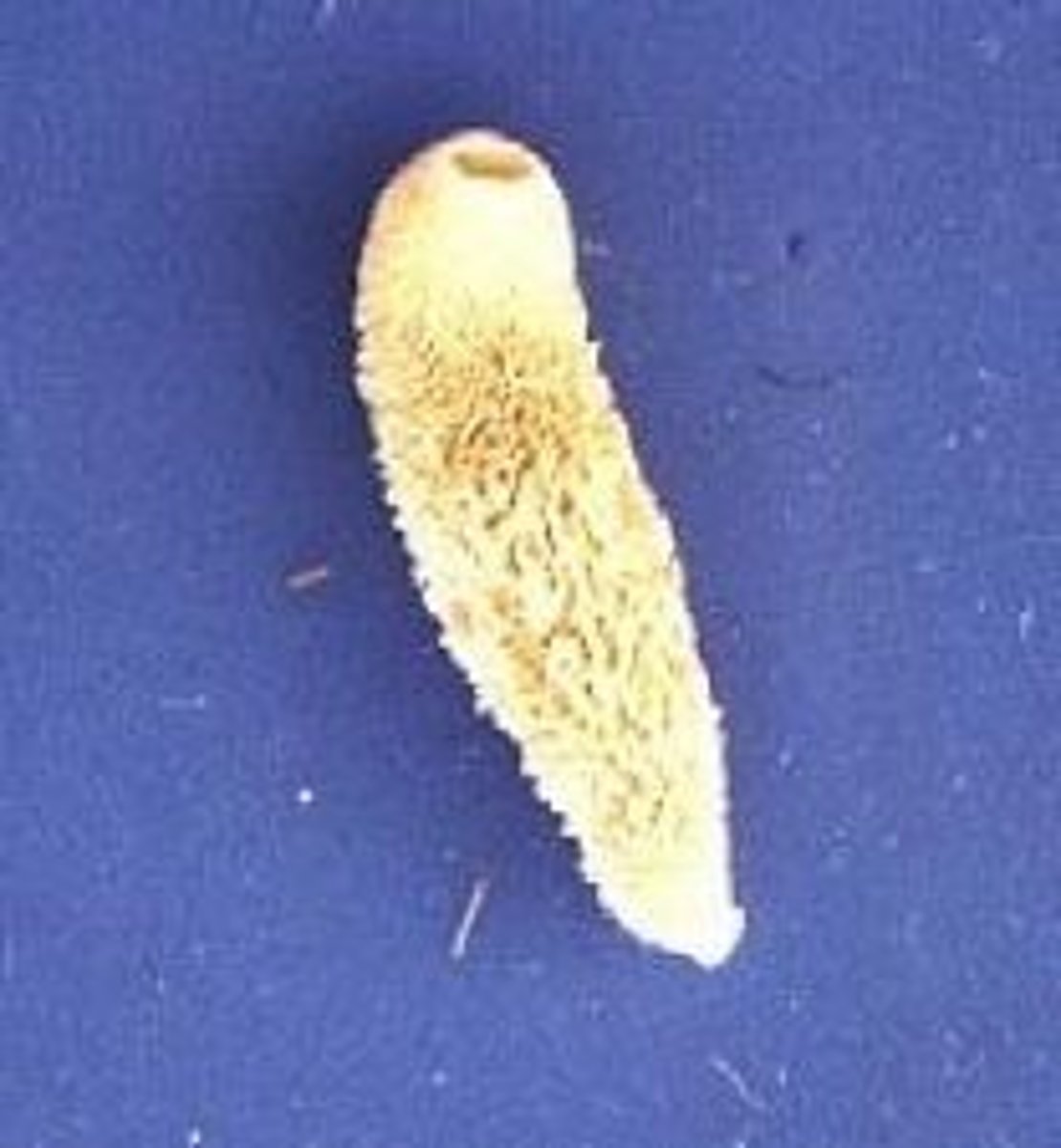
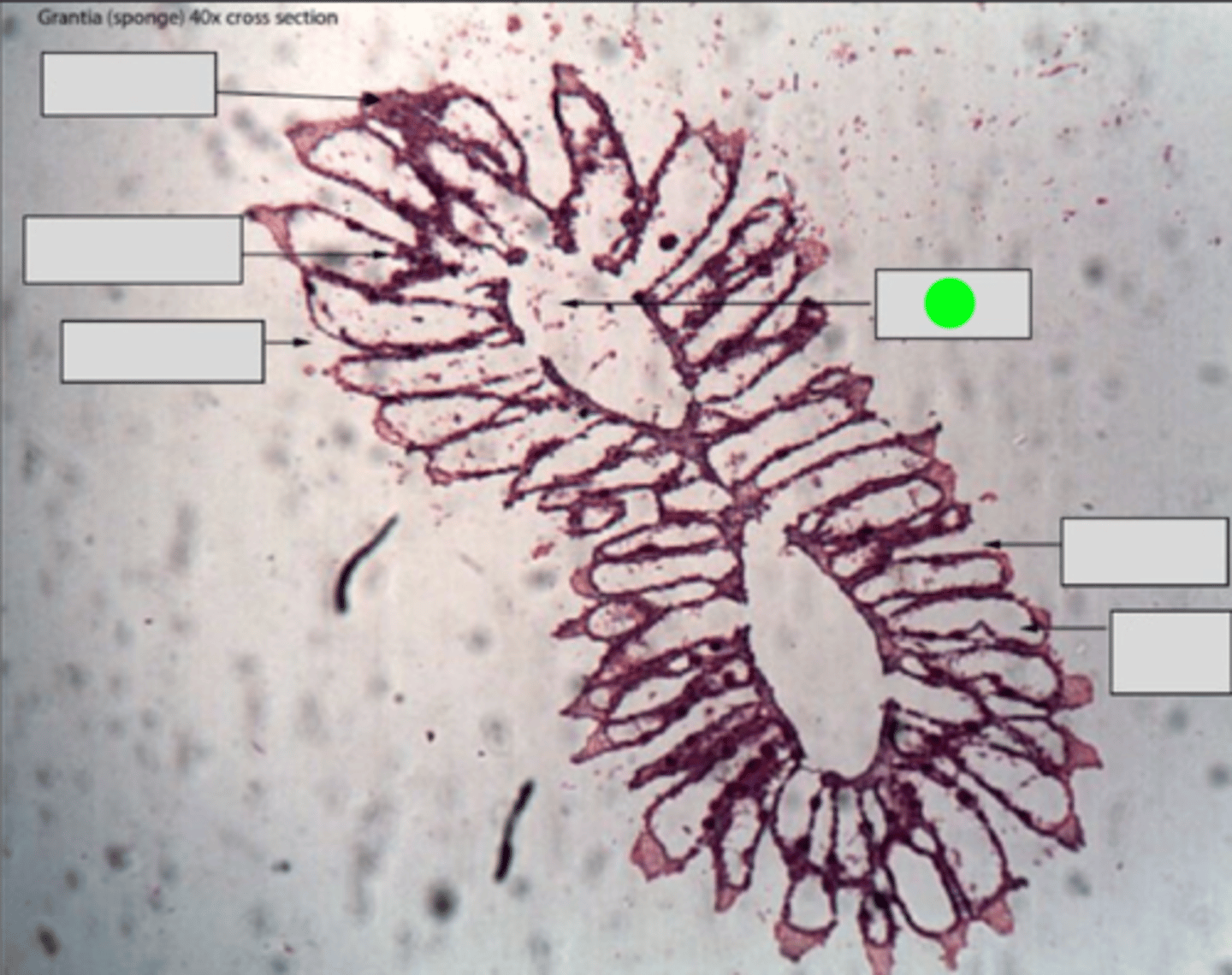
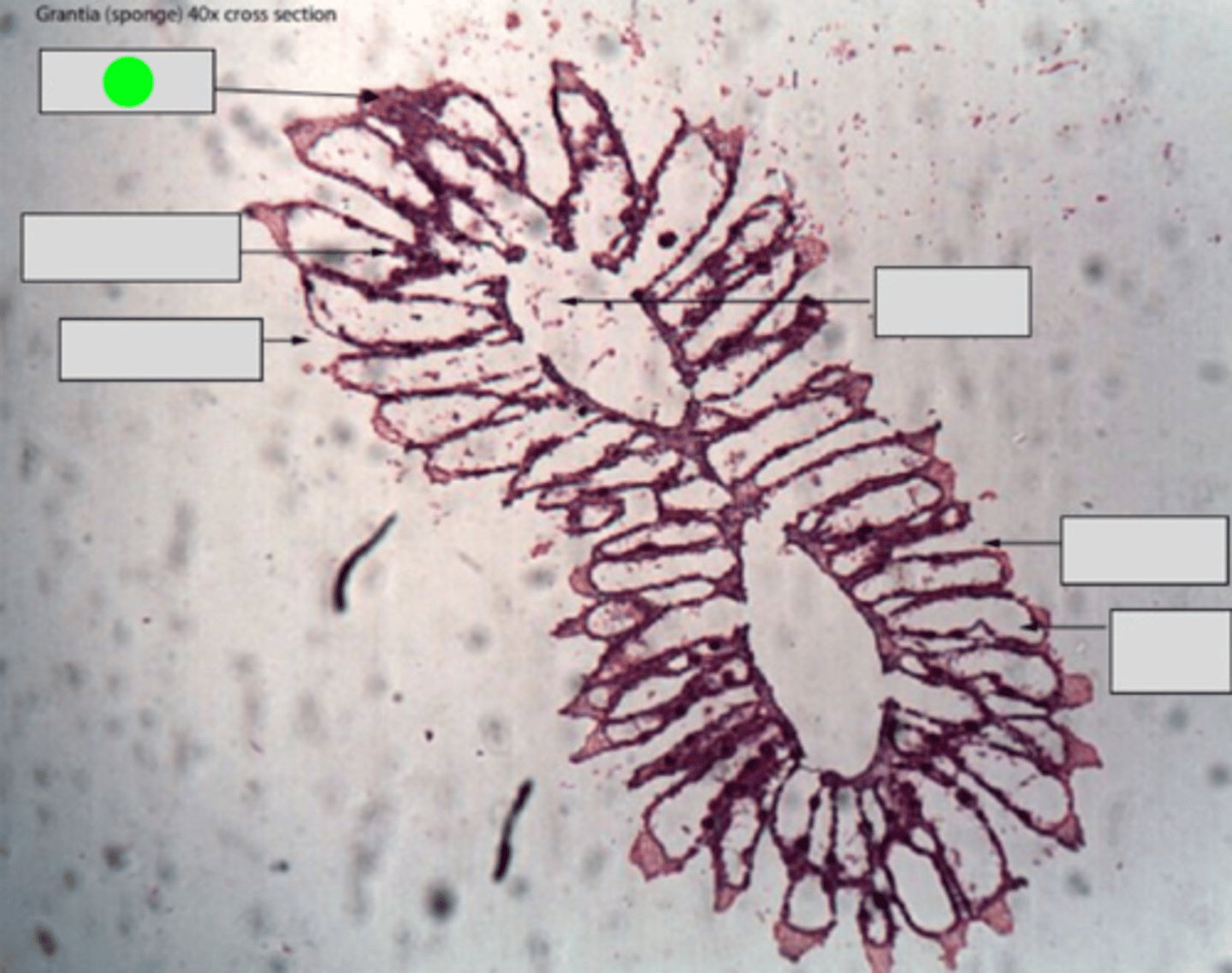
Grantia Slide
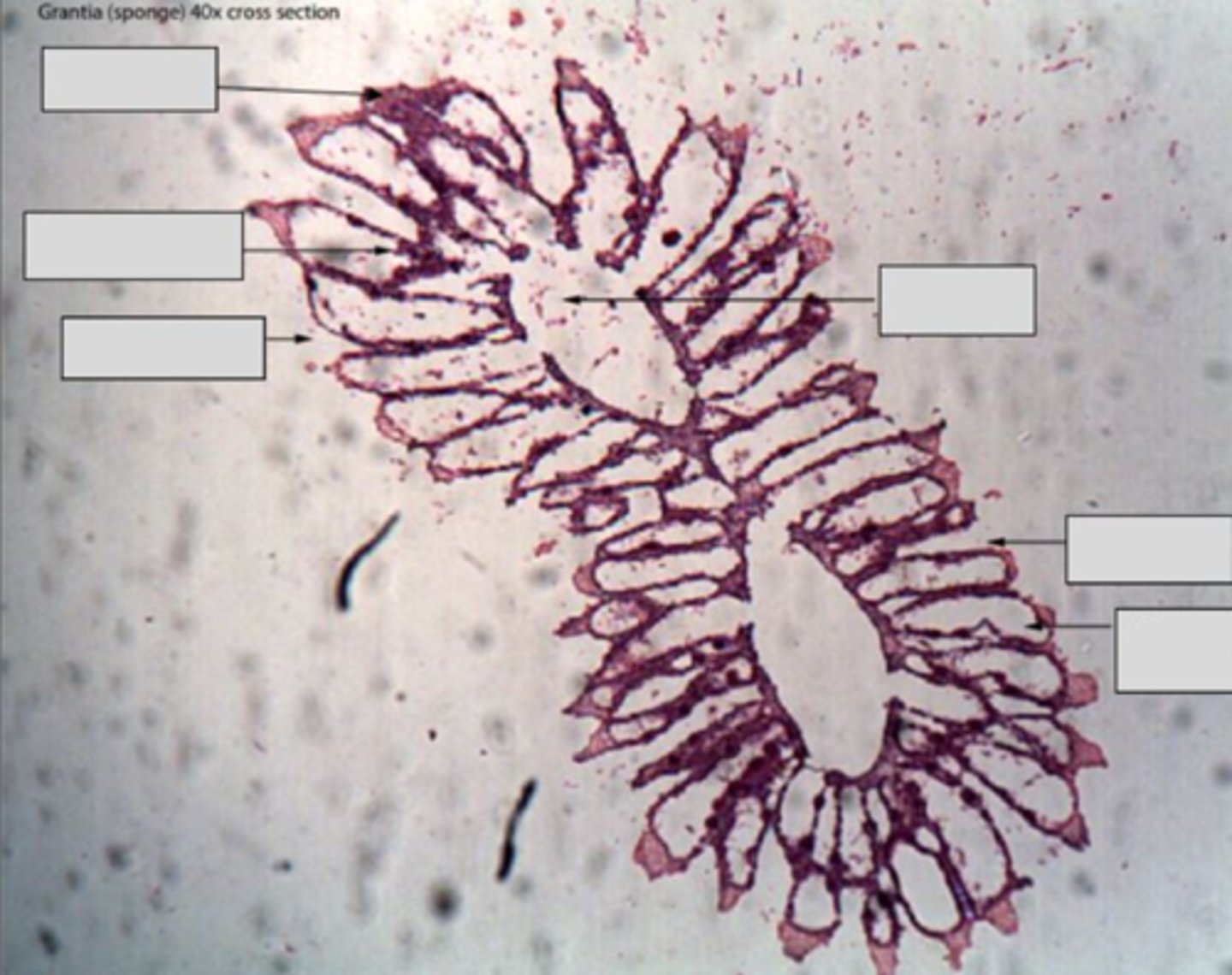
Spongocoel
Central cavity within a sponge's body. It is lined with choanocytes and serves as a chamber for water circulation.
Incurrent Canal
These are the canals through which water enters the sponge's body. They bring in water containing food particles and oxygen.
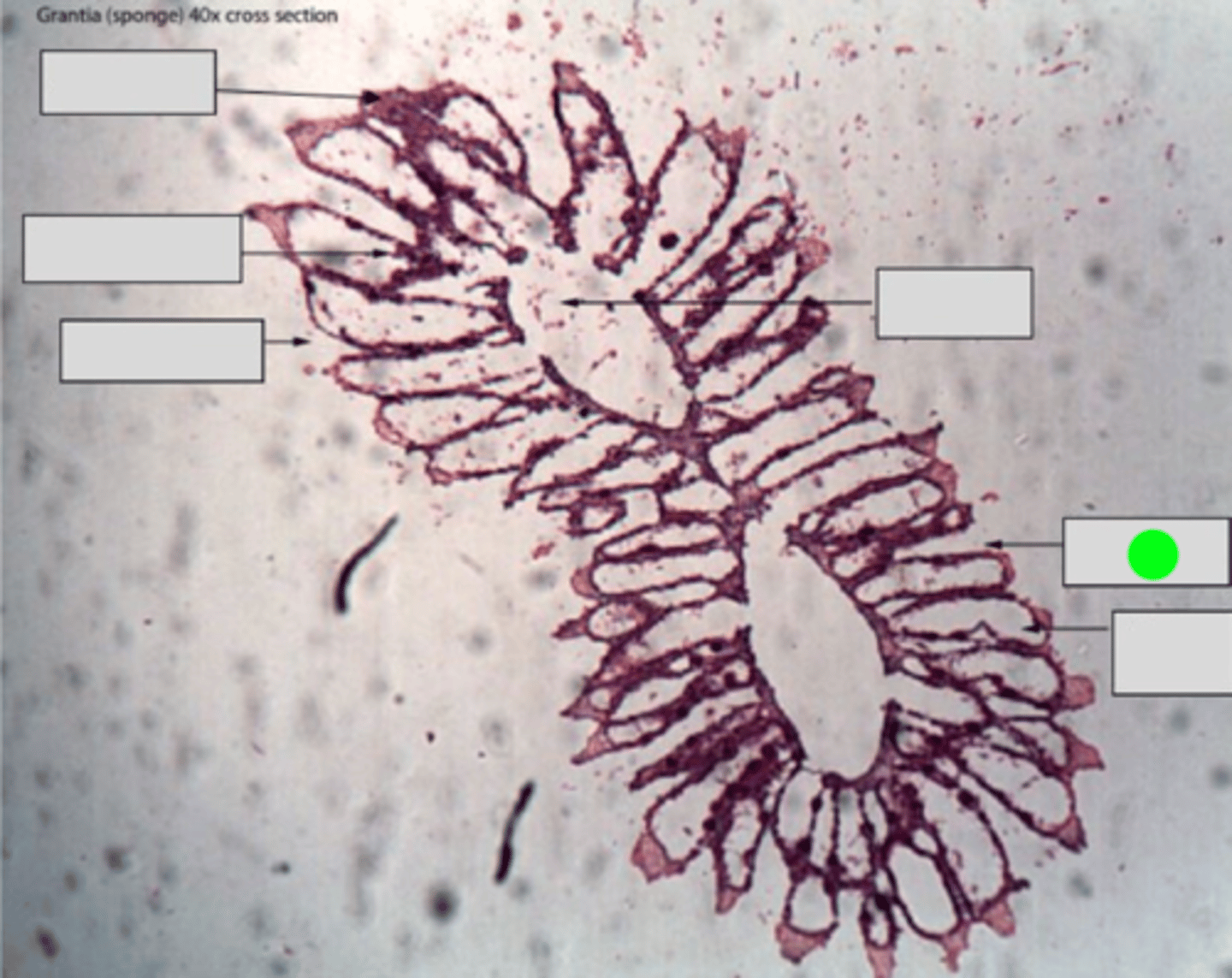
Radial Canal
Channels that extend from the spongocoel into the body of the sponge. They distribute water from the incurrent canals to the choanocyte-lined chambers.
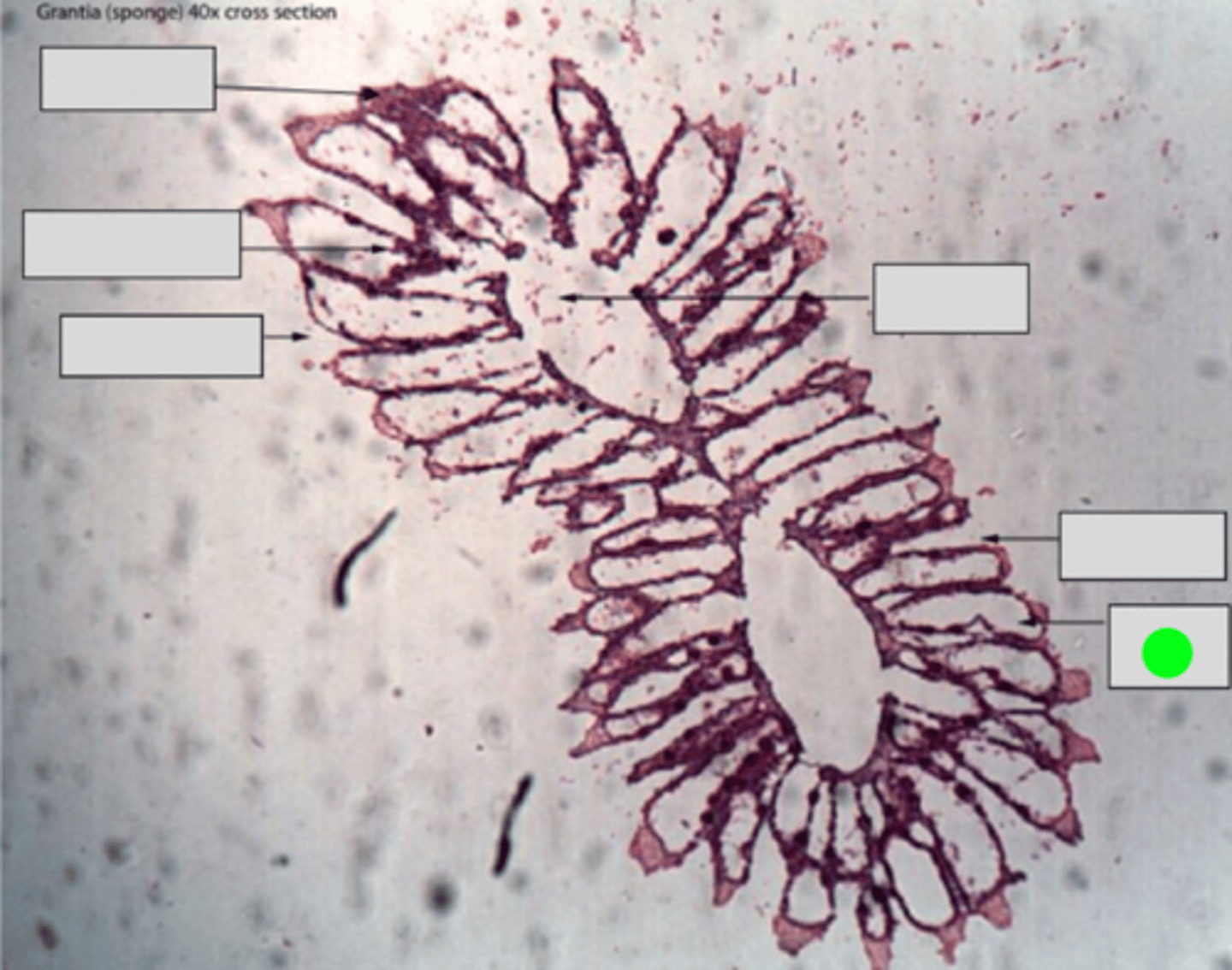
Choanocytes
Specialized cells found lining the interior of sponges. They have a flagellum surrounded by a collar of microvilli which creates water currents to trap food particles and help with gas exchange.
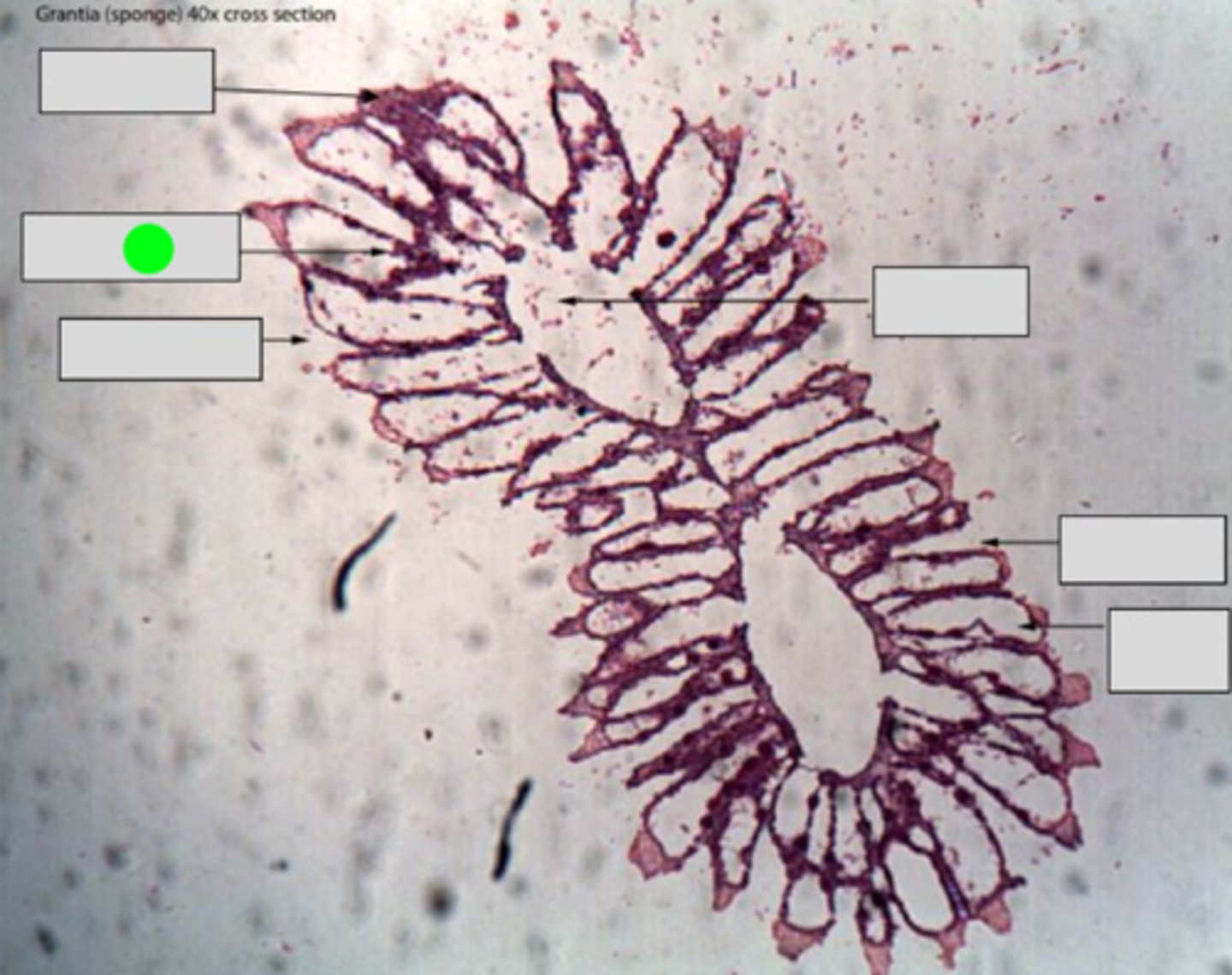
Collar Cells
Common name for Choanocytes
Ostium
Small pores on the surface of sponges through which water enters the sponge's body. They are connected to the incurrent canals.
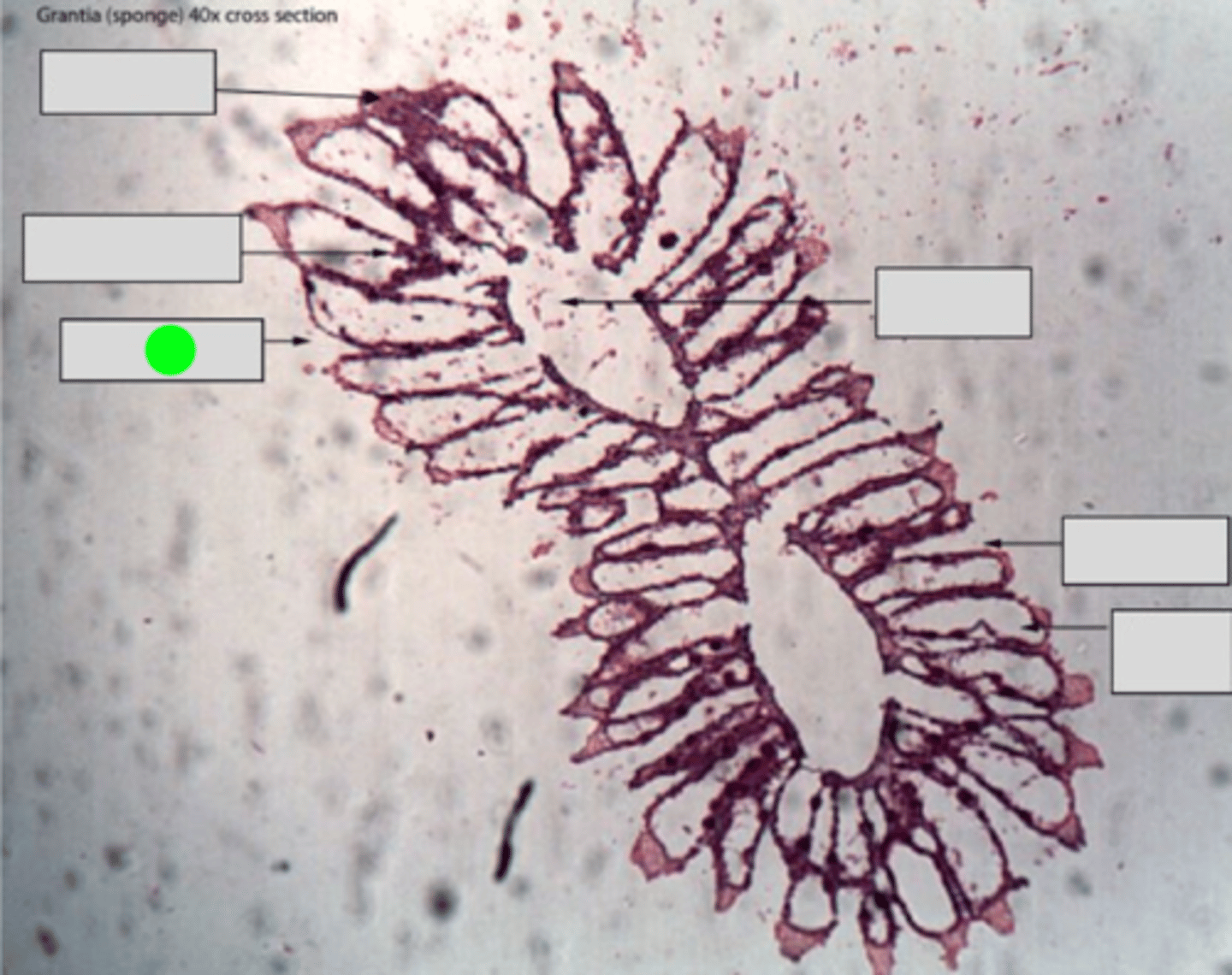
Mesohyl
Gelatinous matrix that fills the space between the outer and inner layers of a sponge's body. It contains various types of cells, including amoeboid cells and skeletal elements like spicules.
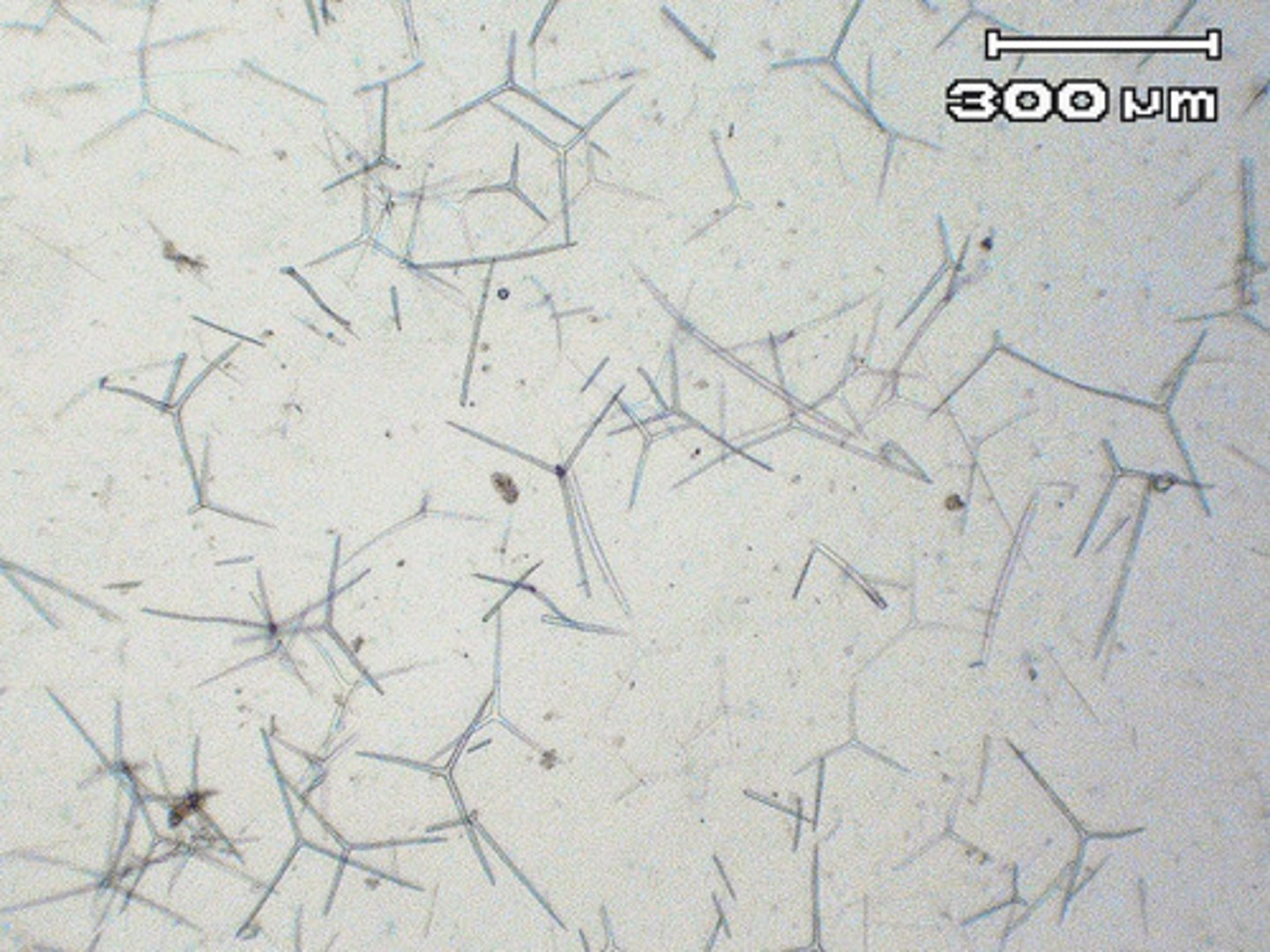
Grantia Spicules
Sharp, calcium carbonate structure in the mesohyl which form the skeletalfibers of the sponge (CaCO₃)
Commercial Sponge
Marine
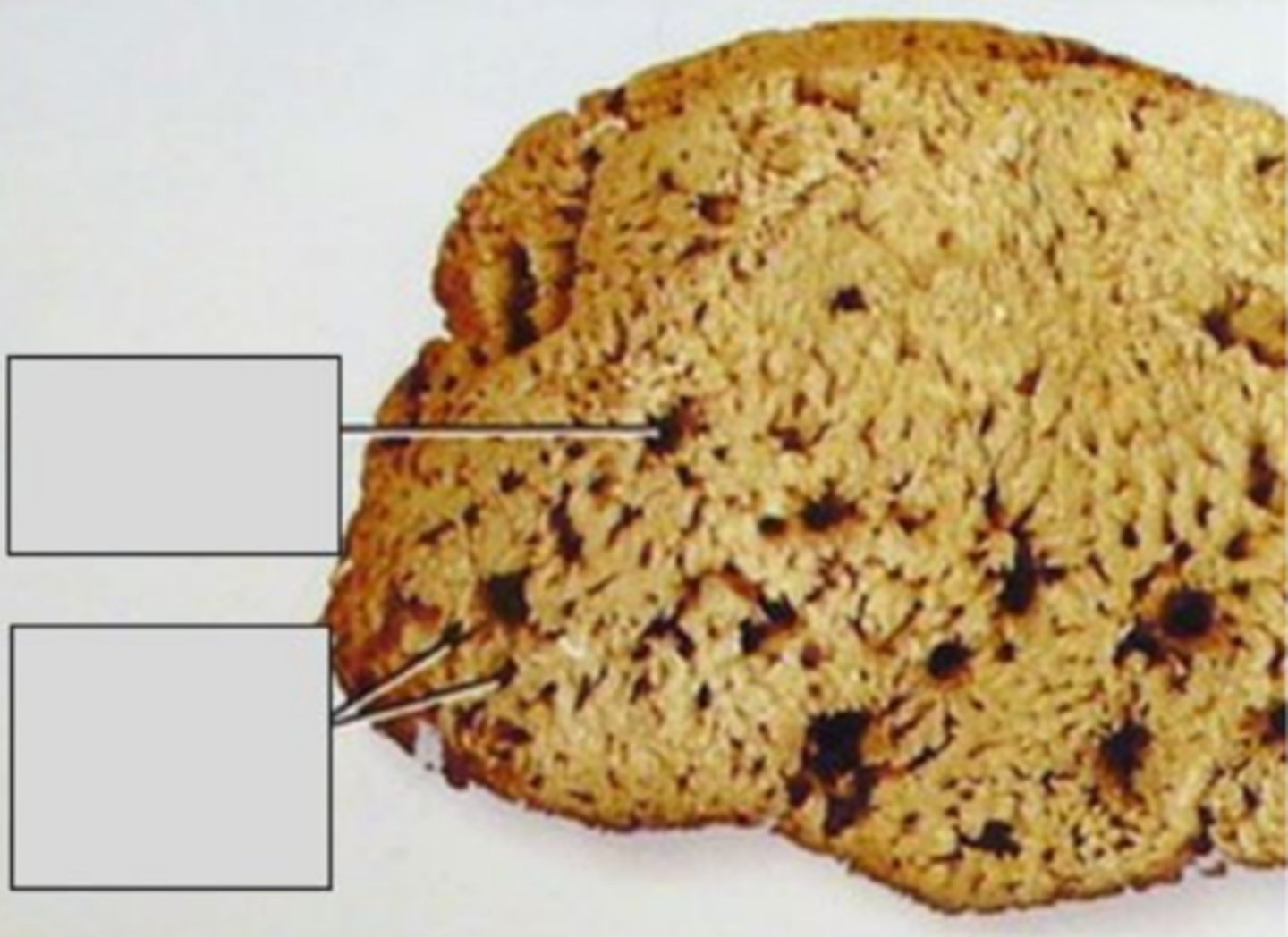
Ostia
Small pores on the surface of sponges through which water enters the sponge's body. They are connected to the incurrent canals.
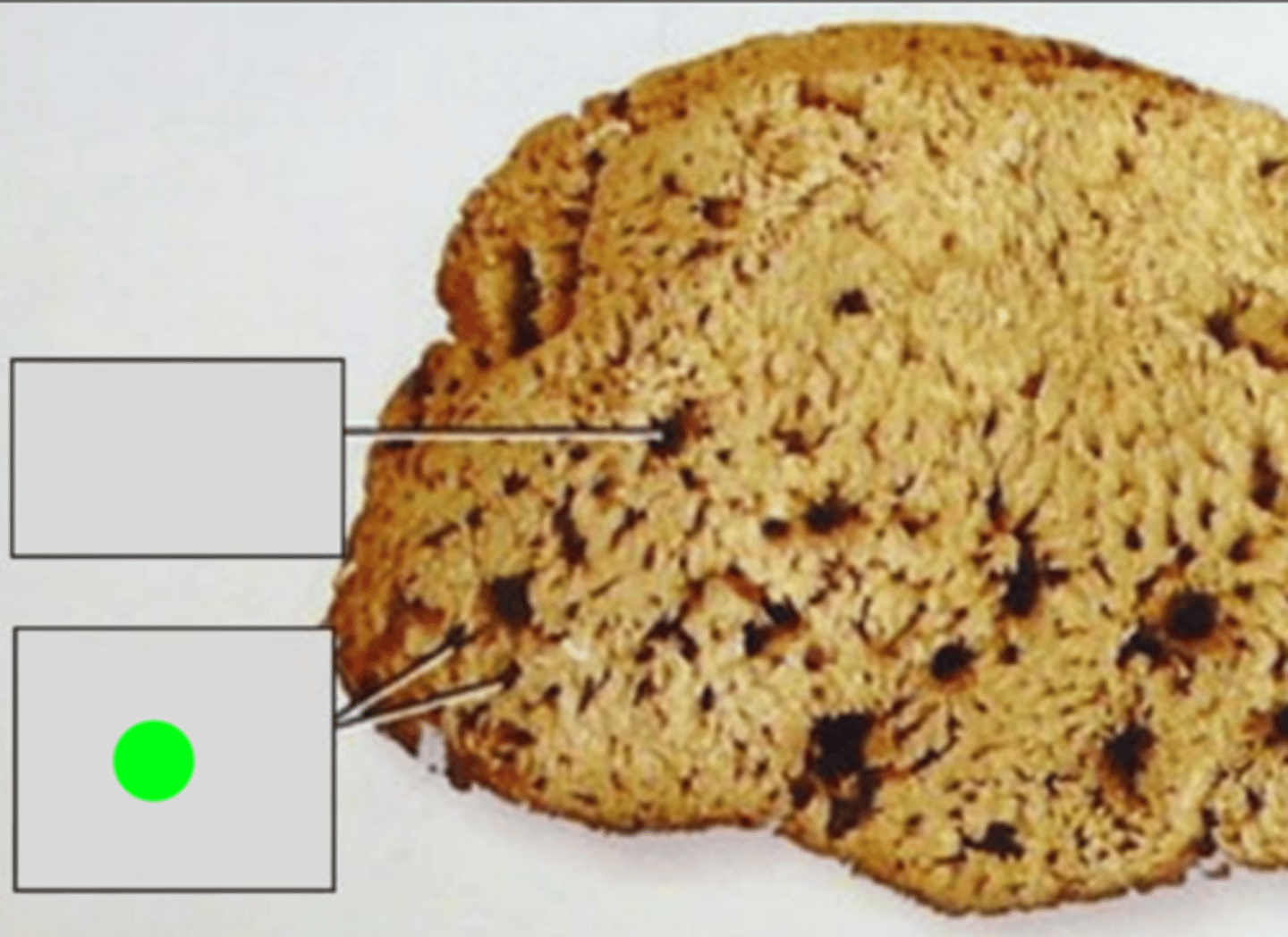
Osculum
Large opening in a sponge's body through which water exits after passing through the choanocyte-lined chambers and the spongocoel. It serves as the exit for water containing waste and carbon dioxide.
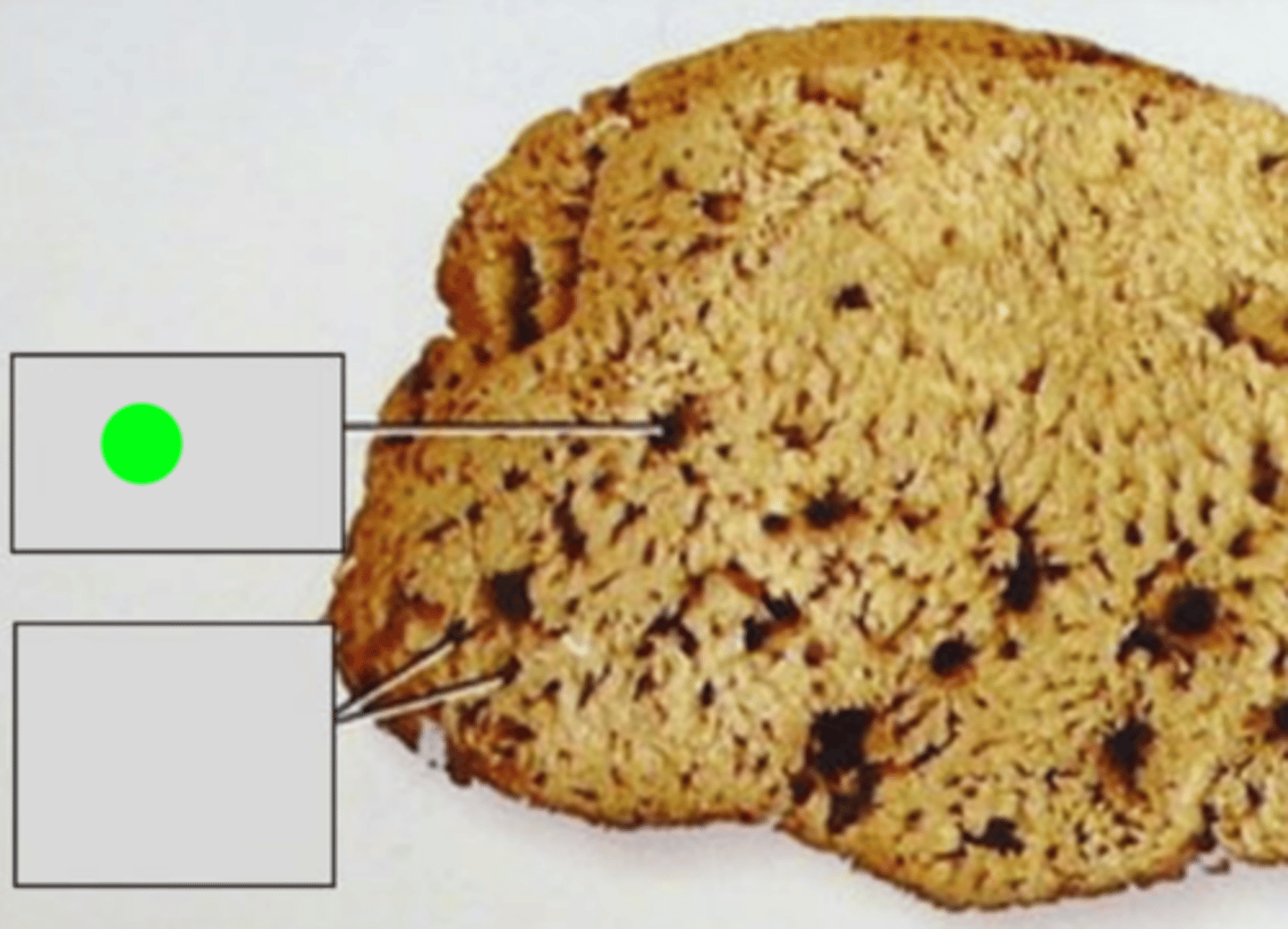
Leucoslenia
Marine
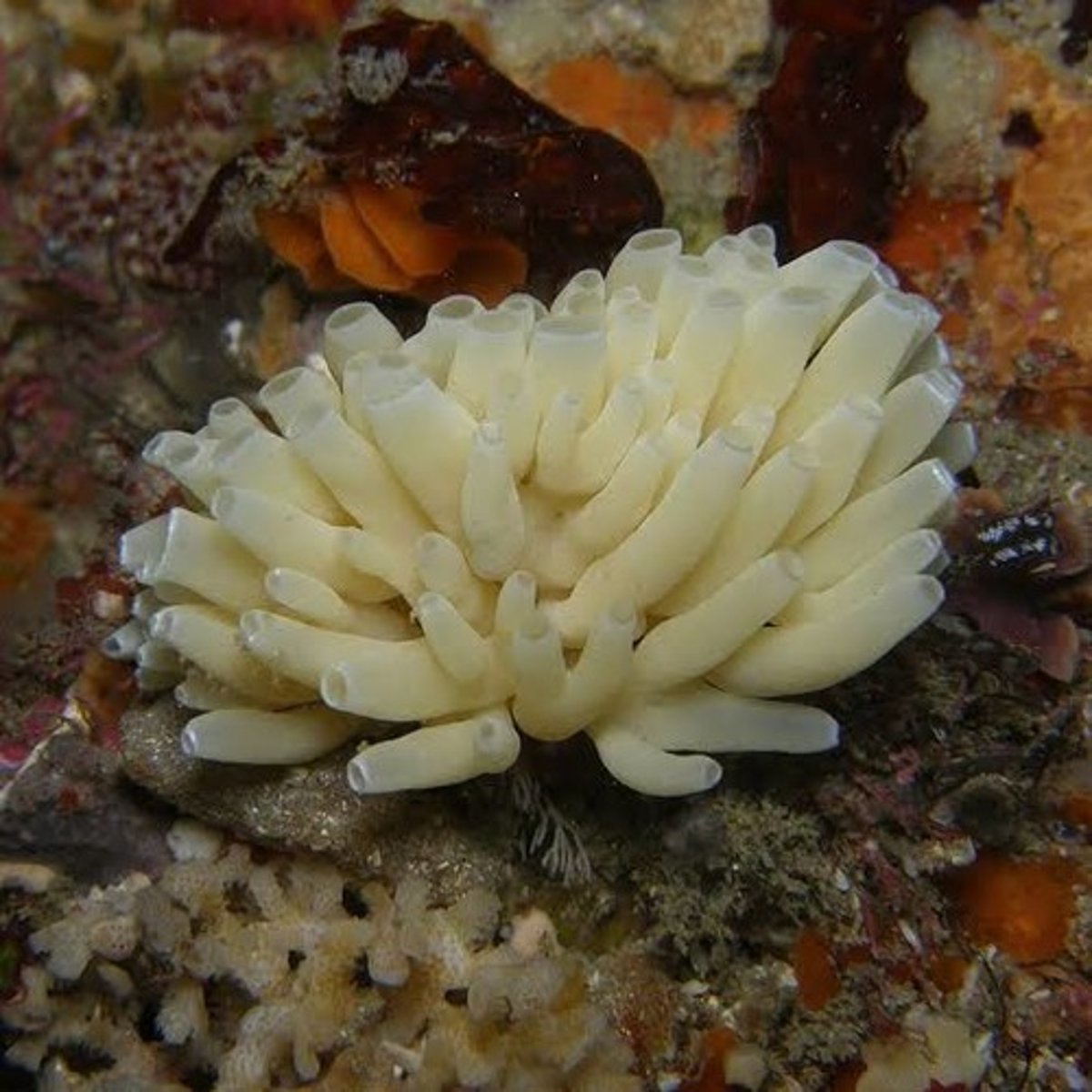
Leucoslenia
Marine
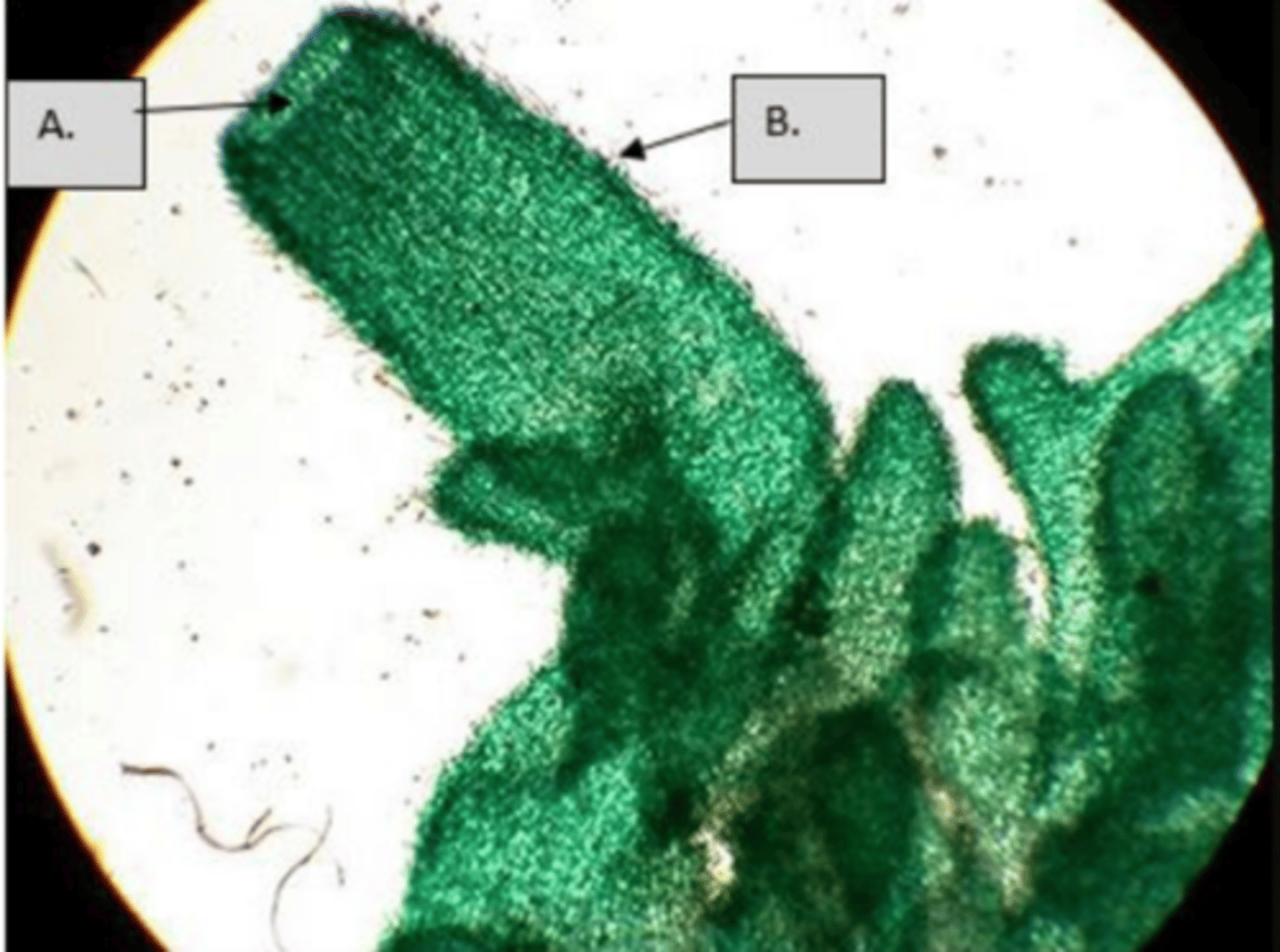
Osculum
Large opening in a sponge's body through which water exits after passing through the choanocyte-lined chambers and the spongocoel. It serves as the exit for water containing waste and carbon dioxide.
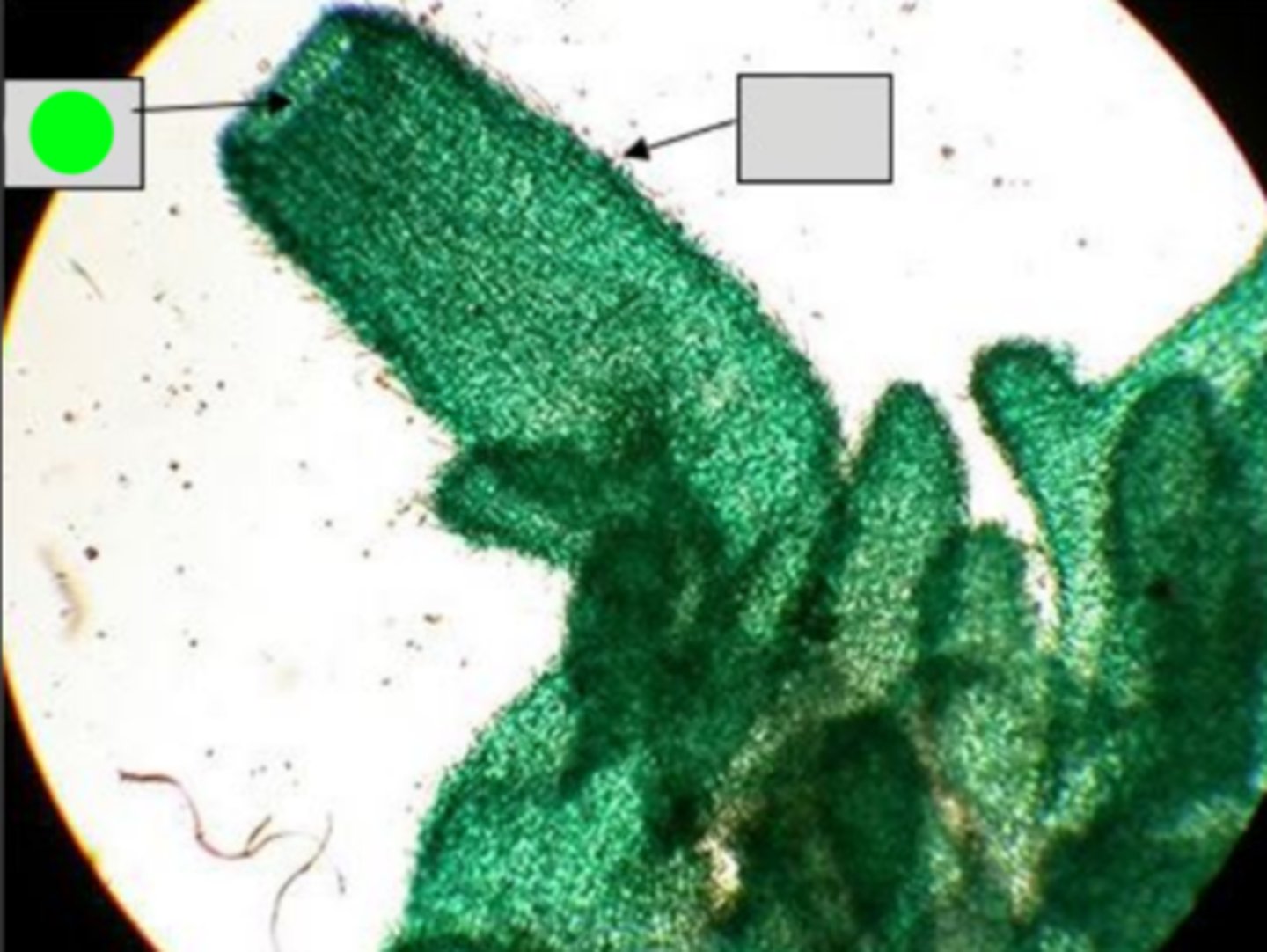
Leucoslenia Spicules
Sharp, calcium carbonate structure in the mesohyl which form the skeletalfibers of the sponge (CaCO₃)
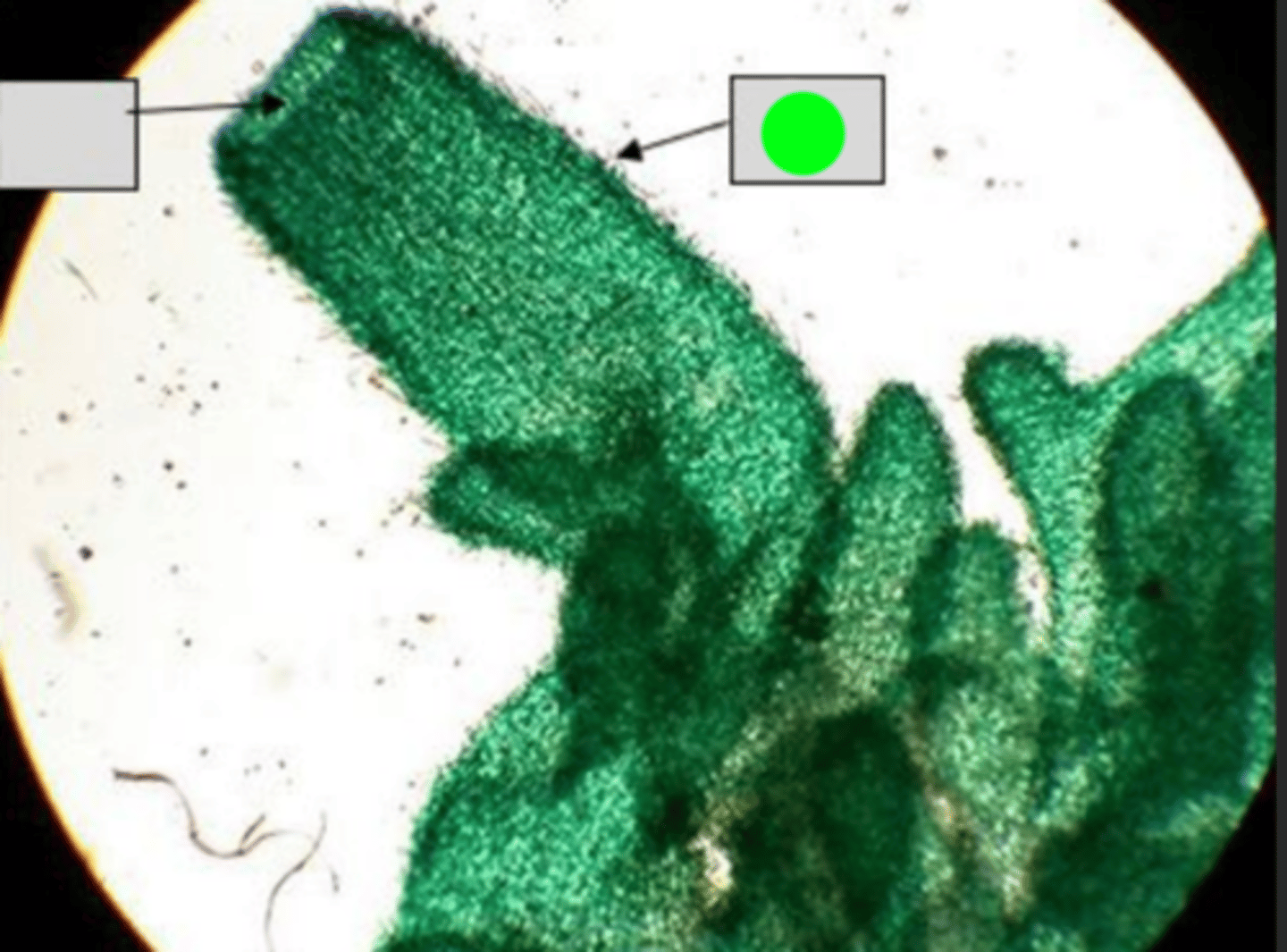
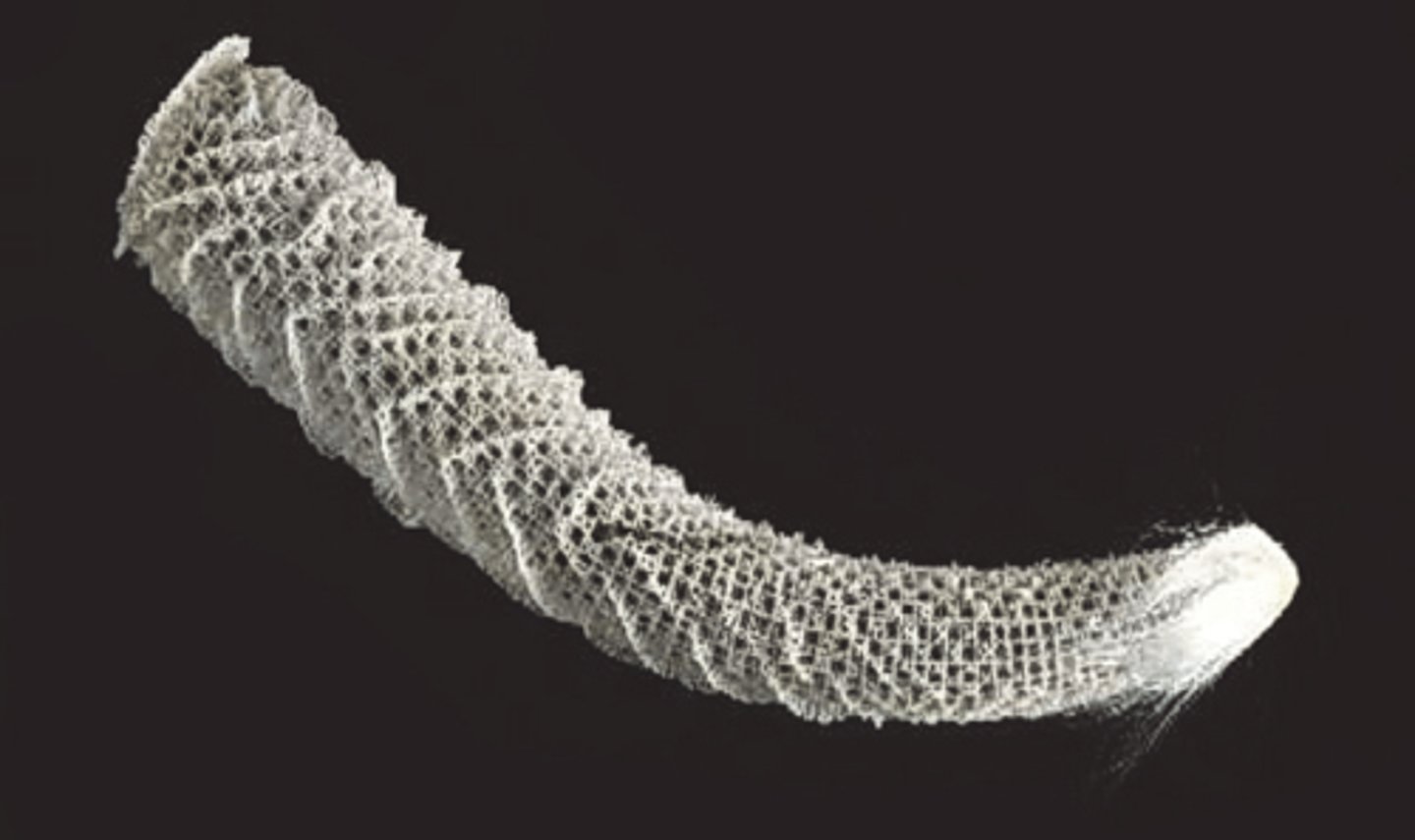
Euplectella
Marine
What clade are Aurelia, Hydra, Obelia, Physalia and Metridium all a part of?
Cnidaria
What are Cnidaria known for?
Radial symmetry, a gastrovascular cavity, and cnidocytes
What group of Cnidaria are Aurelia, Hydra, Obelia, Physalia and Metridium all a part of?
Medusozoa
What is the group Medusozoa known for?
Have a medusa stage in their life cycle, which is typically free-swimming and umbrella-shaped. Aurelia and Physalia belong to this group.
What group of Medusozoa are Obelia, Physalia, and Hydra a part of?
Hydrozoa
Hydrozoa
Most __________ alternate polyp and medusa forms in the life cycle although the polyp is the dominant stage. Some are colonial (e.g., Obelia, Physalia (Portuguese Man-O-War)), while others are solitary (e.g., Hydra)
What group of Medusozoa is Aurelia a part of?
Scyphozoa
Scyphozoa
Characterized by a dominant medusa stage in their life cycle
What group of Medusozoa is Metridium a part of?
Anthozoa
What is the group Anthozoa known for?
Lack a medusa stage in their life cycle and exist exclusively as polyps.
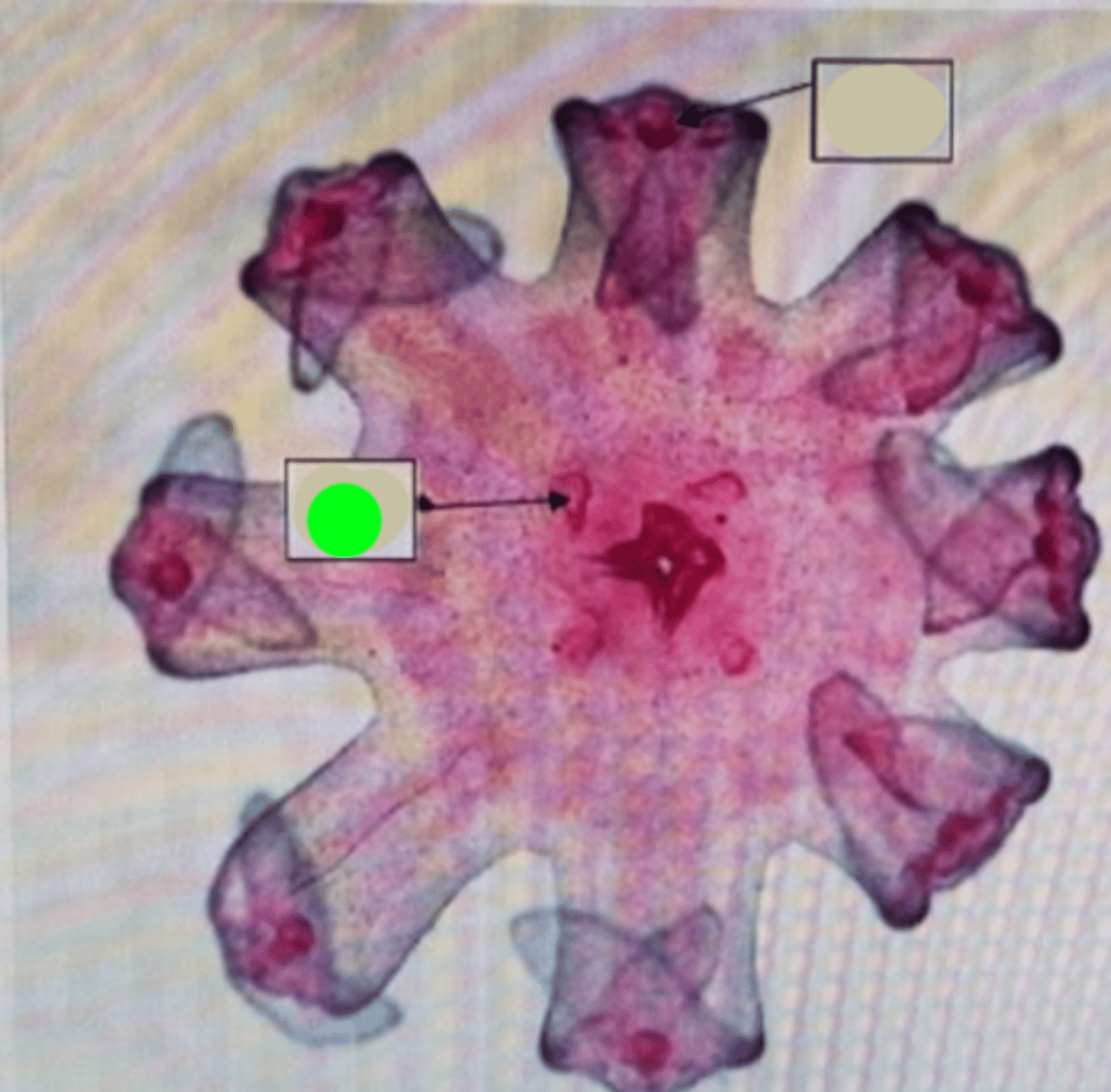
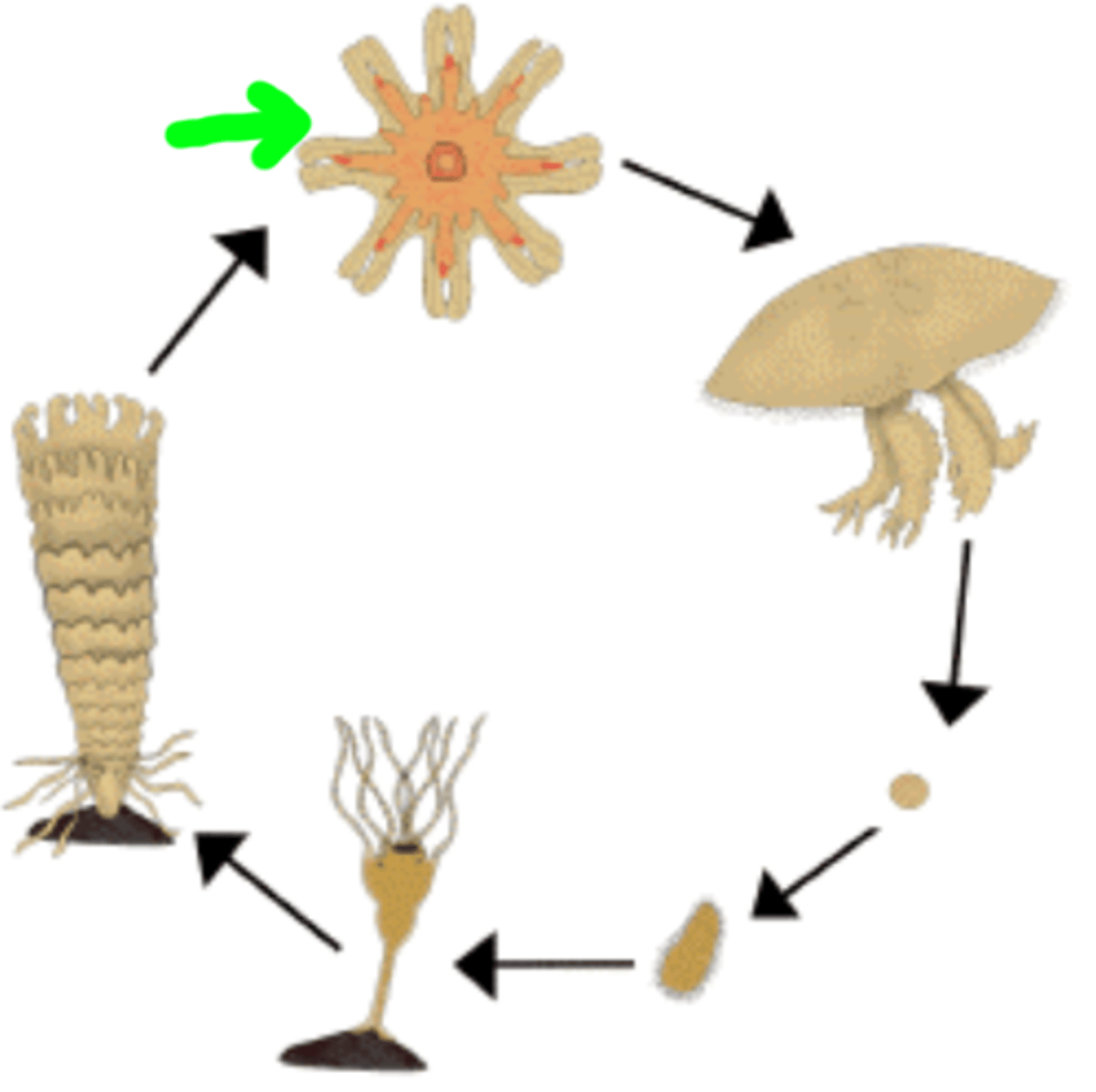
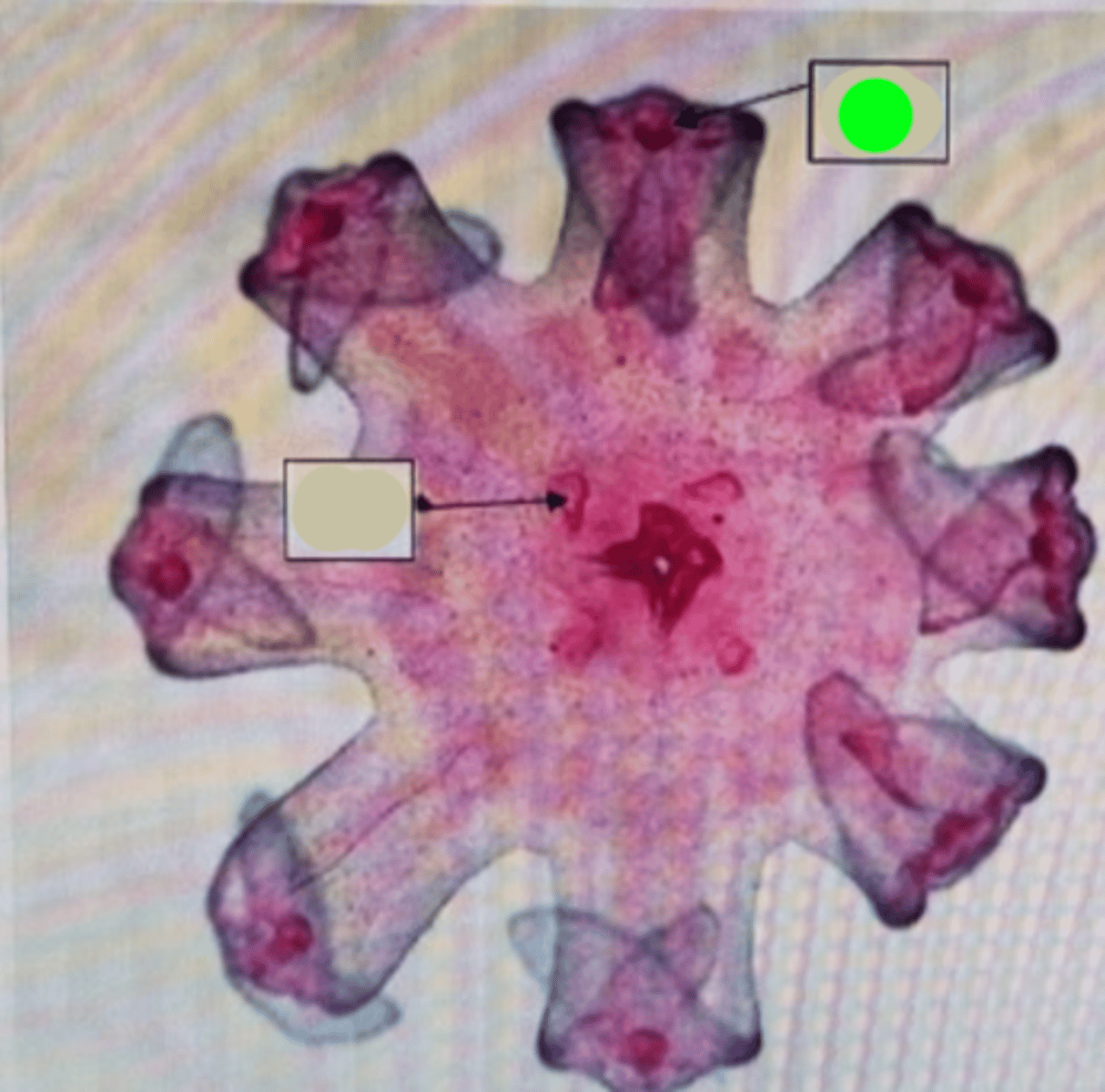
Aurelia Ephyra
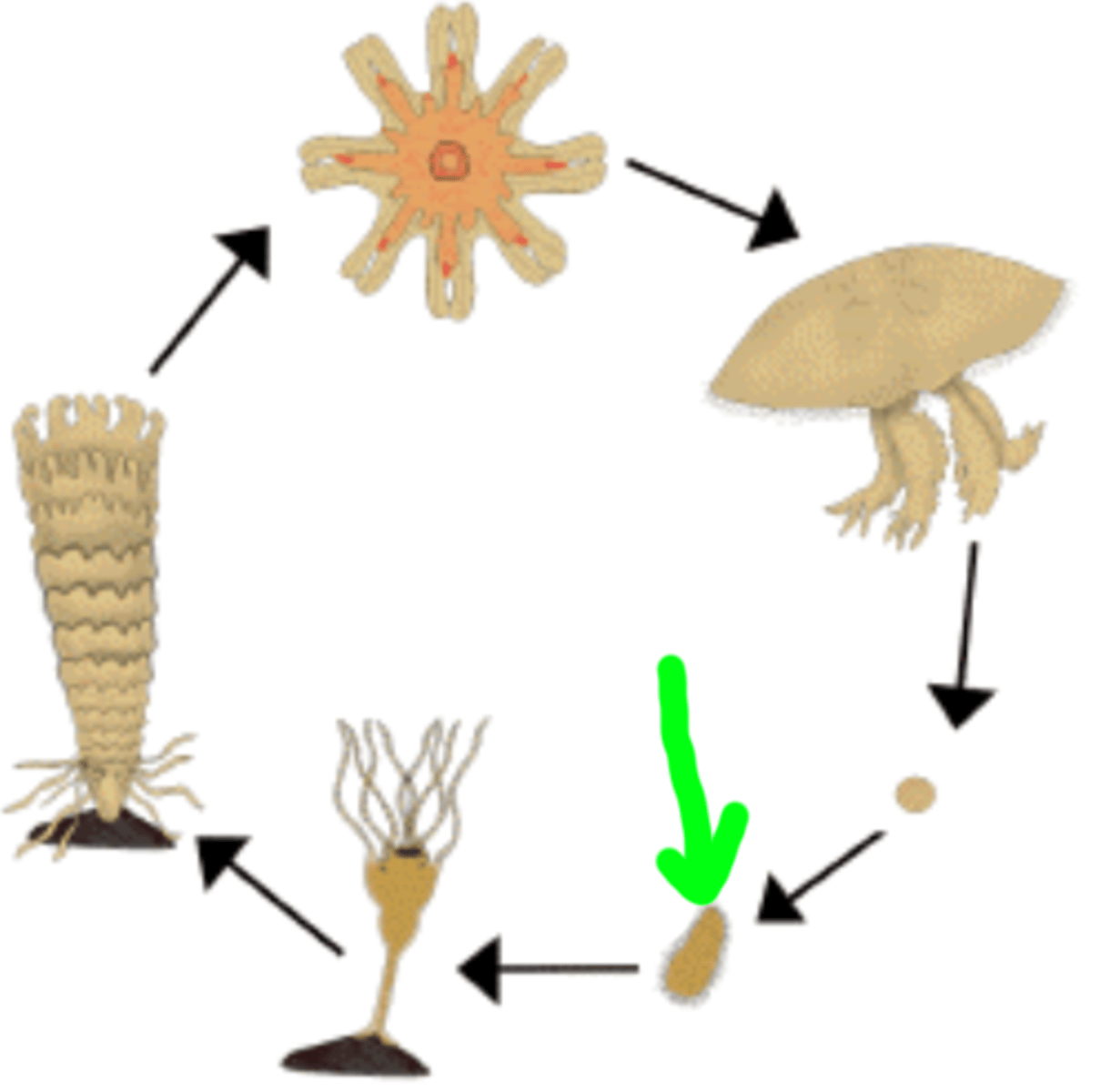
Aurelia Planula
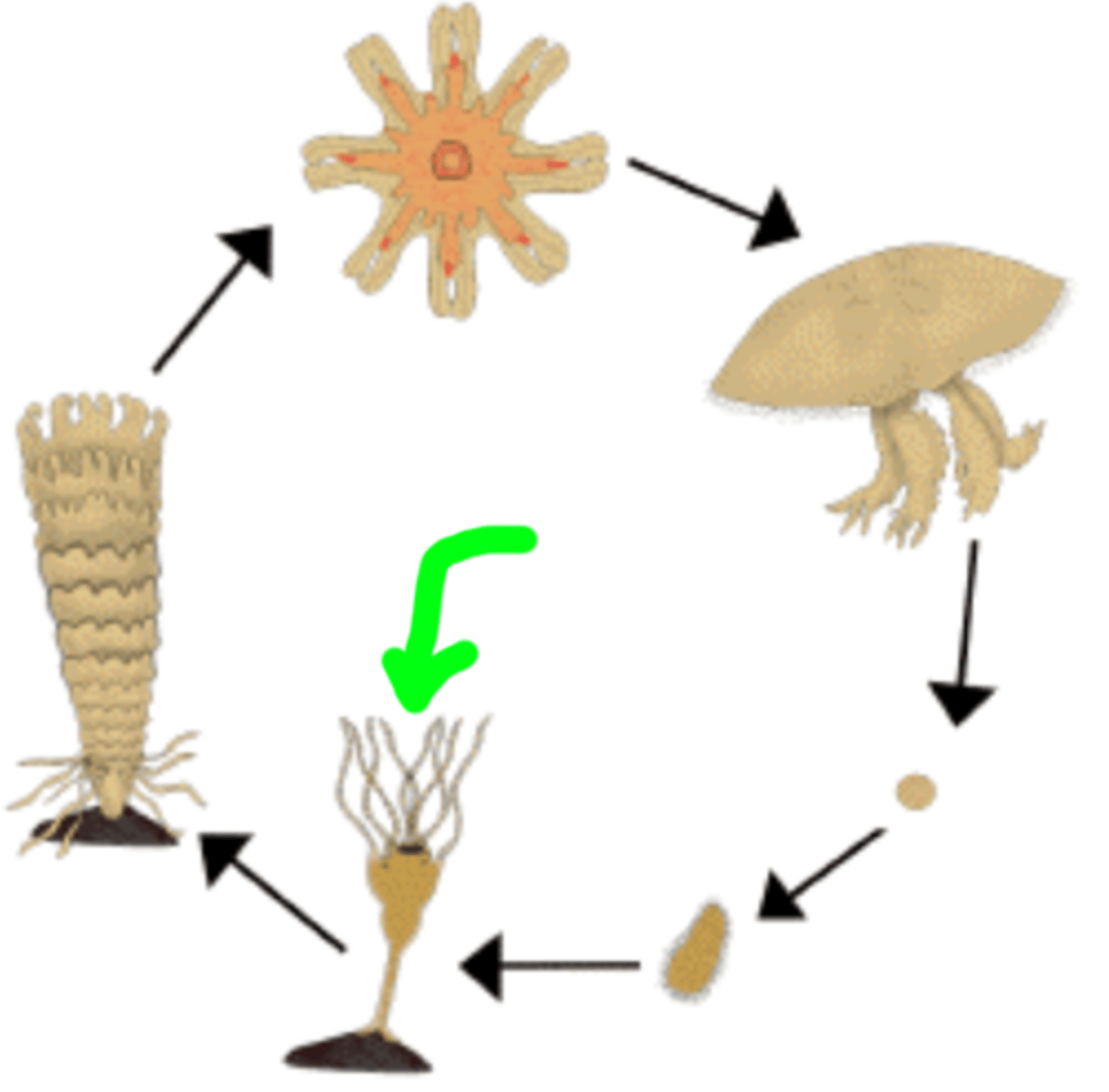
Aurelia Scyphistoma
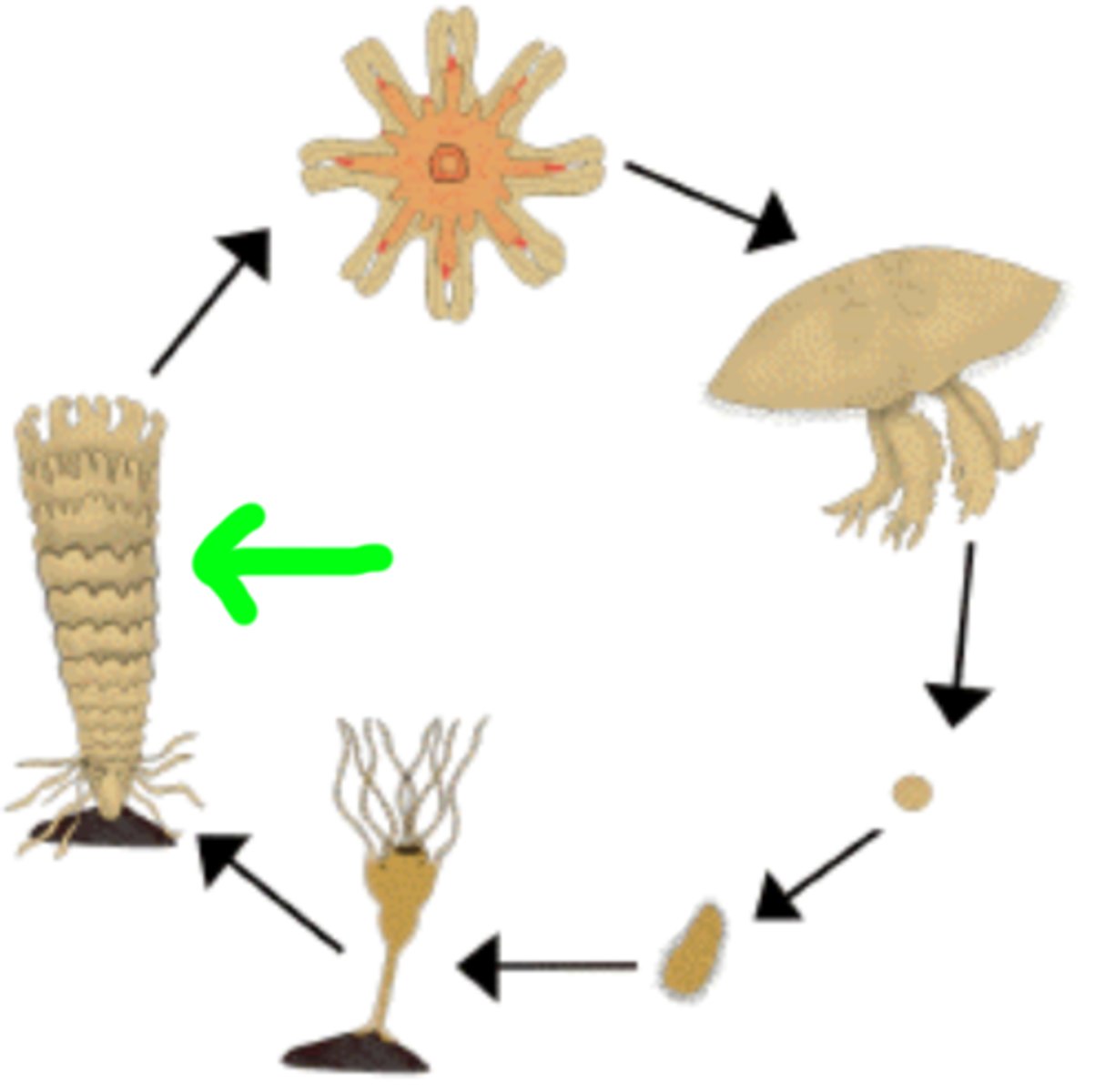
Aurelia Strobila
Aurelia Ephyra
Marine
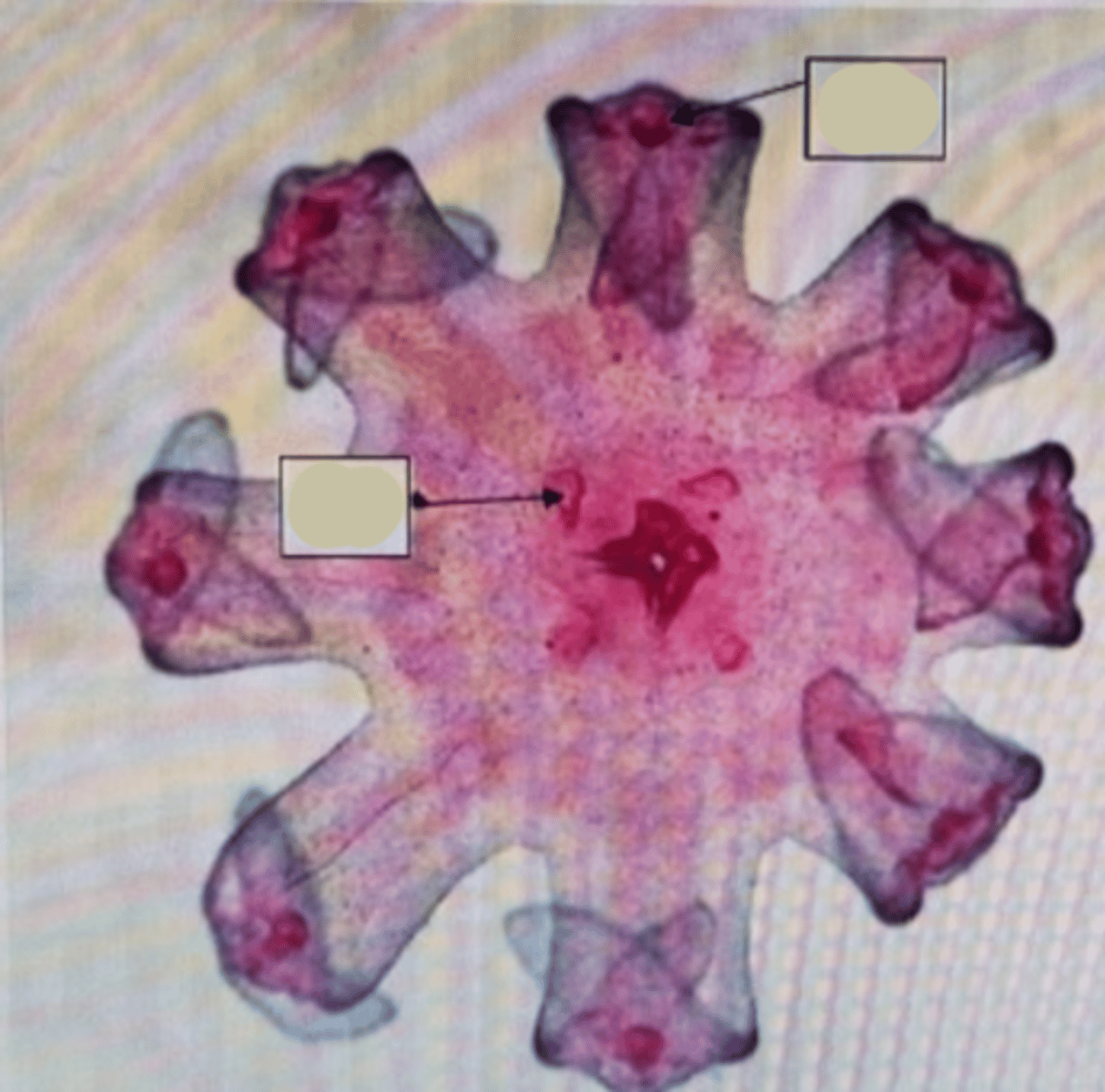
Rhopalium
Sensory structure found in jellyfish, comprising a cluster of sensory organs like statocysts and ocelli, aiding in balance and light detection.
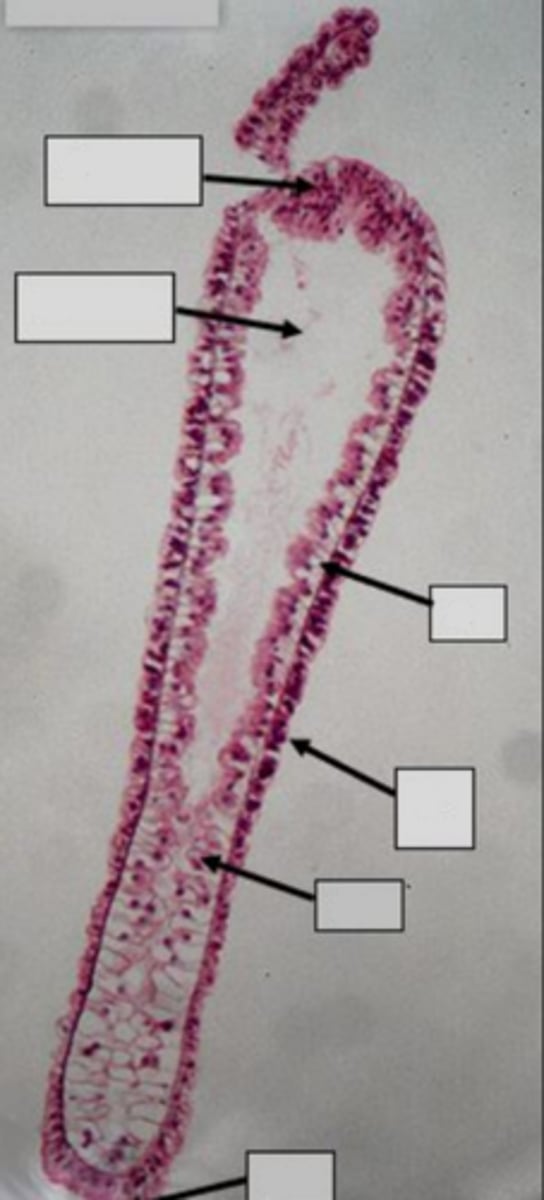
Hydra
Freshwater
Gonads
Reproductive organs responsible for producing gametes in animals, typically located within the mesoglea of jellyfish, facilitating reproduction.