Final Lab Exam
 Call Kai
 Learn
Learn Practice Test
 Spaced Repetition
 Match
Match Flashcards
 Knowt Play
1/36

There's no tags or description
Looks like no tags are added yet.
Name | Mastery | Learn | Test | Matching | Spaced | Call with Kai |
|---|
No analytics yet
Send a link to your students to track their progress
37 Terms
Foramen Ovale
In the fetal development, the opening in fetal heart to bypass the nonfunctional lungs (right → left atrium)
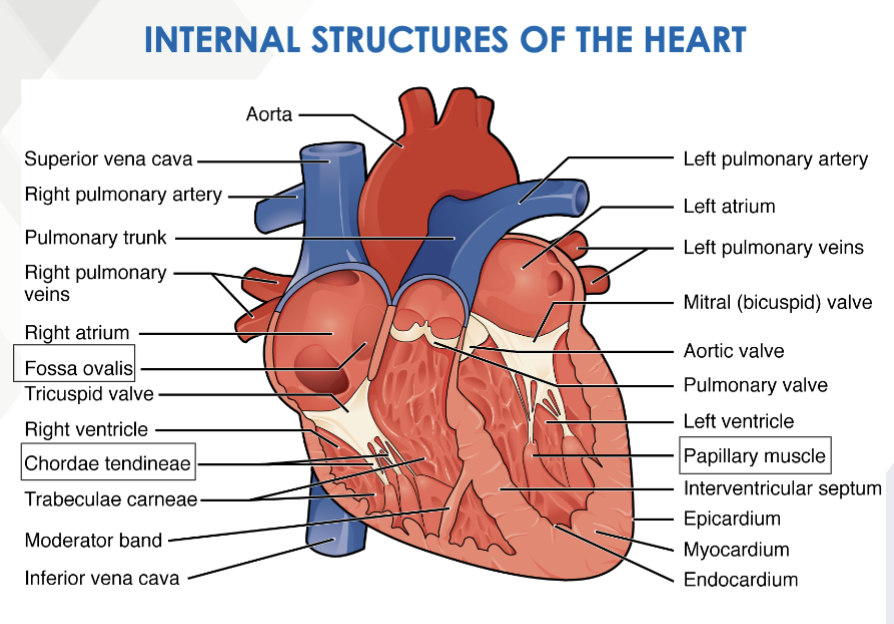
Chordae Tendineae
Prevent the valves from prolapsing into the atria
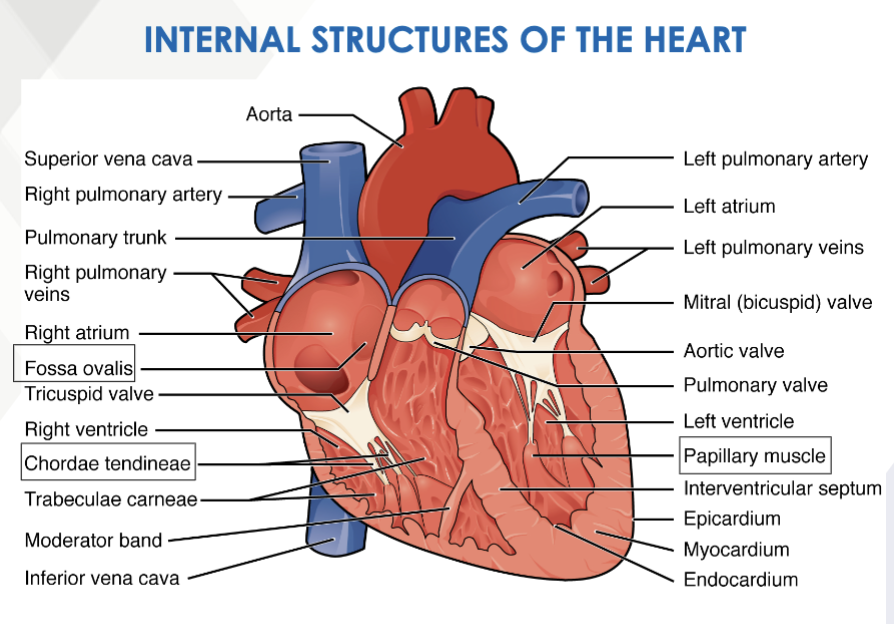
Blood Flows (Veins → Arteries)
Superior/Inferior vena cava
Right atrium
Triscuspid valves
Right ventricle
Pulmonary vales
Pulmonary arteries
Lungs
Pulmonary veins
Left atrium
Bicuspid valve
Left ventricle
Aortic valve
Aorta
Heart Anatomy
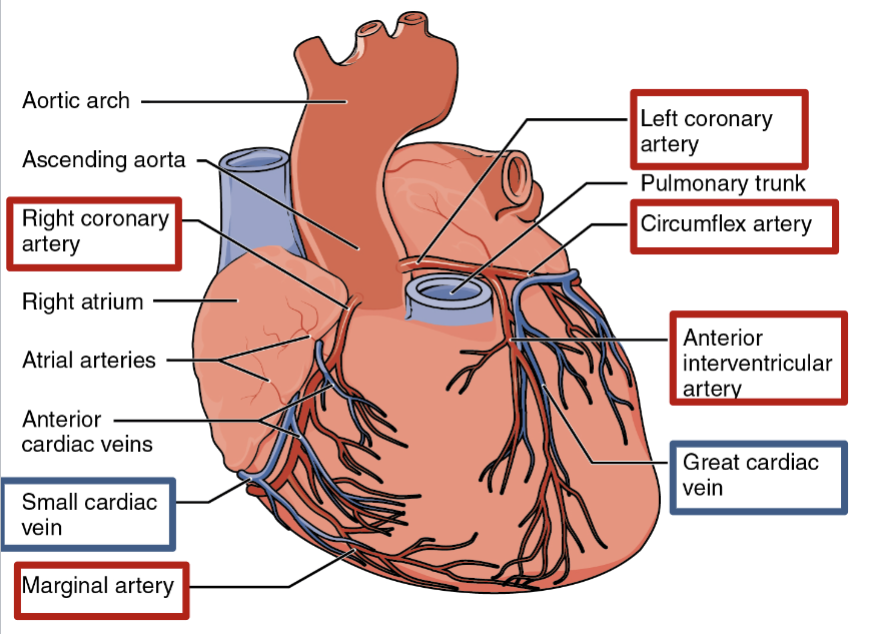
Left/right coronary artery
Circumflex artery
Anterior interventricular artery
Coronary sinus
Marginal artery
Pericardium
Outer layer wall that surrounds and protects the heart. The main function is to secrete pericardial fluid to reduce friction
Mean Arterial Pressure (MAP)
The average pressure in the arteries during one complete cardiac cycle.
Pulse Pressure
PP = systolic pressure - diastolic pressure
RR value: 120-80 = 40 mmHg
Cardiac Output
Amount of blood pumped from the left ventricle to the body in 1 minute
Heart rate * Stroke volume
Stroke Volume
Amount of blood ejected from the left ventricle for each contraction
EDV (amount of blood ventricle hold) - ESV (amount of blood remained after contraction)
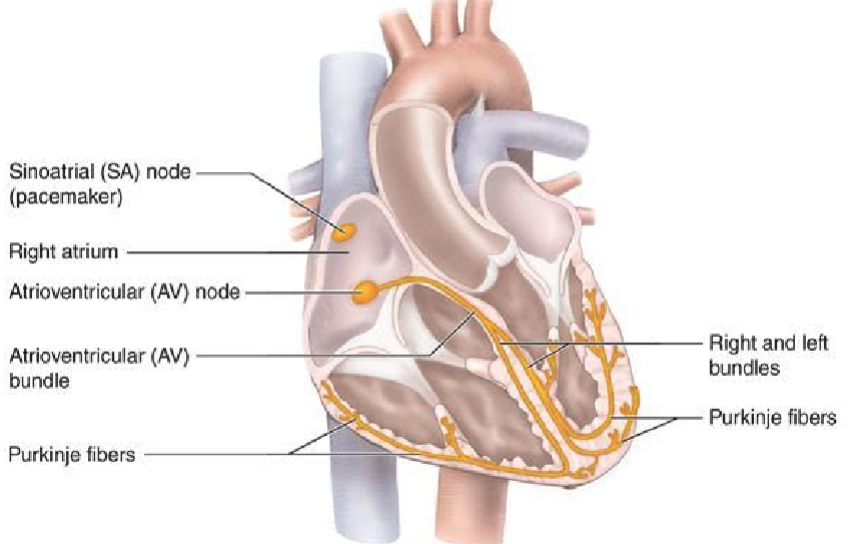
Conduction System Sequence
Sinoatrial (SA) node: where the heartbeat is initiated
Travels throughout atria and relays to AV node
Delays at AV node
Travels through AV bundle to purkinje fibers
Spreads throughout both ventricles
EKG/ECG
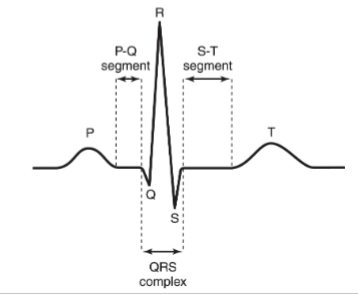
Measure of electrical signals in depolarization and repolarization
P wave: atrial depolarization, starts in SA node
QRS: ventricular depolarization & atria repolarization
T wave: ventricular repolarization
P-Q segment: atrial charge plateau but cardiac muscle cells of atria are contracting
S-T: ventricular charge plateau but cardiac muscle cells of ventricles are contracting
Pathway of Air
Nose
Nasal Cavity
Pharynx
Larynx
Trachea
Primary Bronchi
Secondary Bronchi
Tertiary Bronchi
Terminal Bronchioles
Respiratory
Bronchioles
Alveolar Ducts
Alveoli
Nasal Conchae
Bony projections on the lateral walls of nasal cavity
Provide turbulence to warm and humidify the air
Larynx
The voice box
Passage for air
Food blockade
Spirometer
Instrument that measures the lung ventillation (how much air the lungs can hold and move)
Lungs
3 lobes (superior, middle, inferior) on the right side
2 lobes on the left side, missing middle lobe
Main Digestive Organs
Oral cavity
Pharynx
Esophagus
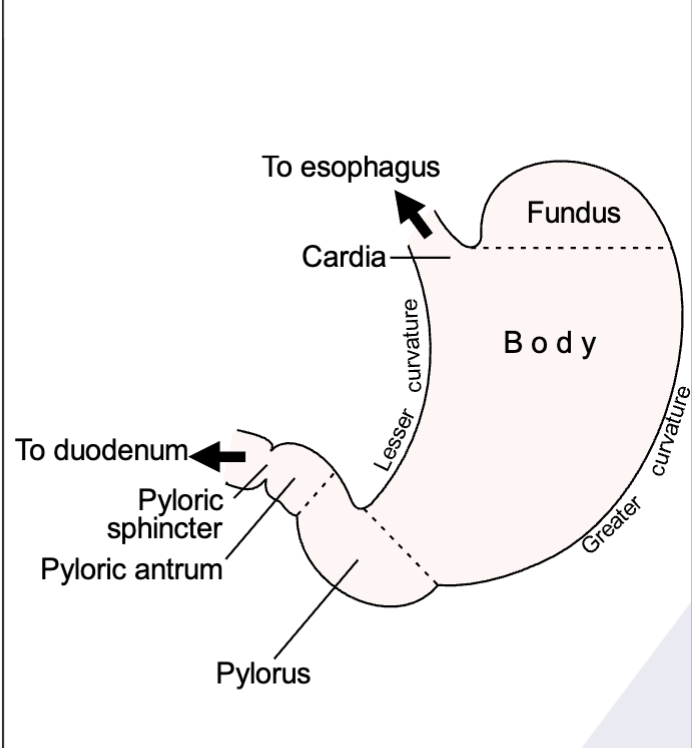
Stomach
Small & large intestines
Accessory Organs
Liver
Pancreas
Teeth
Tongue
Gallbladder
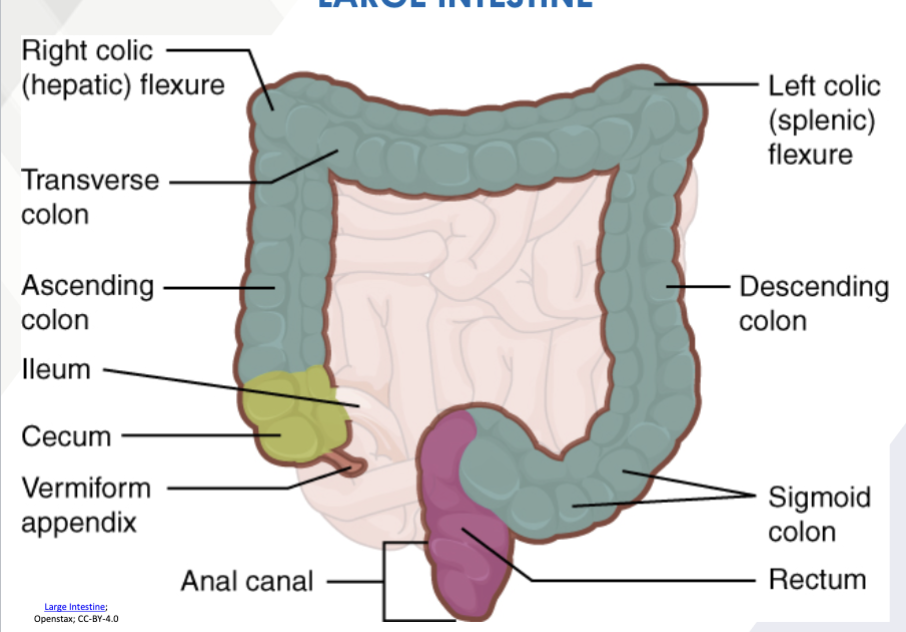
Large Intestine/Colon
Stomach
Liver
Synthesize bile (emulsifies fat)
Gallbladder
Store bile
Amylase
Breaks down starch into maltose
Pepsin
Breaks down protein into polypeptides
Food Pathway
Pharynx
Esophagus
Stomach
Small intestine
Large Intestine
Kidney
Filter blood
Produce hormone: EPO, calcitriol
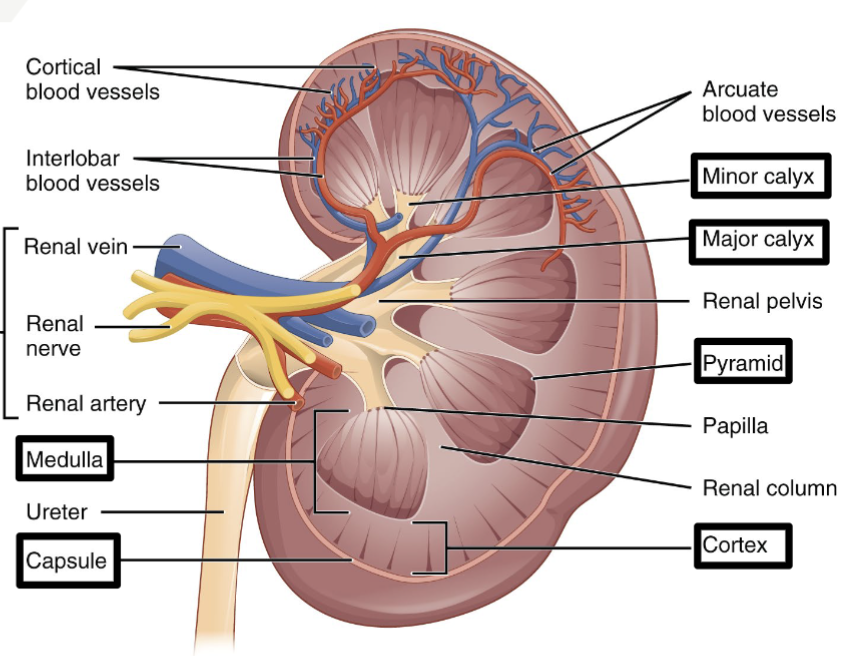
Nephron
Microscopic functional units of kidney
Filtration of blood
Reabsorbs proteins, RBC, and glucose
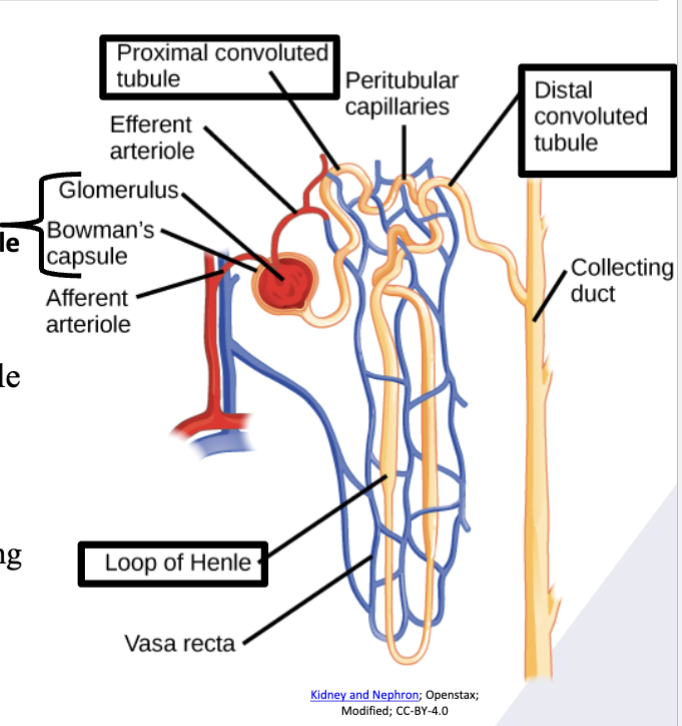
Urine Pathway
Glomerulus
Bowman’s capsular space
Proximal convoluted tubule
Descending limb loop of Henle
Ascending limb loop of Henle
Distal convoluted tubule
Collecting duct
Renal papilla
Renal sinus
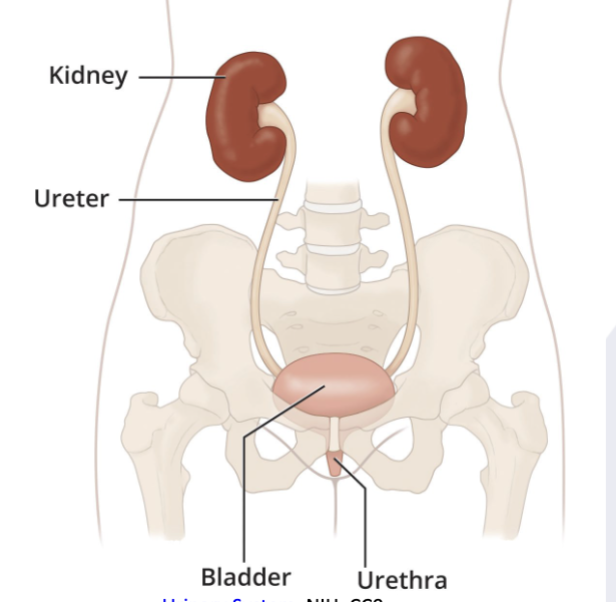
Ureters
Bladder
Urine Formation
Filtration: substances from the blood move in the glomerulus into capsular space
Tubular reabsorption: important substances return back to the blood
Tubular secretion: waste substances secrete as tubular fluid
Urinary System
Meiosis
Process where a single cell goes through 2 cell divisions to produce 4 cells
From diploid (46 chromosomes) to haploid (23 chromosomes)
2 stage process meiosis I and II
Crossing occurs in prophase I
Becomes haploid at anaphase I
Oogenesis
Meiosis process by which female gametes (eggs/ova) are produced
Stop at prophase I, resume after puberty
Stops at metaphase II, after fertilization meiosis II completes and produce 1 ovum
Spermatogenesis
Meiosis process by which sperm cells are produced
Primary spermatocytes: divide by mitosis
Secondary spermatocytes: form through meiosis I
Produce 4 equal, functional spermatids
Male Gametes Formation
Occur in seminiferous tubules of testes
Mature in the epididymis
Pathway
Seminiferous tubules
Epididymis
Vas deferens
Ejaculatory duct
Urethra
Female Gametes Formation
Occurs in the ovaries
Does not fully mature until ovulation and fertilization
Pathway
Ovary
Fimbriae of uterine tube
Fallopian tube (site of fertilization)
Uterus
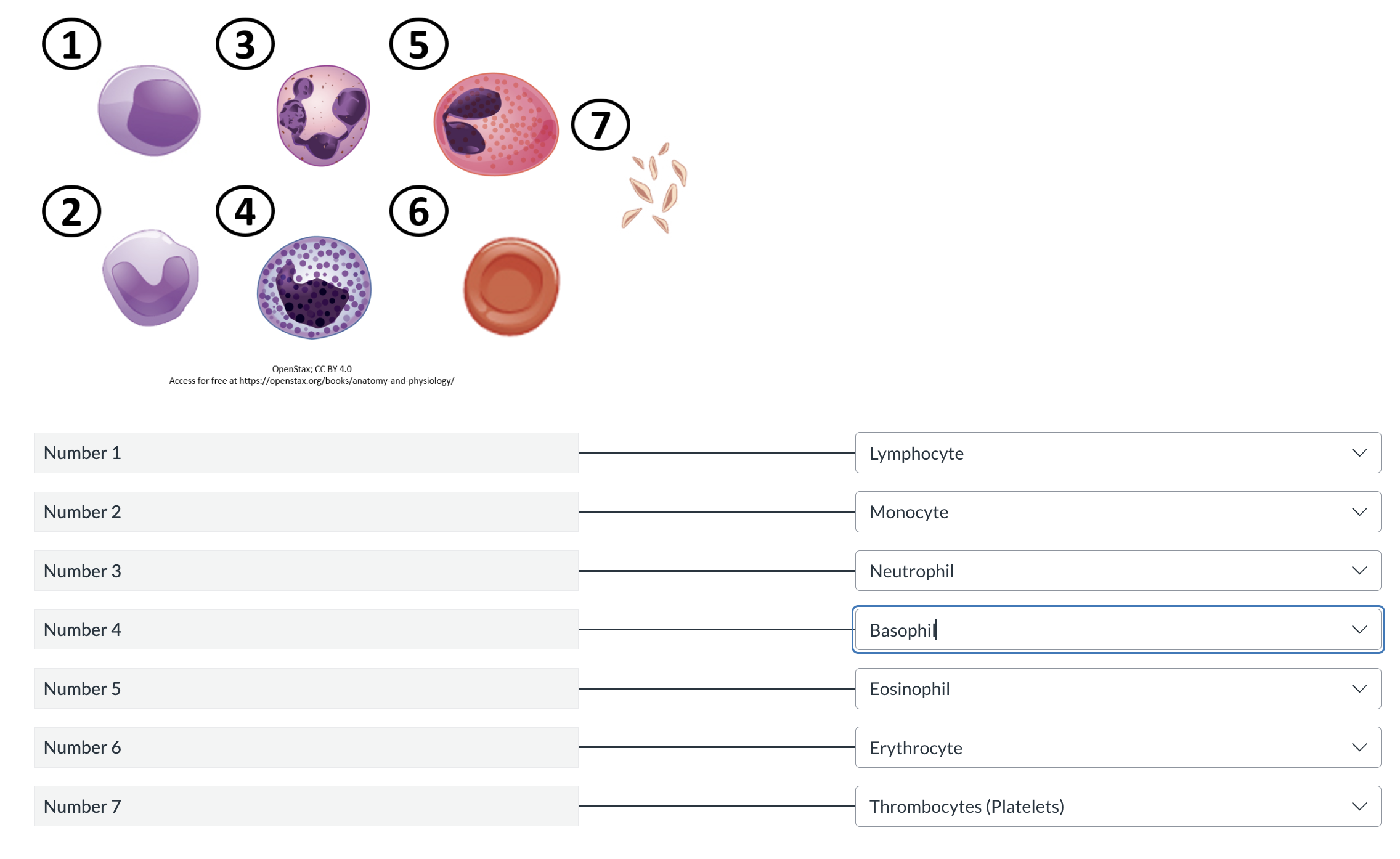
WBC