ruminant metabolism
 Call Kai
 Learn
Learn Practice Test
 Spaced Repetition
 Match
Match Flashcards
 Knowt Play
1/12

There's no tags or description
Looks like no tags are added yet.
Name | Mastery | Learn | Test | Matching | Spaced | Call with Kai | Chat |
|---|
No analytics yet
Send a link to your students to track their progress
13 Terms
metabolic adaptations of ruminants
how are dietary polysaccharides fermented
what is glucose metabolised into
use symbiotic micro organisms to ferment dietary polysaccharides, like cellulose to VFAs
glucose is metabolised to pyruvate and lactate in all mammalian cells- in ruminants this glucose is generated by gluconeogenesis using VFA as the substrate and not directly obtained from the diet
foregut and hindgut
ruminants and herbivores have adapted their metabolic pathways to utlilise VFAS as the substrate for energy production
slower food passage
fermentation relies on a constant env
food intake is matched to the outflow of the GIT
pH regulation via bicarbonate in saliva
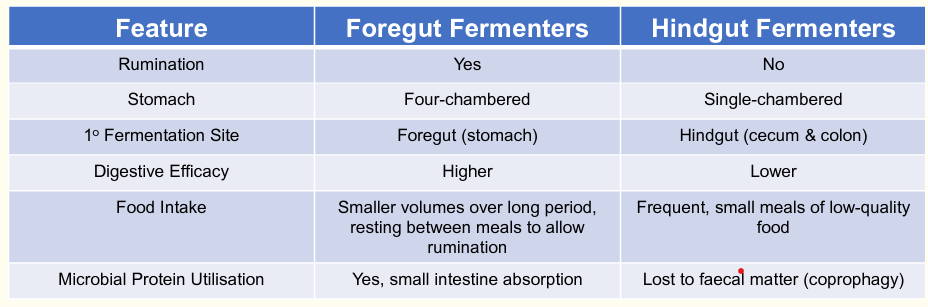
foregut vs hindgut- rumination, stomach, primary fermentation site, digestive efficacy, food intake, microbial protein utilisation
3 stages including how the host absorbs vfa
microbial enzymatic digestion of polysaccharides to soluble hexose and pentose sugars
microbial metabolism of sugars by glycolysis and pentose phosphate pathways to produce VFAs. host absorbs VFAs via monocarboxylate transporters in the rumen epithelium
electron disposal to enable continuous fermentation. enables pH regulation and NAD+ regeneration for microbial glycolysis
main fermentation products
VFAs
more than 95 percent total VFA production
acetate 60-70 -increase with roughage
propionate 15-20 - increase with concentrates
butyrate 10-15
Gases (up to 30L/hr per cow)
co2
methane
butyrate- where and what is it used for
rumen epithelium use as a fuel source
glucose metabolism adaptations- gluconeogenesis
continual gluconeogenesis
regardless of fed/fasted state ruminant livers continually undergo gluconeogenesis to produce glucose for whole animal
low, insignificant liver glycogen reserves- low glycogen synthase activity
glucose metabolism adaptations- hepatic glucokinase
low expression and activity
glucokinase is responsible for generating g-6-p from glucose as it enters cell
prevents liver taking up glucose from blood circulation and ensures glucose produced by liver, leaves liver to supply extra heptatic tisse
protein digestion in ruminant
some passes through rumen and digested in the absomasum and small intestine
rest digested to amino acids in rumen which are either utilised by the microbial population in rumen or deaminanted generating volatile fatty acid and NH3
other non proteinaceous nitrogen eg urea can be used by the microbial population to synthesise amino acids
when the microbial population pass into the rest of the gi tract they are digested enzymatically and resultant amino acids are absorbed into the blood circulation
so can thrive on low protein diet as they obtain essential and non essential from microbiome
microbiome derived vitamins absorbed in the small intestine are suffiient to satisfy ruminant requirement
energy demands of lactation
how does the liver generate the vast majority of glucose
what is the major hepatic gluconeogenic subtrate
other gluconeogenic substrate
how much glucose needed
liver generates vast majority of glucose via gluconeogenesis
proprionate is major heptatic gluconeogenic substrate
other gluconeogenic substrates are gluconeogenic amino acids and glycerol
milk production need large amounts of glucose
high producing may need 1.7kg of glucose a day
high yield dairy cows usally fed a nutrient dense conc alongside forage to help increase percent of propionate produced by micorbiome of rumen
management - what do
concentrates do and increase
rumen bypass protein result in
propylene glycol- dose and what is increased
CONCENTRATES
result in increased propionate production
increased gluconeogenic substrates to support gluconeogenesis
RUMEN BYPASS PROTEIN
bypass the rumen for enzymatic digestion in the abomasum and small intestine
amino acids directly absorbed by the cow increasing gluconeogenic subtrates to enable the liver to produce more glucose
PROPYLENE GLYCOL
typically administered as an oral drench of 250-500ml/day
femented by rumen microbiome to propionate - increased propionate production
increased gluconeogenic substrates to support gluconeogenesis
ovine pregnancy toxaemia
metabolic disease in ewes carrying multiple lambs where the high glucose demand of hte developing lamb not met and causes severe energy deficinecy
insufficient gluconeogenesis in the liver result in rapid lipolysis of stored triacylglycerides in the adipose tissue
beta oxidation of fatty acids result in excess acetyl coa formation which are converted to ketone bodies
ketones accumulate in blood as extrahepatic tissues cannot utilise all that are produced- ketoacidosis
ovine pregnancy toxaemia management
oral drench of propylene glycol to increase propionate production by rumen microbume to icnrease gluconeogenic substrates for use by liver
prevetion- identify ewes carrying multiple lambs and separate for provision of increased concentrat ena drumen bypass proteins
how is butyrate used in the rumen epithelium
how does it entered
what is it converted to
what by products are produced
butyrate enters via a monocarboxylate transporter
is converted to acetoacetyl coa to acetyl coa which enters the TCA cycle
this contributes to ATP synthesis
acetoacetate and beta hydroxybutyrate are produced as by products
these ketone bodies leave rumen epithelium cells into blood for energy production in other cells