EXAM 2 (LOCK IN)
 Call Kai
 Learn
Learn Practice Test
 Spaced Repetition
 Match
Match Flashcards
 Knowt Play
1/107

Earn XP
Description and Tags
Breeding systems, migration, conservation
Name | Mastery | Learn | Test | Matching | Spaced | Call with Kai |
|---|
No analytics yet
Send a link to your students to track their progress
108 Terms
Migration
Seasonal long-distance movement from one geographic location or habitat to another
Breeding season
Arctic, boreal, temperate areas
Non-breeding season
Temperate, subtropical, tropical areas
Long Distance Migration → Arctic Tem
Travel ~40k km/25k mi per year
Flyways
Migration corridors that generally follow major geographical features such as mountain ranges, rivers, and valleys
Atlantic Flyway
Flyway that follows the Atlantic Coast
Mississippi Flyway
Flyway that follows the Mississippi River
Central Flyway
Flyway that follows the Great Plains
Pacific Flyway
Flyway that follows the Pacific Coast
Tracking Innovation
GPS devices getting smaller and more lightweight, can now be solar powered
Doppler Radar for Tracking
Distinguishes dense flocks of migratory birds, often appearing in reflectivity when filtering out weather
Climate change and spring migration
Many bird species are migrating earlier in response to climate change, but responses vary among taxa and ecologies
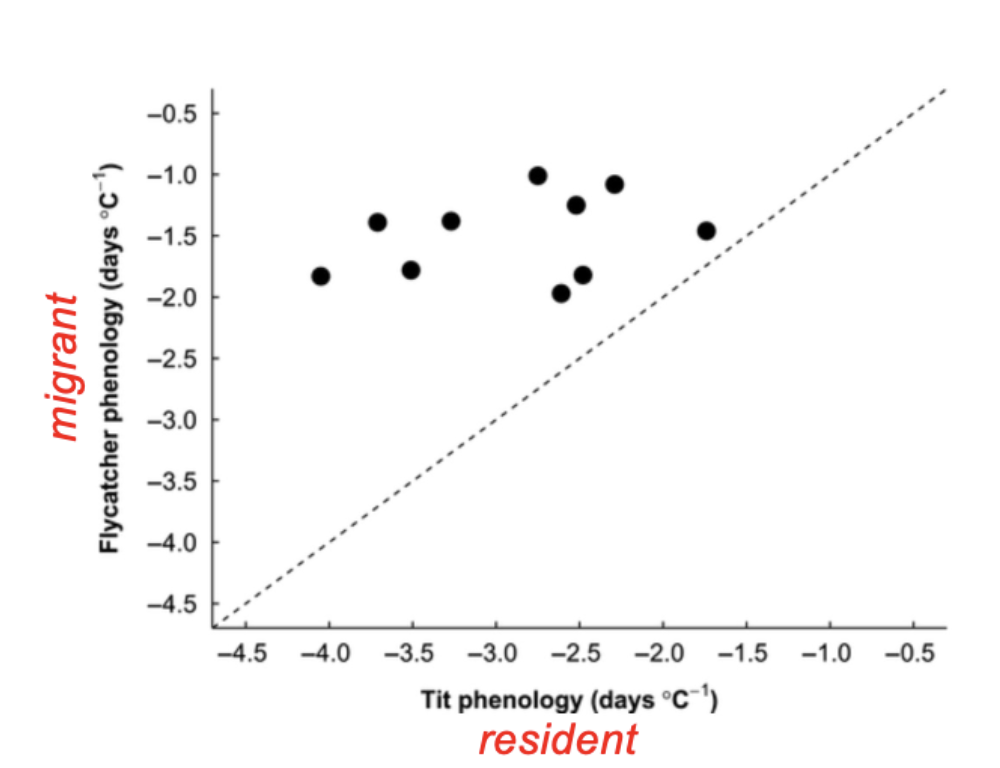
Some evidence that resident species are shifting their breeding earlier than migratory species
Pros of living in/migrating to Tropics
Increased efficiency in thermoregulation
More dependable, year-round food resources
Cons of living in/migrating to Tropics
Less land mass = higher density of birds per square area, thus troublesome to claim territory
Higher predation rates
Pros of living in/migrating to Temperate/Boreal/Arctic
Long summer days = abundant resources (water, nesting, etc)
More landmass = more space, less density
Less predation
Cons of living in/migrating to Temperate/Boreal/Arctic
Cold winters
Costly to thermoregulate
Low food resources
Photoperiod
Length of the day/sunlight
increasing/decreasing → restlessness, eating to excess, fat deposition, and weight increases
Migratory restlessness
innate, anxious behavior migratory birds exhibit before and during migration seasons when caged
Fat deposition
Subcutaneous layer of fat to fuel long-distance flights
metabolized by enzyme lipase —> free fatty acids and glycerol
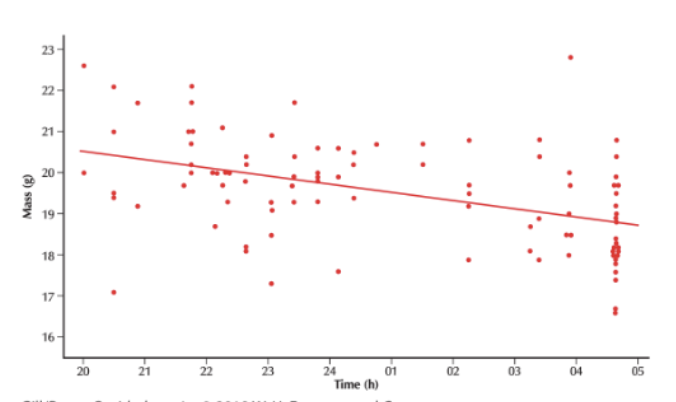
Birds lose 0.2-0.9 percent of their body weight per hour of flight; How far individuals can fly is dependent on how much fat they have in reserve
Stopovers
Areas where birds stop their migration to rest and forage to restore fat reserves
Often high food resources near large areas with low resources
Diurnal migrations
Birds that employ thermal soaring to take advantage of rising warm air
Birds that feed on insects while flying
Nocturnal migrations
more common; more stable/favorable and cooler weather, leading to less heat loss
Lesser likelihood of predation by hawks, especially smaller birds
Birds that migrate day + night
Anseriformes and shorebirds
True navigation
Birds navigate to specific patches of habitat hundreds or thousands of km away
Visual landmarks → recognize features like coastlines, rivers, mountains, highways, and railways as reference points
Sun compass → sun’s position in the sky, together with their internal circadian clock, to determine direction during migration
Star compass → pattern and position of multiple stars at night to orient themselves and maintain the correct migratory direction
Geomagnetism → detect Earth’s magnetic field, which acts like a map of horizontal space and helps them navigate
Threats during migration
Predation
Run out of fuel and die of exhaustion
Strikes with buildings, particularly glass
Land use changes can also affect navigation and disorient birds
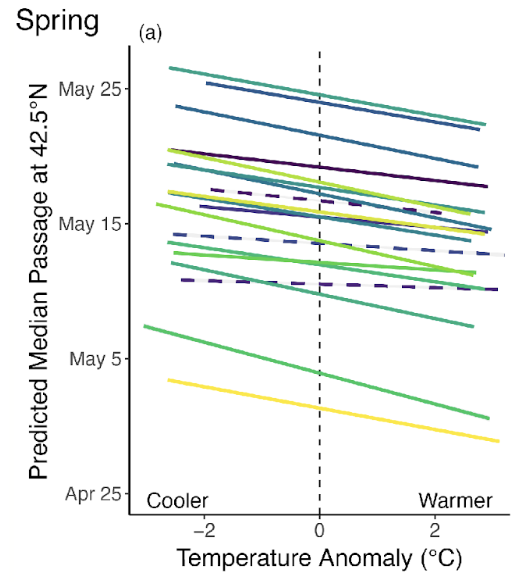
Species-specific responses to changing temperatures for spring migration, x-axis = temp change, y-axis = migratory passage
In most species, species arrive earlier in warmer years
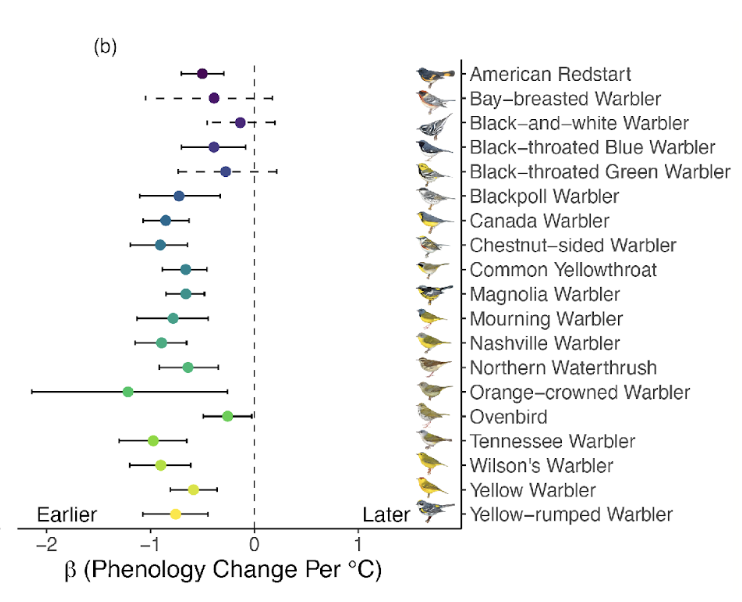
Shows the effect size for each species, which is how many days the phenology changes for each degree celsius
In general, most species’ estimate is within the negative range, indicating significantly earlier arrival with an increase of 1ºC
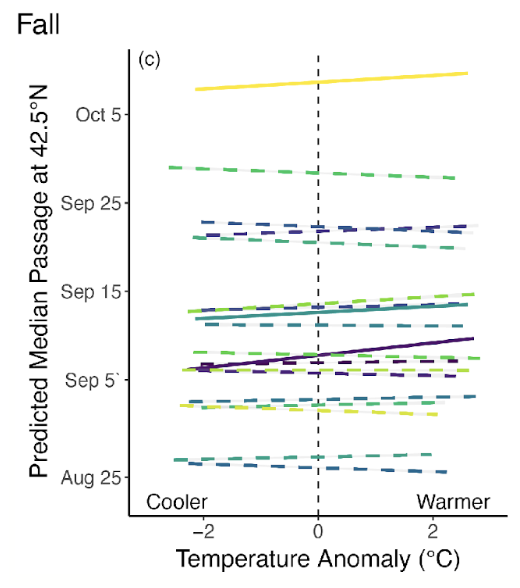
Species-specific responses to changing temperatures for Fall migration, x-axis = temp change, y-axis = migratory passage
Most species are not adjusting their fall migration timing with changing temperatures
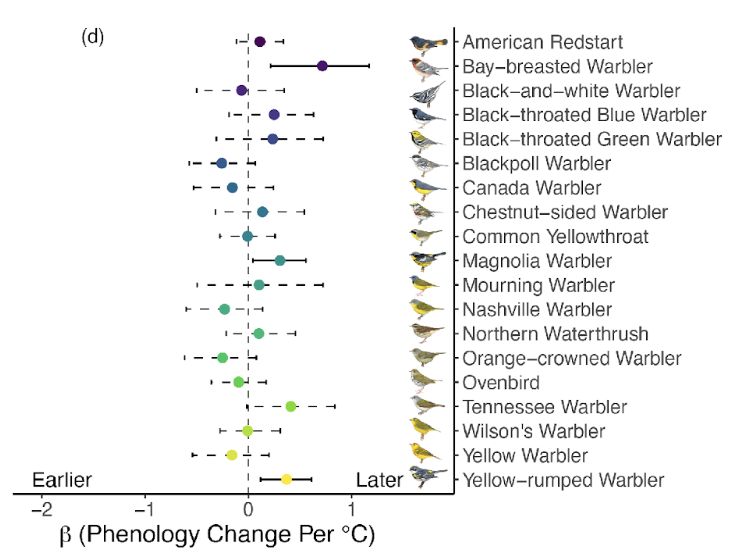
Shows the effect size for each species, which is how many days the phenology changes for each degree Celsius
Only 3 species are migrating later in the Fall with warmer temperatures
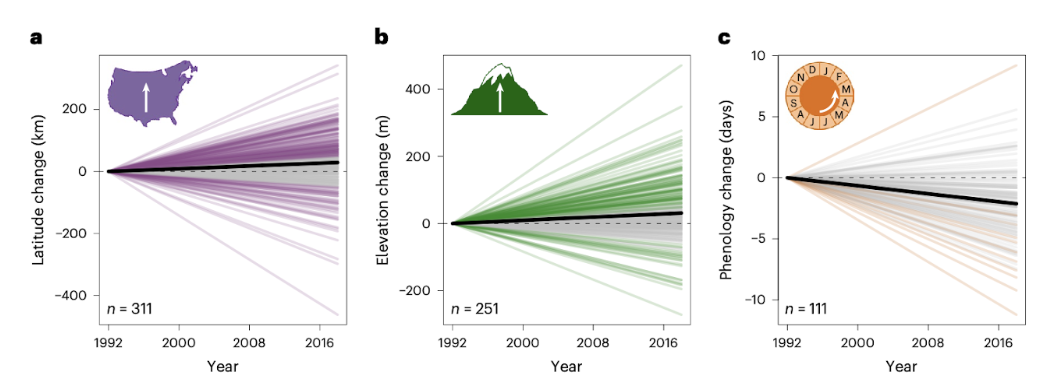
x-axis = years, and the y-axis shows latitude change, elevation change, and phenology change for Figures 1a, 1b, and 1c, respectively
Birds are shifting to higher latitudes (a) and elevations (b) for breeding; most species are shifting to earlier return dates (c)
Shift Ratio
How birds are changing their latitude, elevation, or phenology as compared to how they are expected to change based on the warming rate of the climate
Observable change/rate of warmth
Shift of 100% = “perfectly” tracking climate change
Negative shift ratios = species arriving later with warming climate
Positive shift ratios = species arriving earlier with warming climate
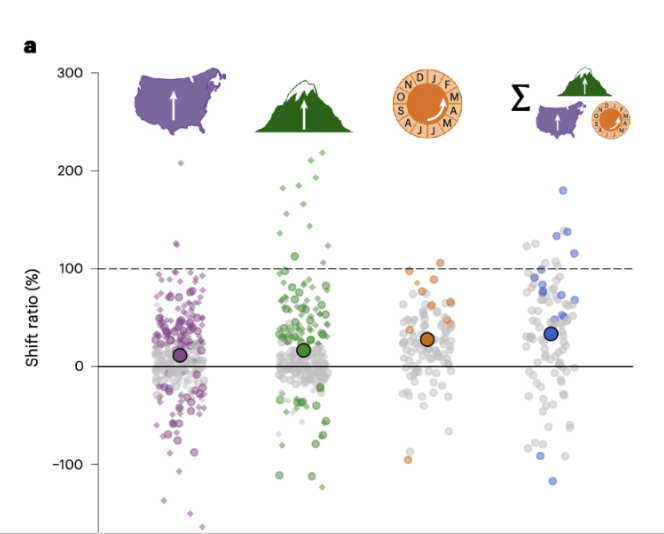
Y-axis = shift ratio
Black = 0
dashed = perfect tracking
Average shift ratios are positive but well below 100, with the greatest overall shift seen for breeding phenology
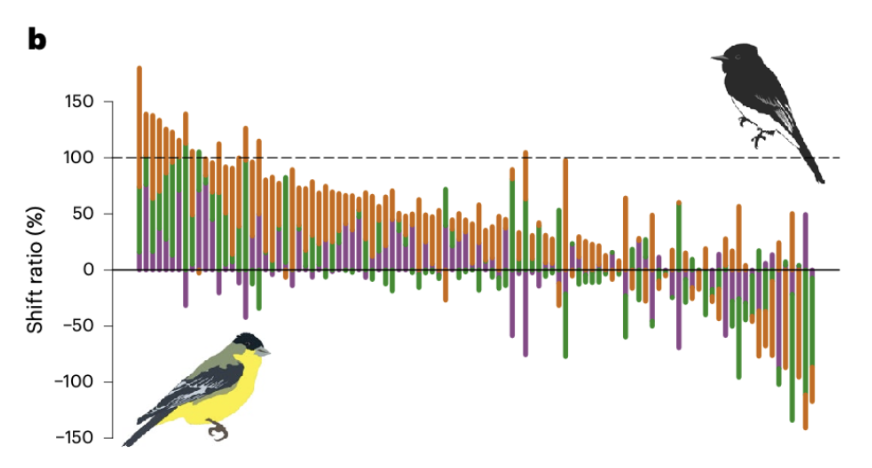
Majority of birds have a positive sum, mostly b/c breeding phenology was the greatest contributor
Y-axis = average shift ratio
X- axis = individual species
Bars = one species representing shift bar contributions
How does climate change influence birds to migrate sooner?
Climate change causes earlier spring warming, i.e. above-average temperatures, triggering earlier spring migration; some species now breed in higher altitudes or latitudes to find cooler temperatures.
What issues arise for birds if they migrate earlier than intended?
Migrating too early can cause phenological mismatch, where birds arrive before or out of sync with peak food resources or breeding conditions, which can hurt survival and reproduction.
Monogamy
Two parents raising offspring; ~92% of species
Offspring care responsibilities
Nest building, incubation of eggs, nest defense + Feeding, thermoregulating, and defending chicks
Precocial
Chicks that hatch in a relatively advanced physical state
Precocial characteristics
Developed down plumage, open eyes, self-feed, thermoregulate, move
Altricial
Chicks that are relatively immature upon hatch
Altricial characteristics
Unable to open eyes, sparse down feathers, immobile
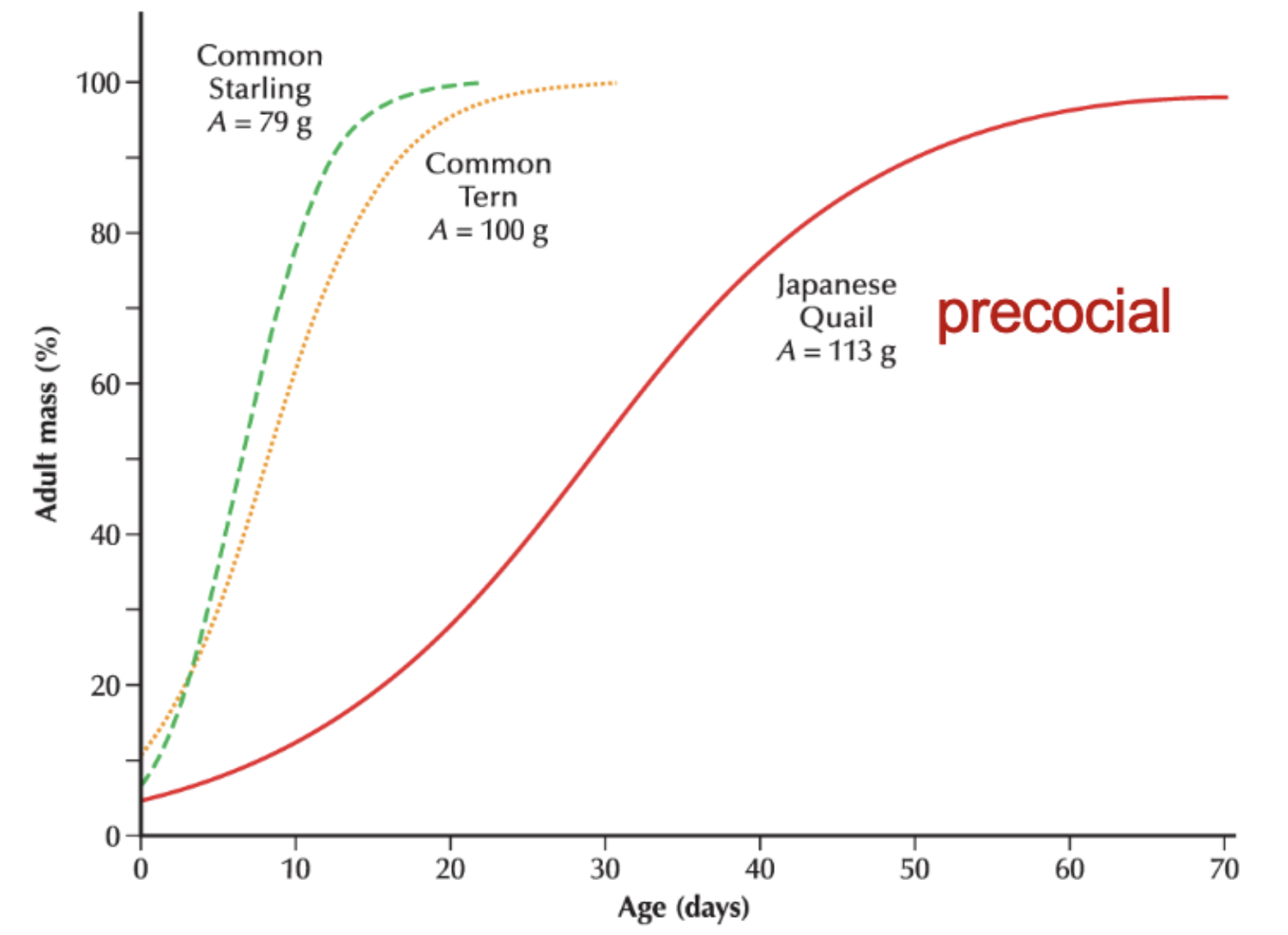
Altricial birds are born less developed, but have higher rates of growth than precocial
Social monogamy
Social pairs of birds are not sexually exclusive; in practice, they will share traditional monogamous responsibilities but may mate with other birds
EPC male benefits
Increase fitness with little use of resources
Doesn’t provide parental care to offspring sired through EPCs
Sperm is easy to produce
Drawback: Searching for too many EPCs —> divorced b/c poor quality male
Reasons for divorce
Male cannot produce viable offspring
EPC female benefits
Increase fitness by seeking EPCs that will improve offspring quality
Increased heterozygosity of young; MHC immunocompetence genes
“Ideal” mates may differ for production of males or females
Drawback: Male suspects cuckoldry —> reduced parental care
Purple Martin: EPC Copulations
Colonial nesting
High quality males @ higher cavities
Steals EPCs from younger males
Larger young males = better mate defenders
Females do NOT seek EPC once w/ high quality male
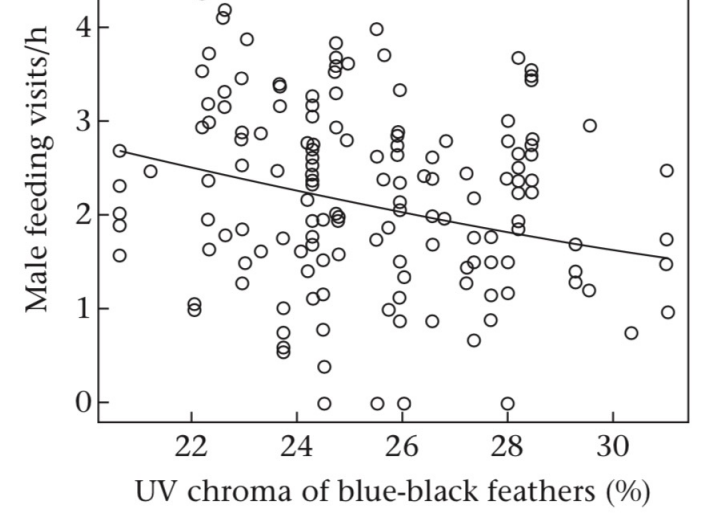
Negative correlation between male attraction and parental care
Parental-mating trade-off hypothesis
Benefits derived from parental care do not compensate for the costs of losing extra-pair mating opportunities; males prioritize EPC opportunity > parental care
Positive differential allocation hypothesis
Attractive bird reduces its parental effort b/c its mate is willing to compensate; female settles for male’s effort
Polygyny
Males w/ multiple females; 2~ of species
Polygyny → Birds of Paradise
Males provide no parental care; advertise w/ plumage, displays, and songs
Females limited by resources, thus try to choose only high quality males
Polygyny → Bowerbirds
Males build bowers (vessels that emphasize display)
Polygyny → Lek displays
Territories where males gather to flaunt themselves
Lek displays: Hot spot model
Male gather in sites most likely to be visited by females
Lek display: Hot shot mode
males gather around experienced/attractive/dominant males
Lek display: Female preference
females prefer to visit large rather than small clusters of males
Polygyny → red-winged blackbirds
Males establish and defend territories that have high water levels and good nest cover to attract females; females females still will obtain EPCs with males outside of their nesting territory
Polyandry
Sex role reversal; Females attract and overtly pair with multiple males
Obligate brood parasites
Reproduce only by laying eggs in the nests of other species
Don’t incubate
Don’t build nests
No biological parental care
Brood parasitic adaptations
Fast-egg laying
Egg mimicry
Begging calls
Mouth markings
Instinct to evict other eggs upon birth
Accelerated development
Chick mimicry
Chick aggression
Brood parasitic-host adaptations
Nest defense
Nest desertion
Egg rejection
Chick rejection
Cooperative breeding
“Helpers” care for young that are not their own
Cooperative breeding indirect benefits
Kin selection: increase their inclusive fitness by aiding genetic relatives, even at the cost to their own reproduction
Cooperative breeding direct benefits
Experience + inheriting territory, especially when there is a lack of resources
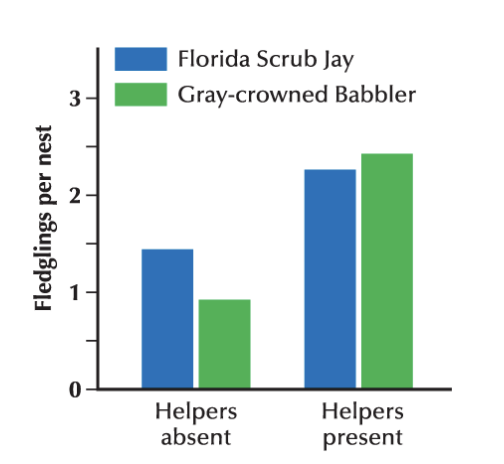
Increased production of offspring with helpers; diminishing return beyond 3 helpers
Ecological constraints
Helpers “help” b/c environment lacks suitable habitats, low annual rainfall, high mean temperature, and high climatic variance
Mobbing behavior
A group of prey give alarm calls, complete aerial dives, and make physical contact with the predator
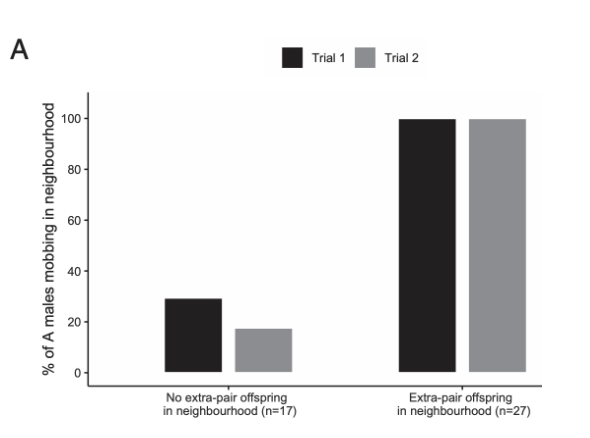
Males that sired EPO in at least one neighboring nest box were more likely to assist in mobbing those nest boxes than those w/o EPO
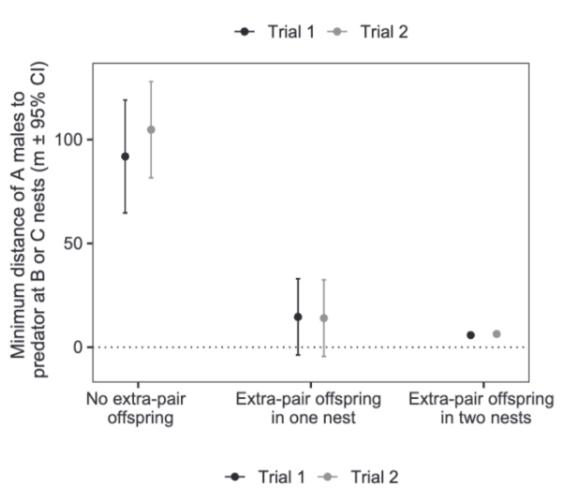
Males with extra-pair offspring in a nest are more likely to defend that nest against predators
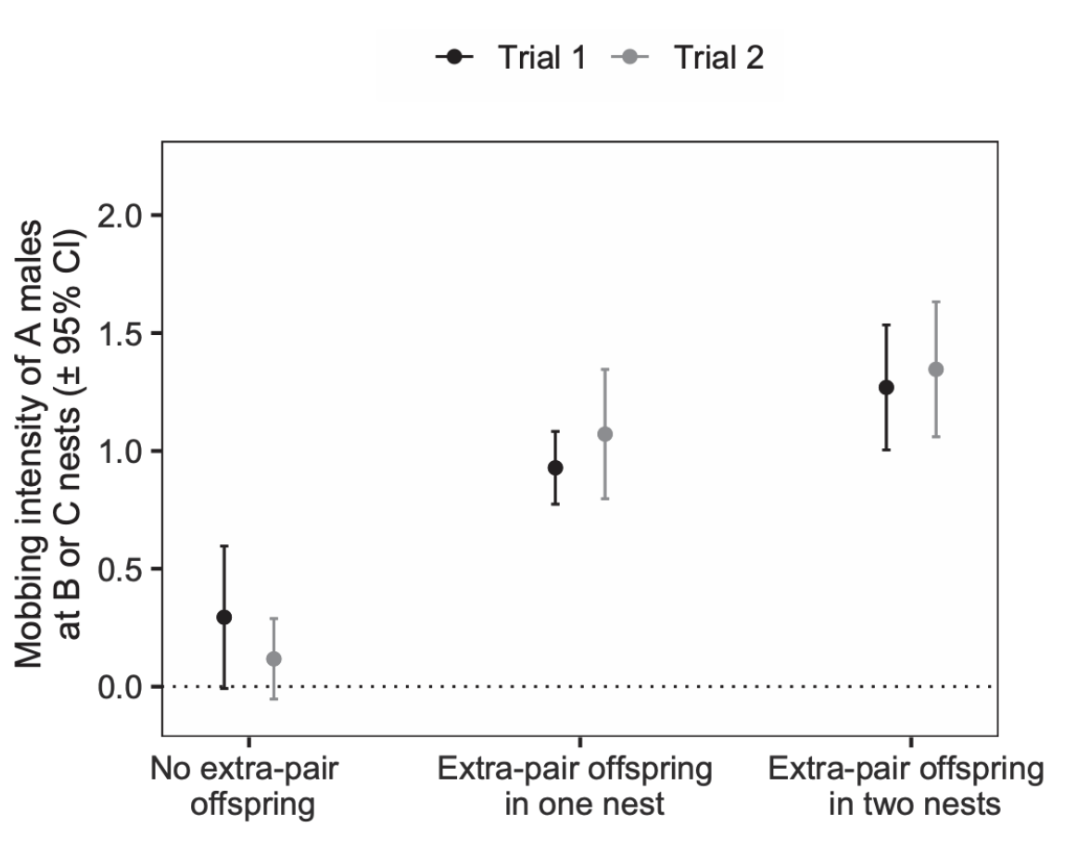
Males w/ an extra-pair offspring are more likely to participate in mobbing in another nest in comparison to birds who do not have an extra-pair offspring
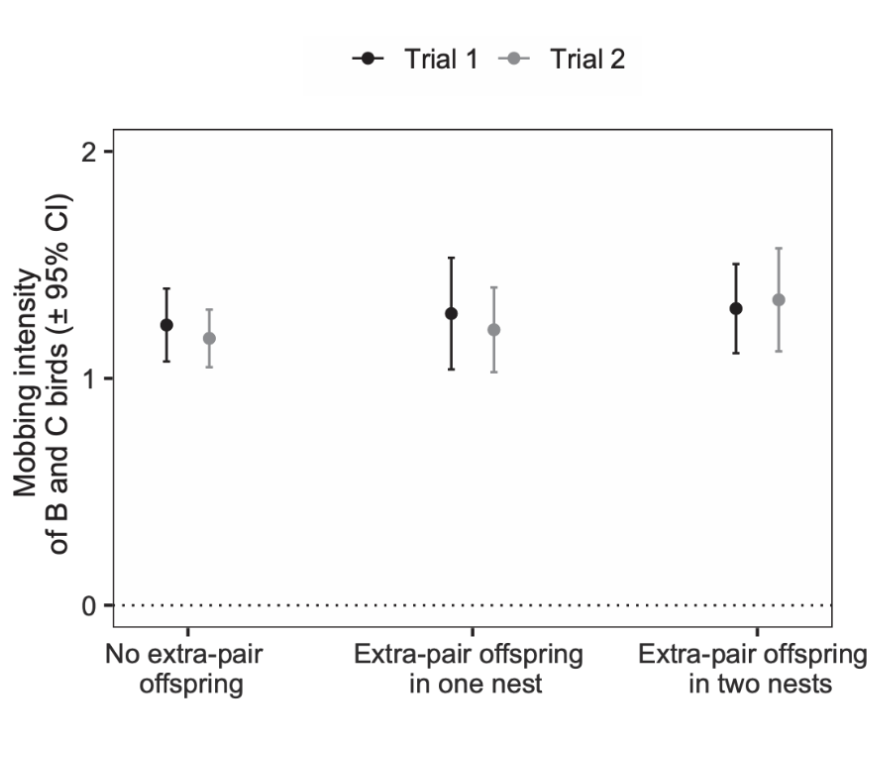
Mobbing intensity of male B and C did not differ significantly whether nest box A males had sired offspring in either one nest box, or both nest boxes. This shows that the B and C males did not reduce their mobbing behavior if there were extra-paternity chicks in their nests.
Major Histocompatibility Complex
Group of highly variable genes that play a central role in the immune system, presenting antigens to T cells, which enables the body to recognize and respond to infections
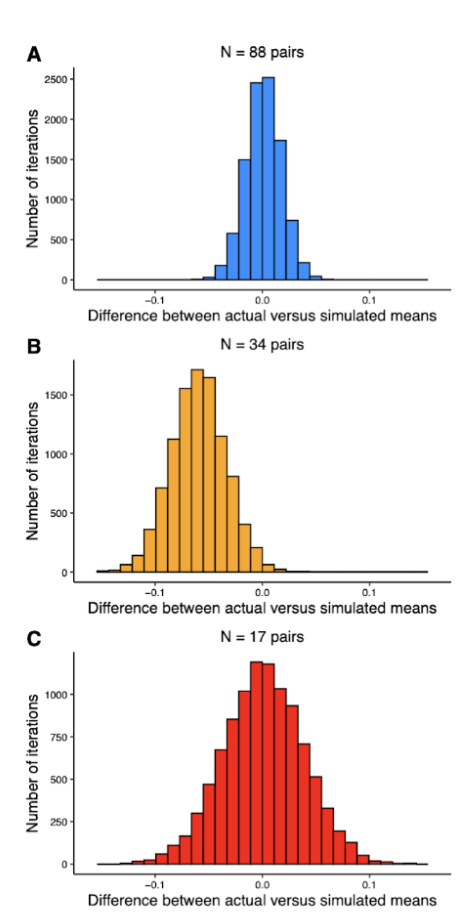
Graphs A and C show a median close to 0 and in graph B the median is less than 0. This indicates that females that sought extra pair matings had a social mate with more similar MHC-I alleles than you would expect by chance
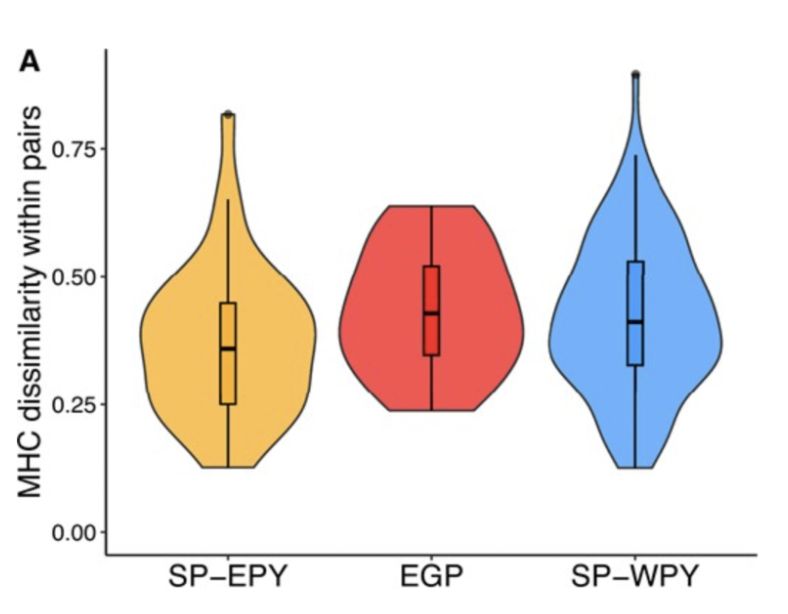
Although the randomisation test suggests that SP-EPY have lower MHC-I dissimilarity than expected from random mating, there was no overall significant difference in the MHC-I dissimilarity of the three different pair types
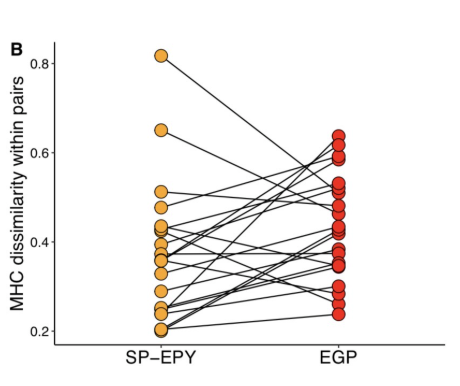
If you were to remove the outlier, females often chose an extra pair male with high dissimilarity; however, given the overall data, the dissimilarity was not significant
Anthropogenic extincion
Extinction of species due to human activity
Hunting
Habitat changes
Introduction of species and pathogens
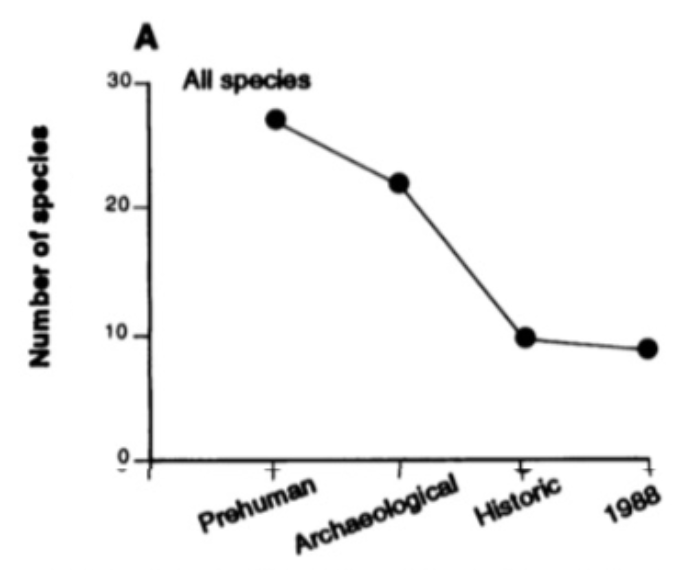
Island species decreasing due to anthropology
Historic extinctions in North America
“Game birds” suffer large declines due
Great Auk harvested to extinction in 1840
Last wild passenger pigeon killed in 1900
Plume hunting
Hunting birds for feathers to be used for hats and accessories
Victorian fly tying
Flies designed for fishing
Pet Trade
Selling birds
Migratory Bird Treaty Act
Drafted in 1906, signed into law in 1918 —> cannot kill, capture, collect nests or eggs or any other byproduct, or export/import birds
why? motivated by the extinction of birds in 1800s
Incidental takes
Violations that occur due to otherwise lawful activities, included in the MBTA
prosecuted:
oil companies
wind farms
Measures to avoid incidental take
Companies work with conservation groups to minimize incidental takes of birds b/c companies don’t want to be fined
Adding objects to power lines to make them more visible
increase distance between power lines
Covering waste pits of mining fossil fuels/pollutants
Covering open pipes
Flashing switch lights on cell towers
Slow wind turbines
Arguing against incidental takes
Law says nothing about “incidental takes”
Impedes rights of states to regulate land
Limits industries to improve and develop services
MBTA only covered activities where birds are directly affected
Impact of MBTA
Credited for saving millions or billions of birds
Halted use of feathers in fashion
Aided in recover of species that were overhunted
Used
Habitat loss
Rapid destruction of all types of habitats due to agriculture, pasture land, and development–tropical forests particularly, grasslands, wetlands, etc.
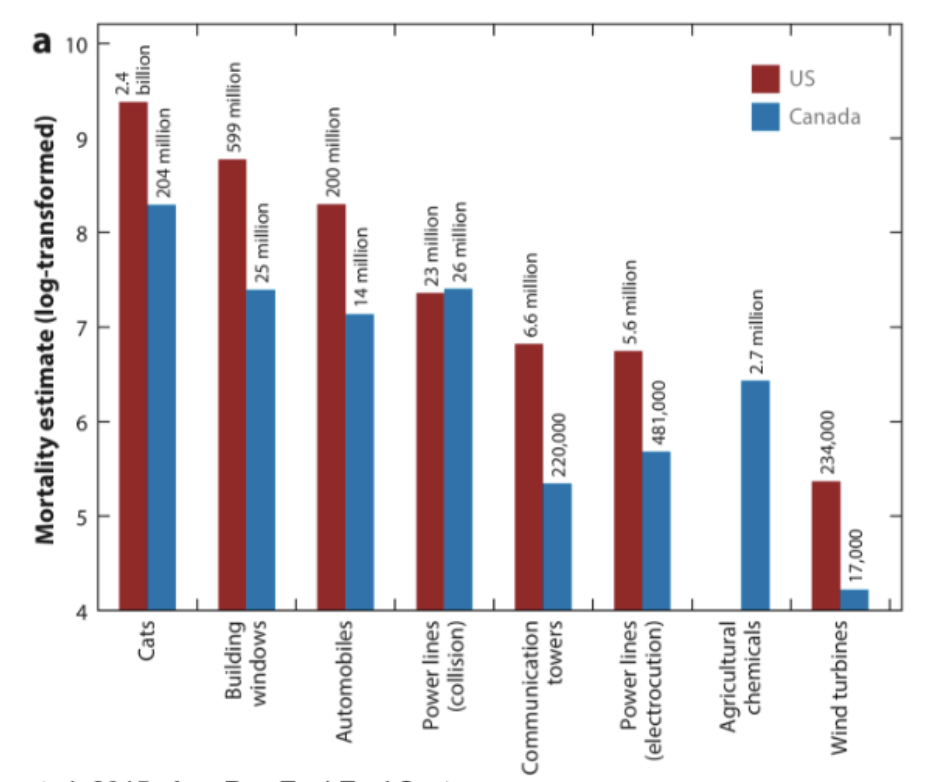
Human-related causes of mortality; cats are biggest culprit of killing birds
Relationship between population and diversity
Loss of genetic diversity due to population decline, hindering ability to adapt to selection pressures
Relationship between genetic drift and population
Smaller population leads to greater genetic drift, thus greater loss of alleles
Bird growth potential
Short generation time → early production life
Large clutch size
Multiple clutches per season
Bird growth limitation
Large generation time —> reproduce later in life
Smaller clutch size
Zero or one clutch/year
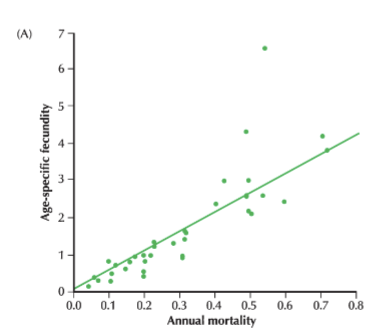
Annual mortality positive correlates with age-specific fecundity, i.e. if more likely to die sooner, bird is also more likely to produce more offspring
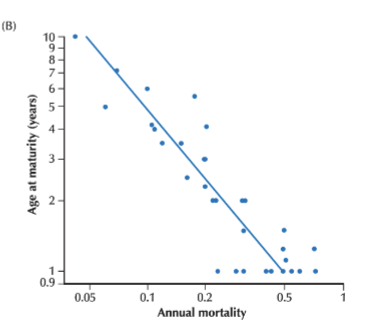
Annual mortality negatively correlates with age of maturity, i.e. if more likely to die sooner, bird is also more likely to be at age of maturity
Age-specific mortality
Birds more likely to die earlier in life
External limitations to growth
Low foraging efficiency, predation, habitat availability, food availability, disease
Relationship between reproduction + survival and population size
Due to carrying capacity, as population size increases, rate of growth decreases and thus reducing survival and reproduction