Vertebral Column Anatomy単語カード | Quizlet
 Call Kai
 Learn
Learn Practice Test
 Spaced Repetition
 Match
Match Flashcards
 Knowt Play
1/30

There's no tags or description
Looks like no tags are added yet.
Name | Mastery | Learn | Test | Matching | Spaced | Call with Kai |
|---|
No analytics yet
Send a link to your students to track their progress
31 Terms
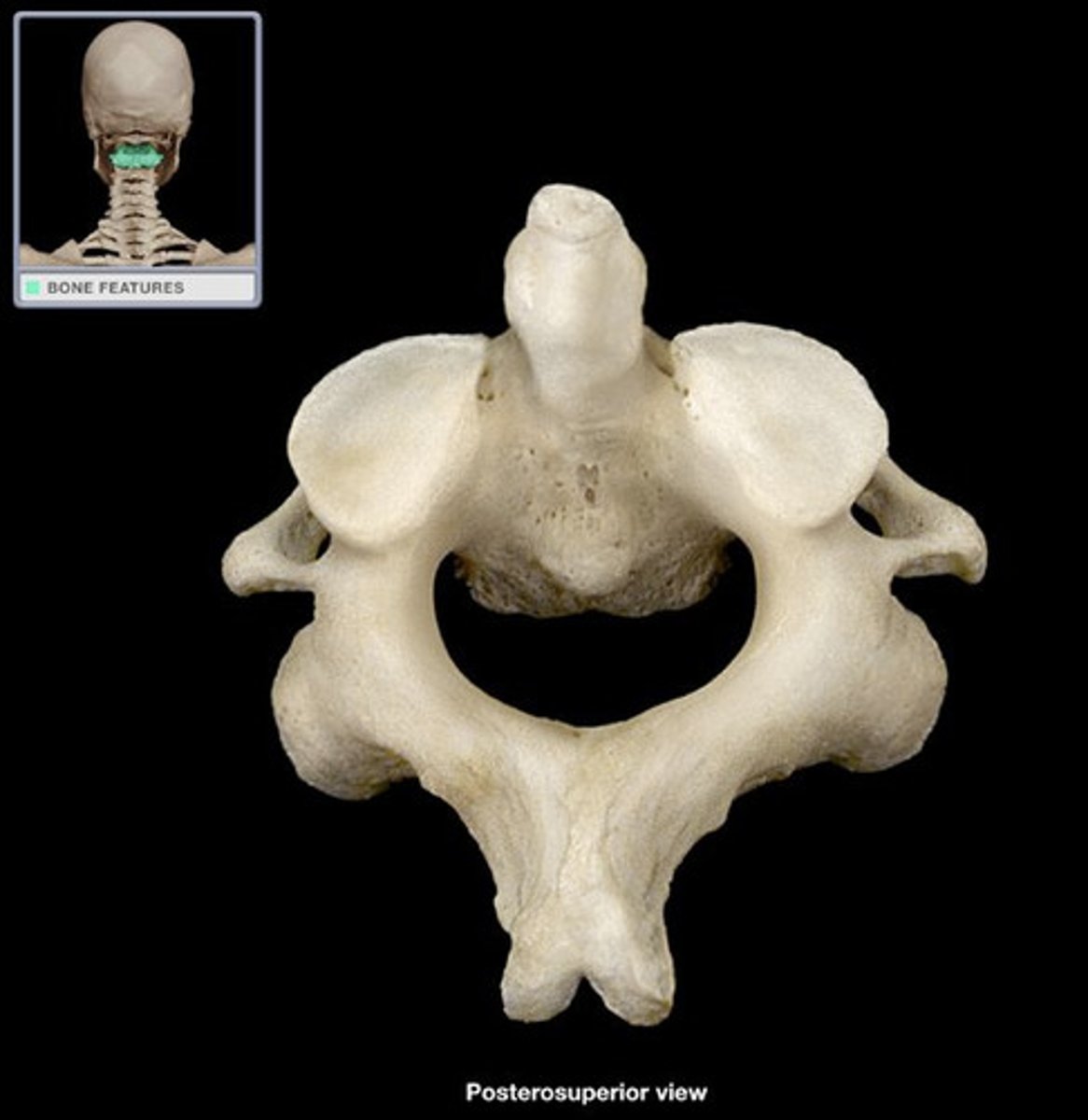
Atlas (C1)
supports the head
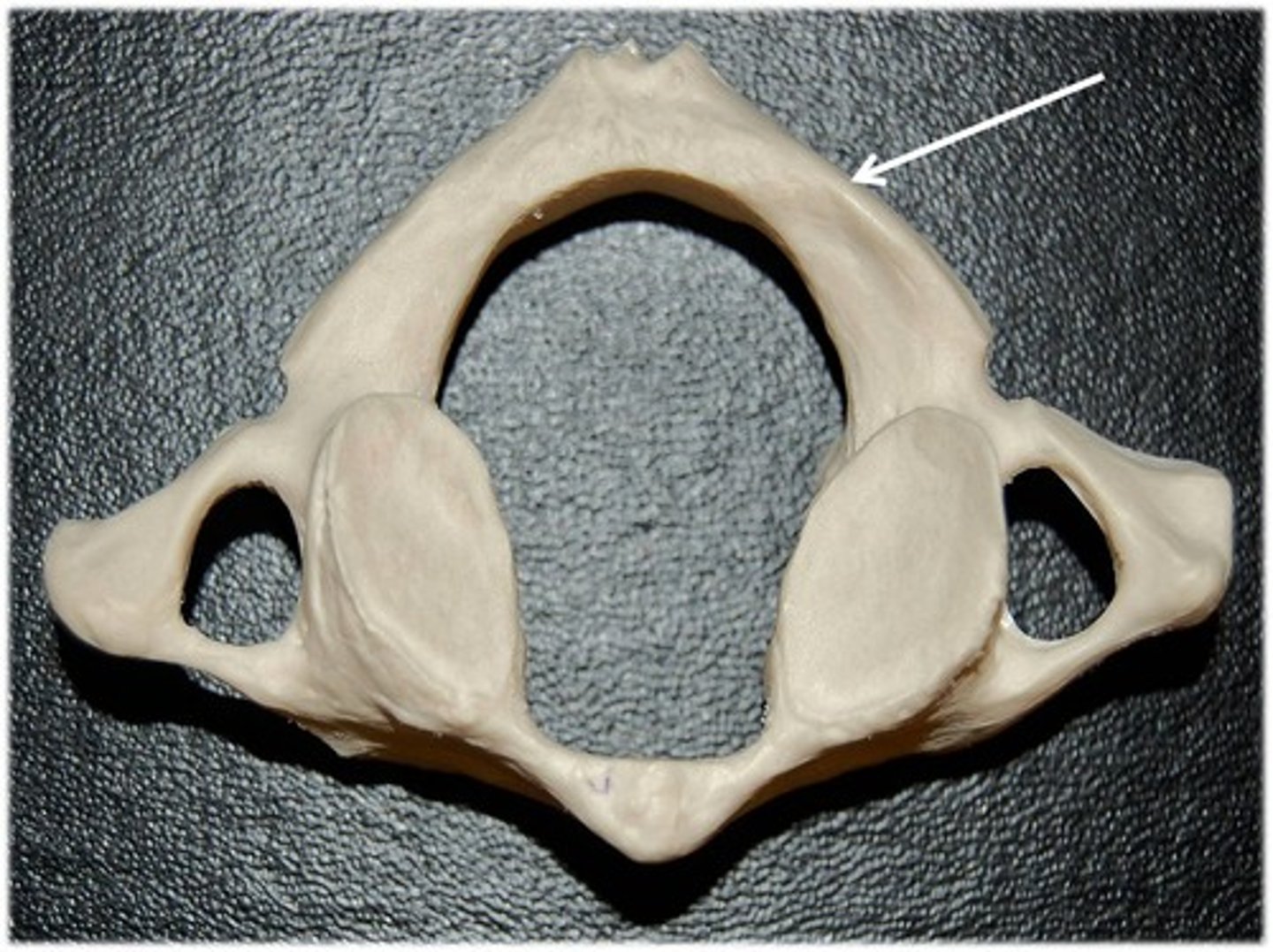
Axis (C2)
second cervical vertebrae
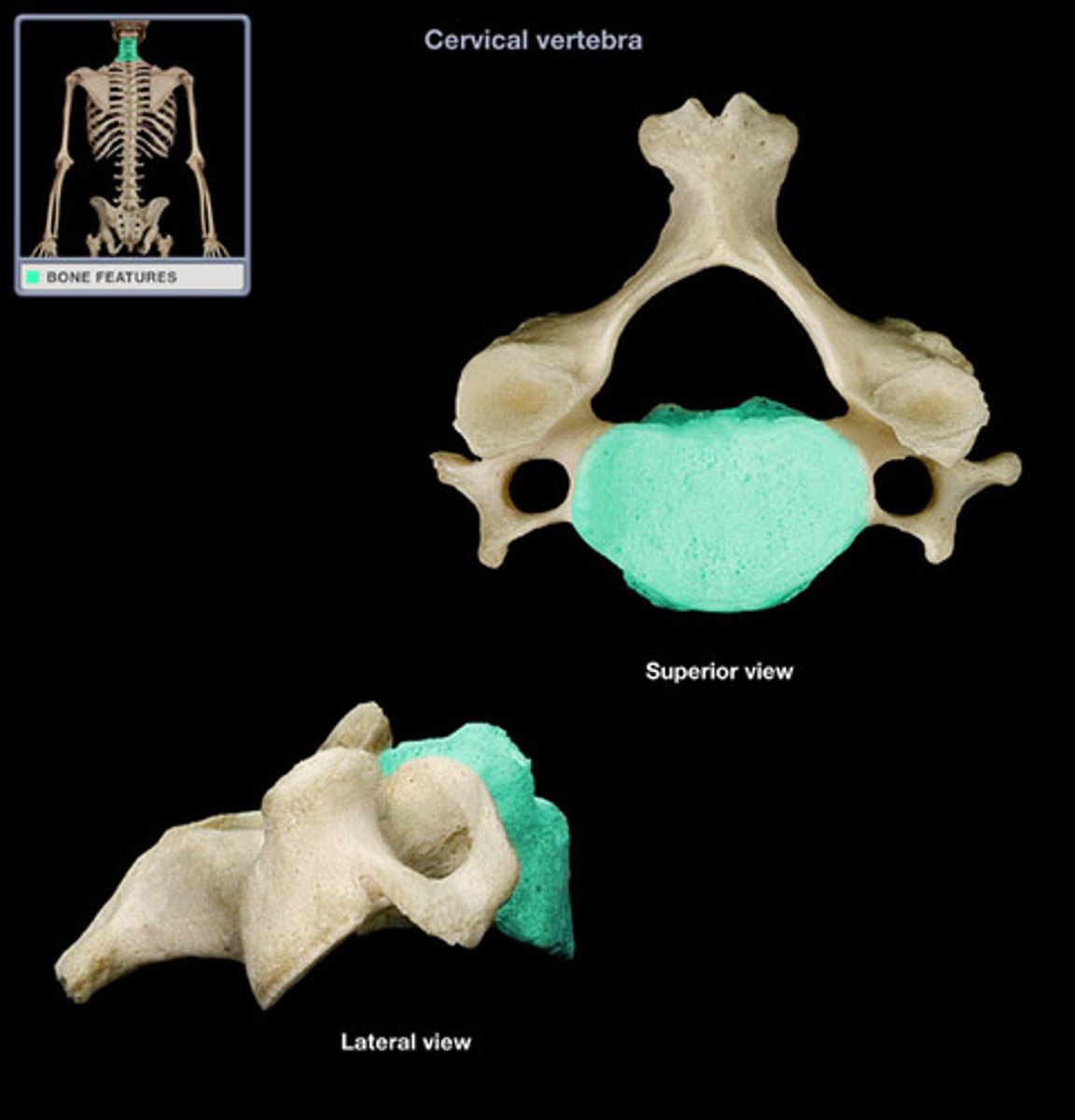
body of vertebrae
the thick, disc-shaped anterior portion which is the weight bearing portion
cervical curvature
C1-C7
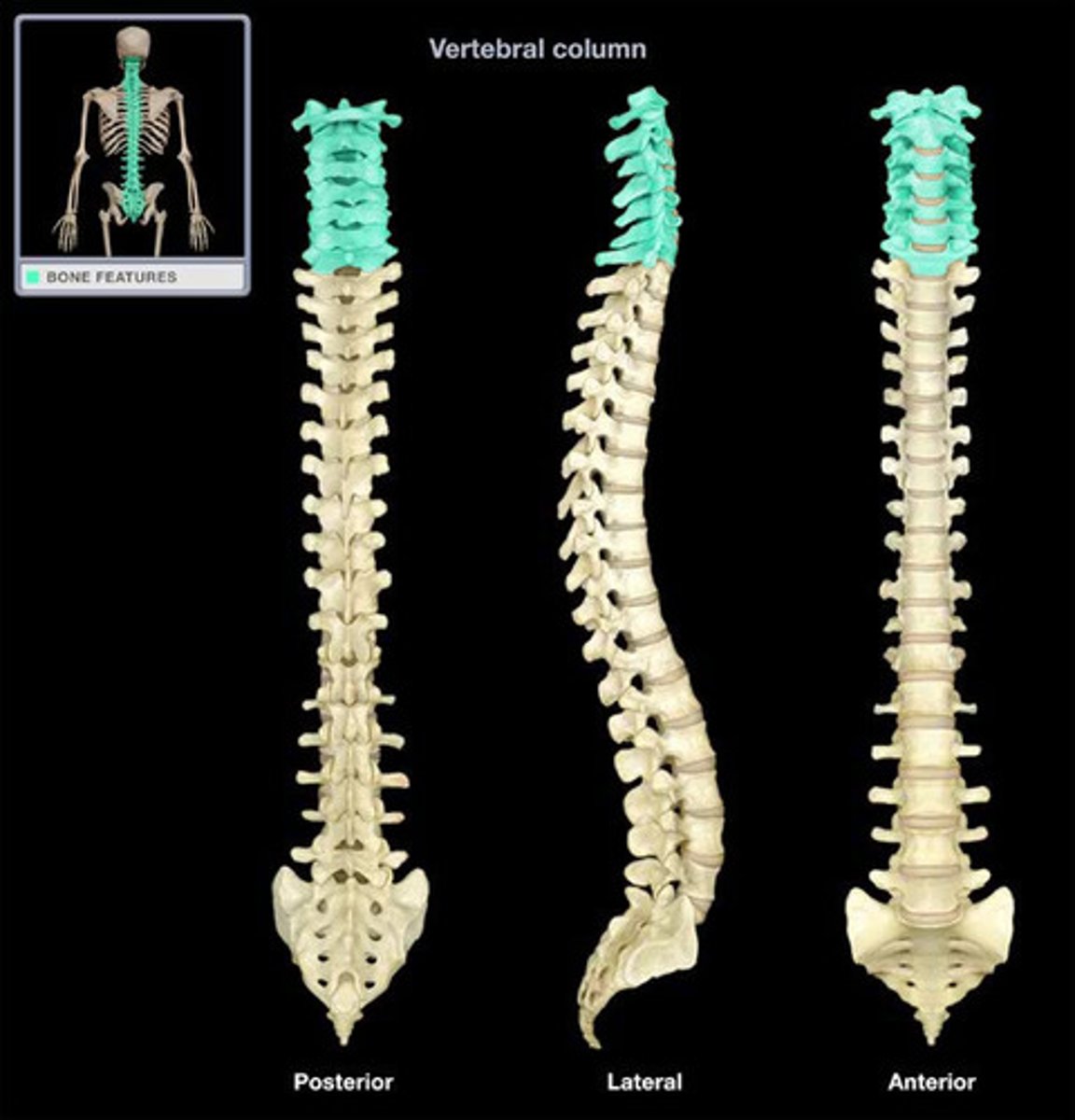
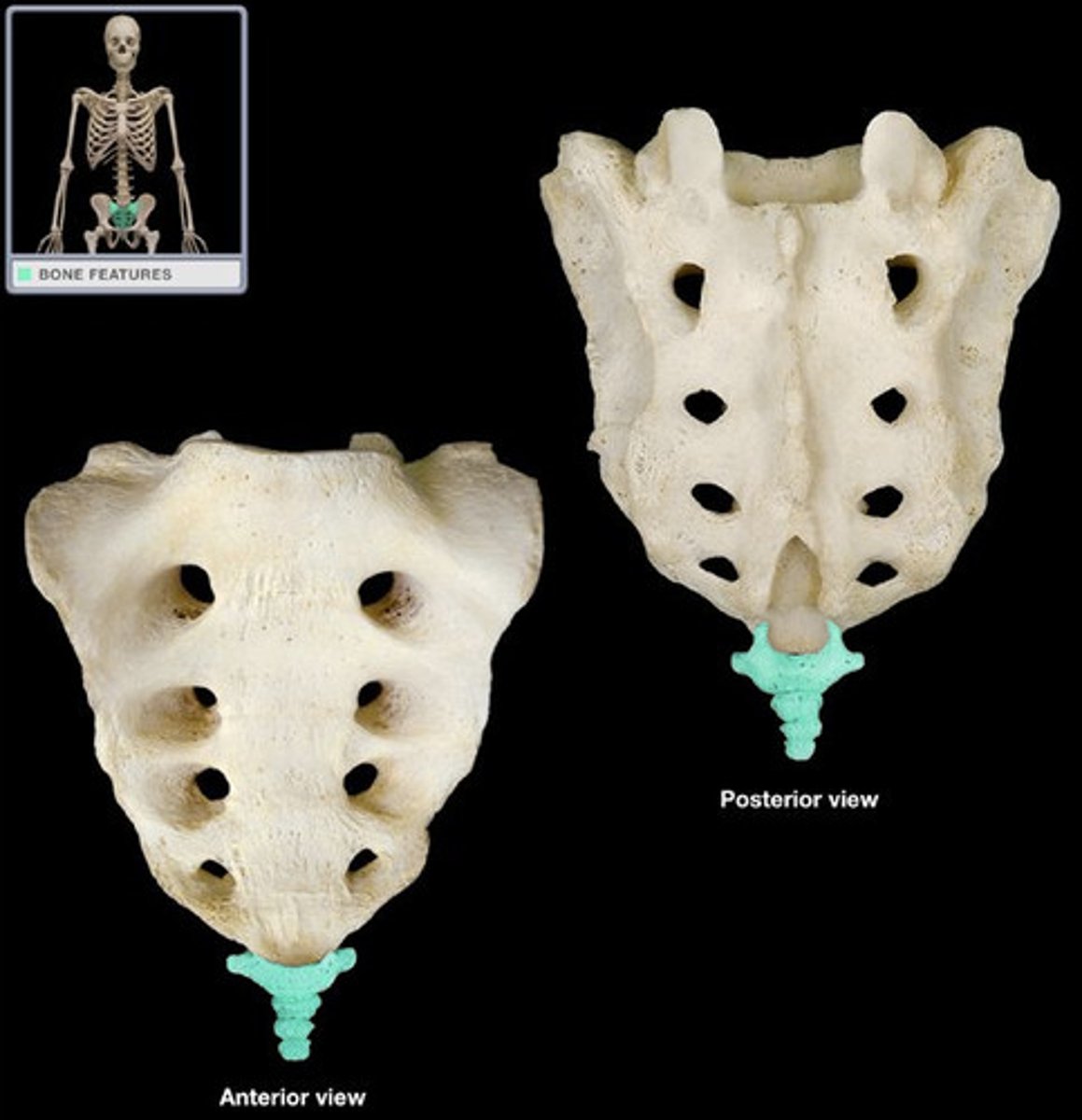
Coccyx
four vertebrae fused together to form the tailbone
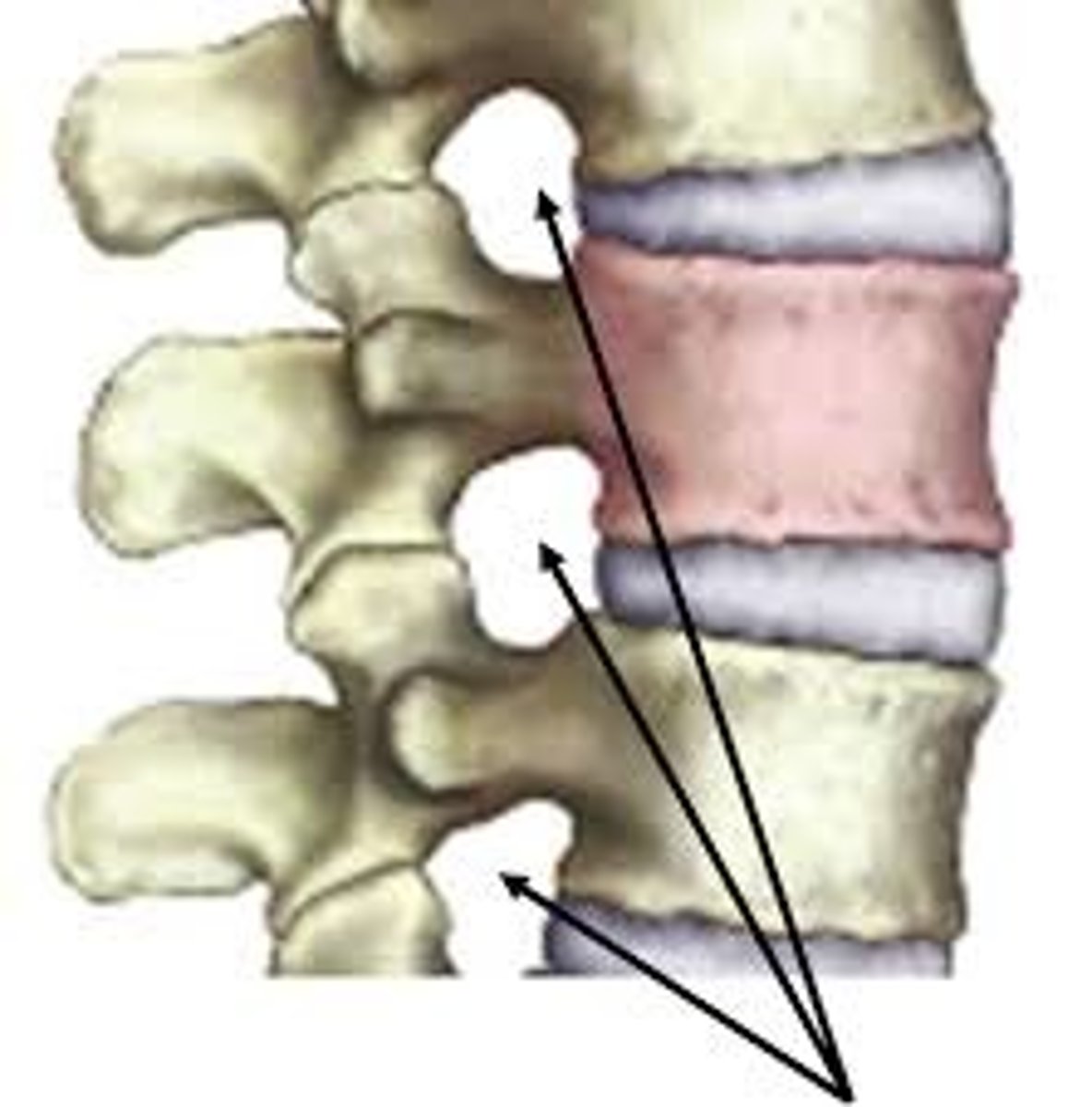
intervertebral foramen
opening located between adjacent vertebrae for exit of a spinal nerve
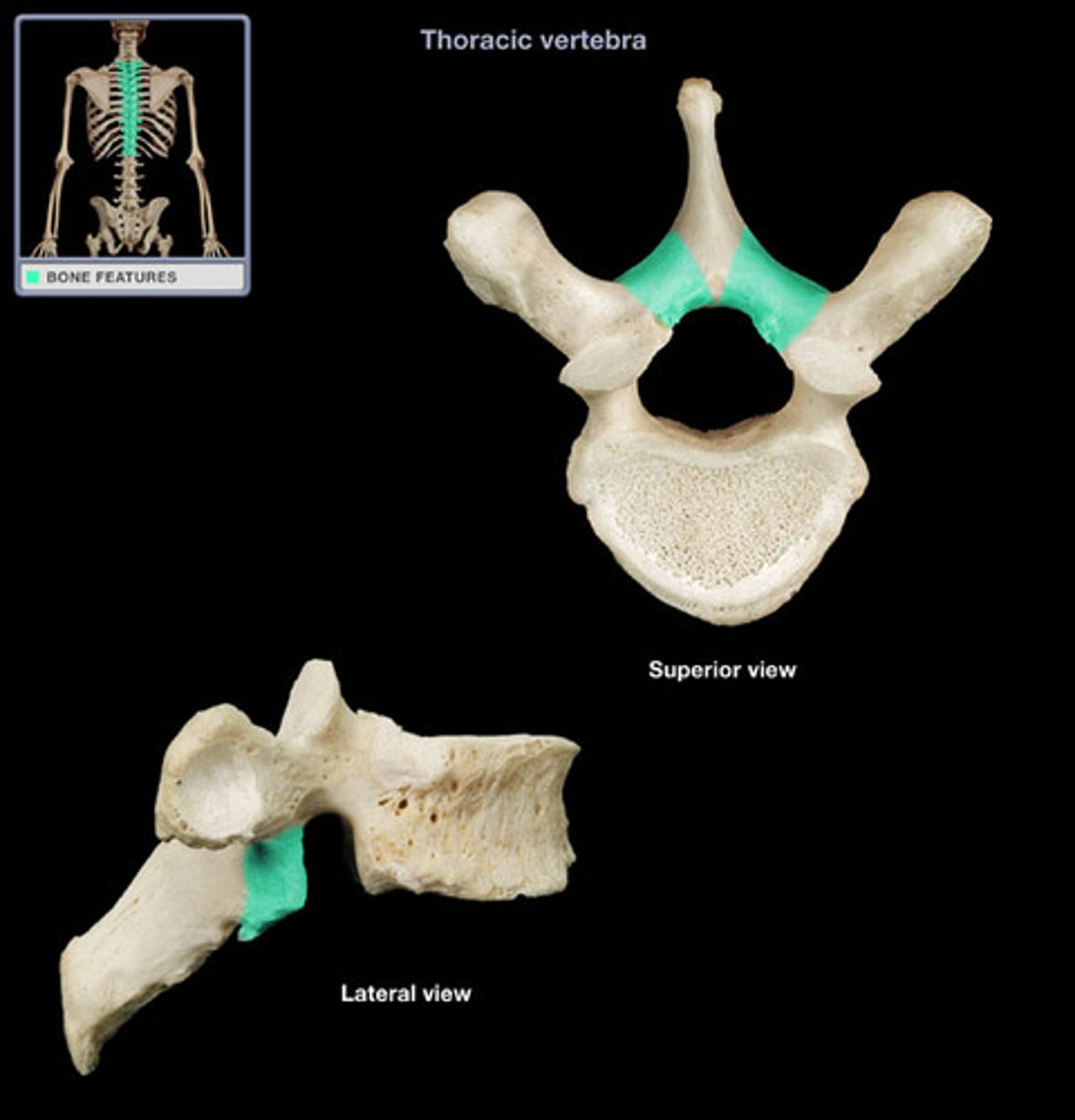
lamina
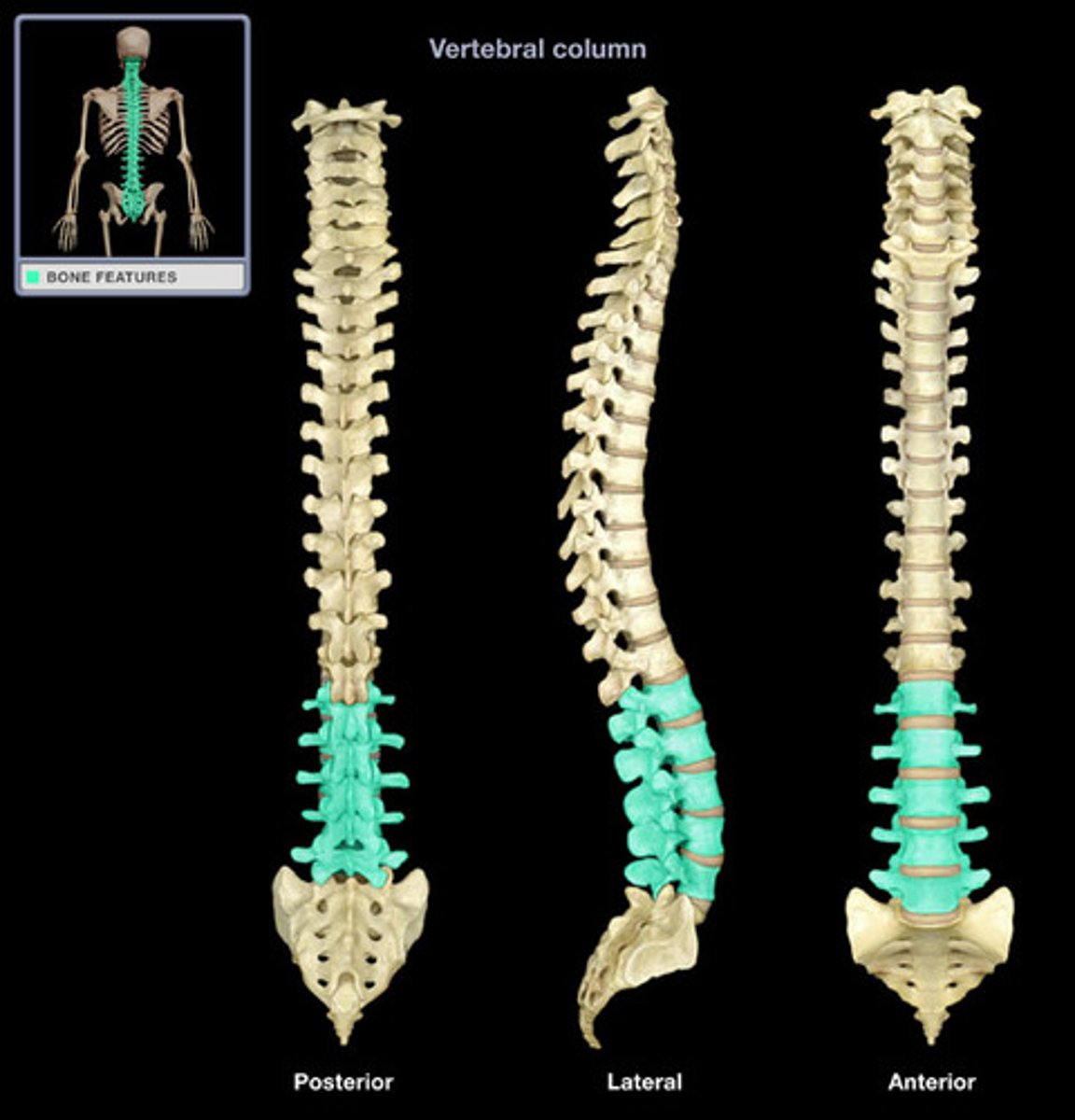
lumbar curvature
L1-L5
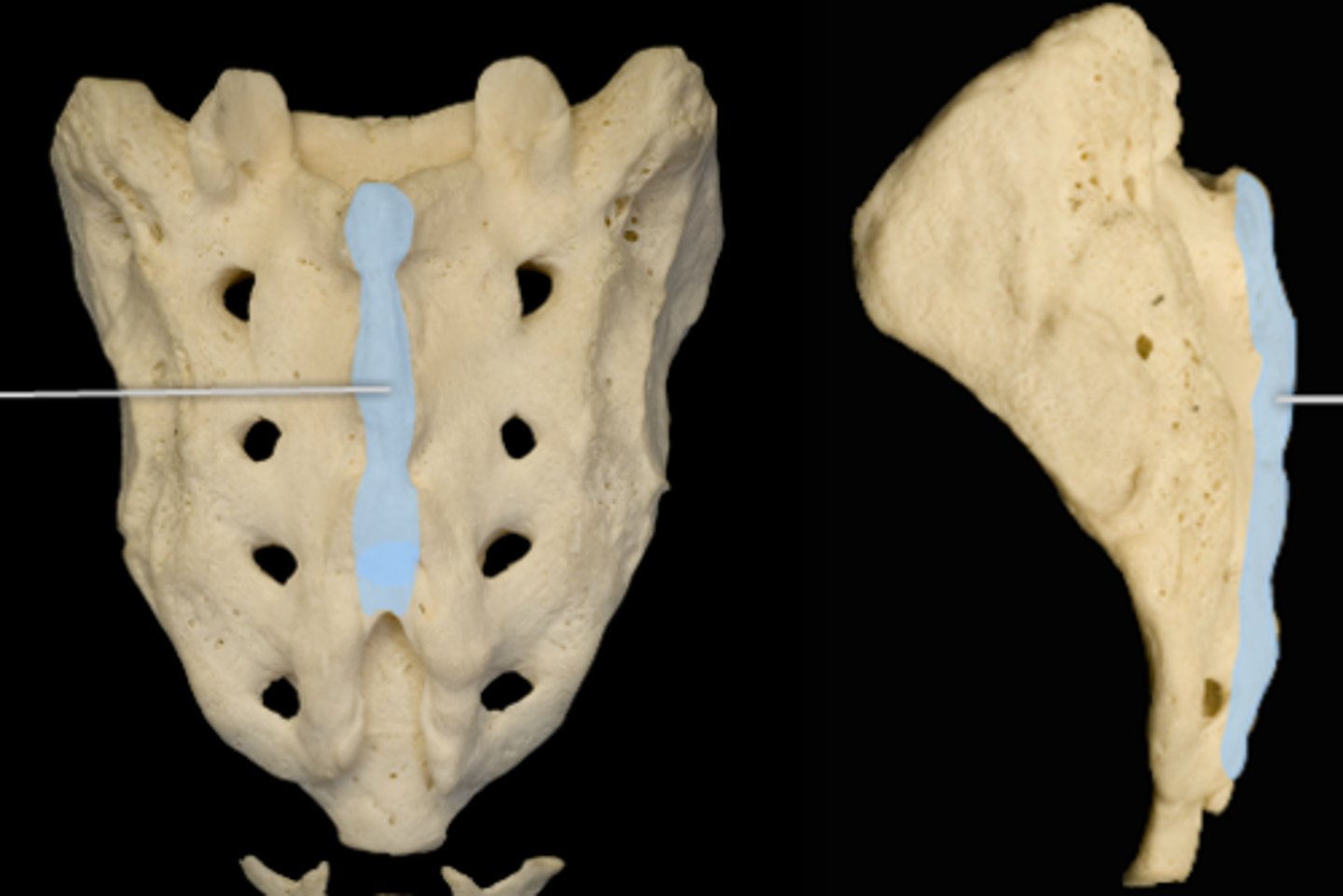
median sacral crest
name the ridge formed by the fused spinous processes of the sacral vertebrae.
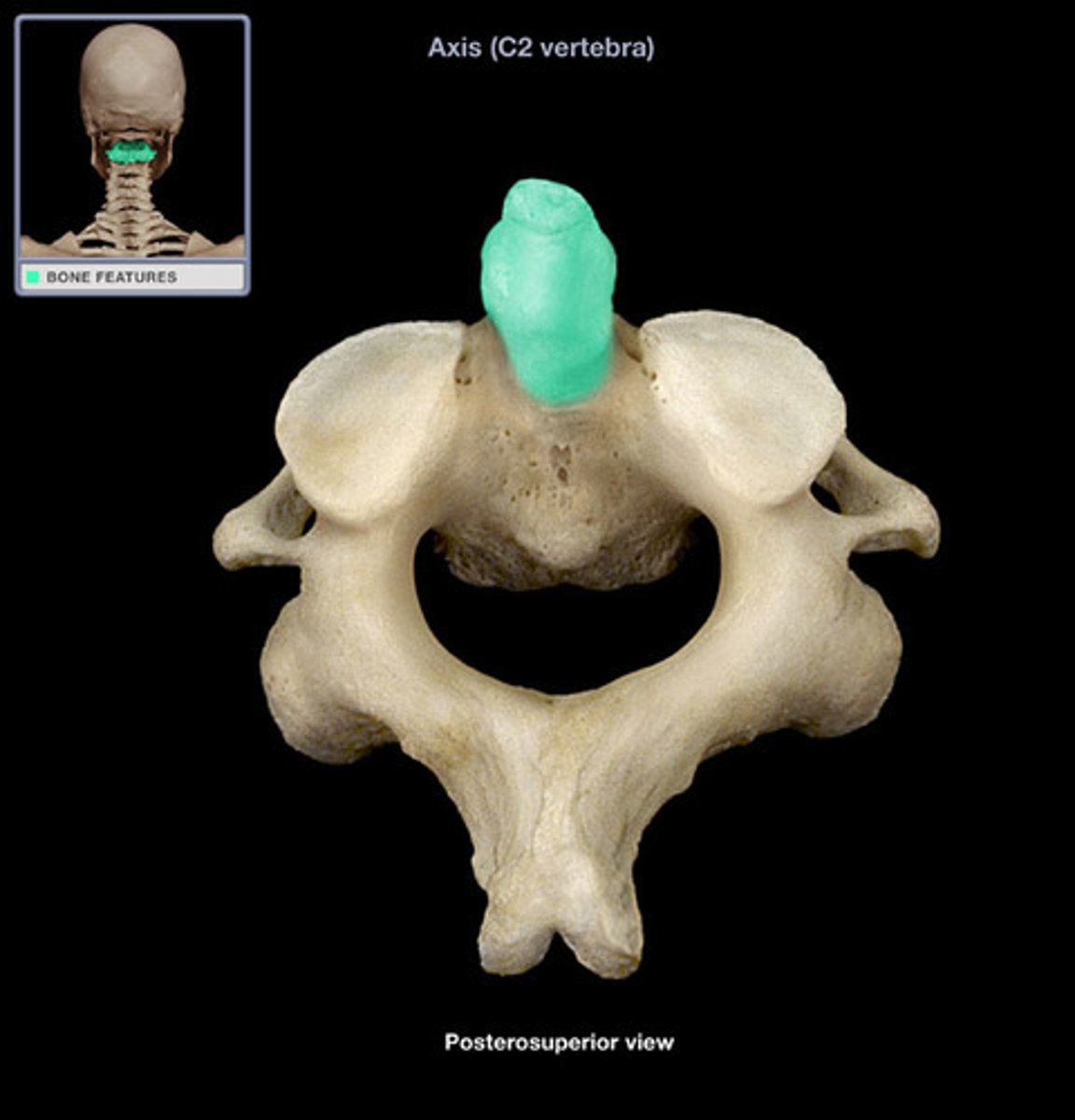
dens (odontoid process)
acts as pivot for rotation of atlas and the skull
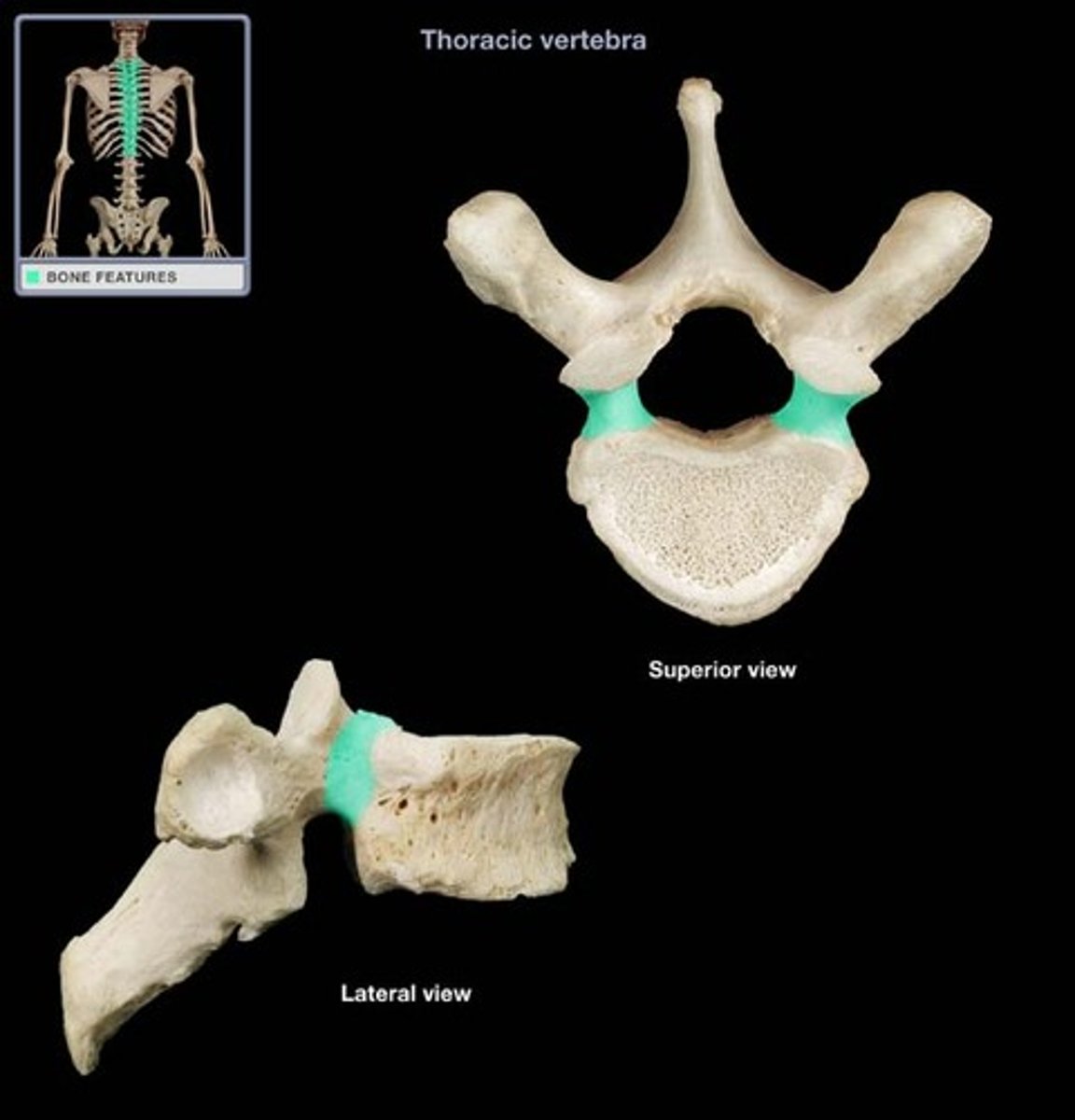
Pedicle
intervetebral discs
absorb shock and movement in the spine, made of cartilage
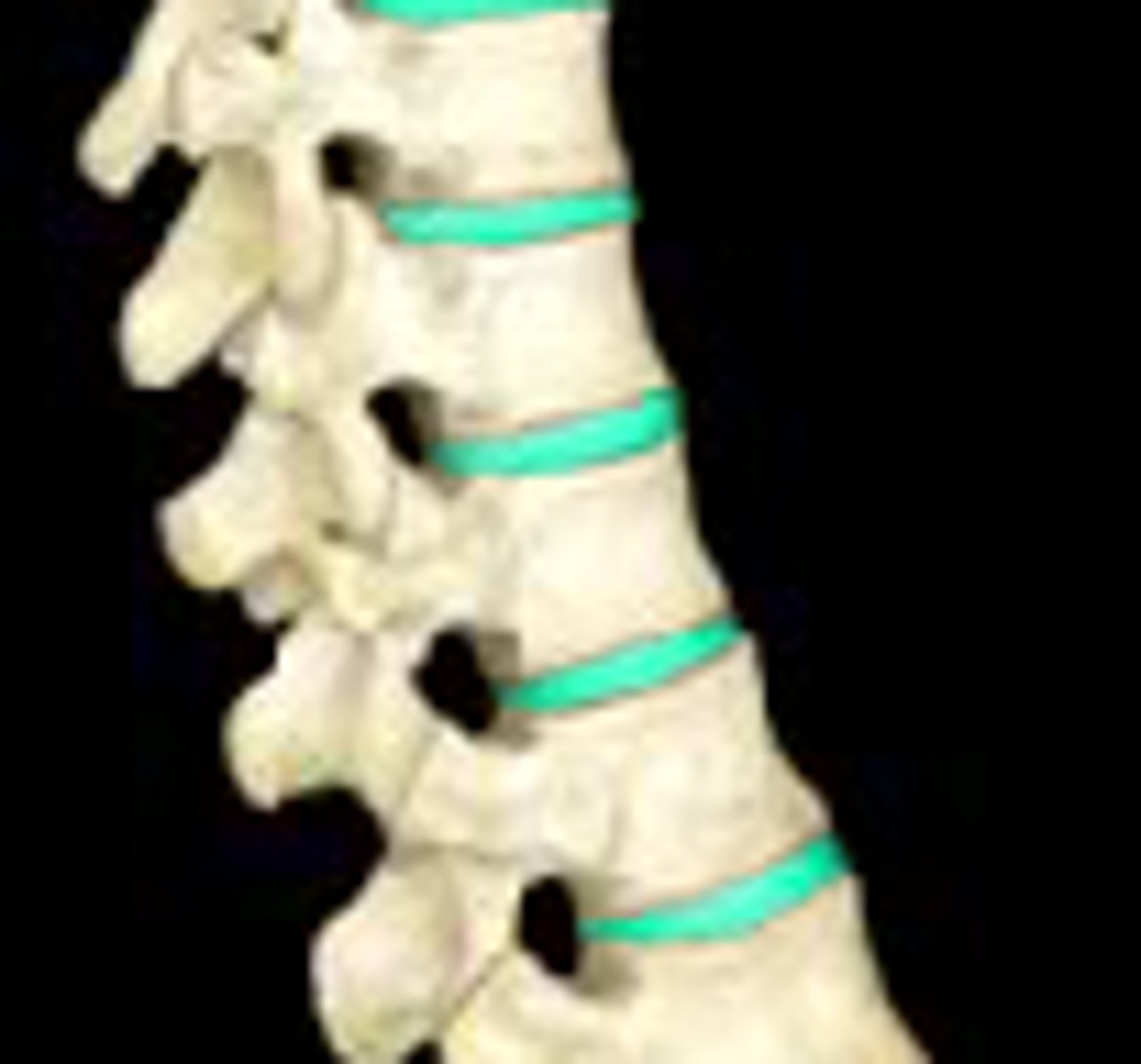
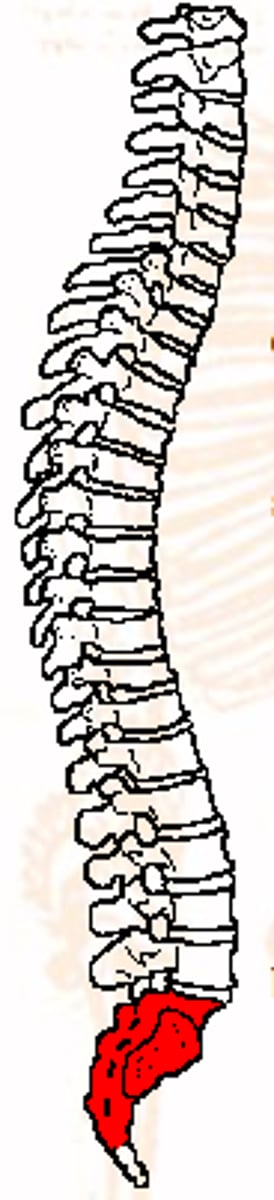
pelvic curvature
made up of sacrum and coccyx
S1
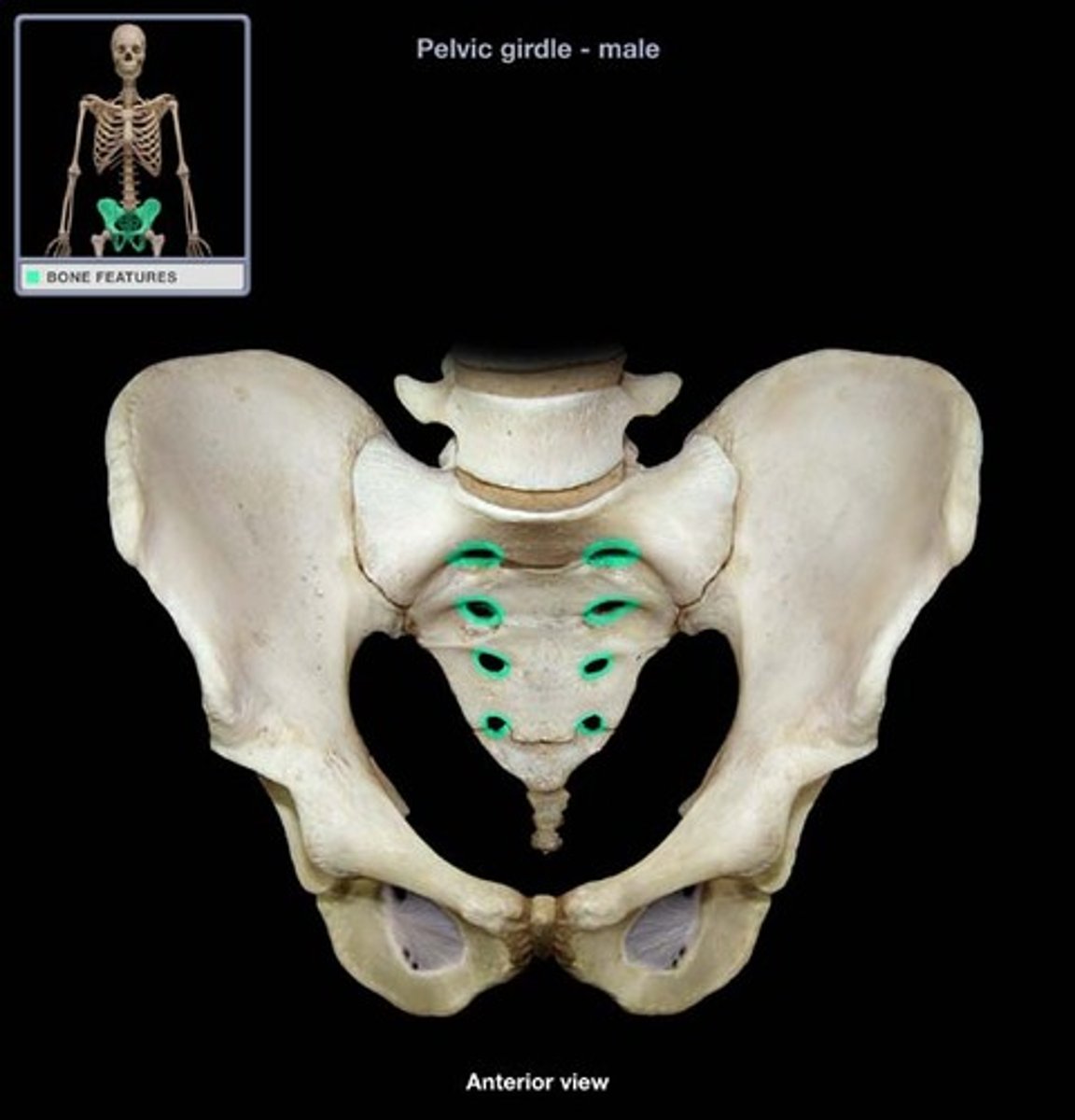
sacral foramina
holes for passage of blood vessels and nerves in sacrum
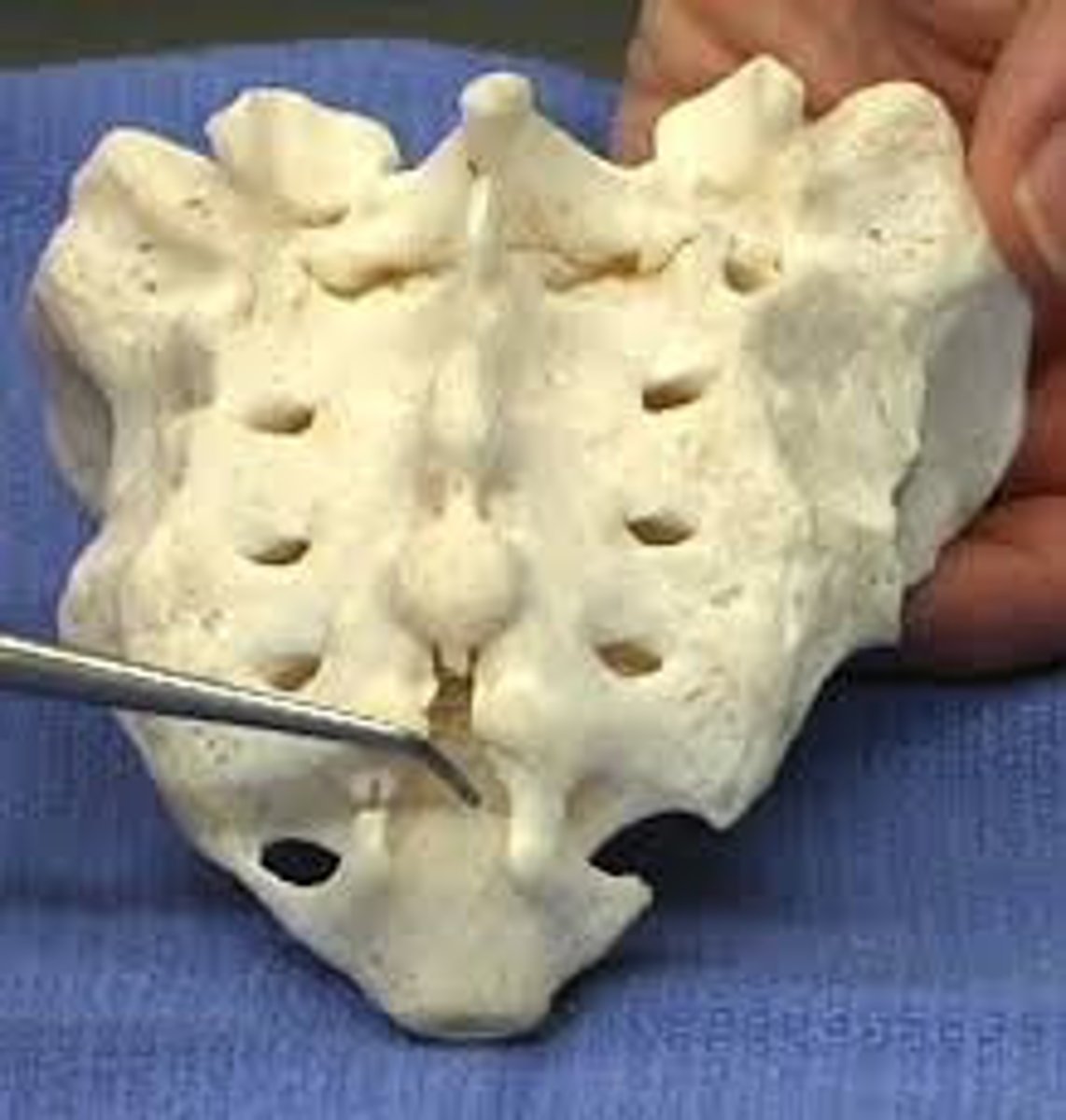
sacral hiatus
Opening at inferior end of sacrum on posterior side
Used as a route to administer an epidural anesthetic
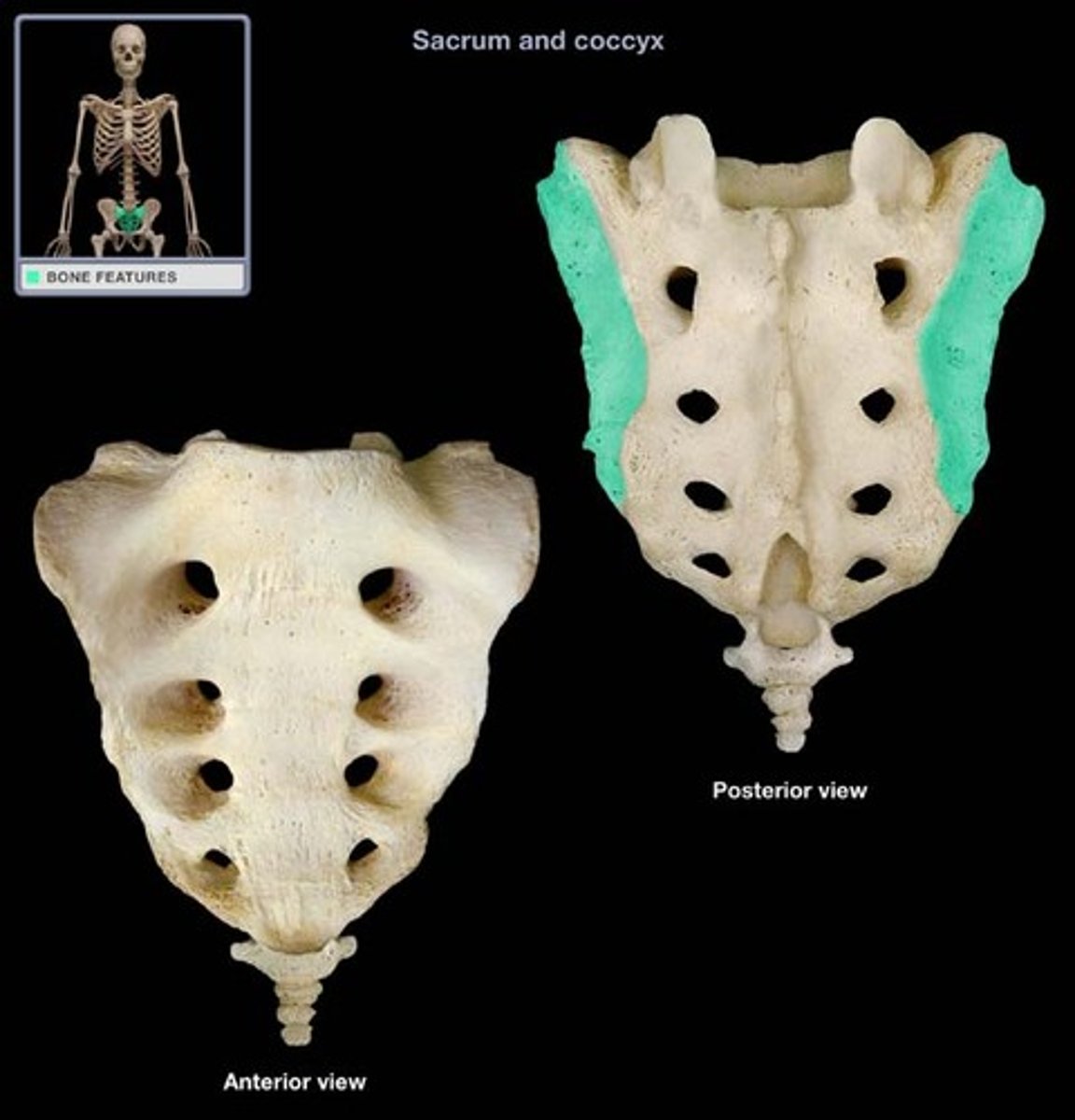
sacrum-ilium articulating surface
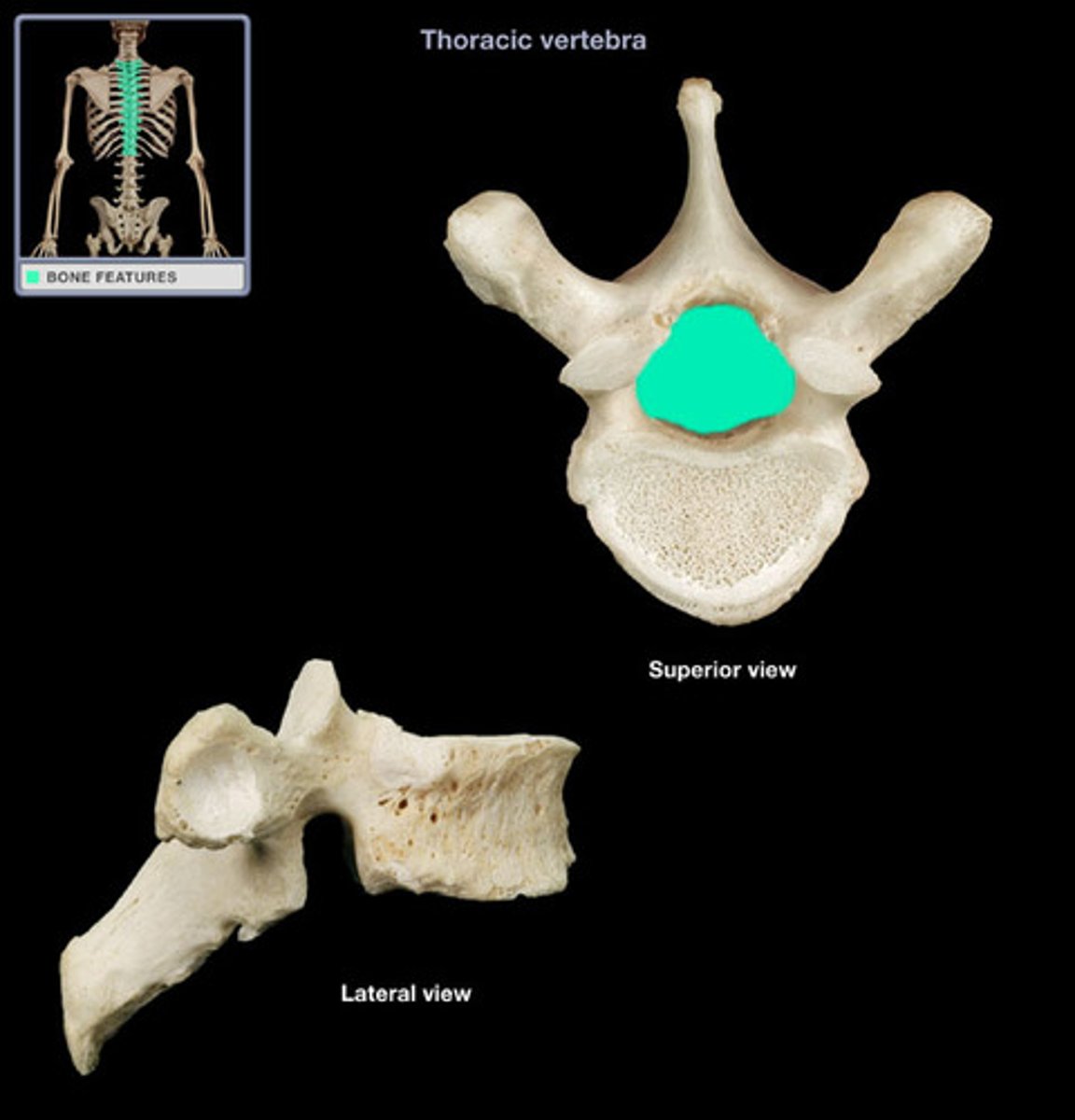
Spinal foramen of vertebra
Hole which spinal cord runs through in each vertebra
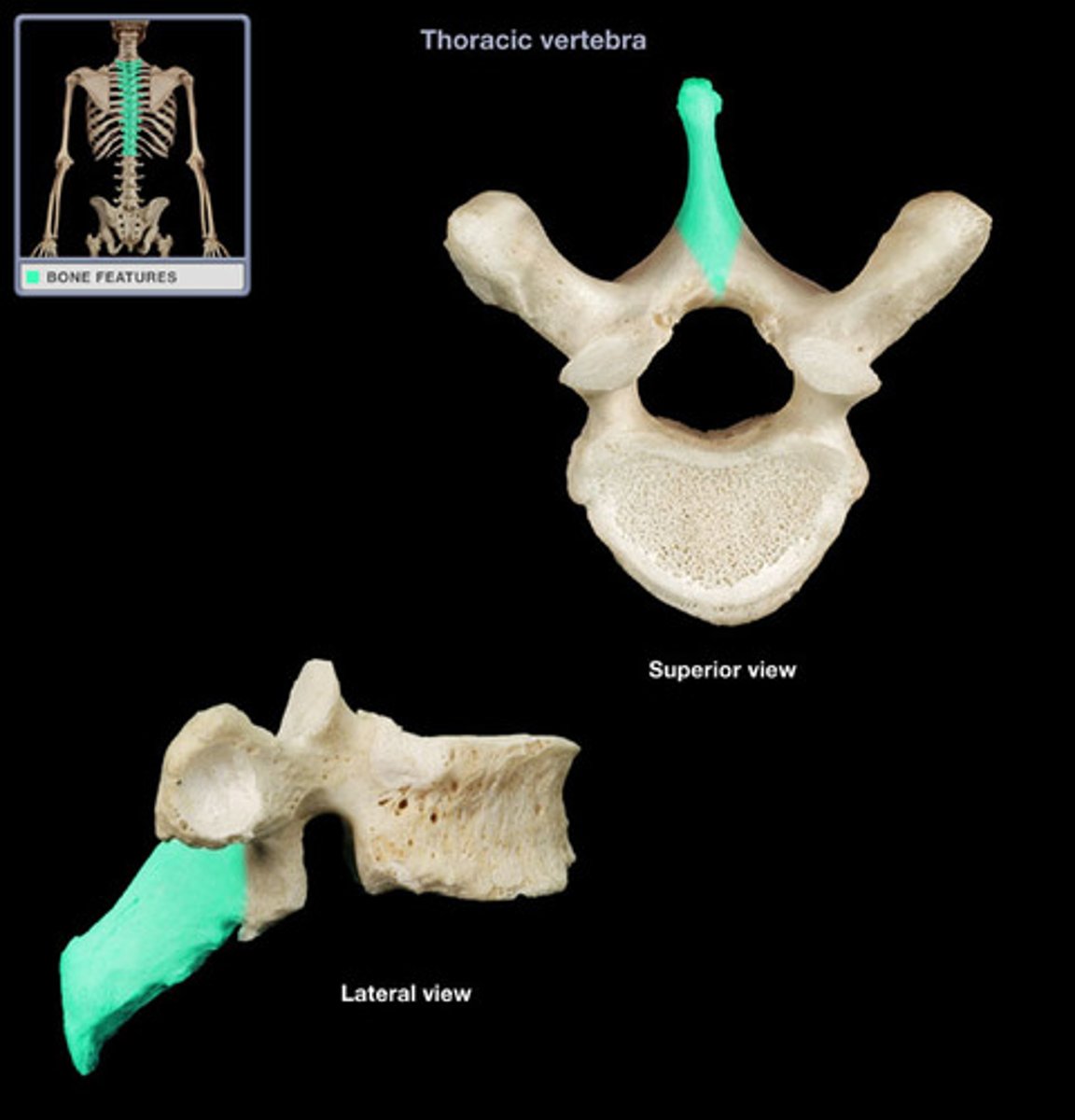
Spinous process of vertebra
projects posteriorly from fused lamina
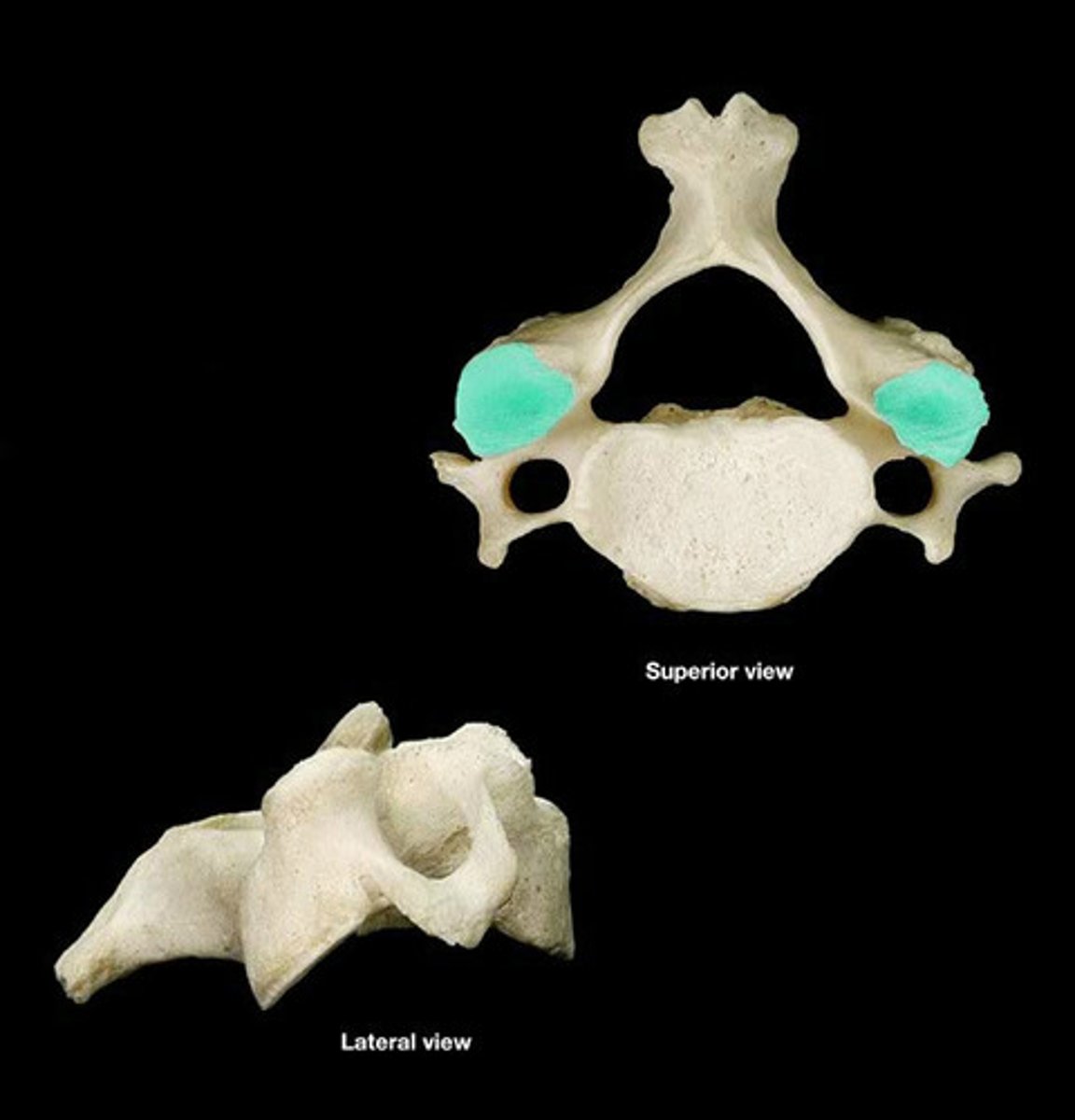
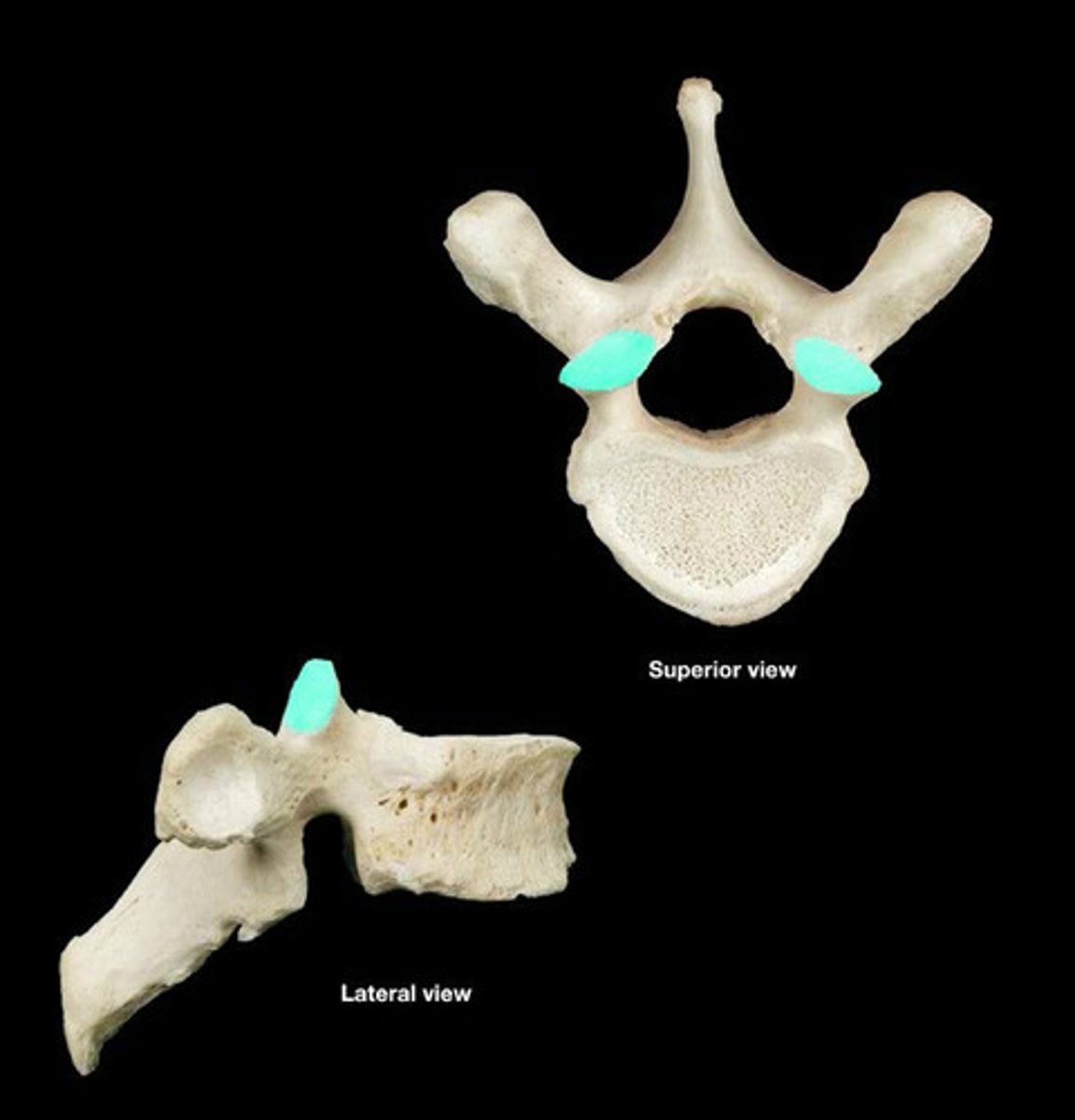
superior articular facet
What is the highlighted structure?
superior articular process
Name this specific part of the thoracic vertebra.
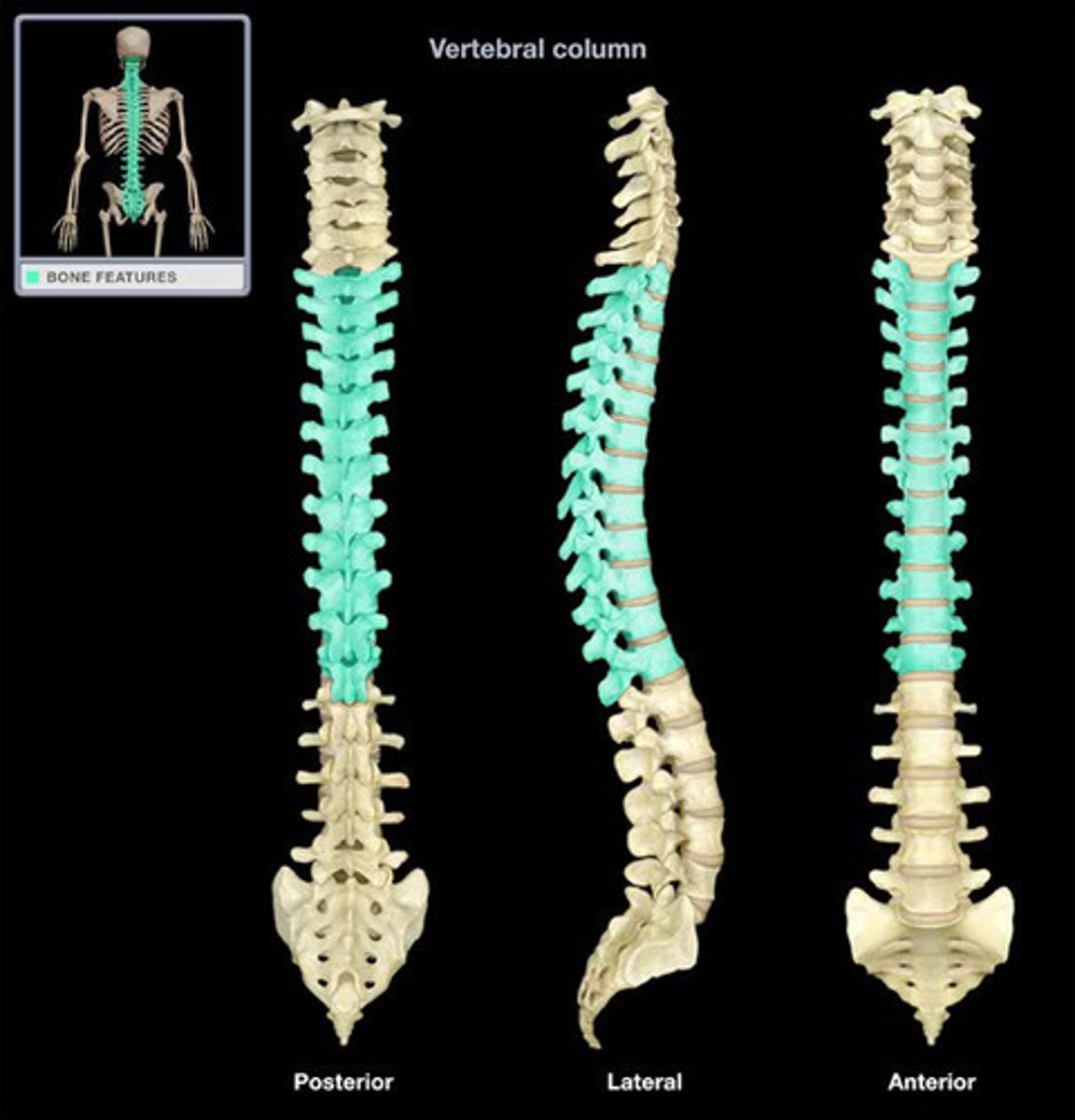
thoracic curvature
T1-T12
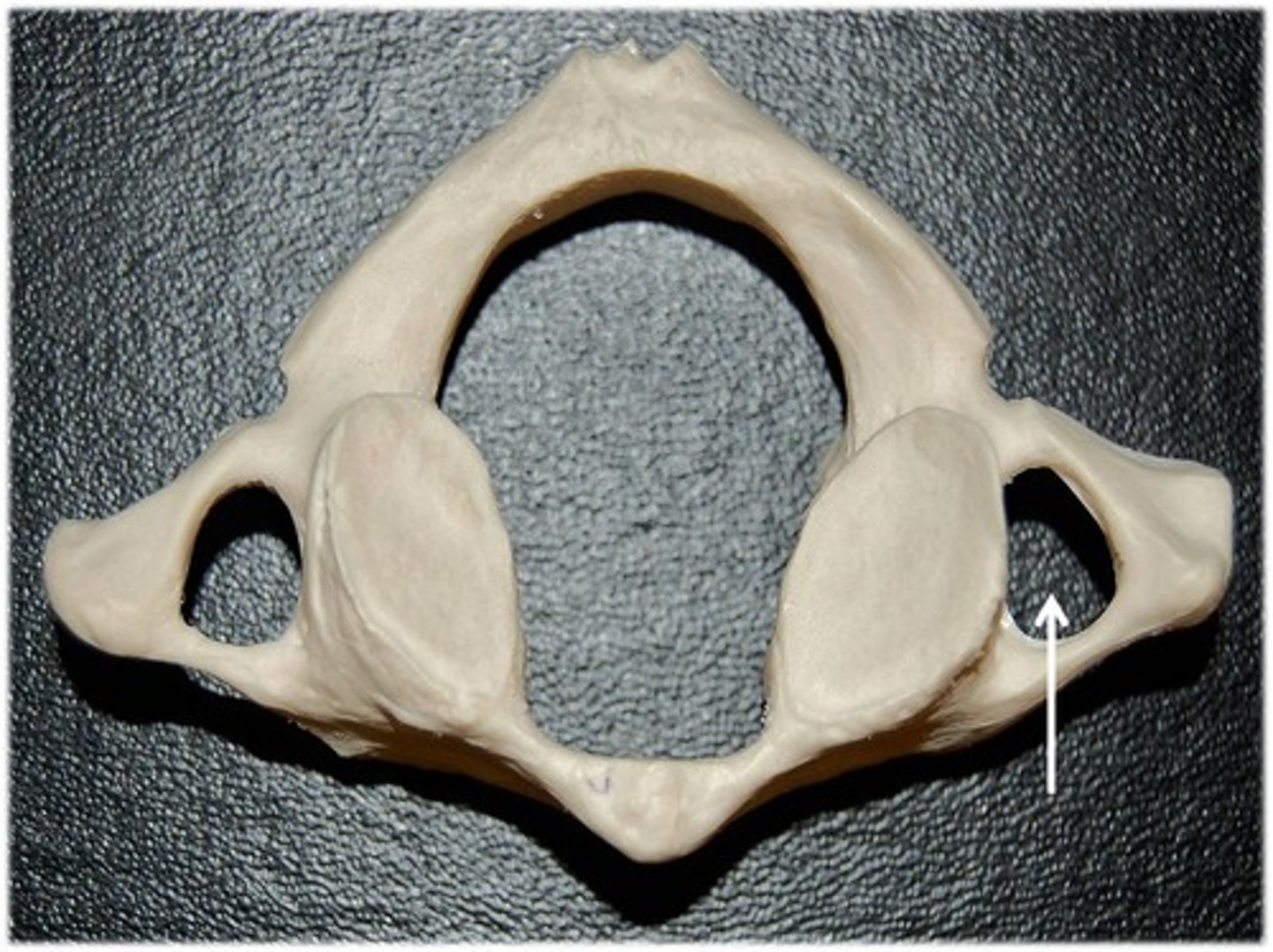
transverse foramen
The openings in the cervical vertebrae for the transmission of the vertebral artery and vein are called the:
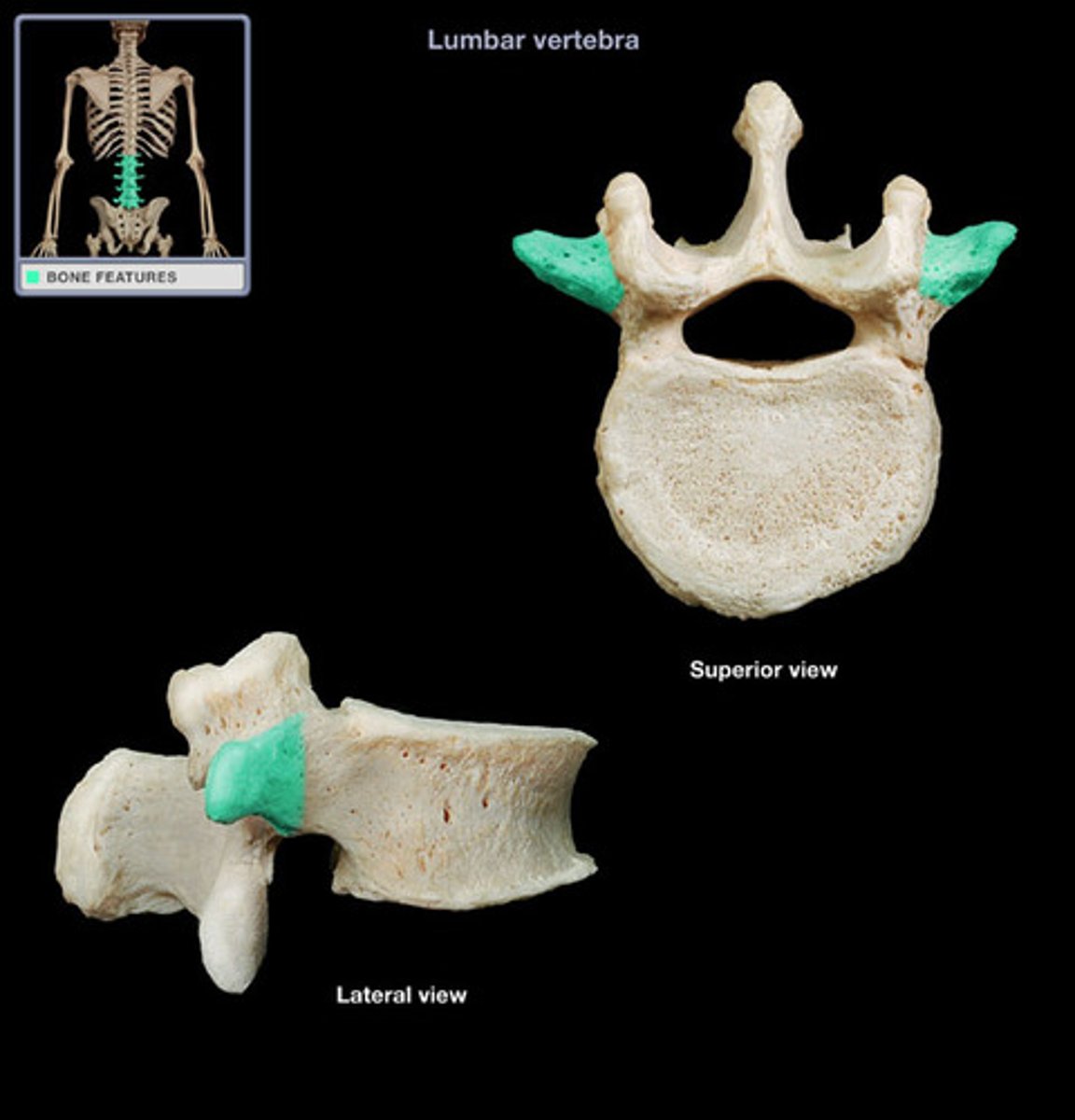
transverse process
two lateral projections from the vertebral arch
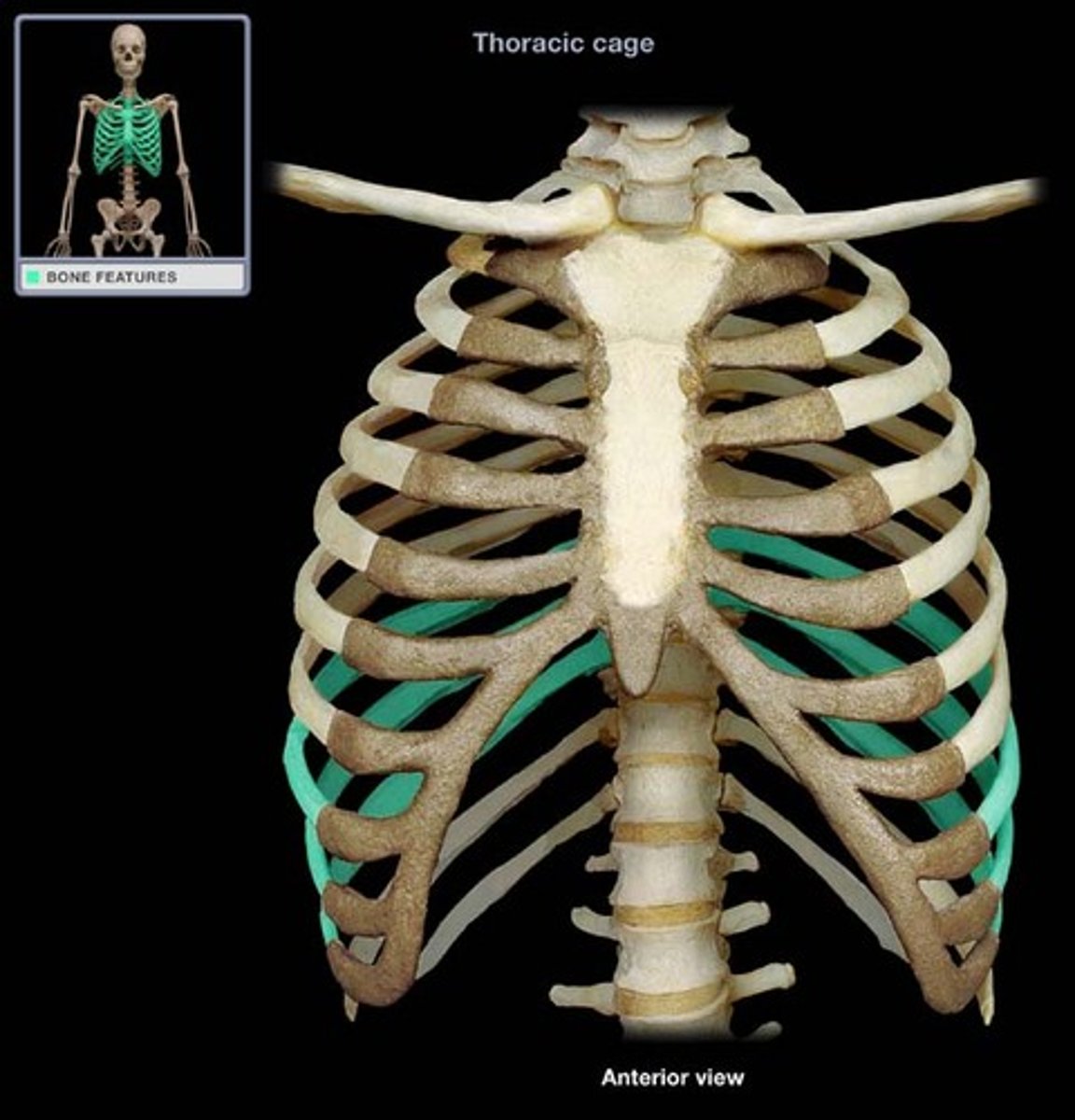
false ribs
last 5 pairs of ribs; attach indirectly to sternum
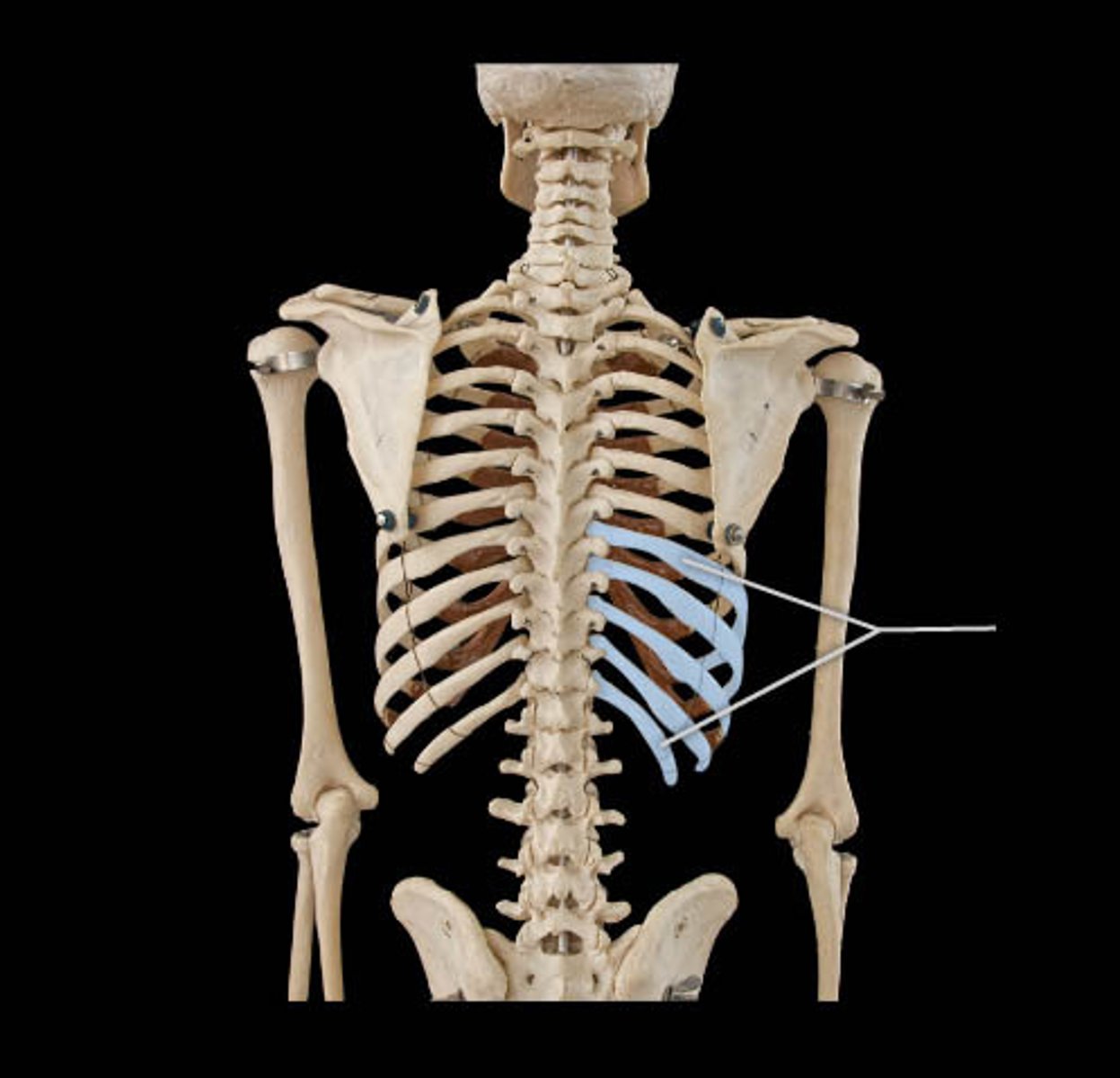
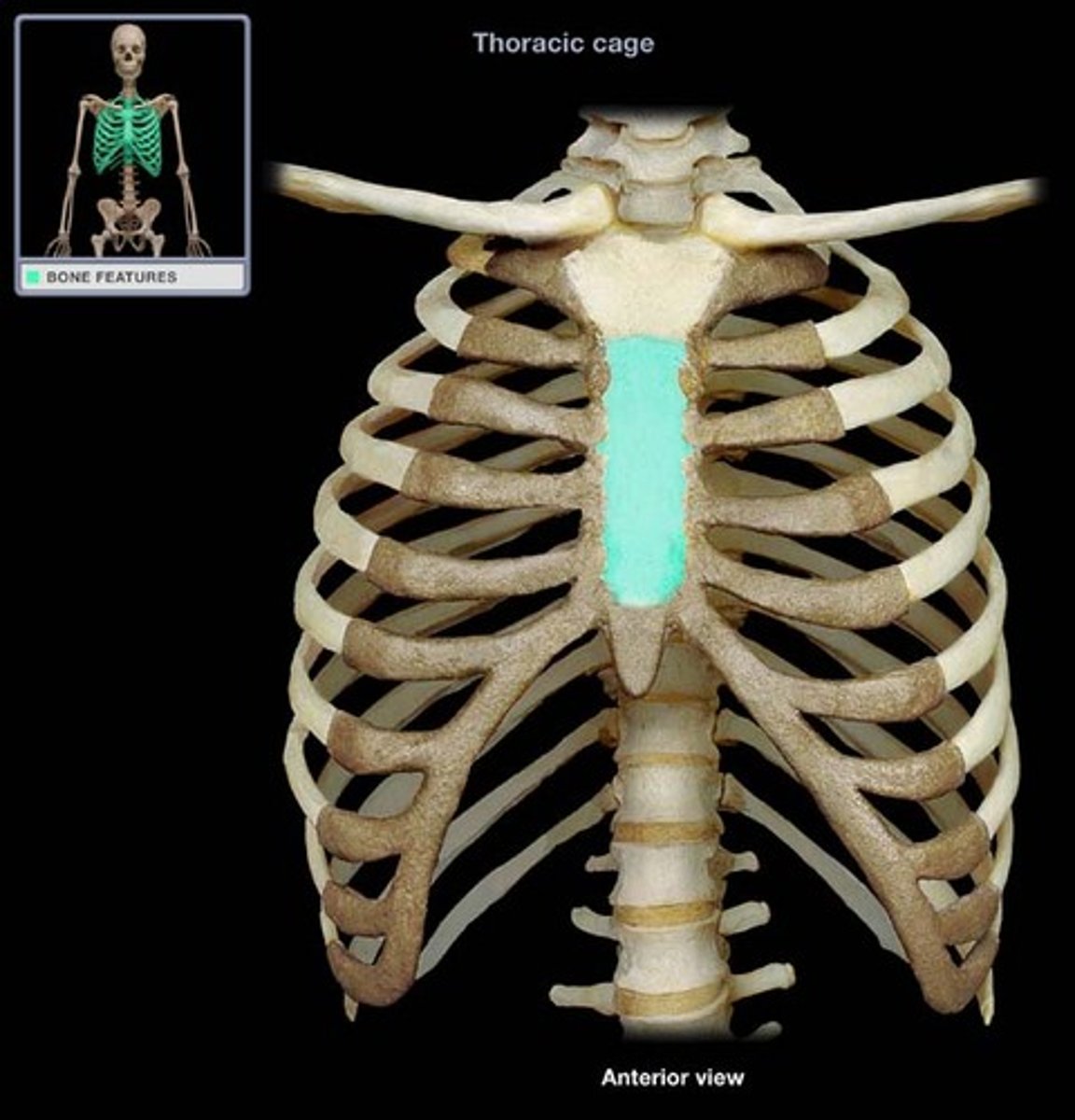
gladiolus (body)
middle portion of the sternum
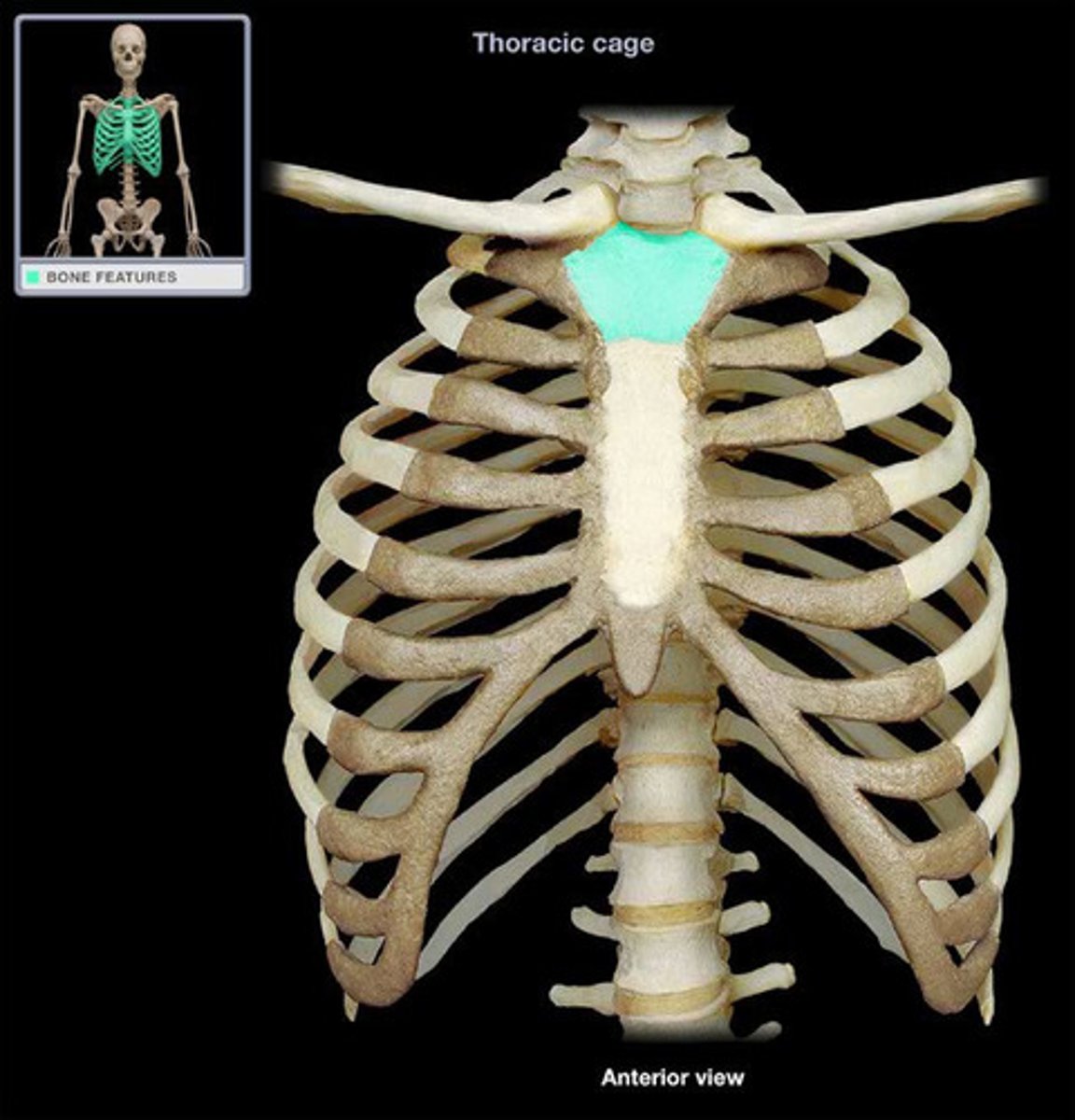
Manubrium of sternum
top of sternum
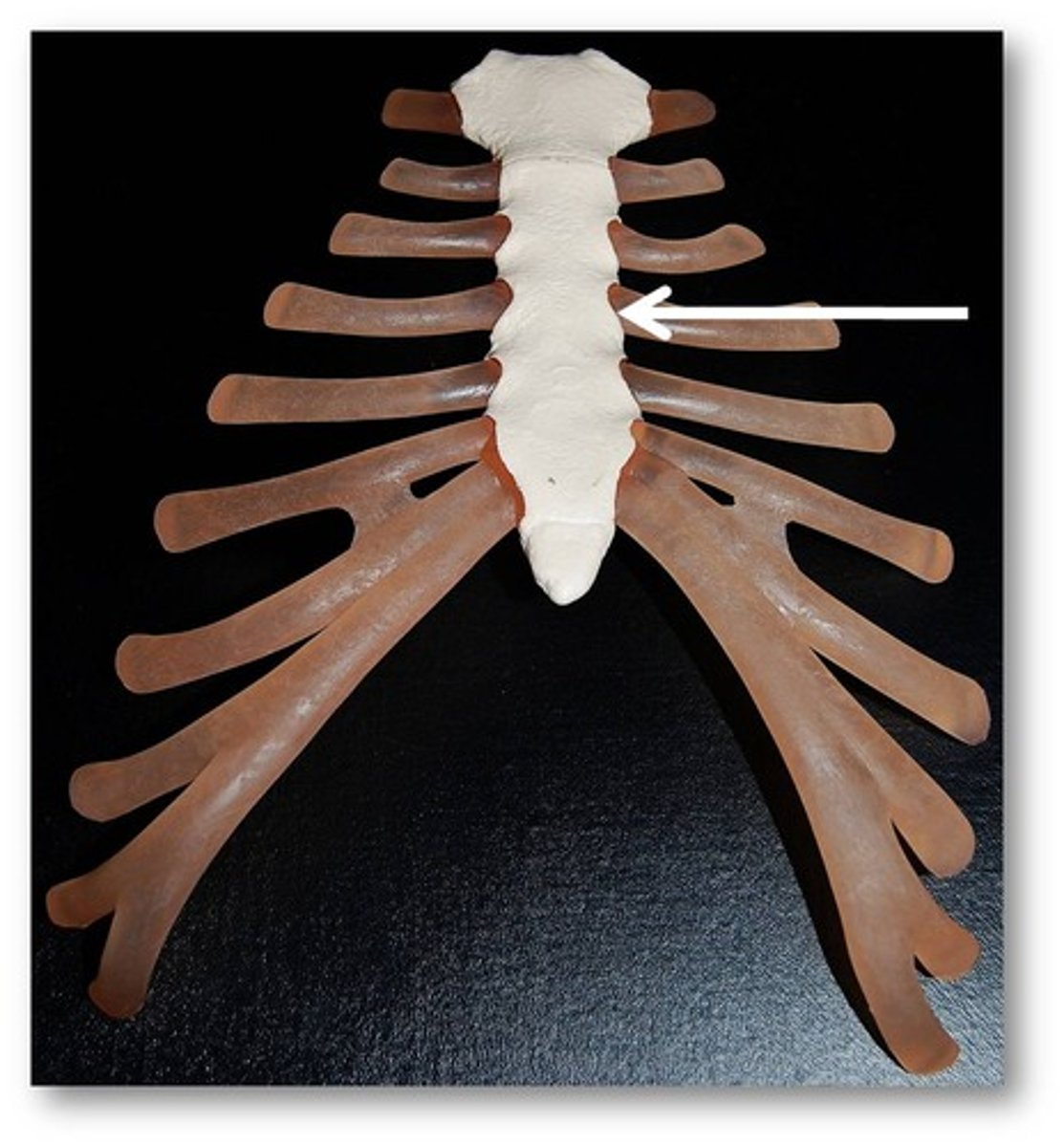
Sternum
the breastbone, forms the middle of the front of the rib cage and is divided into three parts
floating ribs
last two pairs of ribs; do not attach to sternum
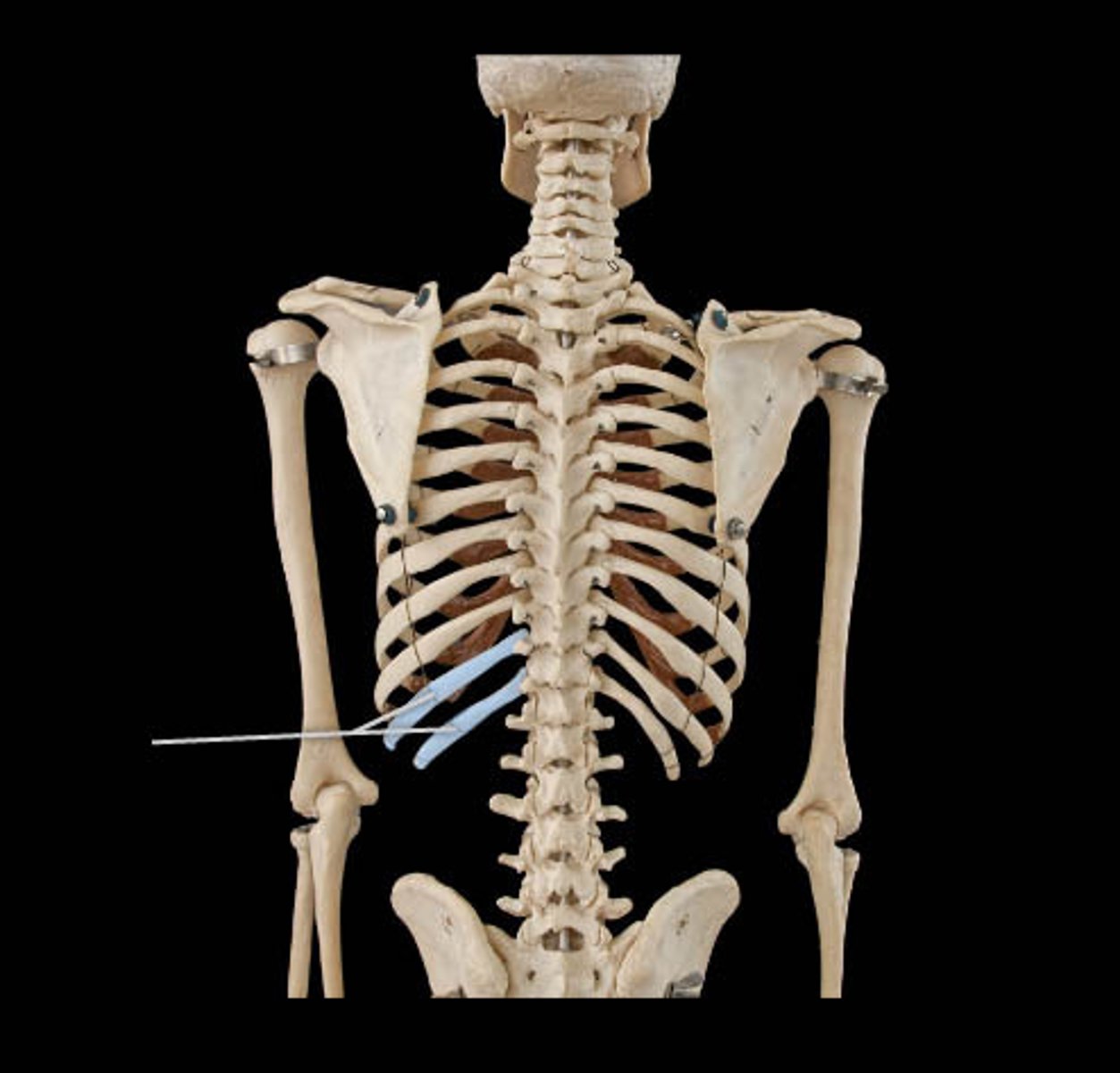
Vertebrochondrial (false ribs)
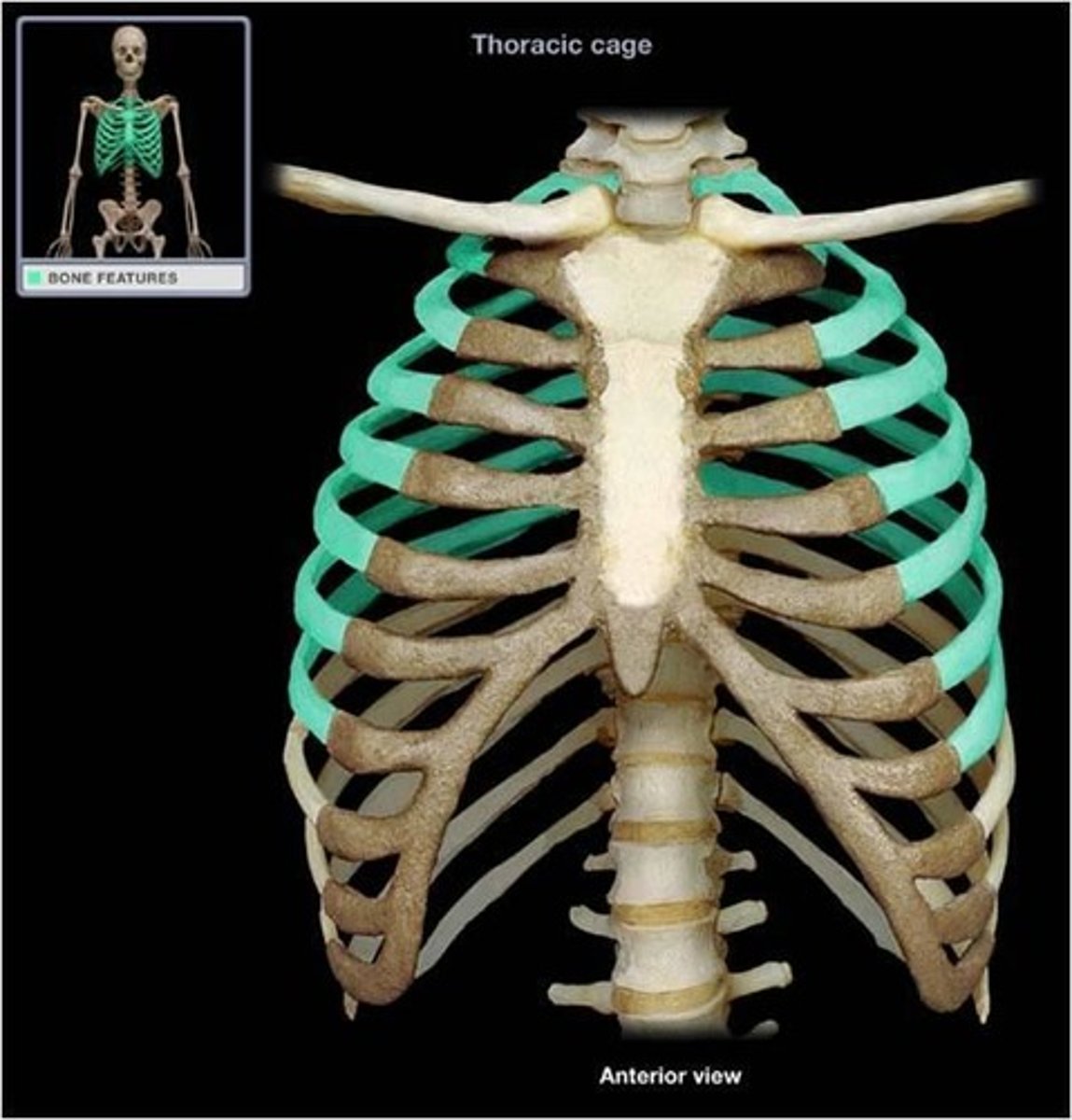
vertebrosternal (true) ribs
attached to the sternum individually
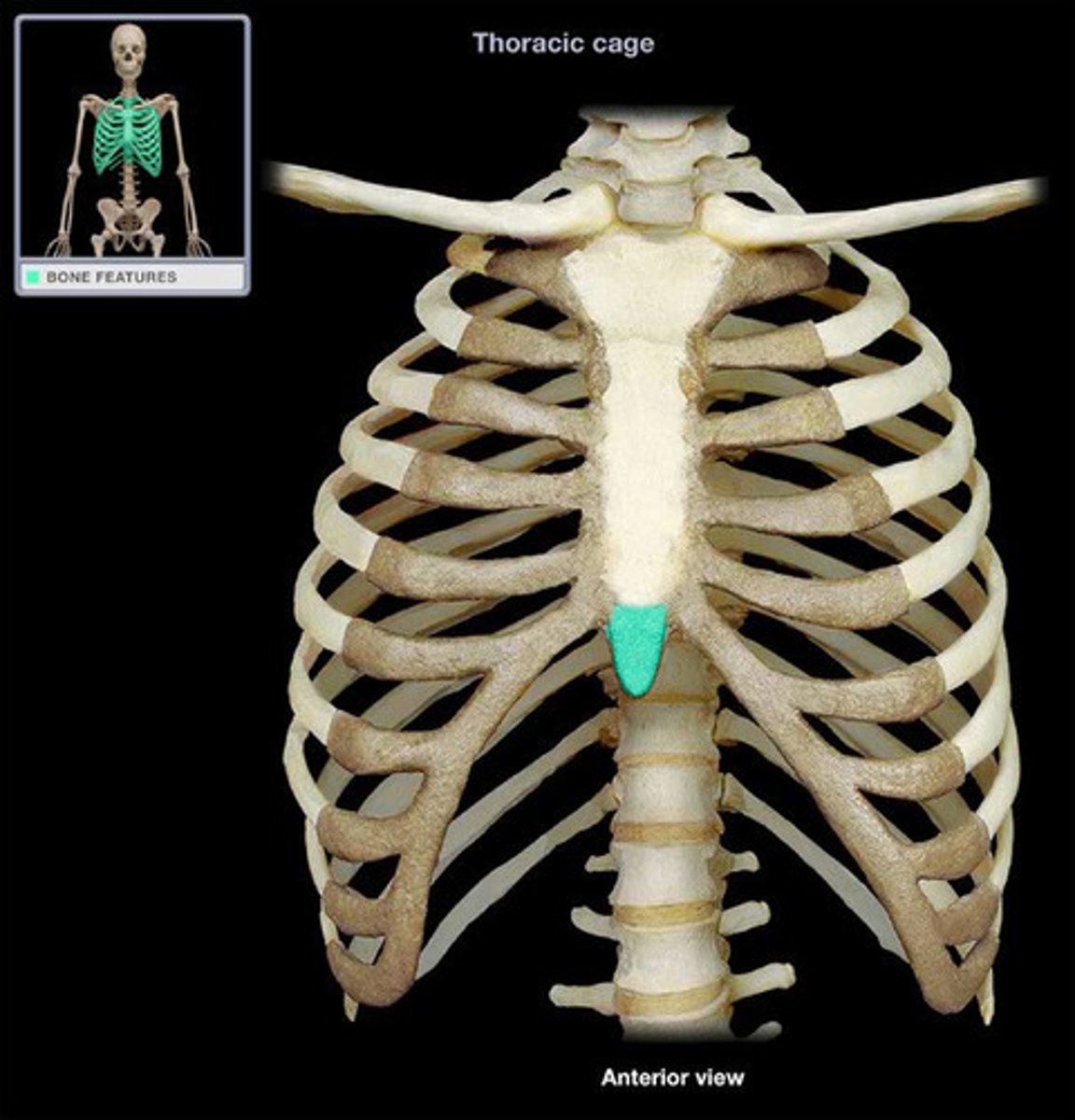
xiphoid process
inferior portion of the sternum