Practical 3 - Bio 007
 Call Kai
 Learn
Learn Practice Test
 Spaced Repetition
 Match
Match Flashcards
 Knowt Play
1/19

There's no tags or description
Looks like no tags are added yet.
Name | Mastery | Learn | Test | Matching | Spaced | Call with Kai |
|---|
No analytics yet
Send a link to your students to track their progress
20 Terms
what does the biotic environment consist of?
living things
what does the abiotic environment consist of?
non-living things
define population
all individuals of the same species in a given area
define community
all individuals of all species in an area
define ecosystem
all individuals of all species in a given area plus abiotic factors
define landscape
involves multiple adjacent ecosystems that may interact
define biome
all ecosystems of the same type in the world
define biosphere
the set of all ecosystems on the planet
what is a dichotomous key?
an identification guide to the species in a particular taxonomic group for a particular region
Describe the coastal strand ecosystem + it’s stressors
found in sandy areas by the sea
stressors = high levels of salt, & lots of sun
Describe the coastal salt marsh ecosystem + it’s stressors (what plants must adapt to)
found in low-lying areas near the ocean (usually where fresh water meets the ocean)
water levels fluctuate a lot with the tides
stressors = varying levels of water (possibly submerged periodically), presence of salt
Describe the oak savannah ecosystem + it’s stressors (what plants must adapt to)
composed of grasses interspersed with occasional valley oaks
stressors = low precipitation (not enough water), poor soil
wildfires are relatively frequent
native grasses have often been outcompeted by non-native grasses and in spring by invasive wild mustard
Describe the Riparian Woodland ecosystem + it’s stressors (what plants must adapt to)
found in a narrow band immediately adjacent to a freshwater source (usually a stream)
dominated by trees
shrubs present usually have flexible, more delicate leaves
ample access to water
stressor = not enough sunlight
adaptations = large leaves to absorb more sunlight, leaves may be flexible or compound to catch sunlight from many directions
Describe the Southern Live Oak Woodland ecosystem + it’s stressors (what plants must adapt to)
found in canyons
areas are somewhat shaded and receive more moisture because rainwater runs down the hillsides
stressors = not enough sunlight
Describe the Coastal Sage Scrub ecosystem + it’s stressors (what plants must adapt to)
found on hillsides at lower elevations and near the ocean
stressors = relatively dry, too much sun
plants must adapt to relatively dry conditions, excessive evaporation, and sun exposure
Describe the Chaparral ecosystem + it’s stressors (what plants must adapt to)
found inland and higher elevation hillsides and ridges
hot, dry summers, and mild wetter winters; frequent fire
shrubs are dominant
stressors = too much sunlight
adaptations = leaves may be reduced in size or be thick, tough and waxy; may attach nearly vertically to the stem to reduce sun exposure; leaves may be pubescent, wavy or folded to reduce evaporation by wind or reduce surface area exposed to sun; may be light in color to reflect more solar radiation

Identify:
Plant name
Family
Ecosystem it belongs to
Adaptations
Golden currant
Family = Grossulariaceae
adaptations to not enough sunlight = large leaves, dark colored leaves

Identify:
Plant name
Family
Ecosystem it belongs to
Adaptations
Laurel sumac
Family Anacardiaceae
Adaptations = folded leaves to reduce adaptation and lessen sun exposure

Identify:
Plant name
Family
Ecosystem it belongs to
Adaptations
Toyon
Family Rosaceae
Adaptations =
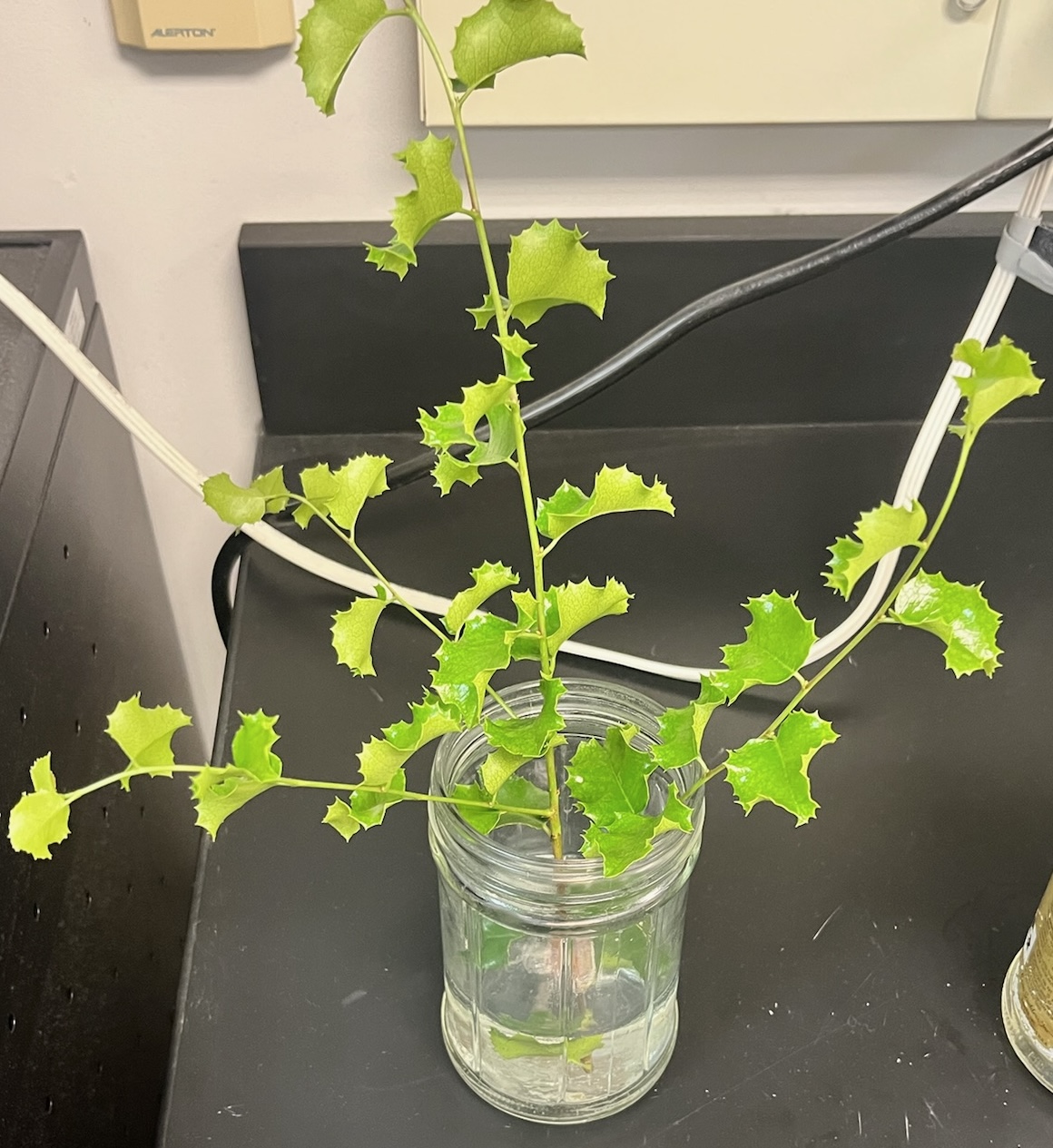
Identify:
Plant name
Family
Ecosystem it belongs to
Adaptations
Holly-leaved cherry
Family Rosaceae
Adaptations =