PSY100 1st 3rd
 Call Kai
 Learn
Learn Practice Test
 Spaced Repetition
 Match
Match Flashcards
 Knowt Play
1/77

There's no tags or description
Looks like no tags are added yet.
Name | Mastery | Learn | Test | Matching | Spaced | Call with Kai |
|---|
No analytics yet
Send a link to your students to track their progress
78 Terms
What is psychology?
Scientific study of thought and feelings (internal), and behaviour (easier, observable)
the mind generates thoughts, feelings, and behaviour
Science requires
being open to any idea
criticizing and testing every idea
basing your views on the amount of high-quality evidence
Scientific approach is vital when asking big questions
“Real” answers require research
Collect information (data) via observation under different conditions
Data can inform theories that help us understand, predict and
manage thoughts, feelings and behavior
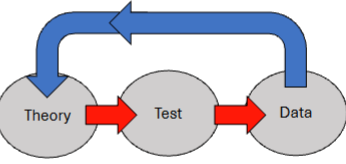
What causes our behavior? Many at one time
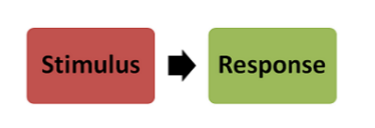
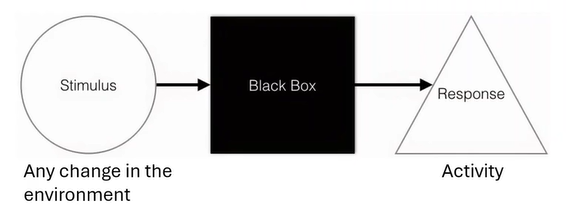
Stimuli (singular = stimulus) can trigger responses (thoughts, feelings, behaviours)
meaning varies across individuals and context
interpretation matters, but conscious awareness isn’t needed for
stimulus to be influential
stimuli can act alone or altogether
Using Psychology, we can…
Identify, predict, and treat maladaptive behaviours (cognitive-behavioral therapy)
Facilitate behaviours (sports psychology)
Explain and sometimes predict population events (behavioral economics) (difficult)
Branches of Psychology — Both are inter-related; one informs the other
Pure psychology
Explore mechanism, often through experiments
Abstract concepts and minutiae (precise mechanism)
In the lab
.
Applied psychology
What predicts, changes, or manages behaviour (often in therapeutic context)
More concrete outcomes
Real-world settings
The hub discipline
Psychology interconnected with many disciplines
Levels of Analysis — biological factors (eating example)
Eating, fasting, and adipose (fat) storage and more change our physiology
In turn affects hunger and likelihood of eating
Blood sugar, insulin, ghrelin (increase appetite), leptin (less hunger if more fat) levels all matter
Levels of Analysis — biological factors (eating example) (brain only)
Sight, smell, thoughts can trigger physiological cascade which prepares for eating (cephalic phase) — inside head, only sensory
specific brain areas (e.g. hypothalamus)
INDEPENDENT OF HUNGER
.
genetic factors
mutations
Levels of analysis — psychological
Mental traits (delayed gratification)
Impulse control
Self-control
.
Perception (mindset) — even if food is the same, hormone levels might be different because of labels
.
Also
Incentive value (motivation)
Hedonic value (does it taste good)
Levels of analysis — social culture influences (learned routines)
Learned routines
consistent eating times
conditioned (learned) cues that increase hunger (not solely based on nutrient loss)
physiological rhythms may synchronize with our schedules
Levels of analysis — social culture influences (influences of marketing)
Influences of marketing
Light foods marketed towards women
Heartier foods marketed towards men
Across many cultures, women eat more light foods
(does marketing create or reinforce?)
.
e.g mukbang, food shows
Levels of analysis — social culture influences (environment)
Environment
Social facilitation — perform tasks better around familiar people
We do what others do if we are comfortable around them
opposite in uncomfortable new situations
Understanding Behavior is Tough
1) Multifactorial (many factors influential, each of small effect, L3)
some factors are stronger
all factors interact
.
2) Individual differences and cultural differences are relevant
.
3) People interact with and influence each other
Psychology is a rigorous discipline
Scientific approach
Acting against human nature (not common sense)
All subject to biases (preferences in judgment) and fallacies (errors in logical reasoning
unconscious (automatically applied without awareness)
Confirmation Bias
Overvaluing information that agrees with our beliefs and undervaluing information that does not
common and hard to avoid
affects public attitudes and social policies on issues
AI is making this more prevalent
.
To think scientifically, you must acknowledge all facts – even those not in your favor
need to look for things that disagree with you
Considering all sources
Whats the overall effect?
Hard to do, can do meta-analysis
take an average of all the results
trend over majority of research
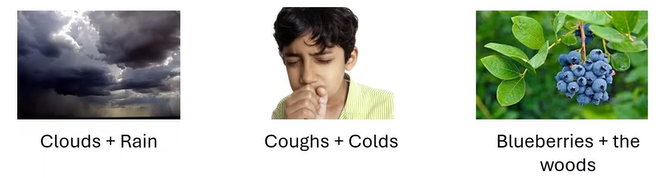
Illusion of Causality
We are hardwired to form relationships between things linked in space and place (space-time contiguity)
sometimes wrongly identify associations — threshhold is small
random relationships
clustering illusion — infer patterns from small, non-representative amounts of data, actually random (too little data)
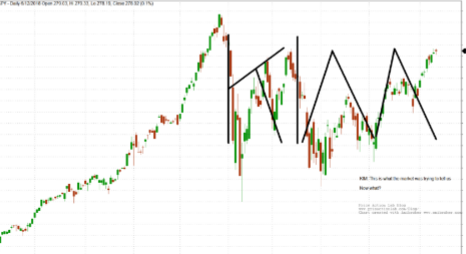
Apophenia
The human tendency to perceive meaningful patterns, connections, or significance within random, unrelated, or chaotic data
we have a clear, unidirectional (one drection) bias to detect faces in our environment
we see faces in clouds but never clouds in faces

Fallacies
Argument from Antiquity — idea has been around for so long
Appeal to authority — someone important said it
Appeal to Ignorance — idea hasnt been refuted yet
Bandwagon — everyone else cannot be wrong
Either/or (Dichotomous/Binary thinking) — no gradients, degrees, or complexity
Not me — I don’t make mistakes, others do
Why do we cling to certain beliefs?
1) Many beliefs are “irrational” — no evidence or experience
not coming from evidence anyways
evidence doesnt matter
.
2) Helps avoid negative effects
e.g. terror management theory (avoiding harm or death)
or changing our mind is costly (embarassment, exile)
.
3) Gives positive feelings, resolves discomfort
if beliefs dont match evidence, become uncomfortable and act to resolve discomfort
cognitive dissonance theory
Early perspectives in Psychology
Philosophy
Psychophysics
Structuralism (regarded as the first field)
Functionalism
Gestalt psychology
Psychoanalysis
Behaviourism
Cognitivism
Social psychology
Perspectives — key details
Differ in many ways (e.g. assumptions, tools, objectives, context)
Some may have been abandoned, but all have been influential
Different perspectives are not in conflict, apply several perspectives at once to understand an issue
Structuralism
Experiences are composed of many different elements (or parts)
do not combine automatically
merged into an experience via attention, volition, and creativity of the individual
to study an experience (via introspection), identify the parts
also involved mental chronometry (study of decision-making time)
Structuralism — introspection
Examination of one's own conscious thoughts and feelings
introspection involves verbal report on experience
compare to others
couldn’t find any connection
structuralism — key notes
Gave credibility to psychology as an experimental science
Introspection proved unreliable and was abandoned, though mental
chronometry remains today
.
Unconscious processing was not addressed, practical applications
were discouraged (e.g. mental health)
Little use of animals
Functionalism
Explain how behaviors served adaptive functions that increased fitness (purpose)
why is the behaviour useful?
related to evolutionary theory by darwin
William James
Functionalism — cont.
Led to the development of many new theories — easier to understand emotions/behaviours
Attached to evolutionary psychology, which remains today (very hated tho)
.
Transformed public perspectives
Theoretical and not experimental; difficult to falsify
Mostly descriptive and not predictive
Gestalt Psychology
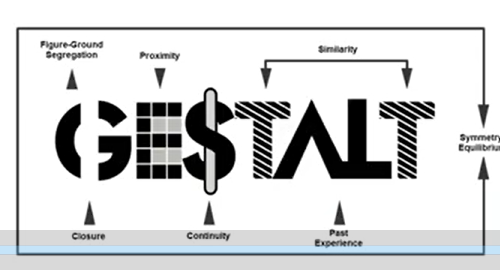
Emphasized that “the whole is greater than the sum of the parts” (contrasts with structuralism)
stimuli is different in different contexts
largely visual perception
Wertheimer, Kohler and Koffka
Gestalt Psychology — cont.
Led us to reconsider the reductionist approach (the whole always matters, stimuli are interpreted in context)
Identified key perceptual principles — still used today!
.
Only exhaustive focus was visual perception
Descriptive rather than predictive; did not address mechanism/why
Psychoanalysis
Study unconscious through various methods
Free association, dream analysis, talk therapy
Emphasis on childhood experiences
Freud and Jung
Psychoanalysis — cont.
Popularized psychology and revolutionized mental health care (L10)
Highlighted the importance of unconscious processing
.
Many issues
fixation of case studies (maybe generalization?)
many theories untestable, not supported
overvalued environmental influences
overemphasized secual function and development
Behaviorism
Focused on behavior — believed that the mind and mental processes could not be easily examined
contrasts with psychoanalysis
not interested in thoughts, just behaviour
stimulus —→ results
Watson and Skinner
Behaviorism —cont.
Experimental rigor
Identified learning principles and informed mental health care (L10)
Animal models
.
Many issues
overvalued environment
undervalued the importance of interpretation and mental processes
could not explain certain behaviours adequately (no genetics, biology, creativity)
lack of consideration for species differences
Cognitivism
In direct contrast to behaviorism, studied mental processes (e.g. perception, thinking, memory, and judgment)
innovative models, experimental designs and approaches
Piaget, Ebbinghaus, Neisser
Cognitivism — cont
Focused on mental processes (rather than just on behavior)
Developed influential models of information processing, made many fields
.
Accompanying roles of emotion interact
neuroimaging
Social/Cultural Psychology
Study how social situations and culture influence decision making
e.g. bystander effect — reduced tendency to help when many others present
Lewin, Festinger and Schachter
Social/Cultural Psychology — cont.
Helped us better understand contexts, cultures and people better
Broad implications
.
Issues
low effect sizes, replicability issues
weak effects
lab environments criticized as artificial, non-representative
What is a variable?
An attribute that assumes different values across people, places and
timepoints
Thoughts, feelings and behaviors
Variations between people (individual differences) and within people
Conceptual Variables
We cannot prove they are real, but we pretend they are because it is useful
cant be measured directly
look for things associated with conceptual variables and measure those
Approximating intelligence — conceptual variable example
Intelligence is conceptual variable (capacity to acquire and apply knowledge and skills)
can measure other associations, such as cognitive abilities
Intelligence quotient (IQ) score is calculated from many other cognitive
abilities
Defining conceptual variables
There may be more than one way to define a variable
effective definitions rely on criteria validated by the community (standardized tests)
Choose one definition in a study — operational definition
one variable can have many operational definitions
not perfect
For certain tests…
Biases
positive impression management (exaggerating positive traits)
malingering (exaggerate/manufacturing problems)
`
Accuracy
self rating: high accuracy for extroversion, low for anxiety, very low in some cases
rating of others is better, but not perfect
halo effect — infer more positive traits from one real positive trait
horns effect
`
Framing
wording of question matters
For a test to be useful, we need…
Test-retest reliability (every time with same conditions get similar result)
Inter-rater reliability (no matter who is scoring the test get similar result)
Construct validity (the degree to which a test captures the intended construct)
Key distinction between operational definition and contruct validity
Operational definition = the specific test of the conceptual variable (e.g. intelligence test)
Construct validity = does your test result predict the relevant things in the real world
(if a test does not have validity, it does not have real value)
For any variable in a population…
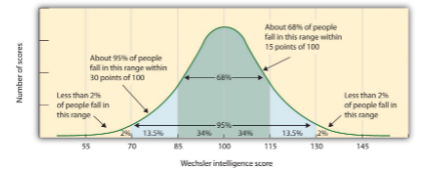
There will be a distribution (a graph of all values a variable can assume)
randomly selected population
Distribution Characeristics
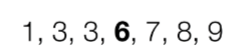
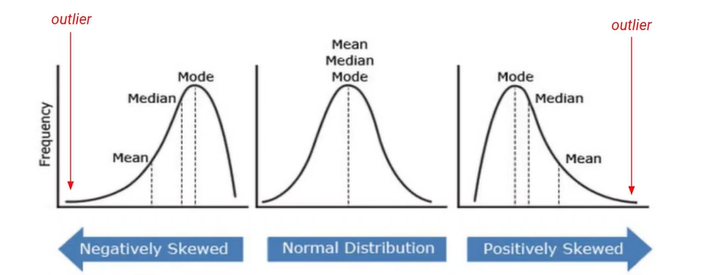
Measures of central tendency: mean, median, mode
Measures of variability: standard deviation (SD), range
Mean
Average score of the variable within a population
very useful — most psychological research involves analyzing means
But sensitive to outliers, particularly if the sample is small
Standard Deviation (SD)
How much a score typically deviates (±) from the mean
High means a lot of spread
Low means little spread
1SD unit = the SD distance from the mean
Outliers
Definition varies; generally a score must be at least 2 absolute SD units away from the mean
lead to nonrepresentative means
limit usefulness of means

Median
The value separating the higher half of a population from the lower half
not influenced by outliers
Mode
The most frequently occurring value in a population
informative but not often used in formal analysis
Range
The distance between highest and lowest score
large ranges misleading
vulnerable to outliers
SD matters more
The Normal Distribution, Bell Curve
symmetrical, bell-shaped
68% of cases between ± 1SD, 95% between ± 2SD
no skewness
no kurtosis
Mean = median = mode
(Most preferred statistics assume a normal distribution)
Skewed Distribution
Negatively skewed: mean is smaller than median and mode
Positively skewed: mean is larger than median and mode
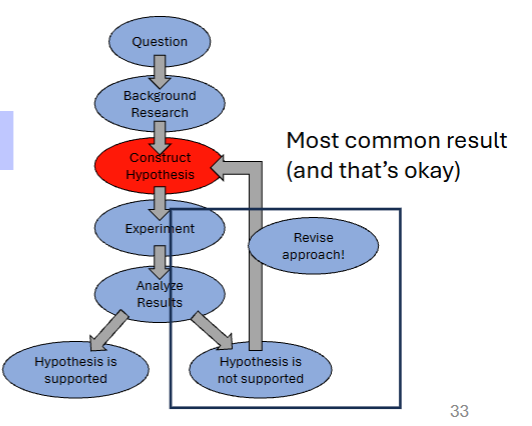
Hypothesis
A proposed explanation of a phenomenon based on evidence
serves as a starting point for an investigation
specific and directional
simple, clear, and testable
The Scientific Method
Research Approaches
1. Descriptive research
2. Experimental research
.
Different study methods have different advantages and limitations
depends on needs and resources
Descriptive research
General assessment of variables through systematic observation
not possible to infer causation
not doing a manipulation
.
case studies
surveys
naturalistic observation
Descriptive – Case Study
An intensive examination of one individual (hard to generalize for population)
give insight into rare phenomena, proof of existence
can inspire new hypotheses
common in medicine, basis of Freud
Descriptive – Survey
Assess many variables in a large population via questionnaire or interviews
highly generalizable
valuable in social psychology
Descriptive – Naturalistic Observation
Observation of an animal (or person) in its natural setting without intervention
highly generalizable (external validity); reduces concerns about the
observer effect
Flaws
poorly controlled (anything can happen)
limited range of variables (few behaviours)
difficult to study infrequent behaviours and thoughts
The experimental method
A controlled environment where we study the relationship between a defined set of variables by controlling all the rest
allow inference of causal relationships between variables
manipulate at least one variable (independent variable/IV)
measure at least one variable (dependent variable/DV)
all other variables kept constant if possible
(change in DV must be due to IV)
the one that gets no treatment —→ control
Quasi-experiment
One IV is decided BEFORE the experiment begins
already know one IV before
cant randomly assign
experiment-like, ability for causation not as strong
Study Designs
Between-subject Factor Design
2+ groups, each given different treatment
.
Within-subject factor design
one group observed 2+ times (e.g. before/after)
allow control for confounding variables
need to be measurable twice
also attrition
.
Mixed design
2+ groups, each observed 2+ times
allow control for confounding variables
Concerns — sampling
To generalize results, need to make sure study sample is representative
The W.E.I.R.D. Problem
Studies focus on Western, Educated individuals living in Industrialized, Rich + Democratic countries
12% of population, 80% of study participants
Non-WEIRD communities may differ in many ways
Addressing the WEIRD Problem
More diverse/inclusive samples
More settings
Acknowledgment of additional interpretations
Replication of prior work in different contexts
Concerns — confounding variables
Variables that a researcher fails to control limits the use of the study
uncontrollable variable that is related to the DV and/or IVs is a confounding variable
Concern — act of observation
People are aware of the hypothesis, could influence subjects behviour (conscious or unconscious)
Observer/hawthorne effect: people behave differently when observed
can be limited by opacity and/or deception by the researcher
difficult to prevent, less issue for naturalisitc observation
Concern — the power of expectation
People generally have pre-existing beliefs about how treatments might affect them
results of study might be affect or determined by the subjects belief in this treatment
Placebo effect
An effect of a treatment that cannot be attributed to the active properties of that treatment
to control, include a group with no active ingredients (control group)
placebo responses cannot be explained by active ingredients (there is none) are due to something else
Placebo effect — cont.
single-blinding or participant blinding
groups do not know which treatment they are getting
if treatment truly works, affect behaviour more than placebo or no treatment
On the placebo effect
very common in life sciences
can work even if knowing they are placebos
associated w/ neurophysiological changes
increased over past few decades in America
Concerns — what about researchers?
Researchers, just like participants, can affect the results of a study without intending to
if want a certain result, might unconsciously behave in a way that grants such result (experimenter effect)
preferred that researchers and participants are blinded (double-blinding)
sometimes don’t work “breaking blind”
Ethics in Research
Studies in Psychology follow strict ethical guidelines
need approval from local ethics committees before experiment
human + animal research have separate committees
Ethical guidelines
Informed consent (subject given all relavent info)
Freedom to leave at any point (attrition (subject loss) is high)
Protection of participants (no unnecessary harm or distress)
Confidentiality (data kept anonymous)
Debriefing (hypotheses + procedure explained, any deception revealed after)
deception is often necessary, subjects should still be informed
of potential harm
Tuskegee Syphilis Study
N = 600 people (399 with syphilis) of African-American descent observed over a 40-year period
participants not informed of true nature of condition or given proper medical care
lasting impact on trust