Week 9: General View of Geumgangsan Mountain
 Call Kai
 Learn
Learn Practice Test
 Spaced Repetition
 Match
Match Flashcards
 Knowt Play
1/15

There's no tags or description
Looks like no tags are added yet.
Name | Mastery | Learn | Test | Matching | Spaced | Call with Kai |
|---|
No analytics yet
Send a link to your students to track their progress
16 Terms
proper title
General View of Geumgangsan Mountain
time period
1734
artist
Jeong Seon
What is a “True View” landscape painting?
Korean painting style developed by Jeong Seon in the late Joseon period
depicts actual Korean landscapes based on direct observation
emerged as a distinct Korean artistic style and became the dominant landscape tradition during the 18th century.
Two important qualities of True View landscape painting
Direct observation of real places
Artistic reinterpretation of reality – instead of simply copying nature, artists emphasized the spirit, and character of the landscape through composition and expressive brushwork.
Imaginary vs Real Scenery vs True view landscape
Imaginary Landscape | Based on Chinese artistic conventions and idealized mountains rather than real places. |
Real Scenery Landscape | Depictions of actual locations (documentary records, maps, travel records) |
True View Landscape | Jeong Seon's development of real-scenery painting into a artistic and expressive style that captured both the appearance and spirit of Korean landscapes. |
Recomposition of the Landscape
Jeong Seon did not simply copy nature exactly he:
Omitted unnecessary details.
Enlarged important features.
Shifted the position and scale of mountains and landmarks.
Combined multiple viewpoints into one image.
Emphasized the most dramatic qualities of the scenery.
Traveling and Governance
Travel was closely connected to government service in Joseon Korea.
Jeong Seon was a local magistrate and government official
Gov officials frequently traveled to inspect regions, supervise civil service examinations, and administer provinces.
allowed artists to observe landscapes and produce paintings documenting important sites.
Various Influences on the Real Scenery Landscape
Gyehoedo (Documentary Paintings of Gatherings)
Paintings often documented social or official events, such as meetings of scholars and literati. These documentary paintings helped establish traditions of recording real places and events.
Maps
Many early real-scenery paintings functioned almost like maps:
They labeled locations.
Showed routes and landmarks.
Recorded geography for practical use.
Foreign Invasions
Japanese invasions (1592–1598) and Manchu invasions (1636–1637)
encouraged a stronger sense of Korean identity and pride landscapes and culture.
renewed nationalism contributed to the popularity of depicting Korean scenery rather than relying on Chinese models.
Jeong Seon's Brush Techniques
Mi Dots
Small, soft dots derived from Chinese painting traditions.
Used to depict vegetation, forested slopes, and softer terrain.
Helped create atmospheric and naturalistic textures.
Vertical Strokes
One of Jeong Seon's signature innovations.
Strong vertical texture strokes emphasized the steep, dramatic rock formations of Geumgangsan.
Created a sense of energy, monumentality, and ruggedness.
Repatriation
Jeong Seon's 1711 Album of Mount Geumgang (Pungak-docheop) was repatriated to Korea
Its return is significant because:
It is one of the earliest surviving examples of Jeong Seon's True View landscape style.
It provides evidence of the origins of Korean True View painting.
It is considered an important part of Korea's cultural heritage.
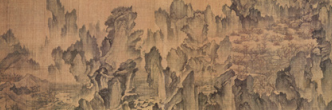
What is the Dream Journey to Peach Blossom Land?
1447
Commissioned by Prince Anpyeong, who dreamed of traveling to the legendary Peach Blossom Land described in Chinese literature.
Considered one of the greatest masterpieces of Korean painting.
Depicts an imaginary paradise, not a real location.
The painting combines Chinese-inspired landscape traditions with Korean artistic interpretation.
Represents the idealized/imaginary landscape tradition
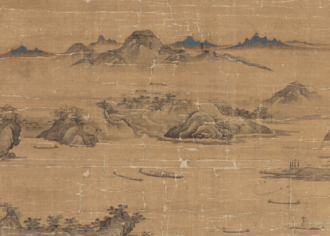
what is Meeting at the Reading Pavilion
1570
Depicts a gathering of scholar-officials at the Reading Pavilion (Dokseo Hall) along the Han River.
An example of a Gyehoedo (gathering or club-meeting painting).
Records an actual event and actual participants.
One of the earliest surviving examples of real-scenery landscape painting
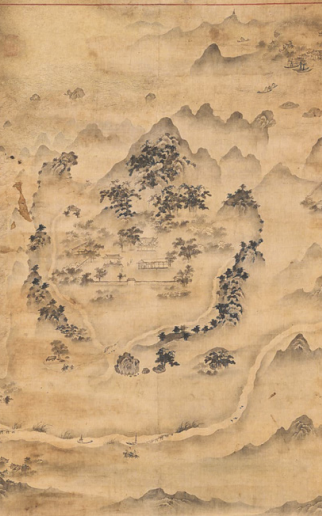
what is hermitage of the recluse seokjeong
Depicts the residence or retreat of the scholar Seokjeong.
Represents a scholar's withdrawal from official life into nature.
Reflects Neo-Confucian and literati values.
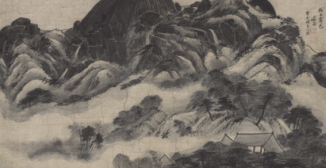
what is the scene of Inwangsan Mountain After Rain
Considered one of the greatest masterpieces of Korean True View landscape painting.
Depicts Mount Inwang in Seoul immediately after rainfall.
Based on direct observation of a real Korean landscape.
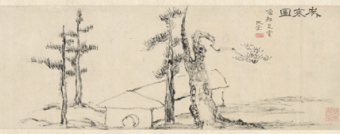
what is the winter scene
Winter landscapes were a common subject in Joseon painting.
Often feature snow-covered mountains, bare trees, rivers, and small pavilions.
Used limited ink tones to create a quiet and contemplative atmosphere.