History (LUNR) - Democracy to Dictatorship
 Call Kai
 Learn
Learn Practice Test
 Spaced Repetition
 Match
Match Flashcards
 Knowt Play
1/53

Earn XP
Description and Tags
1. Nazi Ideology 2. Nazi Leaders (1933) 3. Establishing a Dictatorship 4. Nazi Opposition
Name | Mastery | Learn | Test | Matching | Spaced | Call with Kai |
|---|
No analytics yet
Send a link to your students to track their progress
54 Terms
Nazi Ideology: Scrap the Treaty of Versailles
The Nazis believed that Germany should ignore the harsh restrictions placed on it by the Allies, especially those that restricted the armed forces.
They also wanted to take back former German lands that had been given to nations such as Poland.
Nazi Ideology: Brot und Arbeit ('Bread and Work' for all)
These bare necessities were promised to all unemployed Germans so that their needs would be met and the German people would be more united and contented.
Nazi Ideology: Destroy Marxism
Marxism is a type of communism.
The Bolsheviks (a Marxist party) had led the communist revolution in Russia in 1917.
According to the Nazis, the Bolsheviks were led by Jews. They needed to be stopped so that they could not stir up a similar communist revolution in Germany.
Nazi Ideology: Subdue the Jews
Nazi ideas were fuelled by anti-Semitism.
This means that they saw Jews as Untermenschen (sub-humans).
Jews were blamed as the cowards who had made Germany surrender in 1918, as the communists who had plotted revolution and as the money-grabbers who had benefitted at the expense of the poor.
Nazi Ideology: Ensure Aryan supremacy
The Nazis believed that northern Europeans were Übermenschen (super humans); they called the Slavs of eastern Europe Diingervolk (dung-people).
The ideal Aryan had blond hair and blue eyes but northern Europeans without these features could still be considered Aryan.
Nazi Ideology: Fight for Lebensraum (living space)
Lebensraum was needed to grow the food that the German people needed.
The Nazis wanted to take large parts of eastern Europe by force, believing that it was wasted on the Slavs who lived there.
Nazi Ideology: Build Nationalism
The Nazi extreme form of patriotism included the belief that Germany should be run by Germans for Germans.
The Nazis believed that foreign influence, or the involvement of non-Aryans, especially Jews, should be removed from society.
Nazi Ideology: Strengthen central government
In Germany there was a tradition of local government having lots of power to make decisions.
The Nazis believed that this should be removed and the power of the central national government should be increased.
Nazi Ideology: Nationalise important industries
The Nazis believed that services, such as the supply of electricity, water and railway transport, should be provided by the government for the good of the nation rather than by independent companies for private profit.
Nazi Ideology: Improve education
Education was seen by the Nazis as crucial to improving the economy.
They believed that Germans needed an improved education system so that the German people could work more efficiently, make Germany strong again and learn to accept Nazi ideology.
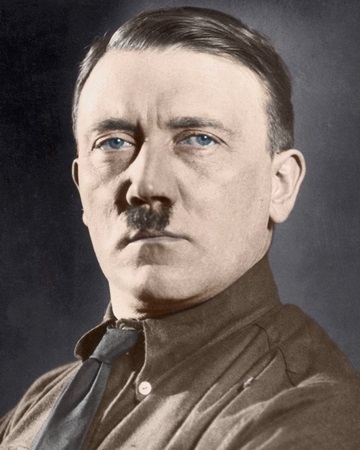
Nazi leaders in 1933: Adolf Hitler
At the head of the party was Adolf Hitler.
Hitler had been the party leader since 1921 and was instrumental in its success.
A very charismatic speaker who could captivate a large crowd, he was a nationally known figure.
Jailed for attempting to take power by force in 1923, Hitler was hailed at his trial by the press for his strong opinions.
While in prison he wrote Mein Kampf (My Struggle), which clearly set out his racist and nationalistic views. It went on to be a national bestseller.
In 1932 during the election he used an aeroplane to fly around Germany delivering speeches.
He was the central figure in the Nazi Party structure.
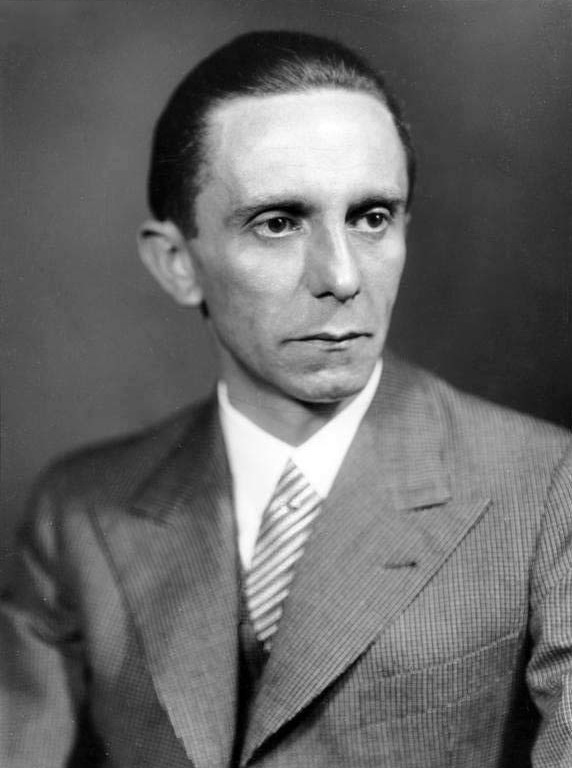
Nazi leaders in 1933: Joseph Goebbels
Nazi ideas were spread far and wide by the party's propaganda team, co-ordinated by Joseph Goebbels.
As a highly educated man from the middle classes, he realised the power of modern media and utilised posters, newspapers and new technology in the forms of radio and film.
Goebbels used simple, bold messages to make a point. During the Great Depression, for example, the Nazis had fought the election on the campaign motto 'bread and work', appealing to the two basic demands of the needy population.
He had deeply anti-Semitic ideas. His propaganda also emphasised the strength of Hitler who was portrayed as a god-like supreme being.
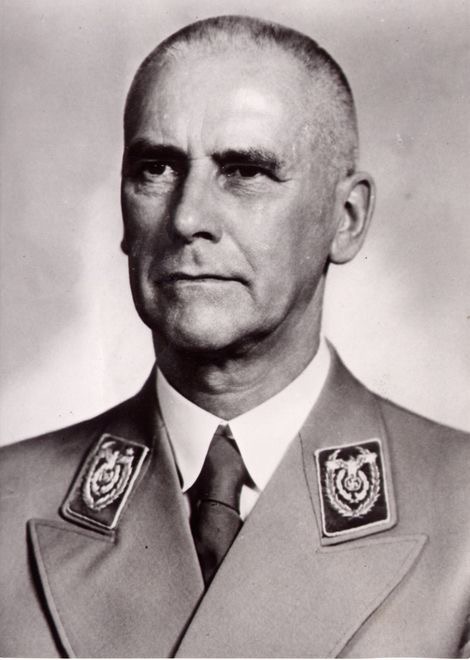
Nazi leaders in 1933: Wilhelm Frick
Wilhelm Frick was a long-standing member of the party. In 1933, when Hitler was made Chancellor, only two other Nazis were given roles in the Cabinet: Göring was one and Frick was the other.
He was made Minister of the Interior, with overall responsibility for most aspects of life in German society.
From 1930 to 1931, he had experience of high office in one of Germany's state parliaments where he used his powers to promote Nazis into important positions and to spread Nazi ideas in schools.
Frick helped to shape the party's racial policy
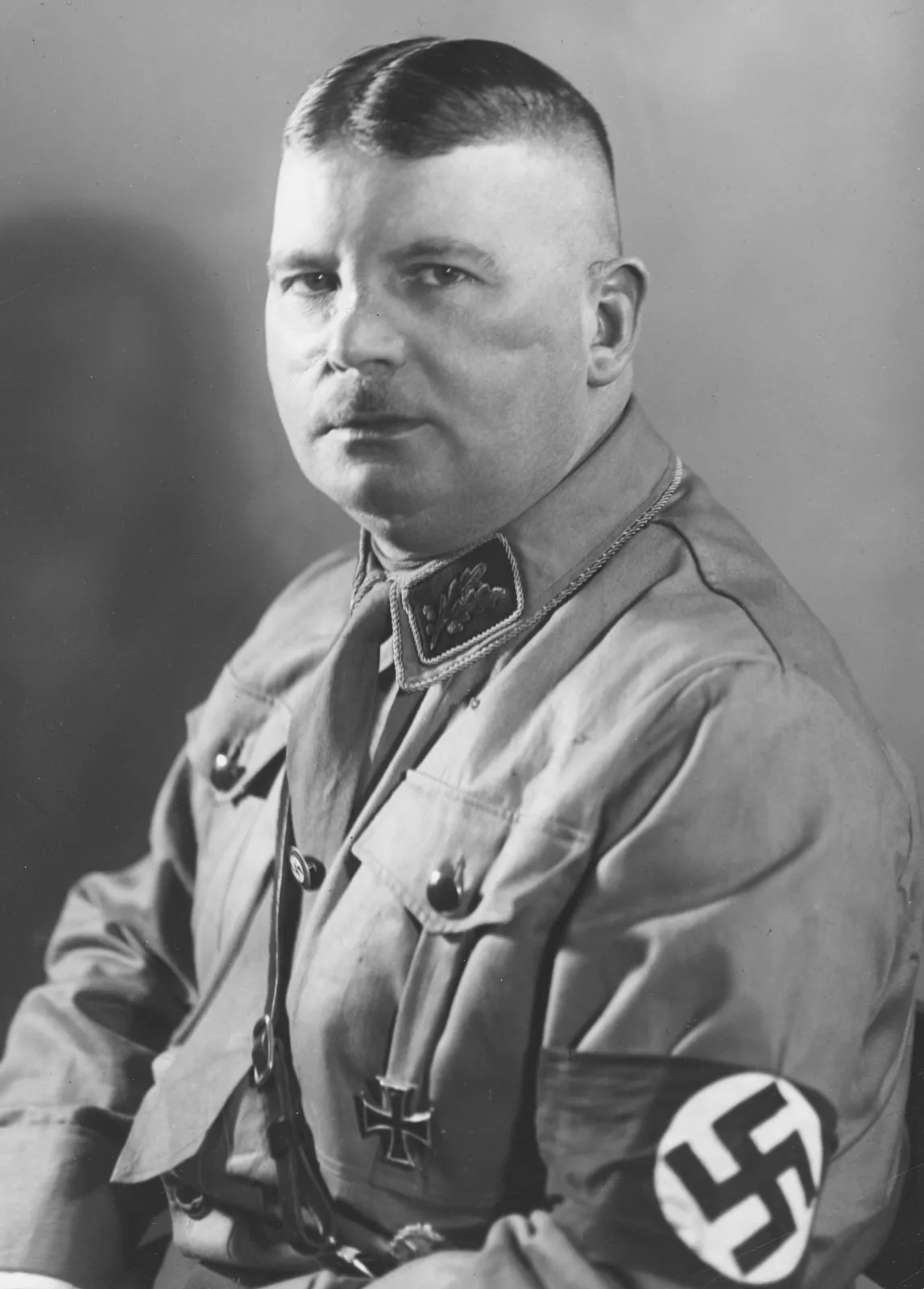
Nazi leaders in 1933: Ernst Röhm
Ernst Röhm was the leader of the SA (short for Sturmabteilung or Storm Department, but more commonly known as 'brownshirts').
Originally set up as bodyguards for Hitler, the SA had turned into the Nazi's private army.
Röhm took charge of the SA in 1930 and greatly increased its strength so that it had 400,000 'stormtroopers' by 1933.
These were used to intimidate voters and other political parties.
During the election they stood outside polling booths and intimidating voters into voting for the Nazis.
They also physically attacked Communists.
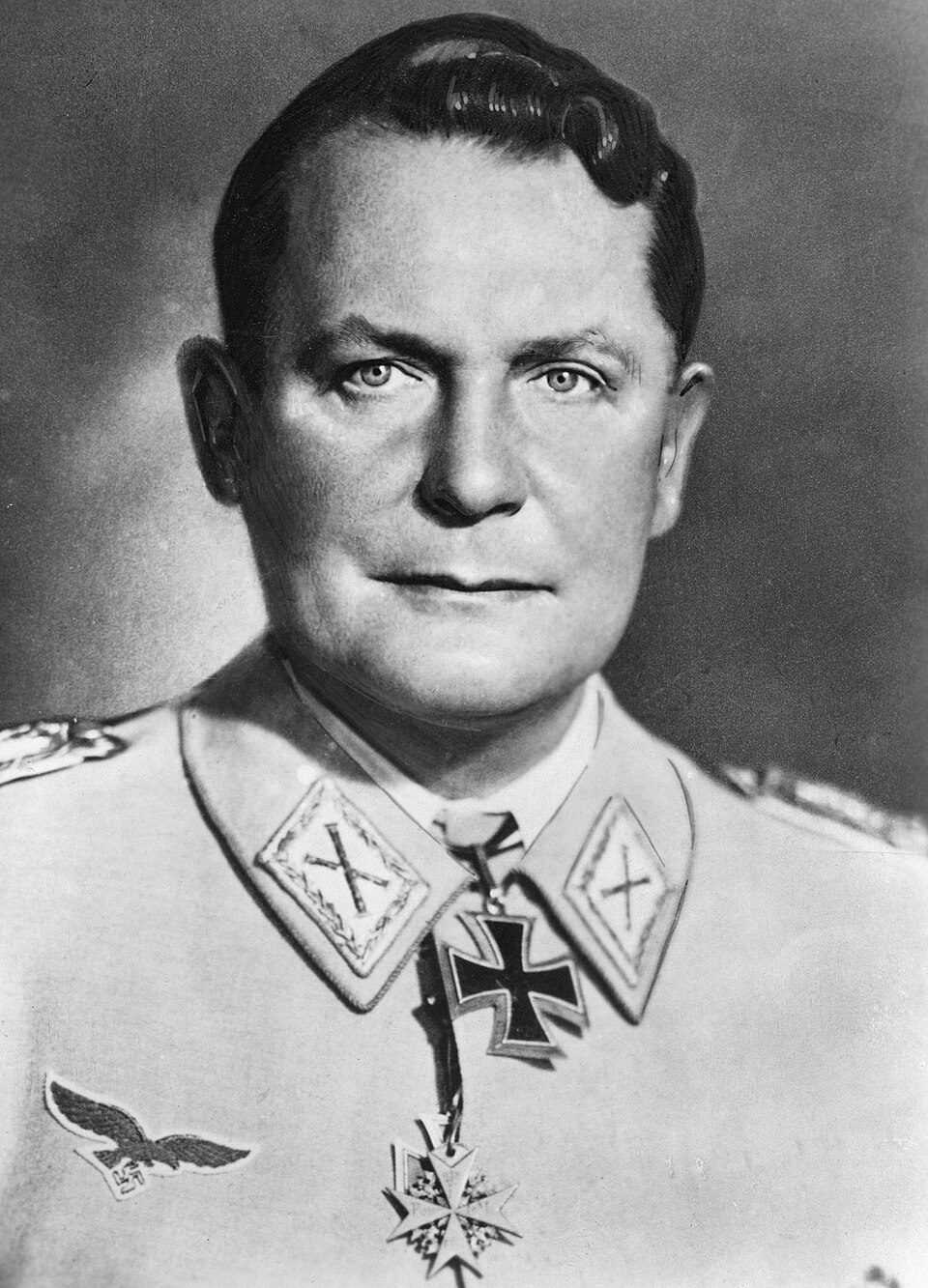
Nazi leaders in 1933: Hermann Göring
Hermann Göring, an ex-First World War fighter pilot, was second in power to Hitler.
He joined the German Cabinet along with Frick and Hitler in 1933.
He had no clear role at first but he helped the party to run smoothly.
Before long, his government responsibilities included controlling the police in Prussia, the largest German region. In 1933, Göring formed the Gestapo, the Nazi secret police that would spy on the German people to stop opposition to the party.
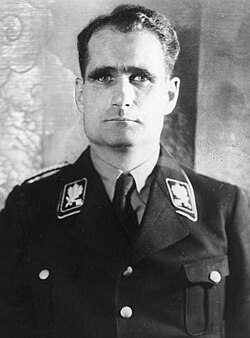
Nazi leaders in 1933: Rudolph Hess
Rudolph Hess, another ex-First World War hero, was third in power to Hitler.
He was Deputy Leader of the party and it was his job to sign off all new legislation to ensure that it closely followed the Nazi ideology.
He worked in Munich at the headquarters of the party and made certain everyone was following the same goals.
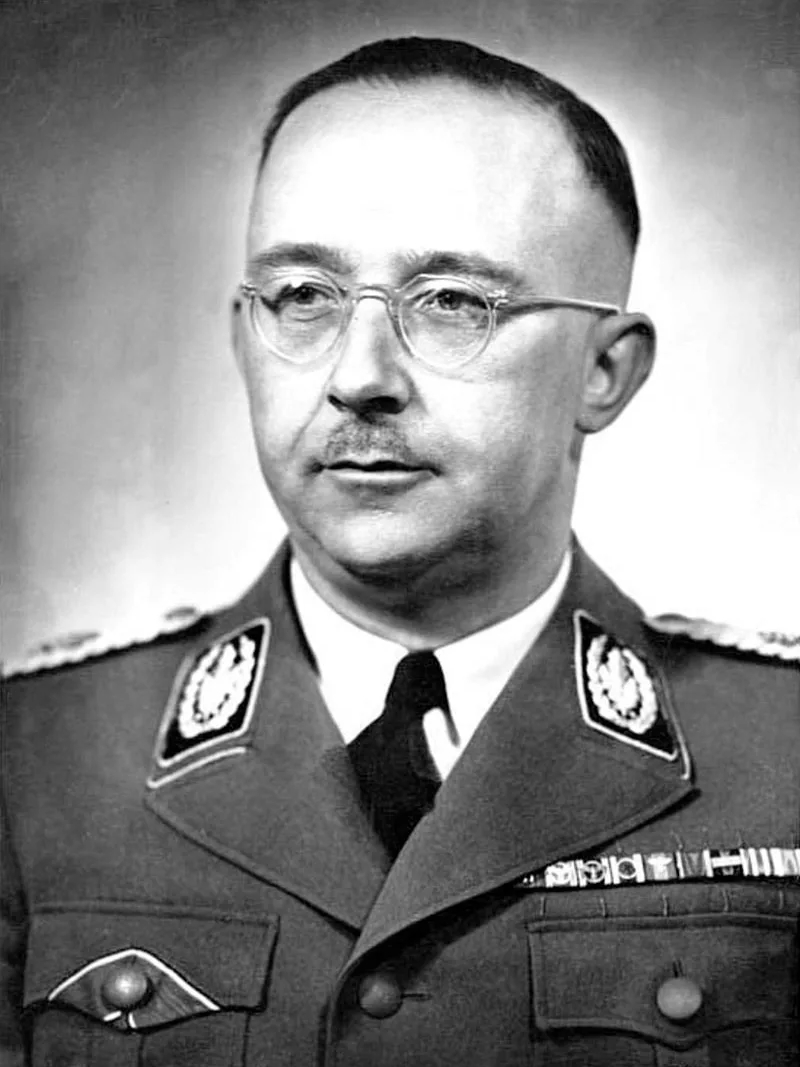
Nazi leaders in 1933: Heinrich Himmler
Heinrich Himmler led the SS (Schutzstaffel or Protection Squadron, more commonly known as 'blackshirts').
This, like the SA, had started as a group of Nazi volunteers who provided security for party leaders.
By the end of 1933, the SS had about 200,000 members.
Its 'elite guard' was a paramilitary force with strict entrance requirements whose members were fanatical about Nazi ideology.
They numbered over 50,000 and, under Himmler, were developing the methods of surveillance and terror that would later gain them notoriety. The SS would go on to be one of the defining features of Nazi Germany, running the concentration camps, spying on its people and striking fear into the hearts of anyone living under a Nazi-led regime.
Establishing the dictatorship: Step I: Removing the Communists
The Reichstag Fire - What was it?
The Reichstag Fire (27 February 1933):
On 27 February 1933 the Reichstag building, which was home to the German Parliament, was burned down. The communists were blamed for the fire because a Dutch communist, called Van der Lubbe, was found in the building as it burned.
Establishing the dictatorship: Step I: Removing the Communists
The Reichstag Fire - How did Hitler use this to his advantage?
Hitler used the fire to the Nazi Party's advantage in two ways:
He expelled the communists from Parliament and imprisoned many communist leaders. This stopped them campaigning prior to the March elections.
He announced that the country was in danger from the communists during the election campaign. This encouraged many to vote for the Nazis, who were seen as anti-communist.
Hindenburg declared a state of emergency using Article 48 of the Weimar Constitution. This resulted in newspapers being censored and personal letters and phone calls being checked. This is seen as the start of the end of democracy in Germany.
Establishing the dictatorship: Step 2: Removing German democracy
Using intimidation to sway the 1933 election
With an election scheduled for 5 March 1933 and the Communist threat neutralised, the Nazis were confident of electoral success.
In February they used the SA stormtroopers to intimidate other parties, breaking up meetings of the Social Democrats, the second largest party in the Reichstag.
In the week leading up to the election, the SA and SS moved menacingly through the streets of Germany. Their message was clear — support for other ideas would not be tolerated
Despite this, the Nazi party still failed to achieve an outright majority in the Reichstag, winning only 288 of 647 seats. By forming a coalition with the Nationalist DNVP Party, however, they managed to gain an additional 52 seats.
This finally gave them the majority that had eluded them in 1932. They could now pass any legislation they wished.
Establishing the dictatorship: Step 2: Removing German democracy
The Enabling Act — 24 March 1933
On 24 March 1933 the members of the Reichstag met in the Kroll Opera House where Hitler gave a long speech introducing an Enabling Act.
The Enabling Act gave the cabinet and importantly the office of Chancellor the power to pass any law they wished without the consent or control of the Reichstag.
The debating chamber was surrounded by SA soldiers as an act of intimidation and, with the Communist leaders locked up following the fire, only the 94 Social Democrats voted against the Act; 444 members voted to pass it.
In doing so, they effectively disbanded democracy and the German Reichstag.
Hitler was legally made dictator of Germany.
Establishing the dictatorship: Step 3: Gleichschaltung — bringing Germany into line
The Civil Service Act
Civil servants are those people who carry out the duties of the government, both nationally and locally.
As the Nazis wanted to control government, their attention soon fell on this group of individuals.
In February 1933, quite soon after Hitler had become Chancellor, many high-ranking civil servants were removed from their posts.
Then, on 7 April, the Act for the Restoration of the Professional Civil Service was passed.
It required the dismissal (firing) of anyone who was a political opponent of the Nazis or anyone who was non-Aryan.
This meant that Jews and political opponents could no longer serve as teachers, judges or university lecturers, as all these professions were counted as part of the Civil Service.
Establishing the dictatorship: Step 3: Gleichschaltung — bringing Germany into line
The official encouragement of anti-Semitism
The Nazis had always had anti-Semitic views. As soon as they took power they began putting these into operation.
The first wave of legislation focused on excluding Jews from public life.
The Civil Service Act removed them from the civil service and in April further legislation restricted the number of Jews studying in universities.
In the same month, further laws began curtailing 'Jewish activity' in legal and medical jobs. These were the first steps in the persecution that would eventually lead to the Holocaust.
On 1 April 1933, as part of this rise in anti-Semitism, the Nazis organised a day-long boycott of all Jewish businesses.
Anti-Semitic signs were put up on shop fronts and SA guards were posted outside shops to discourage people from entering.
This was the first of many boycotts of Jewish businesses.
Establishing the dictatorship: Step 3: Gleichschaltung — bringing Germany into line
Book burning
The Nazis did not want to just bring people into line according to party or race: they also wanted to control ideas.
Encouraged by Goebbels' Propaganda Ministry, Nazi student groups were urged to take part in action against what was called 'Un-German Spirit'.
On 10 May 1933 in university cities across Germany, Nazi students burnt 25,000 volumes of 'un-German' books.
These included works by Jewish and Communist authors or anyone else whom the Nazis deemed to be un-German.
Establishing the dictatorship: Step 3: Gleichschaltung — bringing Germany into line
The use of terror
In 1933, the Nazis turned their full force against their opponents. Jews, Communists, Social Democrats and trades unions all faced the wrath of the SA and the SS.
Most historians believe that up to 600 were murdered in 1933 and, by October of that year, over 100,000 had been arrested.
Many of these people were imprisoned in concentration camps, which were set up all over Germany, the first being at Dachau in March 1933.
The SA became increasingly violent. In June 1933, in what has become known as the Köpenick Week of Blood, a Social Democrat shot three SA stormtroopers.
In retaliation, the SA arrested 500 men and tortured them so severely that 91 died.
Establishing the dictatorship: Step 4: Removing opposition
Trades unions
Trades unions:
Trades unions are set up to protect the rights of workers, fighting for better pay and conditions. They are traditionally very left wing and, as a result, the majority of the unionists in 1933 were against the Nazi Party and their ideology.
In February 1933, fearing that trades unions would organise a strike to demonstrate their opposition, the Nazis arrested the main union leaders.
The remaining leaders felt that the only workable option was to co-operate with the Nazis rather than work against them. They met Goebbels to see if a compromise could be agreed between the two groups.
Goebbels promised all workers an annual holiday in honour of German labour, which pleased the union leaders.
The Day of National Labour on 1 May was a great success with over a million crowding on to Tempelhof airfield in Berlin to hear leading Nazis speak.
However, the trades union leaders had been duped. On 2 May, the offices of every left-wing trades union were raided, the leaders arrested and their newspapers shut down. Assets and membership were put under the control of the Nazi-led German Labour Front (DAF).
Establishing the dictatorship: Step 4: Removing opposition
Other political parties
Other political parties:
Although the Enabling Act made the Reichstag redundant, as the Nazis could make laws without it, other political parties still existed and began complaining about the Nazi changes.
The Social Democrats (SD) had been the largest party before 1932 and once the trades unions were removed they became the next Nazi target.
On 10 May, the Nazis claimed that there had been corrupt use of SD funds and so seized all SD offices and wealth, with many leaders fleeing as a result.
On 21 June, Frick used an emergency decree to ban the Social Democrats as a 'dangerous enemy'. In total, 3000 party workers were arrested, imprisoned and tortured. Once other parties saw this, they knew a similar fate awaited them.
Rather than be arrested, one by one the remaining parties dissolved themselves (shut themselves down) in late June and early July.
On 14 July 1933, the Act to Ban New Parties was passed. The Nazis were now running a one-party state with no official opposition.
Establishing the dictatorship: Achieving total power, July 1933 to August 1934 (Further legislation)
Controlling local government
Controlling local government:
Local government in Germany was organised into regions, or Länder. Each region could elect its own assembly to manage local affairs. The Nazis could not tolerate this, as it was a part of the government system outside their control.
During 1933, power had slowly been removed from the regions but in January 1934, with the Act for the Reconstruction of the State, the power of the Länder was removed completely.
Germany was no longer seen as a country of different regions but as a highly centralised state.
The states were reduced to mere provinces split into 42 Gaue, each run by a Gauleiter directly elected by the party and answerable to the central government.
Establishing the dictatorship: Achieving total power, July 1933 to August 1934 (Further legislation)
The People's Court
The People's Court:
Hitler had been infuriated by the trial of those accused of causing the Reichstag Fire. Four Communists had been acquitted with just one, Van der Lubbe, being sentenced to death.
So, in April 1934, the Nazis passed the Act to Set Up the People's Court. This created a separate court outside the normal justice system.
It dealt with 'political offences' and ensured rapid decisions. 'Political offences' was a deliberately vague term and those tried in these courts ranged from slow workers to treason plotters.
The number of death penalties that they issued rose rapidly as the years passed.
Establishing the dictatorship: The Night of the Long Knives
The Night of the Long Knives:
30 June 1934
Many members of the SA, including its leader Ernst Röhm, were demanding that the Nazi party carry out its socialist agenda and that the SA take over the army. Hitler could not afford to annoy businessmen or the army, so the SS (Hitler's personal bodyguards) murdered around 400 members of the SA, including Röhm, along with a number of Hitler's other opponents like the previous Chancellor, von Schleicher.
This destroyed all opposition to Hitler within the Nazi Party and gave power to the brutal SS. It also showed the rest of the world what a tyrant Hitler was. This removed any internal Nazi Party opposition to Hitler.
Hitler becomes Führer
19 August 1934
After Hindenburg died, Hitler declared himself jointly president, chancellor and head of the army. This formally made Hitler the absolute ruler of Germany.
Members of the armed forces had to swear a personal oath of allegiance not to Germany, but to Hitler. This neutralised any sources of opposition to Hitler within the army.
Establishing the dictatorship: The consequences of the Night of the Long Knives
The power of the SA was reduced:
The power of the SA was reduced:
The Night of the Long Knives certainly curbed the power of the SA. Its leaders now knew the consequences of questioning Hitler. The role of the SA was reduced, although it continued to exist. Its membership dropped severely from 2.9 million in August 1934 to 1.6 million by October 1935.
Establishing the dictatorship: The consequences of the Night of the Long Knives
The Nazi regime gained a strange legal grounding:
The Nazi regime gained a strange legal grounding:
The Night of the Long Knives involved the execution without trial of at least 85 people. In a speech to the Reichstag on 13 July 1934, Hitler insisted that he was the 'supreme judge of the German people'. He had established that 'extra judicial' killing by the regime was acceptable.
Establishing the dictatorship: The consequences of the Night of the Long Knives
The loyalty of the army was secured:
The loyalty of the army was secured:
The army (the Reichswehr) knew that Hitler had made a choice between them and the SA. When he chose to give his support to the army they repaid him with great loyalty. General Blomberg, the head of the Reichswehr, congratulated Hitler on his 'soldierly decision' to deal with the 'traitors and murderers'.
Establishing the dictatorship: The consequences of the Night of the Long Knives
A culture of fear was created:
A culture of fear was created:
The SS, not the SA, now became the key instrument of Nazi terror in the German state. The culture of fear that followed the Night of the Long Knives was by far its most important consequence.
Establishing the dictatorship: The consequences of the Night of the Long Knives
The rise of the SS and Heinrich Himmler was established:
The rise of the SS and Heinrich Himmler was established:
The success of the Night of the Long Knives was largely down to the SS and Heinrich Himmler who had co-ordinated it. Himmler's men were crucial in the operation, leading the arrests and murdering the opponents. Before this, the SS had been a relatively small off-shoot of the SA. They had now proven their loyalty, and rose in prominence. Himmler would go on to become one of the most powerful men in Germany.
Establishing the dictatorship: Becoming the Führer
There was now just one final obstacle to Hitler assuming full power: President Hindenburg.
Although Hitler was Chancellor and had the power to make laws, the German constitution allowed the president to block any action by a chancellor.
However, by late July it was clear that President Hindenburg would not be an obstacle for much longer: the 87 year old was dying.
On 1 August, Hitler visited the President who, in his deluded state, referred to him as 'Your Majesty'. Hindenburg was at death's door.
Hitler and the Nazis worked quickly to pass legislation and seize the moment. Later that day, the Act concerning the Head of State was passed.
At the moment of Hindenburg's death, the office and power of the President would be merged with that of the Chancellor under the new title of Führer.
That moment came a day later, at 9 a.m. on 2 August 1934. Hitler was now Führer, literally meaning 'leader'. He was the dictator of Germany, with full power, a position he would hold until he committed suicide in April 1945.
Establishing the dictatorship: Hitlers charisma
Hitler's charismatic and energised style helped the Nazi Party to be noticed and to gain votes:
Hitler was a popular and effective public speaker at a time when politicians had to speak at public meetings on a regular basis.
He used these meetings to tell many Germans what they wanted to hear – that there was a political party that would solve all their problems.
He used simplistic language and short phrases to convey his message.
He came across as energetic and passionate: someone who cared about the plight of the German people.
Nazi Opposition: The machinery of terror
Himmler and the SS
Himmler and the SS:
Heinrich Himmler was born in Munich to a middle-class family and joined the Nazis in 1923.
He became a member of the SS (Schutzstaffel), an offshoot group of the SA with around 250 members whose job was to provide a bodyguard for Hitler.
In 1929, Himmler was made leader (Reichsführer) of the SS and he began transforming this tiny group into an elite paramilitary force.
Its members, who wore special black uniforms with the SS double lightning bolt logo, had a reputation for blind obedience and total commitment.
Unlike the SA, the SS was kept small. By 1933, it still had only 52,000 members, compared with 3 million in the SA.
Himmler was ruthless about selection, focusing on men of pure German blood who had the ideal Aryan features.
It was in 1934 that the SS truly rose to power. On the Night of the Long Knives the dominance of the SA was removed and from that point Hitler looked to the obedience and ruthlessness of the SS to carry out purges, removing his enemies.
The SS was made an independent organisation and over the next few years Himmler absorbed more and more of the policing power over Germany.
In 1936, he became Reichsführer and Chief of all German Police, which made him one of the most powerful men in Nazi Germany.
Nazi Opposition: The machinery of terror
Intelligence gathering (The SD):
The SD:
The SD (Sicherheitsdienst or Secret Service in English) was the main official intelligence-gathering agency.
Originally set up to serve the Nazi Party, it developed under its sinister leader, Reinhard Heydrich, and became the state Secret Service in 1938.
The role of the SD was to identify actual or potential enemies of the Nazi leadership.
Historians investigating the SD have found that most SD agents were relatively young, well-educated men who showed no sign of being fanatical Nazis.
The SD focused on any opposition to the party itself. It spied on all aspects of education, the arts, government and administration, as well as churches and the Jewish community.
It also tracked foreign reporting of German affairs and looked out for spy networks serving other nations.
From their findings, agents wrote extensive reports on the morale and attitude of the German people.
These enabled the Nazi leadership to monitor the impact of the changes they made and to tailor propaganda as and when it was necessary.
The SD did not take action against individuals but passed information on to those who did - the Gestapo.
Nazi Opposition: The machinery of terror
Intelligence gathering (The SD): Reinhard Heydrich
The leader of the SD was Reinhard Heydrich.
Heydrich joined the SS in 1931 and made such an impression on the Nazi leadership that he was asked to lead the new SD the following year.
By 1934, he was also head of the Gestapo. This put him at the epicentre of the Nazi regime and his fingerprints can be seen on nearly every notable and horrific event committed by that regime in the following decade.
In 1934, it was his Gestapo team that built a dossier of evidence against Röhm and carried out many of the murders during the Night of the Long Knives.
In June 1936, when all the police forces of Germany were united into a single force, Himmler became its director, with Heydrich as his deputy.
From this point, they were the two most important people in controlling the German nation.
Nazi Opposition: The machinery of terror
Intelligence gathering (The Gestapo):
This was the Nazis’ secret police force. Its job was to monitor the German population for signs of opposition or resistance to Nazi rule. It was greatly helped by ordinary German people informing on their fellow citizens.
At its height, the Gestapo had 15,000 active officers to police a population of 66 million. This works out as only one officer per 4,400 people.
Yet even with such low numbers, the Gestapo was deeply feared. It was a highly effective, ruthless organisation that had the power to arrest and imprison any person suspected of opposing the Nazi state.
In the early years after 1933, the Gestapo focused on the Nazis' political opponents but, later on, Jews, homosexuals and religious dissenters were also targeted.
It was the Gestapo's ability to identify opponents that gave them such frightening power.
They could tap telephones and open mail, but mostly they relied on informers who might pass on remarks they had overheard or just general suspicions.
A lot of useful information came from the Nazi party's system of Block Leaders that had originally been set up to spread the Nazi message. (The Block Leaders were men who were given the job of getting to know the people living in their local area.)
Other tip offs (or 'denunciations') came from the general public. All denunciations, no matter how trivial, were investigated and the accused were brought into Gestapo offices for interrogation.
Quite often the Gestapo discovered that a tip-off was based on a grudge.
The aim of interrogation was to get the accused to confess. Memoirs of survivors tell us that torture, such as beatings with rubber truncheons or bamboo canes, sleep deprivation and electrocution, was sometimes used.
The extent of this is difficult to evaluate as the Gestapo destroyed almost all its papers in the final days of the war.
Nazi Opposition: The machinery of terror
The police:
Police:
Many police reacted positively to Nazi rule as their powers were extended.
The Nazis centralised police organisations and provided them with far better funding.
In 1936, the police were put under the control of the SS and were encouraged to join its forces.
The Orpo (ordinary police) and Kripo (criminal police) continued to carry out their everyday duties in the community and investigated crimes, as they had done before the Nazi takeover of power, but they also became an important part of the terror system, providing intelligence on potential enemies and arresting them.
Nazi Opposition: The machinery of terror
Judges and courts:
Judges and courts:
Judges had to swear an oath to Hitler, and sentences during the Nazi era became more severe.
The number of criminal offences punishable by a death sentence rose from 3 in 1933 to 46 in 1943; 40,000 people were sent to their deaths.
Many of these death sentences were given by the People's Court where the lack of a jury and predetermined guilty verdicts meant the proceedings were no more than show trials.
Nazi Opposition: The machinery of terror
Concentration camps:
Concentration Camps:
Other than execution, the ultimate punishment for those hunted down by the terror system was the concentration camp.
Unlike the extermination camps, such as Auschwitz, whose primary purpose was killing people, these concentration camps aimed to gather people who threatened the state and to 'concentrate' them in places where they could be kept away from society and in harsh conditions.
Nazi Opposition: The machinery of terror
Concentration camps: The early years
Concentration camps: The early years
Over 70 concentration camps were set up in 1933 to imprison 45,000 Communists, trade unionists and other political opponents.
These early 'wild' camps gave out extreme punishments, to the extent that some guards were jailed for torturing prisoners.
Many were run by the SA, and these were so disorganised and had such extreme conditions that they became an embarrassment and were closed in the second half of 1933. Most prisoners were freed at that point and the total number of prisoners dropped to 7500.
Nazi Opposition: The machinery of terror
Concentration camps: Later years and 'Death's Head' units
Later years and 'Death's Head' units:
In June 1933, Theodor Eicke was appointed to run Dachau and bring order to the chaos. His Death's Head units, guards who wore skulls on their SS hats, established a code of conduct that was used in all the camps, with specific punishments for different offences.
Lésser offences could result in a diet of only bread and water, while greater ones could result in flogging or beatings carried out in front of other prisoners.
In 1937, Himmler declared that guards could not be sent to jail for their actions and deaths went up dramatically at the camps.
At Dachau there were 69 deaths in 1937, nearly seven times as many as in the previous year. During the same period, the camps also began using the prisoners for labour, forcing them to carry out manual work in and out of the camps.
In the early years, the camps mostly imprisoned political opponents but, by the mid-1930s, other groups began to arrive — criminals, the work shy, religious opponents and to a lesser extent Jews. In 1938, at Buchenwald, 4600 of the 8000 inmates were 'work shy'.
Camp authorities imposed a uniform on the imprisoned, and different groups were forced to wear different-coloured triangles.
By the start of the war, the total number of prisoners had risen again to 21,000.