BIO 190- Ch #9 *The Info of Life: DNA,RNA structure, DNA replication, chromosome structure*
 Call Kai
 Learn
Learn Practice Test
 Spaced Repetition
 Match
Match Flashcards
 Knowt Play
1/80

There's no tags or description
Looks like no tags are added yet.
Name | Mastery | Learn | Test | Matching | Spaced | Call with Kai |
|---|
No analytics yet
Send a link to your students to track their progress
81 Terms
what is chromatin
the DNA and protein that makes up the chromosomes
(the DNA wraps around the proteins)
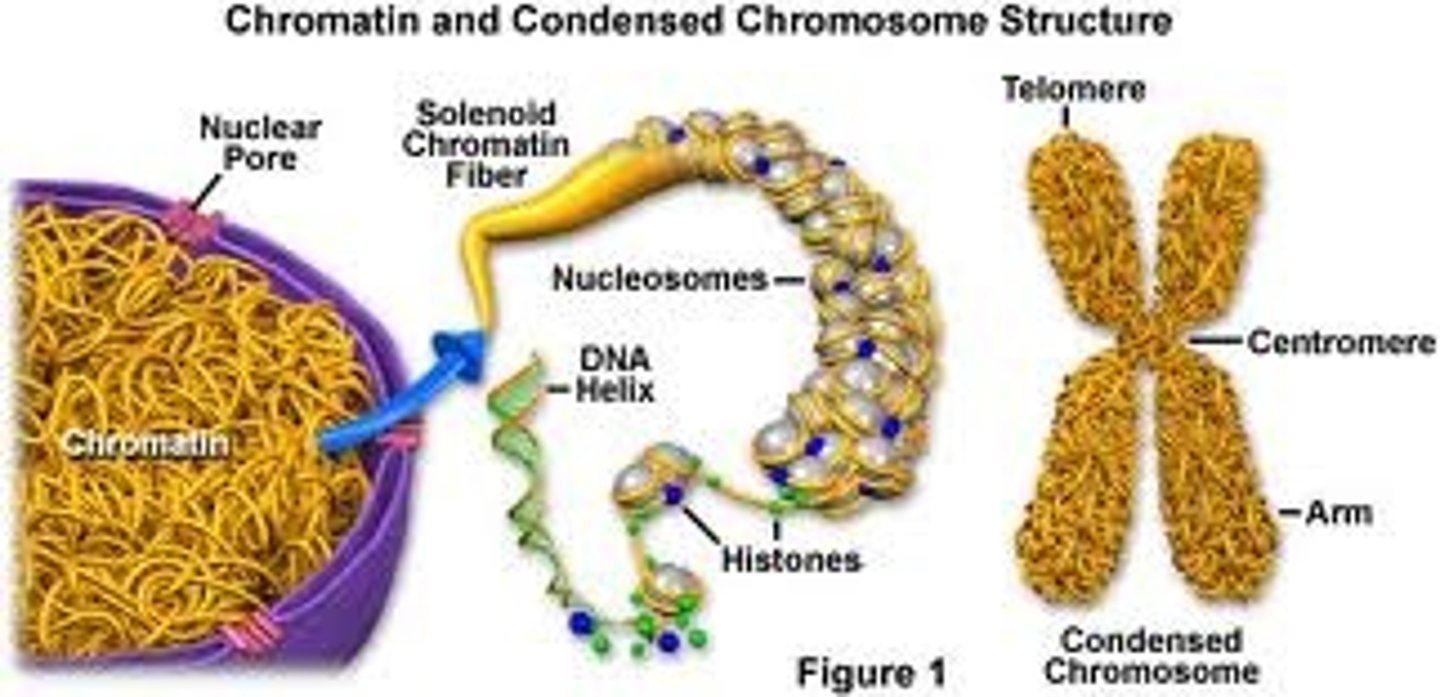
how are chromosomes packed
linearly
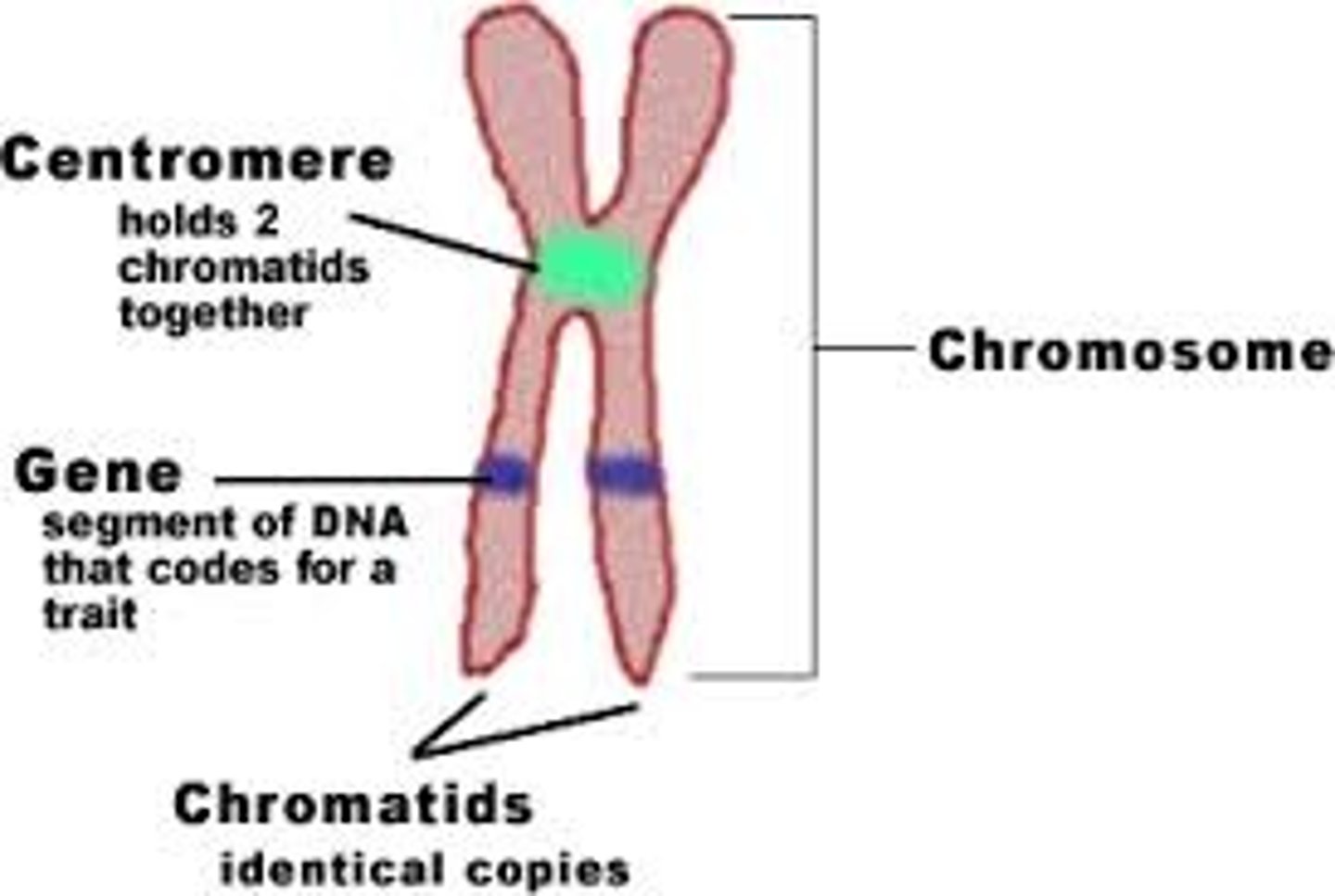
chromosomes
threadlike structures made of DNA molecules that contain the genes (discrete unit of genetic material)
histones
protein molecules around which DNA is tightly coiled in chromatin
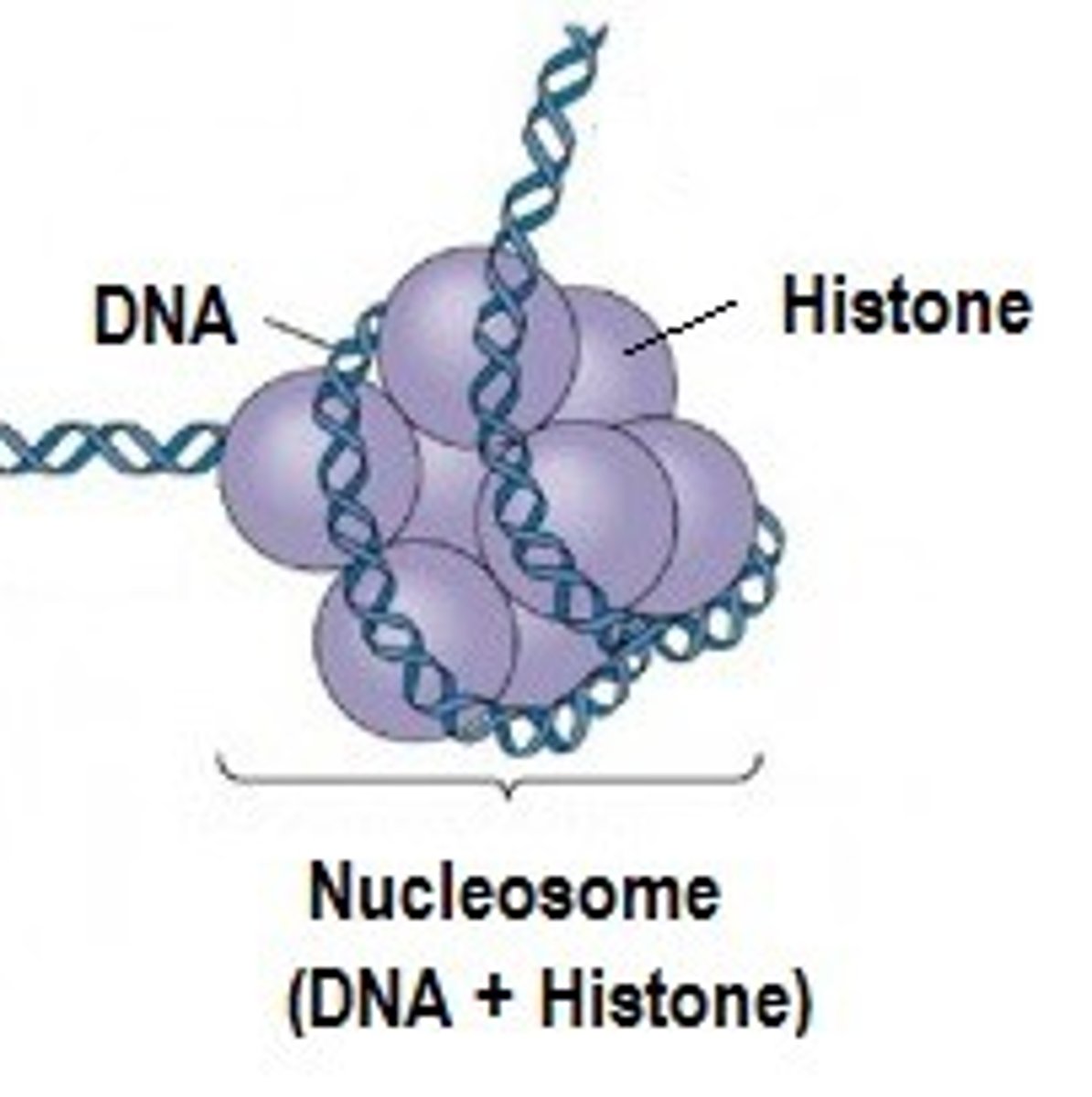
Eukaryotic DNA is first compacted by wrapping around a group of proteins called _______which forms structures called ______
histones; nucleosomes
nucleosomes
DNA wrapped around histone proteins.
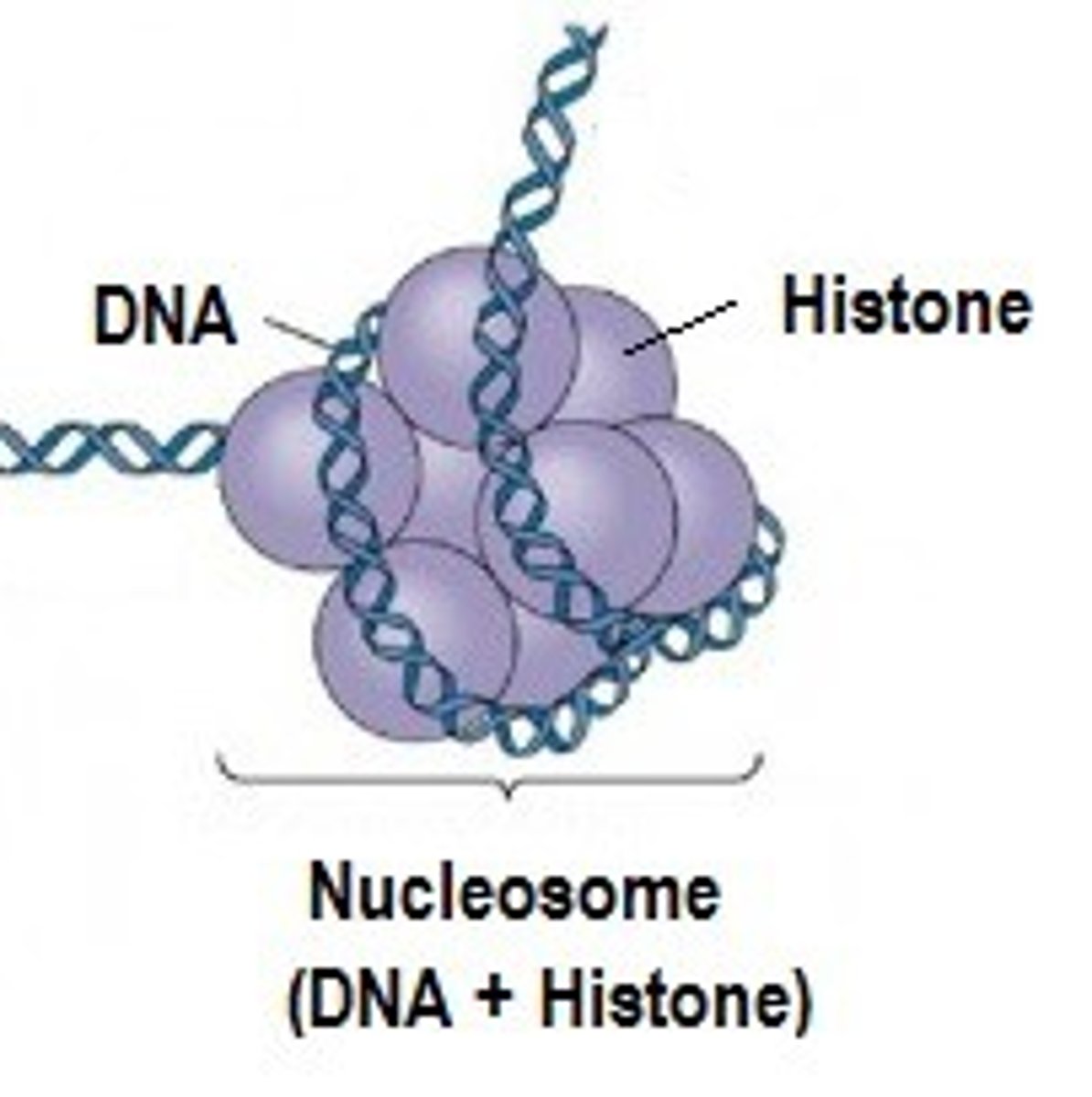
DNA + histone =
nucleosome
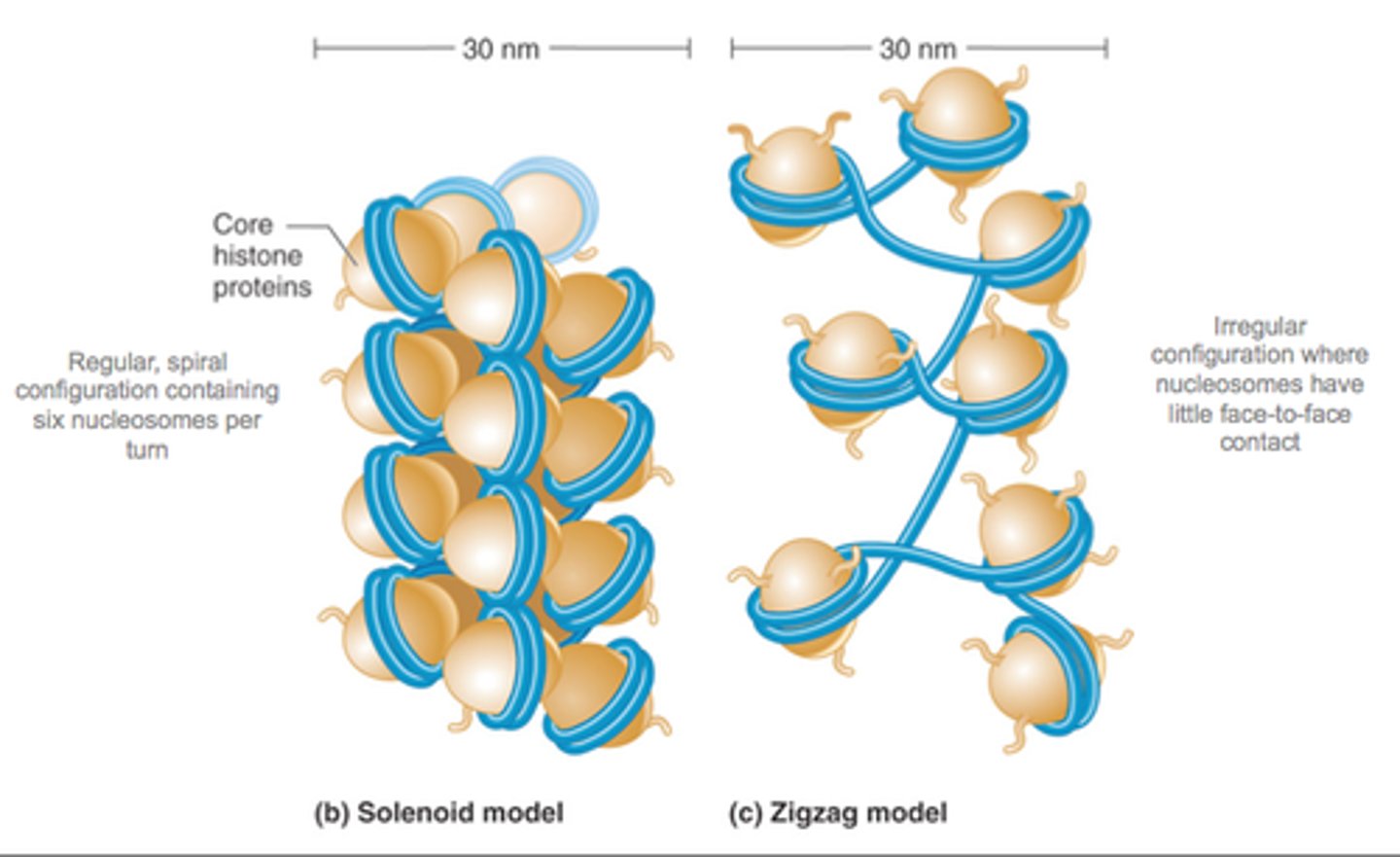
how are nucleosomes organized
into a more compact structure that is 30 nm in diameter
they have a pleat/zig zag shape that can stretch to allow DNA access or pack tightly to close off access
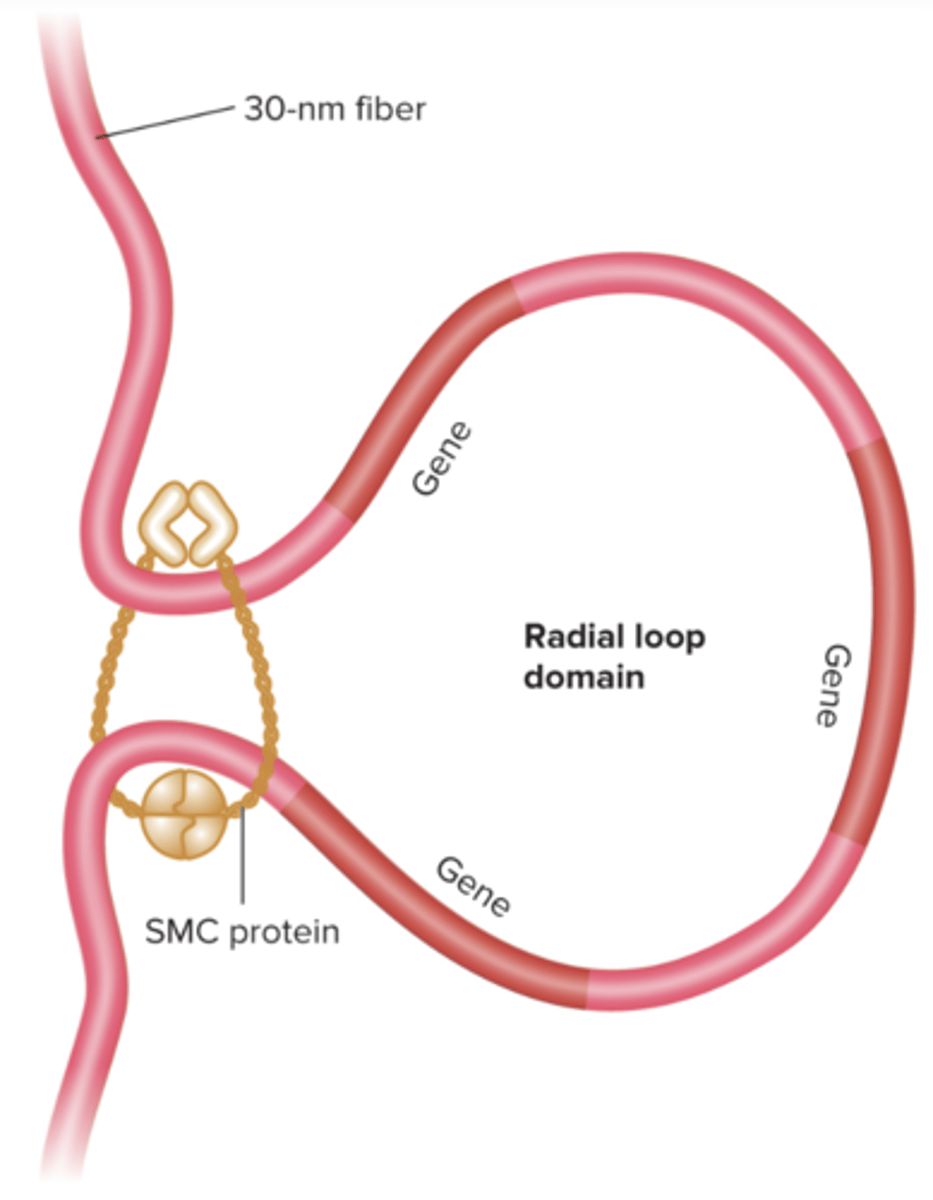
interactions between the 30 nm fibers and proteins form ...
radial loop domains
can be tightened or pulled out
what 4 criteria are needed for genetic material
1. information- to construct the organism
2. replication- must be accurately copied
3. transmission- must be passed from parents to off spring and from cell to cell during cell division
4. variation- be able to account for differences between individuals and species
Griffiths bacterial transformation experiments indicated the existence of ...
genetic material
describe Griffiths bacterial transformation experiment
rough bacteria (no capsule)=immune system cleared bacteria= mouse lived
smooth bacteria (capsule)= immune system could not attack = mouse died
heated smooth bacteria= bacteria died= mouse lived
mix smooth and rough bacteria = type S cells transformed the R cells into type s
conclusion "something had instructions in it"
Avery, MacLeod, McCarty asked...
their conclusion was...
" what substance is transferred from the dead type S to live in the type R"
conclusion: DNA is responsible for transforming type R cells into Type S cells
Avery, MacLeod, McCarty vs Griffiths conclusions
griffith = something had instructions in it
Avery, MacLeod, McCarty= that something was DNA
DNA and RNA are ________, polymers of _______
nucleic acids; nucleotides
DNA and RNA are reponsible for
storage, expression, and transmission of genetic info
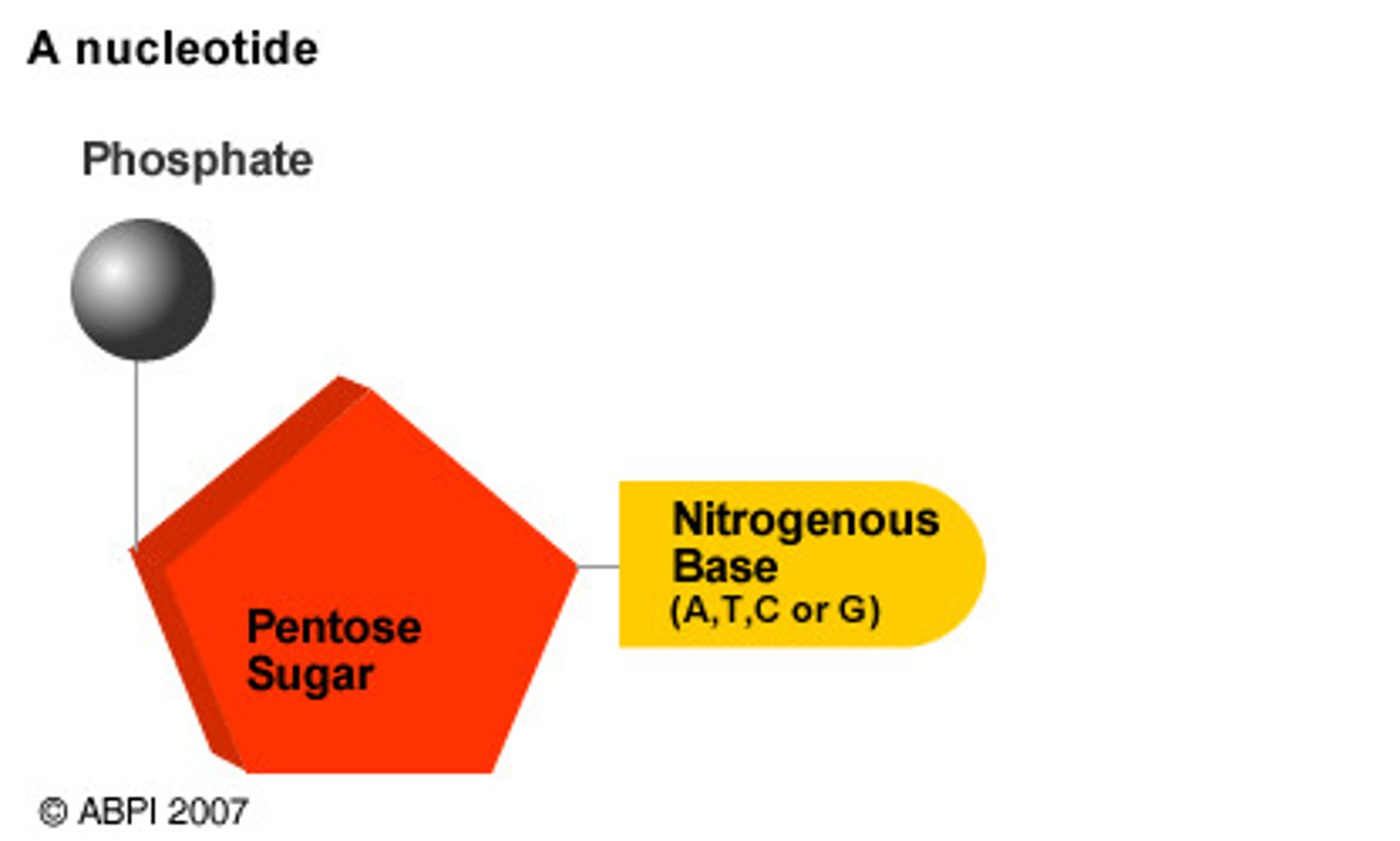
nucelotides
the building blocks (monomer)
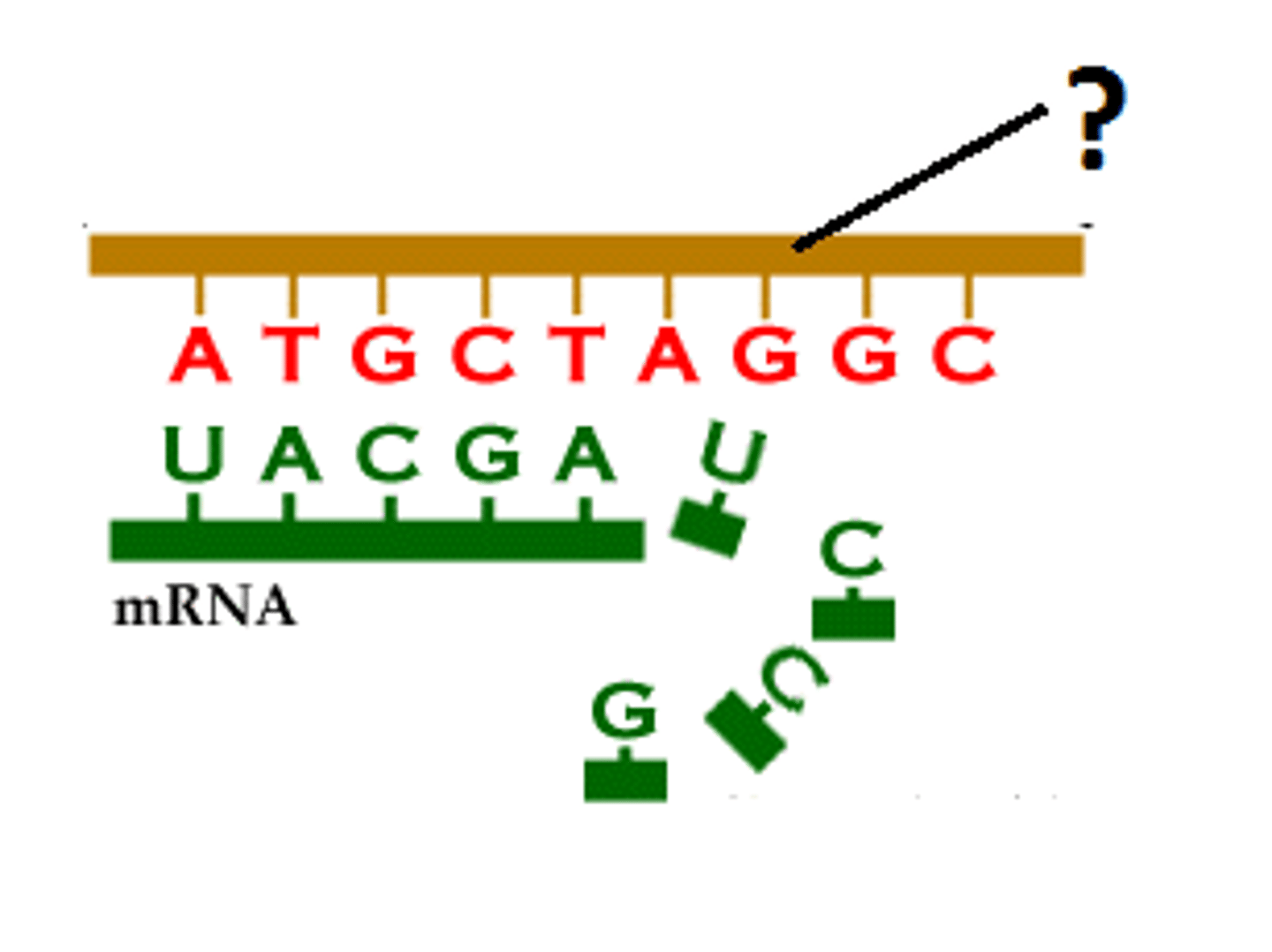
strand
a linear polymer
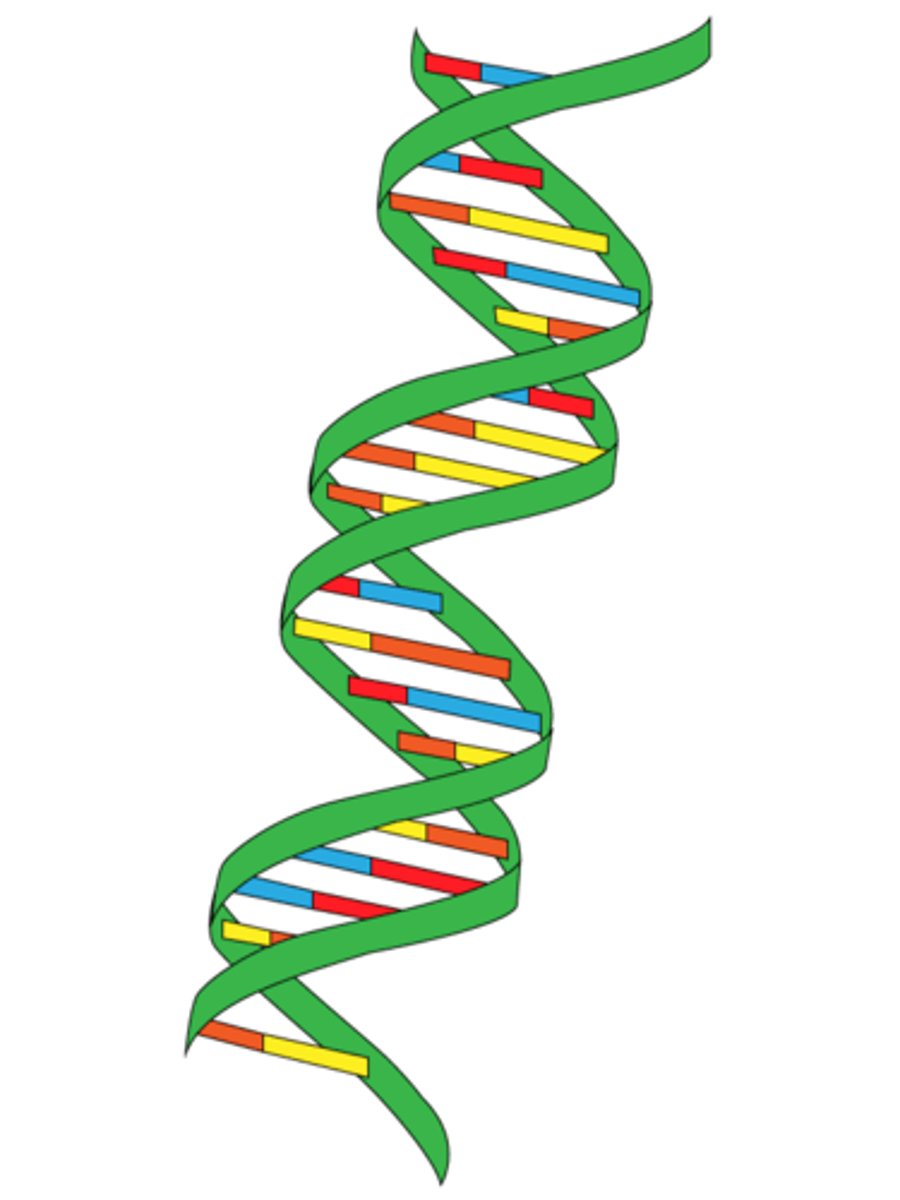
double helix
2 strands twisted
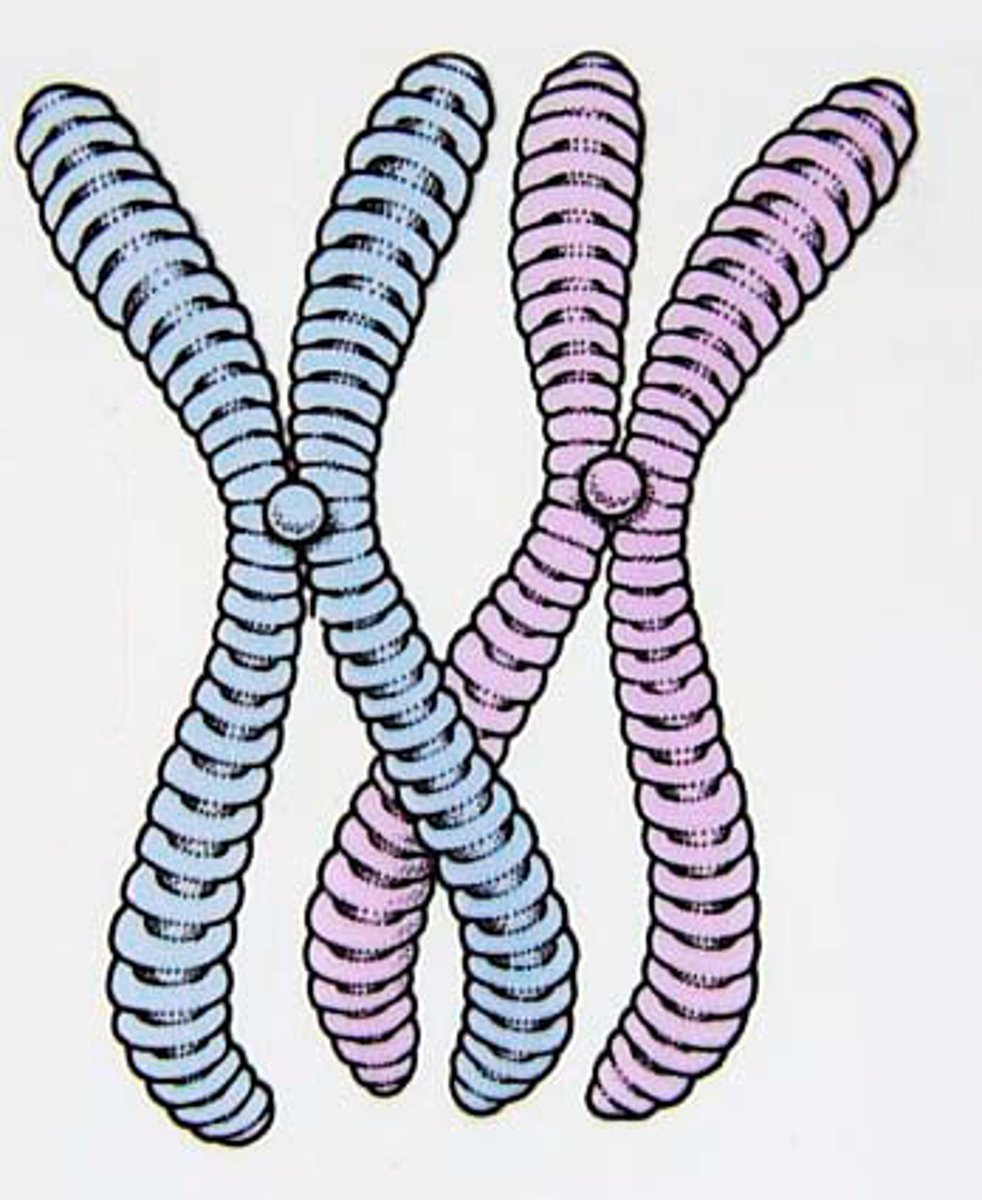
chromosomes
DNA associated with different proteins , whole length of double helix
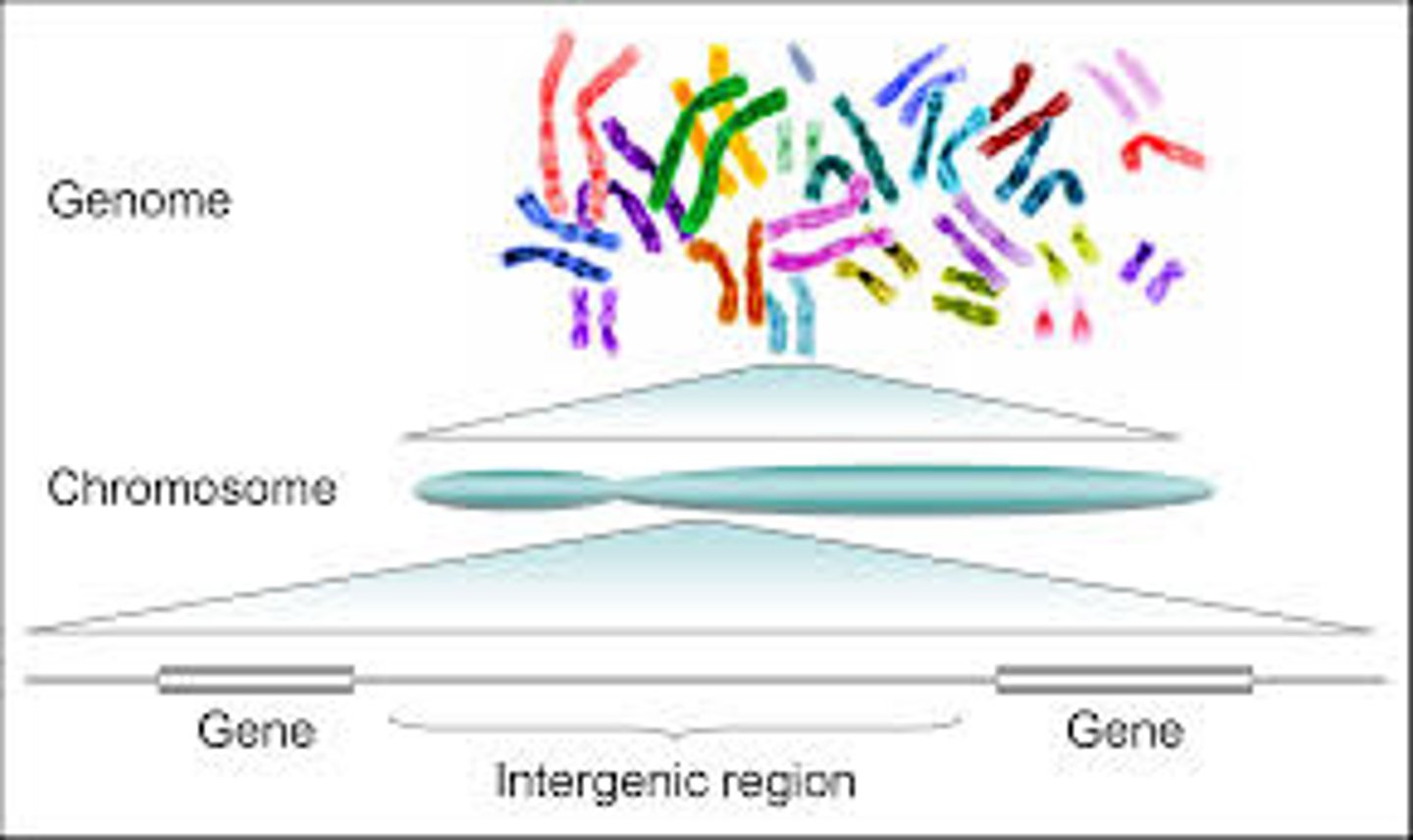
genome
the complete complement of genetic material of an organsim (all of the DNA in the nuclei of the cell*
what reading nucleotides what is the "capital letter/start" of the "sentence"
its based in the sugars phosphate group
carbon 5'
what reading nucleotides what is the "period/end" of the "sentence"
free hydroxyl group
in a nucleic acid structure the phosphate group will always be ...
free
the first nucleotide will always have a ...
free phosphate group
whats the directionality of a nucleotide strand
5' to 3'
the 5' end is
the first nucleotide/ free phosphate
the free phosphate group is on the ...
5' end
the free hydroxyl group is on the ....
3' end
bond rules for DNA
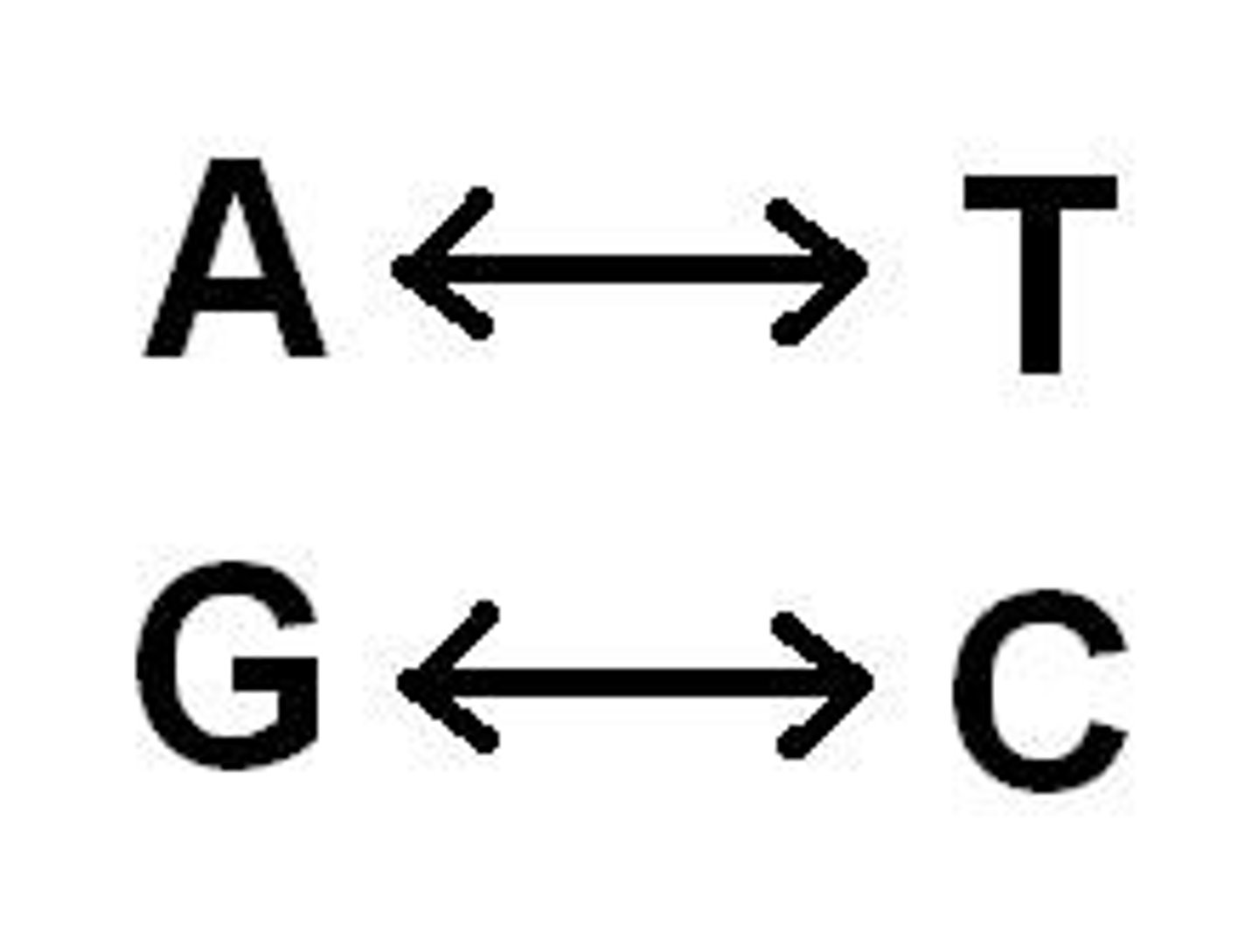
A-T
C-G
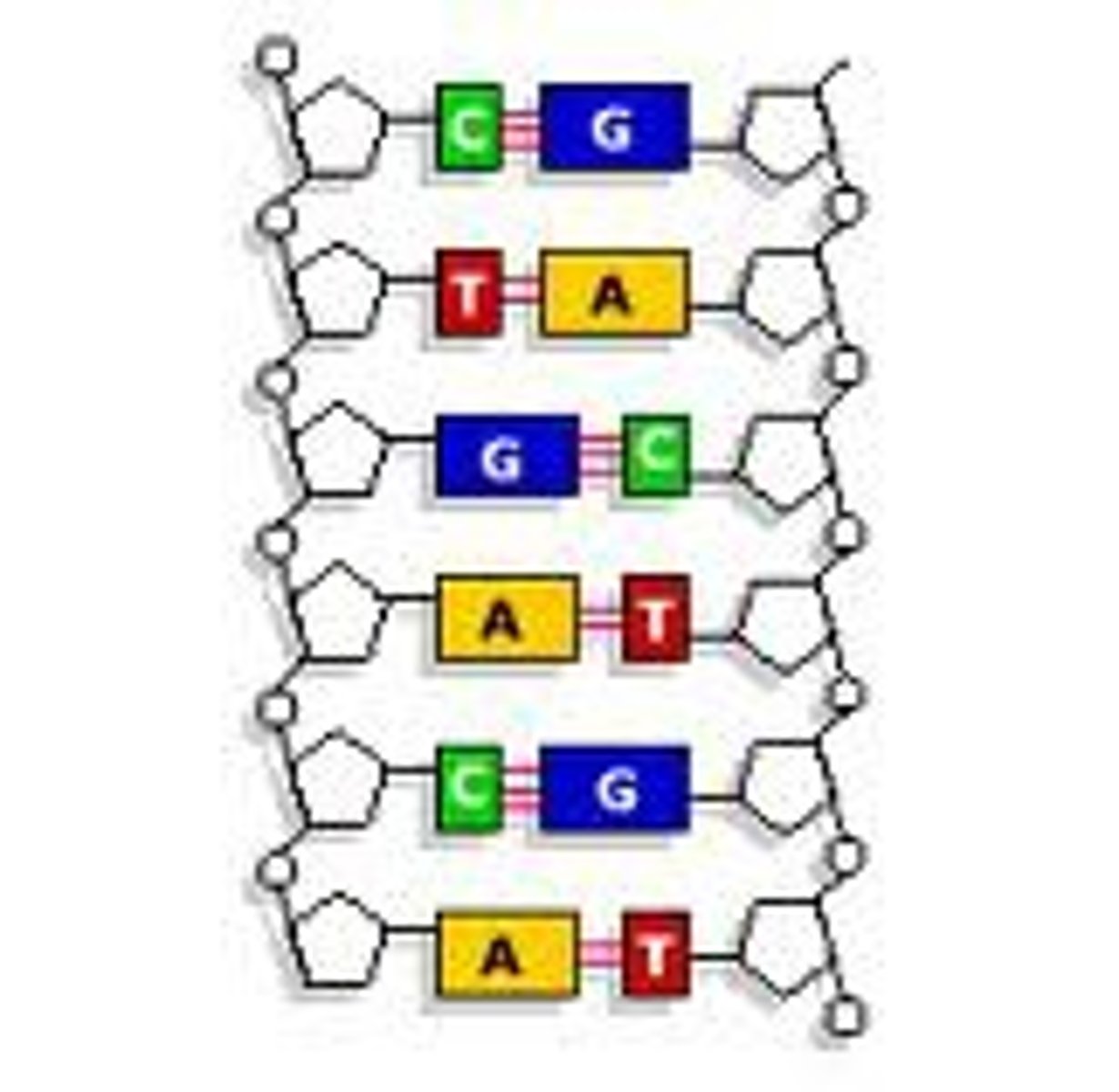
strands of double helix are _________ and _________
complementary and antiparallel
complementary strands
two nucleotide chains of the DNA molecule
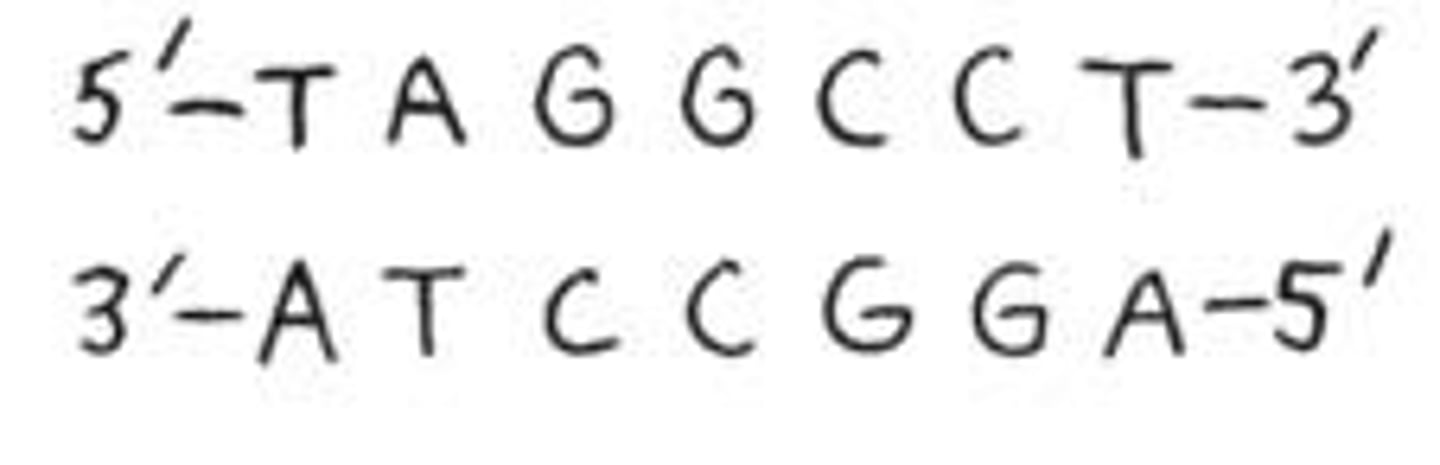
antiparallel strands
Strands parallel to each other going in opposite directions (3'-5' and 5'-3')
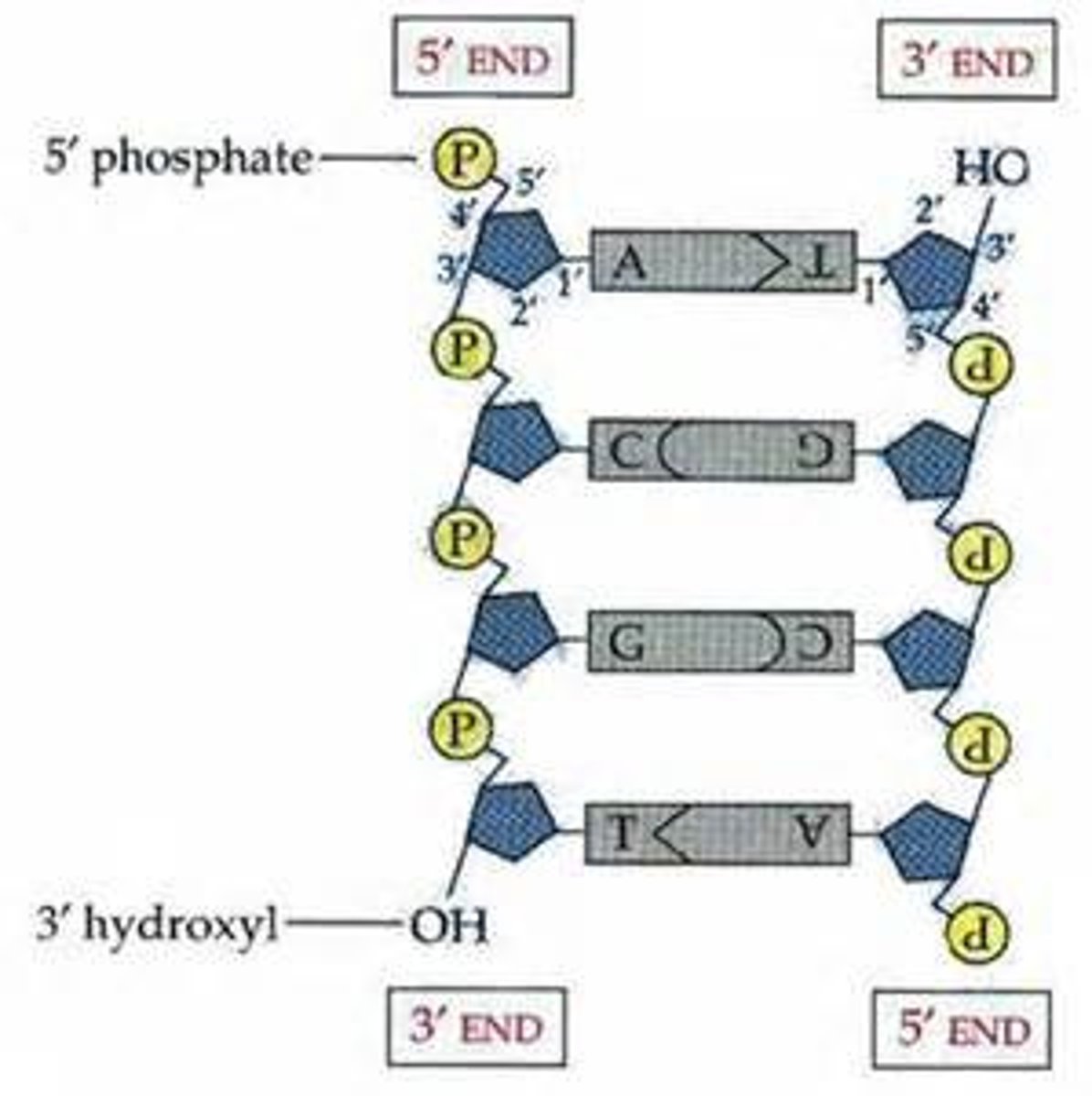
________ was a key tool that lead to the discovery of DNA double helix structure
x- ray diffraction
rosalind frankiln
___________ determined base pairing rules
Erwin Chargaff
__________&________ put together other ppls work to discover the structure of DNA
watson and crick
simple description of how DNA is replicated
1. G1 phase; signals occur here
2. S chase/ DNA replication: each chromosome replicates itself "staples two together"
3. G2 phase additional growth/preparation
what is the goal of the S phase
start with a template chromosomes, copy it, attach copies together "staple it"
DNA polymerase builds ________ daughter strand
anti parallel
half parent + half daughter =
semi conservative replication
DNA cant start it's job ________ starts it
primase
primase
is necessary for starting DNA polymerase it only needs it to get work started before it can go for millions of nucleotides
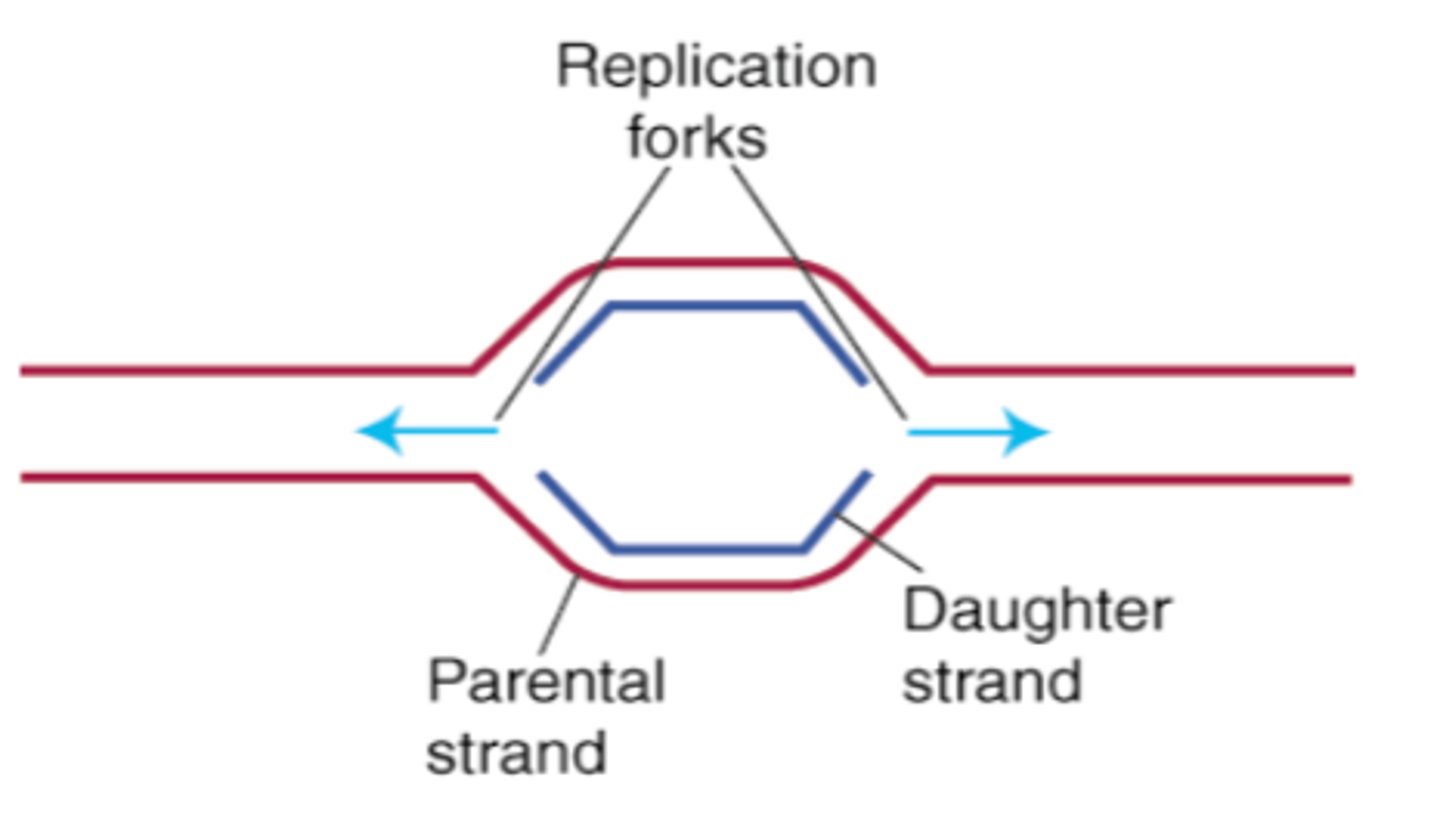
describe replication forks
A replication fork is the Y-shaped region that forms when DNA is being unzipped for replication.
Helicase unwinds the double helix by breaking hydrogen bonds between base pairs.
This creates two single strands of DNA.
The area where this separation occurs is called the replication fork.
Unzips the DNA strands
helicase
Adds new nucleotides to form the new strands
DNA polymerase
Primase
lays down RNA primers
Seals fragments together
ligase
what type of bonds does DNA polymerase make
Phosphodiester bonds
These are strong covalent bonds that link the phosphate group of one nucleotide to the sugar (deoxyribose) of the next nucleotide.
primase created what type of bonds
Primase creates phosphodiester bonds, just like DNA polymerase.
🧪 Here's what primase does:
It synthesizes a short RNA primer on the DNA template strand to provide a starting point for DNA polymerase.
DNA polymerase can only add nucleotides in the __________ direction.
5′ → 3′ direction.
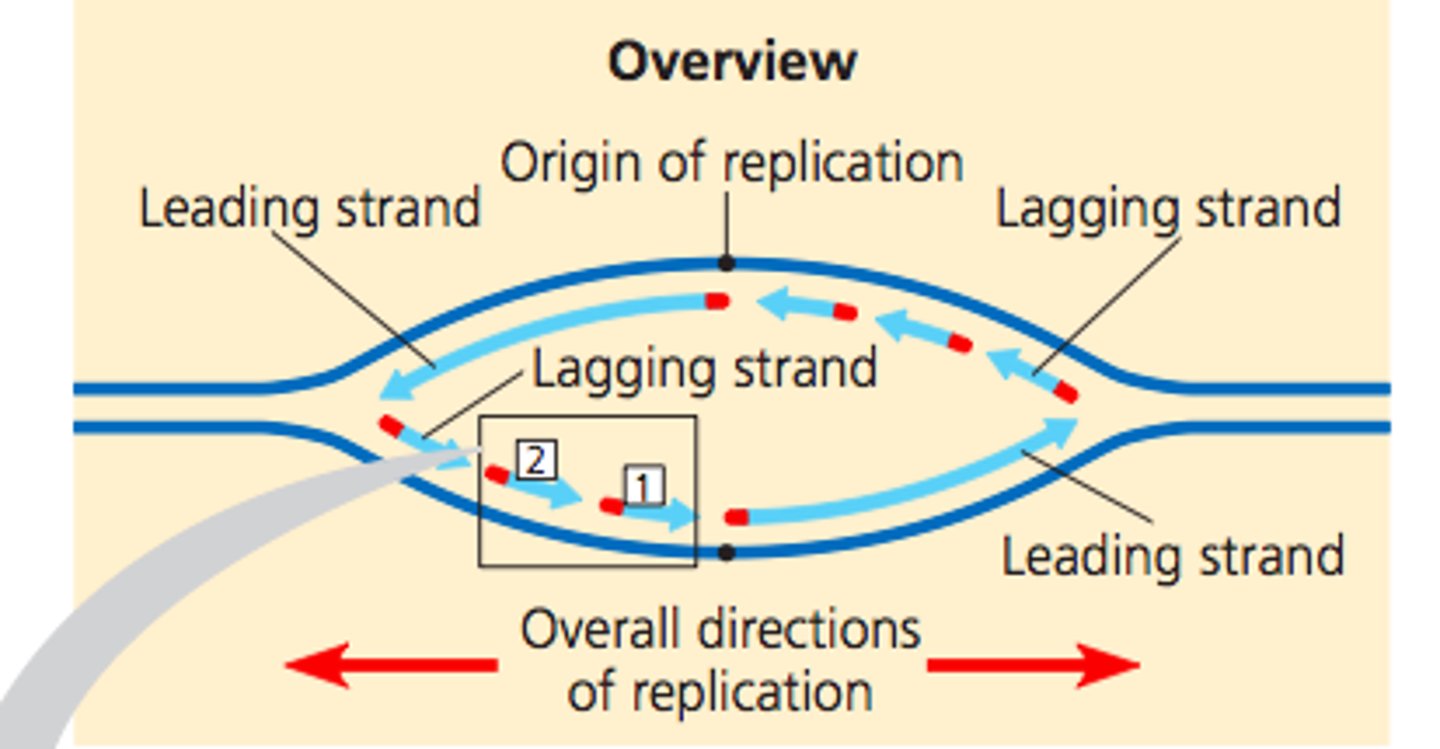
leading vs lagging strand
Leading strand = 5′ → 3′ toward fork
Lagging strand = 5′ → 3′ away from fork
Leading strand
✅ Leading strand:
Synthesized continuously
Goes toward the replication fork
Follows the helicase as it unwinds the DNA
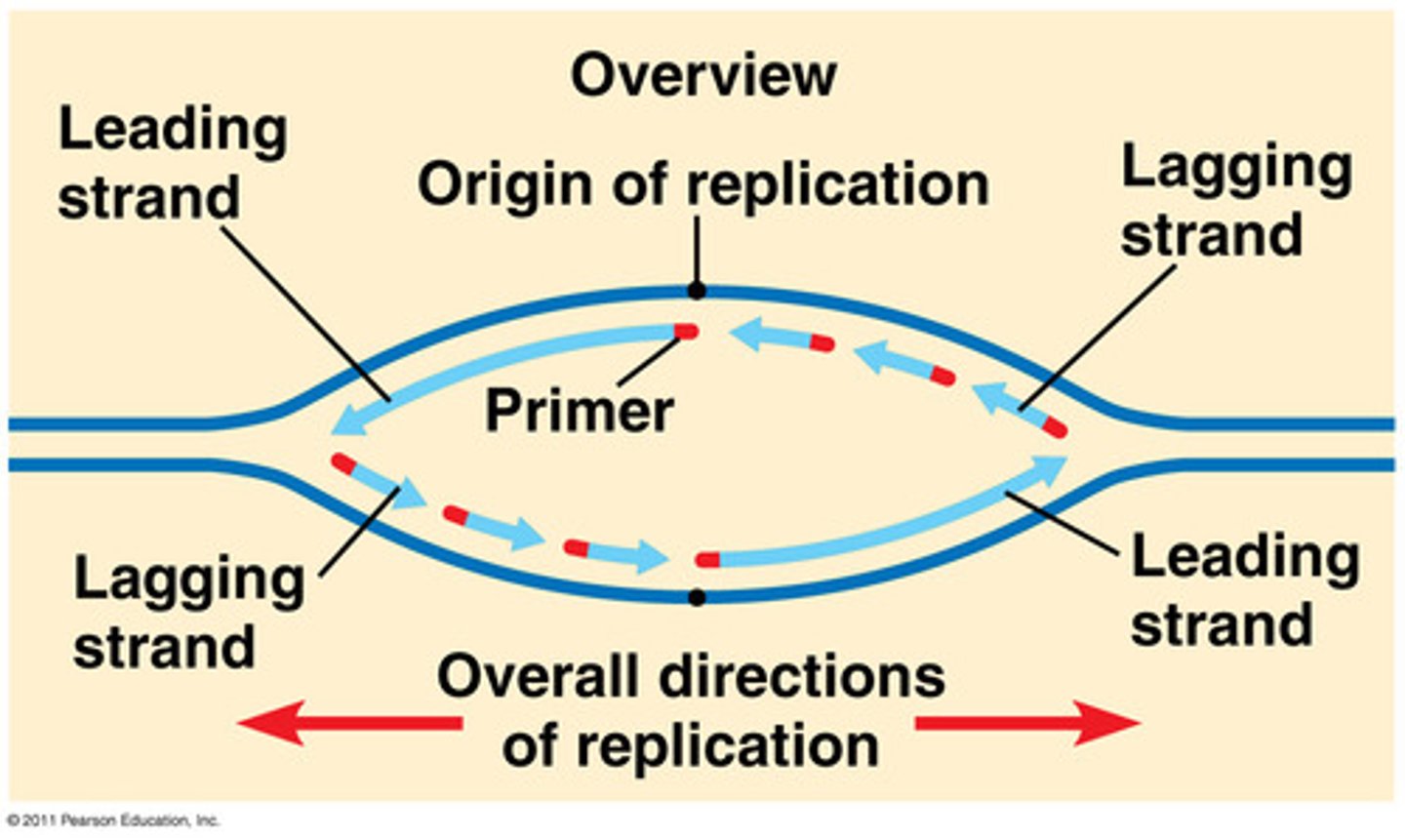
🔁 Lagging strand:
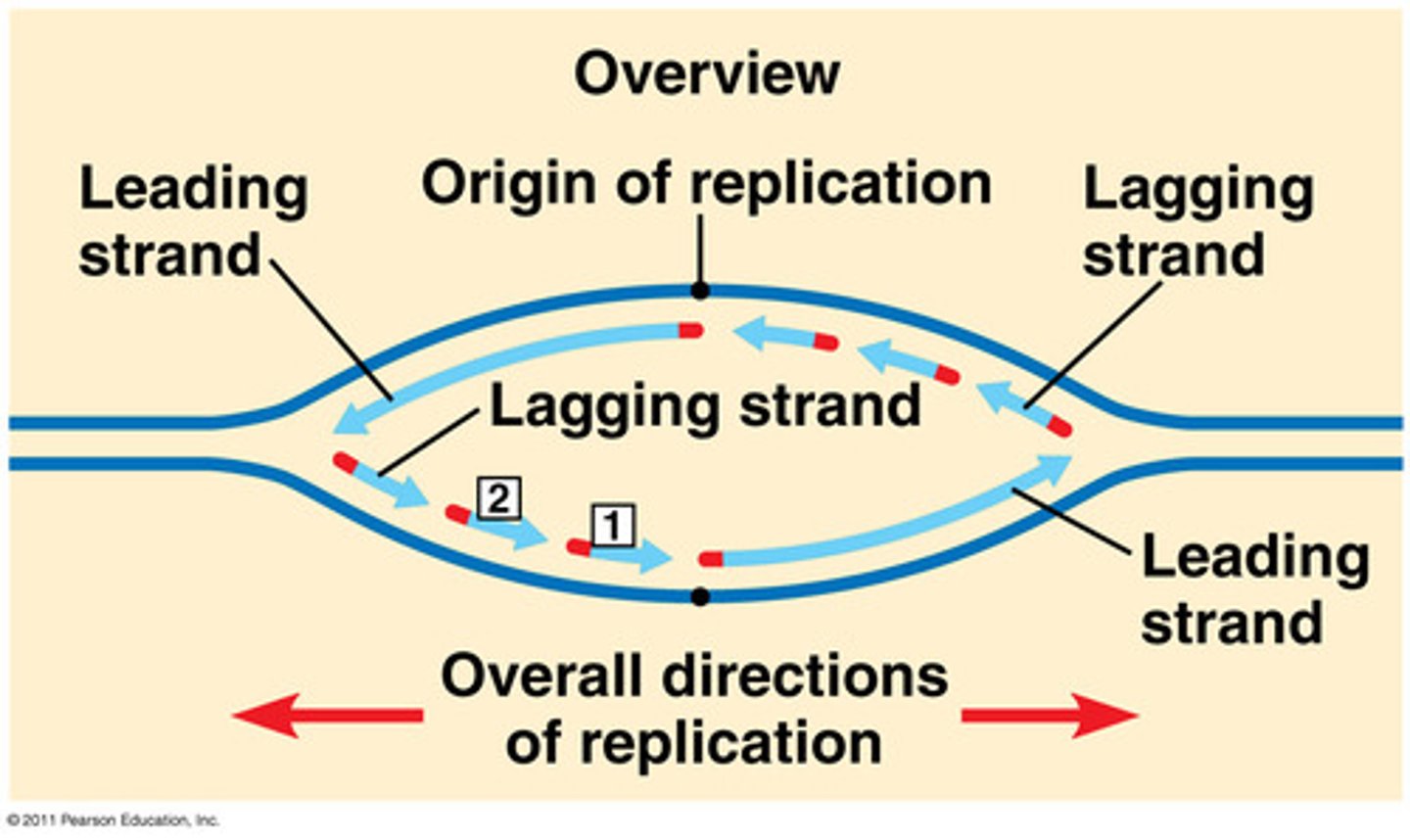
🔁 Lagging strand:
Synthesized in short segments (Okazaki fragments)
Goes away from the replication fork
Must keep restarting as more DNA is exposed
the "pieces" of the lagging strand are called
Okazaki fragments
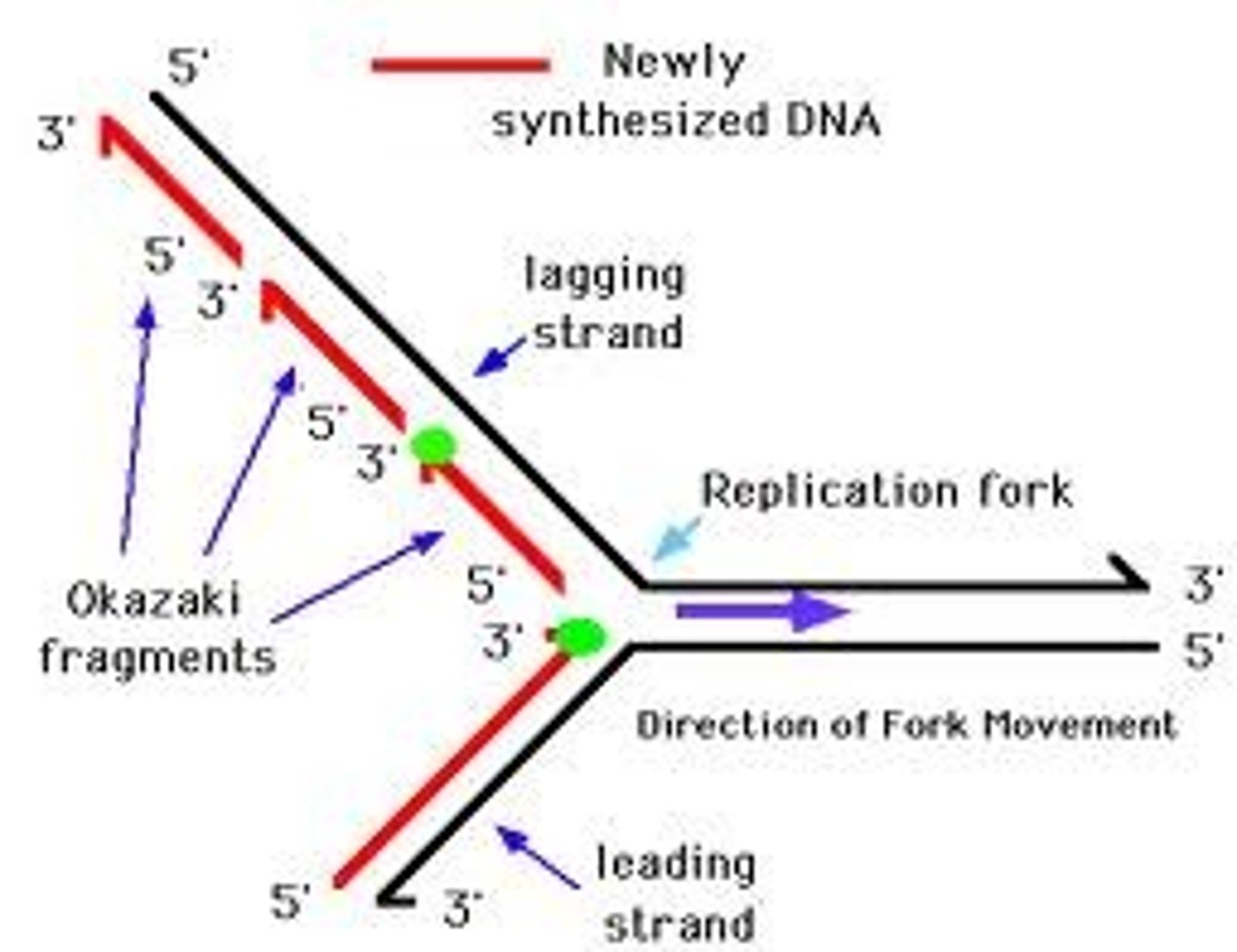
lagging strands are
discontinuous
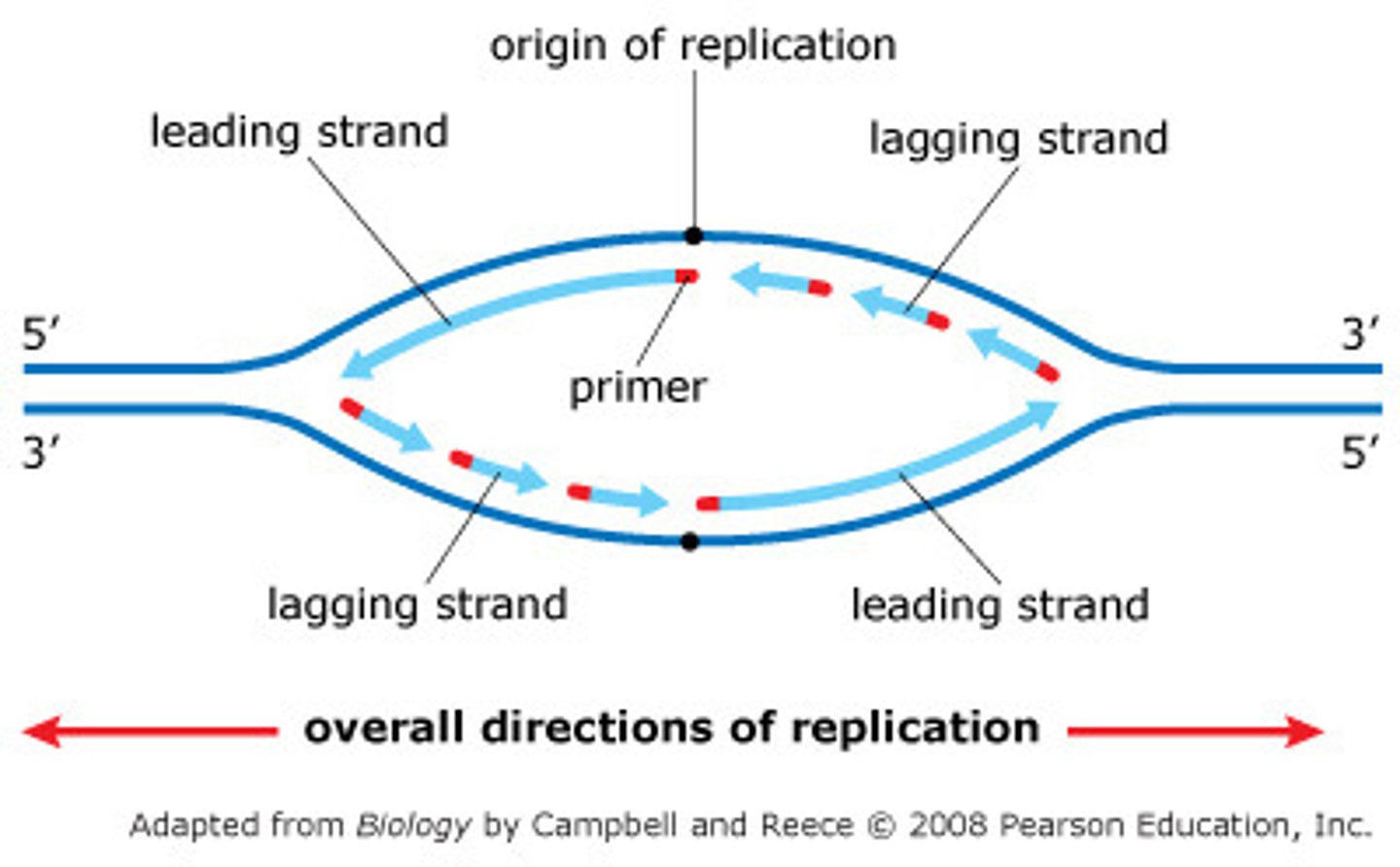
leading strands are
continuous
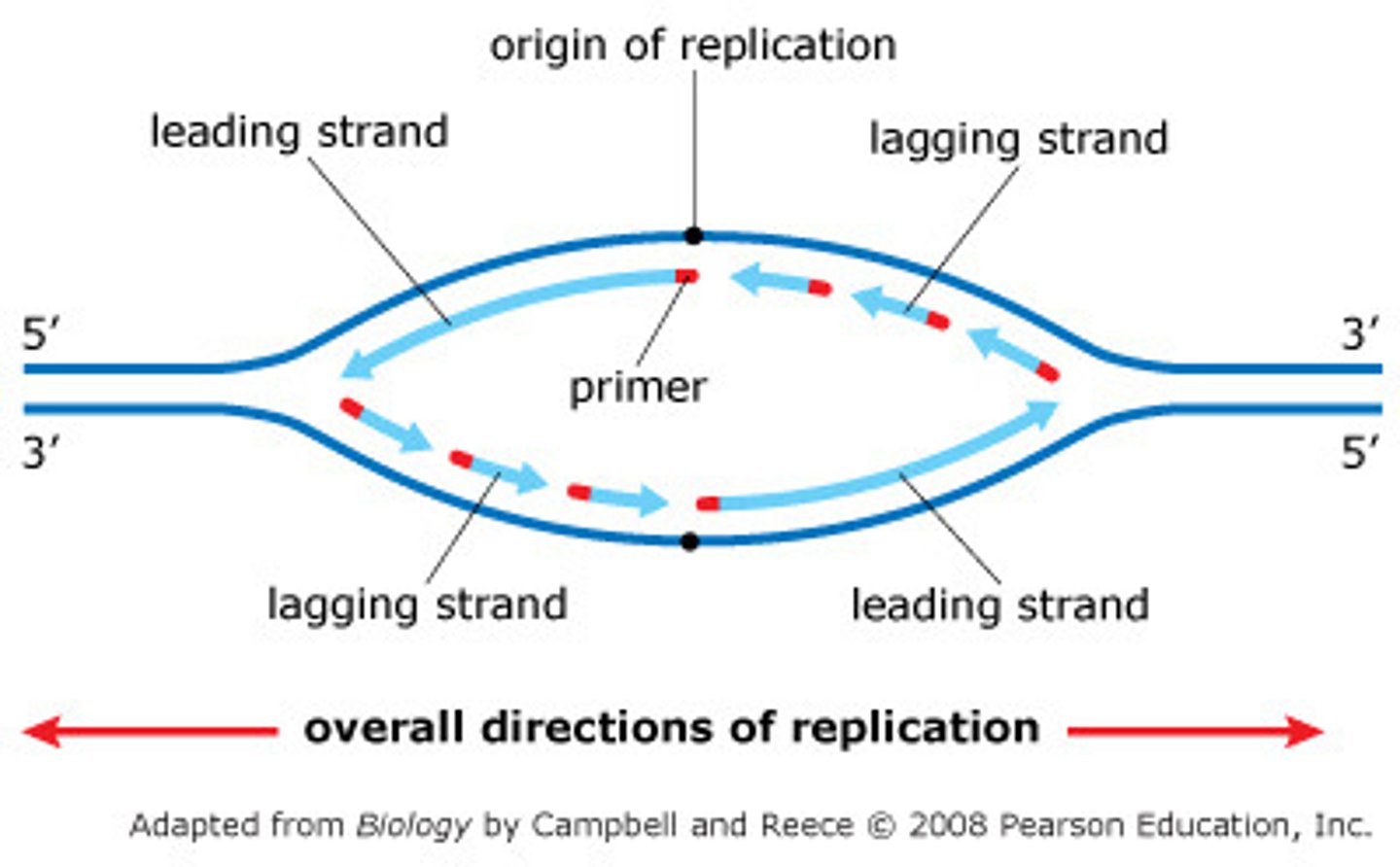
what 3 proteins are responsible for fork formation/movement
DNA helicase
DNA topoisomerase
single stranded binding proteins
DNA topisomerase
prevents super coiling
single stranded binding proteins
prevent the double helix from forming in the fork
DNA helicase
unzips the helicase
what 2 enzymes are needed to synthesize DNA strands during replication
DNA polymerase and DNA primase
DNA polymerase ________________ nucleotides together
covalently links
DNA polymerase has what 2 important functional constraints
it can not begin synthesis on a bare template it needs a existing strand
it synthesizes DNA in a 5 to 3 direction
DNA primase makes a complimentary _____ of RNA that can be extended by DNA polymerase
primer
DNA polymerase can not lay down the first strand because....
there is no hydroxyl group for it
Permanent mistakes in DNA replication are rare because...
DNA polymerase can proofread and remove mismatched pairs
list the complementary bases
A, T, C, G
outline the structural features of DNA at 5 levels of complexity
✅ Summary of 5 Levels:
Nucleotide – Base + sugar + phosphate
Strand – Linear chain of nucleotides
Double helix – Two antiparallel strands with base pairing
Nucleosome – DNA wrapped around histones
Chromosome – Fully compacted, organized DNA structure
in the work of griffith the mixture of heat killed S strain bacteria living R strain bacteria resulted in death of the mouse. the correct interpretation of these results is
genetic material was transformed from the head killed S strain to the R strain
transformation may result in horizontal gene transfer. this process occurs when an organism incorporates genetic material from another organism without being offspring of the organism. in griffths experiment what was the function of the genes that were transformed to type R bacteria and converted to Type S
the function of the genes was to enable the bacteria to synthesize a capsule
a nucleotide composed of deoxyribose, a phosphate, and adenine can only be found in...
DNA only
the 5' and 3' labels that identify the directionality of a DNA strand are based on ...
the orientation of sugar molecules in the backbone
carbon 5 is where phosphate group is attached
if sequence is 5'-GCTAGATG-3' what is sequence of the other strand
3′-C G A T C T A C-5′
which protein is needed to form a replication fork and keep it moving
DNA helicase
okazaki fragments are made during the synthesis of the _____ strand they are connected together by _____
lagging; DNA ligase
what is the primary purpose of a nucleosome
to cold and compact hundreds of millions of base pairs and DNA in the nucleus
describe the difference between chromosomes and chromatin
chromosomes are made of chromatin which is composed of DNA and proteins
what is the role of histones in chromatin structure
histones help condense DNA by acting as spools around which DNA is wrapped
where is the messenger/ coding strand versus the template strand
coding/messenger is on top
template is on bottom
what are the difference between a message strand and mRNA
when converting to a mRNA strand everything remains the same minus T becomes U
when writing an amino acid what do you start the chain with versus end
start with N = free amino group
end with C = free carboxyl group