BID Chapter 11
 Call Kai
 Learn
Learn Practice Test
 Spaced Repetition
 Match
Match Flashcards
 Knowt Play
1/37

There's no tags or description
Looks like no tags are added yet.
Name | Mastery | Learn | Test | Matching | Spaced | Call with Kai |
|---|
No analytics yet
Send a link to your students to track their progress
38 Terms
Endospores
Dormant bacteria that is coated with thick layer of peptidoglycan; Highly Resistant (temp, desiccation, UV, pH, phages)
Desiccation Tolerance
Lack of water; Contains amino acids (glycine beta, Trehalose, L-glutamate) that uptake water, EPS holds onto environmental water, Osmo protectant to combat DNA stress and degradation
Biofilm
Extremely resistant to phagocytosis, antibiotics, and mechanical displacement
4 stages of biofilm development
1. Adhesion: finding a home
2. Aggregation: secreting extracellular matrix/glycocalyx
3. Maturation: forming the film
4. Dispersal : continuous release of new microbes
Pathogen Mucus invasion strategy
degrade mucous layer (hydrolases); GI tract has less mucus (M cell Crypts);
SigA
Used to degrade the GI tracts M cell Crypts. allowing for epithelial colonization
Defensins
Natural antibiotics; binds to negatively charged surface of bacteria and disrupts membranes
Alpha Defensins
Produced my neutrophils
Beta Defensins
Makes capsules to protect membranes from defenses, OR alter surface change, Microbial protease; Produced by epithelial cells in skin, airways, and GI
Lactoferrin
Iron Limitation for Mucosal sites
Transferrin
Iron Limitation for Serum, induced by IL-6, produced in the liver
Ferritin
Iron Limitation for intracellular iron storage
Heme
Contains 70% of the body’s iron (Iron Limitation)
Siderocalin
iron scavenging molecule that microbes produce to compete with host cells
Gram-positive strategy against Iron Limitation
released hemoglobin on red blood cell mediated lysis through toxins; bacteria can bind to released hemoglobin through proteins or directly
Gram-negative strategy against Iron Limitation
Has 2 walls, Transferrin through two different transporters
Pili/ Fimbriae
Finds glycolipid/protein to stick to, creates specificity to what the bacteria can bind to; Primary means of adherence; Longer thicker surface structures of the bacteria
P Pili
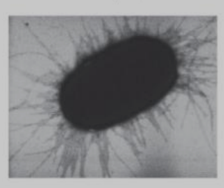
Type IV Pili
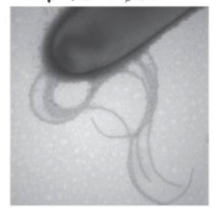
Curli Pili
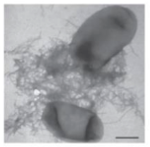
Chaperone-Usher (P) pili Structure
PapA/FimA, has tip protein that is excreted first, PapG
Curli Pili Structure
CsgA; Doesn’t need chaperone, the physiologic change with auto assemble
Type IV Pili Structure
PilE; Type 2 Secretion System Dependent
Sortase
makes a surface for the Gram-Positive bacteria for cell wall adhesion
Gram-Negative Adhesion
tethers the pili with periplasm
Nonfimbrial adhesions
In g+; Binds to extracellular matrix/ connective issue; hair-like protrusions similar to pili
Afimbrial Adhesins
promotes cell invasion (InlA + InlB)
MSCRAMMs
Staphylococcus aureus form of adhesin; does not have pili, but instead finds components and proteins of the hosts matrix to bind to
Host mimicry
Sialic Acid can make capsule out of sialic or hyaluronic acid to look like it is apart of the host tissue
Escaping from the phagosome
Produce toxins (LLO) that disrupt, degage, or make holes in host membrane
Cell-to-Cell spread
Listeria directs their own endocytosis can manipulate the actin cytoskeleton
Actin-base motility
able to push themselves around and to neighboring cells
Legionella
Removes proteins necessary for membrane fusion with lysosome (LAMP-1 and LAMP-2); Stops acidification in lysosomes, multiplies, ruptures phagosome, lyses host cells and escapes
Mycobacterium
Recruits host proteins to surface of phagosome, does not fuse with lysosomes, bacteria prevents acidification and has reduced oxidative burst; decorates phagosome with TACOs prevents fusion
Salmonella
Actin rearrangements and grows into pseudopods for salmonella, makes self-made vacuoles within the epithelial cells
Brucella
Only replicates upon acidification of vacuoles directing it to the ER (I’m on an acid trip; get me to the ER)
SOD + Kat Prx
takes something damaging to bacterial membranas and converts it to water
Resist Ros and No
reactive oxygen species are the primary watt he oxidative bursts kills bacteria