2_MICROBIAL GROWTH IN FOODS & FACTORS AFFECTING THEM
 Call Kai
 Learn
Learn Practice Test
 Spaced Repetition
 Match
Match Flashcards
 Knowt Play
1/74

There's no tags or description
Looks like no tags are added yet.
Name | Mastery | Learn | Test | Matching | Spaced | Call with Kai |
|---|
No analytics yet
Send a link to your students to track their progress
75 Terms
Microbial growth
is the increase in the number of microorganisms, such as bacteria or fungi, through reproduction.
energy, cellular components, and many end products.
Microorganisms utilize nutrients in foods to obtain ____
Nutrition
Deals with the nutrients required for growth as part of microbial physiology.
Macronutrients and Micronutrients
Types of Nutrients:
Macronutrients
What type of Nutrients:
Nutrients that are required in large amounts
Examples: C, N, O, H, P, S, K, Mg, Ca, Na
Micronutrients
What type of Nutrients:
Nutrients that are required in just trace amounts
Examples: Fe, Mn, Cr, B, Co, Cu, Mo, Zn
Phenotypes
made up of proteins
spores
Most molds reproduce by producing ____(sexual and asexual)
Asexual spores
the products of mitotic division of a single parent cell
reproduction is accomplished through the formation and spreading of ____
germinate into a hyphae structure under favorable conditions
Sexual spores
formed through a process involving fusion of the two parental nuclei followed by meiosis, producing haploid offsprings.
It develops into hyphae and a mycelium that produce more spores
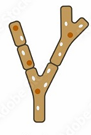
Hypha
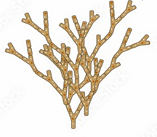
Mycelium
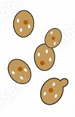
yeast
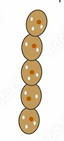
Pseudomycelium
Sporangiospores
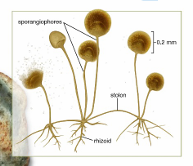
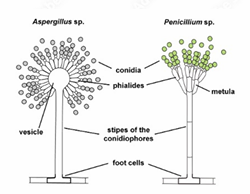
Conidiophores
binary fission or budding
A yeast cell can reproduce asexually by
mating
A yeast cell can reproduce sexually by
Budding
Bud separates out from the mother cell to produce daughter cells.
Binary fission
Yeast cells split into two equal cells.
is a process where a bacterial cell divides to two new cells. The time required to form two cells is called the generation time
Mating
Fusion of two yeast cells.
hosts
Viruses cannot reproduce by themselves, they need ___
Lytic and Lysogenic
Viral DNA follows 2 cycles in bacterial cells:
Lytic cycle
free phage DNA controls bacterial DNA and converts bacterial cell to bacteriophage-producing cell that starts synthesizing viral particles, nucleic acid, and proteins.
Lysogenic cycle
virus DNA combines with the bacterial chromosome, which can be replicated once the host DNA replicates. Each daughter cell gets a copy of the virus DNA.
generation time
Binary fission is a process where a bacterial cell divides to two new cells. The time required to form two cells is called the
horizontally
Bacteria splits __
Growth Curve
An organism growing in an enclosed vessel, such as tube or a flask (a growth condition called a batch culture), cannot grow exponentially indefinitely. Instead, a typical ___ for the population is obtained.
Batch culture
An organism growing in an enclosed vessel, such as tube or a flask (a growth condition called a____), cannot grow exponentially indefinitely.
"may hangganan lang ang source nurients"
Lag, Log/Exponential , Stationary, Death
Growth Phases
viable count
When agar is used, ___ is used to term quantity of bacteria
Turbidity
When broth is used, ___ is used to term quantity of bacteria
Lag phase
What growth phase:
This happens when a microbial culture is inoculated into a fresh medium
No replication and immediate increase in cell numbers or mass
Cells synthesize cellular components such as enzymes and other cellular materials.
Adaptation phase
cells acclimate to the new environment
Log Phase
What growth phase:
A period of exponential growth: exponential and deceleration phases
•Cells are actively growing and are dividing at maximal rate
Healthiest state ideal for assays
Growth rate is constant but influenced by environmental factors
Population is uniform in chemical and physiological activities.
Exponential growth
is a pattern of population increase, where the number of cells doubles during a constant time interval.
Stationary Phase
What growth phase:
Exponential growth ceases and the population growth plateaus, thus it limits the growth of the population
No net increase or decrease in cell number, thus the growth rate of the population is zero
Cells undergo cryptic growth
two situations that limit growth: ⚬
depleting nutrients
toxic waste accumulation
Death Phase
What growth phase:
Population of cells eventuallly die
The number of viable cells declined
In some cases, death is accompanied by actual cell lysis
cryptic growth
happens when cells utilizes themselves to survive (growth curve would slightly increase)
Growth parameters
taken from the exponential phase (population is assumed to be physiologically active and uniform)
(𝛍) = dX / dt
Specific Growth Rate:
where X = biomass and t = time of cultivation
Nt = N0 x 2n
Number of Generations (n):
where N0 = initial population number.
Nt = final population number t
n = number of generations at time t
G = t/n
Generation time formula:
where g = time it takes a population to double in size
t = time taken for the cell to divide
n = number of generations
C. MG. SG. SG. C. A. P
(Competition, Metabolic growth, Symbiotic growth, Synergistic growth, Commensalism, Antagonistic, Predation)
Relationships among Microorganisms in Foods
competition
What relationship among Microorganisms in Foods:
one can predominant and produce changes in food
metabiotic growth
What relationship among Microorganisms in Foods:
acids produced by a cell can activate the growth of other cells and so on
symbiotic growth
What relationship among Microorganisms in Foods:
two or more microbes help each other in food
synergistic growth
What relationship among Microorganisms in Foods:
two types grow together and may bring changes that could not produce alone
(group is better than individual)
commensalism
What relationship among Microorganisms in Foods:
one microbe uses the substrate that is produced by others but may not affect each other
antagonistic
What relationship among Microorganisms in Foods:
microbes can adversely affect each other
predation
What relationship among Microorganisms in Foods:
one penetrates the cell wall of the other and multiply
NC. A.OR. WA. AC. BS
(Nutrient content, Acidification, Oxidation-reduction potential, Water activity, Antimicrobial content, Biological structure)
Intrinsic factors:
RH. ST. GA. OM
(Relative humidity, Storage temp., Gaseous atmosphere, Presence of other microorganisms)
Extrinsic Factors:
C.M.S.C.A.P
(Competition, Metabiotic, Symbiotic, Commensalism, Antagonism, Predation)
Implicit factors:
PT. UC. C
(Physical treatments, Use of chemicals, Contamination)
Process factors:
pH
Intrinsic Factors:
The acidity or alkalinity of an environment has an effect on the activity and stability of macromolecules, such as enzyme functions and metabolism and cellular activities
Optimum pH for growth is based on the environment
Intracellular pH of cells is near neutral to prevent destruction of macromolecules in the cell
Acidophile (internal pH 4.6)
Alkaliphile (internal pH 9.5)
Water Activity
Intrinsic Factors:
is a measure of the availability of water for biological functions and relates to water present in a food in “free” form.
It ranges bet 0 and 1
= vapor pressure of food/ vapor pressure of pure water
vapor pressure of food/ vapor pressure of pure water
Water activity =
adding solutes, ions, and hydrophilic colloids, freezing and drying
Water activity in food must be reduced to control microbes through _____
Oxidation
losing of electrons
Reduction
gain of electrons
Oxidation-Reduction Potential
Intrinsic Factors:
When a substrate loses electron, the substrate is oxidized (+mV), while a substrate that gains electrons becomes reduced (-mV)
between +500 and +300 mV
Aerobic microbes grow ___redox potential
between +300 and -100 mV
Facultative anaerobes grow ___
between +100 and -250 mV
Anaerobes grow
Hydrogen peroxide (H2O2) , Superoxide anion (O2-), Hydroxyl radical (OH•)
The reduction of O2 to H2O in respiration produces toxic by products:
Nutrient Content
Intrinsic Factors:
Microorganisms can use nutrients in foods to synthesize cellular components and energy
simple sugars (e.g., glucose), complex carbohydrates (e.g., starches and cellulose), nitrogen (e.g., proteins and nucleic acids), fats, alcohols, amino acids, vitamins, growth factors, minerals
Nutrients necessary for growth:
Antimicrobial Content
Intrinsic Factors:
Many food products contain naturally occurring compounds that have ___, which can extend shelf life of a food product.
Examples of naturally present antimicrobials in foods:
essential oils of spices (e.g., eugenol, cinnamic aldehyde, etc)
Cow’s milk (e.g., lactoferrin, immunoglobulin, and lysozyme)
Eggs (e.g., lysozyme, ovotransferrin)
Cranberries (e.g., benzoic acid and sorbic acid)
Garlic and onion (e.g., Isothiocyanates and thiosulfate)
Examples of antimicrobials produced by microorganisms
Propionic acid by propionic bacteria in cheese inhibits molds
H2O2, organic acids, and ethanol produced by LAB
Alcohols produced by wine yeasts
bacteriocins produced by LAB
Pediocin produced by Lactococcus lactis can control the growth of Listeria monocytogens in foods.
Temperature
Extrinsic Factors:
Microorganisms grow over a wide variety of __, having a minimum, optimum, and maximum growth conditions.
Exposure of microorganisms beyond the maximum and minimum temperatures in foods is important with respect to reducing food spoilage and enhancing safety against pathogens, food bioprocessing, enumeration, and isolation of microorganisms from foods.
minimum, optimum, and maximum growth conditions
Microorganisms grow over a wide variety of temperature, having a __
Relative Humidity
Extrinsic Factors:
Important for the growth of microbes on the surface area of food.
__of storage environment has a relationship with aw of foods
Foods that undergo surface spoilage from molds, yeasts, and bacteria should be stored under low __condition.
Low __ means low moisture
Gaseous Atmosphere
Extrinsic Factors:
Increased amount of CO2 alters the atmosphere of food storage and it inhibits the microbial growth in a food package.
Yeast like Brettanomyces show tolerance to CO2 and dominate as the spoilage microflora of carbonated beverages
Growth inhibition is usually greater under aerobic conditions than anaerobic, and the inhibitory effect increases with decrease of temperature, since solubility of CO2 at lower temperatures increases
More oxygen, More contaminants
Brettanomyces
Yeast like ___ show tolerance to CO2 and dominate as the spoilage microflora of carbonated beverages.