BIO 222 Week 3: Transporting Material in Plants
 Call Kai
 Learn
Learn Practice Test
 Spaced Repetition
 Match
Match Flashcards
 Knowt Play
1/21

There's no tags or description
Looks like no tags are added yet.
Name | Mastery | Learn | Test | Matching | Spaced | Call with Kai |
|---|
No analytics yet
Send a link to your students to track their progress
22 Terms
When comparing two animals (or objects) with different sizes but very similar shapes we can predict that…
The smaller animal will have a larger SA/V ratio
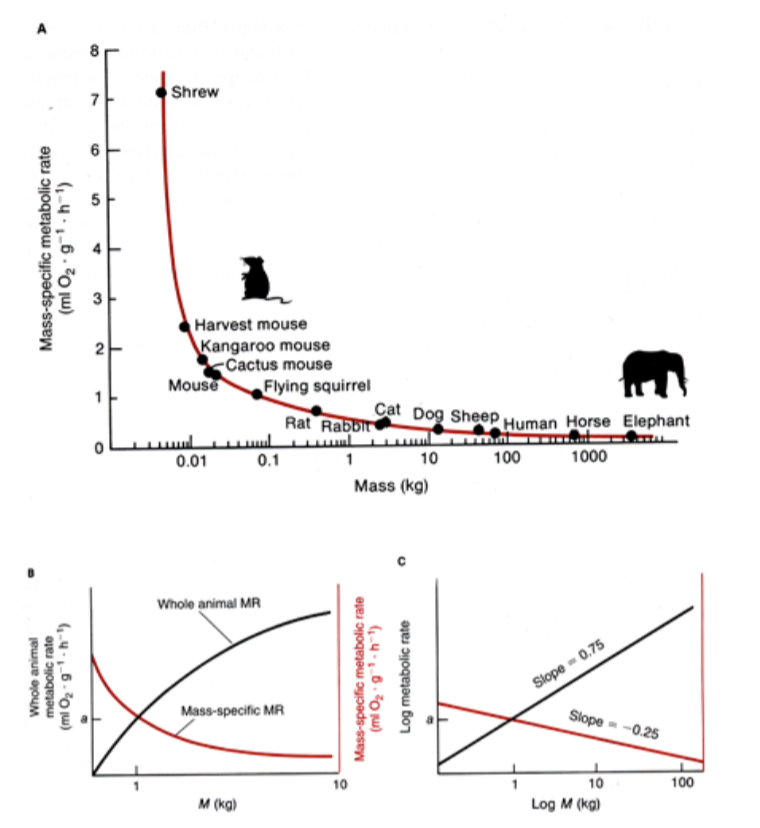
Kleiber’s Law: BMR α Mass3/4
Remember that although BMR increases with increasing mass, the mass-specific BMR decreases with an increase in animal size.
Some other relationships that scale to animal size:
Heart rate α Mass1/4
Lifespan α Mass1/4
From this you can calculate that the heartbeats per lifetime is about the same for all animals!
A German Shepherd Dog has 10x the mass of a housecat. (So the dog weighs the same as ten cats)
Of the following choices, which burns the most fuel per day?
A. 1 German Shepherd
B. 10 House cats
C. 1 House cat
D. 1 German Shepherd burns the same amount of fuel as 10 housecats
10 House cats would burn the most! This is because, since they’re smaller, they would burn more on a cellular basis compared to a dog.
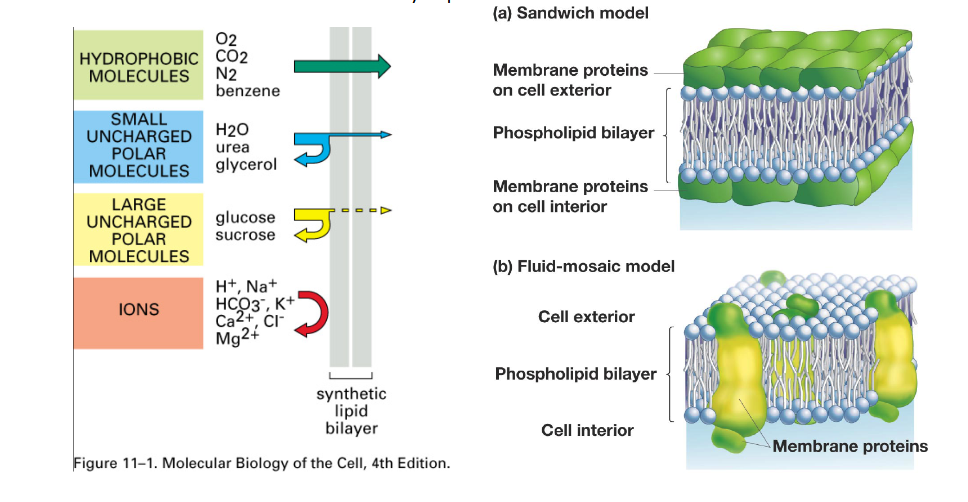
Molecules will enter a lipid bilayer if it is either small or nonpolar (typically)
They will not be able to enter if they have a charge or are large
Can water move through?
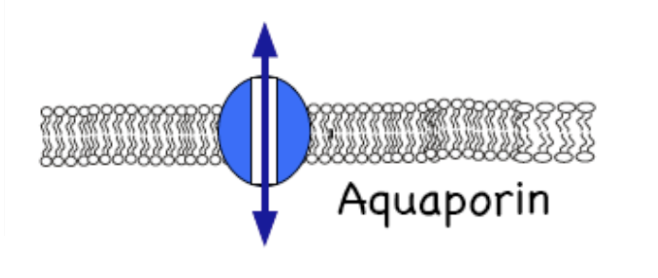
Yes! Water:
Moves through membranes (meaning the bilayer without protein involvement)
Moves much faster through aquaporins: two way gated channels
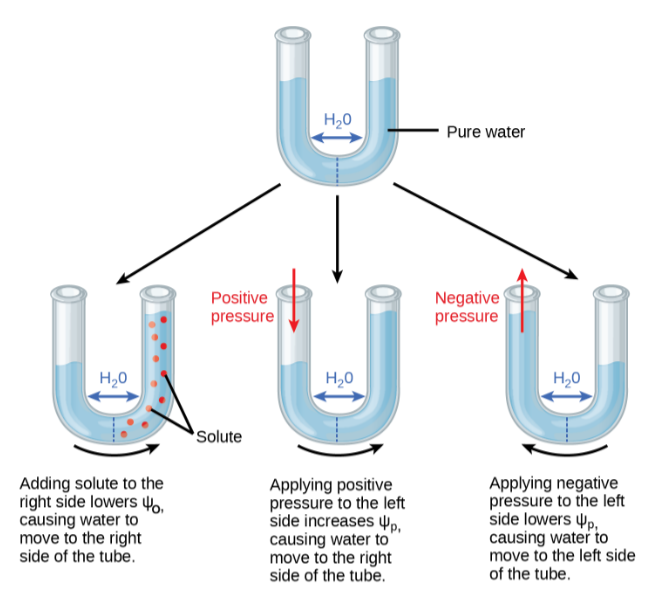
The forces that determine water movement add up to water potential (Ψw), a form of energy
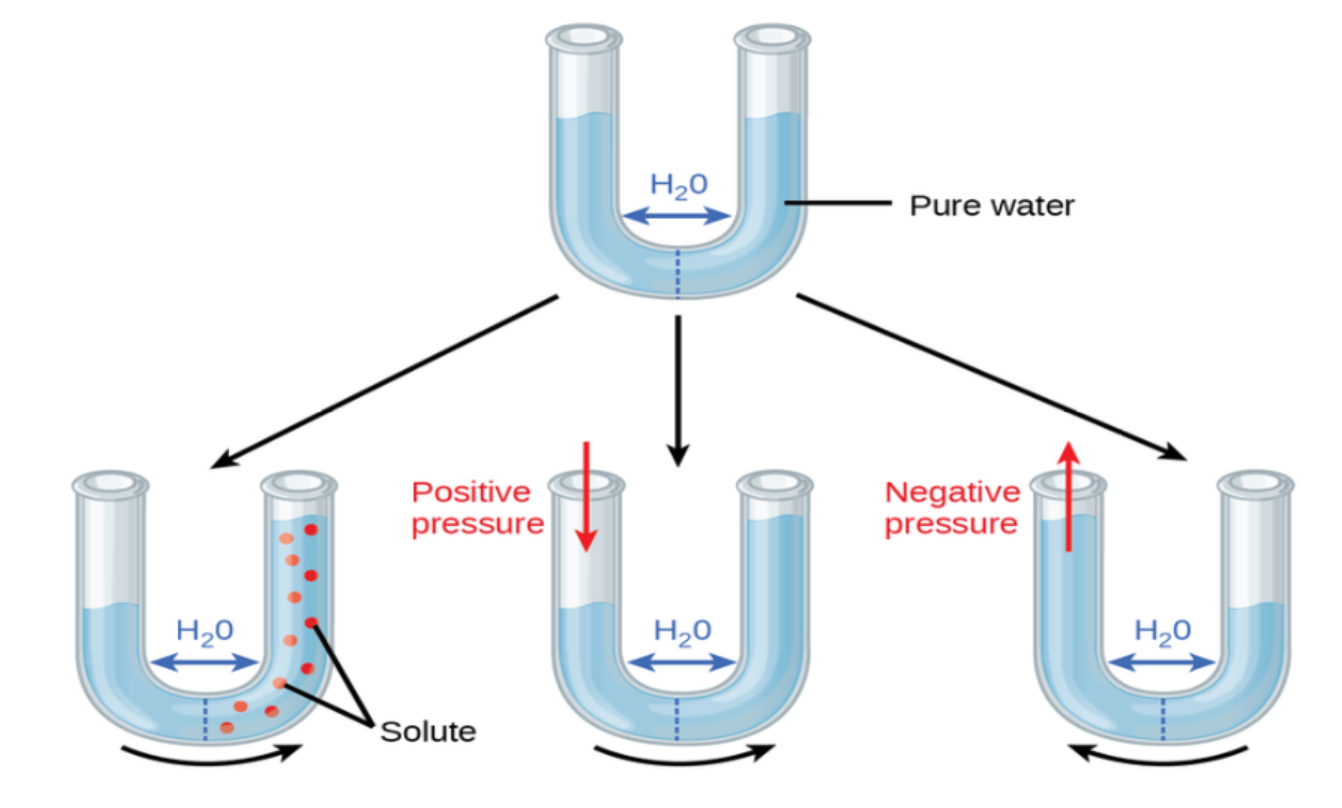
What are some rules about water potential?
Water potential (Ψw) = pressure potential (Ψp) - osmotic potential (Ψo)
Water always moves from a higher Ψw to a lower Ψw
Equilibrium occurs when water potential inside = water potential outside
Ψo (osmotic potential) CAN NEVER BE POSITIVE! It can only be a negative number or zero, as it represents the attraction of water by solute.
Ψp (pressure potential) can be divided into three:
Flaccid: Ψp = 0 Turgid: Ψp > 0 Tension: Ψp < 0
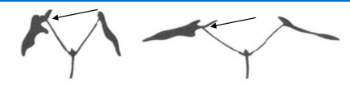
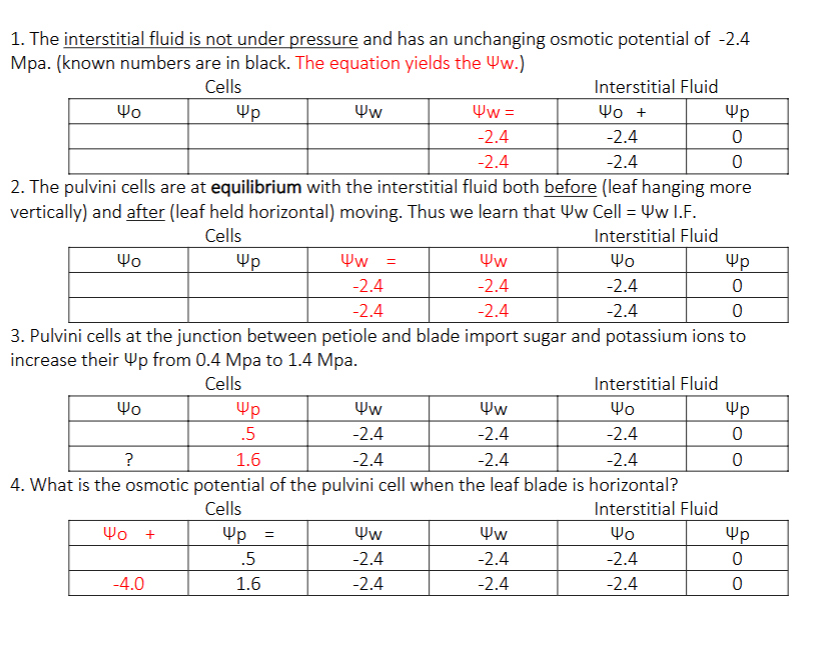
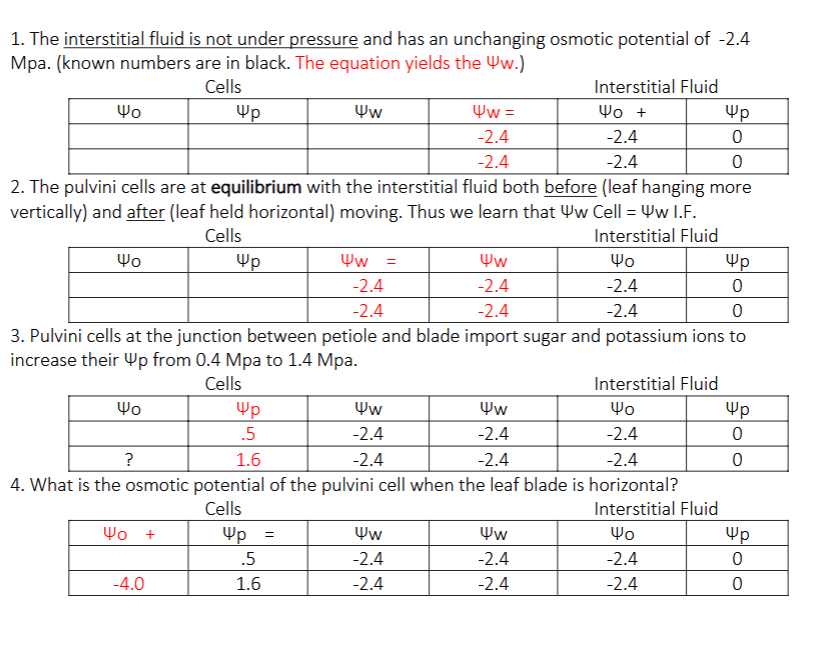
Beans increase or decrease the turgidity of PULVINI cells to change the orientation of leaves. In order to raise the leaf blades to a horizontal position (as in the right side of the picture) pulvini cells at the junction between petiole and blade import sugar and K+ ions to increase their Ψp from 0.5 Mpa to 1.6 Mpa. The pulvini cells are at equilibrium with the interstitial fluid both before (leaf hanging more vertically) and after (leaf held horizontally) moving. The interstitial fluid is not under pressure and has an unchanging Ψo potential of -2.4 Mpa.
What is the osmotic potential (Ψo) of the pulvini cell when the leaf blade is horizontal?
The Ψo = -4.0
I found this by simply taking -2.4 (the unchanging Ψo) and subtracting 1.6 (the new Ψp).
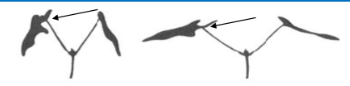
If when pulvini cells hold a leaf up they increase pressure potential (Ψp) from .5 to 1.8 Mpa. The interstitial fluid doesn't change when this happens, and these cells are at equilibrium both when held down or up. They are only not at equilibrium when the leaf is rising or falling. The interstitial fluid has a water potential of -2.2Mpa.
By how much does the osmotic potential change when the leaf is brought to and kept at the upright, horizontal position?
This problem is solved using the equation Ψw = Ψo + Ψp. The cell is at equilibrium with a fluid with -2.2 Mpa Ψw.
-2.2 = .5 + ? = -2.7 Ψo
-2.2 = 1.8 + ? = -4.0 Ψo
So how much has the osmotic potential changed? It has decreased from -2.7 to -4.0. That's a change of -1.3.
A pulvini cell that is expanding has a water potential that is ___ than the water potential of the interstitial fluid.
A pulvini cell that is expanding has an osmotic potential that is ____ than that of the interstitial fluid.
A pulvini cell that is expanding has a pressure potential that is ______ than that of the interstitial fluid.
The pressure potential in xylem nearer the leaves is ___ than the pressure potential of xylem nearer the roots.
A pulvini cell that is expanding has a water potential that is less than than the water potential of the interstitial fluid.
A pulvini cell that is expanding has an osmotic potential that is less than that of the interstitial fluid.
A pulvini cell that is expanding has a pressure potential that is greater than that of the interstitial fluid.
The pressure potential in xylem nearer the leaves is less than the pressure potential of xylem nearer the roots.
Forces that will move water in plants:
water always moves toward a lower Ψw
Ψw is composed of Ψo and Ψp
In live plant cells, Ψp ≥ 0
In the xylem, Ψp can also be negative
This is why tension is possible. Xylem has lignified cell walls, and it forms waterproof tubes.
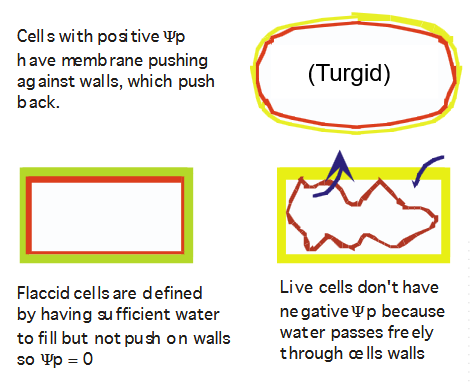
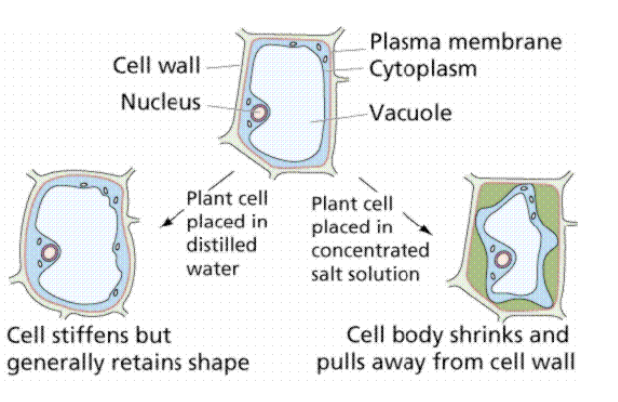
Can animals have turgid cells?
NO!
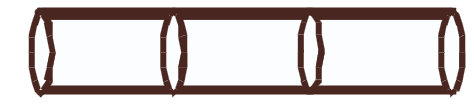
Xylem cells have __________ walls, so ________ pressure (tension) can be generated in water relations.
Xylem cells have waterproof walls, so negative pressure (tension) can be generated in water relations.
What is transpiration, and why do it?
Transpiration is the movement of water from soil through plant, and into the atmosphere.
There is a continuous decrease in water potential (and pressure potential!!!) throughout the path of water movement.
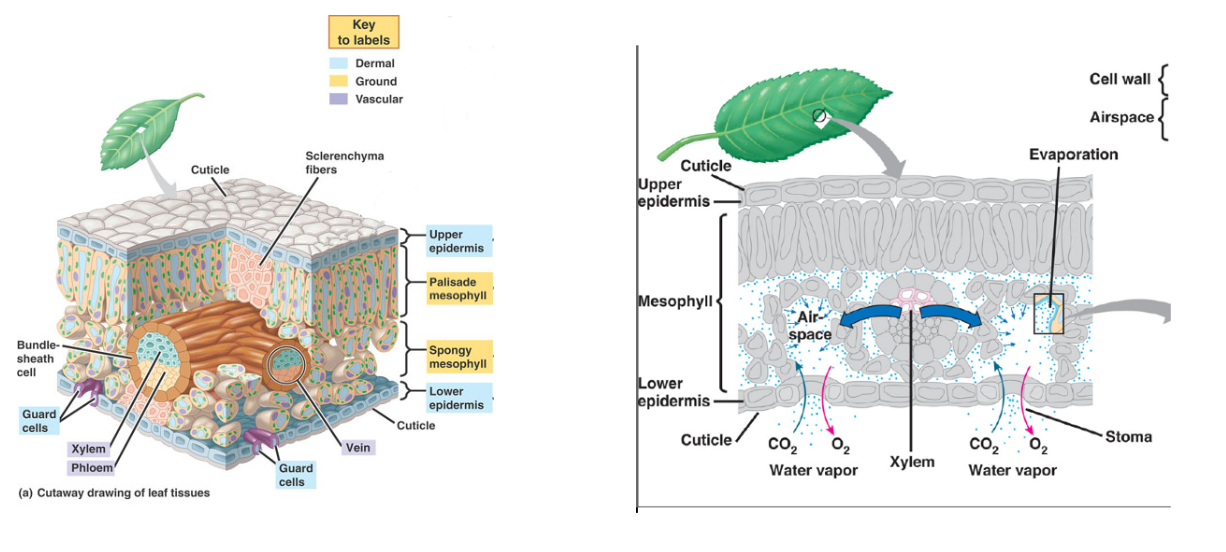
Gas exchange cannot be accomplished without water loss. Water loss is not advantageous, it is simply unavoidable. The loosely packed spongy mesophyll allow for a greater rate of gas exchange, but at the cost of increasing the rate of evaporation.
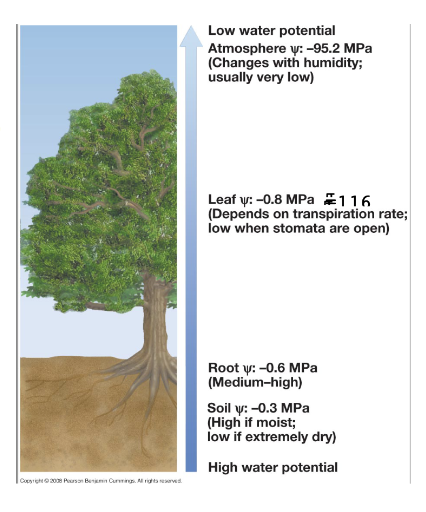
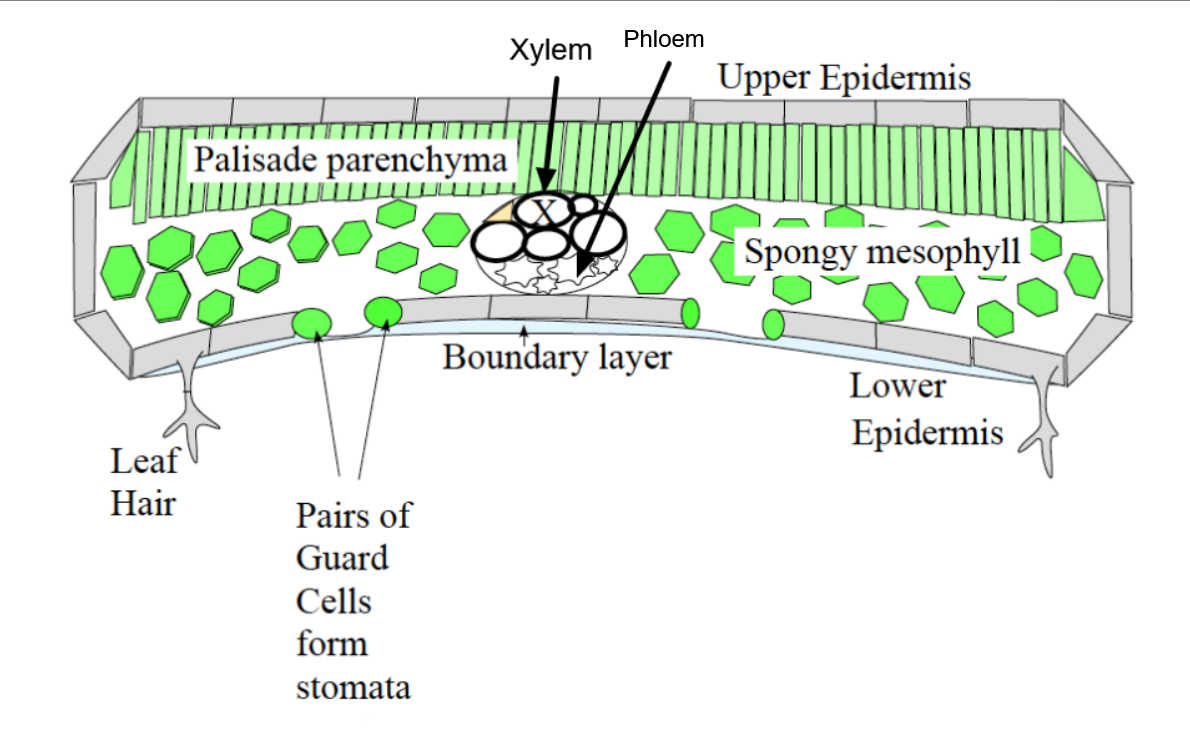
Leaf Anatomy
Leaf tissues in transport:
Epidermis
Cuticle, wax
waterproof fats keep water losses to a very small minimum.
Stomata
nostril-like structures that can open or close to allow and control the rate of transpiration. Water vapor diffuses from leaves (in gas form) almost exclusively through stomata. Stomata are concentrated on the bottoms of most types of leaves.Ground tissue
Palisade parenchyma
Cells containing only primary cell walls. As cells make 1° walls first, they are all parenchyma to start (think “parent”). They do not contain lignin.
Spongy parenchyma/mesophyll
The surface area of cells with internal air spaces are 30x the SA of leaf exterior!
Veins and bundles with xylem (on top, unidirectional (moves water from roots → plant → leaves)) and phloem (on the bottom, positive pressure + distributes material anywhere)
OTHER TO BE SORTED LATER:
Schlerenchyma: cells with secondary cell walls (1°). They have lignin, and provide structure. They are not alive when functional, and are also waterproof! (Because of the lignin!)
Vacuole: (think of them as water bags)
Within the cytoplasm
Contents do not need to maintain the normal homeostatic conditions required by the cytoplasm
This reduces the volume of the cytoplasm. It also lowers the SA/V ratio, allowing cells to grow to larger sizes than, for instance, animal cells.
Do plants consume calories?
No! But they do burn calories.
During transpiration water travels from root to leaves through _____ tissue. While in this tissue water movement is the result of differences in ________ potential . Because water always moves to a(n) ______ water potential, the water potential of the leaf xylem must be lower than that of the _____. The _______ potential of the cells in the leaf must be lower than that of the surrounding interstitial fluid in order for them to remain turgid. Differences in the ________ potential within the vascular tissue in plants AND in animals is what drives liquid over long distances. This is referred to as the bulk flow hypothesis.
Remember - more negative means less than
During transpiration water travels from root to leaves through xylem tissue. While in this tissue water movement is the result of differences in pressure potential. Because water always moves to a lower water potential, the water potential of the leaf xylem must be lower than that of the soil. The osmotic potential of the cells in the leaf must be lower than that of the surrounding interstitial fluid in order for them to remain turgid. Differences in the pressure potential within the vascular tissue in plants AND in animals is what drives liquid over long distances. This is referred to as the bulk flow hypothesis.
The concentration gradients important for generating membrane potential in an animal cell are generated in part by the ______, which "burns" ____ to send __ into the cell and ___ out of the cell. The actual resting potential of the membrane of animals is created by leak channels that let more ________ move through the membrane than those that let ______ through. The plant uses ___________ to generate charge.
A co-transporter is used when the electrochemical gradient is not favorable for the intended direction of transport of material across a membrane.
The concentration gradients important for generating membrane potential in an animal cell are generated in part by the Na/K pump, which "burns" ATP to send K+ into the cell and Na+ out of the cell. The actual resting potential of the membrane of animals is created by leak channels that let more potassium move through the membrane than those that let sodium through. The plant uses an H+ pump to generate charge.
A co-transporter is used when the electrochemical gradient is not favorable for the intended direction of transport of material across a membrane.
The cell walls of living cells have fence-like cell walls. The cell walls of _____ cells are water-proofed to allow transport. The exterior surface of _________ cells are water-proofed to prevent water loss. Water exits leaves through structures that generate a space between ______ cells.
The cell walls of living cells have fence-like cell walls. The cell walls of xylem cells are water-proofed to allow transport. The exterior surface of epidermal cells are water-proofed to prevent water loss. Water exits leaves through structures that generate a space between guard cells.
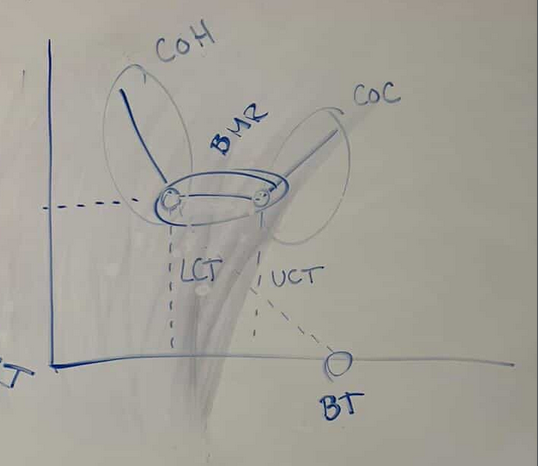
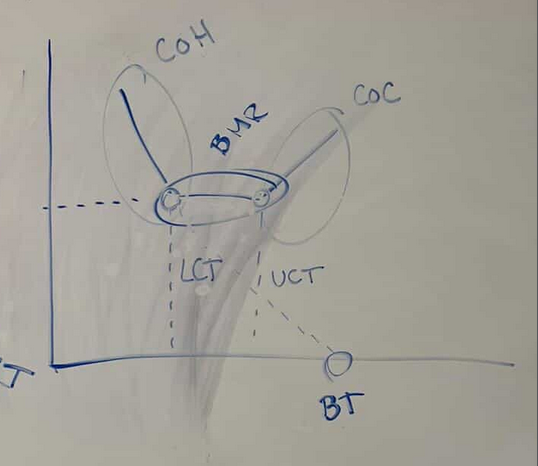
Alternate way to find cost of heating:
COH = BMR/(BT - LCT)
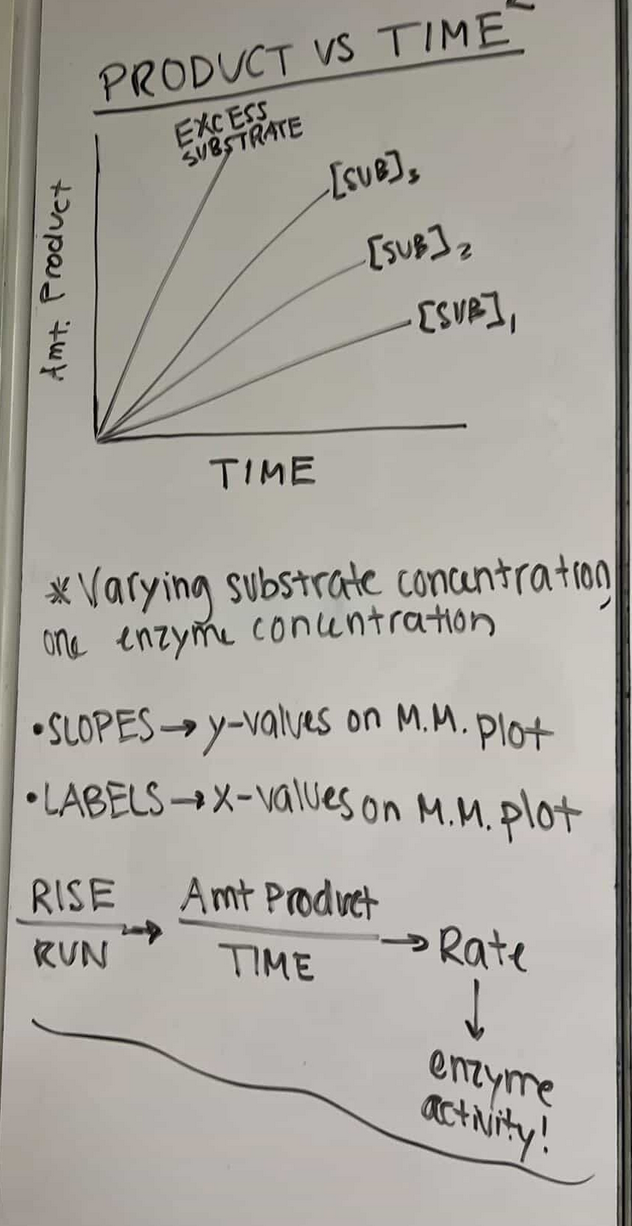
PRODUCT VS. TIME GRAPH
Gives:
Substrate concentration (one assigned per each line, can become x-axis for Michaelis Menton graph)
Rate of enzyme activity (found though the slope, can become y-axis for Michaelis Menton graph)
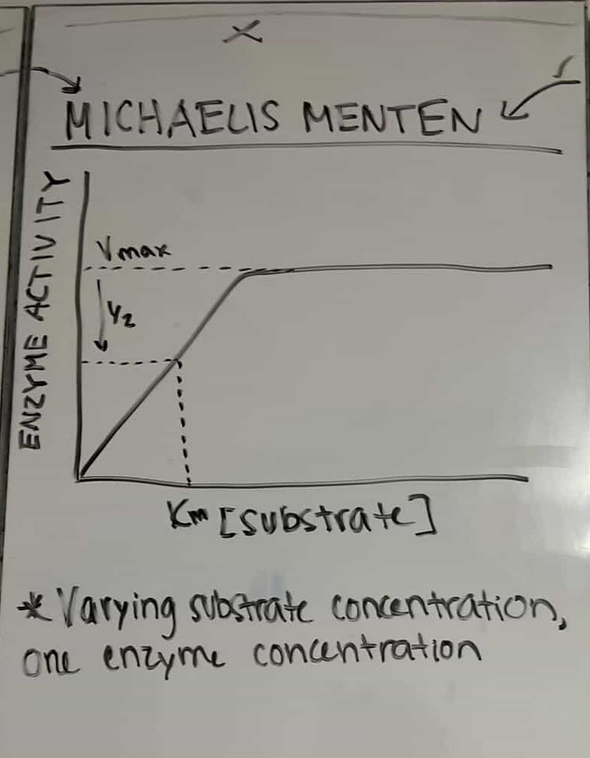
MICHAELIS MENTON GRAPH
Gives:
Vmax (How fast (at what “velocity”) that enzyme makes product when substrate concentration is in excess (at the max))
Km (The [substrate] at which the enzyme can work at ½ of the Vmax. It measures enzyme affinity, meaning essentially that when km is low there is a high affinity because that enzyme is able to be produced from very little substrate.)
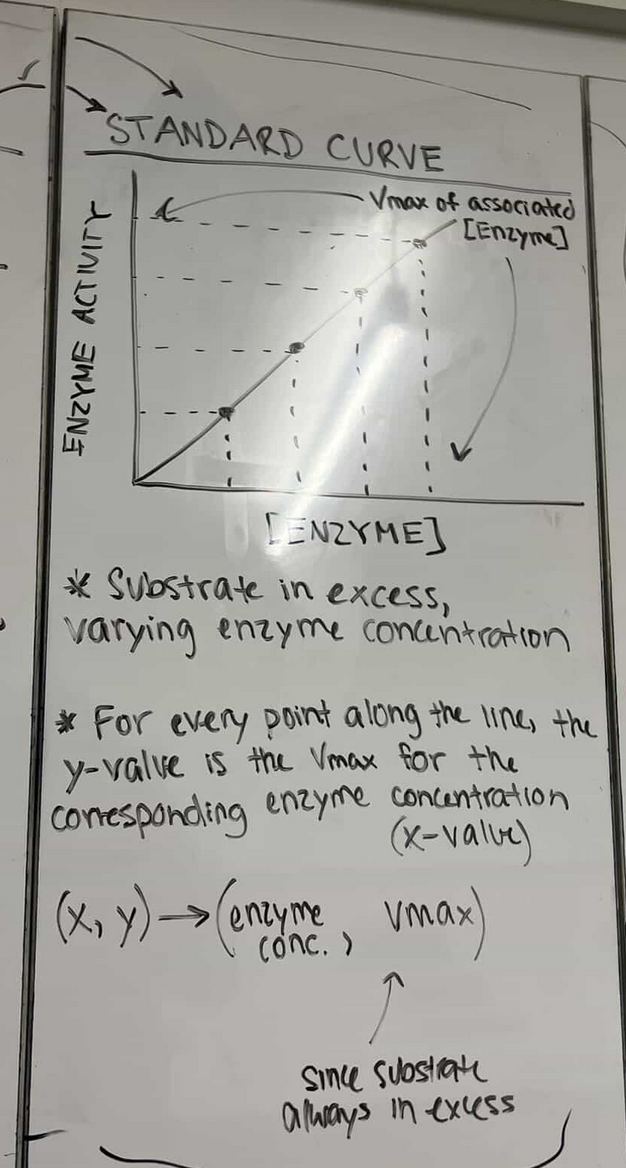
STANDARD CURVE GRAPH
Gives:
The Vmax of an associated enzyme AT A GIVEN CONCENTRATION OF ENZYME