Kimmy's Nutrition final exam flash cards
 Call Kai
 Learn
Learn Practice Test
 Spaced Repetition
 Match
Match Flashcards
 Knowt Play
1/91

There's no tags or description
Looks like no tags are added yet.
Name | Mastery | Learn | Test | Matching | Spaced | Call with Kai |
|---|
No analytics yet
Send a link to your students to track their progress
92 Terms
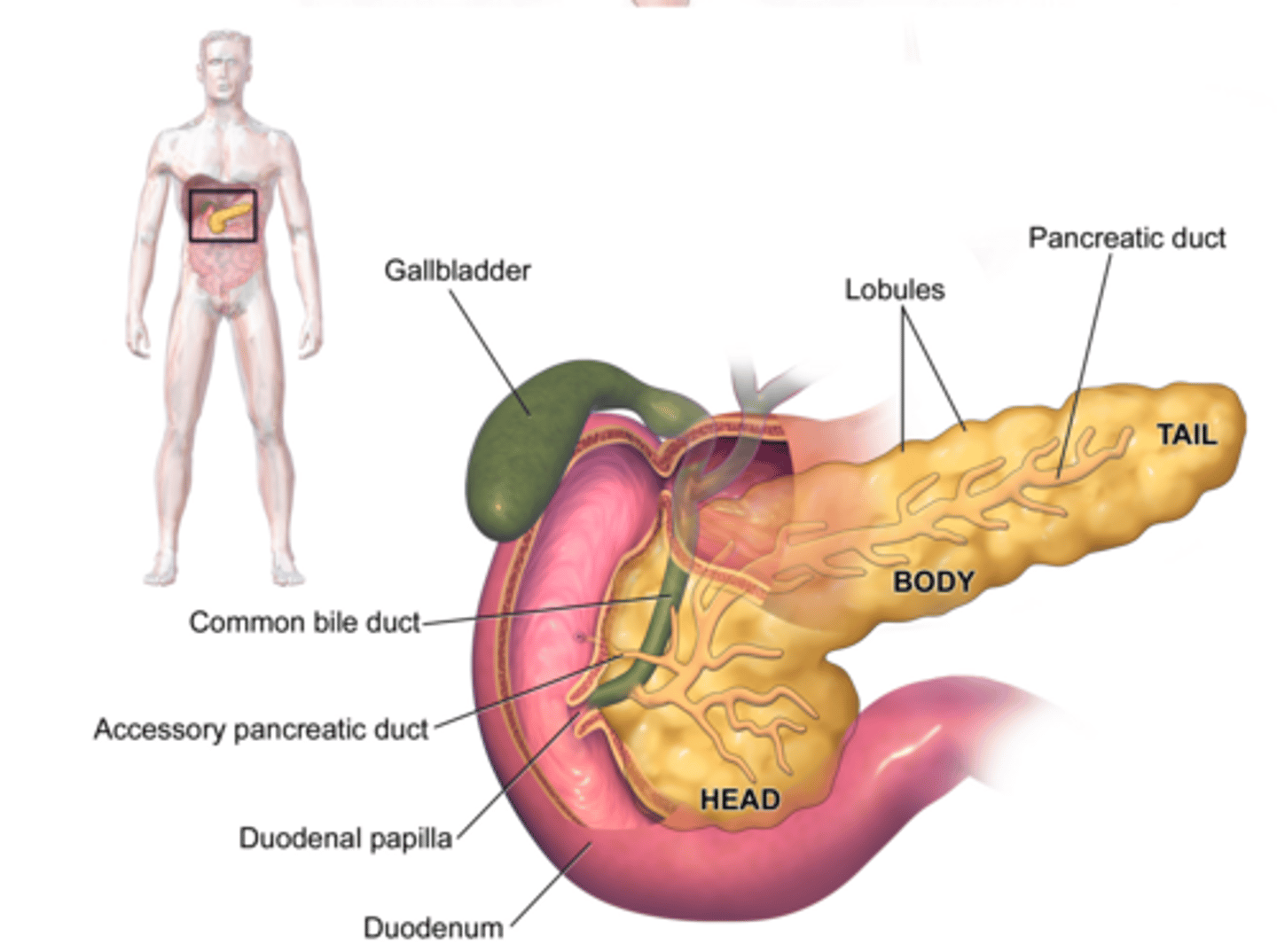
What is the exocrine function of the pancreas?
Exocrine function: secreting digestive enzymes into the duodenum.
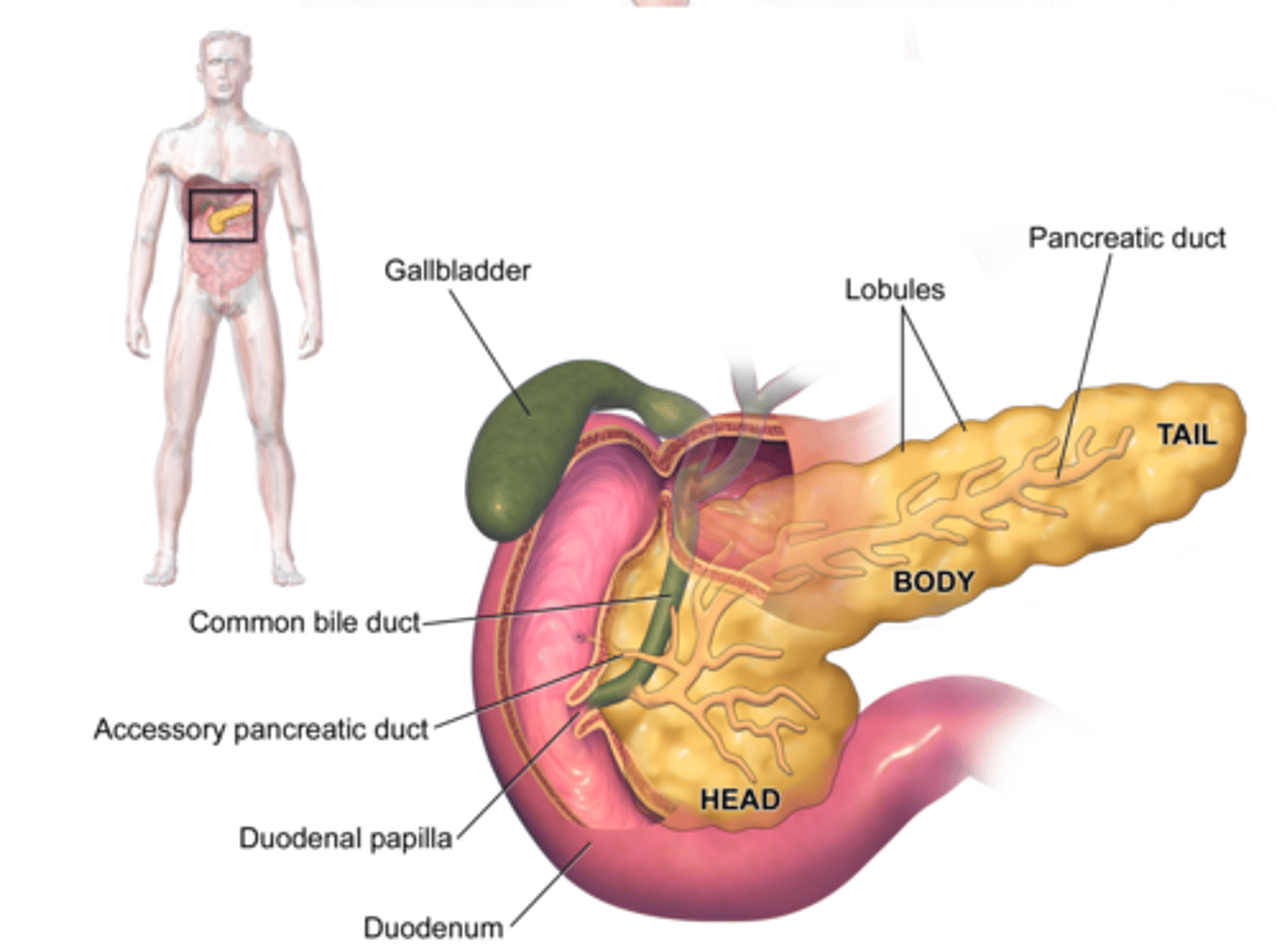
What is the endocrine function of the pancreas?
Endocrine function: secreting hormones into the blood circulation (glucagon and insulin).
How does the liver work as an accessory organ?
creating bile that is stored in the gall bladder.
Amylase function and secretion
breaks down starch
secreted by salivary glands and pancreas
gastric Lipase
begins fat digestion,
secreted by stomach
Trypsin
-secreted by pancrease into the duodenum
-breaks down proteins into peptides
Chymotrypsin
-secreted by pancreas into the duodenum
-breaks down proteins into peptides
Carboxypeptidase
Breaks down peptides into individual amino acids; removes amino acids from carboxyl end
-Secreted by pancreas into duodenum
What enzymes are secreted by the small intestine?
Lactase - breaks down lactose
Sucrase - breaks down sucrose
Maltase - breaks down maltose
Peptidases - breaks down peptide proteins
Lysozyme location and function
secreted by salivary glands and kills bacteria
General properties of minerals
exist in ionic form
2. always have counterion so total charge is 0
provide no energy
not building blocks of body like calcium
most are co-factors, some osmotic role
they are essential
do not spoil
calcium has 2 roles
build skeleton and bones
be co-factor in many things like muscle contraction
co-factor is
a co-factor is a mineral that binds to an enzyme to help it function
Sodium’s (Na+) role is to be the
main extra cellular osmotic ion.
where sodium goes water flows.
It helps regulate fluid balance and blood pressure.
potassium’s role is to be
the main intracellular osmotic ion.
most common negative ions are?
chloride Cl-
phosphate (PO4)3-
sulfate (SO4)2-
nitrate (NO3)-
How does the body get charged ions from neutral minerals?
Minerals dissolve in body fluids (water), which automatically separates them into charged ions (Na⁺, Cl⁻, Ca²⁺, etc.)
trace minerals listed
Iron (Fe)
Zinc (Zn)
Copper (Cu)
Iodine (I)
CHROMIUM (Cr)
Manganese (Mn) Selenium (Se) Fluoride (F)
MOLYBDENUM (Mo)
Cobalt is found in cobalamin B12
IRON (Fe) Roles, Deficiency, At risk
Roles: oxygen transport (hemoglobin), myoglobin, enzymes
Deficiency: iron-deficiency anemia — fatigue, pale, weakness, cold
At risk: women (menstruation), vegetarians, infants, blood donors
(major mineral) Magnesium (Mg2+) Roles, Deficiency, At risk
Roles
Enzyme cofactor in many biological processes
Counteracts calcium's muscle-contracting action → helps muscles relax
Bone structure
Nerve function
ATP use
Deficiency Symptoms
Muscle cramps and spasms
Muscle weakness
Irregular heartbeat
Populations at Risk
People with muscle cramps (magnesium may help)
Generally found in many foods, so deficiency is uncommon
ZINC (Zn²⁺) — Trace Mineral
Roles
Cofactor for many enzymes
Immune function
Wound healing
DNA synthesis
Growth and development
Deficiency Symptoms
Impaired immune function
Hair loss
Loss of taste and smell
Growth retardation in children
Skin problems
Populations at Risk
Generally found in numerous foods, so dietary deficiency is uncommon
People with poor diets or malabsorption
Which mineral has an osmotic role in the extracellular space?
Sodium
What does the Na+/K+ exchange pump do in the cell?
pumps 3Na+s out, 2K+s in.
Sodium is ________ .
A major mineral
Which of the following statements regarding fluoride is true?
Fluoride helps make bones stronger.
Fish and most teas contain appreciable amounts of natural fluoride.
When fluoride is lacking, dental decay is common.
Drinking water is usually the best source of fluoride.
All of these statements are true.
all of these statements are true
Approximately how much iron is absorbed from a vegetarian diet compared to an omnivorous diet?
One-half as much
Goiter is caused primarily by a deficiency of
iodine.
Functions of trace minerals include all of the following except _______ .
providing energy
acting as cofactors
maintenance of red blood cells
providing energy
is the oxygen-carrying protein of the red blood cells and accounts for 80% of the body's iron.
Hemoglobin
men or women contain more water?
men
how long can a human go with out water?
about 3-4 days before they live for another 3 days passed out so about 1 week all together
What is the main extracellular osmotic ion?
sodium
How does the sodium-potassium exchange pump work?
spits out 3 sodium (Na2+) ions and pumps in 2 potassium (K+) ions
What is the main intracellular osmotic ion?
potassium
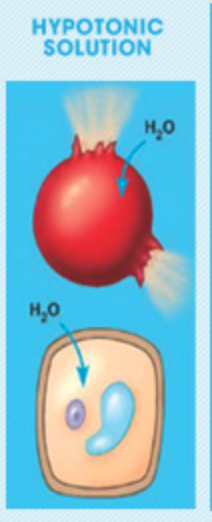
In hypotonic solution what happens to the cell?
it swells and maybe bursts.
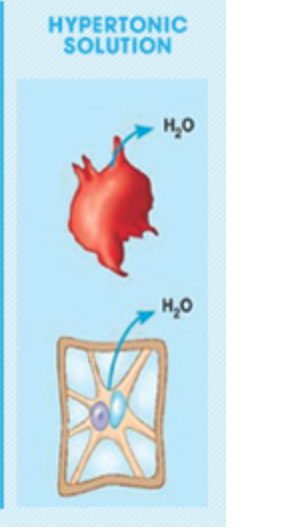
in a hypertonic solution what happens to a cell?
it shrinks and all the water leaves it.
what happens to sense of thirst in seniors?
Thirst sensation diminishes (decreases) with age.
Where is water distributed in the body?
Here is a rough breakdown for an average person:
blood: 5 liters
extracellular fluid: 19 liters (lymphatic fluid + interstitial fluid)
intracellular fluid: 20 liters
Which one is the main intracellular osmotic ion?
Na+
Ca2+
K+
Mg2+
Cl-
K+ potassium
What is true of a hypertonic solution?
There is more salt in the solution than inside the cell
How much water does the female body contain, approximately
50%-55%
80%-85%
70%-75%
60%-65%
50%-55%
Water cannot pass through the cell membrane.
Group of answer choices
True
False
False
In the body, water that resides between cells is known as _________
interstitial fluid.
Why can't you drink sea water? (well, you actually can...except you'll die)
It is hypertonic
Glycolysis: general properties
happens in the cytoplasm
2anaerobic
net gain 2 ATP (not much)
powers explosive motions
not sustainable
Glycolysis starts out with ______and ends with ________
starts out with 1 glucose and ends with 2 pyruvate
The transfer phase general properties:
Pyruvate is brought past mitochondrial wall
Pyruvate changes to Acetyl-CoA during the transfer
Anaerobic
produces 2 Acetyl-CoA, 2 NADH, 2 CO2
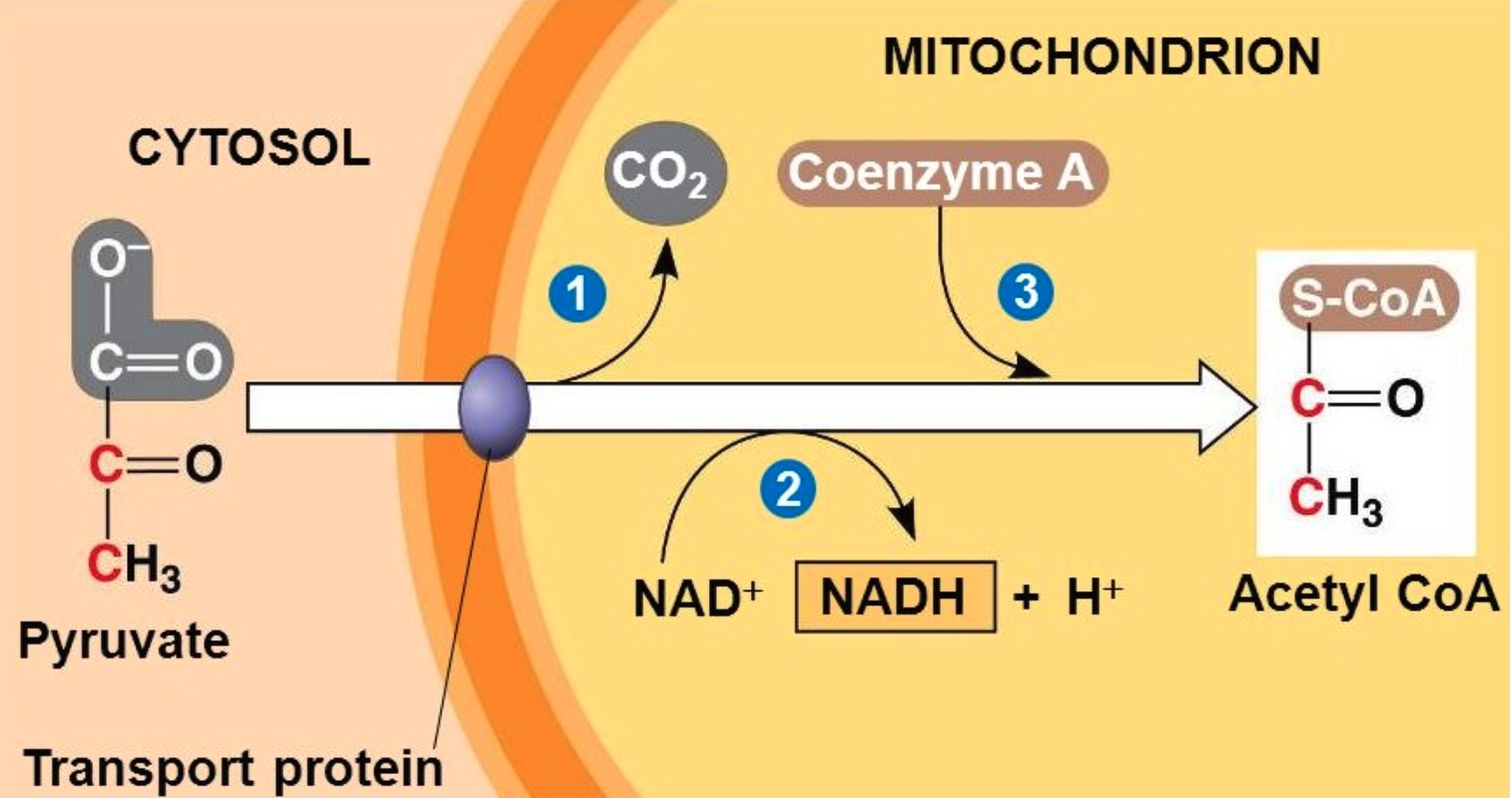
The Krebs Cycle
It happens inside the mitochondria
AEROBIC process
rather slow (unlike glycolysis)
It produces a lot of ATP via ETC
It powers slow but sustainable physical efforts (ex: walking, jogging)
It starts with acetyl-CoA and ends with CO2
makes NADH and FADH2 for the electron transport chain
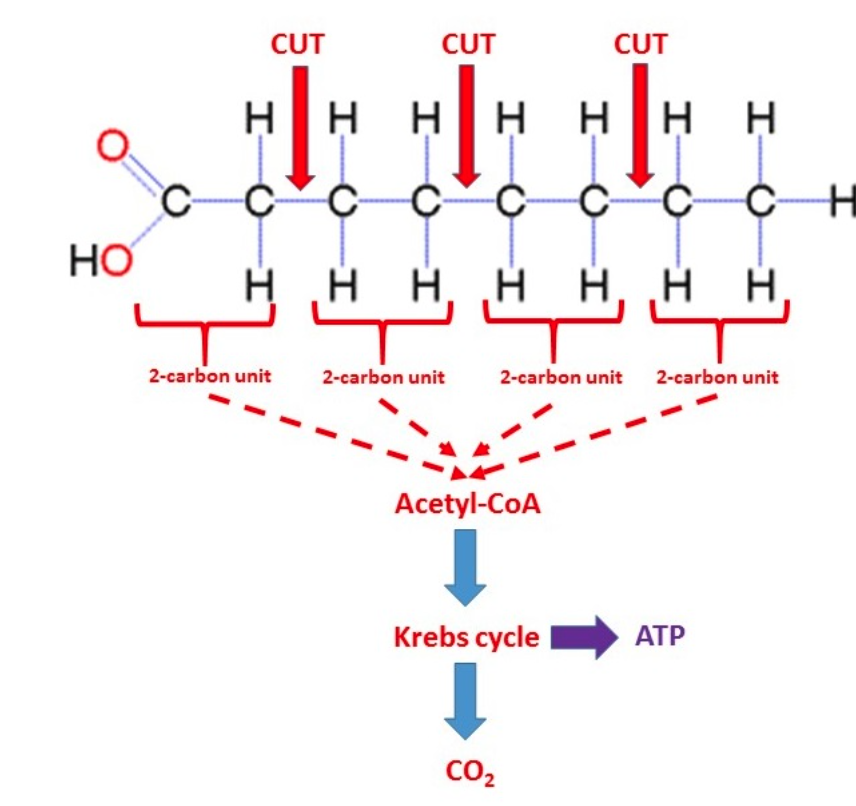
Beta oxidation properties
it happens inside mitochondria
it is AEROBIC from start to finish (hence you must do aerobic exercises to burn fat)
it leads into the Krebs cycle
produces tons of ATP
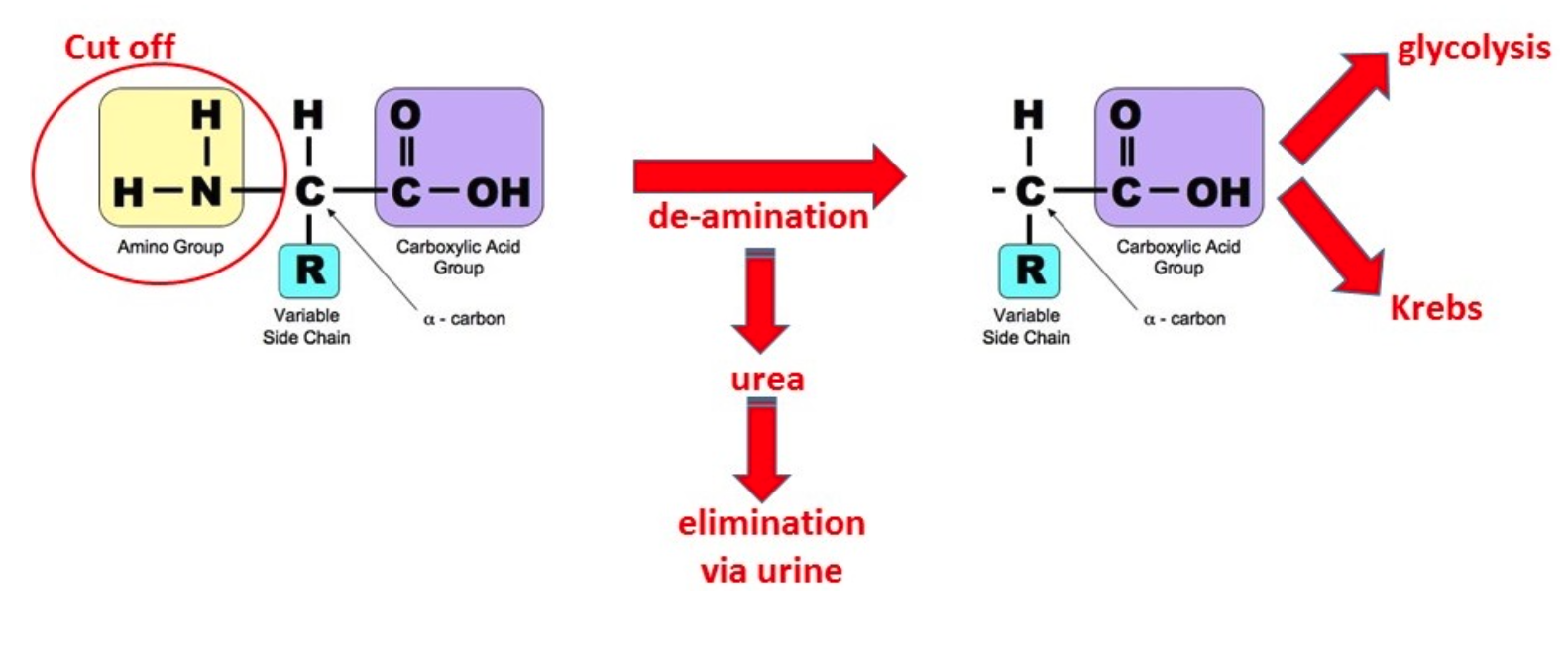
Catabolism of Amino Acids
amino group is cut off
the nitrogen is turned into urea by liver and then sent to kidney
the former nitrogen amino group is excreted in urine
remaining carbon will go to glycolysis or krebs
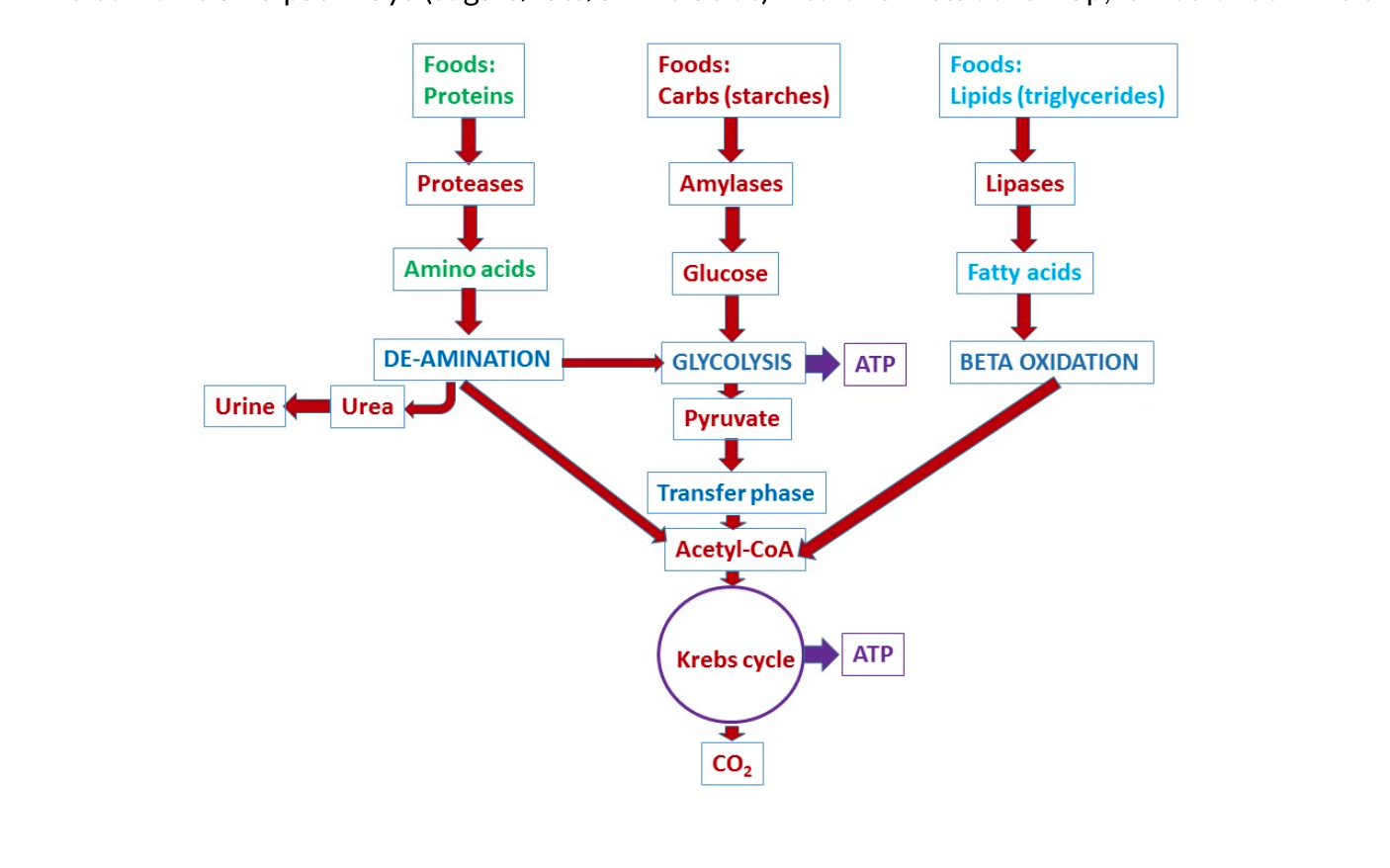
big picture of catabolic map
all roads lead to krebs cycle
What is the meaning of the word glycolysis?
sugar break down
What time of the day do we have our glycogen reserves at the lowest level?
In the morning before breakfast.
Which statement defines a coenzyme?
An organic molecule required for the functioning of an enzyme
Beta Oxidation is aerobic or anaerobic?
aerobic
How many essential vs non-essential amino acids are there?
9 essential amino acids and 11 non-essential amino acids.
formula for glucose
C6H12O6 6 carbons and 12 hydrogens and 6 oxygens.
general formula for Carbohydrates is?
CH2O
Examples:
Glucose: C₆H₁₂O₆ = (CH₂O)₆
Ribose: C₅H₁₀O₅ = (CH₂O)₅
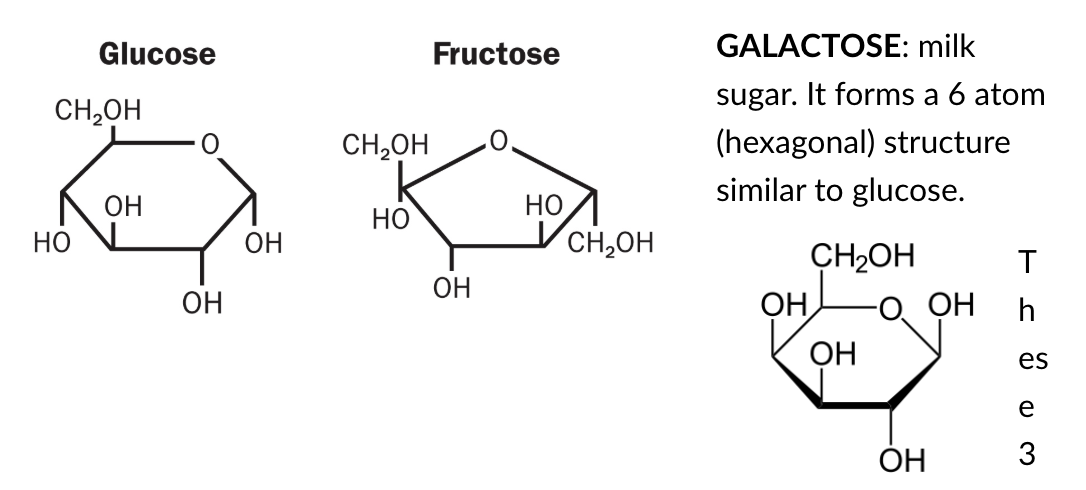
3 types of mono saccharides
Glucose - blood sugar, 6 carbon ring
Fructose - fruit sugar, 5 carbon ring Galactose - milk sugar, 6 carbon ring
Sucrose is made of
1 glucose and 1 fructose (table sugar, disaccharide)
maltose is made of
glucose + glucose, malt sugar (disaccharide)
Lactose is made of
glucose + galactose, milk sugar (disaccharide)
glycogen properties
animal/human storage.
Branched like amylopectin.
Glycogen storage: Liver (~100g, maintains blood glucose) and Muscles (~500g, supplies energy during contraction)
Reserves last 8–12 hours.
Lowest in the morning if no overnight eating.
polysaccharide
what are the two types of starches
Amylose = linear starch chain
Amylopectin = branched starch chain
Amylose
starch
linear chain
russet potatoes, long grain rice, bananas
Amylopectin
branched
(red potatoes, short-grain sticky rice).
Foods: potatoes, bananas, beans, grains, pasta, bread.
Fiber properties
0 calories
indigestible
functions:
1 stimulates peristalsis, lowers waste passage time
2 binds bile and thus removes cholesterol
3 retains water in diarrhea
foods: oats, broccoli and cauliflower
Insulin is secreted by
Pancreatic beta cells in response to elevated blood glucose levels.
Glucagon is secreted by
pancreatic alpha cells to increase blood glucose levels, typically when levels are low. releases glucose from glycogen reserves
Type 1 diabetes
Autoimmune disease — immune system attacks/kills pancreatic beta cells. No insulin produced.
No insulin present
treated by artificial insulin injected
develops in childhood
Type 2 Diabetes
Lifestyle disease — insulin resistance. Cells are "deaf" to insulin's message. Higher insulin levels needed.
preventable and maybe reversible
metabolic fat trap is that
Once excess glucose is stored as fat it can never become glucose again.
Brain’s preferred fuel
glucose
Which metabolic pathway is fast and which is slow?
Fast is Glycolysis
Slow is Krebs cycle, electron transport chain, beta oxidation
What is the normal range (mg/dL) for blood glucose?
Group of answer choices
100-120
70-100
60-70
40-60
140-180
120 -140
70-100
What is maltose made of?
two glucose units
table sugar is a monosaccharide True or False
False, it is a disaccharide composed of glucose and fructose.
Which one is inside of phospholipid bilayers?
Phosphates
Fatty acids
fatty acids
What is the function of HDLs?
They transport lipids from the body to the liver.
In your blood lipid profile report, which line will show the "bad cholesterol"?
LDL
What are fatty acids made of?
Group of answer choices
carbon and water
carbons rings with many hydroxyl groups
carboxyl group and a long carbon chain
amino group and a carboxyl group
carboxyl group and a long carbon chain
all 9 water soluble vitamins are essential or no?
yes they are all essential
Who is not recommended to take folate supplements?
cancer patients
Which of the following is a property of niacin?
Group of answer choices
It is susceptible to destruction in foods exposed to light
It can be synthesized in the body from the essential amino acid tryptophan
It is soluble in both water and lipids depending upon its chemical form
It participates primarily in reactions involving amino acids
It can increase LDL and decrease HDL in large doses.
It can be synthesized in the body from the essential amino acid tryptophan
Which vitamin can improve your cholesterol (lipoprotein) profile?
Group of answer choices
Niacin
Tocopherol
Cobalamin
Ascorbate
Folate
niacin - lowers LDL, increases HDL
Milk and milk products provide much of the ____ in people’s diets.
Group of answer choices
Thiamin
Vitamin A
Riboflavin
Vitamin C
Vitamin B12
Riboflavin
Seniors and gastric bypass patients are prone to suffer from which vitamin deficiency?
Group of answer choices
vitamin B3
vitamin C
vitamin B12
vitamin K
vitamin A
vitamin b12
A deficiency of what vitamin produces a characteristic cracking and redness at the corners of the mouth?
Group of answer choices
Ascorbic acid
Niacin
Riboflavin
Biotin
B6
Riboflavin
Which mineral is useful against muscle cramps?
magnesium
is the extracellular space positive negative or neutrally charged
positive
is the cytoplasm positive negative or neutrally charged
negative
What condition can be caused by excess of iron?
Oxidative damage