Lecture 1b - First Steps in Vision
 Call Kai
 Learn
Learn Practice Test
 Spaced Repetition
 Match
Match Flashcards
 Knowt Play
1/46

There's no tags or description
Looks like no tags are added yet.
Name | Mastery | Learn | Test | Matching | Spaced | Call with Kai |
|---|
No analytics yet
Send a link to your students to track their progress
47 Terms
Define wave.
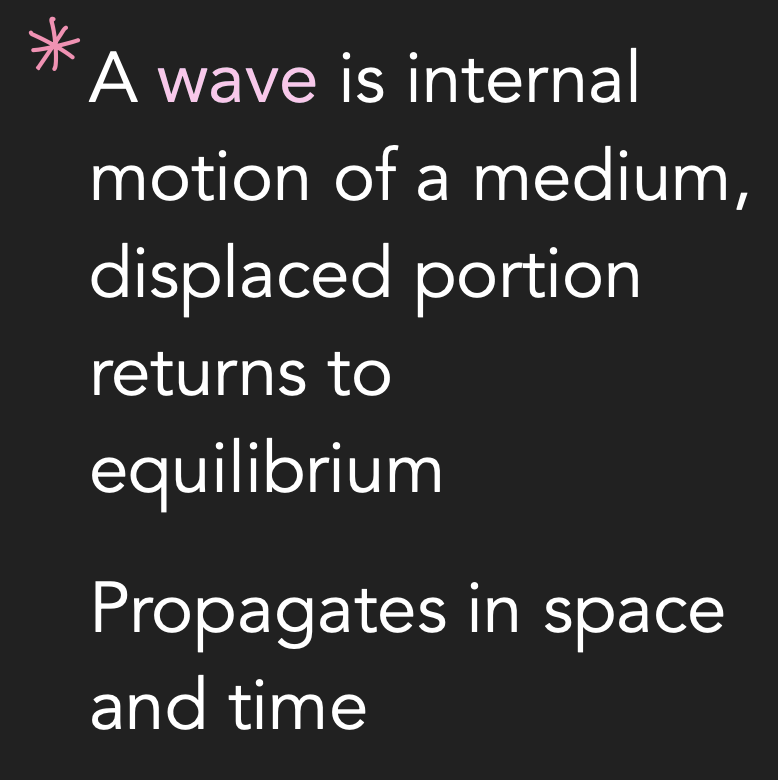
What are the 2 types of waves? Define both.
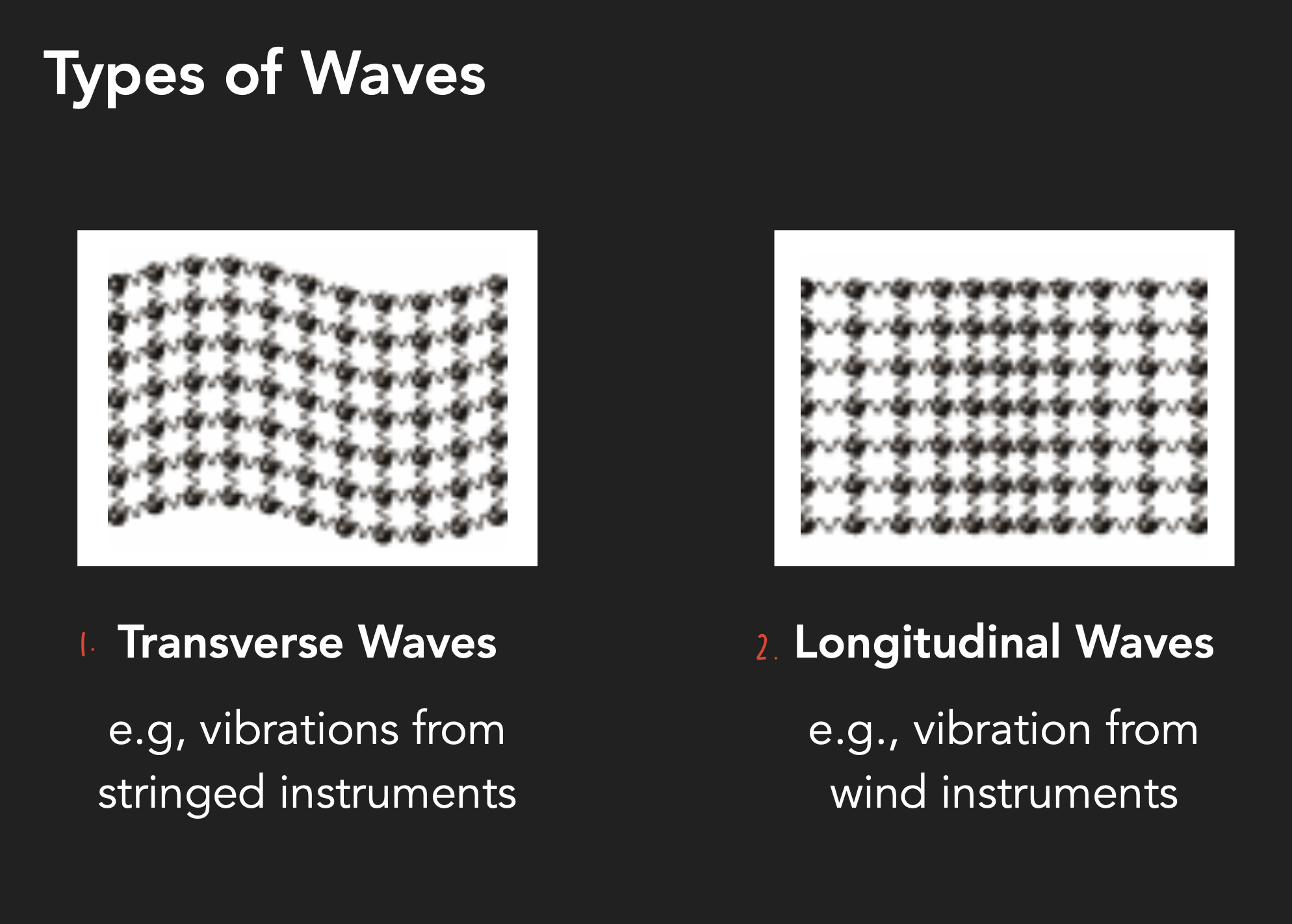
Define sound waves.
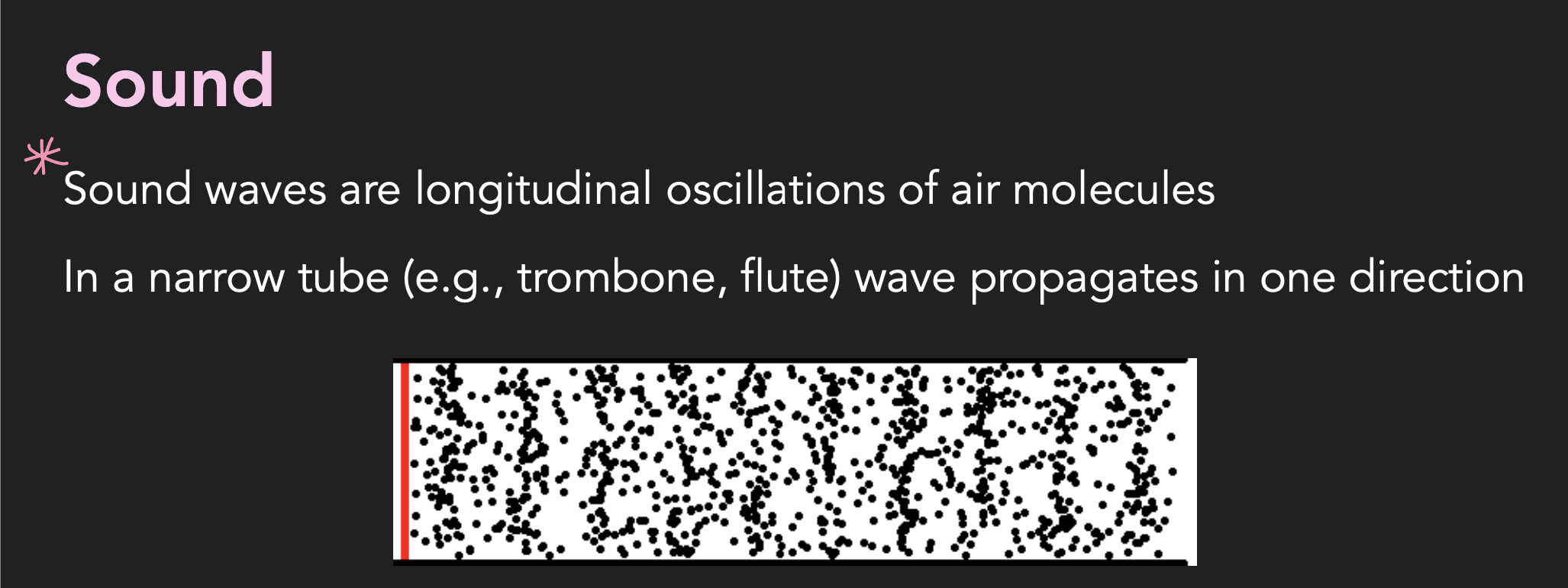
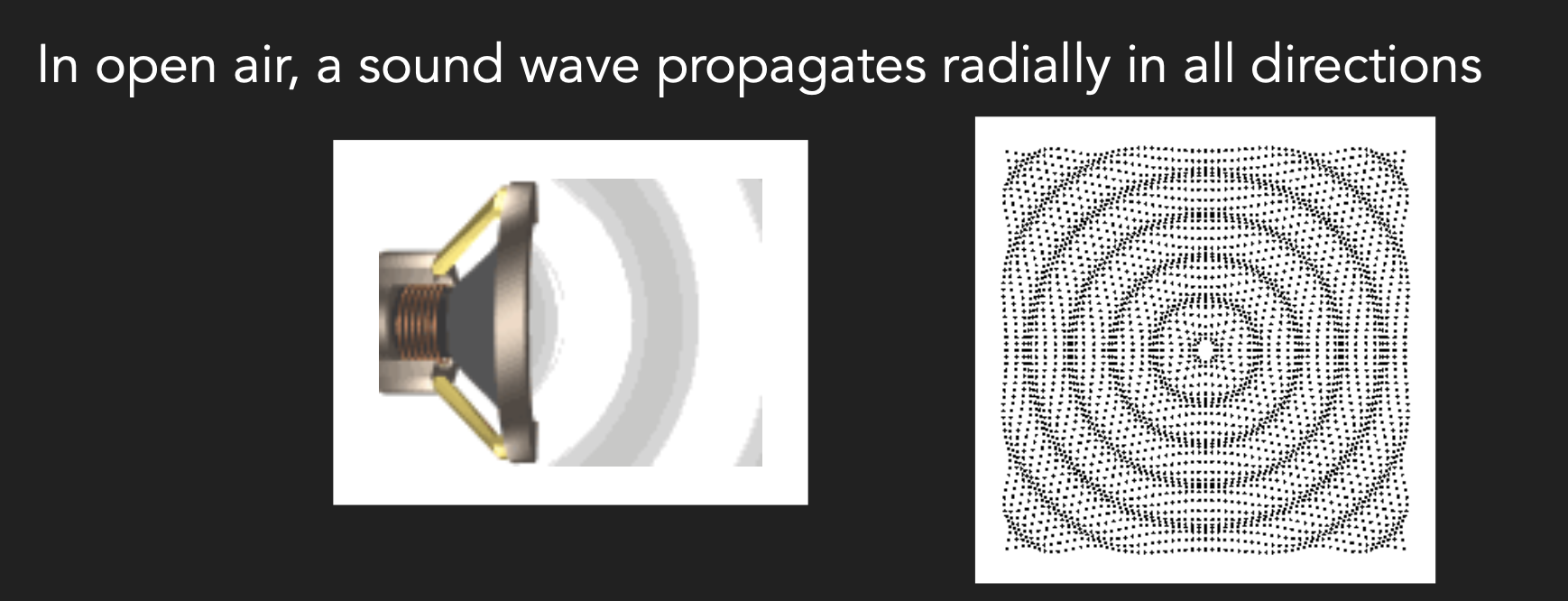
How do sound waves move in open air?
Define light waves.
Define photons.

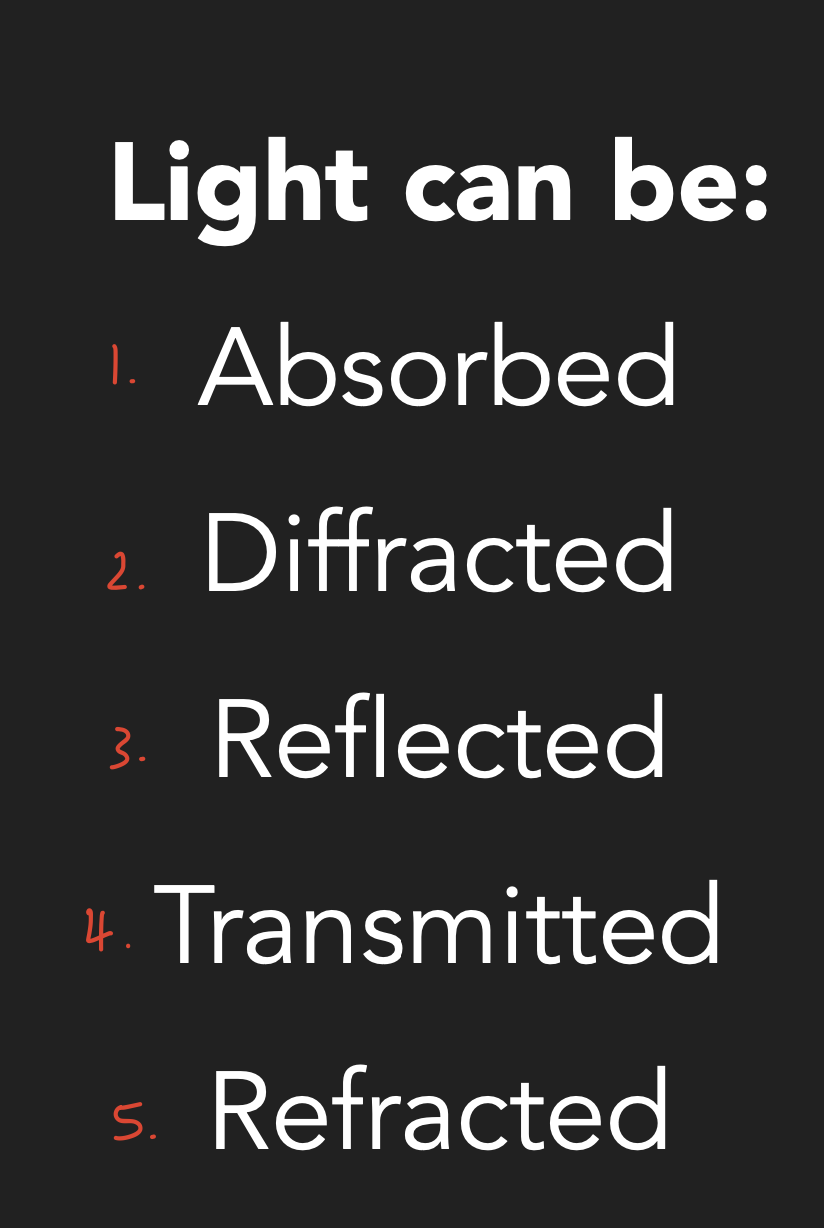
What are the different ways light can be manipulated?
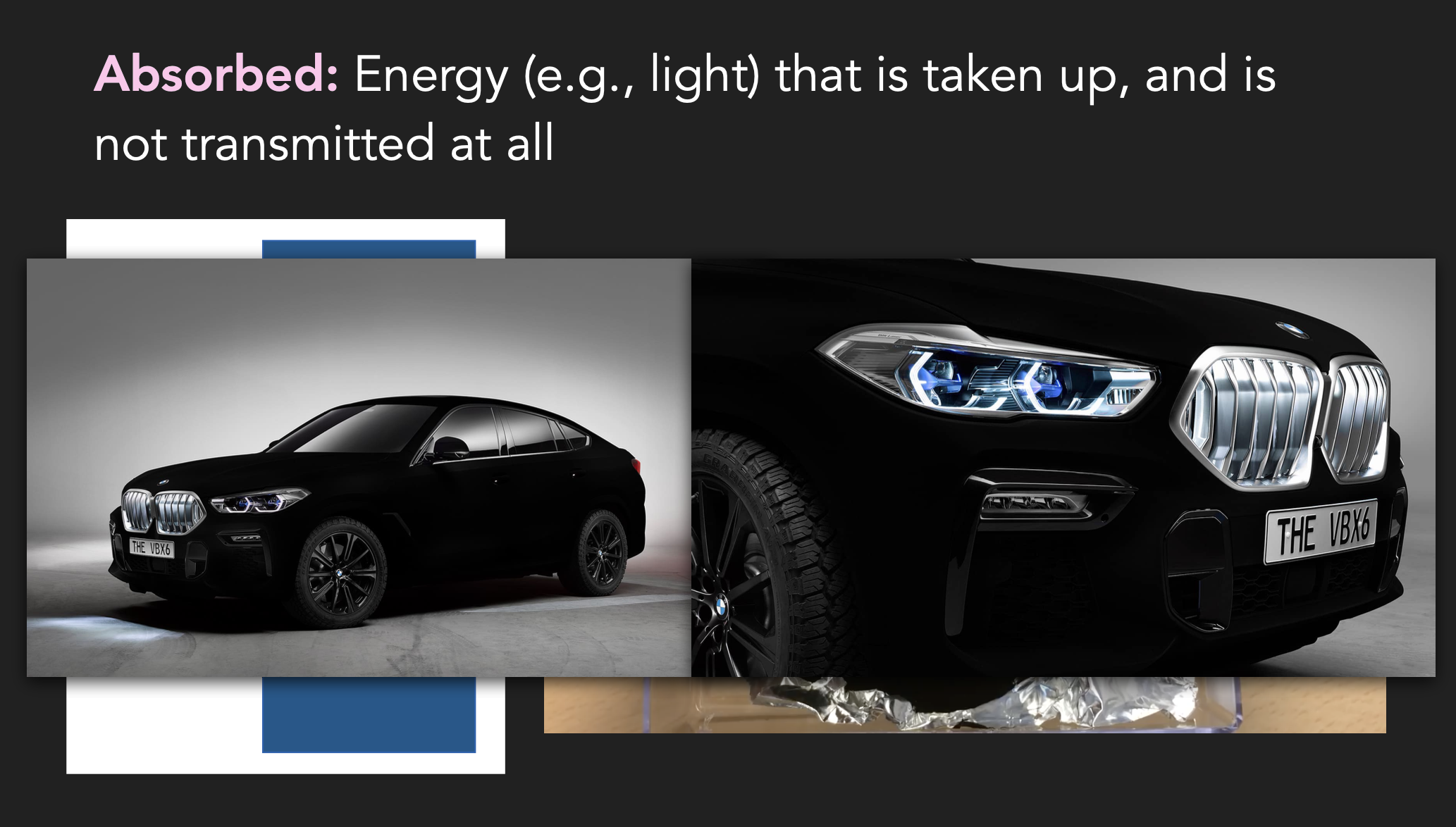
Define absorbed.
Define diffracted.
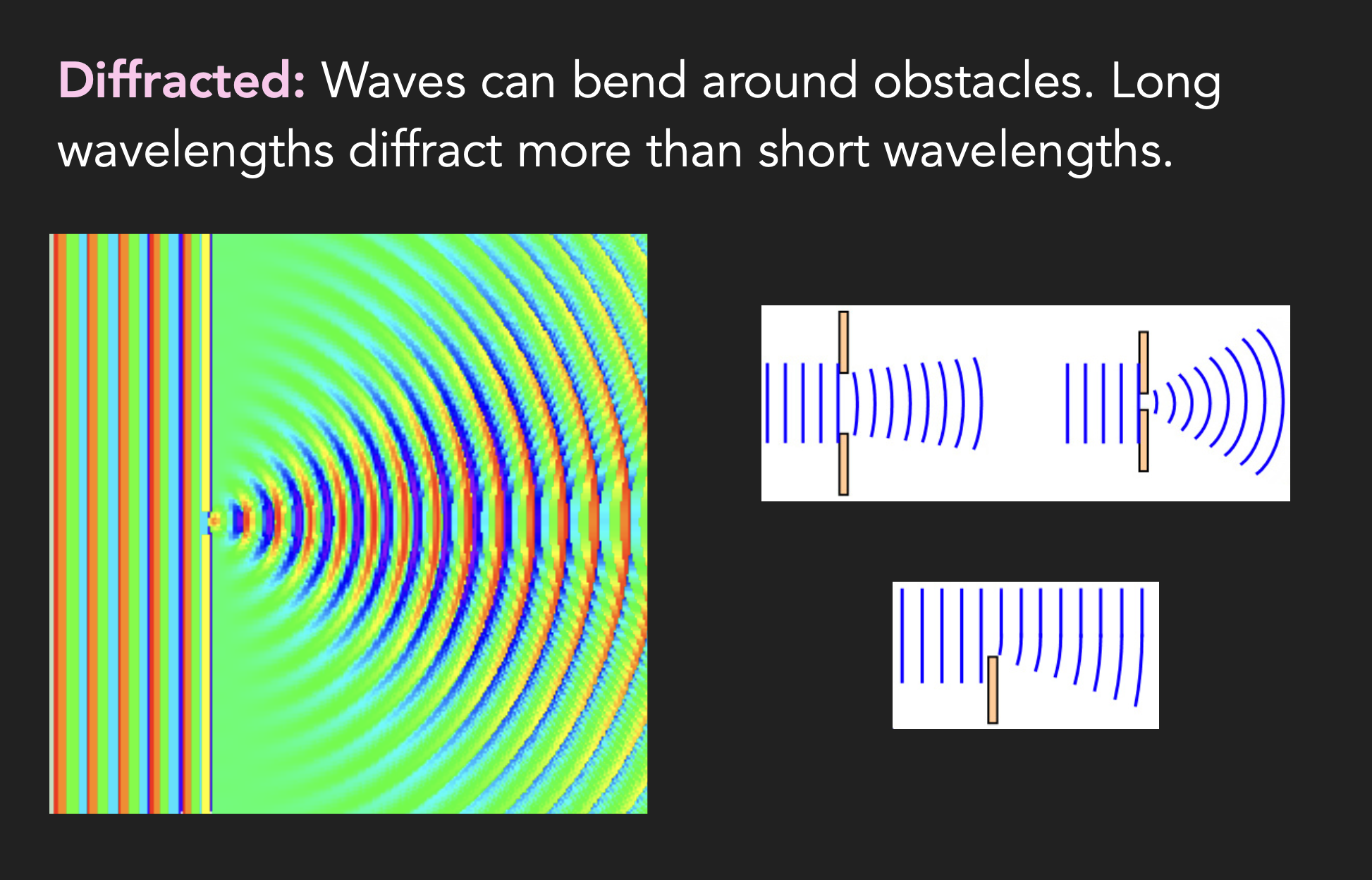
Define reflected.

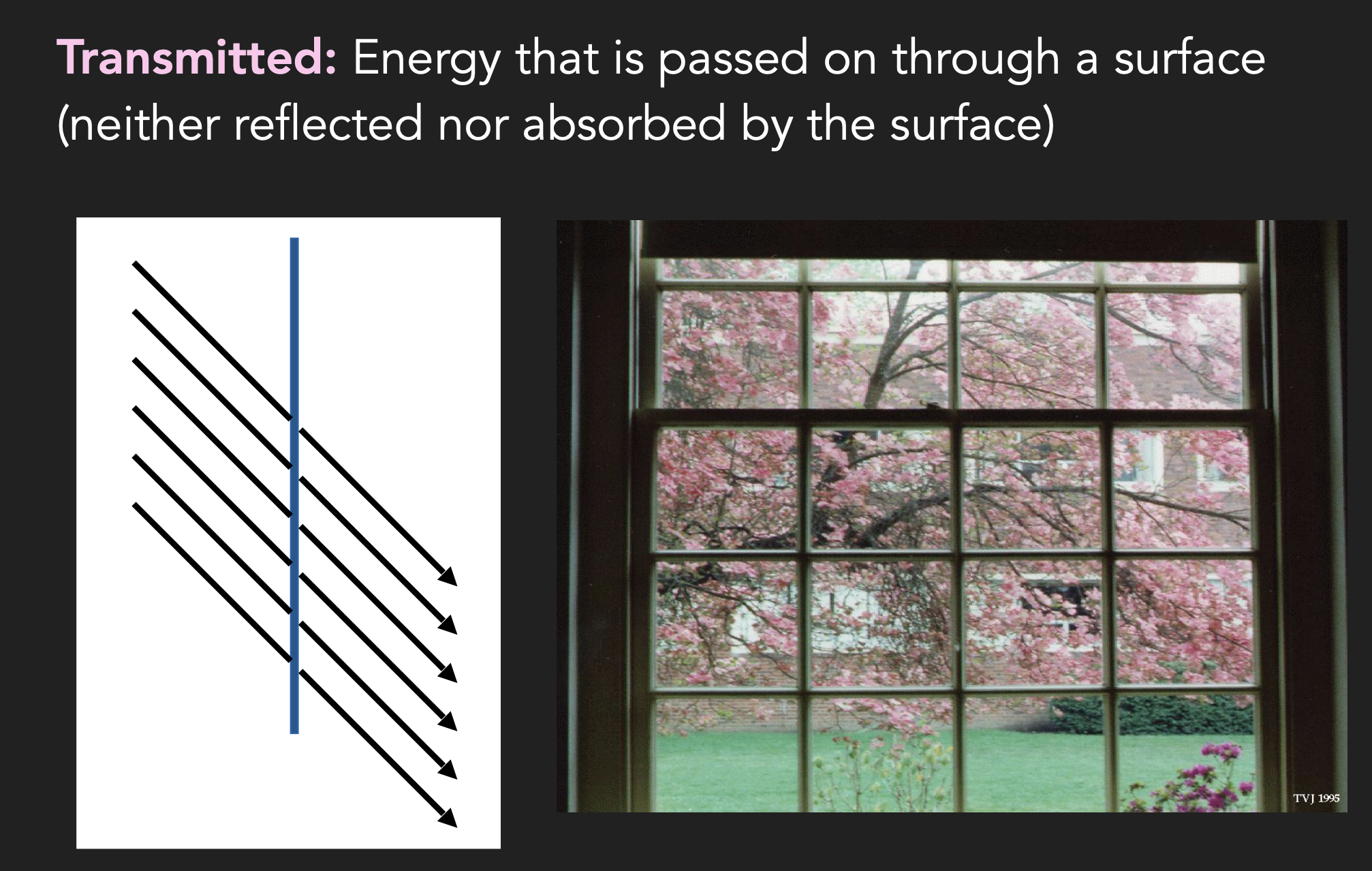
Define transmitted.
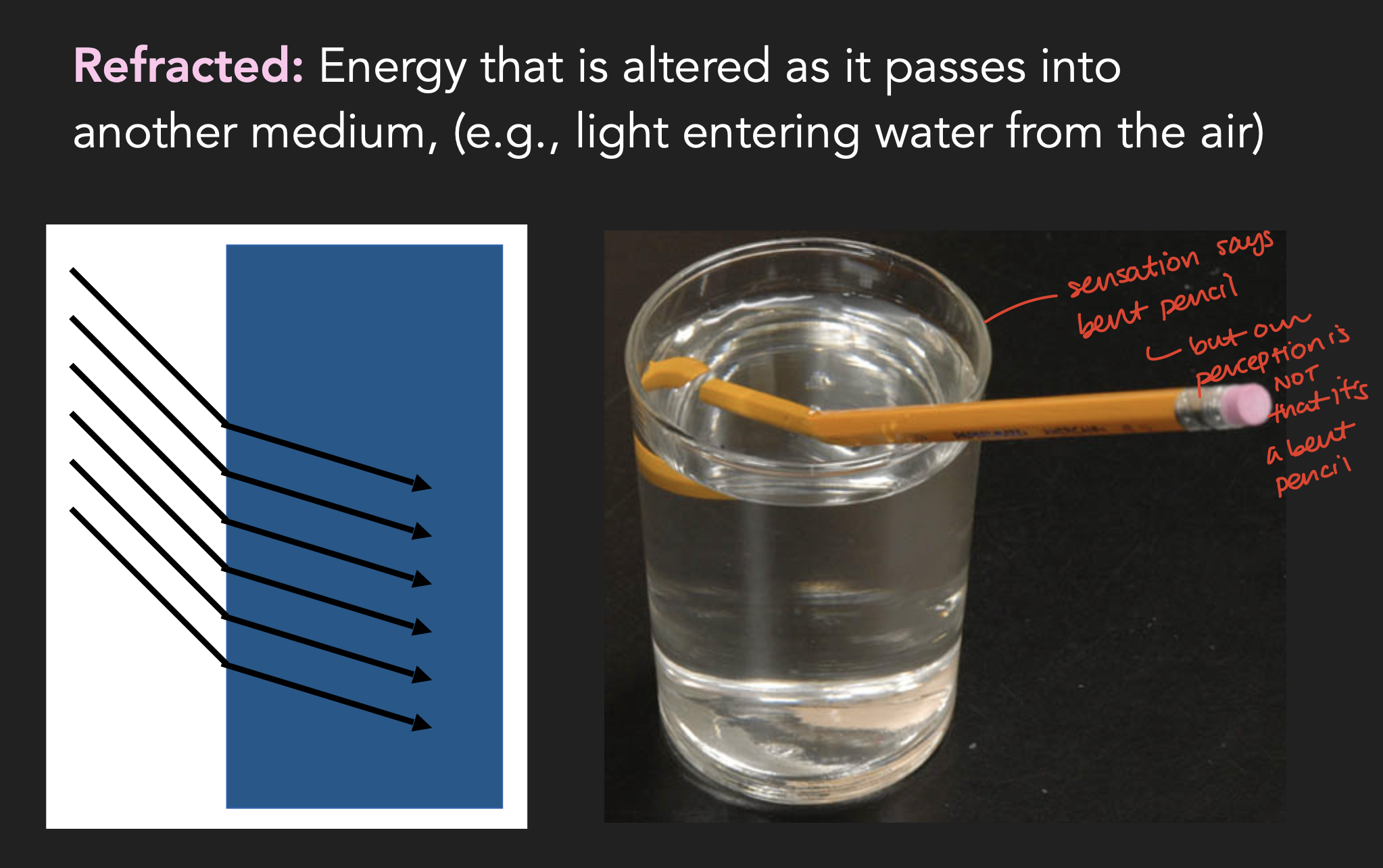
Define refracted.
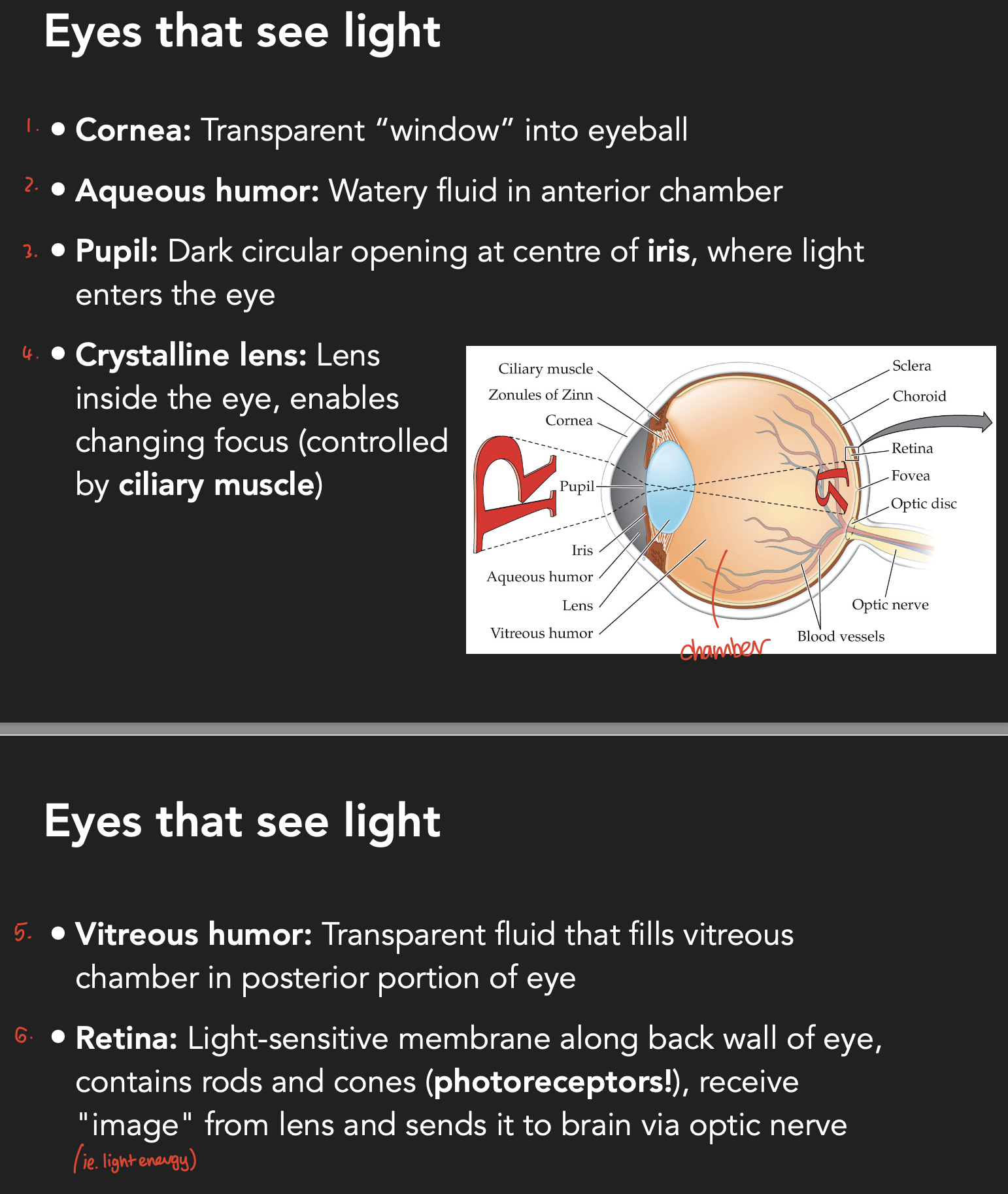
Explain how light enters the eye.
Define tapetum.
Reflective tissue in the back of some animals’ retina that allows the light to go through the retina one more time (in case some light wasn’t absorbed the first time).
What is the purpose of refraction?
It is necessary to focus light rays onto the retina.
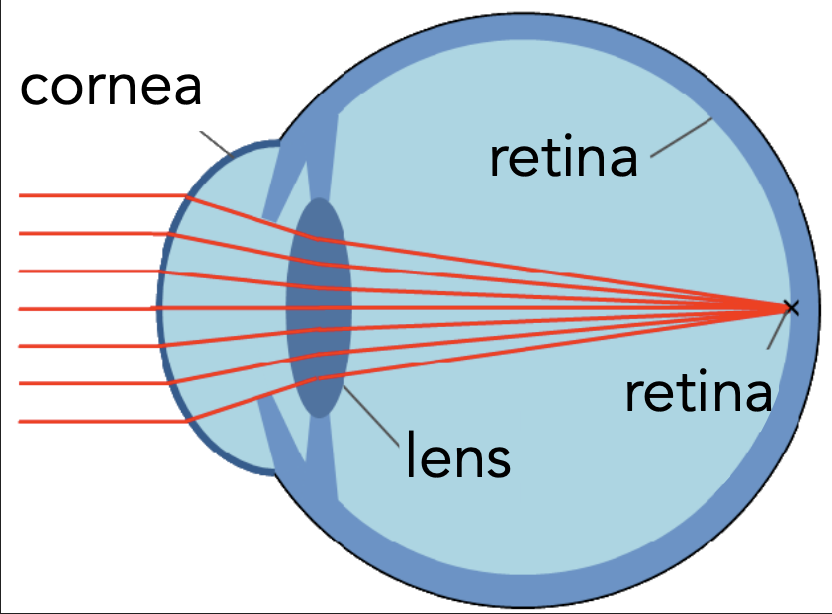
Where is refraction strongest?

Define accommodation.
*the lens changes its shape via extension or contraction of the ciliary muscles in our eyes.

Why is accommodation important in vision?
It allows us to focus on objects at different depths.
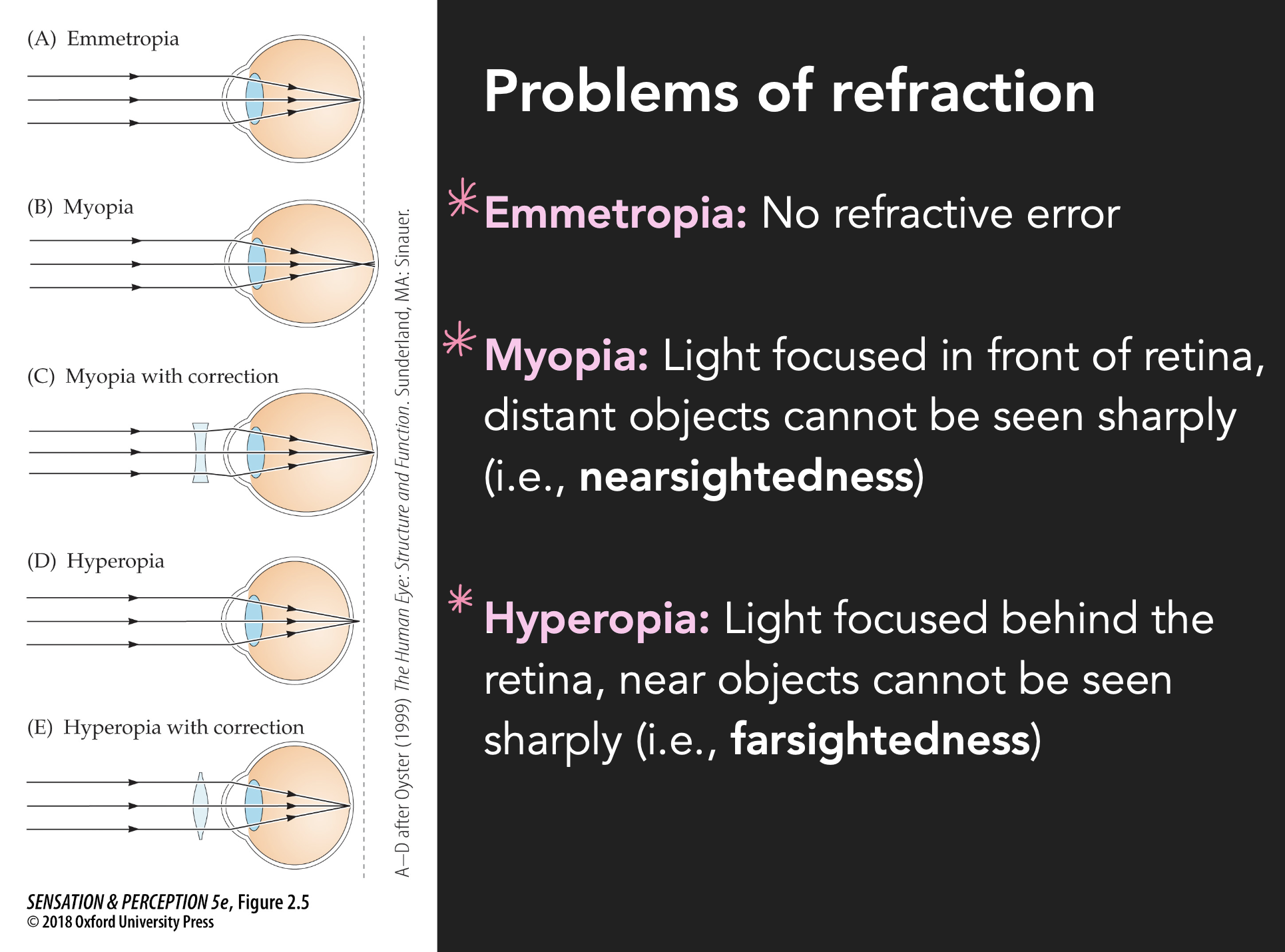
What vision problems arise when people’s eyes cannot refract light properly?
Emmetropia
Myopia
Hyperopia
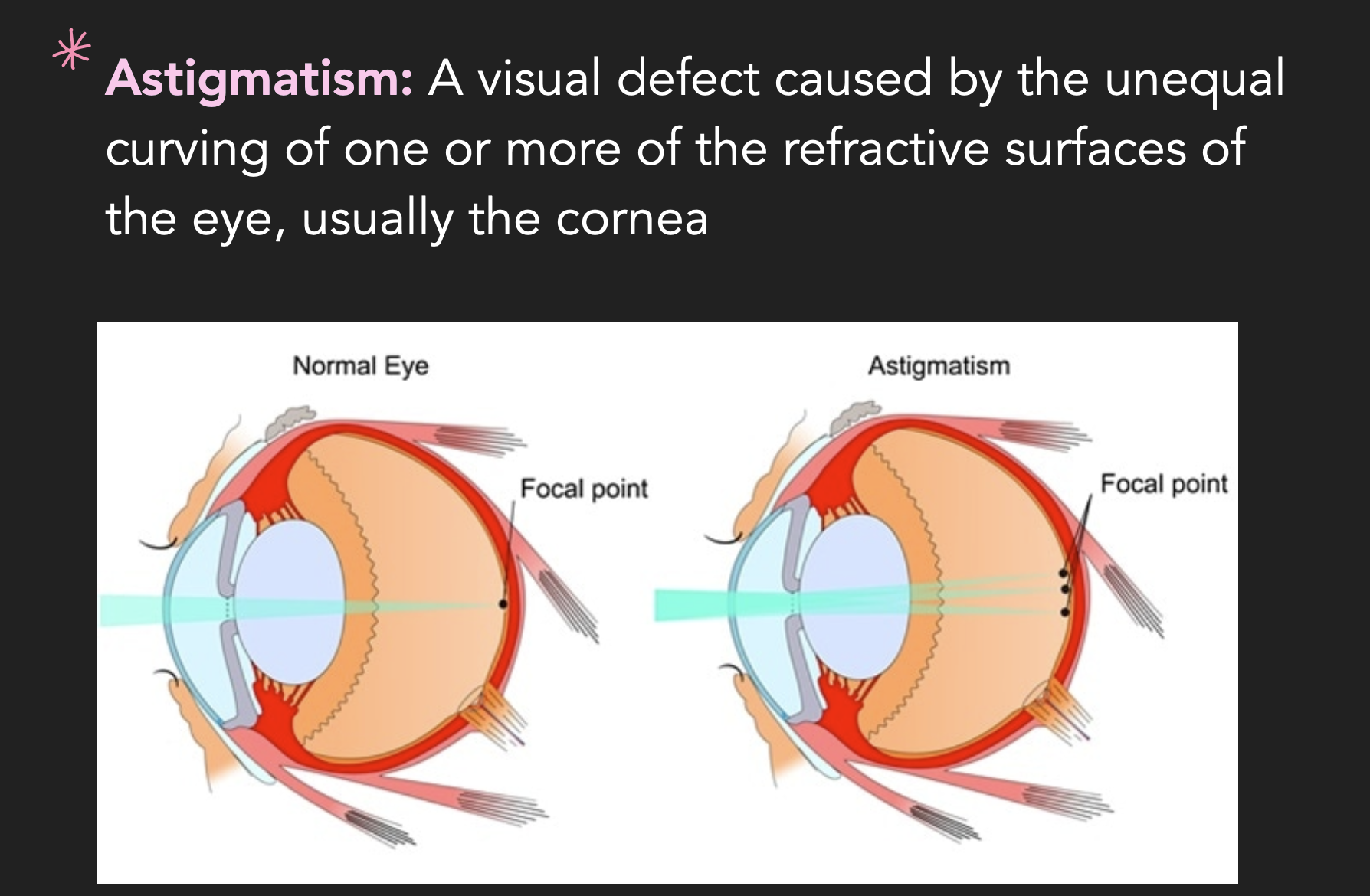
Astigmatism
Define emmetropia, myopia and hyperopia.
Define astigmatism.
Define cataracts.
Define presbyopia.
*different from hyperopia because of this occurs due to old age where lens hardens (so lens unable to accommodate to nearby objects). However, hyperopia is a defect in refractive ability
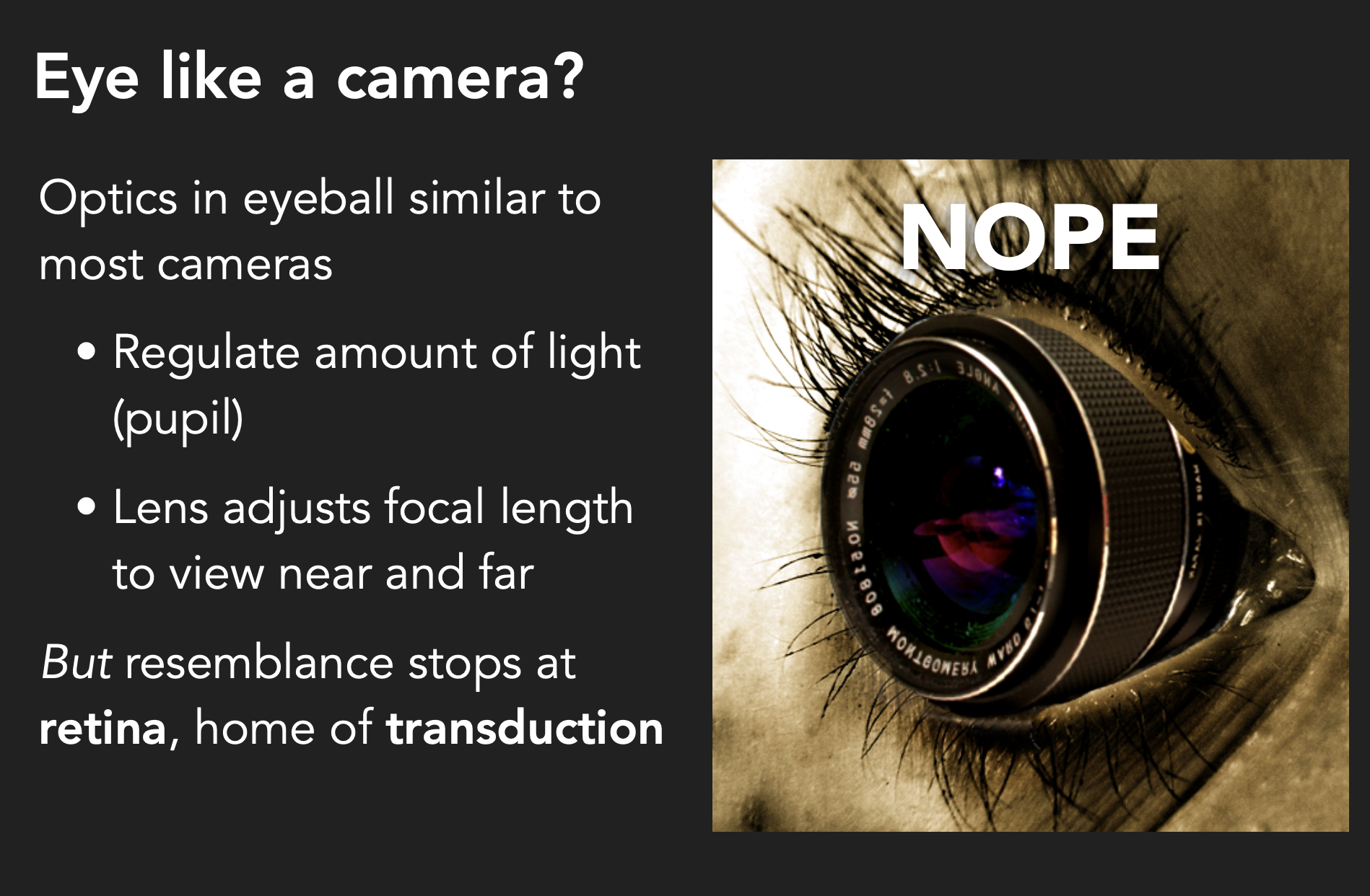
Are our eyes like camera’s? Explain the similarities and differences.
*home of transduction means transduction occurs in the retina—which is very cool and camera’s do not do that.
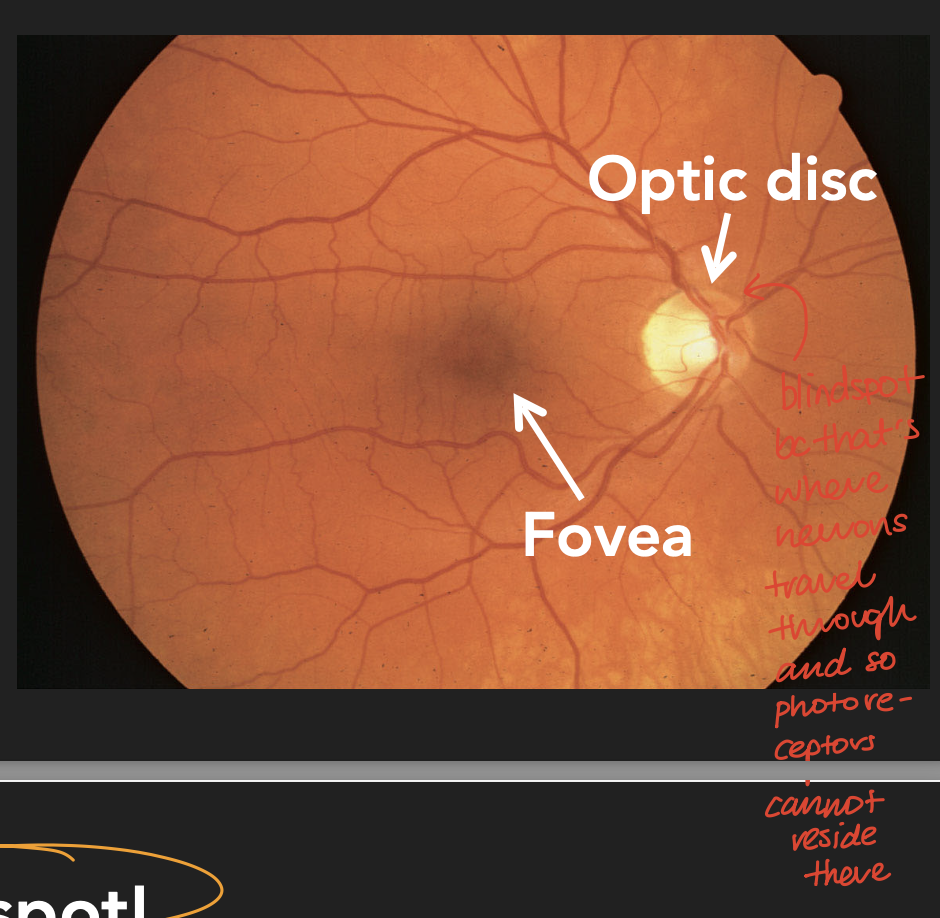
Define fundus.
Back surface of the eye.
Why is the optic disc our ‘blindspot’?
How does light move through the retina?
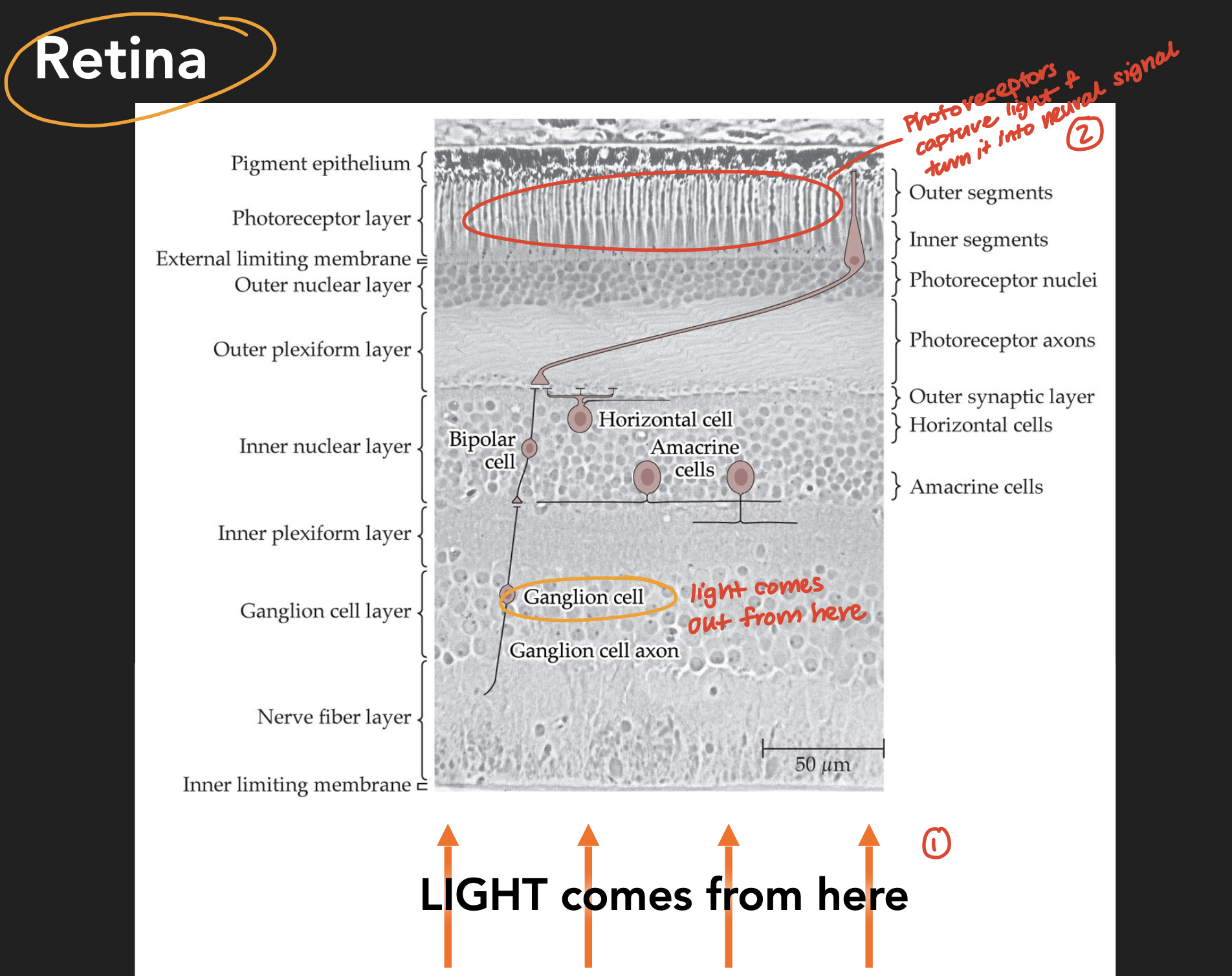
Define photoreceptors.

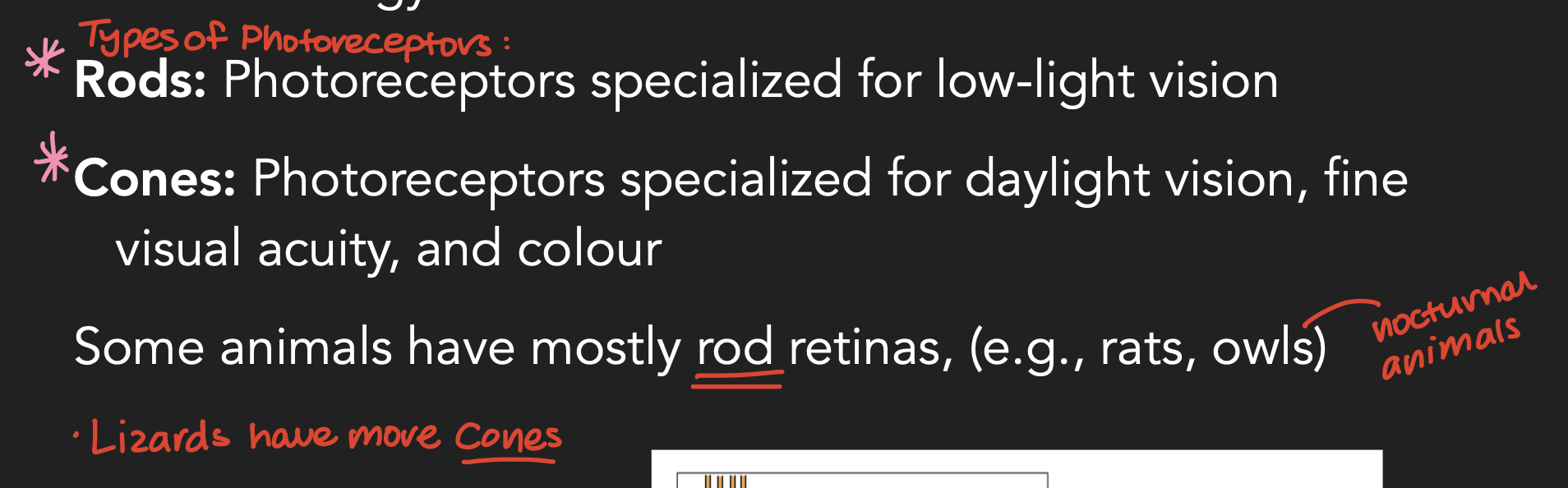
What are the different types of photoreceptors? Define both.
How does light travel through our rods and cones?
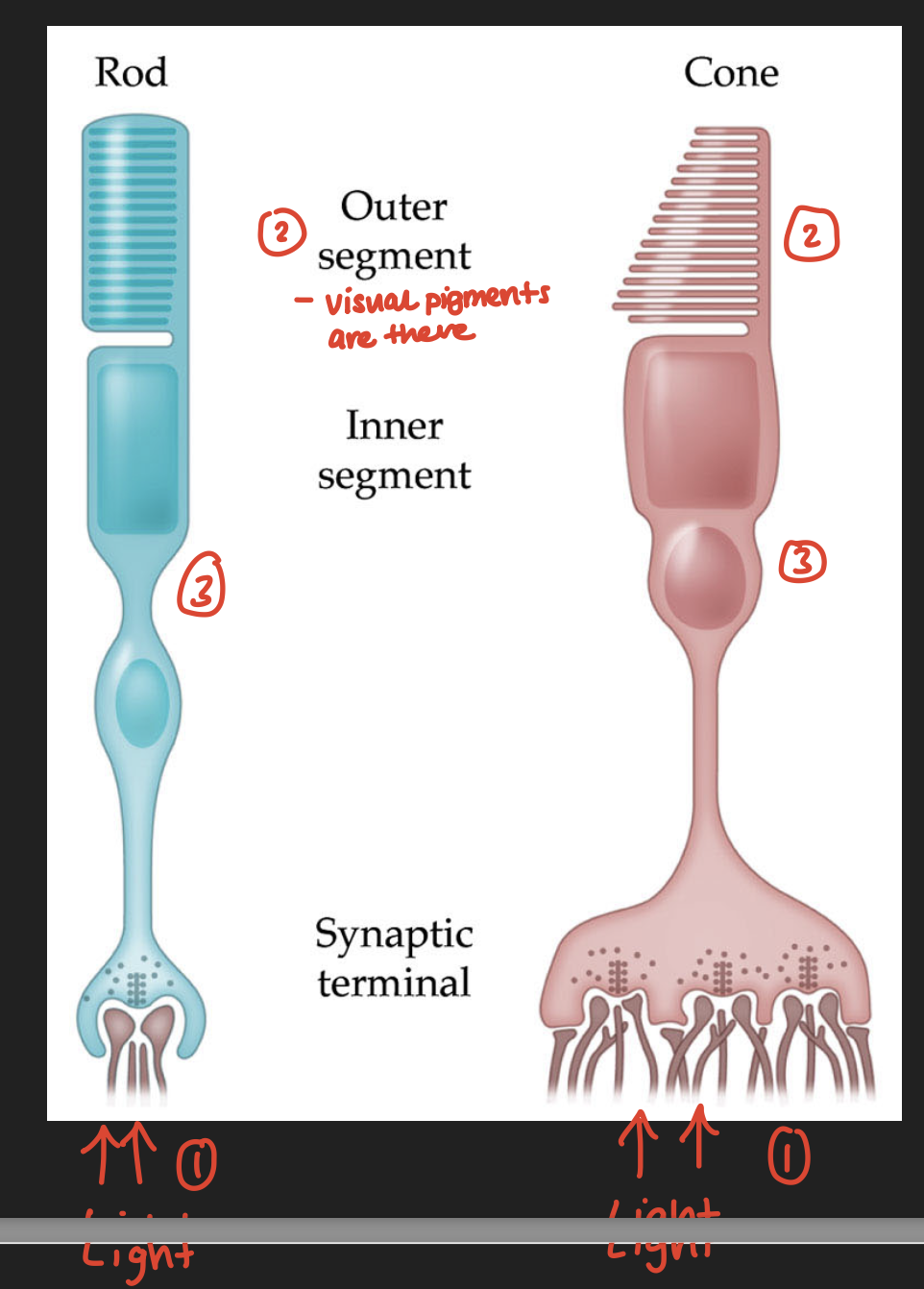
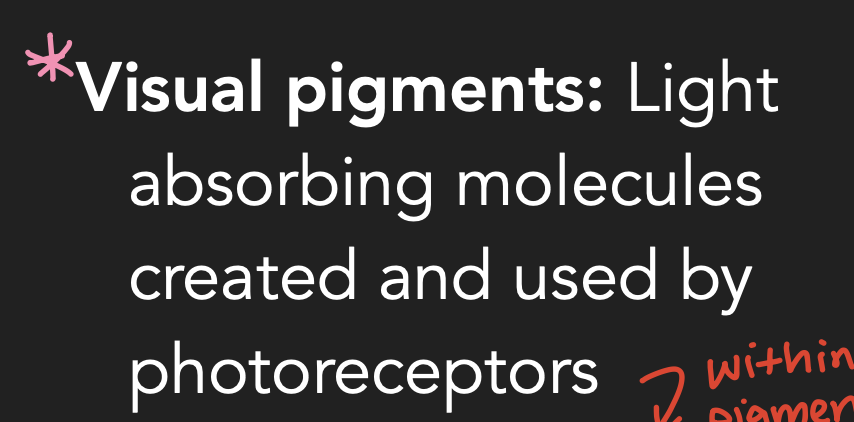
Define visual pigments. Where are they located?
They are located in the outer segment of our rods and cones.
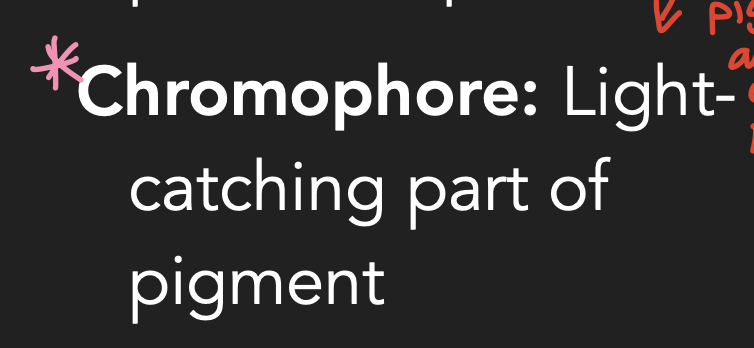
Define chromophore. Where are they located?
They are located in pigments.
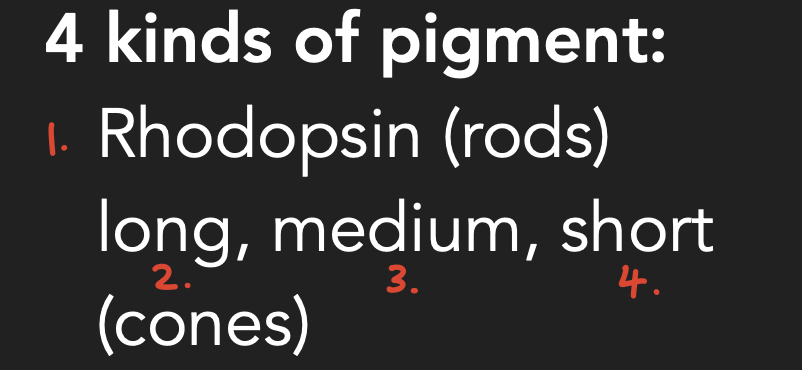
What are the 4 types of pigments?
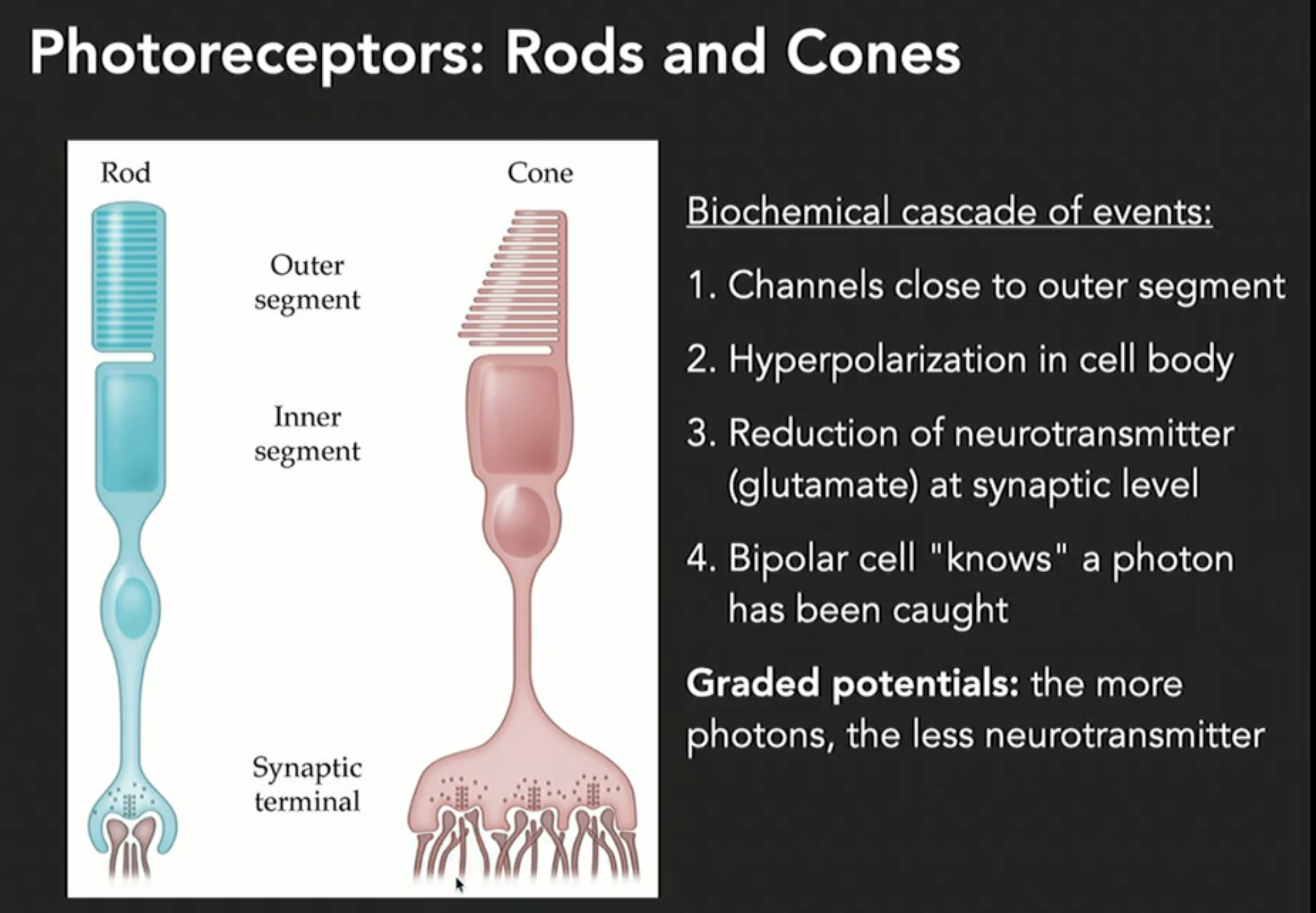
Explain the biochemical cascade of events in photoreceptors (ie., rods and cones).
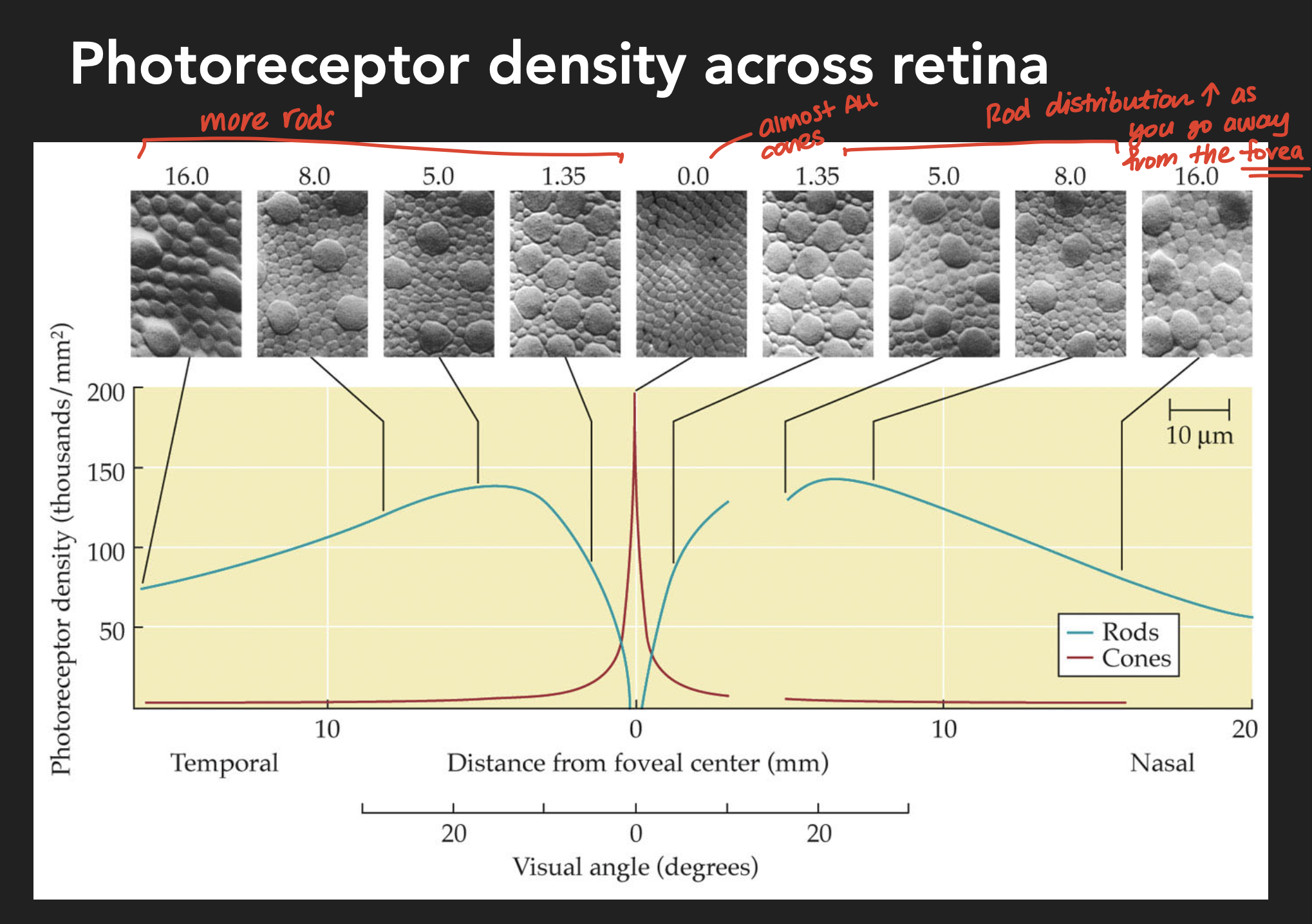
Explain the photoreceptor density across the retina.
*the gap is where the optic disc is located (where there are no photoreceptors)
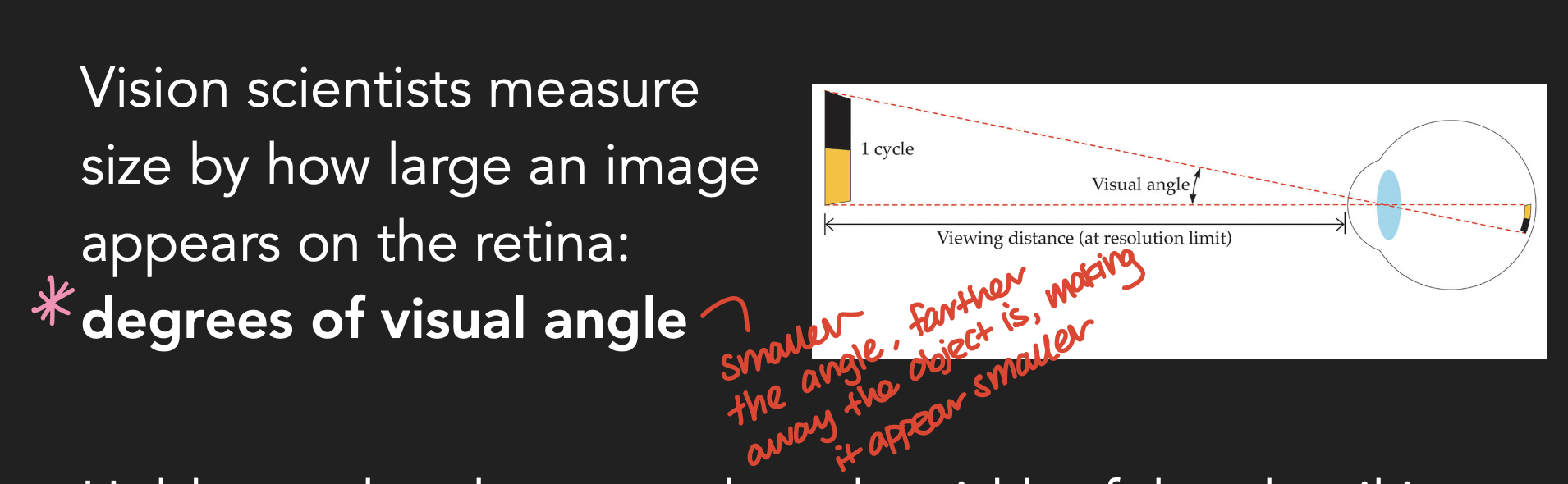
How do vision scientists measure how large an image appears on the retina?
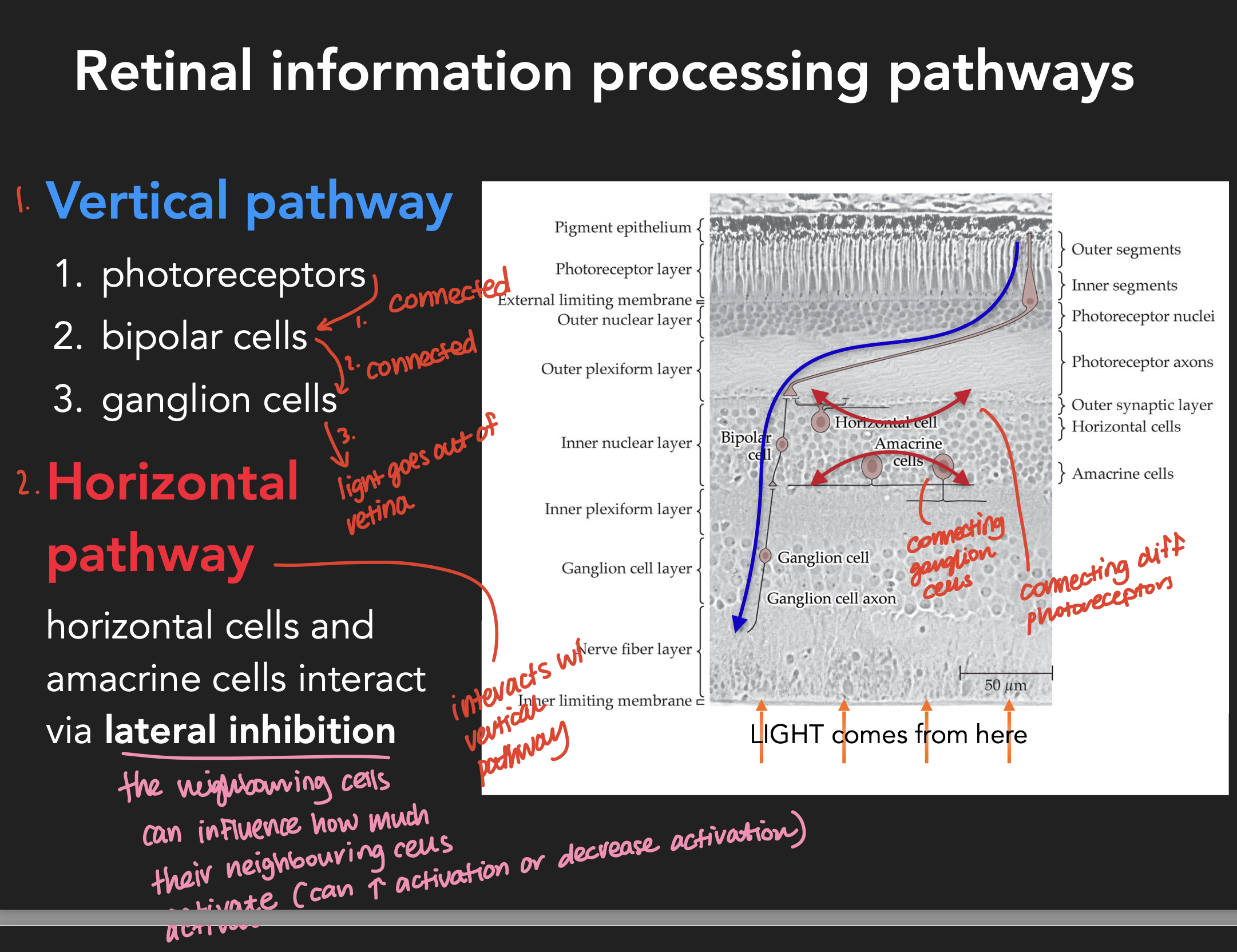
Explain the retinal information processing pathways.
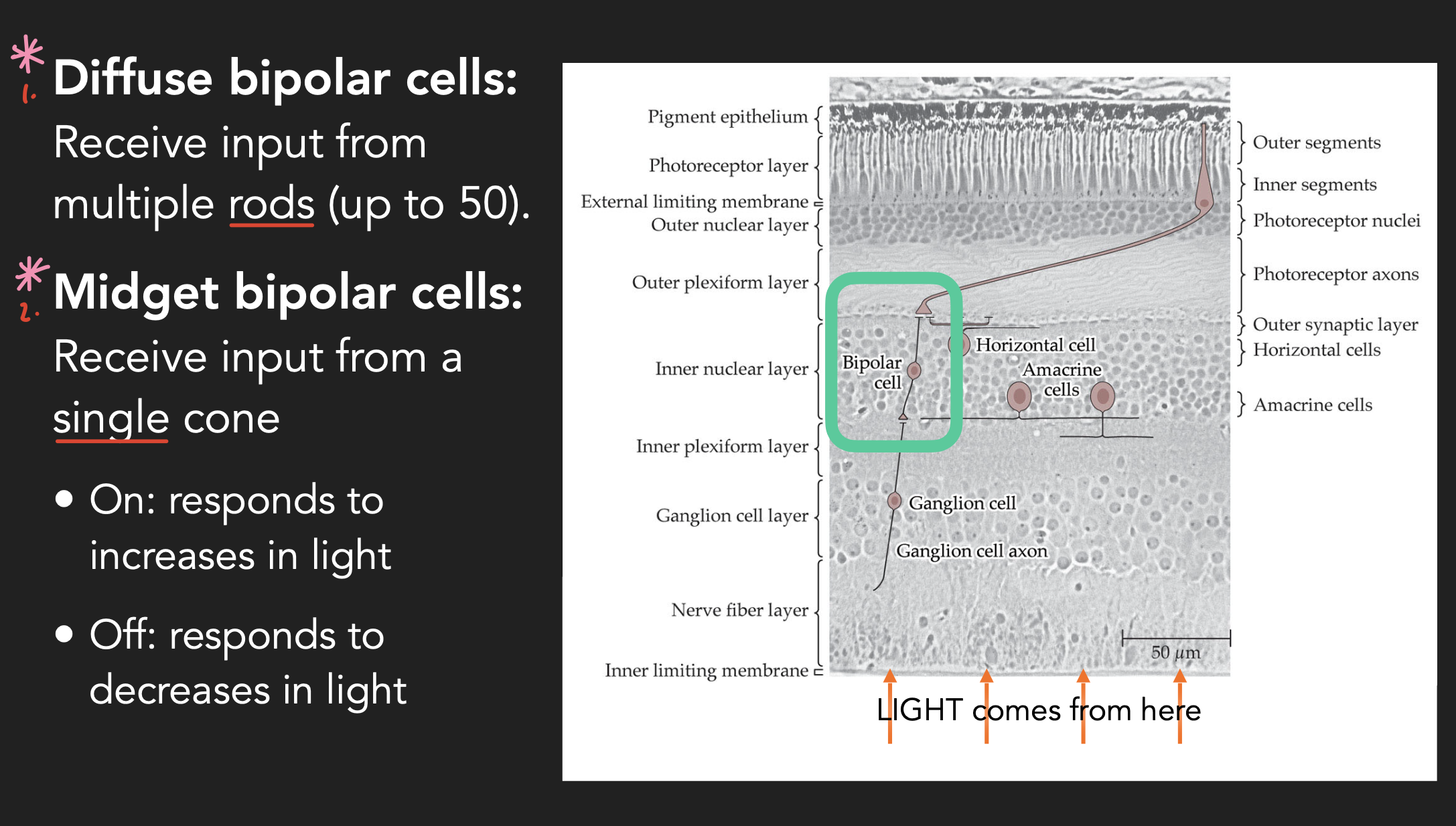
What are the 2 types of retinal bipolar cells? Define both.
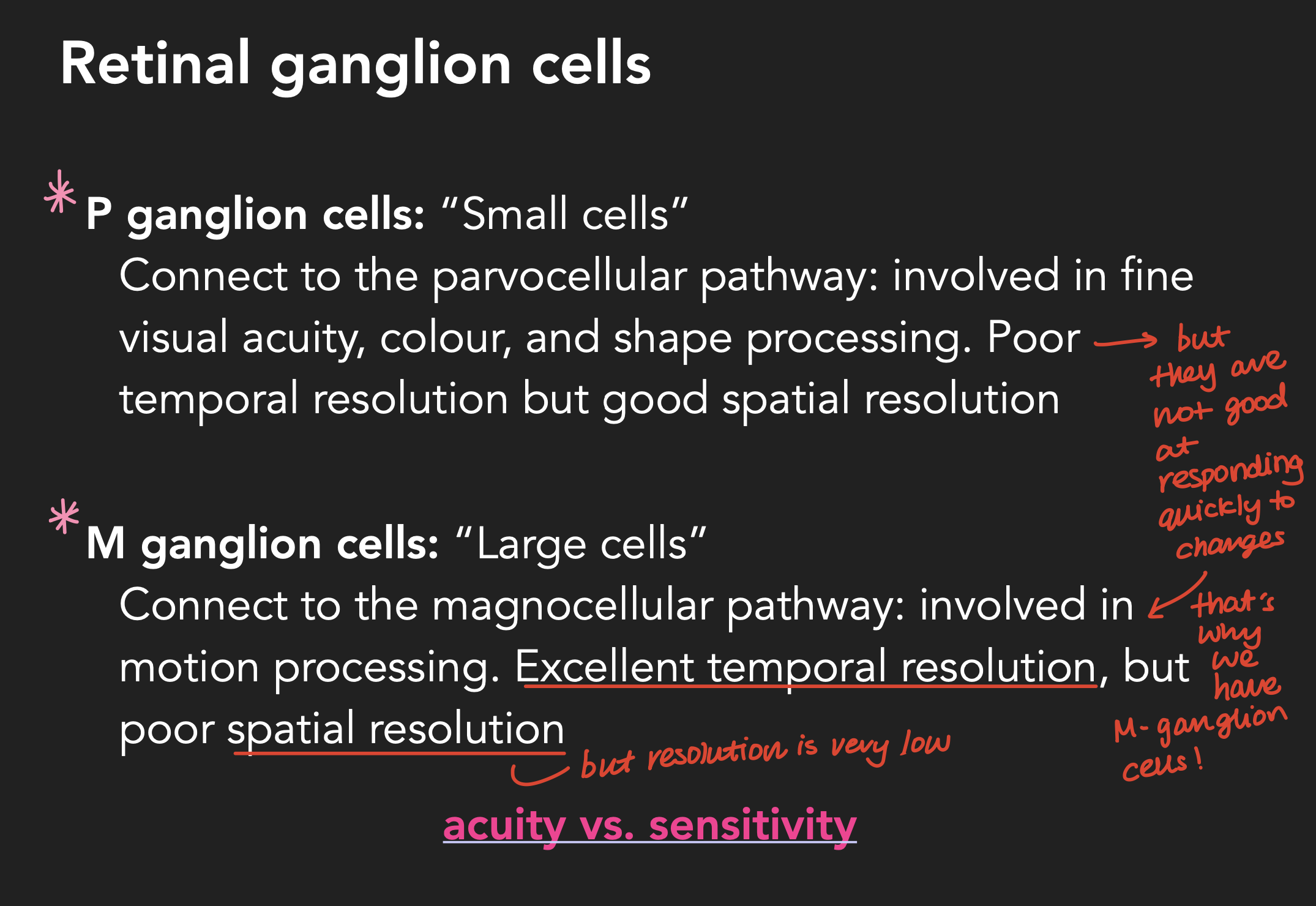
What are the 2 types of ganglion cells? Define both.
P ganglion cells - gives you good information on where things are located in space (spatio), but do not respond quickly to changes (temporo)
M ganglion cells - are the opposite
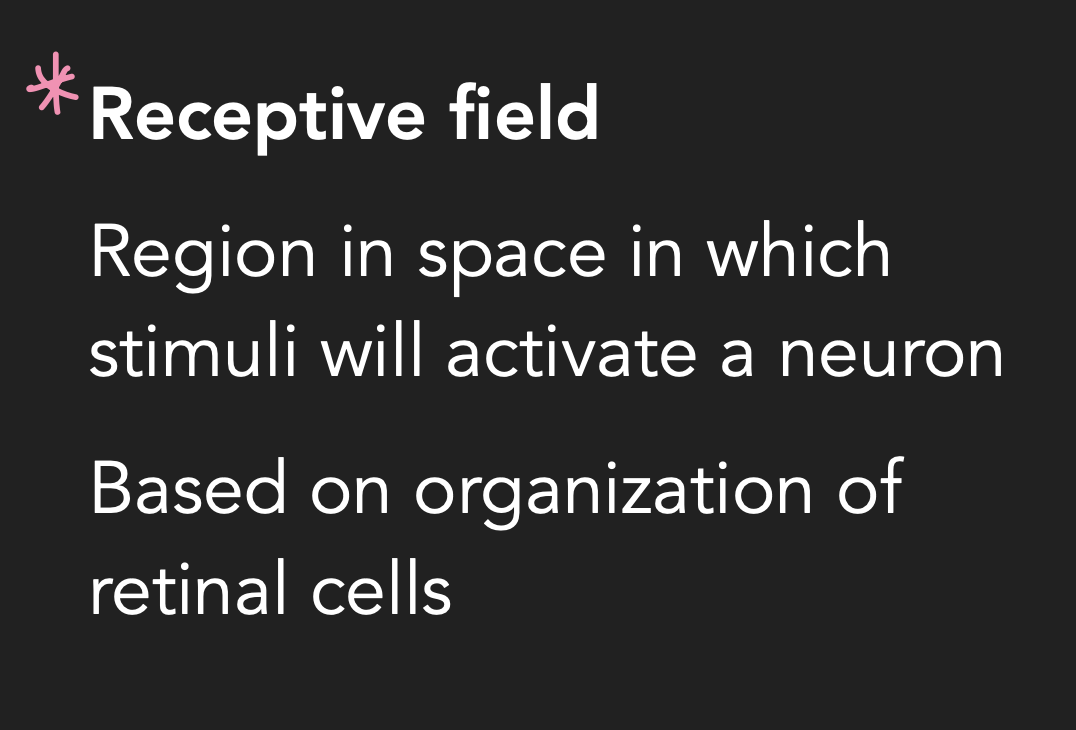
Define receptive field.
Explain what on-centre ganglion cells are.
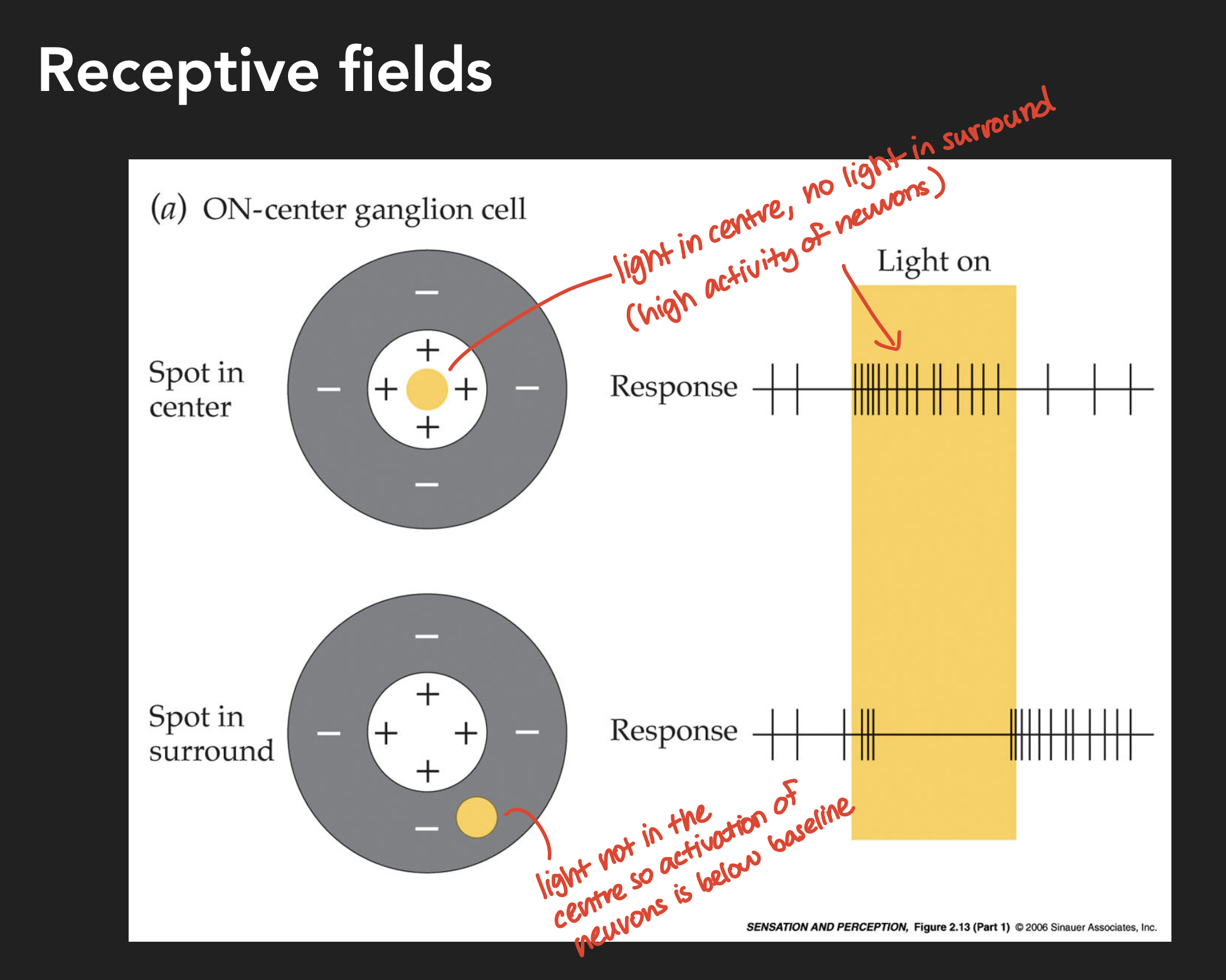
Explain what off-centre ganglion cells are.
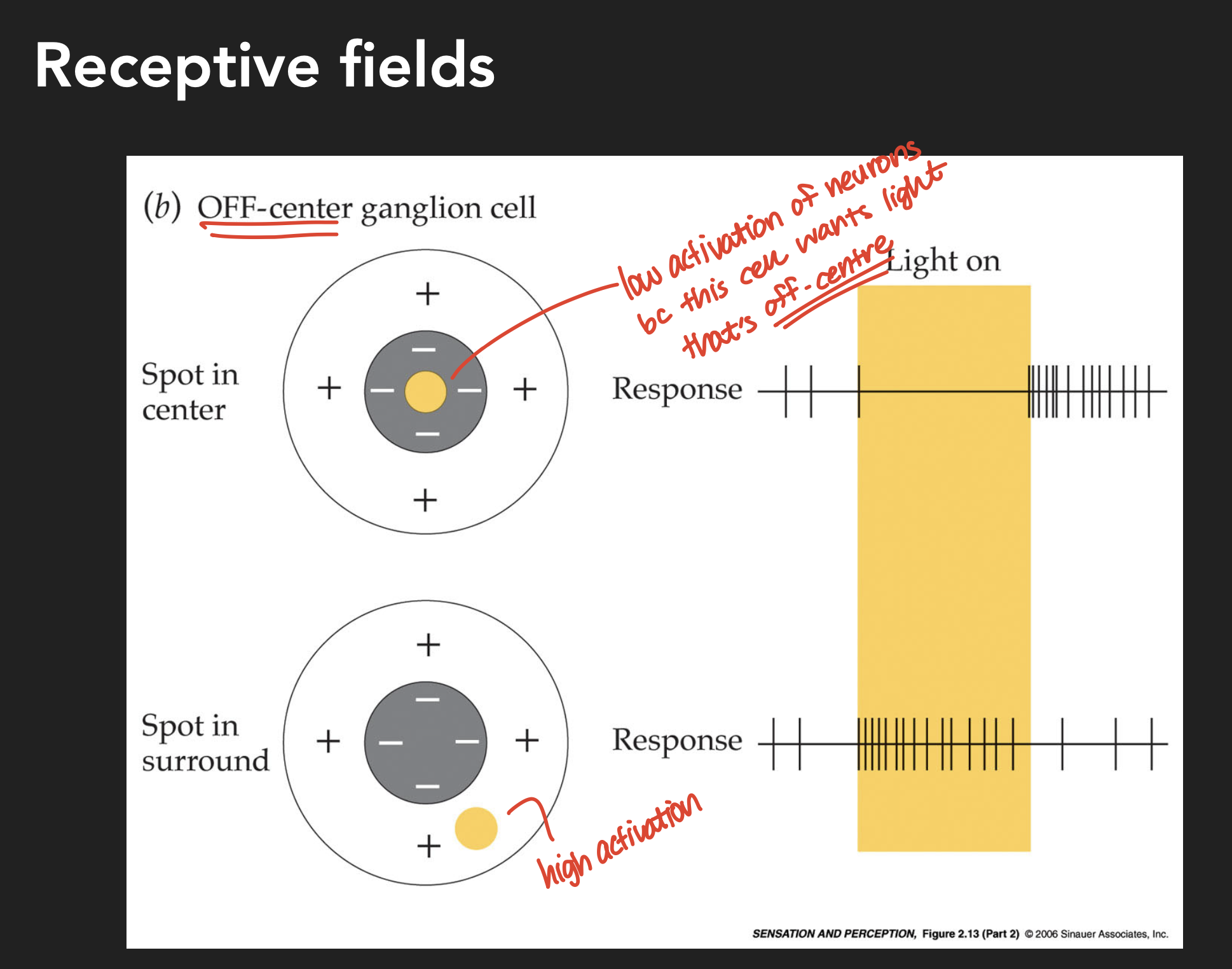
What are some reasons why our eyes are not bothered by different light levels in our environment?
Pupil dilation (expands in darkness to allow more light in, constricts in brightness to limit light coming in)
Rods (sensitive to low lighting, and responds slowly—so needs little energy—about 1 photon)
Cones (sensitive to bright lighting, but fast and so needs more energy in order to respond—about 10 photons/sec)
Wiring of ganglion cells (allows the relative light activity to be reported—taking centre and surround activation into account)
Define retinitis pigmentosa.
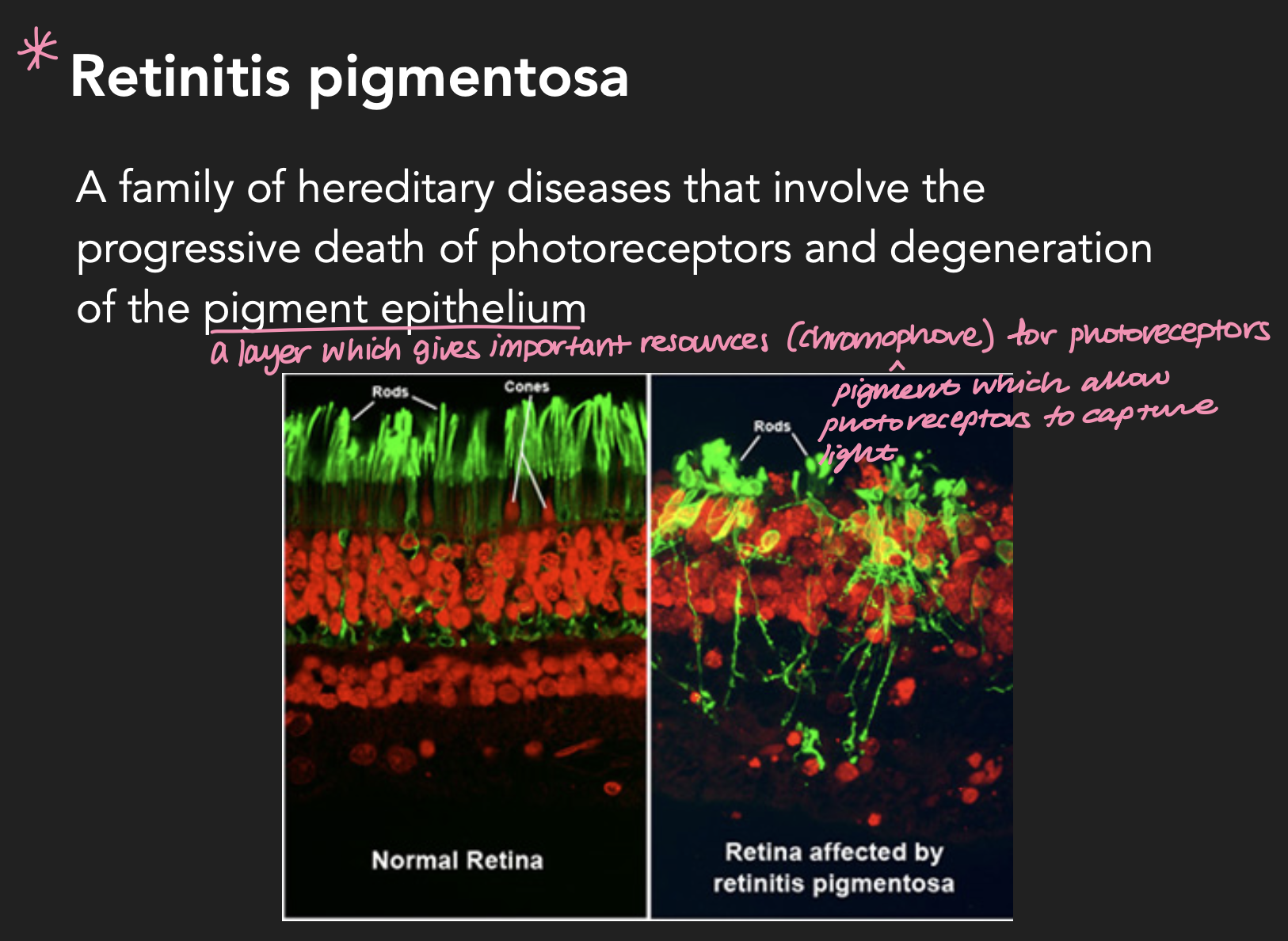
What happens to the vision of those with retinitis pigmentosa?
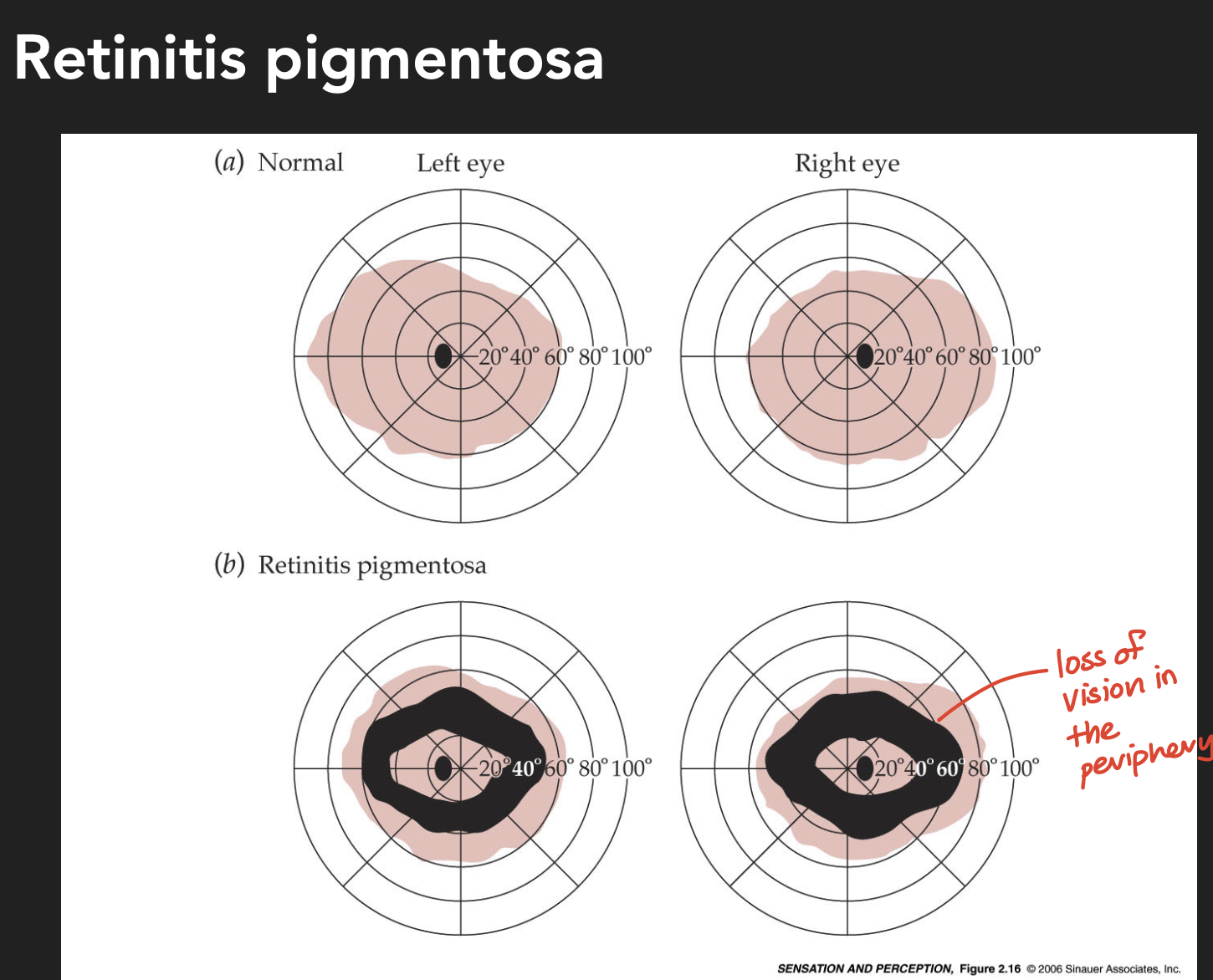
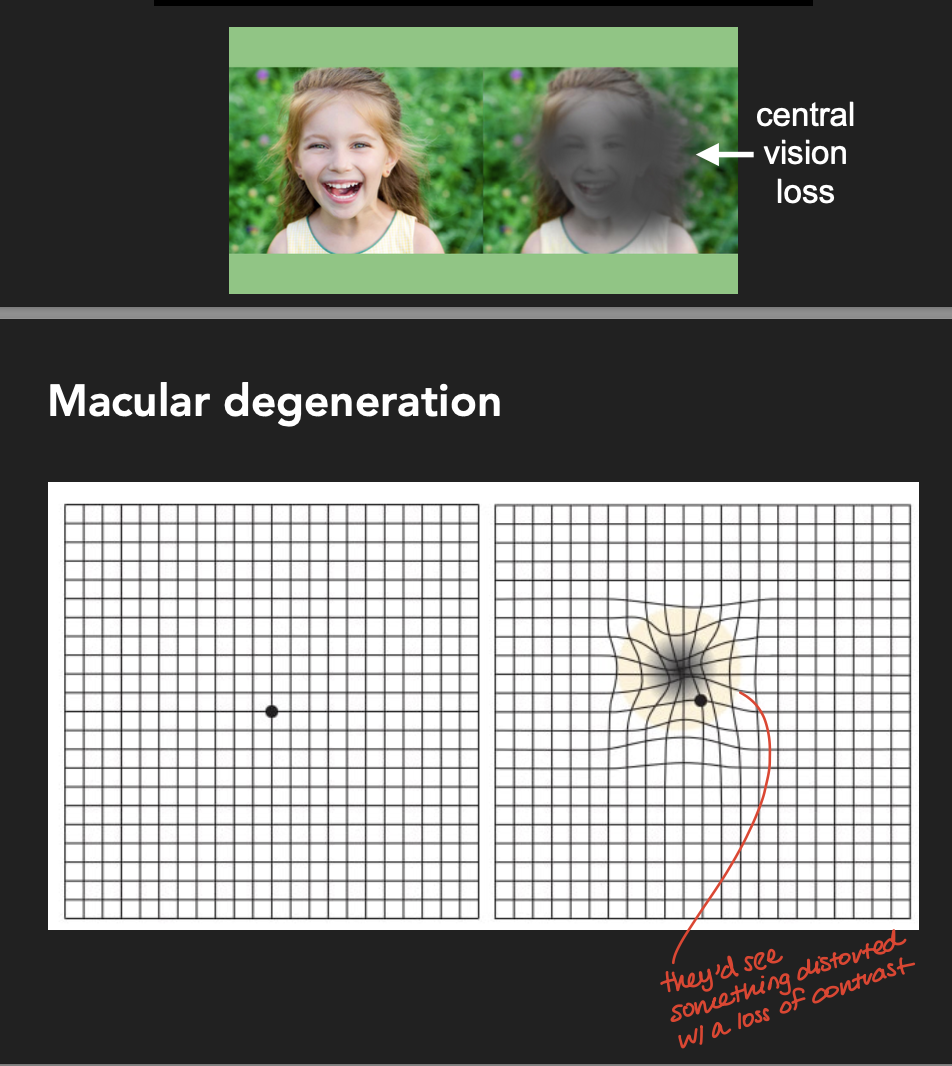
Define macular degeneration.
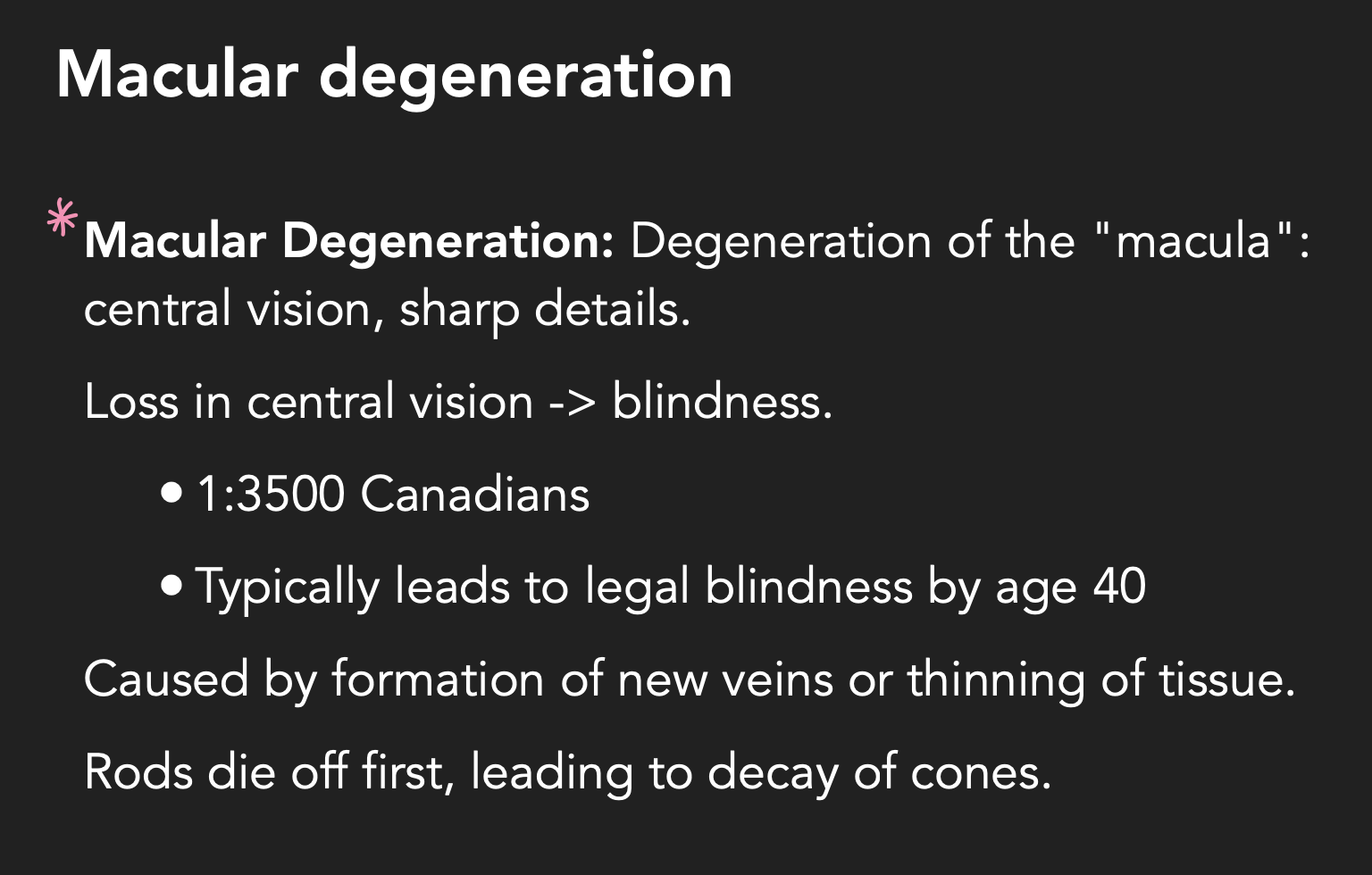
What do people with macular degeneration see?