Non-Vascular Interventional Procedures
 Call Kai
 Learn
Learn Practice Test
 Spaced Repetition
 Match
Match Flashcards
 Knowt Play
1/19

There's no tags or description
Looks like no tags are added yet.
Name | Mastery | Learn | Test | Matching | Spaced | Call with Kai |
|---|
No analytics yet
Send a link to your students to track their progress
20 Terms
What is a PBD?
percutaneous biliary drainage
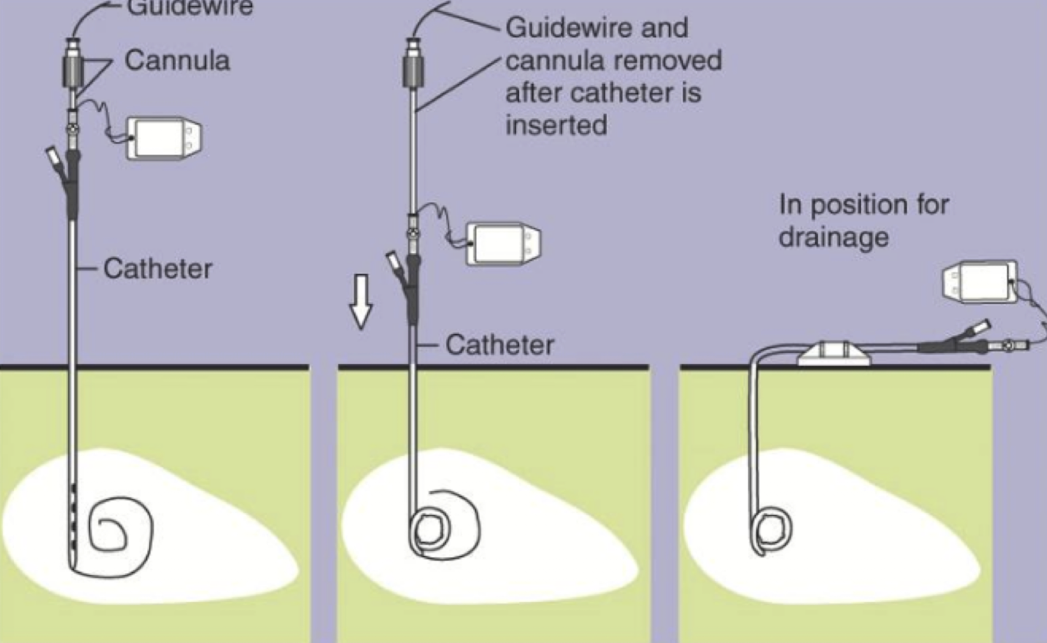
Uses/Clinical indications: percutaneous biliary drainage (PBD)
palliative procedure for unresectable malignant disease
stone removal
internal/external drainage
dilation of obstructed bile duct
biopsy
Steps: percutaneous biliary drainage (PBD)
small incision in skin of abdomen + thin needle passed through and advanced into bile duct using fluoro
contrast injected into bile duct
guidewire and catheter advanced into bile duct
drain inserted so bile can drain into 1 of 2 spaces
externally
internally into duodenum
What is a PAD?
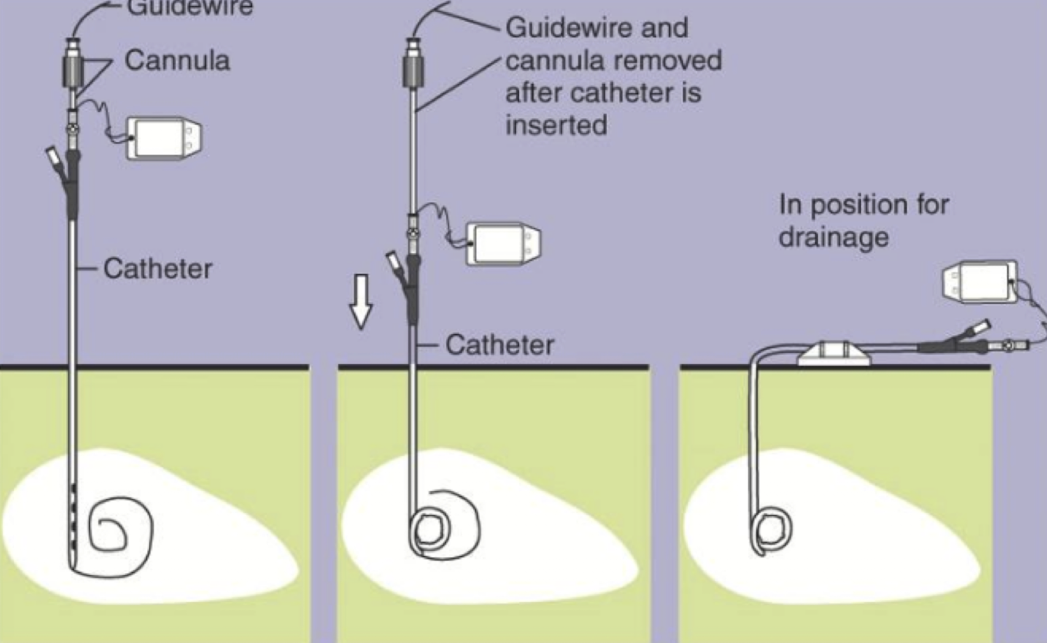
percutaneous abdominal abscess drainage
Uses/clinical indications: percutaneous abdominal abscess drainage (PAD)
when abd/pelvic abscesses cannot be readily treated with simple incision
when abscess in safe area for needle entry
Steps: percutaneous abdominal abscess drainage (PAD)
abscess is located within chest/abdomen/pelvis
needle guided with CT, ultrasound, or fluoro
small drainage catheter is left in place to drain the fluid
Why/how is ultrasound significant for a percutaneous abdominal abscess drainage (PAD)?
U/S allows for continuous monitoring & preferred for:
superficial abscesses
abscesses in solid material
abscesses not surrounded by bowel
What is the success rate for a percutaneous abdominal abscess drainage (PAD)?
80%
What interventional procedure is used to obtain cells/tissues from a lesion/organ for analysis/diagnosis?
percutaneous needle biopsy
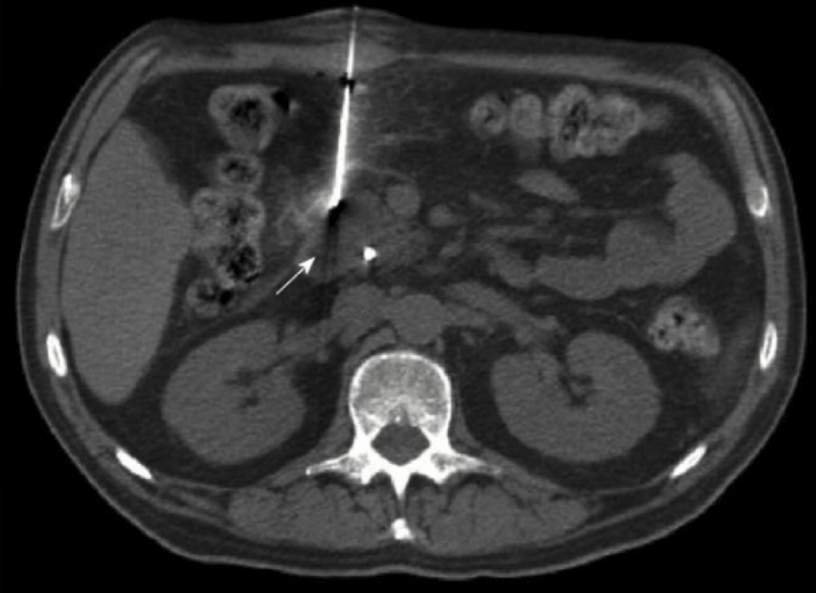
What is a percutaneous needle biopsy?
procedure where needle is inserted into suspected lesion/organ to obtain cells/tissues for analysis/diagnosis
for suspected primary/metastatic malignancy
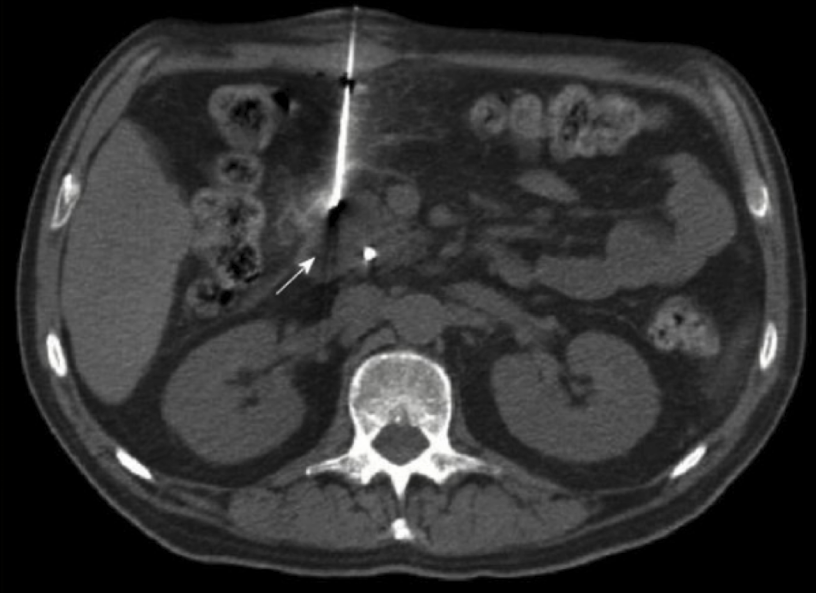
What modalities can be used to guide a percutaneous needle biopsy?
U/S, CT, fluoro
When is U/S used for a percutaneous needle biopsy?
When the lesions/organs of interest are
significantly different from adjacent structures
AND
not surrounded by gas/fat/calfcified structures
When is CT used for a percutaneous needle biopsy?
Used for small deep lesions
especially those surrounded by large vessels or bowel
When is fluoro used for a percutaneous needle biopsy?
Used for lesions with different radiopacity than surrounding tissues
pulmonary pleura
osseous lesions
lymph nodes filled with contrast
What minimally invasive interventional procedure is used to treat neoplastic disease?
radiofrequency ablation (RFA)
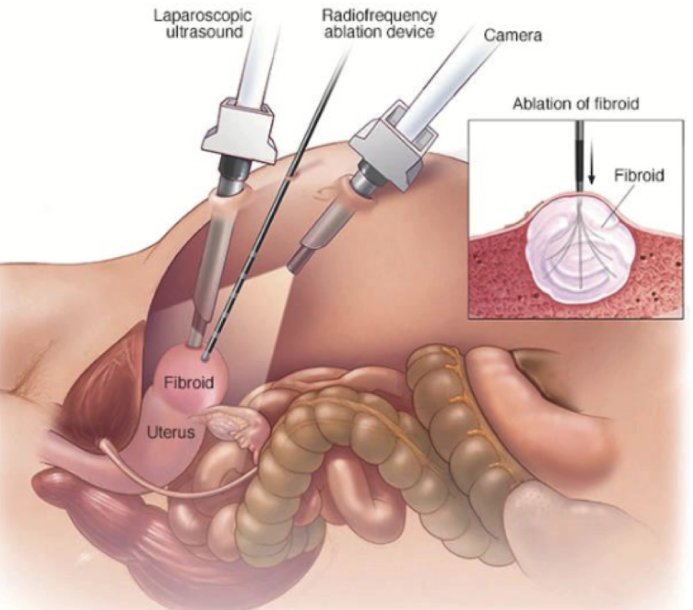
What is radiofrequency ablation (RFA)?
Minimally invasive interventional procedure used to treat neoplastic disease
uses sedation or general anesthesia
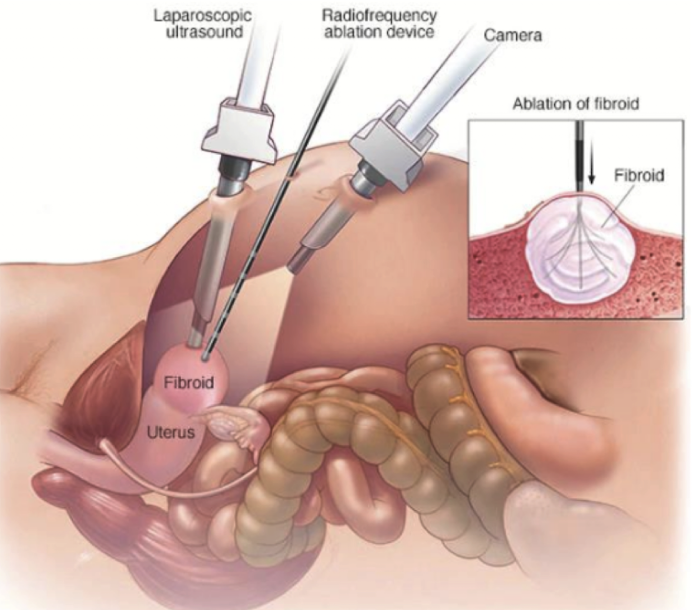
What specific kinds of neoplasms is radiofrequency ablation (RFA) used for?
Certain
liver
kidney
bone
lung
soft tissue
tumors
Steps: radiofrequency ablation (RFA)
needle electrode placed into tumor
radiofrequency current passed through electrode
agitates ions in tissues
produces frictional heat
heat destroys tumor tissue
dead tumor cells become scar tissue that shrinks over time
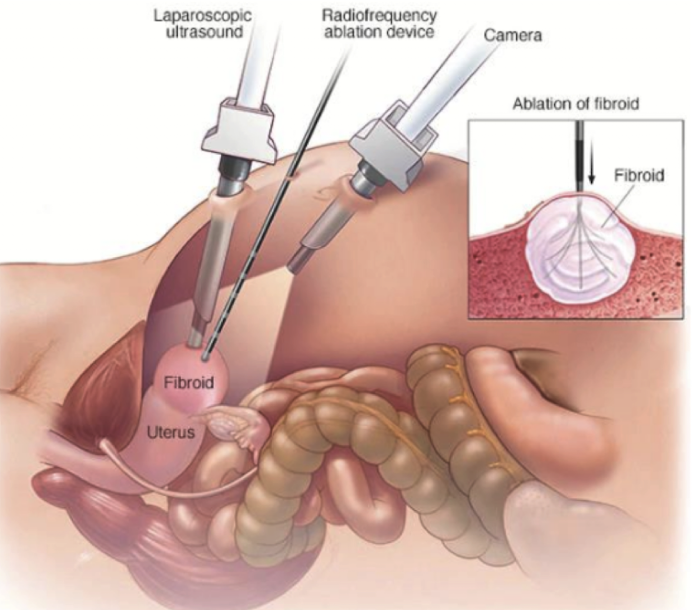
What PTs are candidates for radiofrequency ablation (RFA)?
PTs with disease not suitable for surgery
Risks: radiofrequency ablation (RFA)
depends on the site treated
hemorrhage (but the heat will cauterize small vessels thus reducing some risk)