Human Tissue Types and Structures: Histology, Classification, and Function
 Call Kai
 Learn
Learn Practice Test
 Spaced Repetition
 Match
Match Flashcards
 Knowt Play
1/26

There's no tags or description
Looks like no tags are added yet.
Name | Mastery | Learn | Test | Matching | Spaced | Call with Kai |
|---|
No analytics yet
Send a link to your students to track their progress
27 Terms
What is histology?
The study of tissues.
What does a pathologist do?
Looks for tissue changes that indicate disease.
What are the four basic types of tissues?
Epithelial, Connective, Muscle, and Nerve Tissue.
What is the primary function of epithelial tissue?
Covers surfaces and lines hollow organs, cavities, and ducts.
What is connective tissue primarily composed of?
Material found between cells that supports and binds structures together.
What is the function of muscle tissue?
Cells shorten in length to produce movement.
What is the role of nerve tissue?
Conducts electrical signals and responds to changes inside and outside the body.
What are the general features of epithelial tissue?
Closely packed cells forming continuous sheets, avascular, and rapid cell division.
What is the basement membrane?
A structure that holds epithelial cells to connective tissue.
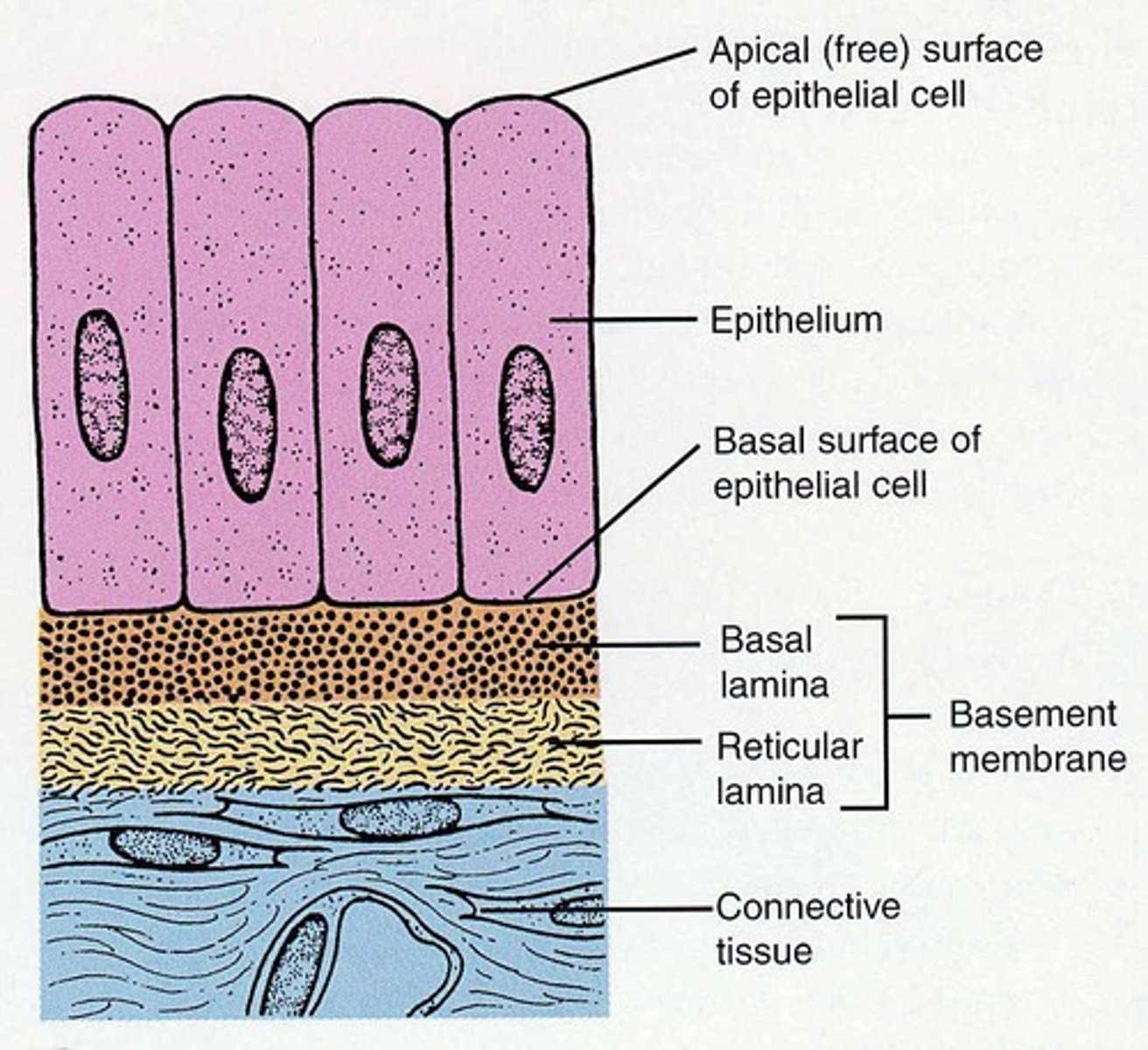
What are the two main types of epithelium?
Covering and lining epithelium, and glandular epithelium.
How is epithelium classified by arrangement?
Simple (one cell layer thick) and stratified (many cell layers thick).
What is pseudostratified epithelium?
A single layer of cells where not all cells reach the apical surface, appearing multilayered.
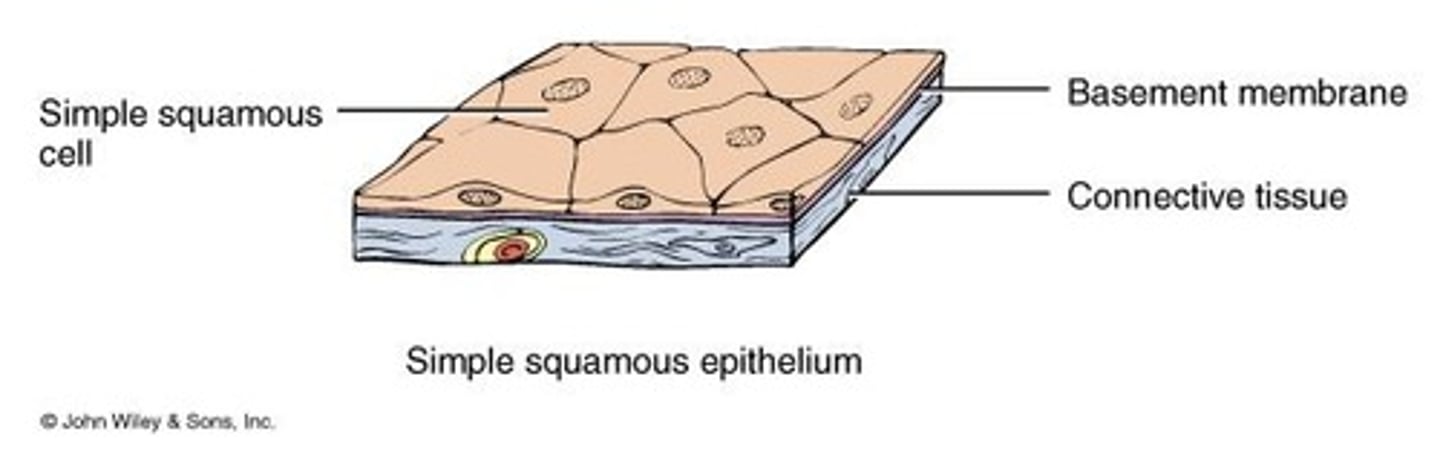
What is simple squamous epithelium?
A single layer of flat cells that lines blood vessels and body cavities.
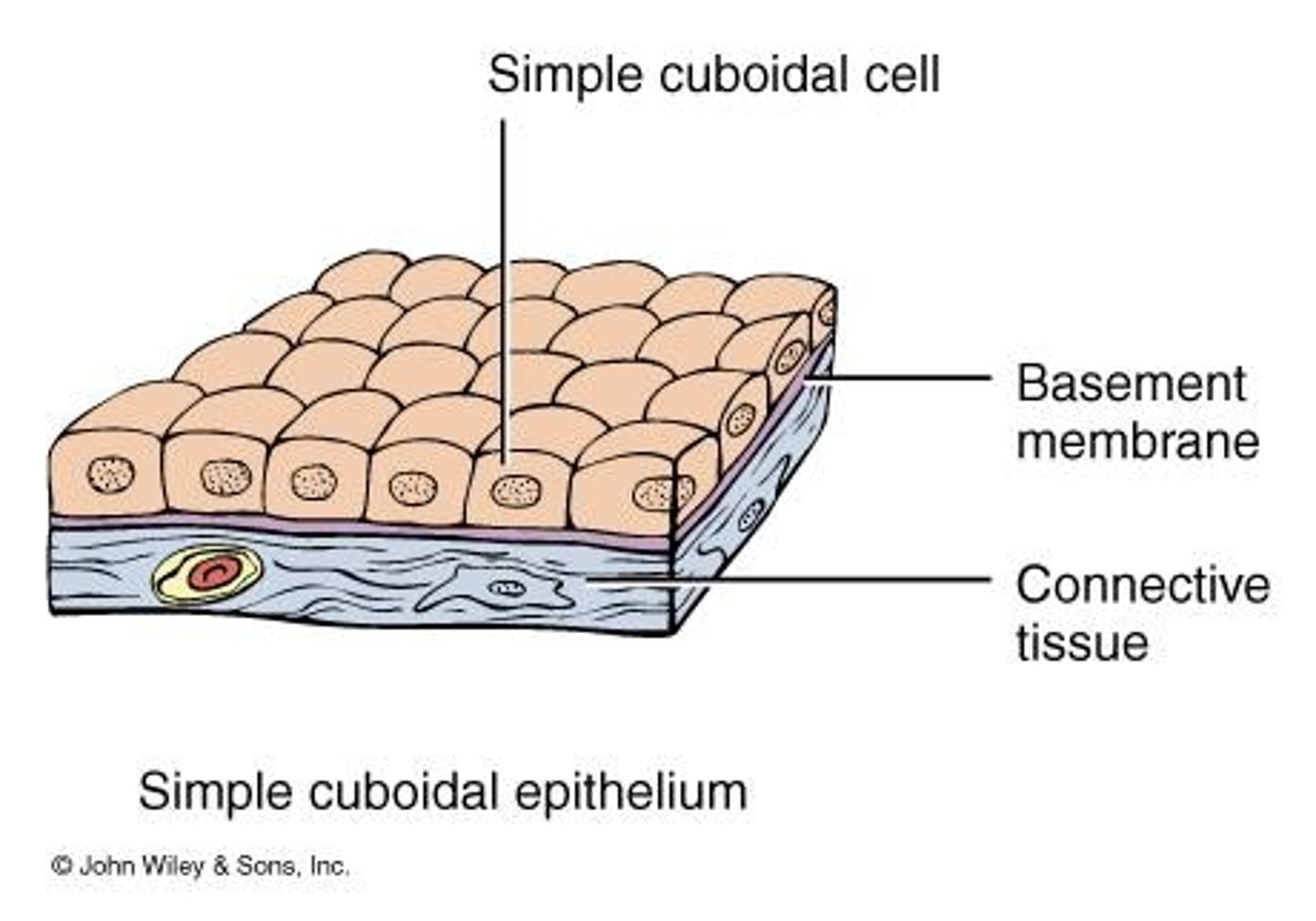
What is the function of simple cuboidal epithelium?
Lines tubes of the kidney and is involved in absorption or secretion.
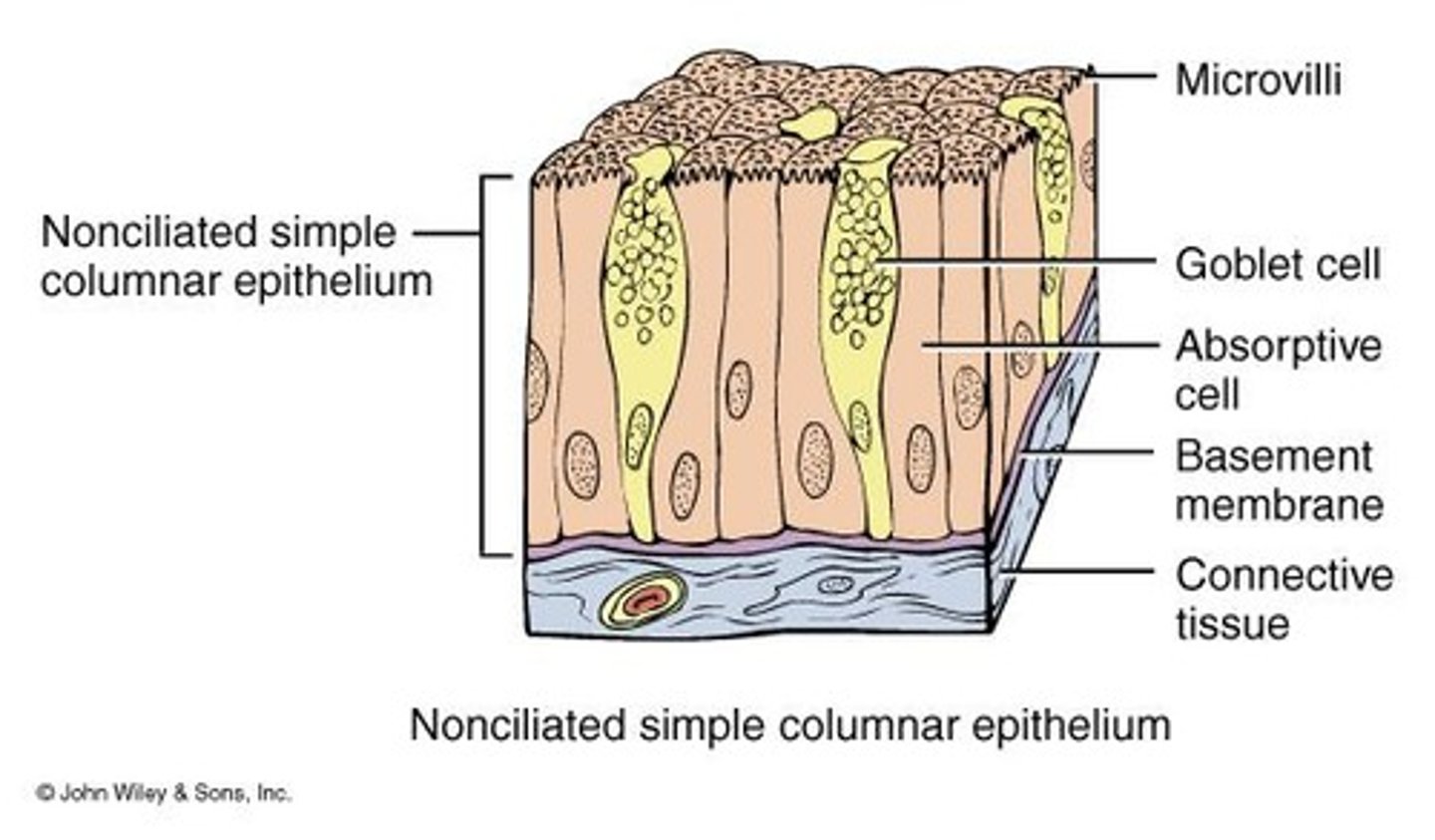
What are goblet cells?
Unicellular glands in simple columnar epithelium that secrete mucus.
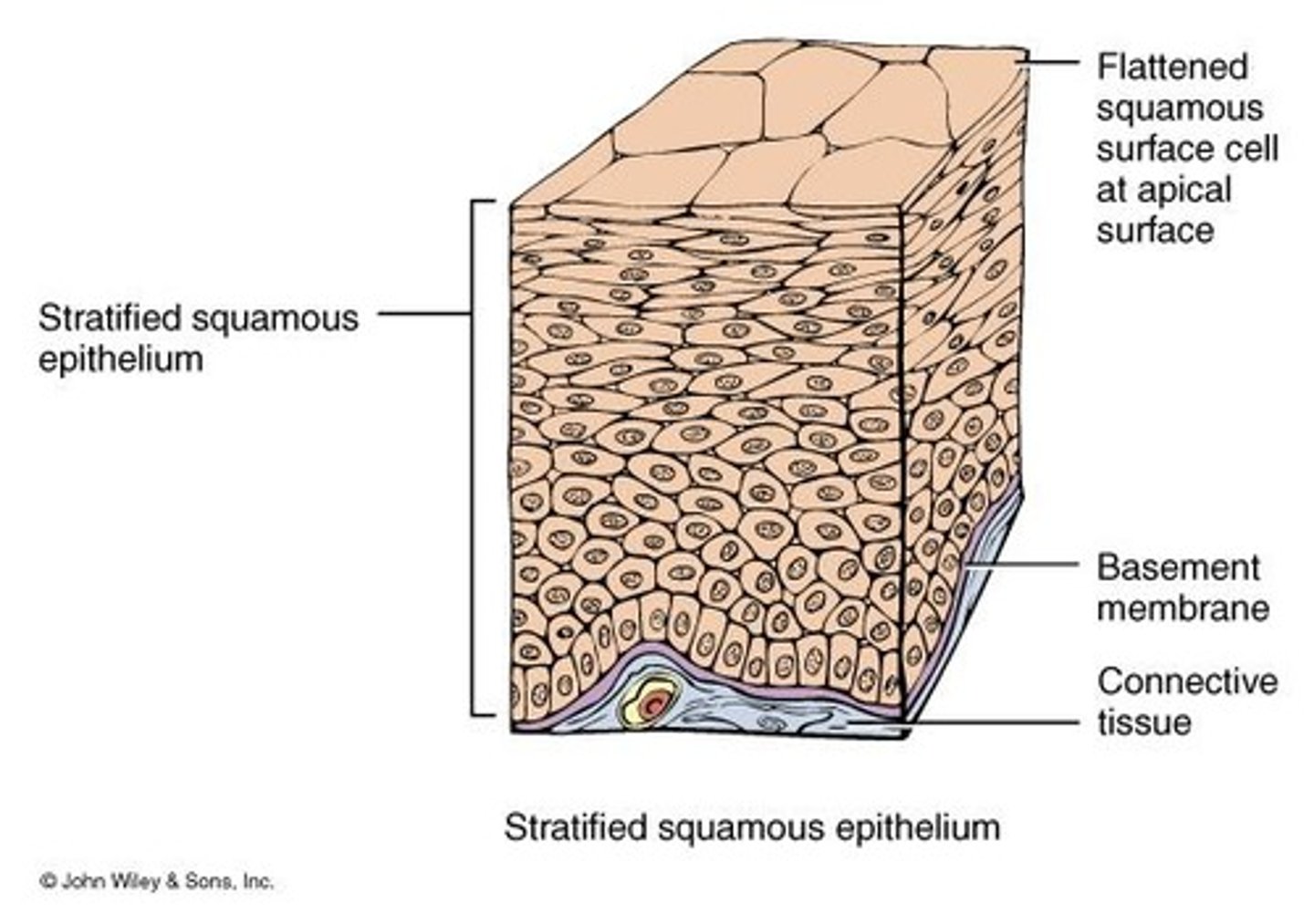
What is the difference between keratinized and nonkeratinized stratified squamous epithelium?
Keratinized has dead surface cells filled with keratin; nonkeratinized has living cells at the surface.
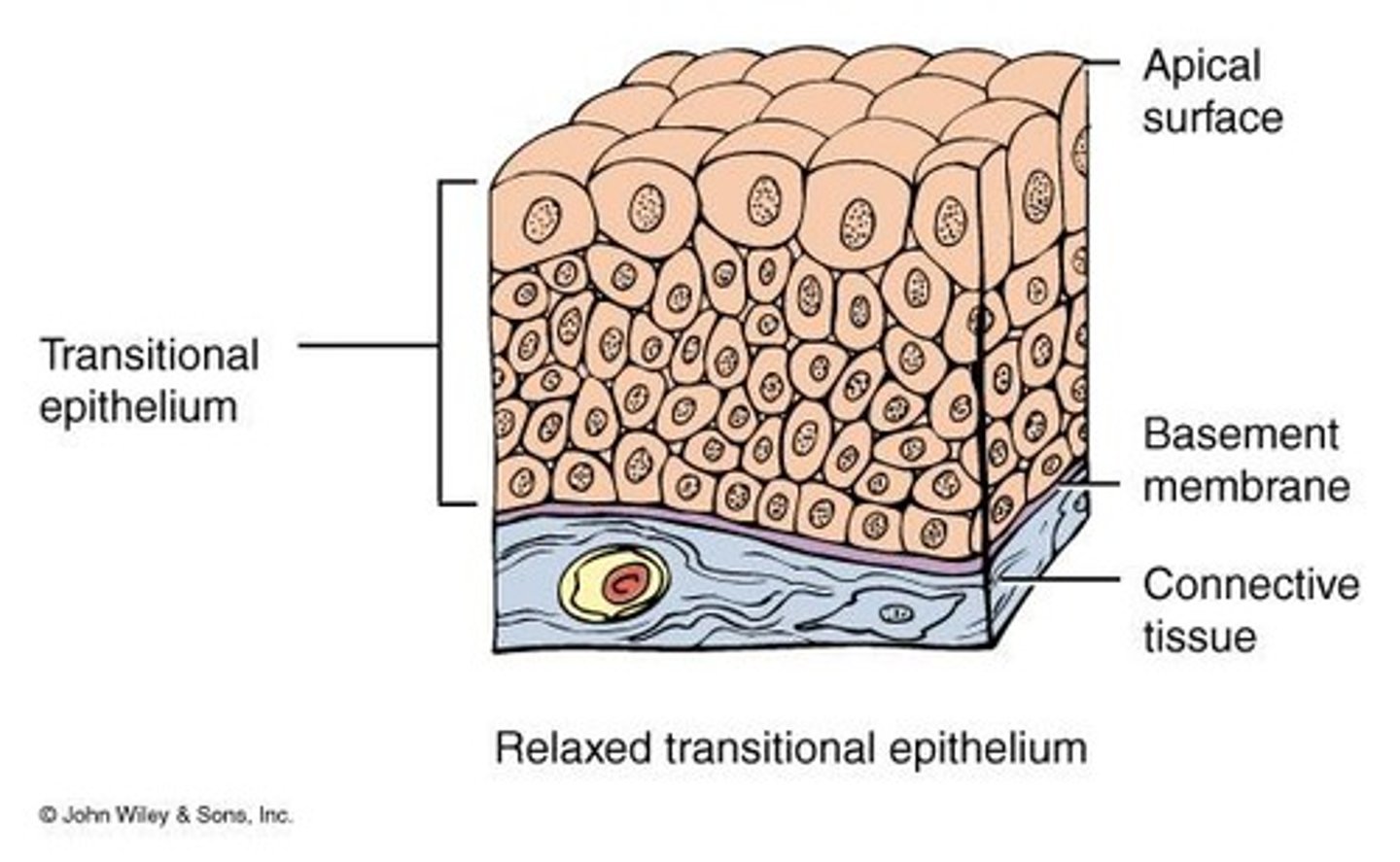
What is transitional epithelium?
Multilayered epithelium with surface cells that change shape, found in the urinary bladder.
What is the extracellular matrix in connective tissues?
A matrix of fibers and ground substance secreted by cells.
What are the types of connective tissue fibers?
Collagen, elastin, and reticular fibers.
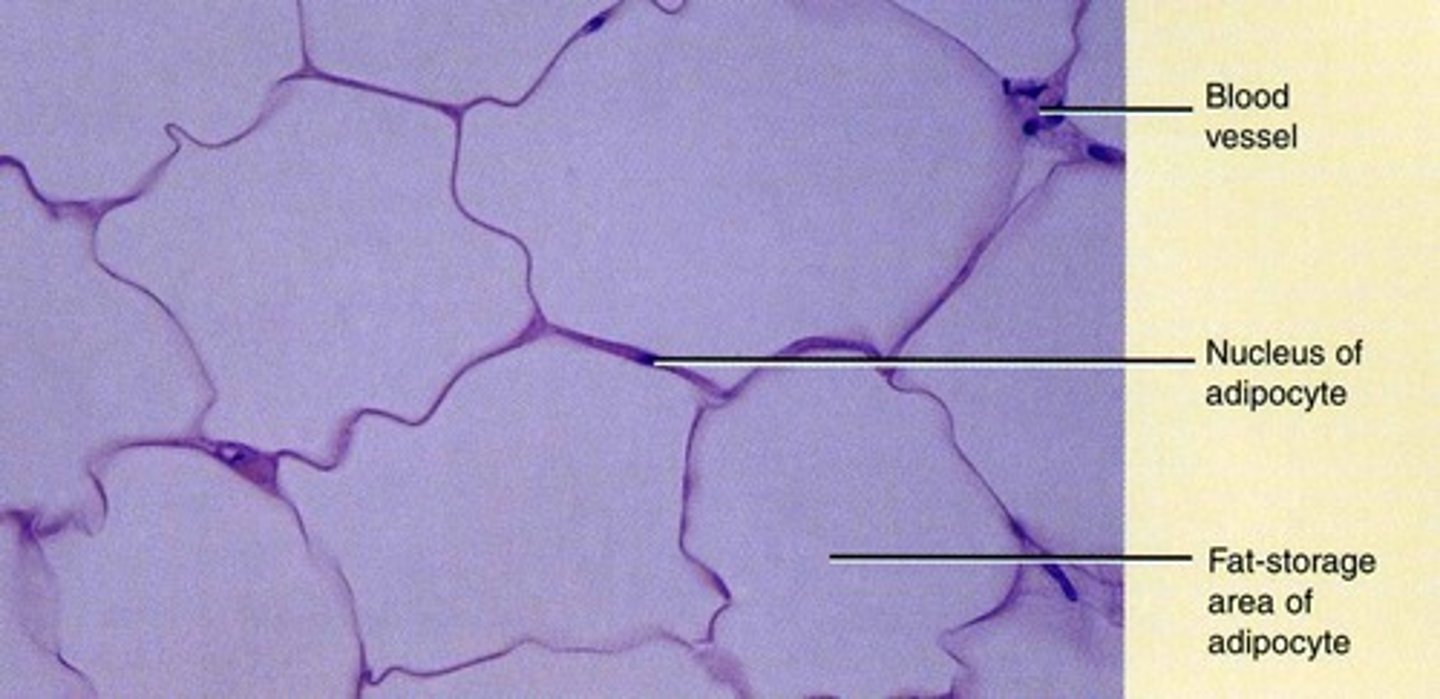
What is the function of adipose tissue?
Stores fat, reduces heat loss, and provides organ padding.
What is the main characteristic of dense regular connective tissue?
Collagen fibers arranged in parallel bundles.
What is hyaline cartilage?
A bluish, shiny white rubbery substance that reduces friction at joints.
What is fibrocartilage known for?
Being the strongest type of cartilage, providing rigidity and stiffness.
What is the basic unit of structure in compact bone?
The osteon (Haversian system).
What are the three types of muscle tissue?
Skeletal, cardiac, and smooth muscle.
What distinguishes cardiac muscle from skeletal muscle?
Cardiac muscle is involuntary and has intercalated discs.
What is the role of nerve cells?
Conduct nerve signals through dendrites and axons.