Lecture 20+21 Plant , evolution of plant structure
 Call Kai
 Learn
Learn Practice Test
 Spaced Repetition
 Match
Match Flashcards
 Knowt Play
1/13

There's no tags or description
Looks like no tags are added yet.
Name | Mastery | Learn | Test | Matching | Spaced | Call with Kai |
|---|
No analytics yet
Send a link to your students to track their progress
14 Terms
Plant blindness
"an inability to see and distinguish the plants that surround and sustain us"
Causes of plant blindness
Visual homogeneity of plants (plants just all green)
Plants perceived as non‑threatening
Slow timescales of plant movement
Humans lack perception to detect plant motion
People identify animals faster than plants in rapid image sequences
Consequences of plant blindness
Plants treated as background for animals
Misunderstanding plant needs
Overlooking plant importance in daily life
Solutions of plant blindness
Bias awareness
Education (early, high‑quality, plant‑focused)
Engagement (interaction with plant: grow a plant, observe development)
Raising awareness among peers
Equal exposure to plants, fungi, microbes, animals
General Plant Life Cycle
Gametophyte (n) → produces gametes
Sporophyte (2n) → produces spores
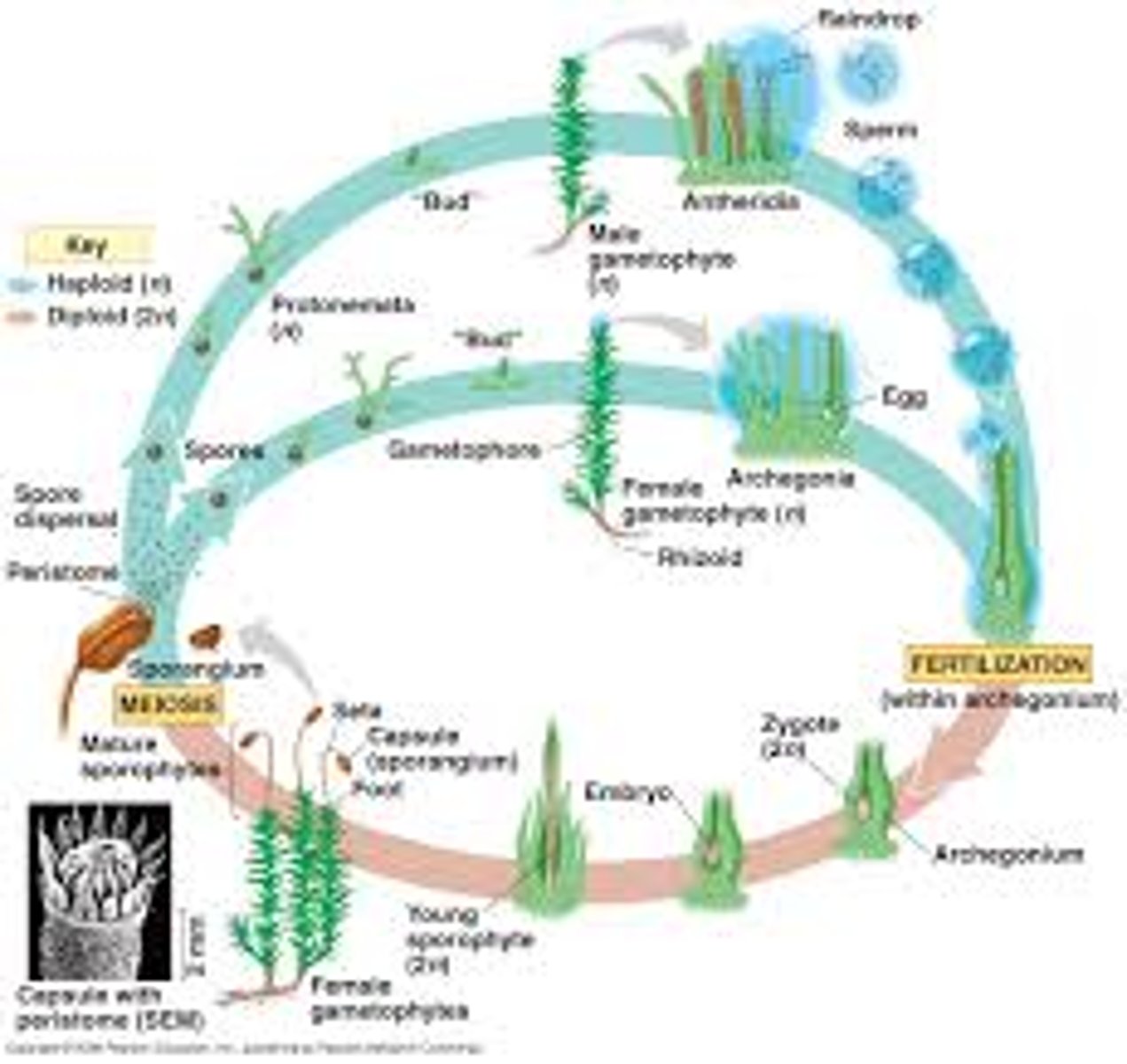
moss life cycle
sperms in antheridia, eggs in archegonia at top
must have water for reporduction > fertilization by water for mobile sperm
dominant gametophyte, Sporophyte (short-lived) dependent on gametophyte for food
No vascular tissue
low humidity > open up to release spores > so the spores can travel far
fern life cycle
mostly found in tropical areas
Vascular tissue (xylem + phloem)
*Dominant sporophyte (2n) — fern plant , independent , free living gametophyte (n)—*tiny, heart‑shaped prothallus.
mainly homosporous→all the spores are of same size
Circinate vernation→ the coiled arrangement of young fern fronds (leaves), where the tip is rolled inward and gradually unrolls as the frond matures. - the coiled young fronds called (fiddleheads)
Heterospory
= production of two different kinds of spores
microsporangium produces microspores > microspores germinate into microgametophytes → produce sperm in antheridia
megasporangium produces megaspores > germinate into megametophytes → produce eggs in archegonia
large number of sperms → increase probability of fertilization
Dioecious
= male and female reproductive organs are on separate individuals of the same species.
🧬 Key evolutionary patterns
1. Gametophyte → smaller over time
2. Archegonia disappear in flowering plants
3. Sperm mobility changes
Moss & ferns: motile sperm (need water)
Gymnosperms & angiosperms: non‑motile sperm delivered by pollen tube
4. porangia (spore‑producing structures) become specialized
Moss: one capsule
Fern: many sporangia in sori
Gymnosperms: microsporangia + megasporangia
Angiosperms: anther sacs + ovules
5. more massive saporophytes
Endospory
= internal gametophyte development within the spore wall, rather than outside
opp= exospory,
Advantages of endospory
Protection - increase in genetic diversity due to many more gametophytes surviving
•This Genetic diversity increases rates of diversification (bigger pool to for selection to work on)
•Nutrition provided by sporophyte (therefore stronger, longer lived, survives without water etc)
homosporous
all the spores are of same size
Dioecious
male and female reproductive organs are on separate individuals of the same species.