VCE Biology Unit 1 AOS 2 5B
 Call Kai
 Learn
Learn Practice Test
 Spaced Repetition
 Match
Match Flashcards
 Knowt Play
1/42

There's no tags or description
Looks like no tags are added yet.
Name | Mastery | Learn | Test | Matching | Spaced | Call with Kai |
|---|
No analytics yet
Send a link to your students to track their progress
43 Terms
What do large plants need to move water, minerals and glucose
specialised tranport systems amd is achieved through vascular tissues
xylem and pholem
The importance of water in plants
-photosynthesis metabolic processes
-transport of nutrients and waste
-cooling via evaporation (transpiration)
-maintaing turgor pressure (prevents wiliting/dehydration)
-maintaining correct cell toncity
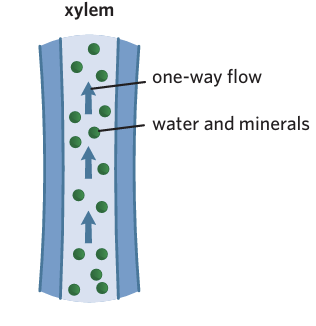
What is the xylem tissue?
Tubes that transport water and minerals in 1 direction from the roots to the leaves of a plant.
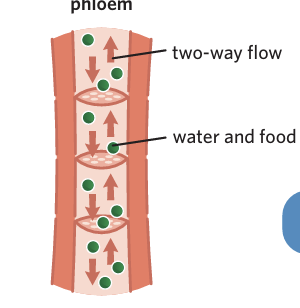
What is the phloem tissue?
Tubes that transport sugars and other nutrients around a plant in 2 directions.
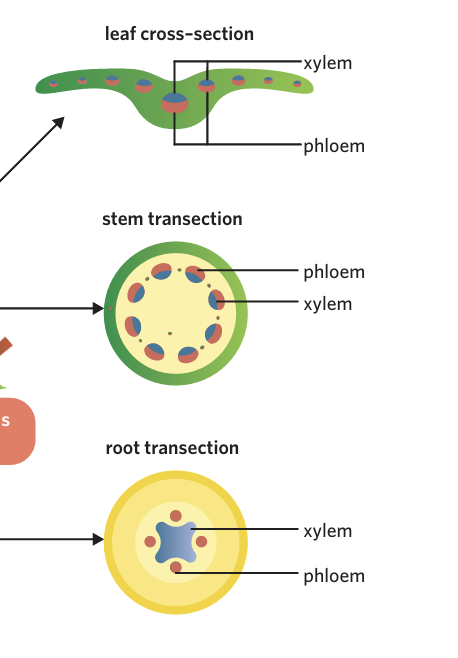
Vascular bundles
Xylem+pholem grouped
Location
-roots >centre
-stems> near outer layer (under bark)
-Leaves>veins
Roots do what?
Provide structure and are a anchor in a ground preventing them from toppling over
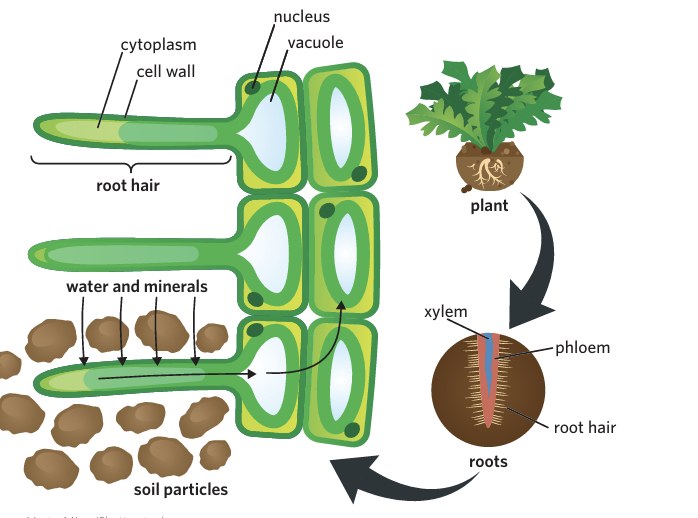
Adapation for absorbption
-highly branched roots for increases surface area to volume ratio
root hair cells-cell with hair like extensions that absorb water/minerals from soil into root
What are the 2 pathways in the root system that water and nutrients can move through?
1) Extracellular pathway
2) Cytoplasmic pathway
What is the extracellular pathway?
Movement of water and solutes through the cell walls and spaces between cells (passive), until the Casparian strip forces entry into cells.
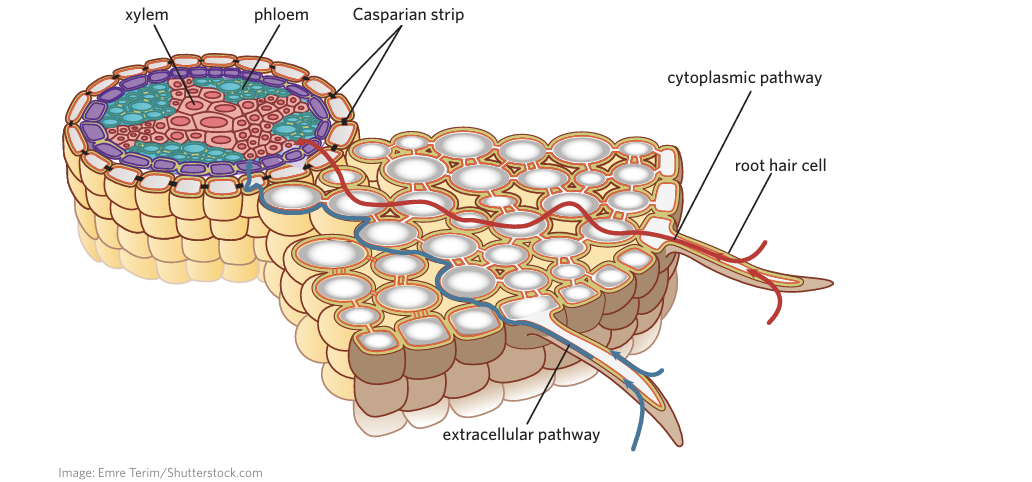
What is the cytoplasmic pathway?
Movement of mineral ions through root cell cytoplasm via diffusion and active transport, allowing high ion concentration and drawing water in by osmosis.
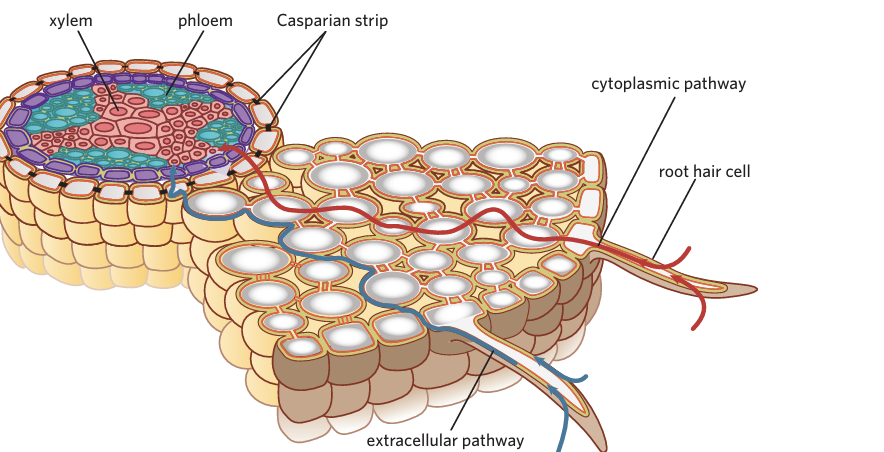
Casparian strip
-Water proof barrier in roots
-forces selective entry into xylem
-ensures harmful substances filtered out
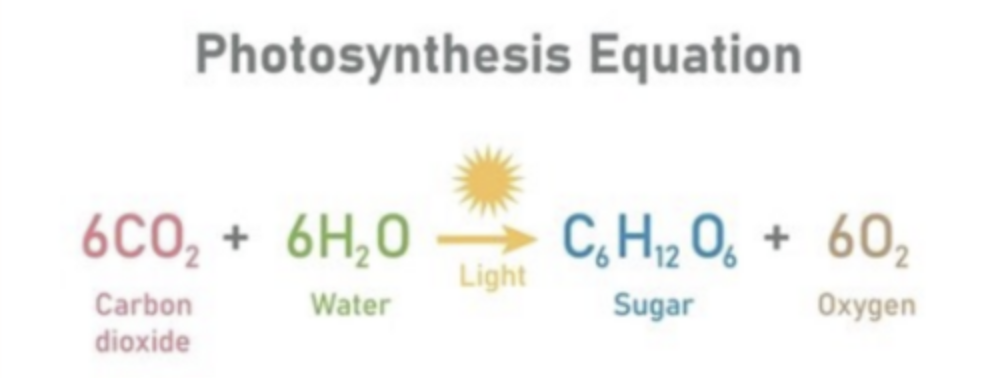
What is the equation for photosynthesis?
6CO2 + 6H2O ------> C6H12O6 + 6O2
What is transpiration?
evaporation of water from plant leaves/pores/surface/stoma
Structure of Xylem cells
- long, skinny tubes that run from the roots to the shoots of plants.
which areMade of vessel elements and tracheids
As cell matures
-Hollow tubes
-no cytoplasm (dead cells)
-lignified walls > strong support pit
-Allow sideways water movment between Xylem
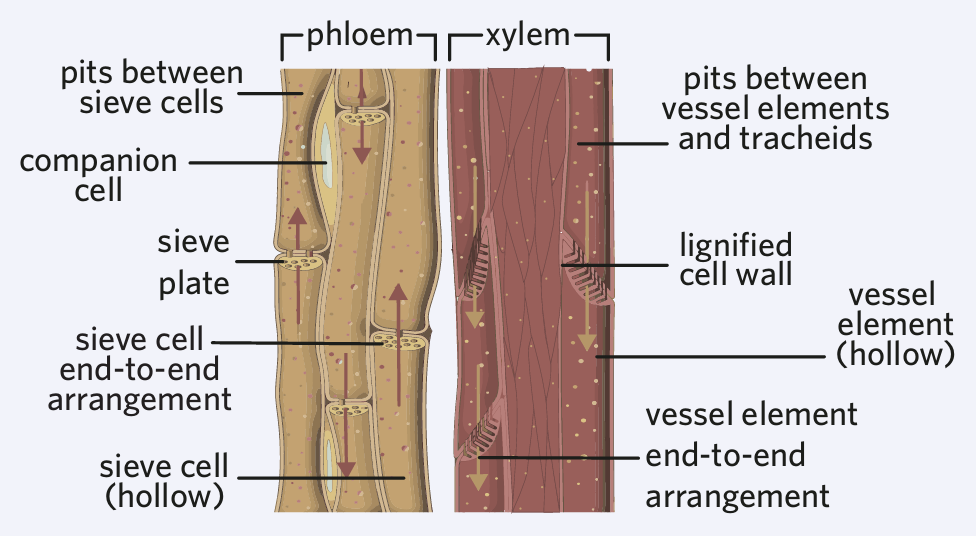
The differences between the vessel elements and tracheids are:
Vessel elements are> large continous tubes
(allows water to flow vertically through the xylem.)
Tracheids > smaller overlapping ends
(meaning water must travel horizontally )
Pholem structure (non-lignified cells)
-long skinny tubes that run throughout a plant
Features
-sieve tubes hollow
-living tissue
-sieve plates (allow flow between cells)
Define vessel element
large xylem cells that stac end to end to form tubes for water transport
Define tracheid
Smaller xylem cells with overlapping ends; water moves through pits
Lignified
Cell walls strengthened with ligin>rigid
Ligin
strong woody substances
Sieve cells
Living pholem cells forming tubes for sugar transport
Companion cells
Controls transport amd keeps sieve cells alive
Sieve plates
Pores walls between sieve cells allowing sap flow
Transpiration
-loss of water vapour from leaves via stomata
-drives upwards movement of water only 1% of water used in photosynethesis
When water evaporates from leaves
-creates lower pressure in leaves but high pressure in roots
-water is pulled upwards
what is cohesion?
water likes to stick togeter (attraction of molecules)
Capillary action (adhesion of water)
-Water sticks to xylem walls
-Helps water climb narrow tubes
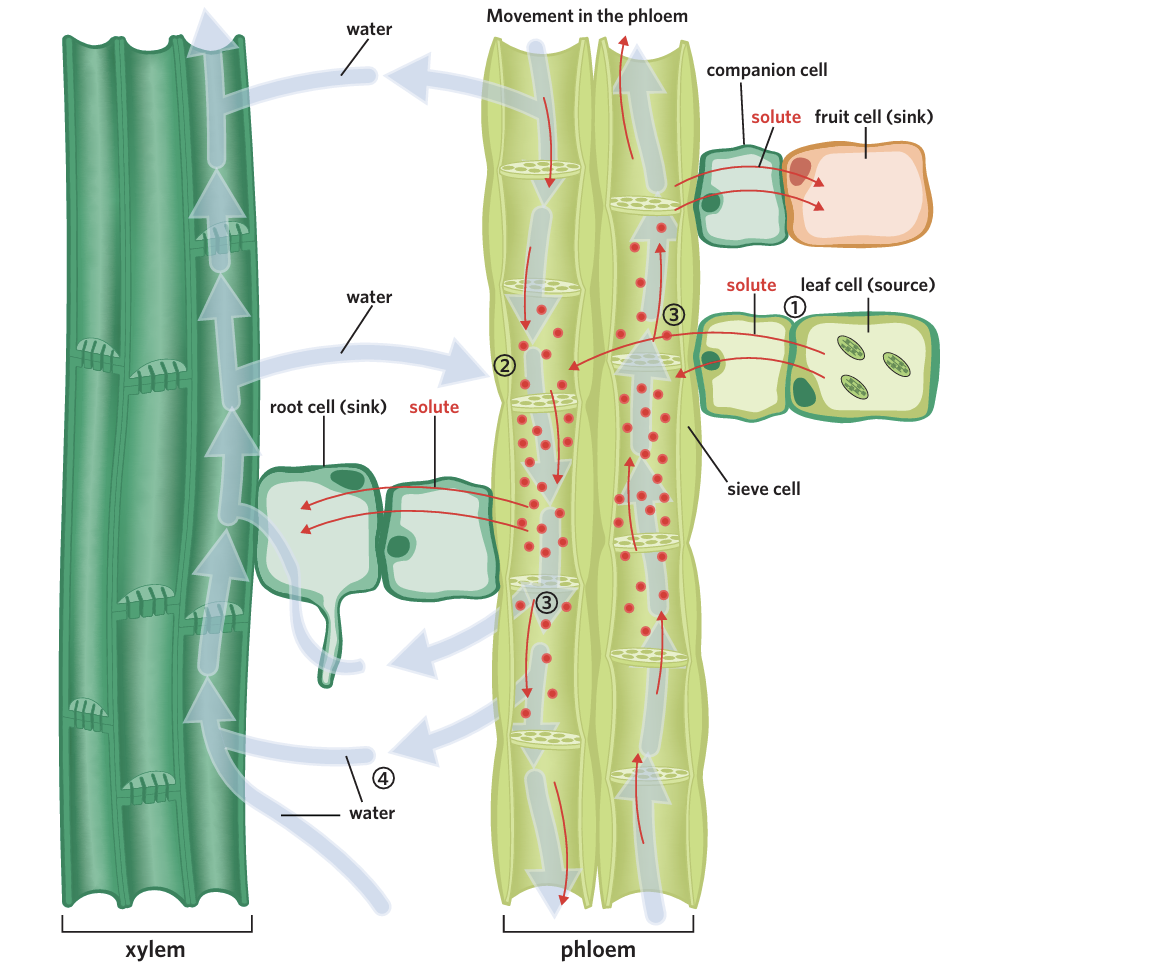
Translocation
-Movement of nutrients created in the leaves to other areas of plants via pholem.
source and sink movement
Source
Where glucose is produced (leaves)
Sink
where glucose is used/stored (roots, fruits)
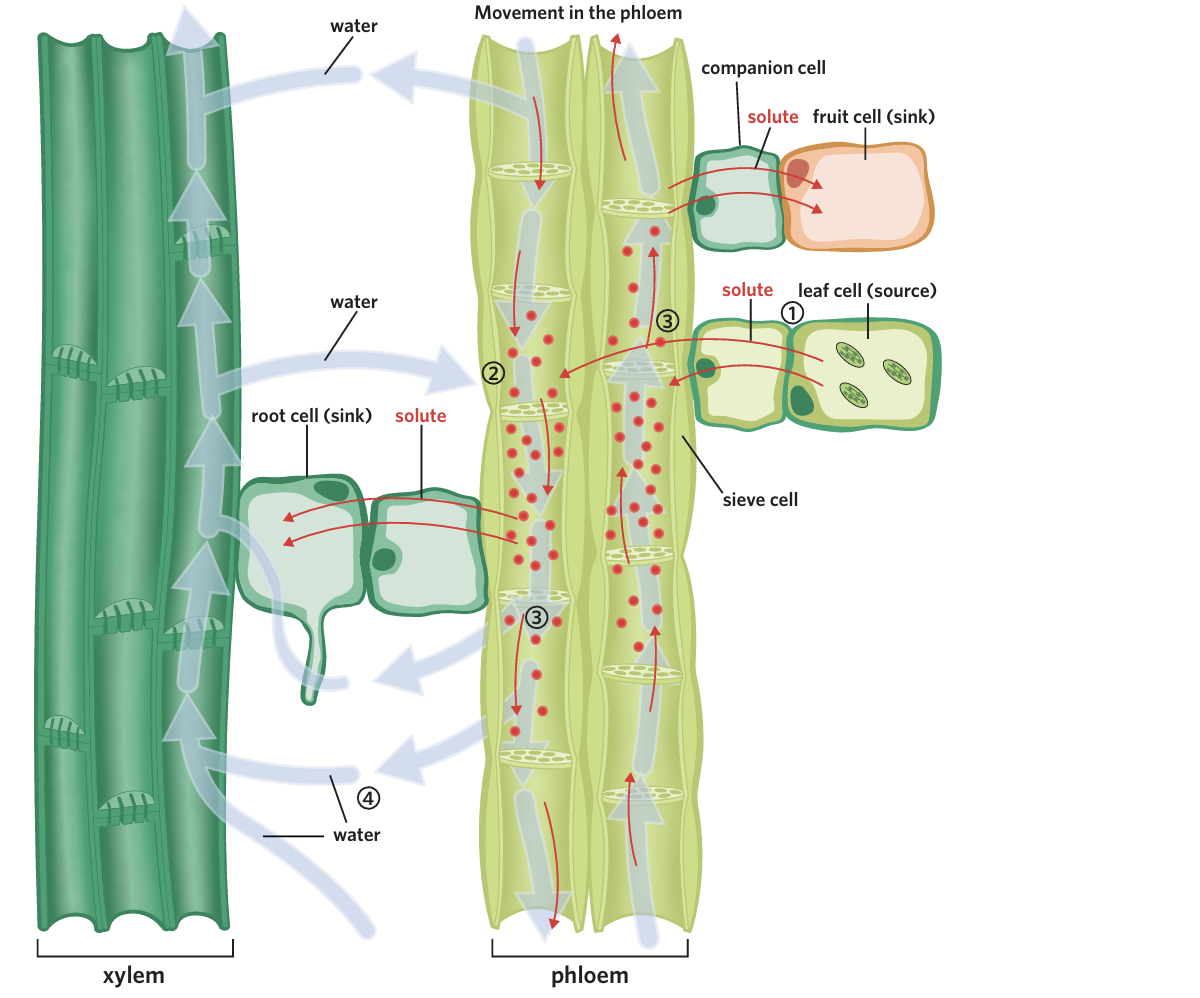
what happens in the first step of the translocation of glucose?
-Glucose is produced in leaf cell (the source)
-pumped into the companion cells
-where they diffuse into the sieve cells of the phloem
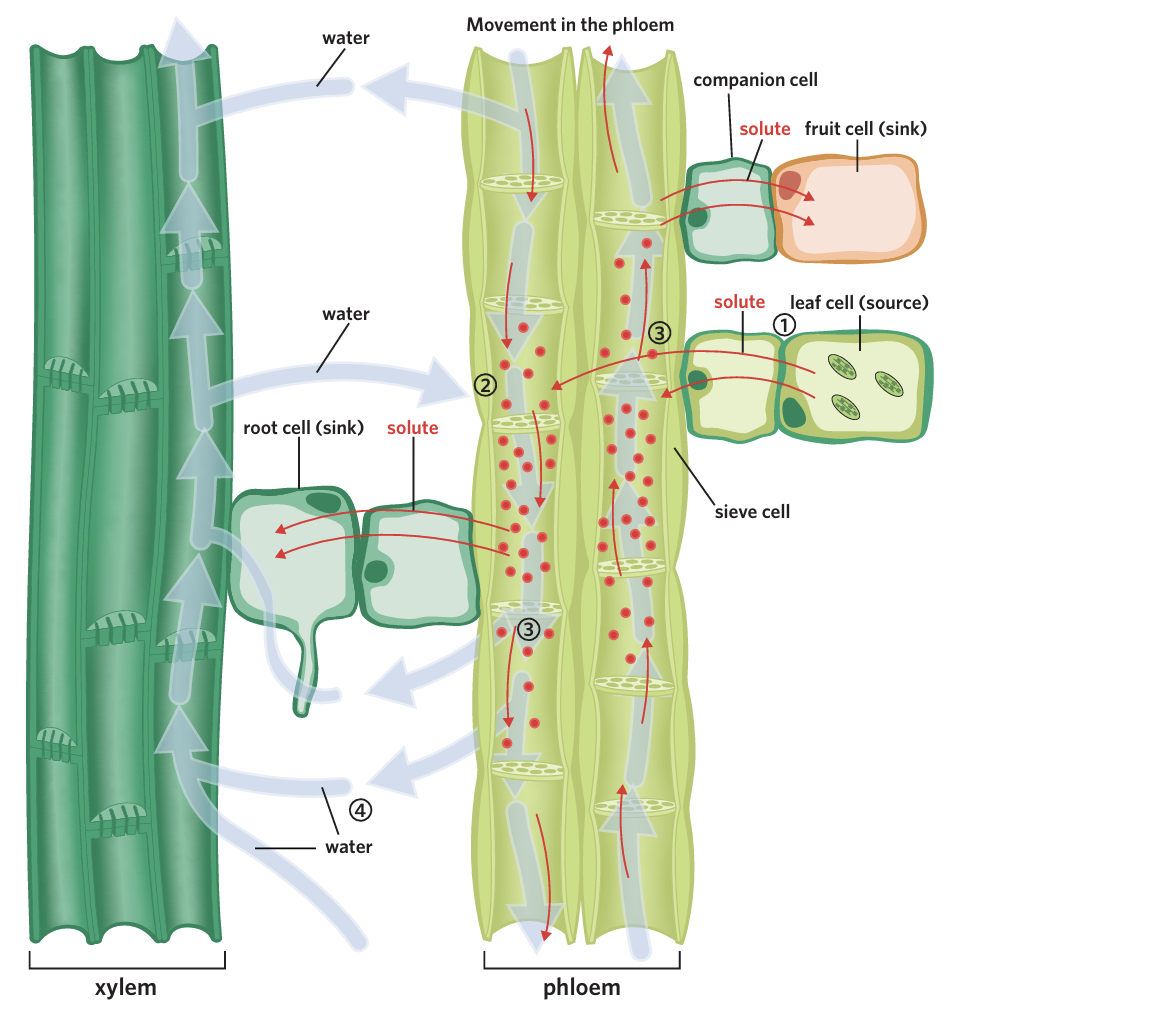
what happens in the second step of the translocation of glucose?
Increased concentration in the sieve cells causes water to diffuse in from the xylem
-increasing turgor pressure in the sieve cells
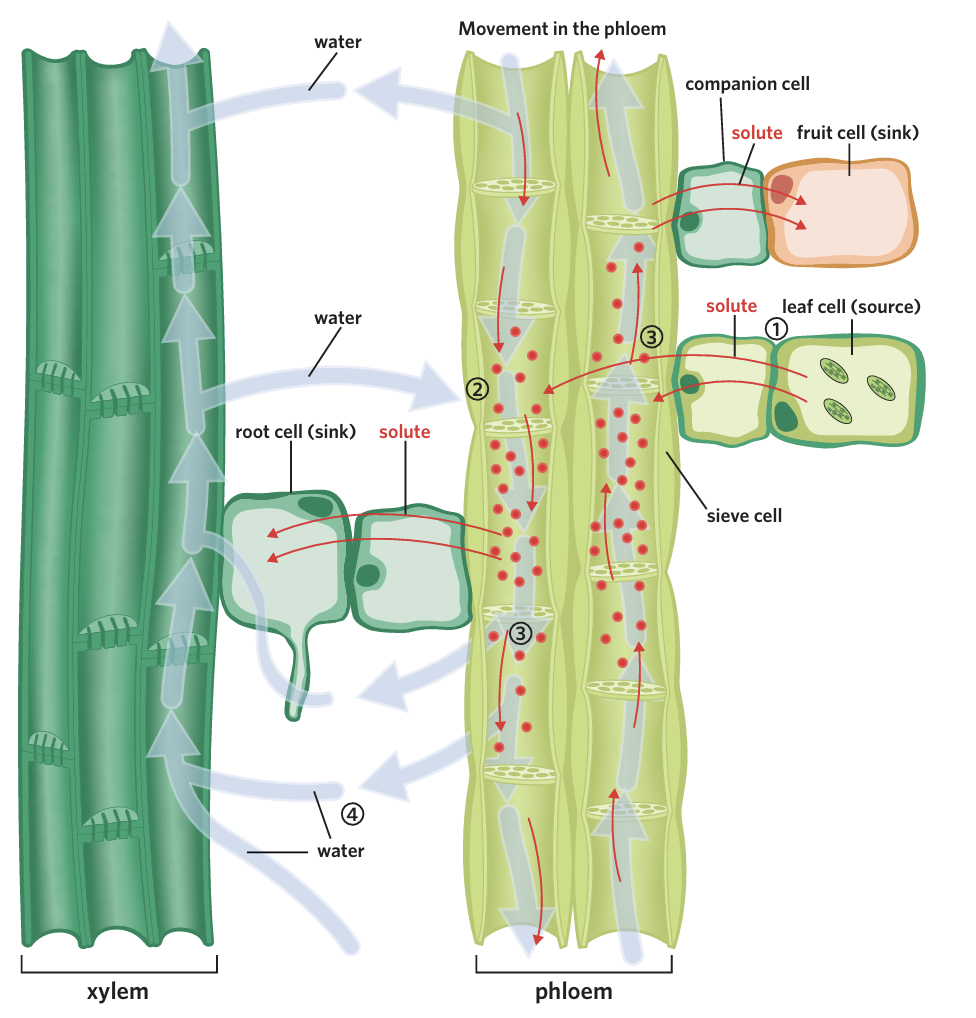
what happens in the third step of the translocation of glucose?
-The increase in turgor pressure pushes the liquid (SAP) in the phloem throughout the plant, where glucose is unloaded (the sinks).
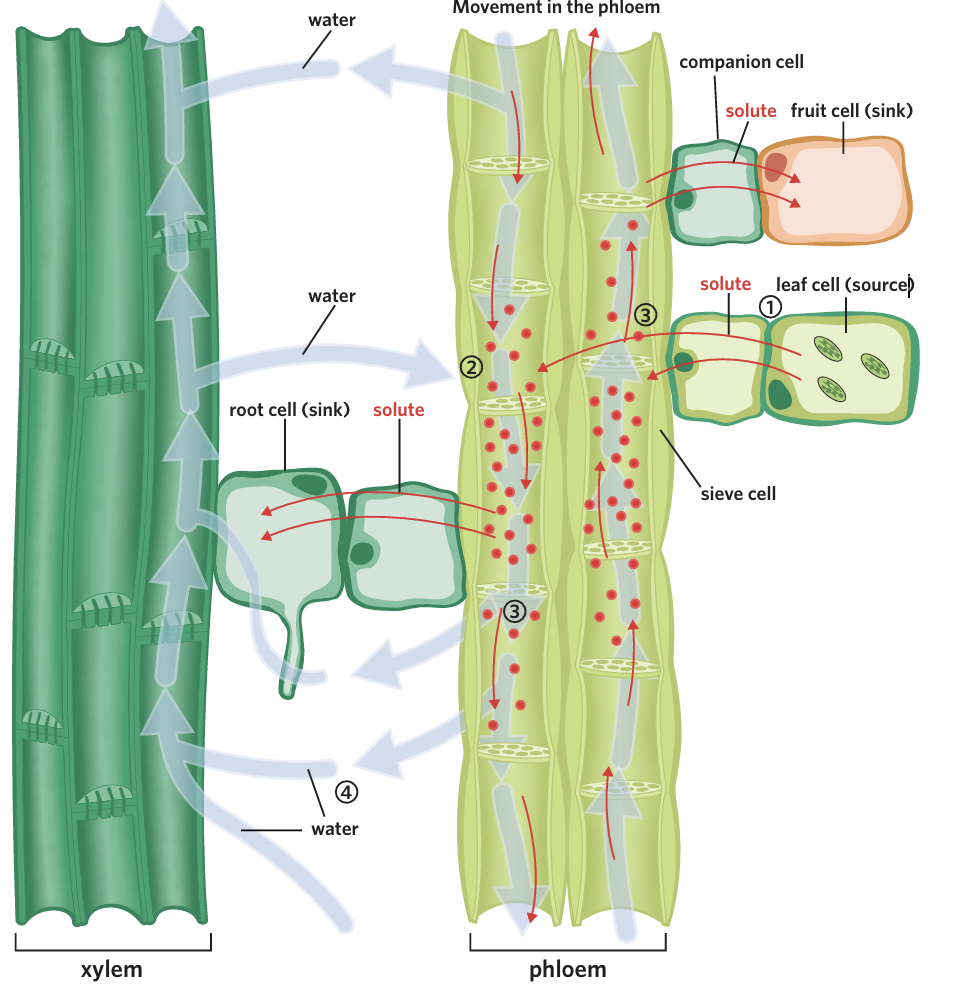
what happens in the fourth step of the translocation of glucose?
Once glucose is unloaded into the sink cells
- the concentration in the phloem is reduced
-and water will diffuse back into the xylem.
What are the 4 forces that regulate the movement of water through the xylem?
1. osmosis
2. capillary action (adhesion)
3. cohesion
4. transpiration
what is osmosis in the transpiration stream?
Manages the movement of water into and across the plant tissues
what are some environmental conditions that affect transpiration?
- temperature transpiration up'
high temperature increases the rate of evaporation of water from the leaf
- light stomata open
Light causes stomata to open for gas exchange, increasing water loss and transpiration.
- humidity transpiration down
increases the concentration gradient, causing more water to diffuse out of the leaf.
- wind transpiration up
emoves water vapour around the leaf,
- water availability transpiration up
High water availability allows continued water uptake, keeping stomata open and increasing transpiration
what is a guard cell?
a pair of curved cells that surround a stoma.
what happens when a guard cell loses cell fluid?
it becomes flaccid and the stoma closes
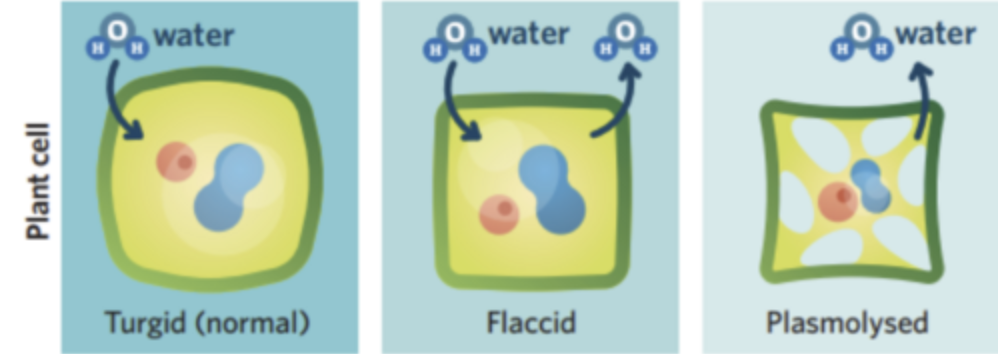
what happens when a guard cell contains fluid under high pressure?
it becomes turgid and the stoma opens up
When a Stomata is open
-potassium ions enter guard cell
-water enters via osmosis
-cells become turgid
> pores open
When stomata closed
-Potassium ions leave
-water leaves
-cells become flaccid
-Pores close
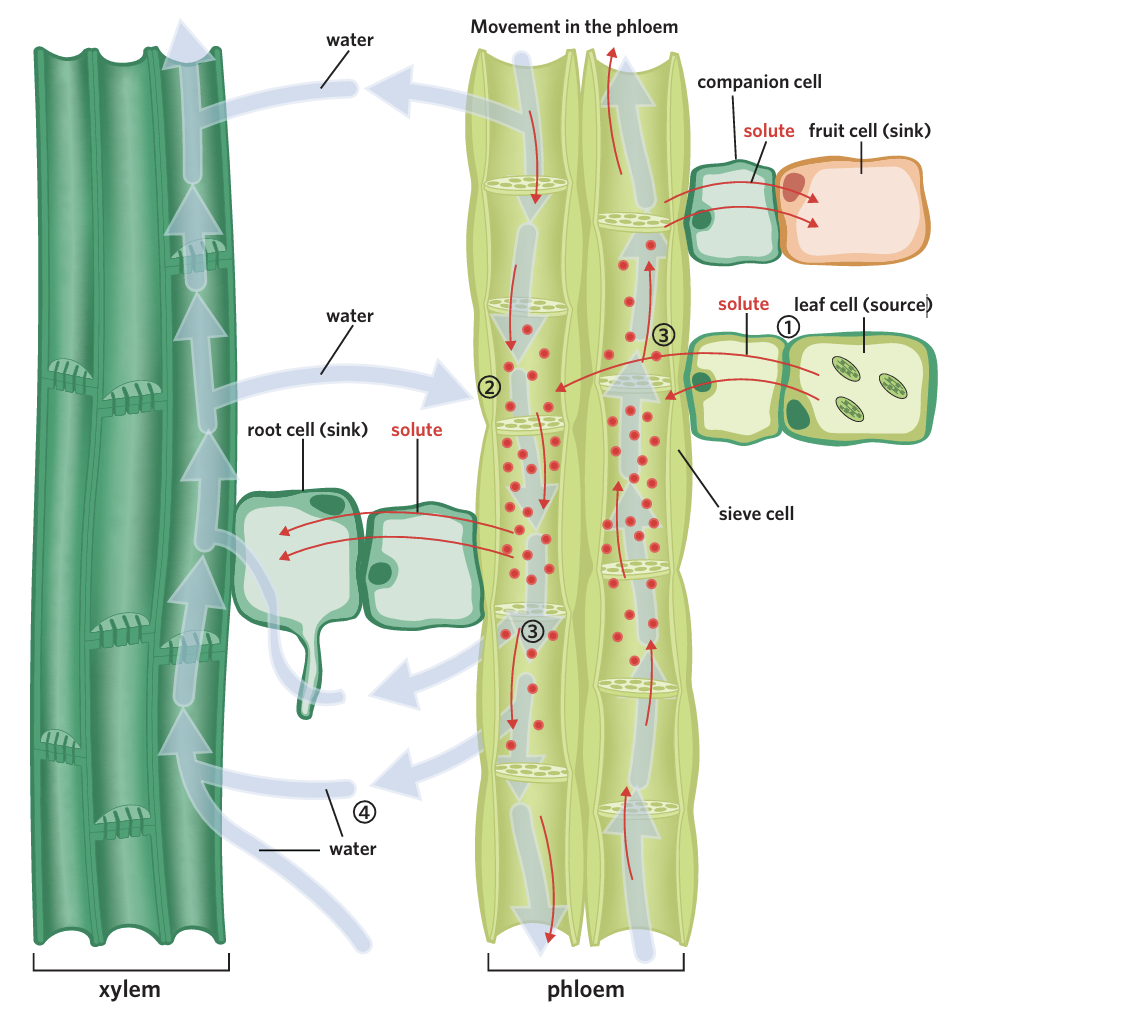
what are the steps of translocation of glucose?
1.Glucose is produced in leaf cell (the source)
-pumped into the companion cells
-where they diffuse into the sieve cells of the phloem
2.Increased concentration in the sieve cells causes water to diffuse in from the xylem
-increasing turgor pressure in the sieve cells
3.-The increase in turgor pressure pushes the liquid (SAP) in the phloem throughout the plant, where glucose is unloaded (the sinks).
4.Once glucose is unloaded into the sink cells
- the concentration in the phloem is reduced
-and water will diffuse back into the xylem.