2.91-2.92 Structure of the eye
 Call Kai
 Learn
Learn Practice Test
 Spaced Repetition
 Match
Match Flashcards
 Knowt Play
1/17

Earn XP
Description and Tags
Name | Mastery | Learn | Test | Matching | Spaced | Call with Kai |
|---|
No analytics yet
Send a link to your students to track their progress
18 Terms
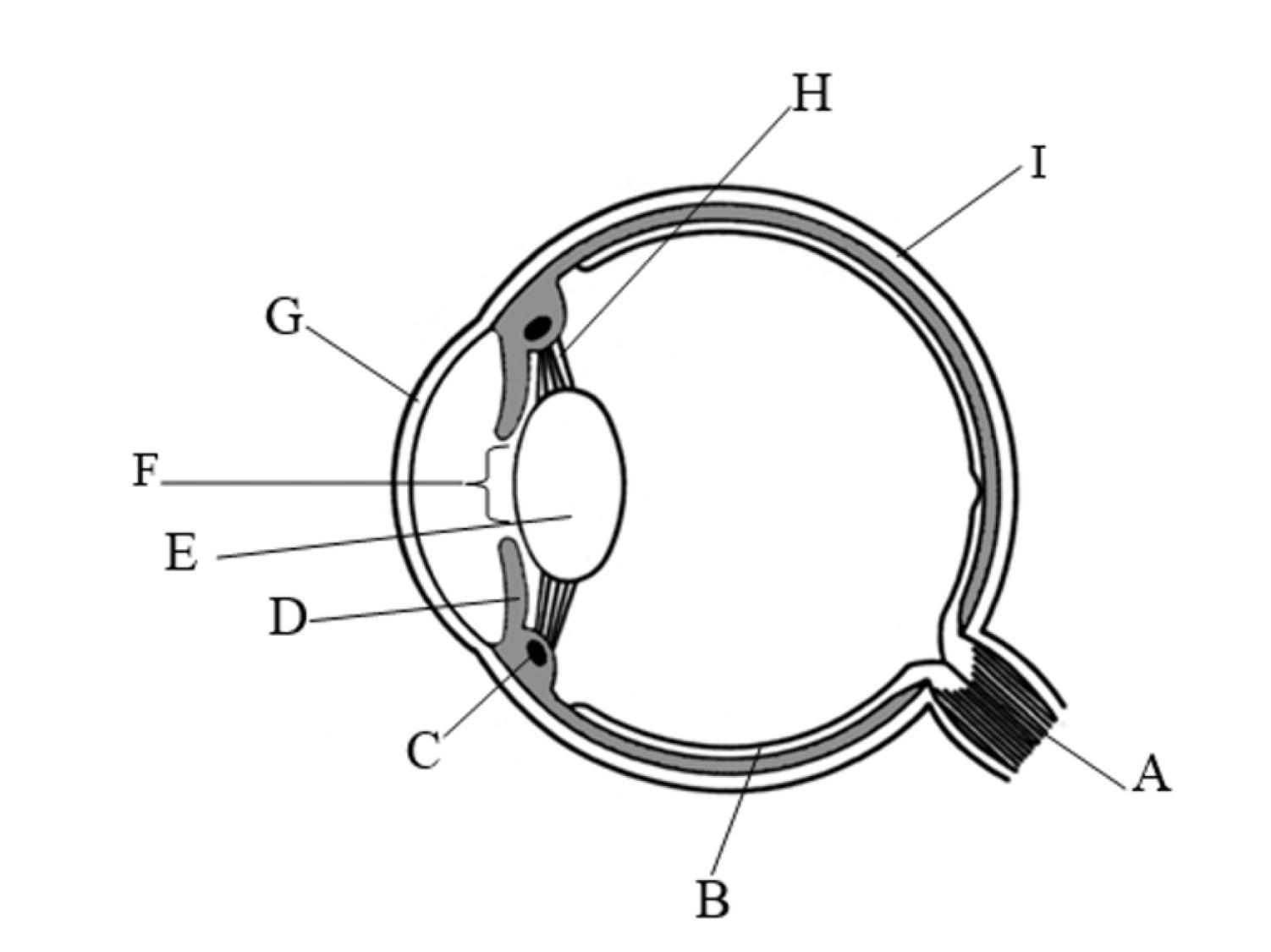
G name and function
Cornea - Transparent outer part of the eye, it refracts light to reach the retina
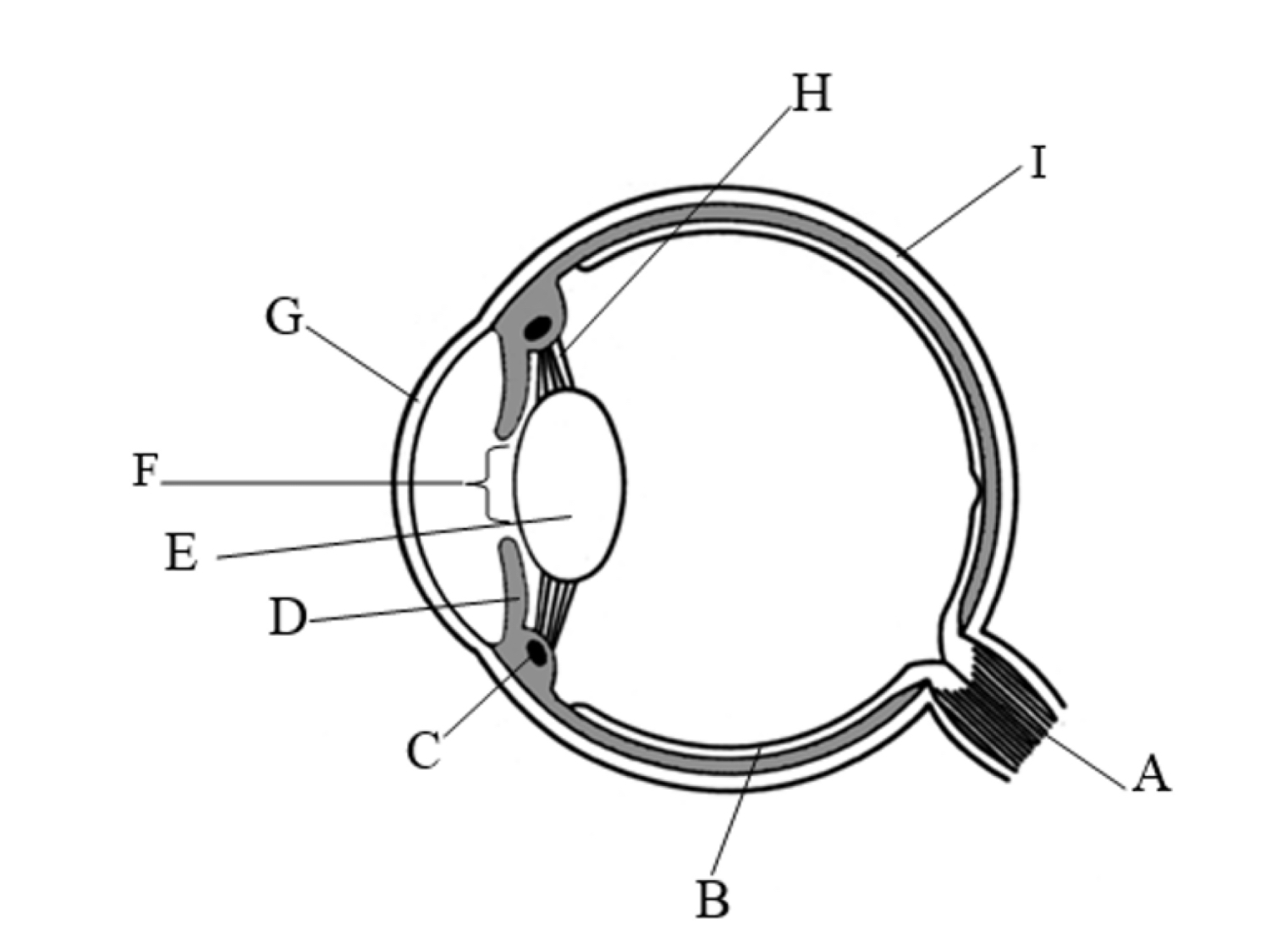
F name and function
Pupil - Dark circular opening in the centre of the eye which lets light through
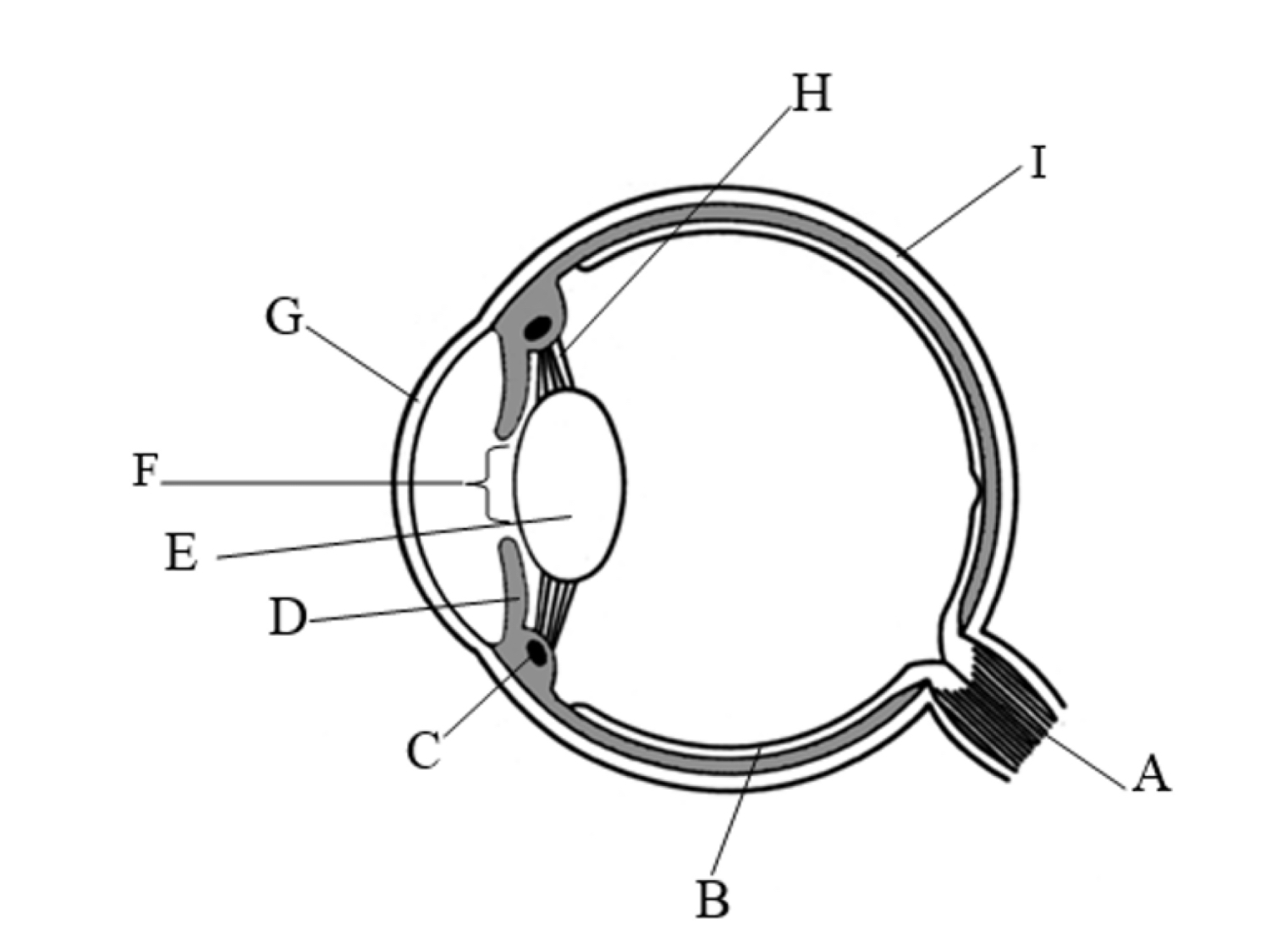
D name and function
Iris - Coloured ring of tissue which controls the amount of light entering the eye by changing the size of the pupil
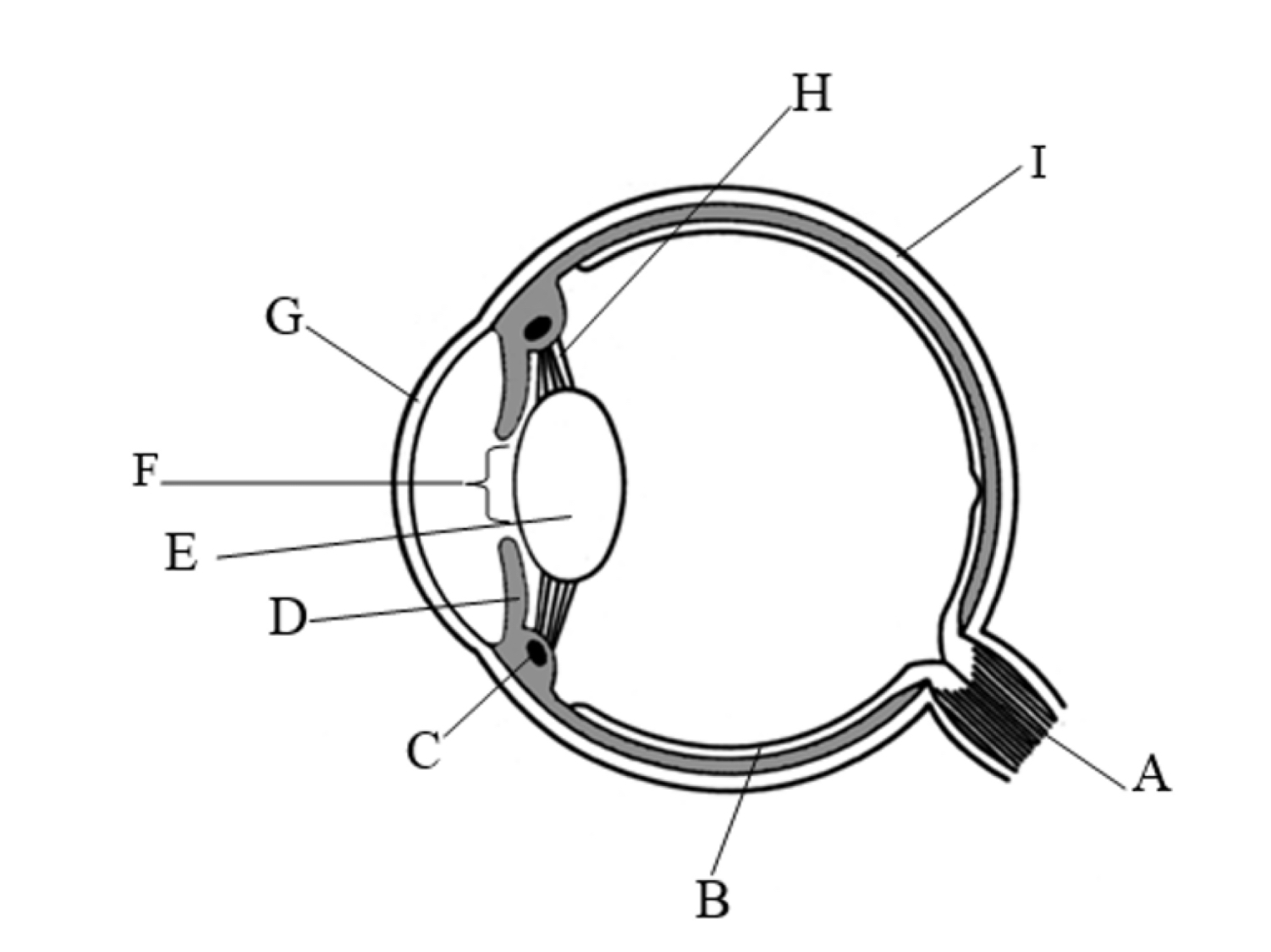
E name and function
Lens - Biconvex transparent disc situated behind the iris that focuses light on the retina
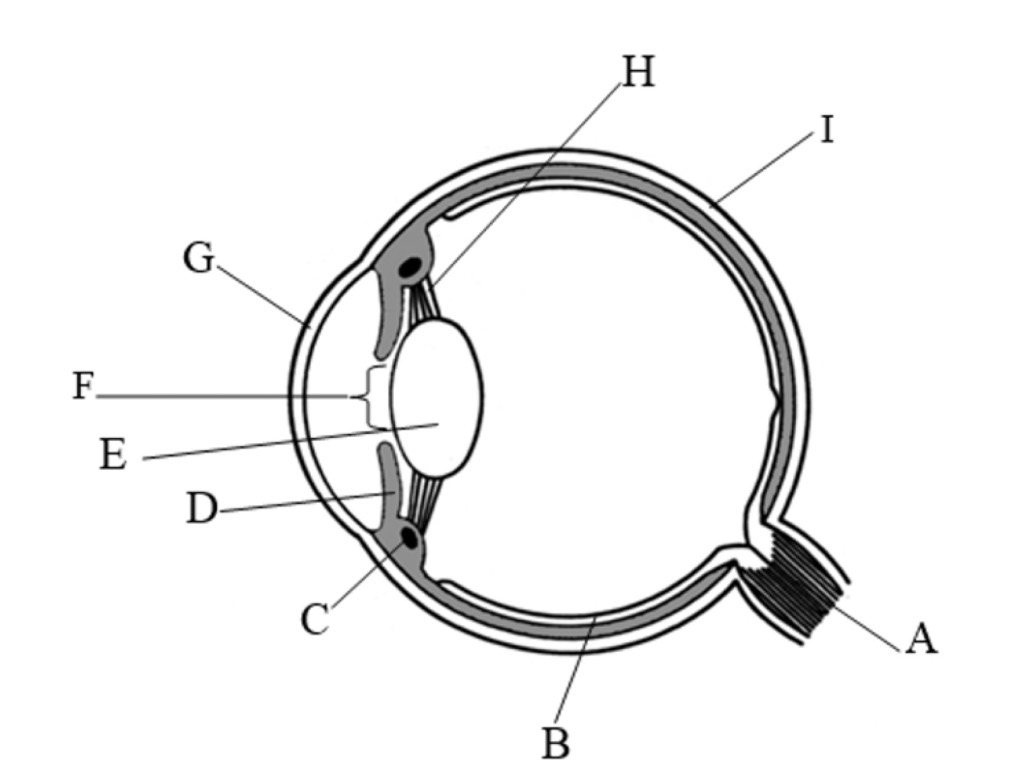
C name and function
Ciliary muscle- changes the lenses shape to focus on objects at different distances (accomodation)
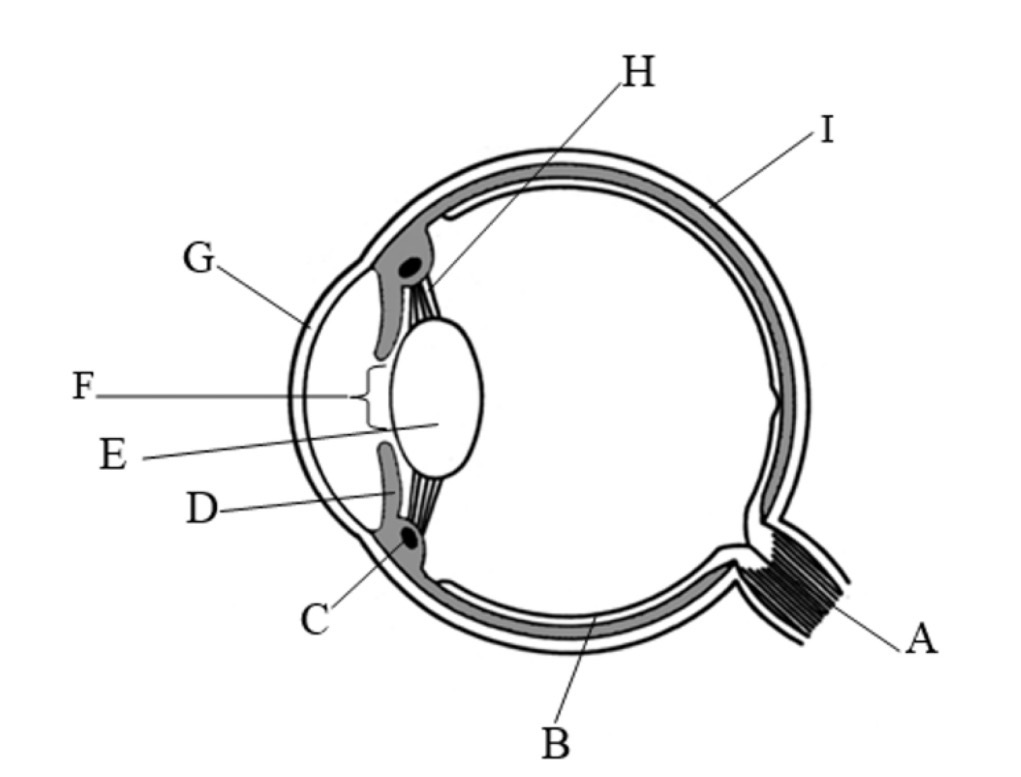
B name and function
Retina - the inner layer of the eye containing light receptors, rods (light) and cones (colour)
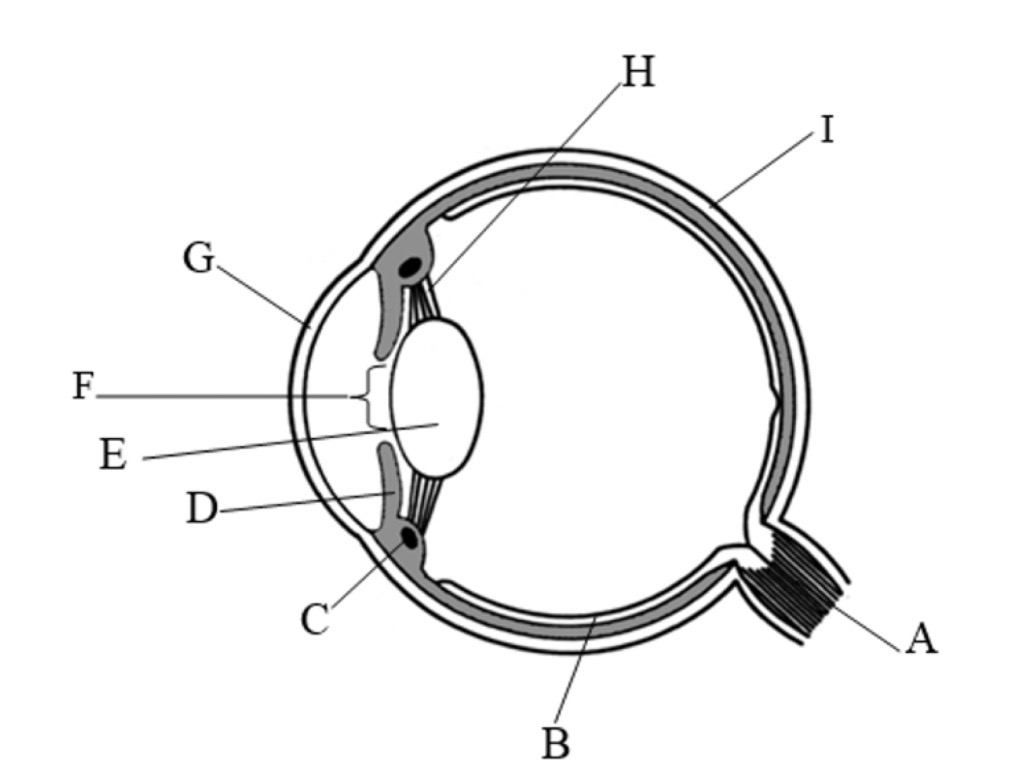
A name and function
Optic nerve - carries impulses between the eye and the brain
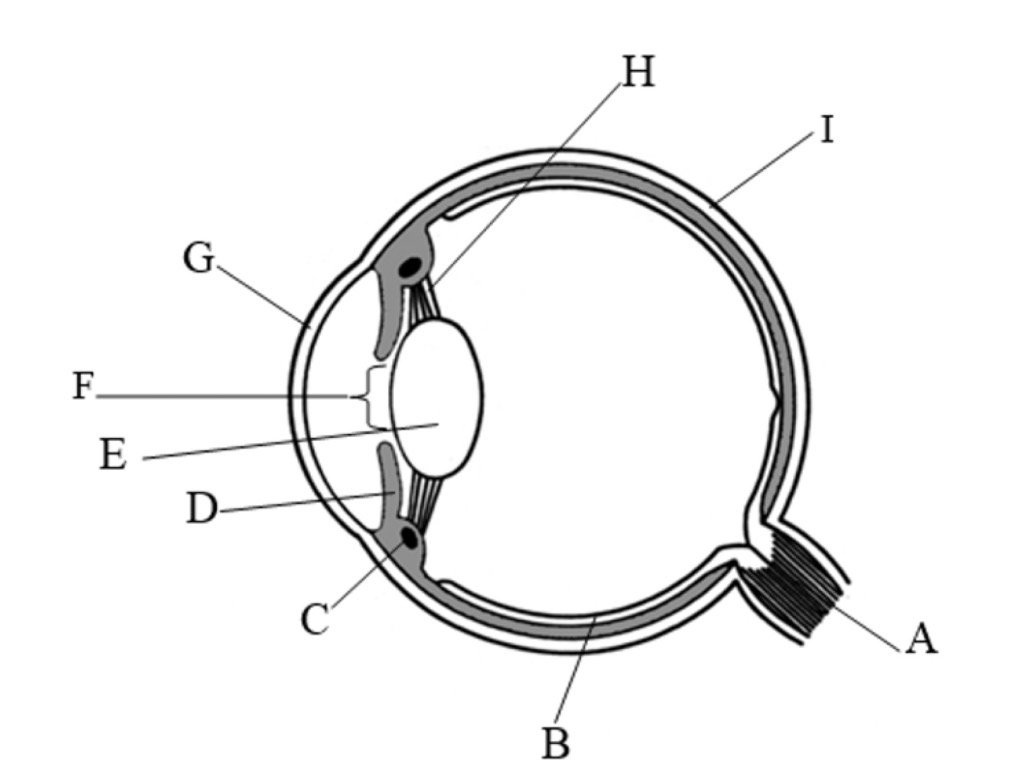
I name and function
Sclera- Tough outer coat of the eye
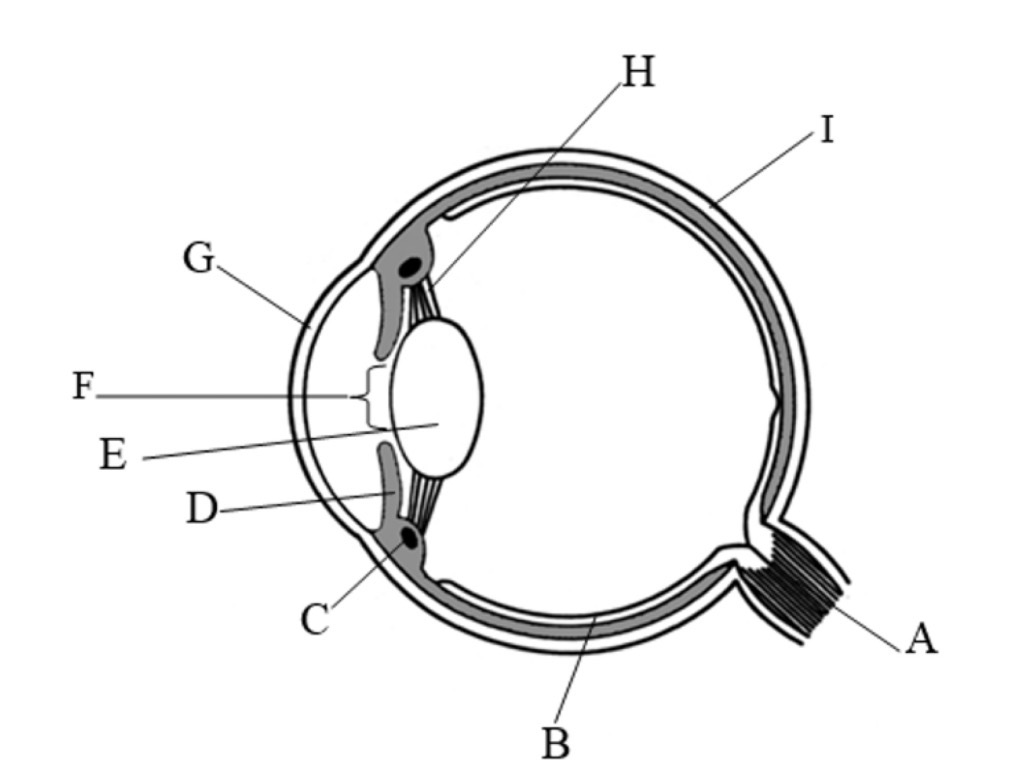
H name and function
Suspensory ligament- connects the ciliary muscles to the lens, tighten or loosen to change the lens’ shape (accomodation)
What is the conjunctiva and function?
A thin clear membrane that protects and lubricates the eye - preventing dryness, irritation and infection
What do rods and cones do?
They convert light into electrical signals for the brain
Rods: detect light intensity, enabling night vision
Cones: detect colour (red, green, blue) and fine detail in bright light
Fovea
A small depression in the centre of the retina where a high concentration of cone cells can be found
Blind spot
The one area of the retina where an image cannot be formed as there are no rods or cones; this is where the optic nerve leaves the eye
How does the eye adapt to bright light?
The circular muscles contract and radial muscles relax to make the pupil smaller (constriction), avoiding damage to the retina
How does the eye adapt to dim light?
The circular muscles relax and radial muscles contract to make the pupil larger (dilation), so more light can enter to create a better image
Accommodation
The changes that take place in the eye which allow us to see objects at different distances
How does the eye accommodate for distant vision?
Ciliary muscles relax, suspensory ligaments tighten, lens pulled flat and thin, resulting in less light refraction and focusing on far objects
How does the accommodate for near vision?
Ciliary muscles contract, suspensory ligaments loosen, lens thickens and more curved/convex, resulting in more light refraction and focusing on near objects.