Biol 114- Biotechnology
 Call Kai
 Learn
Learn Practice Test
 Spaced Repetition
 Match
Match Flashcards
 Knowt Play
1/266

There's no tags or description
Looks like no tags are added yet.
Name | Mastery | Learn | Test | Matching | Spaced | Call with Kai |
|---|
No analytics yet
Send a link to your students to track their progress
267 Terms
How is biotechnology defined?
The manipulation of living organisms or their components to produce useful, usually commercial products.
What are three major areas impacted by biotechnology?
Medicine (drugs/gene therapy), agriculture (engineered crops), and environmental solutions (bioremediation).
Why is genomic DNA not ideal for expressing proteins in bacteria?
Eukaryotic genomic DNA contains introns, which bacteria cannot process to produce the correct protein.
What enzyme is used to synthesize cDNA from mRNA?
Reverse transcriptase.
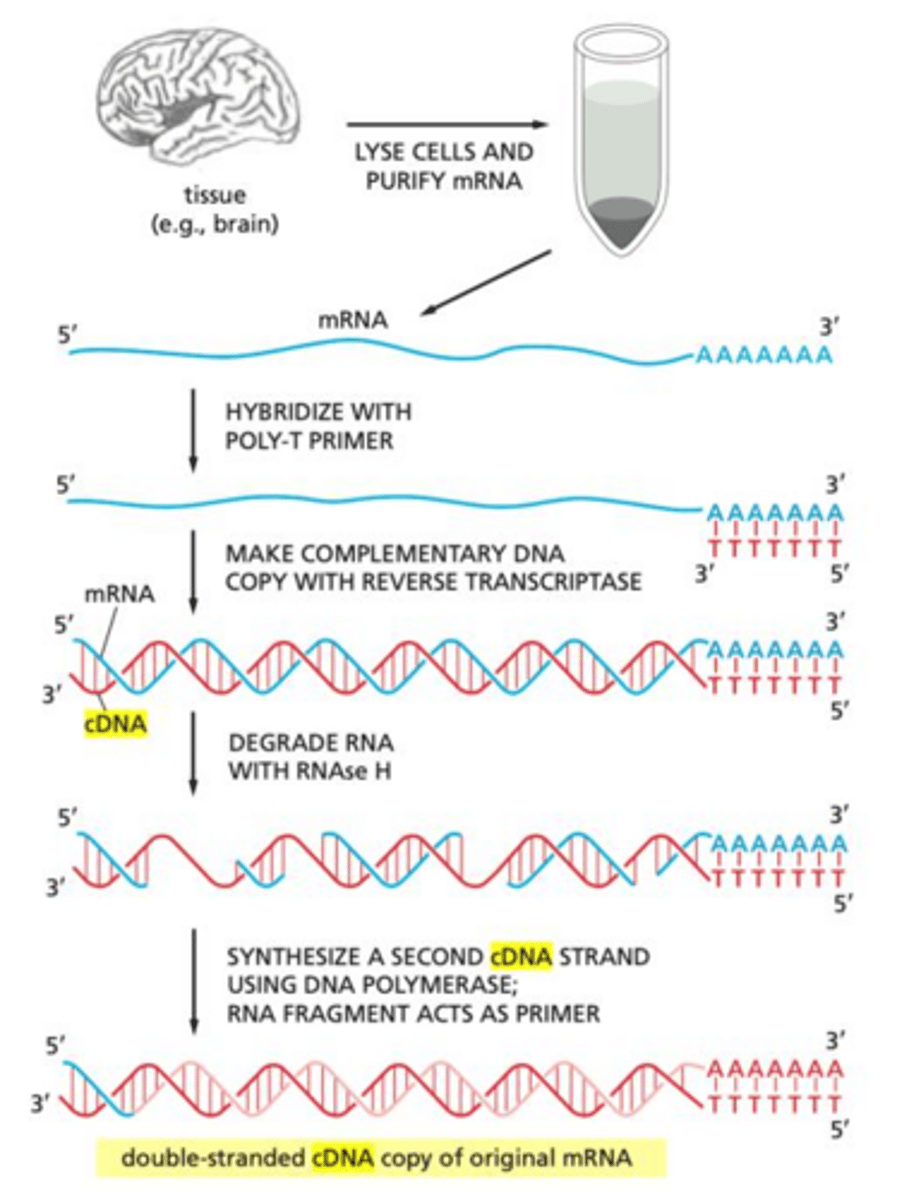
What is a primary advantage of cDNA over genomic DNA for cloning?
cDNA is intron-less, making it suitable for protein expression in bacteria.
What is the basic strategy of gene cloning?
Inserting a DNA fragment of interest into a vector capable of independent replication in a host cell.
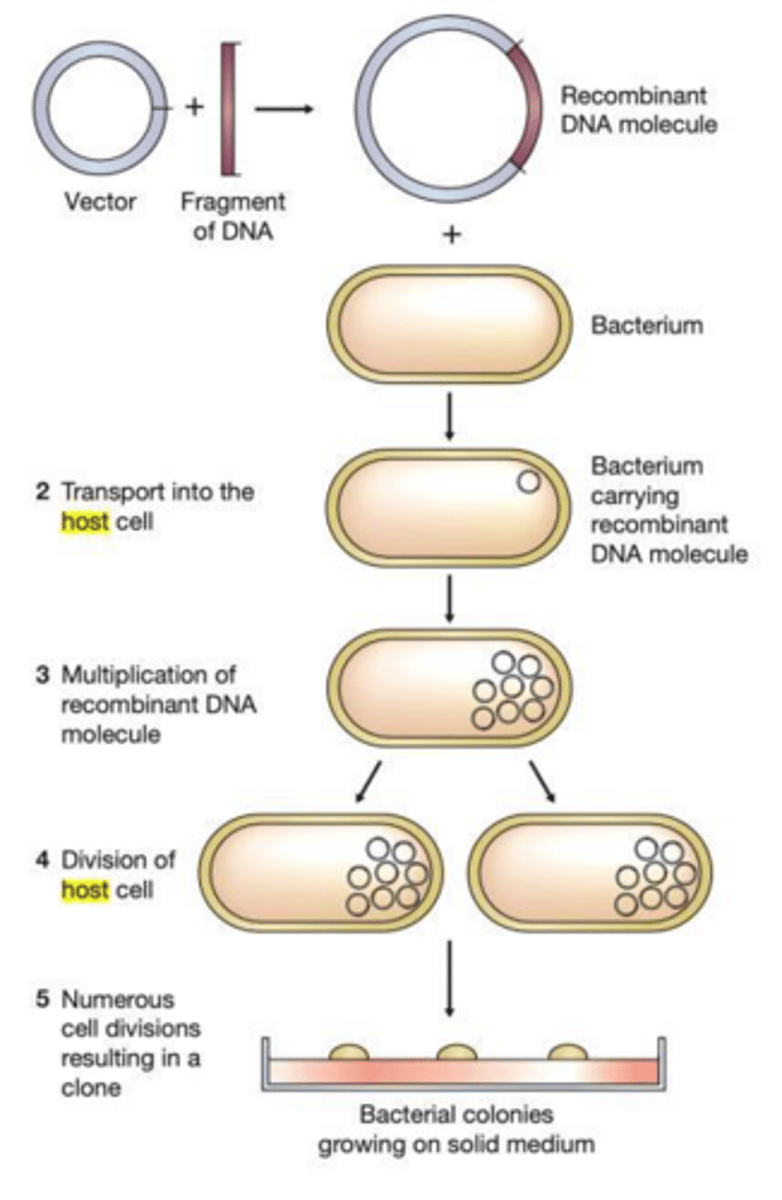
What is a plasmid?
A small circular DNA molecule that can replicate independently in bacteria, separate from chromosomal DNA.
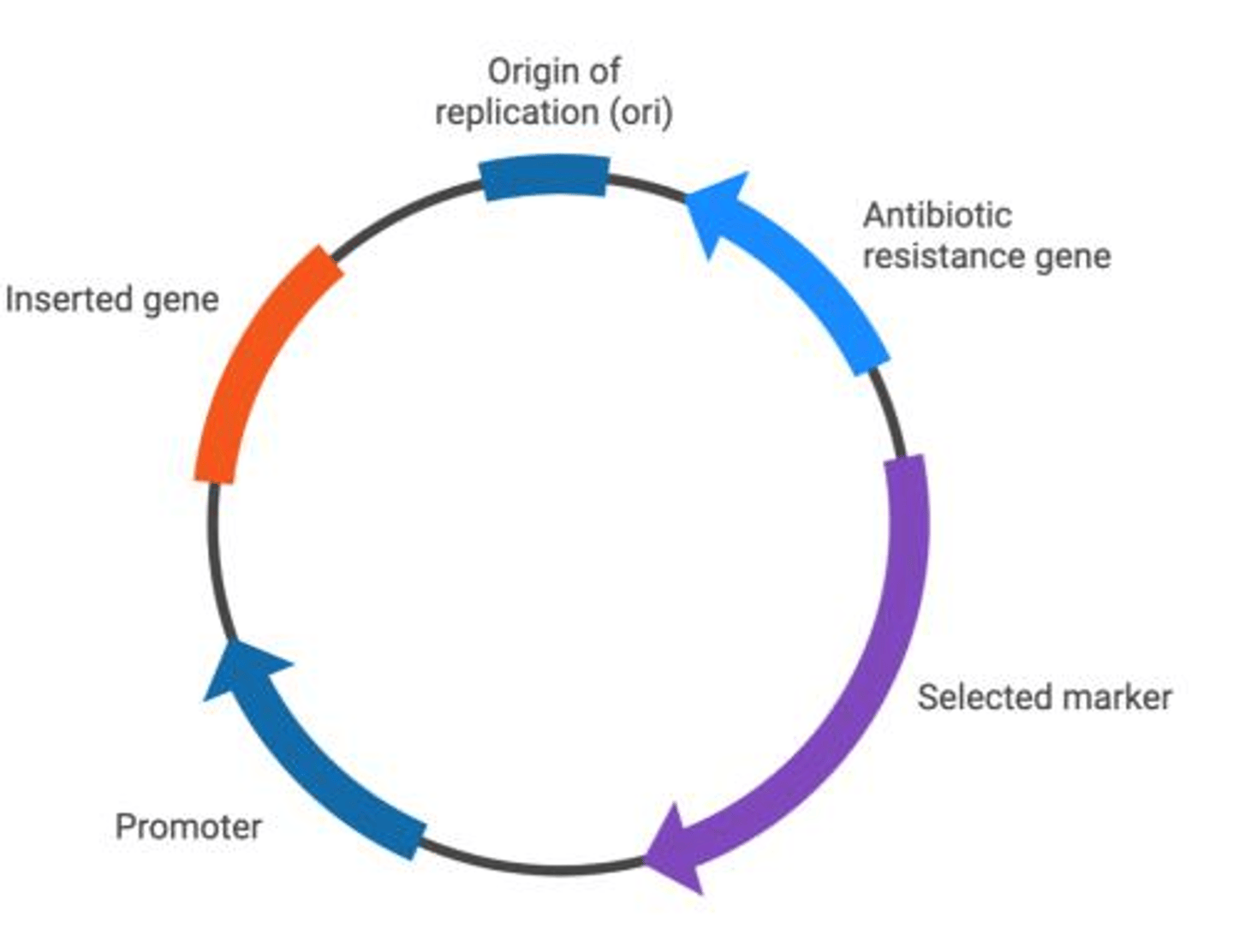
What are the three essential features of a cloning vector?
An origin of replication, a selectable marker (antibiotic resistance), and a cloning cleavage site.
What is the function of the origin of replication in a plasmid?
It permits the plasmid to replicate to a high copy number within the host cell.
What is the purpose of a selectable marker in a cloning vector?
It confers antibiotic resistance, allowing for the selection of host cells that have taken up the plasmid.
How do restriction endonucleases protect a bacterium's own DNA?
The bacterium methylates its own DNA sequences, preventing the restriction enzymes from cleaving them.
What is the difference between 'sticky' ends and 'blunt' ends in DNA digestion?
Sticky ends are overhanging single-stranded tails produced by staggered cuts, while blunt ends have no overhangs.
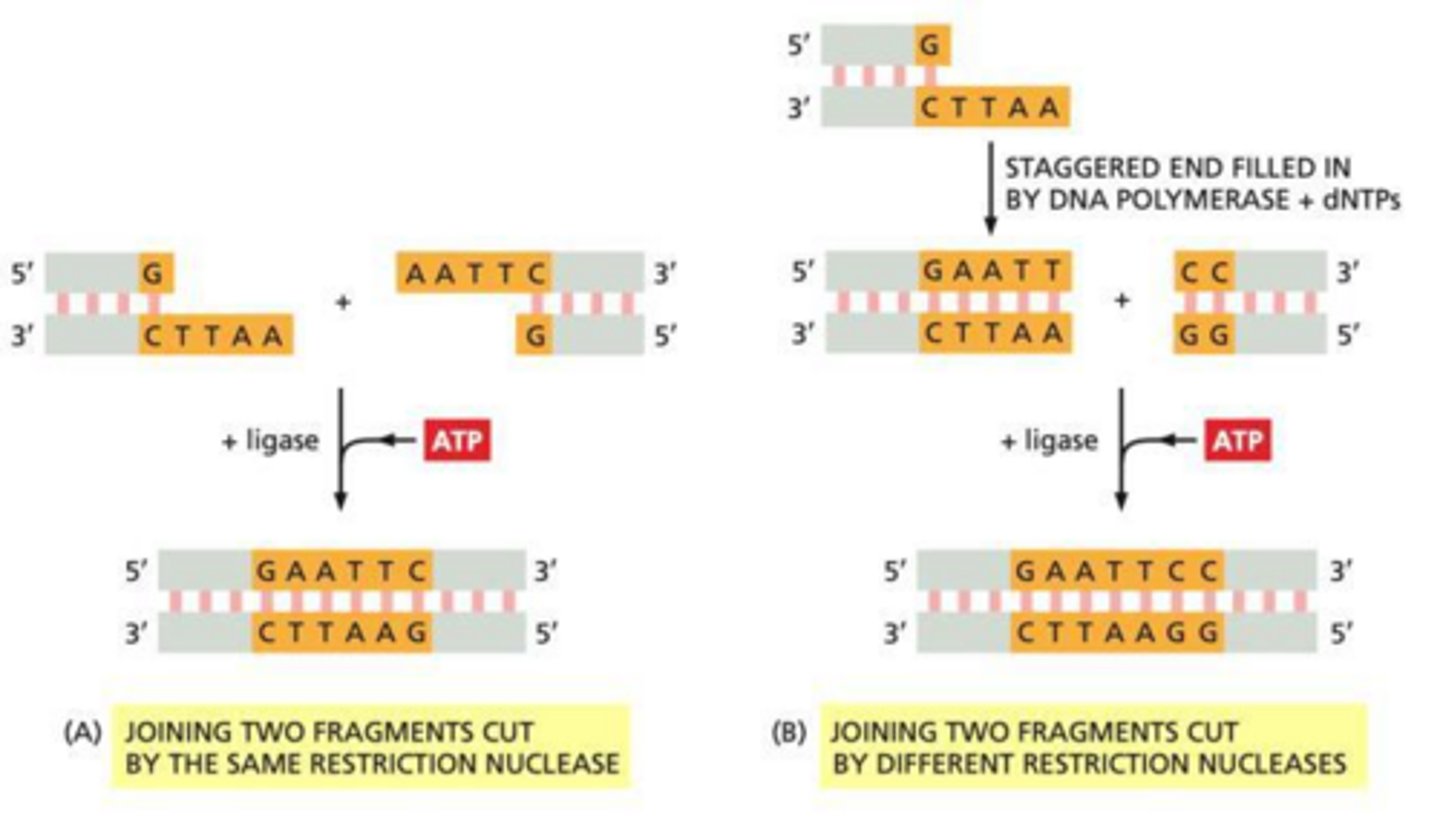
What is the role of DNA ligase in recombinant DNA technology?
It joins DNA fragments together by ligating the phosphodiester backbone.
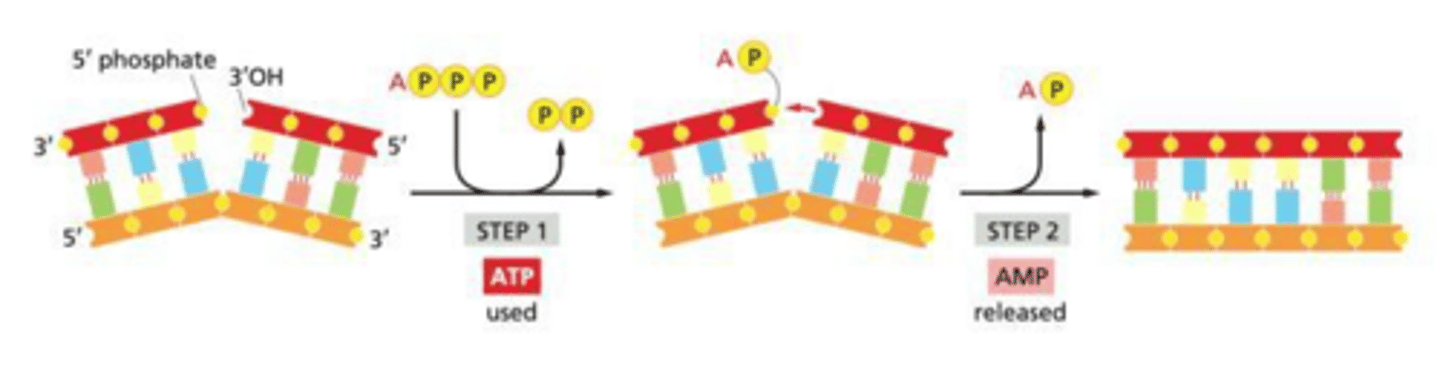
What chemical bond does DNA ligase form?
It joins the 5' phosphate group to the 3' hydroxyl group of DNA fragments.
What does it mean for a bacterial cell to be 'competent'?
It is in a state where it has been physically or chemically treated to enhance its ability to take up foreign DNA.
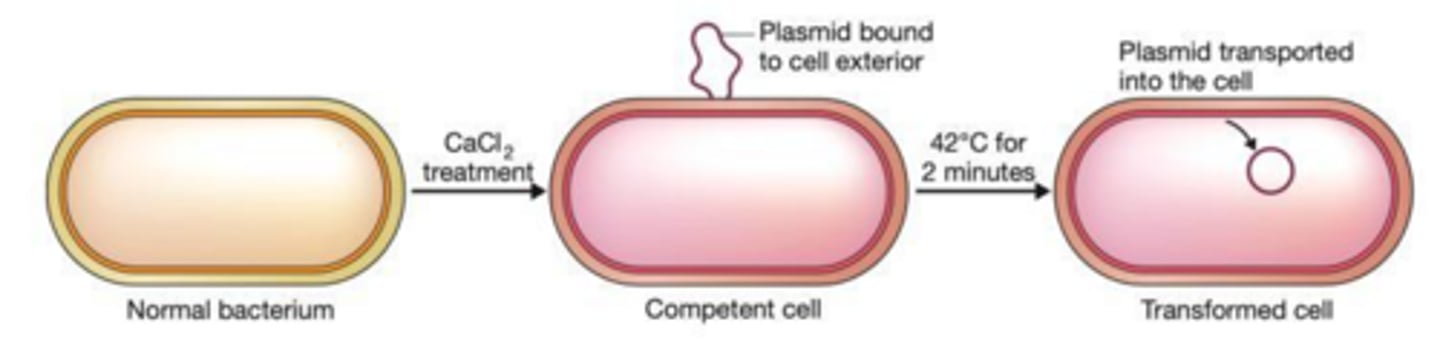
What historical method is used to increase the efficiency of DNA uptake in E. coli?
Soaking the bacteria in an ice-cold salt solution.
How can the problem of vector religation be minimized during cloning?
By treating the linearized vector with phosphatase to remove 5' phosphate groups.
What is the function of the lacZ' gene in a cloning vector?
It codes for part of the B-galactosidase enzyme, which is used for blue-white screening.
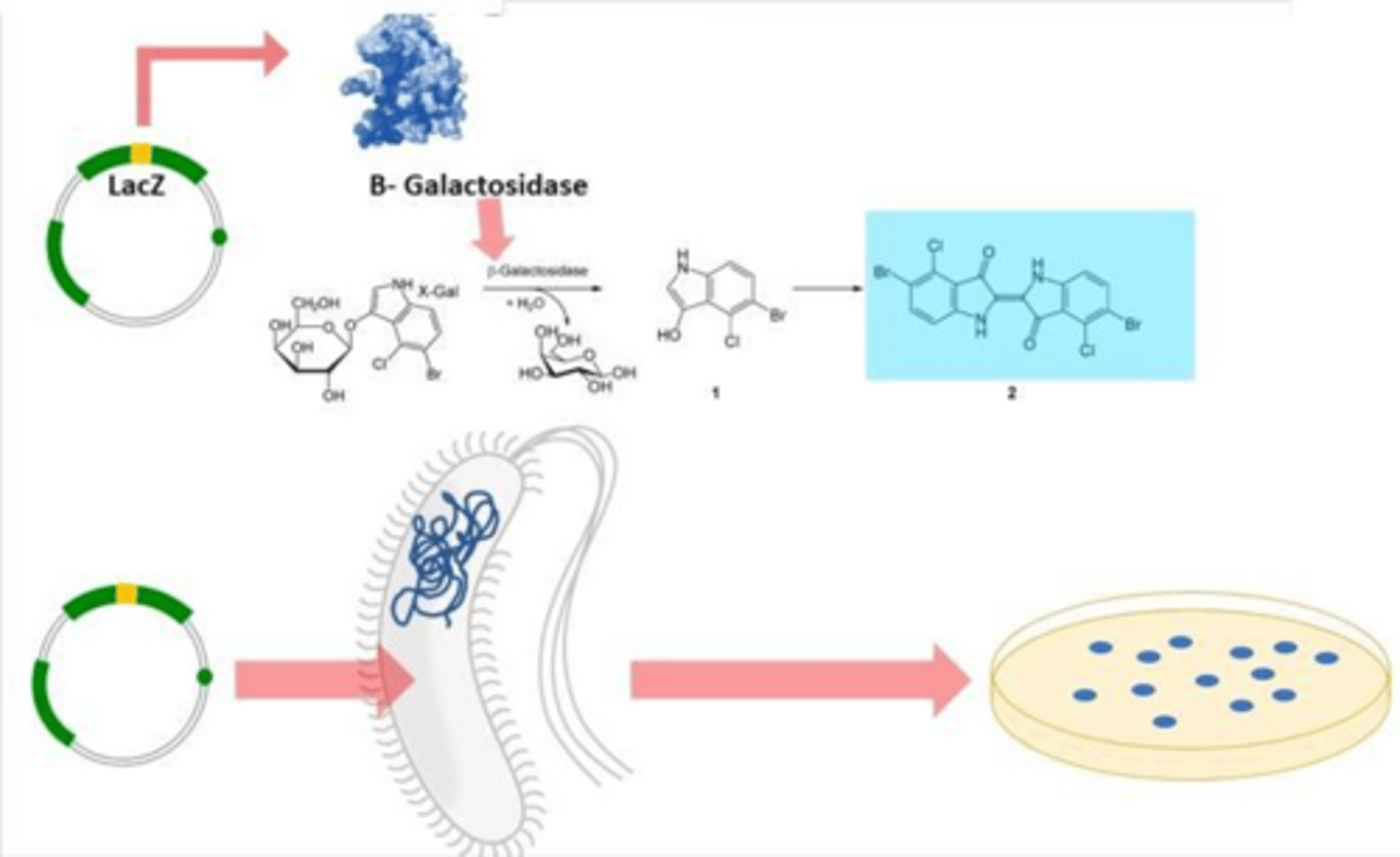
In blue-white screening, what does the conversion of X-gal indicate?
It indicates the presence of functional B-galactosidase, meaning the plasmid does not contain an insert in the lacZ' gene.
What are common host organisms used for cloning besides E. coli?
Yeasts (e.g., Saccharomyces cerevisiae), filamentous fungi, and mammalian or insect cells.
What is the primary requirement for a host organism in biotechnology?
It must be non-pathogenic and capable of being grown easily in large quantities.
What does 'transformation' refer to in the context of gene cloning?
The process of a bacterial cell taking up foreign DNA (usually a plasmid).
Why is genomic DNA used in research if it cannot express proteins in bacteria?
It is used for genome mapping and sequencing.
What is the result of a successful cloning process after many cell divisions?
A colony or clone of identical host cells, each containing one or more copies of the recombinant DNA molecule.
What is the function of the lacZ' segment in a modified lacZ gene?
It allows the synthesis of the B-galactosidase enzyme when complemented by a plasmid carrying the missing segment.
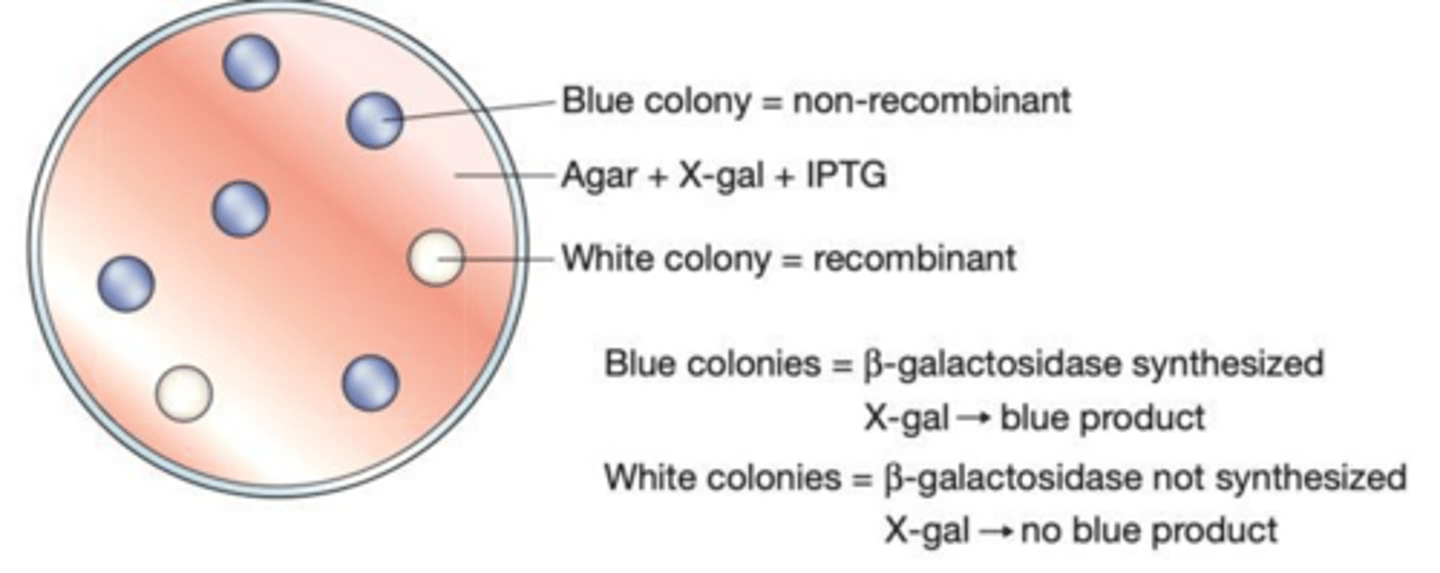
How are recombinant clones identified using the lacZ gene system?
Disruption of the gene by DNA insertion prevents enzyme production, resulting in white colonies instead of blue.
What is a genomic library?
A collection of clones containing a sufficient number of genomic fragments or cDNAs to represent every gene in an organism.
What is the purpose of hybridisation probing in colony screening?
To identify specific colonies or plaques containing a gene of interest using a labelled DNA probe.
How is DNA attached to a membrane during hybridisation probing?
Through their sugar-phosphate backbones after denaturation.
Why do nucleic acids migrate toward the positive electrode in agarose gel electrophoresis?
Because nucleic acids are negatively charged.
What is the role of ethidium bromide in DNA gel electrophoresis?
It fluoresces under UV light, allowing for the visualization of DNA bands.
How does agarose gel concentration affect DNA separation?
The composition determines pore size; lower concentrations (e.g., 0.5%) have larger pores suitable for larger DNA molecules.
What is the purpose of constructing a restriction map?
To determine the positions of different restriction sites within a DNA molecule using single and double digestions.
What is an RFLP?
Restriction fragment length polymorphism; a sequence variation that changes a restriction site.
Why is Taq polymerase essential for PCR?
It is a thermostable DNA polymerase that can withstand the high temperatures required for repeated cycles of DNA denaturation.
What are the three main steps in a PCR cycle?
Strand separation (denaturation), hybridization (annealing), and synthesis (extension).
What is the primary function of Southern blotting?
To identify specific DNA fragments in a complex mixture after separation by gel electrophoresis.
What are Northern and Western transfers used for?
Northern transfer is for RNA molecules, and Western transfer is for proteins.
What is the principle of the Sanger dideoxynucleotide sequencing method?
Premature termination of DNA synthesis using chain-terminating dideoxynucleotides (ddNTPs).
Why does the incorporation of a ddNTP stop DNA synthesis?
Because it lacks a 3' hydroxyl group necessary for the addition of the next nucleotide.
What is the advantage of cycle sequencing?
It uses a thermostable polymerase, allowing the reaction to be repeated in the same tube, which requires less template DNA.
What techniques are used to measure mRNA levels?
Northern blotting, RT-PCR, and microarray techniques.
What is the function of reverse transcriptase in RT-PCR?
It synthesizes complementary DNA (cDNA) from mRNA templates.
What is a DNA microarray?
A tool that uses thousands of defined DNA spots to measure the expression levels of many genes simultaneously.
How does RNA-seq analyze gene expression?
By sequencing cDNA samples from different tissues or conditions to discover which genes are expressed.
What is the purpose of cluster analysis in gene expression data?
To identify sets of genes with similar expression patterns that are likely co-ordinately regulated.
What is in situ hybridisation used for?
Determining the specific spatial location of gene expression within an organism or embryo.
Define epigenetics.
Heritable changes in gene activity that are not caused by changes in the DNA sequence.
How does DNA methylation affect gene expression?
It is a chemical modification that, along with histone modification, helps determine whether a gene is expressed.
What is the significance of sequence depth in genome sequencing?
It ensures every nucleotide is read multiple times (e.g., fivefold coverage) to identify and correct sequencing errors.
What are the advantages of 3rd generation sequencing?
It offers single-molecule real-time sequencing, longer reads, and the ability to detect DNA modifications.
Why is it important to determine epigenetic modifications?
To understand how cellular phenotype and gene activity are regulated beyond the primary DNA sequence.
What is the definition of biotechnology?
The manipulation of living organisms or their components to produce useful, usually commercial products.
Why is genomic DNA generally not suitable for expressing proteins in bacteria?
Eukaryotic genomic DNA contains introns, which bacteria cannot process.
How is complementary DNA (cDNA) synthesized?
It is synthesized from mRNA using the enzyme reverse transcriptase.
What are the three essential features of a plasmid cloning vector?
An origin of replication, a selectable marker (e.g., antibiotic resistance), and a cloning cleavage site.
What is the function of restriction endonucleases?
They cut double-stranded DNA at specific recognition sequences.
How do bacteria protect their own DNA from their own restriction enzymes?
By methylating the specific recognition sequences in their own genome.
What is the purpose of treating linearized vectors with phosphatase?
It removes 5' phosphate groups to prevent the vector from religating to itself without an insert.
How does blue-white screening identify recombinant clones?
Recombinant clones have a disrupted lacZ' gene, preventing the production of B-galactosidase, resulting in white colonies instead of blue.
What is the principle behind agarose gel electrophoresis?
Negatively charged nucleic acids migrate toward a positive electrode through a gel matrix that separates them by size.
What is the function of ethidium bromide in DNA visualization?
It intercalates into DNA and fluoresces under UV light, allowing for visualization of DNA bands.
What is a restriction fragment length polymorphism (RFLP)?
A sequence variation that changes a restriction site, resulting in different fragment lengths.
What are the three main steps in a single cycle of PCR?
Strand separation (denaturation), primer hybridization (annealing), and DNA synthesis (extension).
What is the purpose of Southern blotting?
To identify specific DNA fragments in a complex mixture by transferring them to a membrane and using hybridization probing.
What is the difference between Southern, Northern, and Western blotting?
Southern detects DNA, Northern detects RNA, and Western detects proteins.
What is the key principle of the Sanger dideoxynucleotide sequencing method?
The use of chain-terminating dideoxynucleotides (ddNTPs) to stop DNA synthesis at specific bases.
Why is 'sequence depth' or 'coverage' important in genome sequencing?
It ensures that every nucleotide is read multiple times to correct for errors inherent in sequencing methods.
What is the primary goal of DNA microarray analysis?
To measure the expression levels of thousands of genes simultaneously.
How does RNA-seq differ from microarray analysis?
RNA-seq uses rapid sequencing of cDNA samples to discover and quantify gene expression rather than relying on pre-defined probes.
What is the purpose of in situ hybridization?
To determine the spatial localization of gene expression within an organism or tissue.
What is epigenetics?
Heritable changes in gene activity that are not caused by changes in the underlying DNA sequence.
What are two common mechanisms of epigenetic regulation?
DNA methylation and histone modification.
What is the role of the vector in gene cloning?
It transports the foreign gene into a host cell and allows for its replication.
What does the 'lacZ'' gene code for in cloning vectors?
Part of the enzyme B-galactosidase.
What substrate is used in blue-white screening to detect B-galactosidase activity?
X-gal.
Why is it necessary to use radioactive or chemical labels in hybridization probing?
To allow for the detection of the probe after it has bound to the target DNA on a membrane.
What is the effect of agarose concentration on gel electrophoresis?
Higher agarose concentrations create smaller pores, which are better for separating smaller DNA molecules.
What is a restriction map?
A map showing the relative positions of different restriction sites within a DNA molecule.
What is the primary application of RT-PCR?
To measure and compare gene expression levels by converting mRNA to cDNA and amplifying it.
What is cluster analysis used for in gene expression studies?
To identify groups of genes that show coordinated expression patterns, suggesting they are involved in common pathways.
What was the primary finding regarding the pathogenicity of the E. coli strain in the 2011 German outbreak?
Sequencing revealed that changes in the methylation pattern, rather than the DNA sequence, likely contributed to its pathogenicity.
What were the core goals of the Human Genome Project established in 1988?
To sequence the entire human genome and selected non-human organisms, identify 20,000-25,000 genes, improve data analysis tools, store information in databases, transfer technology to the private sector, and address ethical/legal/social issues.
What is the difference between hierarchal shotgun sequencing and whole-genome shotgun sequencing?
Hierarchal sequencing breaks the genome into large fragments (BACs) and maps them before sequencing, while whole-genome shotgun sequencing breaks the entire genome into smaller fragments for direct sequencing and assembly.
What is a BAC (Bacterial Artificial Chromosome) in the context of genome sequencing?
A man-made piece of DNA that can replicate inside a bacterial cell, used to store large fragments of the genome during hierarchal sequencing.
How does next-generation sequencing differ from traditional methods regarding library generation?
Next-generation sequencing uses PCR amplification of billions of DNA fragments attached to a solid support rather than using bacterial cells to generate libraries.
When should PacBio sequencing be preferred over other methods?
When high accuracy and high-quality genome assembly are critical.
When should Oxford Nanopore sequencing be preferred?
When ultra-long reads and real-time data are required.
What bioinformatics methods are used to identify protein-coding genes in a raw genome sequence?
Scanning for start/stop signals, RNA-splicing sites, promoter sequences, open reading frames (ATG, TAG, TGA, TAA), and using BLAST to find similarity with known genes.
What is the function of AlphaFold?
An AI system developed by DeepMind that uses deep learning to predict 3D protein structures from amino acid sequences.
What is the difference between divergent and convergent evolution in protein structure?
Divergent evolution involves proteins from a common ancestor retaining a fold despite sequence changes; convergent evolution involves unrelated proteins independently evolving similar stable structures.
What was the primary objective of the 1000 Genomes Project?
To study genetic variation among humans, specifically identifying single nucleotide polymorphisms (SNPs) and insertions/deletions (indels) across different populations.
How does cancer genomics contribute to medical research?
It identifies mutations in the same groups of genes across thousands of cancer samples, helping to understand commonalities in cancer types.
What is the role of genomics in vaccine development?
Genomic tracking of viruses, such as the influenza virus, allows for the design of more effective annual vaccines.
What is pharmacogenomics?
The study of how an individual's genetic makeup influences their response to drugs, helping to avoid dangerous side effects and optimize treatment.
Why are cDNA libraries often used instead of genomic libraries?
cDNA libraries represent only the expressed genes (mRNA) and lack introns, which is useful for studying protein-coding sequences.
What is the significance of the Wellcome Trust Sanger Institute in the Human Genome Project?
It was the single biggest contributor, completing 30% of the sequencing of the human genome.
How are BACs ordered along a chromosome during hierarchal sequencing?
By comparing the pattern of restriction enzyme cleavage sites in a BAC clone with that of the whole genome.
What does the term 'high throughput' mean in the context of modern sequencing?
It refers to the ability to sequence a genome in hours due to advanced, rapid automated technologies.
What ethical constraint was placed on participants of the 1000 Genomes Project?
Participants consented to the full release of their genetic data with the understanding that no associated health or personal information would be collected.