Unit 1 Important Vocab
 Call Kai
 Learn
Learn Practice Test
 Spaced Repetition
 Match
Match Flashcards
 Knowt Play
1/91

There's no tags or description
Looks like no tags are added yet.
Name | Mastery | Learn | Test | Matching | Spaced | Call with Kai |
|---|
No analytics yet
Send a link to your students to track their progress
92 Terms
Independent Variable (IV)
What the experimenter changes
Example: Giving different amounts of caffeine
Dependent Variable (DV)
What is measured
Example: Memory score after caffeine
Control Group
Doesn’t get the treatment
Example: Group gets no caffeine
Random Assignment
Participants randomly placed in groups
Example: Names drawn from a hat
Correlation (≠ causation)
Two things related, but one doesn’t cause the other
Example: Ice cream sales ↑ and drowning ↑ (not cause)
Double-blind study
Neither participant nor researcher knows who gets treatment
Example: Drug vs placebo study
Neuron
brain cell that send, receive, and carry signals
Example: Neurons fire when you touch something hot
Action Potential
Electrical signal traveling down neuron
depolarization; positive charge on the inside
Example: Signal moving to pull your hand away
Neurotransmitters
Chemical messengers between neurons
Example: Dopamine = pleasure
CNS (Central Nervous System)
Brain + spinal cord
Example: Processes pain
PNS (Peripheral Nervous System)
Connects body to CNS
Example: Nerves in your hands
Sympathetic Nervous System
“Fight or flight”
Example: Heart racing during fear
Parasympathetic Nervous System
“Rest and digest”
Example: Calming down after stress
Frontal Lobe
Decision-making, personality
Example: Choosing what to say
Parietal Lobe
Touch, spatial awareness
Example: Feeling heat
Temporal Lobe
Hearing, memory
Example: Listening to music
Occipital Lobe
Vision
Example: Seeing a car
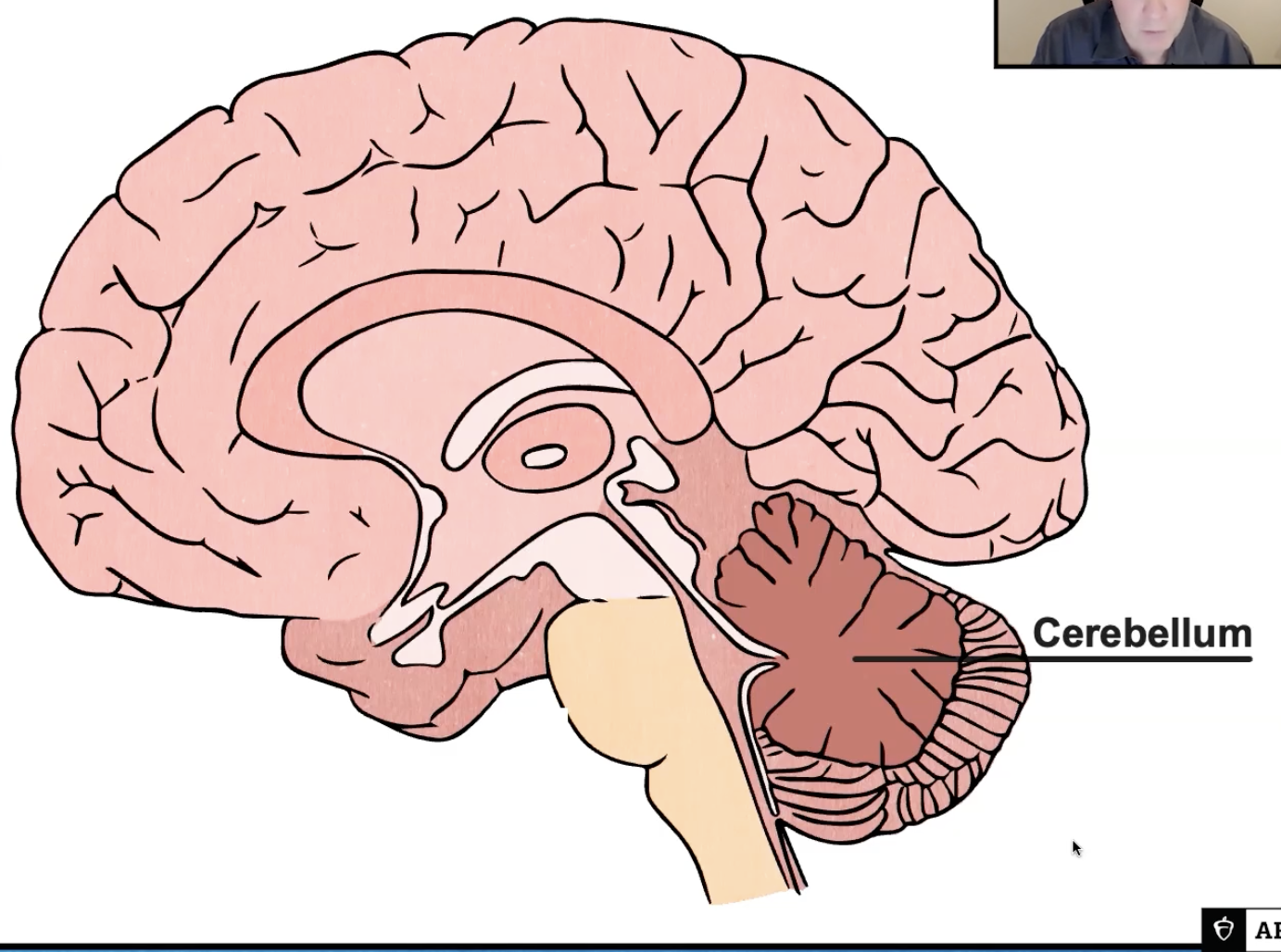
Hindbrain: Cerebellum
Balance + coordination
Example: Walking smoothly
Amygdala
Fear + emotions
Example: Feeling scared
Hippocampus
Memory formation
Example: Remembering a name
Hypothalamus
Hunger, hormones
Example: Feeling hungry
Glial Cells
Helper cells that send and receive chemical signals to and from each other and to and from neurons
sensory neuron (receptor)
different for each sense
respond to non-chemical stimulation
send afferent signals
Afferent signals Arrive at the brain
Motor neuron
Connected to all of our muscles
The only way we can speak
Receive efferent signals
Efferent signals Exit the brain
Soma (neural anatomy)
Body of the cell (has nucleus)
dendrites
branch like structures that detect/receive messages and pass it them into the soma
Axon
a long, cable-like structure that passes messages away from the cell body to other neurons, muscles, or glands
myelin sheath
protects and insulates the axon; makes the messages go faster
axon terminal/terminal buttons
knobs at the end of the axon that release neurotransmitters
synapse (synaptic cleft)
the tiny gap between the sending neuron and receiving neuron, where neurotransmitters are released
neuron resting potential
It is Polarized; Po=positive outside
neuron firing threshold
once it reaches threshold the neuron fires and its the same intensity everytime (all or none law)
refractory period
a breif period where the neuron cant fire again
reuptake
the sending neuron recollects neurotransmitters
glutamate
most abundant excitatory neurotransmitter
enhances learning and memory by strenghtening synaptic connects
GABA
most abundant inhibitory neurotransmitter
associated with various anxiety disorder
Acetylcholine (ACh)
in CNS and PNS
causes all movement
dopamine
linked to the anticipation of pleasurable or rewarding activities
involved in movement, attention, and learning
excess dopamine is associated with schizophrenia
lack of dopamine is associated with parkinson’s
endorphins
natural painkiller-involved in pain reduction and reward
epinephrine (adrenaline)
neurotransmitter and hormone
primary chemical in fight or flight
Norepinephrine (Noradrenaline)
arousal, alertness, vigilance
heavily involved in sleep cycle S
Serotonin
plays an important role in mood, appetite, sleep and dreams
agonist drug
fully activates neuron
antagonist drug
inhibits the full activation of a neuron
heroin
direct agonist for endorphins
nicotine
agonist for ACh
reuptake inhibitors
a drug that allows neurotransmitters to stay in the presynaptic neuron longer
prozac
inhibits the reuptake of serotonin
cocaine
inhibits the reuptake of dopamine
botox
antagonist for ACh
blocks ACh from reaching receptors
Thorazine
antagonist for dopamine
Psychoactive drugs
alter mental states
produces more dopamine
create tolerance
lead to physical dependence
all affect synaptic transmission
blood-brain barrier
allows some chemicals to go from the blood into the brain
depressants
slow or inhibit CNS
makes people tired/sleepy
most common: alcohol (agonist for GABA)
Opiates/Opiods
agonist for endorphins
ex. heroin, oxycodone, fentanyl
Stimulants
activate SNS
ex. Caffeine (antagonist for adenosine) and cocaine (agonist for dopamine)
Hallucinogens (Psychedelics)
create sensory and perceptual distortions and alter mood
ex. THC (causes hallucinations)
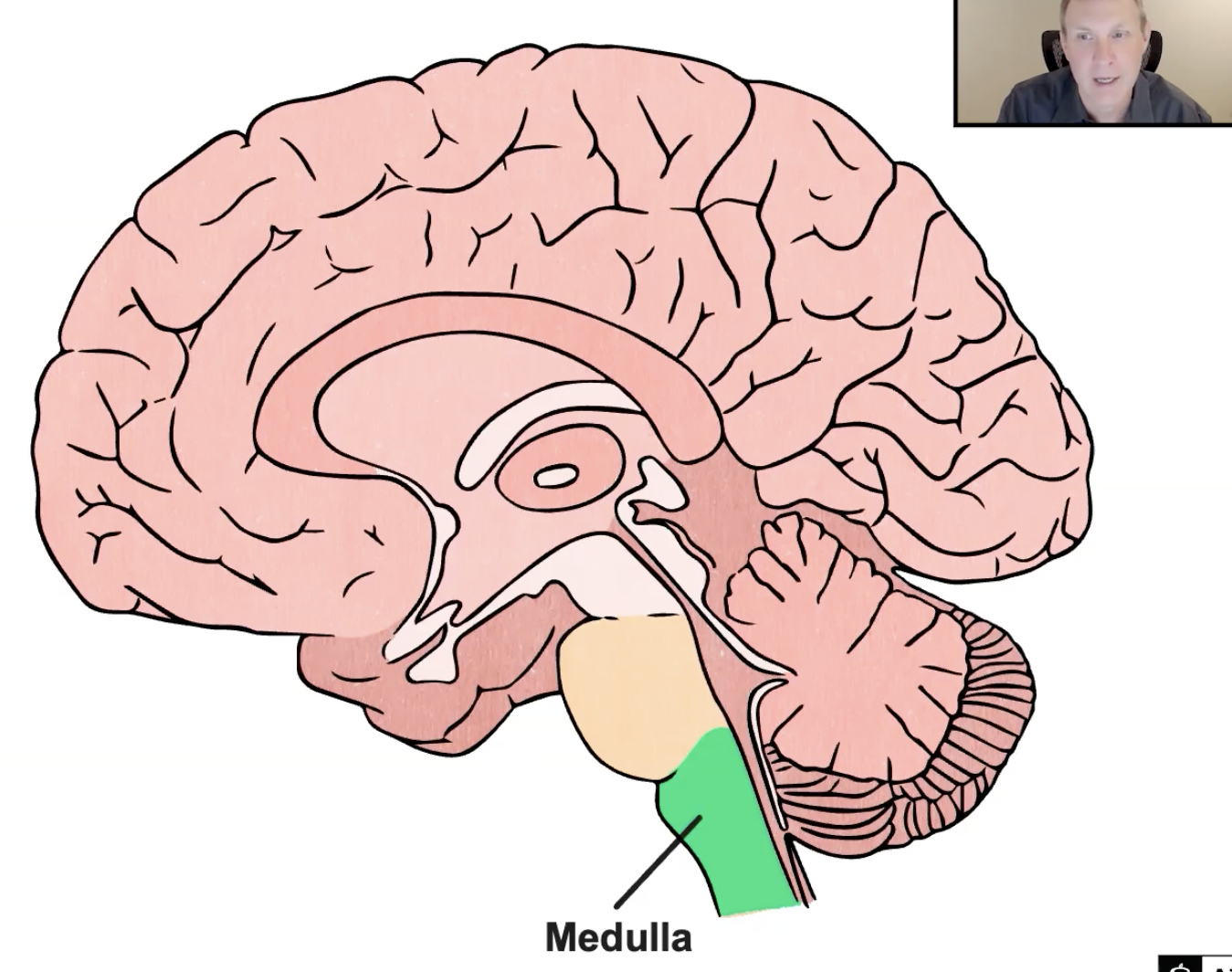
Hindbrain: Medulla
functions: HR, breathing and BP
reflexes: swallowing, sneezing, and vomiting
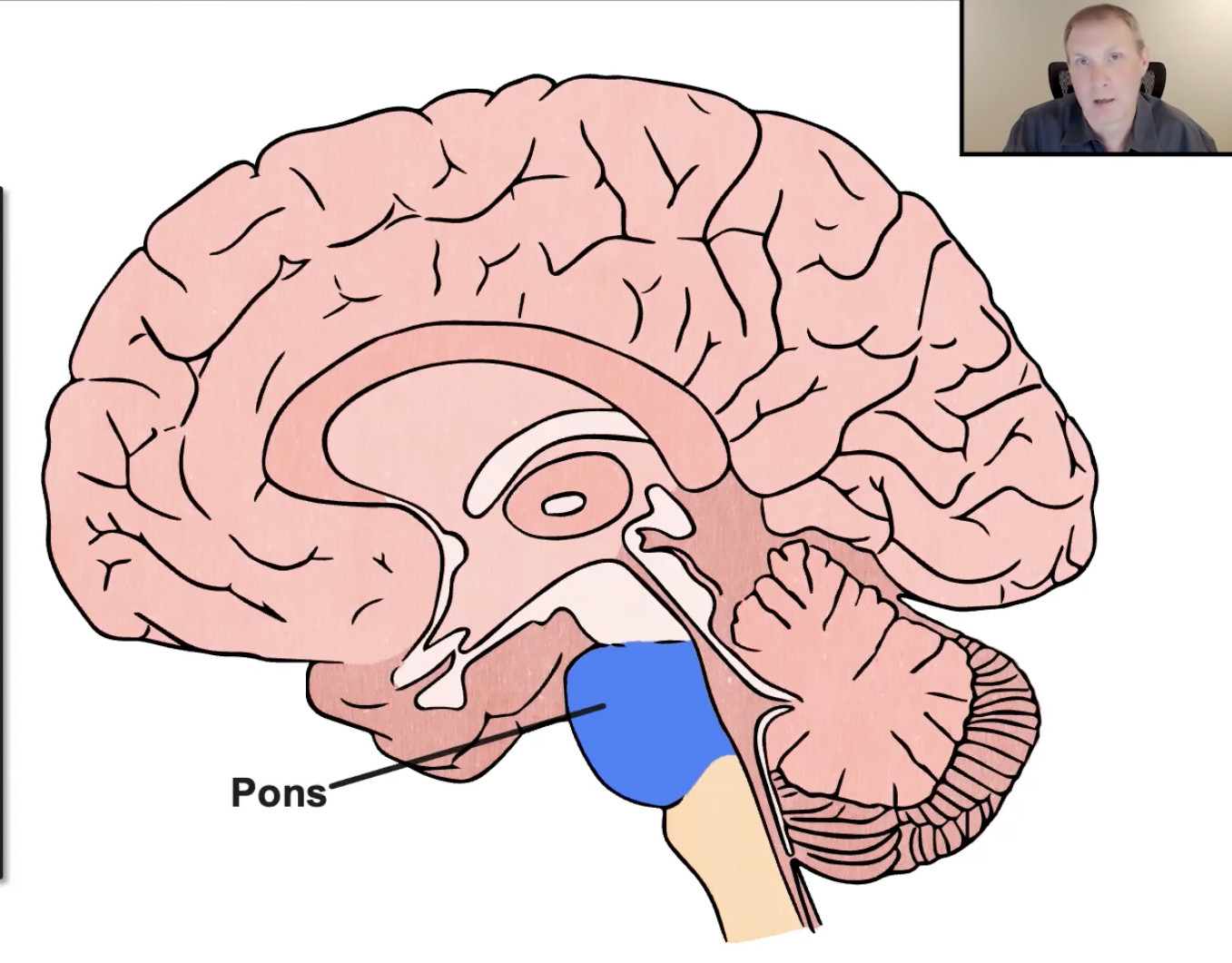
Hindbrain: Pons
The bridge that connects the brainstem and cerebellum
Helps coordinate and integrate movemets on each side of the body
plays a role in sleep functions
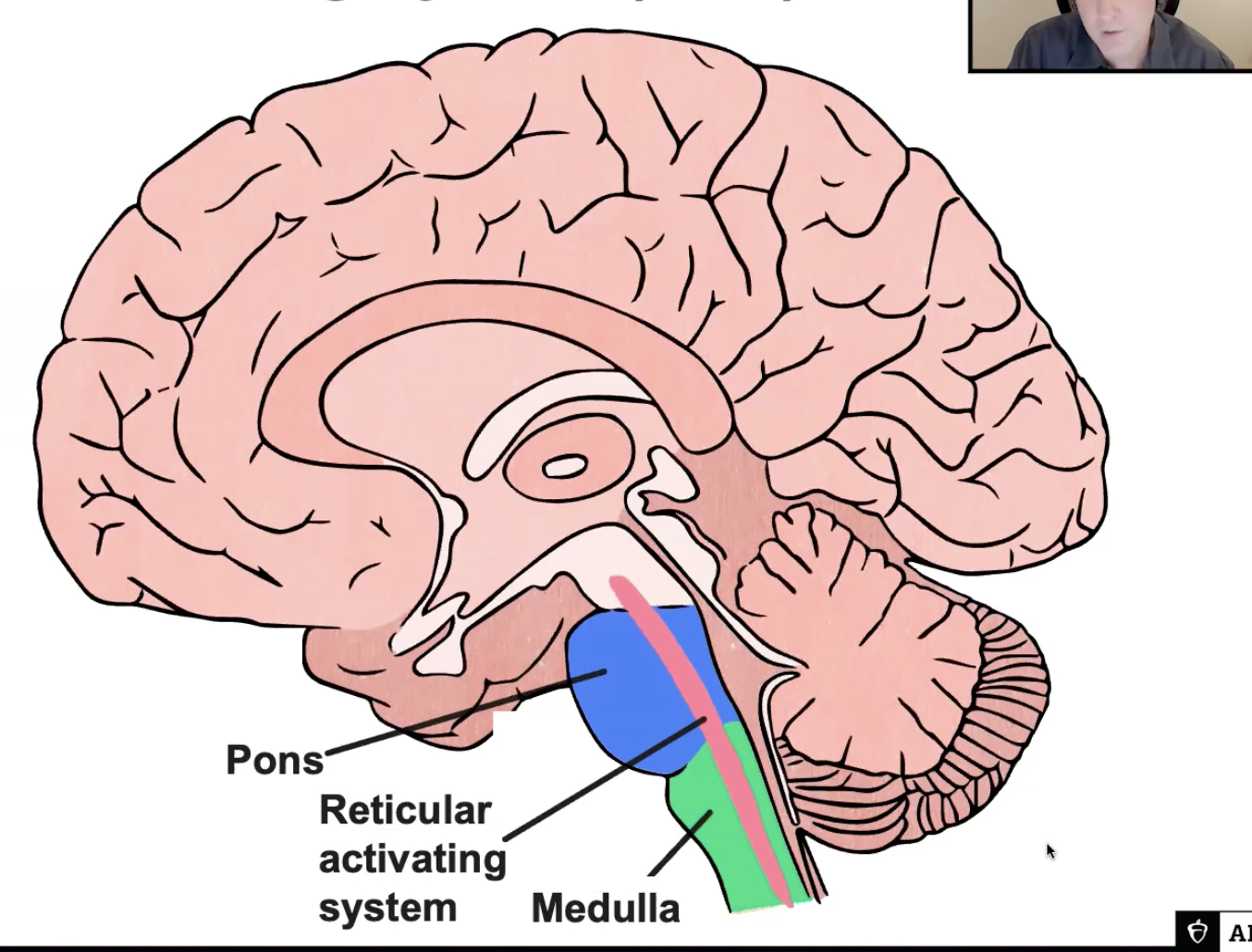
Hindbrain: Reticular Activating System (RAS)
A network of nerve fibers involved in attention, arousal, and alertness
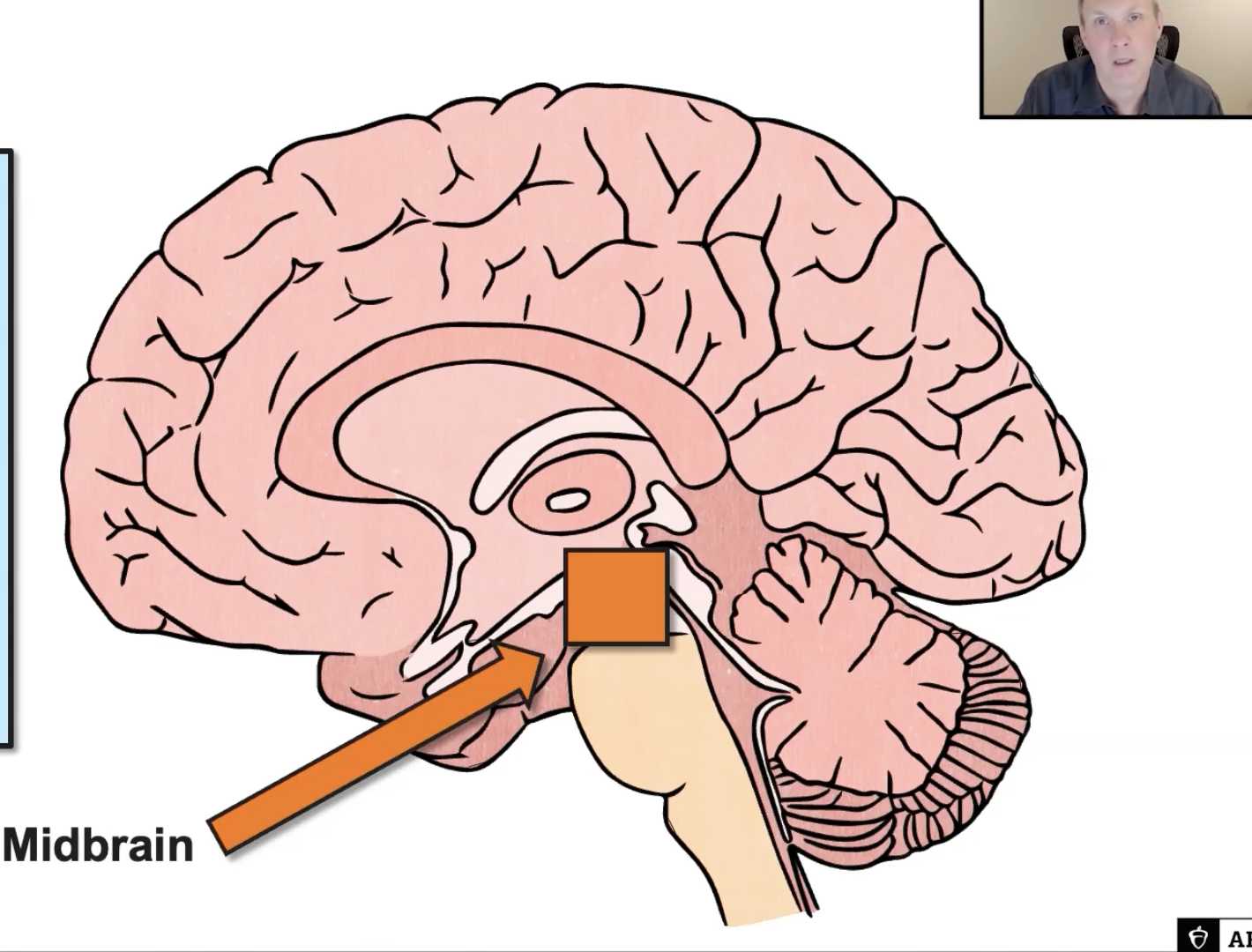
Midbrain
nerve system connecting the higher and lower portions of the brain
relays info between the brain and the ears and eyes
limbic system of brain
thalamus
hypothalamus
amygdala
hippocampus
Thalamus
all senses go here first and then to the cortex (only smell doesnt go here)
Hypothalamus
Fight or flight
hunger
hormones
Amygdala
anger and fear
Hippocampus
memeory
short term memory into long term memory
motor cortex
initates voluntary movement (left side of brain controls right side of body)
part of frontal lobe
somatosensory cortex
part of parietal lobe
sense of touch
Primary visual cortex
part of occipital lobe
vision
auditory association cortex
part of temporal lobe
hearing
Broca’s Area
part of frontal lobe
language area (expressive speech)
only on left side
wernicke’s area
part of temporal lobe
involved in understanding language
corpus callosum
connects the two hemispheres of the brain
split brain research
done to cure epilepsy
researchers observed patients over weeks
left hemisphere functions
language and interpreter
right hemisphere functions
spatial abilities, facial recognition, emotional expression, and more active when it comes to art and music
neuroplasticity
the brain can change as a result of experience or injury
two types: neurogenesis and long term potentationn
neurogenesis
creation of new cells
LTP
When many neurons fire together, their neural pathway becomes more efficient and smoother
EEG
measures electrical activity from brain
identifies sleep disorders
fMRI
shows both structure and function
measures changes in O2 levels in brain areas to show activiation
sleep cycles
a full cycle lasts 90-120 minutes
4 stages: NREM 1, 2, 3 and REM
Awake stage
beta waves and our brain is very responsive
NREM 1
alpha waves
NREM 2
theta waves
NREM 3
delta waves/deepest stage of sleep/get shorter throughout the night
sleepwalking and talking
REM
beta waves
Our brain is responsive (like it’s awake)
gets longer throughout the night
paralyzed body
Restoration Theory of Sleep
sleep helps restore and repair muscles and brain tissues
Memory Consolidation Theory of Sleep
sleep helps us restore and rebuild our memories of the day’s experiences, happens during REM
Energy Conservation Theory of Sleep
Sleep protects us
Psychological Dream Theory
Freud suggests that dreams have a deep meaning
Activation Synthesis
Dreaming helps organize our brains