637 Ch9 CVP Implications of Systemic Diseases
 Call Kai
 Learn
Learn Practice Test
 Spaced Repetition
 Match
Match Flashcards
 Knowt Play
1/16

There's no tags or description
Looks like no tags are added yet.
Name | Mastery | Learn | Test | Matching | Spaced | Call with Kai |
|---|
No analytics yet
Send a link to your students to track their progress
17 Terms
What are the largest factors contributing to the rise of obesity?
Environmental, increased caloric intake and reduced physical activity (also: genetics)
What are general factors that contribute to obesity?
Environmental
Increased caloric intake
Decreased physical activity
Genetics
Monogenic mutations
Polygenic abnormalities
Hormonal
Medical conditions
Medications
Low calcium/dairy intake
Sleep deprivation
Novel possibilities
What are prenatal and early postnatal environmental factors that contribute to obesity? What factor reduces risk?
Maternal smoking during pregnancy
Low birth weight relative to gestational age
Higher maternal BMI at the onset of pregnancy
Breastfeeding appears to REDUCE risk
What are health hazards of obesity?
Higher prevalence of: HTN, CAD, stroke, insulin resistance, glucose intolerance, T2DM, dyslipidemia, gallbladder disease, OA, other ortho problems, sleep apnea, gynecologic problems, obesity hypoventilation syndrome, pHTN, cancer
*What are the classifications of obesity based on BMI?
I: 30-34.9 kg/m2
II: 35-39.9 kg/m2
III: 40 kg/m2 or more (extreme or morbid)
What are health complications associated with obesity?
HTN, dyslipidemia, insulin resistance, T2DM, CAD/CVD/CKD, LV dysfunction/HF, cardiomyopathy, PFT abnormalities/restrictive lung dysfunction, obstructive sleep apnea, obesity hypoventilation syndrome, orthopedic problems (osteoarthritis, plantar fasciitis), GI disease (GERD, gallstones, nonalcoholic fatty liver, steatohepatitis), increased risk of breast, prostate, colon, endometrial, and other cancers
What are CVP complications of obesity i.e. associated diagnoses/underlying factors?
Associated diagnoses
HTN (3x greater) - weight gain, BP, and risk for CHF
HF: increased risk of LV dysfunction, increased SNS activity (inc RHR, inc BP, dec HRV, susceptible to illness, cardiac events, and higher risk for arrhythmias), SCD
Elevated minute ventilation, reduced FEV1, VC, ERV, FRC, and TLV, reduced pulmonary compliance, respiratory muscle insufficiency, increased risk for respiratory failure and infection, DKA
Obstructive sleep apnea
CAD, stroke
Underlying factors: atherosclerosis, insulin resistance, increased C-Reactive protein, dyslipidemia
What is a significant, realistic weight loss % goal?
5-10% of baseline weight
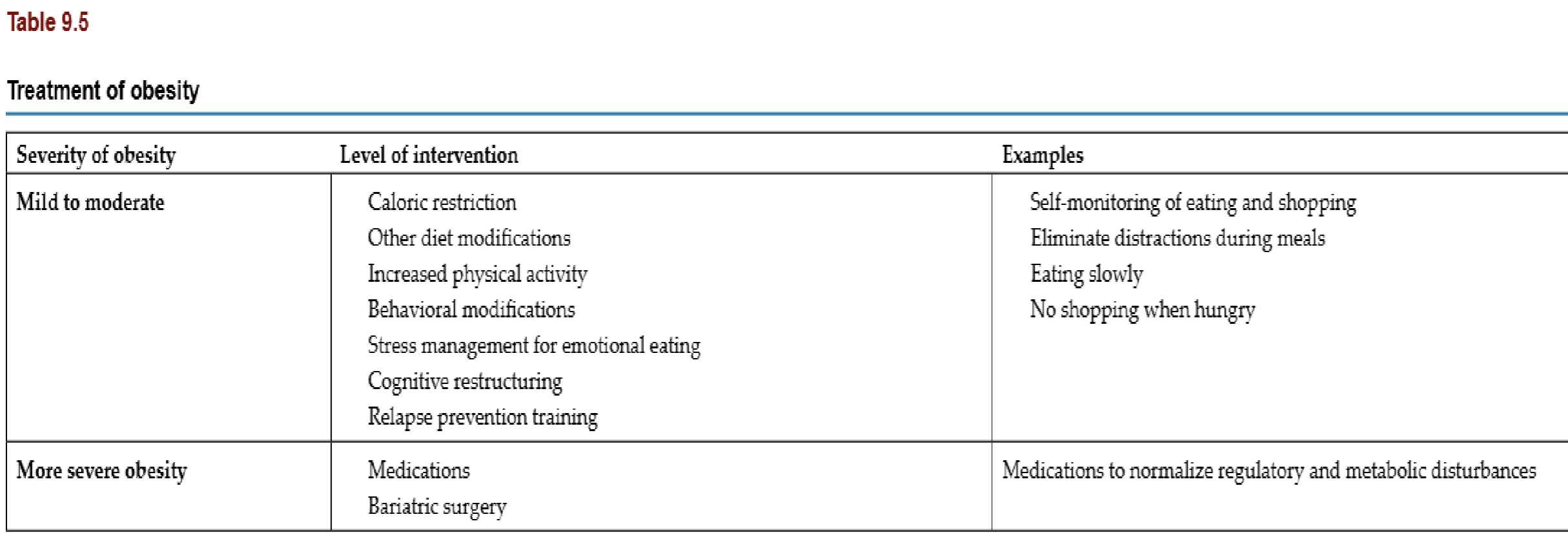
*What are the treatments for mild/moderate vs. severe obesity and examples of each?
*What are the clinical implications for physical therapy?
Stepped care approach - tx assoc. w/ severity of classification of obesity
Goal - 5-10% weight reduction from baseline
Combine approaches effective i.e. diet & exercise
Consistent, long term compliance w/ diet modification, 1-2lbs per week is safe
Emphasize high protein vs low fat, NOT low calorie diets
*40-60% of HHR, duration, emphasized over intensity (45-60min/day) of NWB, resistance, endurance, etc.
Injury prevention priority, temperature regulated envt b/c impaired thermoregulation
What is the common criteria for metabolic syndrome? What relationships are important?
3/5
Central obesity, elevated TGs. low HDl cholesterol, HTN, elevated FBG
Relationship btwn cardio, renal, metabolic disease
Importance of multidisciplinary support to reduce risk of developing DM
True or false: drug treatment reduces the risk of developing adverse CVP events.
False
What are the 5 criteria measures for metabolic syndrome?
Increased waist circumference
Elevated TGs or drug tx
Reduced HDL-C or drug tx
Elevated BP or drug tx
Elevated FBG or drug tx
Can you describe what these comorbidities/RFs can result in: HF, T2DM, smoking, age, gender
HTN → HF
T2DM → stroke, renal failure
Smoking → CAD, COPD
Age → CAD, osteoporosis, ventricular dysfunction, decreased lung compliance
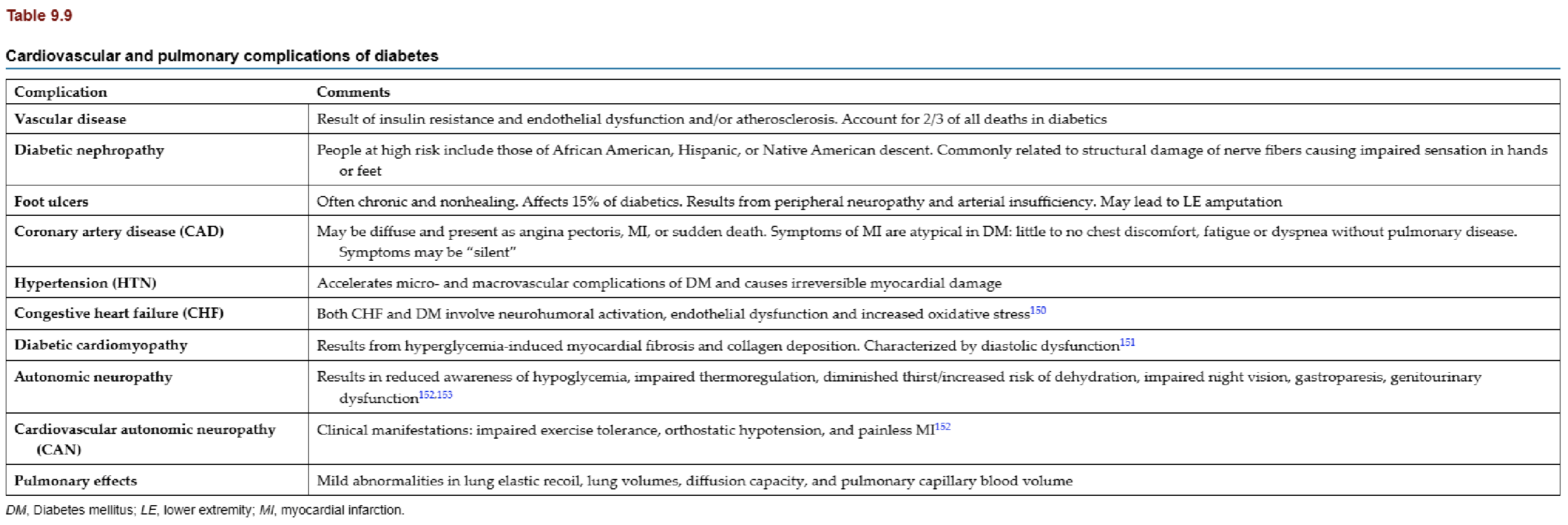
What are CVP complications of diabetes?
Conduction dysfunction: Sinus node dysfunction, AV arrhythmias
Small blood vessel damage: eyes, kidneys, nerves
Prevalence of comorbidities: HTN, autonomic neuropathy, CAD, PAD, stroke, neuropathy, renal failure, non healing foot ulcers
Slowed digestion of food in stomach, carpal tunnel syndrome, erectile dysfunction, autonomic dysfunction, other nerve problems
What comorbidity is 1.5-3x more prevalent in people with DM?
HTN
Accelerates microvascular & macrovascular complications of DM, causes irreversible myocardial damage
Aggressive tx of borderline HTN → reduces risk
Describe how the CVP complications of diabetes affect/worsen the condition.