Appendicular: The pelvic girdle and bony pelvis
 Call Kai
 Learn
Learn Practice Test
 Spaced Repetition
 Match
Match Flashcards
 Knowt Play
1/45

There's no tags or description
Looks like no tags are added yet.
Name | Mastery | Learn | Test | Matching | Spaced | Call with Kai |
|---|
No analytics yet
Send a link to your students to track their progress
46 Terms
Pelvic girdle definition
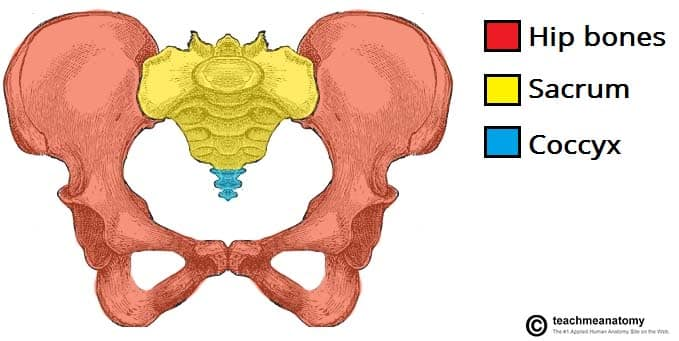
The pelvic girdle is formed by a pair of hip bones (os coxae) that attach the lower limbs to the axial skeleton.
Bony pelvis definition
The bony pelvis consists of the two os coxae, the sacrum, and the coccyx.
Pelvic girdle function
The pelvic girdle provides stability, supports body weight, and transfers weight from the axial skeleton to the lower limbs.
Pelvic girdle mobility
The pelvic girdle is largely immobile compared to the pectoral girdle, allowing greater stability for weight-bearing.
Os coxa definition
The os coxa (hip bone) is a large bone forming the pelvic girdle and is also called the innominate bone.
Os coxa development
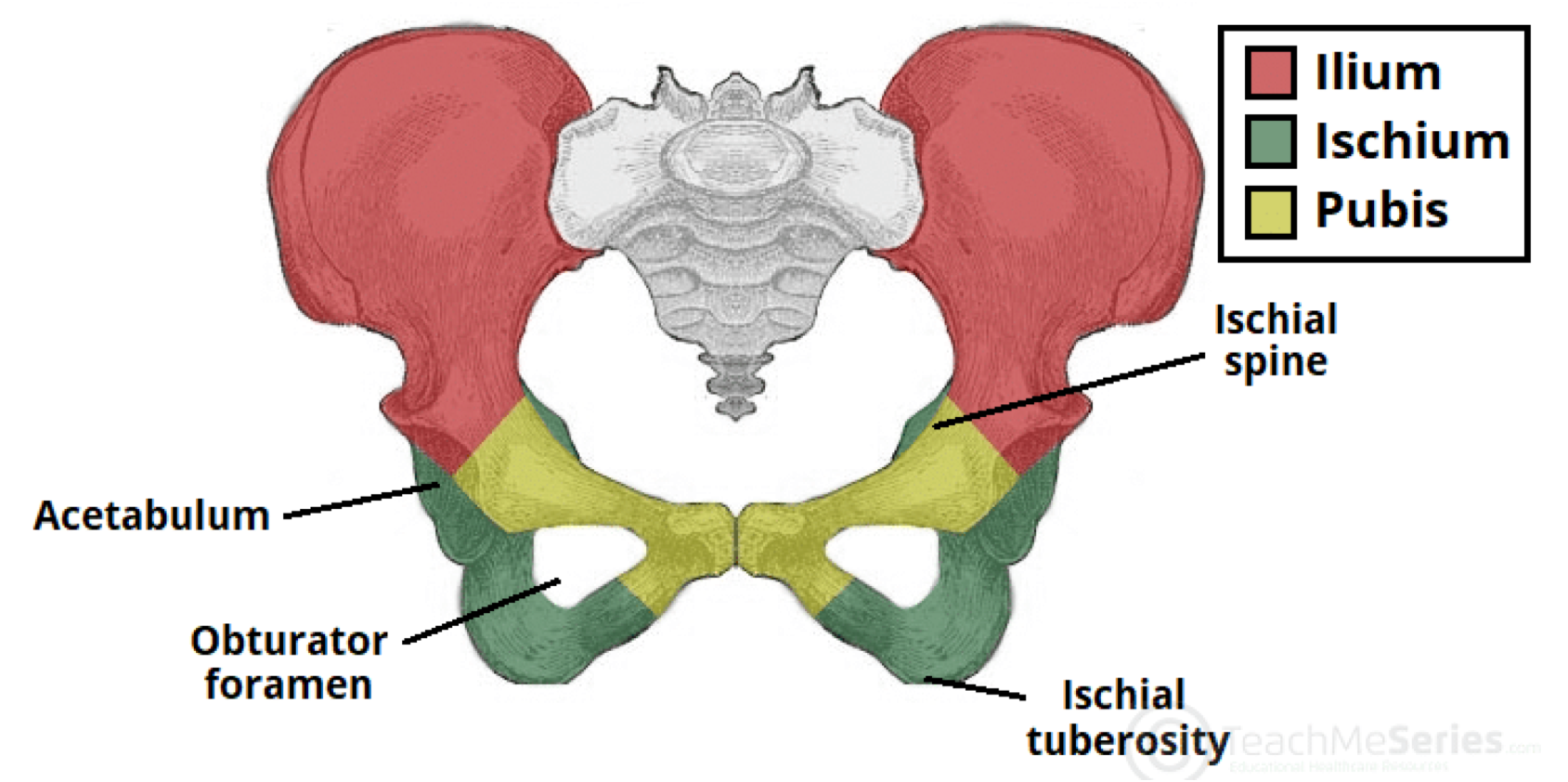
The os coxa develops from three primary ossification centres: ilium, ischium, and pubis.
Os coxa fusion
In juveniles, the ilium, ischium, and pubis are separate and united by cartilage; in adults, they fuse into one bone.
Regions of os coxa
The three regions of the os coxa are the ilium, ischium, and pubis.
Acetabulum definition
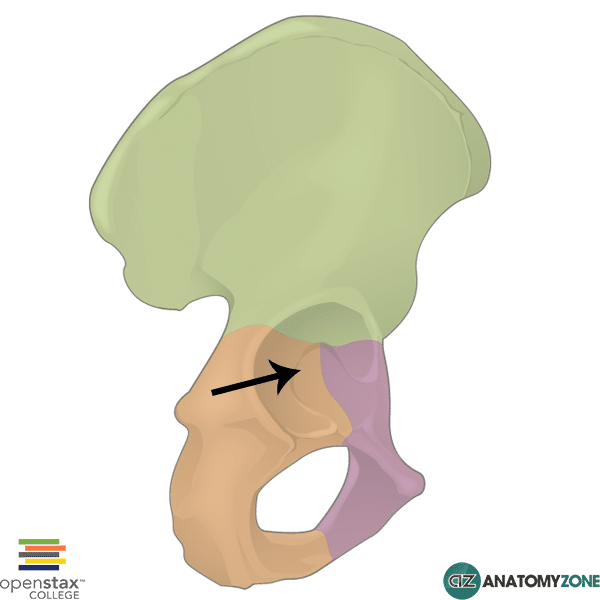
The acetabulum is a deep, cup-shaped cavity formed by the convergence of ilium, ischium, and pubis.
Acetabulum articulation
The acetabulum articulates with the head of the femur to form the hip joint.
Obturator foramen definition
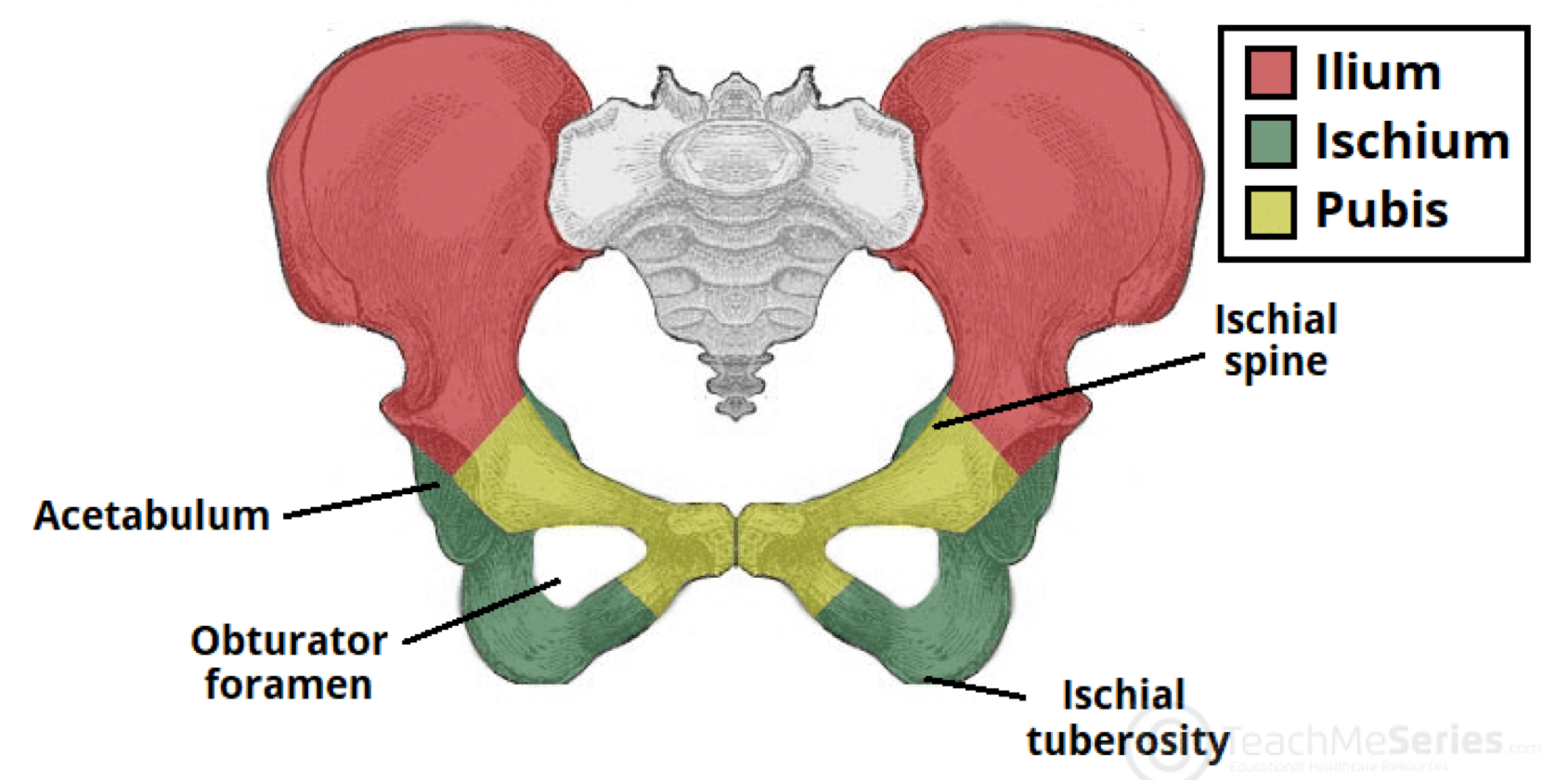
The obturator foramen is a large opening between the pubis and ischium inferior to the acetabulum.
Obturator foramen function
The obturator foramen allows passage of nerves and blood vessels to the lower limb.
Ilium position
The ilium is the large, superior, fan-shaped region of the hip bone.
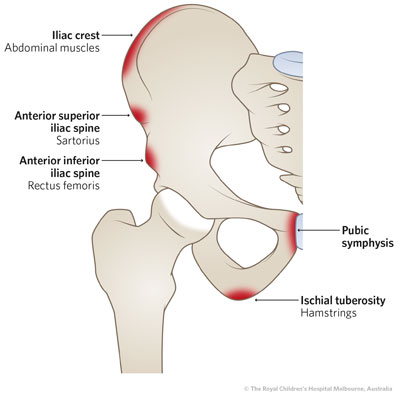
Iliac crest
The iliac crest is the broad, curved superior border of the ilium.
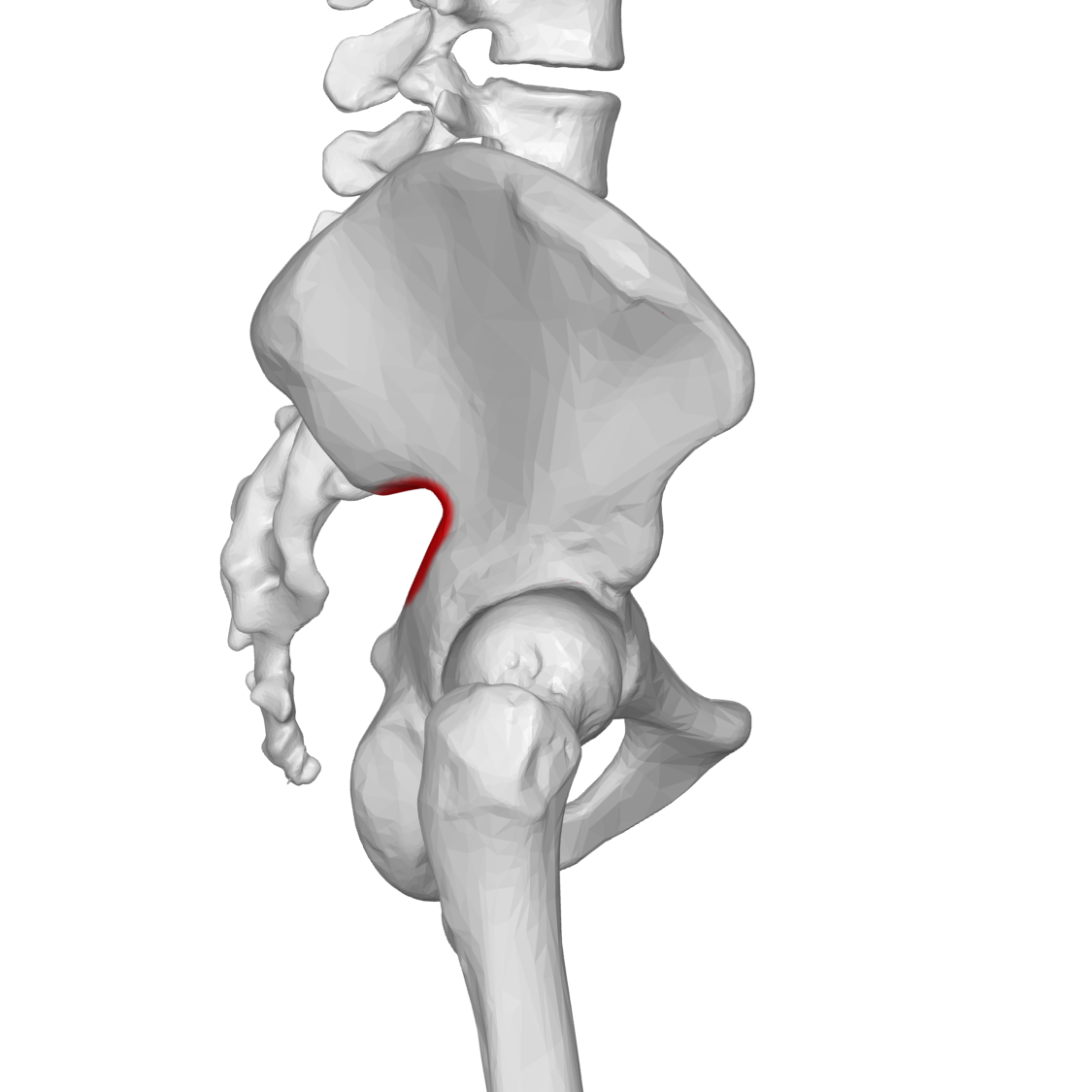
Greater sciatic notch
The greater sciatic notch is a large posterior indentation allowing passage of structures such as the sciatic nerve.
Iliac spines definition
The ilium has four iliac spines: anterior superior, anterior inferior, posterior superior, and posterior inferior.
Anterior superior iliac spine (ASIS)
The ASIS is located at the anterior end of the iliac crest and is a key palpable landmark.
Auricular surface
The auricular surface is a roughened area of the ilium that articulates with the sacrum.
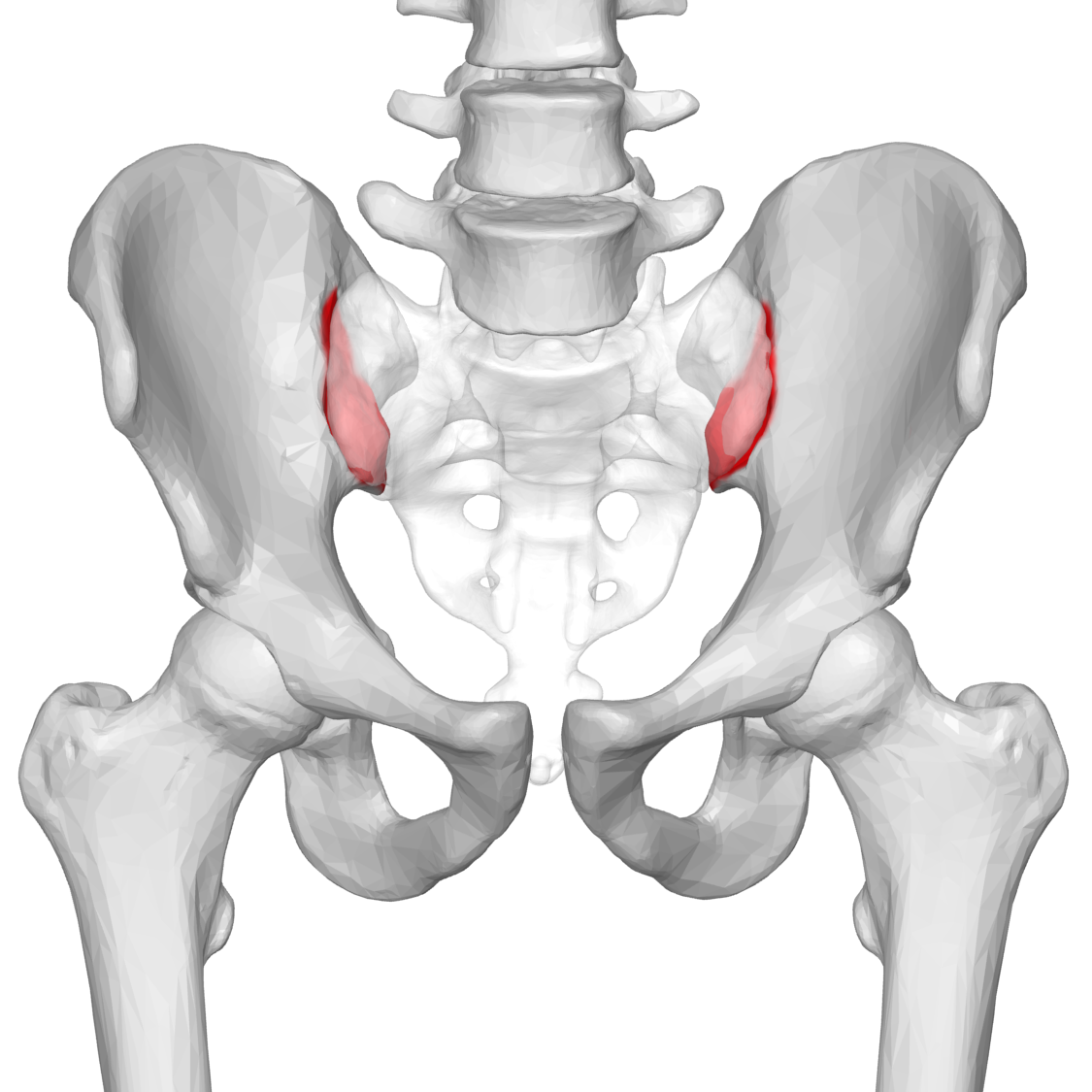
Auricular meaning
The term "auricular" refers to an ear-like shape.
Sacroiliac joint
The auricular surface of the ilium articulates with the sacrum to form the sacroiliac joint.
Ischium position
The ischium forms the posteroinferior region of the hip bone.
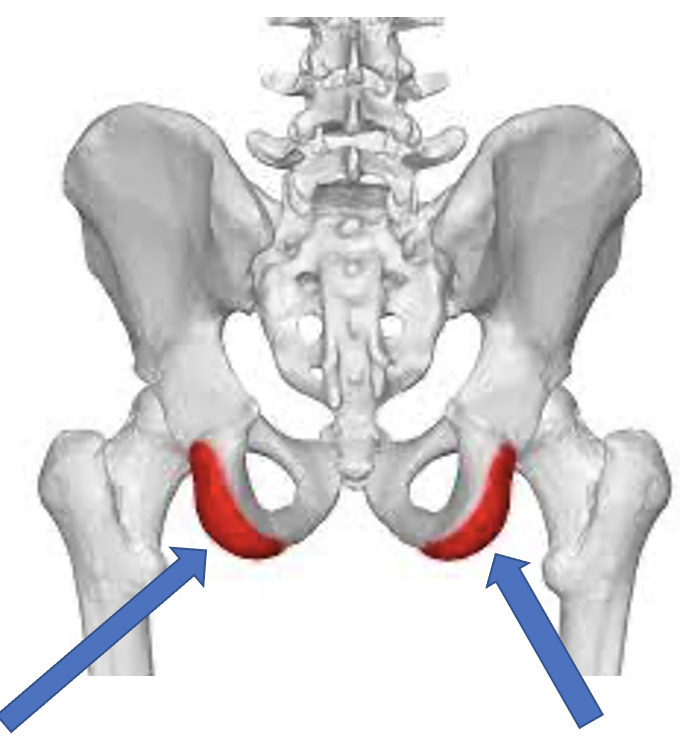
Ischial tuberosity
The ischial tuberosity is a large, roughened projection that supports body weight when sitting and serves as a hamstring attachment site.
Ischial ramus
The ischial ramus extends anteriorly and joins the inferior pubic ramus.
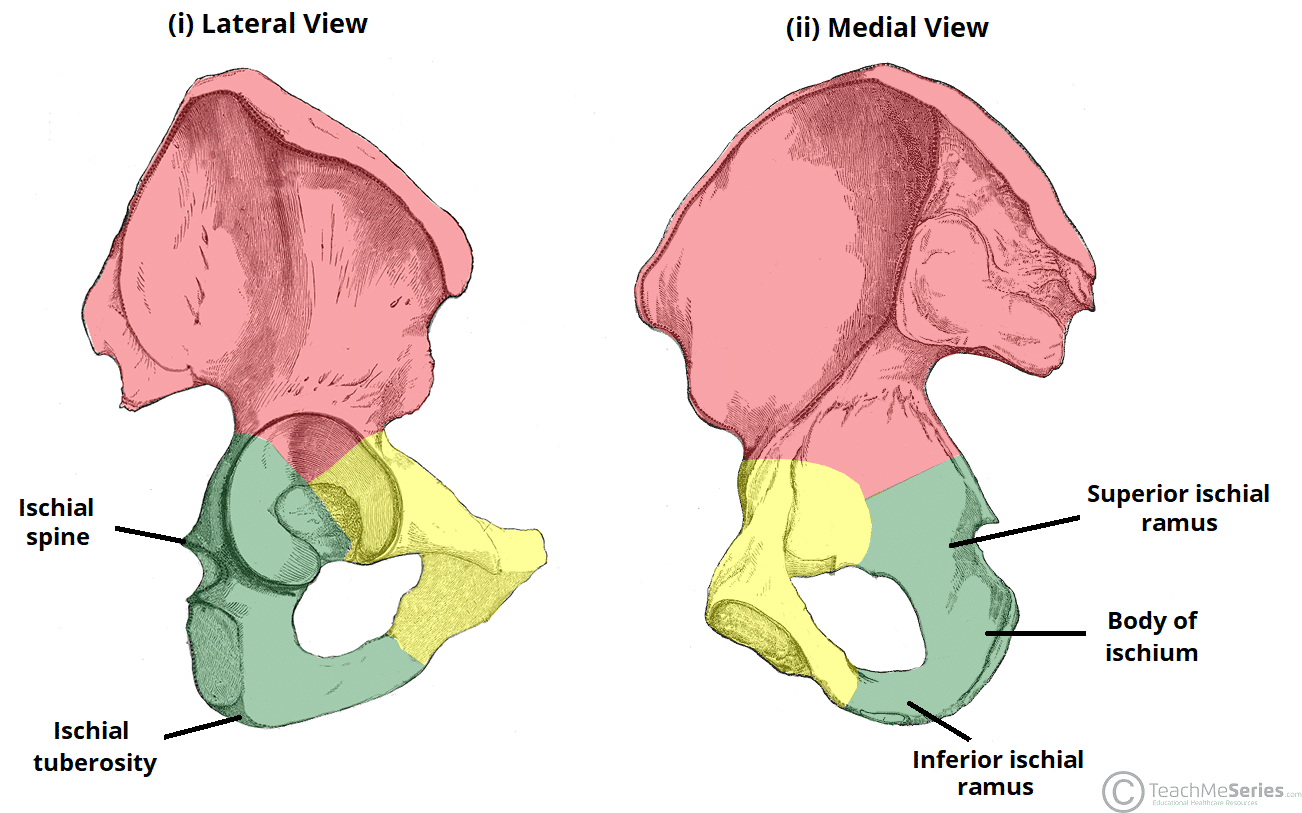
Ischiopubic ramus
The ischial ramus and inferior pubic ramus fuse to form the ischiopubic ramus.
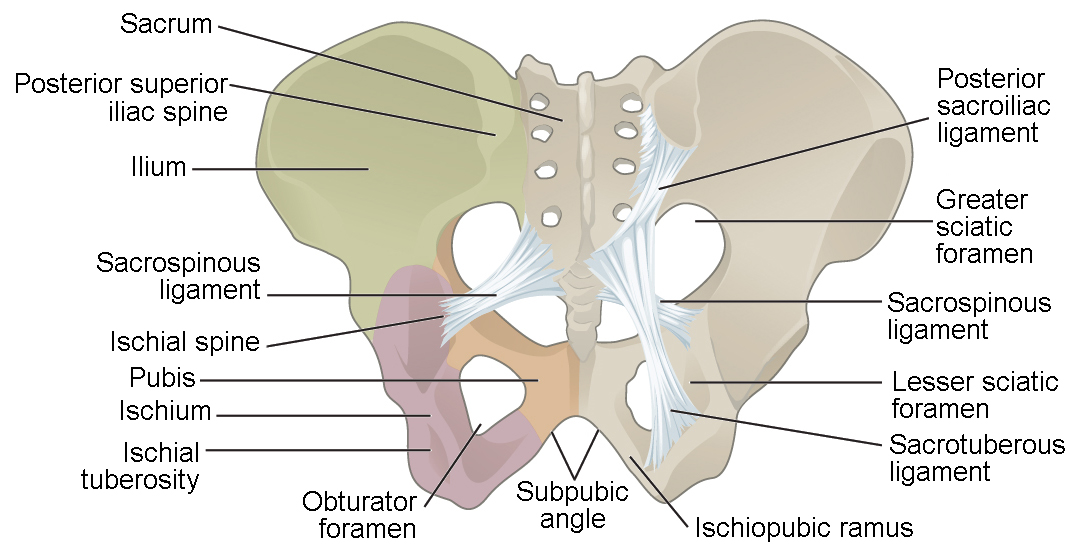
Pubis position
The pubis forms the anterior portion of the hip bone.
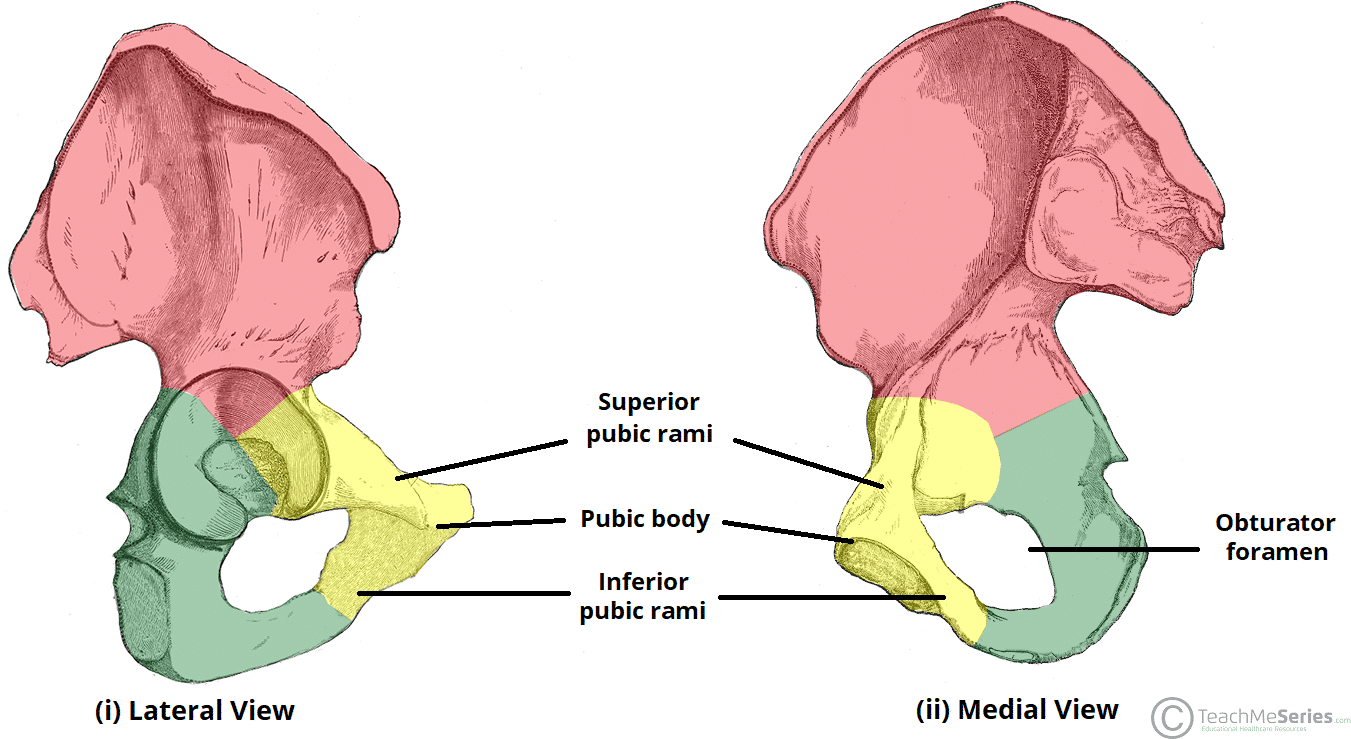
Pubic body
The pubic body is the central portion of the pubis.
Symphyseal surface
The symphyseal surface is an oval medial surface that articulates with the opposite pubis.
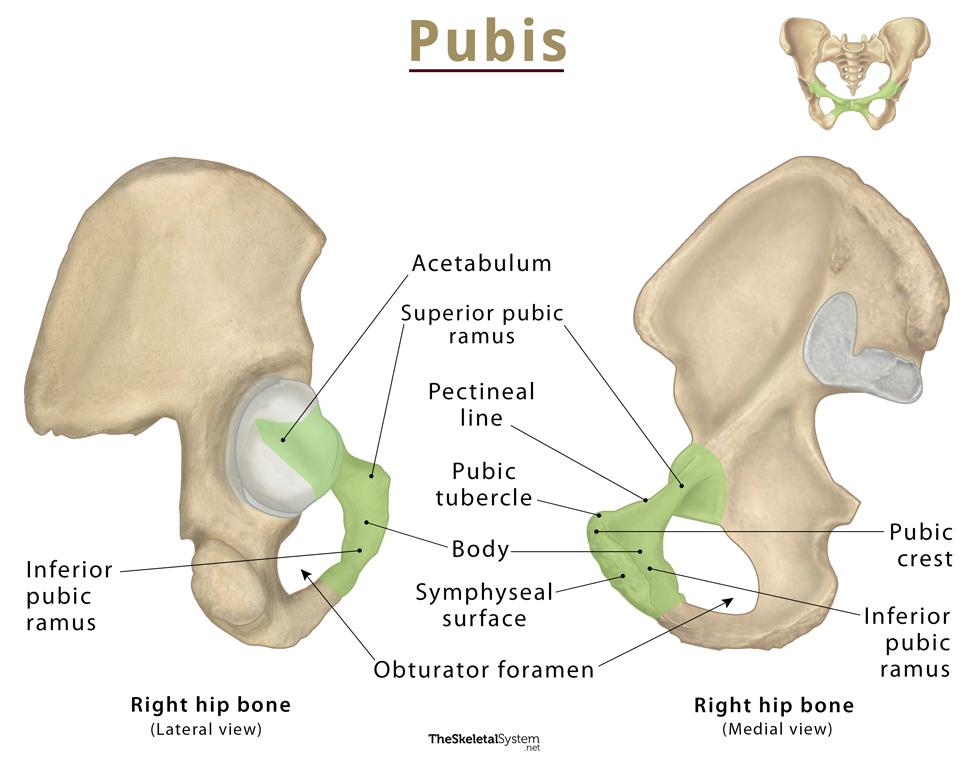
Pubic symphysis
The pubic symphysis is a cartilaginous joint joining the left and right pubic bones.
Inferior pubic ramus
The inferior pubic ramus extends laterally and joins the ischial ramus (green)
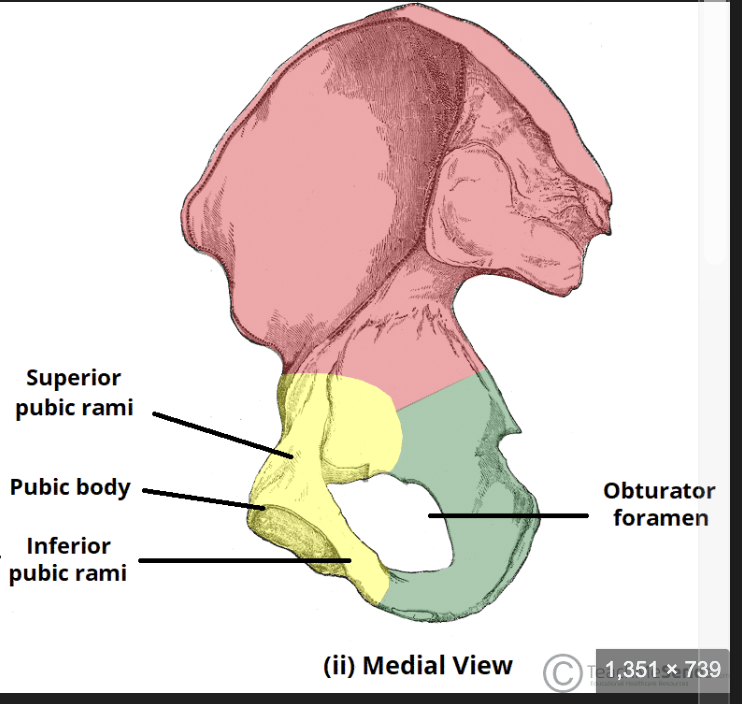
Superior pubic ramus
The superior pubic ramus extends from the pubic body toward the ilium.
Hip joint type
The hip joint is a synovial ball-and-socket joint.
Hip joint articulation
The hip joint is formed between the acetabulum and the head of the femur.
Pelvic joint classification
Pelvic joints include synovial joints (hip (ball and socket), sacroiliac (plane)) and cartilaginous joints (pubic symphysis).
Sacroiliac joint classification
The sacroiliac joint is a strong, largely immobile synovial joint."diarthro-amphiarthrodial"
Pubic symphysis classification
The pubic symphysis is a cartilaginous joint allowing slight movement (amphiarthrosis).
Joint classification overview
Joints are classified structurally as fibrous, cartilaginous, or synovial.
Functional classification of joints
Joints are classified as synarthrosis (immovable), amphiarthrosis (slightly movable), or diarthrosis (freely movable).
Synovial joint definition
Synovial joints have a joint cavity and allow free movement.
Cartilaginous joint definition
Cartilaginous joints are joined by cartilage and allow limited movement.
Hip joint movement
The hip joint allows flexion, extension, abduction, adduction, rotation, and circumduction.
Flexion definition
Flexion decreases the angle between bones.
Extension definition
Extension increases the angle between bones.
Abduction definition
Movement away from the midline.
Adduction definition
Movement toward the midline.
Rotation definition
Movement around a longitudinal axis.
Circumduction definition
A circular movement combining multiple movements.