AVS 3333 - Exam 1 Study Guide
 Call Kai
 Learn
Learn Practice Test
 Spaced Repetition
 Match
Match Flashcards
 Knowt Play
1/156

There's no tags or description
Looks like no tags are added yet.
Name | Mastery | Learn | Test | Matching | Spaced | Call with Kai |
|---|
No analytics yet
Send a link to your students to track their progress
157 Terms
what is a plantigrade?
walking on the soles of feet
what is a digitigrade?
walking on toes
genus and species of domestic dog
Canis familiaris
genus and species of domestic cat
Felis catus
define domestication
breeding and containment of a large group of animals under the control of humans
- involves geographic, reproductive, and behavioral isolation of a selected group from the wild population - genetically distinct from the wild population
define taming
decreasing fear of humans in an individual animal
- a tame animal is merely a wild animal who has been habituated to his human caretakers, but can easily revert back to the wild state (commonly when sexual maturity occurs)
what is the theory behind how the dog was domesticated?
thousands of years ago when humans were still nomadic, there was evidence of the proto-dog living in close proximity in villages; soon after, agriculture became a way of life and dogs were domesticated to work
- wolves were living around humans and had less of a threat of predators and more opportunities to feed, so natural selection of the wolves more tolerant of humans and less inclined to flee = feeding on waste sites favored small individuals who had smaller teeth and weaker jaws = proto-dog!
what is theory behind how the cat was domesticated?
the cat had some sort of commensal relationship with humans thousands of years ago, may have been utilitarian (mouser), spiritual (deity in Egyptian religions), or both
- egyptian granaries likely attracted wild cats to settlements as they controlled the rodent population, to which they were eventually incorporated into spiritual beliefs until they lost status when controlling the rodent population
how do wild animals, like wolves feel toward humans vs. a dog?
wolves will not form strong bonds to humans even when raised in captivity, domestic dogs reserve frenzied greeting behavior for humans over other dogs where as for wolves, it is with other members of the pack - they show less aggression with other pack members since a hurt member would decrease hunting success
define breed
a group of animals that have been artificially selected over many generations to possess a uniform heritable appearance
- does not have any geographic location
- usually starts with a mutation
how are breeds formed?
through natural selection and selective breeding
what led to the creation of "village dogs"
smaller, less pack oriented and less nervous individuals led to their creation, so humans took a puppy from the free-range group to bring into the home which was more likely than domesticating a wild wolf
natural selection vs selective breeding
smaller, less pack oriented and less nervous individuals led to their creation, so humans took a puppy from the free-range group to bring into the home which was more likely than domesticating a wild wolf
used when we had traits we favored - a dog who works well for the shepherd will get more attention than the ones who cannot work so will not be bred. it was really used to select the traits we wanted for specific jobs or to fit our lifestyles
open group vs. closed group
more genetic variability when selecting traits we favored from an open group, due to less inbreeding. involves a larger and more diverse population and for the introduction of new genetic material outside the group
limited and defined population with restricted genetic exchange, which led to uniformity and inbreeding which caused genetic disorders (used in livestock or pets where certain traits are desired)
origin of purebred dogs
artificial construct created by wealthy dog fanciers in 1800s
- upper class compared their dogs' working abilities to compete among themselves, comparing quality of animals
- selection of very specific traits and isolation of a group of founding animals associated with a family or estate
- bred to "breed standard" - can be inbreeding
origin of purebred cats
cat event to see which cat was the best mouser or ratter in the area, Winchester England 1500s, eventually pedigreed cats began around the second half of the 19th century and cats were divided intp classes by body type and color in 1871
spitz breed
- one of the oldest breeds with short bodies and thick double coats
- developed to work in cold environments
- norwegian elkhound, siberian husky, chow chow
mastiff breed
- heavy and large first developed for dogs of war, guardians and hunters of large game by Romans; also used for dog fighting which was banned, so it led to a decrease in popularity of the breed
- mastiff, st. bernard, boxer
sight hounds
- hunt nonfeathered game
- earliest hunting dogs with speed to follow game, have great sight to spot them and hunt them down
- tall, slender, and deep chested = built for speed
- greyhound, saluki, afghan hound, whippet
scent hounds
- followed ground scent of game to locate and track
- some trained to kill quarry and some to corner and give tongue or bay to alert hunter
- uses acute sense of smell to foll game slowly and uses stamina to keep going until they find it with strong legs and heavy bones/pendulous ears
- bloodhound, basset hound, beagle, otterhound
terrier breeds
- dig underground and hunt ground dwelling quarry
- short legs to work in rocky dens and push dirt to the side when digging (long bodies)
- long legged for larger game, so they throw soil in between hind legs as they dig
- resilience and high pain tolerance with a wiry coat to protect them when digging
- airedale terrier, border terrier, bull terrier, schnauzer, dachshund
gundogs
- with firearms, hunters needed a dog to help them find game, indicate it and flush it out on command or to find and retrieve game shot from long distances
- pointers, setters, spaniels, retrievers
livestock herding breeds
- control and move livestock from place to place
- border collie (use eye contact)
- corgi (nip at heels)
- german shepherd (eventually used for police work)
livestock guarding breeds
- protect livestock
- large and can survive harsh conditions
- kuvasz, komondor, great pyrenees
toy breeds
- probably the first dogs to be kept JUST for companionship
- chihuahua, pomeranian, maltese
cobby
- compact heavy bones and sturdy body with deep chest
- British short hair, Persian
foreign type
- light bones, narrow wedge-shaped head, long legs, long slender body
- Siamese
classic cat color patterns
striped (mackerel) tabby and blotched tabby
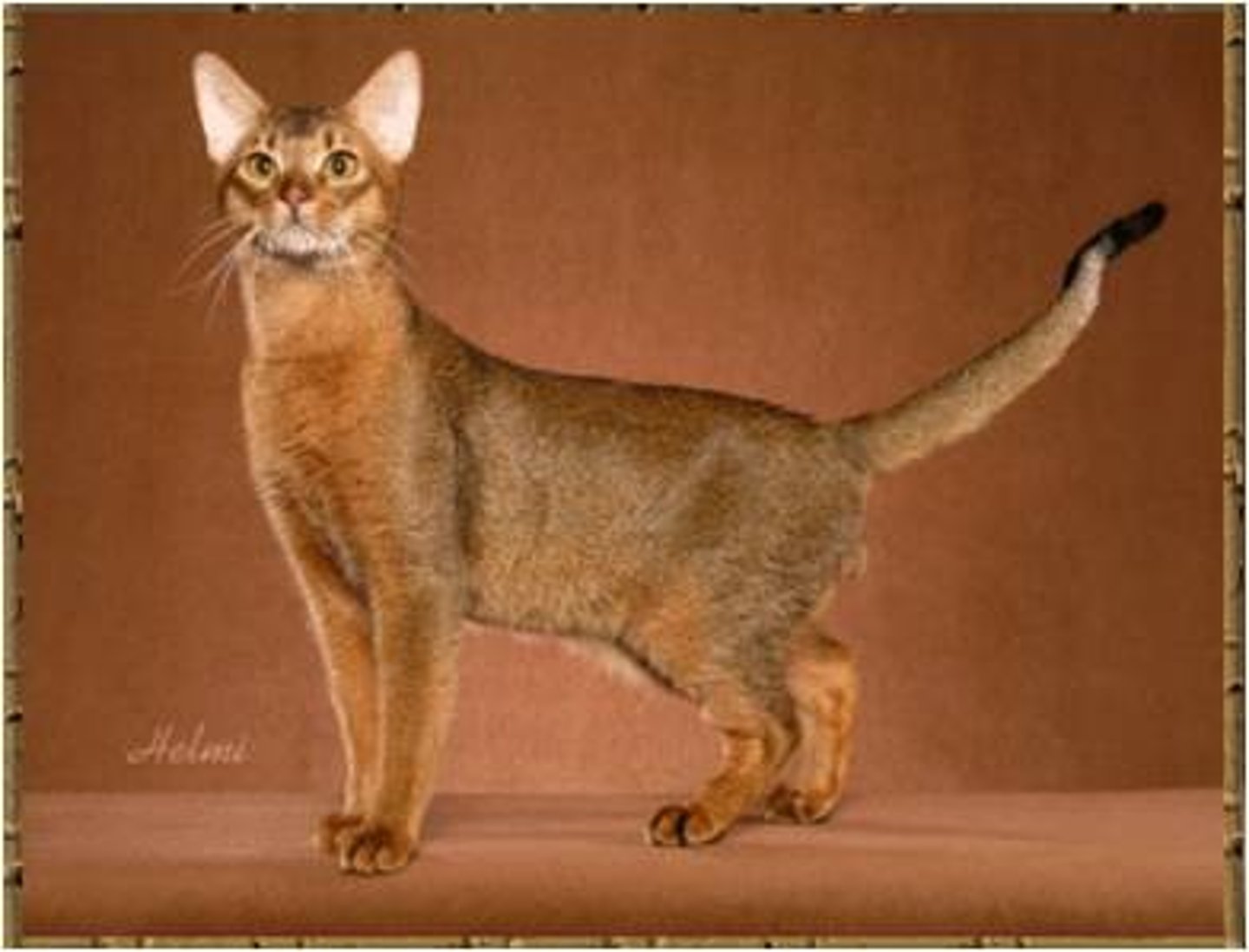
abyssinian
- agouti color pattern: hair shaft has alternating bands of light and dark; tip of hair is dark with light band in center
- usually short hair, somali is long
- foreign body type
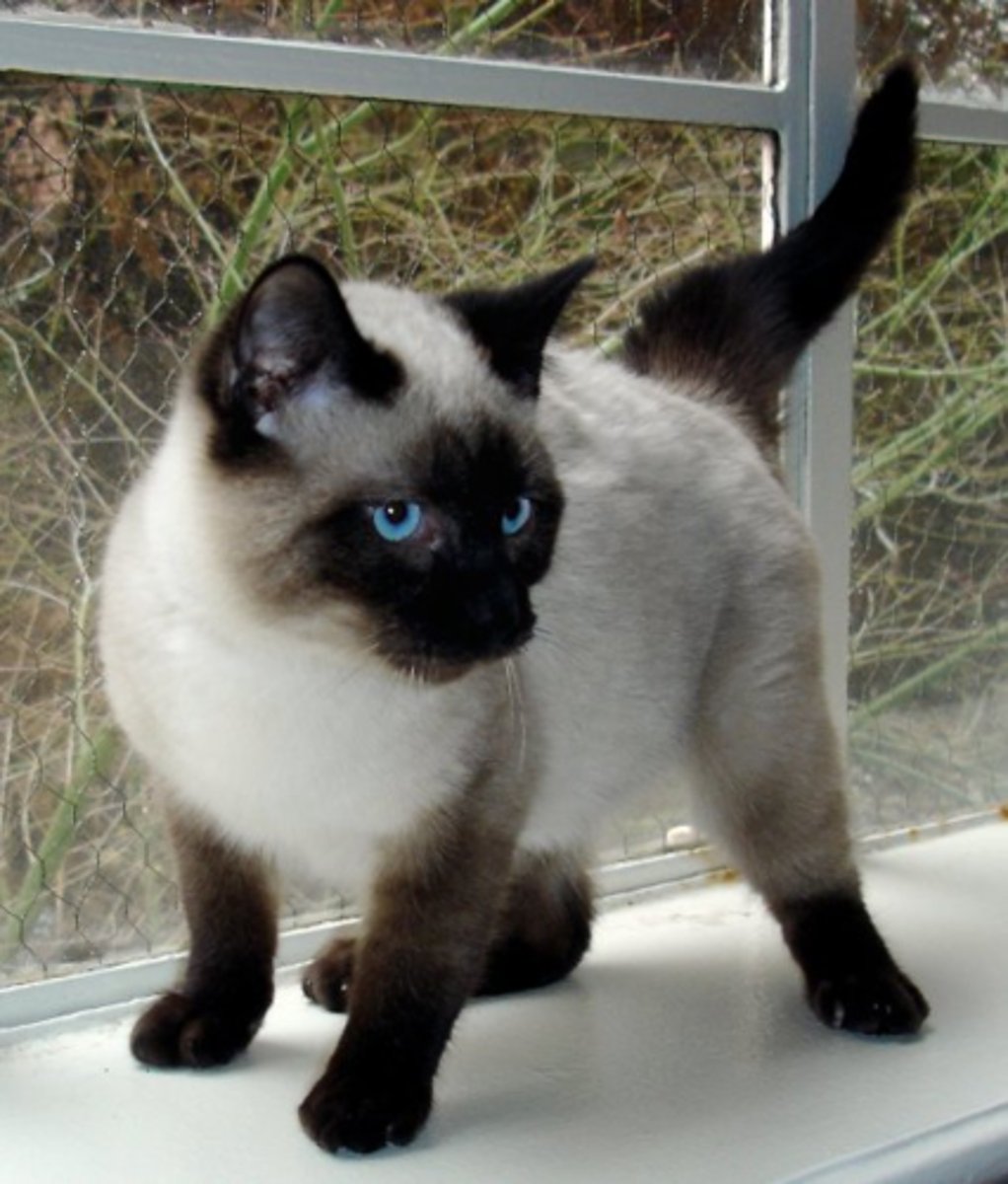
siamese
- pointed breed: darker pigments on ears, feet, legs, and face; coloring is due to skin temperature of the hair follicle, if shaved, the fur grows in as "seal" color, if bandaged the color will lighten, will be lighter in warmer climates
- squinting eyes and kinked tail = breed fault = bred out of them
- can be seal, blue, chocolate, and lilac
- foreign body type
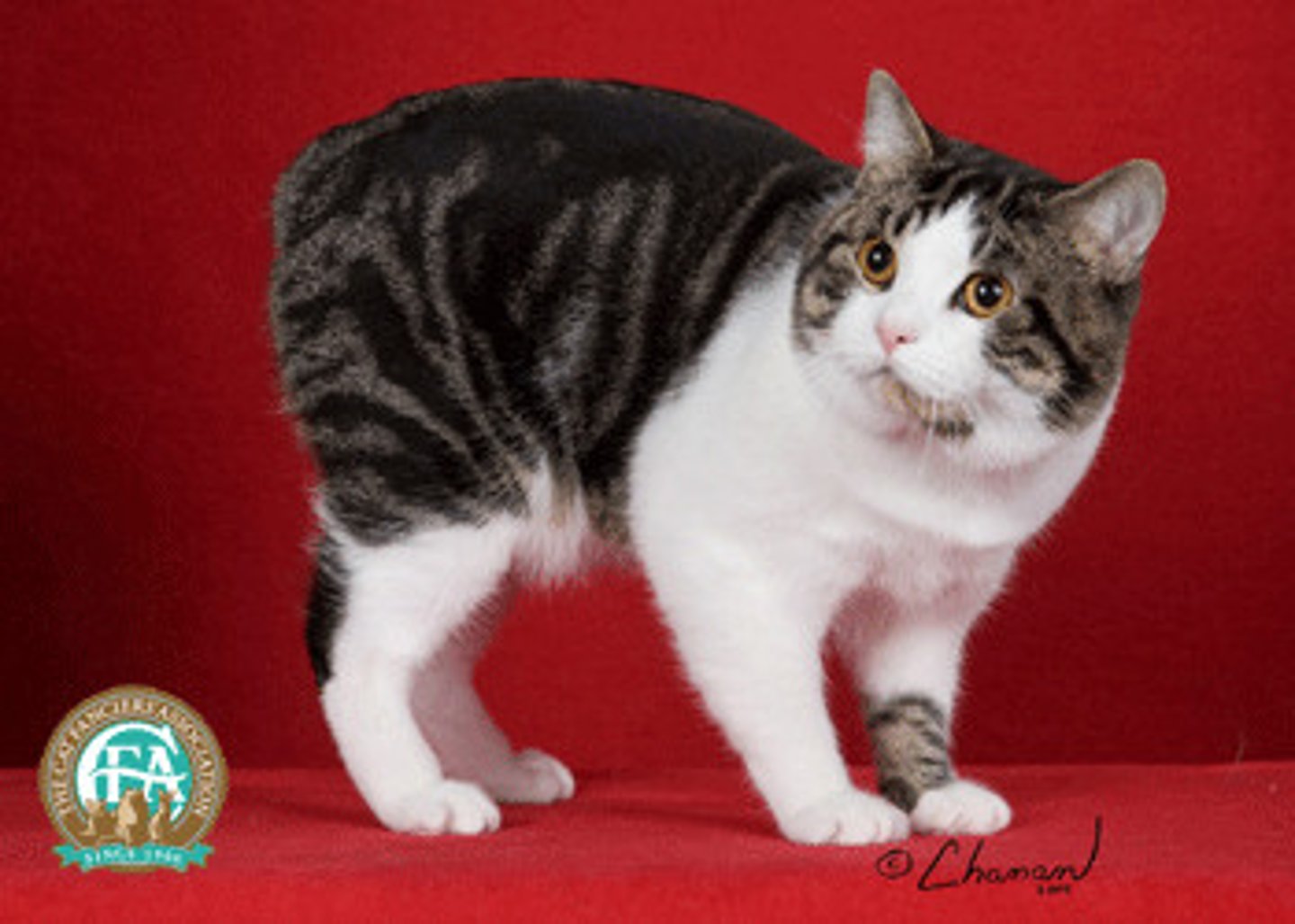
manx
- on isolated island, so mutation for tail-lessness was established
- dominant gene is lethal in homozygous state - 25% of kittens conceived are lost, 25% with long tail, some can have skeletal deformities or problems defecating
- cobby body type
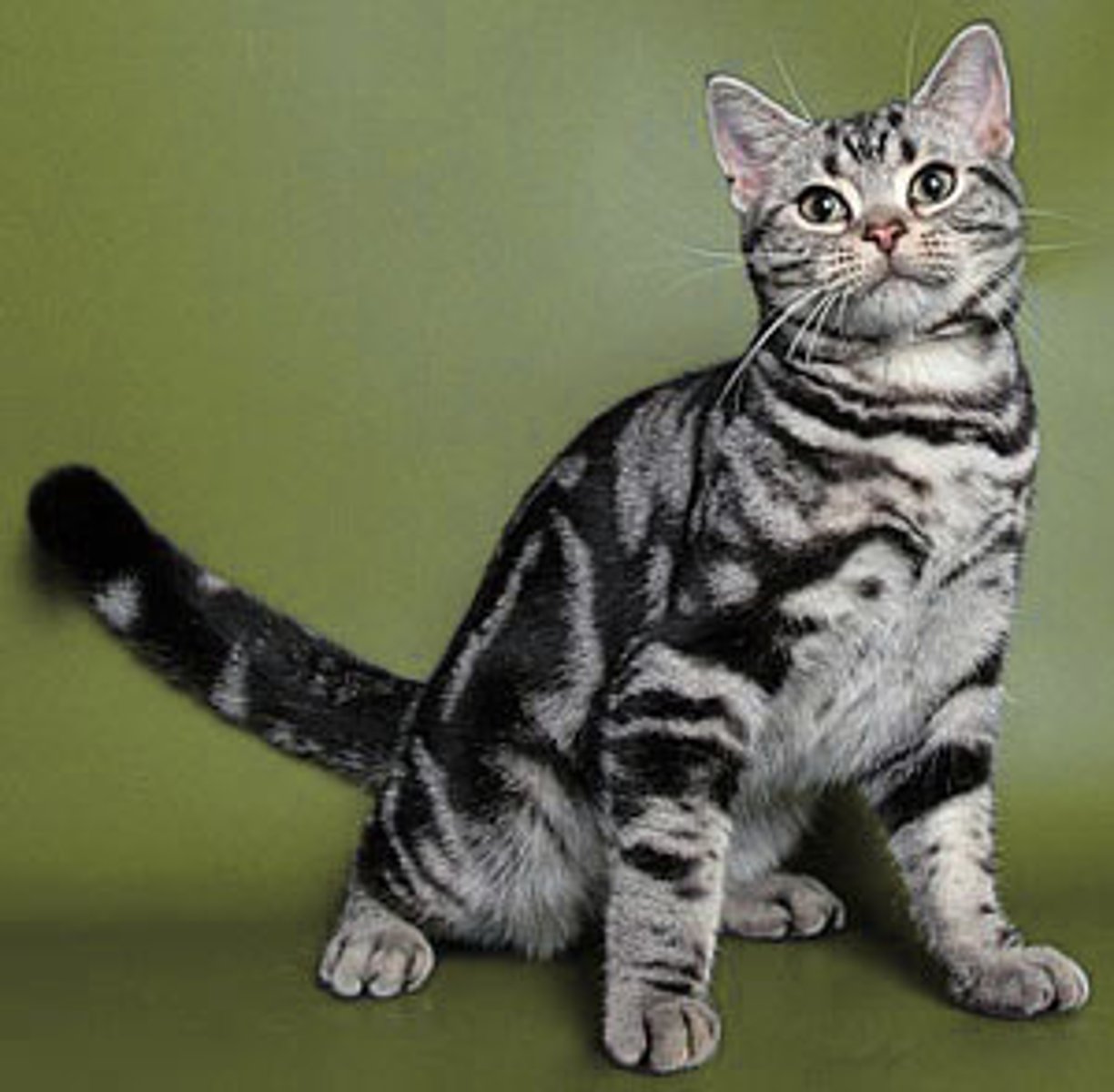
british, european, and american shorthairs
- working cat
- what most people think of as a cat today
- british has shorter body and wider head than european
- american similar to british but long legs and dense coat
- cobby body type
persian
- colorpoint persian = himalayan
- cobby body type with thick and dense undercoat
- shortened muzzle and jaw, overshot lower jaw and wide face = brachycephalic
- can have blocked tear ducts, abnormal alignment of teeth and a hard time breathing
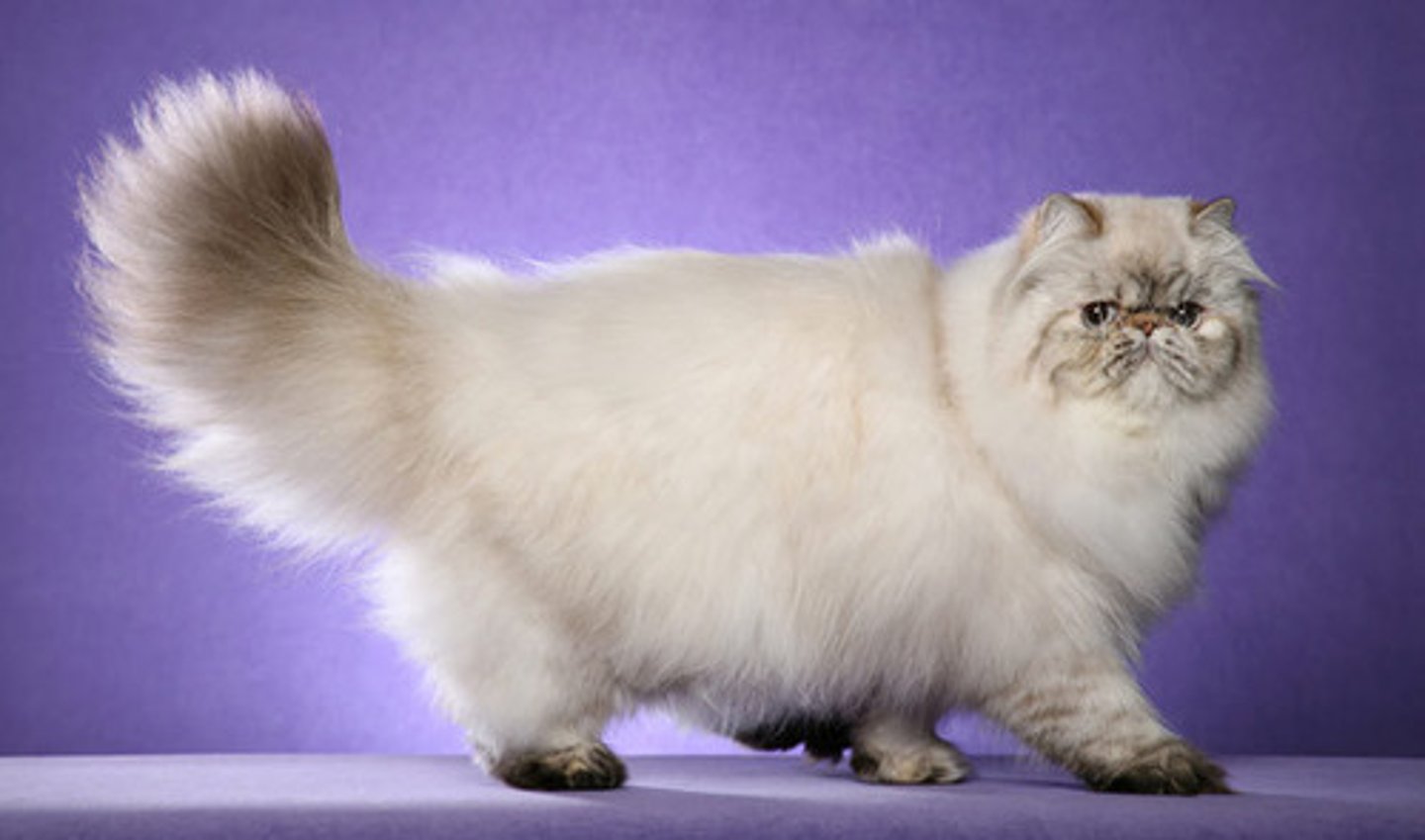
long haired breeds
- mainecoon: large and can be 20 lbs
- norwegian forest cat: similar to MC but scandinavian
- angora or turkish angora: white with blue eyes, long guard hairs on neck and underbelly and tail
- turkish van: looks like large angora, likes to swim, originally white with red patches on head and tail
rex
- short and kinky coat
- cornish rex: foreign body type with unique coat made of short, soft, and wavy hairs. Unlike other shorthair breeds, its guard and awn hairs are much shorter and less dense, making the coat appear like an undercoat. These reduced hairs form soft ripples across the body.
- devon rex: short down hairs with few guard hairs leading to a rippling wave effect (not tightly waved like Cornish Rex
spotted cats
- egyptian mau: similar to abyssinian, but heavier
- ocicat: started by mating a chocolate point siamese with an abyssinian/siamese female
- bengal: hybrid of domestic cat and wild asian leopard, so temperament can reflect wild ancestry
scottish fold
- dominant gene in homozygous state can have fused tail vertebrae and abnormal cartilage formation in the legs and paws = crippling
- all colors except chocolate, lilac, and colorpoint
ragdoll
- colorpointed and gentle developed from white and pointed birman!
sphinx
- spontaneous mutation causes "peach fuzz" and lack of eyebrows and whiskers
- angular body type, but gets cold = keep inside!
munchkin
- short legged cat bred to normal cat = deformed legged kittens
- dominant mutation, have trouble grooming and jumping
dolichocephalic
- elongated skull usually with long neck for speed, neck shift center of gravity
- greyhound, borzoi, collie
metasticephalic
- moderate head shape with shorter muzzle for strength in jaw = power to carry
- spaniels and retrievers
brachycephalic
- broad skull and short muzzle with great jaw strength for fighting
- bulldogs and boxers
define neoteny
the presence of traits in adult animals that are seen only in young animals of that species
when do the deciduous teeth start to erupt?
at 21 days, fully erupted at 5-6 weeks
- 26 teeth in cat, 28 in dog
when do the permanent teeth start to erupt?
at 4 months and complete by 6-7 months
- 30 teeth in cats, 42 in dogs
what is always the 1st digit?
the dewclaw, if not present, there is no 1st digit
walking gait
slowest and least tiring
--> four-beat gait with 3 legs in support of the body at all times; right front, left hind, left front, right hind; each foot in front of other in a straight line
trotting gait
most efficient and stable gait when moving long distances
--> two-beat gait with the diagonal front and rear legs moving together, toe legs in support of body at all times
pace or amble gait
lateral gait that the legs on each side of the body move together
gallop gait
faster gait
--> four beat gait with extreme shoulder and foreleg extension followed by movement of the hindlegs far forward under the body to provide the propulsive stroke; front, front, hind, hind pattern (right front, left front, right rear, leg rear or left front, right front, left rear, right rear)
suspension gait
short period of time where the body is airborne
how does the righting reflex work in cats?
- when a cat is dropped/falls with feet higher than body, the vertebral column flexes and the cats head turns first (180 degrees about axis)
- front legs rotate 180 next, hind quarters turn last
- lands with back arched to absorb impact of landing, flexible structure of spine helps
- can fall from heights with little-no injurt as long as they have time to right themselves
dog gaits
gaits include Walk, trot, pace, gallop
• trot can also be a "Flying Trot" with a period of suspension (no legs on ground)
• can have single suspension or double suspension in gallop
• conformation will affect appearance of the gait
• more lateral displacement of center of gravity
• short, stocky dogs will have more rolling movement
binocular vision
area both eyes can see, best depth perception in this field
peripheral vision
range only 1 eye can see
field of vision
both binocular and peripheral vision areas
blind spot
area which can not be seen
what is sniffing for cats?
disruption in normal breathing pattern to allow molecules that import odor to remain within the nasal passages for longer
- series of rapid short breathes
- air is forced into space above the subethmoidal shelf
- bony structure which functions to trap sniffed air as it is inhaled
- not exhaled or inhaled further into lungs which allows more time for the scent molecules to interact with scent receptors in the nose
why is sniffing important for cats?
the vomeronasal organ on the roof of the mouth is involved with courtship and the ability to recognize
what is the flehmen response?
the cat sniffs and may taste the source of the odor and raise his head, draws back lips and wrinkles nose, mouth is kept open
what is sniffing for dogs?
• dogs perceive world with "nose picture"
- investigate new things with the nose
- can be trained to find illicit drugs, explosives, land mines, mold, insects, toxins, cancer and changes in a human's blood glucose level
- can distinguish between different substances in even small quantities and can rapidly distinguish different people
- can follow scent trails
- air in subethmoidal shelf remains to allow more time to detect a scent
why is sniffing important for dogs?
- vomeronasal organ in roof of mouth behind upper incisors provides a chemical sense important for the perception of pheromones, can be involved in sexual behavior or abilities to recognize
what senses are fully developed at birth?
taste and touch
what is normal skin and coat condition of a healthy dog or cat?
normal shine, growth and shedding pattern for breed or breed type; skin that is pliable, clean and free of lesions
what is the normal mucous membranes of dogs and cats?
light pink to pink in color (unpigmented areas;) normal CRT ~ 1 second
what is the normal food intake and body weight of dogs and cats?
normal and consistent appetite; maintenance of ideal (lean) body weight
normal TPR of dogs and cats:
• body Temperature - 100.0-102.5 degrees Fahrenheit
• pulse (resting) - Dog = 60-140 bpm; Cat = 145-200 bpm
• respiration - Dog = 10-30 bpm; Cat = 20-40 bpm
what is the difference between hair and fur?
- fur grows at a pre determined length then stops
- hair continues to grow
guard hairs vs. secondary hairs
- stiff, primary hair
- soft and make the undercoat, can have multiple from the same follicle
anagen phase of hair growth:
growth phase of hair, takes 6-8 weeks; the old hair is shed as the new hair progresses up the hair follicle and forces the old hair out
telogen phase of hair growth
rest phase of hair, variable and can be several weeks to months; affected by genetics, photoperiod, environmental temperature, age, breed, health, and reproductive status
epidermis layer of the skin
• avascular layer of epithelial cells firmly attached to the dermis
where is the epidermis layer thinner?
• thinner in areas with hair and thicker in areas without hair
in the epidermis, what produces keratin in hairless areas?
• in hairless areas, keratinocytes produce keratin which is the protective outermost layer of the skin
dermis layer of the skin
connective tissue, blood vessels, and nerve fibers
sebaceous gland
small lobulated glands associated with the hair follicle
what is the function of the sebaceous gland?
empty sebum into the upper lumen of the follicle
- gives a lustrous appearance
- also lubricate and protect the skin
- may have anti-microbial properties
how do dogs and cats dissipate body heat?
since there are minimal sweat glands in the skin, perspiration from skin is not effective for heat loss
- since most sweat glands are in the nose and toe pads, cats will groom themselves and the saliva deposited in the hair helps to dissipate body heat by evaporation, while dogs pant to dissipate heat
what are mucous membranes?
lubricating membranes which line body openings such as the mouth, nostrils, eyelids, anus and reproductive tract
normal color of mucous membranes:
presence of blood vessels close to the surface cause the color (light pink to pink)
- color and refill time can indicate the amount of and composition of the blood flowing to the extremities
pale color of mucous membranes and what that could indicate:
pale can indicate decreased RBCs, blood loss, or reduced blood flow
- causes are anemia (loss or destruction of RBCs or shock
jaundiced or lcteric color of mucous membranes and what that could indicate:
- indicated an accumulation of bilirubin
• can be from destruction of the RBCs or a disorder of the liver which decreases metabolism of hemoglobin
bright red color of mucous membranes and what that could indicate:
hyperdynamic state (early compensated shock) or irritation, may not mean anything
cyatonic (bluish or purple) color of mucous membranes and what that could indicate:
lack of oxygen in the blood
ovaries
small lima bean shaped organ caudal to the kidneys, which produce the egg and certain reproductive hormones
oviducts
small thin tubes connecting the ovaries to the uterus
- ova (egg) spend about 2 days moving through oviducts to uterus and this is also where fertilization takes place
uterus
muscular, hollow, y-shaped organ consisting of 2 long horns and a short body, neck and cervix
cervix
oval-shaped fibrous/muscular structure that serves as the channel from the uterus to the vagina
vagina
birth canal, long narrow muscular membranous canal extending from the cervix to the vulva
urethra
canal that carries urine from the bladder and emptied into the lower part of the vagina
secondary sex organs
mammary glands
- cats have 4 paurs in 2 rows on the ventral mid to caudal abdomen
- dogs have 4-6 pairs in 2 rows
not developed until puberty
testes (testicles)
paired, sperm production and testosterone synthesis
what are the testes divided into?
lobulues which each contain the long, tightly coiled seminiferous tubules
what are germinal cells?
the cells lining the tubules, responsible for spermatogenesis (produce spermatozoa)
what are laydig cells?
cells between the tubules, produce testosterone for normal spermatogenesis, development of secondary sexual characteristic and sexual performance
seminiferous tubules
straighten and empty into collecting ductules which merge to form the epididymis, where sperm maturation takes place
where does the epididymis empty?
vas deferens
where do the vas deferens empty?
the urethra
urethra (male)
hollow tube which originates at the neck of the bladder and runs through the penis