AP Art History 250
 Call Kai
 Learn
Learn Practice Test
 Spaced Repetition
 Match
Match Flashcards
 Knowt Play
1/101

Earn XP
Description and Tags
Highlights = Acceptable exam identifiers
Name | Mastery | Learn | Test | Matching | Spaced | Call with Kai |
|---|
No analytics yet
Send a link to your students to track their progress
102 Terms
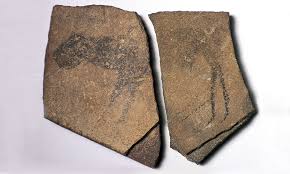
T: Apollo 11 Stones
L: Cave in the Huns Mountains (Namibia, Africa)
E: Paleolithic
A: Unknown
F: Charcoal and ochre on quartzite
P: Unknown
D: 25,500 – 25,300 B.C.E.
F: Early man’s observations of their surroundings
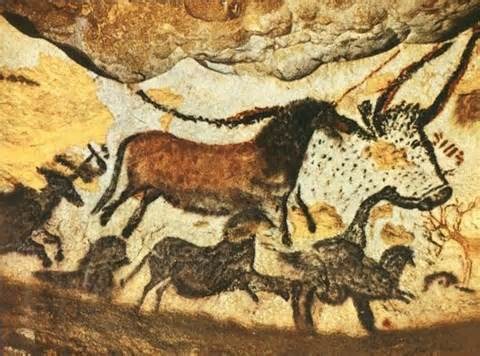
T: Great Hall of the Bulls
L: Lascaux, France
E: Paleolithic Europe
A: Unknown
F: Natural Pigments on Calcite
P: Unknown
D: 15,000 – 13,000 B.C.E.
F: repetitive images of bulls to ensure a successful hunt
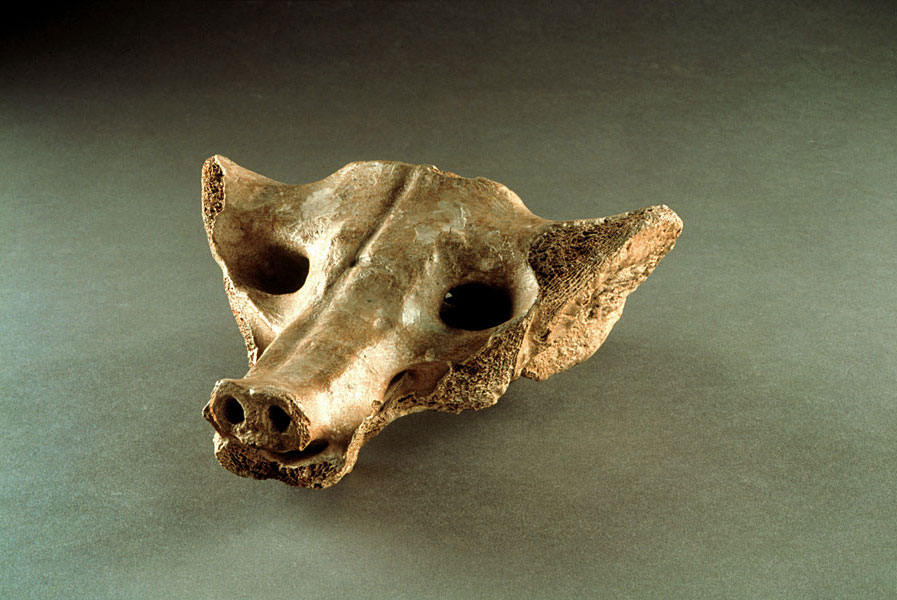
T: Camelid sacrum in the shape of a canine
L: Tequixquiac, Central Mexico
E: Paleolithic
A: Unknown
F: Bone
P: Unknown
D: 14,000 – 7,000 B.C.E.
F: Ritualistic or ceremonial function
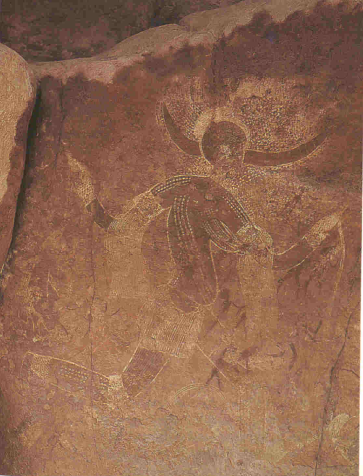
T: Running horned woman
L: Tassili n’Ajjer, Algeria
E: Neolithic
A: Unknown
F: Natural Pigments on Stone
P: Unknown
D: 6,000 – 4,000 B.C.E.
F: A ritual/ceremony OR a supernatural being/deity
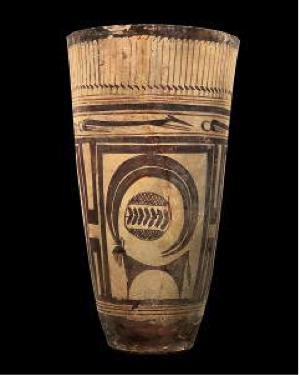
T: Beaker with ibex motifs
L: Royal Gravesite, Susa, Iran
E: Neolithic
A: Unknown
F: Painted Terra Cotta
P: Unknown
D: 4,200 – 3,500 B.C.E.
F: A funerary object
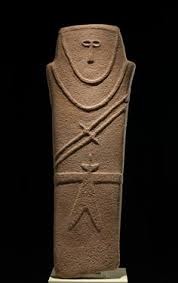
T: Anthropomorphic stele
L: Arabian Peninsula
E: Neolithic
A: Unknown
F: Carved Sandstone
P: Unknown
D: 4,000 – 3,000 B.C.E.
F: Honorary portrait/grave marker of a warrior
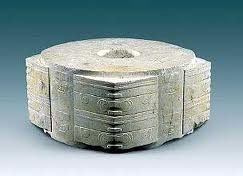
Title: Jade cong
L: Liangzhu, China
E: Neolithic
A: Unknown
F: Carved Jade
P: Unknown
D: 3,300 – 2,200 B.C.E.
F: Unknown… power, funerary, spiritual?
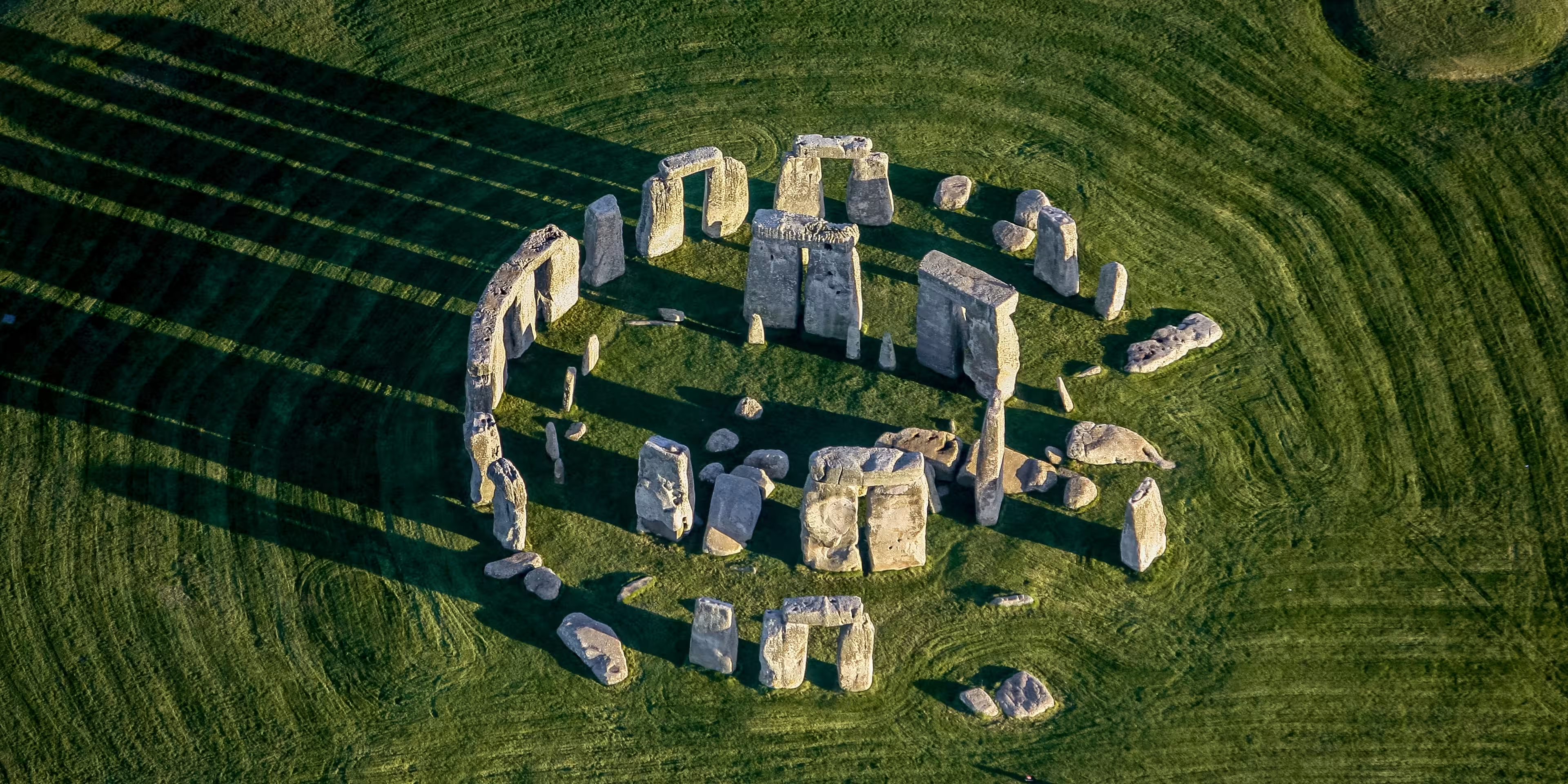
T: Stonehenge
L: Wiltshire, England
E: Neolithic Europe
A: Unknown
F: Sandstone
P: Unknown
D: 2,500 – 1,600 B.C.E.
F: Unknown… funerary, spiritual, healing, astrological?
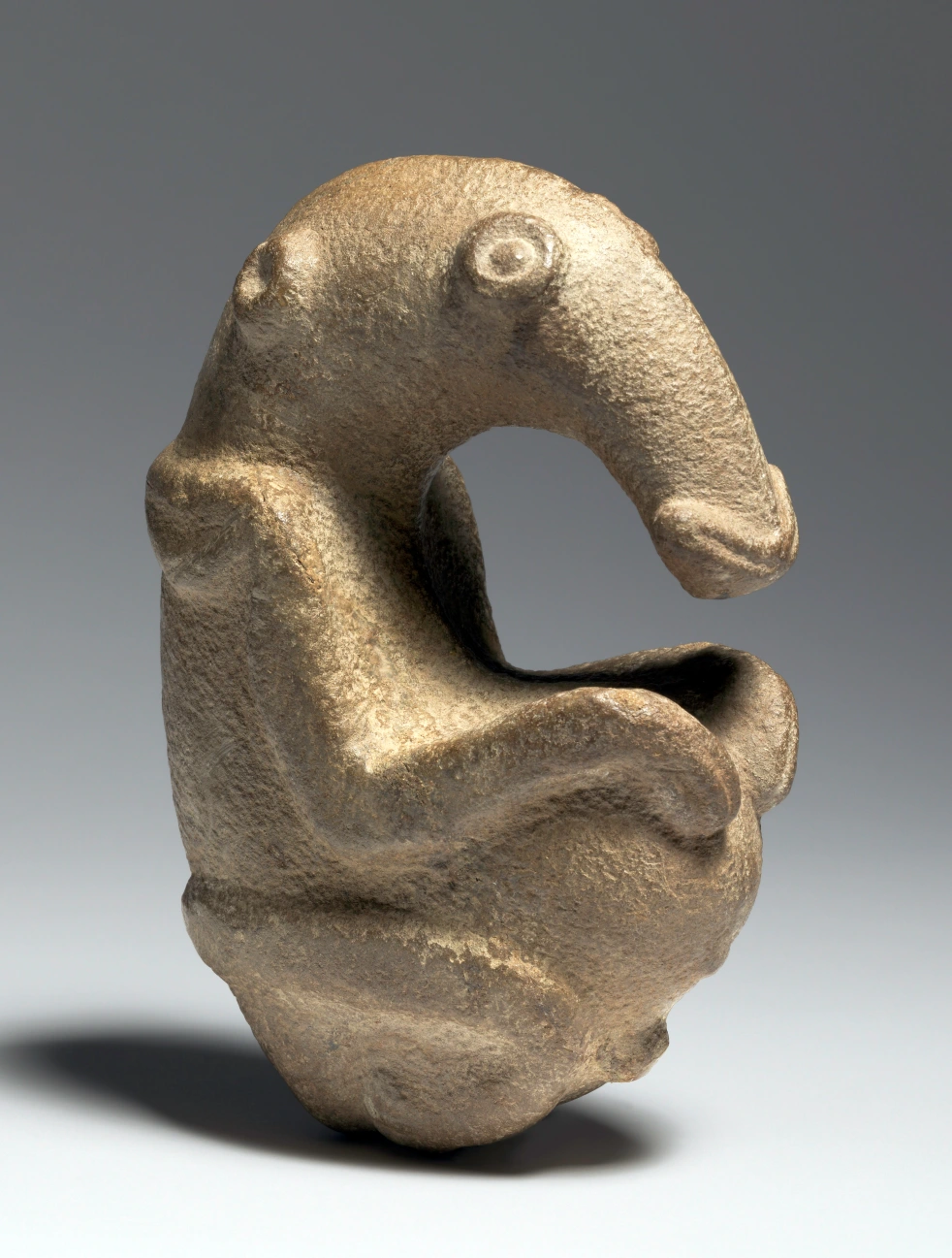
T: The Ambum Stone
L: Ambum Valley, Enga Province, Papua New Guinea
E: Pre-Classic
A: Unknown
F: Greywacke
P: Unknown
D: 1,500 B.C.E.
F: Functional (daily life) or ritual/spiritual?
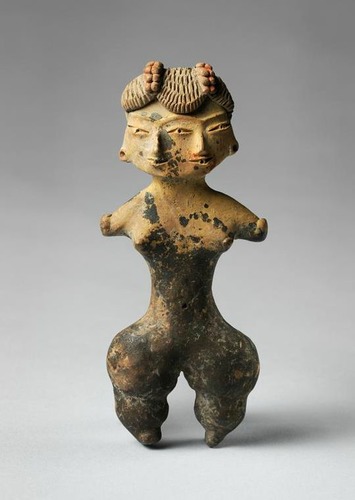
T: Tlatilco female figurine
L: Site of Tlatilco, Central Mexico
E: Pre-Classic
A: Unknown
F: Painted Ceramic
P: Unknown
D: 1,200 – 900 B.C.E.
F: Funerary or representations of physical deformity/duality?
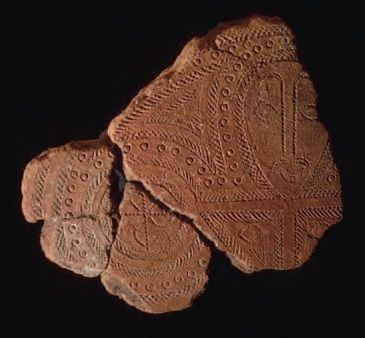
T: Terra cotta fragment
L: Lapita, Solomon Islands, Reef Islands
E: Pre-Classic
A: Unknown
F: Incised Terra Cotta
P: Unknown
D: 1,000 B.C.E.
F: Food serving/storage
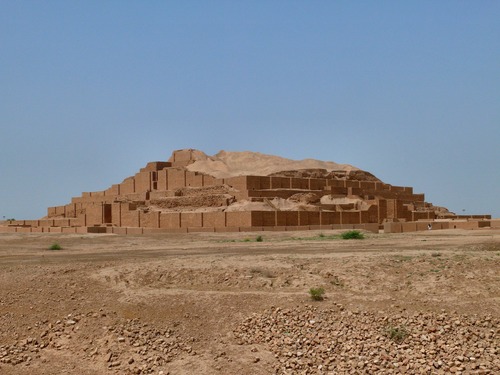
T: White Temple and its ziggurat
L: Uruk (modern Warka), Iraq
E: Sumerian Art
A: Unknown
F: Mudbrick (whitewashed)
P: Unknown
D: 3,517-3,358 B.C.E.
F: Commercial, governmental, civic, and religious center
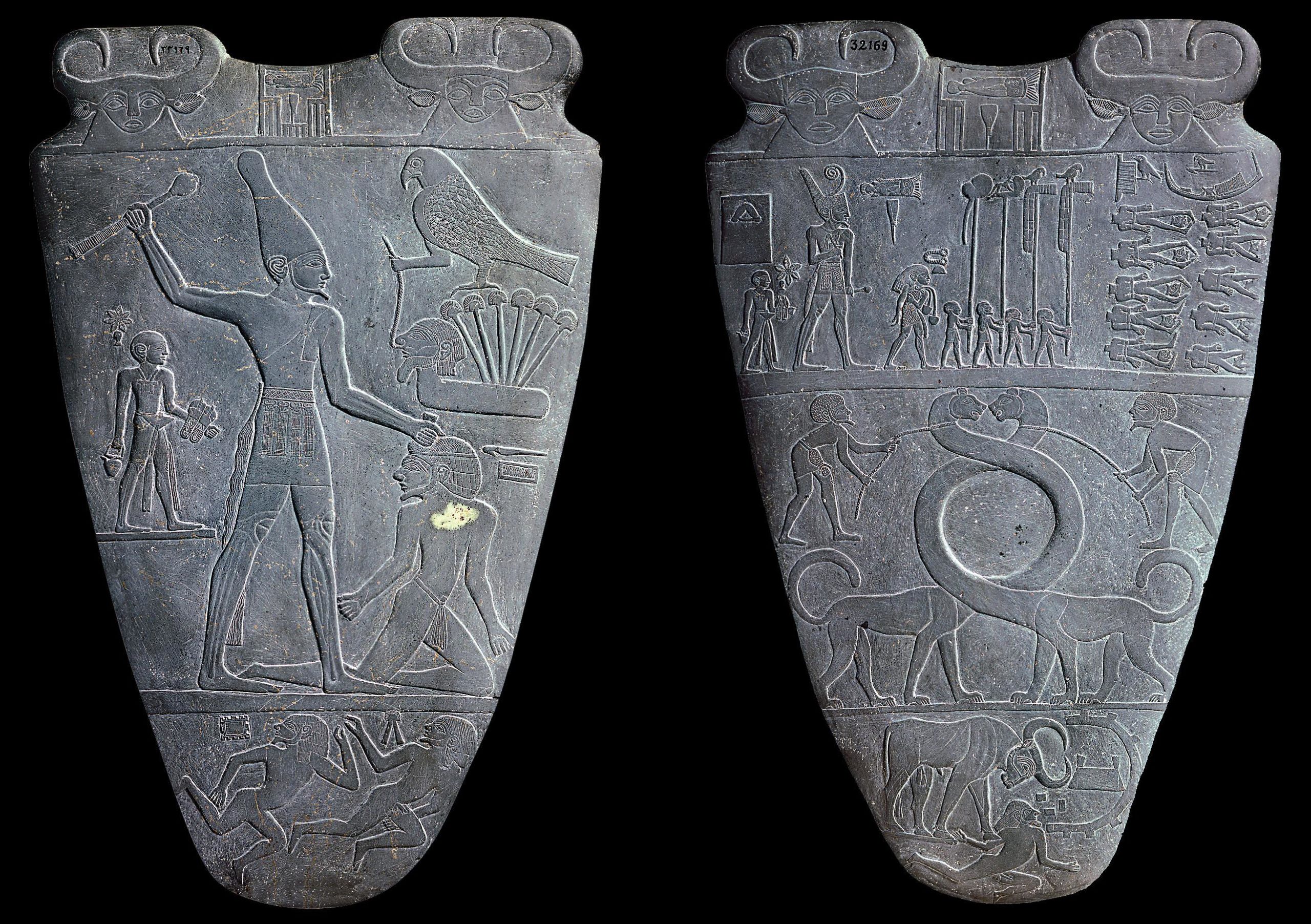
T: Palette of King Narmer
L: Hierakonpolis
E: Predynastic Egypt
A: Unknown
F: Low-Relief Carved Slate (College Board: Greywacke)
P: King Narmer
D: 3,000-2,920 B.C.E.
F: A thin board or tablet that a painter uses to hold and mix paint (maybe makeup)
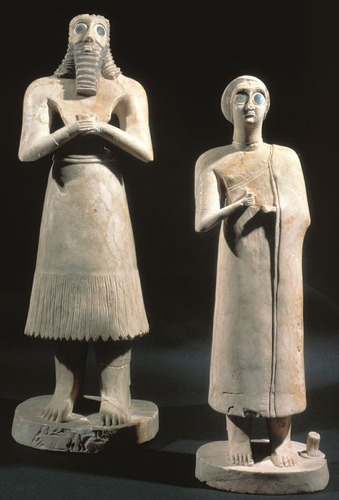
T: Statues of votive figures
L: Square Temple of Eshnunna, Iraq (modern Tell Asmar)
E: Sumerian Art
A: Unknown
F: Alabaster, shell, limestone, bitumen (College Board: Gypsum inlaid with shell and black limestone)
P: Unknown
D: 2,900-2,600 B.C.E. (College Board: 2,700 B.C.E.)
F: Individual stand-in for eternal worship
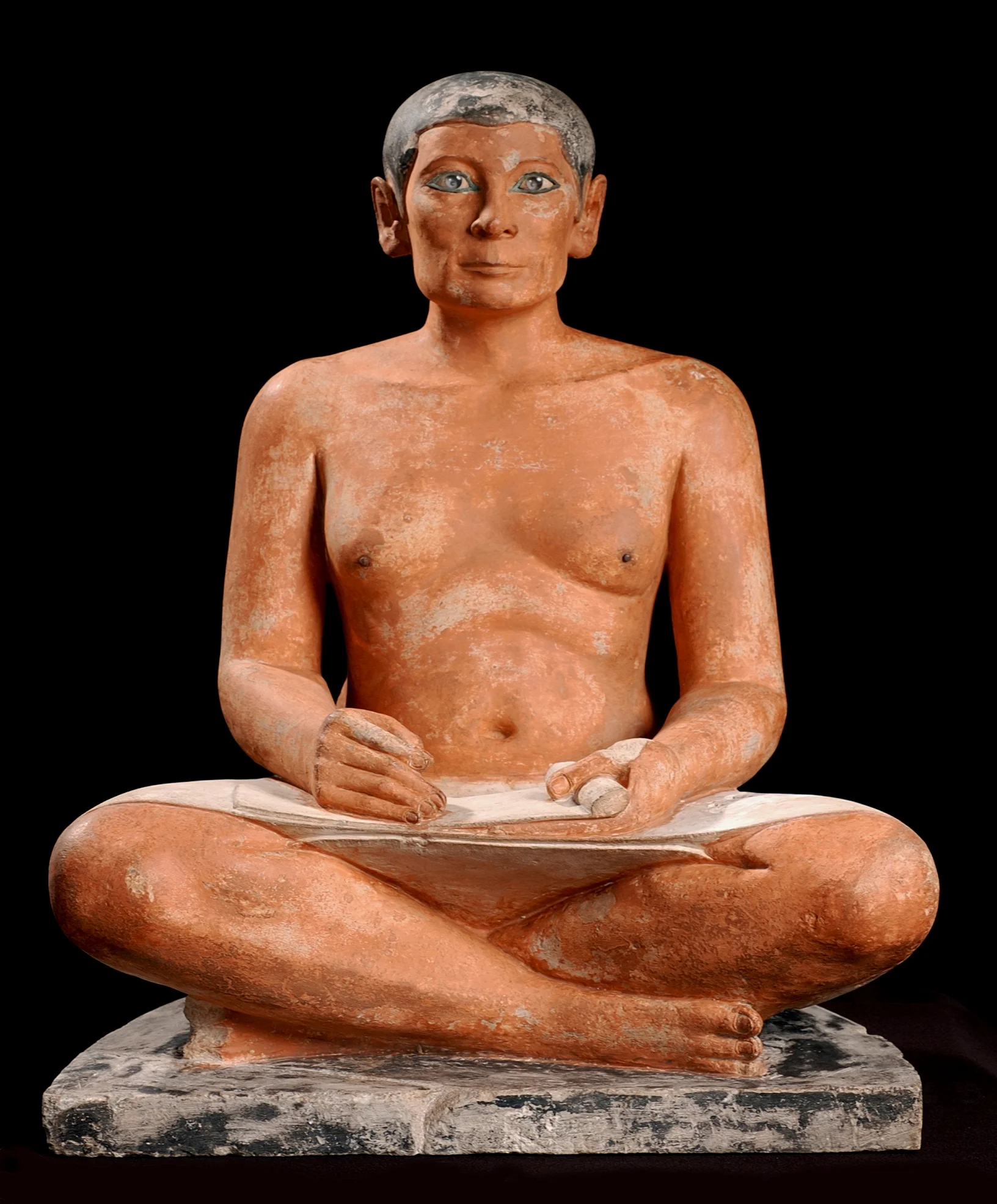
T: Seated scribe
L: Saqqara, Stepped Pyramid of Djoser, Egypt
E: Old Kingdom, Fourth Dynasty
A: Unknown
F: Painted Limestone (rock crystal)
P: Pharaoh Djoser
D: 2,620 – 2,500 B.C.E.
F: Individualistic and non-idealized portrait of a scribe
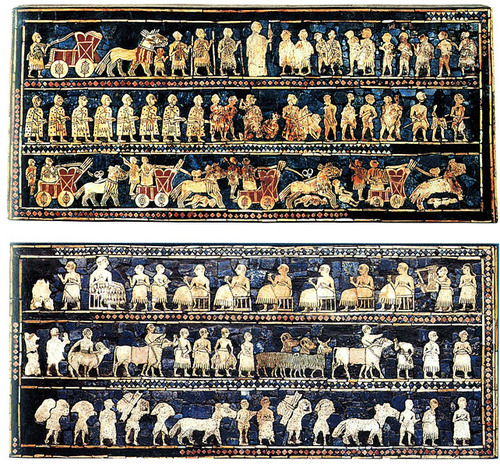
T: Standard of Ur
L: Royal Ur Graves (College Board: Royal Tombs at Ur), Iraq
E: Sumerian Art
A: Unknown
F: Wood inlaid with shell, red limestone, lapis lazuli, bitumen
P: Unknown
D: 2,600-2,400 B.C.E.
F: Rallying point for troops, marks spot of general
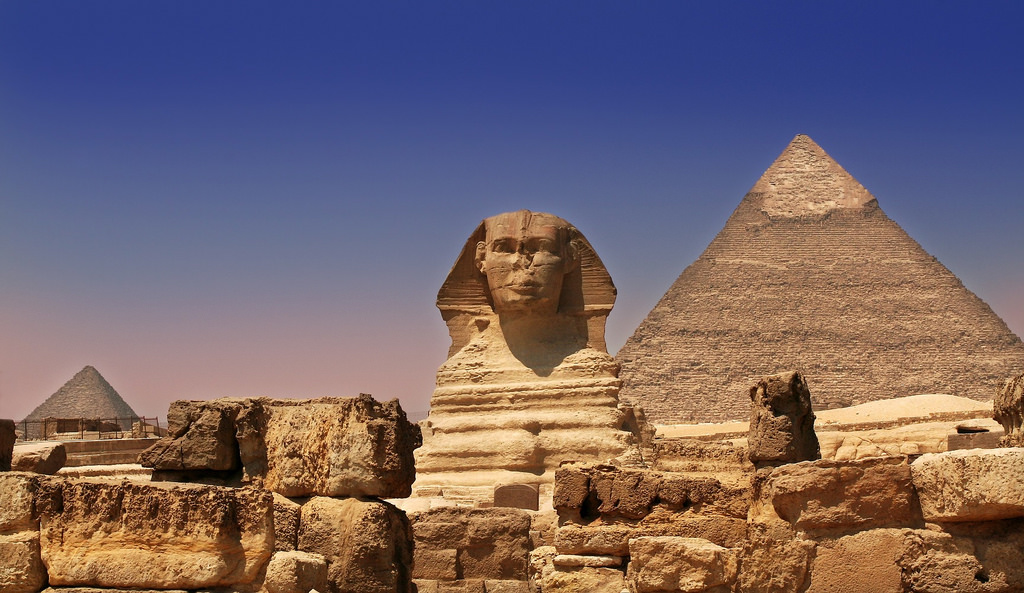
T: Great Pyramids and Great Sphinx
L: Giza, Egypt
E: Old Kingdom, Fourth Dynasty
A: Unknown
F: Cut Limestone (Gold Capstones)
P: Pharaohs Khufu, Khafre, and Menkaure
D: 2,551-2,472 B.C.E. (College Board: c. 2550-2490 B.C.E.)
F: Tombs and palaces for the afterlife
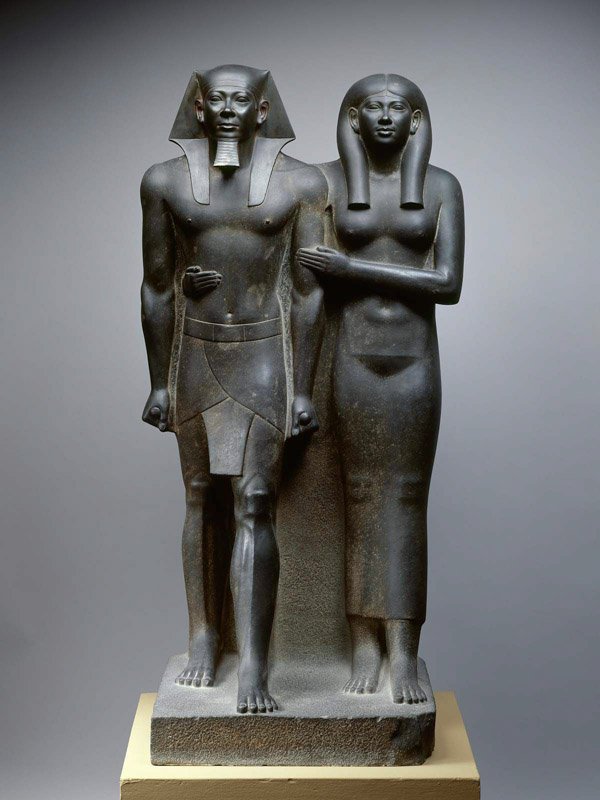
T: King Menkaura and queen
L: Pyramid of Menkaure
E: Old Kingdom, Fourth Dynasty
A: Unknown
F: High-Relief Carved Greywacke
P: King Menkaure
D: 2,490–2,472 B.C.E.
F: Idealized double portrait of a pharaoh and queen
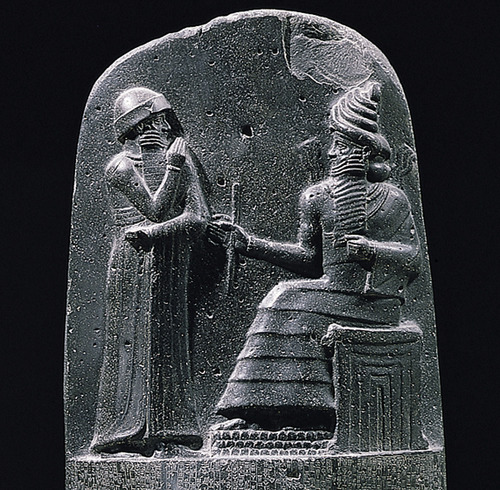
T: The Code of Hammurabi
L: Khuzestan Iran (College Board: Babylon (modern Iran))
E: Babylonian (College Board: Susian)
A: Unknown
F: Basalt
P: Unknown
D: 1,792 – 1,750 B.C.E.
F: First recorded code of laws, STELE!
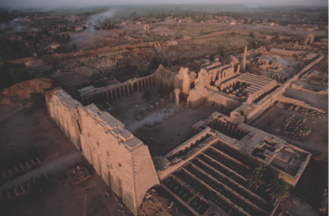
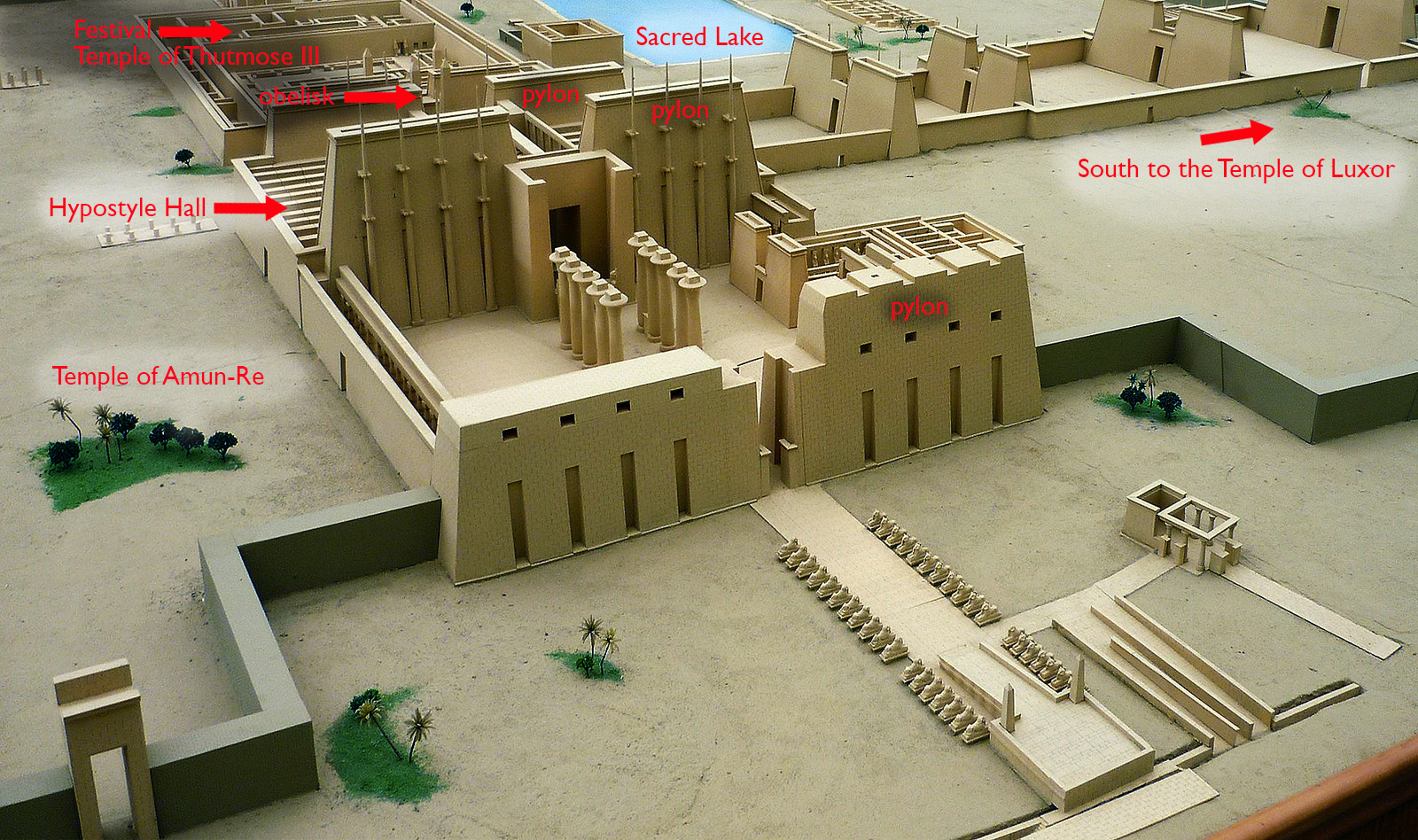
T: Temple of Amun-Re and Hypostyle Hall
L: Karnak, Luxor, Egypt
E: Middle -> New Kingdom, 18th and 19th Dynasties
A: Unknown
F: Cut sandstone and mudbrick
P: Many Pharaohs
D: 1,550-1,250 B.C.E.
F: at it’s time, the largest religious site in ancient Egypt as well as the center of power and wealth
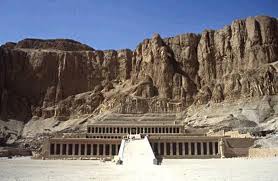
T: Mortuary temple of Hatshepsut
L: Deir el-Bahari, Luxor, Egypt
E: New Kingdom, 18th Dynasty
A: Senmut
F: Rock-cut sandstone and red granite
P: Queen Hatshepsut
D: 1,473-1,458 B.C.E.
F: Funerary Temple
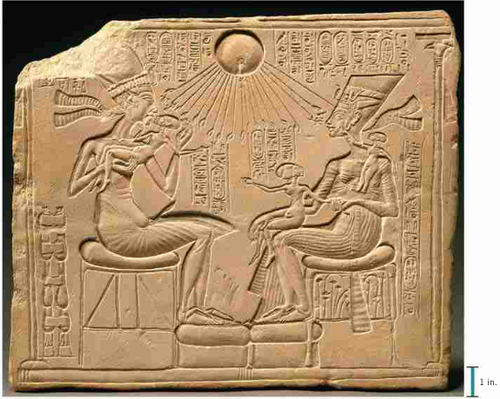
T: Akhenaton, Nefertiti, and three daughters
L: Tell-el Amarna (capital city)
E: Amarna Period (New Kingdom), 18th Dynasty
A: Unknown
F: Low-Relief Carved Limestone
P: King Akhenaten
D: 1,353-1,335 B.C.E.
F: Unique domestic family portrait
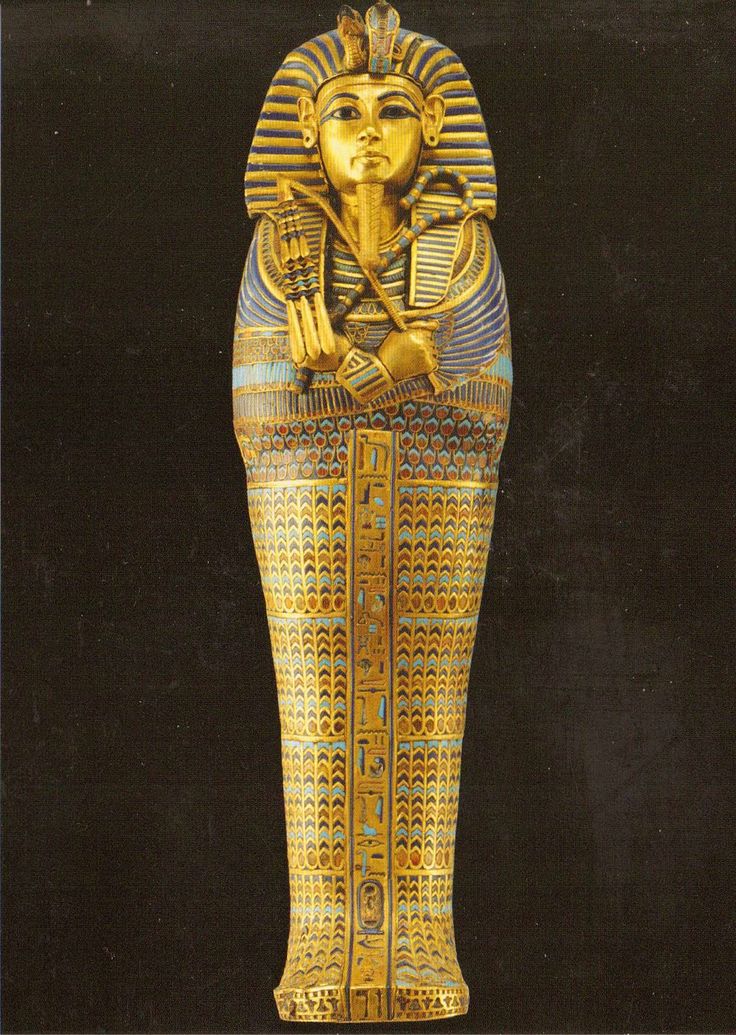
T: Tutankhamun’s Tomb and Innermost Coffin
L: Valley of the Kings
E: New Kingdom, 18th Dynasty
A: Unknown
F: Wood, gold with inlay of enamel, semi-precious stones
P: King Tutankhamun
D: 1,333-1,323 B.C.E.
F: Burial tomb and Sarcophagus
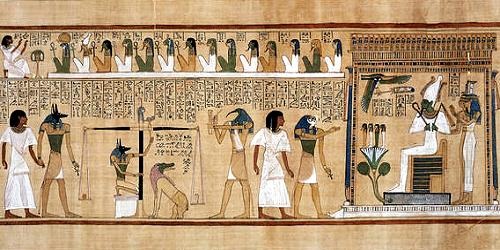
T: Last judgment of Hu-Nefer
L: Tomb of Hu-Nefer, (Book of the Dead)
E: New Kingdom, 19th Dynasty
A: Unknown
F: Painted Papyrus Scroll
P: Hu-Nefer
D: 1,290-1,280 B.C.E. (College Board: c. 1,275 B.C.E.)
F: Record of journey to the afterlife
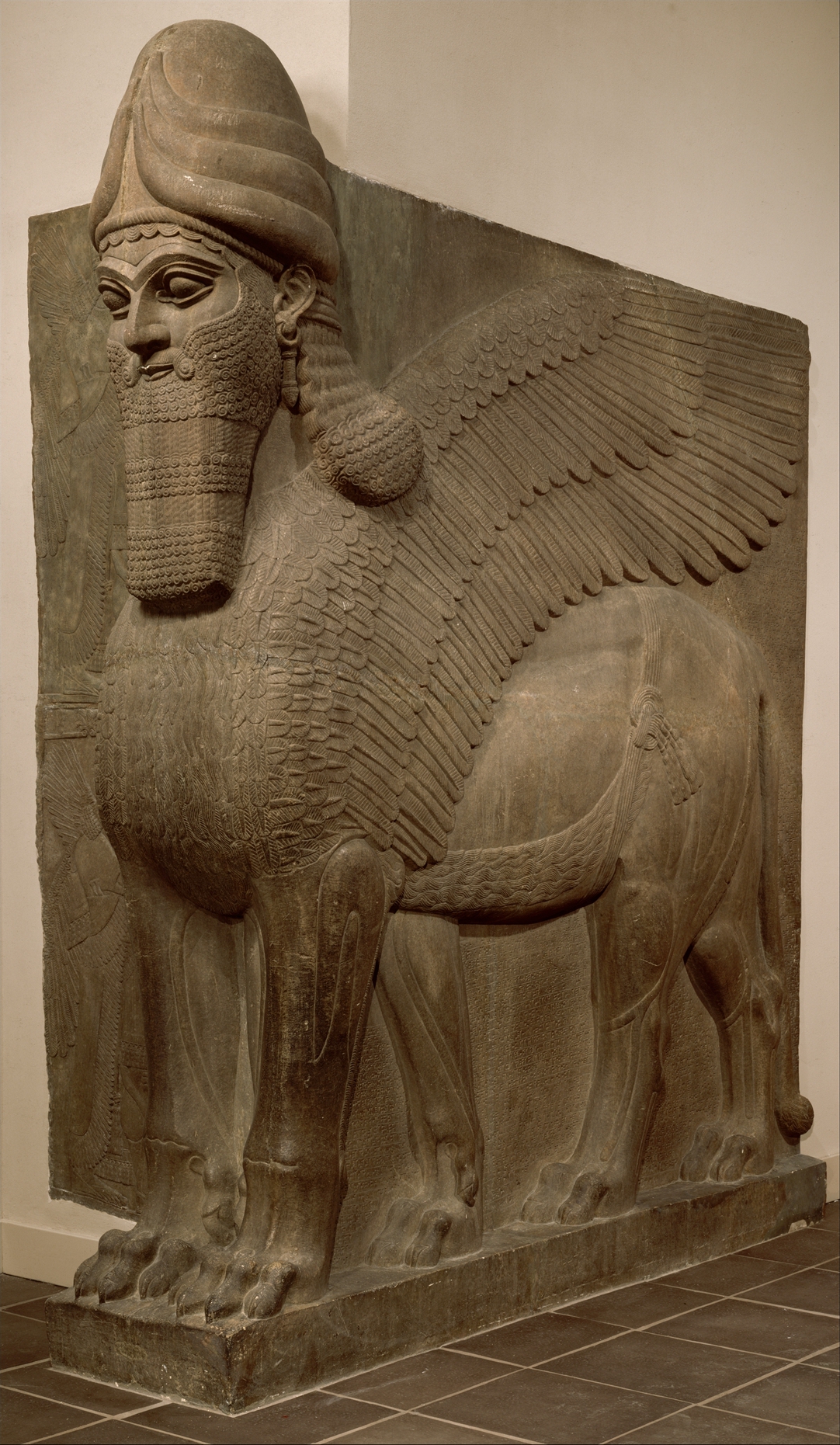
T: Lamassu
L: Citadel of Sargon II, Dur Sharrukin, Iraq (modern day Khorsabad, Iraq)
E: Neo-Assyrian
A: Unknown
F: Alabaster
P: Unknown
D: 720 – 705 B.C.E.
F: Protection
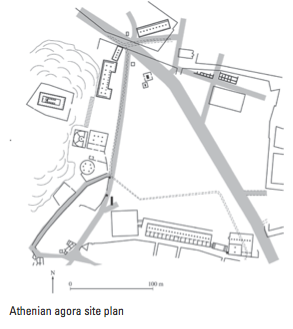
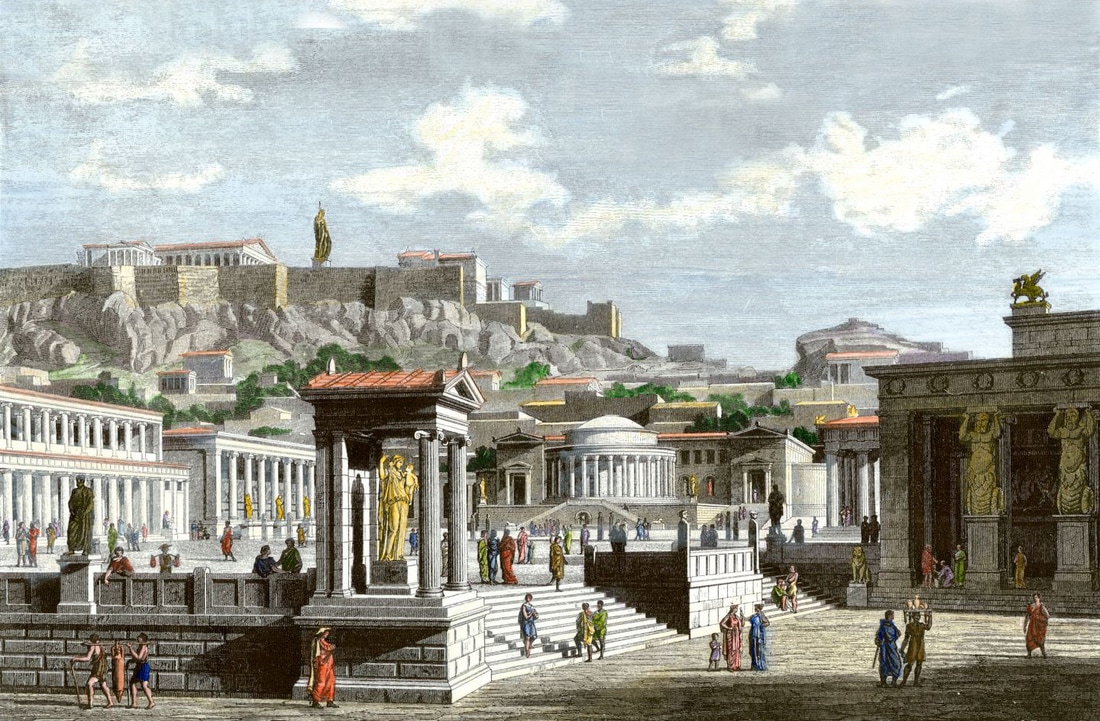
T: Athenian agora
L: Athens, Greece
E: Archaic Greece through Hellenistic Greece
A: Unknown
F: Marble, brick, stone
P: Unknown
D: 600 B.C.E. - 150 C.E.
F: City center/down town
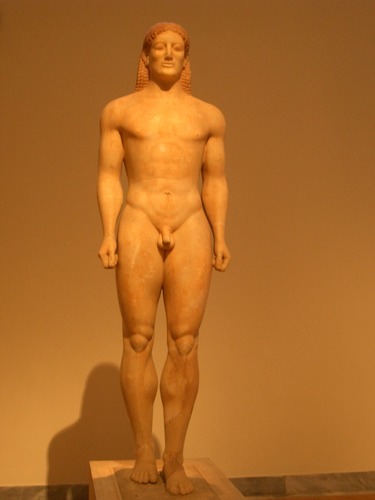
T: Anavysos Kouros
L: Cemetery in Anavysos (just outside Athens)
E: Archaic Greece
A: Unknown
F: Painted Marble
P: Unknown
D: 530 B.C.E.
F: Grave marker
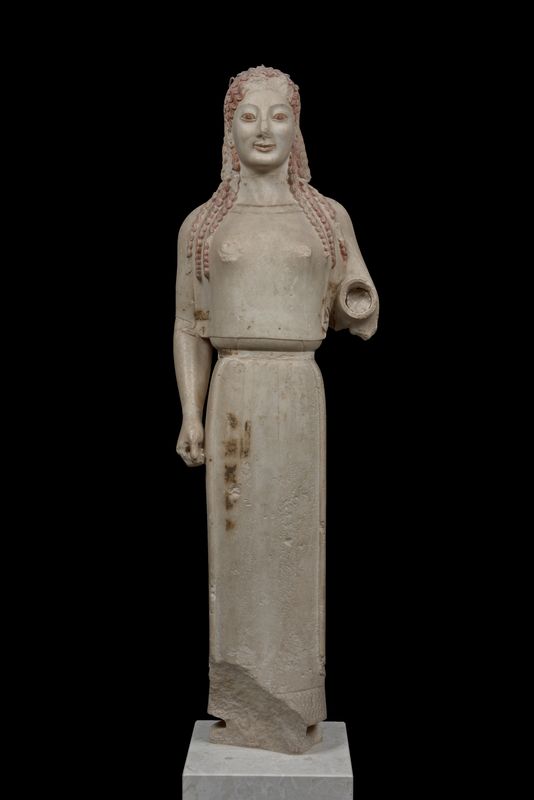
T: Peplos Kore
L: Acropolis, Athens, Greece
E: Archaic Greece
A: Unknown
F: Painted marble
P: Unknown
D: 530 B.C.E.
F: Votive offering for Athena
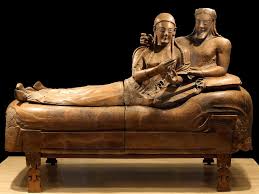
T: Sarcophagus of the Spouses
L: Cerveteri, Italy (Banditaccia Necropolis)
E: Etruscan Art
A: Unknown
F: Painted Terracotta
P: Elite patron
D: 520 B.C.E.
F: Coffin for a husband and wife
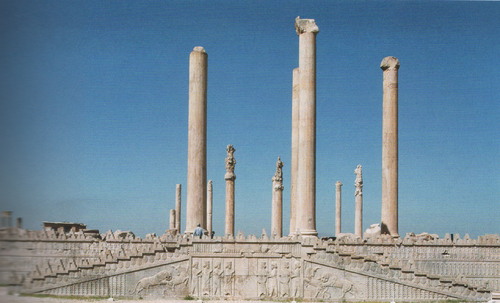
T: Audience Hall of Darius and Xerxes
L: Persepolis, Iran
E: Persian
A: Unknown
F: Limestone, mudbrick and wood
P: Darius & Xerxes
D: 520 – 465 B.C.E.
F: Throne room and palace
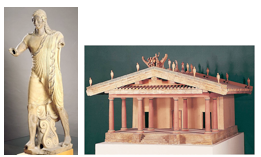
T: Temple of Minerva and sculpture of Apollo
L: Veii, Italy
E: Etruscan Art
A: Master sculptor Vulca
F: Wood, mudbrick, and tufa. Terracotta sculpture
P: Unknown
D: 510-500 B.C.E.
F: Temple dedicated to Minerva (Athena), Tinia (Zeus) and Uni (Hera)
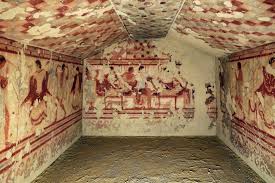
T: Tomb of the Triclinium
L: Tarquinia, Italy
E: Etruscan Art
A: Unknown
F: Rock-Cut Tufa & Fresco
P: Unknown
D: 480 - 470 B.C.E.
F: subterranean tomb with banquet space and decorative murals of funerary celebration in a necropolis
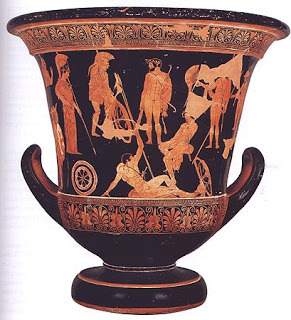
T: Niobides Krater
L: Athens, Greece
E: Archaic (Severe) Greece
A: the Niobid Painter
F: Terracotta, glaze (College Board: Clay, red-figure technique)
P: Unknown
D: 460-450 B.C.E.
F: krater, mix water with wine, narrative, tells the story of Niobid & gods
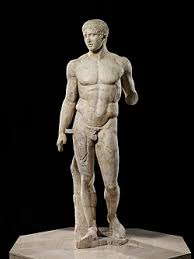
T: Doryphoros
L: Palestra at Pompeii
E: Classical Era
A: Polykleitos
F: Roman Marble Copy of Original Greek Bronze
P: Unknown
D: 450-440 B.C.E.
F: Represent perfect canons
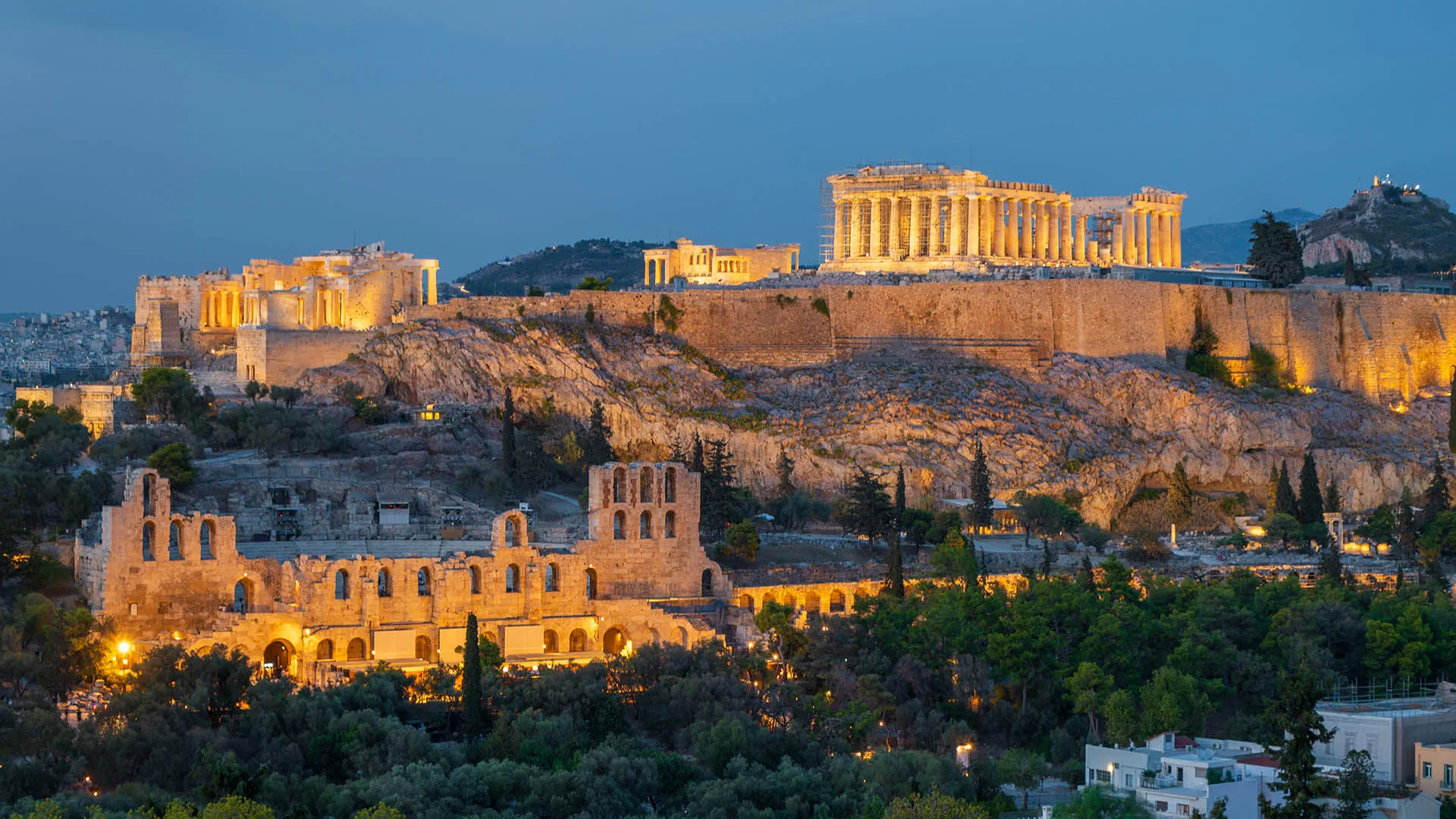
T: Acropolis
L: Athens, Greece
E: Classical Greece
A: Various (Iktinos/Kallikrates = architects/Phidias = sculpture)
F: Marble
P: Pericles
D: 447-410 B.C.E.
F: Religious center dedicated to Athena
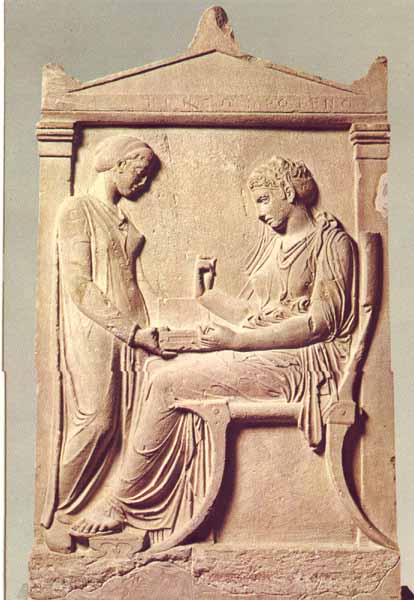
T: Grave stele of Hegeso
L: Dipylon Cemetery, Athens, Greece
E: Classical Greece
A: Kallimachos
F: Painted Marble
P: Hegeso or Proxenos (father)
D: 410 B.C.E.
F: Grave markers
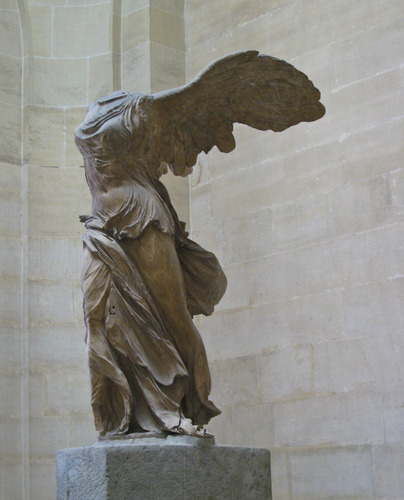
T: Winged Victory of Samothrace
L: Island of Samothrace
E: Hellenistic Greece
A: Unknown
F: Marble
P: Unknown
D: 190 B.C.E.
F: Military victory monument, originally part of a fountain shaped like the prow of a boat
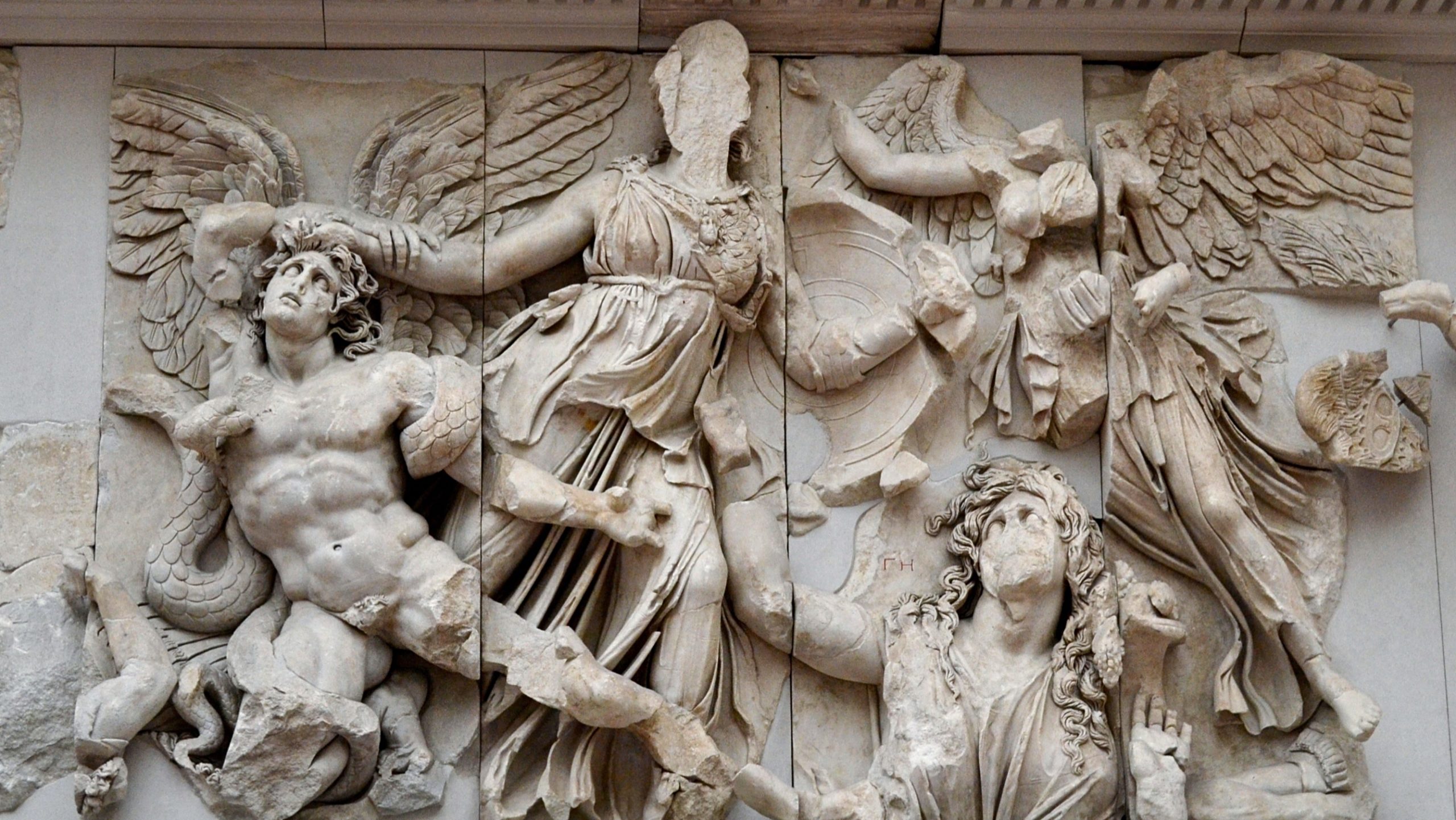
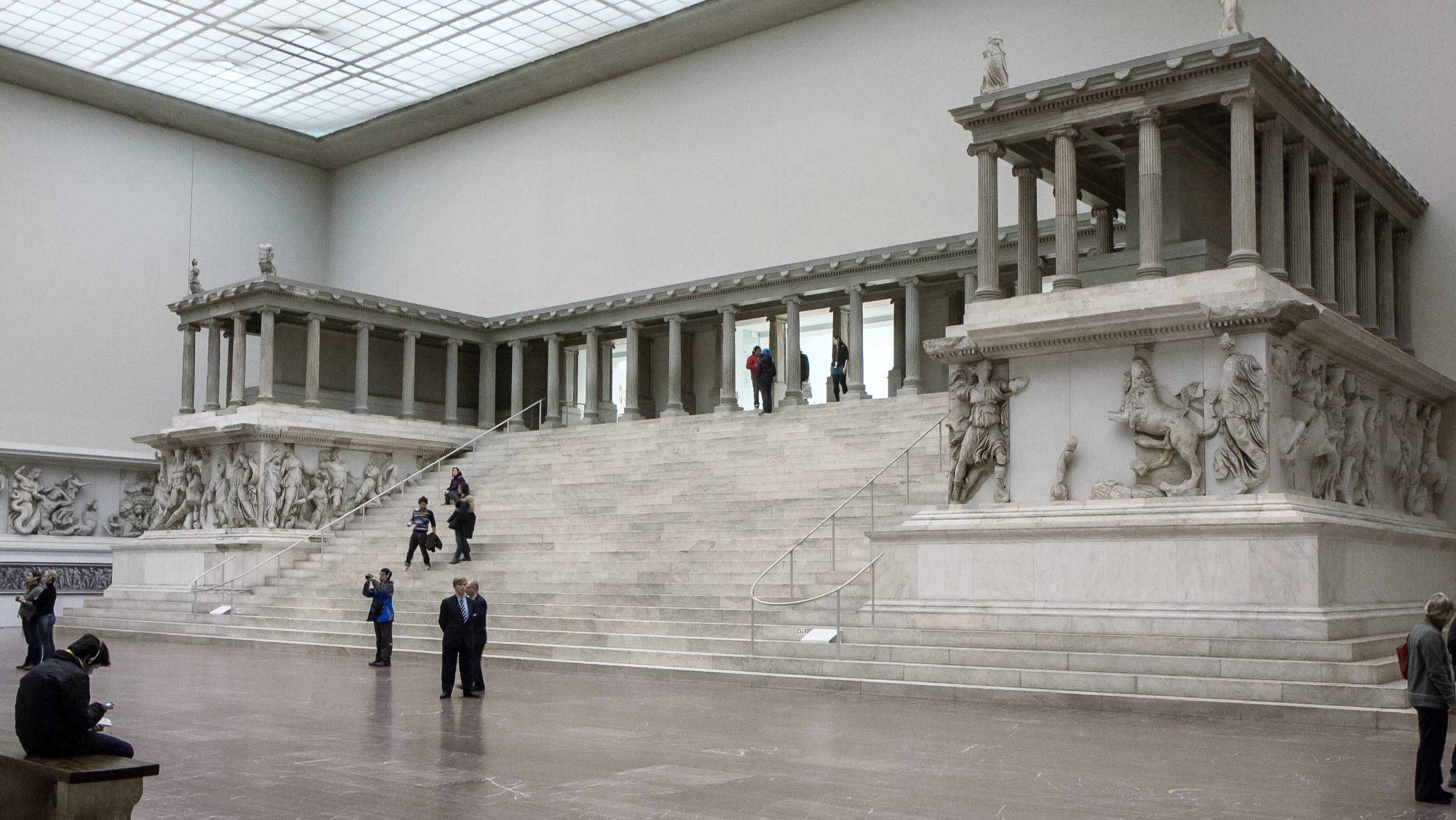
T: Great Altar of Zeus and Athena at Pergamon
L: Asia Minor (present-day Turkey)
E: Hellenistic Greece
A: Unknown
F: Marble
P: Eumenes II
D: 175 B.C.E.
F: Memorial of battle victory, Altar to the gods Zeus and Athena, symbolized victory of order over chaos and commemorated the kingdom’s prevention of barbarian invasion in 300 B.C.E.
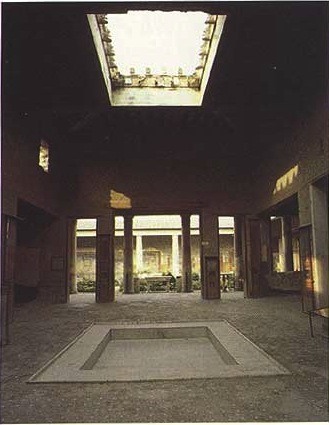
T: House of the Vettii
L: Pompeii, Italy
E: Early Roman Empire (College Board: Imperial Roman)
A: Unknown
F: Cut stone and fresco (fourth style)
P: Aulus Vetticus Conviva & Aulus Vetticus Restitutus (freed slaves)
D: 62 - 79 C.E.
F: Private home
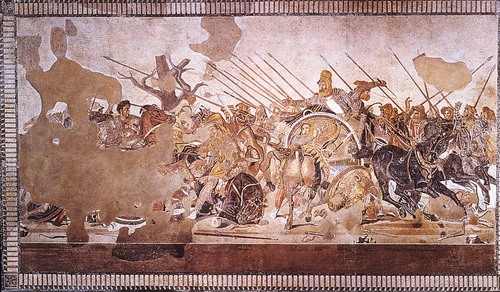
T: Alexander Mosaic
L: The House of the Faun, Pompeii
E: Hellenistic Greece/Roman Republic (Republican Roman)
A: Unknown
F: Roman Mosaic Copy of Greek Mural Painting
P: Unknown
D: 100 B.C.E.
F: Depicts the Battle of Issus, Alexander the Great VS Darius III (Macedonian troops defeated Persian forces)
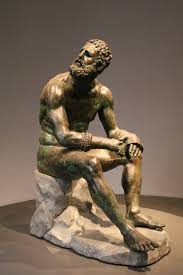
T: Seated boxer
L: near Baths of Constantine
E: Hellenistic Greece
A: Unknown
F: Bronze
P: Unknown
D: 100 B.C.E.
F: Emotional representation of a professional boxer or the idea of one (a generic character). Showing the rare emotion/moment of defeat
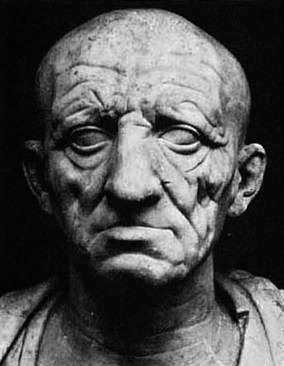
T: Head of a Roman patrician
L: Otricoli, Italy
E: Roman Republic
A: Unknown
F: Painted Marble
P: Unknown
D: 75-50 B.C.E.
F: Veristic male bust sculpture
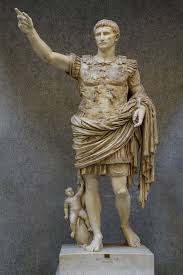
T: Augustus of Prima Porta
L: Villa of Livia at Prima Porta (near Rome), Italy
E: Early Roman Empire (College Board: Imperial Roman)
A: Unknown
F: Marble Copy of Original Bronze
P: Augustus
D: 20 CE (College Board: Early first century C.E.)
F: propaganda portrait of a Roman ruler
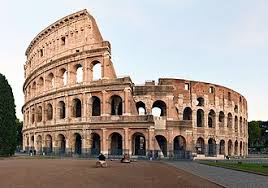
T: Colosseum (Flavian Amphitheater)
L: Rome, Italy
E: Early Roman Empire (College Board: Imperial Roman)
A: Vespasian → Titus
F: Concrete, Limestone, Tufa (College Board: Stone and concrete)
P: Flavian Family
D: 70-80 B.C.E.
F: Entertainment Arena
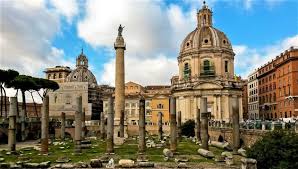
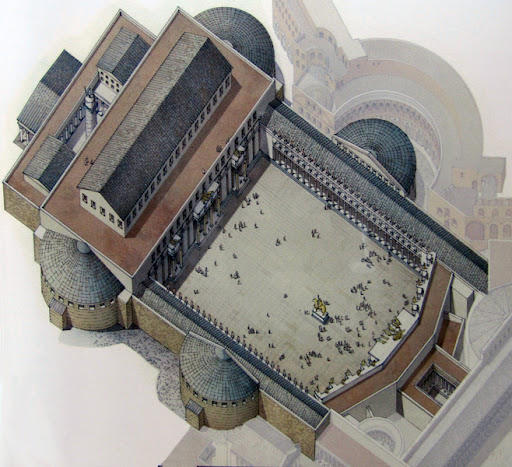
T: Forum of Trajan
L: Rome, Italy
E: High Roman Empire
A: Apollodorus of Damascus
F: Brick and concrete
P: Trajan
D: 106 – 112 B.C.E.
F: Public Square (forum), Public Building as a Law Court and Assemblies (basilica), Monument to Dacian Conquest (column), Commercial Complex (markets)
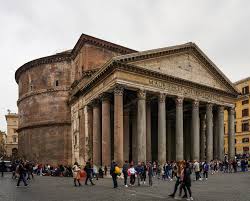
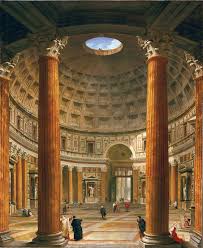
T: Pantheon
L: Rome, Italy
E: High Roman Empire (College Board: Imperial Roman)
A: Unknown (maybe Apollodorus of Damascus?)
F: Concrete with stone facing
P: Marcus Agrippa (Hadrian → Reconstruction)
D: original… 27 B.C.E. (Agrippa), reconstruction… 118-125 C.E. (Hadrian)
F: temple to 12 Roman gods (Dei Consentes), then a throne room for Hadrian, then (609
CE)/now Christian church, also a tomb (Raphael, Annibale Carracci, & 2 Italian Kings)
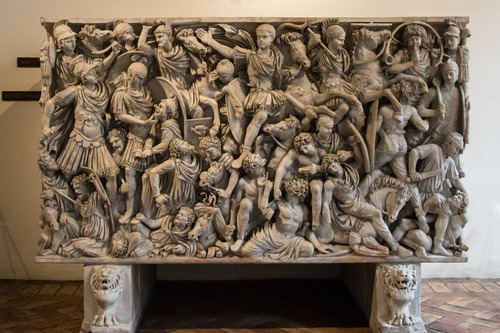
T: Ludovisi Battle Sarcophagus
L: Found in a tomb near an exit gate from the city of Rome
E: Late Roman Empire (College Board: Imperial Roman)
A: Unknown
F: Marble
P: Unknown
D: 250 C.E.
F: sarcophagus of a son of Emperor Decius, high-relief carving of a battle between Romans & Goths
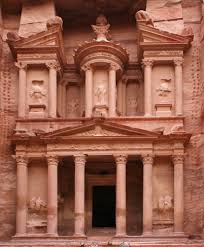
T: Treasury and Great Temple of Petra
L: Petra, Jordan
E: Nabataean Kingdom (sacked by Trajan in 106 C.E.) (College Board: Nabataean Ptolemaic and Roman)
A: Unknown
F: Cut rock (sandstone)
P: King Aretas IV
D: 1st century C.E. (College Board: 400 B.C.E. - 100 C.E.)
F: palace, mausoleum, storage room for spoils of war
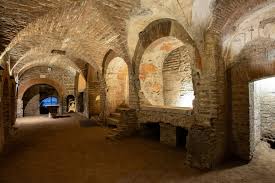
T: Catacomb of Priscilla
L: Rome, Italy
E: Late Antiquity Europe
A: Unknown
F: Tufa and Fresco
P: Priscilla (named after the wife of the Consul Manius Acilius Glabrio; he is said to have become a Christian and was killed on the orders of Domitian.)
D: 200-400 C.E.
F: a subterranean burial space for Christian people
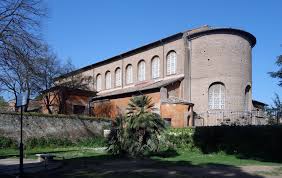
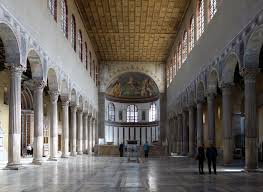
T: Santa Sabina
L: Rome, Italy
E: Late Antiquity Europe
A: Peter of Illyria
F: Brick and Stone (wooden roof)
P: Dominican Order of Christians
D: 422-432 C.E.
F: Oldest basilica plan church and mother church of Dominican Order (earlier site was of Imperial Roman homes)
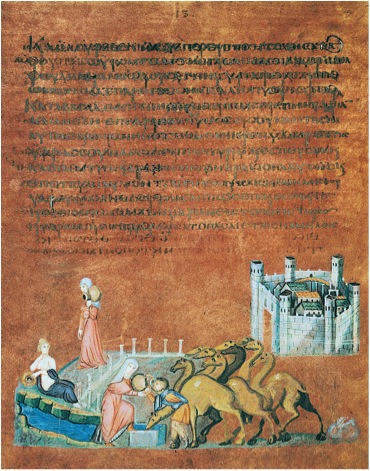
T: Vienna Genesis
L: Vienna, Austria
E: Early Byzantine European Art
A: Unknown
F: Tempera, Gold and Silver on Vellum
P: Unknown
D: 500-550 C.E. (College Board: Early sixth century C.E.)
F: Earliest surviving first chapter of the Bible
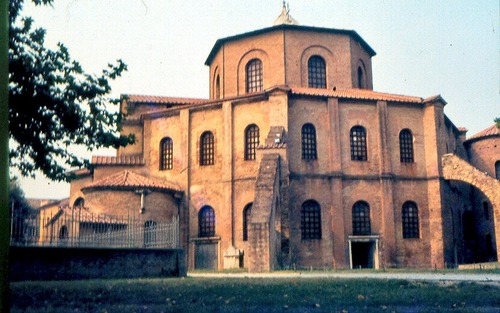
T: San Vitale
L: Ravenna, Italy
E: Early Byzantine European Art
A: Unknown
F: Brick, marble, and stone veneer
P: Julianus Argentarius (and a rich banker helped finance)
D: 526-547 C.E.
F: Central-planned church for Saint Vitalis, Ravenna’s patron saint
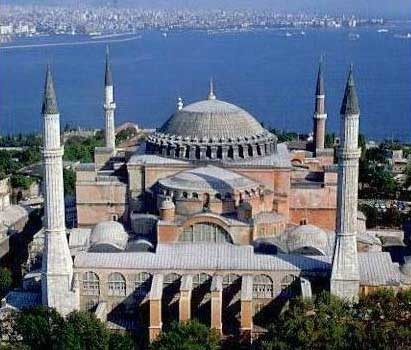
T: Hagia Sophia
L: Constantinople (Istanbul), Turkey
E: Byzantine Art
A: Anthemius of Tralles & Isidorus of Miletus
F: Ceramic, Stone, Mosaic
P: Justinian & Theodora
D: 532-537 C.E.
F: Central & Basilica Planned Church. Later a mosque (Sultan Mehmed II) to symbolize triumph of Islam over West and Christianity
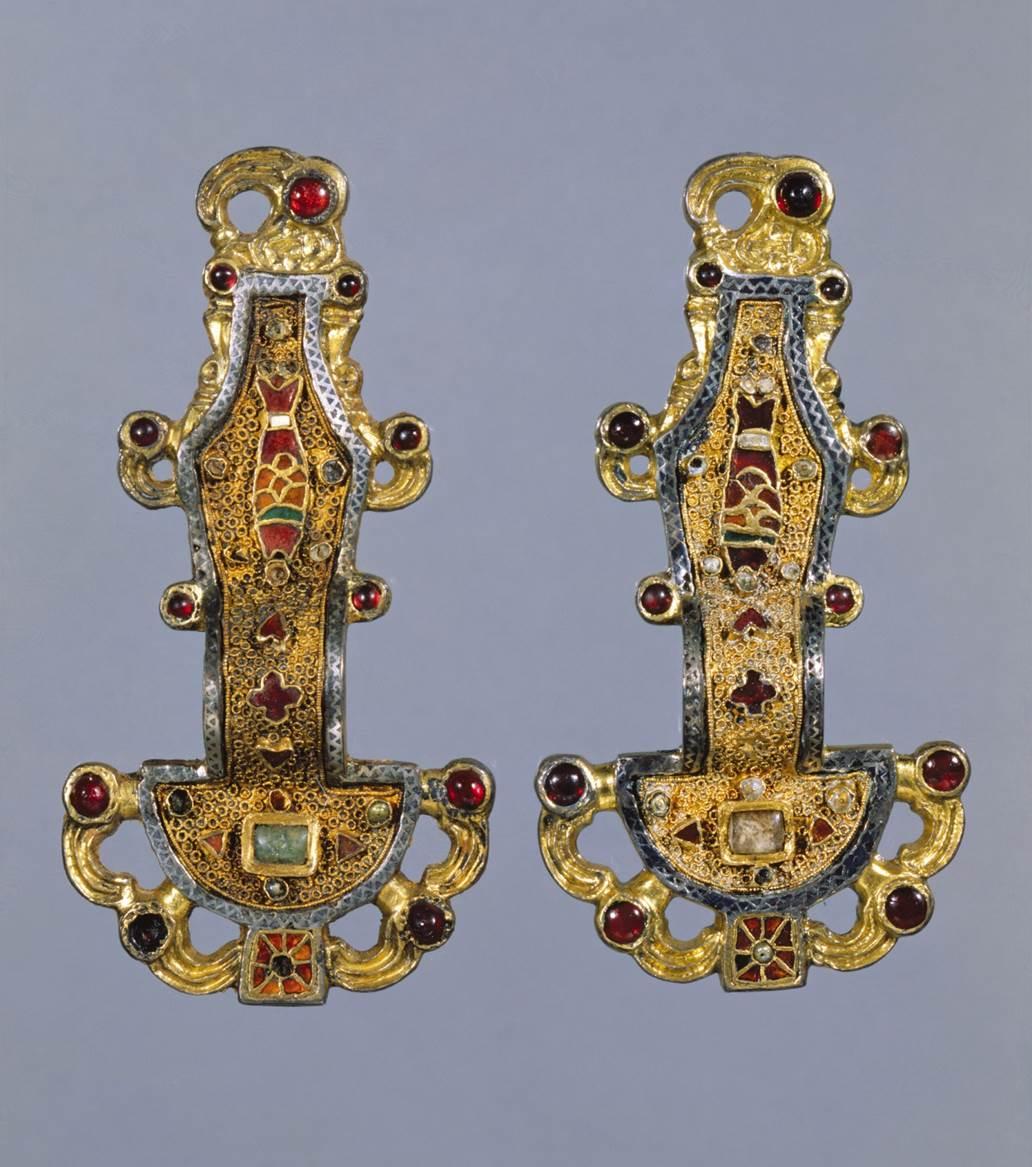
T: Merovingian looped fibula
L: Arles, France
E: Early Medieval European Art
A: Unknown
F: Silver, gilt, garnet & stone inlay
P: Unknown
D: 550 C.E. (College Board: Mid sixth century C.E.)
F: clasp used to fasten a garment
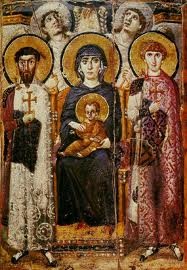
T: Virgin Theotokos and Child Between Saints Theodore and George
L: Monastery of St. Catherine, Mount Sinai, Egypt
E: Early Byzantine European Art
A: Unknown
F: Encaustic on wood
P: Unknown
D: 6th or early 7th Century
F: devotional object for an altar
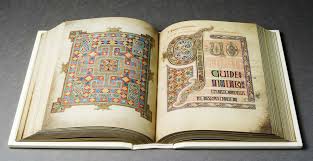
T: Lindisfarne Gospels
L: United Kingdom
E: Early Medieval European Art
A: Eadfrith
F: Tempera on Parchment (College Board: Illuminated manuscript (ink, pigments, and gold on vellum))
P: Unknown
D: 700 C.E.
F: Illuminated Manuscript of the 4 Gospels (Matthew, Mark, Luke, and John)
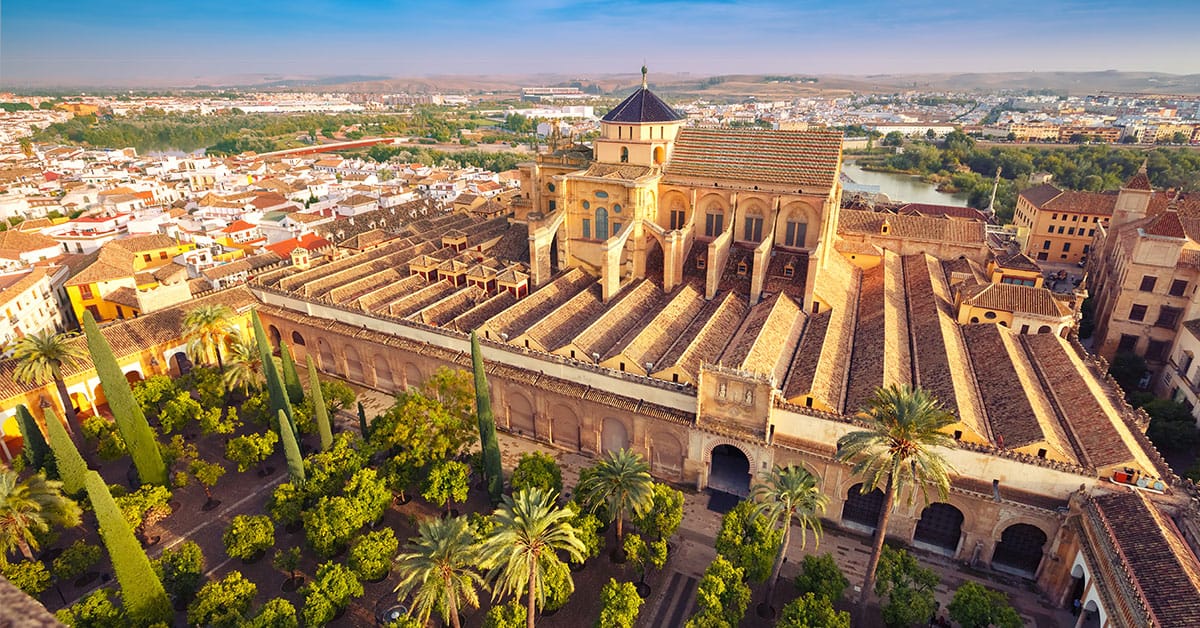
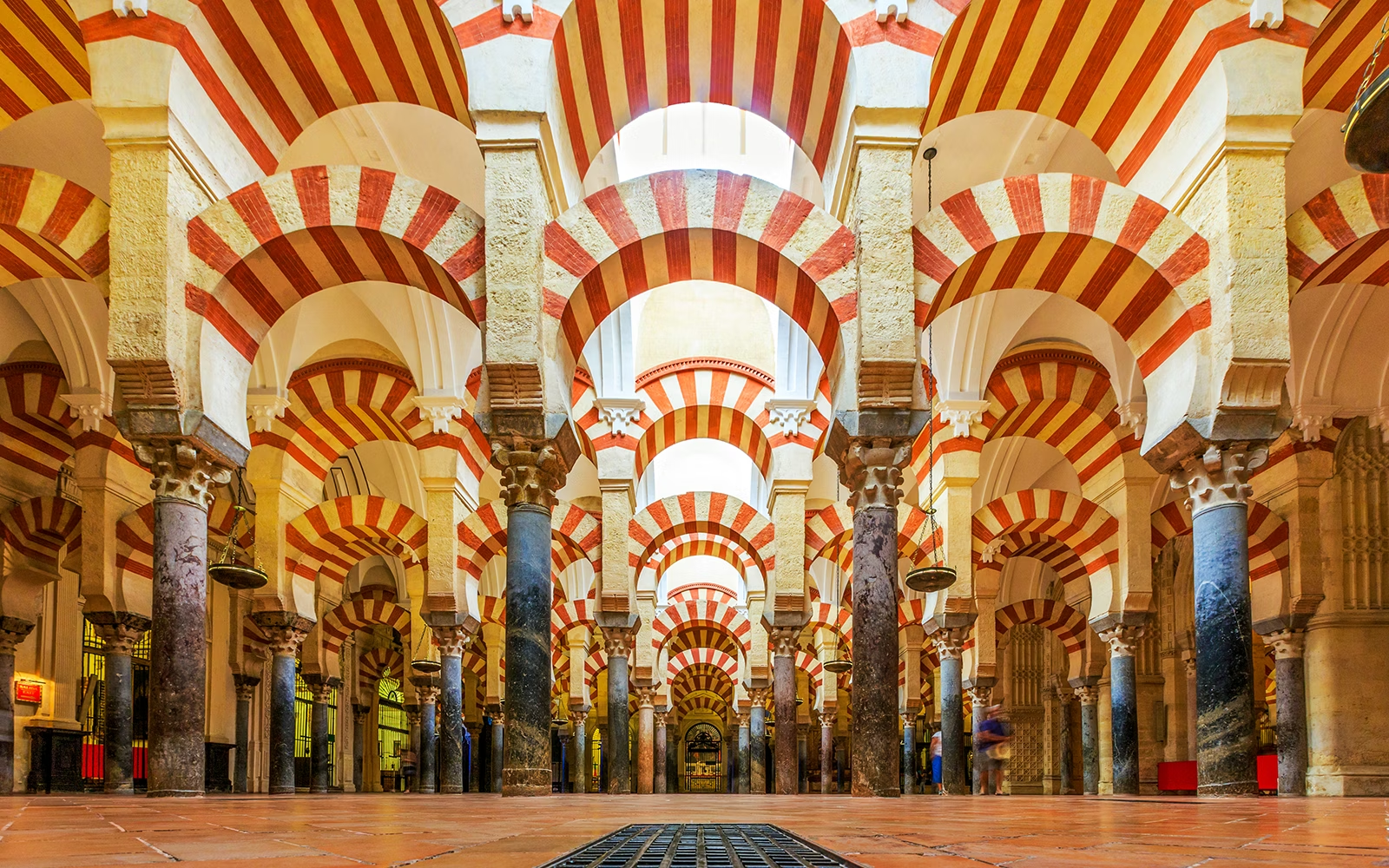
T: Great Mosque of Cordoba
L: Cordoba, Andalusia Spain
E: Early Islamic Architecture (College Board: Umayyad)
A: Unknown
F: Stone Masonry
P: Umayyad Dynasty (Abd al-Rahman)
D: 785-786 C.E.
F: Hypostyle Mosque
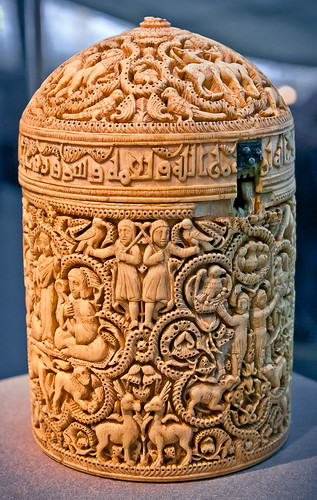
T: Pyxis of al-Mughira
L: Cordoba, Spain (now in the Louvre)
E: Medieval Islamic Art (College Board: Umayyad)
A: Unknown
F: Incised Ivory
P: Umayyad Dynasty
D: 968 C.E.
F: Coming-of-Age Pyxis
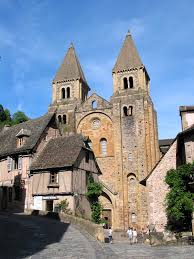
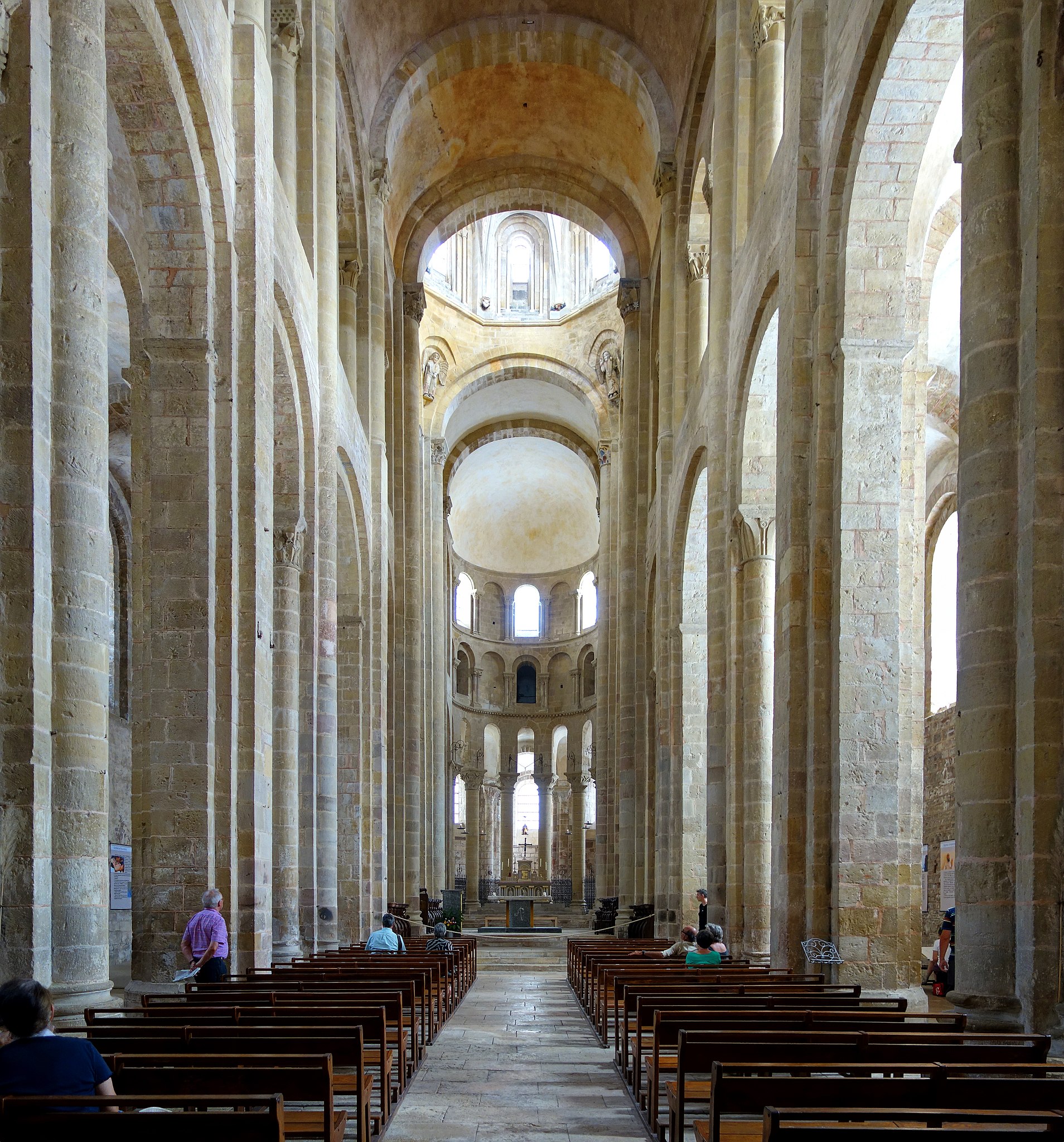
T: Church of Saint-Foy
L: Conques, France
E: Romanesque European Art
A: Unknown
F: Stone (College Board: Stone, paint, gold, silver, gemstones, and enamel over wood)
P: Unknown
D: 1050-1130 C.E.
F: martyr church & pilgrimage stop
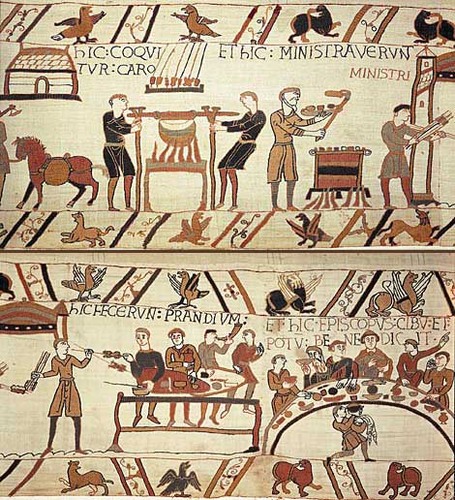
T: Bayeux Tapestry
L: Bayeux Cathedral, Bayeux, France
E: Romanesque European Art
A: Unknown
F: Embroidered wool on linen
P: Bishop Odo
D: 1066-1080 C.E.
F: tells the story of the victory of the Battle of Hastings (William the Conqueror (duke of Normandy) vs Harold II of England)
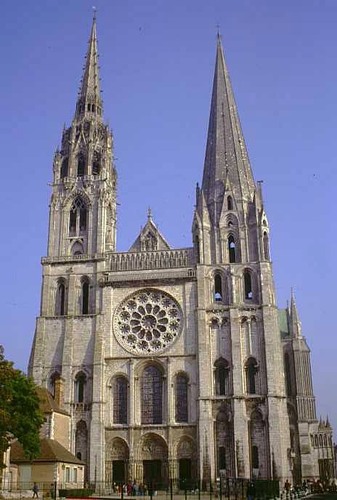
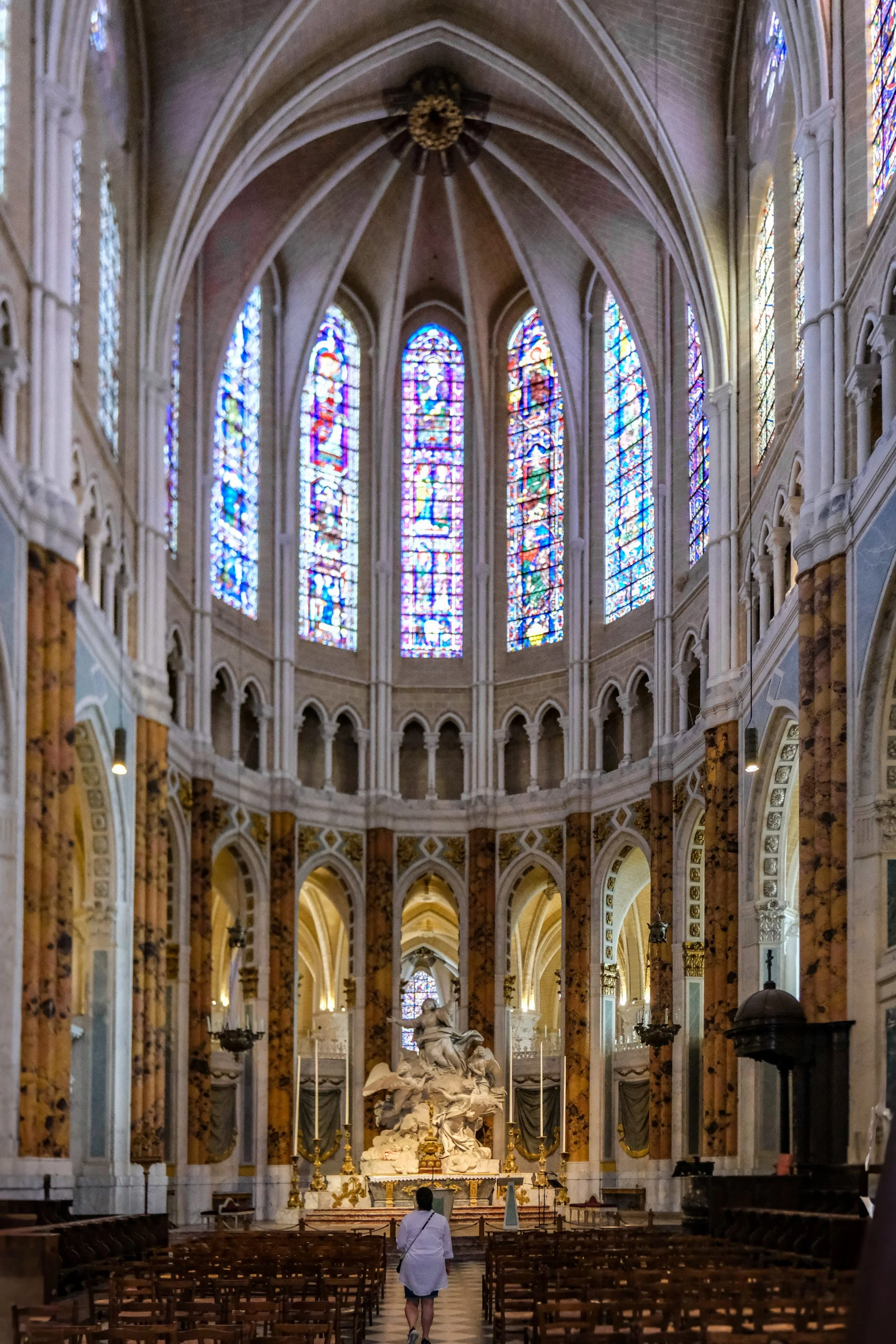
T: Chartres Cathedral
L: Chartres, France
E: French Gothic Art (College Board: Gothic European Art)
A: Unknown
F: Limestone & Stained Glass
P: Unknown
D: 1145-1155 C.E. (1194-1220 C.E. Reconstruction)
F: Cruciform Gothic French Catholic Cathedral
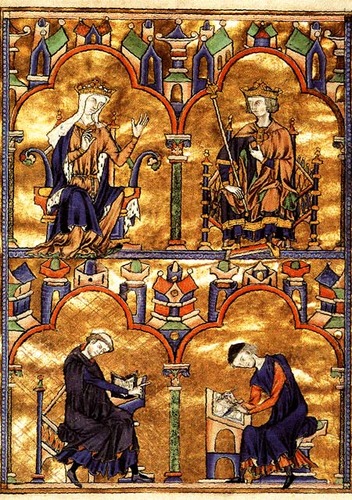
T: Dedication Page with Blanche of Castile and King Louis IX of France, Scenes from the Apocalypse from Bibles moralisées (the Moralizing Bible)
L: Paris, France
E: Gothic European Art
A: Unknown
F: Ink, tempera & gold leaf on vellum
P: Queen Blanche of Castile
D: 1225-1245 C.E.
F: Luxury Item & Illuminated Manuscript. Personal for French Royal Family to teach good morals to future rulers
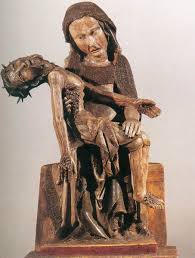
T: Röttgen Pietà
L: Rhineland, Germany
E: German Gothic Art (College Board: Late Medieval European Art)
A: Unknown
F: Painted Wood
P: Unknown
D: 1300-1325 C.E.
F: Devotional image used as a focal point for contemplation and prayer
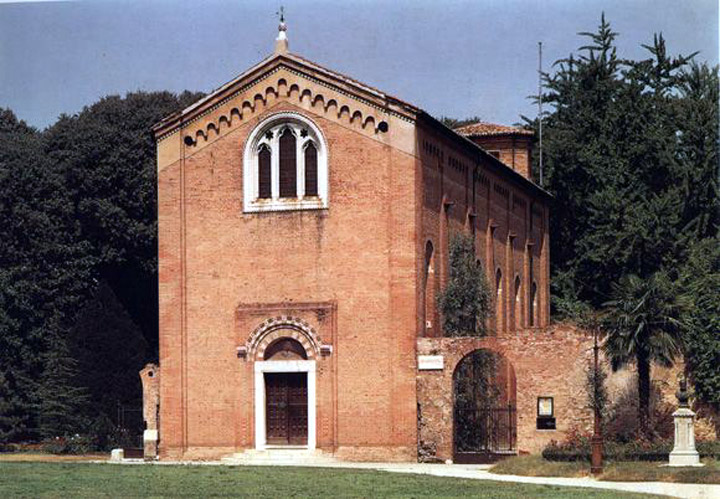
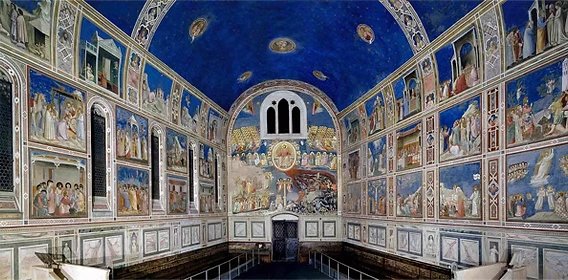
T: Arena (Scrovegni) Chapel
L: Padua, Italy
E: Pre-Italian Renaissance (1200-1400)
A: Giotto di Bondone
F: Brick & Masonry (exterior) Fresco (interior)
P: Enrico Scrovegni
D: 1303-1305 C.E.
F: Private family chapel for worship
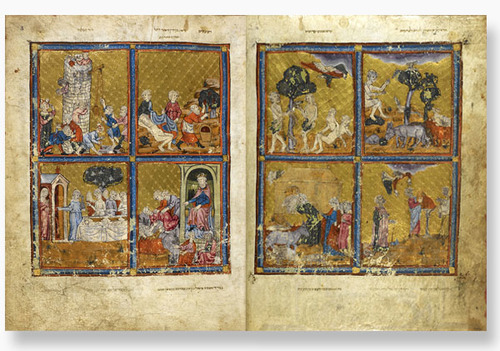
T: Golden Haggadah
L: Barcelona, Spain
E: Jewish Gothic Art (College Board: Late medieval Spanish art)
A: Unknown
F: Gold Leaf and Pigments on Vellum
P: Unknown
D: 1320 C.E.
F: The book used to tell the story of Passover around the seder table each year, known as a haggadah (haggadot, pl)
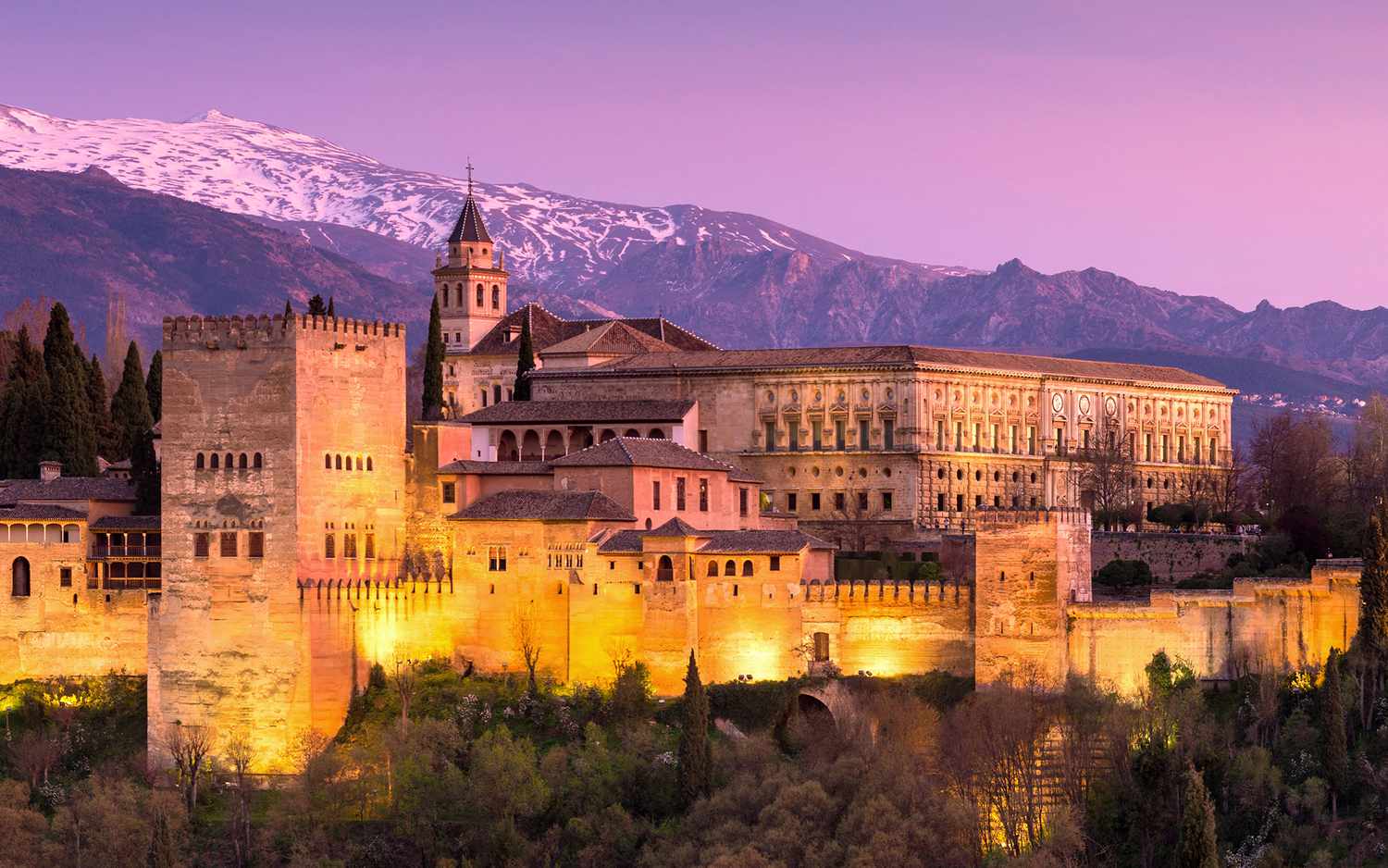
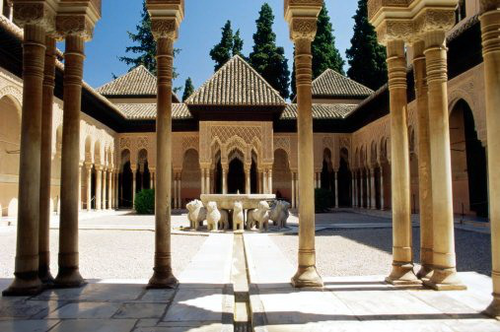
T: Alhambra
L: Granada, Andalusia Spain
E: Medieval Islamic Architecture (College Board: Nasrid Dynasty)
A: Unknown
F: Whitewashed Adobe Stucco, Wood, Tile, Paint, and Gilding (Gold)
P: Nasrid Dynasty
D: 1354-1391 C.E.
F: OG → fortress (889 C.E.) THEN → Royal Palace
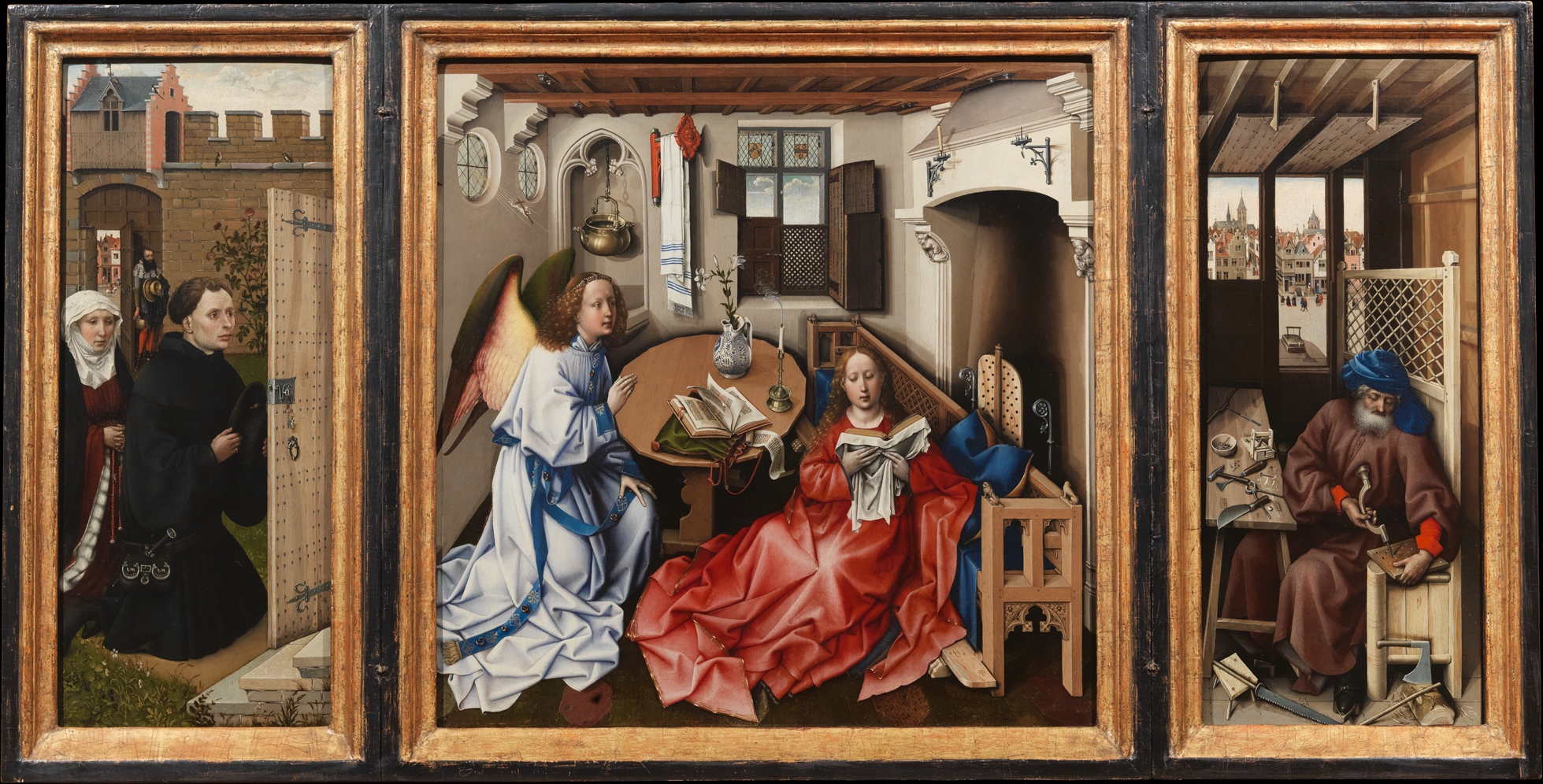
T: Annunciation Triptych (Merode Altarpiece)
L: Tournai, Belgium
E: Northern European Renaissance
A: Workshop of Robert Campin
F: Oil on Wood
P: Unknown
D: 1427-1432 C.E.
F: Triptych Altarpiece depicting the Annunciation
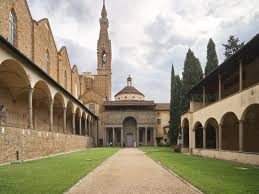
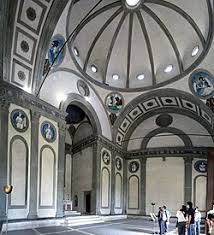
T: Pazzi Chapel
L: Santa Croce, Florence, Italy
E: Early Italian Renaissance
A: Filippo Brunelleschi
F: Concrete & Masonry
P: Andrea de’Pazzi (wealthy family second to only the Medicis)
D: 1429-1461 C.E.
F: Chapter House (not a church), served as a meeting place for Franciscan monks & represented the Pazzi power
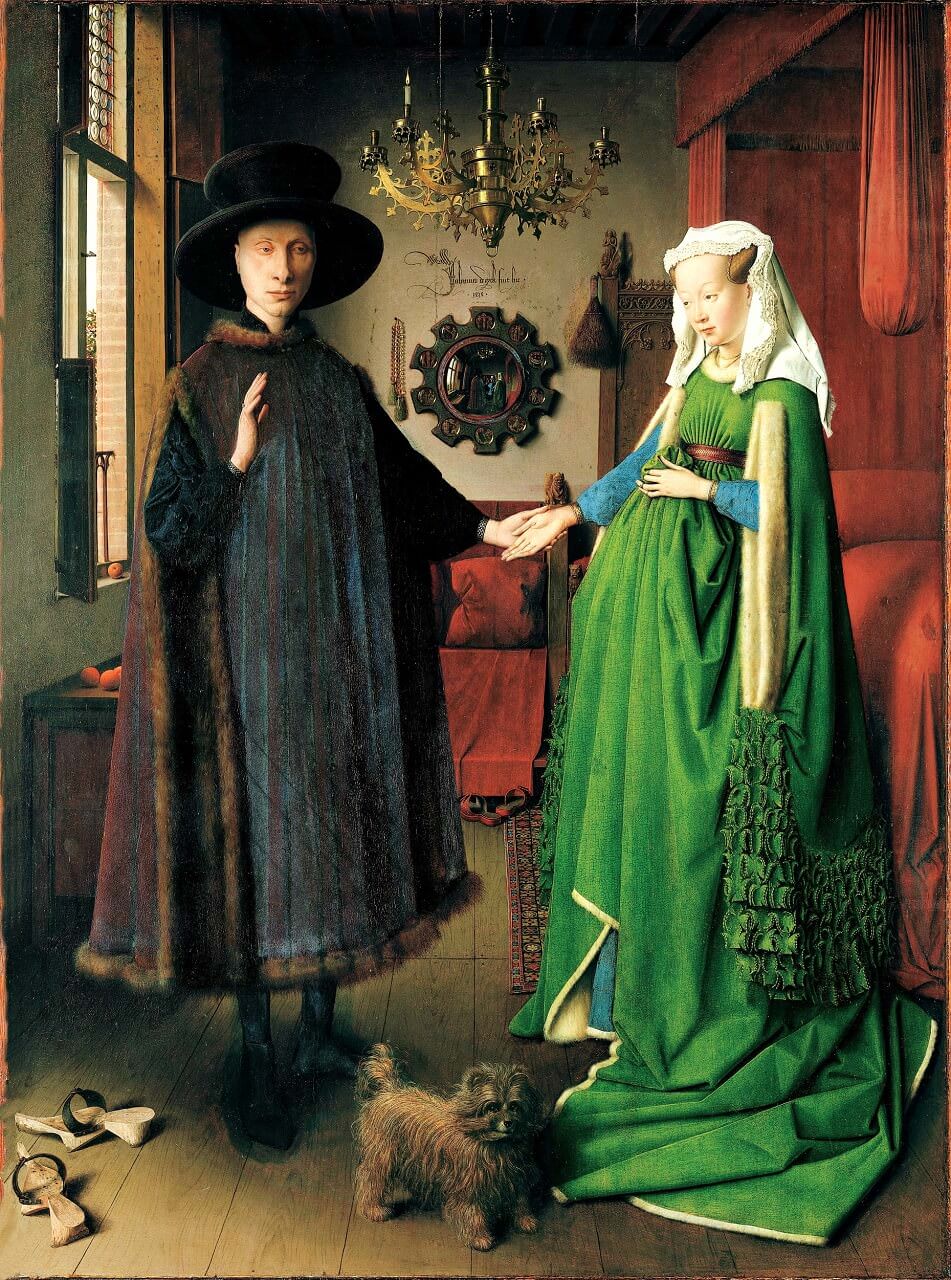
T: The Arnolfini Portrait
L: Berlin, Germany
E: Northern European Renaissance
A: Jan van Eyck
F: Oil on Wood
P: Giovanni Arnolfini
D: 1434 C.E.
F: Wedding portrait of Giovanni Arnolfini & his wife
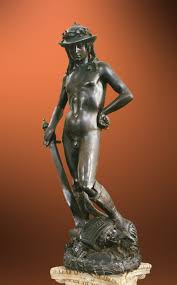
T: David
L: Medici Palace Courtyard, Florence, Italy
E: Early Italian Renaissance
A: Donatello
F: Bronze
P: Cosimo de’Medici
D: 1440-1460 C.E.
F: life-size sculpture of the biblical figure of David who has just defeated Goliath
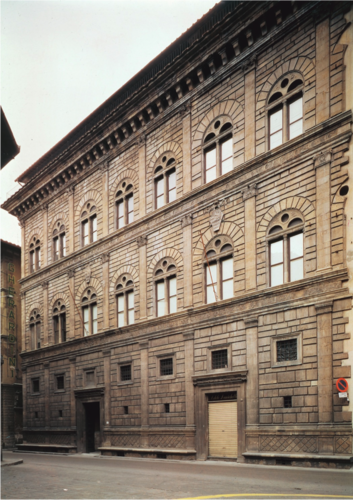
T: Palazzo Rucellai
L: Florence, Italy
E: Early Italian Renaissance
A: Leon Battista Alberti
F: Stone & Masonry
P: Giovanni Rucellai (a wealthy merchant)
D: 1450 C.E.
F: Business offices & private family home
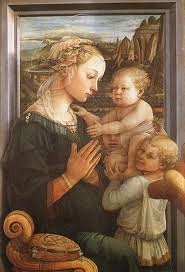
T: Madonna and Child with Two Angels
L: Uffizi Gallery, Florence, Italy
E: Early Italian Renaissance
A: Fra Filippo Lippi
F: Tempera on Wood
P: Giovanni de’Medici for the King of Naples
D: 1465 C.E.
F: humanist depiction of Mary and JC
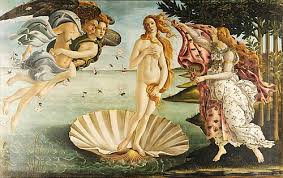
T: Birth of Venus
L: Uffizi Gallery, Florence, Italy
E: Early Italian Renaissance
A: Sandro Botticelli
F: Tempera on Canvas
P: Lorenzo de’Medici
D: 1484-1486 C.E.
F: depiction of the moment Venus emerged from the sea
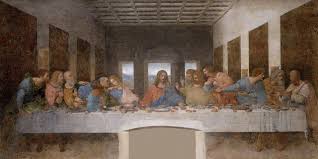
T: Last Supper
L: Refectory (dining hall) of the Santa Maria della Grazie, Milan
E: High Italian Renaissance
A: Leonardo da Vinci
F: Oil and Tempera on Plaster
P: Sforza of Milan (ruling family)
D: 1494-1498 C.E.
F: connect the relationship between friars eating and a biblical meal
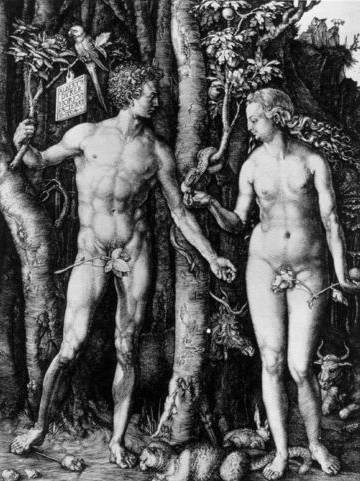
T: Adam and Eve
L: Nuremberg, Germany
E: Northern European Renaissance
A: Albrecht Dürer
F: Engraving (burin on a copper plate, ink to print)
P: Unknown
D: 1504 C.E.
F: Shows the figures of Adam and Eve in the Garden of Paradise before the “fall of man”
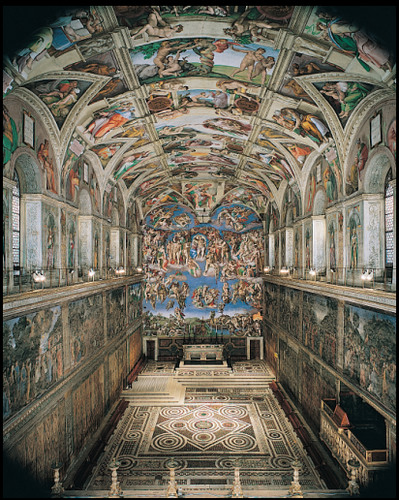
T: Sistine Chapel ceiling and altar wall frescoes
L: Vatican City, Italy
E: High Italian Renaissance
A: Michelangelo Buonarroti
F: Fresco
P: Pope Julius II
D: 1508-1512 C.E.
F: building where the next pope is elected
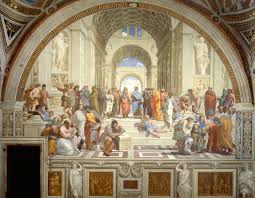
T: School of Athens
L: Stanza della Segnatura (Papal Library), Vatican City, Rome
E: High Italian Renaissance
A: Raphael (Raffaello Sanzio, from Urbino)
F: Fresco
P: Pope Julius II
D: 1509-1511 C.E.
F: decorates the walls of the papal library, specifically displayed above books around philosophy for an environment of learning
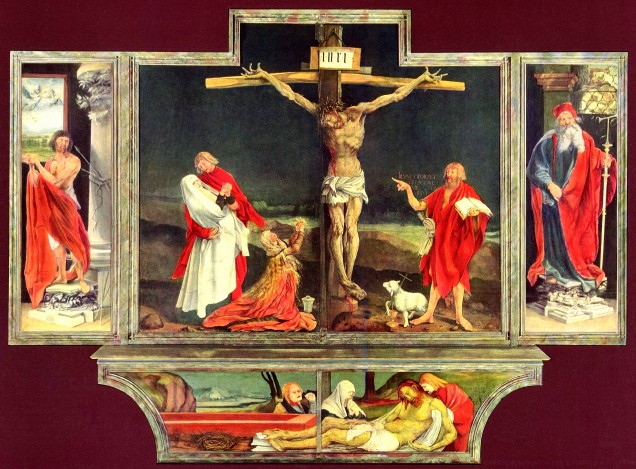
T: Isenheim altarpiece
L: Chapel of Saint Anthony (Isenheim, Germany)
E: Northern European Renaissance
A: Matthias Grünewald
F: Oil on Wood
P: Guy Guers (hospital preceptor (instructor))
D: 1512-1516 C.E.
F: Triptych, multi-layered (polyptych) altarpiece placed in a monastery hospital
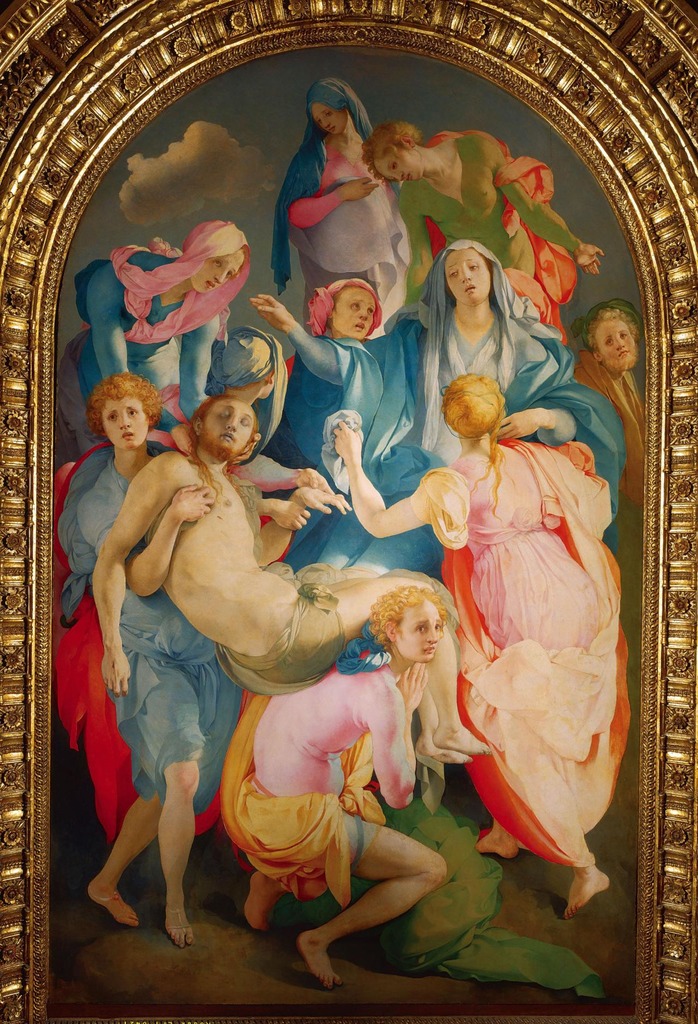
T: Entombment of Christ
L: Capponi Chapel, Santa Felicita, Florence, Italy
E: High Italian Renaissance
A: Jacopo da Pontormo
F: Oil on Wood
P: original made for the Florence Charterhouse
(aka Carthusian monastery)
D: 1525-1528 C.E.
F: Mannerist style entombment (or deposition, we can’t be sure)
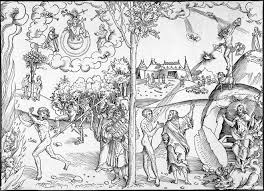
T: Allegory of Law and Grace
L: Wittenberg, Germany
E: Northern European Renaissance
A: Lucas Cranach the Elder (court painter, chief artist of the Reformation)
F: Woodcut and letterpress
P: Followers of the Reformation
D: 1530 C.E.
F: Diptych (2 sides) illustrating Lutheran beliefs, guidelines, rewards, and punishments
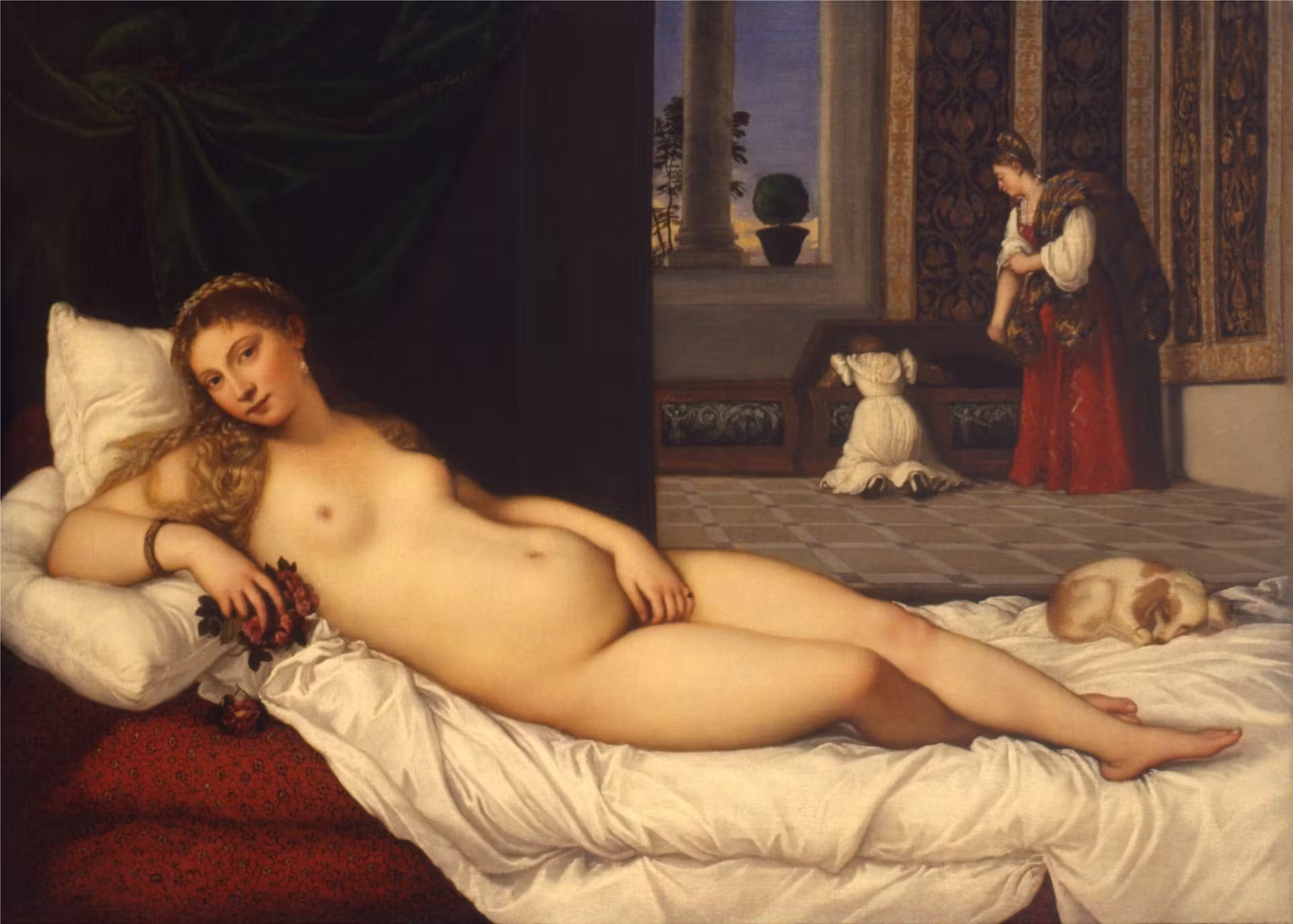
T: Venus of Urbino
L: Venice, Italy (then Urbino Office) (now Uffizi)
E: High Italian Renaissance
A: Titian
F: Oil on Canvas
P: Guildobaldo della Rovere of Urbino
D: 1538 C.E.
F: a portrait of a reclining nude woman
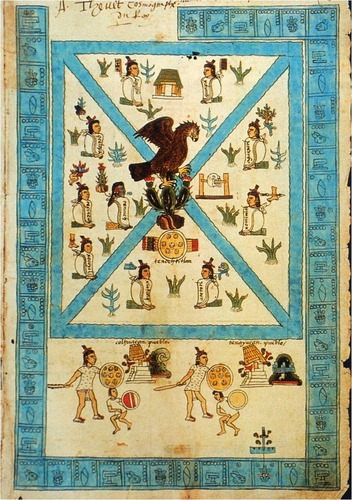
T: Frontispiece of the Codex Mendoza
L: Mexico City, Mexico
E: Art of New Spain
A: Indigenous Artists, annotated in Spanish by a priest
F: Ink and color (pigment) on paper
P: Antonio de Mendoza (first viceroy of Viceroyalty of New Spain) for King Charles V of Spain
D: 1541-42 C.E.
F: a book meant to record information about Aztec Empire & the lords of Tenochtitlan (capital), paid tribute to Aztecs, and included accounts of life “from year to year”
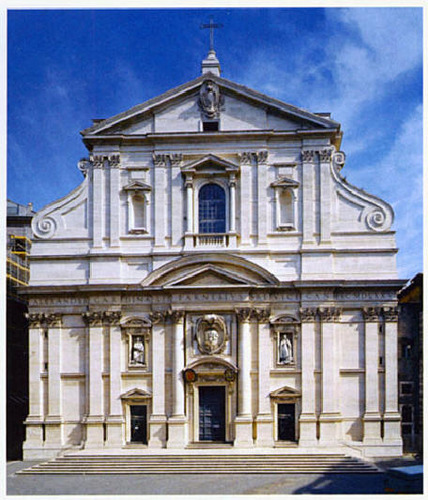
T: Church of Il Gesú, including Triumph of the Name of Jesus ceiling fresco
L: Rome, Italy
E: Italian Baroque Art
A: Giacomo da Vignola (architect), Giacomo della Porta (architect), Giovanni Battista Gaulli (ceiling fresco artist) TOOK INSPO FROM BERNINI
F: Brick, Marble, Fresco, and Stucco
P: Alexander Farnese (rich, powerful, art-loving Cardinal)
D: 1568-1584 C.E.
F: Founded as the mother church of the Jesuit Order
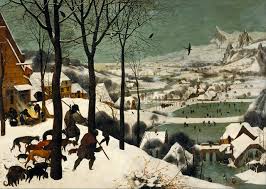
T: Hunters in the Snow
L: Antwerp, Belgium
E: Northern European Renaissance
A: Pieter Bruegel the Elder
F: Oil on Wood
P: Nicolaes Jonghelinck (merchant who wanted the images to hang in the dining room of his suburban Antwerp home)
D: 1565 C.E.
F: 1 of six secular paintings that depict the different seasons, this one being November and December
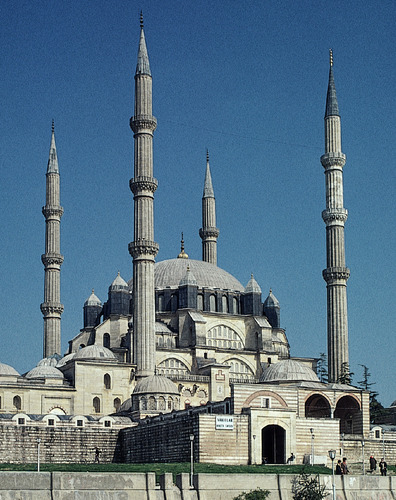
T: Mosque of Selim II
L: Edirne, Turkey
E: Late Islamic Architecture
A: Sinan
F: Limestone & Glazed Ceramic Tile (College Board: Brick and stone)
P: Ottoman Dynasty
D: 1568-1575 C.E.
F: Centrally-Planned Mosque
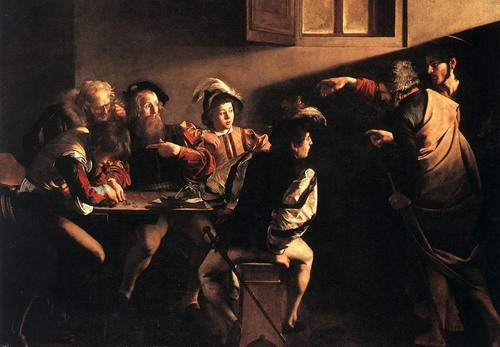
T: Calling of Saint Matthew
L: Contarelli Chapel, San Luigi dei Francesi, Rome
E: Italian Baroque Art
A: Caravaggio
F: Oil on Canvas
P: Matthew Contarelli
D: 1597-1601 C.E.
F: 1 of a 3-part series showing the life of Saint Matthew in a chapel dedicated to him by the Contarelli family
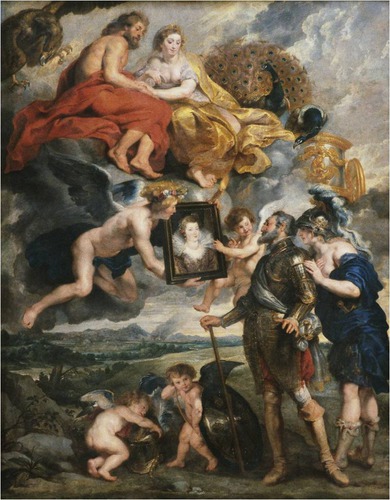
T: Henri IV Receives a Portrait of Marie de’ Medici
L: Luxembourg Palace (she was exiled there by her son King Louis XIII)
E: French Baroque Art
A: Peter Paul Rubens (lived and worked in Antwerp)
F: Oil on Canvas
P: Marie de’ Medici
D: 1621-1625 C.E.
F: 1 of 21 huge historical paintings allegorically retelling the life of Marie de’ Medici, Queen of France, wife of Henri IV
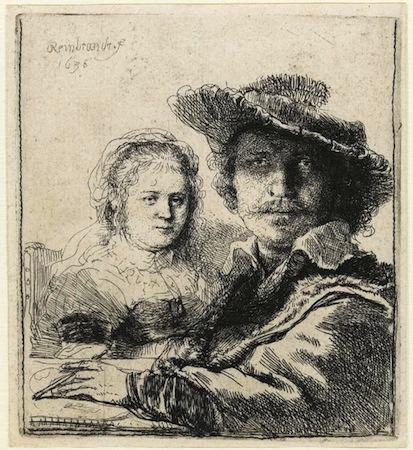
T: Self-Portrait with Saskia
L: Leiden & Amsterdam, Dutch Republic
E: Dutch Baroque Art
A: Rembrandt van Rijn
F: Etching
P: none… meant for private purposes, not for general sale
D: 1636 C.E.
F: double portrait (couple portrait, marriage portrait, whatever ya wanna call it)
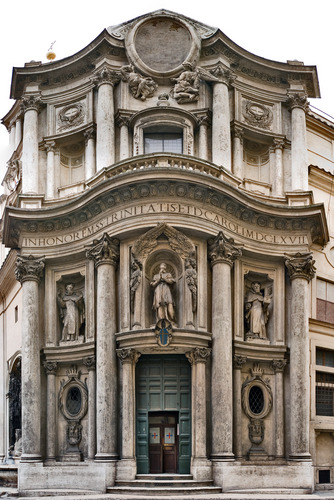
T: San Carlo alle Quattro Fontane
L: Rome, Italy
E: Italian Baroque Art
A: Francesco Borromini
F: Stone & Stucco
P: Trinitarian Religious Order
D: 1638-1646 C.E.
F: Christian place of worship for the Trinitarian Religious Order
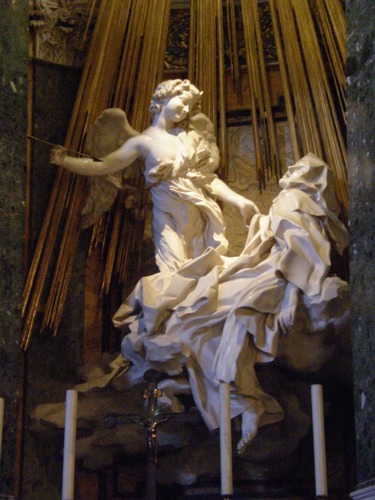
T: Ecstasy of Saint Teresa
L: Cornaro Chapel, Santa Maria della Vittoria, Rome, Italy
E: Italian Baroque Art
A: Gian Lorenzo Bernini
F: Marble, Stucco, & Gilt Bronze
P: Cornaro family (Cardinal in Venice but had important ties to Rome)
D: 1647-1652 C.E.
F: Depiction of a scene from St. Teresa’s diary of a spiritual vision located within a chapel for the Cornaro family
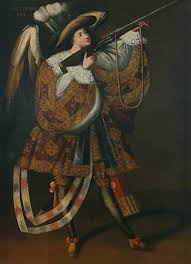
T: Angel with Arquebus, Asiel Timor Dei
L: Calamarca, Bolivia
E: Art of New Spain
A: Jose Lopez de los Rios (Master of Calamarca)
(La Paz School, after Leonardo Flores)
F: Oil on Canvas
P: Viceroyalty of Peru
D: 1680 C.E. (College Board: 17th century C.E.)
F: representative of both the wealth & power of the Spaniards over indigenous people and protection offered to faithful Christians
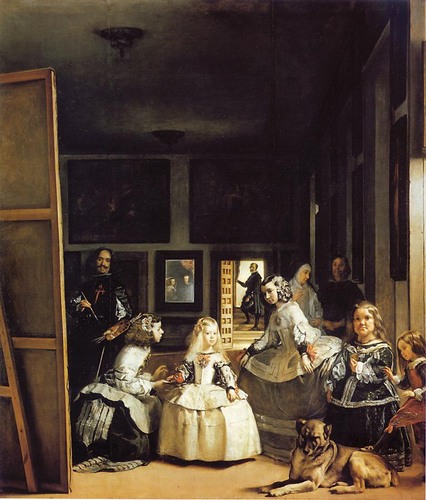
T: Las Meninas
L: Madrid, Spain
E: Spanish Baroque Art
A: Diego Velazquez
F: Oil on Canvas
P: King Philip IV of Spain (for his study)
D: 1656 C.E.
F: Genre Scene, Group Portrait, Artist Promotion
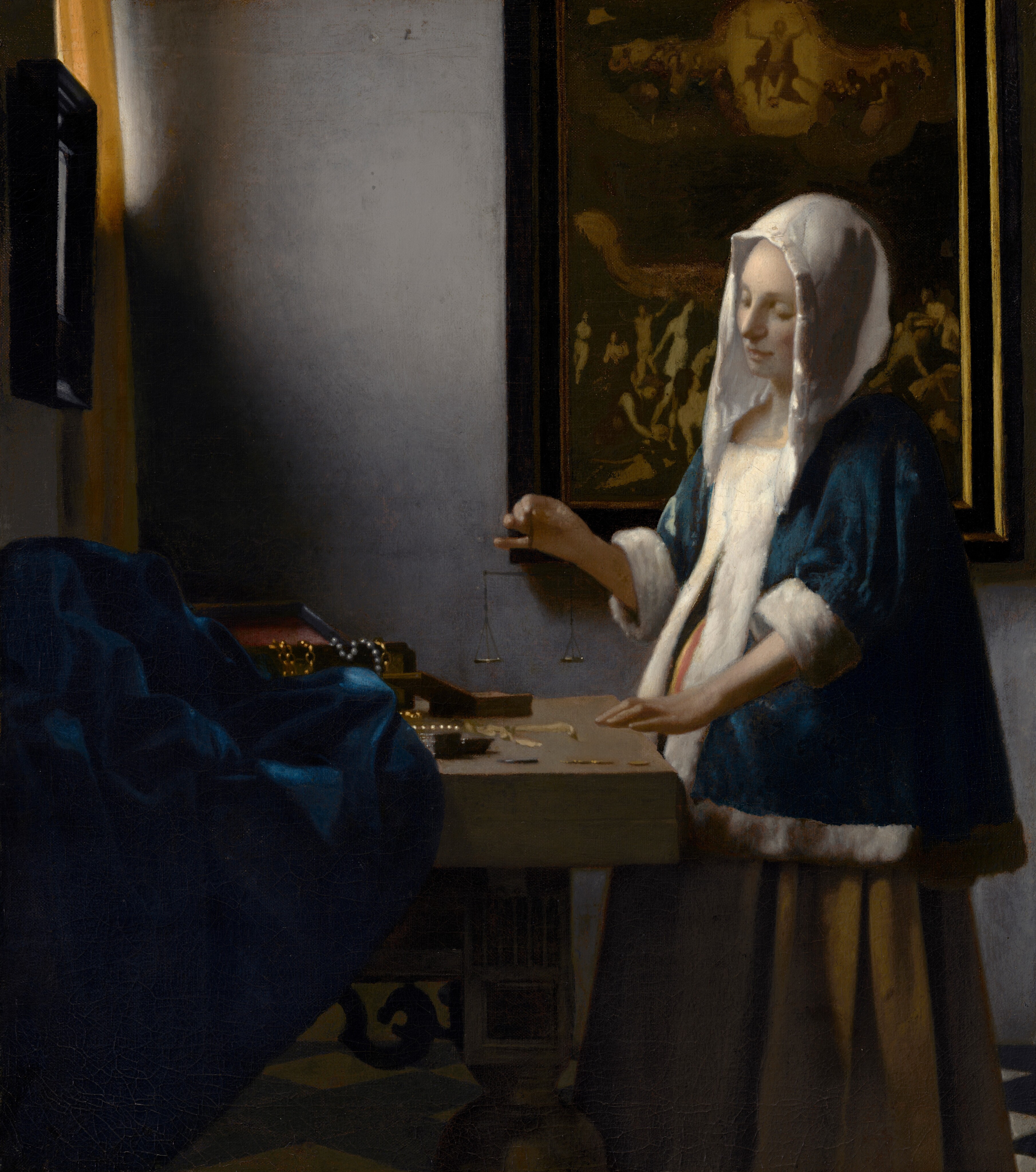
T: Woman Holding a Balance
L: Delft, Dutch Republic
E: Dutch Baroque Art
A: Johannes Vermeer
F: Oil on Canvas
P: Pieter Claesz van Ruijvan
D: 1664 C.E.
F: genre painting showing a moment of stillness and timelessness, weighing and judgement.
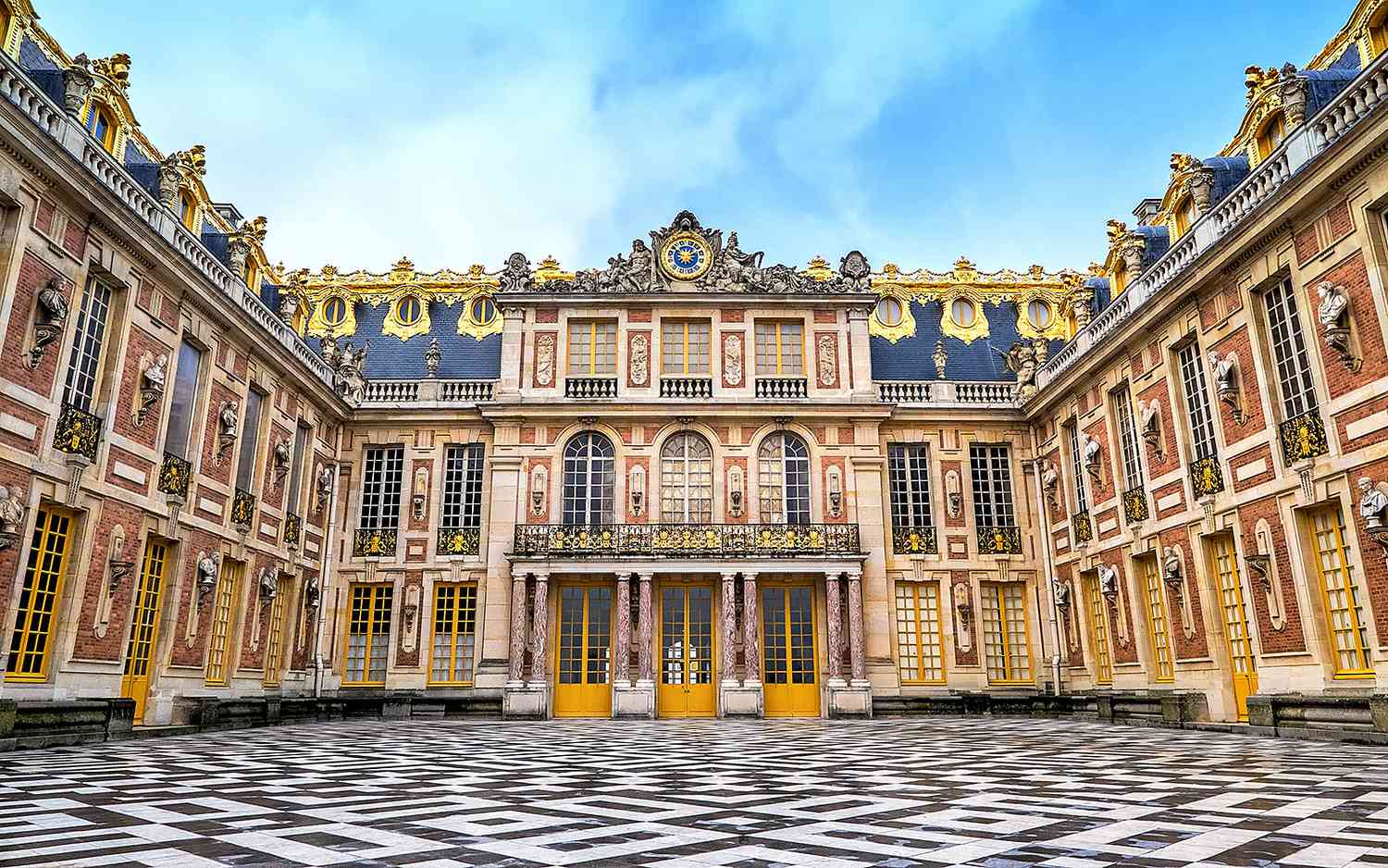
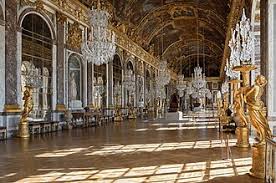
T: The Palace at Versailles
L: Versailles, France
E: French Baroque Art
A: Louis Le Vau and Jules Hardouin-Mansart (architects)
F: Masonry, stone, wood, iron, gold leaf
P: King Louis XIV
D: 1669 C.E. (begun)
F: created as a palace to move court (of over 20,000 people) out of Paris (previously was a small hunting lodge). Symbolically meant to emphasize Louis’ importance (“Sun King”)
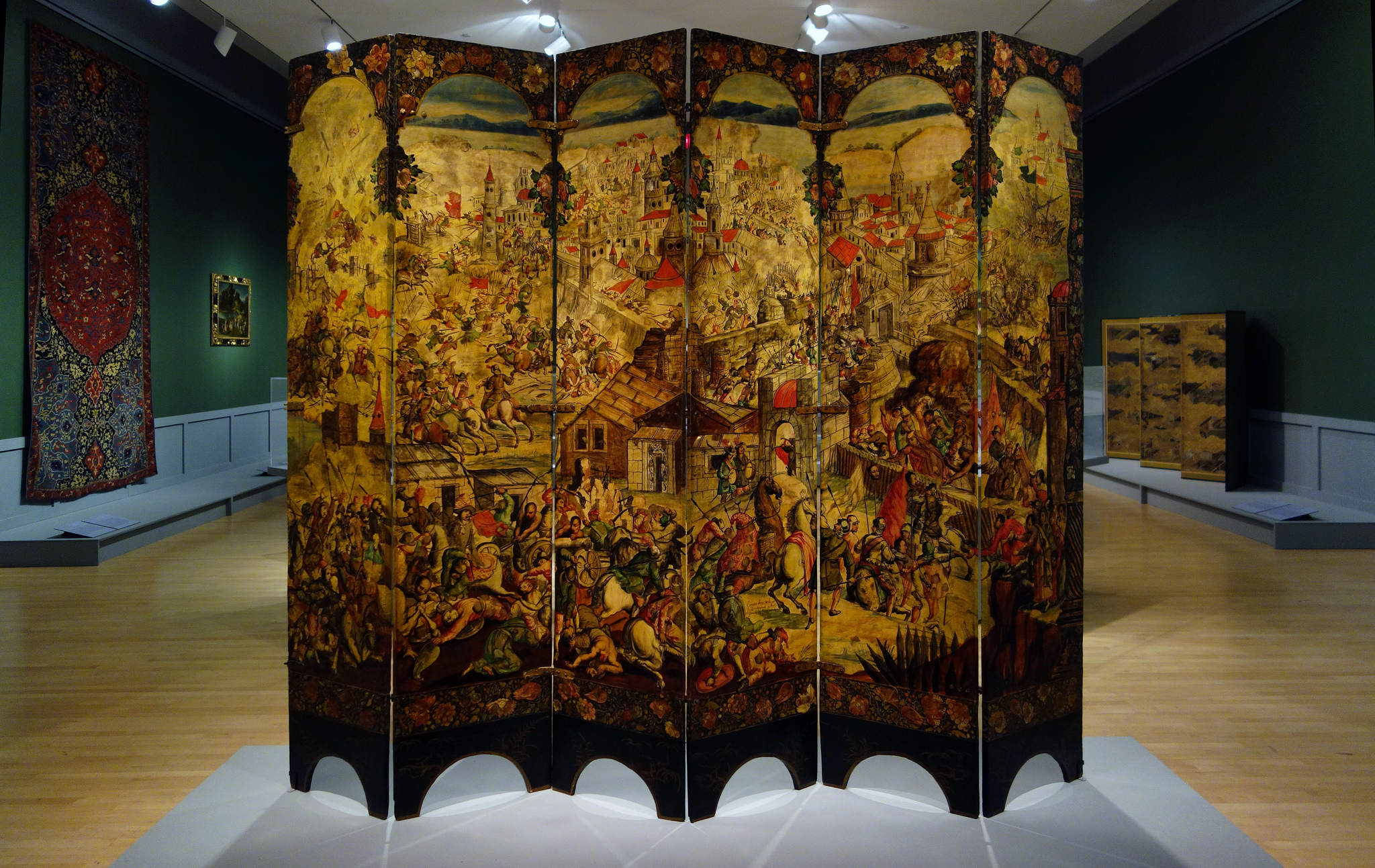
T: Screen with the Siege of Belgrade and hunting scene
L: Mexico City, Mexico
E: Art of New Spain
A: Circle of the González Family
F: Tempera and resin on wood, shell inlay
P: Gonzalez Family (Viceroyalty of New Spain)
D: 1697-1701 C.E.
F: divided room of a home, intended to be viewed by a separate audience for each side
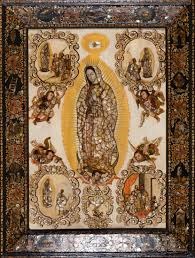
T: The Virgin of Guadalupe (Virgen de Guadalupe)
L: Basilica of Guadalupe,Mexico City, Mexico
E: Art of New Spain
A: Miguel González
F: Oil and mother of pearl on canvas (on wood)
P: Viceroyalty of New Spain
D: 1698 C.E.
F: holy image created after an inspiring Christian miracle that took place in Mexico City