AH Biology - Unit 2 - KA5 - Whole KA
 Call Kai
 Learn
Learn Practice Test
 Spaced Repetition
 Match
Match Flashcards
 Knowt Play
1/88

There's no tags or description
Looks like no tags are added yet.
Name | Mastery | Learn | Test | Matching | Spaced | Call with Kai |
|---|
No analytics yet
Send a link to your students to track their progress
89 Terms
What is an ecological niche?
An ecological niche is a multidimensional summary of tolerances and requirements of a species.
What are the two types of niche?
The two types of niche are:
Fundamental niche
Realised niche
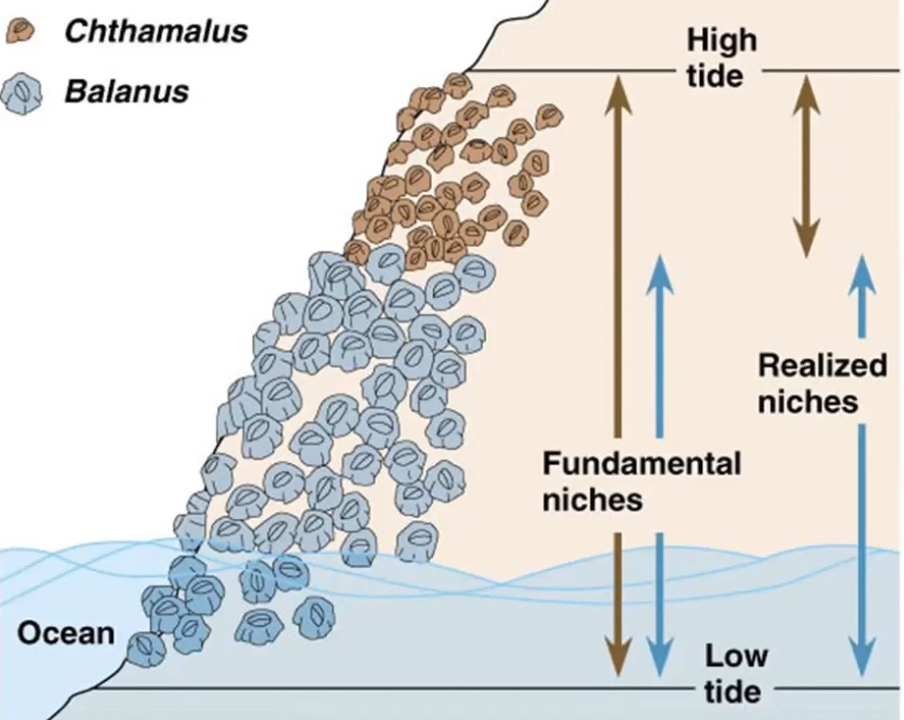
What is a fundamental niche?
A fundamental niche is the niche a species would occupy in the absence of any interspecific competition.
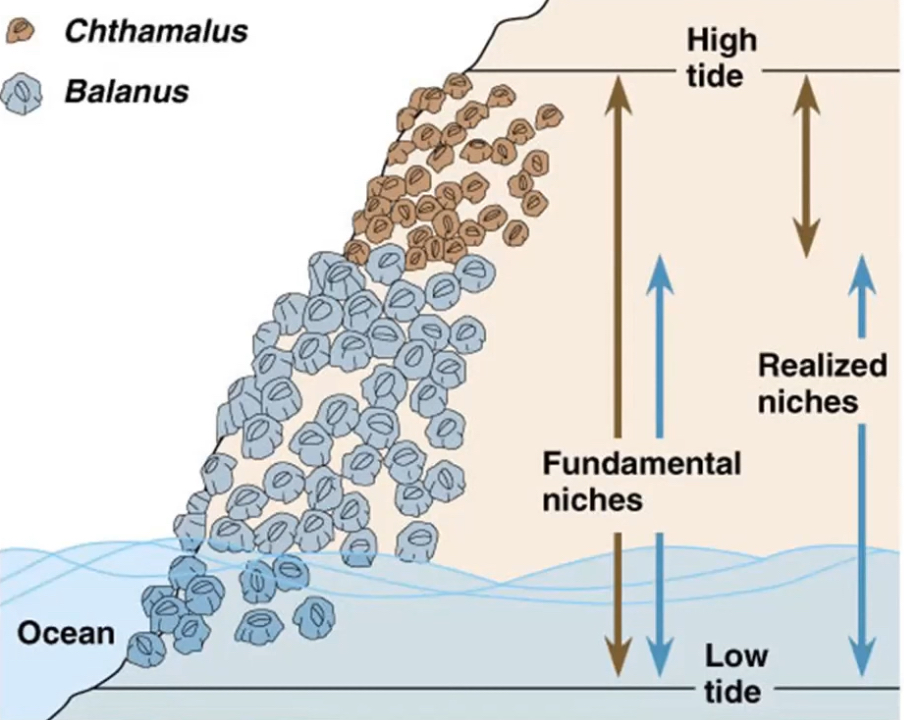
What is a realised niche?
A realised niche is the niche a species actually occupies in response to interspecific competition.
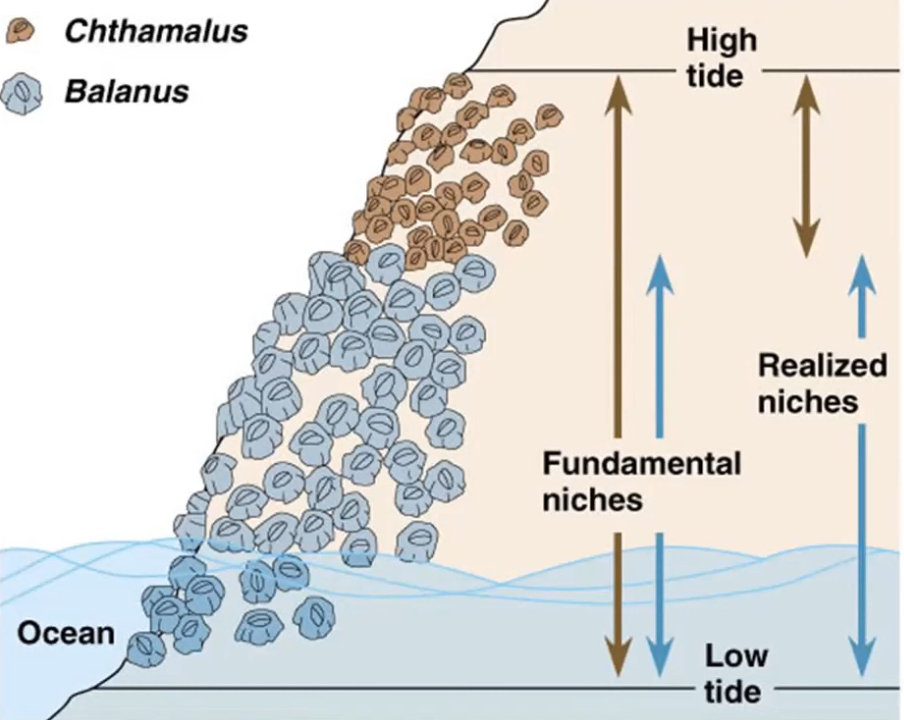
What is competitive exclusion and when does it happen?
Competitive exclusion is what occurs if interspecific competition between two species is so intense that one species declines and becomes locally extinct. Competitive exclusion occurs when the ecological niches of two species are very similar.
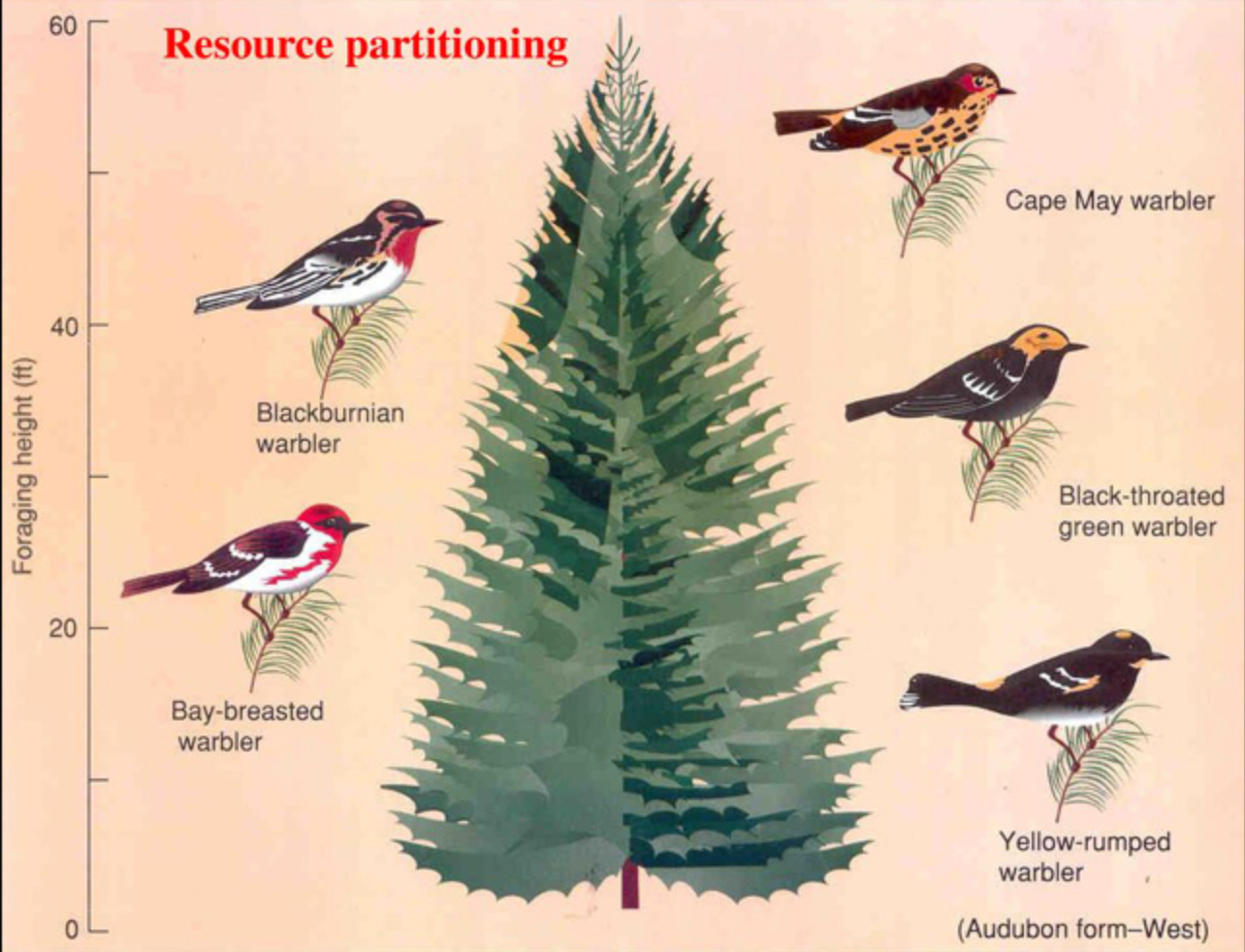
What is resource partitioning?
Resource partitioning is what happens when the realised niches of potential competitors are sufficiently different that they can use different resources in the area and can co-exist. For example, MacArthur’s warblers.
What is parasitism?
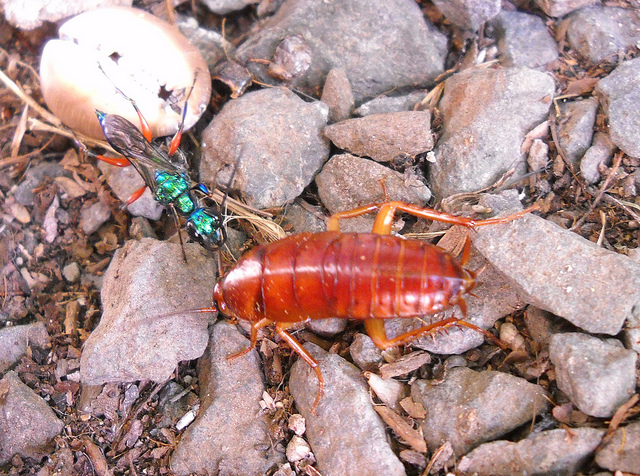
Parasitism is a symbiotic relationship between a parasite and it’s host where the parasite benefits in terms of energy and/or nutrients and the host is harmed as a result of the loss of these resources. For example, the emerald cockroach wasp (Ampulex compressa) parasitises the American cockroach (Periplaneta americana)
DELETE WHEN MErge
What are key features of a parasite’s niche?
Key features of a parasite’s niche are:
Their reproductive potential is normally much greater than their host’s.
Most are very host specific
They have a very specialised and narrow niche. As a result of this, they are degenerate, meaning they lack structures and organs commonly found in other organisms. For example, tapeworms lack a digestive system.
How are parasites classified?
Parasites are classified by where they live.
What are the two types of parasites?
The two types of parasites are:
Ectoparasites
Endoparasites
While some parasites can complete their life cycle using only one host, what do many parasites require to complete their life cycle?
While some parasites can complete their life cycle using only one host, many parasites require more than one host to complete their life cycle. In these cases hosts are split into two groups:
The definitive host
Intermediate host
What is a definitive host?
A definitive host is an organism in or on which a parasite reaches sexual maturity.
What is an intermediate host?
An intermediate host is an organism that is required to complete the parasites life cycle but the parasite does not reach sexual maturity in or on them.
In addition to hosts, what else is crucial for parasite transmission?
In addition to hosts, vectors are crucial for parasite transmission.
What are vectors?
Vectors are organisms that play an active role in parasite transmission. They may also be hosts themselves, but not always.
What are the two key examples of parasites?
The two key examples of parasites are:
Plasmodium and malaria
Schistosomes and schistosomiasis
What is the plasmodium life cycle?
The plasmodium life cycle is:
An infected mosquito is a vector. It bites a human and transmits the plasmodium, the plasmodium enters the human blood stream.
The plasmodium reproduces asexually in the human liver, then red blood cells. They produce gametocytes (cells that divide by meiosis to form gametes).
The red blood cells burst, releasing gametocytes into the human blood stream.
Another mosquito bites an infected human and the gametocytes enter the mosquito.
The gametocytes mature into male and female gametes and sexual reproduction takes place. The mosquito can now infect another human host.
What is stage one of the plasmodium lifecycle?
Stage one of the plasmodium lifecycle is “An infected mosquito is a vector. It bites a human and transmits the plasmodium, the plasmodium enters the human blood stream.”
What is stage two of the plasmodium lifecycle?
Stage two of the plasmodium lifecycle is “The plasmodium reproduces asexually in the human liver, then red blood cells. They produce gametocytes (cells that divide by meiosis to form gametes).”
What is stage three of the plasmodium lifecycle?
Stage three of the plasmodium lifecycle is “The red blood cells burst, releasing gametocytes into the human blood stream.”
What is stage four of the plasmodium lifecycle?
Stage four of the plasmodium lifecycle is “Another mosquito bites an infected human and the gametocytes enter the mosquito.”
What is stage five of the plasmodium lifecycle?
Stage five of the plasmodium lifecycle is “The gametocytes mature into male and female gametes and sexual reproduction takes place. The mosquito can now infect another human host.”
What is plasmodium?
Plasmodium is a degenerate endoparasite.
In the plasmodium lifecycle what is the human?
In the plasmodium lifecycle, the human is the intermediate host.
In the plasmodium lifecycle, what is the mosquito?
In the plasmodium lifecycle, the mosquito is the definitive host and the vector.
What is the schistosome life cycle?
The schistosome life cycle is:
Schistosomes reproduce sexually in the human intestine.
The fertilised eggs pass out via the faeces into the water.
The fertilised eggs develop into larvae.
The larvae infect water snails. Asexual reproduction occurs in the water snails, producing another type of motile larvae.
The motile larvae escape the snail and penetrate the skin of the human, entering the bloodstream.
Is there a vector in the schistosome lifecycle?
There is no vector in the schistosome lifecycle.
What are schistosomes?
Schistosomes are degenerate endoparasites.
In the schistosome lifecycle, what is the human?
In the schistosome lifecycle, the human is the definitive host.
In the schistosome lifecycle, what is the water snail?
In the schistosome life cycle, the water snail is the intermediate host.
What does the water borne dispersal stage in the schistosome life cycle allow for?
The water borne dispersal stage in the schistosome life cycle allows for the parasite to complete it’s life cycle even if the host is incapacitated.
What is stage one of the shistosome life cycle?
Stage one of the schistosome life cycle is “Schistosomes reproduce sexually in the human intestine."
What is stage two of the schistosome life cycle?
Stage two of the schistosome life cycle is “The fertilised eggs pass out via the faeces into the water.”
What is stage three of the schistosome life cycle?
Stage three of the schistosome life cycle is “The fertilised eggs develop into larvae”
What is stage four of the schistosome life cycle?
Stage four of the schistosome life cycle is “The larvae infect water snails. Asexual reproduction occurs in the water snails, producing another type of motile larvae.”
What is stage five of the schistosome life cycle?
Stage five of the schistosome life cycle is “The motile larvae escape the snail and penetrate the skin of the human, entering the bloodstream.”
What are viruses?
Viruses are parasites that only replicate inside a host cell.
What is the structure of a virus?
The structure of a virus is:
Viruses contain genetic material in the form of DNA or RNA, which is packaged inside a protective protein coat.
Some viruses are then surrounded by a phospholipid membrane which is made from host cell materials.
The outer surface of a virus contains antigens. The host cell may, or may not, be able to detect these as foreign.
What is the viral life cycle?
The viral life cycle is:
The host cell is infected with genetic material.
Host cell enzymes replicate the viral genome.
Transcription of viral genes occurs.
Translation of viral proteins, such as the new viral coats, occurs
Assembly of new viral particles (genetic material is inserted into the protein coats).
Release of new viral particles occurs.
What is stage one of the viral life cycle?
Stage one of the viral life cycle is “The host cell is infected with genetic material.”
What is stage two of the viral life cycle?
Stage two of the viral life cycle is “Host cell enzymes replicate the viral genome.”
What is stage three of the viral life cycle?
Stage three of the viral life cycle is “Transcription of viral genes occurs.”
What is stage four of the viral life cycle?
Stage four of the viral life cycle is “Translation of viral proteins, such as the new viral coats, occurs”
What is stage five of the viral life cycle?
Stage five of the viral life cycle is “Assembly of new viral particles (genetic material is inserted into the protein coats).”
What is stage six of the viral life cycle?
Stage six of the viral life cycle is “Release of new viral particles occurs”
What are retroviruses and how do they form new viral particles?
Retroviruses are viruses that contain RNA as their nucleic acid. They use their host’s enzyme reverse transcriptase to form DNA. The DNA is then inserted into the host’s cell’s genome. Once this has happened, the viral genes can be expressed to form new viral particles.
What is transmission?
Transmission is the spread of a parasite to a host.
What is virulence?
Virulence is the harm caused to the host by the parasite species.
What is an ectoparasite and how are they transmitted?
An ectoparasite is a parasite found on the surfaces of the host. For example, fleas or ticks. They are transmitted by direct contact.
What is an endoparasite?
An endoparasite is a parasite found inside host tissues. For example, viruses. They are transmitted by:
Vectors
Consumption of intermediate hosts
What are the two main factors that increase the transmission rate?
The two main factors that increase the transmission rate are:
Overcrowding of hosts when their population density is high
Mechanisms, such as vectors and water borne dispersal stages, that allow a parasite to spread, even if the infected host is incapacitated (can’t move).
What is often done to host behaviour by a parasite, and what does this become part of?
Host behaviour is often exploited and modified by a parasite to maximise its transmission. This modified behaviour becomes part of the extended phenotype of the parasite.
What modified host behaviours might extended phenotypes include?
Extended phenotypes may include modified host behaviours such as alterations to:
Host foraging
Host movement
Host sexul behaviour
Host habitat choice
Host anti-predator behaviour
Aside from modifying the host’s behaviour what else can the parasite do?
Aside from modifying the host’s behaviour, the parasite can also:
Suppress the host’s immune system
Modify the host’s size
Modify the host’s reproductive rate to benefit the parasite’s growth, reproduction, or transmission.
In mammal immune systems, what are the two groups of defences?
In mammal immune systems the two groups of defences are:
Non-specific
Specific
What are non-specific defences?
Non-specific defences are the body’s first defences against pathogens. They act as a general specific defence and do not target specific pathogens. They include:
Physical barriers
Chemical secretions
Inflammatory response
Phagocytes
Natural killer cells
What are the different non-specific defences?
The different non-specific defences are:
Physical barriers, such as epithelial tissues, defend the body by blocking the entry of parasites.
Chemical secretions, such as hydrolytic enzymes in mucus, saliva and tears, defend the body by destroying bacterial cell walls. Secretions from the stomach, vagina, and sweat glands lower the pH of the environment and denature cellular proteins of the pathogen.
Inflammatory responses defend the body when injured cells release signalling molecules. This results in enhanced blood flow to the site and brings antimicrobial proteins and phagocytes to the area.
Phagocytes are white blood cells that defend the body by engulfing the parasite and killing them using powerful enzymes contained in the lysosomes and storing them in vacuoles. This process is known as phagocytosis.
Natural killer cells defend the body by identifying and attaching to cells infected with viruses. They release chemicals that lead to cell death by inducing apoptosis.
How do physical barriers defend the body?
Physical barriers, such as epithelial tissues, defend the body by blocking the entry of parasites.
How do chemical secretions defend the body?
Chemical secretions, such as hydrolytic enzymes in mucus, saliva and tears, defend the body by destroying bacterial cell walls. Secretions from the stomach, vagina, and sweat glands lower the pH of the environment and denature cellular proteins of the pathogen.
How do inflammatory responses defend the body?
Inflammatory responses defend the body when injured cells release signalling molecules. This results in enhanced blood flow to the site and brings antimicrobial proteins and phagocytes to the area.
How do phagocytes defend the body?
Phagocytes are white blood cells that defend the body by engulfing the parasite and killing them using powerful enzymes contained in the lysosomes and storing them in vacuoles. This process is known as phagocytosis.
How do natural killer cells defend the body?
Natural killer cells, defend the body by identifying and attaching to cells infected with viruses. They release chemicals that lead to cell death by inducing apoptosis.
What type of cells is there a wide range of constantly circulating and monitoring the tissues?
There are a wide range of white blood cells constantly circulating and monitoring the tissues.
What occurs when a tissue becomes damaged or invaded?
When a tissue becomes damaged or invaded, the cells release signalling molecules called cytokines. Cytokines increase blood flow to the damaged or invaded tissue. This results in the accumulation of specific and non-specific white blood cells at the site of infection or tissue damage.
What type of cell involved in specific cellular defences, do mammals contain many different specific versions of?
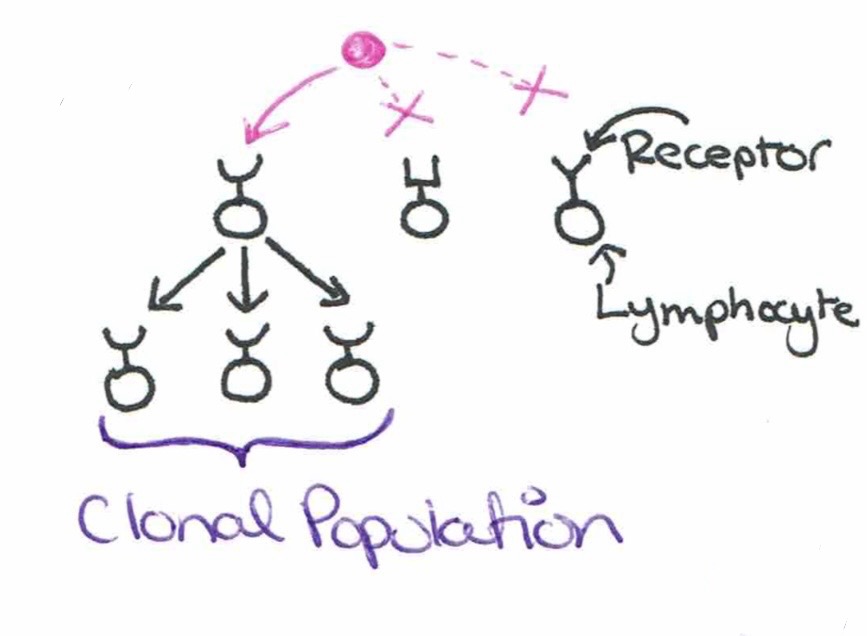
Mammals contain many different specific lymphocytes. Each lymphocyte possesses a receptor on it’s surface, which can potentially recognise a parasite’s antigen. These proteins are found on the surface of the parasite.
How are clonal populations of specific lymphocytes produced?
Clonal populations of specific lymphocytes are produced when an antigen binds to a lymphocytes receptor and it selects that lymphocyte to then divide and produce a clonal population of this specific lymphocyte, rather than others.
What are antibodies and why do they have specific binding sites for a specific antigen?
Antibodies are proteins that have specific binding sites for a specific antigen. This is because they have regions with great variation in amino acid sequence between different antibodies and this variable region gives the antibody its specificity for antigen bonding.
What happens when the parasites antigen binds to the antibody’s binding site?
When the parasite’s antigen binds to the antibody’s binding site, the antigen-antibody complex is formed. This can either:
Inactivate the parasite, rendering it susceptible to phagocytosis
Stimulate a response that results in cell lysis.
As well as producing active lymphocytes that fight infection, what else does the initial exposure to the antigen produce?
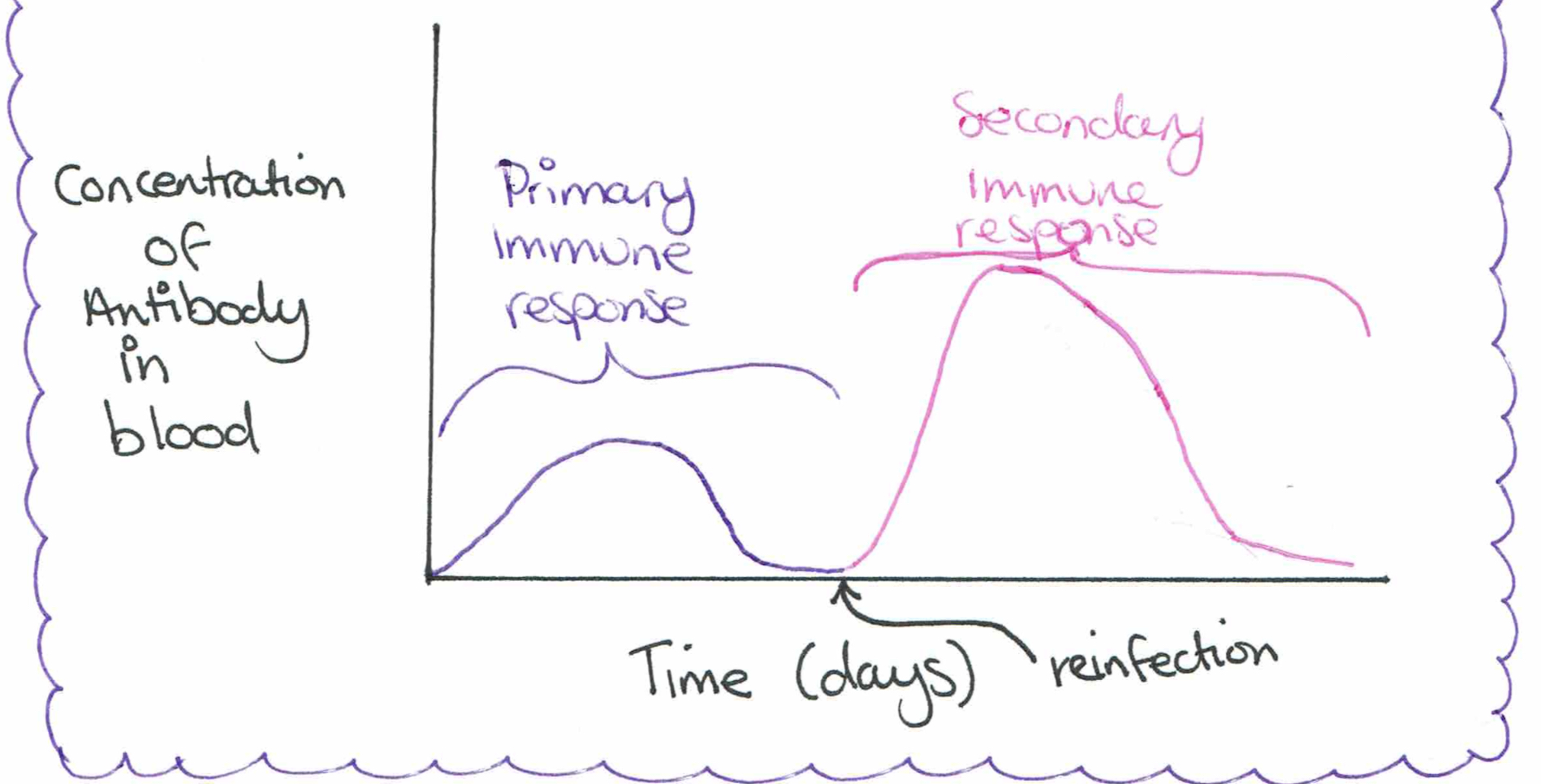
As well as producing active lymphocytes that fight infection, the initial exposure to the antigen also produces memory lymphocytes. Memory lymphocytes are specific for that antigen. They patrol the body after infection and produce a secondary response when the same antigen enters the body on subsequent occasions.
What does the secondary response produce?
The secondary response produces a higher concentration of antibodies faster and for a longer duration than the initial exposure.
What have many parasites evolved?
Many parasites have evolved ways of evading their host’s immune system.
What are the four key ways endoparasites evade their host’s immune system?
The four key ways endoparasites evade their host’s immune system are:
They mimic host antigens to evade detection.
They modify their host’s immune response to reduce their chances of destruction.
They show antigenic variation. This is where some parasites change between different antigens. Either during the course of the infection, such as HIV, or between infections, to allow for reinfection of the same host with a new variant of the parasite that displays different antigens, such as the influenza virus.
They integrate their genome into their host’s genome and escape immune surveillance by existing in an inactive state known as latency. The virus will then become active again when favourable conditions arise. For example, HSV1.
What is the process of antigenic variation?
The process of antigenic variation is:
The virus infects for the first time.
The body produces memory lymphocytes with receptors specific for a particular antigen.
Antigenic variation takes place.
Memory lymphocytes no longer recognise new antigens, or the parasite.
What is stage 1 of antigenic variation?
Stage 1 of antigenic variation is “The virus infects for the first time.”
What is stage 2 of antigenic variation?
Stage 2 of antigenic variation is “The body produces memory lymphocytes with receptors specific for a particular antigen.”
What is stage 3 of antigenic variation?
Stage 3 of antigenic variation is “Antigenic variation takes place.”
What is stage 4 of antigenic variation?
Stage 4 of antigenic variation is “Memory lymphocytes no longer recognise new antigens, or the parasite.”
What is epidemiology?
Epidemiology is the study of the outbreak and spread of infectious diseases.
What are vaccines?
Vaccines are a method of immunisation by which a weakened or altered form of the parasite or pathogen or its toxin is deliberately introduced into the body to act as an antigen of the pathogen to produce an immune response. For example, to produce lymphocytes for the pathogens antigens.
What do vaccines contain?
Vaccines contain the antigens to produce the immune response, but do not contain the harmful pathogen.
Why are vaccination programmes important?
Vaccination programmes are important as they allow vulnerable members of the population to gain herd immunity from the pathogen, without being vaccinated.
What is herd immunity?
Herd immunity is when the percentage of the population immune to the pathogen is high enough that the chances of an infected individual coming in contact with a non-immune individual is very low.
What is the herd immunity threshold?
The herd immunity threshold is the density of resistant hosts in the population required to prevent an epidemic.
What are some of the challenges in treatment and control of disease with drugs and vaccines?
Some of the challenges in treatment and control of disease with drugs and vaccines are:
Host and parasite metabolisms may be so similar, that it is difficult to find a drug that targets only the pathogen.
Antigen variation may make a vaccine ineffective when there are different variants of a pathogen. Vaccine programmes are now designed to reflect this.
Some parasites are too difficult to culture in the lab, so it is difficult to design vaccines for them.
When do parasites spread more rapidly?
Parasites spread more rapidly when:
The host population is overcrowded
It is a warm and wet tropical climate. This means parasites can survive outside their hosts for longer.
What are two key examples of locations where overcrowding may take place and where disease is likely to spread?
Two key examples of locations where overcrowding may take place and where disease is likely to spread are:
Refugee camps, which occur as a result of war or natural disasters.
Less economically developed countries and rapidly growing cities.
What is it very difficult to achieve in overcrowded and/or tropical climates what is it very difficult to achieve?
In overcrowded and/or tropical climates, it is very difficult to achieve coordinated treatment and/or a control programme needed to control the spread of the disease.
Often, what does the only practical disease control strategy involve the combination of?
Often, the only practical disease control strategy involves the combination of:
Civil engineering projects to improve sanitation
Coordinated vector control
What are improvements in parasite control for children?
Improvements in parasite control for children are:
Reduces childhood mortality
Results in population wide improvements in child development and intelligence because the child will have more resources to grow and develop if they are not fighting parasitic infections.