Skin, Hair, & Nails General Knowledge Q's
 Call Kai
 Learn
Learn Practice Test
 Spaced Repetition
 Match
Match Flashcards
 Knowt Play
1/66

Earn XP
Description and Tags
NUR 300 USM
Name | Mastery | Learn | Test | Matching | Spaced | Call with Kai |
|---|
No analytics yet
Send a link to your students to track their progress
67 Terms
5 components of the Integ system
skin
hair
nails
glands
mucus membranes
name some functions of the integ system
sensation/perception
thermoregulation
fluid balance
vit D synthesis
excretion
immunity
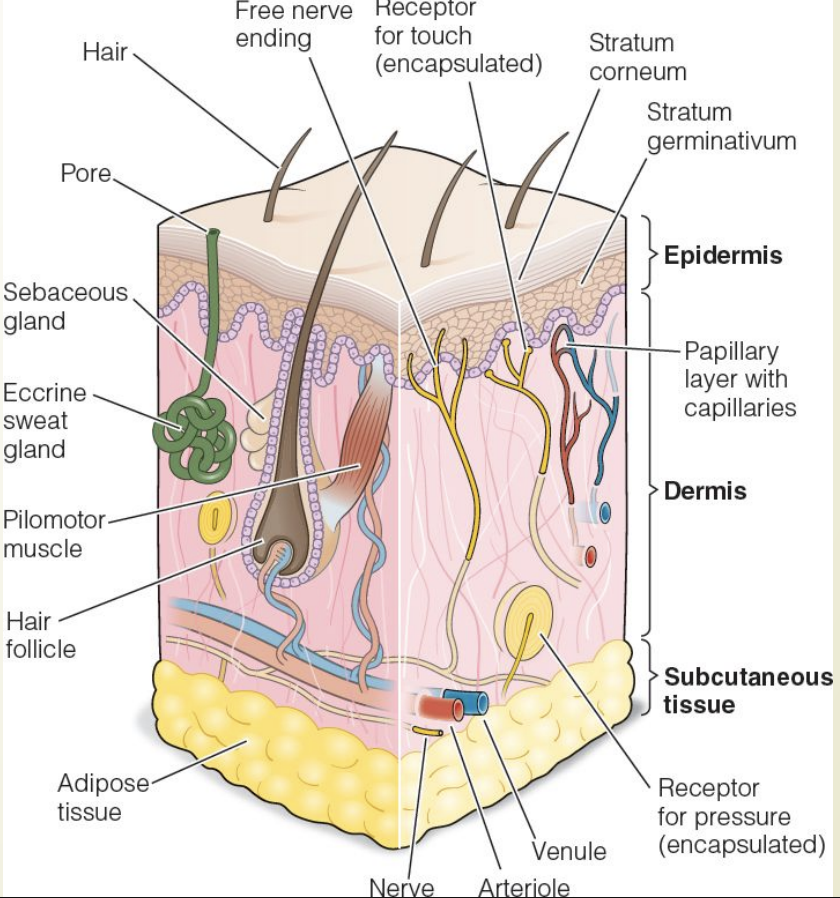
Layers components
epidermis: avascular outer layer
dermis: connective tissue, sensory nerve fibers, capillaries, collagen, elastin
subQ: adipose tissue
Difference between vellus and terminal
Vellus: fine hairs found throughout the body
Terminal: darker, coarser hair found in eyebrows & scalp hair
Sebaceous glands
Produce protective oil — sebum
Eccrine glands
Secrete odorless fluid
Maintain body temp & produce sweat
Located in all skin (mainly palms, soles of feet, axilla, forehead)
Apocrine glands
Produce body odor
in response to bacterial decomp and emotional stress
Located in axillary and genitals
List skin disorders w/ fam tendencies
Acne
Cancer
Eczema
Psoriasis
Seborrhea dermatitis
What does the American Cancer Society recommend for skin checks?
Yearly skin exam for patients 20+ y/o
Individuals should know their pattern for moles, blemishes, freckles, and other marks on skin
(UV) radiation from indoor tanning beds increases a person’s risk of developing melanoma by ____%!!!
75%
Albinism
Total or partial absence of Tyrosine (produces melanin)
Inherited disorder

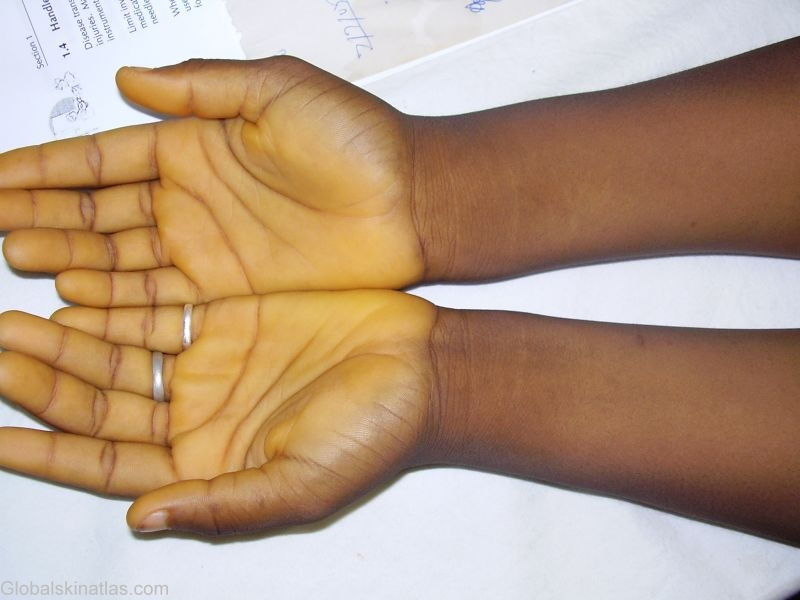
Carotenemia
Yellowing of skin due to increased dietary intake of carotene
Foods: carrots, sweet potatoes, pumpkin, corn, yams, spinach, beans
Sclera does NOT become yellow
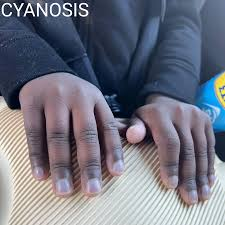
Central Cyanosis
Bluish discoloration to the skin due to decreased circulating O2
Erythema
Red, pink skin color
May indicate inflammation, fever, increased blood flow
Hyperpigmentation
Darker skin color
hypopigmentation
Lighter skin color
Jaundice
Yellowing of the skin → Increase bilirubin
Byproduct of hemoglobin breakdown = Bilirubin
Bilirubin is broken down in the liver
Symptoms: fatigue/lethargy, vomiting
Pallor
Pale skin
Anemia, decrease in RBC circulation, decrease in blood flow, absence of oxygenated blood
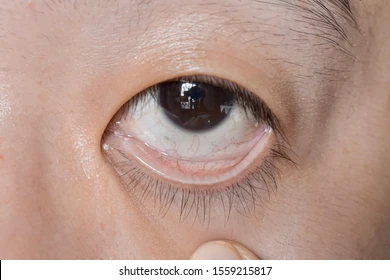
Peripheral cyanosis
Blue/gray/slate/dark purple discoloration of skin or mucus mems
Caused by deoxygenated/reduced hemoglobin in the blood
May occur w/ decreased Cardiac Output
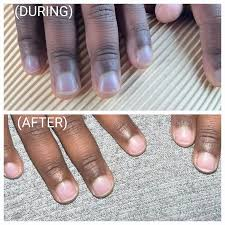
Vitiligo
Smooth, white patches of skin all over the body
Autoimmune disorder (melanocytes attacked by immune system)
No major issues, except self-image issues
What affects skin texture?
Autoimmune diseases
Acne vulgaris
Eczema
Hormonal conditions
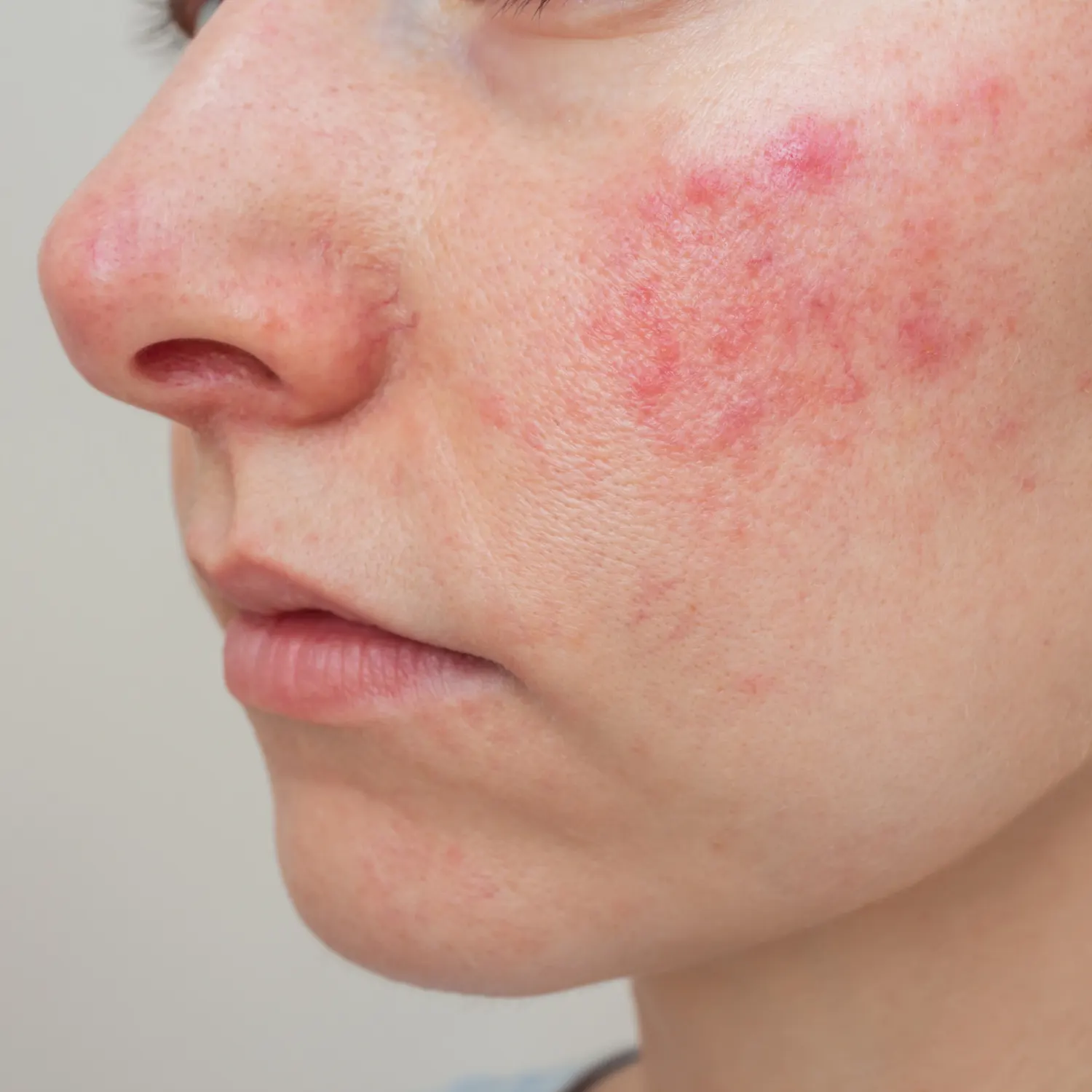
Rosacea (image)
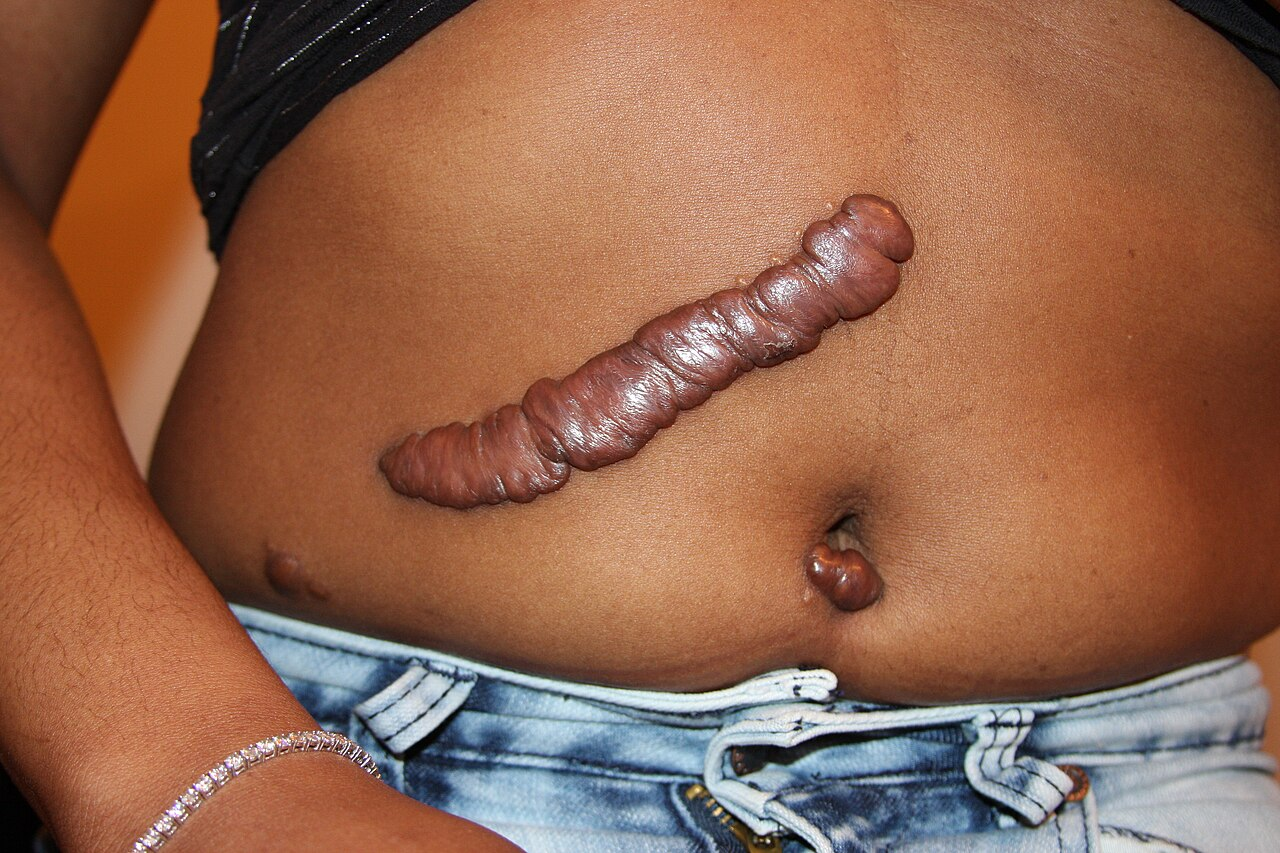
Keloids
Overgrowth of collagen
Can be itchy and grow over other parts of the body
Can sometimes grow back even after being removed
ABCDEs of Melanoma
Asymmetry
Border
Color
Diameter (>6 mm)
Evolving
What can rashes be related to? (just name a few there are so goddamn many)
Diet,
stress,
medications,
allergies,
hormone imbalance,
autoimmune disease,
kidney disease,
toxic reactions,
digestive problems,
body imbalances,
chemicals, and
sun exposure.
Hair changes can be related to? and give example for easy ones
Diet (eating disorders can cause hair to be brittle)
Vitamin deficiency (A, B6, C)
Endocrine (Grave’s thins the hair)
Infestation (lice)
Stress (falling out)
Nail changes related to….
Nutrition
Stress
Systemic disease
Vitamin deficiency
Infection
Nail biting or picking
Nail care
What are the 3 angles for clubbing to remember?
160 —→ Normal
180 —→ Early clubbing
>180 —→ Late clubbing
Name the Primary Lesions (6)
Macule
Papule
Vesicle
Pustule
Nodule
Wheal
Description & size:
Macule
Small, flat (freckle)
<1 cm
Description & size:
Papule
Solid, elevated, rough texture (mole)
< 1 cm
Description & size:
Vesicle
Raised, filled w/ serous blood or clear fluid (HSV)
< 1 cm
Description:
Pustule
Vesicle filled w/ pus
Description & size:
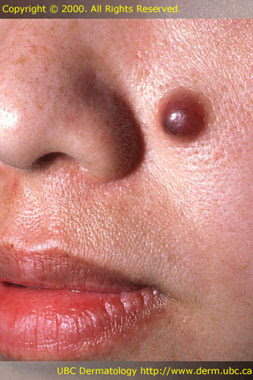
Nodule
Solid, elevated (fatty lipoma)
1 cm
Description:
Wheal
red & itchy and raised (hives)
Macule that is >1 cm turns into a…
Patch (1 cm+)
Papule that is >1 cm turns into a…
Plaque
Vesicle that is >1 cm turns into a…
Cyst
Nodule that is >2 cm turns into a…
TUMOR
List the secondary lesions (8)
Crusts
Scale
Excoriation
Erosion
Ulcer
Fissure
Scar
Keloid
Crusts
Dried blood, pus, serum
Scale
Build up of dead skin cells that flake off
(Psoriasis)
Excoriation
Scratching (hollow)
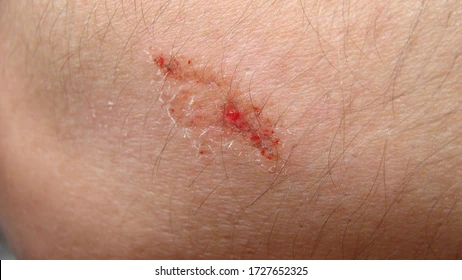
Erosion
Depressed, moist, shiny
Ulcer
Erosions of different layers of skin
(Exudative)
Fissure
Linear break in skin
Scar
Fibrous tissue over healed wounds
Keloid
Excessive collagen production beyond wound boundaries
Generalized rash
Spread over most of the body
Localized rash
Contained to one specific area
Regional rash
Located in 1 body region
(i.e. is it only on the trunk and not the face? Only on the leg and not the groin?)
Disseminated
Widely scattered
Discreet
Individual/separate
Symmetric
No pattern
Asymmetric
Pattern lacking, randomness
Grouped
Clustered
Confluent (coalescing)
Smaller into larger
Cleavage plane
Arranged along lines of skin tension
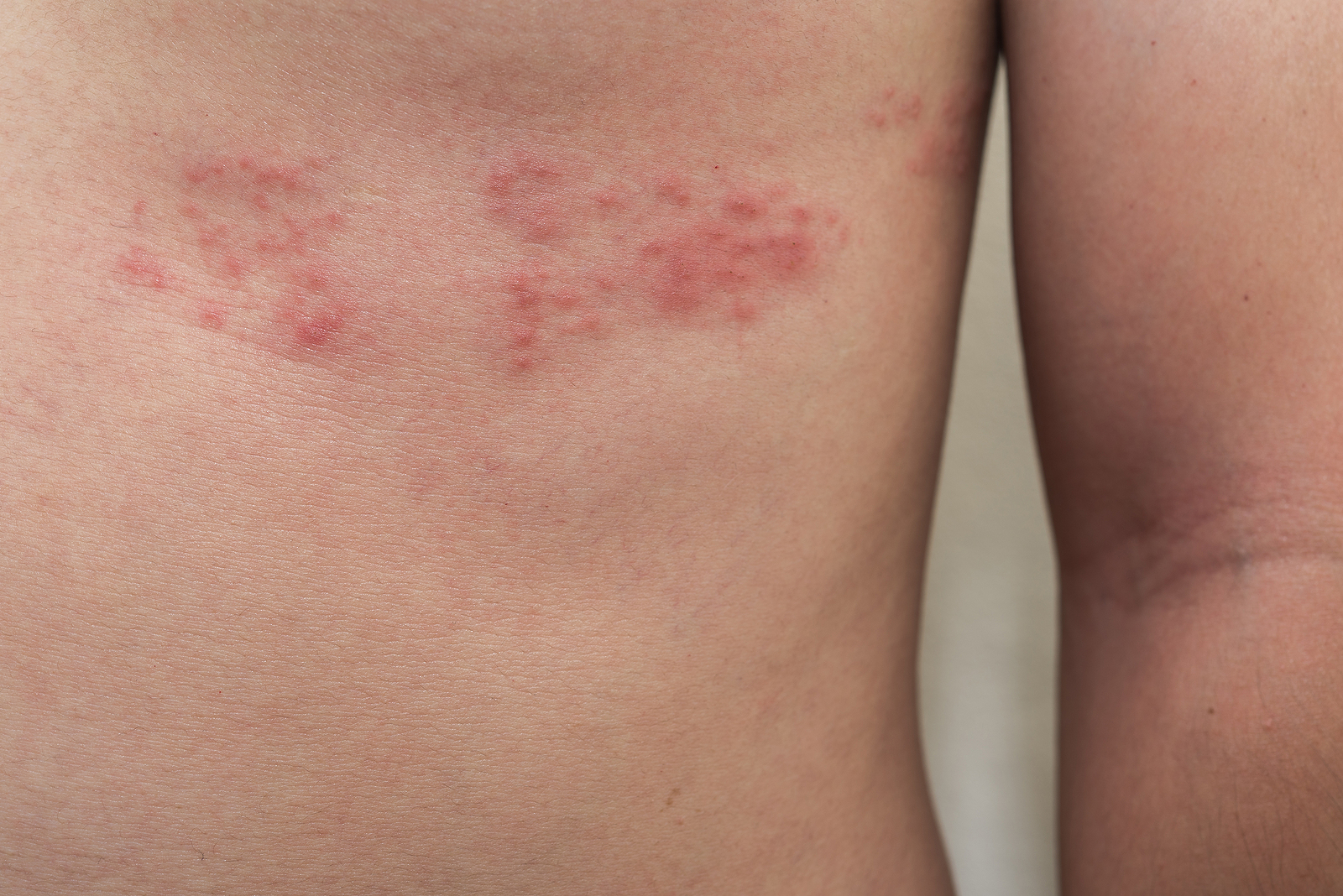
Dermatomes
Lesions follow the nerve root
Zosteriform
Dermatomal
(Along the nerve root)
Besides bedbound patients, which patient population is at high risk for ulcers?
Diabetics due to peripheral neuropathy — excess sugar in the blood clogs up the vessels in extremities, and also patients cannot feel down there to know if their foot is okay or not
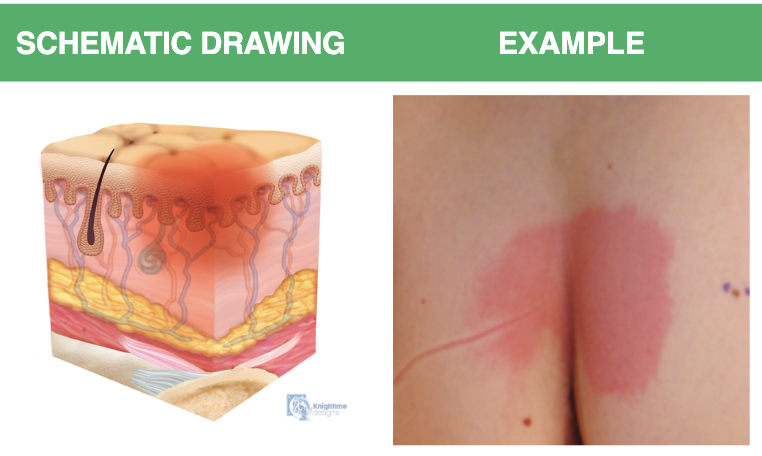
Stage 1 pressure injury
Non-blanchable erythema of intact skin
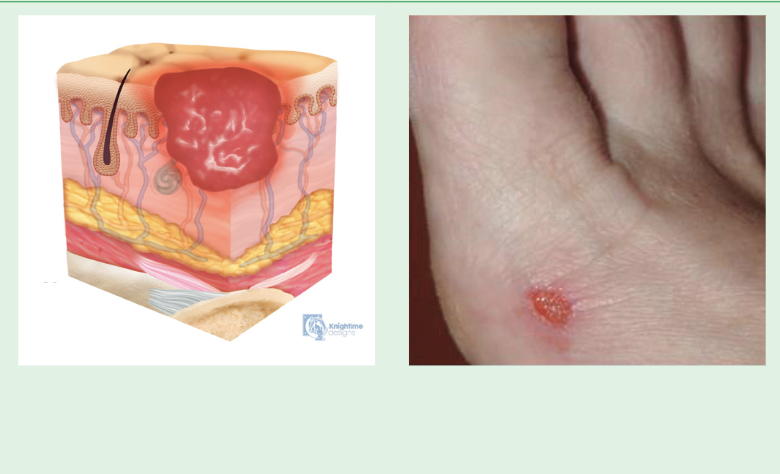
Stage 2 pressure injury
Partial-thickness skin loss with exposed dermis
Wound bed = pink/red, moist, can appear as a blister
Adipose fat is NOT visible
NOT considered a moisture associated skin damage
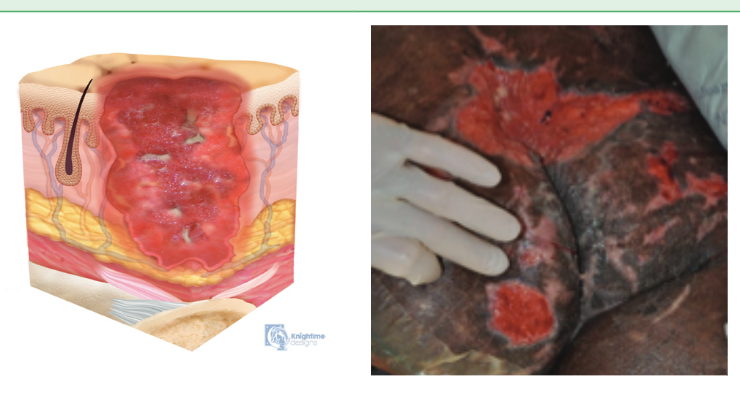
Stage 3 pressure Injury
Full-thickness skin loss with exposed SubQ tissue (adipose)
Granulation tissue and epibole are present
Depth varies by location
Fascia, muscle, tendon ligament, cartilage, bone NOT exposed
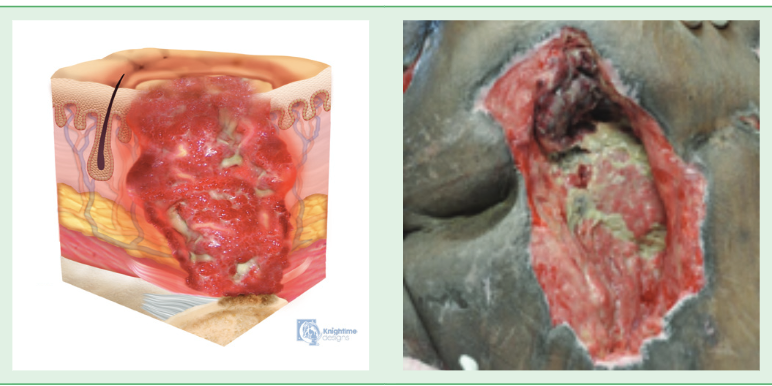
Stage 4 Pressure Injury
Full-thickness loss of skin and tissue
Fascia, muscle, tendon ligament, cartilage, and/or bone exposed
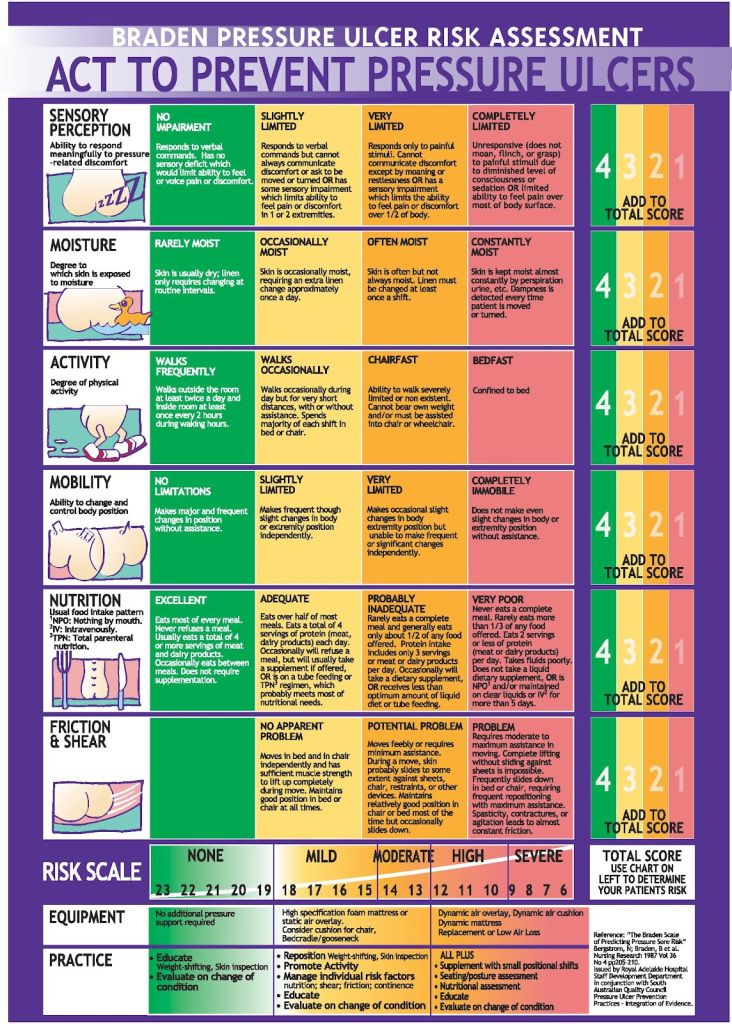
How often does the Braden scale need to be done?
q12h
The _______ the score, the HIGHER the risk on Braden scale
LOWER
Name the components of the Braden Scale
Sensory perception
Moisture
Activity
Mobility
Nutrition
Friction/shear