ob class 3 - first tri complications
 Call Kai
 Learn
Learn Practice Test
 Spaced Repetition
 Match
Match Flashcards
 Knowt Play
1/51

Earn XP
Description and Tags
first trimester complications
Name | Mastery | Learn | Test | Matching | Spaced | Call with Kai |
|---|
No analytics yet
Send a link to your students to track their progress
52 Terms
what percent of clinically recognized pregnancies are miscairrages?
about 15%
what is the most common sign of miscarriage?
vaginal spotting or frank bleeding
normal bleeding in the first trimester is a result of what?
implantation bleeding
if bleeding is accompanied by severe pain, contractions or dilated cervix, what is likely?
nonviable pregnancy
what is the most common reason for first trimester bleeding?
subchorionic hemorrhage
what is subchorionic hemorrhage a result of?
the implantation process; hemorrhage between myometrium and gest sac
what are clinical findings of subchorionic hemorrhage?
bleeding, spotting, cramping
what do you need to diagnose an absent intrauterine sac?
empty uterus
absence of adnexal masses or free fluid
positive beta hCG
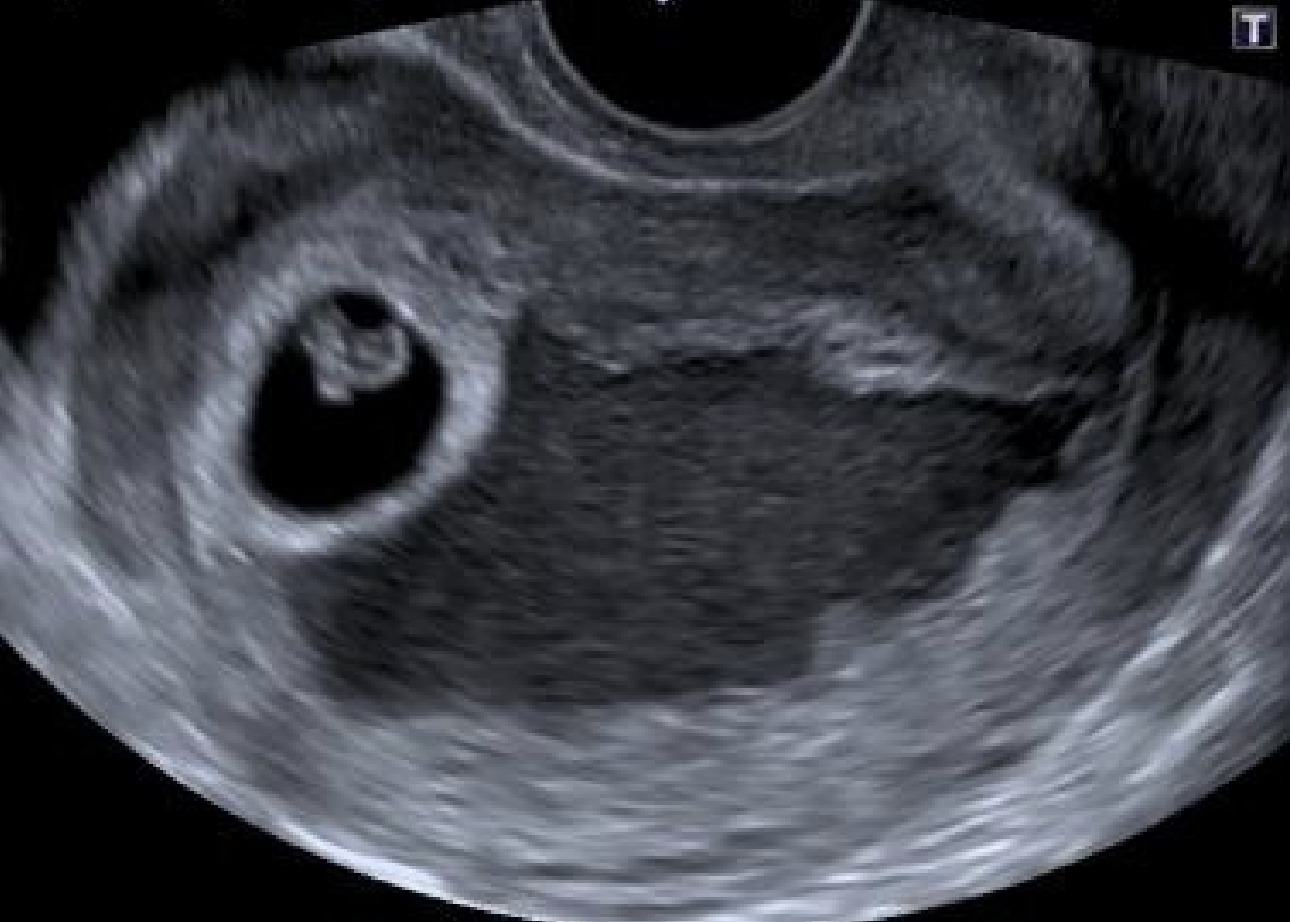
what is being shown in this picture?
large subchorionic hemorrage
large subchorionic hemorrage can be an indicator of what?
miscarriage
if a patient has positive pregnancy test and no gestational sac is visualized, what does
early intrauterine pregnancy
nondeveloping pregnancy
possible ectopic pregnancy
how will subchorionic hemorrhage present sonographically?
early bleed → slightly echogenic
older hemorrhage → anechoic
no blood flow
what are the characteristics for absent intrauterine sac
empty uterus
absence of adnexal mass
positive beta hCG
what is spontaneous abortion
unexpected termination of pregnancy in first 20 weeks of gestation
what is missed abortion
unknown pregnancy loss, no symptoms but no heartbeat
what is complete abortion
complete pregnancy loss, empty uterus
mom may bleed and pass fetal tissue
what is threatened abortion
bleeding and cramping with closed cervix
pregnancy may resume with no complications
what is inevitable abortion
bleeding and cramping with dilated cervix
complete abortion likely
if beta hCG levels are progressively decreasing with repeated sampling, what does that indicate
pregnancy loss
what does incomplete spontaneous abortion look like?
ranges from intact gestational sac with nonviable embryo
to collapsed gestational sac
what is the biggest indicator of retained products?
thickened endometrium (greater than 8mm)
increased vascularization of endometrial complex
hCG levels that do not decline
what are the differential diagnoses for gestational sac without embryo/yolk sac
normal early intrauterine pregnancy (less than 5 weeks
abnormal intrauterine pregnancy
pseudogestational sac in patient with ectopic pregnancy
why is it important to reevaluate if abnormal sac is visualized?
could be early pregnancy
what is a blighted ovum/anembryonic pregnancy?
gestational sac in which embryo fails to develop or stops developing so early its undetectable by US
what is the typical appearance of an anembryonic pregnancy?
large, empty gestational sac that does not demonstrate yolk sac, amnion, or embryo
what is gestational trophoblast disease?
a spectrum of disease from benign form, hydatitform mole, or malignant form/invasive mole
what can dramatically elevated beta hCGs indicate?
gestational trophoblastic disease or twins
does a complete molar pregnancy have normal fetal parts?
no, no fetal parts present
does a partial molar pregnancy have normal fetal parts?
will possibly have fetal parts (gest sac, placenta, embryo)
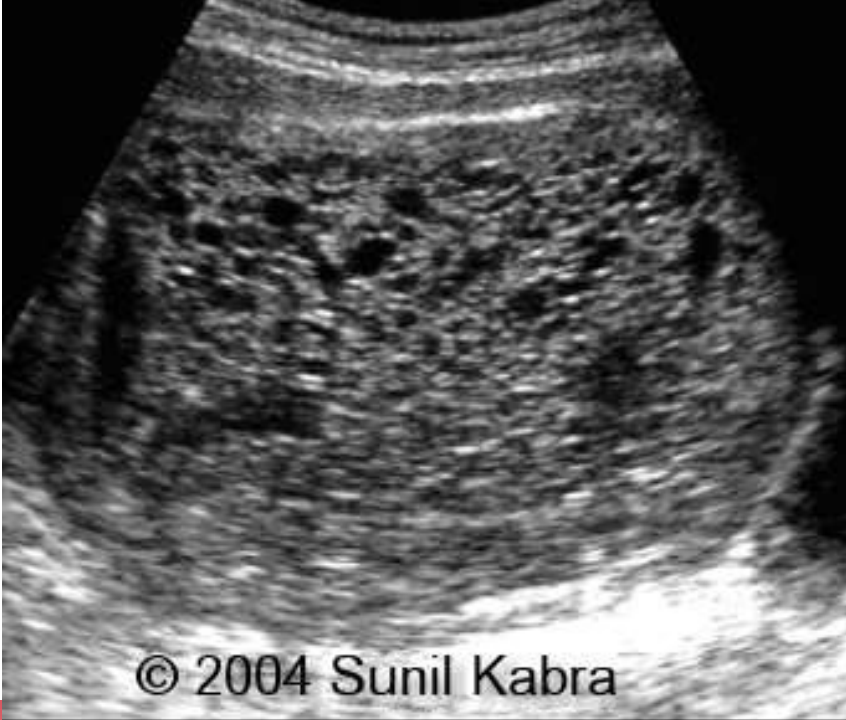
what could this picture indicate?
hydatitiform mole/molar pregnancy
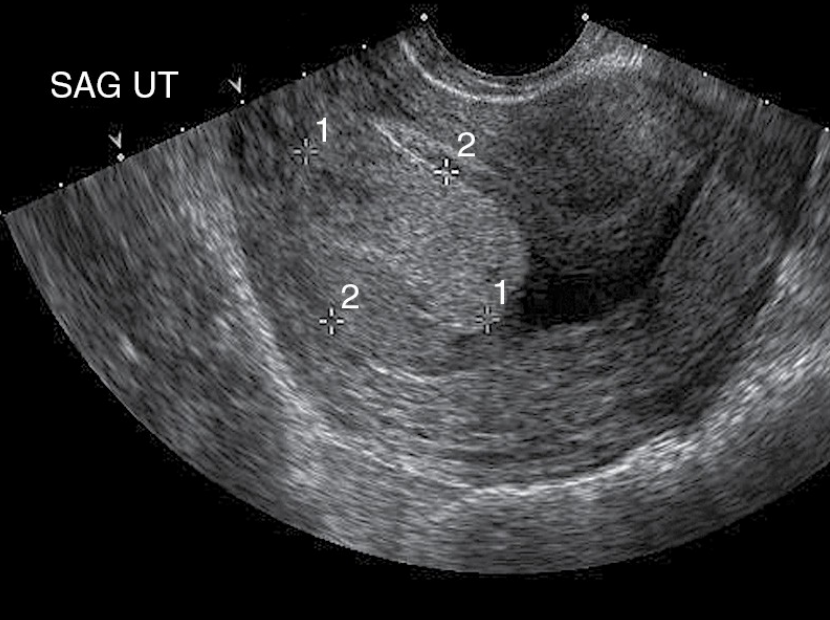
what could this picture indicate?
hydatitiform mole/molar pregnancy
partial mole is said to have __________ on ultrasound.
identifiable placenta
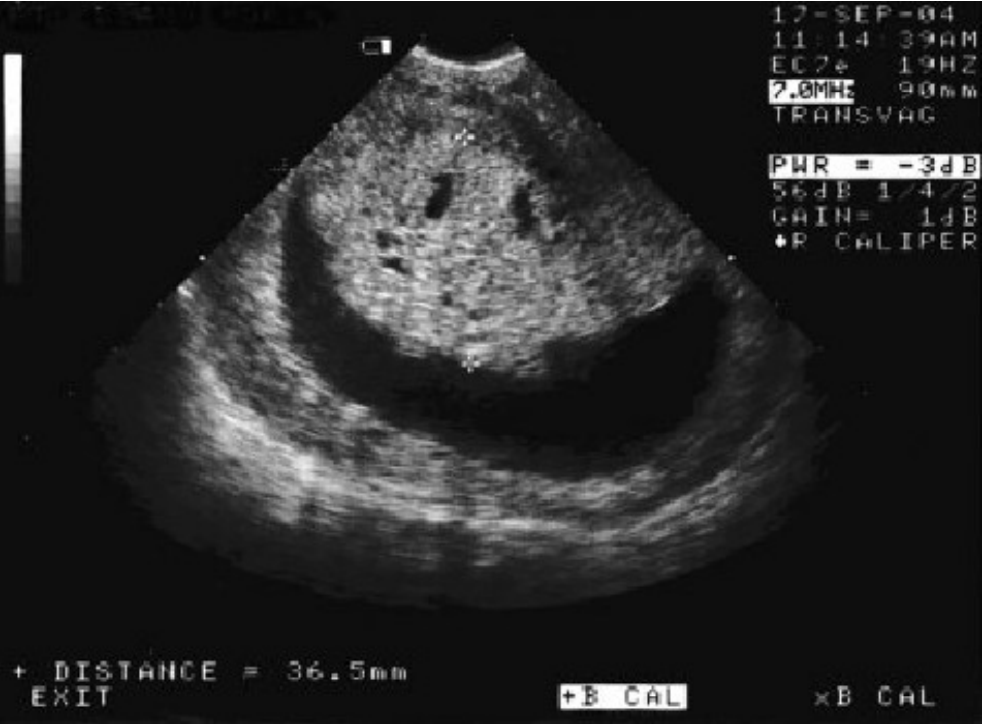
what could this picture indicate?
partial molar pregnancy
what are some malignant forms of trophoblastic disease
invasive mole and choriocarcinoma
why is it necessary to treat choriocarcinoma immediately?
malignant trophoblastic tumor that’s fast growing and commonly metastasizes to liver, lungs, and brain
what is the first conclusive sonographic sign of viability
cardiac activity
what is considered bradycardic for an embryo
less than 90 bpm
what is considered tachycardic for an embryo
over 170 bpm
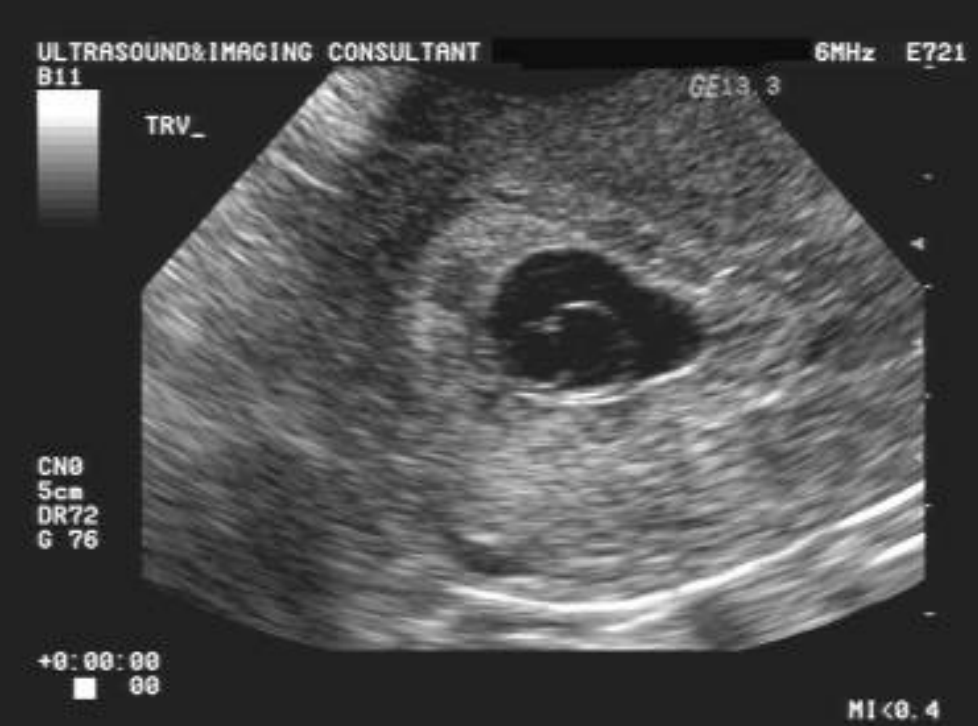
what sonographic sign does this represent and what does that sign actually show?
double bleb sign; yolk sac and amnion within gestational sac
what is nuchal translucency?
what nuchal translucency value is considered normal?
what is acrania
partial or complete absence of cranium
what is anencephaly?
congenital absence of brain and cranial vault
what is cephalocele?
cranial defect in which there is herniation of the brain and meninges
what is iniencephaly?
what is ventriculomegaly?
dilation of ventricular system leading to enlargement of ventricles
what is holoprosencephaly?
malformation that causes incomplete separation of ventricles
what is dandy-walked malformation?
cystic dilation of fourth ventricle
what is spina bifida?
failure of neural tubes to close; herniation of spinal cord
what is cystic hygroma?
one of the most common first tri abnormalities, high association with chromosomal abnormalities
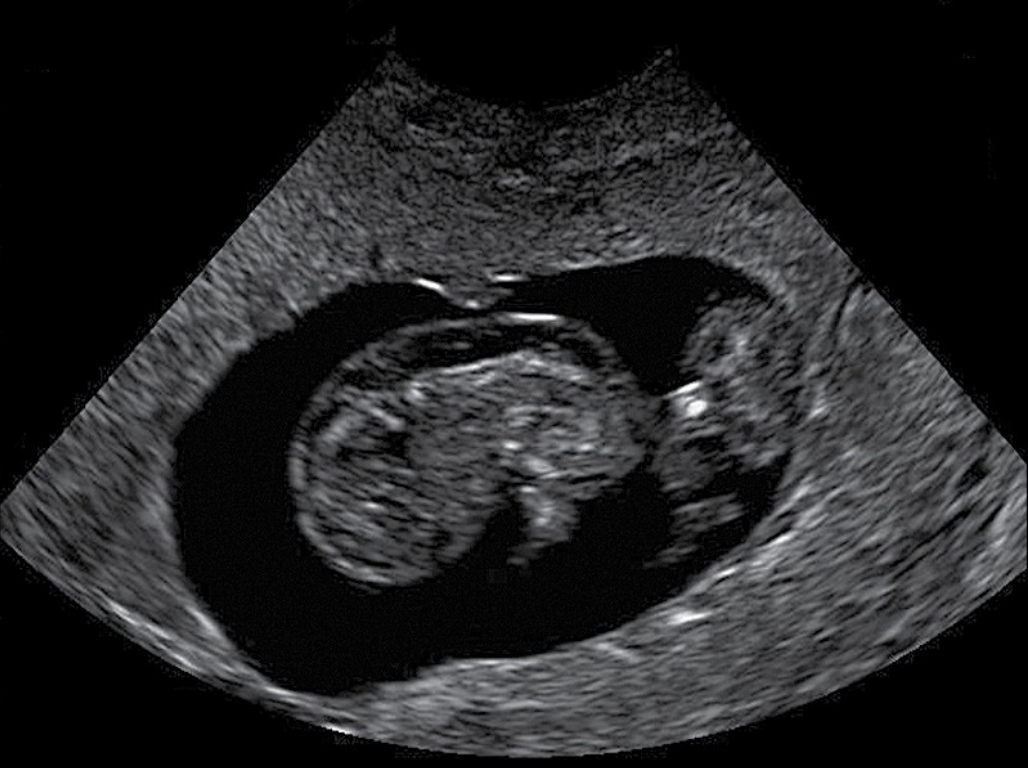
what does this picture indicate?
thickened nuchal translucency