Endocrine System
 Call Kai
 Learn
Learn Practice Test
 Spaced Repetition
 Match
Match Flashcards
 Knowt Play
1/23

There's no tags or description
Looks like no tags are added yet.
Name | Mastery | Learn | Test | Matching | Spaced | Call with Kai |
|---|
No analytics yet
Send a link to your students to track their progress
24 Terms
Endocrine system
made of glands that secrete substances into the bloodstream (exocrine glands secrete substances into ducts)
Function is communication and control
*same functions as nervous system, but works slower
What types of changes do hormones produce in target cells?
alter plasma membrane permeability and/or potential
stimulate protein synthesis, mitosis
activate/deactivate enzymes
induce a secretory activity
Hormones
chemicals released from one part of the body and carried thru the bloodstream to affect another part of the body
released in small quantities and are very specific
‘know’ which cells to affect b/c target cells have receptors for specific hormones (no effect if hormones contact cells w/o these target cells)
Lipid-soluble aka steroid hormones
steroids
can pass directly thru the target cell membrane forming a hormone-receptor complex, which alters the actions of the cell
Water-soluble aka non-steroid hormones
amino acid-based molecules
not able to pass thru the membrane
bind to receptors on the outside of the target cell, which activate a 2nd messenger to mediate the response to the target cell (like a molecular relay)
3 ways that glands are activated
Hormonal stimuli
glands are encouraged by hormones secreted by other glands (ex: hypothalamus stimulates pituitary)
Humoral
levels of nutrients/ions in the blood can cause glands to secrete hormones (ex: blood calcium levels stimulate parathyroid glands)
Neural
nerve impulses cause glands to secrete hormones (ex: sympathetic nervous system during stress causes release of epinephrine from adrenal glands)
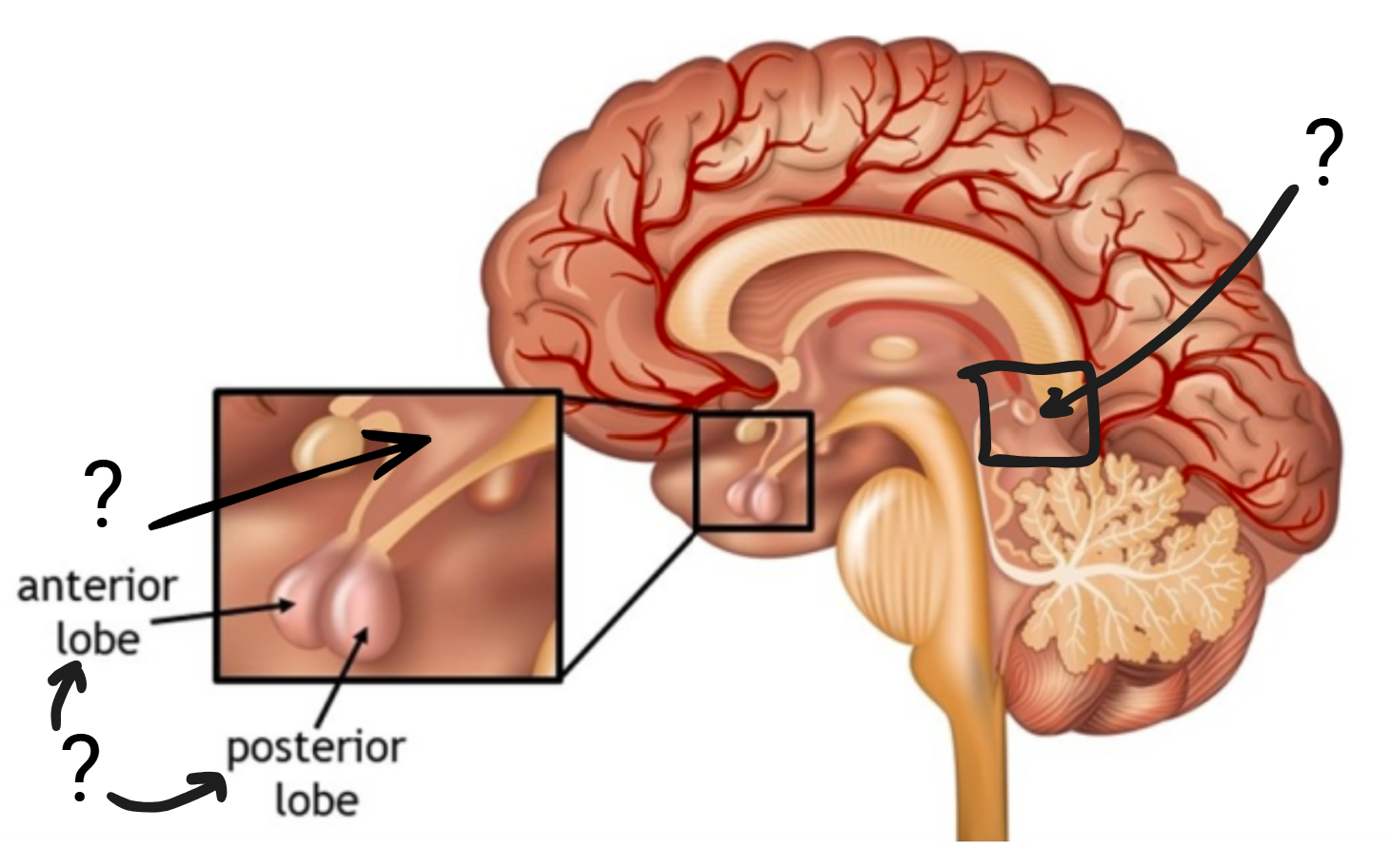
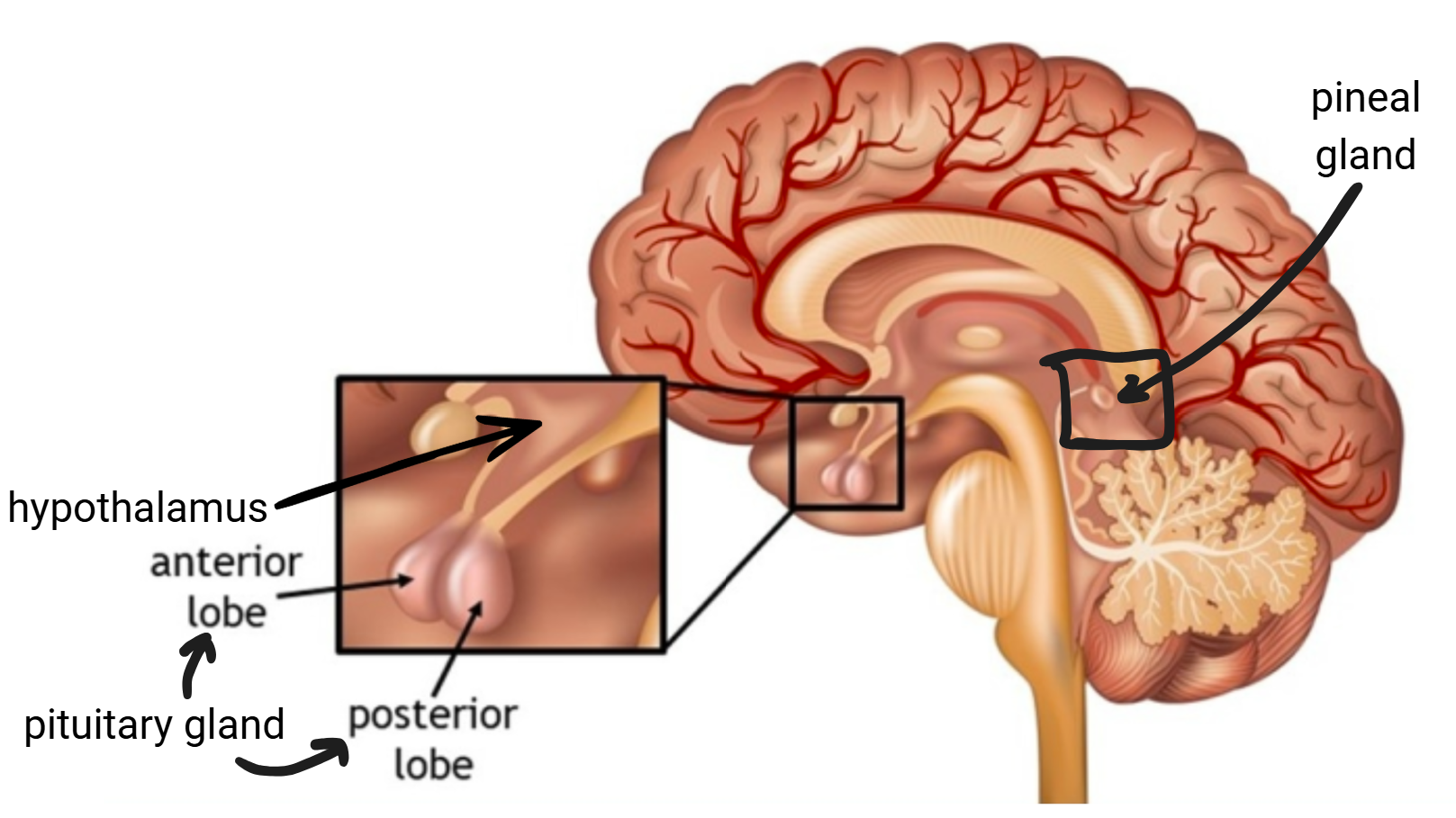
Pituitary gland
small bulb on underside of brain
anterior and posterior lobes
master gland b/c controls many other glands in the body
Hormones secreted by anterior pituitary
Thyroid-stimulating - causes thyroid to produce thyroxine
🏃🏻♀️Adrenocorticotropic - stimulates adrenal glands
💪🏻🦴Growth - stimulates growth in bones/muscles
👩🏽Melanocyte-stimulating - stimulates melanocytes to produce melanin
🍼Prolactin - stim. production of breast milk
♂️♀️Luteinizing - stim. release of sex hormones
🥚Follicle-stimulating - stim. egg or sperm production
Hormones secreted by posterior pituitary
💧🚽Antidiuretic - incr water retention in kidneys, decr urine production
👶🏻🍼Oxytocin - stim. contraction of uterus during childbirth & promotes release of breast milk
Hypothalamus
size of almond, just above pituitary gland
control pituitary gland by hormonal & neural stimulation
Functions
🧠controls brain stem & spinal cord
🌡️body temp regulation
🍕regulates food intake
💧controls thirst
😴regulates sleep & wake cycles
😢center of emotional response
Pineal gland
tiny, cone-shaped gland near cerebellum
secretes melatonin to regulate sleep & wake cycles
Thyroid gland
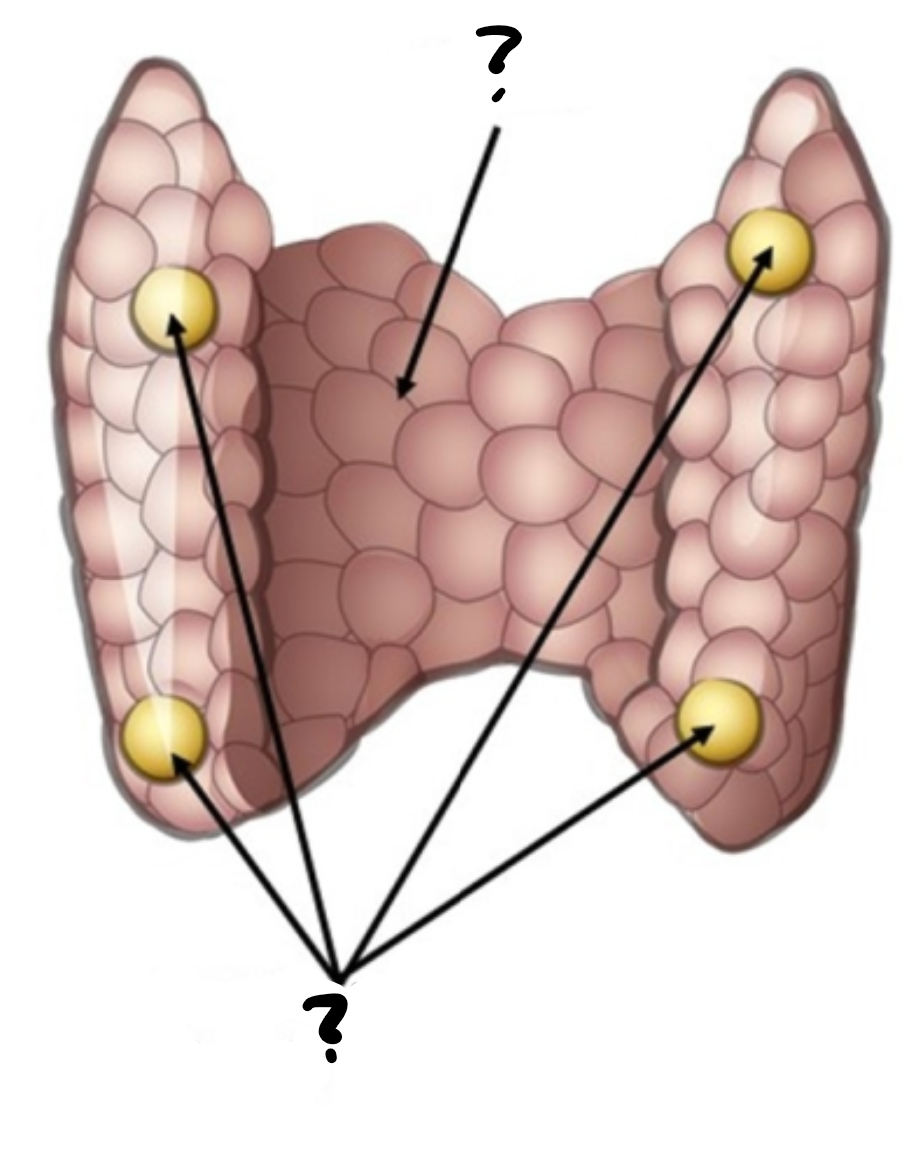
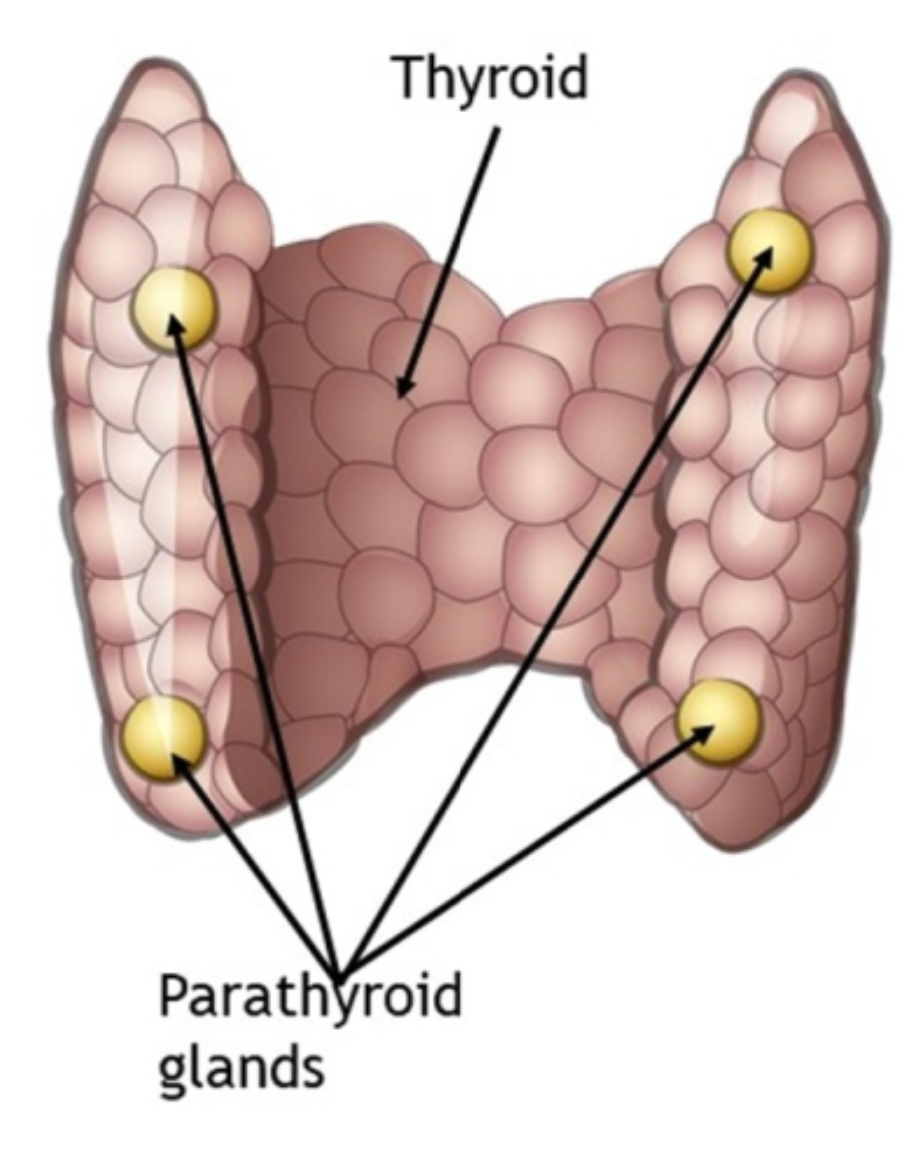
base of neck
2 distinctive halves, butterfly shape
calcitonin - decr calcium levels in the blood
thyroid hormones (TH) (thyroxine (T4) and triiodothyronine)
🔥regulate metabolism and body heat production
🌬️control cellular oxygen usage
🩸maintain blood pressure
Parathyroid glands
attached to the back of the thyroid
produce PTH - brings calcium out of the bones and into the bloodstream for use by cells
Adrenal glands
atop each kidney
adrenal cortex (outer layer)
epinephrine & norepinephrine - regulate fight or flight response to emergency situations (incr ❤ rate, blood pressure/flow, intake of O2 for immediate energy)
adrenal medulla (inner layer)
glucocorticoids (ex: cortisol, aldosterone) - regulate ion levels for quick energy
Exocrine vs. endocrine glands (in pancreas)
use ducts vs. ductless
Pancreas’ glands
endocrine part of pancreas made of groups of cells called islets of Langerhans (look like tiny islands)
beta cells produce insulin - lower blood glucose levels
alpha cells produce glucagon - raise blood glucose levels
Thymus gland
small gland near sternum
produces thymopoietin, thymic factor, and thymosin, which is involved in the development of the immune system
!!! pancreas and thymus are endocrine glands, also have functions w/in other body systems (ex: digestive, immune)
Homeostasis loop (calcium in blood):
Ca2+ too low, PTH, osteoclasts break down bone to release calcium, Ca2+ level rises
Ca2+ too high, calcitonin, calcium from blood absorbed into bones, Ca2+ level decr
Gonads
reproductive organs that produce sex cells and secrete sex hormones
females: ovaries
estrogen - maturation of reproductive organs & secondary sex characteristics
🩸progesterone & estrogen - cause breast development and control of menstrual cycle
males: testes
testosterone - maturation of reproductive organs & secondary sex characteristics, sperm production
How are hormones regulated?
control hormone secretion w/ feedback mechanisms (ex: thyroid feedback mechanism is a negative feedback loop)
endocrine system homeostasis:
hypothalamus secretes hormones into the pituitary (thyrotropin-releasing hormone)
pituitary secretes thyroid-stimulating hormone
thyroid secretes thyroxine into the blood, which incr metabolism
thyroxine levels too high, triggering hypothalamus to stop the impulse ⟲
Other hormone-producing structures
❤️Heart: secretes atrial natriuretic peptide - reduces blood volume & pressure
Stomach and small intestine: several digestive hormones regulate multiple digestive processes
Fatty tissue: produces leptin (controls appetite, feel full)
👶🏻Placenta: steroid and protein hormones that influence pregnancy
🩸Kidneys: erythropoietin - signals bone marrow to produce more red blood cells
☀Skin: produces vitamin D - allows digestive system to absorb calcium from food
Improper functioning of an endocrine gland
hyposecretion - not enough hormone is released
hypersecretion - too much hormone is released
all endocrine disorders are caused by either hyposecretion or hypersecretion of hormones