Non Systems 2
 Call Kai
 Learn
Learn Practice Test
 Spaced Repetition
 Match
Match Flashcards
 Knowt Play
1/37

There's no tags or description
Looks like no tags are added yet.
Name | Mastery | Learn | Test | Matching | Spaced | Call with Kai |
|---|
No analytics yet
Send a link to your students to track their progress
38 Terms
hickman catheter
central line tunneled under skin
provides antibiotics, nutritional solutions and blood samples
swanz ganz catheter
balloon flotation device inserted through the internal jugular vein or femoral vein into the pulmonary artery
montiors blood flow and function of the heart
colostomy bag
exits the colon to the abdomen when a part of the colon or large intestine has been removed
focus on early mobility and beware height of gait belt (goes above)
central venous pressure catheter
measures blood directly from right atrium and superior vena cava
arterial line
monitor arterial blood gases
chest tube drainage
inserted through incision in chest and may be connected to a mechanical or gravity based suction system
used to remove air, purulent matter from the patient’s chest or pleural cavity
a clinician is preparing to ambulate a patient with pleural effusion and a chest tube. which of the following procedures is MOST IMPORTANT to consider?
a. collection bottle kept below level of inserted tube
b. collection bottle kep at level of inserted tube
c. collection bottle should be removed before ambulating patient
d. collection bottle should be held by PT while patient ambulates
a. collection bottle kept below level of inserted tube
chest tube dislodge
patient exhale
place gauze or gloved hand over area
call nursing staff
keep collection bottle below tube
IV line
do not hold above head for extended periods
alert staff if fluid is low due to air bubbles
arterial line dislodged
apply firm pressure
alert staff immediately
femoral line
avoid repetitive hip flexion and hip flexion >45 degreees
catheters
hang below level of bladder
do not empty if output being monitored
empty or alert staff if overfilled
a clinican is measuring a patient with a T12 spinal cord injury for a custom wheelchair. the patient will be using a 1in seat cushion for pressure relief. which of the following considerations is most appropriate?
a. 1in added to back height of chair
b. 1in subtracted from back height of chair
c. the patient sohuld be instructed in learning for pressure relief at a minumum of every 60 minutes
d. 1 in should be added to the seat height of chair
a. 1in added to back height of chair
wheelchair seat height
heel to popliteal fold +2 in
avg 19.5-20
seat depth
posterior buttock along lateral thigh to politeal fold
-2 in
avg 16 in
seat width
widest aspect of buttock or thights
+1.5-2in
avg 18 in
back seat
chair seat to axilla
-4 inches
consider any seat cushion and add thickness to final value
avg 16 in
armrest height
seat of chair to olecranon
+1 in (consider cushions)
avg 9 in
a patient uses a wheelcahir to commute from the parking lot to the physical therapy clinic. while performing a wheelchair transfer to treatment table, which of the following is most important consideration?
a. patient use shoulder muscles to support upper body
b. therapist should assist the patient’s lower extremities onto table
c. wheelchair should be locked prior to transferring
d. patient should use slideboard to transfer
c. wheelchair should be locked prior to transferring
wheelchair axle positioning normal
in line with shoulder or slightly posterior
wheelchair axle positioning bariatric
move rear wheel axle forward
wheelchair axle positioning transfemoral amputation
move rear axle wheel behind patient’s shoulder
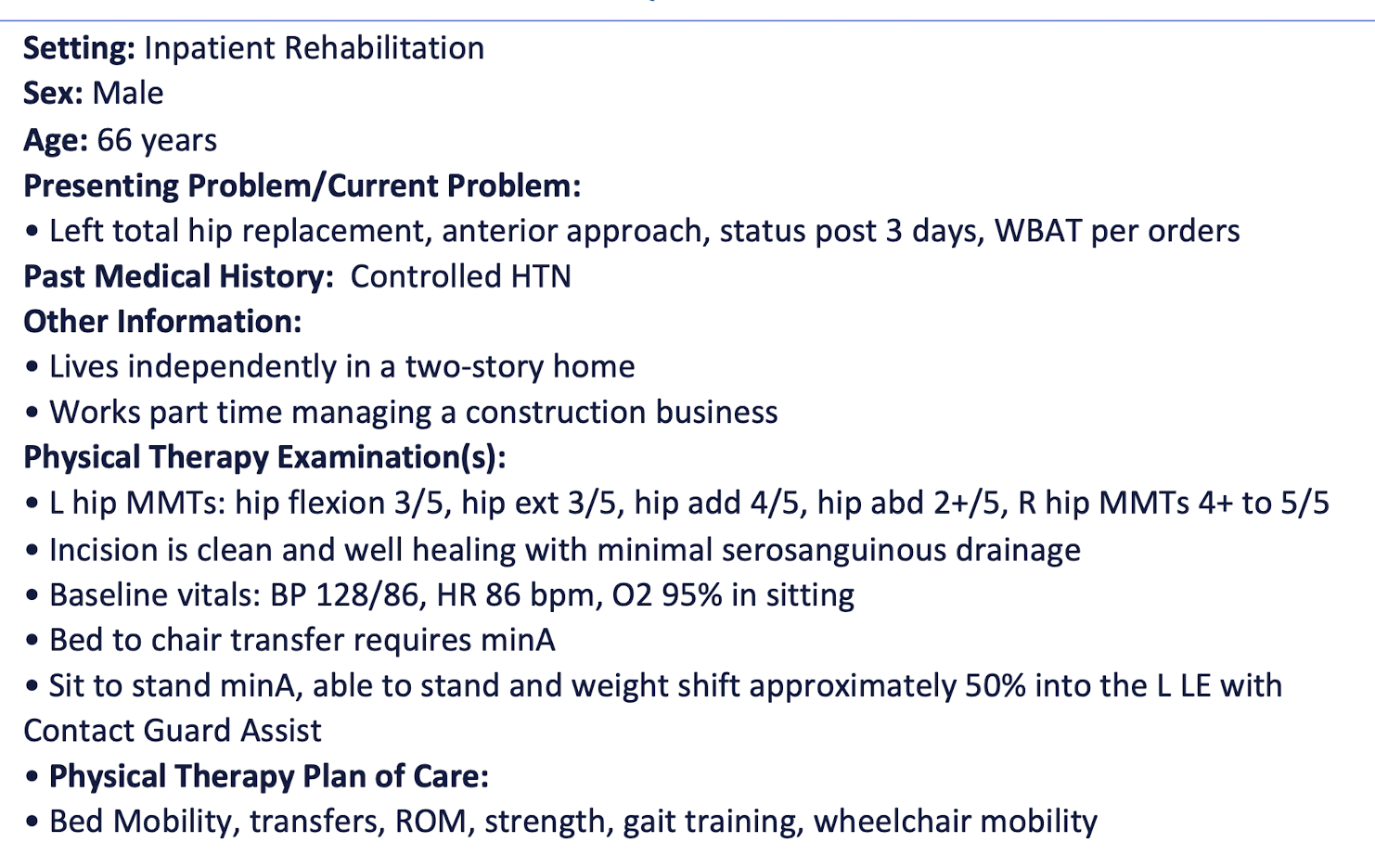
which of the following is MOST LIKELY to be included while educating the patient on prevention of hip dislocation
a. transfer to the affected side from chair to bed
b. when donning/doffing shoes, rest the left ankle on top of the right knee sitting
c. keep knees higher than hips when sitting
d. avoid standing activities that involve rotating the body away from the operated extremity
d. avoid standing activities that involve rotating the body away from the operated extremity
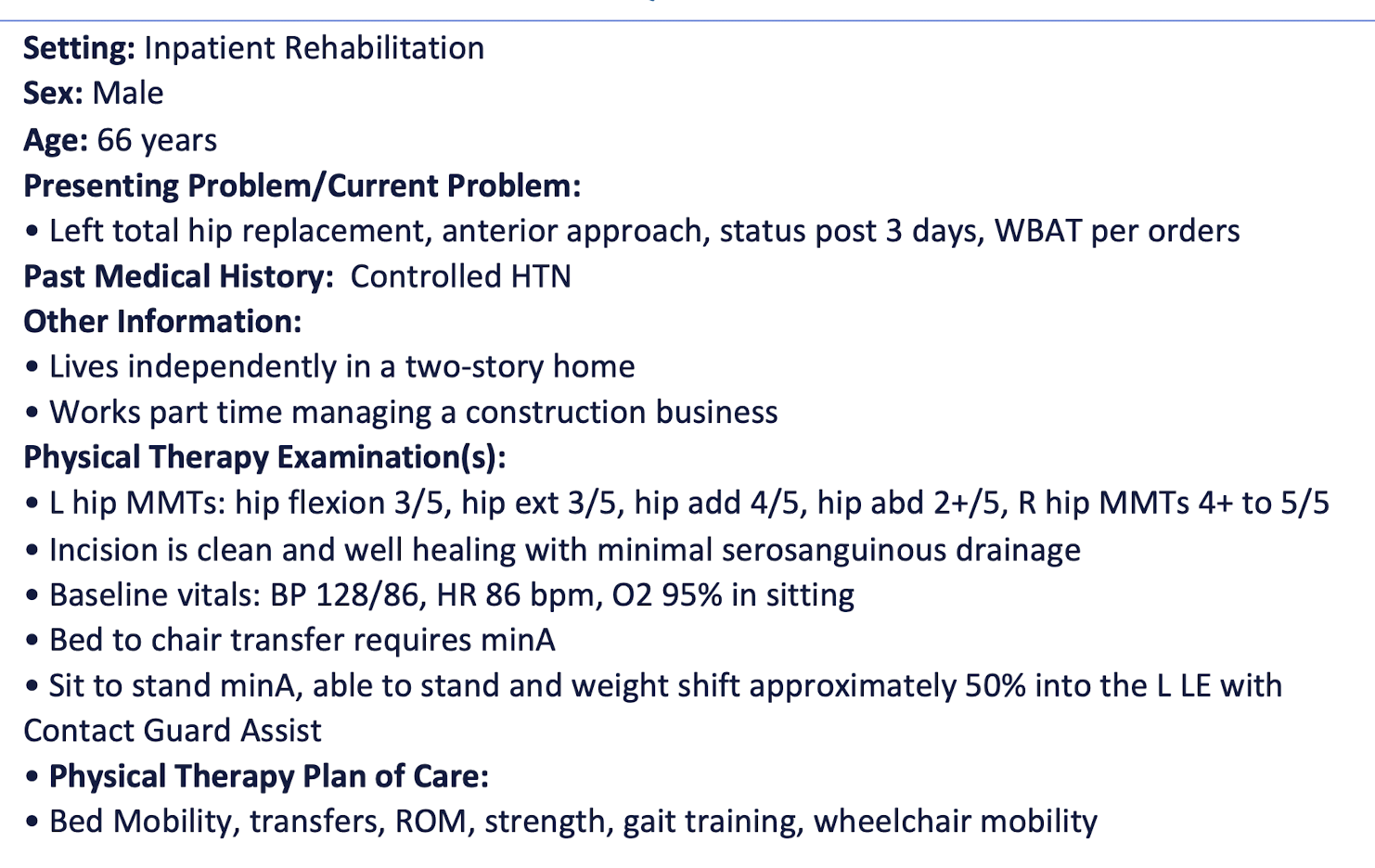
which of the following initial gait patterns is most appropriate for this patient
a. bilateral axillary crutches and four point gait pattern
b. single cane and modified four point gait pattern
c. front wheeled walked and step to gait pattern
d. front wheeled walking and step through gait pattern
c. front wheeled walked and step to gait pattern
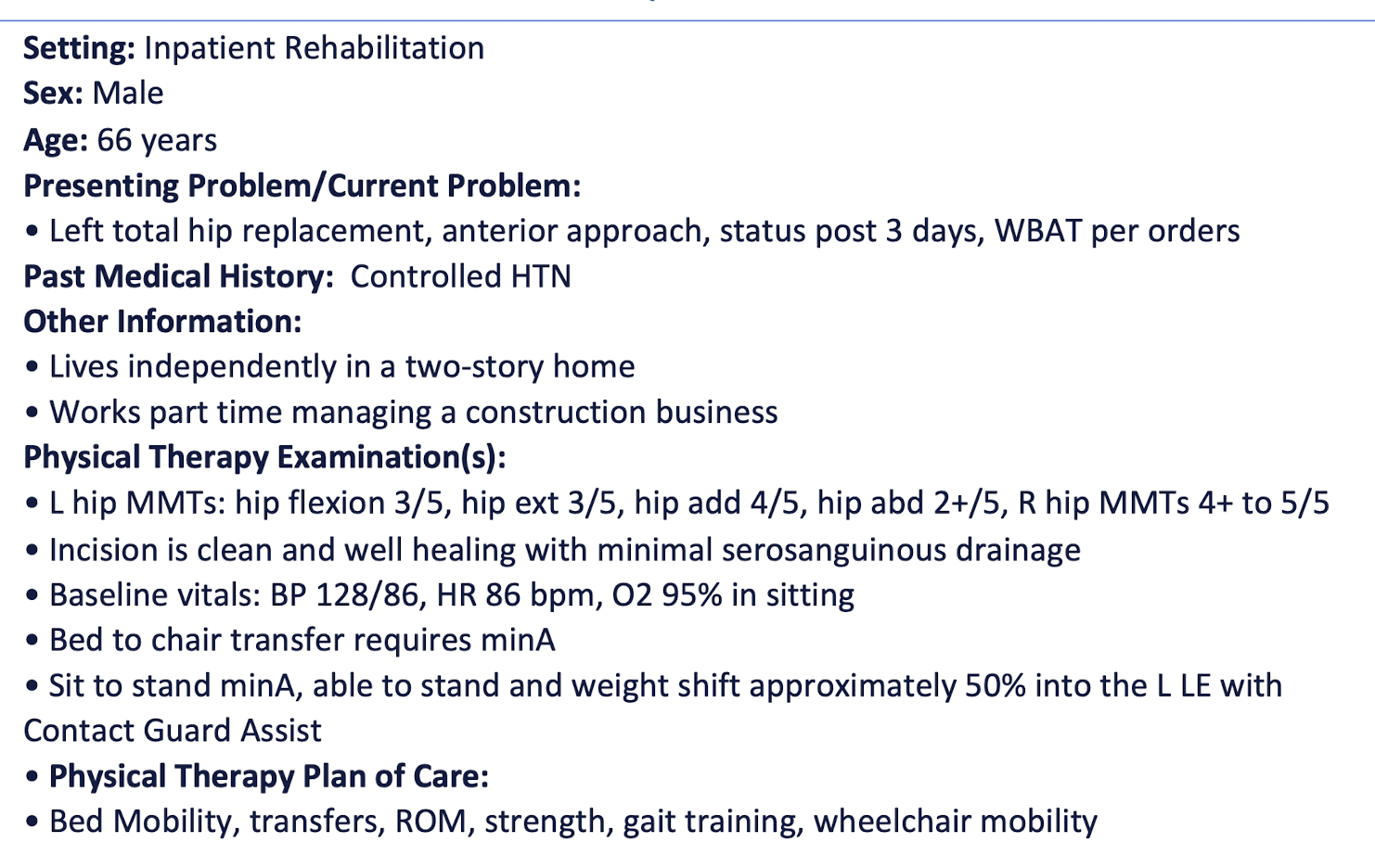
patient has progressed to a single cane and clinican is now instructing the patient in ascending stairs. the maximize safety during stair training which of the following positions is most appropriate for clincian?
a. in front of the patient, facing them, holding onto their cane
b. behind and to the patient’s left side, with one hand on gait belt
c. behind and to patient’s right side, one hand on gait belt
d. in front and to patient’s left side, maintaining contact with patient’s shoulder
b. behind and to the patient’s left side, with one hand on gait belt
standard crutches
axillary crutches
axilla space of approx. 2”
crutch is approx. 2” and 4-6 anterior to patient’s toe of the shoe
forearm crutches
lofstrand crutches
top of forearm cuff distal to elbow approx 1-1.5” below olecranon proccess
crutch is approx 2” lateral 4-6” anterior to patient’s toe of the shoe
cane
always held on unaffected side
is approx 2” lateral 4-6” anterior to patient’s toe of the shoe
ascending = good foot up first, followed by bad foot and cane
descending = bad foot and cane first followed by good foot
handpiece height
always 20-25 degrees elbow flexion
hand piece at level of wrist crease, ulnar styloid process
greater trochanter
position during ambulation on level ground
stand behind and slightly toward the patient’s involved LE
grab gait belt with supinated forearm
move forward in step with patient
longitudinal arch foot orthosis
scaphoid pad
pes planus
flat foot
UCBL
controls hindfoot valgus
reduces subtalar motion
three point counterforces - control calcaneal eversion, forefoot abduction
a clinican examines a patient who reports foot pain while running. the examination shows the patient has excessive pronation. which of the following would be most appropriate orthotic insert?
a. lateral post under 5th met head
b. a lateral post under calcaneus placing it in everted postion
c. middle post proximal to third met head
d. a medial post proximal to first met head
d. a medial post proximal to first met head
dorsiflexion assist AFO
DF weakness
posterior leaf spring
klenzak joint
posterior leaf spring
DF assist
recoils during swing phase to produce dorsiflexion
klenzak joint
DF assist
incorporated into stirrup
plantarflexion stop/resistance
PF tightness
plastic hinged AFO with posterior stop
which of the following combinations of orthotic and anatomical causes will most likely lead to same gait deviation
a. excessive height of medial upright KAFO and glute max weakness
b. excessive height of lateral upright KAFO and glute max contracture
c. inadequate DF stop and pes equinus deformity
d. inadequate DF assist and weak hip flexors
d. inadequate DF assist and weak hip flexors