Engineered Products
 Call Kai
 Learn
Learn Practice Test
 Spaced Repetition
 Match
Match Flashcards
 Knowt Play
1/78

There's no tags or description
Looks like no tags are added yet.
Name | Mastery | Learn | Test | Matching | Spaced | Call with Kai | Chat |
|---|
No analytics yet
Send a link to your students to track their progress
79 Terms
Skills of the Engineer (4), PS, D, C PM
Problem solvers
Designers
Communicators
Project managers
Problem Solvers
Presented with a challenge or problem and then come up with a solution
Designers
Final design would be tested then evaluated
Communicators
Verbal, writen and graphical forms
CAD, pictorial, orthogonal and assembly
Project Managers
Ensure al parts of the project occur at the right time and on the right schedule and within constraints on materials and cost
Historical Development
Lawn Mowers
Car Development
Historical development of Lawn Mower
Different Types of Lawn Mowers over the years
John Ferrabee (1830)
Follows and Bate (1900)
Royal (1936)
Victa 2 Stroke (1950)
Victa 2 stroke (1960)
Sunbeam 2 stroke (1974)
Honda 4 stroke (2011)
John Ferabee (1830)
The first push mower invested by Edward Budding in 1830
Roller for regulating the height to prevent the machine from dropping into ground
Front Mounted Catcher
MATERIALS
Wrought iron and cast iron
Cast iron → strong, durable, easy to cast, good for early manufacturing
Wrought iron → tough, malleable, and far less brittle than cast iron.
Follows and Bate (1900)
Catcher behind the main body of the mower
Gear driven
Timber Handles
Lightweight and easy to shape with the tools available in 1900.
Steel frame and gears High strength and toughness, allowing the mower to handle mechanical loads.
Royal (1936)
Petrol engined domestic mower
Chain drive and front mounted catcher
Reel mower, reel doing the cuttin- A reel is a cylinder with multiple curved blades that spin forward
Fabricated steel frame, engine uses cast iron
Steel reel → tough + sharp
Victa 2 Stroke (1950)
Cast iron base plate with no provision for catcher
Handles painted tube steel
Started by using a rope wrapped around a pulley at the top of the motor
Tiresome, took many pulls
Cast iron base plate
– Very high compressive strength, making it durable under engine vibration.
Victa 2 Stroke (1960)
Self propelled model
Fuel tank and impulse starter
Polyethelene catcher
Sunbeam Mower (1974)
160 cc two stroke motor
Fuel tank, recoil starter
Pipes exhaust fumes to reduce airbone pollution
Honda 4 Stoke ( 2011)
Mulch and catch mower
Base plate is cast aliminium
Catcher is Poleyethelyne Terephtalte
Offer choice between mulching and catching
More versatile
Car Development
First car- Gotleib Daimler
Mass Produced using production line method
Volkswagen- Most popular car
Citroen DS19
Transverse engine
Effect of Engineering on Peoples lives
Lawn mowers
Cars
Effect of Lawn mowers on peoples lives
The sunbeam mower 1947, that any heavier than air pollutant were deposited directly on the ground
Saves time and effort: Instead of cutting grass by hand, people can mow quickly.
Better appearance: Keeps gardens, parks, and sports fields neat and well maintained.
Effect of Cars on peoples lives
Development of 4 wheel brakes on in the mud to late 1930’s starts to make the car a much safer travel option
Innovative suspension systems and disc brakes improved by dynamic safety
By all 1972 all cars sold in Australia must have seatbelts
21st Century: Hybrid Car
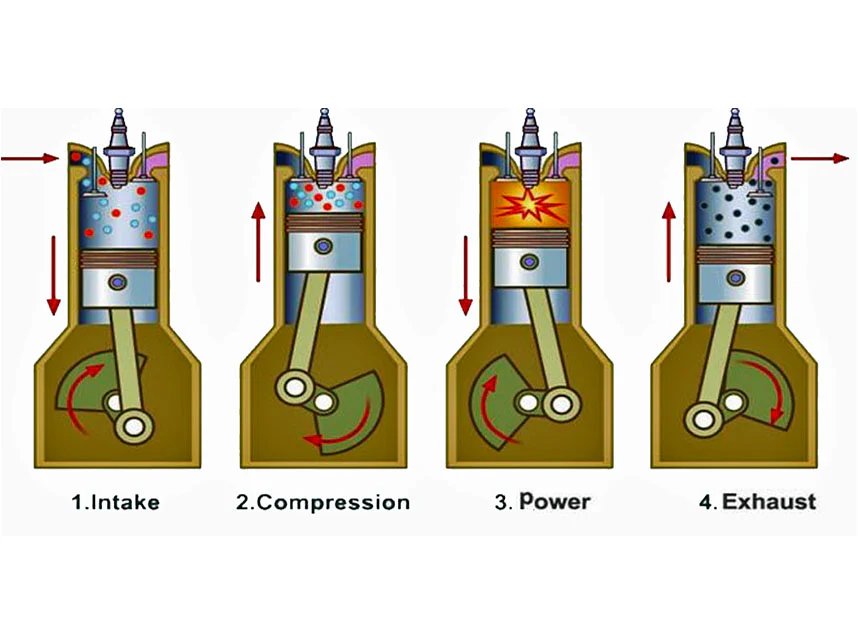
Environmental Implications (Petrol Engine 4)
Induction
Compression
Ignitiiton (Power)
Exhaust
Induction
The valves open
The piston moves down
A piston is a tightly fitting component that moves up and down inside a cylinder to transfer force from expanding gases into mechanical motion.
What it does:
Moves up and down
Gets pushed by burning fuel gases
Converts that push into motion for the engine
Compressin
Valves are closed
Pistons move up
Power
Spark Plug igniting the compressed fuel mixture
Piston goes down
Exhaust
Exhaust valves open pushing the gases out of the cylinder
Pistons move up
Nature and Types of forces
Concurrent- Pass through game point
Non concurrent- Intersect various points
Collinear- Lie on the same line
Resultants and Equilibrants
Resultant: The single force that has the same effect as all the forces acting together
Equilibrants: The force that balances the resultant
Principle of transmissibility of forces
A force may be relocated at any position along its line of action, with the same magnitude, direction and sense, and still have the same effect.
Imagine you are pushing a shopping trolley in a straight line.
You apply a force of 50 N forward at the handle (top).
Now imagine the same 50 N force is applied at the middle of the trolley, still in the same straight direction.
In both cases:
The trolley moves the same way
The effect on its motion is unchanged
Three force rule for equilibirum ( Calculation)
Moment ( Calculation)
Couples ( Calculation)
Engineering Materials (very important) WH, HT, A
Modification of Materials
Work hardneing
Heat Treatment
Alloying Materials
Work Hardening *metal becomes stron,, and hard,,,, after being plast__ defo__ at its recr___ temperatur
makes stronger but less fl__
Work hardening is when a metal becomes stronger and harder after being plastically deformed (bent, stretched, hammered), at its “ recrsytillisation temperature” (stressed grains of a metal reform to unstressed)
Makes it stronger but less flexible
As the metal deforms, the atoms slide across the shearplane, and dont move as they are encounter grain boundaries
Heat Treatement
Heat treatment is the process of heating and cooling a metal in a controlled way to change its properties (like strength, hardness, or flexibility).
Steel ( Heat Treatment) FERROUS METALS ONLY
Heated until red hot (1000 degree celscius) then quenched in water, the steel will become hard but brittle *easy to break.
Martensite
Very hard structure formed when steel is rapidly cooled/ quenched
Tempered Martensite
Quenched steel that has been reheated to reduce brittleness and increase toughness
Heat Treatment Process “ Steel”
Ferrite: Soft, ductile form of iron in steel
Pearlite: Layered structure of ferrite and cementite that increases strength
Annealing
Process Annealing
Normalising
Spherodising
Tempering
Annealing
Steel is heated about 900 degrees and then cooled very slowly (usually in a furnace)
Results in an unstressed grain structure consisting of ferrite and pearlite
Process Annealing
Lower-temperature heating around 550-650 degrees on mild steel
Ferrite phase undergoes recovery and recrystallisation, being unstressed
Pearlite is less affected because its layered structure is more stable at these temperatures.
Normalising + produces finer grain stru__ then anneal…
Steel heated up to 900 degrees to relieve stress, then cooled in air
Produces a finer grain structure then annealing
Spherodising (softer)
Occurs during a rehating after steel has been quenched in 650-700 degrees
The cementite (Cementite a hard compound in steel made of iron and carbon), forms into spheroids in a soft ferrite matrix.
HARD CEMENTITE BREAKS UP INTO ROUND PARTICLES RESULTING IN STEEL BEING SOFT, LESS BRITTLE, EASIER TO MACHINE
Tempering
Reheating quenched steel to 200-600 degrees, then cooled to reduce brittleness and INCREASE TOUGHNESS
Non Ferrous Heat Treatment : JUST KNOW THE NAME
PRECIPITATION HARDENING
Other Materials Heat Treatment
Glass can also be heat treated
Alloying Materials
Elements that are added to a base metal (usually a metal like iron or aluminium) to change and improve its properties.
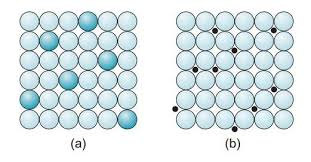
Alloying can create 2 types of solid solutions
Substitutional solid solution
Interstitial solid solution
Substituional solid solution *atoms
Atoms must be similar in size
Interstitial solid solution
Atoms must be much smaller
Diagram of the 2
a- solid
b- inter
Engineering Applications of Materials ( Material suitability)
Specific strenth
Corrosion resistance
Resistance to fatigue
Hardness and Toughness
Electricty
Electricity: The flow of electrons through a system
Current (I)
Measure of quantity of electrons flowing per second
Units: A
Potential Difference (E)
Voltage, Electromotive force (EMF)
Measure of electric pressure forcing electrons through a system
Units : (V)
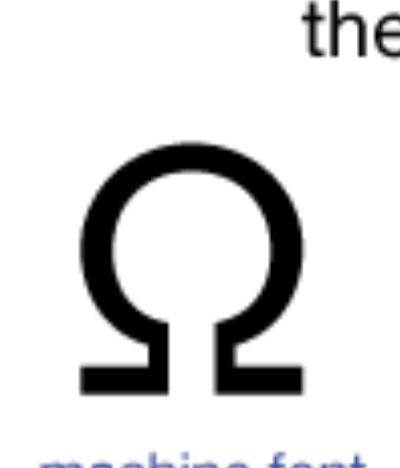
Resistance (R)
The amount of resistance exhibited by a system
Units: _M_
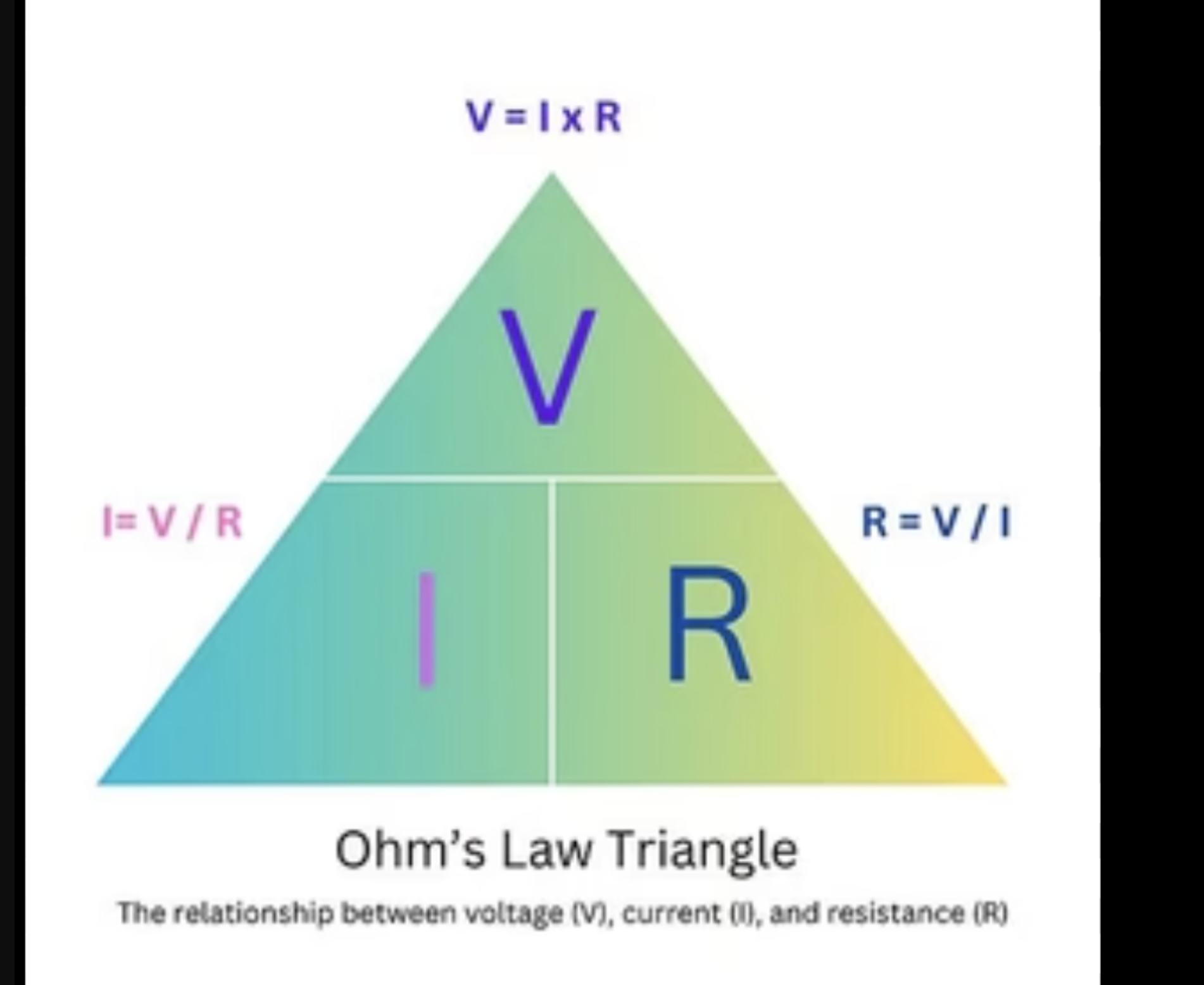
Ohms Law
V=IR
Potential difference= Current x Resistance
Voltage drop
Subtract from intial voltage
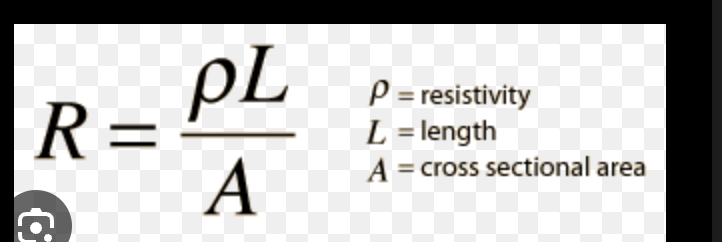
Resistance formula (resistivi__, x leng/ area
Area is always cross sectional
so PI R 2
OR PI X DIAMATER DIVIDED BY 4
Electrical Safety
A lot of modern domestic appliances are double insulated
Induction Motors (only know the name) and How it works, Used
electrictuy flows in ___ coils
Spinning m__ field
Creates Curr__
Rotor spi__
There are vairous diferent types of induction motors “ The Squirrel cage”
An induction motor is a specific type of electric motor.
Electricity flows in the outside coils (stator)
This creates a spinning magnetic field
That spinning field induces (creates) current in the inner part (rotor)
The rotor then gets pulled along and starts spinning
Used in
Fans
Refrigerators
Lathes
Electric Motors ( what induction motor falls in)
Electric Motors convert electric energy into mechanical energy, a generator does the opposite
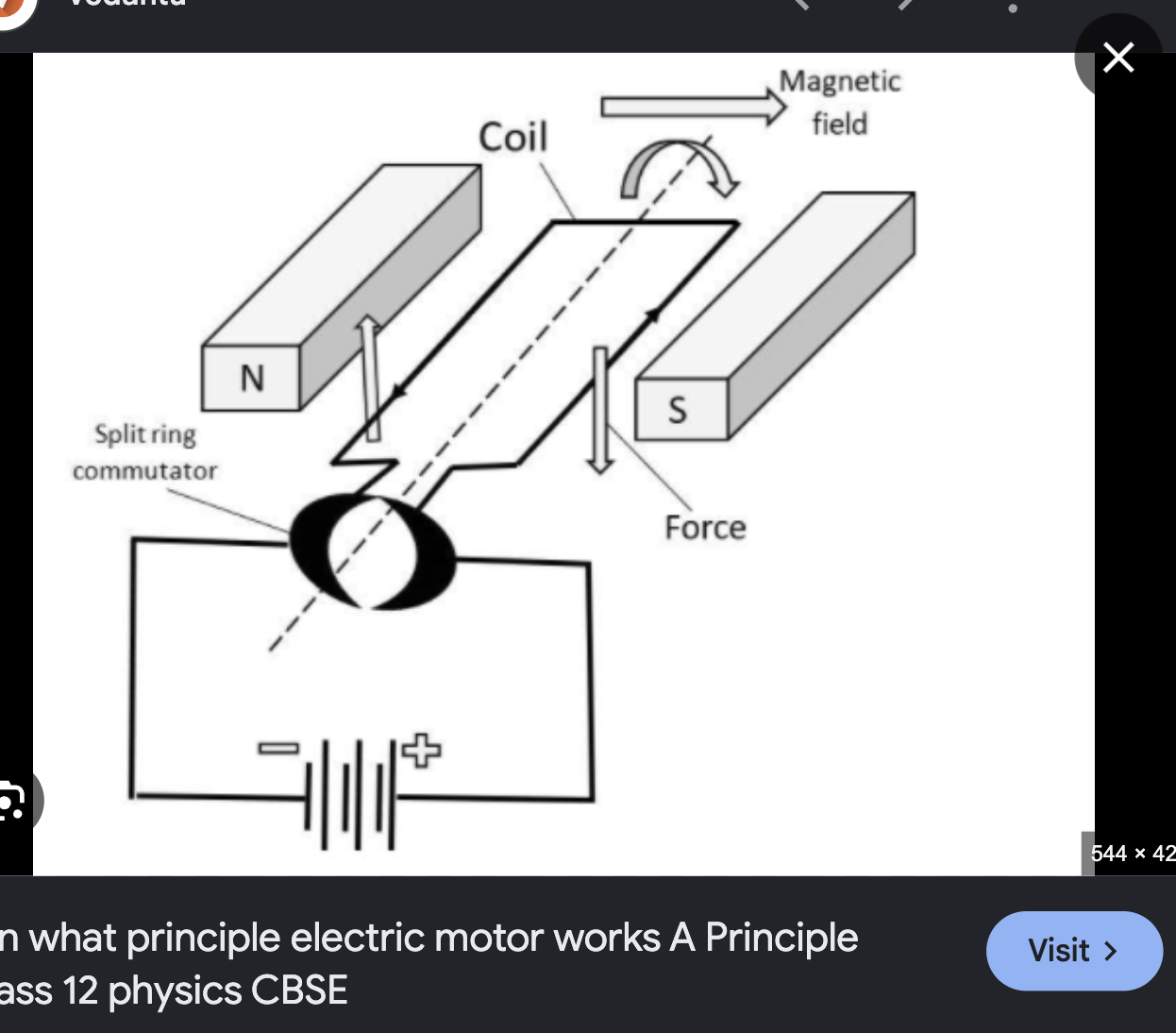
How electric motors work?
A standard electric motor passes current through a rotating coil
The coil will have a magnetic field created around it which will react with the magnetic field surrounding it.
DC motor
Electricity flows in through a ring ( Commutator)
Spins in contact with brushes
DC = brushes + split ring needed
AC motor
AC electricity flows in
Current already changes direction (Alternating Current)
Creates a changing magnetic field
Rotor spins continuously
DC: current supplied through brushes + spinning ring, and the ring switches direction
AC: current already switches itself, so no ring needed
Back EMF *voltage
Supply EMF: the voltage supplied by a power source that drives current in a circuit.
Back EMF: the voltage produced in a motor that opposes the supply voltage when it is running.
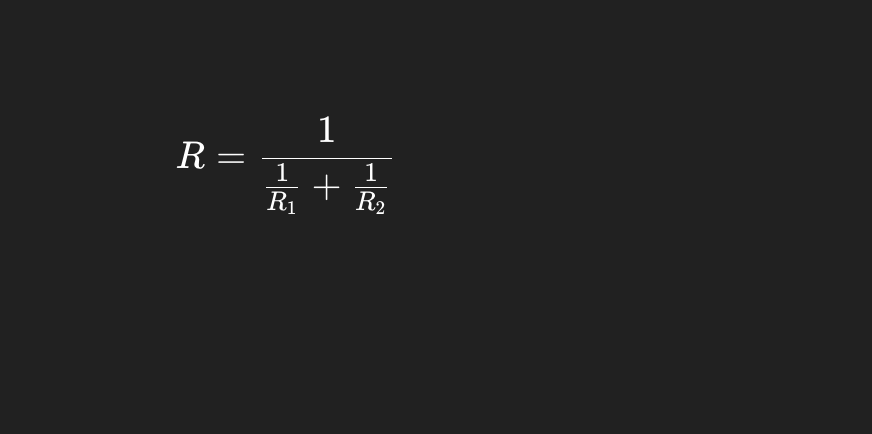
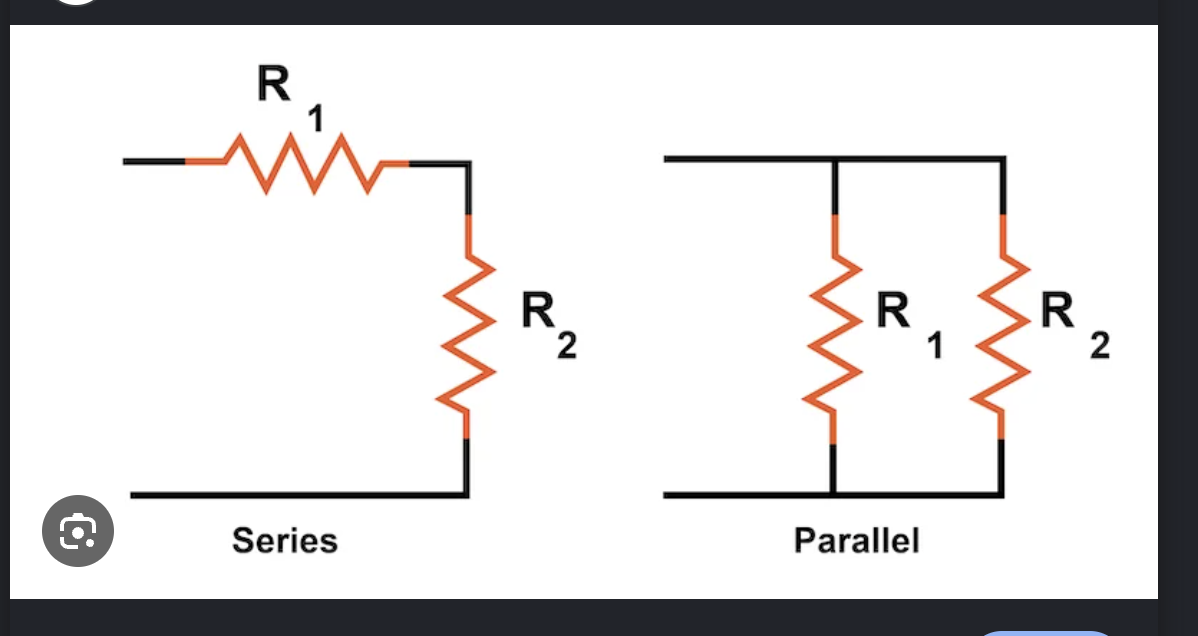
Series and Parallel Resistors
Series = R1 + R2 + R3…
Parallel
Conductivity
The reciprocal of resitivity
Low resisitivity means high conductivity
UNITS= Siemans per meter
Simple Circuit and Components ( Drawing)
Memorise All
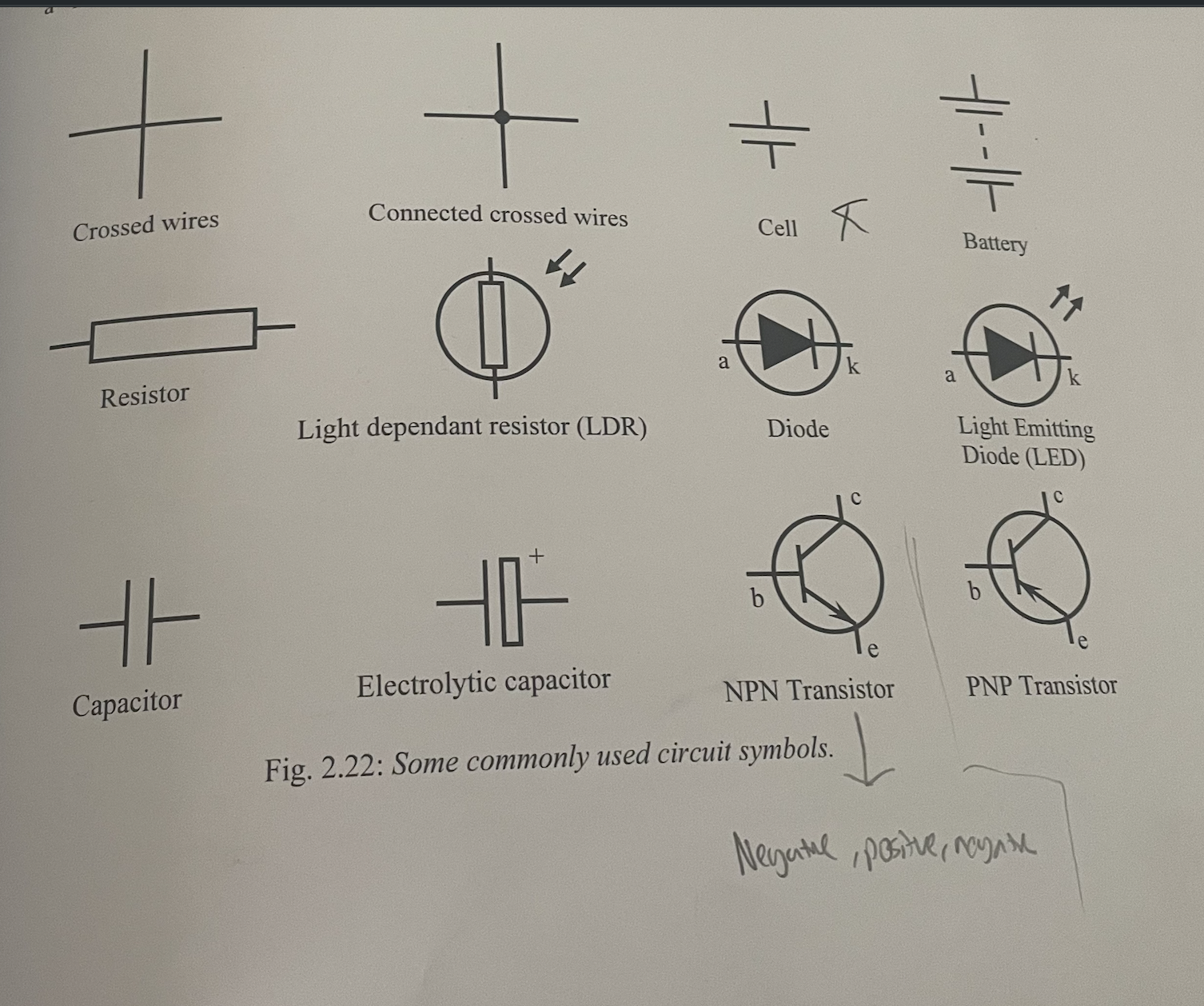
Features of the commonly used electric components
Switches
Cell
Battery
Resistor
Potentiomater
Capacitor
Electrolytics Capacitor
Diode
Light emitting Diode
Transistor
Motor
Loudspeaker
Switches
Allow the operator to control the flow of electricity in the appliance
Cell
Devise used to proudce electricity
Battery
A group of cells connected together
Potentiometer
Variable resistor, ( resistance might be increased or decreased)
Capacitor
Device capable of storing an electric charge
Electrolytic Capacitor
A special capacitor whch has polarity
Polarity ( Both negative and positive charge)
Diode
A Diode only allows current to flow in one direction
Light Emitting Diode ( LED)
A diode that emits light
Transistor
Acts like a switch or amplifier
Motor
Converts electricity into rotary motion
Loudspeaker
Used to emit warning sounds on appliances
AC and DC circuits
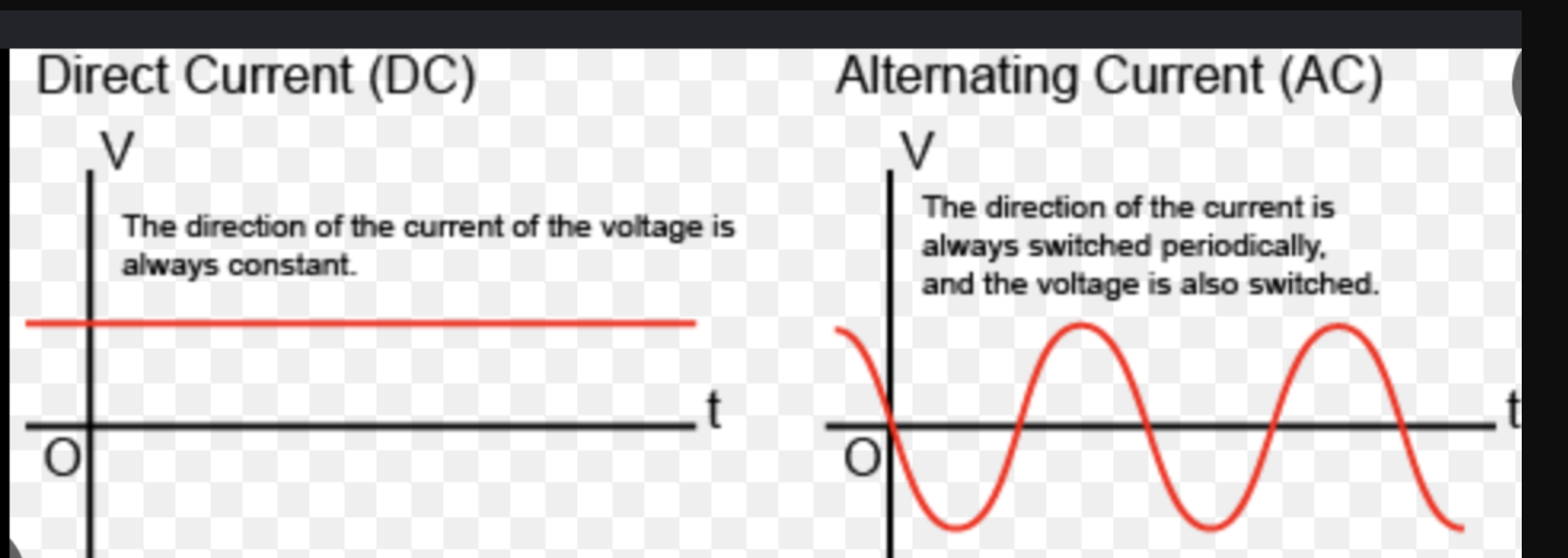
AC and DC Transimissons
AC = easy to change voltage → used in power grids
DC = efficient for very long distances → used in special situations
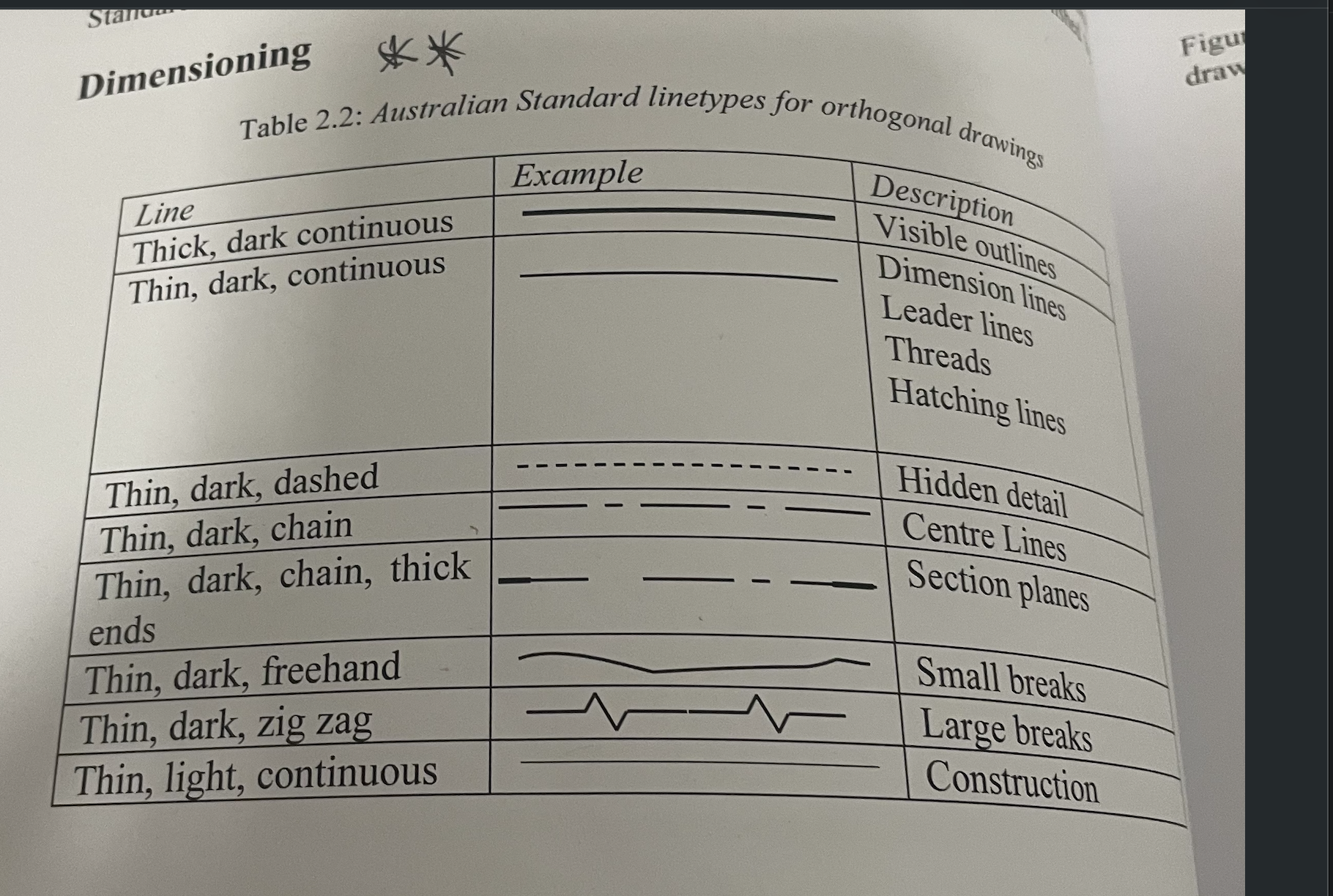
Dimensioning