Science Atomic Theory
 Call Kai
 Learn
Learn Practice Test
 Spaced Repetition
 Match
Match Flashcards
 Knowt Play
1/21

There's no tags or description
Looks like no tags are added yet.
Name | Mastery | Learn | Test | Matching | Spaced | Call with Kai |
|---|
No analytics yet
Send a link to your students to track their progress
22 Terms
Democritus
Stated the idea that all matter is made of tiny, indestructible, things called atoms
Ernest Ruthorford
Stated the idea that most of an atoms mass is in its tiny nucleus, and the rest is mainly empty space
John Dalton
Revolutionized our knowlege of atoms with his four part theory
Dalton’s Four Part Theory
All matter is composed of atoms. 2. Atoms of a given element are identical in mass and properties. 3. Atoms cannot be subdivided, created, or destroyed. 4. Atoms of different elements combine or be rearranged to form chemical reactions.
Dimitri Mendeleev
Came up with the original periodic table based on atomic mass rather than atomic numbers like the one today
JJ Thomson
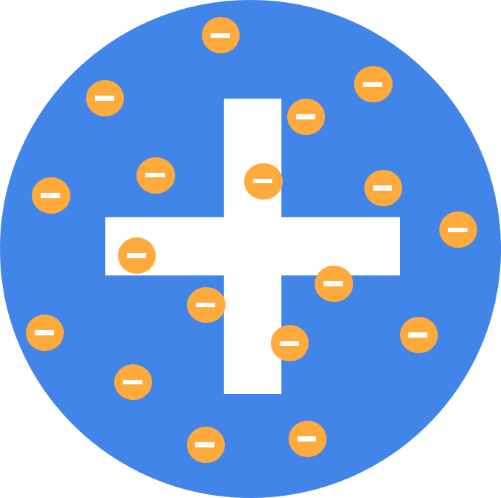
Discovered that electrons make up atoms, made the plum pudding diagram
Plum Pudding Model
Chemistry
The study of matter and its interactions with other matter
Atoms
The basic units of matter, consisting of a nucleus surrounded by electrons. They determine the chemical properties of elements.
Elements
Pure structures that cannot be broken down further by chemical means
Protons
These make up an atoms nucleus and have a positive charge
Neutrons
These make up an atoms nucleus and have a neutral charge
Electrons
Subatomic particles that have a negative charge and orbit the nucleus of an atom.
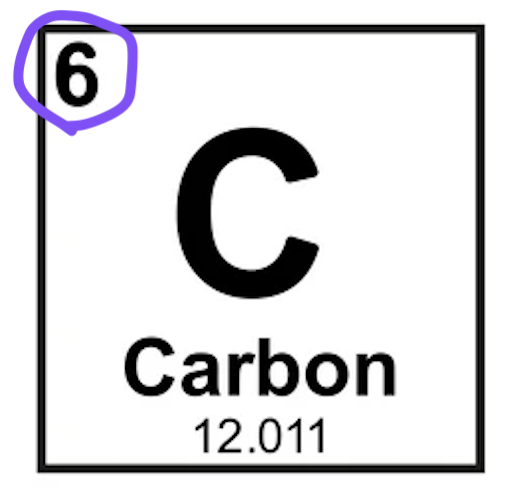
Atomic Number
The number of protons (and electrons) in an atom's nucleus, which determines the chemical element and its properties. These organize our periodic table
Atomic Mass
The mass of an atoms nucleus, determined by the # of protons + neutrons, this organized Mendeleev’s periodic table
Electron Clouds
The area where electrons orbit the nucleus of an atom
Orbital
A region in an atom where there is a high probability of finding electrons.
Isotopes
Atoms of the same element with different numbers of protons (resulting in different atomic mass)
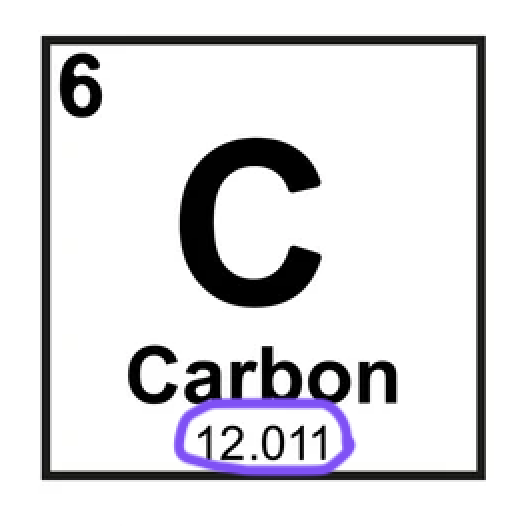
Average Atomic Mass
What you get when you average the masses of all isotopes of an element
amu
(atomic mass unit), standard unit of mass used to measure atomic weight
Atomic Number
Avg. Mass Number