BS1050 BLOCK 4 - Forensics and conservation genetics
 Call Kai
 Learn
Learn Practice Test
 Spaced Repetition
 Match
Match Flashcards
 Knowt Play
1/83

There's no tags or description
Looks like no tags are added yet.
Name | Mastery | Learn | Test | Matching | Spaced | Call with Kai | Chat |
|---|
No analytics yet
Send a link to your students to track their progress
84 Terms
What are the three primary roles of DNA evidence in criminal investigations?
Exonerating innocent individuals, linking crime scenes, and identifying suspects.
What are the key practical constraints that forensic DNA analysis methods must satisfy?
They must handle degraded/trace DNA, manage DNA mixtures, be ethically compliant, validated against international standards, compatible with databases, cost-effective, and withstand legal challenges.
what are tandem repeats
two or more nucelotides that are repeated and see which genome came from which individual
some segments of human dna vary in length between individuals
How do minisatellites differ from STRs in terms of repeat unit size?
Minisatellites have repeat units of 30 bp
STRs (short tandem repeats) have repeat units of 3-6 bp.- vary due to high mutuation rates
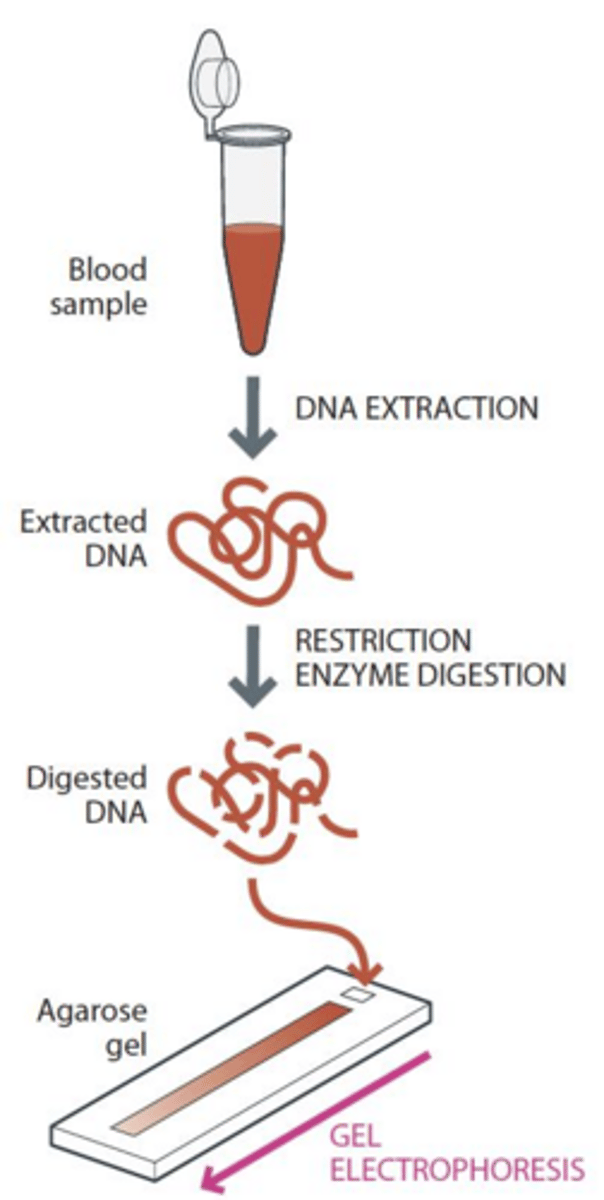
how was dna fingerprinting done- minisatellites
cut dna with restriction enzyme,
seperate on basis of size,
transfer to membrane -southern blotting,
tprobe with radioactive dna seq which detecs many minisatleites at once, wipe off
What is the definition of Random Match Probability (RMP) in forensic genetics?
probability that two individuals, taken at random from the population, will share the same DNA profile
smaller this is the better- applies to autosomal
What was the significance of the 1985 Enderby murders in forensic history?
It was the first criminal case to use DNA fingerprinting and the first to employ a 'mass screen' of the men in area to identify a suspect
shows it can exonerate,link crime scene, identify a suspect
colin pitchfork asked someone to impersonate
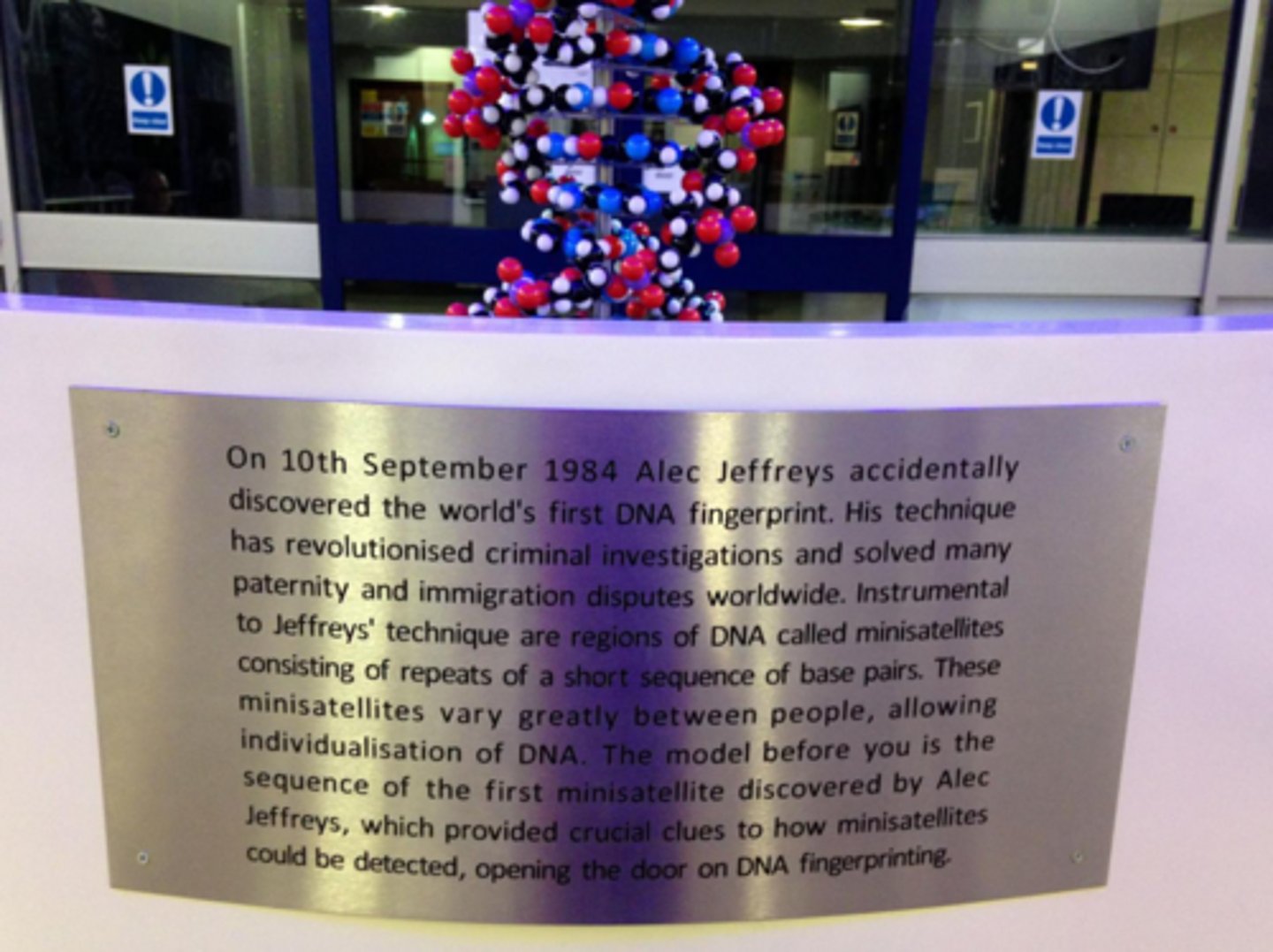
what/ how is modern dna fingerprinting done
targets variable STRs, using microsatellites and repeated in tanden= this is dna profiling now and dont vary as much still high mutation rates- digital
What is the primary method used to amplify specfici segements of genome for forensic profiling? super sensitive
Polymerase Chain Reaction (PCR),
Why are autosomal STRs considered independently inherited?
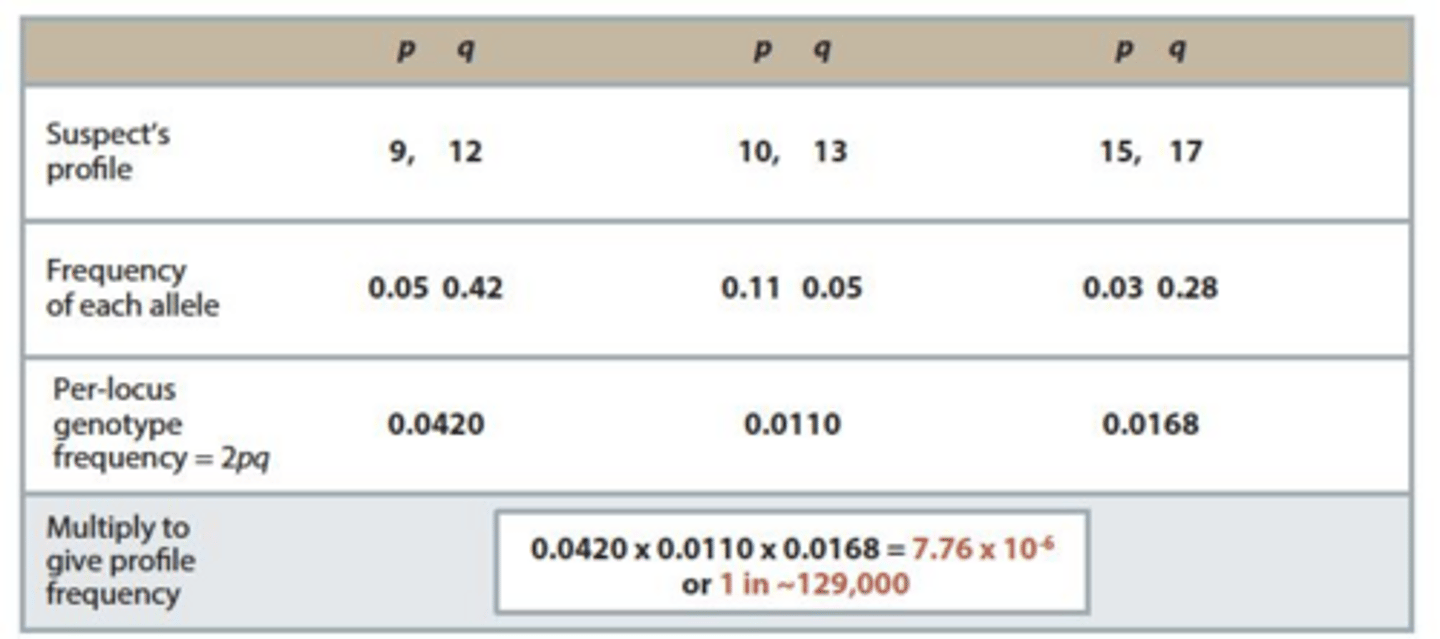
They are located on different chromosomes or are separated by crossing over, allowing their allele frequencies to be multiplied to calculate RMP.
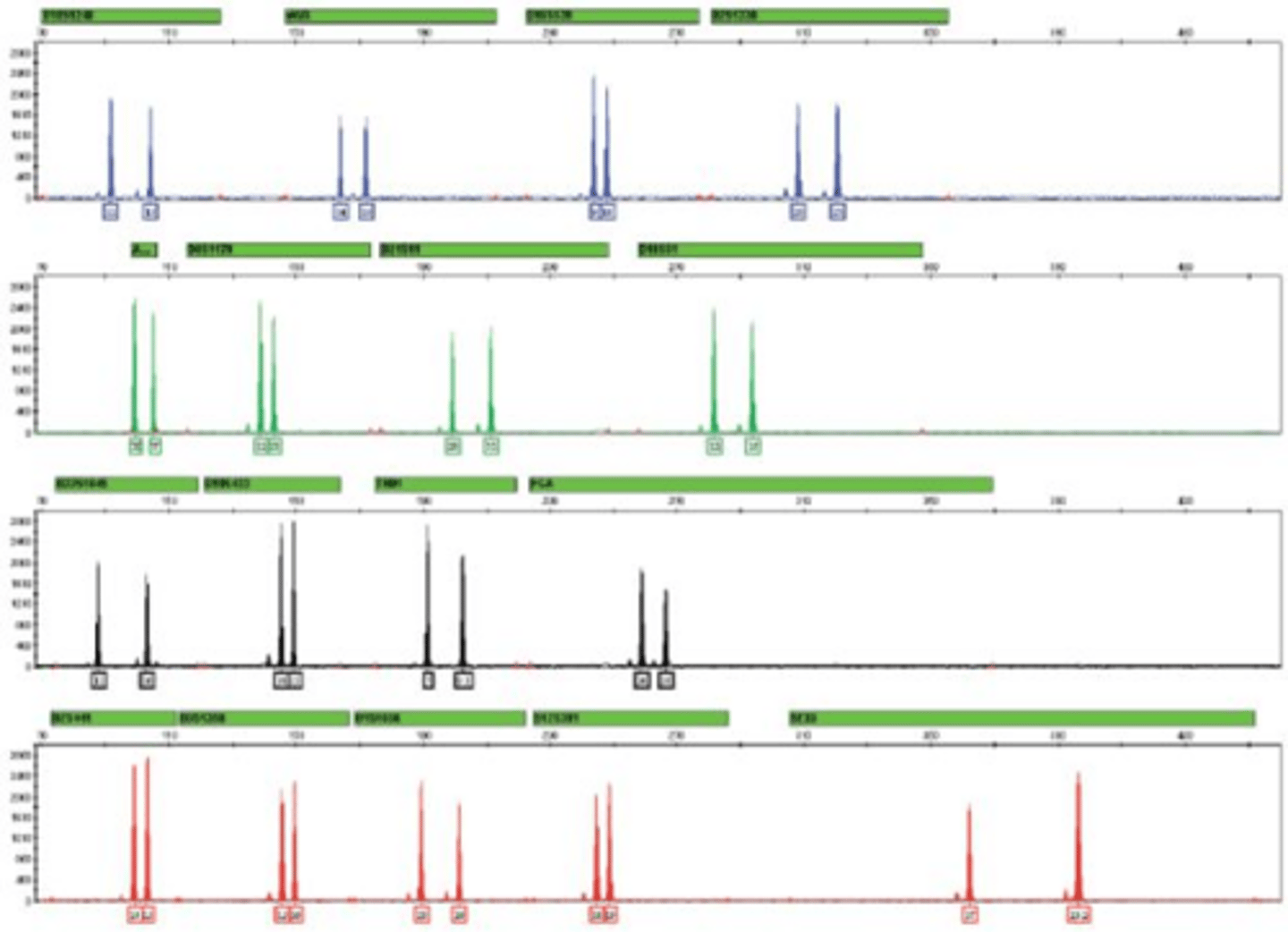
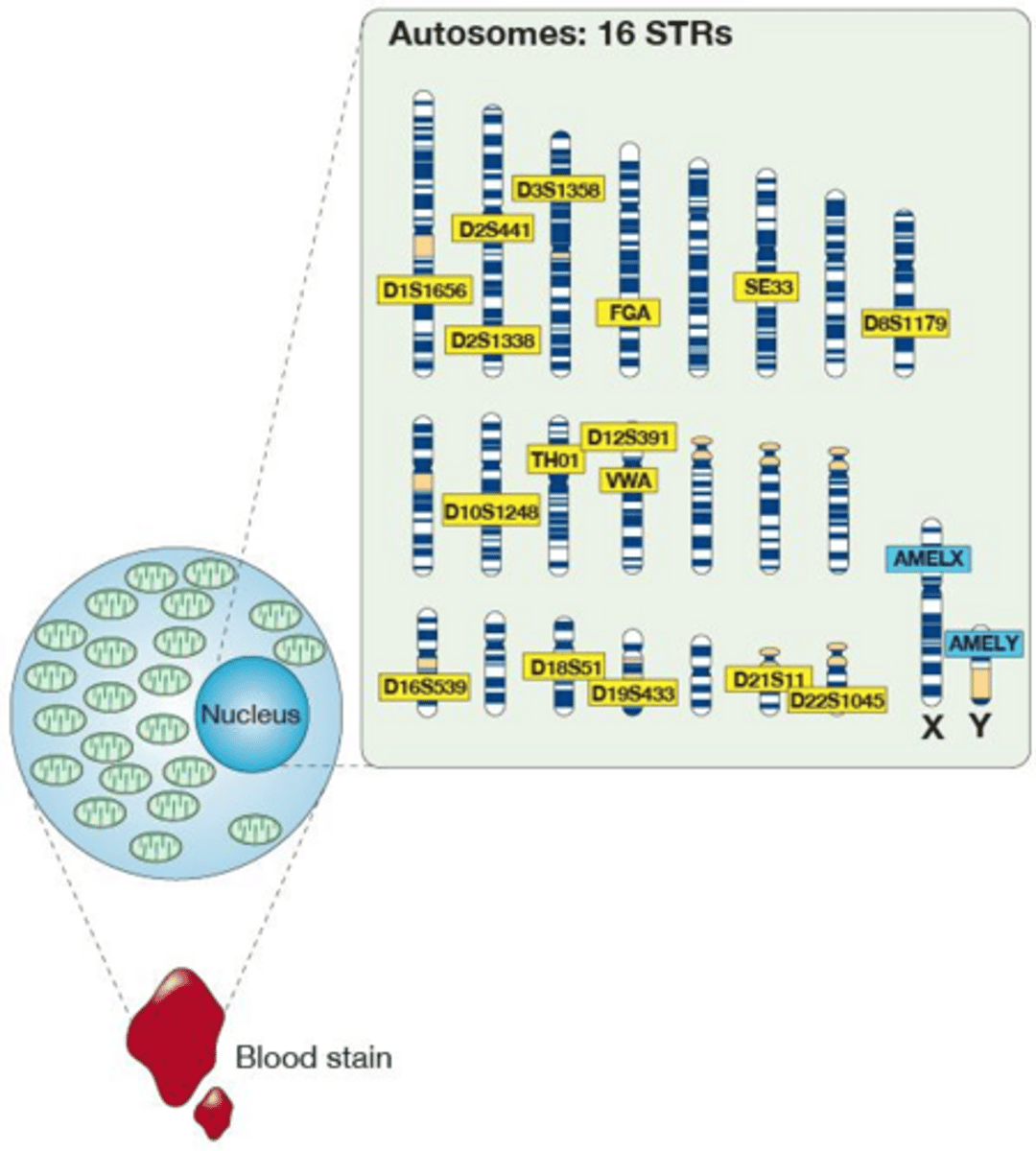
standardised 16 strs and a pcr primer ehich amplify up and put it in capilalrity machine and peaks where cmaera picks up signal and sets of STRs
What is the role of capillary electrophoresis in modern forensic DNA analysis?
to separate and detect fluorescently-labeled DNA fragments based on their size.
why is RMP so low in DNA profiling
10-15 to 10-24 (all the way to 24 as we can have partial profiles)
strs are independently inherited everytime a new gamete is made, randomly select from parents alleles so hge diveristy using parents' chromosomes- so we can calculate from here
What is the primary difference between DNA fingerprinting and modern DNA profiling?
DNA fingerprinting used minisatellites and autoradiography, whereas modern profiling uses PCR to target specific STRs and capillary electrophoresis.
What is the purpose of the Amelogenin gene on the sex chromosomes in forensic DNA profiling?
It is used to determine the biological sex
Why can't Y-STR or mtDNA -father to son allele frequencies be multiplied together like autosomal STRs?
Because they are uniparentally inherited and not independently inherited; they are passed down as a single haplotype.
What are the forensic advantages of mitochondrial- mothers ot childeren DNA (mtDNA)?
It survives well in old or damaged samples and is useful for identifying remains in cases where nuclear DNA is degraded.
How are alleles named in STR profiling?
By the number of times the repeat unit is present in the sequence.
How is a DNA profile stored in a database?
As a digital string of numbers representing the allele counts at specific STR loci
What does a 'scene-to-scene' match indicate in a DNA database?
It indicates that the same unknown perpetrator is linked to multiple different crime scenes
What is a 'closed scene' in the context of mass identification cases?
A scene with a known set of victims, such as an aircrash, where DNA from relatives can be used to identify the deceased.
Why is the mutation rate of STRs important for forensic identification?
High mutation rates create high levels of polymorphism (variation) between individuals, making the profiles highly unique.
What is the main challenge when analyzing DNA mixtures?
Distinguishing the contributions of multiple individuals within a single sample to accurately identify the suspect.
What is the significance of the 'paternal deficiency' case in the first DNA fingerprinting application?
family relationships could be proven even when one parent was unavailable, by reconstructing the missing parent's profile from the offspring.
What is the primary limitation of using Y-STRs for identification?
Male-line relatives share the same Y-STR profile, meaning it cannot distinguish between brothers or a father and so, not independently inherited so cannot be mutliplied to calciualte RMP so it;s high
What is the purpose of a DNA probe in traditional DNA fingerprinting?
To bind to specific minisatellite sequences on a membrane, allowing them to be visualized via autoradiography.
How does the size of a DNA database affect its utility?
A larger database increases the probability of finding matches between crime-scene profiles and known individuals
What is the primary inheritance pattern of mitochondrial DNA?
through the maternal line (from mother to children).
Why is 'touch/trace' DNA a challenge for forensic analysis?
It involves very small amounts of biological material, which are prone to contamination and require highly sensitive amplification methods.
What is the ultimate goal of calculating a Random Match Probability?
To provide a statistical weight to the evidence, indicating how rare or common a specific DNA profile is within a population.
What is the primary goal of animal forensic genetics?
To identify individual animals or animal material in legal contexts, such as wildlife crime, food contamination, or animal-related attacks.
What is the benefit of using Next-Generation Sequencing (NGS) in forensics?
It allows for the analysis of whole genomes, including poor-quality or ancient samples, at a significantly lower cost than traditional sequencing.
summary of forensics
DNA methods can exonerate suspects, link crime-scenes, and help identify suspects
DNA fingerprinting was based on detection of multiple multiallelic minisatellites
Replaced by multiple STRs - more sensitive, PCR-based
Each STR independently inherited and multiallelic via mutation
Allele frequencies can be multiplied in calculating random match probability
STR multiplexes individually identifying
Profiles are digital, so suitable for DNA databases
Uniparentally inherited markers (Y chromosome, mDNA) have special applications
Next-generation sequencing is being introduced to forensic genetics
What is the primary goal of conservation genetics?
use genetic theory and techniques to reduce the risk of extinction in threatened species benefits from NGS
What is the definition of ecological genetics?
study of the genetics of natural populations benefits from NGS
What is environmental genetics?
The non-invasive study of genetic material obtained from the environment, e.g soil or water benefits from next generation sequencing
What are STRs used for in animal forensics?
(STRs) are used for autosomal DNA profiling to identify specific individual animals
not available for most species , super expensive
Why is the mtDNA control region preferred for individual discrimination?
It is a non-coding segment 1.2 kb that has the highest level of genetic diversity within the mitochondrial genome.
Why is mitochondrial DNA (mtDNA) useful in animal forensics?
It has a high mutation rate and the control region is variable = effective for discriminating between individuals
in alll animals and has control region has elements controlling gene regulation and generates diversity so best for discriminating between individuals
What is the 'extinction vortex'?
A process where small, fragmented populations (habitait loss,polluation) suffer from inbreeding and loss of genetic diversity, leading to reduced adaptability and further population (can be from natural diasters etc) decline, causing a cycle
What are the main human-driven factors contributing to the 'sixth extinction'?
Habitat loss, pollution, over-exploitation, and the introduction of exotic species.
What is 'genetic rescue' in conservation?
The introduction of individuals from a different population into an inbred population to increase genetic diversity and improve fitness.
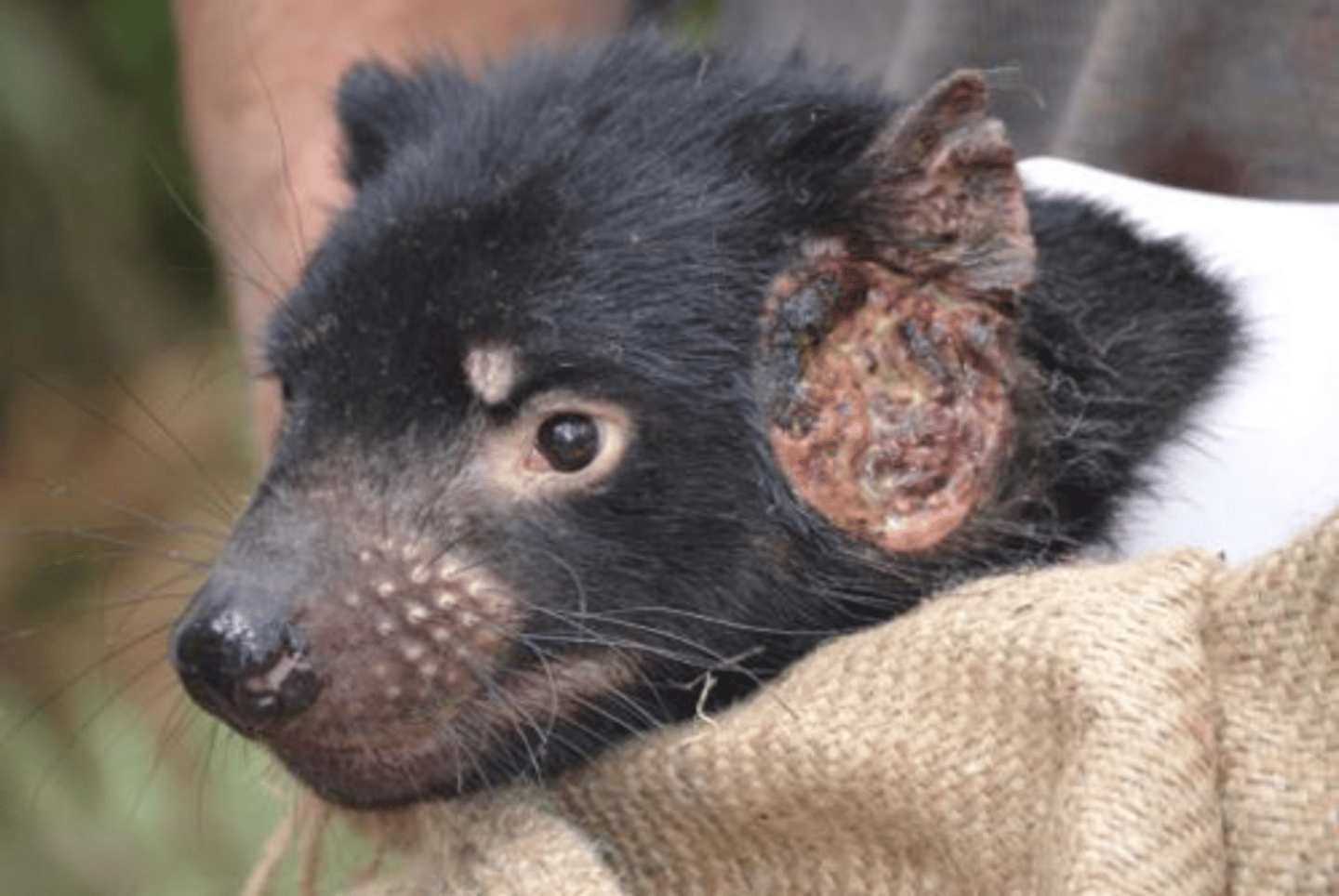
Why are Tasmanian Devils currently threatened by extinction?
They suffer from low genetic diversity and are experiencing a population decline due to a transmissible cancer.
bite each other and have transmittable cancer causing tumours= less repoduction
their diversity is lower than expected 11% probability of inheriting 2 copies of the same allele from same ancestor
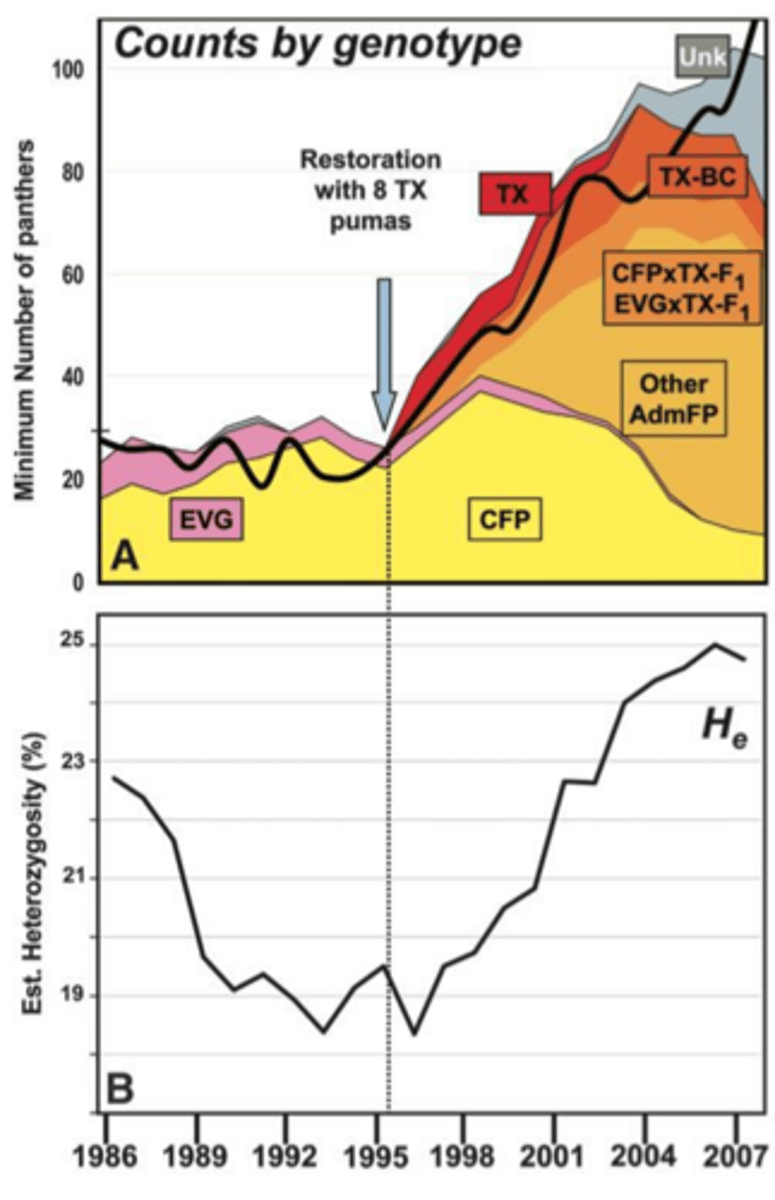
What was the outcome of the Florida panther genetic rescue project?
The introduction of Texas panthers increased population numbers, doubled genetic heterozygosity, and reduced phenotypic signs of inbreeding.
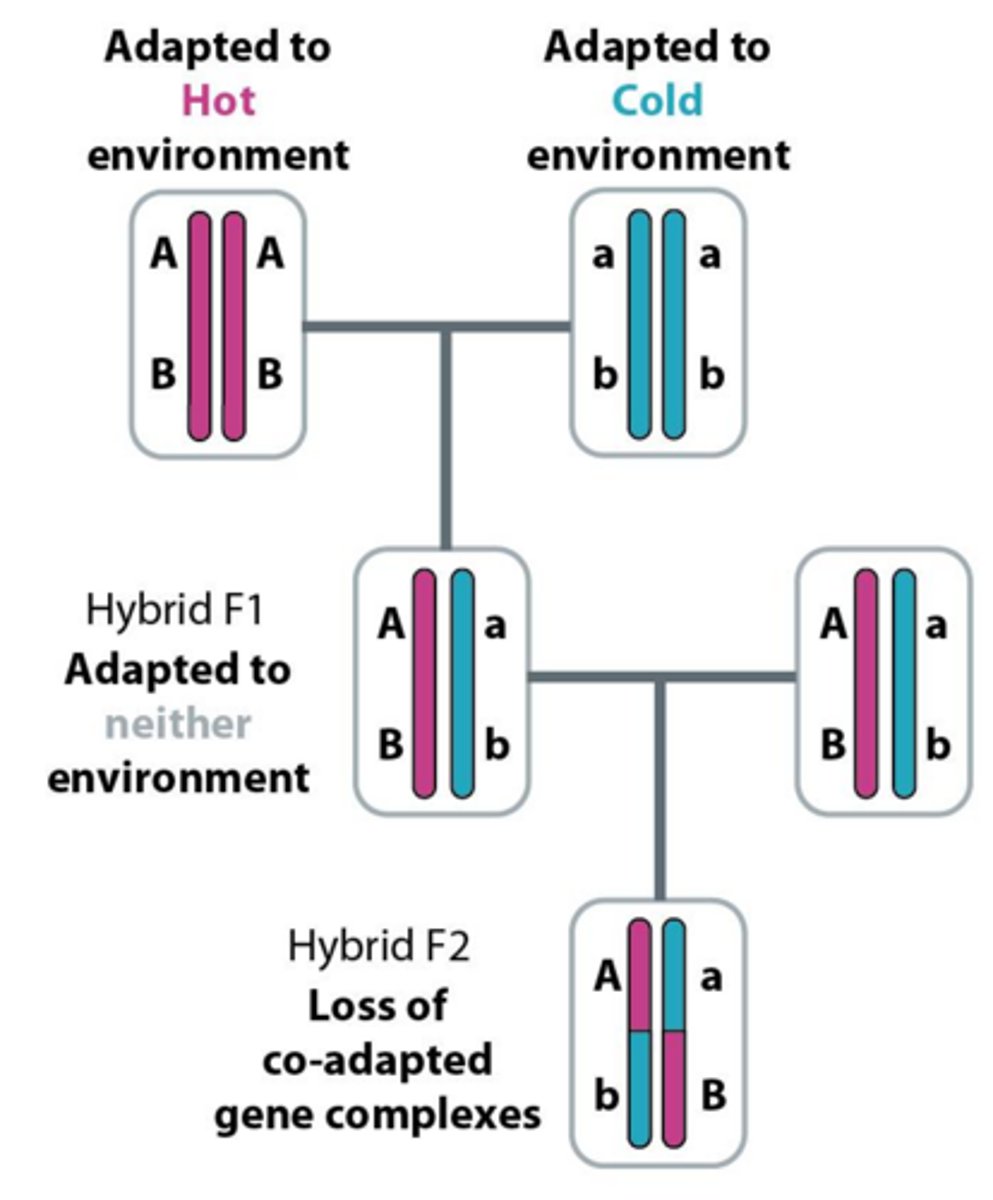
What is the risk of 'outbreeding depression'?
When hybrids between populations are less fit than the parents as they lose co-adapted matched alleles or are poorly adapted to the local environment- genomic can help
What is the primary advantage of non-invasive sampling in conservation?
It allows for the collection of genetic material (like hair or feces) without capturing or stressing the animals.
pros and cons of different dna markers to use
barcoding can identify species

what makes an ideal dna barcode
identical within a species diff between species
standardized -s ame barcode used for diff taxonomic groups
phylogenetuc info to assign unknown species to taxonomic group
robust
short

dna barcoding process
isolate dna from sample,
amplify target dna barcode region via pcr,
sequence pcr products,
seek amtching species in reference databases
mitochondrial COX1 gene barcoding for animals
differentiate between species not indivduals
encodes part of the atp syntheiss mutation rate 10x of nucelar dna
typically sequencing 650bp segment
perfoms well
How does DNA barcoding assist in conservation?
It allows for the identification of species using standardized short DNA sequences, which is useful for monitoring biodiversity and identifying illegal animal products.
What does the 'f' coefficient represent in population genetics?
The inbreeding coefficient- the probability of an individual inheriting two copies of the same allele from a common ancestor.
How can genomics help prevent outbreeding depression?
By identifying parts of the genome that contain allele frequency or FST outliers, researchers can avoid crossing populations that are highly divergent.
What are the limitations of animal-specific DNA profiling kits?
costly to design and validate, not available for most animal species.
What is the role of DNA in wildlife crime investigations?
identify species involved in illegal poaching and the trade of prohibited animal products.
What is the significance of the 2013 horsemeat scandal in the context of forensic genetics?
DNA testing to detect food contamination and verify the species composition of meat products.
How does habitat fragmentation contribute to the extinction vortex?
It leads to small, isolated populations that are more susceptible to random genetic drift and inbreeding.
What is the purpose of metabarcoding?
Simultaneous identification of multiple species within a single environmental sample using high-throughput sequencing.
What are the benefits of managing captive populations using genetic data?
maintain genetic diversity, prevent inbreeding, and ensure the population remains viable for potential future reintroduction to the wild.
What is the primary difference between autosomal STR profiling and mtDNA analysis?
Autosomal STR profiling is used for individual identification, whereas mtDNA is used for maternal lineage tracing and discriminating between individuals due to its higher mutation rate.
What are the primary advantages of using whole genome sequencing for biodiversity studies?
provides an unbiased picture of diversity, captures all genetic variation, and is applicable to any species.
What are the main limitations of whole genome sequencing?
expensive, requires high-quality DNA, and is best interpreted with a reference sequence.
What is the primary purpose of DNA barcoding?
To provide a standardized, simple method for species identification.
What are the criteria for an ideal DNA barcode?
It should be nearly identical within a species but different between species, standardized across groups, phylogenetically informative, robust, and short (<150 bp).
Which DNA region is the standard barcode for animals?
The mitochondrial cytochrome c oxidase 1 (CO1 or COX1) gene.
What are the standard barcode regions for plants and fungi?
Plants typically use chloroplast DNA (e.g., rbcL and matK), while fungi use the internal transcribed spacer (ITS) of nuclear ribosomal RNA genes.
Why is the CO1 gene effective for animal species discrimination?
It encodes part of the oxidative phosphorylation system and has a mutation rate approximately 10 times higher than nuclear DNA.
What is DNA metabarcoding?
A method that uses next-generation sequencing to analyze DNA from complex, multisource samples to identify multiple species simultaneously.
How has metabarcoding been applied to environmental samples like seawater?
By sequencing environmental DNA (eDNA) from water samples to monitor fish species presence, showing good correlation with traditional trawling data.
What is the significance of 'airborne' DNA sampling in ecological studies?
It allows for the detection of multiple species (mammals, birds) in an environment by filtering air samples, even hundreds of meters from the source.
What is the goal of the large-scale eukaryotic sequencing project mentioned?
To sequence approximately 1.5 million known eukaryotic species within 10 years.
What are the primary benefits of large-scale eukaryotic genome sequencing?
Revitalizing understanding of biology and evolution, enabling biodiversity conservation, and maximizing societal returns through ecosystem services.
How does Nanopore technology change field-based genetic analysis?
It provides portable, low-cost, and fast sequencing capabilities that can run on laptops or mobile devices, facilitating real-time field work.
What was the 'proof-of-principle' study conducted at Brussels Airport in 2024?
Using portable sequencing to identify meat and fish species in passenger baggage to detect illegal bushmeat trade.
What markers are typically used in animal forensic genetics?
Custom STR (short tandem repeat) sets for individual identification and mitochondrial DNA control region sequencing.
How is conservation genetics used to counter extinction?
It measures genetic diversity to inform species dynamics, manage captive populations, and guide reintroduction programs.
Why is DNA barcoding considered suitable for citizen science?
straightforward, involving DNA isolation, PCR amplification, and sequence matching against reference databases.
What is the primary limitation of DNA barcoding compared to whole genome sequencing?
Barcoding is designed for species identification and is not suitable for assessing genetic diversity within a species.
What is the approximate length of the standard CO1 segment sequenced for animals?
Approximately 650 base pairs.
What role do reference genomes play in genomic research?
They serve as a scaffold for interpreting and mapping sequencing data from other individuals or related species.
What is the difference between a transcriptome and a genome?
A genome is the complete set of DNA, while a transcriptome consists of the sequences of RNA molecules expressed by an organism.
How does the cost of the large-scale eukaryotic sequencing project compare to the original Human Genome Project?
The $4.7 billion estimated cost is less than the $4.8 billion cost of the Human Genome Project (adjusted to 2019 standards).
Why is the short length of a barcode important for environmental samples?
Short sequences (ideally <150 bp) are more likely to be successfully amplified from degraded DNA often found in environmental samples.
What does 'metabarcoding' replace or complement in ecological studies?
It complements or replaces traditional field observation of feeding behavior and species presence.
summary of conservation genetics
