Small animal acute gastroenteric dx
 Call Kai
 Learn
Learn Practice Test
 Spaced Repetition
 Match
Match Flashcards
 Knowt Play
1/42

There's no tags or description
Looks like no tags are added yet.
Name | Mastery | Learn | Test | Matching | Spaced | Call with Kai |
|---|
No analytics yet
Send a link to your students to track their progress
43 Terms
How does acute V and D cf to chronic?
Most acute is self limiting
Most chronic requires specific diagnosis before treatment
How can you categorise acute vomiting and diarrhoea? GIve examples of each category
Non-fatal / self-limiting
Ex parasitism or dietary indiscretion
2° to extra-intestinal / systemic disease
Ex. pancreas, kidney, liver, endocrine (addison's)
Severe potentially life-threatening
Enteric infection
Ex- Parvovirus, bacterial
AHDS (acute haemorrhagic d+ syndrome) /HGE (haemorrhagic gastroenteritis)
Intestinal obstruction
Surgical disease
Ex- intussusception, volvulus, foreign body etc
What is the most important part of supportive care/ treatment for diarrhoea?
Prevention of dehydration
Where is most water absorbed in the gut of a dog?
Jejunum>Ileum> Colon
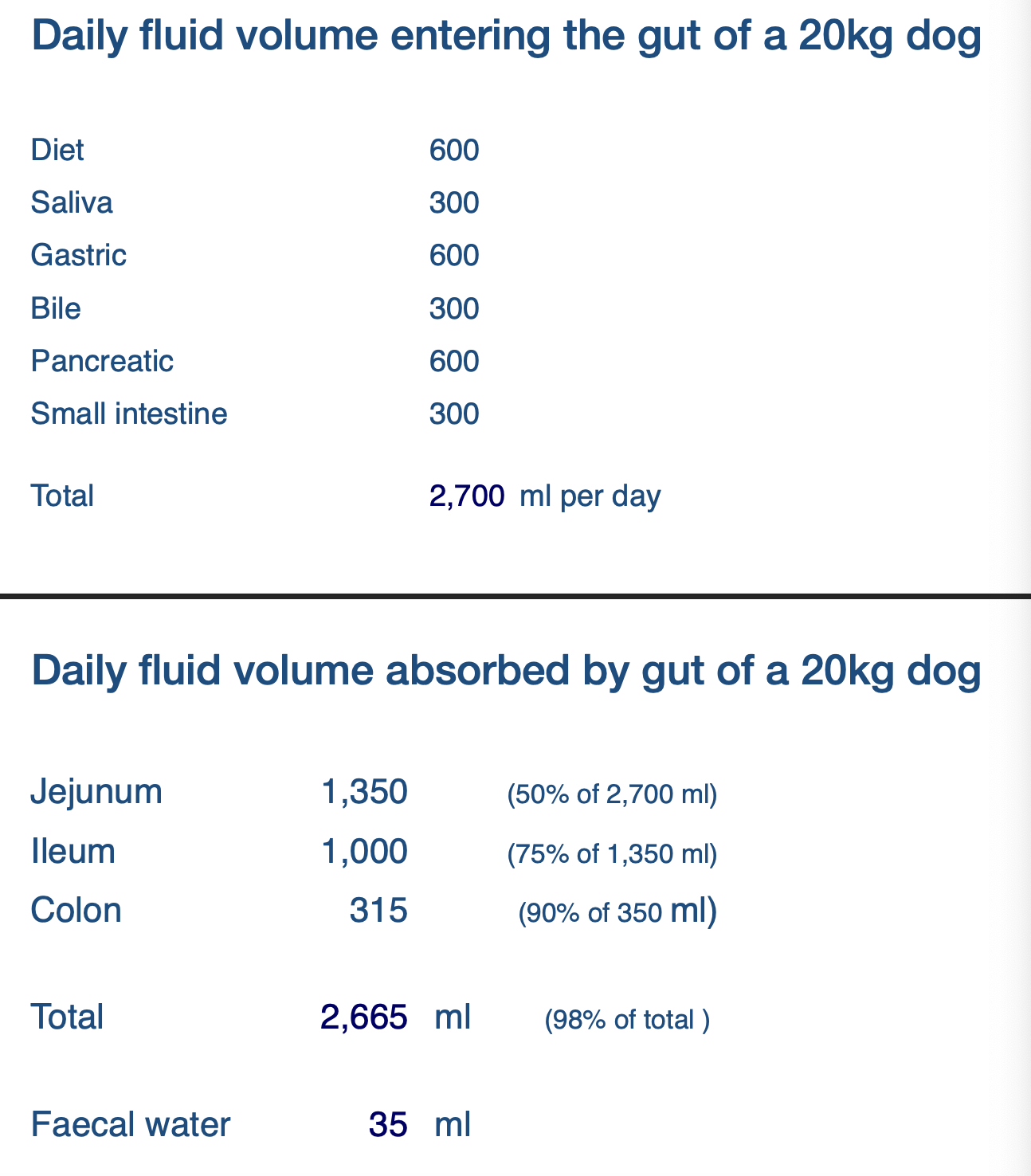
How do vomiting and diarrhoea occur when they occur sequentially?
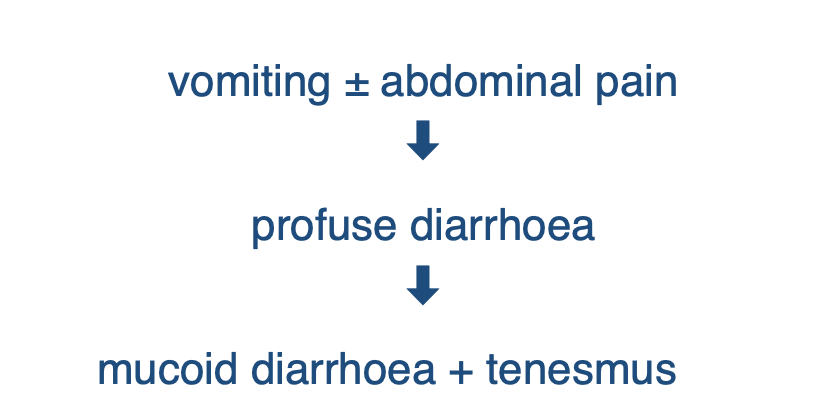
Can also freq occur together
(tenesmus = straining)
Where can we localise diarrrhoea to?
Gastric (gastritis)
Small intestine (enteritis)
Large intesine (colitis)
What features help to localise diarrhoea to the small vs large intestine?
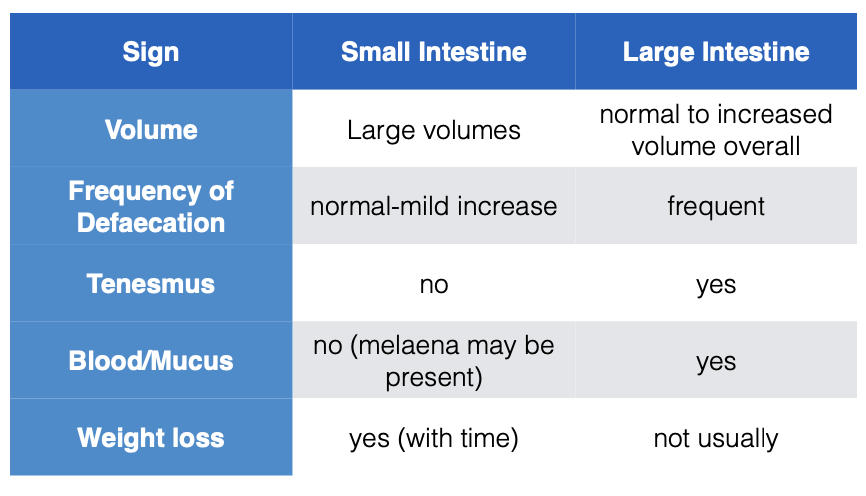
How does vomiting and diarrhoea present in acute gastritis?
Acute onset of frequent vomiting
Often associated with acute diarrhoea
Very common
Often self-limiting
What are the causes of acute gastritis?
Many causes; not all ‘inflammatory’
Dietary indiscretions, garbage intoxication
Foreign material
Hairballs (bezoars) in cats
Certain drugs
Acute systemic disease
How does diarrhoea present in acute enteritis?
Acute onset of profuse diarrhoea
Normal to increased frequency
No tenesmus
+/- digested blood (melaena)
Large volume
Often associated with acute vomiting
Usually self-limiting
What are the causes of acute enteritis?
Aetiology often obscure
Usually self-limiting
Dietary indiscretions, garbage intoxication
Enteric infection
acute V+
How does acute colitis present?
Acute, frequent, small volume D+
Excessive straining = tenesmus
Mucoid faeces
± fresh blood = haematochezia
Incidence
Fairly common in dog; rare in cat
What are the causes of acute colitis?
Idiopathic
Garbage ingestion
Whipworms
Protozoa (Giardia, Cryptosporidia etc)
How do you make a diagnosis with a diarrhoea and vomiting case?
Hx
Physical examination
Minimum data base
Imaging
Response to symptomatic treatment
Reassess if signs persist for > 48 hours
What history should you take for a V and D case?
Age and vaccination status
Recent dietary intake
Exposure to toxins, f.b. or infectious disease
Nature of signs
Onset and severity
Content of vomit
Stool characteristics
Presence of blood
What should you look for in a physical exam of a dog with V and D?
General body condition
Hydration
PCV / TP
MM
Skin tenting
Oral and rectal examination
Abdominal palpation
When should you perform diagnostic tests in a V and D case
Super bright comfortable abdomen- probably see if self resolves
If in pain, more severe or reoccurence then need to do further tests
What are the minimum database tests to carry out for a V and D case?
Haematology
Serum biochemistry
Urinalysis
Faecal examinations for parasites
Other faecal examinations ?
What faecal microbiology tests can be done for a V and D case?
Bacterial culture indicated if
Virology
ELISA test for viral antigen
Electron microscopy
• Parasitology
Direct smears and flotation (e.g. Giardia)
Wet-prep for Tritrichomonas (cats)
In-pouch test / PCR
• Serology
Giardia SNAP test
Parvovirus SNAP test
What imaging can be done for a V and D case?
Rx
To rule out obstruction/ other surgical
Ultrasound
Intussusception
Foreign body
Contrast studies rarely needed
How can you use response to a treatment as a diagnostic test for V and D?
Discontinuation of drugs or toxins
Dietary restriction
Anti-emetics
Anti-diarrhoeals
Parasiticides
What emergency diagnostics do you use in a peracute crisis of V and D?
PCV/total protein (refractometer)
Examine blood smear
Blood glucose (glucometer)
Blood urea (dipstick)
Urinalysis
(Electrolytes)
(Blood gas analysis)
(ECG)
What are the general ways in which you can treat V and D?
Usually self limiting
Treat specific cause if identified
Maintain hydration
Contraindicated=Corticosteroids/NSAIDS
Reassess if persists for >48 hours
How can you maintain hydration in a V and D case?
Oral rehydration solution (if not vomiting or severely dehydrated)
Parenteral fluids
When would you restrict GI intake in a V and D case?
Not appropriate in fragile patients
Fasting for a min of 12 hours
Followed by frequent feeds
Small amounts of bland, low fat food
When should you feed through diarrhoea?
In younger dogs
Reduces potential of sepsis
Speeds recovery
What are the centrally acting anti emetics?
Maropitant - licensed
Metoclopramide - licensed
Chlorpromazine
What are the anticholinergic antiemetics?
Atropine
Methylscopolamine
What do you need to rule out before giving an anti emetic?
Obstruction
What is the MOA of maropitant?
NK1 receptor antagonist
List some examples of gastric mucosal protectants
Cimetidine (Zitac) now licensed for dogs
H2 receptor antagonist
Proton pump inhibitor (omeprazole)- not licensed
Sulcralfate
Antacids
AlOH or MgOH
List some examples of anti diarrhoeals?
Absorbents/protectants
Protect mucosa, bind toxins, bind excess water
Motility modifiers
Slow rate of transit, antisecretory
List some examples of absorbents/ protectants?
Kaolin-pectin
Activated charcoal
Al(OH)3, Mg trisilicate
Bismuth subsalicylate
Montmorillonite (Diarsanyl)
List some antidiarrhoeals that are motility modifiers?
Diphenoxylate
Loperamide
Kaolin / morphine
What are the pros and cons of using antibiotics in a V and D case?
-ve
Cause dysbiosis (imbalance of gut bacteria)
Cause diarrhoea
+ve
Could already have dysbiosis
Risk of sepsis if mucosal barrier is compromised
When are antibiotics indicated in a V and D case?
Haemorrhagic diarrhoea if concerned about sepsis
Diarrhoea + pyrexia
Known infection -
Salmonella - only if systemically ill
Campylobacter, pathogenic E. coli, clostridia etc - Not needed
Neutropenic animals
What antibiotic should you not use in a V and D case?
Neomycin
How do you remove a fb?
Induction of vomiting (only if smotth and non corrosive poison)
Natural passage
Surgery
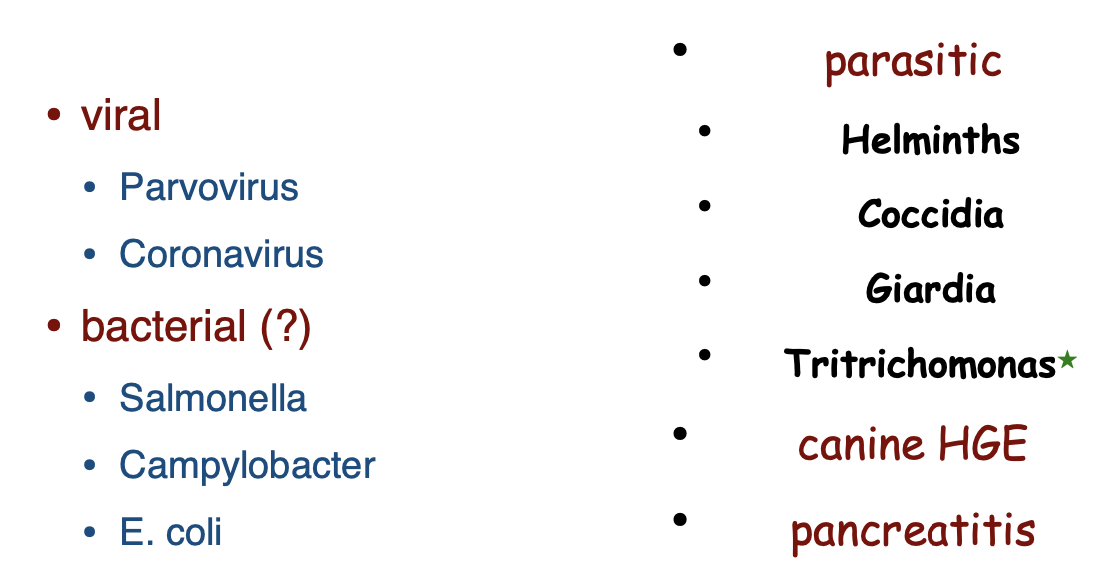
List the specific causes of acute gastroenteritis
What animals are more predisposed to AHDS/HGE?
All ages
Toy and miniature breeds
What clinical signs are associated with AHDS?
Sudden onset of vomition ± blood
May precede diarrhoea by a few hours
Severe bloody diarrhoea
Marked haemoconcentration
Elevation of 60-80
Skin turgor is usually normal
Depression
Shock
How do you treat AHDS?
FLUID THERAPY
Withhold all food and water
Parenteral broad spectrum antibiotics
Protectants
Anti emetics or anti diarrhoeal?
What is the prognosis for AHDS?
If untreated
Death rapid from shock and circulatory failure
If treated
Mortality low
Some dogs have repeat episodes