BI276 - microbes
 Call Kai
 Learn
Learn Practice Test
 Spaced Repetition
 Match
Match Flashcards
 Knowt Play
1/660

Earn XP
Description and Tags
office hours: tues/thurs - 7 to 8pm
Name | Mastery | Learn | Test | Matching | Spaced | Call with Kai |
|---|
No analytics yet
Send a link to your students to track their progress
661 Terms
microbiology
the study of microorganisms
functions of the cell
all of the above
what do cells have in common?
all of the above
cytoplasmic membrane
seperates the inside of the cell from the outside
cytoplasm
an aqueous mixture of macromolecules, small organic molecules, various inorganic ions, and ribosomes - “the inside of the cell”
common macromolecules
proteins, lipids, nucleic acids, and polysaccharides
cells and microbes can be viewed as…
genetic coding devices (RNA/DNA) and biochemical catalysts
ribosomes
the structures responsible for protein synthesis
cell wall
a relatively permeable structure outside the cytoplasmic membrane that lends structural strength to a cell
Cell walls are typically found in plant and animal cells. True or False?
False, they are typically found in plant calls but not animal cells
microorganism
an organism usually requiring a microscope to be seen consisting of a single cell or cell cluster, including the virus
“micro range”
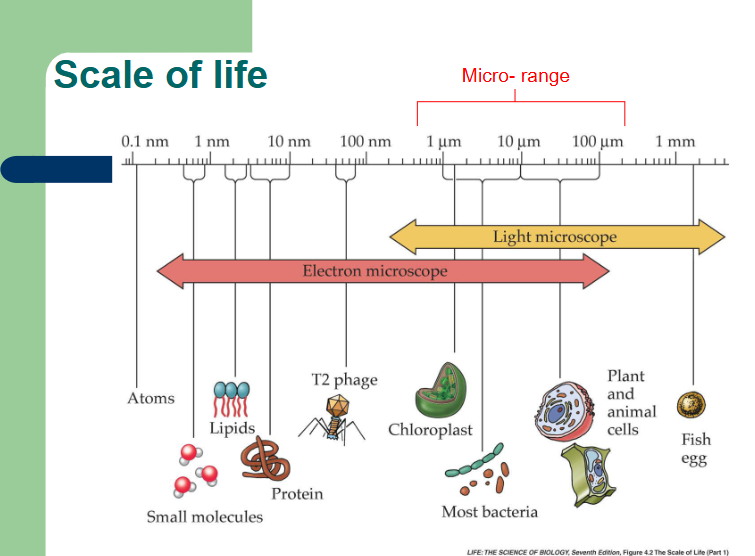
types of microorganisms
viruses, bacteria/archae, and protozoa/algae/fungi
common microorganisms
bacteria, fungi, protozoa, microscopic algae and viruses
where do we encounter microbes?
food, skin, body, soil, freshwater
Microbes are diverse in form and function. True or False?
True
microorganisms inhabit every environment that supports life. True or False?
True
phtotrophic bacteria
bacteria can conduct photosynthesis
the importance of microorganisms
oldest form of life and largest mass of living material on earth
microorganisms carry out major processes for _______________
biogeochemical cycles ex. nitrogen, carbon, potassium cycles
examples of other life forms require microbes to survive
humans harbor E. coli
Microorganisms are described as UBIQUITOUS. what does this mean?
they can live in places unsuitable for other organisms such as soil, water, air, food, and common surfaces
what tools help study microorganisms?
microscopy, culture, medium, growth, and colony
culture
cells grown in/on nutrient medium
medium
liquid/solid mixture containing all required nutrients
growth in microorganisms
increase in cell number resulting from cell division
colony
visible cluster; contains millions or billions of cells
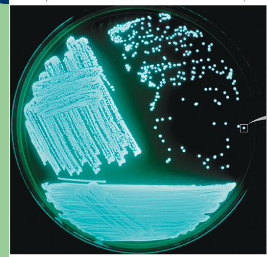
how was this obtained?
streak plating
pure culture
a colony with only ONE species
All microbial life descended from one common ancestor. T or F?
True, LUCA
domain(s) of life
bacteria, archaea, and eukarya
the two fundamental cell types
prokaryotic and eukaryotic
organelles
assortment of membrane-enclosed cytoplasmic structures (commonly found in eukaryotic cells)
what does LUCA stand for?
last universal common ancestor
DNA genome
full set of genes in a cell - “the living blueprint”
gene
a segment of DNA that encodes a protein or RNA molecule
what are the lineages which rose from LUCA
all of the above
chromosomes
strucutures in which prokaryotic cells and eukaryotic cells are organized into
how is nucleoid formed?
the chromosome aggregates within the prokaryotic cell
where is the nucleoid commonly found?
in prokaryotic cells
plasmids
small circles of DNA distinct from that of chromosomes
enzymes
proteins that have catalytic activity, carry out reactions that supply energy and perform biosynthesis within the cell
microbial taxonomy
kingdom, phylum, class, order, family, genus*, and species*
when are enzymes synthesized?
during gene expression
transcription
the process by which the information encoded in DNA sequences is copied into an RNA molecule
translation
the process whereby the information in an RNA molecule is used by a ribosome to synthesize a protein
DNA replication
microbial growth requires replication of the genome through this process, followed by cell division
the processes in which ALL CELLS carry out
transcription, translation, and DNA replication
which taxonomy is important in classifying microbes?
genus and species
what is the criteria for writing scientific names
italicized, genus is capitalized, species is lower case
ex. staphylococcus aureus - S. aureus
characteristics of bacteria
prokaryotes, usually undifferentiated single cells, long, 80+ phylogenetic lineages
Prokaryotes are most likely to be
bacteria
the only 2 lineages defined as prokaryoes
bacteria and archaea
smallest known microbe
circovirus - 20nanometers
largest shown bacterium
epulopiscium - 700 nanometers
characteristics of archaea
prokaryotes, historically associated with EXTREME ENVIRONMENTS
All archaea are extremophiles. True or False?
False, archaea can also be mesophiles and psychrophiles
how many phyla of archaea are there?
12+
what are eukarya often seen as?
plants and animal fungi
The first eukarya was multicellular/
False
what do viruses consist of?
small genomes of double stranded or single stranded DNA or RNA
characteristics of viruses
obligate parasites that only replicate within host cell and do not carry metabolism
viruses are cells
False
how do viruses make genomes?
hijacking host cell and making proteins
how are viruses classified?
structure, genome composition, and host specificity
if there is a LACK of peptidoglycan in the cell wall. what is this cell most likely?
archaea
what are in bacteria cell wall?
peptidoglycan
how do bacteria reproduce?
via binary fission - NOT SEXUAL
what do bacteria use for energy?
they use organic chemicals, inorganic chemicals, or photosynthesis
examples of organic chemicals
carbon
peptidoglycan cell walls in archaea
not present
specific examples of archaea
methanogens (carry out metabolism), extreme halophiles, extreme thermophiles
extreme halophiles
live in high SALT environments
the 2 cell lineages which are eukaryotes
fungi and protozoa
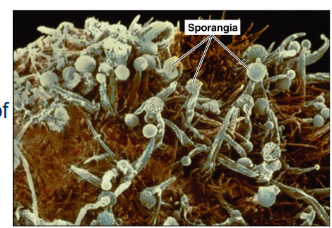
what are these?
fungi - hyphae present
cell walls in fungi
made of chitin
what do fungi use for energy?
organic chemicals
are fungi unicellular or multicellular?
both
molds and mushrooms are multicellular organisms consisting of what?
masses of mycelia which are composed of filaments called hyphae
are yeasts multicellular or unicellular?
unicellular
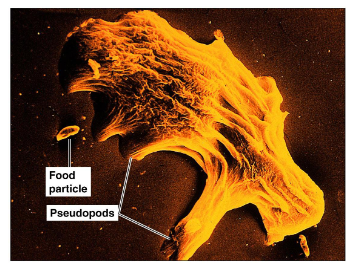
what is this?
protozoa
why are viruses classified as Acellular?
they lack cytoplasm, cell membrane, and organelles
characteristics of protozoa
eukaryotes, unicellular, and motile via psuedopods, cilia, or flagella
how do protozoa get energy?
absorb or ingest organic chemicals
what do viruses consist of?
DNA or RNA core surrounded by a protein coat. This is enclosed in a lipid envelope
under what condition does a virus replicate?
only when they are in a living host cell
are animal parasites eukaryotic or prokaryotic?
eukaryotic
are algae prokaryotic or eukaryotic?
eukaryotes
what do algae cell wall consist of?
cellulose
how do algae gain energy?
photosynthesis
what do algae produce?
molecular oxygen and organic compounds
history of life on earth. When did the first cells appear?
earth is 4.6 billion years old but the first cells appeared between 3.8 and 4.3 billion years ago
what wsa the first cell linage that came about?
bacteria/archaea - 4 billion years ago
when did each cell lineage appear?
bacteria/archaea → phototrophic bacteria → cyanobacteria → eukarya → animals → vascular plants → mammals → humans
the atomosphere was anoxic until 2.6 billion years ago. True or False?
True, the atmosphere had no oxygen until 2.6 billion years ago
only anaerobic metabolisms where around when the atmosphere was anoxic. True or false?
True
intercellular communication
they are “aware” of their neighbours and can respond accordingly
the resolution of the human eye
human eye has difficulty resolving objects less than 100um in diameter
what limits prokaryotic cell size?
prokaryotic cells rely on DIFFUSION for transport
when was the first anoxygenic phototroph introduced?
approximately 3.6 billion years ago