The Traumatic Surreal - 2.2
 Call Kai
 Learn
Learn Practice Test
 Spaced Repetition
 Match
Match Flashcards
 Knowt Play
1/43

There's no tags or description
Looks like no tags are added yet.
Name | Mastery | Learn | Test | Matching | Spaced | Call with Kai |
|---|
No analytics yet
Send a link to your students to track their progress
44 Terms
What is “traumatic surrealism”?
A form of surrealism shaped by war, violence, and psychological trauma rather than playful dream imagery.
How did World War II affect Surrealism?
It responded with themes of destruction, memory, horror, and historical trauma into surrealist practices.
Why is trauma difficult to represent?
It is often unconscious, fragmented, and resists direct narration or clear representation.
What does Caruth mean by trauma “returning”?
Traumatic events reappear through flashbacks, nightmares, and repetition because they were not fully processed.
What is the difference between physical and psychological trauma?
Physical trauma affects the body, while psychological trauma affects memory, identity, and perception.
What is postmemory (Marianne Hirsch)?
The relationship of later generations to traumatic events they did not experience but inherit through stories and images.
How does postmemory work?
Trauma is transmitted so deeply that it feels like personal memory.
What is the Degenerate art exhibition?
Housed works (many of them surrealist) that were confiscated by the Nazi regime in order to control a narrative. It was a counter to the Great German Art Exhibition
What is the “banality of evil” (Hannah Arendt)?
The idea that ordinary people can commit horrific acts through obedience and routine rather than fanaticism.
Why was the Eichmann trial important?
It revealed how bureaucratic systems enabled mass violence during the Holocaust. Talks about ‘inner emigrants’ who had to act even more like Nazis than ordinary ones in order to keep this a secret.
What does Arendt mean by “organised guilt”?
A situation where responsibility is widespread and difficult to assign individually.
Unica Zürn context:
Her mother married higher ranking Nazi official, her work examines horror at her close proximity to Nazi events. A response to prevailing ideology of the time. Repression and trauma.
Why are ruins important in postwar culture?
They represent collapse, loss, and the visible aftermath of destruction. The city was completely destroyed.
How does trauma relate to time?
It disrupts normal experience of time, causing past events to intrude on the present.
Why is repetition important in traumatic art?
It reflects the way trauma returns again and again rather than being resolved.
How did surrealism change after WWII?
It became darker, more political, and focused on memory, violence, and history.
What role does the unconscious play in traumatic surrealism?
It becomes a site where repressed traumatic memories emerge.
Why is the uncanny important in traumatic surrealism?
It reflects the unsettling return of something familiar but repressed.
How does traumatic surrealism differ from early surrealism?
It focuses less on fantasy and more on historical violence and psychological distress.
What is memory in traumatic art?
A fragmented and unstable process shaped by loss and repression.
Why is photography important in traumatic surrealism?
It documents real events while also producing shocking and haunting images.
How does trauma challenge representation?
It resists clear depiction and often appears indirectly or symbolically.
What is the relationship between trauma and the body?
Trauma can be expressed physically as well as psychologically.
Why is silence important in trauma?
Some experiences cannot be fully expressed in language.
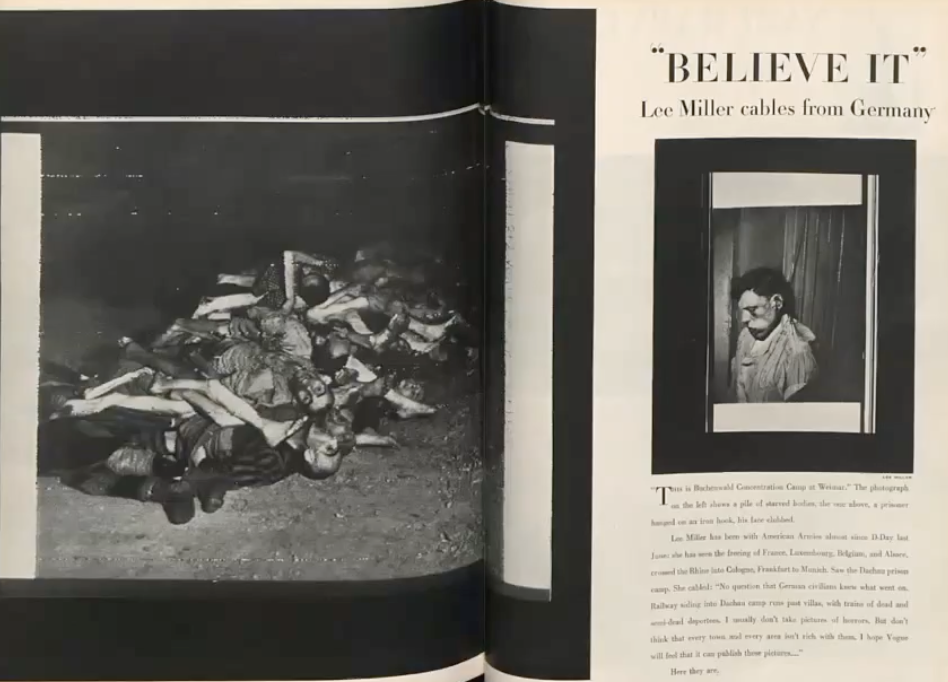
Lee Miller — Buchenwald (A pile of starved bodies)
Photograph documenting concentration camp victims; confronts viewers with the reality of Holocaust violence and atrocity.
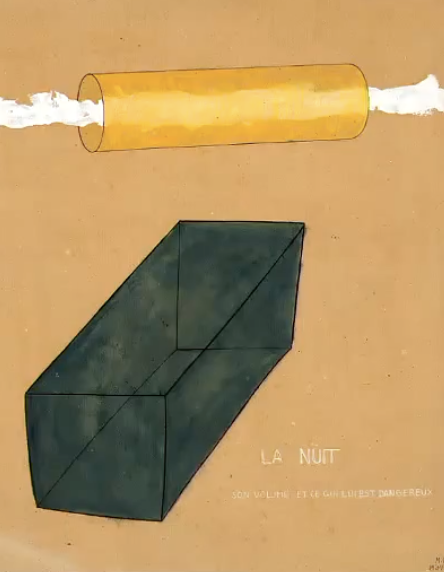
Meret Oppenheim — The Night, Its Volume and What Endangers It
Evoking darkness and psychological unease; anticipates later traumatic themes.
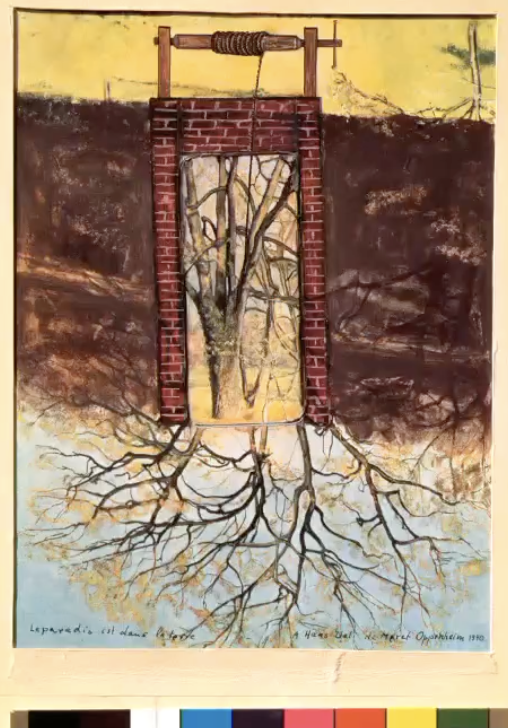
Meret Oppenheim — Das Paradies ist unter der Erde (Paradise is Under the Earth)
Work reflecting buried, hidden states; suggests connections between death, memory, and the unconscious.
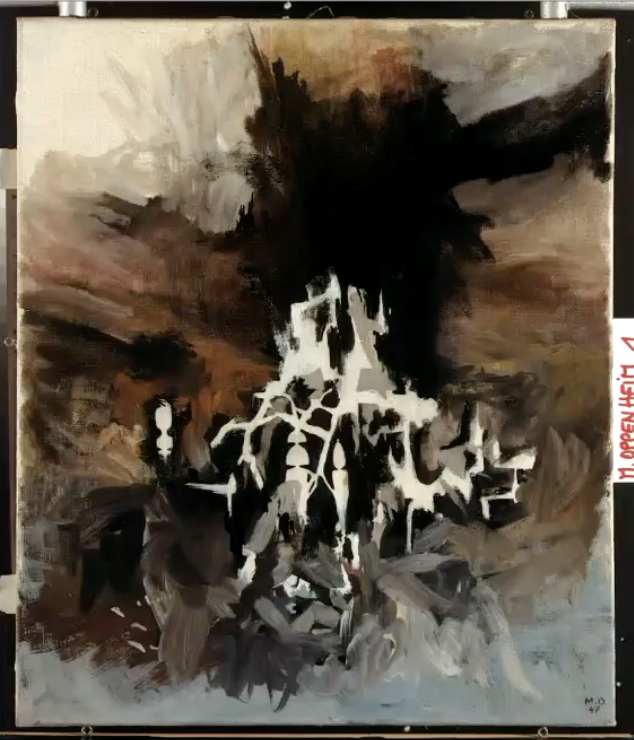
Meret Oppenheim — Wir können es nicht sehen (We cannot see it)
Semi-realised figures, seemingly a pile of bodies. Dark brown to black, which bursts into more colours as if an explosion. Figures at the base of a large distorted cross. Some resemble hats, some tree branches. Created after WWII; evokes invisibility, trauma, and what is the it that cannot be perceived or represented. It may be the limits of representation, how do you represent something overly traumatic? Some argue as soon as you represent, you minimise.
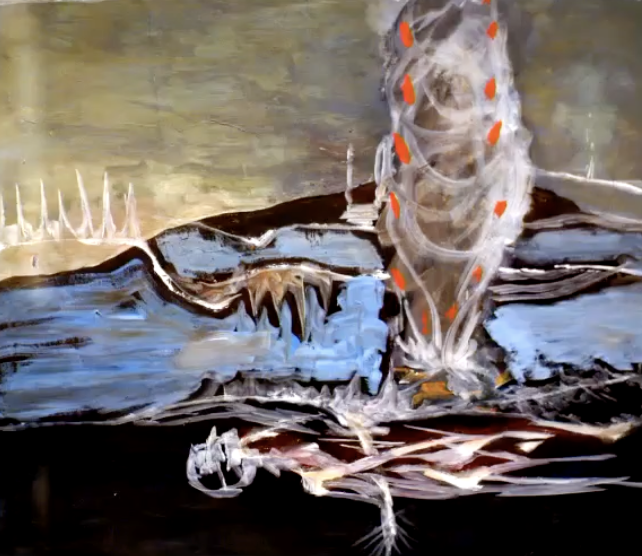
Meret Oppenheim — In der Nacht sterben (Dying at Night)
Work exploring burials, darkness, and vulnerability in the aftermath of war. Horizontal corpse sprouts a tree-like object.
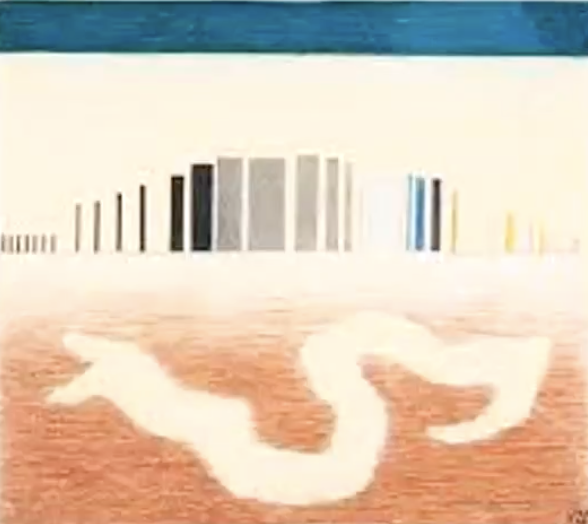
Meret Oppenheim — Brasilia und die grosse Erdschlange
Giant earth snake. Surreal imagery combining landscape and myth; reflects unease and transformation.
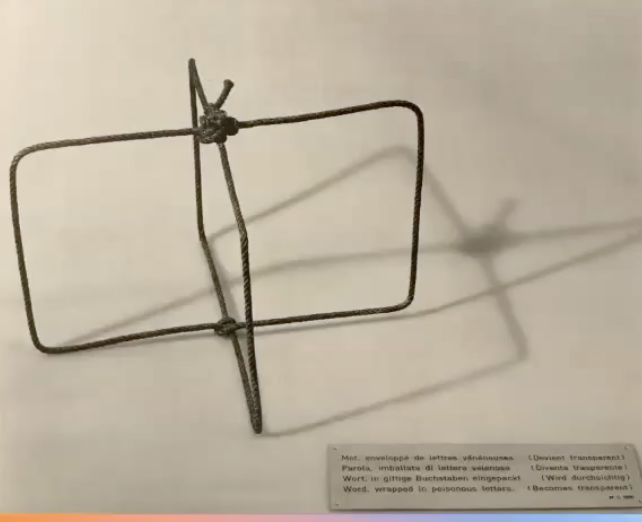
Meret Oppenheim — Wort, in giftige Buchstaben eingepackt (Word Wrapped in Poisonous Letters)
String construction that evokes shapes in the shadow, a present and a swastika. the twist at the top evokes barbed wire of auschwitz Suggests language itself can be dangerous or toxic after trauma. Visitors have to move around it and see different perspectives.
Meret Oppenheim — Verborgenes im Nebel (Hidden in the Mist)
Fragments of color floating. Work evoking obscurity, concealment, and the difficulty of perception.
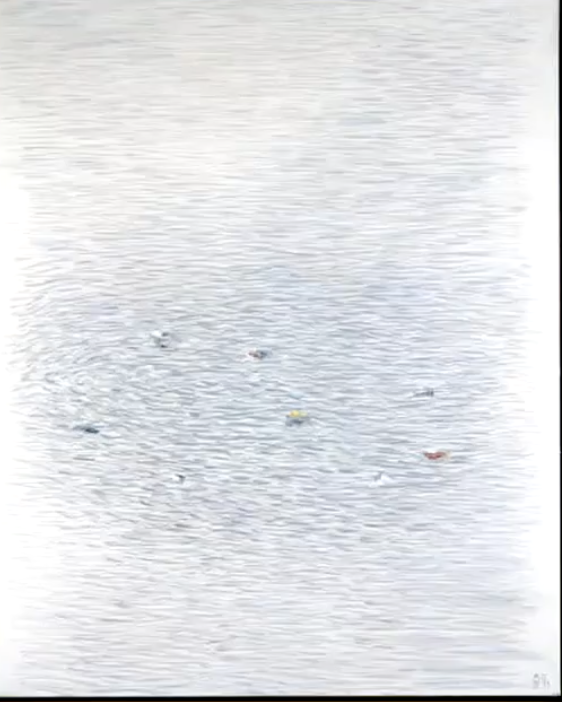
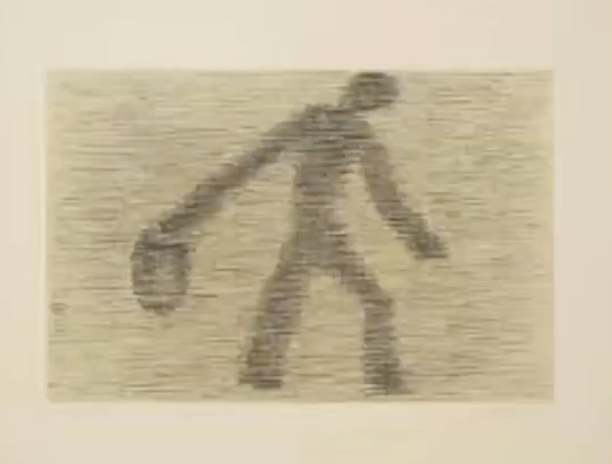
Meret Oppenheim — Mann im Nebel (Man in Fog)
Figure struggling against the gale from left to right; reflects disorientation and loss of clarity. The trauma is always somehow obscured.
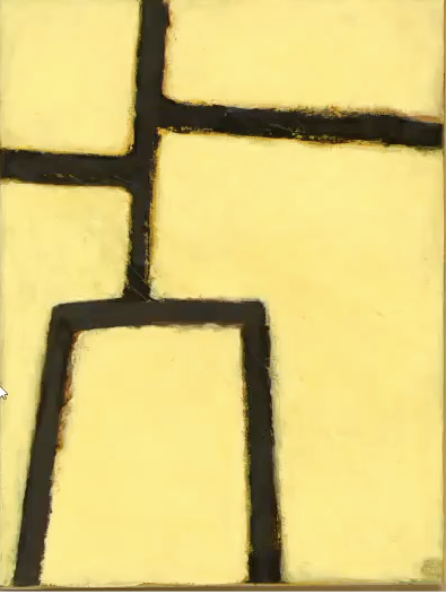
Meret Oppenheim — Schwarze Strich-Figur vor Gelb (Black Stick Figure on Yellow)
1960–81. References Holocaust imagery (yellow star); also resembles swastika. Connects identity, persecution, and memory of historic events.
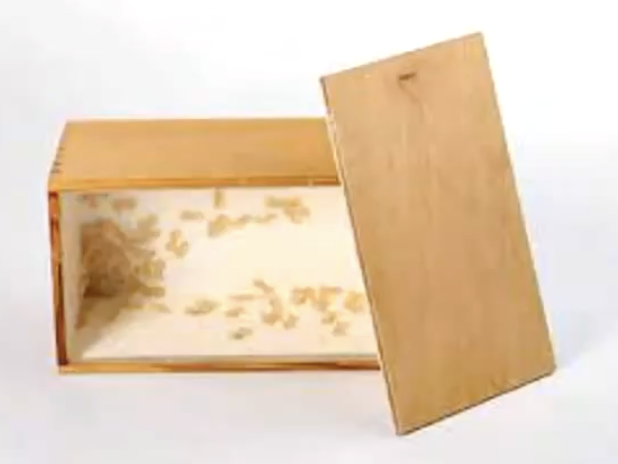
Meret Oppenheim — Kasten mit Tierchen (Cabinet with Small Animals)
1936/1963. Box assemblage suggesting containment, unease, and hidden life. Comes back to an old artwork, the ‘returning’ to trauma.
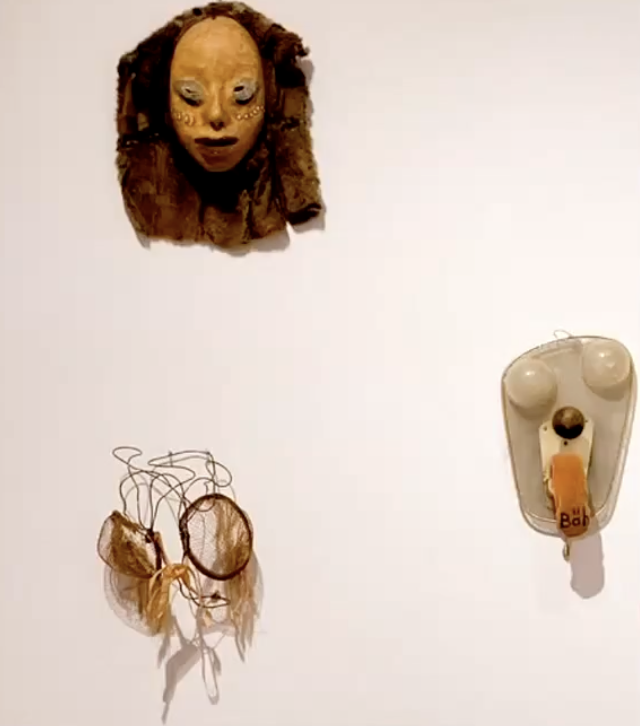
Meret Oppenheim — Masks (Scar-jewelry Mask, Mask with Baaa Tongue, Wire-eyes)
N.d. Mask works exploring identity, concealment, and transformation.
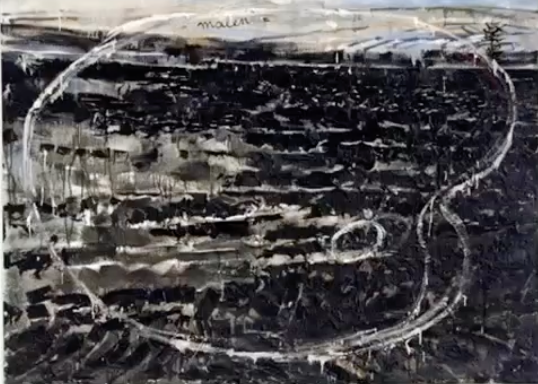
Anselm Kiefer — Painting = Burning
Painting linking creation with destruction; reflects Germany’s confrontation with its past. The remains of the after-war
Unica Zürn — Morte Kennedy
Drawing responding to assassination and death; reflects anxiety and fragmentation.
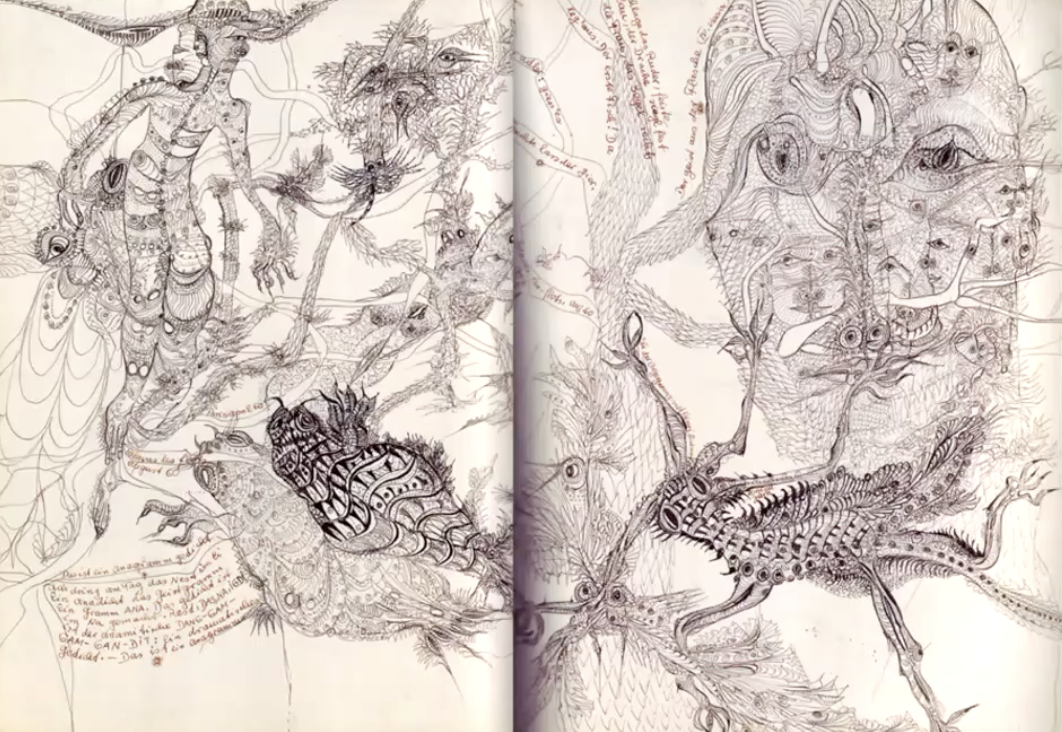
Unica Zürn — Orakel und Spektacle (illustrated manuscript)
Automatic drawings combining text and image; expresses psychological instability and inner visions.
Unica Zürn — Das Haus der Krankheiten (The House of Illnesses)
Work exploring mental illness, confinement, and inner trauma.
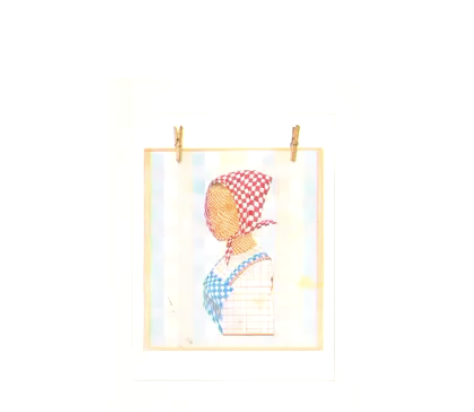
Birgit Jürgenssen — Hausfrau
Drawing critiquing domestic roles and gender oppression; connects everyday life to psychological constraint.
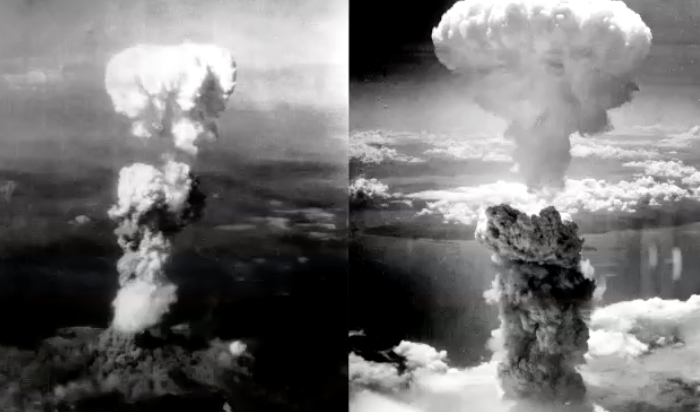
Atomic Bombing Photographs — Hiroshima and Nagasaki
Images of nuclear destruction; represent technological violence and mass trauma. Killed about a quarter of a million people. Oppenheimer’s work resembles the mushroom cloud.
Berlin Ruins Photographs
Images of destroyed cityscapes; symbolise collapse, memory, and postwar devastation.