19. Dairy Nutrition 3
 Call Kai
 Learn
Learn Practice Test
 Spaced Repetition
 Match
Match Flashcards
 Knowt Play
1/50

There's no tags or description
Looks like no tags are added yet.
Name | Mastery | Learn | Test | Matching | Spaced | Call with Kai |
|---|
No analytics yet
Send a link to your students to track their progress
51 Terms
1. protein utilization efficiency
2. mineral balance and interactions
3. adequate water intake
4. proper dry cow management
what are the big picture nutritional properties of dairy cows
lysin and methionine
what are the two limiting AA in most feeds
ideal AA profile
what do microbial protein help to acheive
RUP (bypass protein)
what helps to meet AA needs...primarily add soybean meal or fish meal to help
corn gluten meal
based on this chart, which form of concentrate will help meet general methionine requirements
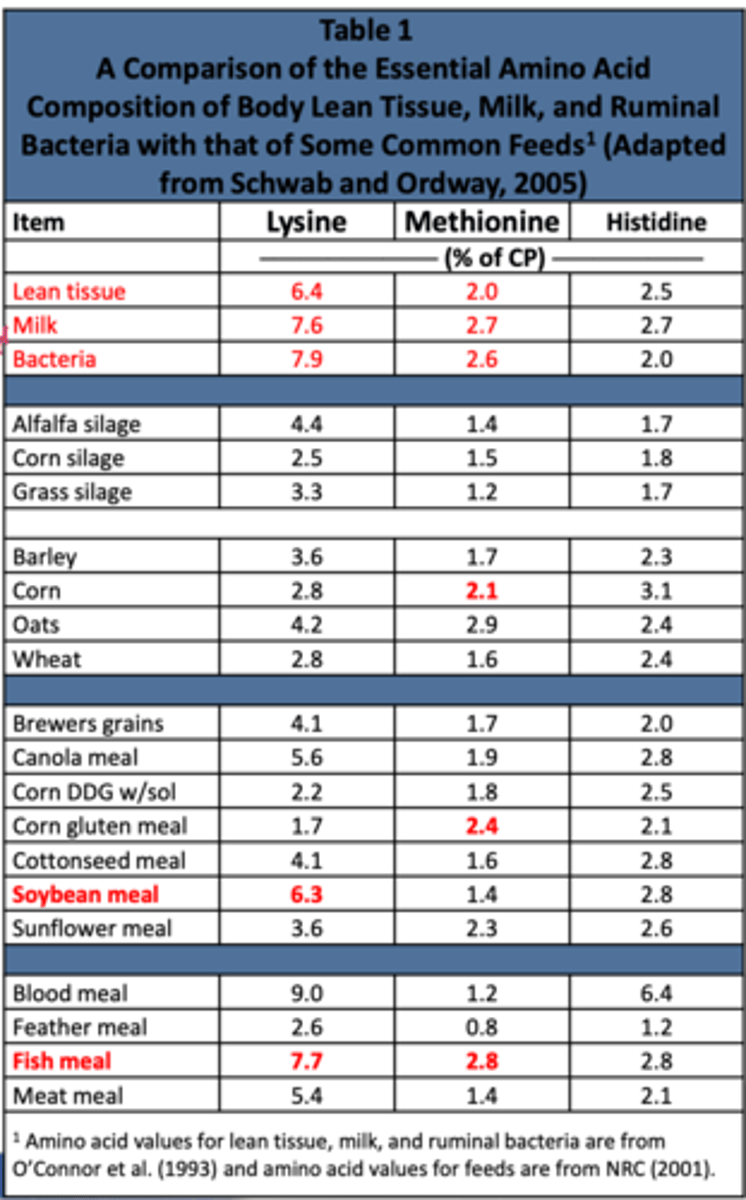
soybean meal
based on this chart which concentrate will best help meet lysine requirements for tissues
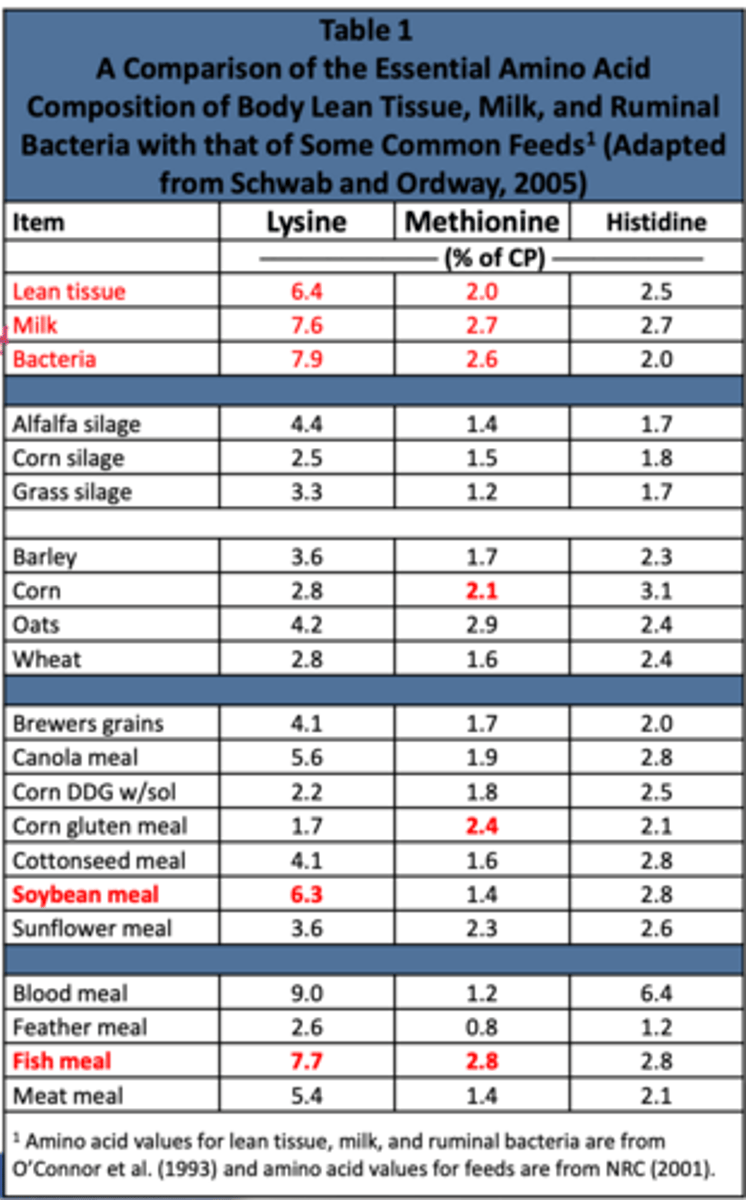
fish meal
based on this chart, which concentrate will most closely meet the lysine requirements of bacteria and mil and also meet general methionine requirements
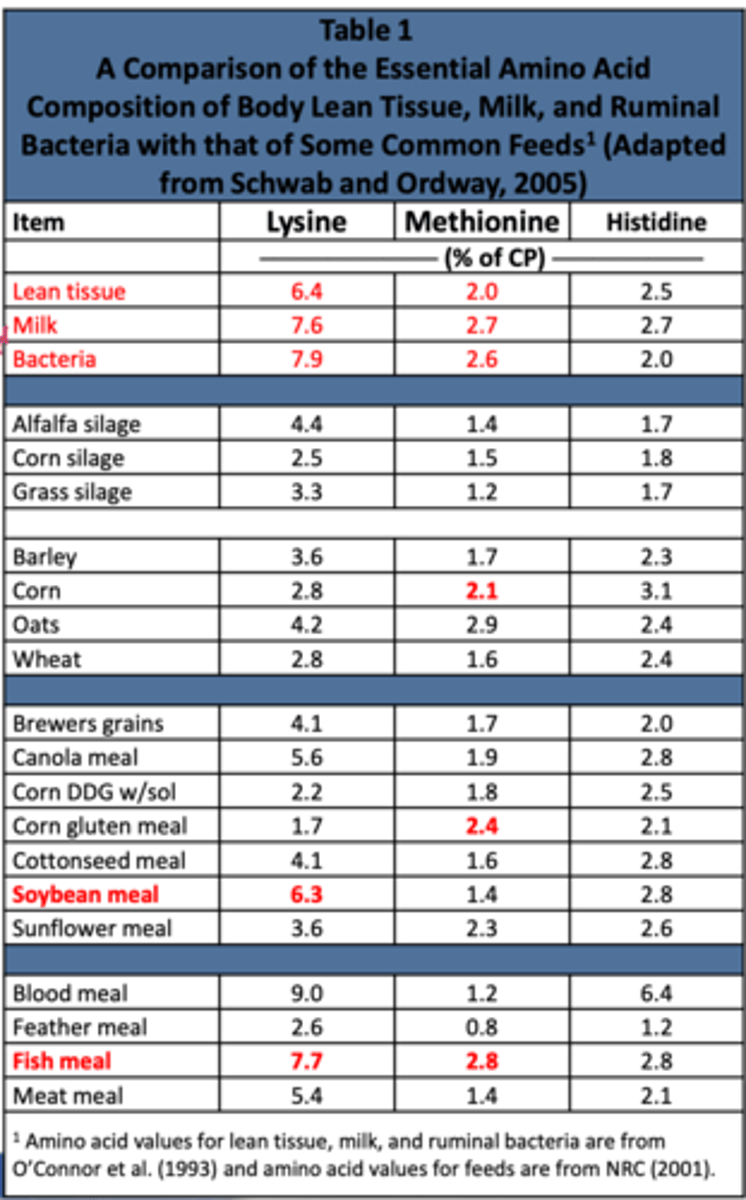
soybean meal, distillers grains, fish meal
what are the primary protein sources involved in dairy cow nutrition
fish meal and blood meal
which concentrate inclusions are limited due to issues with palatability
fiber digestion
high fat sources may impair what
16-18% CP
what is the CP requirement in a typical diet (remember it is higher in early lactation)
microbes require energy + nitrogen simultaneously but an imbalance can cause ammonia accumulation in the blood (from the nitrogen) and lead to urea production
why is it essential to match energy and protein supplies
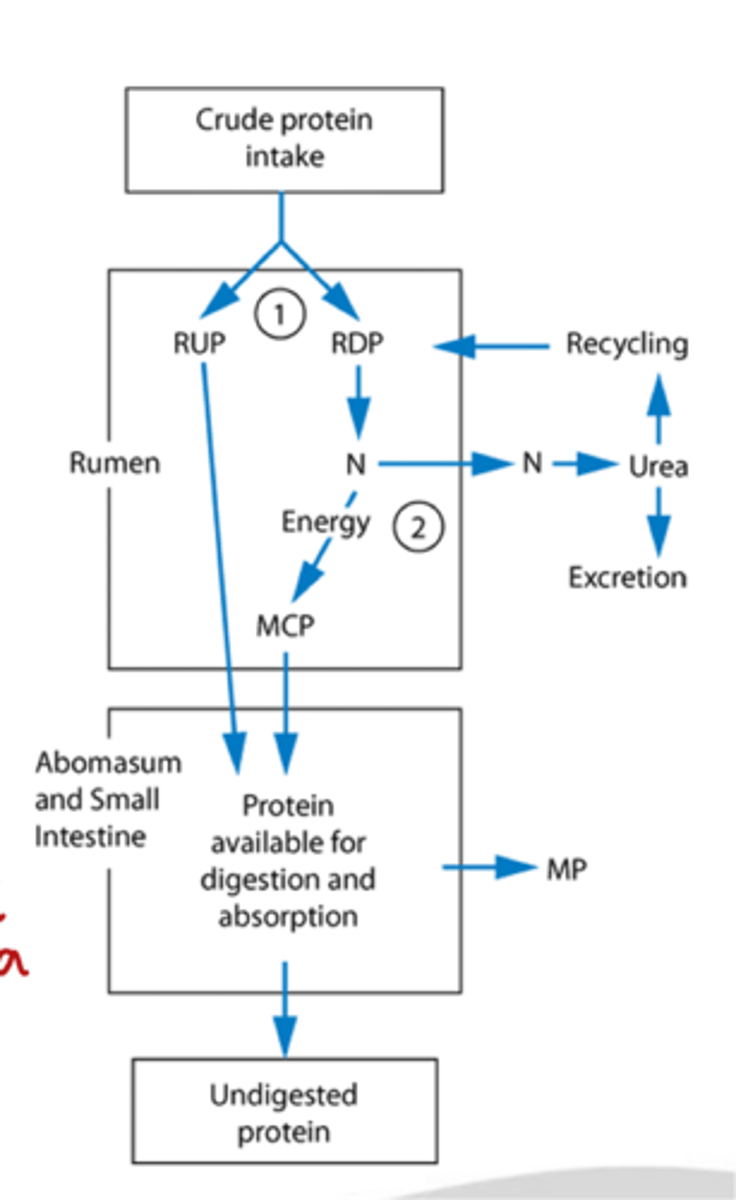
mismatch will lead to wasted protein
key point with matching energy and protein supplies it that...
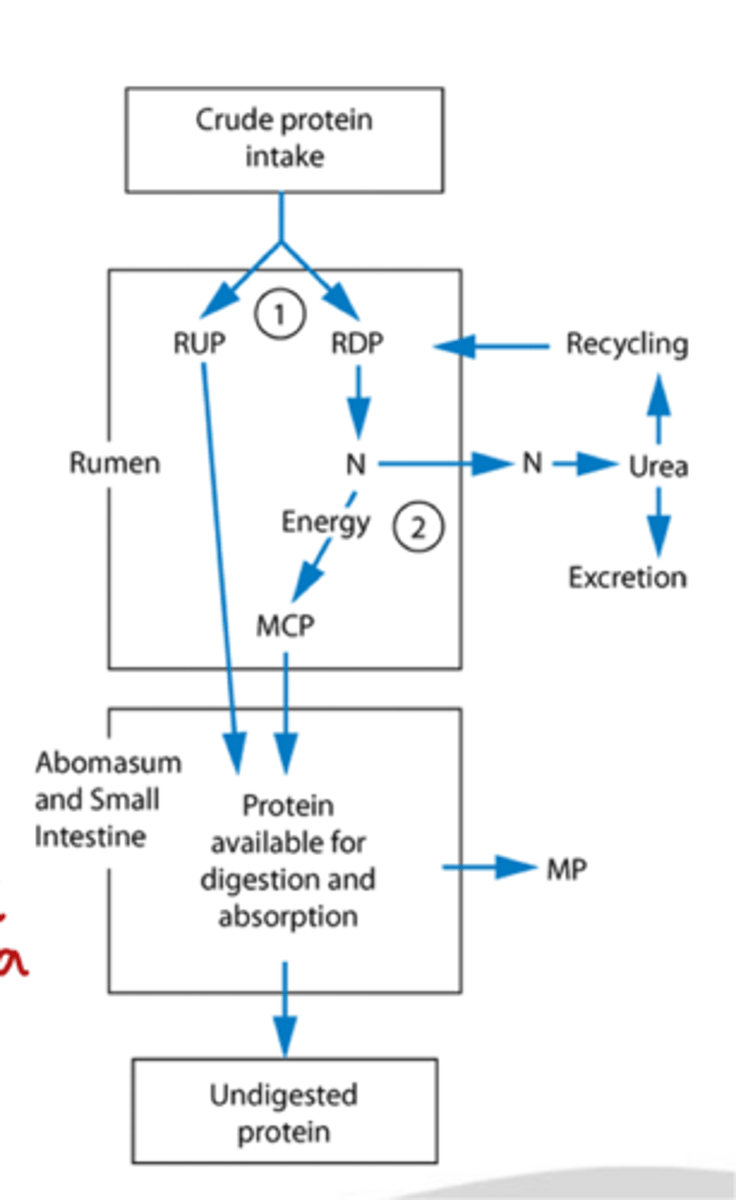
1. increased urinary nitrogen excretion
2. infertility and lameness risk-->delay maturation of oocytes or embryo development
3. environmental nitrogen loss
consequences of excess protein
nitrogen balance
BUN and MUN serve as indicators of...
10-20 mg/dL
acceptable BUN range
<10-12 mg/dL
acceptable MUN range
excess RDP (rumen digestible protein) or poor CHO (carb) balance
high BUN and MUN values correspond with....
can overwhelm the liver's ability to convert to non-toxic urea
what happens in the event there is excess NH4
fish meal
what concentrate can supplement lysin and methionine but is not very palatable
1. Ca, P, Mg--->often all supplemented
2. K, Cl, S
what are the major minerals in dairy cow nutrition
decrease Ca mobilization (movement from bone, GIT, kidney) causing milk fever/hypocalcemia
what does high K lead to in terms of Ca
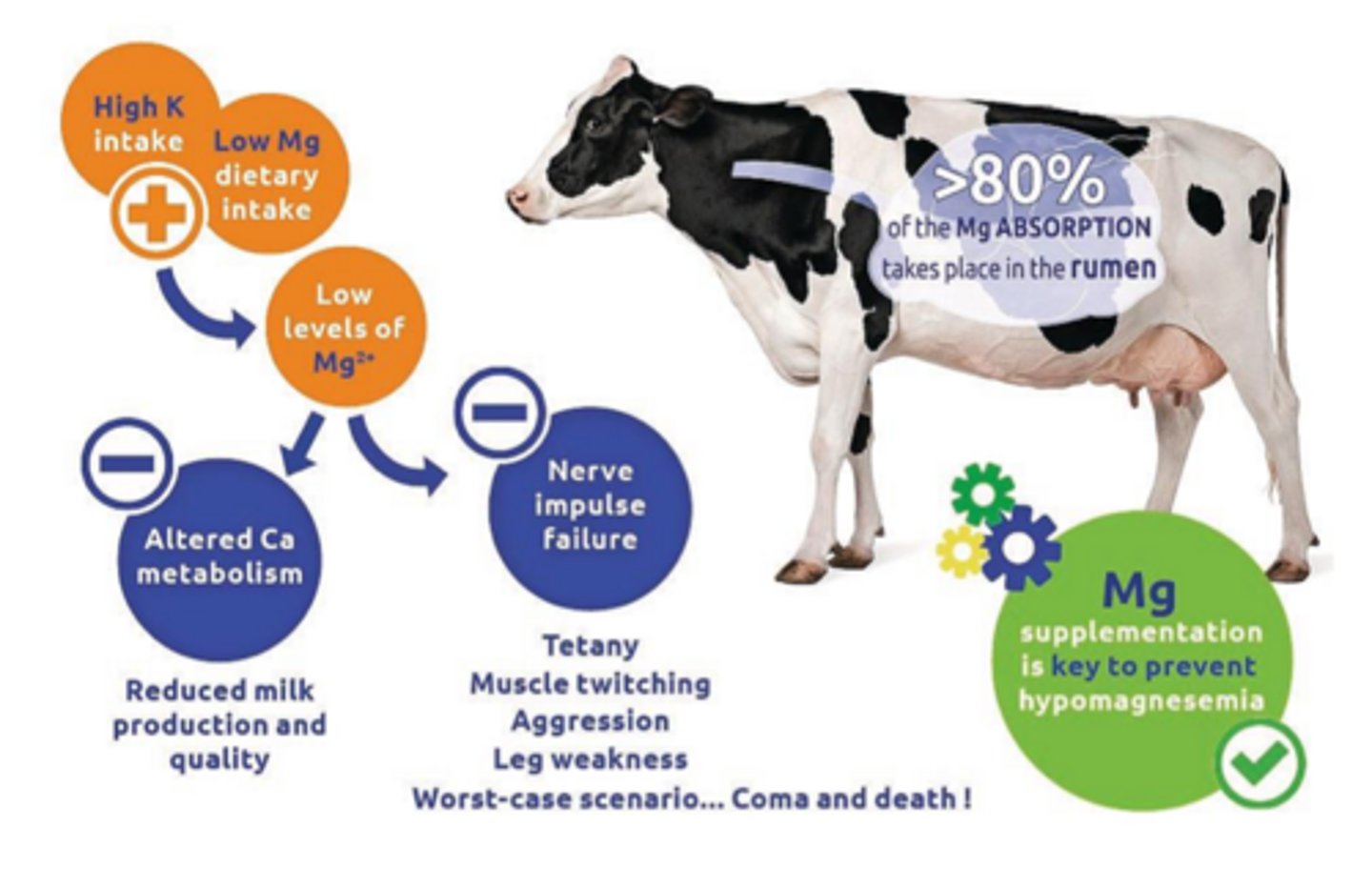
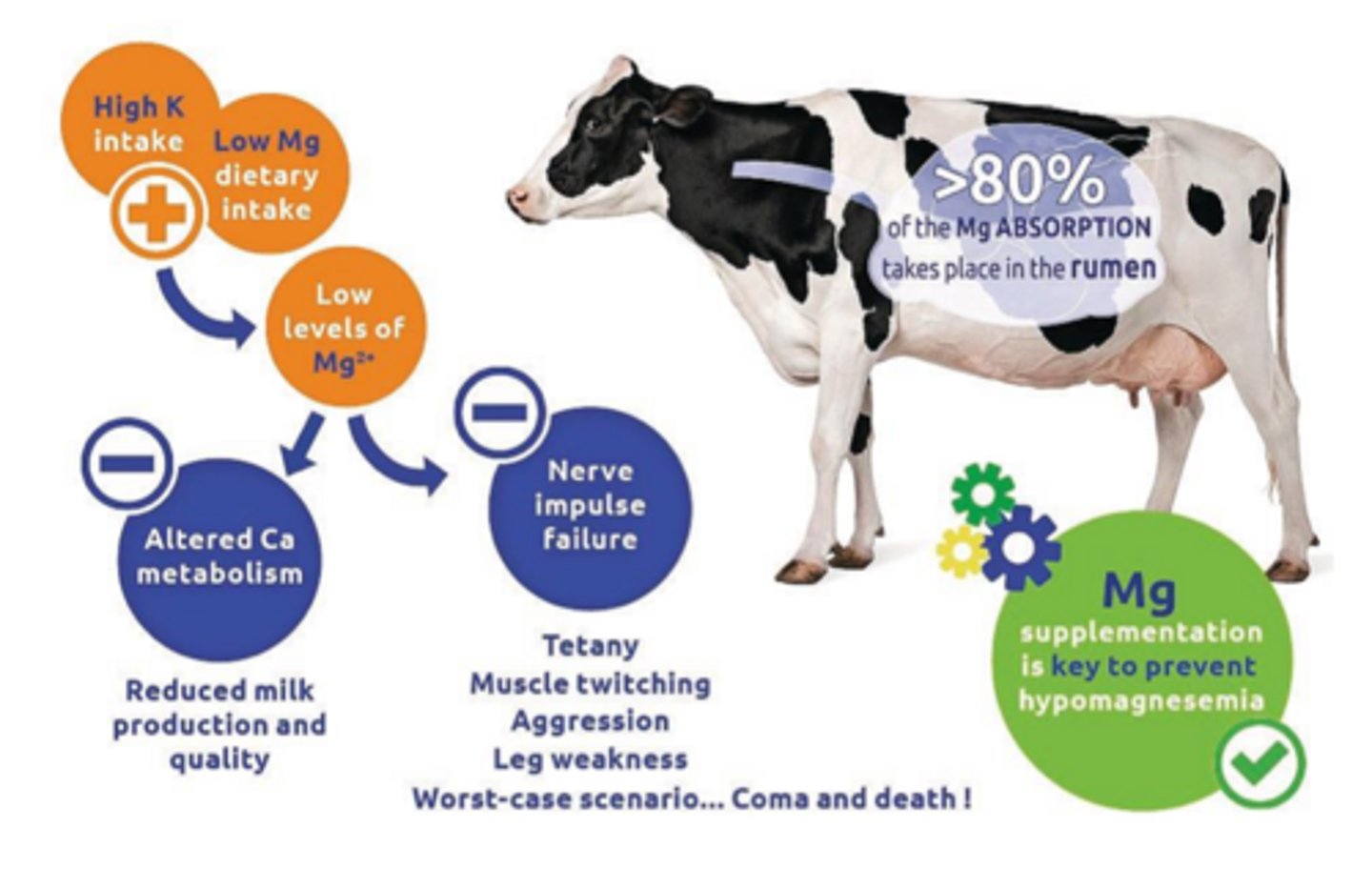
decreased Mg absorption leading to grass tetany
what does high K lead to in terms of Mg
true availability is only about 45%
why is calcium often supplemented above its requirements of 0.62%-0.67%
increase Ca and Mg needs because insoluble soaps form between Ca and Mg and the FAs in the SI making the unavailable for absorption
how do high fat diets impact Ca and Mg needs and why
ensuring requirments for Ca and P are met
what is more important, Ca:P ratio or ensuring requirements for Ca and P are met
reduce
excess Ca can (increase/reduce) availability of a wide range of minerals
1. often deficient in soils and plants so it needs to be supplemented
2. required for milk production
what is the importance of phosphorus
excreted in feces...environmental concern
how is excess P excreted
0.3-0.4%
what is the phosphorus requirement in dairy cows
research shows increased P does NOT increase milk yield and is only excreted in feces at greater amounts
why is over supplementation (0.45%) of P considered unnecessary
magnesium
which mineral is affected and K (potassium) increases and is related to grass tetany
1. most important nutrient
2. essential for milk production
importance of water
2-4 lb water/lbs DMI
what is the water intake requirement on a DMI basis
+3-5 lb water/lbs milk
how does water intake requirement change during lactation
1. milk yield
2. DMI
3. temperature and humidity
4. water quality and availability
what are some factors that can affect water intake
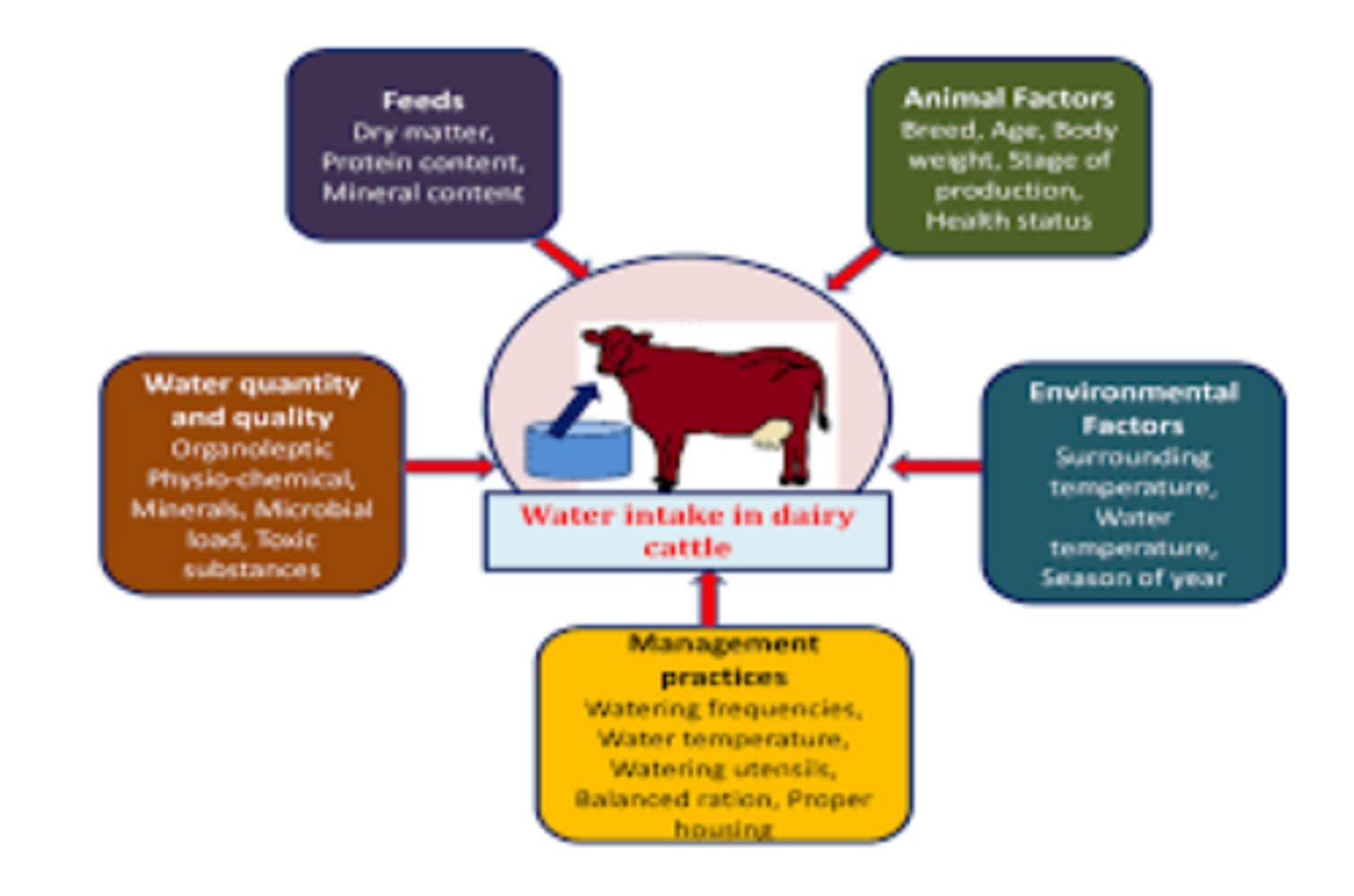
1. adequate access and space...one trough per 15-20 cows
2. clean palatable water
3. most intake after feeding/milking...recognize the busy times
what are key parts of water management
nitrates, sulfates, algae
what are the risks associated with water
blue-green algae
what specific algae did we discuss that can kill a cow if in their water
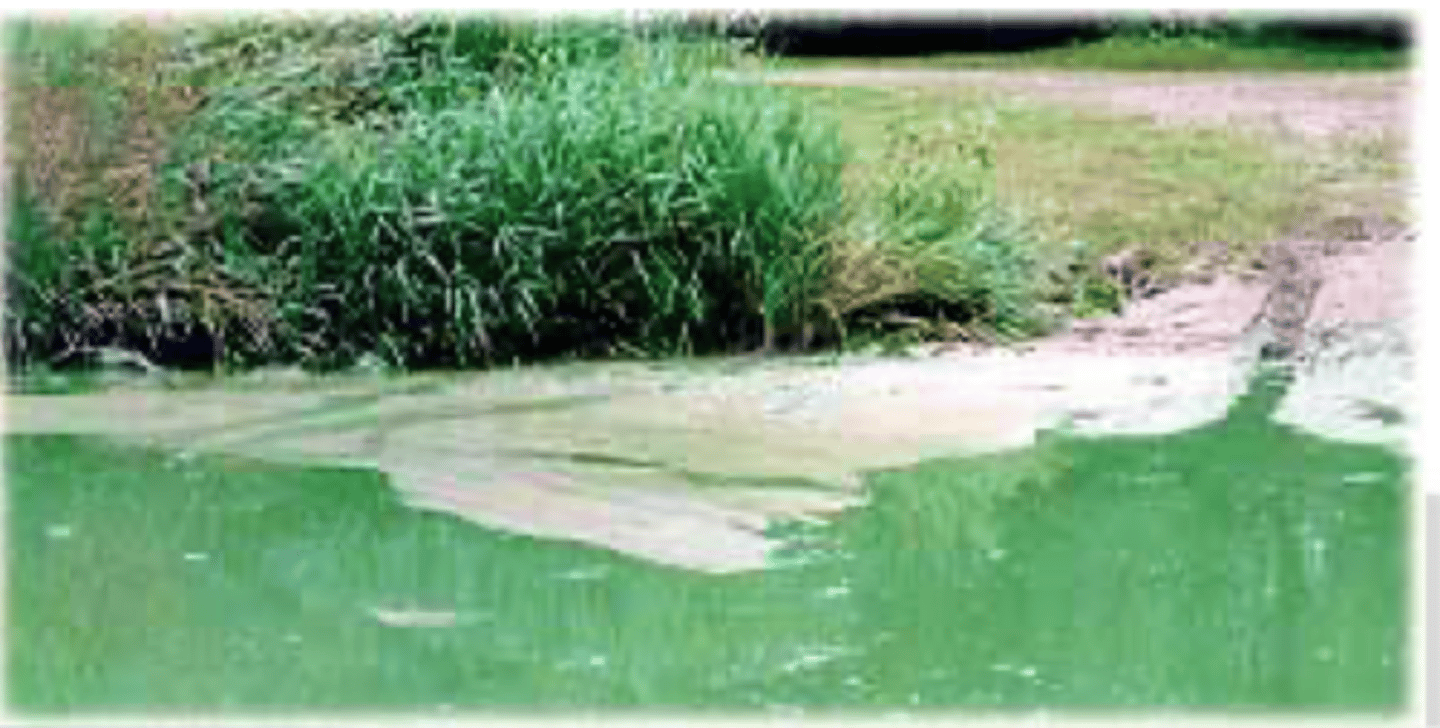
reduced intake
what happens to intake when water quality is poor
1. maintain BCS of 3-4 in order to maintain adequate reserves for 6-8wks post calving
2. maintain DMI
3. avoid excess energy....little to no grain as she enters transition phase
goals of dry cow feeding
last 3 wks pre-calving and first 3 wks post calving consisting of decreased intake but an increased demand for energy...need to slowly increase energy density of ration
what is the transition period
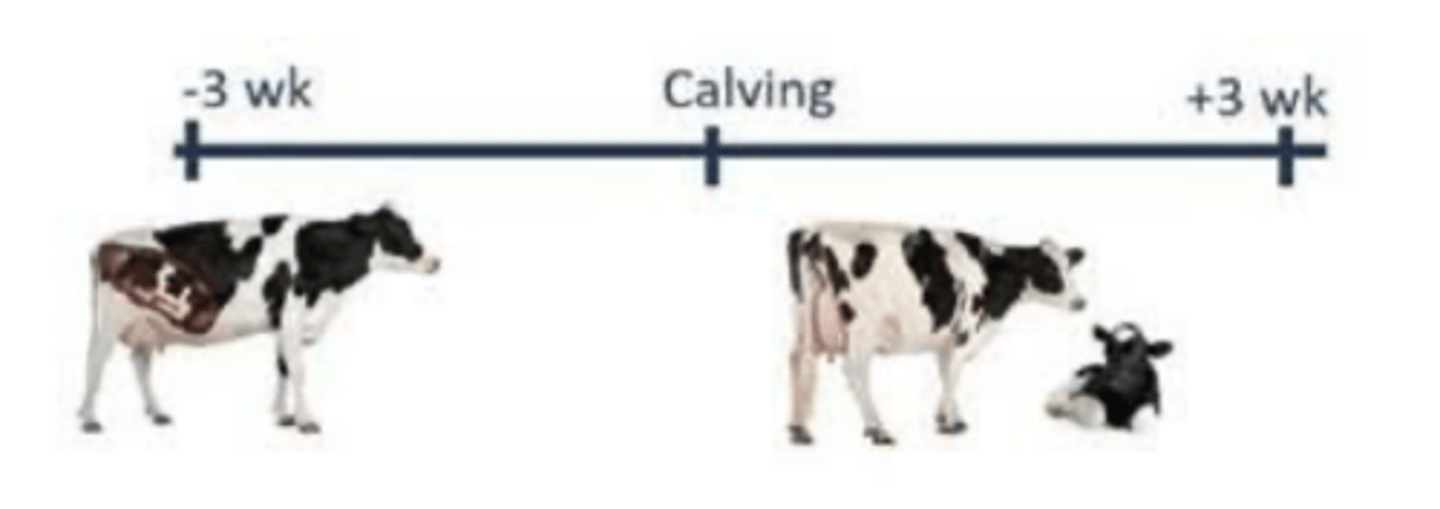
high-risk period for metabolic disease
significance of the transition period
1. feeding strategy 1/ adapt to grain pre-calving
2. feeding strategy 2/ high fiber rations
what are the two feeding strategies for transition cows
1. introduce grain pre-calving to prepare rumen for lactation diet
2. increased energy density compensates for drop in DMI
3. goal is rumen adaptation, advantage is smooth transition
what is important to recognize about strategy 1/ adapt to grain feeding strategies for transition cow
1. maintain high NDF diet and add grain after calving
2. fiber buffers rumen pH to help avoid rumen acidosis when grain is added
3. goals is rumen stability, advantage is lower acidosis risk
what is important to recognize about strategy 2/ high fiber feeding strategies for transition cow
balanced
protein must be _____ for efficency
fertility and enviornemnt
excess nitrogen negatively affects ___ and ____
mineral interactions
___ ___ are clinically important
production
water intake directly impacts ____
next lactation
dry cow nutrition sets up ____